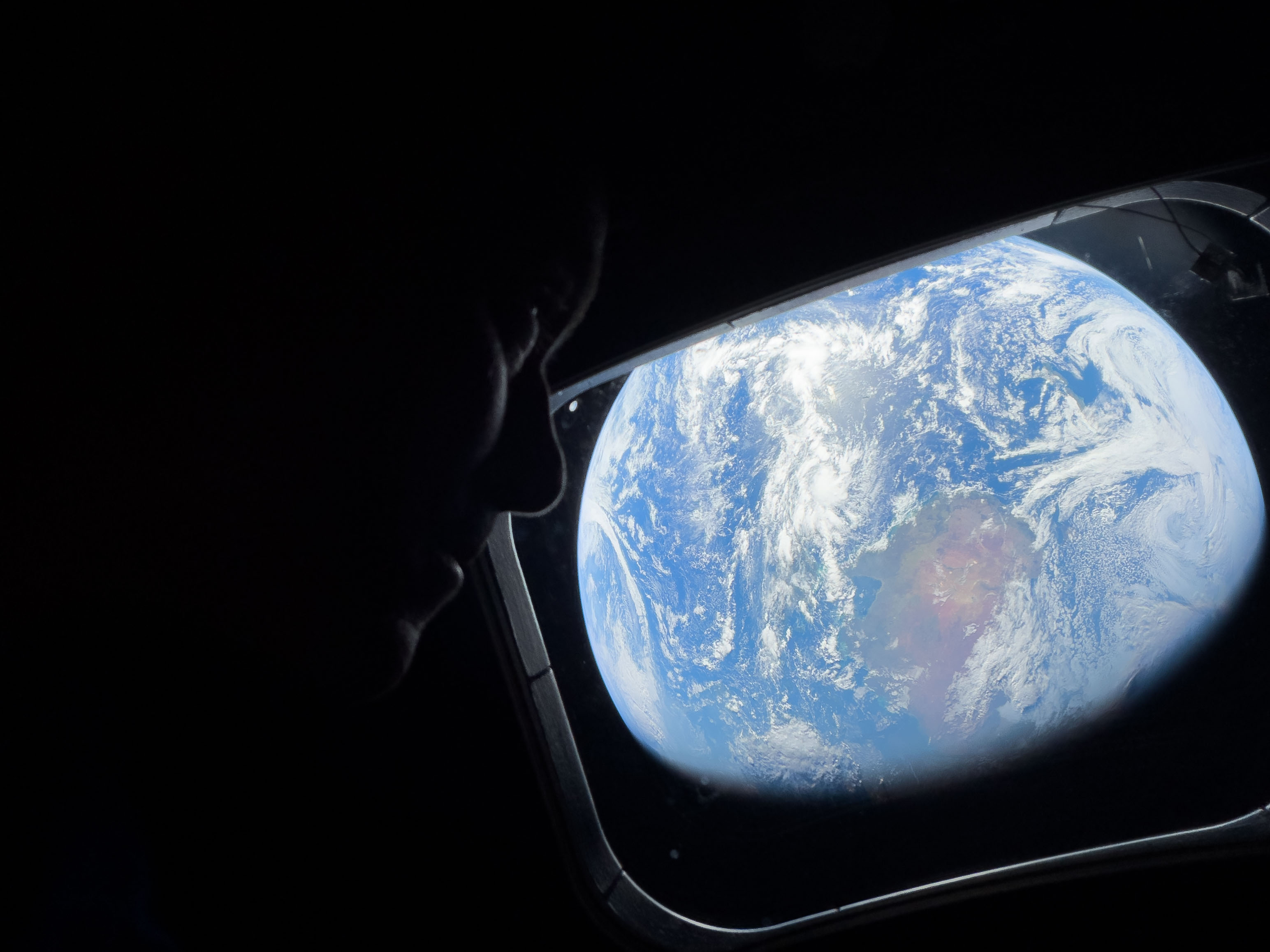
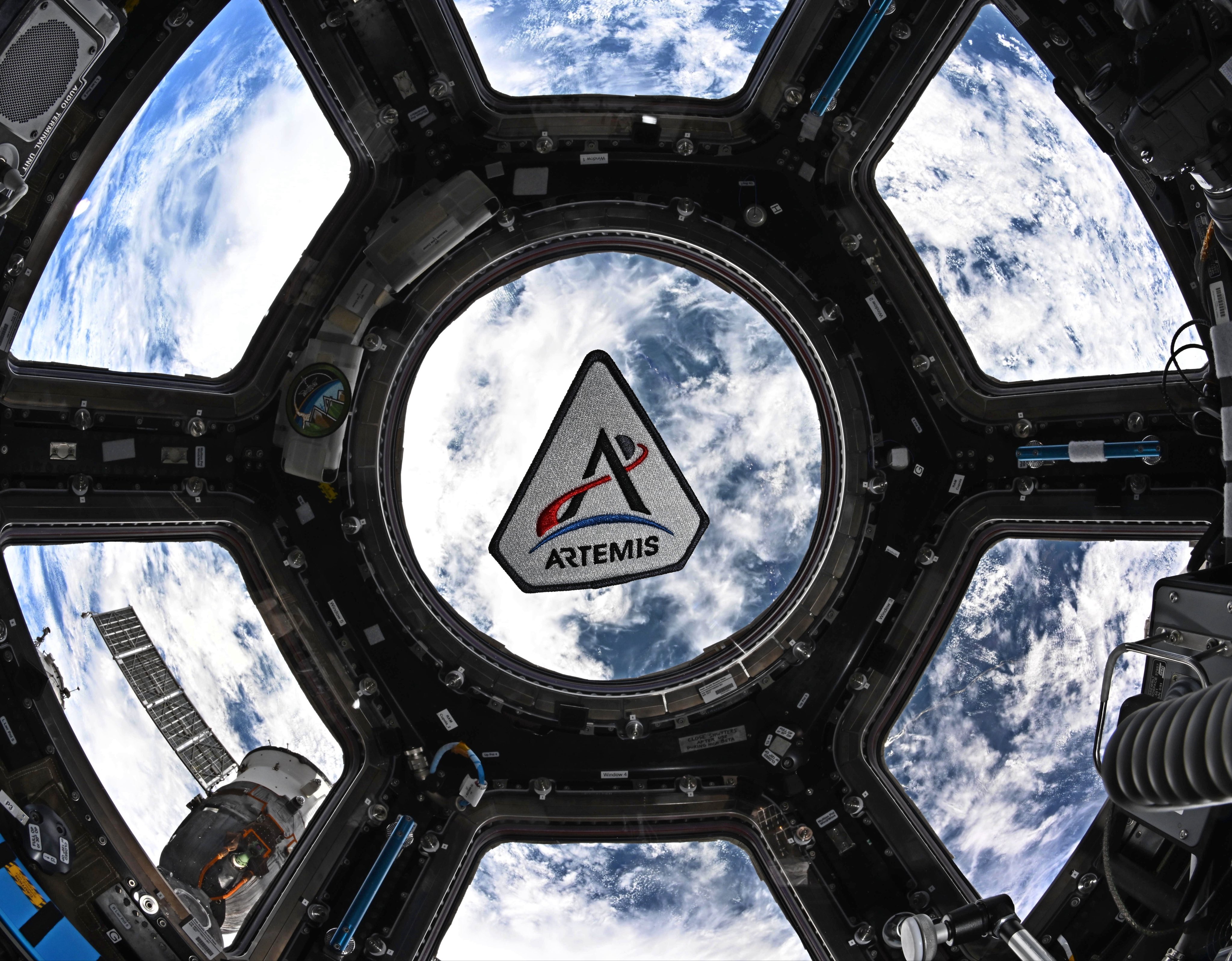
NASA astronaut and Artemis II Commander Reid Wiseman peers out of one of the Orion spacecraft's main cabin windows on April 4, 2026, looking back at Earth, as the crew travels towards the Moon.
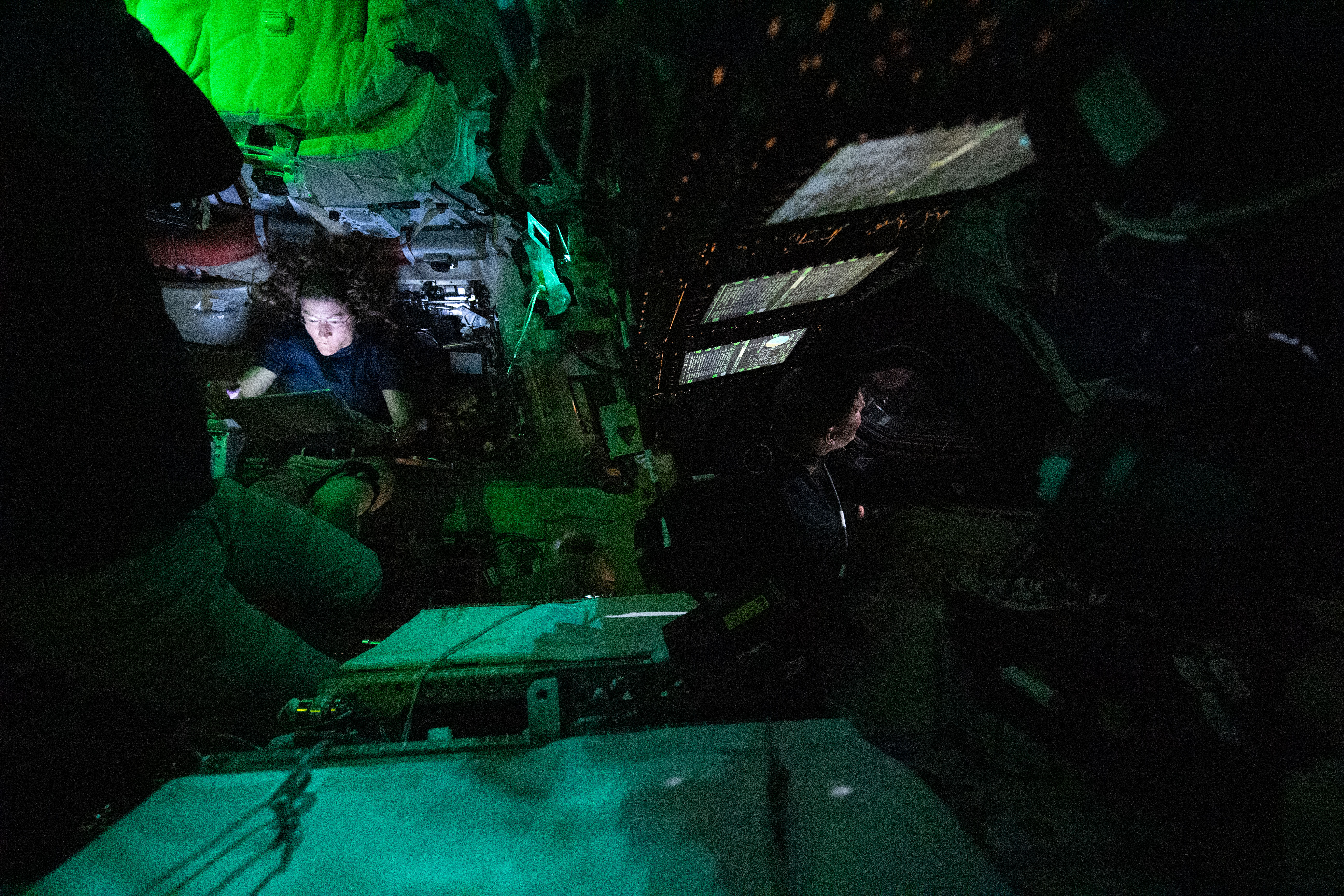
NASA astronaut Christina Koch is illuminated by a screen inside the darkened Orion spacecraft on the third day of the agency's Artemis II mission. To the right of the image's center, CSA (Canadian Space Agency) astronaut Jeremy Hansen is seen in profile peering out of one of Orion's windows. Lights are turned off to avoid glare on the windows.
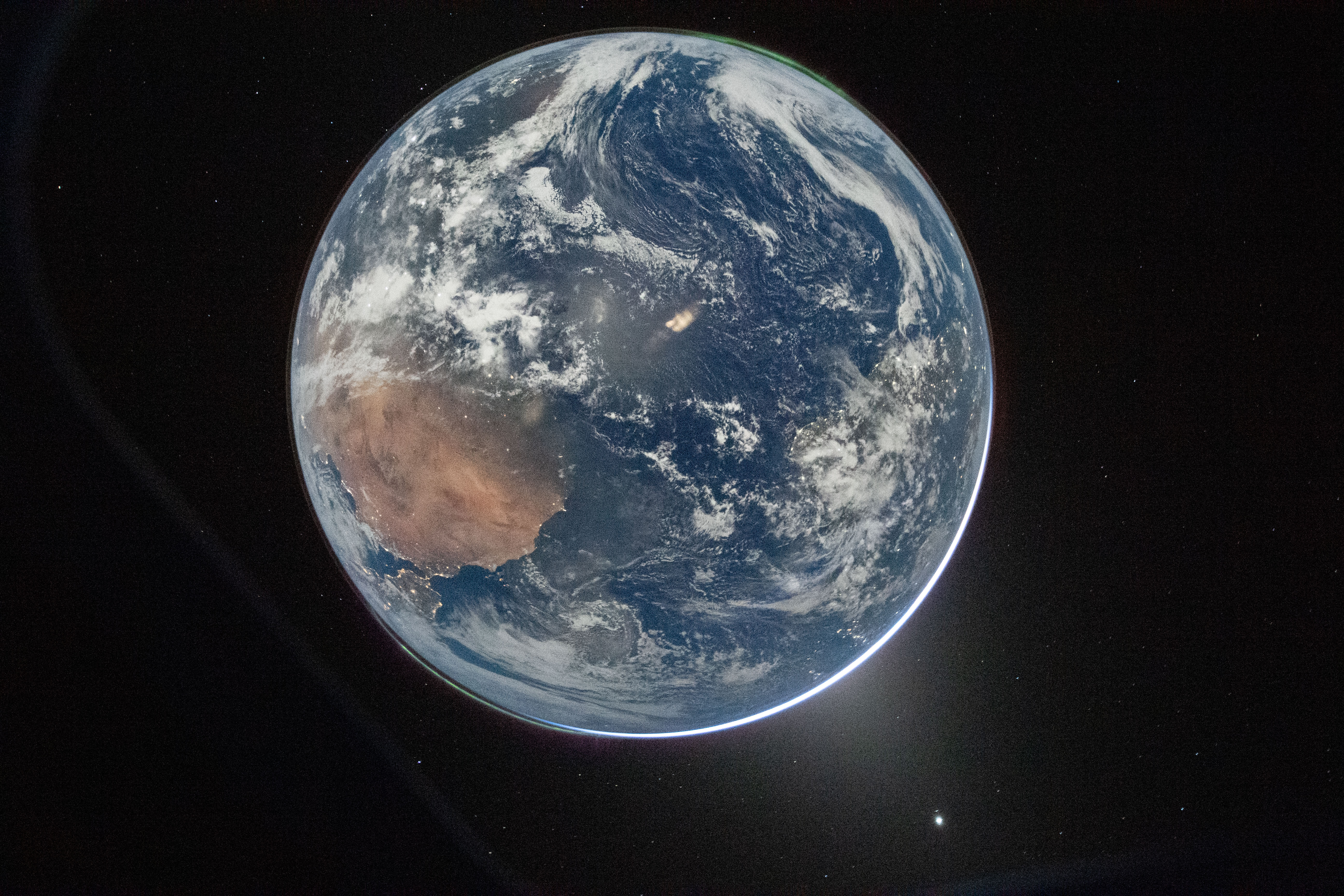
This nighttime picture of Earth was taken on April 2, 2026, by an Artemis II crew member aiming a camera through a window of the Orion spacecraft. The image was captured after Orion completed its translunar injection burn, the critical maneuver that sent the spacecraft on its path toward the Moon and back.
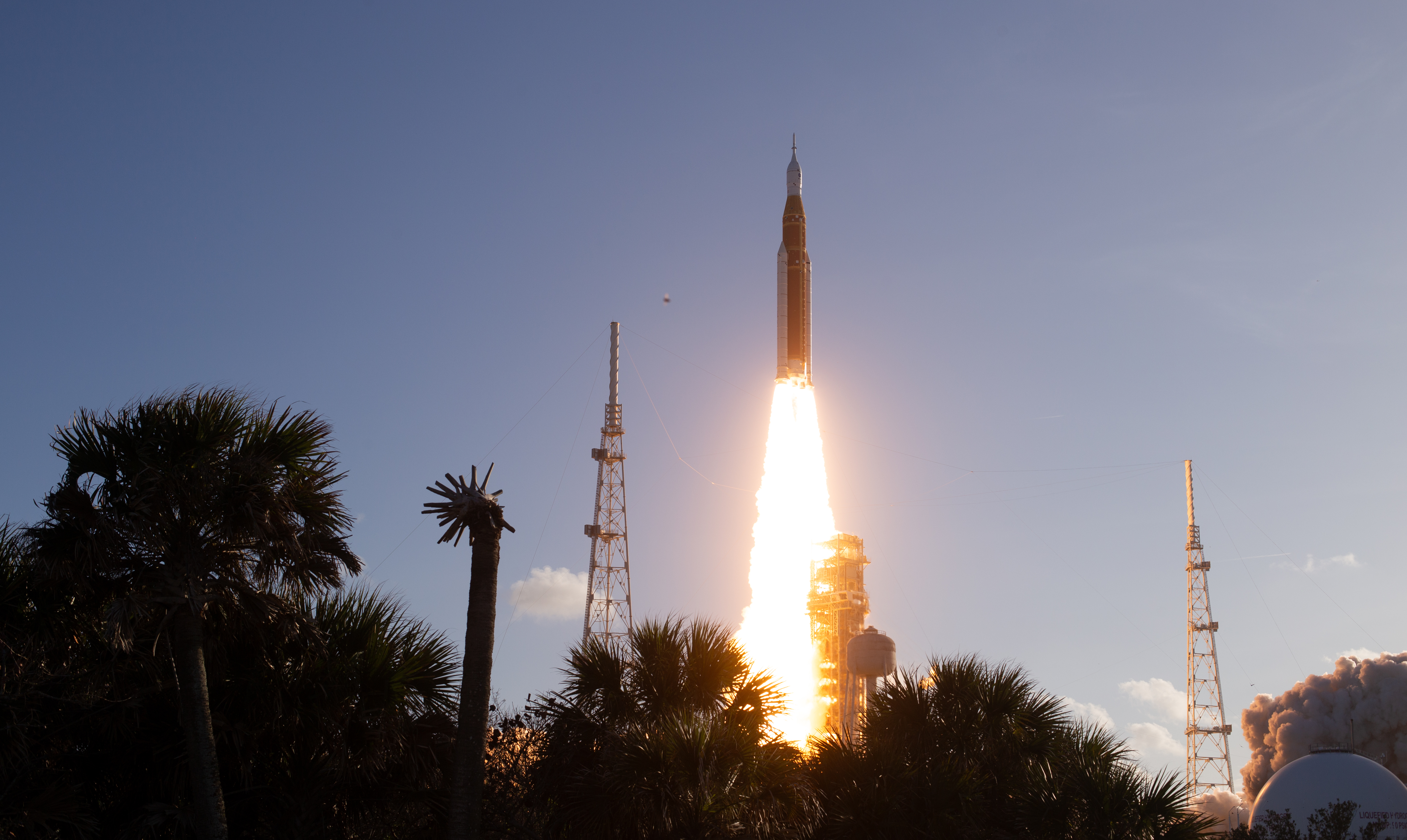
NASA’s Space Launch System rocket carrying the Orion spacecraft with NASA astronauts Reid Wiseman, commander; Victor Glover, pilot; Christina Koch, mission specialist; and CSA (Canadian Space Agency) astronaut Jeremy Hansen, mission specialist onboard launches on the Artemis II mission, Wednesday, April 1, 2026, from Launch Complex 39B at NASA’s Kennedy Space Center in Florida.
L'ultima volta era il dicembre del 1972. Eugene Cernan, Harrison Schmitt e Ronald Evans erano a bordo dell'Apollo 17, l'ultima missione lunare della storia. Da allora, per oltre cinquant'anni, nessun essere umano si era più avventurato oltre l'orbita bassa terrestre. Martedì sera, alle 18.35 ora...
Nella notte tra l’1 e il 2 aprile tutti con il naso all'insù. Nel cielo stellato si potrà ammirare la Luna Rosa, il primo plenilunio dopo l’equinozio di primavera. Nei secoli è stata definita in vari modi: la luna “dell’erba che cresce”, perché è la prima luna piena dopo...
Un astronauta italiano camminerà sulla Luna: lo prevede l'accordo firmato a Washington dal ministro delle Imprese e del Made in Italy Adolfo Urso, con delega allo spazio, e dall'amministratore capo della Nasa Jared Isaacman. Lo scrive in un post su X il presidente dell'Agenzia Spaziale...
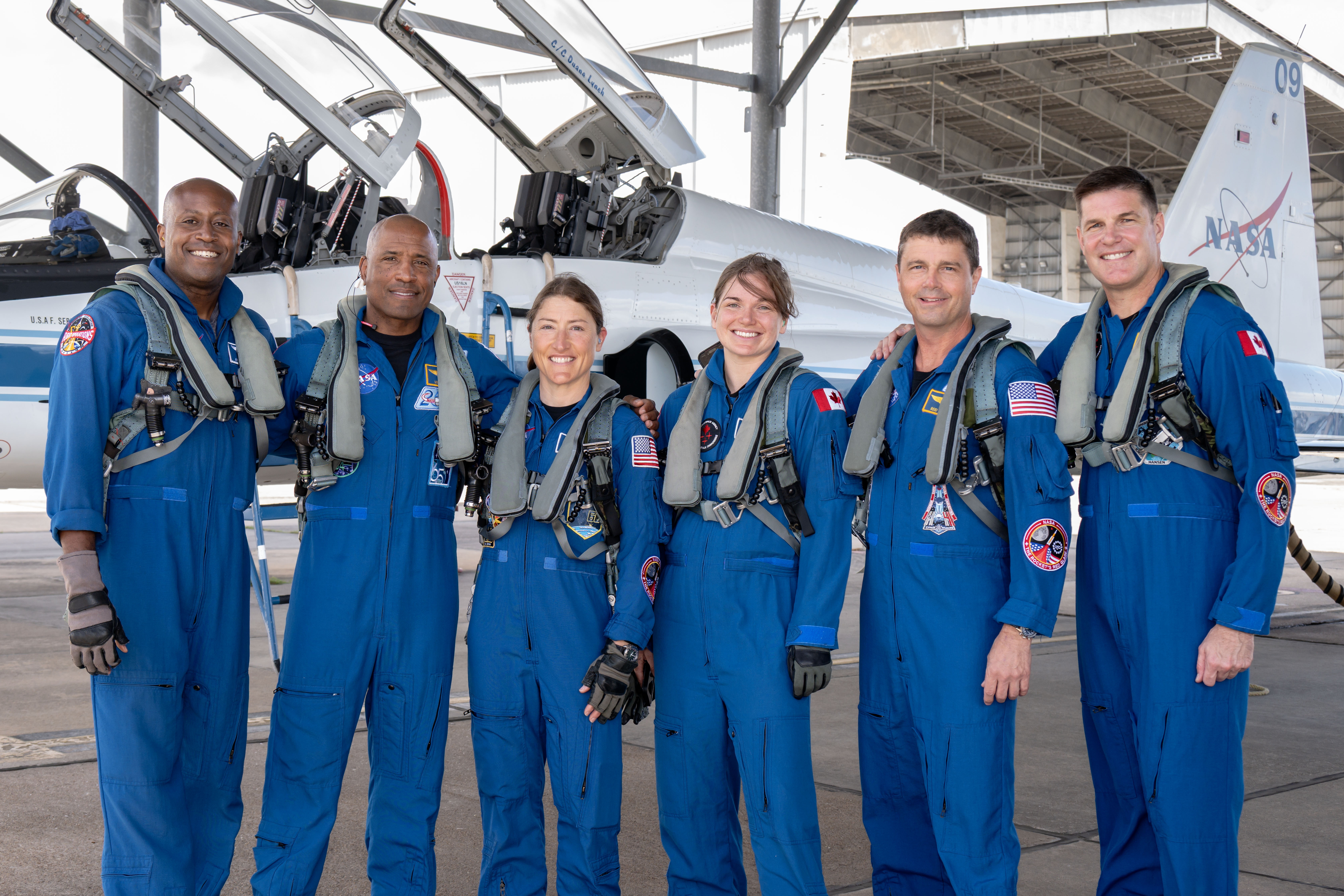
From left to right, NASA astronauts Andre Douglas, Victor Glover, and Christina Koch, CSA (Canadian Space Agency) astronauts Jenni Gibbons, NASA astronaut Reid Wiseman, and CSA astronaut Jeremy Hansen pose for a photo before the Artemis II crew proceed to a media event on March 27, 2026.
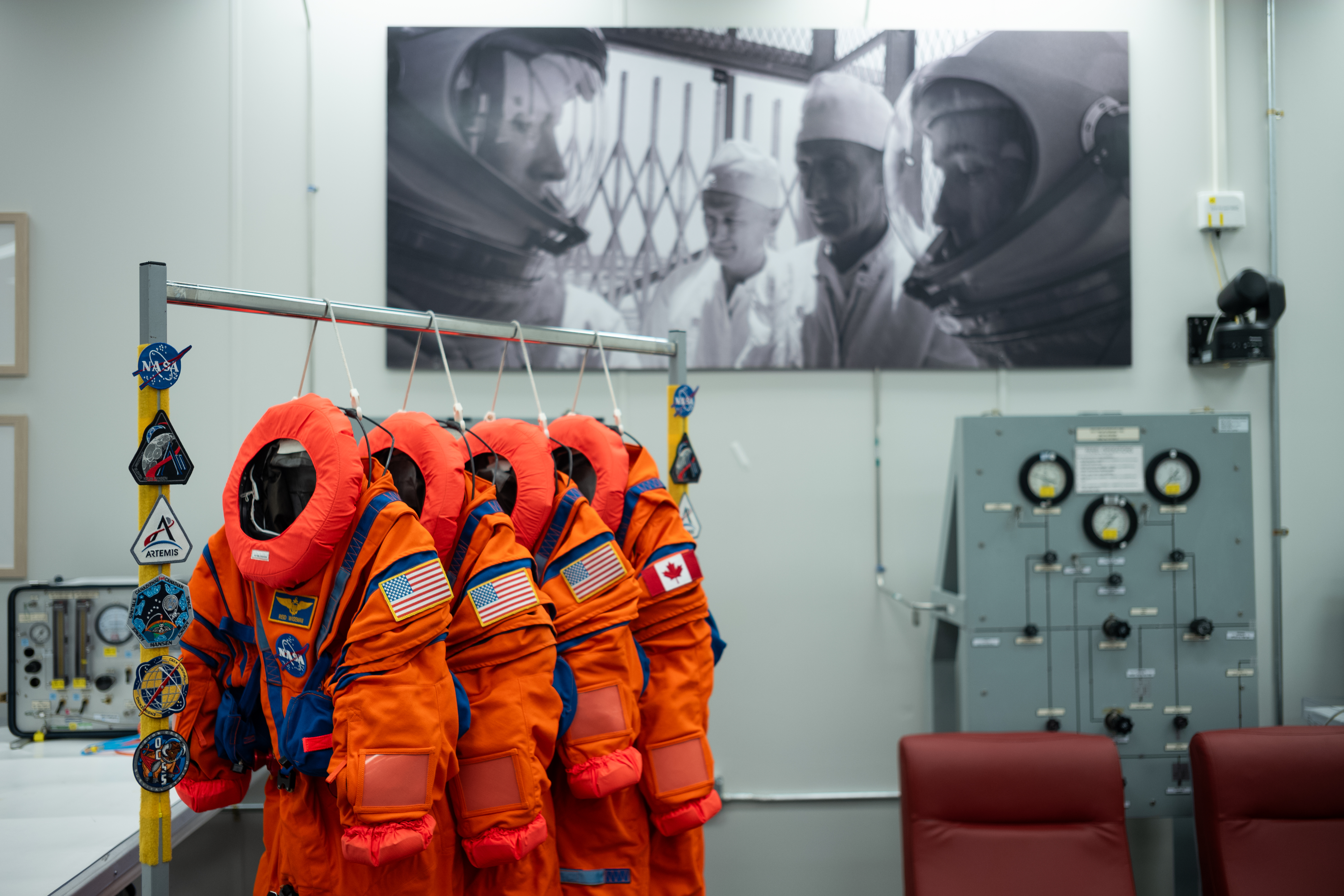
The Orion Crew Survival System suits that Commander Reid Wiseman, Pilot Victor Glover, and Mission Specialist Christina Koch from NASA, and Mission Specialist Jeremy Hansen from the CSA (Canadian Space Agency) will wear on the Artemis II test flight are seen in the suit-up room of the Neil A. Armstrong Operations and Checkout Building, Saturday, Jan. 17, 2026, at NASA’s Kennedy Space Center in Florida.
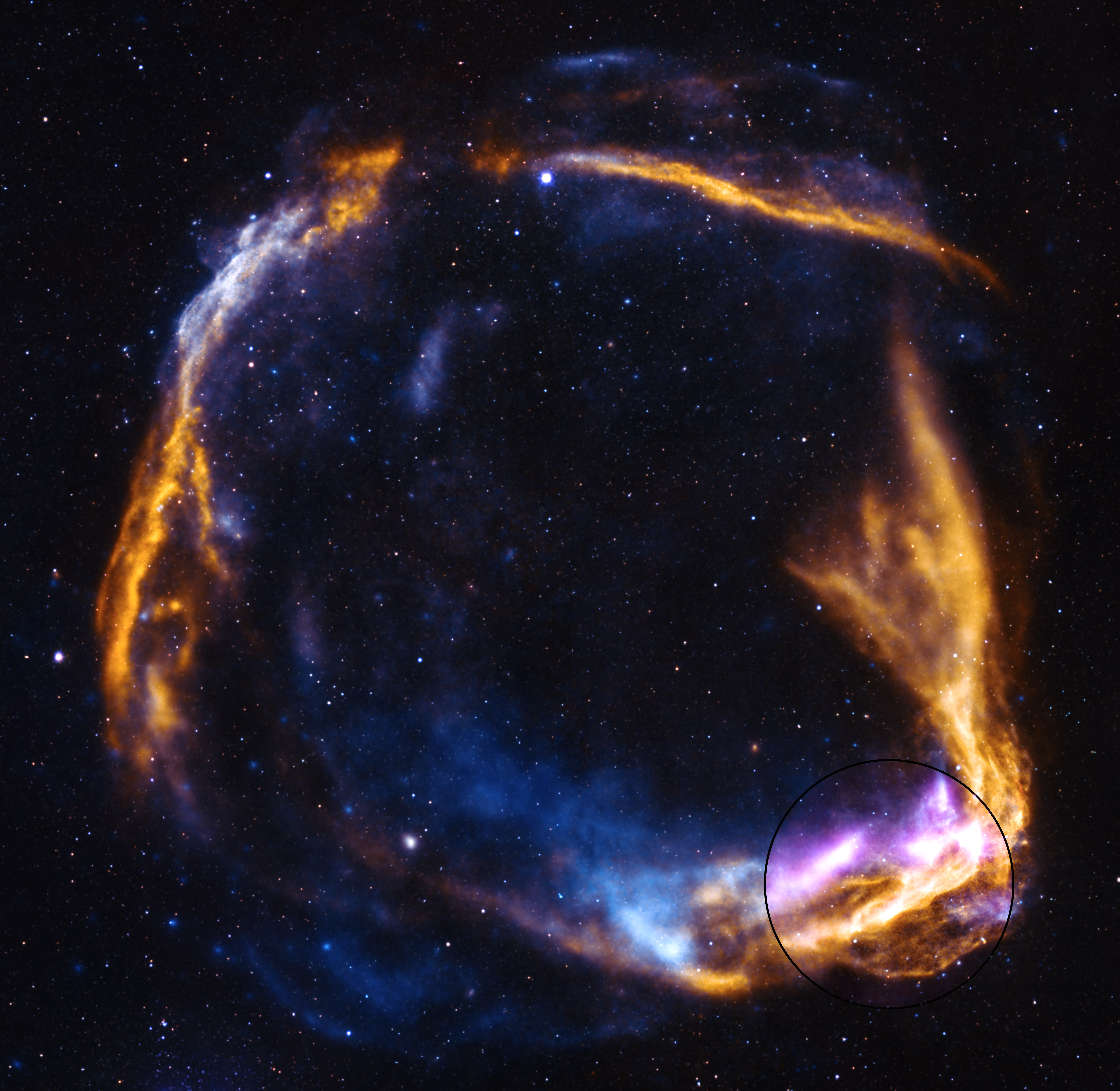
NASA’s IXPE observed the outer rim of the supernova remnant highlighted in purple in the inset. Data from IXPE is combined with data from NASA’s Chandra X-ray Observatory and ESA’s XMM-Newton.
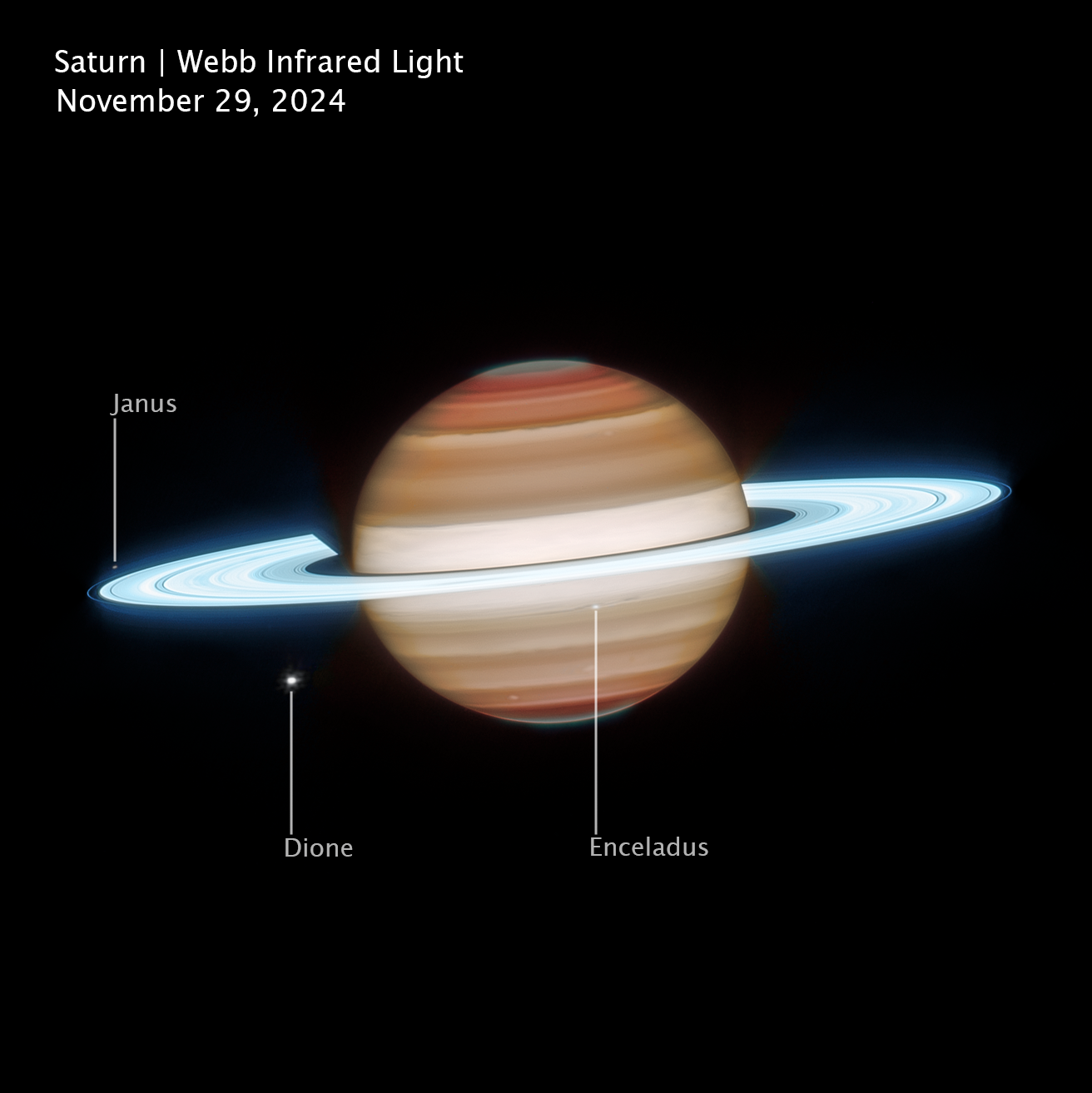
Captured Nov. 29, 2024 by NASA’s James Webb Space Telescope, this infrared view of Saturn shows its glowing icy rings and layered atmosphere. Several moons are visible, including Janus, Dione, and Enceladus.
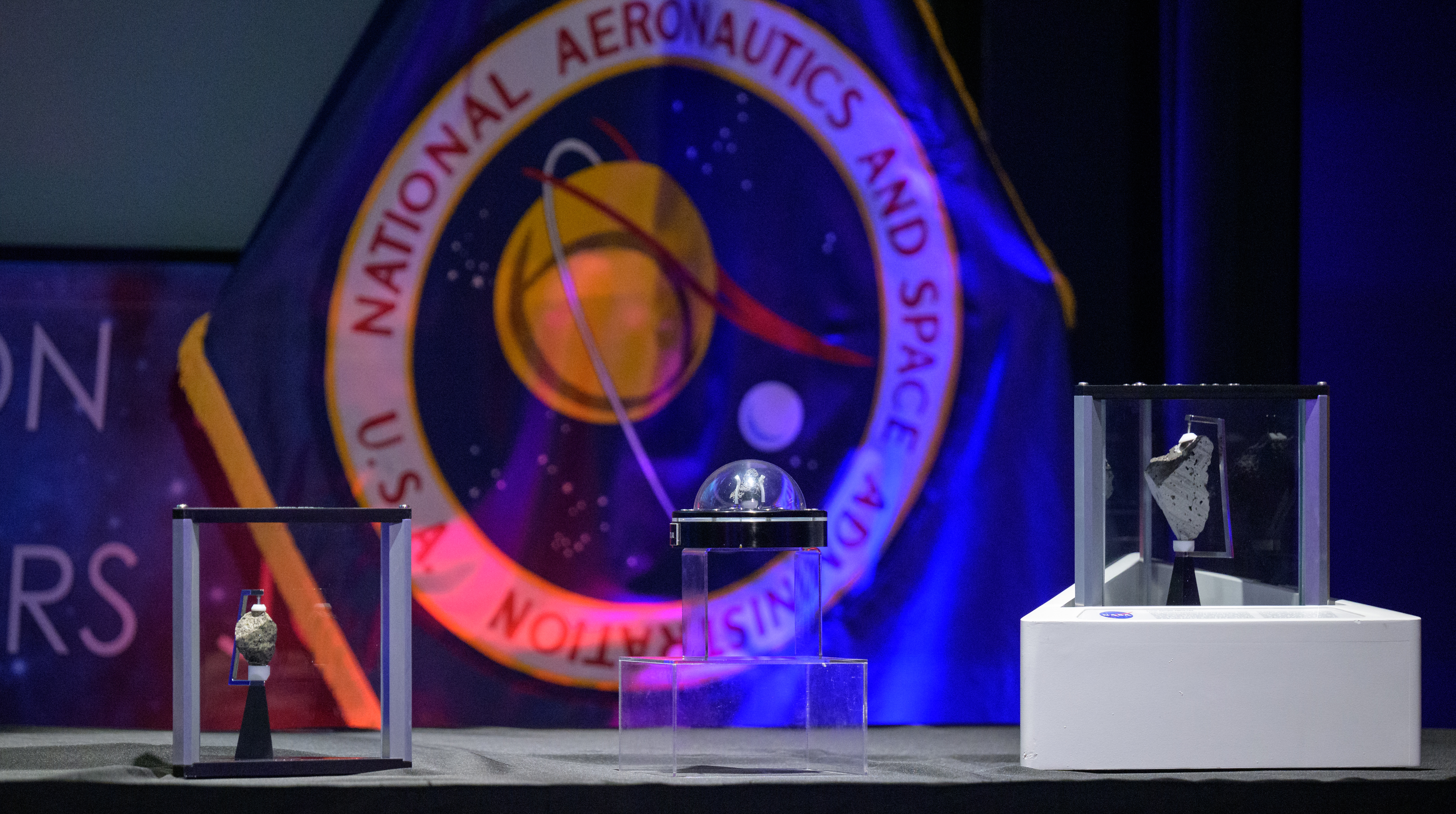
Moon rocks are seen during a March 24, 2026, event where NASA is outlining how the agency is executing the National Space Policy and accelerating preparations for America’s return to the surface of the Moon by 2028.
Sotto il fondale dell’Atlantico nord-occidentale si nasconde una vastissima riserva d’acqua dolce (o comunque poco salata). La Expedition 501 ha perforato il margine continentale a sud del Massachusetts e ha intercettato direttamente un sistema di “freshened water” intrappolato nei...
La primavera entra in scena con puntualità astronomica e un piccolo colpo di teatro celeste. Il 20 marzo 2026 alle 15:46 (ora italiana) cade l’equinozio, la soglia invisibile che chiude l’inverno e accende la stagione della luce. Ma quest’anno il sipario si alza con un bis serale: una danza...
L’idea che la vita possa nascere e prosperare lontano da qualsiasi stella sembra uscita da un romanzo di fantascienza. Eppure un nuovo studio internazionale suggerisce uno scenario sorprendente: lune simili alla Terra che orbitano attorno a pianeti vaganti potrebbero mantenere oceani di acqua...
Un nuovo strumento di osservazione sviluppato alla Stanford University sembra esser in grado di rivoluzionare il modo in cui gli scienziati studiano la vita a livello cellulare. Il dispositivo, chiamato Interferometric Image Scanning Microscopy (iISM), consente di osservare le cellule vive con...
E’ arrivato il giorno dell’eclissi totale di luna, primo grande evento astronomico del 2026. Sopranominata di sangue per il tipico colore rosso scuro del nostro satellite, avverrà quando Sole, Terra e disco lunare, saranno perfettamente allineati e il satellite entrerà nel cono d'ombra...
Importante scoperta in Transilvania, Romania, dove in una grotta di ghiaccio di Scarisoara, è stato rinvenuto un superbatterio preistorico. Anche se è rimasto sepolto in ghiacci risalenti a 5mila anni fa, il microrganismo è risultato resistente a 10 antibiotici moderni tra quelli più...
Ogni giorno milioni di litri di urina scorrono nei sistemi fognari del pianeta. Fin da piccoli siamo stati abituati a a considerarli un rifiuto, un qualcosa da eliminare in fretta. Eppure dentro quel flusso c’è una marea di energia chimica che il recente lavoro di un team di scienziati ha detto...
After years of anticipation and hard work by NASA’s OSIRIS-REx (Origins, Spectral Interpretation, Resource Identification and Security – Regolith Explorer) team, a capsule of rocks and dust collected from asteroid Bennu finally is on Earth. It landed at 8:52 a.m. MDT (10:52 a.m. EDT) on Sunday, in a targeted area of the Department of Defense’s Uta
NASA will host a media teleconference at 4 p.m. EDT on Tuesday, Sept. 26, to discuss the upcoming annular solar eclipse. The annular eclipse will cross the U.S. from Oregon to Texas on Saturday, Oct. 14, with a partial solar eclipse visible throughout the contiguous U.S.
The public is invited to a watch party at NASA’s Goddard Visitor Center, Greenbelt, Maryland to celebrate the first U.S. mission, OSIRIS-REx, to collect a sample from an asteroid and deliver it to Earth on Sept. 24, 2023.
The first asteroid sample collected in space and brought to Earth by the United States will be unveiled at NASA’s Johnson Space Center in Houston on Wednesday, Oct. 11, and media accreditation is now open.
A team led by NASA in Utah’s West Desert is in the final stages of preparing for the arrival of the first U.S. asteroid sample – slated to land on Earth in September.
Ya está abierto el proceso de acreditación de los medios de comunicación para el próximo lanzamiento de la nave espacial Psyche de la NASA en su misión a un asteroide único y rico en metales que orbita alrededor del Sol, entre Marte y Júpiter.
Media accreditation is now open for the upcoming launch of NASA’s Psyche spacecraft, for a mission to a unique metal-rich asteroid orbiting the Sun between Mars and Jupiter.
Media are invited to Utah’s western desert on Wednesday, Aug. 30, to learn about NASA preparations and readiness to receive America’s first asteroid sample collected in space.
NASA is commemorating the first year of science and discoveries from the agency’s James Webb Space Telescope, the largest, most powerful, and most complex space telescope ever built. To celebrate the anniversary, multiple events will take place online and live across the U.S.
Ahead of the first asteroid sample collected by the U.S. arriving on Earth in September, media are invited on Monday, July 24, to see NASA’s newly-built OSIRIS-REx Sample Curation Laboratory where the agency will study the sample at its Johnson Space Center in Houston.
 Accedi