Modalità di lettura

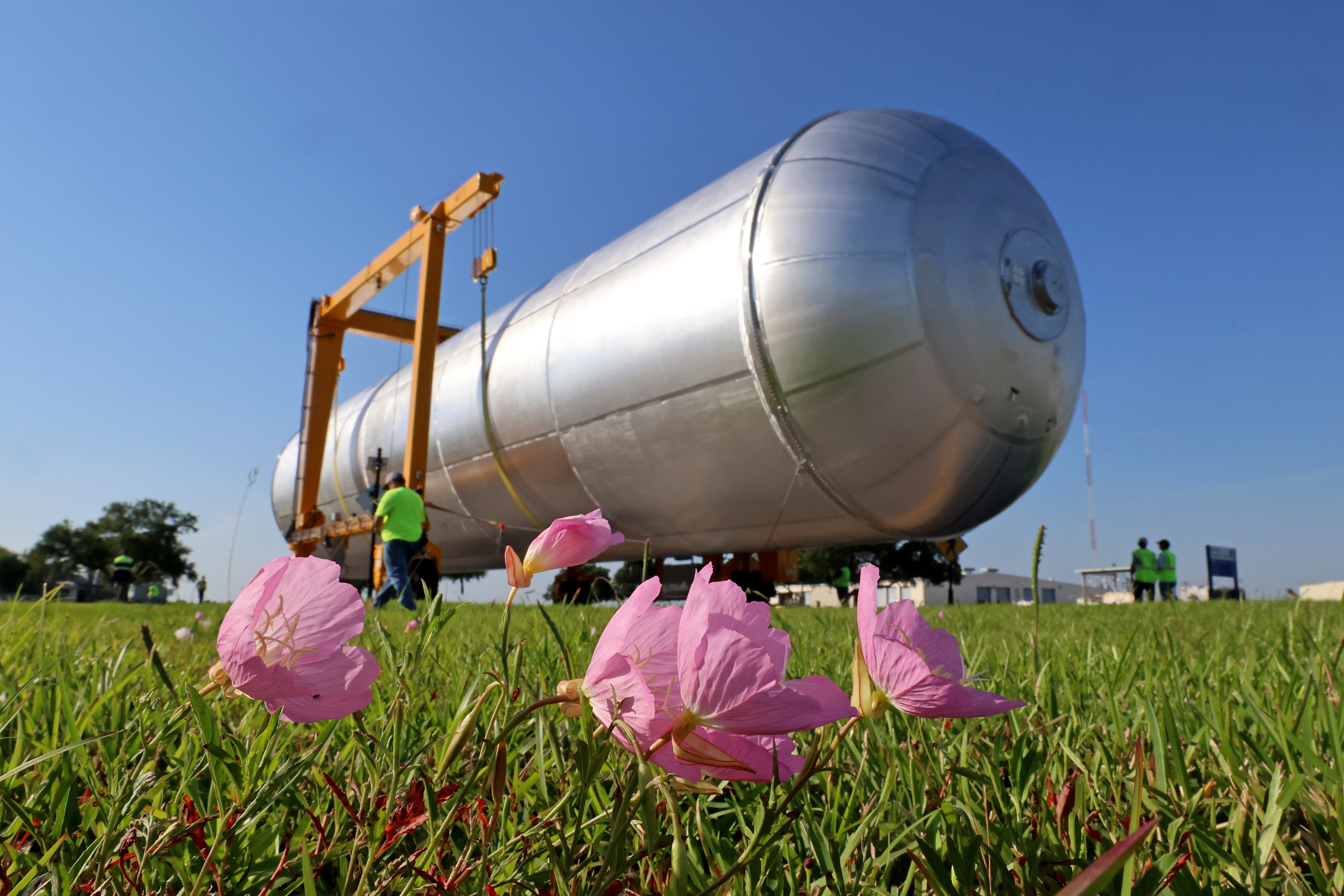
 Crews Move Artemis IV Liquid Hydrogen Tank

Crews at NASA’s Michoud Assembly Facility in New Orleans transport the 130-foot-tall liquid hydrogen tank out of a production cell inside the main factory building into a detached test building on a separate portion of the 829-acre site.

  •  

NASA Astronaut Chris Williams Closes Out Space Station Mission

5 Min Read

NASA Astronaut Chris Williams Closes Out Space Station Mission

After eight months aboard the International Space Station for his first mission, NASA astronaut Chris Williams is preparing to return to Earth. During his assignment, Williams contributed to research for new cancer treatments, advanced the production of materials to improve computers and electronics, ventured into the vacuum of space to complete two spacewalks, and much more. Williams’ work aboard the space station helped to improve life on Earth and prepare for future missions to the Moon and Mars.

Here are some of the research highlights from his mission:

Cancer-fighting constructs

NASA astronaut Chris Williams and ESA (European Space Agency) astronaut Sophie Adenot work together at the International Space Station's Life Sciences Glovebox. Sophie reaches into the illuminated glovebox while Chris floats beside her, smiling toward the camera. Blue cables, scientific equipment, and white station walls surround the workstation.
NASA

NASA astronaut Chris Williams and ESA (European Space Agency) astronaut Sophie Adenot work to process DNA-inspired materials that could advance new cancer treatments for people on Earth. In space, these rod-shaped materials form more evenly and consistently, which may improve their performance and readiness for treatments on Earth. While there have been major advancements in cancer therapies, many treatments can affect the whole body and cause side effects without fully treating solid tumors. This research aims to enable targeted cancer therapies that reach deep into tumors, stay in the body longer, and release medicine in a more controlled way.

Learn more about DNA Nano Therapeutics-3.

Superior semiconductors

NASA astronaut Chris Williams smiles while reaching into the Microgravity Science Glovebox. The inside of the rectangular workspace is illuminated by white light. There is a plastic bag floating inside the upper left side of the glovebox, and Chris holds a small black and silver object in his hands.
NASA

NASA astronaut Chris Williams conducts research to grow semiconductor crystals in space. In microgravity, researchers can grow more crystals of the desired size than can be produced on Earth. Previous research shows that space-grown crystals can offer increased performance to help advance technologies like high-performance computers, artificial intelligence, and medical devices. This research lays the groundwork for commercial semiconductor manufacturing in space and advances the semiconductor industry.

Learn more about In-Space Production of Semimetal-Semiconductor Composite Bulk Crystals in Microgravity (SUBSA-InSPA-SSCug).

Eyeing Earth

NASA astronaut Chris Williams gazes out of a trapezoid-shaped window at a glowing red aurora above the Earth. The curvature of the Earth is visible through a bright green curve. It is dark aboard the International Space Station in the photo, and the glow from the aurora softly illuminates Williams' face.
Roscosmos

NASA astronaut Chris Williams looks out of a cupola window at a red aurora glowing above the Earth. Since the 1960s, astronauts have photographed Earth from space to help scientists monitor the planet’s changing landscapes, natural disasters, and other features over time. Along the way, astronauts also have captured images of celestial objects such as comets, auroras, and the Milky Way.

Sub-zero medical samples

NASA astronaut Chris Williams inserts a cryogenic storage unit into the space station's science freezer. The wedge-shaped unit resembles a slice of pie, and Williams wears thick insulated gloves to protect his hands from the extremely cold temperatures. There are many blue cables beneath him.
NASA

NASA astronaut Chris Williams works with a special freezer aboard the International Space Station that keeps research samples at ultra-cold temperatures until they can return to Earth. Throughout each mission, astronauts collect biological samples like blood and urine to help scientists understand how long-duration spaceflight affects the human body. Observing crew members during their space missions and studying these frozen samples back on Earth helps NASA protect astronaut health during future missions to the Moon, Mars, and beyond.

Learn more about the Minus Eighty-Degree Laboratory Freezer for the International Space Station (MELFI) and Human Research.

Capturing cargo

NASA astronauts Jack Hathaway (left) and Chris Williams (right) look through a circular window in the International Space Station's cupola as Northrop Grumman’s Cygnus XL spacecraft approaches. The spacecraft is a silver cylinder with two hexagonal solar arrays extending from either side of the top end of the cylinder. Behind the spacecraft, white clouds cover the Earth.
NASA

NASA astronauts Jack Hathaway and Chris Williams watch from the cupola windows as Northrop Grumman’s Cygnus XL cargo spacecraft approaches the International Space Station. The two played key roles in the capture of the spacecraft, which delivered approximately 11,000 pounds of supplies, including fresh food, life support equipment, and scientific research as part of NASA’s Northrop Grumman Commercial Resupply Services 24 mission. Cargo missions help keep the space station operating and provide astronauts with the supplies they need to live, work, and conduct research in orbit.

Blocking biofilms

NASA astronaut Chris Williams smiles at the camera as he reaches into the clear, sealed Life Sciences Glovebox and holds a transparent orange package. The illuminated workspace contains plastic bags, scientific equipment, and a pair of scissors.
NASA

NASA astronaut Chris Williams works on an investigation that tests the use of ultraviolet light to help prevent the formation of microbial colonies, called biofilms. Biofilms can clog and contaminate water systems, damage equipment, and pose health risks to astronauts. This research aims to keep surfaces cleaner and safeguard systems during long-duration space missions. Using UV light for sanitation also could reduce the need for chemical disinfectants in space, decreasing the risk of chemical exposure and eliminating difficulties in transporting or storing supplies.

Learn more about Germicidal Ultraviolet Light Biofilm Inhibition (GULBI).

Strengthening solar power

NASA astronaut Chris Williams is seen smiling through his spacesuit helmet outside of the International Space Station. Williams is anchored next to several white structures and surrounded by space station equipment. Behind him there is a SpaceX Dragon spacecraft docked to the space station. Earth's blue curvature and scattered white clouds stretch across the background.
NASA

NASA astronaut Chris Williams ventured outside the International Space Station for two spacewalks during his mission. In June, he helped make repairs to Canadarm2, a robotic arm that captures cargo spacecraft and deploys external research. In March, Williams prepared the orbiting laboratory for new solar arrays to be added to the station in a future spacewalk. Once installed, the final set of International Space Station Roll Out Solar Arrays (IROSA) will complete the full suite of additional solar power, increasing the station’s power generation by about 30% and enhancing support for scientific research and daily operations. The same solar array technology also powered NASA’s Double Asteroid Redirection Test and could support future missions to the Moon and Mars.

Learn more about the space station’s IROSAs.

Microgravity medicine

NASA astronaut Chris Williams holds a small, rectangular hard drive as he works to swap computer components for a protein crystal growth investigation. A tablet is secured to one of his legs, while two plastic bags are attached to the other. Bundles of cables float next to him and a circular hatch is visible in the background.
NASA

NASA astronaut Chris Williams works with hardware to support the development of new cancer and disease treatments by studying the growth of protein crystals for pharmaceuticals. In space, protein crystals form higher-quality structures than they do on Earth, allowing researchers to better understand how to target and treat disease. Here, Williams works with a project that aims to develop a new formula for a cancer treatment that could be taken orally. Growing protein crystals in space paves the way for more commercial companies to create new therapies that could improve patient outcomes on Earth.

Learn more about the Pharmaceutical In-space Laboratory (ADSEP-PIL-10).

Robotic refinement

A video shows NASA astronaut Chris Williams working on hardware inside a rectangular space. Facing away from the camera, Williams makes small adjustments to the experiment, which consists of two white robotic arms. There are many white cables on the inside of the compartment.
NASA

NASA astronaut Chris Williams works with equipment that tests the performance of small robotic arms in space. Some experiments and operations require very precise movements, where tiny errors can significantly impact results. Understanding how microgravity affects delicate robotic operations helps researchers improve designs for future automated systems that can perform operations while astronauts focus on the most critical tasks.

Learn more about the Test facility for lab-aUtomation System in Kibo (TUSK).

Share

Details

Last Updated
Jul 23, 2026

💾

NASA astronaut Chris Williams is set to return to Earth after an eight-month mission aboard the International Space Station. During his assignment, Williams ...
  •  

NASA Astronaut Chris Williams Closes Out Space Station Mission

5 Min Read

NASA Astronaut Chris Williams Closes Out Space Station Mission

After eight months aboard the International Space Station for his first mission, NASA astronaut Chris Williams is preparing to return to Earth. During his assignment, Williams contributed to research for new cancer treatments, advanced the production of materials to improve computers and electronics, ventured into the vacuum of space to complete two spacewalks, and much more. Williams’ work aboard the space station helped to improve life on Earth and prepare for future missions to the Moon and Mars.

Here are some of the research highlights from his mission:

Cancer-fighting constructs

NASA astronaut Chris Williams and ESA (European Space Agency) astronaut Sophie Adenot work together at the International Space Station's Life Sciences Glovebox. Sophie reaches into the illuminated glovebox while Chris floats beside her, smiling toward the camera. Blue cables, scientific equipment, and white station walls surround the workstation.
NASA

NASA astronaut Chris Williams and ESA (European Space Agency) astronaut Sophie Adenot work to process DNA-inspired materials that could advance new cancer treatments for people on Earth. In space, these rod-shaped materials form more evenly and consistently, which may improve their performance and readiness for treatments on Earth. While there have been major advancements in cancer therapies, many treatments can affect the whole body and cause side effects without fully treating solid tumors. This research aims to enable targeted cancer therapies that reach deep into tumors, stay in the body longer, and release medicine in a more controlled way.

Learn more about DNA Nano Therapeutics-3.

Superior semiconductors

NASA astronaut Chris Williams smiles while reaching into the Microgravity Science Glovebox. The inside of the rectangular workspace is illuminated by white light. There is a plastic bag floating inside the upper left side of the glovebox, and Chris holds a small black and silver object in his hands.
NASA

NASA astronaut Chris Williams conducts research to grow semiconductor crystals in space. In microgravity, researchers can grow more crystals of the desired size than can be produced on Earth. Previous research shows that space-grown crystals can offer increased performance to help advance technologies like high-performance computers, artificial intelligence, and medical devices. This research lays the groundwork for commercial semiconductor manufacturing in space and advances the semiconductor industry.

Learn more about In-Space Production of Semimetal-Semiconductor Composite Bulk Crystals in Microgravity (SUBSA-InSPA-SSCug).

Eyeing Earth

NASA astronaut Chris Williams gazes out of a trapezoid-shaped window at a glowing red aurora above the Earth. The curvature of the Earth is visible through a bright green curve. It is dark aboard the International Space Station in the photo, and the glow from the aurora softly illuminates Williams' face.
Roscosmos

NASA astronaut Chris Williams looks out of a cupola window at a red aurora glowing above the Earth. Since the 1960s, astronauts have photographed Earth from space to help scientists monitor the planet’s changing landscapes, natural disasters, and other features over time. Along the way, astronauts also have captured images of celestial objects such as comets, auroras, and the Milky Way.

Sub-zero medical samples

NASA astronaut Chris Williams inserts a cryogenic storage unit into the space station's science freezer. The wedge-shaped unit resembles a slice of pie, and Williams wears thick insulated gloves to protect his hands from the extremely cold temperatures. There are many blue cables beneath him.
NASA

NASA astronaut Chris Williams works with a special freezer aboard the International Space Station that keeps research samples at ultra-cold temperatures until they can return to Earth. Throughout each mission, astronauts collect biological samples like blood and urine to help scientists understand how long-duration spaceflight affects the human body. Observing crew members during their space missions and studying these frozen samples back on Earth helps NASA protect astronaut health during future missions to the Moon, Mars, and beyond.

Learn more about the Minus Eighty-Degree Laboratory Freezer for the International Space Station (MELFI) and Human Research.

Capturing cargo

NASA astronauts Jack Hathaway (left) and Chris Williams (right) look through a circular window in the International Space Station's cupola as Northrop Grumman’s Cygnus XL spacecraft approaches. The spacecraft is a silver cylinder with two hexagonal solar arrays extending from either side of the top end of the cylinder. Behind the spacecraft, white clouds cover the Earth.
NASA

NASA astronauts Jack Hathaway and Chris Williams watch from the cupola windows as Northrop Grumman’s Cygnus XL cargo spacecraft approaches the International Space Station. The two played key roles in the capture of the spacecraft, which delivered approximately 11,000 pounds of supplies, including fresh food, life support equipment, and scientific research as part of NASA’s Northrop Grumman Commercial Resupply Services 24 mission. Cargo missions help keep the space station operating and provide astronauts with the supplies they need to live, work, and conduct research in orbit.

Blocking biofilms

NASA astronaut Chris Williams smiles at the camera as he reaches into the clear, sealed Life Sciences Glovebox and holds a transparent orange package. The illuminated workspace contains plastic bags, scientific equipment, and a pair of scissors.
NASA

NASA astronaut Chris Williams works on an investigation that tests the use of ultraviolet light to help prevent the formation of microbial colonies, called biofilms. Biofilms can clog and contaminate water systems, damage equipment, and pose health risks to astronauts. This research aims to keep surfaces cleaner and safeguard systems during long-duration space missions. Using UV light for sanitation also could reduce the need for chemical disinfectants in space, decreasing the risk of chemical exposure and eliminating difficulties in transporting or storing supplies.

Learn more about Germicidal Ultraviolet Light Biofilm Inhibition (GULBI).

Strengthening solar power

NASA astronaut Chris Williams is seen smiling through his spacesuit helmet outside of the International Space Station. Williams is anchored next to several white structures and surrounded by space station equipment. Behind him there is a SpaceX Dragon spacecraft docked to the space station. Earth's blue curvature and scattered white clouds stretch across the background.
NASA

NASA astronaut Chris Williams ventured outside the International Space Station for two spacewalks during his mission. In June, he helped make repairs to Canadarm2, a robotic arm that captures cargo spacecraft and deploys external research. In March, Williams prepared the orbiting laboratory for new solar arrays to be added to the station in a future spacewalk. Once installed, the final set of International Space Station Roll Out Solar Arrays (IROSA) will complete the full suite of additional solar power, increasing the station’s power generation by about 30% and enhancing support for scientific research and daily operations. The same solar array technology also powered NASA’s Double Asteroid Redirection Test and could support future missions to the Moon and Mars.

Learn more about the space station’s IROSAs.

Microgravity medicine

NASA astronaut Chris Williams holds a small, rectangular hard drive as he works to swap computer components for a protein crystal growth investigation. A tablet is secured to one of his legs, while two plastic bags are attached to the other. Bundles of cables float next to him and a circular hatch is visible in the background.
NASA

NASA astronaut Chris Williams works with hardware to support the development of new cancer and disease treatments by studying the growth of protein crystals for pharmaceuticals. In space, protein crystals form higher-quality structures than they do on Earth, allowing researchers to better understand how to target and treat disease. Here, Williams works with a project that aims to develop a new formula for a cancer treatment that could be taken orally. Growing protein crystals in space paves the way for more commercial companies to create new therapies that could improve patient outcomes on Earth.

Learn more about the Pharmaceutical In-space Laboratory (ADSEP-PIL-10).

Robotic refinement

A video shows NASA astronaut Chris Williams working on hardware inside a rectangular space. Facing away from the camera, Williams makes small adjustments to the experiment, which consists of two white robotic arms. There are many white cables on the inside of the compartment.
NASA

NASA astronaut Chris Williams works with equipment that tests the performance of small robotic arms in space. Some experiments and operations require very precise movements, where tiny errors can significantly impact results. Understanding how microgravity affects delicate robotic operations helps researchers improve designs for future automated systems that can perform operations while astronauts focus on the most critical tasks.

Learn more about the Test facility for lab-aUtomation System in Kibo (TUSK).

Share

Details

Last Updated
Jul 23, 2026

💾

NASA astronaut Chris Williams is set to return to Earth after an eight-month mission aboard the International Space Station. During his assignment, Williams ...
  •  

NASA to Showcase Agency’s Newest Wind Tunnel in Virginia

Flight Dynamics Research Facility
The Flight Dynamics Research Facility, located at NASA’s Langley Research Center in Hampton, Virginia, is the agency’s first major wind tunnel built in more than 40 years.
NASA/Mark Knopp

Media are invited to NASA’s Langley Research Center in Hampton, Virginia, on Friday, July 31, to attend a media tour and ribbon-cutting ceremony for the Flight Dynamics Research Facility, the agency’s first new wind tunnel in more than 40 years.

The event will include a brief media availability with:

  • NASA Administrator Jared Isaacman
  • Dr. Trina Dyal, center director, NASA Langley
  • Administrator Edward C. Forst, U.S. General Services Administration

This event is in person only and open to members of the media who are United States citizens or lawful permanent residents. Information about timing will be shared closer to the event. NASA’s media accreditation policy is available online.

Media requesting to participate in person must RSVP no later than 5 p.m. EDT on Wednesday, July 29. Media RSVPs must be sent to Kimiko Booker, kimiko.s.booker@nasa.gov, and Brittny McGraw, brittny.v.mcgraw@nasa.gov, with the following information:

  • Legal first and last names (must match government identification)
  • Email
  • Phone number
  • Job title and organization

The wind tunnel opening marks a major milestone in the evolution of NASA and the nation’s aeronautics and space research capabilities. The state-of-the-art facility will support research and technology development that will advance NASA’s aeronautics, exploration, and science goals, including establishing a sustained human presence on the lunar surface through the Artemis program and the development of a Moon Base.

Learn more about the Flight Dynamics Research Facility at:

https://go.nasa.gov/4yzKEGQ

-end-

Camille Gallo / Rob Margetta
Headquarters, Washington
202-358-1600
camille.m.gallo@nasa.gov / robert.j.margetta@nasa.gov 

Kimiko Booker / Brittny McGraw
NASA Langley, Hampton, Va.
757-506-5939 / 757-769-3763
kimiko.s.booker@nasa.gov / brittny.v.mcgraw@nasa.gov

Share

Details

Last Updated
Jul 22, 2026
Editor
Jennifer M. Dooren
  •  

NASA Sets Coverage for Astronaut Chris Williams, Crewmates Return

D4_2071158_20251127T124233_R_2025-11-27 12-42-38.NEF
The Roscosmos Soyuz MS 28 spacecraft is pictured in November 2025 shortly after docking to the International Space Station’s Rassvet module.
Credit: NASA

Editor’s Note: This advisory was updated on July 23, 2026, to reflect changes to the mission timeline. 

NASA astronaut Chris Williams and Roscosmos cosmonauts Sergey Kud-Sverchkov and Sergei Mikaev are wrapping up their 241‑day mission aboard the International Space Station.

The crew and its Soyuz MS-28 spacecraft will undock from the orbiting laboratory’s Rassvet module at 3:03 a.m. EDT Sunday, July 26, heading for a parachute-assisted landing at 6:25 a.m. (3:25 p.m. local time) on the steppe of Kazakhstan, southeast of Dzhezkazgan.

NASA’s live return coverage will stream through a variety of platforms. Learn where to watch online:

https://www.nasa.gov/live

Williams and his crewmates will complete 3,856 orbits and travel more than 102 million miles before returning to Earth. The flight marks the first mission for Williams and Mikaev and the second for Kud‑Sverchkov.

After landing, the crew will fly by helicopter to Karaganda, Kazakhstan, where recovery teams are based. Williams then will return to NASA’s Johnson Space Center in Houston, while Kud‑Sverchkov and Mikaev head back to their training base in Star City, Russia.

NASA’s live return coverage is as follows (all times Eastern and subject to change based on real-time operations):

Saturday, July 25

9:40 a.m. – Coverage of the Space Station Expedition 74/75 change of command ceremony begins.

Kud‑Sverchkov will transfer command of the orbital complex to NASA astronaut Jessica Meir. Expedition 75 officially begins when Soyuz MS‑28 undocks.

11:10 p.m. – Coverage of crew farewells and hatch closing begins.

11:30 p.m. – Hatch closing

Sunday, July 26

2:30 a.m. – Coverage of undocking begins.

3:03 a.m. – Undocking

5:15 a.m. – Coverage of deorbit and landing begins.

5:31 a.m. – Deorbit burn

6:25 a.m. – Landing

For more than 25 years, people have lived and worked continuously aboard the International Space Station, advancing scientific knowledge and making research breakthroughs not possible on Earth. The space station helps NASA understand and overcome the challenges of human spaceflight, expand commercial opportunities in low Earth orbit, and build on the foundation for long-duration missions to the Moon, as part of the Artemis program, and to Mars.

To learn more about International Space Station research, operations, and its crews, visit:

www.nasa.gov/station

-end-

Joshua Finch / Jimi Russell
Headquarters, Washington
202-358-1100
joshua.a.finch@nasa.gov / james.j.russell@nasa.gov

Leah Cheshier / Anna Schneider
Johnson Space Center, Houston
281-483-5111
leah.d.cheshier@nasa.gov / anna.c.schneider@nasa.gov

  •  

NASA Sets Coverage for Astronaut Chris Williams, Crewmates Return

D4_2071158_20251127T124233_R_2025-11-27 12-42-38.NEF
The Roscosmos Soyuz MS 28 spacecraft is pictured in November 2025 shortly after docking to the International Space Station’s Rassvet module.
Credit: NASA

Editor’s Note: This advisory was updated on July 23, 2026, to reflect changes to the mission timeline. 

NASA astronaut Chris Williams and Roscosmos cosmonauts Sergey Kud-Sverchkov and Sergei Mikaev are wrapping up their 241‑day mission aboard the International Space Station.

The crew and its Soyuz MS-28 spacecraft will undock from the orbiting laboratory’s Rassvet module at 3:03 a.m. EDT Sunday, July 26, heading for a parachute-assisted landing at 6:25 a.m. (3:25 p.m. local time) on the steppe of Kazakhstan, southeast of Dzhezkazgan.

NASA’s live return coverage will stream through a variety of platforms. Learn where to watch online:

https://www.nasa.gov/live

Williams and his crewmates will complete 3,856 orbits and travel more than 102 million miles before returning to Earth. The flight marks the first mission for Williams and Mikaev and the second for Kud‑Sverchkov.

After landing, the crew will fly by helicopter to Karaganda, Kazakhstan, where recovery teams are based. Williams then will return to NASA’s Johnson Space Center in Houston, while Kud‑Sverchkov and Mikaev head back to their training base in Star City, Russia.

NASA’s live return coverage is as follows (all times Eastern and subject to change based on real-time operations):

Saturday, July 25

9:40 a.m. – Coverage of the Space Station Expedition 74/75 change of command ceremony begins.

Kud‑Sverchkov will transfer command of the orbital complex to NASA astronaut Jessica Meir. Expedition 75 officially begins when Soyuz MS‑28 undocks.

11:10 p.m. – Coverage of crew farewells and hatch closing begins.

11:30 p.m. – Hatch closing

Sunday, July 26

2:30 a.m. – Coverage of undocking begins.

3:03 a.m. – Undocking

5:15 a.m. – Coverage of deorbit and landing begins.

5:31 a.m. – Deorbit burn

6:25 a.m. – Landing

For more than 25 years, people have lived and worked continuously aboard the International Space Station, advancing scientific knowledge and making research breakthroughs not possible on Earth. The space station helps NASA understand and overcome the challenges of human spaceflight, expand commercial opportunities in low Earth orbit, and build on the foundation for long-duration missions to the Moon, as part of the Artemis program, and to Mars.

To learn more about International Space Station research, operations, and its crews, visit:

www.nasa.gov/station

-end-

Joshua Finch / Jimi Russell
Headquarters, Washington
202-358-1100
joshua.a.finch@nasa.gov / james.j.russell@nasa.gov

Leah Cheshier / Anna Schneider
Johnson Space Center, Houston
281-483-5111
leah.d.cheshier@nasa.gov / anna.c.schneider@nasa.gov

  •  

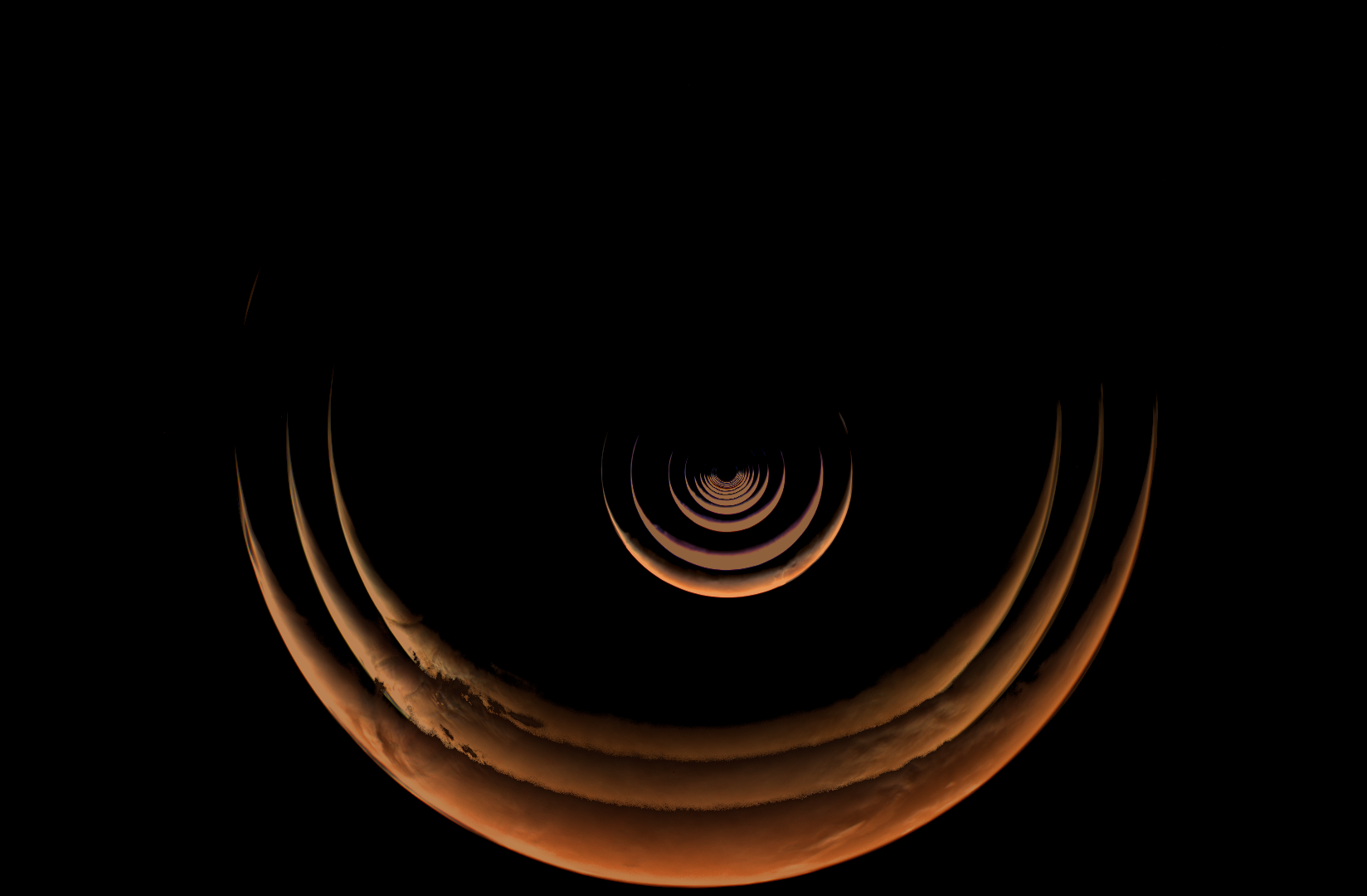
Psyche Approaches Mars

This composite of images taken by NASA’s Psyche mission shows the crescent of Mars grow as the spacecraft approached the planet for a gravity assist from May 2 to May 15, 2026. Because Psyche approached Mars from a high phase angle, the planet appeared as a thin crescent in the days running up to the close approach, lit by sunlight reflecting off its surface.

  •  

NASA, GE Aerospace Work Enables Hybrid-Electric Flight Demonstration

4 min read

Preparations for Next Moonwalk Simulations Underway (and Underwater)

Modified Saab 340, a hybrid-electric aircraft in flight.
A modified Saab 340B aircraft in flight powered in part by a hybrid electric system built by GE Aerospace, along with NASA, BETA Technologies, and Boeing.
GE Aerospace

An aircraft powered by a megawatt-class hybrid-electric engine developed in collaboration with NASA and built by GE Aerospace, demonstrated flight of an innovation that can inform new generations of fuel-saving aircraft power systems.

Mounted to a Saab 340B aircraft, the engine flew at Farnborough International Air Show in the United Kingdom. It was the public debut of a system that has in recent months made historic test flights, becoming the first hybrid electric-powered aircraft to fly above 30,000 feet.

“This achievement reflects what NASA does best in aeronautics: we explore bold possibilities, validate them through rigorous research and testing, and work with industry to turn breakthrough ideas into technologies that bring real value for the American people,” said Laurie Grindle, director of the Aeronautics Division within the agency’s Research and Technology Mission Directorate at NASA Headquarters in Washington.

The testing leveraged work done through NASA’s former Electrified Powertrain Flight Demonstration project and the agency’s ongoing Subsonic Vehicle Technologies and Tools project – years of collaborative research that included key testing at NASA test facilities. 

The engine integrates electric motors, a gas turbine, and energy storage capabilities. It was designed to demonstrate the capacity to power an aircraft around the size of a regional-class jet, reducing fuel burn and costs without sacrificing performance. The unit’s technology and designs are expected to be used to help develop future hybrid systems that could lower airline operating costs. 

The demonstration flight came after years of rapid development for the technology. For NASA, it also validates work that stretches back to a time when hybrid aviation propulsion seemed almost beyond the horizon of possibility.

This achievement reflects what NASA does best in aeronautics: we explore bold possibilities, validate them through rigorous research and testing, and work with industry to turn breakthrough ideas into technologies that bring real value for the American people.

LAURIE A. GRINDLE

LAURIE A. GRINDLE

Director of the Aeronautics Division within the agency's Research and Technology Mission Directorate

“This is the culmination of more than 15 years of work, and we did that because it’s going to have an impact for aircraft that will help reduce energy use and help U.S. companies and the public,” said Ralph Jansen, aerospace engineer at NASA’s Glenn Research Center in Cleveland. “It’s about having a vision that no one believes can happen and then doing the work to define and execute the research and development needed to make it happen.”  

This accomplishment was possible because of the collaborative effort of hundreds of people working on Electrified Powertrain Flight Demonstration and Subsonic Vehicle Technologies and Tools projects across NASA centers, in conjunction with GE Aerospace and its partner companies.

Hybird-Electric Evolves

In recent years, aviation has seen a boom in small aircraft and drones powered by electrical systems drawing from batteries. But large passenger and cargo planes require complex engines capable of supplying massive amounts of power. So more than a decade ago when NASA began contemplating hybrid systems, just the possibility of using electric motors to supplement some energy was a daunting engineering challenge. 

NASA spent about seven years performing preliminary research, working with small businesses and other partners to consider technological obstacles and the potential commercial viability of hybrid systems. During that time, the agency addressed several barriers to implementation including the power, thermal, and battery technology, and the integration of the power system, engine, and aircraft.

Through the agency’s Electrified Powertrain Flight Demonstration award, GE Aerospace and NASA worked with researchers to develop lighter and more efficient power systems and shrink key components – sometimes dramatically. 

NASA and GE Aerospace also leveraged agency facilities and resources to further their research. In 2022, GE Aerospace tested an integrated version of its propulsion system at NASA’s Electric Aircraft Testbed at the agency’s Neil A. Armstrong Test Facility in Sandusky, Ohio. Testing allowed the system to operate in conditions simulating 45,000 feet in altitude, the range in which commercial single-aisle aircraft fly. 

The team added components, including electric motors, power converters, propellers, and a GE Aerospace commercial engine, followed by more ground tests and eventual flight tests. For the researchers who’d spent years on the concept, seeing the engine powering an aircraft in flight was a major step in a long journey.

“I’ve got to say, I was pretty touched seeing it fly. It was just awesome,” Jansen said.  “It’s just like a regular plane, which is probably the best thing of all.”

NASA’s current support for this research is through the Aeronautics Division of its Research and Technology Mission Directorate.

  •  

NASA Sets Briefings for SpaceX Crew-13 Mission to Space Station

The SpaceX Crew-13 members are pictured in their pressure suits seated inside a mockup Dragon spacecraft during a preflight training session at the company's headquarters in Hawthorne, California. From left are, Roscosmos Sergey Teteryatnikov, NASA astronauts Luke Delaney and Jessica Watkins, and CSA (Canadian Space Agency) astronaut Joshua Kutryk.
NASA’s SpaceX Crew-13 members are pictured in their pressure suits seated inside a mockup Dragon spacecraft during a preflight training session at the company’s headquarters in Hawthorne, California. From left are Roscosmos Sergey Teteryatnikov, NASA astronauts Luke Delaney and Jessica Watkins, and CSA (Canadian Space Agency) astronaut Joshua Kutryk.
Credit: SpaceX

NASA and its partners will discuss the upcoming crew rotation mission to the International Space Station during a pair of news conferences on Monday, Aug. 3, from the agency’s Johnson Space Center in Houston.

Mission leadership will provide an overview of NASA’s SpaceX Crew‑13 mission at 12 p.m. EDT. Next, crew members will discuss their training and mission preparations at 2 p.m. This is Crew-13’s final media availability prior to traveling to the agency’s Kennedy Space Center in Florida for launch.

NASA will stream these events live. Learn where to watch online:

https://www.nasa.gov/live

The Crew-13 mission will carry NASA astronauts Jessica Watkins and Luke Delaney, CSA (Canadian Space Agency) astronaut Joshua Kutryk, and Roscosmos cosmonaut Sergey Teteryatnikov to the orbiting laboratory. The crew will launch aboard a SpaceX Dragon spacecraft on the company’s Falcon 9 rocket from Space Launch Complex 40 at Cape Canaveral Space Force Station in Florida no earlier than mid-September.

International media attending in person must email the NASA Johnson newsroom at jsccommu@mail.nasa.gov by 5 p.m., Tuesday, July 21. United States-based media attending in person must respond by 5 p.m., Thursday, July 30. Media joining virtually must respond by 10 a.m. the day of the event. NASA’s media accreditation policy is available online.

Briefing participants are as follows (all times Eastern and subject to change based on real-time operations):

12 p.m.: Mission Overview News Conference

  • Joel Montalbano, deputy associate administrator, Human Spaceflight Mission Directorate, NASA Headquarters
  • Dana Weigel, manager, Low Earth Orbit Program, NASA Johnson
  • Mathieu Caron, director, Astronauts, Life Sciences, and Space Medicine, CSA
  • Julianna Scheiman, director, NASA Science and Dragon Programs, SpaceX

2 p.m.: Crew-13 News Conference

  • Jessica Watkins, commander, NASA
  • Luke Delaney, pilot, NASA
  • Joshua Kutryk, mission specialist, CSA
  • Sergey Teteryatnikov, mission specialist, Roscosmos

Following the news conference, crew members will be available for limited media interviews. All interview requests must be submitted by 5 p.m. on July 30, to the NASA Johnson newsroom at: jsccommu@mail.nasa.gov.

This will be the second flight to the space station for Watkins, who was selected as a NASA astronaut in 2017. Watkins grew up in Lafayette, Colorado, and earned an undergraduate degree in geological and environmental sciences from Stanford University, as well as a doctorate in geology from the University of California, Los Angeles. As a geologist, she studied the Martian surface and was a member of the Curiosity rover science team at NASA’s Jet Propulsion Laboratory in Southern California. Watkins first launched to the space station as a crew member aboard NASA’s SpaceX Crew-4 mission, spending a total of 170 days in space across space station Expeditions 67/68 in 2022. She will be the first NASA astronaut to launch aboard a SpaceX Dragon spacecraft twice.

Selected as a NASA astronaut in 2021, Delaney earned a bachelor’s degree in mechanical engineering at the University of North Florida and a master’s degree in aerospace engineering at the Naval Postgraduate School. The Florida native is a distinguished naval aviator who participated in exercises throughout the Asia Pacific region and conducted missions in support of Operation Enduring Freedom. As a test pilot, Delaney evaluated developmental aircraft systems and served as a test pilot instructor. He also worked as a research pilot at NASA’s Langley Research Center in Hampton, Virginia, where he supported airborne science missions. This is the first spaceflight for Delaney.

The Crew-13 mission also is the first spaceflight for Kutryk. Prior to his selection as a CSA astronaut in 2017, he served as a CF-18 fighter pilot, flying missions in support of Canada’s NATO, U.N., and North American Aerospace Defense Command commitments. A native of Fort Saskatchewan, Alberta, Kutryk also worked as an experimental and operational test pilot at the Aerospace Engineering Test Establishment in Cold Lake, Alberta. Kutryk received a bachelor’s degree in mechanical engineering from the Royal Military College of Canada in Kingston, Ontario, and he is a distinguished graduate of the United States Air Force Test Pilot school in Edwards, California. He has master’s degrees in space studies, flight test engineering, and defense studies.

This mission will be Teteryatnikov’s first trip to the orbiting laboratory. He graduated from the Naval Academy, St. Petersburg, Russia, in 2011 as an engineer specializing in ship power plant operations. Before his selection as a test cosmonaut, Teteryatnikov served in various naval engineering roles, including undersea vessels and specialized engine room operations. He was selected for the Gagarin Research and Test Cosmonaut Training Center Cosmonaut Corps in 2021 and has served as a test cosmonaut since 2023.

For more information about the mission, visit:

https://www.nasa.gov/mission/nasas-spacex-crew-13

-end-

Joshua Finch / Jimi Russell
Headquarters, Washington
202-358-1100
joshua.a.finch@nasa.gov / james.j.russell@nasa.gov

Leah Cheshier / Anna Schneider
Johnson Space Center, Houston
281-483-5111
leah.d.cheshier@nasa.gov / anna.c.schneider@nasa.gov

Share

Details

Last Updated
Jul 20, 2026
Editor
Jessica Taveau
  •  

NASA Sets Briefings for SpaceX Crew-13 Mission to Space Station

The SpaceX Crew-13 members are pictured in their pressure suits seated inside a mockup Dragon spacecraft during a preflight training session at the company's headquarters in Hawthorne, California. From left are, Roscosmos Sergey Teteryatnikov, NASA astronauts Luke Delaney and Jessica Watkins, and CSA (Canadian Space Agency) astronaut Joshua Kutryk.
NASA’s SpaceX Crew-13 members are pictured in their pressure suits seated inside a mockup Dragon spacecraft during a preflight training session at the company’s headquarters in Hawthorne, California. From left are Roscosmos Sergey Teteryatnikov, NASA astronauts Luke Delaney and Jessica Watkins, and CSA (Canadian Space Agency) astronaut Joshua Kutryk.
Credit: SpaceX

NASA and its partners will discuss the upcoming crew rotation mission to the International Space Station during a pair of news conferences on Monday, Aug. 3, from the agency’s Johnson Space Center in Houston.

Mission leadership will provide an overview of NASA’s SpaceX Crew‑13 mission at 12 p.m. EDT. Next, crew members will discuss their training and mission preparations at 2 p.m. This is Crew-13’s final media availability prior to traveling to the agency’s Kennedy Space Center in Florida for launch.

NASA will stream these events live. Learn where to watch online:

https://www.nasa.gov/live

The Crew-13 mission will carry NASA astronauts Jessica Watkins and Luke Delaney, CSA (Canadian Space Agency) astronaut Joshua Kutryk, and Roscosmos cosmonaut Sergey Teteryatnikov to the orbiting laboratory. The crew will launch aboard a SpaceX Dragon spacecraft on the company’s Falcon 9 rocket from Space Launch Complex 40 at Cape Canaveral Space Force Station in Florida no earlier than mid-September.

International media attending in person must email the NASA Johnson newsroom at jsccommu@mail.nasa.gov by 5 p.m., Tuesday, July 21. United States-based media attending in person must respond by 5 p.m., Thursday, July 30. Media joining virtually must respond by 10 a.m. the day of the event. NASA’s media accreditation policy is available online.

Briefing participants are as follows (all times Eastern and subject to change based on real-time operations):

12 p.m.: Mission Overview News Conference

  • Joel Montalbano, deputy associate administrator, Human Spaceflight Mission Directorate, NASA Headquarters
  • Dana Weigel, manager, Low Earth Orbit Program, NASA Johnson
  • Mathieu Caron, director, Astronauts, Life Sciences, and Space Medicine, CSA
  • Julianna Scheiman, director, NASA Science and Dragon Programs, SpaceX

2 p.m.: Crew-13 News Conference

  • Jessica Watkins, commander, NASA
  • Luke Delaney, pilot, NASA
  • Joshua Kutryk, mission specialist, CSA
  • Sergey Teteryatnikov, mission specialist, Roscosmos

Following the news conference, crew members will be available for limited media interviews. All interview requests must be submitted by 5 p.m. on July 30, to the NASA Johnson newsroom at: jsccommu@mail.nasa.gov.

This will be the second flight to the space station for Watkins, who was selected as a NASA astronaut in 2017. Watkins grew up in Lafayette, Colorado, and earned an undergraduate degree in geological and environmental sciences from Stanford University, as well as a doctorate in geology from the University of California, Los Angeles. As a geologist, she studied the Martian surface and was a member of the Curiosity rover science team at NASA’s Jet Propulsion Laboratory in Southern California. Watkins first launched to the space station as a crew member aboard NASA’s SpaceX Crew-4 mission, spending a total of 170 days in space across space station Expeditions 67/68 in 2022. She will be the first NASA astronaut to launch aboard a SpaceX Dragon spacecraft twice.

Selected as a NASA astronaut in 2021, Delaney earned a bachelor’s degree in mechanical engineering at the University of North Florida and a master’s degree in aerospace engineering at the Naval Postgraduate School. The Florida native is a distinguished naval aviator who participated in exercises throughout the Asia Pacific region and conducted missions in support of Operation Enduring Freedom. As a test pilot, Delaney evaluated developmental aircraft systems and served as a test pilot instructor. He also worked as a research pilot at NASA’s Langley Research Center in Hampton, Virginia, where he supported airborne science missions. This is the first spaceflight for Delaney.

The Crew-13 mission also is the first spaceflight for Kutryk. Prior to his selection as a CSA astronaut in 2017, he served as a CF-18 fighter pilot, flying missions in support of Canada’s NATO, U.N., and North American Aerospace Defense Command commitments. A native of Fort Saskatchewan, Alberta, Kutryk also worked as an experimental and operational test pilot at the Aerospace Engineering Test Establishment in Cold Lake, Alberta. Kutryk received a bachelor’s degree in mechanical engineering from the Royal Military College of Canada in Kingston, Ontario, and he is a distinguished graduate of the United States Air Force Test Pilot school in Edwards, California. He has master’s degrees in space studies, flight test engineering, and defense studies.

This mission will be Teteryatnikov’s first trip to the orbiting laboratory. He graduated from the Naval Academy, St. Petersburg, Russia, in 2011 as an engineer specializing in ship power plant operations. Before his selection as a test cosmonaut, Teteryatnikov served in various naval engineering roles, including undersea vessels and specialized engine room operations. He was selected for the Gagarin Research and Test Cosmonaut Training Center Cosmonaut Corps in 2021 and has served as a test cosmonaut since 2023.

For more information about the mission, visit:

https://www.nasa.gov/mission/nasas-spacex-crew-13

-end-

Joshua Finch / Jimi Russell
Headquarters, Washington
202-358-1100
joshua.a.finch@nasa.gov / james.j.russell@nasa.gov

Leah Cheshier / Anna Schneider
Johnson Space Center, Houston
281-483-5111
leah.d.cheshier@nasa.gov / anna.c.schneider@nasa.gov

Share

Details

Last Updated
Jul 20, 2026
Editor
Jessica Taveau
  •  

Our First View of the Surface of Mars

On the morning of July 20, 1976, roughly 40 minutes after mission controllers received word that the Viking 1 lander had successfully touched down on the surface of Mars, this photo gave us our first view from the surface of the Red Planet.

  •  

NASA Pushes New Wing Design to Find Structural Limits

3 Min Read

NASA Pushes New Wing Design to Find Structural Limits

A wide view of a test structure in a laboratory shows a full test assembly secured inside a steel rig. Hydraulic lines, sensors, and support equipment surround the structure, with additional lab equipment visible in the background.
The 15-foot Structural Wing Experiment Evaluating Truss-bracing test article is fully installed in the Flight Loads Laboratory at NASA’s Armstrong Flight Research Center in Edwards, California, on Wednesday, May 20, 2026. The model is part of NASA’s research to develop technologies for future ultra-efficient aircraft.
Credits: NASA/Carla Escamilla

NASA researchers recently put a new wing design, appearing long and thin with a lightweight structural design, through a series of grueling tests to find its structural limits. What they found left them encouraged about the wing’s potential, even when they pushed it past its intended limits.

The 15-foot Structural Wing Experiment Evaluating Truss-bracing (SWEET-15) test article is part of NASA’s research to develop future ultra-efficient aircraft. The design incorporates a long wing supported by an aerodynamic strut, based on NASA’s earlier Transonic Truss‑Braced Wing concept.

The research team is working to understand whether SWEET-15’s design and its new lightweight structural designs could help commercial airliners save fuel. But first, they need to understand how it behaves under the kinds of force wings experience in flight.

A group of people work together in a large workshop, handling and inspecting a long metallic structure laid across padded tables. Tools, materials, and protective equipment are spread across the workspace.
Lab technicians Phil Tofts, Chris McLain, and Jeff Howell and NASA engineers Erin Anderson and Richard Larson prepare the 15-foot Structural Wing Experiment Evaluating Truss-bracing model in the Flight Loads Laboratory at NASA’s Armstrong Flight Research Center in Edwards, California, on Thursday, Dec. 11, 2025. The model is part of NASA’s research to develop technologies for future ultra-efficient aircraft. 
NASA/Christopher LC Clark

The SWEET-15 design originated with combining five different advanced composite manufacturing and assembly technologies that enabled the novel structural design. The 15-foot-long test article was then designed and fabricated at NASA’s Langley Research Center in Hampton, Virginia, before traveling to NASA’s Armstrong Flight Research Center in Edwards, California, for testing.

Over several months, NASA engineers intentionally bent the test wing in the Flight Loads Laboratory at NASA Armstrong. Numerous strain and load sensors, including fiber-optic strain sensors, were placed throughout the structure to track how the wing responded as forces increased.

The data from the sensors confirmed the predictions made by NASA’s computer models. According to initial findings, the wing withstood the anticipated in-flight forces without issue. The results provided the team with confidence in the new manufacturing approaches and methods for connecting wing parts used in SWEET-15, which could support future efficient aircraft designs. The manufacturing approach, developed at NASA Langley used the Integrated Structural Assembly of Advanced Composites robot, aims to produce lighter and stronger composite structures for aerospace vehicles.

A long beam is suspended in a laboratory while personnel observe and guide its placement. Overhead support equipment, cables, and lab infrastructure surround the test area.
Lab technicians Jeff Howell, left and Chris Mount install the 15-foot Structural Wing Experiment Evaluating Truss-bracing model in the Flight Loads Lab at NASA’s Armstrong Flight Research Center in Edwards, California, Wednesday, February 11, 2026. The model is part of NASA’s research to develop technologies for future ultra-efficient aircraft.
NASA/Christopher LC Clark

The test concluded with a deliberate test-to-failure, where engineers increased loads beyond the wing’s design limits to determine how and where it would fail. The structure ultimately failed at roughly 127% of its design limit load, with visible damage appearing near the back edge of the wing and in the upper wing cover. This element of testing provided valuable insight into how the joints connecting the wing to its main strut and a secondary one, called a jury strut, behave under forces beyond the expected flight envelope.

This marks the first time a representative composite truss-braced wing configuration has undergone this type of structural evaluation.  It was made possible only through NASA collaboration across centers and projects, with researchers utilizing agency resources such as the Fiber Optic Sensing System developed to gather data on both aircraft and spacecraft.

A man wearing ear protection works closely with multiple hydraulic and instrumentation units connected to a large beam mounted on a test structure. Numerous cables, hoses, and measurement devices extend from the setup.
NASA research engineer Walter Hargis regulates the 15-foot Structural Wing Experiment Evaluating Truss-bracing model in the Flight Loads Laboratory at NASA’s Armstrong Flight Research Center in Edwards, California, on Tuesday, March 31, 2026. The model is part of NASA’s research to develop technologies for future ultra-efficient aircraft. 
NASA/Ryan Kline

To prepare for the testing, engineers at NASA Langley designed, analyzed, and manufactured the wing and completed safety preparations and lab setup.

Researchers will now analyze the data collected during testing to inform future airframe designs and support NASA’s ongoing efforts to develop more efficient aviation technologies.

The work is being conducted through NASA’s Subsonic Flight Demonstrator project in the agency’s Research Technology Mission Directorate. The successful testing of multiple innovative components marks a milestone in NASA’s aeronautics research.

To learn more, visit:

https://www.nasa.gov/aeronautics/

  •  

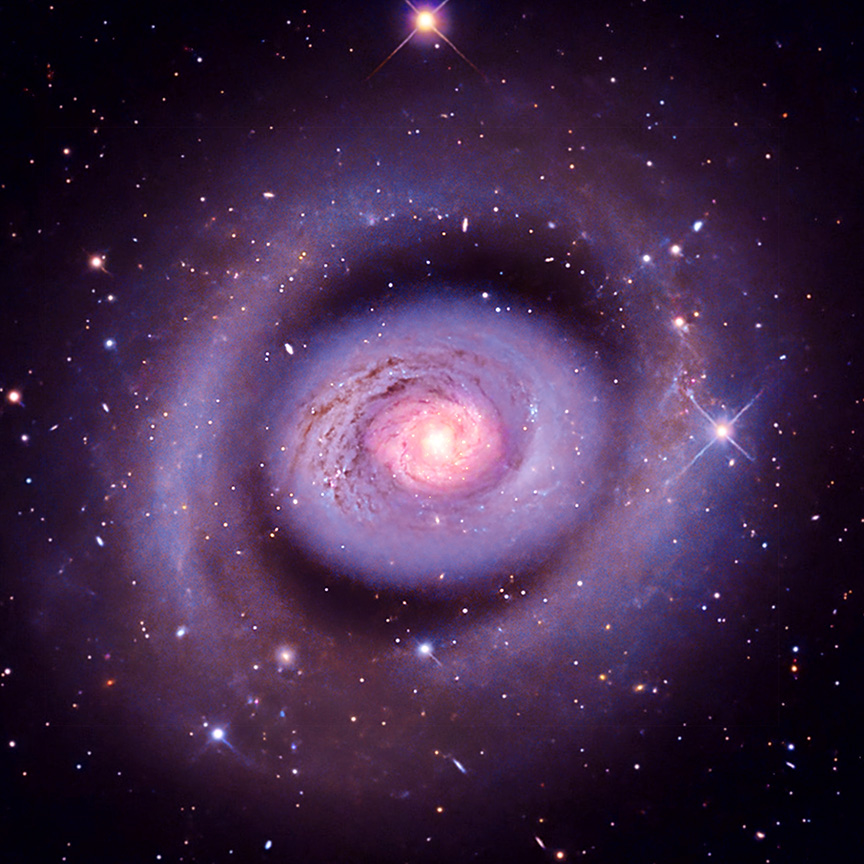
Young Galaxy Cluster

In the Picture of the Month from the James Webb Space Telescope, we are taken on a visit to a building site of significant scale. The project is a galaxy cluster named MACS J0553.4-3342, located in the constellation Columba (the Dove).

  •  

NASA Uses Subscale Aircraft to Accelerate Flight Innovation

4 Min Read

NASA Uses Subscale Aircraft to Accelerate Flight Innovation

A white, blue, and red probe attached to a rotor with four blades flies in the blue sky, just above the Moon.
An atmospheric probe model attached upside down to a quad rotor remotely piloted aircraft ascends with the Moon visible on Oct. 22, 2024. The quad rotor aircraft released the probe above Rogers Dry Lake, a flight area adjacent NASA’s Armstrong Flight Research Center in Edwards, California. The probe was designed and built at the center.
Credits: NASA/Steve Freeman

Testing new aerospace concepts in flight remains one of NASA’s most effective ways to advance knowledge and reduce risk.

The Dale Reed Subscale Flight Research Laboratory at NASA’s Armstrong Flight Research Center in Edwards, California, supports this mission by using small, remotely piloted and autonomous aircraft as cost‑effective platforms to mature innovative ideas, accelerate learning, and enable smoother transitions to full‑scale flight.

When experiments require a flight platform, several NASA remotely piloted aircraft are available: the Alta‑X quadrotor; the Dryden Remotely Operated Integrated Drone (DROID) with its 10‑foot wingspan; and the Multi‑Use Cub, a 14‑foot‑span fixed‑wing aircraft with an expandable payload capacity for flight experiments. For electric vertical takeoff and landing testing, the HQ‑90 quadrotor provides an additional option.

Once aircraft and experiments are cleared for operations, laboratory pilots support the mission, including ground operations and flight activities.

One man manages engine speed with a hand-held controller, while another firmly holds the subscale aircraft in place.
Justin Link, left, holds the subscale aircraft in place, while Justin Hall manages engine speed during preliminary engine tests on Friday, Sept. 12, 2025, at NASA’s Armstong Flight Research Center in Edwards, California. Link is a pilot for small uncrewed aircraft systems at the center’s Dale Reed Subscale Flight Research Laboratory and Hall is the chief pilot.
NASA/Christopher LC Clark

Flight expertise

Each staff member serves as an experienced and certified subscale aircraft pilot and is prepared to fly unique one-of-a-kind or modified commercial aircraft wherever the mission requires.

NASA’s FireSense project conducted flights in the Geneva State Forest, located about 100 miles south of Montgomery, Alabama. NASA Armstrong flight research staff integrated the instrument onto an Alta-X drone and tested the system before deployment. Two team members then transported the drone and sensor to the forest, prepared the vehicle for flight, and operated it during the mission. The NASA sensor was flown on the drone to demonstrate how remotely piloted aircraft can gather localized weather data that influences smoke movement and fire behavior. This information may help operational agencies improve wildfire decision-making and better allocate firefighters and resources.

Other missions occur closer to NASA Armstrong, such as the Enhancing Parachutes by Instrumenting the Canopy (EPIC) project. EPIC involved air‑launching a capsule containing a parachute and flexible sensor from the Alta‑X. Laboratory staff piloted the flights, supported flight operations, and worked with the EPIC team to design and integrate the parachute‑drop mechanism and safety system into the aircraft.

These tests demonstrated that a flexible sensor could help researchers study supersonic parachutes. Continuation of this work can help fill gaps in computer models, making supersonic parachutes safer and more reliable for delivering science instruments and payloads to Mars.

Two men integrate instruments onto a drone.
Justin Link, left, pilot for small uncrewed aircraft systems, and Justin Hall, chief pilot for small uncrewed aircraft systems, install weather instruments on NASA’s Alta X drone at the agency’s Armstrong Flight Research Center in Edwards, California. Members of the center’s Dale Reed Subscale Flight Research Laboratory used the Alta X to support the agency’s FireSense project in March 2025 for a prescribed burn in Geneva State Forest, which is about 100 miles south of Montgomery, Alabama.
NASA/Steve Freeman

Advancing challenging research

The Dale Reed Subscale Flight Research Laboratory uses rapid design and testing capabilities to help small aircraft fly big ideas. These concepts could lead to future breakthroughs that support NASA’s missions across aeronautics, science, and exploration.

For decades, NASA and its partners have advanced Automatic Collision Avoidance Technology. The research demonstrated an autopilot could detect and recover from an imminent ground collision – a capability now helping save lives in high‑performance U.S. military jets. NASA Armstrong had key roles in that work and developed a simplified version, the Automatic Ground Collision Avoidance System, which was installed on the DROID for testing.

The system demonstrated on the DROID — developed to assist general aviation pilots as well as remotely piloted and autonomous aircraft — performed well and led to further research toward a version that provides alerts and steering cues. The NASA Armstrong Technology Transfer Office is working to license the technology for U.S. businesses to develop the system as a commercial product.

The Prandtl‑D (Preliminary Research Aerodynamic Design to Lower Drag) flying‑wing glider was also designed, fabricated, and flown at NASA Armstrong. Researchers found that its twisted wing design could reduce drag and generate thrust at the wingtips, advancing concepts that may support greater fuel economy for future aircraft. The original Prandtl‑D is now part of the Smithsonian National Air and Space Museum collection in Washington, and the Prandtl-D3 is at the California Science Center in Los Angeles. Researchers continue developing the next generation of the design in the laboratory.

A wide range of capabilities in the laboratory help transform promising concepts into flight-ready test structures. These include rapid prototyping using traditional and advanced 3D manufacturing techniques, as well as composite and conventional fabrication processes. The team of engineers and technicians also provides custom component design and specialized fabrication to meet unique research needs.

The laboratory supports electrical and mechanical design, hardware and software integration, and the safety and flight-readiness processes required for successful missions. Additional technical facilities, such as the Experimental Fabrication Branch and the Environmental Laboratory at NASA Armstrong, further enhance these capabilities. Together, they support development, testing, and validation activities that advance NASA’s aeronautics and exploration goals.

Deborah Jackson, Al Bowers and Abbigail Waddell successfully launch the subscale Prandtl-D 3C glider.
NASA

Share

Details

Last Updated
Jul 15, 2026
Editor
Dede Dinius
Contact

💾

NASA researchers are developing technology to close knowledge gaps and make supersonic parachutes safer and more reliable for delivering science instruments ...
  •  

Anil Menon Launches to Space Station

NASA astronaut candidate Anna Menon and her children watch as a Soyuz rocket launches to the International Space Station with Expedition 75 crewmembers NASA astronaut Anil Menon and Roscosmos cosmonauts Pyotr Dubrov and Anna Kikina, Tuesday, July 14, 2026, at Site 31/6 at the Baikonur Cosmodrome in Kazakhstan.

  •  

NASA Jets Turn Red, White, and Blue

A jet aircraft painted in red, white and blue flies over green trees below.
A NASA F-15 aircraft flies above Washington on Saturday, July 4, 2026, as part of a flyover to celebrate America’s 250th birthday. This aircraft is from NASA’s Armstrong Flight Research Center in Edwards, California, and it joined other NASA aircraft for the flyover.
NASA/Jim Ross

In honor of America’s 250th birthday, two of NASA’s most iconic aircraft got a fresh coat of red, white, and blue paint ahead of a flyover in Washington on July 4, 2026, with other NASA aircraft.  

An F-15 and an F/A-18 from NASA’s Armstrong Flight Research Center in Edwards, California, recently were repainted in patriotic colors as a tribute to the past and a salute to the future.

The red, white, and blue commemorative paint and Freedom 250 logo will remain on these aircraft for at least the next year, so be sure to catch these at local air shows and events.

Follow along on social media and at https://www.nasa.gov/freedom250/ to learn more about where to spot the aircraft (dependent upon availability and flying schedules):

  • July 23-24: EAA AirVenture, Oshkosh, Wisconsin
  • Oct. 3-4: Pacific Airshow, Huntington Beach, California
  • And more…

Check out more images here: https://www.nasa.gov/gallery/freedom-250/

Two red, white and blue jet aircraft are sitting on the ramp ready for takeoff. The body of the aircraft is painted in blue with white stars, and the wings are red and white stripes to mirror the American flag.
NASA’s F-15, right, and F/A-18 aircraft are shown at International Aerospace Coatings Inc.’s facility in Spokane, Washington, on Thursday, July 2, 2026, with new red, white, and blue paint to celebrate America’s 250th birthday. The aircraft, from NASA’s Armstrong Flight Research Center in Edwards, California, participated in the Freedom 250 flyover in Washington on Saturday, July 4, 2026, with other NASA and military aircraft. NASA/Jim Ross
NASA/Jim Ross
Two red, white and blue jet aircraft are sitting on the ramp ready for takeoff. The body of the aircraft is painted in blue with white stars, and the wings are red and white stripes to mirror the American flag.
NASA’s F-15 aircraft is shown at International Aerospace Coatings Inc.’s facility in Spokane, Washington, on Thursday, July 2, 2026, with new red, white, and blue paint to celebrate America’s 250th birthday. The aircraft, from NASA’s Armstrong Flight Research Center in Edwards, California, participated in the Freedom 250 flyover in Washington on Saturday, July 4, 2026, with other NASA and military aircraft. NASA/Jim Ross
NASA/Jim Ross
Two red, white and blue jet aircraft are sitting on the ramp ready for takeoff. The body of the aircraft is painted in blue with white stars, and the wings are red and white stripes to mirror the American flag.
NASA’s F-18 aircraft is shown at International Aerospace Coatings Inc.’s facility in Spokane, Washington, on Thursday, July 2, 2026, with new red, white, and blue paint to celebrate America’s 250th birthday. The aircraft, from NASA’s Armstrong Flight Research Center in Edwards, California, participated in the Freedom 250 flyover in Washington on Saturday, July 4, 2026, with other NASA and military aircraft. NASA/Jim Ross
NASA/Jim Ross

Share

Details

Last Updated
Jul 14, 2026
Editor
Dede Dinius
Contact
  •  

NASA Study Points to Smoother Air Taxi Rides

3 min read

Preparations for Next Moonwalk Simulations Underway (and Underwater)

A brown and yellow platform holding a seat that is raised up in the air is holding one passenger. The passenger is wearing virtual reality goggles and a harness. There is a TV monitor to the right of the monitor showing the words “liftoff” and a second screen behind the passenger.
Matt Kamlet, an employee at NASA’s Armstrong Flight Research Center in Edwards, California, sits atop the virtual reality passenger ride quality simulator during a study of air taxi motion Monday, Dec. 15, 2025. NASA recently completed a multi-year study to understand how large, sudden air taxi motion affects ride comfort.
NASA/Christopher LC Clark

No one wants to get into an uncomfortable aircraft. NASA research could help the emerging industry of air taxis —small, vertical-takeoff-and-landing aircraft meant for short trips — understand the relationship between comfort and willingness to fly.

That’s where NASA comes in, with data that can help identify how to plan air taxi rides that can keep travelers feeling good.

NASA was able to gather that data by putting its own employees through some rough virtual flights. At the agency’s Armstrong Flight Research Center in Edwards, California, volunteers have been strapping into a virtual reality motion simulator to experience the sudden shifts and tilts that tomorrow’s air taxis could encounter, showing researchers those moments feel from a passenger’s point of view.

Their reactions are giving NASA new insight into how aircraft motion influences comfort and confidence in flight — for instance, that certain kinds of large, sudden motions can be especially bothersome. Using that data, the team developed new models linking those sudden motions to passengers’ willingness to fly. The models can help guide future aircraft design and flight operations, letting producers know what maneuvers will be too jarring for future air taxi riders.

Large, sudden movements can also come from gusting winds or landings. The NASA data allows researchers to estimate when passengers may begin to feel uncomfortable as motion increases, giving them the ability to shape aircraft designs and operations to minimize the impact of those situations.

“Through this study and others, we are starting to identify passenger comfort thresholds for aggressive flight motion,” said Curtis Hanson, NASA Armstrong lead researcher for this effort. “We can begin to make predictions about how air taxis should fly so that most passengers will find the experience enjoyable and want to ride again, which will benefit the public and the industry.”

In the simulator, each participant experienced four levels of their aircraft pitching up and down, tilting from side-to-side, rotating, or accelerating quickly into a climb or a dive during flights from downtown San Francisco to Alcatraz Island in California. Even moderate changes in these motions reduced comfort for some participants, while others remained comfortable at higher levels. Participants rated each flight on a five-point scale and identified which motions felt uncomfortable.

Participants were asked whether they would take a real air taxi flight with motion they find uncomfortable. Their answers suggested that today’s travelers may be less tolerant of rough motion than airline passengers 50 years ago, based on comparisons with earlier NASA ride-quality research.

This latest feedback builds on a multiyear NASA study to better understand air taxi passenger comfort. The overall research effort found clear relationships between specific aircraft motions and how comfortable people feel during flight.

This work is currently led under the Subsonic Vehicle Technologies and Tools project in NASA’s Research and Technology Mission Directorate and contributes to the agency’s advanced air mobility research.

Share

Details

Last Updated
Jul 13, 2026
Editor
Dede Dinius
Contact
  •  

NASA Astronaut Anil Menon

NASA astronaut and Expedition 75 flight engineer Anil Menon poses in a spacesuit for a portrait at NASA's Johnson Space Center in Houston, Texas.

  •  

NASA Photographer Captures Images from F-18 Over Washington

2 min read

Preparations for Next Moonwalk Simulations Underway (and Underwater)

A man in a tan flight suit, flight gear, and helmet takes a photo with a camera over his left shoulder inside of a jet aircraft. The red and white wings of the aircraft are seen to the sides of the man. A second jet aircraft with red, white and blue paint is seen to the right of the frame. There are buildings and grassy areas below the two aircraft.
NASA photographer Jim Ross flies above the Washington Monument in Washington on Saturday, July 4, 2026, in an F-18 aircraft, as part of a flyover to celebrate America’s 250th birthday. This aircraft is from NASA’s Armstrong Flight Research Center in Edwards, California, and it joined other NASA aircraft for the flyover.
NASA/Jim Ross

NASA flight photographers capture history from a perspective few ever experience, getting a rare bird’s-eye view of the agency’s missions in action. Their photos document key NASA research and give the public a front-row seat to the work happening behind the scenes.

Jim Ross, a photographer at NASA’s Armstrong Flight Research Center in Edwards, California, flew over Washington during the Fourth of July celebration to document a NASA flyover commemorating America’s 250th birthday. He’s captured some of the agency’s most exhilarating milestones, like early SR-71 flights, the delivery flight of Space Shuttle Endeavour to Los Angeles, and first flights of NASA’s X-59 quiet supersonic research aircraft.

“I grew up in Bozeman, Montana, when it was still considered a small town, so if someone told that little kid that he would be flying in a F-18 over the National Mall, he would have never believed it,” Ross said. “I love documenting history, and having the opportunity to capture flights and launches has kept me doing it for almost 37 years.”

Ross began his aviation photography career in 1989 when he joined the staff at NASA Armstrong (then Dryden). He became the photo lead in 1997, a title he retains.

Check out his images from the flyover here: https://www.nasa.gov/gallery/freedom-250/

A photographer takes a selfie from the rear seat of a jet aircraft during flight, with another jet visible through the window.
NASA photographer Jim Ross takes a selfie from the rear seat of a NASA F/A‑18 during a cross‑country flight from Spokane, Washington, to Washington, D.C., on Thursday, July 2, 2026. The agency’s F‑15, flying alongside the aircraft, is visible through the window. Both aircraft, from NASA’s Armstrong Flight Research Center in Edwards, California, participated in the Freedom 250 flyover with other NASA and military aircraft on Saturday, July 4, 2026.
NASA/Jim Ross
A man in a tan flight suit, flight gear, and helmet looks outside of a jet aircraft cockpit window while holding a camera. One other jet aircraft is seen outside of the cockpit window in the background.
NASA photographer Jim Ross flies above Washington on Saturday, July 4, 2026, in an F-18 aircraft, as part of a flyover to celebrate America’s 250th birthday. This aircraft is from NASA’s Armstrong Flight Research Center in Edwards, California, and it joined other NASA aircraft for the flyover. A NASA F-15 is seen flying to the side of the NASA F-18.
NASA/Jim Ross

Share

Details

Last Updated
Jul 10, 2026
Editor
Dede Dinius
Contact
  •  

Waxing Gibbous Moon

The waxing gibbous Moon is pictured above Earth from the International Space Station as it orbited 264 miles above a partly cloudy Indian Ocean southeast of Madagascar.

  •  

Curiosity Sees Martian Sulfur Up Close

These sulfur crystals were found inside a rock after NASA’s Curiosity Mars rover happened to drive over it and crush it on May 30, 2024, the 4,200th Martian day, or sol, of the mission.

  •  

Artemis II Crew and Apollo 14 Moon Tree

The Artemis II crew participates in the dedication of the Apollo 14 Moon tree at the Lunar Receiving Park at NASA's Johnson Space Center. This tree is a second-generation Apollo Moon tree of the loblolly pine species.

  •  

NASA Takes Flight For America's 250th

NASA Administrator Jared Isaacman leads a flyover featuring his personally owned F-5 Tiger during the Great American State Fair on July 4, 2026, on the National Mall in Washington, D.C.

  •  

Good Morning, Earth!

A bright orange sunburst illuminates Earth's atmosphere during an orbital sunrise in this photograph from the International Space Station as it orbited 264 miles above the Caucasus Mountains.

  •  

A Day of Flight Testing at NASA Armstrong

3 min read

Preparations for Next Moonwalk Simulations Underway (and Underwater)

Two men wearing tan flight suits face each other and walk on a concrete surface. The men both carry pilot helmet bags with flight gear inside. Both men are wearing green flight gear.
NASA flight test engineer A.J. Jaffe and pilot Nils Larson walk on the ramp before a flight Tuesday, Jan. 13, 2026, at NASA’s Armstrong Flight Research Center in Edwards, California. The two support the agency’s Crossflow Attenuated Natural Laminar Flow (CATNLF) project, which aims to lower fuel costs for future commercial aircraft by testing a scale-model wing designed to improve laminar flow.
NASA/Christopher LC Clark

Flight testing is a team sport. For nearly 80 years, teams at NASA’s Armstrong Flight Research Center in Edwards, California, have used flight testing to push the limits of aerodynamics and advance aviation.

Earlier this year, NASA’s Crossflow Attenuated Natural Laminar Flow (CATNLF) initiative tested a wing concept that would maximize the smooth flow of air known as laminar flow, which could lower fuel costs for future airliners. During flight testing, researchers strapped a scale-model CATNLF wing to the bottom of a NASA F-15 aircraft.

Here’s what a day of CATNLF flight testing looked like.

A NASA F-15 research aircraft is parked on a ramp at NASA’s Armstrong Flight Research Center in Edwards, California. Ground crew work beneath the aircraft on an experimental test article, resembling a ventral fin, mounted under the aircraft’s fuselage.
NASA ground crew prepares the agency’s F-15 research aircraft and Cross Flow Attenuated Natural Laminar Flow (CATNLF) test article ahead of its first high-speed taxi test on Tuesday, Jan. 12, 2026, at NASA’s Armstrong Flight Research Center in Edwards, California. The CATNLF design aims to reduce drag on wing surfaces to improve efficiency and, in turn, reduce fuel burn.
NASA/Christopher LC Clark

5 a.m. — Aircraft staging

Ground crews ready the aircraft for the mission. If the operation involves a chase plane — a second aircraft to monitor the test flight — it would also be prepared, along with its crew.  

6 a.m. — Crew brief

Pilots, engineers, maintenance techs, project leads, researchers, photographers, and videographers meet to review the flight’s goals, weather reports, and final details.

Six people sit at a long desk and face computer monitors. The person most in view, to the right of the frame, wears a green plaid button-down shirt and a red lanyard around his neck. Each person is wearing a headset with a microphone that connects to a computer.
NASA researchers Mike Frederick, right, and Michelle Banchy, left, along with Ashante Jordan and intern Phillip Nguyen, sit in a control room and prepare for a flight test Thursday, Jan. 29, 2026, at NASA’s Armstrong Flight Research Center in Edwards, California. The agency’s Crossflow Attenuated Natural Laminar Flow (CATNLF) project aims to lower fuel costs for future commercial aircraft by testing a scale-model wing designed to improve laminar flow.
NASA/Christopher LC Clark

6:30 a.m. — Control room checks, air crew suit-up

Researchers head to the control room to complete day-of checks, confirming all communications, displays, and instruments are functioning.

Pilots suit up in life support, including custom‑fit pressure suits, harnesses, helmets, and masks. If a photographer, videographer, or flight test engineer will be in the aircraft’s back seat, they do the same.

6:45 a.m.Air crew steps, control room preparations

The pilot completes preflight checks with the crew chief and technicians for the aircraft’s electrical systems. The pilot and the crew chief sign a flight preparedness report confirming the aircraft is ready to fly.

Inside the control room, the team prepares to monitor the flight using the same set of test cards, a step-by-step plan for the flight.

7 a.m.Pilot secured in jet

The pilot and backseat crew member climb into their seats, strap in, and secure any gear they’ve brought for the test. The pilot completes preflight ground checks.

7:15 a.m. — Aircraft taxi

The pilot communicates with the control tower and taxis to the runway. Control room teams at NASA Armstrong monitor the aircraft via radio.

7:30 a.m. — Takeoff

The pilot accelerates down the runway and, at the proper speed, pulls back on the stick to take off. Once airborne, the pilot coordinates with air traffic control at Edwards Air Force Base and the NASA Armstrong control room while flying to the designated test area.

A white and blue painted jet aircraft flies above a mountain range. A model wing hangs below the aircraft’s center line. The cockpit is closed and two pilots are visible inside with flight gear on.
A F-15 aircraft owned by NASA’s Armstrong Flight Research Center in Edwards, California, flies above a mountain range on Tuesday, April 21, 2026. The agency’s Crossflow Attenuated Natural Laminar Flow (CATNLF) test article is attached to the bottom of this F-15. This project aims to lower fuel costs for future commercial aircraft by testing a scale-model wing designed to improve laminar flow. 
NASA/Jim Ross

7:30 to 8:30 a.m. — Flight

At the test location, the team coordinates with the pilot on altitude, speed, and maneuvers. The test conductor relays each task, and the pilot completes them one-by-one. The pilot and control room monitor the performance of the hardware, instruments, aircraft, or software throughout the sequence. After completing the test points, the pilot returns to base.

8:45 a.m. — Landing, towing

The pilot lands and taxis to the ramp at NASA Armstrong, where the crew chief meets the jet. After the pilot exits, the aircraft is towed into the hangar for maintenance.

9:30 a.m. — Crew debrief

The pilot, project team, and mission controlstaff return to the briefing room tocapture lessons learned and document items for follow-up.

10 a.m. — Data download, second flight prep

Teams download flight data for analysis. If two flights are scheduled, preparations begin immediately for the second.

Four people walk toward a building on a concrete surface. Each person is wearing a flight harness, and other green flight gear, as well as a tan flight suit and tan boots. Each person also carries a flight helmet bag and other small bags with various flight gear inside.
Four NASA employees walk toward a hangar after a flight Thursday, Feb. 4, 2026, at NASA’s Armstrong Flight Research Center in Edwards, California. The team supports the agency’s Crossflow Attenuated Natural Laminar Flow (CATNLF) project, which aims to lower fuel costs for future commercial aircraft by testing a scale-model wing designed to improve laminar flow.
NASA/Christopher LC Clark
  •  

NASA Astronaut Chris Williams Preps for Spacewalk

Flight engineer Sophie Adenot of ESA (European Space Agency) assists flight engineer Chris Williams of NASA as he tries on his spacesuit, testing its comfort and mobility as well as its communications and life support systems inside the International Space Station’s Quest airlock.

  •  

Euclid Sees Heart of Milky Way

This image by ESA’s (European Space Agency) Euclid (with color added using ground-based images) provides an earlier snapshot of a region of our galaxy that NASA’s Nancy Grace Roman Space Telescope will repeatedly observe during the upcoming years.

  •  

Roman Telescope Comes to Kennedy

NASA’s Pegasus barge arrives at the Launch Complex 39 turn basin at the agency’s Kennedy Space Center in Florida carrying NASA’s Nancy Grace Roman Space Telescope on Sunday, June 21, 2026.

  •  

Hanging in the Balance

The Moon's rocky, uneven, and otherworldly surface features are highlighted by the terminator – the difference between light and darkness.

  •  

Stages of Star Formation

This NASA/ESA/CSA James Webb Space Telescope Picture of the Month shows the giant molecular cloud Orion A, an area of the sky replete with star-forming clouds.

  •  

Aurora Australis

The aurora australis arcs over Earth during an active solar event in this photograph taken at approximately 11:32 p.m. local time from the International Space Station as it orbited 271 miles above the Indian Ocean southwest of Perth, Australia on June 5.

  •  

San Francisco's Patchwork Streets

A period of unsettled weather brought scattered showers and thunderstorms to California’s Bay Area on May 27, 2026. That afternoon, a break in the clouds left downtown San Francisco and nearby communities beneath mostly cloud-free skies, allowing an astronaut aboard the International Space Station to take this photograph.

  •  

Black Eye Galaxy

Easily identified by the spectacular band of dark dust that partially obscures its bright core, Messier 64, or the Black Eye Galaxy, is characterized by its bizarre internal motion.

  •  

Soccer Meets Space Science

Researchers tested soccer balls aboard the International Space Station to study how internal mass affects motion and stability in microgravity.

  •  

Artemis III Crew Announced

NASA announced the Artemis III crew on Tuesday, June 9, 2026. NASA astronaut Andre Douglas, mission specialist; ESA (European Space Agency) astronaut Luca Parmitano, pilot; NASA astronaut Randy Bresnik, commander; and NASA astronaut Frank Rubio, mission specialist, will demonstrate the Orion spacecraft's rendezvous and docking capabilities with test versions from one, or both, American commercial human landing systems in development by Blue Origin and SpaceX.

  •  

Supersonic!

NASA’s X-59 quiet supersonic research aircraft completed its first supersonic flight Friday, June 5, 2026, marking the first time the aircraft exceeded the speed of sound in support of NASA’s Quesst mission. The milestone represents a major step in flight testing as the aircraft expands into the supersonic portion of its flight envelope.

  •  

First Steps: America’s Grueling Second Spacewalk

A year after America’s first spacewalk, Gemini IX-A Eugene Cernan stepped outside his spacecraft for an ambitious extravehicular activity scheduled for 167 minutes. The challenges he faced led NASA to reevaluate plans, equipment, and training for future spacewalks.

  •  

Colorful, Chaotic Jupiter

During its 61st close flyby of Jupiter on May 12, 2024, NASA's Juno spacecraft captured this color-enhanced view of the giant planet's northern hemisphere.

  •  

Look Up!

Astronauts Sophie Adenot of ESA (European Space Agency) and Jack Hathaway of NASA, both Expedition 74 flight engineers, look out a window in the cupola.

  •  

Pretty in Pink

This image of Westerlund 2 features Chandra X-ray Observatory data (pink) and James Webb infrared data (red, orange, green, cyan, and blue).

  •  

Going Low and Slow in Testing

NASA’s X-59 quiet supersonic research aircraft flies above NASA’s Armstrong Flight Research Center in Edwards, California, during testing focused on lower-speed and altitude flight conditions in support of NASA’s Quesst mission. NASA continues to include two-flight days in its envelope expansion as teams work to better understand how the aircraft responds throughout its operating range.

  •  

Students Build Moon Robots for NASA’s 2026 Lunabotics Challenge

Katherine Rauscher, of Michigan Technological University, prepares her team’s prototype lunar robot for its turn during the finals for NASA’s 2026 Lunabotics Challenge competition on Tuesday, May 19, 2026, inside the Astronauts Memorial Foundation’s Center for Space Education at the Kennedy Space Center Visitor Complex in Florida. Forty-seven teams from around the U.S. designed and built remote-controlled robots capable of traversing challenging lunar terrain while constructing regolith-based berm under conditions similar to those the agency will face as it returns to the lunar surface through Artemis.

  •  

Chennai City Lights

Chennai, on India's southern coast along the Bay of Bengal and with a metropolitan population of about 8.7 million, shines with white LED streetlights in this photograph taken at approximately 9:13 p.m. local time on May 2, 2026, from the International Space Station.

  •  

Hubble Sights Galaxy in Transition

This NASA Hubble Space Telescope images reveals the lenticular galaxy, NGC 1266. This enigmatic post-starburst galaxy has a bright center and a face that hints at spiral structure, yet it holds no discernable spiral arms.

  •  

Psyche Spacecraft Completes Mars Flyby

NASA’s Psyche spacecraft completed its close approach of Mars on May 15, capturing images as it came within 2,864 miles (4,609 kilometers) of the planet’s surface. This is an enhanced-color view of the large double-ring crater Huygens and the surrounding heavily cratered southern highlands.

  •  

Moon-Venus Conjunction

The Moon and Venus, center, are seen in conjunction above the Washington Monument, Monday, May 18, 2026, as viewed from the Mary W. Jackson NASA Headquarters Building in Washington.

  •  

Legno solare, la balsa modificata produce elettricità anche al buio

Un gruppo di ricercatori cinesi ha trasformato il legno di balsa in un materiale capace di assorbire energia solare, immagazzinarla sotto forma di calore e restituirla dopo il tramonto, fino a generare elettricità attraverso un dispositivo termoelettrico. Lo studio, pubblicato su Advanced Energy...

  •  

Pozzo di Karahora, la struttura nel Caucaso che sfida la geologia

Nel 2011 lo speleologo russo Arthur Zemukov individua nel Caucaso un pozzo profondo oltre quaranta metri con pareti lisce e geometrie regolari, una struttura che i rilievi descrivono come incompatibile con una formazione naturale. La scoperta arriva dopo anni di ricerche tra archivi locali, mappe...

  •  

Un nuovo super microscopio svela la vita dentro le cellule

Un nuovo strumento di osservazione sviluppato alla Stanford University sembra esser in grado di rivoluzionare il modo in cui gli scienziati studiano la vita a livello cellulare. Il dispositivo, chiamato Interferometric Image Scanning Microscopy (iISM), consente di osservare le cellule vive con...

  •  

NASA’s First Asteroid Sample Has Landed, Now Secure in Clean Room

After years of anticipation and hard work by NASA’s OSIRIS-REx (Origins, Spectral Interpretation, Resource Identification and Security – Regolith Explorer) team, a capsule of rocks and dust collected from asteroid Bennu finally is on Earth. It landed at 8:52 a.m. MDT (10:52 a.m. EDT) on Sunday, in a targeted area of the Department of Defense’s Uta

  •  

La NASA invita a los medios al lanzamiento de Psyche

Ya está abierto el proceso de acreditación de los medios de comunicación para el próximo lanzamiento de la nave espacial Psyche de la NASA en su misión a un asteroide único y rico en metales que orbita alrededor del Sol, entre Marte y Júpiter.

  •  

NASA Hosts OSIRIS-REx Sample Lab Media Day in Houston

Ahead of the first asteroid sample collected by the U.S. arriving on Earth in September, media are invited on Monday, July 24, to see NASA’s newly-built OSIRIS-REx Sample Curation Laboratory where the agency will study the sample at its Johnson Space Center in Houston.

  •  
❌