Modalità di lettura

Oltre le nuvole, in volo per studiare l’eclissi

L’eclissi totale del 12 agosto non passa per l’Irlanda. L’isola verde è posizionata molto bene per osservare l’eclissi parziale, con percentuali di oscuramento del Sole che variano dal 93 per cento di Belfast al 97 per cento nell’isola di Valentia, a sud-ovest. Ma per raggiungere la zona di totalità, bisogna inoltrarsi nell’Oceano Atlantico, trecentocinquanta chilometri a ovest della costa occidentale d’Irlanda. È quello che farà un team di ricercatori e ricercatrici irlandesi e italiani, osservando l’eclissi da una postazione decisamente singolare: un Airbus C295 dell’Aeronautica Militare Irlandese, che sorvolerà la fascia di totalità al largo della costa occidentale dell’Irlanda.

La striscia di totalità dell’eclissi del 12 agosto 2026. Crediti: TimeAndDate

Il cuore della spedizione è un telescopio chiamato E-CorMag, sviluppato dall’Istituto nazionale di astrofisica (Inaf) di Torino e l’Università di Firenze, in collaborazione con l’Osservatorio astronomico della Valle d’Aosta, per studiare il campo magnetico della corona solare. L’aereo è dotato di un finestrino apribile (bubble window, in inglese) che permette le misurazioni con un telescopio. In questo modo, lo strumento non dovrà guardare attraverso il finestrino dell’aereo, che introduce distorsioni ottiche sulle immagini. La durata dell’eclissi inoltre si allunga di qualche secondo.

Gerardo Capobianco dell’Inaf – Osservatorio astrofisico di Torino

Per saperne di più, Media Inaf ha raggiunto Gerardo Capobianco, che al momento si trova in Irlanda dove, insieme ai colleghi Lucia Abbo e Hervé Haudemand dell’Inaf di Torino e alle controparti irlandesi del Dublin Institute for Advanced Studies, Trinity College Dublin, Technological University Dublin e Irish Air Corps, sta per prendere parte a questa avventurosa missione scientifica.

Dottor Capobianco, qual è l’obiettivo della spedizione?

«Lo strumento E-CorMag è stato disegnato per permettere osservazioni della corona solare in una delle sue righe più brillanti nello spettro visibile, quella del ferro ionizzato 13 volte (Fe XIV). La stessa riga viene misurata in orbita dalla missione Esa Proba-3 tramite il coronografo Aspiics. Le misure durante l’eclissi permetteranno quindi una cross-calibrazione molto accurata delle misure fornite da Aspiics. Ma non ci limiteremo a questo. Infatti lo strumento E-CorMag, a differenza di Aspiics, permette anche misurazioni della polarizzazione della riga del ferro. Ed è proprio misurando la polarizzazione della luce che potremo mappare la struttura del campo magnetico coronale. Il campo magnetico è la chiave per svelare uno dei più grandi enigmi della fisica solare moderna: perché la corona solare è centinaia di volte più calda della superficie del Sole?».

Sono già state fatte osservazioni scientifiche di un’eclissi a bordo di un aereo?

Il team dell’esperimento, con lo strumento E-CorMag (in primo piano) al Dunsink Observatory, in Irlanda. Lucia Abbo è la terza da sinistra; Gerardo Capobianco è il secondo da destra (cliccare per ingrandire)

«Le osservazioni da aereo sono diventate abbastanza comuni dagli anni Settanta in poi. Volare in quota offre diversi vantaggi: permette di spostarsi dove il meteo o la visibilità sono migliori, di seguire l’ombra dell’eclissi per estenderne la durata — un gruppo francese nel 1973 riuscì a inseguirla per ben 70 minuti a bordo di un Concorde supersonico — e di effettuare misure nell’infrarosso altrimenti impossibili da terra, dove questa luce viene assorbita dall’atmosfera. Lo stesso gruppo irlandese con cui collaboriamo ha già condotto una spedizione simile su un aereo dell’Aeronautica Militare Irlandese durante l’eclissi del 2015 utilizzando camere reflex digitali. Questa volta, invece, porteremo a bordo uno strumento scientifico più complesso, con l’aspettativa di raccogliere dati di ottima qualità».

Perché è così importante osservare il Sole durante un’eclissi totale?

«I pochi minuti della totalità durante un’eclissi solare sono gli unici momenti in cui la corona solare si mostra in tutto il suo splendore in modo naturale, senza che il disco solare l’accechi. Per la fisica solare è una vera e propria corsa contro il tempo: lavoriamo per anni per progettare e calibrare strumenti di precisione che poi avranno solo una manciata di minuti per funzionare alla perfezione. Un’eclissi totale è veramente un’occasione unica per fare da Terra misure ad altissima risoluzione che altrimenti sarebbero impossibili».

Il telescopio E-CorMag. Crediti: Inaf

Ci parli dello strumento E-CorMag.

«E-CorMag è un telescopio compatto di 50 millimetri di apertura e 500 millimetri di focale, equipaggiato con un rivelatore Ccd di classe scientifica. Ma il suo vero “cuore” sta nei filtri e nel polarimetro, che prendono in prestito le tecnologie di due grandi missioni spaziali: i filtri sono gli stessi del coronografo Aspiics a bordo di Proba-3, mentre il polarimetro deriva direttamente dallo strumento Metis su Solar Orbiter di Esa/Nasa. Lo strumento è progettato per catturare la luce polarizzata emessa sia dalla “riga verde” del ferro (Fe XIV a 530.3 nm) sia dal continuo della corona solare (540-570nm). Facendo passare solo questi specifici fotoni, E-CorMag ci permette di ricavare la direzione del campo magnetico coronale. Abbiamo già testato l’esperimento durante l’eclissi del 2024: lo strumento ha mostrato tutto il suo potenziale, anche se le condizioni meteo e alcuni imprevisti hanno reso l’analisi dei dati particolarmente complessa. Questa nuova spedizione è l’occasione perfetta per perfezionare il lavoro e raccogliere le informazioni sul campo magnetico coronale».

Che cosa sperate di scoprire sul campo magnetico solare?

«Il campo magnetico solare è un ingrediente fondamentale per investigare il problema del riscaldamento della corona, come già detto, ma anche per comprendere tutta la dinamica del vento solare e delle eruzioni solari. Mentre sono possibili misure del campo magnetico fotosferico sulla superficie del Sole, quelle coronali sono ricavate da diagnostiche che richiedono segnali collegati alla polarizzazione non facili da acquisire. Quindi con le nostre misure saremo in grado di determinare la direzione del campo magnetico, misure molto utili per la topologia del campo stesso e per dare vincoli ai modelli di campo magnetico».

L’aereo dell’aeronautica militare irlandese. Crediti: Irish Air Corps

Come opererete lo strumento a bordo del volo?

«Lo strumento verrà montato di fronte a un finestrino che durante la parzialità verrà aperto per poter affinare il puntamento e poter acquisire dati di ottima qualità, senza che il finestrino introduca distorsioni ottiche e polarimetriche. Durante la fase di avvicinamento, un filtro solare proteggerà il telescopio; lo rimuoveremo nell’istante del diamond ring (l’effetto chiamato “anello di diamante” che precede la totalità). Questa operazione, inclusa la stabilizzazione del gimbal (la struttura di imbrago) per annullare le vibrazioni, richiede circa 5 secondi. Da quel momento parte la sequenza osservativa vera e propria: acquisiremo circa 70 immagini della corona a tempi di esposizione differenti per ottimizzare il segnale in tutte le sue zone e con i diversi filtri e diversa polarizzazione. È una manovra che richiede una sincronia perfetta con i piloti, i quali dovranno inclinare leggermente l’aereo (manovra di roll), mantenendo invece il puntamento, per evitare che la scia dell’ala e i gas di scarico finiscano nel nostro campo visivo. La missione prevede due check-point decisionali: a 60 e a 15 minuti dalla totalità, per verificare le condizioni meteo ed eventualmente correggere la rotta all’ultimo secondo per assicurarci un cielo del tutto limpido. La nostra campagna di misura, tuttavia, continuerà anche dopo la fine della fase di totalità, quando acquisiremo, con il filtro solare installato nuovamente, i dati di calibrazione».

Lo strumento E-CorMag montato nell’imbrago al Dunsink Observatory, in Irlanda. Crediti: L. Abbo (Inaf)

C’è sinergia tra il vostro esperimento e le missioni spaziali che studiano il Sole in orbita?

«C’è una connessione strettissima. Si può dire che E-CorMag sia un ponte tra terra e spazio per diversi motivi, innanzitutto per la tecnologia condivisa. Lo strumento usa componenti chiave derivati direttamente dai prototipi di Proba-3 (i filtri) e di Solar Orbiter (il polarimetro di Metis). Proprio per questa sinergia, si potrà fare una cross-calibrazione: osservare la corona contemporaneamente dall’aereo e dall’orbita ci permette di “tarare” gli strumenti spaziali come Aspiics su Proba-3 con un livello di accuratezza impossibile in altri momenti. Ma il nostro esperimento non solo ha sinergie con queste due missioni spaziali, ma anche complementarità: mentre le sonde spaziali ci danno una visione globale e continua della corona, E-CorMag aggiunge la misura della polarizzazione della riga verde del ferro. Unendo le due cose, riusciremo a ricostruire la morfologia del campo magnetico coronale».

Tutto pronto, dunque. Ormai l’ultima parola, come sempre in questi casi, spetta al meteo…

«Speriamo nel bel tempo, ovviamente, e che nel punto che abbiamo scelto come target per queste osservazioni non ci siano nuvole, o che almeno siano al di sotto della nostra quota di volo, altrimenti ci sposteremo di qualche chilometro per bucare le nuvole. È uno dei motivi per cui andiamo sull’aereo: andare oltre le nuvole».


Guarda l’intervista a Lucia Abbo sul canale Youtube di Media Inaf:

Per saperne di più:

Per seguire i team scientifici dell’Inaf e le inviate di Media Inaf in Spagna per l’eclissi:


  •  

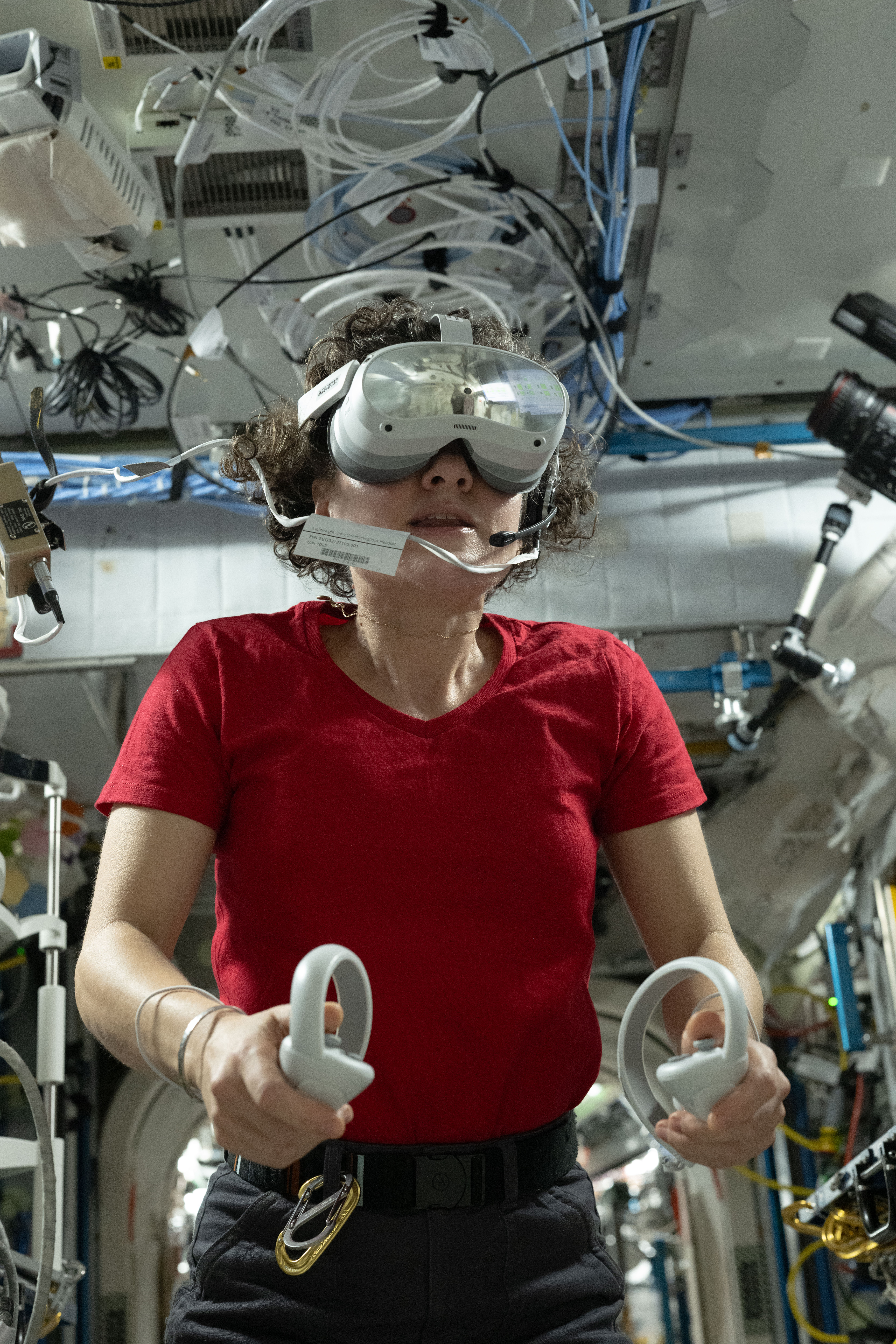
NASA Astronaut Jessica Meir Uses VR Goggles

NASA astronaut and Expedition 75 commander Jessica Meir wears a set of virtual reality goggles, also called the Nevada Screening Vision System, for a test that measures visual function using a series of vision screening apps testing visual acuity, contrast sensitivity, and more.

  •  

Pubblicato il nuovo Science Book di Skao

Undici anni dopo la pubblicazione della prima edizione, l’Osservatorio Ska (Skao) presenta un nuovo Science Book, intitolato Advancing Astrophysics with the Ska – II. Il volume, organizzato in 221 capitoli, non si limita a documentare la portata della ricerca astronomica che sarà possibile condurre con i telescopi Ska: aggiorna gli obiettivi scientifici del progetto e delinea alcune delle principali scoperte attese nel prossimo futuro grazie alle osservazioni dei radiotelescopi Ska-Mid e Ska-Low, attualmente in costruzione rispettivamente in Sudafrica e nell’Australia Occidentale.


La locandina dello Science Book di Skao 2026. Crediti: Skao

L’opera testimonia anche la dimensione internazionale del progetto: oltre 1500 autori provenienti da 51 paesi hanno contribuito alla sua realizzazione. Tra questi, la comunità scientifica italiana si distingue per il ruolo di primo piano, tanto che l’Italia è il paese con il maggior numero di contributi al volume.

«La pubblicazione di questo secondo volume segna un passaggio fondamentale nella definizione degli obiettivi scientifici che l’Osservatorio Ska affronterà nel prossimo decennio e pone le basi per le prime campagne osservative finalizzate a verificare le prestazioni scientifiche dei telescopi», dice Isabella Prandoni dell’Inaf – Istituto di radioastronomia di Bologna, spokesperson Skao per la Direzione scientifica dell’Istituto nazionale di astrofisica (Inaf).

Infografica sulla percentuale di autori per Paese per la nuova edizione del Science Book di Skao. Crediti: Skao

I dati sul contributo del nostro paese, che schiera oltre 230 coautori, evidenziano una solida leadership scientifica. «I nostri ricercatori», osserva Prandoni, «rappresentano quasi il 15 per cento del totale dei coautori e figurano come primi autori in circa il 20 per cento dei capitoli (45), posizionando l’Italia al primo posto per partecipazione complessiva». Questo dato non riflette soltanto l’ampio coinvolgimento della comunità scientifica italiana nel progetto, «ma dimostra la solidità e la trasversalità delle competenze delle nostre ricercatrici e dei nostri ricercatori, che coprono uno spettro estremamente ampio di tematiche – dalle origini cosmologiche all’evoluzione della struttura a grande scala dell’universo; dallo studio delle galassie alla caratterizzazione dei buchi neri; dalla fisica del mezzo interstellare all’evoluzione delle popolazioni stellari; dall’astrobiologia ai fenomeni transienti e alle onde gravitazionali».

Infografica con le statistiche sul Science Book di Skao, Advancing Astrophysics II. Crediti: Skao

Gli articoli sono suddivisi in sei macro-sezioni: Sole, Terra e pianeti; formazione ed evoluzione delle stelle; dalla Via Lattea alle galassie remote; il cosmo; l’universo estremo; metodi e tecniche. «La nostra ricerca esplora l’universo in ogni regime fisico e a qualsiasi scala, facendo leva sulla sensibilità senza precedenti dei telescopi Ska, sulla rapidità con cui riescono a scandagliare il cielo e sull’alta qualità delle immagini che producono, oltre a sfruttare le importanti sinergie con le principali infrastrutture osservative internazionali», sottolinea Anna Bonaldi, Head of Scientific Services di Skao.

«È un risultato», conclude Prandoni, «che conferma la maturità della radioastronomia italiana e pone le basi per un suo ruolo strategico e di leadership in vista della futura fase operativa dell’Osservatorio Ska».

Per saperne di più:


  •  

Svelata la natura del superammasso della Vela

Un team internazionale di astronomi, con la partecipazione dell’Istituto nazionale di astrofisica (Inaf), ha messo in luce nuovi dettagli di una gigantesca struttura dell’universo, a lungo rimasta invisibile perché nascosta dalle stelle e dalle fitte coltri di polveri presenti nella Via Lattea. Grazie a un’innovativa tecnica ibrida che incrocia diverse tipologie di dati sulle galassie, le ricercatrici e i ricercatori sono riusciti a mappare l’effettiva portata del Superammasso della Vela — a oggi riconosciuto come uno dei più imponenti agglomerati di materia del cosmo a noi vicino.

Mappa dell’Universo locale che evidenzia i principali superammassi. Vela, un’imponente struttura nascosta, si trova sulla sinistra. L’immagine mostra come le galassie fluiscono nello spazio e i “bacini” su larga scala che le incanalano. Crediti: Jérôme Léca, Rsa Cosmos

Per decenni una parte importante dell’Universo è rimasta praticamente invisibile agli astronomi. È la cosiddetta zona di evitamento (zone of avoidance, in inglese), ossia la fascia di cielo nascosta dal disco della nostra galassia, in cui polveri e stelle impediscono di osservare direttamente le galassie più lontane. Proprio dietro questo “velo” cosmico si cela una delle strutture più imponenti dell’universo vicino.

Lo studio, accettato per la pubblicazione sulla rivista Astronomy & Astrophysics, mostra infatti che il superammasso della Vela emerge come una delle principali concentrazioni di massa del cosmo locale, con una massa paragonabile a quella del Superammasso di Shapley e superiore a quella della regione di Laniakea, il superammasso che ospita la Via Lattea.

«Questa scoperta colma una lacuna nella nostra mappa dell’universo vicino», dice Sambatra Rajohnson, ricercatrice dell’Inaf e tra gli autori dello studio. «Ciò che è particolarmente entusiasmante è che, per la prima volta, una grande struttura gravitazionale nascosta dietro la nostra galassia è stata svelata grazie alla sinergia di osservazioni radio sensibili e indagini astronomiche complementari ad altre lunghezze d’onda».

L’universo locale mappato in 3D con i principali superammassi. A sinistra emerge il Superammasso della Vela. Le linee di flusso tracciano i percorsi delle galassie, mentre i bacini cosmici circostanti evidenziano le regioni in cui la materia si accumula. Crediti: Jérôme Léca, Rsa Cosmos

La nuova ricostruzione mostra che il Superammasso della Vela possiede una struttura a doppio nucleo e una massa complessiva stimata in circa 340 milioni di miliardi di masse solari. Si estende per oltre 220 milioni di anni luce: un’estensione quasi quattromila volte superiore al raggio della Via Lattea, che misura circa 55mila anni luce. I ricercatori mostrano inoltre come Vela rappresenti oggi uno dei principali “attrattori gravitazionali” dell’universo locale, esercitando un’influenza paragonabile a quella delle più grandi strutture cosmiche conosciute.

Il risultato è stato ottenuto integrando migliaia di nuove misure di redshift – lo spostamento della luce verso il rosso, che fornisce la distanza e, dunque, la distribuzione 3D delle galassie – con le velocità peculiari, ossia le deviazioni dal moto dovuto alla sola espansione cosmica. Queste velocità rivelano infatti l’azione gravitazionale esercitata dalla materia visibile e oscura. La combinazione dei due insiemi di dati ha consentito di ottenere la ricostruzione tridimensionale e dinamica più completa mai realizzata della zona di evitamento.

Un ruolo determinante è stato svolto dai dati radio raccolti con il radiotelescopio MeerKat, in Sudafrica. Tra gli oltre ottomila nuovi redshift utilizzati nello studio, più di duemila derivano infatti da osservazioni interferometriche ad alta sensibilità che hanno permesso di esplorare la parte più nascosta della zona di evitamento, finora sostanzialmente inaccessibile.

Lo studio dimostra anche l’efficacia di un nuovo approccio di ricostruzione tridimensionale che integra osservazioni di natura diversa. Questa metodologia sarà particolarmente importante per sfruttare appieno i grandi censimenti cosmologici della prossima generazione, come Desi, 4Most e Wallaby, che produrranno milioni di nuove misure della distribuzione delle galassie nell’universo.

Per l’Inaf il risultato conferma il ruolo di primo piano della radioastronomia italiana nelle grandi collaborazioni internazionali dedicate alla cosmologia osservativa e allo studio della struttura su larga scala dell’universo. L’esperienza maturata nell’analisi dei dati di MeerKat, a cui contribuisce anche l’Inaf con il potenziamento MeerKat+ e l’implementazione della banda 5B con il progetto Pnrr Stiles, costituisce inoltre una tappa fondamentale in vista delle future osservazioni con l’Osservatorio Ska (Skao), che sarà il più grande radiotelescopio mai realizzato e destinato a rivoluzionare la nostra conoscenza del cosmo, attualmente in costruzione in Sudafrica e in Australia Occidentale.

Per saperne di più


  •  

Quando ci si mette in viaggio per qualcosa

Mentre mi dirigo verso La Coruña, nel nord della Spagna, con l’intento di documentare l’eclissi totale della nostra stella che si verificherà dopodomani sera, rifletto su tutte quelle volte in cui ci si mette in viaggio per qualcosa. Nello specifico, qualcosa di non facile realizzazione. Quando, insomma, si parte e ci si arrischia in tentativi azzardati, imprese di dubbia natura, al limite dello sfacciato, spedizioni senza promesse di riuscita.

Passeggeri in partenza all’aeroporto di Bari-Palese. Noto è il luogo da cui si parte – a volte, nemmeno quello. Quale, invece, la destinazione? Crediti: F. Loiacono/Media Inaf

Questo mi ha riportato ai miei diciott’anni, all’ardimentoso viaggio che intrapresi con mio padre da Bari a Firenze per assistere a Fiorentina-Liverpool, partita di calcio nella fase a gironi di Champions League, in un giorno d’autunno di un remoto 2009. Meno di dieci giorni prima la Fiorentina era capitolata all’Olimpico sotto i colpi di Totti e De Rossi. Il Liverpool era quello di Torres, Gerrard e Mascherano, e non serve aggiungere altro.

Questo viaggio – quello di oggi – mi fa pensare a quell’altro perché ciò che li accomuna è l’esito improbabile che si va cercando. All’epoca: una vittoria contro una delle massime espressioni del calcio inglese e internazionale. Stavolta, l’ambizione di assistere all’oscuramento del nostro astro da parte del disco lunare, al crepuscolo di un giorno di agosto. Fenomeno che a La Coruña si verificherà alla miserabile altezza di dodici gradi sull’orizzonte, e pertanto facilmente esposto a un’ulteriore eclissi da parte di innumerevoli ostacoli terrestri. Esperienza che viene ricercata non in un luogo asciutto, in qualche zona dell’entroterra spagnolo, certamente più consona a cieli tersi – e dove, avvedutamente, mi pare si stiano recando tutti quelli a cui chiedo – ma in una città esposta ai capricci dell’Oceano Atlantico. Località eletta in maniera assolutamente non ponderata – come la maggior parte delle scelte compiute dalla sottoscritta, forse per una sorta di avversione ai calcoli attenti, calcoli su cui il mio lavoro di astronoma si basa, e che mi è necessario abolire in tutte le altre faccende della mia vita – se non per il fatto di trovarsi nella fascia di totalità, e per il desiderio di realizzare un reportage sull’evento astronomico in un luogo di mare.

In verità, la pur esigua altezza dell’eclissi sull’orizzonte è maggiore di otto gradi rispetto al sud della Spagna, il che rende La Coruña uno dei posti geometricamente meglio disposti per la contemplazione del fenomeno nella penisola iberica. Se favorita dalla geometria, meno giova alla città galiziana la posizione oceanica. Ubicazione in virtù della quale è altamente probabile che l’umidità si manifesti, la foschia all’orizzonte si stenda spietata, un addensarsi di nuvole incomba, o che qualche altro fatto cospiri alla mancata visione di un evento che sarà obiettivamente difficile da osservare, anche ponderando tutto – perlomeno dalla Spagna, per gli elementi detti sopra. Ma pure dall’Islanda, certamente più fortunata in termini di altezza dell’allineamento astronomico in oggetto, ma molto meno, almeno sulla carta, in fatto di cieli sereni.

Le probabilità di riuscita sono minime. E ciononostante si parte comunque. Quante volte lo abbiamo fatto?

La mia modesta impresa me ne ricorda un’altra, ben più ambiziosa e che pure attiene a fatti astronomici, impresa mirabilmente raccontata da Leonardo Piccione in un libro di qualche anno fa – una recensione si legge qui. Quella dell’astronomo Guillaume Le Gentil, che si recò in luoghi remoti per osservare un fenomeno che in verità a un’eclissi rassomiglia assai. In astronomia viene detto transito, ovvero il passaggio di un corpo celeste – nella fattispecie, il pianeta Venere – davanti a un altro corpo celeste – il Sole, nella vicenda raccontata, come nell’eclissi di dopodomani. La posta in gioco era altissima: la misura di Le Gentil avrebbe portato niente meno che alla stima, ignota nel Settecento, delle dimensioni del Sistema solare.

Due volte ebbe la possibilità di mirare l’agognato evento e due volte la mancò. Burrasche, conflitti, personaggi ostili e una «nuvola fatale» fra gli elementi che congiurarono alla mancata visione del passaggio di Venere sul disco solare. Lo sventurato astronomo nei suoi diari annoterà: «Questo è il fato che talvolta attende gli astronomi. Avevo percorso più di diecimila leghe, attraversato innumerevoli mari. Mi ero esiliato dalla mia patria per essere infine spettatore di una nuvola fatale che venne a piazzarsi davanti al sole nel momento esatto delle mia osservazione, per derubarmi dei frutti delle mie pene e delle mie fatiche…»

Cosa impariamo dalle nostre imprese mancate? Dal disallineamento fra esito e aspettativa? Dall’ineliminabile sfasatura fra le nostre manie di perfezione e gli individui maldestri che siamo? Dal dover accettare che ogni misura, anche la più accurata, è soggetta ad un errore?

Pur risiedendo a Bologna da oltre un decennio, il luogo di partenza è Bari, la mia città natale. Come quella volta. Diciassette anni dopo mio padre mi saluta sulla porta di casa.

Quella volta a Firenze, come forse qualcuno rammenterà, la partita si concluse con un invaticinabile 2 a 0 da parte della Fiorentina, in un’irripetibile notte di fine settembre. Per me fu gioia immensa dopo uno dei periodi più bui della mia vita. Soprattutto, fu capire che gli esiti non sono già scritti, ma che si possono costruire. E che partire, provare, anche trasferte scellerate come quella – agli occhi dei miei compagni di classe di un liceo del centro di Bari, nell’anno di rinfervorato e straripante entusiasmo attorno alla squadra cittadina, neopromossa in Serie A dopo otto anni – trasferte scellerate agli occhi dei miei compagni ma mai ai miei, vale sempre la pena. Forse è facile dirlo dopo una vittoria. E forse un po’ ci ho preso il vizio.

«Hai vinto al Superenalotto, Federì».

Come finirà questa volta?


Per seguire i team scientifici dell’Inaf e le inviate di Media Inaf in Spagna per l’eclissi:


  •  

Totalità. Diario di un’eclissi di Sole

La cover di Totalità. Crediti: Davide Coero Borga/Inaf

Cinque giorni, migliaia di chilometri e un’eclissi totale di Sole. La prima nel cuore dell’Europa da ventisette anni. Un’eclissi difficile, di durata relativamente breve – un minuto e mezzo, poco meno o poco più – e per giunta al tramonto. Basta una nuvoletta all’orizzonte a rovinare lo spettacolo.

Sono gli ingredienti di Totalità, un podcast dell’Istituto nazionale di astrofisica ideato e realizzato da Federica Duras e Claudia Mignone – astrofisiche, divulgatrici scientifiche e per l’occasione inviate speciali dalla Spagna per raccontare come si vive, oggi, un’eclissi totale di Sole.

Tutto inizia dalla valigia: cosa portare, a partire dagli occhialini certificati per proteggere la vista (mai osservare a occhio nudo il Sole, intonso o eclissato che sia – l’avrete certamente sentito ripetere più d’una volta negli ultimi giorni), spaziando poi tra macchine fotografiche, filtri, cavalletti e altri strumenti per tentare di immortalare il tanto sospirato evento.

Questo diario di viaggio tutto da ascoltare seguirà le due protagoniste dall’Italia, passando per Valencia, fino all’Aragona, sulle tracce delle antiche spedizioni ottocentesche che dislocavano gli astronomi in giro per il mondo a caccia di qualche minuto di totalità, per cercare di carpire i segreti del stelle partendo da quella a noi più vicina – il Sole. E se tanti misteri cosmici sono ormai stati svelati, molti altri restano ancora irrisolti: è per questo che le eclissi solari continuano a suscitare, ancora oggi, nel 2026, non solo il fascino generale ma anche l’interesse della comunità scientifica. Come quello della spedizione di astrofisici italiani che osserverà il fenomeno il prossimo 12 agosto dall’Observatorio Astrofisico de Javalambre, a duemila metri di quota, nella provincia spagnola di Teruel, per sperimentare un nuovo, ingegnoso strumento per future missioni spaziali.

Il sito da cui le protagoniste del podcast Totalità osserveranno l’eclissi di sole del 12 agosto. Crediti: F. Duras/Inaf

Tra scienza e storia, consigli per le osservazioni e interviste agli esperti, il podcast esplora le molteplici sfaccettature di un avvenimento tra i più travolgenti che il cielo può regalare a noi, piccoli abitanti del terzo pianeta in orbita attorno al Sole. Con le emozioni della narrazione dal vivo, gli imprevisti del viaggio, le sfide della ricerca e l’incognita – onnipresente, imperante e contro la quale ogni scongiuro è vano – del meteo: la cronaca, insomma, di un’eclissi (quasi) impossibile.

Potete ascoltare Totalità su Apple Podcast, su Spotify e su YouTube, oltre che sulla piattaforma di Media Inaf dedicata ai podcast, a partire da oggi, domenica 9 agosto. E poi ogni giorno, fino al 13 agosto. Per scoprire se le protagoniste saranno riuscite nell’intento di contemplare la loro prima eclissi totale di Sole.

Ascolta il podcast su YouTube:

Per seguire i team scientifici dell’Inaf e le inviate di Media Inaf in Spagna per l’eclissi:


  •  

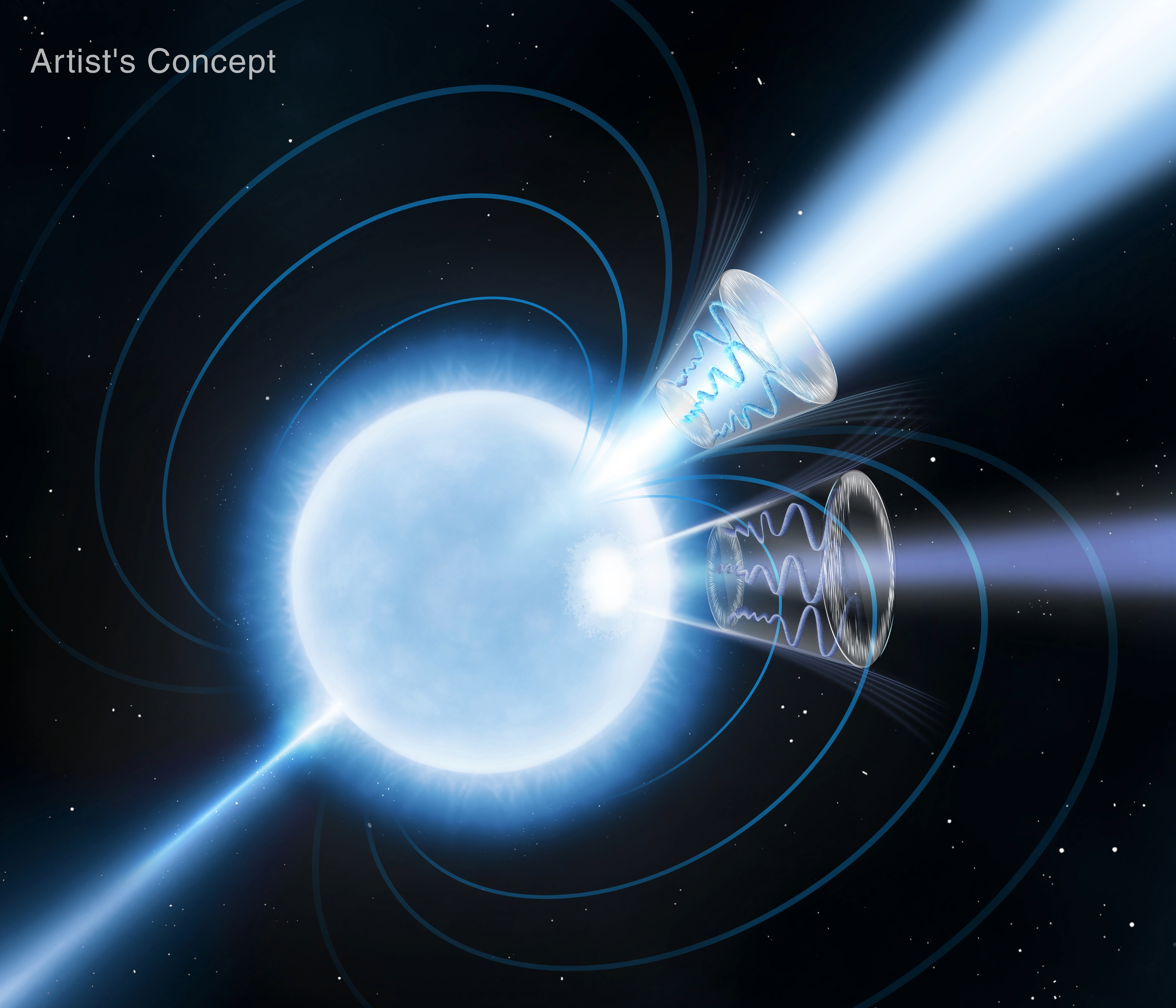
NASA's IXPE Studies Magnetar

A first of its kind measurement of a magnetar may have captured empty space behaving in a way physicists have predicted for 90 years, but never directly observed. The results published Wednesday in Nature.

  •  

Advanced Mini-laboratories Automate Space Station Research

2 Min Read

Advanced Mini-laboratories Automate Space Station Research

NASA astronaut and Expedition 71 Flight Engineer Tracy C. Dyson swaps out sample processors for the Pharmaceutical In-space Laboratory experiment that is exploring the production and manufacturing of medicines to benefit astronauts in space and humans on Earth. The processors were installed in the Advanced Space Experiment Processor, or ADSEP, that can process a variety of research samples and be delivered to the International Space Station and returned to Earth aboard the SpaceX Dragon cargo craft.
NASA astronaut Tracy C. Dyson swaps out sample processors in the Advanced Space Experiment Processor (ADSEP).
Credits: NASA

The International Space Station hosts hundreds of science experiments at a time. Some experiments can take hours to perform, and researchers need to account for astronauts’ limited time. Fully automated devices, like Redwire’s  ADvanced Space Experiment Processors (ADSEPs), have been designed to conduct more space science with less crew time.

Within each ADSEP facility there are three to four “mini-laboratories”, called cassettes, that allow multiple studies with different needs to be performed at the same time. The latest model, ADSEP-4 can accommodate four cassettes and features imagery capabilities. Since 2017, ADSEPs have conducted and supported two dozen investigations aboard space station with new ones on the horizon.

Close-up microscope image of transparent, hexagonal and cubic crystals against a warm orange-pink background.
Crystals are grown aboard the International Space Station as part of ADSEP-PIL-02, an investigation that aims to study the effects of microgravity on various types of crystals.
Redwire

The latest ADSEP investigations are related to growing seed crystals in space, which can be used to reformulate existing drugs or develop entirely new therapeutics. Previous experiments have shown that the unique microgravity environment allows the growth of larger and higher quality crystals. With Redwire’s Pharmaceutical In-Space Laboratory (PIL-BOX), a cassette-based system that uses the ADSEP facility, researchers can grow improved, space-grown seed crystals.

Adenot, wearing light blue polo shirt and black cargo pants, smiles as she holds a gray cassette the size of a lunchbox. The surrounding walls, ceiling, and floor are covered with cables, cameras, laptops, storage bags, and research equipment.
European Space Agency (ESA) astronaut Sophie Adenot displays a cassette for the ADvanced Space Experiment Processor (ADSEP).
NASA

Notable PIL-BOX experiments sponsored by the ISS National Laboratory have focused on cancer research. The ADSEP-PIL-10 investigation, currently being conducted in orbit in collaboration with the Aspera Biomedicines, works to crystallize cancer-blocking and cancer-promoting molecules with the goal of creating an oral cancer medication. ADSEP-PIL-15 crystalized cancer-treating medicines to help refine production, quality, and stability of these cancer drugs. A recent technology demonstration, ADSEP- ICC (Industrial Crystallization Cassette), tested a larger cassette to expand ADSEP function and scale crystallization production for commercial use.

Image of several juvenile bobtail squid suspended in water against a light background. The small, translucent squid have rounded, oblong bodies covered with tiny brown pigment spots and have tiny tentacles extending just below their round black eyes. Four squid are in the forefront in focus while several others are blurred in the background.
Juvenile bobtail squid swimming in seawater just after hatching as part of the ADSEP-UMAMI investigation.
University of Florida

ADSEPs are not limited to crystal growth and can also be used for culturing cells and tissues, studying organisms, and researching materials-sciences. In 2021, ADSEP-UMAMI studied how bobtail squid interacted with beneficial microbes in the space environment. This research found that symbiotic interactions with microbes can lessen a host animal’s stress responses caused by spaceflight and accelerate developmental pathways such as growing neurons and tissues. These findings give insight into the importance of symbiotic relationships in closed ecosystems like spacecraft and have implications for astronauts and their own beneficial bacteria during space missions.

The automation and versatility of ADSEPs permit a wide array of science experiments to be conducted aboard the orbiting laboratory, leading to findings that inform future space missions and are beneficial to people on Earth.

  •  

Advanced Mini-laboratories Automate Space Station Research

2 Min Read

Advanced Mini-laboratories Automate Space Station Research

NASA astronaut and Expedition 71 Flight Engineer Tracy C. Dyson swaps out sample processors for the Pharmaceutical In-space Laboratory experiment that is exploring the production and manufacturing of medicines to benefit astronauts in space and humans on Earth. The processors were installed in the Advanced Space Experiment Processor, or ADSEP, that can process a variety of research samples and be delivered to the International Space Station and returned to Earth aboard the SpaceX Dragon cargo craft.
NASA astronaut Tracy C. Dyson swaps out sample processors in the Advanced Space Experiment Processor (ADSEP).
Credits: NASA

The International Space Station hosts hundreds of science experiments at a time. Some experiments can take hours to perform, and researchers need to account for astronauts’ limited time. Fully automated devices, like Redwire’s  ADvanced Space Experiment Processors (ADSEPs), have been designed to conduct more space science with less crew time.

Within each ADSEP facility there are three to four “mini-laboratories”, called cassettes, that allow multiple studies with different needs to be performed at the same time. The latest model, ADSEP-4 can accommodate four cassettes and features imagery capabilities. Since 2017, ADSEPs have conducted and supported two dozen investigations aboard space station with new ones on the horizon.

Close-up microscope image of transparent, hexagonal and cubic crystals against a warm orange-pink background.
Crystals are grown aboard the International Space Station as part of ADSEP-PIL-02, an investigation that aims to study the effects of microgravity on various types of crystals.
Redwire

The latest ADSEP investigations are related to growing seed crystals in space, which can be used to reformulate existing drugs or develop entirely new therapeutics. Previous experiments have shown that the unique microgravity environment allows the growth of larger and higher quality crystals. With Redwire’s Pharmaceutical In-Space Laboratory (PIL-BOX), a cassette-based system that uses the ADSEP facility, researchers can grow improved, space-grown seed crystals.

Adenot, wearing light blue polo shirt and black cargo pants, smiles as she holds a gray cassette the size of a lunchbox. The surrounding walls, ceiling, and floor are covered with cables, cameras, laptops, storage bags, and research equipment.
European Space Agency (ESA) astronaut Sophie Adenot displays a cassette for the ADvanced Space Experiment Processor (ADSEP).
NASA

Notable PIL-BOX experiments sponsored by the ISS National Laboratory have focused on cancer research. The ADSEP-PIL-10 investigation, currently being conducted in orbit in collaboration with the Aspera Biomedicines, works to crystallize cancer-blocking and cancer-promoting molecules with the goal of creating an oral cancer medication. ADSEP-PIL-15 crystalized cancer-treating medicines to help refine production, quality, and stability of these cancer drugs. A recent technology demonstration, ADSEP- ICC (Industrial Crystallization Cassette), tested a larger cassette to expand ADSEP function and scale crystallization production for commercial use.

Image of several juvenile bobtail squid suspended in water against a light background. The small, translucent squid have rounded, oblong bodies covered with tiny brown pigment spots and have tiny tentacles extending just below their round black eyes. Four squid are in the forefront in focus while several others are blurred in the background.
Juvenile bobtail squid swimming in seawater just after hatching as part of the ADSEP-UMAMI investigation.
University of Florida

ADSEPs are not limited to crystal growth and can also be used for culturing cells and tissues, studying organisms, and researching materials-sciences. In 2021, ADSEP-UMAMI studied how bobtail squid interacted with beneficial microbes in the space environment. This research found that symbiotic interactions with microbes can lessen a host animal’s stress responses caused by spaceflight and accelerate developmental pathways such as growing neurons and tissues. These findings give insight into the importance of symbiotic relationships in closed ecosystems like spacecraft and have implications for astronauts and their own beneficial bacteria during space missions.

The automation and versatility of ADSEPs permit a wide array of science experiments to be conducted aboard the orbiting laboratory, leading to findings that inform future space missions and are beneficial to people on Earth.

  •  

Roman Space Telescope Plaque Install

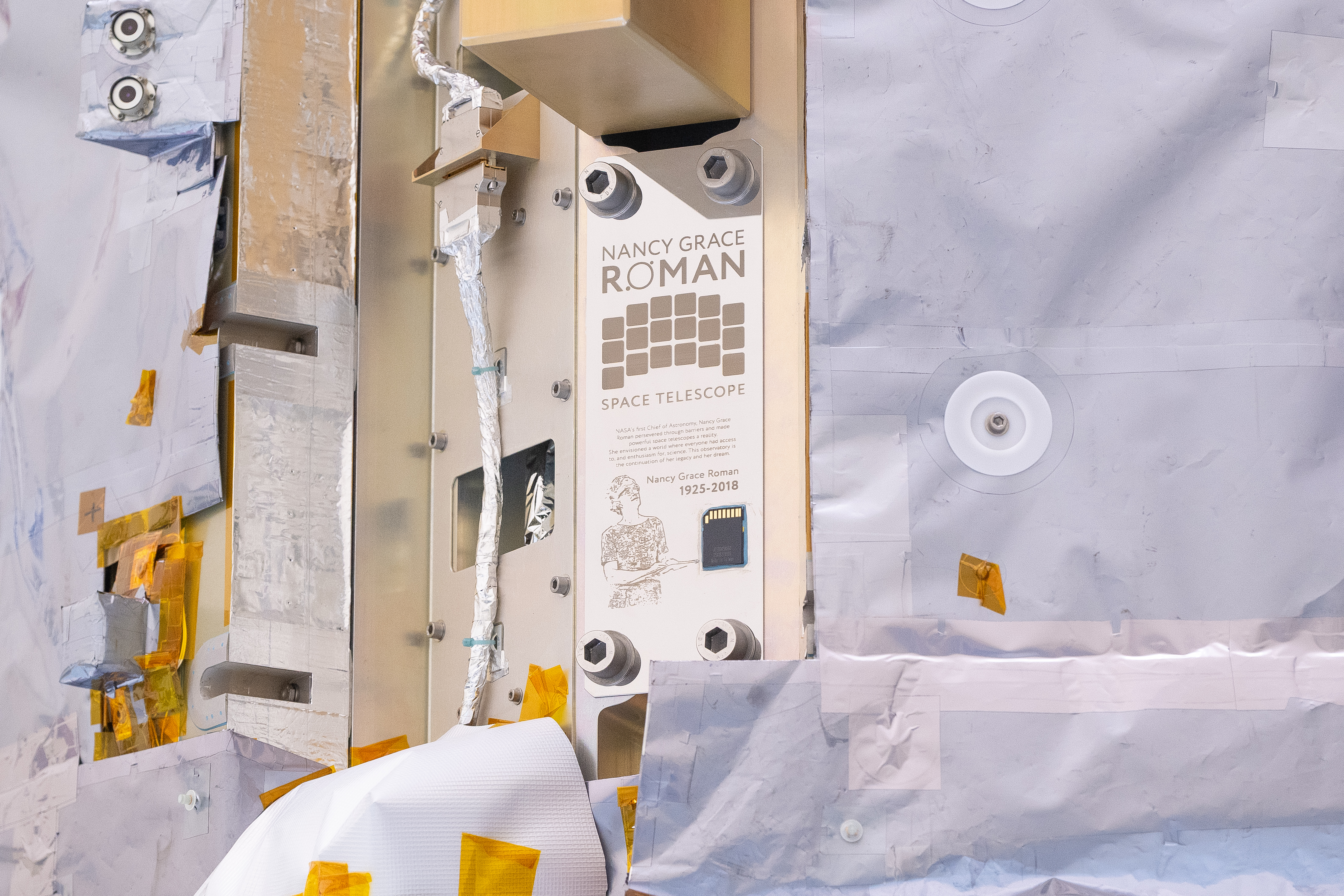
Technicians inside the Payload Hazardous Servicing Facility at NASA’s Kennedy Space Center complete installation of a commemorative plaque on the agency’s Nancy Grace Roman Space Telescope, as photographed on Tuesday, July 28, 2026.

  •  

Guinea-Bissau Tidal Waters

Relatively low tidal waters expose sandflats and mudflats in the Bijagós Archipelago of Guinea-Bissau in this image acquired on November 28, 2025, with the OLI (Operational Land Imager) on Landsat 8. These coastal landforms support an array of invertebrates, making the archipelago a popular stopover for migratory shorebirds.

  •  

NASA's Newest Wind Tunnel Opens at NASA Langley

NASA opened its newest wind tunnel, the Flight Dynamics Research Facility at NASA’s Langley Research Center in Hampton, Virginia, on Friday, providing a critical resource for the agency and its partners to test the safety and performance of future generations of aircraft, rockets, and space exploration vehicles.

  •  

NASA Opens New Flight Dynamics Research Facility in Virginia

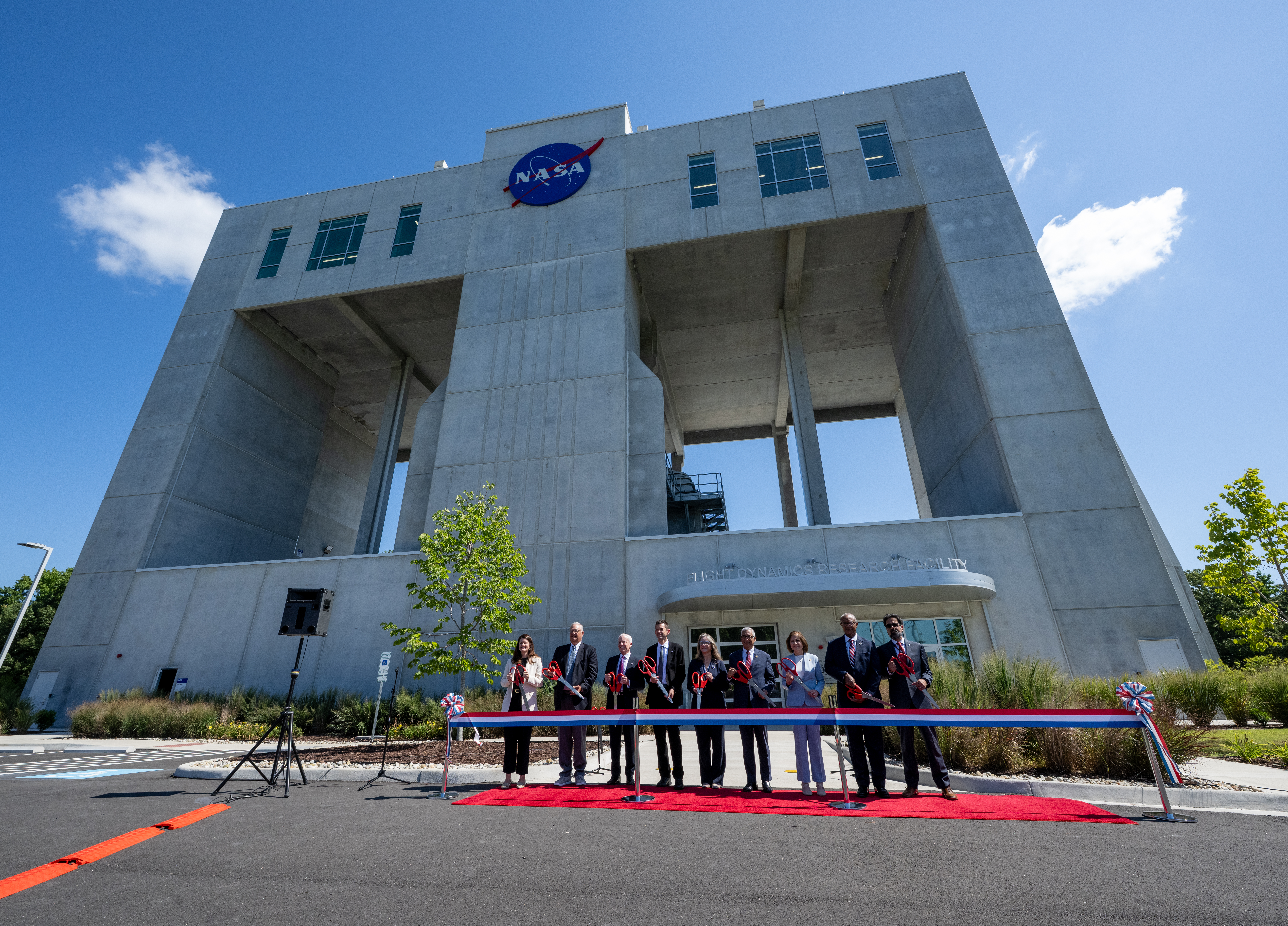
Image of NASA Langley's Flight Dynamics Research Facility
From left to right: Casey Swails, NASA deputy associate administrator; Mike Waller, vice president of BL Harbert International Federal Division; Edward C. Forst, administrator of the U.S. General Services Administration; NASA Administrator Jared Isaacman; Dr. Trina Dyal, director of NASA’s Langley Research Center; Rep. Robert “Bobby” Scott (D-Va.); Virginia Lt. Gov. Ghazala F. Hashmi; Jimmy Gray, mayor, City of Hampton; and Amit Kshatriya, NASA associate administrator, pose for a photo before cutting the ribbon to open the Flight Dynamics Research Facility, NASA’s newest wind tunnel, Friday, July 31, 2026, at NASA’s Langley Research Center in Hampton, Virginia.
Credit: NASA/Keegan Barber

NASA opened its newest wind tunnel, the Flight Dynamics Research Facility, Friday, providing a critical resource for the agency and its partners to test the safety and performance of future generations of aircraft, rockets, and space exploration vehicles.

Located at NASA’s Langley Research Center in Hampton, Virginia, the Flight Dynamics Research Facility will support advances in aircraft safety, X‑plane development, drone research, and spacecraft technology. The facility will enable both free‑flight and mounted testing of a wide range of scale-model vehicles designed to travel through an atmosphere, from airplanes to space capsules returning to Earth.

“The Flight Dynamics Research Facility is NASA’s first major new wind tunnel in more than 40 years and gives us a powerful new platform to test the ideas and technologies that will shape the future of aviation and exploration,” said NASA Administrator Jared Isaacman. “America has led in air and space because we were willing to take on hard problems, challenge assumptions, and build what didn’t exist before. This facility gives the talented team at Langley, and our partners across government, industry, and universities, the tools to keep pushing the boundaries of what’s possible and ensure America remains the world leader in air and space.”

A ribbon-cutting ceremony at NASA Langley marked the start of a new chapter in flight research. Agency leaders, partners, and Virginia officials emphasized how the Flight Dynamics Research Facility’s state-of-the-art capabilities will shape the future of flight and exploration.

“The opening of the Flight Dynamics Research Facility represents a significant advancement for NASA and for the nation,” said Dr. Trina Dyal, NASA Langley center director. “By bringing modernized testing capabilities under one roof, we are enabling transformative research that will ensure the United States remains at the forefront of aeronautics and exploration.”

Built through a partnership with the U.S. General Services Administration (GSA), the facility replaces aging infrastructure with an energy-efficient facility that reduces maintenance costs and provides the flexibility needed for future research. The Flight Dynamics Research Facility is part of a broader, long-term collaboration between the agencies, representing the fourth new building GSA has delivered to NASA under Langley’s 20-year campus revitalization plan.

“GSA is proud to partner with NASA in delivering the Flight Dynamics Research Facility, a state-of-the-art asset that will power the next generation of American dominance in aeronautics and space exploration,” said Edward C. Forst, GSA administrator. “This facility reflects what we do best: provide the advanced, expertly designed installations that federal agencies need to carry out their missions. With these new capabilities, NASA will be better equipped to test bold ideas, validate new designs, and advance technologies that will serve the nation for decades to come.”

The Flight Dynamics Research Facility combines and improves upon the capabilities of two historic NASA Langley wind tunnels – the 20-Foot Vertical Spin Tunnel and the 12-Foot Low-Speed Tunnel. The 25,000-square-foot building features a vertical wind tunnel with improved airflow, modern digital systems, and flexible testing capabilities that will allow researchers to study how aircraft, spacecraft, parachutes, and other vehicles behave during flight.

The facility’s 20-foot diameter test chamber is much larger than those of its NASA Langley predecessors, allowing for more air to pass around test models and improving data accuracy. Its increased size also allows for the use of larger, more detailed models during testing.

The Flight Dynamics Research Facility’s top airspeed of 117 miles per hour is twice as fast as the old  facilities, enabling free-flight tests of heavier scale models. This will allow simulations of full-scale vehicles flying at higher altitudes – a critical capability for operations such as studying the stability of aircraft or reentry capsules coming back from space.

The facility’s wind power comes from four 750-horsepower motors, each with an integrated, 14-foot diameter, eight-bladed fan. The fan blades are made of lightweight carbon fiber, enabling rapid, precise airspeed adjustments during free‑flight tests.

The Flight Dynamics Research Facility illustrates the powerful synergy between NASA’s aeronautics and space exploration efforts, with each driving innovation in the other. The facility will drive experimental research across a wide range of flight systems, advancing the development of autonomous flight vehicles, drones, commercial and military aircraft, and X‑planes.

As NASA prepares for a sustained human presence on the lunar surface through the Artemis program and the development of a Moon Base, the facility will play a key role in testing vehicle designs for entry, descent, and landing that will help reduce mission risk and support the safe return of crews to Earth. NASA also will be able to use the wind tunnel  to help design aircraft for Mars and other destinations in our solar system where atmospheric flight is possible.

With the Flight Dynamics Research Facility now open, NASA is entering a new era in flight research – one that will shape the aircraft and spacecraft of tomorrow, strengthen industry partnerships, and extend the agency’s legacy of pioneering aerospace leadership.

The facility is managed under the Aerosciences Evaluation and Test Capabilities portfolio in the Aeronautics Division of NASA’s Research and Technology Mission Directorate.

Learn more about the Flight Dynamics Research Facility at:

https://go.nasa.gov/4yzKEGQ

-end-

Camille Gallo / Rob Margetta
Headquarters, Washington
202-358-1600
camille.m.gallo@nasa.gov / robert.j.margetta@nasa.gov 

Kimiko Booker / Brittny McGraw
NASA Langley, Hampton, Virginia
757-506-5939 / 757-769-3763
kimiko.s.booker@nasa.gov / brittny.v.mcgraw@nasa.gov

  •  

NASA Assigns Astronaut Deniz Burnham to First Space Station Mission

NASA astronaut Deniz Burnham poses for a portrait at NASA’s Johnson Space Center in Houston.
Credit: NASA/Robert Markowitz

NASA astronaut Deniz Burnham will embark on her first mission to the International Space Station, serving as an Expedition 76 flight engineer.

Burnham will launch aboard the Roscosmos Soyuz MS-30 spacecraft with cosmonauts Dmitri Petelin and Konstantin Borisov. Launch is targeted for March 2027, from the Baikonur Cosmodrome in Kazakhstan, and the trio will spend about seven months aboard the orbiting laboratory.

During her expedition, Burnham will conduct scientific investigations and technology demonstrations to help prepare humans for future exploration missions to the Moon and Mars and to benefit people on Earth.

Selected as a NASA astronaut in 2021, Burnham graduated with the agency’s 23rd astronaut class in 2024. Born at Incirlik Air Base in Adana, Turkey, Burnham moved frequently while growing up in a military family. She was living in Wasilla, Alaska, at the time of her selection.

A former intern at NASA’s Ames Research Center in California’s Silicon Valley, Burnham earned a bachelor’s degree in chemical engineering from the University of California, San Diego, and a master’s degree in mechanical engineering from the University of Southern California in Los Angeles. An experienced leader in the energy industry, she spent more than a decade managing onsite drilling operations on oil rigs across North America. Burnham also served in the U.S. Navy Reserves as an engineering duty officer. She is a licensed private pilot with ratings for airplane single engine land and sea, instrument airplane, and rotorcraft-helicopter.

For more than 25 years, people have lived and worked continuously aboard the International Space Station, advancing scientific knowledge and making research breakthroughs not possible on Earth. The space station helps NASA understand and overcome the challenges of human spaceflight, expand commercial opportunities in low Earth orbit, and build on the foundation for long-duration missions to the Moon, as part of the Artemis program, and to Mars.

To learn more about International Space Station research, operations, and its crews, visit:

https://www.nasa.gov/station

-end-

Joshua Finch
Headquarters, Washington
202-358-1100
joshua.a.finch@nasa.gov

Anna Schneider
Johnson Space Center, Houston
281-483-5111
anna.c.schneider@nasa.gov

Share

Details

Last Updated
Jul 30, 2026
  •  

NASA Assigns Astronaut Deniz Burnham to First Space Station Mission

NASA astronaut Deniz Burnham poses for a portrait at NASA’s Johnson Space Center in Houston.
Credit: NASA/Robert Markowitz

NASA astronaut Deniz Burnham will embark on her first mission to the International Space Station, serving as an Expedition 76 flight engineer.

Burnham will launch aboard the Roscosmos Soyuz MS-30 spacecraft with cosmonauts Dmitri Petelin and Konstantin Borisov. Launch is targeted for March 2027, from the Baikonur Cosmodrome in Kazakhstan, and the trio will spend about seven months aboard the orbiting laboratory.

During her expedition, Burnham will conduct scientific investigations and technology demonstrations to help prepare humans for future exploration missions to the Moon and Mars and to benefit people on Earth.

Selected as a NASA astronaut in 2021, Burnham graduated with the agency’s 23rd astronaut class in 2024. Born at Incirlik Air Base in Adana, Turkey, Burnham moved frequently while growing up in a military family. She was living in Wasilla, Alaska, at the time of her selection.

A former intern at NASA’s Ames Research Center in California’s Silicon Valley, Burnham earned a bachelor’s degree in chemical engineering from the University of California, San Diego, and a master’s degree in mechanical engineering from the University of Southern California in Los Angeles. An experienced leader in the energy industry, she spent more than a decade managing onsite drilling operations on oil rigs across North America. Burnham also served in the U.S. Navy Reserves as an engineering duty officer. She is a licensed private pilot with ratings for airplane single engine land and sea, instrument airplane, and rotorcraft-helicopter.

For more than 25 years, people have lived and worked continuously aboard the International Space Station, advancing scientific knowledge and making research breakthroughs not possible on Earth. The space station helps NASA understand and overcome the challenges of human spaceflight, expand commercial opportunities in low Earth orbit, and build on the foundation for long-duration missions to the Moon, as part of the Artemis program, and to Mars.

To learn more about International Space Station research, operations, and its crews, visit:

https://www.nasa.gov/station

-end-

Joshua Finch
Headquarters, Washington
202-358-1100
joshua.a.finch@nasa.gov

Anna Schneider
Johnson Space Center, Houston
281-483-5111
anna.c.schneider@nasa.gov

Share

Details

Last Updated
Jul 30, 2026
  •  

Starburst Galaxy Centaurus A

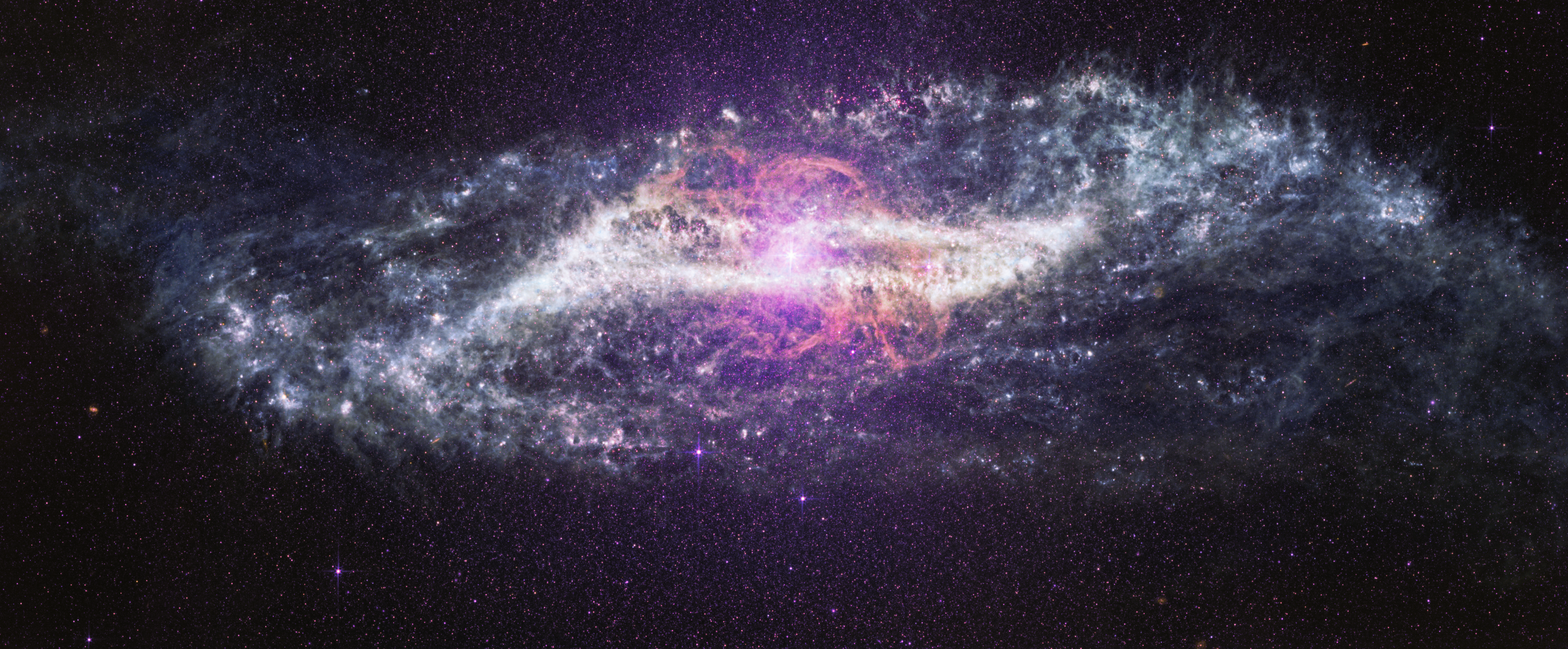
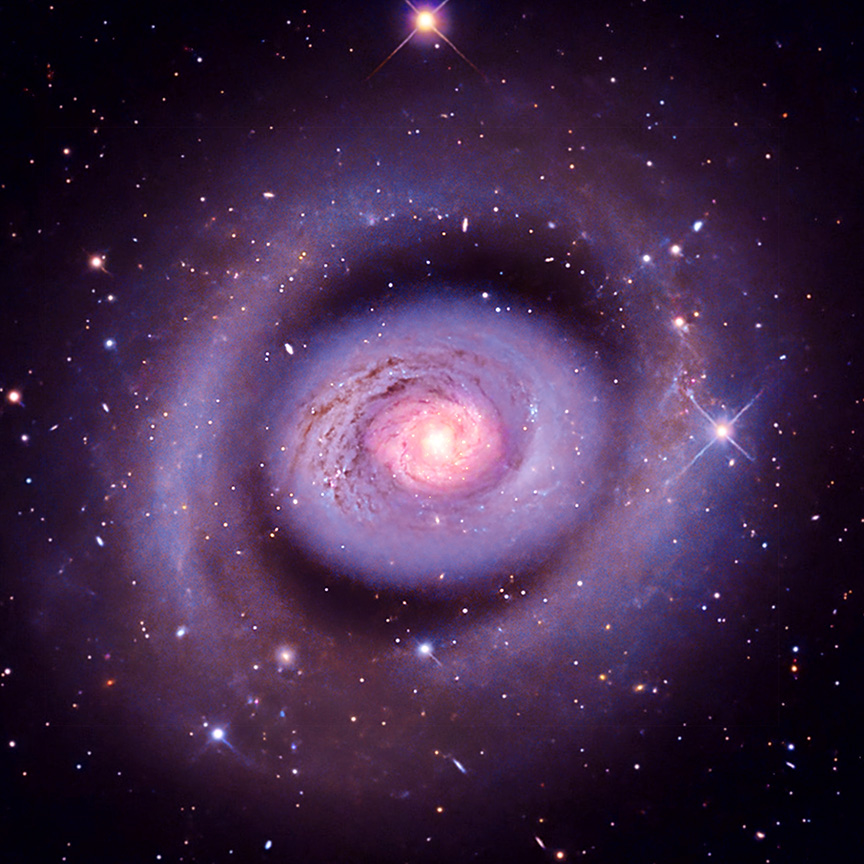
NASA’s James Webb Space Telescope’s Mid-Infrared Instrument (MIRI) reveals the nearby galaxy Centaurus A, exposing the dusty structures and hidden activity that shape this unusual system.

  •  

NASA Astronaut Chris Williams Returns to Earth

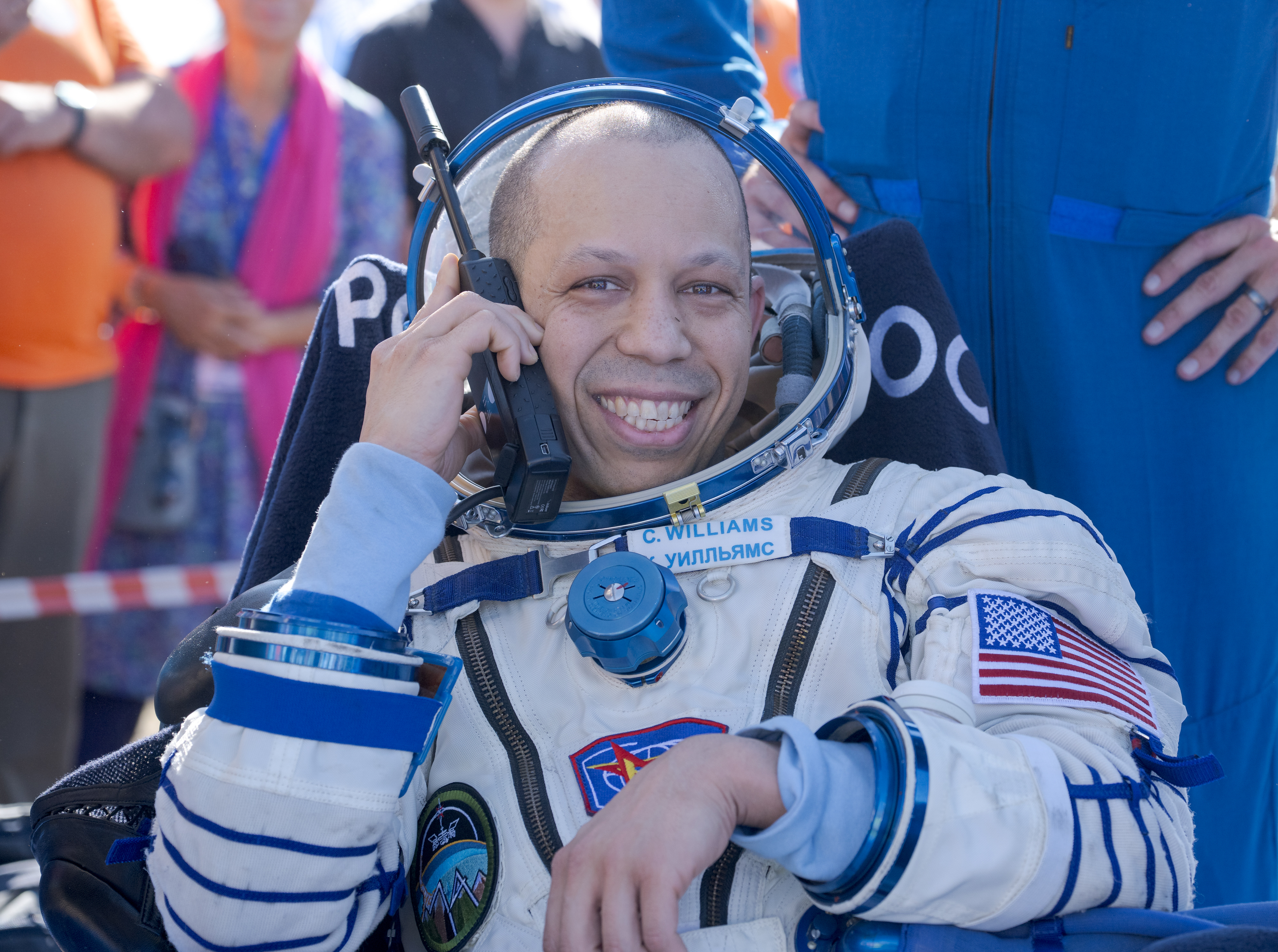
NASA astronaut Chris Williams is seen outside the Soyuz MS-28 spacecraft after he landed with Expedition 74 Roscosmos cosmonauts Sergey Kud-Sverchkov, and Sergei Mikaev in a remote area near the town of Zhezkazgan, Kazakhstan on Sunday, July 26, 2026. The trio returned to Earth after logging 241 days in space as a members of Expeditions 73 and 74 aboard the International Space Station.

  •  

NASA to Cover Three US Spacewalks, Host Preview News Conference

006B6348.NEF
NASA astronaut Jessica Meir works inside the International Space Station’s Quest airlock in March, her reflection visible in a spacesuit helmet visor as she installs leg and arm components and swaps parts between suits.
Credit: NASA/Jack Hathaway

Editor’s Note: This advisory was updated on Aug. 10, 2026, to reflect the assigned crew members and coverage times for U.S. spacewalk 97, scheduled to take place on Tuesday, Aug. 18. 

Editor’s Note: The advisory was updated on Aug. 7, 2026, with a date change for U.S. spacewalk 97, which is now scheduled for Tuesday, Aug. 18. Read more on the International Space Station blog.

Editor’s note: This media advisory was updated July 27, 2026 to reflect an updated start time for the spacewalk on Thursday, Aug. 6.

NASA will provide coverage as astronauts venture outside the International Space Station during three spacewalks in August to continue upgrading solar arrays, replace a communications antenna, and connect power and data cables in support of space station operations.

Experts will preview the upcoming spacewalks during a news conference at 2 p.m. EDT, Thursday, July 30, from NASA’s Johnson Space Center in Houston.

NASA will stream these events through a variety of platforms. Learn where to watch online:

https://www.nasa.gov/live

NASA participants in the news conference include:

  • Bill Spetch, deputy manager of Commercial, Low Earth Orbit Program
  • Chris Dobbins, spacewalk flight director
  • Chloe Mehring, spacewalk flight director

United States-based media interested in attending in person must contact the Johnson newsroom no later than 3 p.m., Wednesday, July 29, at jsccommu@mail.nasa.gov. Media joining by phone should request dial-in details by the same deadline. To ask a question, media must dial in no later than 15 minutes before the start of the news conference.

Thursday, Aug. 6

NASA astronauts Jessica Meir and Anil Menon will exit the Quest airlock to install hardware that will modify the station’s 3B power channel and prepare it for the future installation of an International Space Station Roll-Out Solar Array (IROSA). The solar array, scheduled for delivery later this year, will be the seventh IROSA and will provide additional power to support critical station operations, including its safe and controlled deorbit.

Watch NASA’s live coverage of U.S. spacewalk 96 beginning at 7 a.m. The spacewalk is expected to start at 8:35 a.m. and last about six and a half hours.

This spacewalk will be the sixth for Meir and the first for Menon. Meir will serve as spacewalk crew member 1 and will wear a suit with red stripes. Menon will serve as crew member 2 and will wear an unmarked suit.

Tuesday, Aug. 18

During U.S. spacewalk 97, NASA astronaut Anil Menon and ESA (European Space Agency) astronaut Sophie Adenot will exit the station’s Quest airlock to replace a Space-to-Ground antenna on the orbital complex. The antenna is a critical communications link NASA uses to transmit data, enabling high-speed communications between the Mission Control Center in Houston and the space station. 

Watch NASA’s live coverage beginning at 7 a.m. The spacewalk is expected to start at approximately 8:35 a.m. and last about six and a half hours.

Menon will serve as spacewalk crew member 1, and Adenot will serve as crew member 2. The spacewalk will be Menon’s second and Adenot’s first. Adenot will become the first French woman to conduct a spacewalk.

Tuesday, Aug. 25

The U.S. spacewalk 98 crew members will connect power channel cables and data relay systems as part of ongoing maintenance, including preparations for the space station’s future deorbit. The astronauts also will replace a navigational aid used for spacecraft docking on the Harmony module’s forward port.

NASA will share additional details about U.S. spacewalk 98, including timing, assigned crew members, and coverage information, closer to the operation.

The spacewalks will be the 281st, 282nd, and 283rd conducted in support of space station assembly, maintenance, and upgrades.

To learn more about International Space Station research, operations, and its crews, visit:

https://www.nasa.gov/station

-end-

Joshua Finch / Jimi Russell
Headquarters, Washington
202-358-1100
joshua.a.finch@nasa.gov / james.j.russell@nasa.gov

Sandra Jones / Anna Schneider 
Johnson Space Center, Houston 
281-483-5111 
sandra.p.jones@nasa.gov / anna.c.schneider@nasa.gov

Share

Details

Last Updated
Aug 10, 2026
Editor
Jennifer M. Dooren
  •  

NASA to Cover Three US Spacewalks, Host Preview News Conference

006B6348.NEF
NASA astronaut Jessica Meir works inside the International Space Station’s Quest airlock in March, her reflection visible in a spacesuit helmet visor as she installs leg and arm components and swaps parts between suits.
Credit: NASA/Jack Hathaway

Editor’s Note: This advisory was updated on Aug. 10, 2026, to reflect the assigned crew members and coverage times for U.S. spacewalk 97, scheduled to take place on Tuesday, Aug. 18. 

Editor’s Note: The advisory was updated on Aug. 7, 2026, with a date change for U.S. spacewalk 97, which is now scheduled for Tuesday, Aug. 18. Read more on the International Space Station blog.

Editor’s note: This media advisory was updated July 27, 2026 to reflect an updated start time for the spacewalk on Thursday, Aug. 6.

NASA will provide coverage as astronauts venture outside the International Space Station during three spacewalks in August to continue upgrading solar arrays, replace a communications antenna, and connect power and data cables in support of space station operations.

Experts will preview the upcoming spacewalks during a news conference at 2 p.m. EDT, Thursday, July 30, from NASA’s Johnson Space Center in Houston.

NASA will stream these events through a variety of platforms. Learn where to watch online:

https://www.nasa.gov/live

NASA participants in the news conference include:

  • Bill Spetch, deputy manager of Commercial, Low Earth Orbit Program
  • Chris Dobbins, spacewalk flight director
  • Chloe Mehring, spacewalk flight director

United States-based media interested in attending in person must contact the Johnson newsroom no later than 3 p.m., Wednesday, July 29, at jsccommu@mail.nasa.gov. Media joining by phone should request dial-in details by the same deadline. To ask a question, media must dial in no later than 15 minutes before the start of the news conference.

Thursday, Aug. 6

NASA astronauts Jessica Meir and Anil Menon will exit the Quest airlock to install hardware that will modify the station’s 3B power channel and prepare it for the future installation of an International Space Station Roll-Out Solar Array (IROSA). The solar array, scheduled for delivery later this year, will be the seventh IROSA and will provide additional power to support critical station operations, including its safe and controlled deorbit.

Watch NASA’s live coverage of U.S. spacewalk 96 beginning at 7 a.m. The spacewalk is expected to start at 8:35 a.m. and last about six and a half hours.

This spacewalk will be the sixth for Meir and the first for Menon. Meir will serve as spacewalk crew member 1 and will wear a suit with red stripes. Menon will serve as crew member 2 and will wear an unmarked suit.

Tuesday, Aug. 18

During U.S. spacewalk 97, NASA astronaut Anil Menon and ESA (European Space Agency) astronaut Sophie Adenot will exit the station’s Quest airlock to replace a Space-to-Ground antenna on the orbital complex. The antenna is a critical communications link NASA uses to transmit data, enabling high-speed communications between the Mission Control Center in Houston and the space station. 

Watch NASA’s live coverage beginning at 7 a.m. The spacewalk is expected to start at approximately 8:35 a.m. and last about six and a half hours.

Menon will serve as spacewalk crew member 1, and Adenot will serve as crew member 2. The spacewalk will be Menon’s second and Adenot’s first. Adenot will become the first French woman to conduct a spacewalk.

Tuesday, Aug. 25

The U.S. spacewalk 98 crew members will connect power channel cables and data relay systems as part of ongoing maintenance, including preparations for the space station’s future deorbit. The astronauts also will replace a navigational aid used for spacecraft docking on the Harmony module’s forward port.

NASA will share additional details about U.S. spacewalk 98, including timing, assigned crew members, and coverage information, closer to the operation.

The spacewalks will be the 281st, 282nd, and 283rd conducted in support of space station assembly, maintenance, and upgrades.

To learn more about International Space Station research, operations, and its crews, visit:

https://www.nasa.gov/station

-end-

Joshua Finch / Jimi Russell
Headquarters, Washington
202-358-1100
joshua.a.finch@nasa.gov / james.j.russell@nasa.gov

Sandra Jones / Anna Schneider 
Johnson Space Center, Houston 
281-483-5111 
sandra.p.jones@nasa.gov / anna.c.schneider@nasa.gov

Share

Details

Last Updated
Aug 10, 2026
Editor
Jennifer M. Dooren
  •  

NASA Astronaut Chris Williams, Crewmates Return from Space Station

The Soyuz MS-28 spacecraft is seen as it lands in a remote area near the town of Zhezkazgan, Kazakhstan
The Soyuz MS-28 spacecraft is seen as it lands in a remote area near the town of Zhezkazgan, Kazakhstan with Expedition 74 NASA astronaut Chris Williams, and Roscosmos cosmonauts Sergey Kud-Sverchkov, and Sergei Mikaev aboard, Sunday, July 26, 2026. 
NASA/Bill Ingalls

Concluding an eight-month science mission aboard the International Space Station, NASA astronaut Chris Williams returned to Earth on Sunday alongside Roscosmos cosmonauts Sergey Kud-Sverchkov and Sergei Mikaev.

The crew made its safe, parachute-assisted landing at 5:27 a.m. CDT (3:27 p.m., Kazakhstan time), southeast of Dzhezkazgan, after departing the space station at 2:03 a.m., aboard the Soyuz MS-28 spacecraft.

The crew was in space for 241 days, orbiting the Earth 3,856 times and traveling more than 102 million miles. They launched to the International Space Station on Nov. 27, 2025. The mission was the first for Williams and Mikaev and the second for Kud-Sverchkov.

While aboard the orbiting laboratory, Williams supported a wide range of scientific investigations and technology demonstrations. He helped advance research for new cancer treatments and improved in-space manufacturing of materials used in high-performance computers and electronics. Williams also completed two spacewalks to prep for space station power system upgrades and to replace a faulty joint on the Canadarm2 robotic arm. The crew’s work aboard the space station helps improve life on Earth and prepare for future human missions to the Moon and Mars.

Following post-landing medical checks, the crew members will fly by helicopter to Karaganda, Kazakhstan, where recovery teams are based. Williams then will board a NASA aircraft bound for the agency’s Johnson Space Center in Houston.

For more than 25 years, people have lived and worked continuously aboard the International Space Station, advancing scientific knowledge and making research breakthroughs not possible on Earth. The space station helps NASA understand and overcome the challenges of human spaceflight, expand commercial opportunities in low Earth orbit, and build on the foundation for long-duration missions to the Moon, as part of the Artemis program, and to Mars.

To learn more about International Space Station research, operations, and its crews, visit:

www.nasa.gov/station

-end-

Joshua Finch / Jimi Russell
Headquarters, Washington
202-358-1100
joshua.a.finch@nasa.gov / james.j.russell@nasa.gov

Leah Cheshier / Anna Schneider
Johnson Space Center, Houston
281-483-5111
leah.d.cheshier@nasa.gov / anna.c.schneider@nasa.gov

Share

Details

Last Updated
Jul 26, 2026
Editor
Jennifer M. Dooren
  •  

NASA Astronaut Chris Williams, Crewmates Return from Space Station

The Soyuz MS-28 spacecraft is seen as it lands in a remote area near the town of Zhezkazgan, Kazakhstan
The Soyuz MS-28 spacecraft is seen as it lands in a remote area near the town of Zhezkazgan, Kazakhstan with Expedition 74 NASA astronaut Chris Williams, and Roscosmos cosmonauts Sergey Kud-Sverchkov, and Sergei Mikaev aboard, Sunday, July 26, 2026. 
NASA/Bill Ingalls

Concluding an eight-month science mission aboard the International Space Station, NASA astronaut Chris Williams returned to Earth on Sunday alongside Roscosmos cosmonauts Sergey Kud-Sverchkov and Sergei Mikaev.

The crew made its safe, parachute-assisted landing at 5:27 a.m. CDT (3:27 p.m., Kazakhstan time), southeast of Dzhezkazgan, after departing the space station at 2:03 a.m., aboard the Soyuz MS-28 spacecraft.

The crew was in space for 241 days, orbiting the Earth 3,856 times and traveling more than 102 million miles. They launched to the International Space Station on Nov. 27, 2025. The mission was the first for Williams and Mikaev and the second for Kud-Sverchkov.

While aboard the orbiting laboratory, Williams supported a wide range of scientific investigations and technology demonstrations. He helped advance research for new cancer treatments and improved in-space manufacturing of materials used in high-performance computers and electronics. Williams also completed two spacewalks to prep for space station power system upgrades and to replace a faulty joint on the Canadarm2 robotic arm. The crew’s work aboard the space station helps improve life on Earth and prepare for future human missions to the Moon and Mars.

Following post-landing medical checks, the crew members will fly by helicopter to Karaganda, Kazakhstan, where recovery teams are based. Williams then will board a NASA aircraft bound for the agency’s Johnson Space Center in Houston.

For more than 25 years, people have lived and worked continuously aboard the International Space Station, advancing scientific knowledge and making research breakthroughs not possible on Earth. The space station helps NASA understand and overcome the challenges of human spaceflight, expand commercial opportunities in low Earth orbit, and build on the foundation for long-duration missions to the Moon, as part of the Artemis program, and to Mars.

To learn more about International Space Station research, operations, and its crews, visit:

www.nasa.gov/station

-end-

Joshua Finch / Jimi Russell
Headquarters, Washington
202-358-1100
joshua.a.finch@nasa.gov / james.j.russell@nasa.gov

Leah Cheshier / Anna Schneider
Johnson Space Center, Houston
281-483-5111
leah.d.cheshier@nasa.gov / anna.c.schneider@nasa.gov

Share

Details

Last Updated
Jul 26, 2026
Editor
Jennifer M. Dooren
  •  

New Crew Members Welcomed to International Space Station

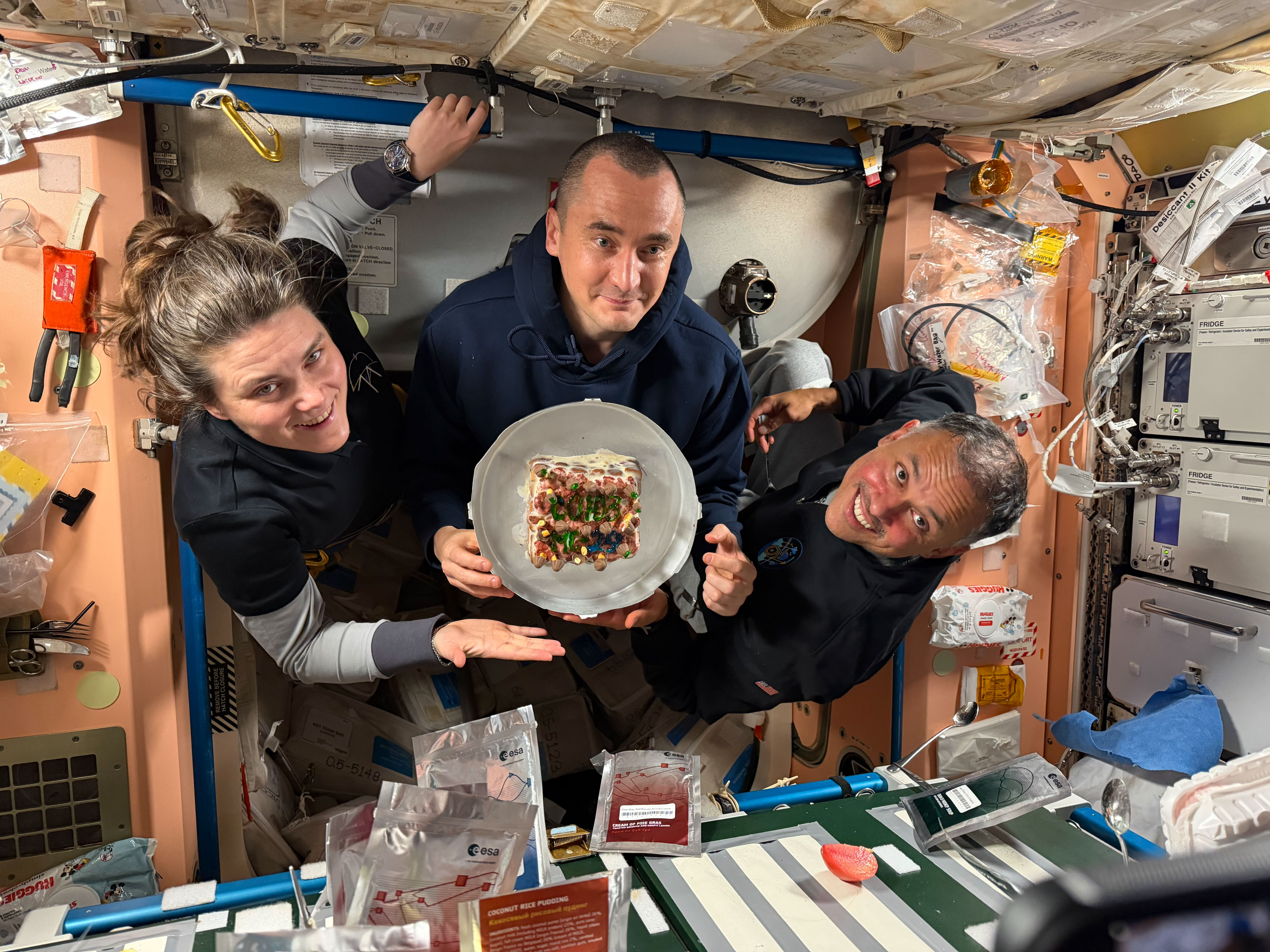
From left, Expedition 74 flight engineers Anna Kikina and Pyotr Dubrov of Roscosmos, and Anil Menon of NASA pose for a portrait while holding a cake celebrating their recent arrival aboard the International Space Station.
NASA/Chris Williams

From left, Expedition 74 flight engineers Anna Kikina and Pyotr Dubrov of Roscosmos, and Anil Menon of NASA pose for a July 18, 2026, photo while holding a cake celebrating their recent arrival aboard the International Space Station. The trio arrived at the space station on July 14, 2026, after launching from the Baikonur Cosmodrome in Kazakhstan earlier the same day.

Kikina, Dubrov, and Menon are in the second week of their planned eight-and-a-half-month mission. They are using their new skills to conduct space research while still familiarizing themselves with living and working in space.

Keep up with space station activity on the International Space Station blog.

Image credit: NASA/Chris Williams

  •  

New Crew Members Welcomed to International Space Station

From left, Expedition 74 flight engineers Anna Kikina and Pyotr Dubrov of Roscosmos, and Anil Menon of NASA pose for a portrait while holding a cake celebrating their recent arrival aboard the International Space Station.
NASA/Chris Williams

From left, Expedition 74 flight engineers Anna Kikina and Pyotr Dubrov of Roscosmos, and Anil Menon of NASA pose for a July 18, 2026, photo while holding a cake celebrating their recent arrival aboard the International Space Station. The trio arrived at the space station on July 14, 2026, after launching from the Baikonur Cosmodrome in Kazakhstan earlier the same day.

Kikina, Dubrov, and Menon are in the second week of their planned eight-and-a-half-month mission. They are using their new skills to conduct space research while still familiarizing themselves with living and working in space.

Keep up with space station activity on the International Space Station blog.

Image credit: NASA/Chris Williams

  •  

 Crews Move Artemis IV Liquid Hydrogen Tank

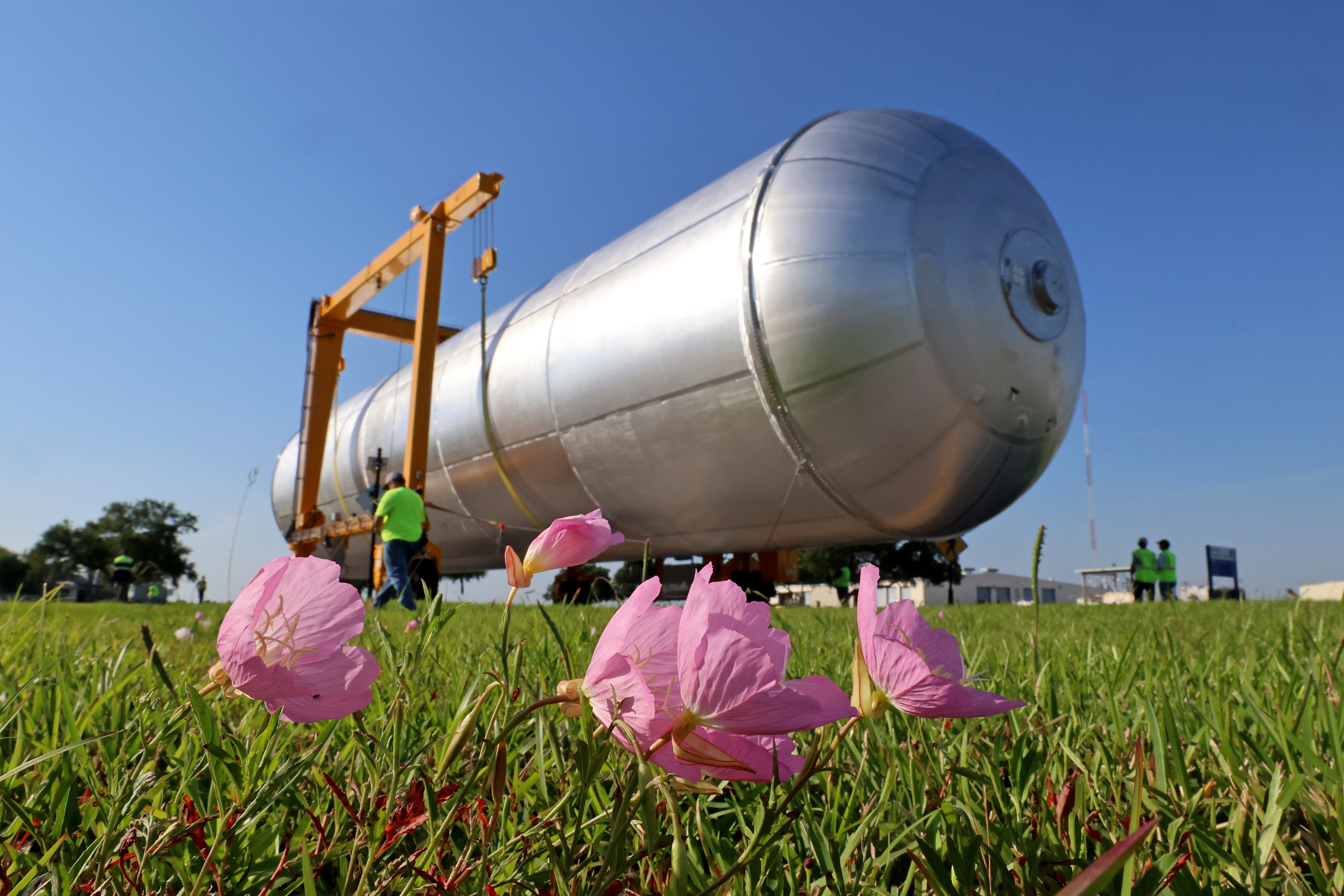
Crews at NASA’s Michoud Assembly Facility in New Orleans transport the 130-foot-tall liquid hydrogen tank out of a production cell inside the main factory building into a detached test building on a separate portion of the 829-acre site.

  •  

NASA Astronaut Chris Williams Closes Out Space Station Mission

5 Min Read

NASA Astronaut Chris Williams Closes Out Space Station Mission

After eight months aboard the International Space Station for his first mission, NASA astronaut Chris Williams is preparing to return to Earth. During his assignment, Williams contributed to research for new cancer treatments, advanced the production of materials to improve computers and electronics, ventured into the vacuum of space to complete two spacewalks, and much more. Williams’ work aboard the space station helped to improve life on Earth and prepare for future missions to the Moon and Mars.

Here are some of the research highlights from his mission:

Cancer-fighting constructs

NASA astronaut Chris Williams and ESA (European Space Agency) astronaut Sophie Adenot work together at the International Space Station's Life Sciences Glovebox. Sophie reaches into the illuminated glovebox while Chris floats beside her, smiling toward the camera. Blue cables, scientific equipment, and white station walls surround the workstation.
NASA

NASA astronaut Chris Williams and ESA (European Space Agency) astronaut Sophie Adenot work to process DNA-inspired materials that could advance new cancer treatments for people on Earth. In space, these rod-shaped materials form more evenly and consistently, which may improve their performance and readiness for treatments on Earth. While there have been major advancements in cancer therapies, many treatments can affect the whole body and cause side effects without fully treating solid tumors. This research aims to enable targeted cancer therapies that reach deep into tumors, stay in the body longer, and release medicine in a more controlled way.

Learn more about DNA Nano Therapeutics-3.

Superior semiconductors

NASA astronaut Chris Williams smiles while reaching into the Microgravity Science Glovebox. The inside of the rectangular workspace is illuminated by white light. There is a plastic bag floating inside the upper left side of the glovebox, and Chris holds a small black and silver object in his hands.
NASA

NASA astronaut Chris Williams conducts research to grow semiconductor crystals in space. In microgravity, researchers can grow more crystals of the desired size than can be produced on Earth. Previous research shows that space-grown crystals can offer increased performance to help advance technologies like high-performance computers, artificial intelligence, and medical devices. This research lays the groundwork for commercial semiconductor manufacturing in space and advances the semiconductor industry.

Learn more about In-Space Production of Semimetal-Semiconductor Composite Bulk Crystals in Microgravity (SUBSA-InSPA-SSCug).

Eyeing Earth

NASA astronaut Chris Williams gazes out of a trapezoid-shaped window at a glowing red aurora above the Earth. The curvature of the Earth is visible through a bright green curve. It is dark aboard the International Space Station in the photo, and the glow from the aurora softly illuminates Williams' face.
Roscosmos

NASA astronaut Chris Williams looks out of a cupola window at a red aurora glowing above the Earth. Since the 1960s, astronauts have photographed Earth from space to help scientists monitor the planet’s changing landscapes, natural disasters, and other features over time. Along the way, astronauts also have captured images of celestial objects such as comets, auroras, and the Milky Way.

Sub-zero medical samples

NASA astronaut Chris Williams inserts a cryogenic storage unit into the space station's science freezer. The wedge-shaped unit resembles a slice of pie, and Williams wears thick insulated gloves to protect his hands from the extremely cold temperatures. There are many blue cables beneath him.
NASA

NASA astronaut Chris Williams works with a special freezer aboard the International Space Station that keeps research samples at ultra-cold temperatures until they can return to Earth. Throughout each mission, astronauts collect biological samples like blood and urine to help scientists understand how long-duration spaceflight affects the human body. Observing crew members during their space missions and studying these frozen samples back on Earth helps NASA protect astronaut health during future missions to the Moon, Mars, and beyond.

Learn more about the Minus Eighty-Degree Laboratory Freezer for the International Space Station (MELFI) and Human Research.

Capturing cargo

NASA astronauts Jack Hathaway (left) and Chris Williams (right) look through a circular window in the International Space Station's cupola as Northrop Grumman’s Cygnus XL spacecraft approaches. The spacecraft is a silver cylinder with two hexagonal solar arrays extending from either side of the top end of the cylinder. Behind the spacecraft, white clouds cover the Earth.
NASA

NASA astronauts Jack Hathaway and Chris Williams watch from the cupola windows as Northrop Grumman’s Cygnus XL cargo spacecraft approaches the International Space Station. The two played key roles in the capture of the spacecraft, which delivered approximately 11,000 pounds of supplies, including fresh food, life support equipment, and scientific research as part of NASA’s Northrop Grumman Commercial Resupply Services 24 mission. Cargo missions help keep the space station operating and provide astronauts with the supplies they need to live, work, and conduct research in orbit.

Blocking biofilms

NASA astronaut Chris Williams smiles at the camera as he reaches into the clear, sealed Life Sciences Glovebox and holds a transparent orange package. The illuminated workspace contains plastic bags, scientific equipment, and a pair of scissors.
NASA

NASA astronaut Chris Williams works on an investigation that tests the use of ultraviolet light to help prevent the formation of microbial colonies, called biofilms. Biofilms can clog and contaminate water systems, damage equipment, and pose health risks to astronauts. This research aims to keep surfaces cleaner and safeguard systems during long-duration space missions. Using UV light for sanitation also could reduce the need for chemical disinfectants in space, decreasing the risk of chemical exposure and eliminating difficulties in transporting or storing supplies.

Learn more about Germicidal Ultraviolet Light Biofilm Inhibition (GULBI).

Strengthening solar power

NASA astronaut Chris Williams is seen smiling through his spacesuit helmet outside of the International Space Station. Williams is anchored next to several white structures and surrounded by space station equipment. Behind him there is a SpaceX Dragon spacecraft docked to the space station. Earth's blue curvature and scattered white clouds stretch across the background.
NASA

NASA astronaut Chris Williams ventured outside the International Space Station for two spacewalks during his mission. In June, he helped make repairs to Canadarm2, a robotic arm that captures cargo spacecraft and deploys external research. In March, Williams prepared the orbiting laboratory for new solar arrays to be added to the station in a future spacewalk. Once installed, the final set of International Space Station Roll Out Solar Arrays (IROSA) will complete the full suite of additional solar power, increasing the station’s power generation by about 30% and enhancing support for scientific research and daily operations. The same solar array technology also powered NASA’s Double Asteroid Redirection Test and could support future missions to the Moon and Mars.

Learn more about the space station’s IROSAs.

Microgravity medicine

NASA astronaut Chris Williams holds a small, rectangular hard drive as he works to swap computer components for a protein crystal growth investigation. A tablet is secured to one of his legs, while two plastic bags are attached to the other. Bundles of cables float next to him and a circular hatch is visible in the background.
NASA

NASA astronaut Chris Williams works with hardware to support the development of new cancer and disease treatments by studying the growth of protein crystals for pharmaceuticals. In space, protein crystals form higher-quality structures than they do on Earth, allowing researchers to better understand how to target and treat disease. Here, Williams works with a project that aims to develop a new formula for a cancer treatment that could be taken orally. Growing protein crystals in space paves the way for more commercial companies to create new therapies that could improve patient outcomes on Earth.

Learn more about the Pharmaceutical In-space Laboratory (ADSEP-PIL-10).

Robotic refinement

A video shows NASA astronaut Chris Williams working on hardware inside a rectangular space. Facing away from the camera, Williams makes small adjustments to the experiment, which consists of two white robotic arms. There are many white cables on the inside of the compartment.
NASA

NASA astronaut Chris Williams works with equipment that tests the performance of small robotic arms in space. Some experiments and operations require very precise movements, where tiny errors can significantly impact results. Understanding how microgravity affects delicate robotic operations helps researchers improve designs for future automated systems that can perform operations while astronauts focus on the most critical tasks.

Learn more about the Test facility for lab-aUtomation System in Kibo (TUSK).

Share

Details

Last Updated
Jul 23, 2026

💾

NASA astronaut Chris Williams is set to return to Earth after an eight-month mission aboard the International Space Station. During his assignment, Williams ...
  •  

NASA Astronaut Chris Williams Closes Out Space Station Mission

5 Min Read

NASA Astronaut Chris Williams Closes Out Space Station Mission

After eight months aboard the International Space Station for his first mission, NASA astronaut Chris Williams is preparing to return to Earth. During his assignment, Williams contributed to research for new cancer treatments, advanced the production of materials to improve computers and electronics, ventured into the vacuum of space to complete two spacewalks, and much more. Williams’ work aboard the space station helped to improve life on Earth and prepare for future missions to the Moon and Mars.

Here are some of the research highlights from his mission:

Cancer-fighting constructs

NASA astronaut Chris Williams and ESA (European Space Agency) astronaut Sophie Adenot work together at the International Space Station's Life Sciences Glovebox. Sophie reaches into the illuminated glovebox while Chris floats beside her, smiling toward the camera. Blue cables, scientific equipment, and white station walls surround the workstation.
NASA

NASA astronaut Chris Williams and ESA (European Space Agency) astronaut Sophie Adenot work to process DNA-inspired materials that could advance new cancer treatments for people on Earth. In space, these rod-shaped materials form more evenly and consistently, which may improve their performance and readiness for treatments on Earth. While there have been major advancements in cancer therapies, many treatments can affect the whole body and cause side effects without fully treating solid tumors. This research aims to enable targeted cancer therapies that reach deep into tumors, stay in the body longer, and release medicine in a more controlled way.

Learn more about DNA Nano Therapeutics-3.

Superior semiconductors

NASA astronaut Chris Williams smiles while reaching into the Microgravity Science Glovebox. The inside of the rectangular workspace is illuminated by white light. There is a plastic bag floating inside the upper left side of the glovebox, and Chris holds a small black and silver object in his hands.
NASA

NASA astronaut Chris Williams conducts research to grow semiconductor crystals in space. In microgravity, researchers can grow more crystals of the desired size than can be produced on Earth. Previous research shows that space-grown crystals can offer increased performance to help advance technologies like high-performance computers, artificial intelligence, and medical devices. This research lays the groundwork for commercial semiconductor manufacturing in space and advances the semiconductor industry.

Learn more about In-Space Production of Semimetal-Semiconductor Composite Bulk Crystals in Microgravity (SUBSA-InSPA-SSCug).

Eyeing Earth

NASA astronaut Chris Williams gazes out of a trapezoid-shaped window at a glowing red aurora above the Earth. The curvature of the Earth is visible through a bright green curve. It is dark aboard the International Space Station in the photo, and the glow from the aurora softly illuminates Williams' face.
Roscosmos

NASA astronaut Chris Williams looks out of a cupola window at a red aurora glowing above the Earth. Since the 1960s, astronauts have photographed Earth from space to help scientists monitor the planet’s changing landscapes, natural disasters, and other features over time. Along the way, astronauts also have captured images of celestial objects such as comets, auroras, and the Milky Way.

Sub-zero medical samples

NASA astronaut Chris Williams inserts a cryogenic storage unit into the space station's science freezer. The wedge-shaped unit resembles a slice of pie, and Williams wears thick insulated gloves to protect his hands from the extremely cold temperatures. There are many blue cables beneath him.
NASA

NASA astronaut Chris Williams works with a special freezer aboard the International Space Station that keeps research samples at ultra-cold temperatures until they can return to Earth. Throughout each mission, astronauts collect biological samples like blood and urine to help scientists understand how long-duration spaceflight affects the human body. Observing crew members during their space missions and studying these frozen samples back on Earth helps NASA protect astronaut health during future missions to the Moon, Mars, and beyond.

Learn more about the Minus Eighty-Degree Laboratory Freezer for the International Space Station (MELFI) and Human Research.

Capturing cargo

NASA astronauts Jack Hathaway (left) and Chris Williams (right) look through a circular window in the International Space Station's cupola as Northrop Grumman’s Cygnus XL spacecraft approaches. The spacecraft is a silver cylinder with two hexagonal solar arrays extending from either side of the top end of the cylinder. Behind the spacecraft, white clouds cover the Earth.
NASA

NASA astronauts Jack Hathaway and Chris Williams watch from the cupola windows as Northrop Grumman’s Cygnus XL cargo spacecraft approaches the International Space Station. The two played key roles in the capture of the spacecraft, which delivered approximately 11,000 pounds of supplies, including fresh food, life support equipment, and scientific research as part of NASA’s Northrop Grumman Commercial Resupply Services 24 mission. Cargo missions help keep the space station operating and provide astronauts with the supplies they need to live, work, and conduct research in orbit.

Blocking biofilms

NASA astronaut Chris Williams smiles at the camera as he reaches into the clear, sealed Life Sciences Glovebox and holds a transparent orange package. The illuminated workspace contains plastic bags, scientific equipment, and a pair of scissors.
NASA

NASA astronaut Chris Williams works on an investigation that tests the use of ultraviolet light to help prevent the formation of microbial colonies, called biofilms. Biofilms can clog and contaminate water systems, damage equipment, and pose health risks to astronauts. This research aims to keep surfaces cleaner and safeguard systems during long-duration space missions. Using UV light for sanitation also could reduce the need for chemical disinfectants in space, decreasing the risk of chemical exposure and eliminating difficulties in transporting or storing supplies.

Learn more about Germicidal Ultraviolet Light Biofilm Inhibition (GULBI).

Strengthening solar power

NASA astronaut Chris Williams is seen smiling through his spacesuit helmet outside of the International Space Station. Williams is anchored next to several white structures and surrounded by space station equipment. Behind him there is a SpaceX Dragon spacecraft docked to the space station. Earth's blue curvature and scattered white clouds stretch across the background.
NASA

NASA astronaut Chris Williams ventured outside the International Space Station for two spacewalks during his mission. In June, he helped make repairs to Canadarm2, a robotic arm that captures cargo spacecraft and deploys external research. In March, Williams prepared the orbiting laboratory for new solar arrays to be added to the station in a future spacewalk. Once installed, the final set of International Space Station Roll Out Solar Arrays (IROSA) will complete the full suite of additional solar power, increasing the station’s power generation by about 30% and enhancing support for scientific research and daily operations. The same solar array technology also powered NASA’s Double Asteroid Redirection Test and could support future missions to the Moon and Mars.

Learn more about the space station’s IROSAs.

Microgravity medicine

NASA astronaut Chris Williams holds a small, rectangular hard drive as he works to swap computer components for a protein crystal growth investigation. A tablet is secured to one of his legs, while two plastic bags are attached to the other. Bundles of cables float next to him and a circular hatch is visible in the background.
NASA

NASA astronaut Chris Williams works with hardware to support the development of new cancer and disease treatments by studying the growth of protein crystals for pharmaceuticals. In space, protein crystals form higher-quality structures than they do on Earth, allowing researchers to better understand how to target and treat disease. Here, Williams works with a project that aims to develop a new formula for a cancer treatment that could be taken orally. Growing protein crystals in space paves the way for more commercial companies to create new therapies that could improve patient outcomes on Earth.

Learn more about the Pharmaceutical In-space Laboratory (ADSEP-PIL-10).

Robotic refinement

A video shows NASA astronaut Chris Williams working on hardware inside a rectangular space. Facing away from the camera, Williams makes small adjustments to the experiment, which consists of two white robotic arms. There are many white cables on the inside of the compartment.
NASA

NASA astronaut Chris Williams works with equipment that tests the performance of small robotic arms in space. Some experiments and operations require very precise movements, where tiny errors can significantly impact results. Understanding how microgravity affects delicate robotic operations helps researchers improve designs for future automated systems that can perform operations while astronauts focus on the most critical tasks.

Learn more about the Test facility for lab-aUtomation System in Kibo (TUSK).

Share

Details

Last Updated
Jul 23, 2026

💾

NASA astronaut Chris Williams is set to return to Earth after an eight-month mission aboard the International Space Station. During his assignment, Williams ...
  •  

NASA to Showcase Agency’s Newest Wind Tunnel in Virginia

Flight Dynamics Research Facility
The Flight Dynamics Research Facility, located at NASA’s Langley Research Center in Hampton, Virginia, is the agency’s first major wind tunnel built in more than 40 years.
NASA/Mark Knopp

Media are invited to NASA’s Langley Research Center in Hampton, Virginia, on Friday, July 31, to attend a media tour and ribbon-cutting ceremony for the Flight Dynamics Research Facility, the agency’s first new wind tunnel in more than 40 years.

The event will include a brief media availability with:

  • NASA Administrator Jared Isaacman
  • Dr. Trina Dyal, center director, NASA Langley
  • Administrator Edward C. Forst, U.S. General Services Administration

This event is in person only and open to members of the media who are United States citizens or lawful permanent residents. Information about timing will be shared closer to the event. NASA’s media accreditation policy is available online.

Media requesting to participate in person must RSVP no later than 5 p.m. EDT on Wednesday, July 29. Media RSVPs must be sent to Kimiko Booker, kimiko.s.booker@nasa.gov, and Brittny McGraw, brittny.v.mcgraw@nasa.gov, with the following information:

  • Legal first and last names (must match government identification)
  • Email
  • Phone number
  • Job title and organization

The wind tunnel opening marks a major milestone in the evolution of NASA and the nation’s aeronautics and space research capabilities. The state-of-the-art facility will support research and technology development that will advance NASA’s aeronautics, exploration, and science goals, including establishing a sustained human presence on the lunar surface through the Artemis program and the development of a Moon Base.

Learn more about the Flight Dynamics Research Facility at:

https://go.nasa.gov/4yzKEGQ

-end-

Camille Gallo / Rob Margetta
Headquarters, Washington
202-358-1600
camille.m.gallo@nasa.gov / robert.j.margetta@nasa.gov 

Kimiko Booker / Brittny McGraw
NASA Langley, Hampton, Va.
757-506-5939 / 757-769-3763
kimiko.s.booker@nasa.gov / brittny.v.mcgraw@nasa.gov

Share

Details

Last Updated
Jul 22, 2026
Editor
Jennifer M. Dooren
  •  

NASA Sets Coverage for Astronaut Chris Williams, Crewmates Return

D4_2071158_20251127T124233_R_2025-11-27 12-42-38.NEF
The Roscosmos Soyuz MS 28 spacecraft is pictured in November 2025 shortly after docking to the International Space Station’s Rassvet module.
Credit: NASA

Editor’s Note: This advisory was updated on July 23, 2026, to reflect changes to the mission timeline. 

NASA astronaut Chris Williams and Roscosmos cosmonauts Sergey Kud-Sverchkov and Sergei Mikaev are wrapping up their 241‑day mission aboard the International Space Station.

The crew and its Soyuz MS-28 spacecraft will undock from the orbiting laboratory’s Rassvet module at 3:03 a.m. EDT Sunday, July 26, heading for a parachute-assisted landing at 6:25 a.m. (3:25 p.m. local time) on the steppe of Kazakhstan, southeast of Dzhezkazgan.

NASA’s live return coverage will stream through a variety of platforms. Learn where to watch online:

https://www.nasa.gov/live

Williams and his crewmates will complete 3,856 orbits and travel more than 102 million miles before returning to Earth. The flight marks the first mission for Williams and Mikaev and the second for Kud‑Sverchkov.

After landing, the crew will fly by helicopter to Karaganda, Kazakhstan, where recovery teams are based. Williams then will return to NASA’s Johnson Space Center in Houston, while Kud‑Sverchkov and Mikaev head back to their training base in Star City, Russia.

NASA’s live return coverage is as follows (all times Eastern and subject to change based on real-time operations):

Saturday, July 25

9:40 a.m. – Coverage of the Space Station Expedition 74/75 change of command ceremony begins.

Kud‑Sverchkov will transfer command of the orbital complex to NASA astronaut Jessica Meir. Expedition 75 officially begins when Soyuz MS‑28 undocks.

11:10 p.m. – Coverage of crew farewells and hatch closing begins.

11:30 p.m. – Hatch closing

Sunday, July 26

2:30 a.m. – Coverage of undocking begins.

3:03 a.m. – Undocking

5:15 a.m. – Coverage of deorbit and landing begins.

5:31 a.m. – Deorbit burn

6:25 a.m. – Landing

For more than 25 years, people have lived and worked continuously aboard the International Space Station, advancing scientific knowledge and making research breakthroughs not possible on Earth. The space station helps NASA understand and overcome the challenges of human spaceflight, expand commercial opportunities in low Earth orbit, and build on the foundation for long-duration missions to the Moon, as part of the Artemis program, and to Mars.

To learn more about International Space Station research, operations, and its crews, visit:

www.nasa.gov/station

-end-

Joshua Finch / Jimi Russell
Headquarters, Washington
202-358-1100
joshua.a.finch@nasa.gov / james.j.russell@nasa.gov

Leah Cheshier / Anna Schneider
Johnson Space Center, Houston
281-483-5111
leah.d.cheshier@nasa.gov / anna.c.schneider@nasa.gov

  •  

NASA Sets Coverage for Astronaut Chris Williams, Crewmates Return

D4_2071158_20251127T124233_R_2025-11-27 12-42-38.NEF
The Roscosmos Soyuz MS 28 spacecraft is pictured in November 2025 shortly after docking to the International Space Station’s Rassvet module.
Credit: NASA

Editor’s Note: This advisory was updated on July 23, 2026, to reflect changes to the mission timeline. 

NASA astronaut Chris Williams and Roscosmos cosmonauts Sergey Kud-Sverchkov and Sergei Mikaev are wrapping up their 241‑day mission aboard the International Space Station.

The crew and its Soyuz MS-28 spacecraft will undock from the orbiting laboratory’s Rassvet module at 3:03 a.m. EDT Sunday, July 26, heading for a parachute-assisted landing at 6:25 a.m. (3:25 p.m. local time) on the steppe of Kazakhstan, southeast of Dzhezkazgan.

NASA’s live return coverage will stream through a variety of platforms. Learn where to watch online:

https://www.nasa.gov/live

Williams and his crewmates will complete 3,856 orbits and travel more than 102 million miles before returning to Earth. The flight marks the first mission for Williams and Mikaev and the second for Kud‑Sverchkov.

After landing, the crew will fly by helicopter to Karaganda, Kazakhstan, where recovery teams are based. Williams then will return to NASA’s Johnson Space Center in Houston, while Kud‑Sverchkov and Mikaev head back to their training base in Star City, Russia.

NASA’s live return coverage is as follows (all times Eastern and subject to change based on real-time operations):

Saturday, July 25

9:40 a.m. – Coverage of the Space Station Expedition 74/75 change of command ceremony begins.

Kud‑Sverchkov will transfer command of the orbital complex to NASA astronaut Jessica Meir. Expedition 75 officially begins when Soyuz MS‑28 undocks.

11:10 p.m. – Coverage of crew farewells and hatch closing begins.

11:30 p.m. – Hatch closing

Sunday, July 26

2:30 a.m. – Coverage of undocking begins.

3:03 a.m. – Undocking

5:15 a.m. – Coverage of deorbit and landing begins.

5:31 a.m. – Deorbit burn

6:25 a.m. – Landing

For more than 25 years, people have lived and worked continuously aboard the International Space Station, advancing scientific knowledge and making research breakthroughs not possible on Earth. The space station helps NASA understand and overcome the challenges of human spaceflight, expand commercial opportunities in low Earth orbit, and build on the foundation for long-duration missions to the Moon, as part of the Artemis program, and to Mars.

To learn more about International Space Station research, operations, and its crews, visit:

www.nasa.gov/station

-end-

Joshua Finch / Jimi Russell
Headquarters, Washington
202-358-1100
joshua.a.finch@nasa.gov / james.j.russell@nasa.gov

Leah Cheshier / Anna Schneider
Johnson Space Center, Houston
281-483-5111
leah.d.cheshier@nasa.gov / anna.c.schneider@nasa.gov

  •  

Psyche Approaches Mars

This composite of images taken by NASA’s Psyche mission shows the crescent of Mars grow as the spacecraft approached the planet for a gravity assist from May 2 to May 15, 2026. Because Psyche approached Mars from a high phase angle, the planet appeared as a thin crescent in the days running up to the close approach, lit by sunlight reflecting off its surface.

  •  

NASA, GE Aerospace Work Enables Hybrid-Electric Flight Demonstration

4 min read

Preparations for Next Moonwalk Simulations Underway (and Underwater)

Modified Saab 340, a hybrid-electric aircraft in flight.
A modified Saab 340B aircraft in flight powered in part by a hybrid electric system built by GE Aerospace, along with NASA, BETA Technologies, and Boeing.
GE Aerospace

An aircraft powered by a megawatt-class hybrid-electric engine developed in collaboration with NASA and built by GE Aerospace, demonstrated flight of an innovation that can inform new generations of fuel-saving aircraft power systems.

Mounted to a Saab 340B aircraft, the engine flew at Farnborough International Air Show in the United Kingdom. It was the public debut of a system that has in recent months made historic test flights, becoming the first hybrid electric-powered aircraft to fly above 30,000 feet.

“This achievement reflects what NASA does best in aeronautics: we explore bold possibilities, validate them through rigorous research and testing, and work with industry to turn breakthrough ideas into technologies that bring real value for the American people,” said Laurie Grindle, director of the Aeronautics Division within the agency’s Research and Technology Mission Directorate at NASA Headquarters in Washington.

The testing leveraged work done through NASA’s former Electrified Powertrain Flight Demonstration project and the agency’s ongoing Subsonic Vehicle Technologies and Tools project – years of collaborative research that included key testing at NASA test facilities. 

The engine integrates electric motors, a gas turbine, and energy storage capabilities. It was designed to demonstrate the capacity to power an aircraft around the size of a regional-class jet, reducing fuel burn and costs without sacrificing performance. The unit’s technology and designs are expected to be used to help develop future hybrid systems that could lower airline operating costs. 

The demonstration flight came after years of rapid development for the technology. For NASA, it also validates work that stretches back to a time when hybrid aviation propulsion seemed almost beyond the horizon of possibility.

This achievement reflects what NASA does best in aeronautics: we explore bold possibilities, validate them through rigorous research and testing, and work with industry to turn breakthrough ideas into technologies that bring real value for the American people.

LAURIE A. GRINDLE

LAURIE A. GRINDLE

Director of the Aeronautics Division within the agency's Research and Technology Mission Directorate

“This is the culmination of more than 15 years of work, and we did that because it’s going to have an impact for aircraft that will help reduce energy use and help U.S. companies and the public,” said Ralph Jansen, aerospace engineer at NASA’s Glenn Research Center in Cleveland. “It’s about having a vision that no one believes can happen and then doing the work to define and execute the research and development needed to make it happen.”  

This accomplishment was possible because of the collaborative effort of hundreds of people working on Electrified Powertrain Flight Demonstration and Subsonic Vehicle Technologies and Tools projects across NASA centers, in conjunction with GE Aerospace and its partner companies.

Hybird-Electric Evolves

In recent years, aviation has seen a boom in small aircraft and drones powered by electrical systems drawing from batteries. But large passenger and cargo planes require complex engines capable of supplying massive amounts of power. So more than a decade ago when NASA began contemplating hybrid systems, just the possibility of using electric motors to supplement some energy was a daunting engineering challenge. 

NASA spent about seven years performing preliminary research, working with small businesses and other partners to consider technological obstacles and the potential commercial viability of hybrid systems. During that time, the agency addressed several barriers to implementation including the power, thermal, and battery technology, and the integration of the power system, engine, and aircraft.

Through the agency’s Electrified Powertrain Flight Demonstration award, GE Aerospace and NASA worked with researchers to develop lighter and more efficient power systems and shrink key components – sometimes dramatically. 

NASA and GE Aerospace also leveraged agency facilities and resources to further their research. In 2022, GE Aerospace tested an integrated version of its propulsion system at NASA’s Electric Aircraft Testbed at the agency’s Neil A. Armstrong Test Facility in Sandusky, Ohio. Testing allowed the system to operate in conditions simulating 45,000 feet in altitude, the range in which commercial single-aisle aircraft fly. 

The team added components, including electric motors, power converters, propellers, and a GE Aerospace commercial engine, followed by more ground tests and eventual flight tests. For the researchers who’d spent years on the concept, seeing the engine powering an aircraft in flight was a major step in a long journey.

“I’ve got to say, I was pretty touched seeing it fly. It was just awesome,” Jansen said.  “It’s just like a regular plane, which is probably the best thing of all.”

NASA’s current support for this research is through the Aeronautics Division of its Research and Technology Mission Directorate.

  •  

NASA Sets Briefings for SpaceX Crew-13 Mission to Space Station

The SpaceX Crew-13 members are pictured in their pressure suits seated inside a mockup Dragon spacecraft during a preflight training session at the company's headquarters in Hawthorne, California. From left are, Roscosmos Sergey Teteryatnikov, NASA astronauts Luke Delaney and Jessica Watkins, and CSA (Canadian Space Agency) astronaut Joshua Kutryk.
NASA’s SpaceX Crew-13 members are pictured in their pressure suits seated inside a mockup Dragon spacecraft during a preflight training session at the company’s headquarters in Hawthorne, California. From left are Roscosmos Sergey Teteryatnikov, NASA astronauts Luke Delaney and Jessica Watkins, and CSA (Canadian Space Agency) astronaut Joshua Kutryk.
Credit: SpaceX

NASA and its partners will discuss the upcoming crew rotation mission to the International Space Station during a pair of news conferences on Monday, Aug. 3, from the agency’s Johnson Space Center in Houston.

Mission leadership will provide an overview of NASA’s SpaceX Crew‑13 mission at 12 p.m. EDT. Next, crew members will discuss their training and mission preparations at 2 p.m. This is Crew-13’s final media availability prior to traveling to the agency’s Kennedy Space Center in Florida for launch.

NASA will stream these events live. Learn where to watch online:

https://www.nasa.gov/live

The Crew-13 mission will carry NASA astronauts Jessica Watkins and Luke Delaney, CSA (Canadian Space Agency) astronaut Joshua Kutryk, and Roscosmos cosmonaut Sergey Teteryatnikov to the orbiting laboratory. The crew will launch aboard a SpaceX Dragon spacecraft on the company’s Falcon 9 rocket from Space Launch Complex 40 at Cape Canaveral Space Force Station in Florida no earlier than mid-September.

International media attending in person must email the NASA Johnson newsroom at jsccommu@mail.nasa.gov by 5 p.m., Tuesday, July 21. United States-based media attending in person must respond by 5 p.m., Thursday, July 30. Media joining virtually must respond by 10 a.m. the day of the event. NASA’s media accreditation policy is available online.

Briefing participants are as follows (all times Eastern and subject to change based on real-time operations):

12 p.m.: Mission Overview News Conference

  • Joel Montalbano, deputy associate administrator, Human Spaceflight Mission Directorate, NASA Headquarters
  • Dana Weigel, manager, Low Earth Orbit Program, NASA Johnson
  • Mathieu Caron, director, Astronauts, Life Sciences, and Space Medicine, CSA
  • Julianna Scheiman, director, NASA Science and Dragon Programs, SpaceX

2 p.m.: Crew-13 News Conference

  • Jessica Watkins, commander, NASA
  • Luke Delaney, pilot, NASA
  • Joshua Kutryk, mission specialist, CSA
  • Sergey Teteryatnikov, mission specialist, Roscosmos

Following the news conference, crew members will be available for limited media interviews. All interview requests must be submitted by 5 p.m. on July 30, to the NASA Johnson newsroom at: jsccommu@mail.nasa.gov.

This will be the second flight to the space station for Watkins, who was selected as a NASA astronaut in 2017. Watkins grew up in Lafayette, Colorado, and earned an undergraduate degree in geological and environmental sciences from Stanford University, as well as a doctorate in geology from the University of California, Los Angeles. As a geologist, she studied the Martian surface and was a member of the Curiosity rover science team at NASA’s Jet Propulsion Laboratory in Southern California. Watkins first launched to the space station as a crew member aboard NASA’s SpaceX Crew-4 mission, spending a total of 170 days in space across space station Expeditions 67/68 in 2022. She will be the first NASA astronaut to launch aboard a SpaceX Dragon spacecraft twice.

Selected as a NASA astronaut in 2021, Delaney earned a bachelor’s degree in mechanical engineering at the University of North Florida and a master’s degree in aerospace engineering at the Naval Postgraduate School. The Florida native is a distinguished naval aviator who participated in exercises throughout the Asia Pacific region and conducted missions in support of Operation Enduring Freedom. As a test pilot, Delaney evaluated developmental aircraft systems and served as a test pilot instructor. He also worked as a research pilot at NASA’s Langley Research Center in Hampton, Virginia, where he supported airborne science missions. This is the first spaceflight for Delaney.

The Crew-13 mission also is the first spaceflight for Kutryk. Prior to his selection as a CSA astronaut in 2017, he served as a CF-18 fighter pilot, flying missions in support of Canada’s NATO, U.N., and North American Aerospace Defense Command commitments. A native of Fort Saskatchewan, Alberta, Kutryk also worked as an experimental and operational test pilot at the Aerospace Engineering Test Establishment in Cold Lake, Alberta. Kutryk received a bachelor’s degree in mechanical engineering from the Royal Military College of Canada in Kingston, Ontario, and he is a distinguished graduate of the United States Air Force Test Pilot school in Edwards, California. He has master’s degrees in space studies, flight test engineering, and defense studies.

This mission will be Teteryatnikov’s first trip to the orbiting laboratory. He graduated from the Naval Academy, St. Petersburg, Russia, in 2011 as an engineer specializing in ship power plant operations. Before his selection as a test cosmonaut, Teteryatnikov served in various naval engineering roles, including undersea vessels and specialized engine room operations. He was selected for the Gagarin Research and Test Cosmonaut Training Center Cosmonaut Corps in 2021 and has served as a test cosmonaut since 2023.

For more information about the mission, visit:

https://www.nasa.gov/mission/nasas-spacex-crew-13

-end-

Joshua Finch / Jimi Russell
Headquarters, Washington
202-358-1100
joshua.a.finch@nasa.gov / james.j.russell@nasa.gov

Leah Cheshier / Anna Schneider
Johnson Space Center, Houston
281-483-5111
leah.d.cheshier@nasa.gov / anna.c.schneider@nasa.gov

Share

Details

Last Updated
Jul 20, 2026
Editor
Jessica Taveau
  •  

NASA Sets Briefings for SpaceX Crew-13 Mission to Space Station

The SpaceX Crew-13 members are pictured in their pressure suits seated inside a mockup Dragon spacecraft during a preflight training session at the company's headquarters in Hawthorne, California. From left are, Roscosmos Sergey Teteryatnikov, NASA astronauts Luke Delaney and Jessica Watkins, and CSA (Canadian Space Agency) astronaut Joshua Kutryk.
NASA’s SpaceX Crew-13 members are pictured in their pressure suits seated inside a mockup Dragon spacecraft during a preflight training session at the company’s headquarters in Hawthorne, California. From left are Roscosmos Sergey Teteryatnikov, NASA astronauts Luke Delaney and Jessica Watkins, and CSA (Canadian Space Agency) astronaut Joshua Kutryk.
Credit: SpaceX

NASA and its partners will discuss the upcoming crew rotation mission to the International Space Station during a pair of news conferences on Monday, Aug. 3, from the agency’s Johnson Space Center in Houston.

Mission leadership will provide an overview of NASA’s SpaceX Crew‑13 mission at 12 p.m. EDT. Next, crew members will discuss their training and mission preparations at 2 p.m. This is Crew-13’s final media availability prior to traveling to the agency’s Kennedy Space Center in Florida for launch.

NASA will stream these events live. Learn where to watch online:

https://www.nasa.gov/live

The Crew-13 mission will carry NASA astronauts Jessica Watkins and Luke Delaney, CSA (Canadian Space Agency) astronaut Joshua Kutryk, and Roscosmos cosmonaut Sergey Teteryatnikov to the orbiting laboratory. The crew will launch aboard a SpaceX Dragon spacecraft on the company’s Falcon 9 rocket from Space Launch Complex 40 at Cape Canaveral Space Force Station in Florida no earlier than mid-September.

International media attending in person must email the NASA Johnson newsroom at jsccommu@mail.nasa.gov by 5 p.m., Tuesday, July 21. United States-based media attending in person must respond by 5 p.m., Thursday, July 30. Media joining virtually must respond by 10 a.m. the day of the event. NASA’s media accreditation policy is available online.

Briefing participants are as follows (all times Eastern and subject to change based on real-time operations):

12 p.m.: Mission Overview News Conference

  • Joel Montalbano, deputy associate administrator, Human Spaceflight Mission Directorate, NASA Headquarters
  • Dana Weigel, manager, Low Earth Orbit Program, NASA Johnson
  • Mathieu Caron, director, Astronauts, Life Sciences, and Space Medicine, CSA
  • Julianna Scheiman, director, NASA Science and Dragon Programs, SpaceX

2 p.m.: Crew-13 News Conference

  • Jessica Watkins, commander, NASA
  • Luke Delaney, pilot, NASA
  • Joshua Kutryk, mission specialist, CSA
  • Sergey Teteryatnikov, mission specialist, Roscosmos

Following the news conference, crew members will be available for limited media interviews. All interview requests must be submitted by 5 p.m. on July 30, to the NASA Johnson newsroom at: jsccommu@mail.nasa.gov.

This will be the second flight to the space station for Watkins, who was selected as a NASA astronaut in 2017. Watkins grew up in Lafayette, Colorado, and earned an undergraduate degree in geological and environmental sciences from Stanford University, as well as a doctorate in geology from the University of California, Los Angeles. As a geologist, she studied the Martian surface and was a member of the Curiosity rover science team at NASA’s Jet Propulsion Laboratory in Southern California. Watkins first launched to the space station as a crew member aboard NASA’s SpaceX Crew-4 mission, spending a total of 170 days in space across space station Expeditions 67/68 in 2022. She will be the first NASA astronaut to launch aboard a SpaceX Dragon spacecraft twice.

Selected as a NASA astronaut in 2021, Delaney earned a bachelor’s degree in mechanical engineering at the University of North Florida and a master’s degree in aerospace engineering at the Naval Postgraduate School. The Florida native is a distinguished naval aviator who participated in exercises throughout the Asia Pacific region and conducted missions in support of Operation Enduring Freedom. As a test pilot, Delaney evaluated developmental aircraft systems and served as a test pilot instructor. He also worked as a research pilot at NASA’s Langley Research Center in Hampton, Virginia, where he supported airborne science missions. This is the first spaceflight for Delaney.

The Crew-13 mission also is the first spaceflight for Kutryk. Prior to his selection as a CSA astronaut in 2017, he served as a CF-18 fighter pilot, flying missions in support of Canada’s NATO, U.N., and North American Aerospace Defense Command commitments. A native of Fort Saskatchewan, Alberta, Kutryk also worked as an experimental and operational test pilot at the Aerospace Engineering Test Establishment in Cold Lake, Alberta. Kutryk received a bachelor’s degree in mechanical engineering from the Royal Military College of Canada in Kingston, Ontario, and he is a distinguished graduate of the United States Air Force Test Pilot school in Edwards, California. He has master’s degrees in space studies, flight test engineering, and defense studies.

This mission will be Teteryatnikov’s first trip to the orbiting laboratory. He graduated from the Naval Academy, St. Petersburg, Russia, in 2011 as an engineer specializing in ship power plant operations. Before his selection as a test cosmonaut, Teteryatnikov served in various naval engineering roles, including undersea vessels and specialized engine room operations. He was selected for the Gagarin Research and Test Cosmonaut Training Center Cosmonaut Corps in 2021 and has served as a test cosmonaut since 2023.

For more information about the mission, visit:

https://www.nasa.gov/mission/nasas-spacex-crew-13

-end-

Joshua Finch / Jimi Russell
Headquarters, Washington
202-358-1100
joshua.a.finch@nasa.gov / james.j.russell@nasa.gov

Leah Cheshier / Anna Schneider
Johnson Space Center, Houston
281-483-5111
leah.d.cheshier@nasa.gov / anna.c.schneider@nasa.gov

Share

Details

Last Updated
Jul 20, 2026
Editor
Jessica Taveau
  •  

Our First View of the Surface of Mars

On the morning of July 20, 1976, roughly 40 minutes after mission controllers received word that the Viking 1 lander had successfully touched down on the surface of Mars, this photo gave us our first view from the surface of the Red Planet.

  •  

NASA Pushes New Wing Design to Find Structural Limits

3 Min Read

NASA Pushes New Wing Design to Find Structural Limits

A wide view of a test structure in a laboratory shows a full test assembly secured inside a steel rig. Hydraulic lines, sensors, and support equipment surround the structure, with additional lab equipment visible in the background.
The 15-foot Structural Wing Experiment Evaluating Truss-bracing test article is fully installed in the Flight Loads Laboratory at NASA’s Armstrong Flight Research Center in Edwards, California, on Wednesday, May 20, 2026. The model is part of NASA’s research to develop technologies for future ultra-efficient aircraft.
Credits: NASA/Carla Escamilla

NASA researchers recently put a new wing design, appearing long and thin with a lightweight structural design, through a series of grueling tests to find its structural limits. What they found left them encouraged about the wing’s potential, even when they pushed it past its intended limits.

The 15-foot Structural Wing Experiment Evaluating Truss-bracing (SWEET-15) test article is part of NASA’s research to develop future ultra-efficient aircraft. The design incorporates a long wing supported by an aerodynamic strut, based on NASA’s earlier Transonic Truss‑Braced Wing concept.

The research team is working to understand whether SWEET-15’s design and its new lightweight structural designs could help commercial airliners save fuel. But first, they need to understand how it behaves under the kinds of force wings experience in flight.

A group of people work together in a large workshop, handling and inspecting a long metallic structure laid across padded tables. Tools, materials, and protective equipment are spread across the workspace.
Lab technicians Phil Tofts, Chris McLain, and Jeff Howell and NASA engineers Erin Anderson and Richard Larson prepare the 15-foot Structural Wing Experiment Evaluating Truss-bracing model in the Flight Loads Laboratory at NASA’s Armstrong Flight Research Center in Edwards, California, on Thursday, Dec. 11, 2025. The model is part of NASA’s research to develop technologies for future ultra-efficient aircraft. 
NASA/Christopher LC Clark

The SWEET-15 design originated with combining five different advanced composite manufacturing and assembly technologies that enabled the novel structural design. The 15-foot-long test article was then designed and fabricated at NASA’s Langley Research Center in Hampton, Virginia, before traveling to NASA’s Armstrong Flight Research Center in Edwards, California, for testing.

Over several months, NASA engineers intentionally bent the test wing in the Flight Loads Laboratory at NASA Armstrong. Numerous strain and load sensors, including fiber-optic strain sensors, were placed throughout the structure to track how the wing responded as forces increased.

The data from the sensors confirmed the predictions made by NASA’s computer models. According to initial findings, the wing withstood the anticipated in-flight forces without issue. The results provided the team with confidence in the new manufacturing approaches and methods for connecting wing parts used in SWEET-15, which could support future efficient aircraft designs. The manufacturing approach, developed at NASA Langley used the Integrated Structural Assembly of Advanced Composites robot, aims to produce lighter and stronger composite structures for aerospace vehicles.

A long beam is suspended in a laboratory while personnel observe and guide its placement. Overhead support equipment, cables, and lab infrastructure surround the test area.
Lab technicians Jeff Howell, left and Chris Mount install the 15-foot Structural Wing Experiment Evaluating Truss-bracing model in the Flight Loads Lab at NASA’s Armstrong Flight Research Center in Edwards, California, Wednesday, February 11, 2026. The model is part of NASA’s research to develop technologies for future ultra-efficient aircraft.
NASA/Christopher LC Clark

The test concluded with a deliberate test-to-failure, where engineers increased loads beyond the wing’s design limits to determine how and where it would fail. The structure ultimately failed at roughly 127% of its design limit load, with visible damage appearing near the back edge of the wing and in the upper wing cover. This element of testing provided valuable insight into how the joints connecting the wing to its main strut and a secondary one, called a jury strut, behave under forces beyond the expected flight envelope.

This marks the first time a representative composite truss-braced wing configuration has undergone this type of structural evaluation.  It was made possible only through NASA collaboration across centers and projects, with researchers utilizing agency resources such as the Fiber Optic Sensing System developed to gather data on both aircraft and spacecraft.

A man wearing ear protection works closely with multiple hydraulic and instrumentation units connected to a large beam mounted on a test structure. Numerous cables, hoses, and measurement devices extend from the setup.
NASA research engineer Walter Hargis regulates the 15-foot Structural Wing Experiment Evaluating Truss-bracing model in the Flight Loads Laboratory at NASA’s Armstrong Flight Research Center in Edwards, California, on Tuesday, March 31, 2026. The model is part of NASA’s research to develop technologies for future ultra-efficient aircraft. 
NASA/Ryan Kline

To prepare for the testing, engineers at NASA Langley designed, analyzed, and manufactured the wing and completed safety preparations and lab setup.

Researchers will now analyze the data collected during testing to inform future airframe designs and support NASA’s ongoing efforts to develop more efficient aviation technologies.

The work is being conducted through NASA’s Subsonic Flight Demonstrator project in the agency’s Research Technology Mission Directorate. The successful testing of multiple innovative components marks a milestone in NASA’s aeronautics research.

To learn more, visit:

https://www.nasa.gov/aeronautics/

  •  

Young Galaxy Cluster

In the Picture of the Month from the James Webb Space Telescope, we are taken on a visit to a building site of significant scale. The project is a galaxy cluster named MACS J0553.4-3342, located in the constellation Columba (the Dove).

  •  

NASA Uses Subscale Aircraft to Accelerate Flight Innovation

4 Min Read

NASA Uses Subscale Aircraft to Accelerate Flight Innovation

A white, blue, and red probe attached to a rotor with four blades flies in the blue sky, just above the Moon.
An atmospheric probe model attached upside down to a quad rotor remotely piloted aircraft ascends with the Moon visible on Oct. 22, 2024. The quad rotor aircraft released the probe above Rogers Dry Lake, a flight area adjacent NASA’s Armstrong Flight Research Center in Edwards, California. The probe was designed and built at the center.
Credits: NASA/Steve Freeman

Testing new aerospace concepts in flight remains one of NASA’s most effective ways to advance knowledge and reduce risk.

The Dale Reed Subscale Flight Research Laboratory at NASA’s Armstrong Flight Research Center in Edwards, California, supports this mission by using small, remotely piloted and autonomous aircraft as cost‑effective platforms to mature innovative ideas, accelerate learning, and enable smoother transitions to full‑scale flight.

When experiments require a flight platform, several NASA remotely piloted aircraft are available: the Alta‑X quadrotor; the Dryden Remotely Operated Integrated Drone (DROID) with its 10‑foot wingspan; and the Multi‑Use Cub, a 14‑foot‑span fixed‑wing aircraft with an expandable payload capacity for flight experiments. For electric vertical takeoff and landing testing, the HQ‑90 quadrotor provides an additional option.

Once aircraft and experiments are cleared for operations, laboratory pilots support the mission, including ground operations and flight activities.

One man manages engine speed with a hand-held controller, while another firmly holds the subscale aircraft in place.
Justin Link, left, holds the subscale aircraft in place, while Justin Hall manages engine speed during preliminary engine tests on Friday, Sept. 12, 2025, at NASA’s Armstong Flight Research Center in Edwards, California. Link is a pilot for small uncrewed aircraft systems at the center’s Dale Reed Subscale Flight Research Laboratory and Hall is the chief pilot.
NASA/Christopher LC Clark

Flight expertise

Each staff member serves as an experienced and certified subscale aircraft pilot and is prepared to fly unique one-of-a-kind or modified commercial aircraft wherever the mission requires.

NASA’s FireSense project conducted flights in the Geneva State Forest, located about 100 miles south of Montgomery, Alabama. NASA Armstrong flight research staff integrated the instrument onto an Alta-X drone and tested the system before deployment. Two team members then transported the drone and sensor to the forest, prepared the vehicle for flight, and operated it during the mission. The NASA sensor was flown on the drone to demonstrate how remotely piloted aircraft can gather localized weather data that influences smoke movement and fire behavior. This information may help operational agencies improve wildfire decision-making and better allocate firefighters and resources.

Other missions occur closer to NASA Armstrong, such as the Enhancing Parachutes by Instrumenting the Canopy (EPIC) project. EPIC involved air‑launching a capsule containing a parachute and flexible sensor from the Alta‑X. Laboratory staff piloted the flights, supported flight operations, and worked with the EPIC team to design and integrate the parachute‑drop mechanism and safety system into the aircraft.

These tests demonstrated that a flexible sensor could help researchers study supersonic parachutes. Continuation of this work can help fill gaps in computer models, making supersonic parachutes safer and more reliable for delivering science instruments and payloads to Mars.

Two men integrate instruments onto a drone.
Justin Link, left, pilot for small uncrewed aircraft systems, and Justin Hall, chief pilot for small uncrewed aircraft systems, install weather instruments on NASA’s Alta X drone at the agency’s Armstrong Flight Research Center in Edwards, California. Members of the center’s Dale Reed Subscale Flight Research Laboratory used the Alta X to support the agency’s FireSense project in March 2025 for a prescribed burn in Geneva State Forest, which is about 100 miles south of Montgomery, Alabama.
NASA/Steve Freeman

Advancing challenging research

The Dale Reed Subscale Flight Research Laboratory uses rapid design and testing capabilities to help small aircraft fly big ideas. These concepts could lead to future breakthroughs that support NASA’s missions across aeronautics, science, and exploration.

For decades, NASA and its partners have advanced Automatic Collision Avoidance Technology. The research demonstrated an autopilot could detect and recover from an imminent ground collision – a capability now helping save lives in high‑performance U.S. military jets. NASA Armstrong had key roles in that work and developed a simplified version, the Automatic Ground Collision Avoidance System, which was installed on the DROID for testing.

The system demonstrated on the DROID — developed to assist general aviation pilots as well as remotely piloted and autonomous aircraft — performed well and led to further research toward a version that provides alerts and steering cues. The NASA Armstrong Technology Transfer Office is working to license the technology for U.S. businesses to develop the system as a commercial product.

The Prandtl‑D (Preliminary Research Aerodynamic Design to Lower Drag) flying‑wing glider was also designed, fabricated, and flown at NASA Armstrong. Researchers found that its twisted wing design could reduce drag and generate thrust at the wingtips, advancing concepts that may support greater fuel economy for future aircraft. The original Prandtl‑D is now part of the Smithsonian National Air and Space Museum collection in Washington, and the Prandtl-D3 is at the California Science Center in Los Angeles. Researchers continue developing the next generation of the design in the laboratory.

A wide range of capabilities in the laboratory help transform promising concepts into flight-ready test structures. These include rapid prototyping using traditional and advanced 3D manufacturing techniques, as well as composite and conventional fabrication processes. The team of engineers and technicians also provides custom component design and specialized fabrication to meet unique research needs.

The laboratory supports electrical and mechanical design, hardware and software integration, and the safety and flight-readiness processes required for successful missions. Additional technical facilities, such as the Experimental Fabrication Branch and the Environmental Laboratory at NASA Armstrong, further enhance these capabilities. Together, they support development, testing, and validation activities that advance NASA’s aeronautics and exploration goals.

Deborah Jackson, Al Bowers and Abbigail Waddell successfully launch the subscale Prandtl-D 3C glider.
NASA

Share

Details

Last Updated
Jul 15, 2026
Editor
Dede Dinius
Contact

💾

NASA researchers are developing technology to close knowledge gaps and make supersonic parachutes safer and more reliable for delivering science instruments ...
  •  

Anil Menon Launches to Space Station

NASA astronaut candidate Anna Menon and her children watch as a Soyuz rocket launches to the International Space Station with Expedition 75 crewmembers NASA astronaut Anil Menon and Roscosmos cosmonauts Pyotr Dubrov and Anna Kikina, Tuesday, July 14, 2026, at Site 31/6 at the Baikonur Cosmodrome in Kazakhstan.

  •  

NASA Jets Turn Red, White, and Blue

A jet aircraft painted in red, white and blue flies over green trees below.
A NASA F-15 aircraft flies above Washington on Saturday, July 4, 2026, as part of a flyover to celebrate America’s 250th birthday. This aircraft is from NASA’s Armstrong Flight Research Center in Edwards, California, and it joined other NASA aircraft for the flyover.
NASA/Jim Ross

In honor of America’s 250th birthday, two of NASA’s most iconic aircraft got a fresh coat of red, white, and blue paint ahead of a flyover in Washington on July 4, 2026, with other NASA aircraft.  

An F-15 and an F/A-18 from NASA’s Armstrong Flight Research Center in Edwards, California, recently were repainted in patriotic colors as a tribute to the past and a salute to the future.

The red, white, and blue commemorative paint and Freedom 250 logo will remain on these aircraft for at least the next year, so be sure to catch these at local air shows and events.

Follow along on social media and at https://www.nasa.gov/freedom250/ to learn more about where to spot the aircraft (dependent upon availability and flying schedules):

  • July 23-24: EAA AirVenture, Oshkosh, Wisconsin
  • Oct. 3-4: Pacific Airshow, Huntington Beach, California
  • And more…

Check out more images here: https://www.nasa.gov/gallery/freedom-250/

Two red, white and blue jet aircraft are sitting on the ramp ready for takeoff. The body of the aircraft is painted in blue with white stars, and the wings are red and white stripes to mirror the American flag.
NASA’s F-15, right, and F/A-18 aircraft are shown at International Aerospace Coatings Inc.’s facility in Spokane, Washington, on Thursday, July 2, 2026, with new red, white, and blue paint to celebrate America’s 250th birthday. The aircraft, from NASA’s Armstrong Flight Research Center in Edwards, California, participated in the Freedom 250 flyover in Washington on Saturday, July 4, 2026, with other NASA and military aircraft. NASA/Jim Ross
NASA/Jim Ross
Two red, white and blue jet aircraft are sitting on the ramp ready for takeoff. The body of the aircraft is painted in blue with white stars, and the wings are red and white stripes to mirror the American flag.
NASA’s F-15 aircraft is shown at International Aerospace Coatings Inc.’s facility in Spokane, Washington, on Thursday, July 2, 2026, with new red, white, and blue paint to celebrate America’s 250th birthday. The aircraft, from NASA’s Armstrong Flight Research Center in Edwards, California, participated in the Freedom 250 flyover in Washington on Saturday, July 4, 2026, with other NASA and military aircraft. NASA/Jim Ross
NASA/Jim Ross
Two red, white and blue jet aircraft are sitting on the ramp ready for takeoff. The body of the aircraft is painted in blue with white stars, and the wings are red and white stripes to mirror the American flag.
NASA’s F-18 aircraft is shown at International Aerospace Coatings Inc.’s facility in Spokane, Washington, on Thursday, July 2, 2026, with new red, white, and blue paint to celebrate America’s 250th birthday. The aircraft, from NASA’s Armstrong Flight Research Center in Edwards, California, participated in the Freedom 250 flyover in Washington on Saturday, July 4, 2026, with other NASA and military aircraft. NASA/Jim Ross
NASA/Jim Ross

Share

Details

Last Updated
Jul 14, 2026
Editor
Dede Dinius
Contact
  •  

NASA Study Points to Smoother Air Taxi Rides

3 min read

Preparations for Next Moonwalk Simulations Underway (and Underwater)

A brown and yellow platform holding a seat that is raised up in the air is holding one passenger. The passenger is wearing virtual reality goggles and a harness. There is a TV monitor to the right of the monitor showing the words “liftoff” and a second screen behind the passenger.
Matt Kamlet, an employee at NASA’s Armstrong Flight Research Center in Edwards, California, sits atop the virtual reality passenger ride quality simulator during a study of air taxi motion Monday, Dec. 15, 2025. NASA recently completed a multi-year study to understand how large, sudden air taxi motion affects ride comfort.
NASA/Christopher LC Clark

No one wants to get into an uncomfortable aircraft. NASA research could help the emerging industry of air taxis —small, vertical-takeoff-and-landing aircraft meant for short trips — understand the relationship between comfort and willingness to fly.

That’s where NASA comes in, with data that can help identify how to plan air taxi rides that can keep travelers feeling good.

NASA was able to gather that data by putting its own employees through some rough virtual flights. At the agency’s Armstrong Flight Research Center in Edwards, California, volunteers have been strapping into a virtual reality motion simulator to experience the sudden shifts and tilts that tomorrow’s air taxis could encounter, showing researchers those moments feel from a passenger’s point of view.

Their reactions are giving NASA new insight into how aircraft motion influences comfort and confidence in flight — for instance, that certain kinds of large, sudden motions can be especially bothersome. Using that data, the team developed new models linking those sudden motions to passengers’ willingness to fly. The models can help guide future aircraft design and flight operations, letting producers know what maneuvers will be too jarring for future air taxi riders.

Large, sudden movements can also come from gusting winds or landings. The NASA data allows researchers to estimate when passengers may begin to feel uncomfortable as motion increases, giving them the ability to shape aircraft designs and operations to minimize the impact of those situations.

“Through this study and others, we are starting to identify passenger comfort thresholds for aggressive flight motion,” said Curtis Hanson, NASA Armstrong lead researcher for this effort. “We can begin to make predictions about how air taxis should fly so that most passengers will find the experience enjoyable and want to ride again, which will benefit the public and the industry.”

In the simulator, each participant experienced four levels of their aircraft pitching up and down, tilting from side-to-side, rotating, or accelerating quickly into a climb or a dive during flights from downtown San Francisco to Alcatraz Island in California. Even moderate changes in these motions reduced comfort for some participants, while others remained comfortable at higher levels. Participants rated each flight on a five-point scale and identified which motions felt uncomfortable.

Participants were asked whether they would take a real air taxi flight with motion they find uncomfortable. Their answers suggested that today’s travelers may be less tolerant of rough motion than airline passengers 50 years ago, based on comparisons with earlier NASA ride-quality research.

This latest feedback builds on a multiyear NASA study to better understand air taxi passenger comfort. The overall research effort found clear relationships between specific aircraft motions and how comfortable people feel during flight.

This work is currently led under the Subsonic Vehicle Technologies and Tools project in NASA’s Research and Technology Mission Directorate and contributes to the agency’s advanced air mobility research.

Share

Details

Last Updated
Jul 13, 2026
Editor
Dede Dinius
Contact
  •  

NASA Astronaut Anil Menon

NASA astronaut and Expedition 75 flight engineer Anil Menon poses in a spacesuit for a portrait at NASA's Johnson Space Center in Houston, Texas.

  •  

NASA Photographer Captures Images from F-18 Over Washington

2 min read

Preparations for Next Moonwalk Simulations Underway (and Underwater)

A man in a tan flight suit, flight gear, and helmet takes a photo with a camera over his left shoulder inside of a jet aircraft. The red and white wings of the aircraft are seen to the sides of the man. A second jet aircraft with red, white and blue paint is seen to the right of the frame. There are buildings and grassy areas below the two aircraft.
NASA photographer Jim Ross flies above the Washington Monument in Washington on Saturday, July 4, 2026, in an F-18 aircraft, as part of a flyover to celebrate America’s 250th birthday. This aircraft is from NASA’s Armstrong Flight Research Center in Edwards, California, and it joined other NASA aircraft for the flyover.
NASA/Jim Ross

NASA flight photographers capture history from a perspective few ever experience, getting a rare bird’s-eye view of the agency’s missions in action. Their photos document key NASA research and give the public a front-row seat to the work happening behind the scenes.

Jim Ross, a photographer at NASA’s Armstrong Flight Research Center in Edwards, California, flew over Washington during the Fourth of July celebration to document a NASA flyover commemorating America’s 250th birthday. He’s captured some of the agency’s most exhilarating milestones, like early SR-71 flights, the delivery flight of Space Shuttle Endeavour to Los Angeles, and first flights of NASA’s X-59 quiet supersonic research aircraft.

“I grew up in Bozeman, Montana, when it was still considered a small town, so if someone told that little kid that he would be flying in a F-18 over the National Mall, he would have never believed it,” Ross said. “I love documenting history, and having the opportunity to capture flights and launches has kept me doing it for almost 37 years.”

Ross began his aviation photography career in 1989 when he joined the staff at NASA Armstrong (then Dryden). He became the photo lead in 1997, a title he retains.

Check out his images from the flyover here: https://www.nasa.gov/gallery/freedom-250/

A photographer takes a selfie from the rear seat of a jet aircraft during flight, with another jet visible through the window.
NASA photographer Jim Ross takes a selfie from the rear seat of a NASA F/A‑18 during a cross‑country flight from Spokane, Washington, to Washington, D.C., on Thursday, July 2, 2026. The agency’s F‑15, flying alongside the aircraft, is visible through the window. Both aircraft, from NASA’s Armstrong Flight Research Center in Edwards, California, participated in the Freedom 250 flyover with other NASA and military aircraft on Saturday, July 4, 2026.
NASA/Jim Ross
A man in a tan flight suit, flight gear, and helmet looks outside of a jet aircraft cockpit window while holding a camera. One other jet aircraft is seen outside of the cockpit window in the background.
NASA photographer Jim Ross flies above Washington on Saturday, July 4, 2026, in an F-18 aircraft, as part of a flyover to celebrate America’s 250th birthday. This aircraft is from NASA’s Armstrong Flight Research Center in Edwards, California, and it joined other NASA aircraft for the flyover. A NASA F-15 is seen flying to the side of the NASA F-18.
NASA/Jim Ross

Share

Details

Last Updated
Jul 10, 2026
Editor
Dede Dinius
Contact
  •  

Waxing Gibbous Moon

The waxing gibbous Moon is pictured above Earth from the International Space Station as it orbited 264 miles above a partly cloudy Indian Ocean southeast of Madagascar.

  •  

Curiosity Sees Martian Sulfur Up Close

These sulfur crystals were found inside a rock after NASA’s Curiosity Mars rover happened to drive over it and crush it on May 30, 2024, the 4,200th Martian day, or sol, of the mission.

  •  

Artemis II Crew and Apollo 14 Moon Tree

The Artemis II crew participates in the dedication of the Apollo 14 Moon tree at the Lunar Receiving Park at NASA's Johnson Space Center. This tree is a second-generation Apollo Moon tree of the loblolly pine species.

  •  

NASA Takes Flight For America's 250th

NASA Administrator Jared Isaacman leads a flyover featuring his personally owned F-5 Tiger during the Great American State Fair on July 4, 2026, on the National Mall in Washington, D.C.

  •  

Good Morning, Earth!

A bright orange sunburst illuminates Earth's atmosphere during an orbital sunrise in this photograph from the International Space Station as it orbited 264 miles above the Caucasus Mountains.

  •  

A Day of Flight Testing at NASA Armstrong

3 min read

Preparations for Next Moonwalk Simulations Underway (and Underwater)

Two men wearing tan flight suits face each other and walk on a concrete surface. The men both carry pilot helmet bags with flight gear inside. Both men are wearing green flight gear.
NASA flight test engineer A.J. Jaffe and pilot Nils Larson walk on the ramp before a flight Tuesday, Jan. 13, 2026, at NASA’s Armstrong Flight Research Center in Edwards, California. The two support the agency’s Crossflow Attenuated Natural Laminar Flow (CATNLF) project, which aims to lower fuel costs for future commercial aircraft by testing a scale-model wing designed to improve laminar flow.
NASA/Christopher LC Clark

Flight testing is a team sport. For nearly 80 years, teams at NASA’s Armstrong Flight Research Center in Edwards, California, have used flight testing to push the limits of aerodynamics and advance aviation.

Earlier this year, NASA’s Crossflow Attenuated Natural Laminar Flow (CATNLF) initiative tested a wing concept that would maximize the smooth flow of air known as laminar flow, which could lower fuel costs for future airliners. During flight testing, researchers strapped a scale-model CATNLF wing to the bottom of a NASA F-15 aircraft.

Here’s what a day of CATNLF flight testing looked like.

A NASA F-15 research aircraft is parked on a ramp at NASA’s Armstrong Flight Research Center in Edwards, California. Ground crew work beneath the aircraft on an experimental test article, resembling a ventral fin, mounted under the aircraft’s fuselage.
NASA ground crew prepares the agency’s F-15 research aircraft and Cross Flow Attenuated Natural Laminar Flow (CATNLF) test article ahead of its first high-speed taxi test on Tuesday, Jan. 12, 2026, at NASA’s Armstrong Flight Research Center in Edwards, California. The CATNLF design aims to reduce drag on wing surfaces to improve efficiency and, in turn, reduce fuel burn.
NASA/Christopher LC Clark

5 a.m. — Aircraft staging

Ground crews ready the aircraft for the mission. If the operation involves a chase plane — a second aircraft to monitor the test flight — it would also be prepared, along with its crew.  

6 a.m. — Crew brief

Pilots, engineers, maintenance techs, project leads, researchers, photographers, and videographers meet to review the flight’s goals, weather reports, and final details.

Six people sit at a long desk and face computer monitors. The person most in view, to the right of the frame, wears a green plaid button-down shirt and a red lanyard around his neck. Each person is wearing a headset with a microphone that connects to a computer.
NASA researchers Mike Frederick, right, and Michelle Banchy, left, along with Ashante Jordan and intern Phillip Nguyen, sit in a control room and prepare for a flight test Thursday, Jan. 29, 2026, at NASA’s Armstrong Flight Research Center in Edwards, California. The agency’s Crossflow Attenuated Natural Laminar Flow (CATNLF) project aims to lower fuel costs for future commercial aircraft by testing a scale-model wing designed to improve laminar flow.
NASA/Christopher LC Clark

6:30 a.m. — Control room checks, air crew suit-up

Researchers head to the control room to complete day-of checks, confirming all communications, displays, and instruments are functioning.

Pilots suit up in life support, including custom‑fit pressure suits, harnesses, helmets, and masks. If a photographer, videographer, or flight test engineer will be in the aircraft’s back seat, they do the same.

6:45 a.m.Air crew steps, control room preparations

The pilot completes preflight checks with the crew chief and technicians for the aircraft’s electrical systems. The pilot and the crew chief sign a flight preparedness report confirming the aircraft is ready to fly.

Inside the control room, the team prepares to monitor the flight using the same set of test cards, a step-by-step plan for the flight.

7 a.m.Pilot secured in jet

The pilot and backseat crew member climb into their seats, strap in, and secure any gear they’ve brought for the test. The pilot completes preflight ground checks.

7:15 a.m. — Aircraft taxi

The pilot communicates with the control tower and taxis to the runway. Control room teams at NASA Armstrong monitor the aircraft via radio.

7:30 a.m. — Takeoff

The pilot accelerates down the runway and, at the proper speed, pulls back on the stick to take off. Once airborne, the pilot coordinates with air traffic control at Edwards Air Force Base and the NASA Armstrong control room while flying to the designated test area.

A white and blue painted jet aircraft flies above a mountain range. A model wing hangs below the aircraft’s center line. The cockpit is closed and two pilots are visible inside with flight gear on.
A F-15 aircraft owned by NASA’s Armstrong Flight Research Center in Edwards, California, flies above a mountain range on Tuesday, April 21, 2026. The agency’s Crossflow Attenuated Natural Laminar Flow (CATNLF) test article is attached to the bottom of this F-15. This project aims to lower fuel costs for future commercial aircraft by testing a scale-model wing designed to improve laminar flow. 
NASA/Jim Ross

7:30 to 8:30 a.m. — Flight

At the test location, the team coordinates with the pilot on altitude, speed, and maneuvers. The test conductor relays each task, and the pilot completes them one-by-one. The pilot and control room monitor the performance of the hardware, instruments, aircraft, or software throughout the sequence. After completing the test points, the pilot returns to base.

8:45 a.m. — Landing, towing

The pilot lands and taxis to the ramp at NASA Armstrong, where the crew chief meets the jet. After the pilot exits, the aircraft is towed into the hangar for maintenance.

9:30 a.m. — Crew debrief

The pilot, project team, and mission controlstaff return to the briefing room tocapture lessons learned and document items for follow-up.

10 a.m. — Data download, second flight prep

Teams download flight data for analysis. If two flights are scheduled, preparations begin immediately for the second.

Four people walk toward a building on a concrete surface. Each person is wearing a flight harness, and other green flight gear, as well as a tan flight suit and tan boots. Each person also carries a flight helmet bag and other small bags with various flight gear inside.
Four NASA employees walk toward a hangar after a flight Thursday, Feb. 4, 2026, at NASA’s Armstrong Flight Research Center in Edwards, California. The team supports the agency’s Crossflow Attenuated Natural Laminar Flow (CATNLF) project, which aims to lower fuel costs for future commercial aircraft by testing a scale-model wing designed to improve laminar flow.
NASA/Christopher LC Clark
  •  

NASA Astronaut Chris Williams Preps for Spacewalk

Flight engineer Sophie Adenot of ESA (European Space Agency) assists flight engineer Chris Williams of NASA as he tries on his spacesuit, testing its comfort and mobility as well as its communications and life support systems inside the International Space Station’s Quest airlock.

  •  

Euclid Sees Heart of Milky Way

This image by ESA’s (European Space Agency) Euclid (with color added using ground-based images) provides an earlier snapshot of a region of our galaxy that NASA’s Nancy Grace Roman Space Telescope will repeatedly observe during the upcoming years.

  •  

Roman Telescope Comes to Kennedy

NASA’s Pegasus barge arrives at the Launch Complex 39 turn basin at the agency’s Kennedy Space Center in Florida carrying NASA’s Nancy Grace Roman Space Telescope on Sunday, June 21, 2026.

  •  

Hanging in the Balance

The Moon's rocky, uneven, and otherworldly surface features are highlighted by the terminator – the difference between light and darkness.

  •  

Stages of Star Formation

This NASA/ESA/CSA James Webb Space Telescope Picture of the Month shows the giant molecular cloud Orion A, an area of the sky replete with star-forming clouds.

  •  

Aurora Australis

The aurora australis arcs over Earth during an active solar event in this photograph taken at approximately 11:32 p.m. local time from the International Space Station as it orbited 271 miles above the Indian Ocean southwest of Perth, Australia on June 5.

  •  

San Francisco's Patchwork Streets

A period of unsettled weather brought scattered showers and thunderstorms to California’s Bay Area on May 27, 2026. That afternoon, a break in the clouds left downtown San Francisco and nearby communities beneath mostly cloud-free skies, allowing an astronaut aboard the International Space Station to take this photograph.

  •  

Black Eye Galaxy

Easily identified by the spectacular band of dark dust that partially obscures its bright core, Messier 64, or the Black Eye Galaxy, is characterized by its bizarre internal motion.

  •  

Soccer Meets Space Science

Researchers tested soccer balls aboard the International Space Station to study how internal mass affects motion and stability in microgravity.

  •  

Artemis III Crew Announced

NASA announced the Artemis III crew on Tuesday, June 9, 2026. NASA astronaut Andre Douglas, mission specialist; ESA (European Space Agency) astronaut Luca Parmitano, pilot; NASA astronaut Randy Bresnik, commander; and NASA astronaut Frank Rubio, mission specialist, will demonstrate the Orion spacecraft's rendezvous and docking capabilities with test versions from one, or both, American commercial human landing systems in development by Blue Origin and SpaceX.

  •  

Supersonic!

NASA’s X-59 quiet supersonic research aircraft completed its first supersonic flight Friday, June 5, 2026, marking the first time the aircraft exceeded the speed of sound in support of NASA’s Quesst mission. The milestone represents a major step in flight testing as the aircraft expands into the supersonic portion of its flight envelope.

  •  

First Steps: America’s Grueling Second Spacewalk

A year after America’s first spacewalk, Gemini IX-A Eugene Cernan stepped outside his spacecraft for an ambitious extravehicular activity scheduled for 167 minutes. The challenges he faced led NASA to reevaluate plans, equipment, and training for future spacewalks.

  •  

Colorful, Chaotic Jupiter

During its 61st close flyby of Jupiter on May 12, 2024, NASA's Juno spacecraft captured this color-enhanced view of the giant planet's northern hemisphere.

  •  

Look Up!

Astronauts Sophie Adenot of ESA (European Space Agency) and Jack Hathaway of NASA, both Expedition 74 flight engineers, look out a window in the cupola.

  •  

Pretty in Pink

This image of Westerlund 2 features Chandra X-ray Observatory data (pink) and James Webb infrared data (red, orange, green, cyan, and blue).

  •  

Going Low and Slow in Testing

NASA’s X-59 quiet supersonic research aircraft flies above NASA’s Armstrong Flight Research Center in Edwards, California, during testing focused on lower-speed and altitude flight conditions in support of NASA’s Quesst mission. NASA continues to include two-flight days in its envelope expansion as teams work to better understand how the aircraft responds throughout its operating range.

  •  

Students Build Moon Robots for NASA’s 2026 Lunabotics Challenge

Katherine Rauscher, of Michigan Technological University, prepares her team’s prototype lunar robot for its turn during the finals for NASA’s 2026 Lunabotics Challenge competition on Tuesday, May 19, 2026, inside the Astronauts Memorial Foundation’s Center for Space Education at the Kennedy Space Center Visitor Complex in Florida. Forty-seven teams from around the U.S. designed and built remote-controlled robots capable of traversing challenging lunar terrain while constructing regolith-based berm under conditions similar to those the agency will face as it returns to the lunar surface through Artemis.

  •  

Chennai City Lights

Chennai, on India's southern coast along the Bay of Bengal and with a metropolitan population of about 8.7 million, shines with white LED streetlights in this photograph taken at approximately 9:13 p.m. local time on May 2, 2026, from the International Space Station.

  •  

Hubble Sights Galaxy in Transition

This NASA Hubble Space Telescope images reveals the lenticular galaxy, NGC 1266. This enigmatic post-starburst galaxy has a bright center and a face that hints at spiral structure, yet it holds no discernable spiral arms.

  •  

Psyche Spacecraft Completes Mars Flyby

NASA’s Psyche spacecraft completed its close approach of Mars on May 15, capturing images as it came within 2,864 miles (4,609 kilometers) of the planet’s surface. This is an enhanced-color view of the large double-ring crater Huygens and the surrounding heavily cratered southern highlands.

  •  

Moon-Venus Conjunction

The Moon and Venus, center, are seen in conjunction above the Washington Monument, Monday, May 18, 2026, as viewed from the Mary W. Jackson NASA Headquarters Building in Washington.

  •  

Legno solare, la balsa modificata produce elettricità anche al buio

Un gruppo di ricercatori cinesi ha trasformato il legno di balsa in un materiale capace di assorbire energia solare, immagazzinarla sotto forma di calore e restituirla dopo il tramonto, fino a generare elettricità attraverso un dispositivo termoelettrico. Lo studio, pubblicato su Advanced Energy...

  •  

Pozzo di Karahora, la struttura nel Caucaso che sfida la geologia

Nel 2011 lo speleologo russo Arthur Zemukov individua nel Caucaso un pozzo profondo oltre quaranta metri con pareti lisce e geometrie regolari, una struttura che i rilievi descrivono come incompatibile con una formazione naturale. La scoperta arriva dopo anni di ricerche tra archivi locali, mappe...

  •  

Un nuovo super microscopio svela la vita dentro le cellule

Un nuovo strumento di osservazione sviluppato alla Stanford University sembra esser in grado di rivoluzionare il modo in cui gli scienziati studiano la vita a livello cellulare. Il dispositivo, chiamato Interferometric Image Scanning Microscopy (iISM), consente di osservare le cellule vive con...

  •  

NASA’s First Asteroid Sample Has Landed, Now Secure in Clean Room

After years of anticipation and hard work by NASA’s OSIRIS-REx (Origins, Spectral Interpretation, Resource Identification and Security – Regolith Explorer) team, a capsule of rocks and dust collected from asteroid Bennu finally is on Earth. It landed at 8:52 a.m. MDT (10:52 a.m. EDT) on Sunday, in a targeted area of the Department of Defense’s Uta

  •  

La NASA invita a los medios al lanzamiento de Psyche

Ya está abierto el proceso de acreditación de los medios de comunicación para el próximo lanzamiento de la nave espacial Psyche de la NASA en su misión a un asteroide único y rico en metales que orbita alrededor del Sol, entre Marte y Júpiter.

  •  

NASA Hosts OSIRIS-REx Sample Lab Media Day in Houston

Ahead of the first asteroid sample collected by the U.S. arriving on Earth in September, media are invited on Monday, July 24, to see NASA’s newly-built OSIRIS-REx Sample Curation Laboratory where the agency will study the sample at its Johnson Space Center in Houston.

  •  
❌