Modalità di lettura

APOD: 2026 August 15 – Bright Perseids from Sweden

APOD

Astronomy Picture of the Day

Discover the cosmos! Each day a different image or photograph of our fascinating universe is featured, along with a brief explanation written by a professional astronomer.

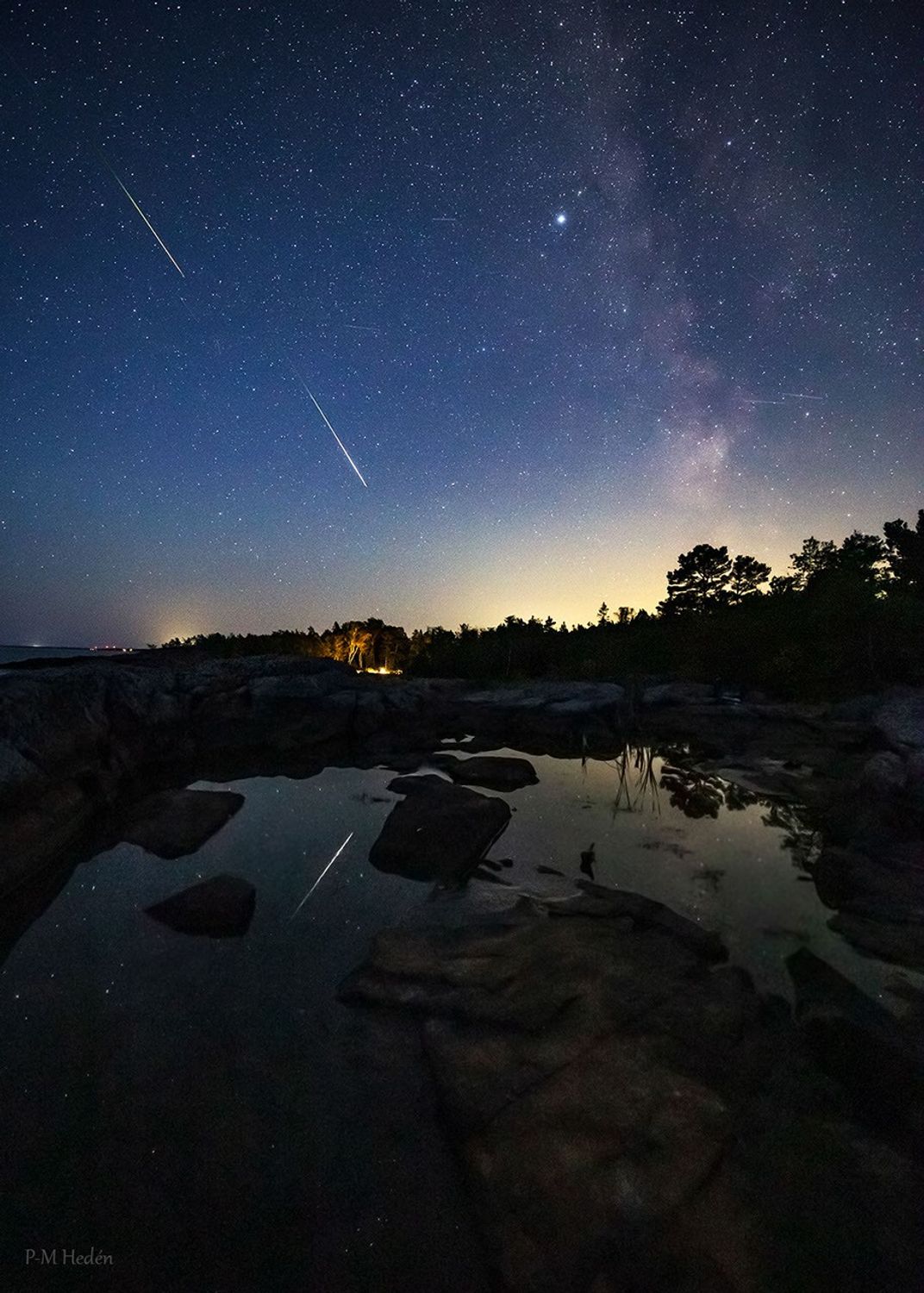
Two meteors flash through the night sky.  One is reflected in the water below.

Bright Perseids from Sweden

Explanation: Known for its bright and fast meteors, the annual Perseid Meteor Shower comes to planet Earth’s skies from a radiant in the heroic constellation Perseus. The popular northern summer celestial spectacle is created as grains of dust cast off along the orbit of periodic comet 109P/Swift-Tuttle vaporize in Earth’s dense atmosphere, tracing brief, but beautiful streaks through the night. Taken near the shower’s peak of activity on August 12, this composite image recorded two bright perseid meteors and one meteor’s watery reflection from a location near the coastal village of Grisslehamn, Sweden. Almost as bright as Altair, brightest star on the scene, the meteors appear along with the faint, diffuse background of the Milky Way. This year, the shower’s peak activity coincided with a New Moon, so perseid meteor flashes were undiminished by bright moonlight. And for many skywatchers, this night of bright perseid meteors followed their viewing of the silhouette of the New Moon in a much anticipated solar eclipse.

Growing Gallery: Solar Eclipse of 2026 August 12
Tomorrow’s picture: Milky Way over Yellowstone

Date August 15, 2026
Credit & Copyright: P-M Hedén (Clear Skies, TWAN)
Authors & editors: Jerry Bonnell, Cecilia Chirenti, Robert Nemiroff, Keighley Rockcliffe
A service of: ASD at NASA / GSFC,
NASA Science Activation & Michigan Tech. U.
  •  

NASA Competition Invites Students to Help Imagine a Future Enabled by Lunar Technologies 

3 min read

Preparations for Next Moonwalk Simulations Underway (and Underwater)

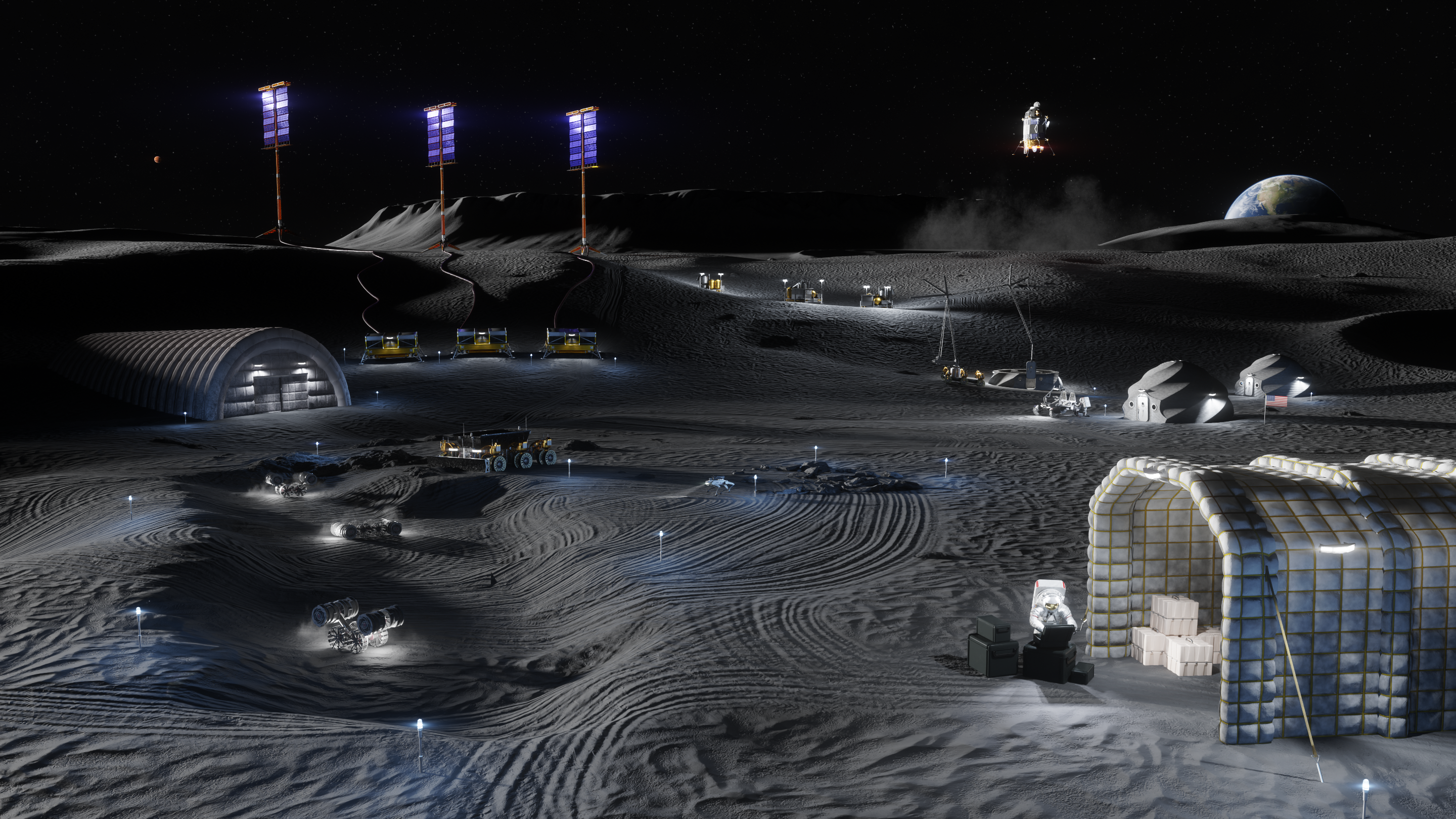
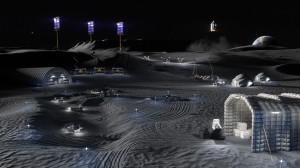
Artist concept of various technologies on a moon base.
Artist’s rendering depicting lunar surface operations at a future base in the lunar South Pole.
NASA

NASA is asking U.S.-based collegiate teams to submit bold, original concepts to the 2027 edition of a student challenge focused on aerospace innovation that could help the agency envision a future on the Moon shaped by new technology. 

The latest NASA Revolutionary Aerospace Systems Concepts – Academic Linkage (RASC-AL) competition invites student teams to explore new operations paradigms and advance the technologies needed to support sustained operations in the lunar South Pole region. 

“This competition showcases the technical excellence and creativity of the next generation of explorers and innovators,” said Chris Jones, chief technologist, Systems Analysis and Concepts Directorate, NASA’s Langley Research Center in Hampton, Virginia. “The concepts students develop through RASC-AL demonstrate exceptional talent and contribute to the body of work that advances NASA’s missions.”   

Since 2002, the annual RASC-AL competition has helped foster aerospace concepts, technology, and prototyping by making connections among universities, NASA, and industry. This year’s competition includes themes ranging from the development of concepts to support prospecting in the permanently shadowed regions of lunar craters to the advancement of critical and expandable infrastructure for future astronauts. 

“NASA’s RASC-AL competition connects top university researchers with the agency’s technology and engineering challenges,” said Gabe Merrill, acting cross-program integration lead for the Advanced Research and Technology Division in NASA’s Research and Technology Mission Directorate. “By asking student innovators to design concepts for what our future on the Moon might look like, this competition accelerates the technology we need to explore the Moon and provides a development opportunity for future aerospace innovators and leaders.” 

Teams interested in participating are required to submit a non-binding notice of intent by Tuesday, Oct. 13, and will be invited to a Q&A session with NASA experts on Oct. 27.  

Challenge proposals and accompanying video submissions are due Feb. 24, 2027. Proposals should demonstrate innovative solutions supported by original engineering and analysis in response to one of the four 2027 RASC-AL themes: 

  • Enabling extreme exploration 
  • Transit pathway construction 
  • Lunar resource exploration 
  • Smart and resilient lunar habitat 

The competition will select as many as 14 teams to advance to its final phase, which involves further developing their concepts, writing a technical paper, and creating a technical poster. Each finalist team will receive a $7,500 award to facilitate its full participation. Finalists will present their concepts to a panel of NASA and industry experts at the 2027 RASC-AL Forum in Cocoa Beach, Florida, June 7 to 10, 2027. 

The top two overall teams will receive an additional monetary award and an invitation to attend and present their concept at an aerospace conference later in 2027. 

Interested student teams are encouraged to visit the official RASC-AL competition website for detailed guidelines and eligibility requirements. 

The 2027 NASA RASC-AL Competition is administered by the National Institute of Aerospace on behalf of NASA’s Advanced Research and Technology Division within the Research and Technology Mission Directorate. NASA’s Center of Excellence for Collaborative Innovation, part of the Prizes, Challenges, and Crowdsourcing Program within the Research and Technology Mission Directorate, manages the challenge contract.

  •  

Fotoalbum da La Coruña

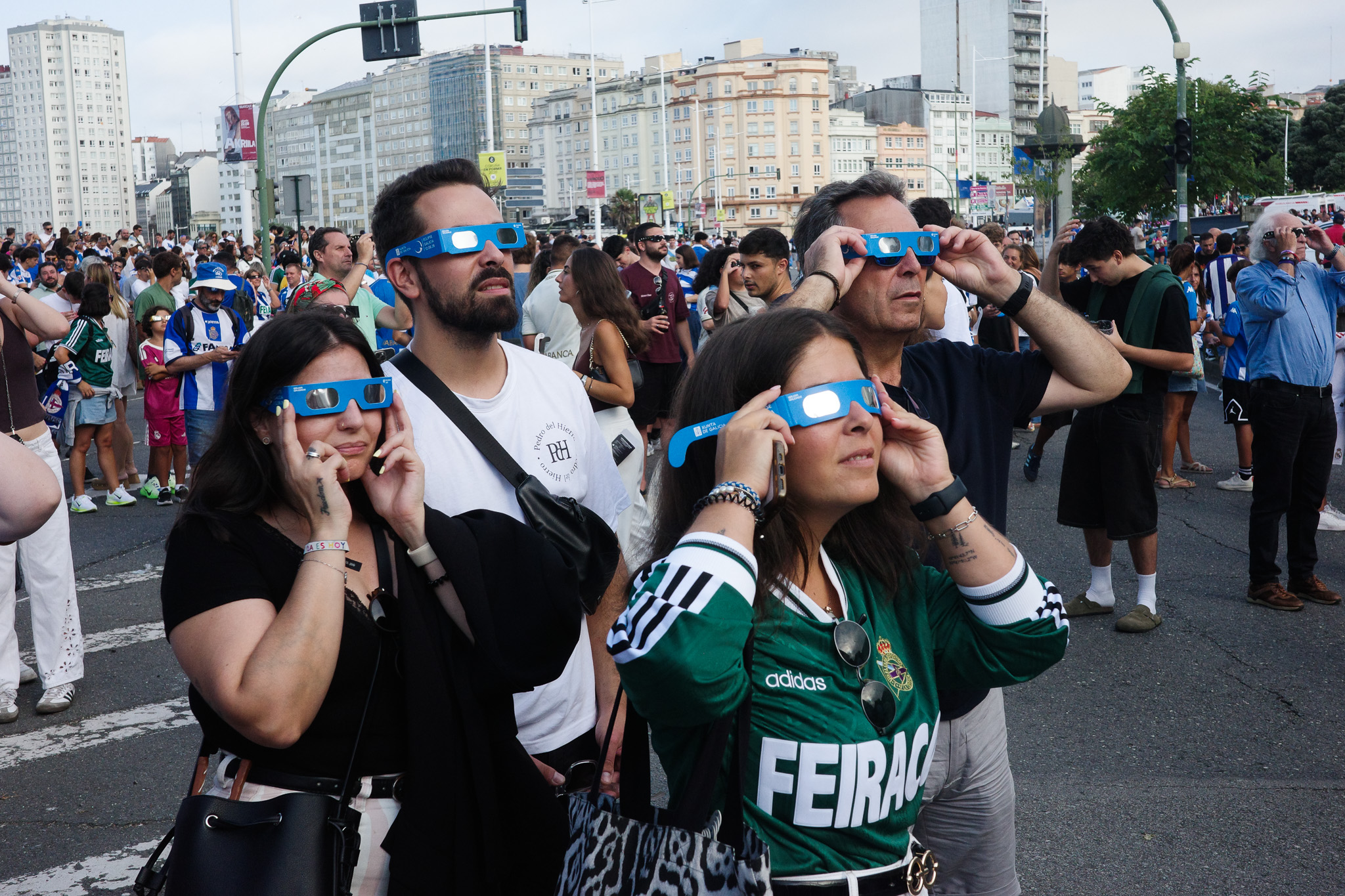
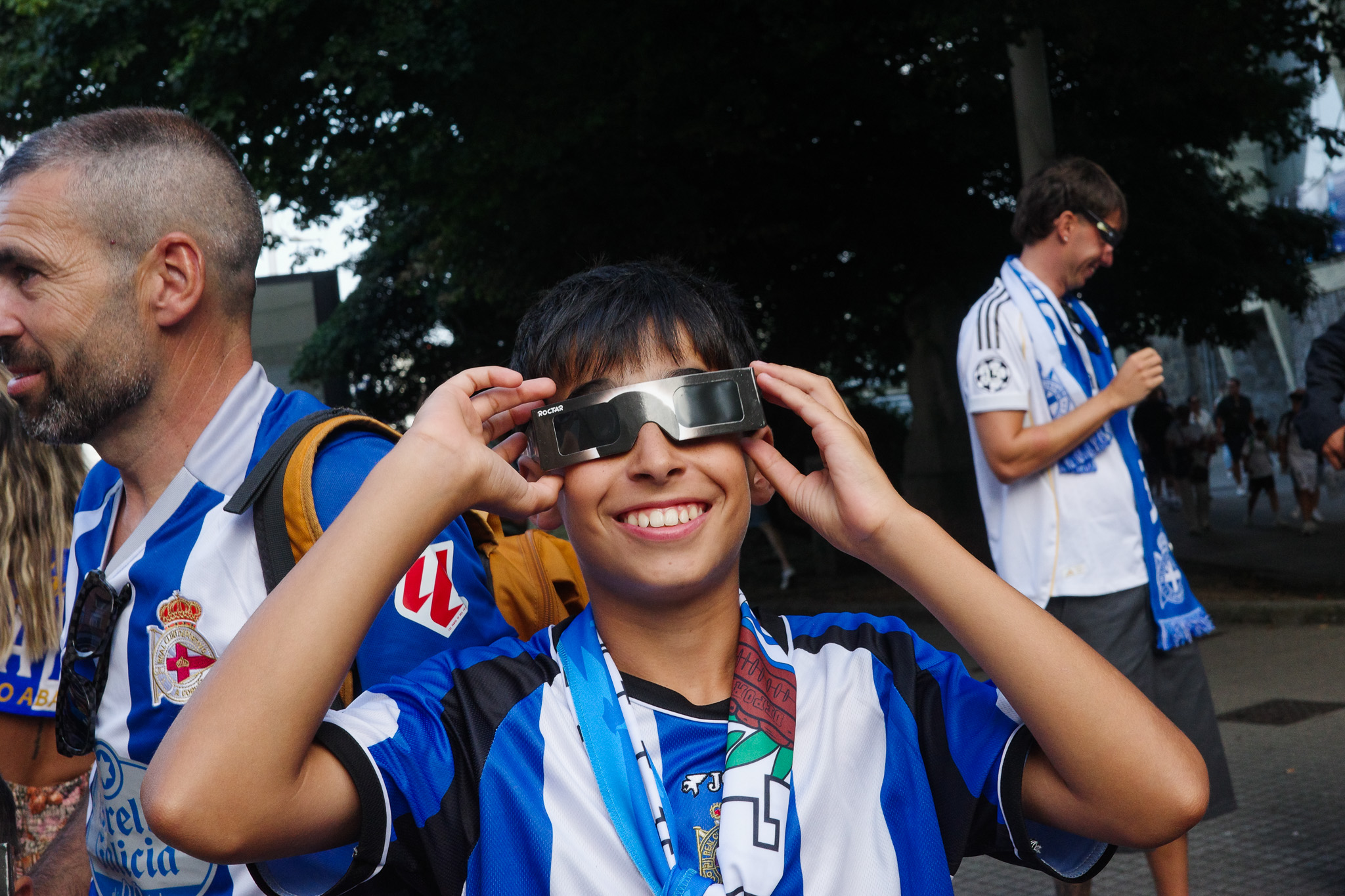
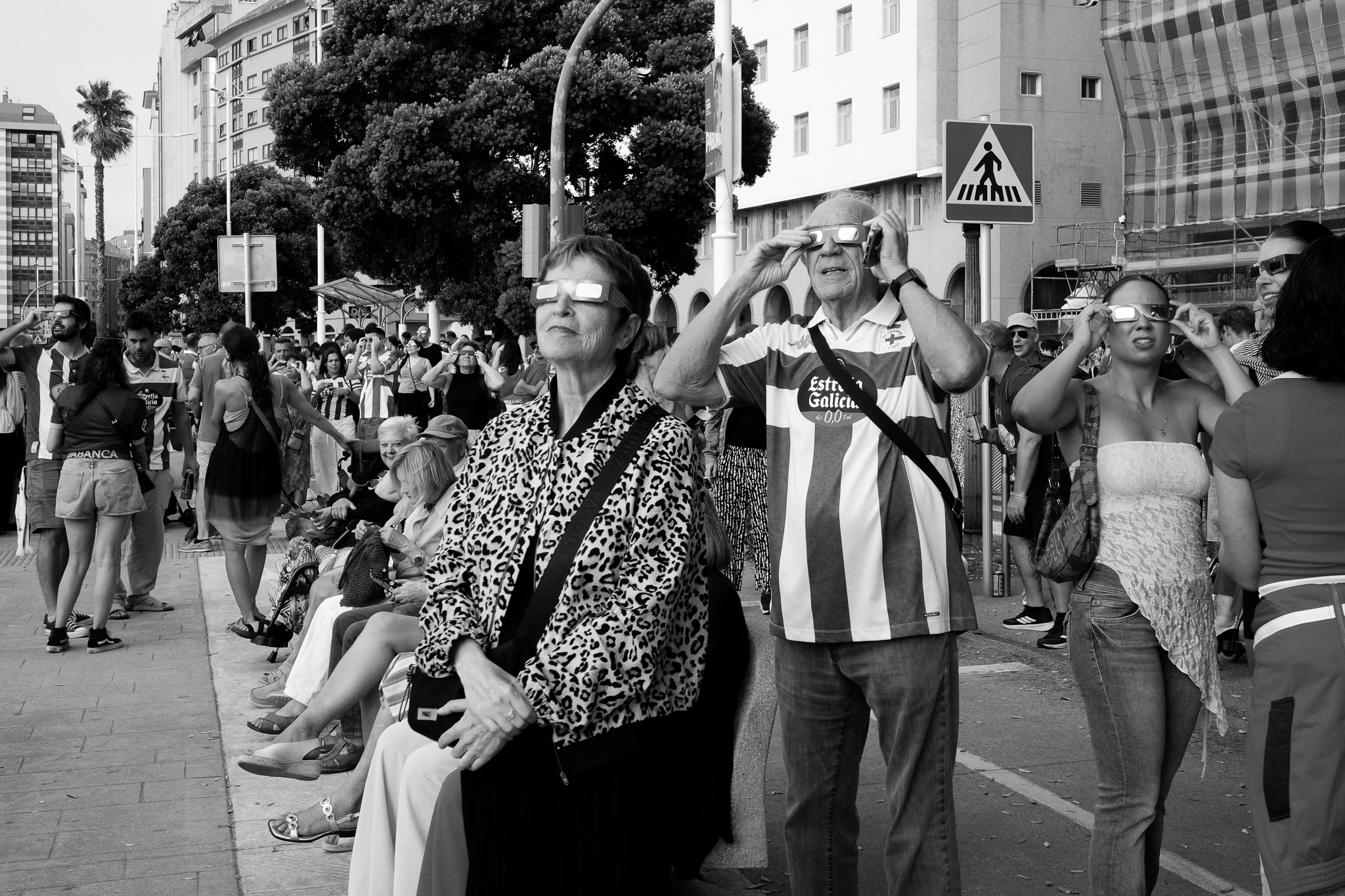
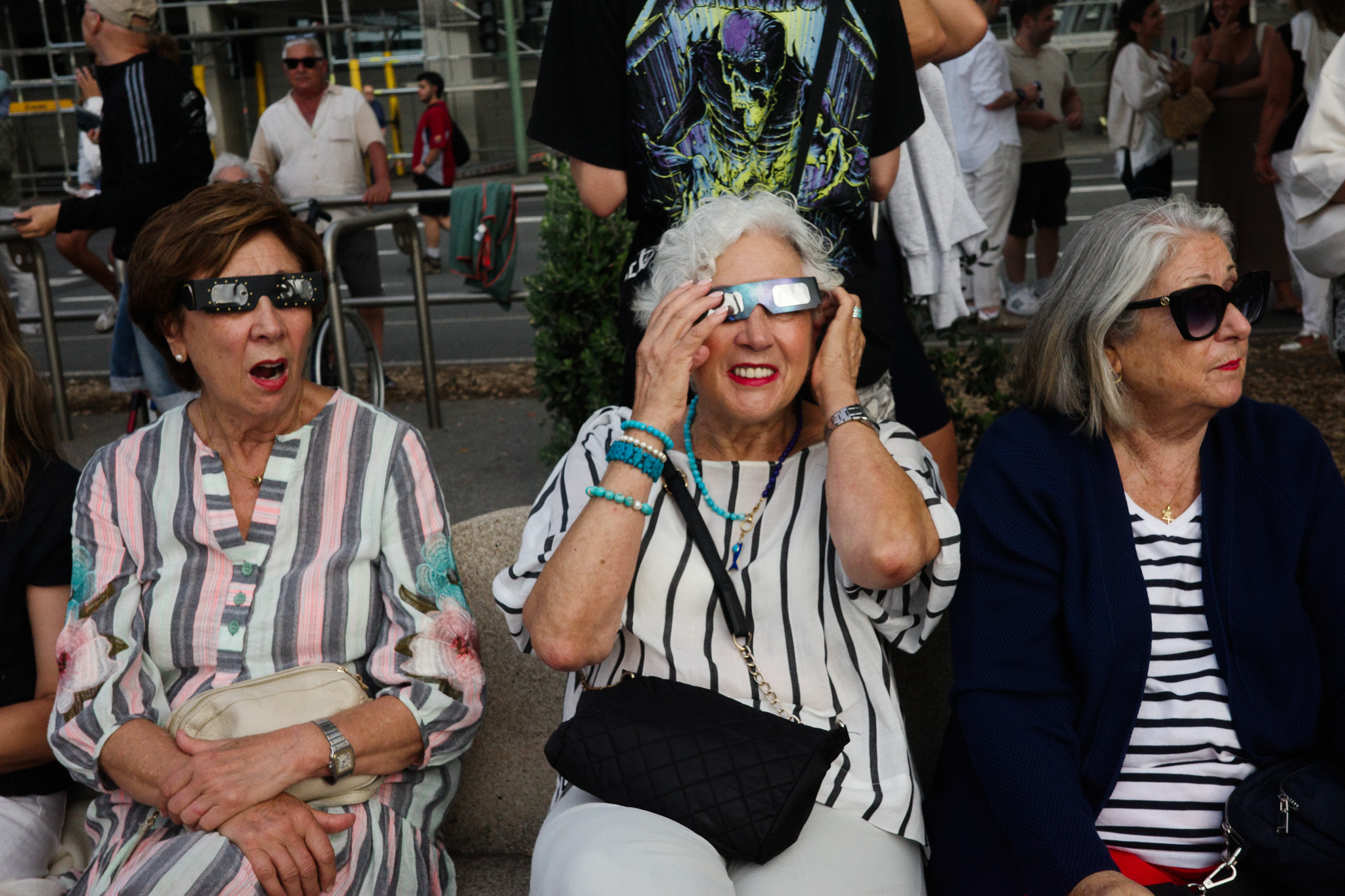
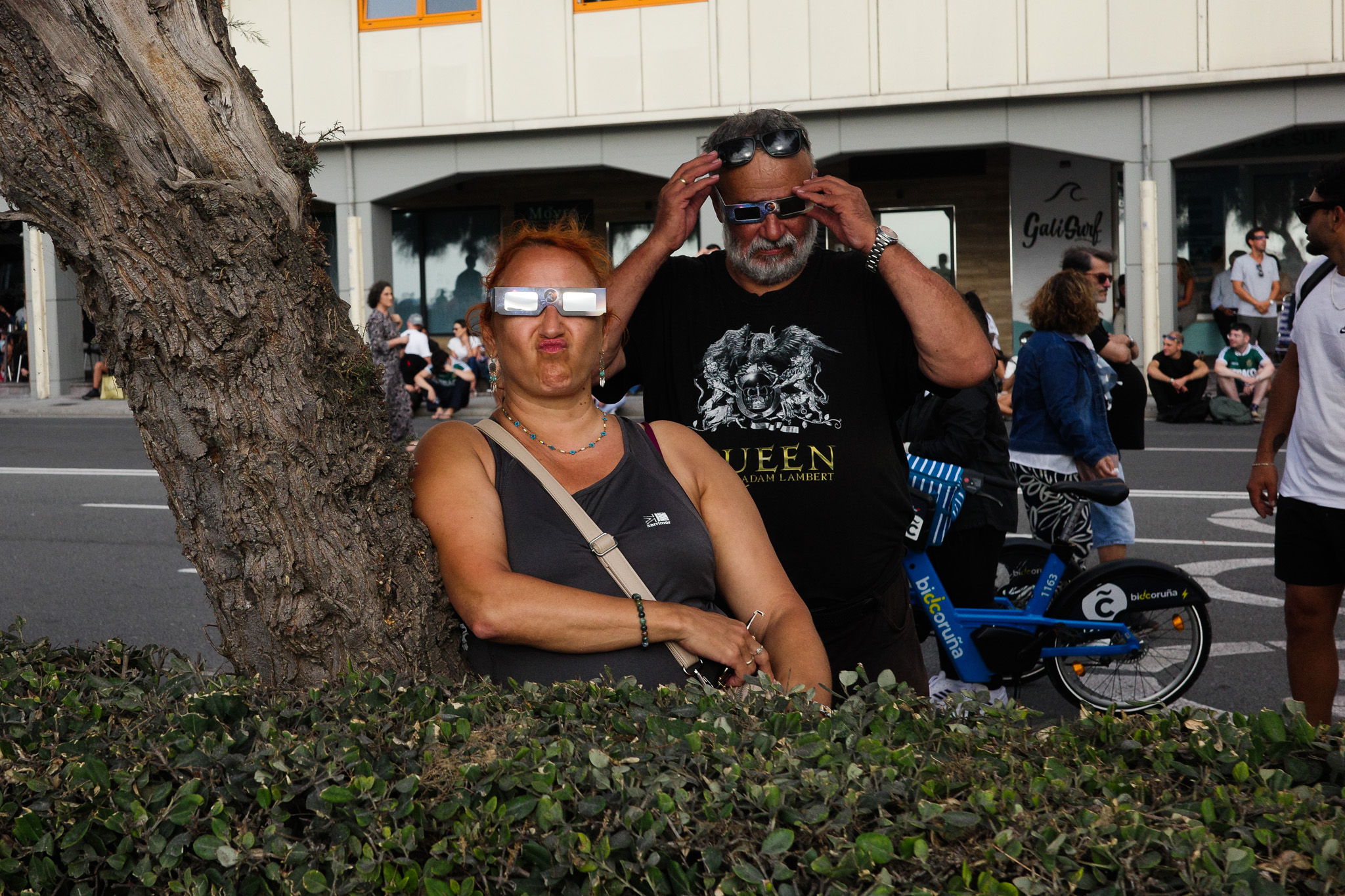
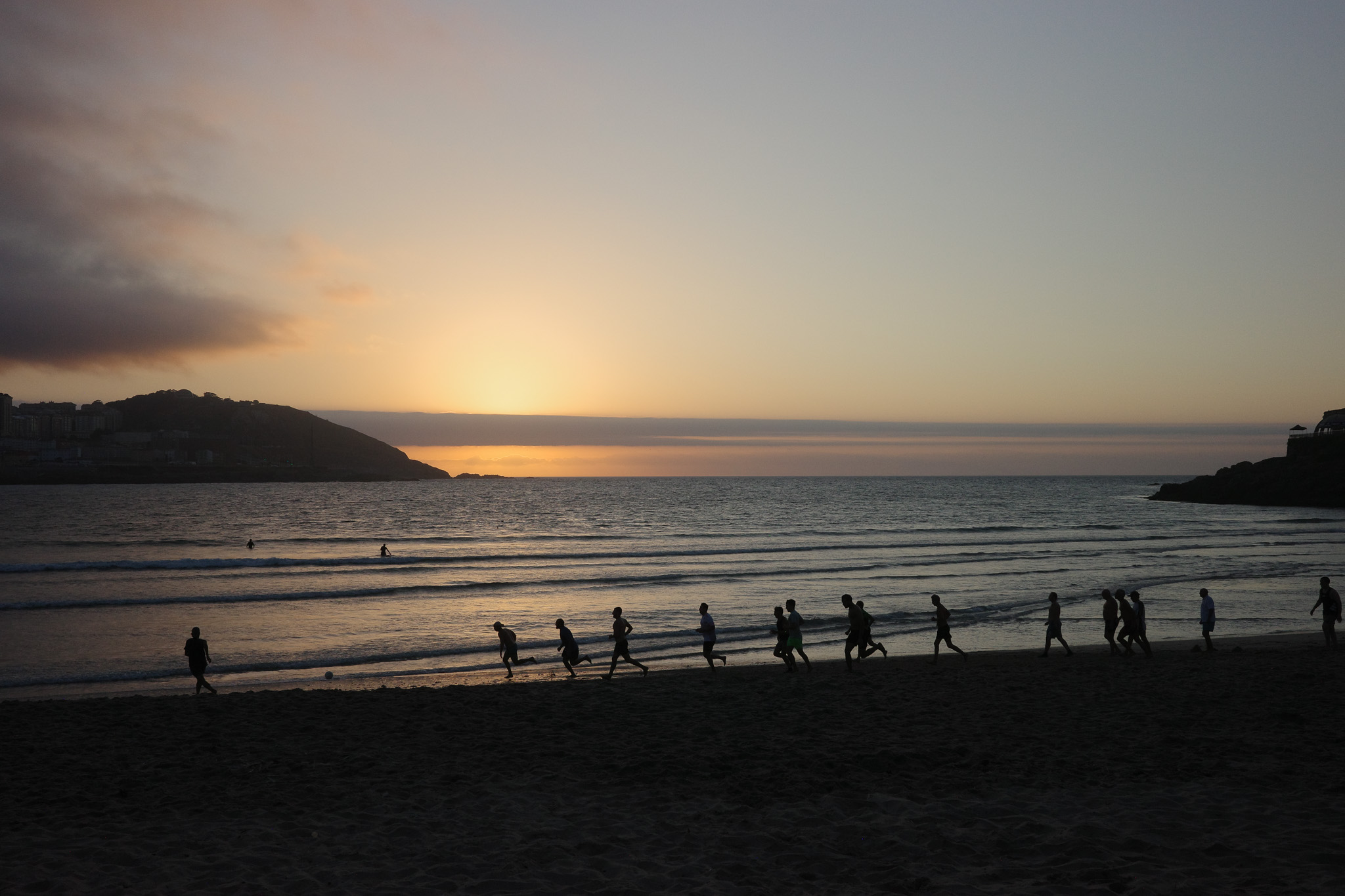
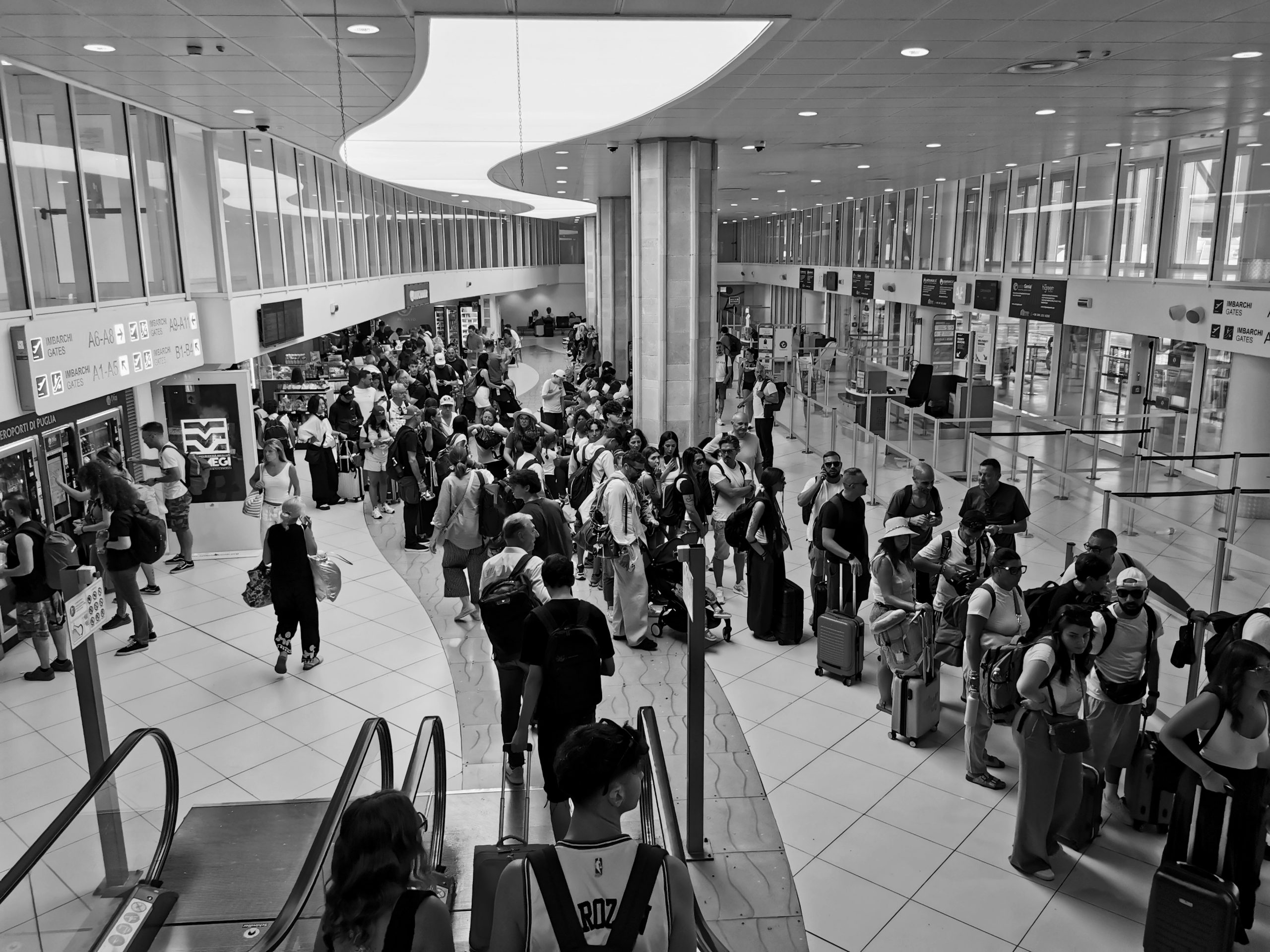
Nelle ultime due notti avrò dormito sei ore. Stamattina all’aeroporto di Madrid, prosciugata dall’insonnia, ho messo insieme questo album. Più che l’eclissi – che a La Coruña è stata flagellata dalle nubi –, più spesso qui troverete chi l’eclissi la guardava, e che ho avuto la ventura di incrociare sul lungomare della città e nei dintorni dell’Estadio Riazor. Buona visione!

© 2026, Federica Loiacono. Tutti i diritti riservati.


© 2026, Federica Loiacono. Tutti i diritti riservati.


© 2026, Federica Loiacono. Tutti i diritti riservati.


© 2026, Federica Loiacono. Tutti i diritti riservati.


© 2026, Federica Loiacono. Tutti i diritti riservati.


© 2026, Federica Loiacono. Tutti i diritti riservati.


© 2026, Federica Loiacono. Tutti i diritti riservati.


© 2026, Federica Loiacono. Tutti i diritti riservati.


© 2026, Federica Loiacono. Tutti i diritti riservati.


© 2026, Federica Loiacono. Tutti i diritti riservati.


© 2026, Federica Loiacono. Tutti i diritti riservati.


© 2026, Federica Loiacono. Tutti i diritti riservati.


© 2026, Federica Loiacono. Tutti i diritti riservati.


© 2026, Federica Loiacono. Tutti i diritti riservati.


© 2026, Federica Loiacono. Tutti i diritti riservati.


© 2026, Federica Loiacono. Tutti i diritti riservati.


© 2026, Federica Loiacono. Tutti i diritti riservati.


© 2026, Federica Loiacono. Tutti i diritti riservati.


© 2026, Federica Loiacono. Tutti i diritti riservati.


© 2026, Federica Loiacono. Tutti i diritti riservati.


© 2026, Federica Loiacono. Tutti i diritti riservati.


© 2026, Federica Loiacono. Tutti i diritti riservati.


  •  

NASA Announces MAX POWER: America’s Newest Aerospace Expo, Airshow

MaxPower logo
Credit: NASA

In honor of America’s historic 250th anniversary, NASA announced on Friday MAX POWER, a public exposition of American air and space innovation, Nov. 7 and Nov. 8, on and near the agency’s Kennedy Space Center in Florida.

The multi-day, family-friendly event will showcase the next-generation aircraft, spacecraft, autonomous vehicles, and technologies that will help define the future of transportation in air and space, bringing together the public, innovators, investors, pilots, astronauts, engineers, and companies helping open this new frontier.

“This November, we are opening Kennedy Space Center’s historic Shuttle Landing Facility to the public for America’s newest and most exciting aerospace technology expo and airshow, and we are calling it MAX POWER,” said NASA Administrator Jared Isaacman. “For 250 years, America has advanced by building what did not exist, flying higher, moving faster, and reaching toward the near-impossible. There is no better place to celebrate that spirit than at NASA Kennedy, America’s gateway to the stars and the place where so many of our nation’s greatest achievements began.”

By bringing together the legacy of NASA with the companies and technologies shaping what comes next, MAX POWER aims to ignite the spirit of exploration and inspire the next generation of explorers, builders, and dreamers. In addition to the agency, Air Dot Show, Delaware North, Space Florida, Purpose Entertainment, and UP.Summit are external collaborators.

Some activities will take place at NASA Kennedy, including the Apollo Saturn V facility, and the Launch and Landing Facility currently leased by Space Florida. Others will take place at the Kennedy Space Center Visitor Complex adjacent to the center leading up to, and during, the festival.

Events include:

  • An air show featuring NASA aircraft, the U.S. Air Force Thunderbirds, and aerial demonstrations by multiple branches of the Department of War
  • Guest speaker series featuring NASA experts and Apollo and Artemis astronauts
  • Special exhibits and displays showcasing technology demonstrations, historic and current NASA hardware aircraft, commercial aviation displays, next-generation air mobility, and more
  • Behind-the-gates bus tours of NASA’s Kennedy Space Center, including the Gantry, Apollo Saturn V Center, and Vehicle Assembly Building

MAX POWER will give the public a front-row seat to the future of American aerospace, including advanced aircraft, autonomous systems, commercial space, NASA’s work to return Americans to the lunar surface, plans for a Moon Base, and the technologies strengthening America’s aerospace industrial base. Teams will highlight work in aviation, exploration, and innovation for the benefit of humanity.

“For a decade, UP.Summit has convened the companies, investors, entrepreneurs, and policymakers building the future of how the world moves,” said Cyrus Sigari, UP.Summit founder and mission commander. “This November we bring that community to Kennedy Space Center as part of MAX POWER. The public will stand next to the aircraft, spacecraft, and autonomous systems that will define the next 250 years and meet the people building them. MAX POWER is about lighting that spark in thousands of Americans and showing the world what this country builds when it aims high.”

“It is an honor to collaborate with NASA and bring an aviation spectacle to the skies over Kennedy Space Center as part of MAX POWER,” said Bryan Lilley, CEO of Air Dot Show. “There could not be a more iconic place to celebrate the past, showcase the present, and preview the future of American aviation and space exploration as our nation marks its 250th anniversary.”

“Kennedy Space Center Visitor Complex is where America’s history of aerospace innovation comes to life, from the aircraft that helped launch the space program to the spacecraft that carried us to the Moon and the technologies shaping what comes next,” said Therrin Protze, chief operating officer of Kennedy Space Center Visitor Complex. “MAX POWER brings that entire story together in one place, giving the public an up-close look at the past, present and future of American aerospace.”

“Florida has been part of some of the most historic moments in American space exploration, and we’re proud to welcome the nation to this storied site for MAX POWER this fall,” said Col. Rob Long (Ret.), president and CEO, Space Florida. “Together with NASA, we have spent generations building the infrastructure, talent, and spirit of innovation that make moments like this possible, and this event offers a front-row seat to that ongoing story.”

This event is open to U.S. and international media. To attend, media must RSVP by 5 p.m. on Tuesday, Oct. 6, to the Kennedy newsroom at: https://media.ksc.nasa.gov. NASA’s media accreditation policy is available online.

There are multiple “parks” and experiences planned, each of which require separate tickets to attend. To learn more and purchase tickets, visit:

https://www.nasa.gov/maxpower

-end-

Bethany Stevens / Cheryl Warner
Headquarters, Washington
202-358-1600
bethany.c.stevens@nasa.gov / cheryl.m.warner@nasa.gov

Amanda Griffin
Kennedy Space Center, Fla.
321-593-6244
amanda.griffin@nasa.gov

Share

Details

Last Updated
Aug 14, 2026
Editor
Jennifer M. Dooren
  •  

Volunteer Develops Machine-Learning Tool to Identify Rare Clouds

Certain kinds of clouds are misbehaving – appearing more often and lower in the sky than they used to. To help identify the factors influencing these changes (e.g. shifts in Earth’s long-term weather patterns), scientists have asked people around the world with cameras to submit fresh images of these clouds as a part of the NASA-supported Space Cloud Watch project. Now, one volunteer has developed a new tool to help other Space Cloud Watch volunteers work more efficiently. 

The misbehaving clouds are “noctilucent”  or “night-shining” clouds (NLCs). These clouds scatter light from the Sun long after sunset and long before sunrise, giving them a silvery glow. But despite this glow, it can be hard to differentiate NLCs from lower-altitude look-alikes. That confusion has meant extra work for project leaders.

Volunteer Namai Chandra shared, “I noticed that NLC images were being manually verified by the project leaders. It felt like a task well-suited for a human-in-the-loop machine learning pipeline, one that could handle the repetitive screening automatically, while keeping human judgment central for the images that matter most.” In other words, Namai found a way to help observers verify when they are indeed seeing NLCs and when they’re not. 

Namai reached out to the Space Cloud Watch scientists Drs. Chihoko Cullens and Brentha Thurairajah, who were delighted with his idea. Namai soon developed a machine learning pipeline, training it on a variety of cloud images, including both the NLCs and the lower altitude look-alikes that are often submitted to Space Cloud Watch. The pipeline combines image pre-screening, cloud classification, and confidence-based review routing. After several rounds of development, testing, and refinement, he released his NLC identification tool to the project. This tool is now being used by cloud contributors who are unsure whether they have observed NLCs, as well as project scientists that want to flag images for review. 

Grab a camera and join the Space Cloud Watch project today! If you’ve hesitated to contribute to Space Cloud Watch because you were not certain if what you were seeing was a noctilucent cloud, you now have a way to check before you share – thanks to Namai.

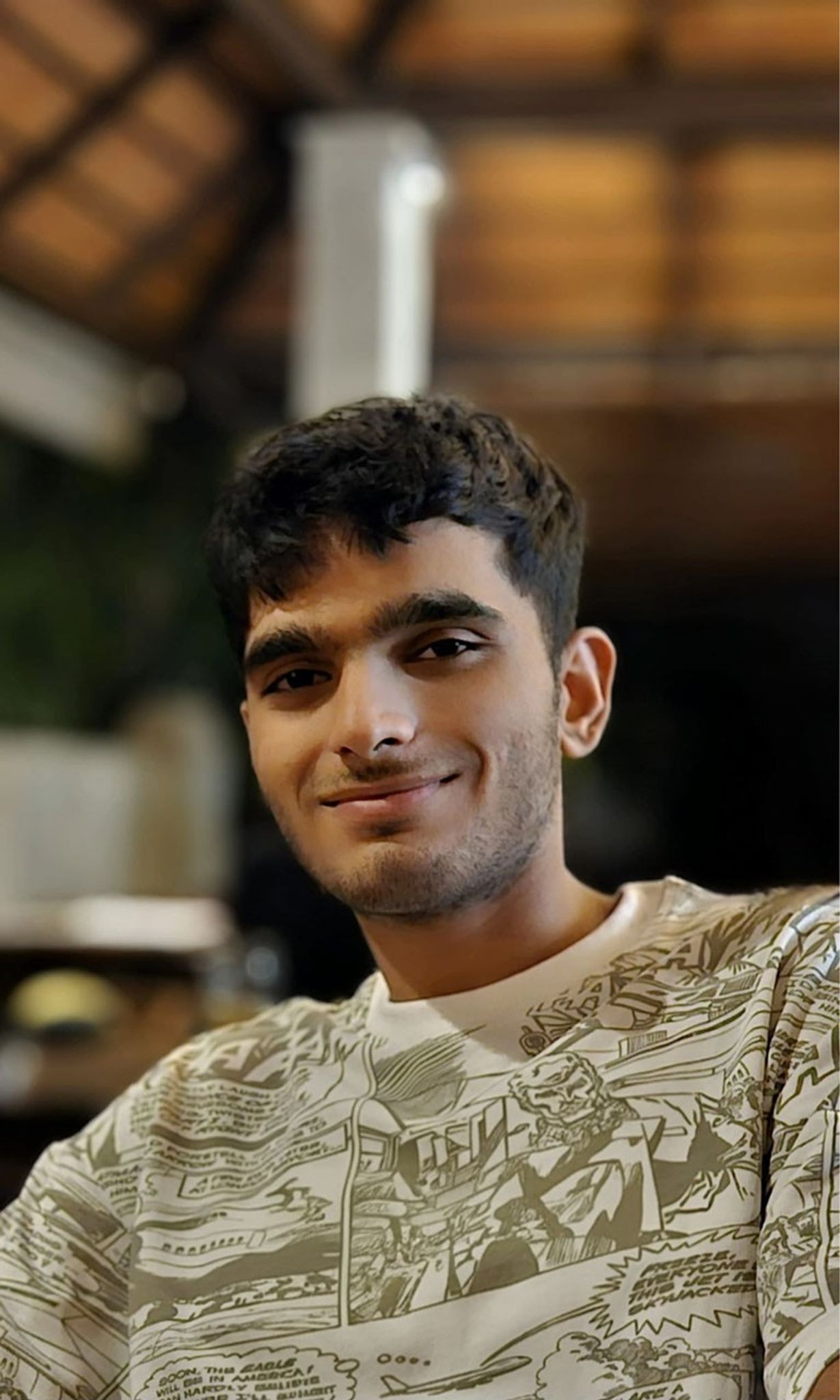
Portrait of a smiling person with dark hair sitting indoors..
Namai Chandra, Space Cloud Watch volunteer and creator of the Noctilucent Cloud Detector tool.
Photo by Surabhi Chandra.

Learn More and Get Involved

A pre-dawn or early evening scene. Two figures kneel, one on each side, pointing cameras up at the sky, which is filled with wave-like noctilucent clouds shining bright against a dark blue sky. Framing the sky from below is a dark of silhouetted trees, and above, the text

Space Cloud Watch

Photograph clouds just after sunset or before dawn to investigate our changing atmosphere.

  •  

NASA’s COFFIES Uses AI to Predict Storm-Causing Active Regions on Sun 

5 min read

NASA’s COFFIES Uses AI to Predict Storm-Causing Active Regions on Sun 

As humanity looks to the Moon and stars for future exploration, predicting space weather — conditions in space primarily driven by the Sun — is more important than ever. 

Now, a team of astrophysicists and data scientists with NASA’s COFFIES (Consequence Of Fields and Flows in the Interior and Exterior of the Sun) has developed a novel machine-learning model capable of predicting the emergence of active regions on the Sun up to 12 hours before they appear. 

The Sun is constantly churning. Intense concentrations of localized magnetic fields can suddenly break through the solar surface, forming sunspots. Space weather forecasters then collectively number and track sunspots since they are visible manifestations of active regions, which serve as the main engines behind severe space weather events such as solar flares and coronal mass ejections. These eruptions send waves of high-energy radiation and charged particles across space, creating storms that can threaten astronauts, disable satellites, and disrupt radio communications on Earth. 

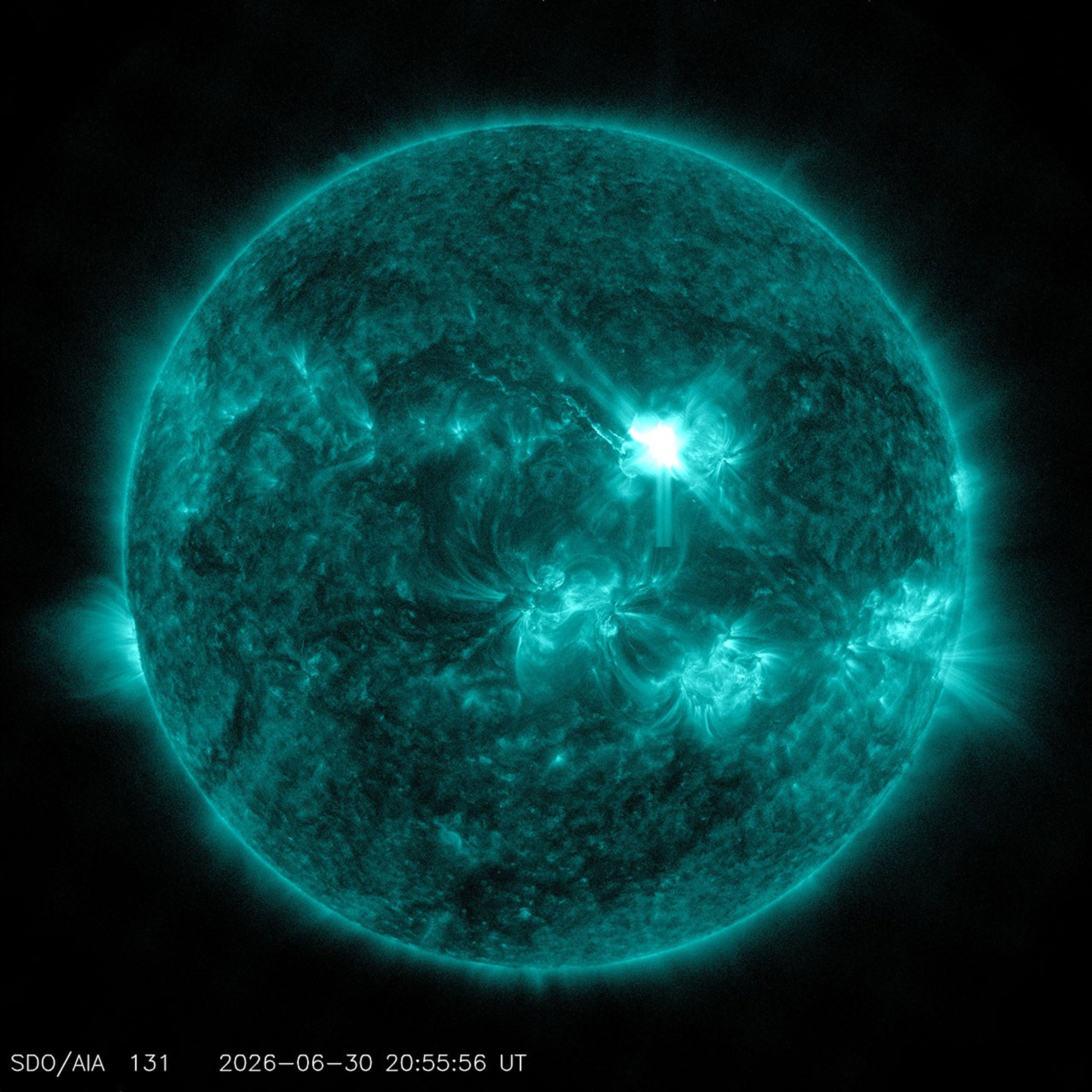
The Sun appears in shades of teal with some brighter and darker regions, set against a black background. In the upper right part of the Sun is a bright flash of white, a solar flare.
NASA’s Solar Dynamics Observatory captured this image of a solar flare — seen as the bright flash in the upper right — on June 30, 2026. The image shows a subset of extreme ultraviolet light that highlights the extremely hot material in flares and which is colorized in teal.
NASA’s Goddard Space Flight Center/SDO 

By bridging expertise across different scientific institutions, COFFIES, a NASA DRIVE (Diversify, Realize, Integrate, Venture, Educate) Science Center, brought together a team of researchers from New Jersey Institute of Technology (NJIT), Princeton University, and NASA’s Ames Research Center in California’s Silicon Valley. The team turned to advanced artificial intelligence architectures — which dictate how data is processed and used to produce reliable predictions or actions — to capture subtle, time-based pattern changes on the solar surface before an active region took shape. By analyzing data captured by the agency’s Solar Dynamics Observatory and using NASA Ames’ supercomputing resources, this new approach, published in the Journal of Geophysical Research: Machine Learning and Computation, looks at fluctuations in acoustic waves caused by sunspot regions when the regions form beneath the solar surface and begin the journey upward to emerge on the surface. 

“We cannot directly see the magnetic structure while it is still rising through the solar interior. Instead, we must look for indirect effects — very small changes in the magnetic field and in the pattern of acoustic waves continually traveling through the Sun,” said Alexander Kosovichev, a COFFIES co-investigator at NJIT. “The developed technique identifies precursors associated with an emerging active region in slight changes of the Sun’s acoustic power — more like a slight change in rhythm within a very noisy orchestra.” 

This video is an example of what scientists use when analyzing the solar surface. This particular time frame tracks the magnetic field on the Sun’s surface during the emergence of active region AR11158 in February 2011. The blue square grid highlights a target area on the Sun. The squares on the right side translates the data from the target grid area to show opposing magnetic polarities, indicated by the warm and cool-colored tones. The first column of blocks shows targeted areas at original resolution, the middle column displays data as 2D maps, and the right column plots changes in magnetic polarity over time as 1D curves. By watching these blocks, scientists can see signs of active region emergence, such as drops in acoustic waves and rises in magnetic fields.
NASA’s COFFIES DRIVE Science Center/Irina Kitiashvili and Spiridon Kasapis

To develop current operational forecasts, the National Oceanic and Atmospheric Administration’s Space Weather Prediction Center and the United States Air Force monitor active regions that are already visible on the Sun to analyze the regions’ characteristics and estimate the probability of solar flares.

The COFFIES team aims to revolutionize this process. The AI model the team developed a specialized early detection system to handle very long sequences of data — called sliding-window transformer architecture — to use observations to find tiny reductions in the Sun’s acoustic activity and magnetic field, signals that scientists struggled to capture until now. These reductions form patterns that the AI model uses to predict active regions several hours before they become visible on the solar surface. Instead of looking at all activity on the solar surface at once, like earlier deep learning approaches have done, this new model moves a fixed-size “viewing window” across a long timeline of the Sun’s activity to focus on recent data while remembering overall patterns. This method allows forecasters the ability to predict approximate locations of emerging sunspots, rather than relying on counting already visible sunspots. 

This promising AI architecture shows how deep machine learning can contribute to heliophysics — the field studying the nature of the Sun and how it influences the very nature of space and the planets that exist there. While the model is not ready for operational real-time forecasting, the team plans to validate the approach across many more known solar events to fine-tune the model. 

NASA’s real-time space weather monitoring 

As NASA focuses on sending humans to explore the Moon with the Artemis missions and sending the first crewed missions to Mars, monitoring and forecasting space weather is important for ensuring the safety of our astronauts and the equipment they rely on. This predictive leap from the COFFIES team could prove vital for safeguarding technology and deep-space explorers from the volatile environment of our solar system.

NASA’s Moon to Mars Space Weather Analysis Office monitors space weather 7 days a week. This important work helps decision makers not only protect people and equipment but maintain the services our modern society relies on every day. NASA’s space weather monitoring is also critical for safeguarding astronauts as they journey to the Moon and onward to Mars.
NASA/Lacey Young

Teams across NASA and NOAA collaborate to transition research capabilities into actual 360-degree space weather monitoring operational tools — including NASA’s Space Radiation Analysis Group, Moon to Mars Space Weather Analysis Office (M2M SWAO), and Community Coordinated Modeling Center as well as NOAA’s Space Weather Prediction Center. Sunspot region emergence prediction capabilities, especially of the Sun’s far side, could provide new information that supplements current models used by these teams.  

“The COFFIES AI model is exciting to our team because it could provide us with new capabilities towards predicting potential flaring locations ahead of time,” said Michelangelo Romano, M2M SWAO deputy director. “With this heads up, we can provide additional support to NASA missions.”

NASA’s COFFIES is one of three DRIVE Science Centers created to encourage collaborative science by establishing centers that are made of multidisciplinary teams from several institutions across the U.S. These pioneering facilities employ modelers, theoreticians, computer scientists, and observers to study important mysteries of our star and its influence, a branch of science known as heliophysics.  

The COFFIES team focuses on the interconnected processes behind the Sun’s activity. Understanding the Sun’s interior and magnetic variability is key to advancing our understanding of the Sun’s 11-year activity cycle and fine-tuning space weather forecasting tools.  

About the Author

Desiree Apodaca

Desiree Apodaca

NASA’s Heliophysics Missions Communications Lead

Keep Exploring

Discover More Topics From NASA

  •  

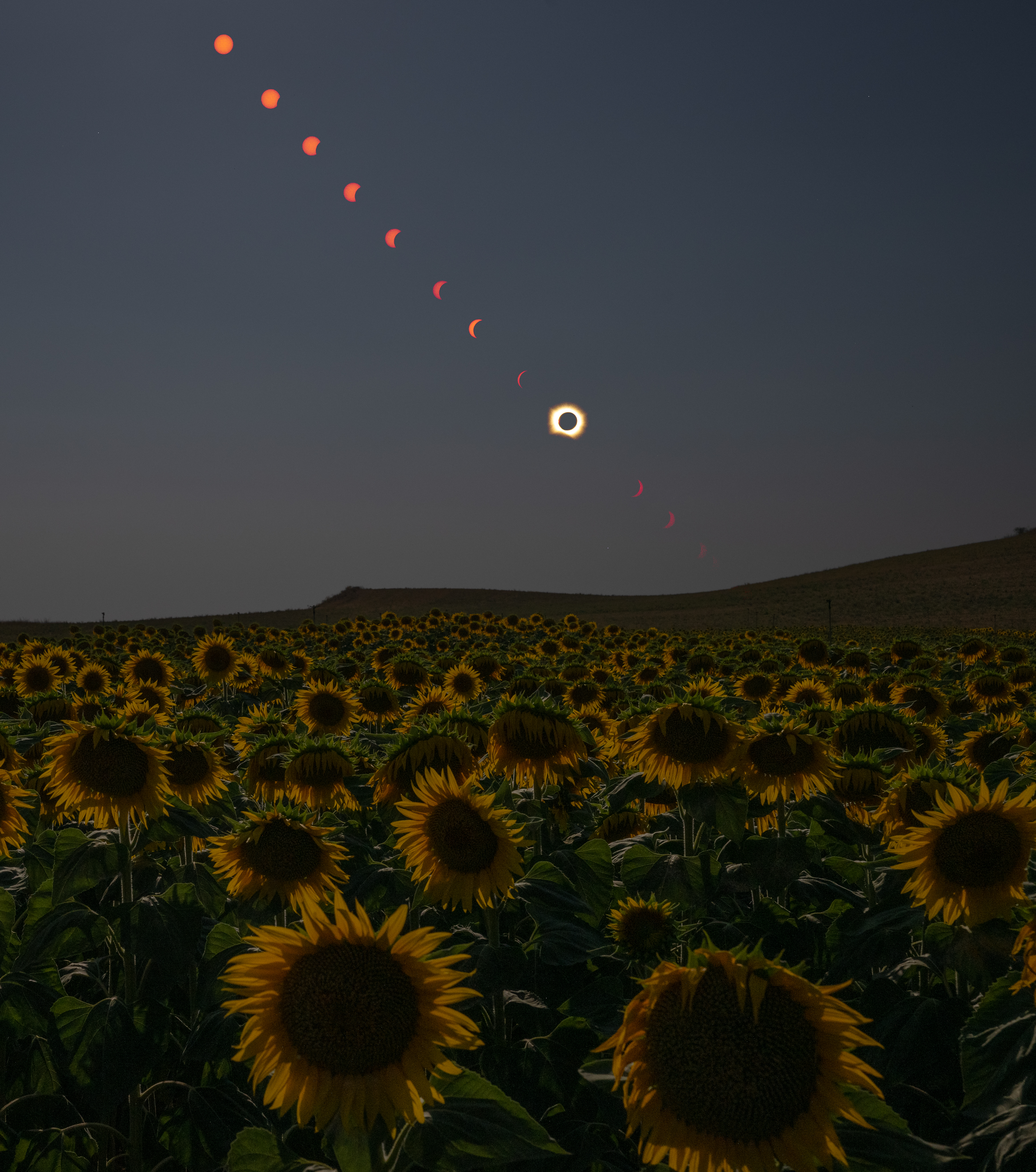
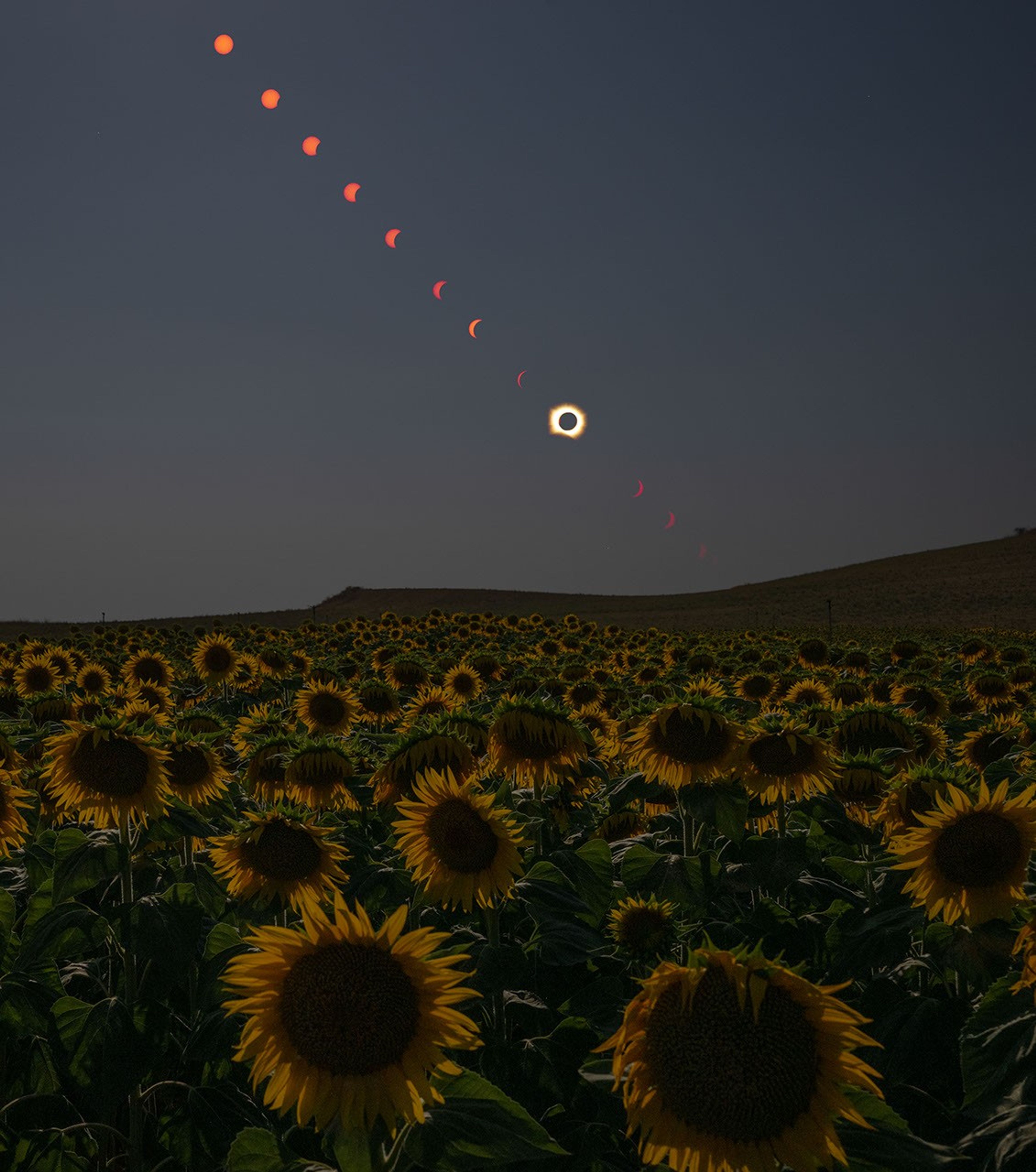
Total Solar Eclipse in Sunflower Field

This composite image shows the progression of a total solar eclipse over a sunflower field in Spain. Credit: NASA/Bill Ingalls
NASA/Bill Ingalls

This composite image shows the progression of a total solar eclipse over San Millán de los Caballeros, Spain on, Wednesday, Aug. 12, 2026.

A total solar eclipse swept across parts of Greenland, Iceland, northern Russia, the Atlantic Ocean, Spain, and a small corner of Portugal. A partial eclipse was visible in parts of the U.S., most of Canada, much of Europe, and northwest Africa.

Image credit: NASA/Bill Ingalls

  •  

Il ghiaccio lunare si scova con i lunamoti

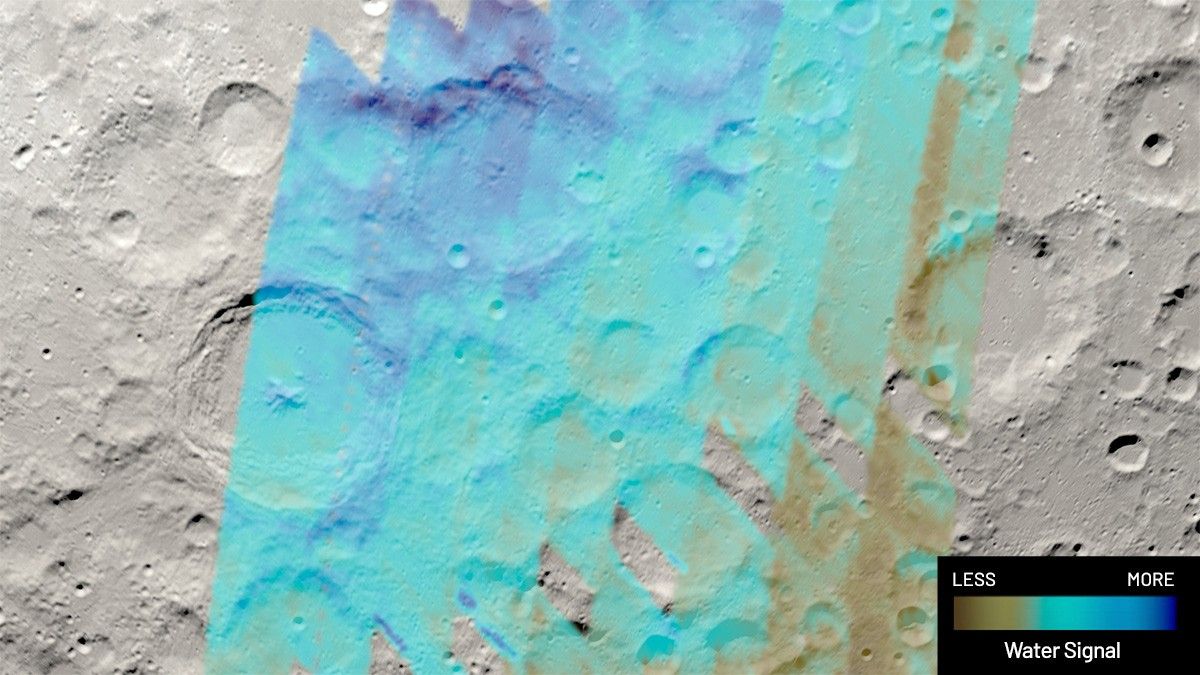
Dopo un dibattito durato secoli sulla possibile presenza di acqua sulla Luna, nel 2020 i dati raccolti dalla missione Sofia della Nasa ne avevano confermato la presenza sotto forma di ghiaccio. Non si sa ancora, però, quanto ghiaccio ci sia, né dove sia localizzato. Un nuovo studio condotto dai geologi dell’Università del Maryland (Umd), del Lawrence Berkeley National Laboratory e dell’Università delle Hawaii presenta un metodo che potrebbe essere utilizzato per individuare e mappare il ghiaccio sotto la superficie lunare: attraverso le onde sismiche dei “lunamoti” (moonquakes, in inglese), il tipo di vibrazioni misurate durante i terremoti.

Una catena montuosa lunare ripresa nel 2023 dal Lunar Reconnaissance Orbiter della Nasa. In basso a sinistra è visibile il cratere Malapert, un potenziale sito di atterraggio per Artemis 4. Crediti: Nasa/Gsfc/Arizona State University

«È fondamentale individuare eventuali materiali presenti sulla Luna che un astronauta possa utilizzare mentre si trova lassù», spiega Nicholas Schmerr dell’Umd, coautore dello studio, pubblicato due settimane fa su Science Advances. «Poiché saranno limitati dalle poche risorse portate dalla Terra, qualsiasi cosa trovino sulla Luna li aiuterà sostanzialmente a vivere di ciò che offre il territorio, specialmente nel caso di missioni a lungo termine o avamposti». Il ghiaccio, in particolare, potrebbe rivelarsi essenziale per le missioni umane sulla Luna: se sciolto e purificato può diventare acqua potabile, mentre scisso produce ossigeno per respirare e idrogeno per il carburante dei razzi. Questo significa che individuare una fonte di ghiaccio lunare potrebbe ridurre drasticamente il carico che le future missioni dovranno trasportare dalla Terra: si rivelerebbe cruciale per il programma Artemis della Nasa, che punta alla regione polare sud della Luna per gli atterraggi con equipaggio nel 2028, dove ci sono crateri polari che potrebbero nascondere del ghiaccio d’acqua.

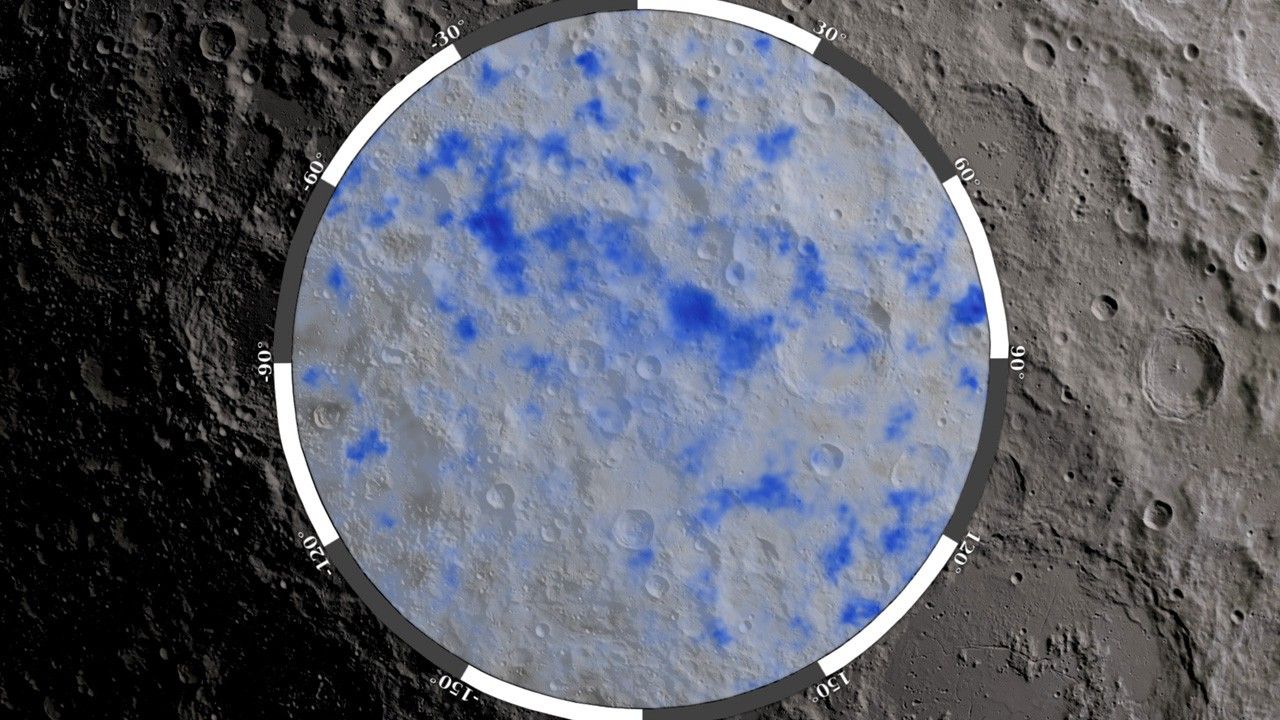
In blu sono indicate delle aree del polo sud lunare in cui potrebbero esserci depositi di ghiaccio d’acqua. La mappa si basa sui dati raccolti dal Lunar Reconnaissance Orbiter della Nasa. Crediti: Nasa

Il team ha sfruttato il fatto che, se attraversati da un’onda sismica, il suolo ghiacciato e quello secco si comportano in modo molto diverso tra loro: il ghiaccio irrigidisce il materiale in cui è mescolato, facendo sì che le vibrazioni viaggino da due a tre volte più velocemente rispetto a quanto farebbero attraverso il terreno asciutto. Le zone ricche di ghiaccio possono anche far rimbalzare l’energia sismica invece di lasciarla passare. Un sismometro posizionato sulla Luna, sottolinea Schmerr, potrebbe rilevare questi effetti. «Possiamo utilizzare le onde sismiche non solo per verificare la presenza di ghiaccio, ma anche per stimarne approssimativamente la quantità».

Per verificare la validità dell’idea, Harrison Lisabeth del Lawrence Berkeley National Laboratory, autore principale dello studio, ha congelato una roccia vulcanica proveniente dall’Arizona che, se frantumata, riproduce fedelmente la polvere lunare, e ha utilizzato i raggi X per studiare come il ghiaccio si insedi negli interstizi tra i granelli di terreno. Il coautore Matthew Siegler dell’Università delle Hawaii ha invece realizzato mappe dettagliate delle temperature della regione polare sud della Luna, identificando quali crateri sono rimasti sufficientemente freddi da preservare il ghiaccio per miliardi di anni. Schmerr, infine, ha simulato al computer piccoli terremoti lunari che si propagano attraverso il ghiaccio sotterraneo, interagendoci. In tutti e tre gli approcci il ghiaccio ha lasciato tracce evidenti e misurabili nei dati sismici.

Mappa della distribuzione dell’acqua sulla Luna realizzata nel 2023 con i dati di Sofia. La mappa, che fornisce indicazioni su come l’acqua possa spostarsi lungo la superficie lunare, si estende fino al polo sud lunare, l’area che sarà oggetto di studio delle missioni Artemis della Nasa e del rover Viper, dedicato alla ricerca dell’acqua. Crediti: Nasa

Verificare la posizione e la quantità di ghiaccio non sarebbe importante solo per gli astronauti. «La Luna è stata testimone di alcune delle fasi più cruciali del Sistema solare primordiale, compreso il modo in cui l’acqua è stata trasportata», ricorda infatti Schmerr. «Lo studio del ghiaccio lì depositato potrebbe rivelare come l’acqua si sia diffusa e, in ultima analisi, come si siano formati gli oceani terrestri».

La missione cinese Chang’e-7, che atterrerà sulla Luna alla fine di quest’anno, trasporterà un sismometro, mentre nel 2028 gli astronauti della missione Artemis potrebbero installare la Lunar Environmental Monitoring Station, una stazione di monitoraggio dell’ambiente lunare. Non ci sarà quindi da attendere a lungo per verificare le previsioni dello studio.

Per saperne di più:


  •  

APOD: 2026 August 14 – Total Solar Eclipse from Greenland

APOD

Astronomy Picture of the Day

Discover the cosmos! Each day a different image or photograph of our fascinating universe is featured, along with a brief explanation written by a professional astronomer.

Total Solar Eclipse from Greenland

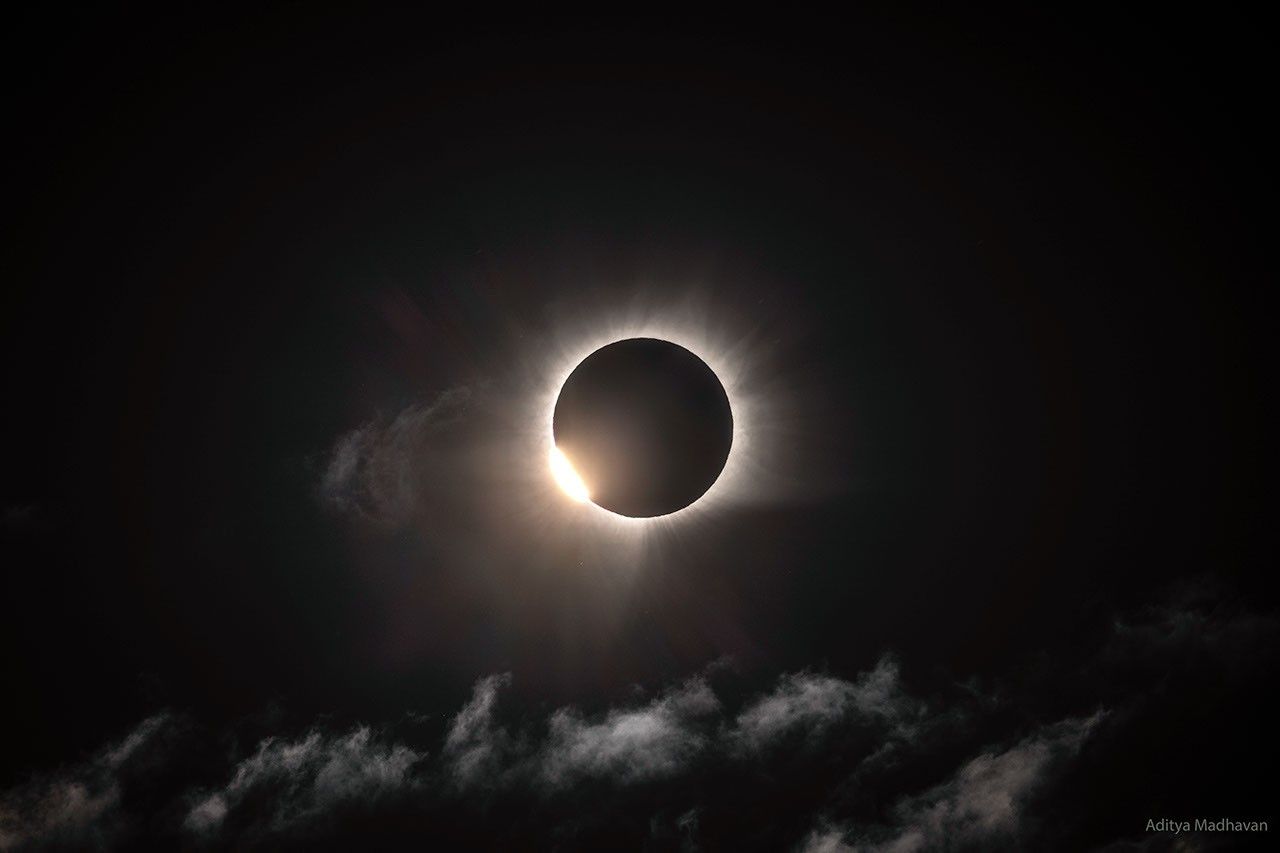
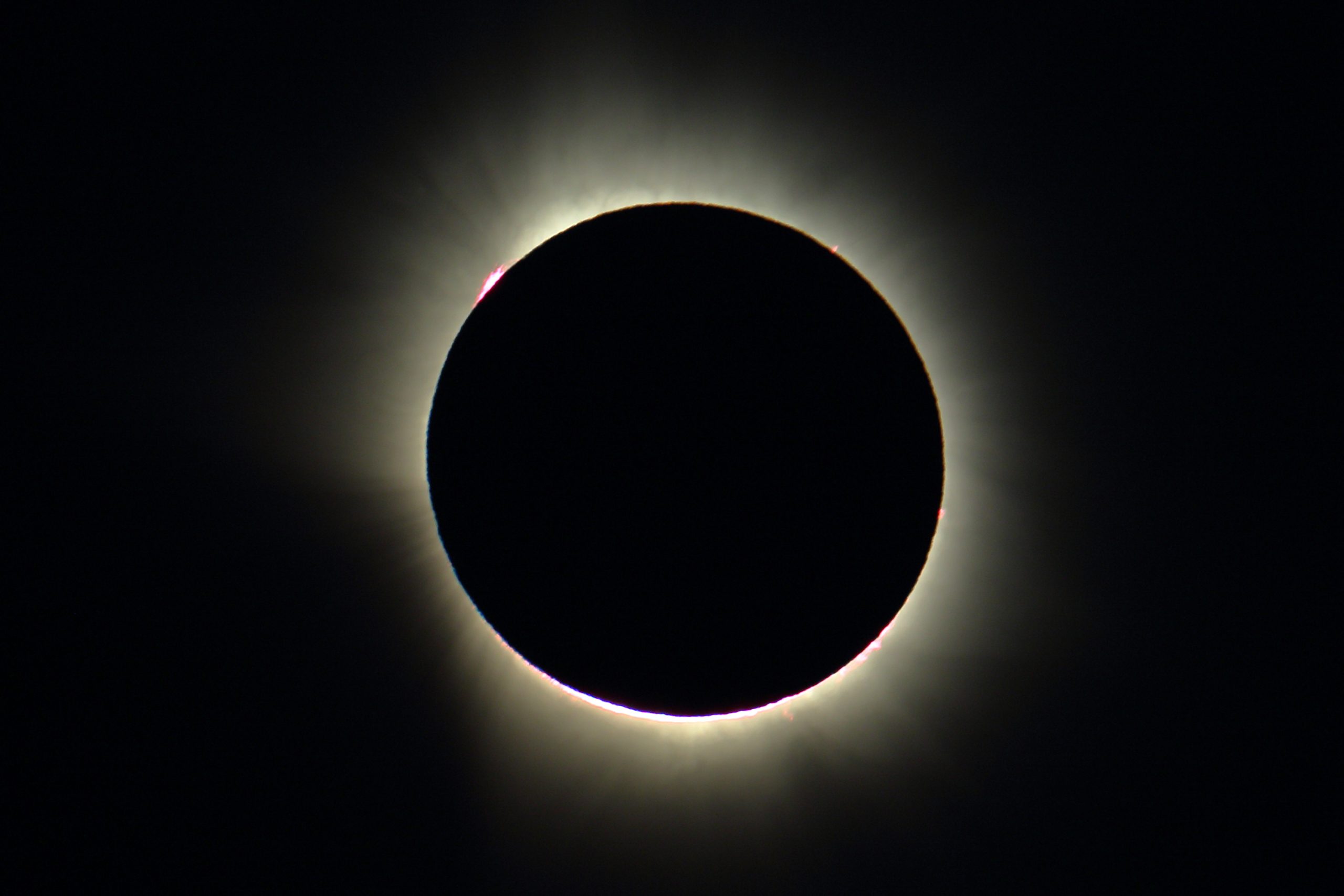
Explanation: On August 12, the Moon’s shadow reached out to touch our fair planet. Beginning in the Arctic Ocean, it swept along a narrow track that led the dark lunar umbra across parts of Greenland, Iceland, the Atlantic, Portugal, and northern Spain. And for a moment, denizens of Earth who found themselves with clear skies under the shadow of the Moon could witness a total solar eclipse. After dodging the weather by sea and making a landing along Rype Fjord on the Greenland east coast (at 71.07055N, 27.71252W), this hard-won snapshot was captured at 17:33:26 UTC. That’s near the initial reach of clearing skies along the path of totality, so the image is likely one of the first unobstructed views of the totally eclipsed Sun. Through a break in the clouds, the stunning photo also records one of this eclipse’s transient diamond rings and the magnificent solar corona emerging near the moment totality began.

More spectacular eclipse images: Solar Eclipse of 2026 August 12
Tomorrow’s picture: perhaps a Perseid

Date August 14, 2026
Credit & Copyright: Aditya Madhavan
Authors & editors: Jerry Bonnell, Cecilia Chirenti, Robert Nemiroff, Keighley Rockcliffe
A service of: ASD at NASA / GSFC,
NASA Science Activation & Michigan Tech. U.
  •  

A Sunflower’s View of Totality

A composite photo shows the Sun at several times and locations during the progression of a total solar eclipse. The Sun’s path descends diagonally from the top left across a dimmed sky, with a field of sunflowers in the foreground.
A composite image shows the progression of a total solar eclipse over San Millán de los Caballeros, Spain, on August 12, 2026.

Skywatchers across a swath of northern Spain witnessed a total solar eclipse when the Moon lined up directly between the Sun and Earth on August 12, 2026. Those within the path of totality had the rare chance to glimpse the Sun’s active outer atmosphere, or corona, during the short time the Moon blocked the Sun.

This composite photo was taken before, during, and after the total eclipse from a field of appropriately themed flowers in San Millán de los Caballeros, a town about 40 kilometers (25 miles) south of León in northwestern Spain. Along with parts of Greenland and Iceland, Northern Spain was one of the few places on land that fell within this eclipse’s path of totality.

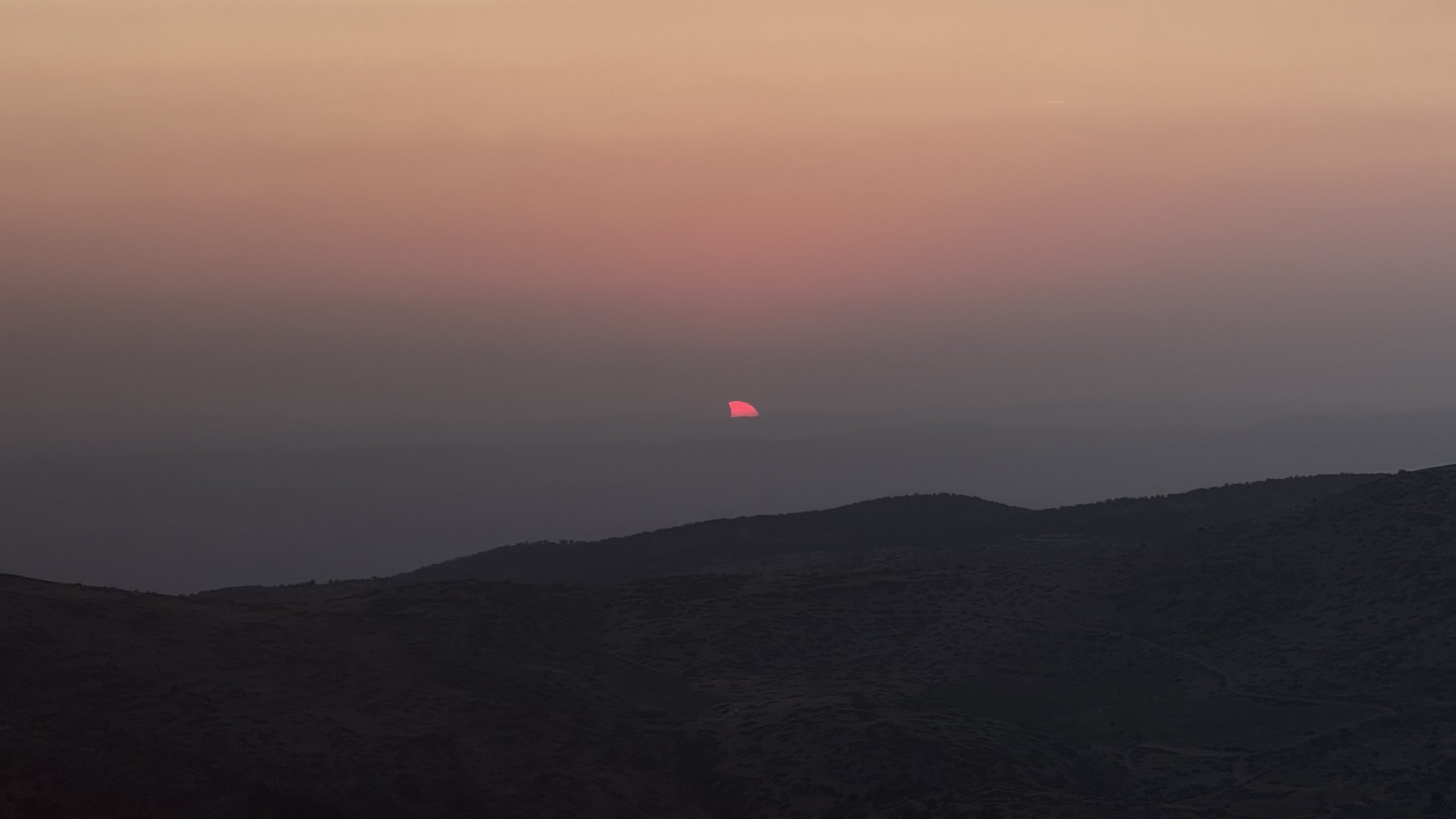
Sunset was approaching when the Moon’s shadow, or umbra, swept across Spain. In León, the partial eclipse began at 7:32 p.m. and ended at 9:22 p.m. local time, just minutes before the Sun dipped below the horizon. Totality lasted about two minutes, starting at 8:28 p.m. Farther east in Spain, the Sun set before the eclipse ended.

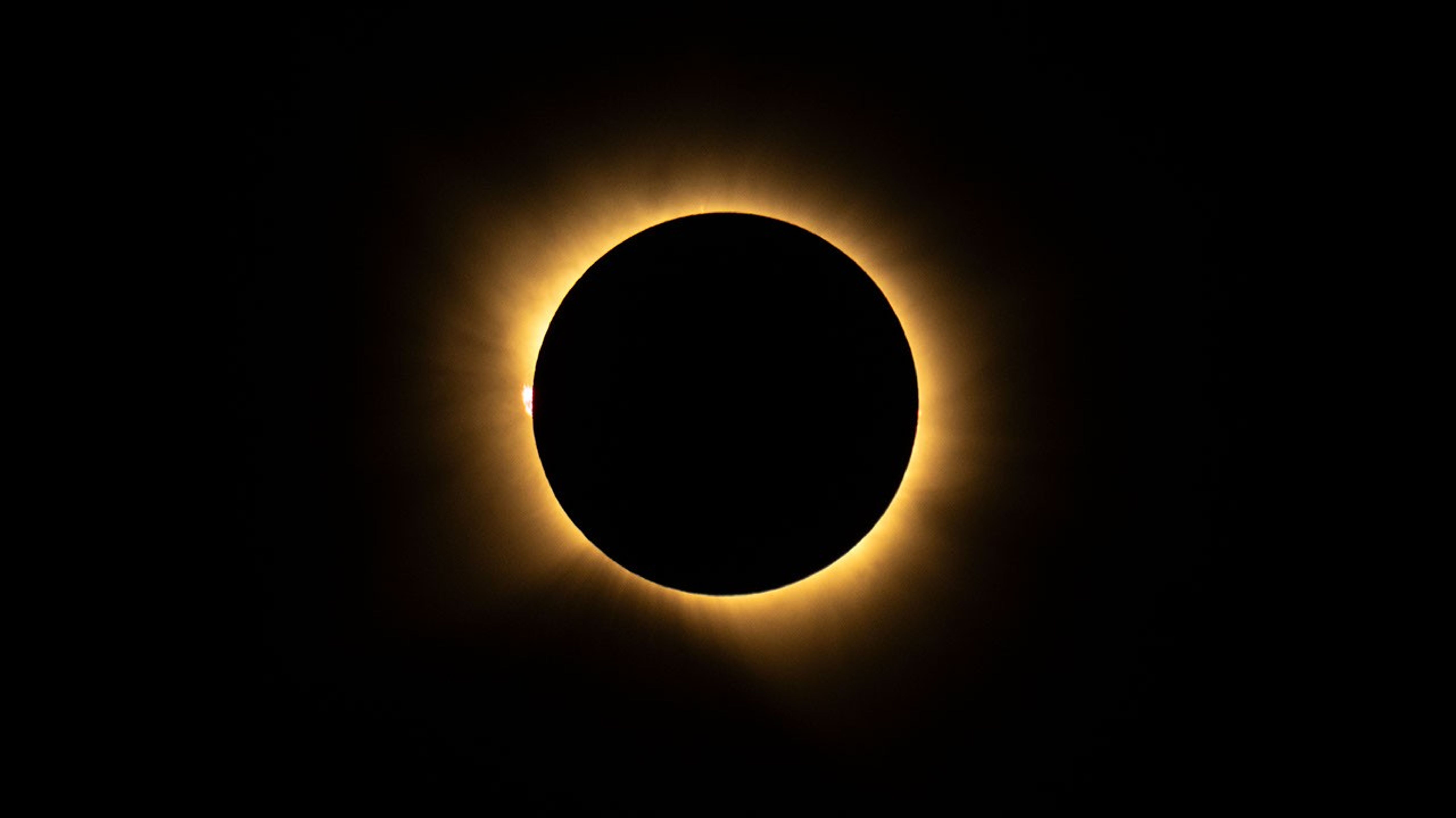
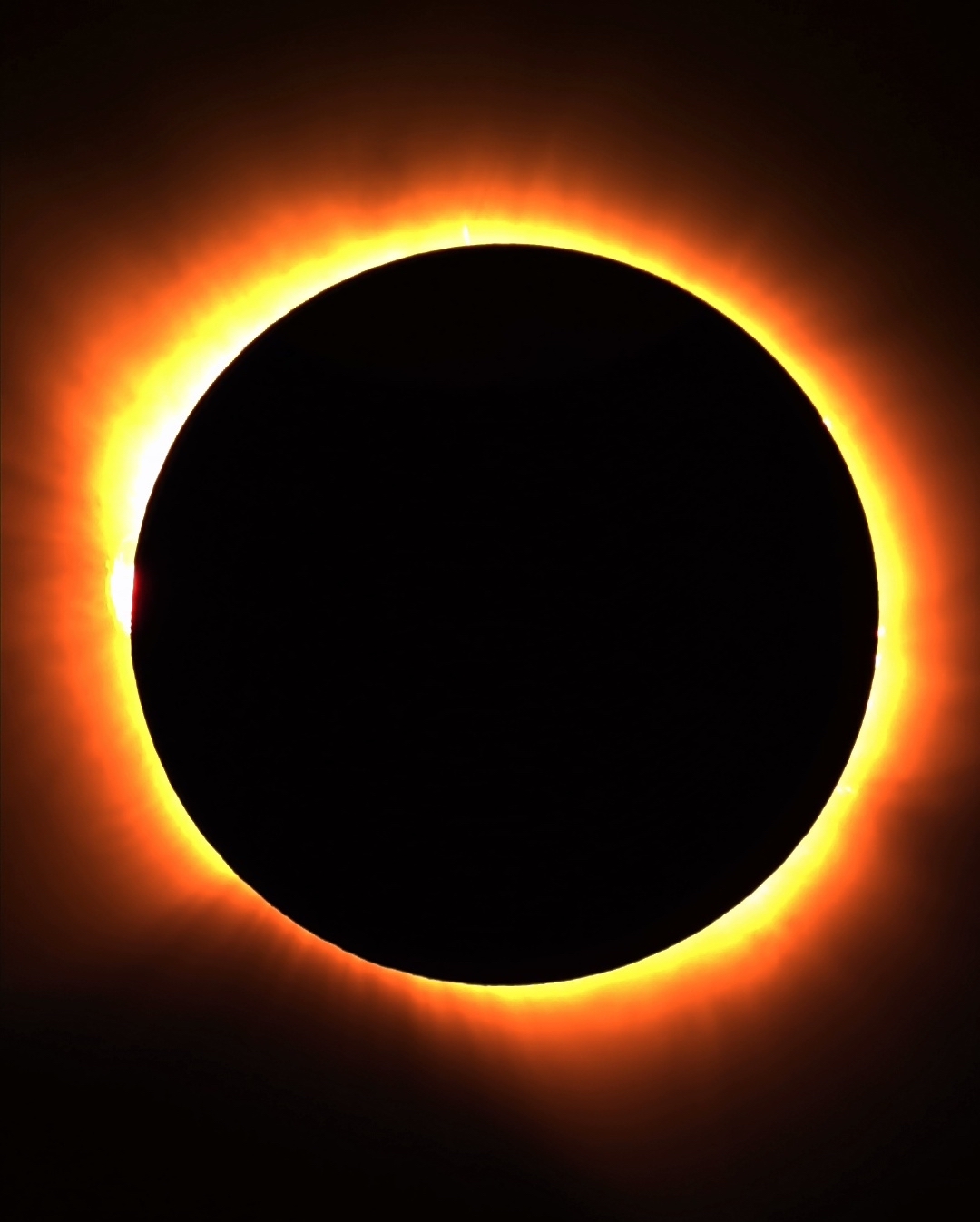
A ring of bright light shines from behind the Moon, which appears as a black circle, during a total solar eclipse.
A total solar eclipse is seen from San Millán de los Caballeros, Spain, on August 12, 2026.

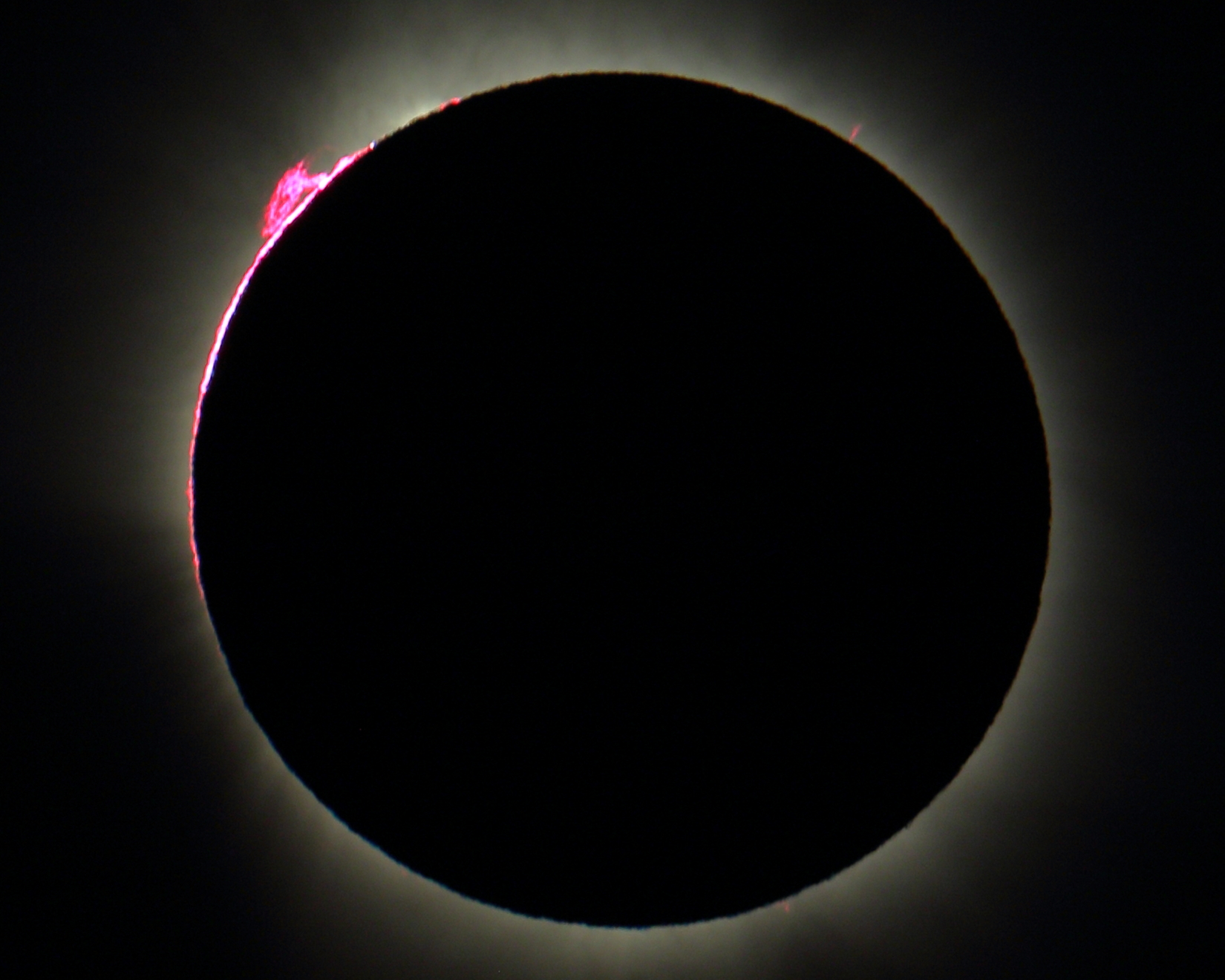
In the photo above, taken during totality, a glowing loop of plasma called a solar prominence is visible extending into the corona on the left. Plasma, a super-hot gas composed mostly of ionized hydrogen and helium, flows along the tangled and twisted structure of the Sun’s magnetic fields. Solar prominences, which can measure many times higher than Earth is wide, are sometimes visible to the naked eye during eclipses.

Solar eclipses offer NASA the opportunity to get a different look at the Sun and our own atmosphere. On August 12, science teams staged in Iceland to chase the Moon’s shadow in one of NASA’s WB-57 high-altitude jets and image the corona in visible and infrared light. And the NASA-supported Nationwide Eclipse Ballooning Project launched scientific balloons before, during, and after the eclipse to measure how Earth’s atmosphere changed when the Sun was temporarily blocked.

While viewing opportunities in the path of totality were limited, the rest of Europe and parts of Africa, Canada, and the U.S. experienced a partial eclipse. Photos and video from the total and partial eclipse are available in NASA’s image library. The next total solar eclipse will occur on August 2, 2027, with the path of totality crossing southern Spain, North Africa, Saudi Arabia, and Yemen. 

NASA photos by Bill Ingalls. Story by Lindsey Doermann.

References & Resources

You may also be interested in:

Stay up-to-date with the latest content from NASA as we explore the universe and discover more about our home planet.

Stops Along the Path of Totality

3 min read

Western Iceland and northern Spain are among the few Northern Hemisphere locations experiencing a total solar eclipse on August 12,…

Article

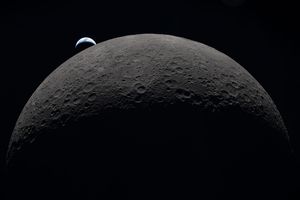
A Moonlit Earth as Seen From Artemis II

4 min read

An astronaut’s photo, taken en route to the Moon, reveals our planet and its place in space in a novel…

Article

Earthset From the Lunar Far Side

2 min read

The crew of NASA’s Artemis II mission captured extraordinary images of our home planet during their journey around the far…

Article
  •  

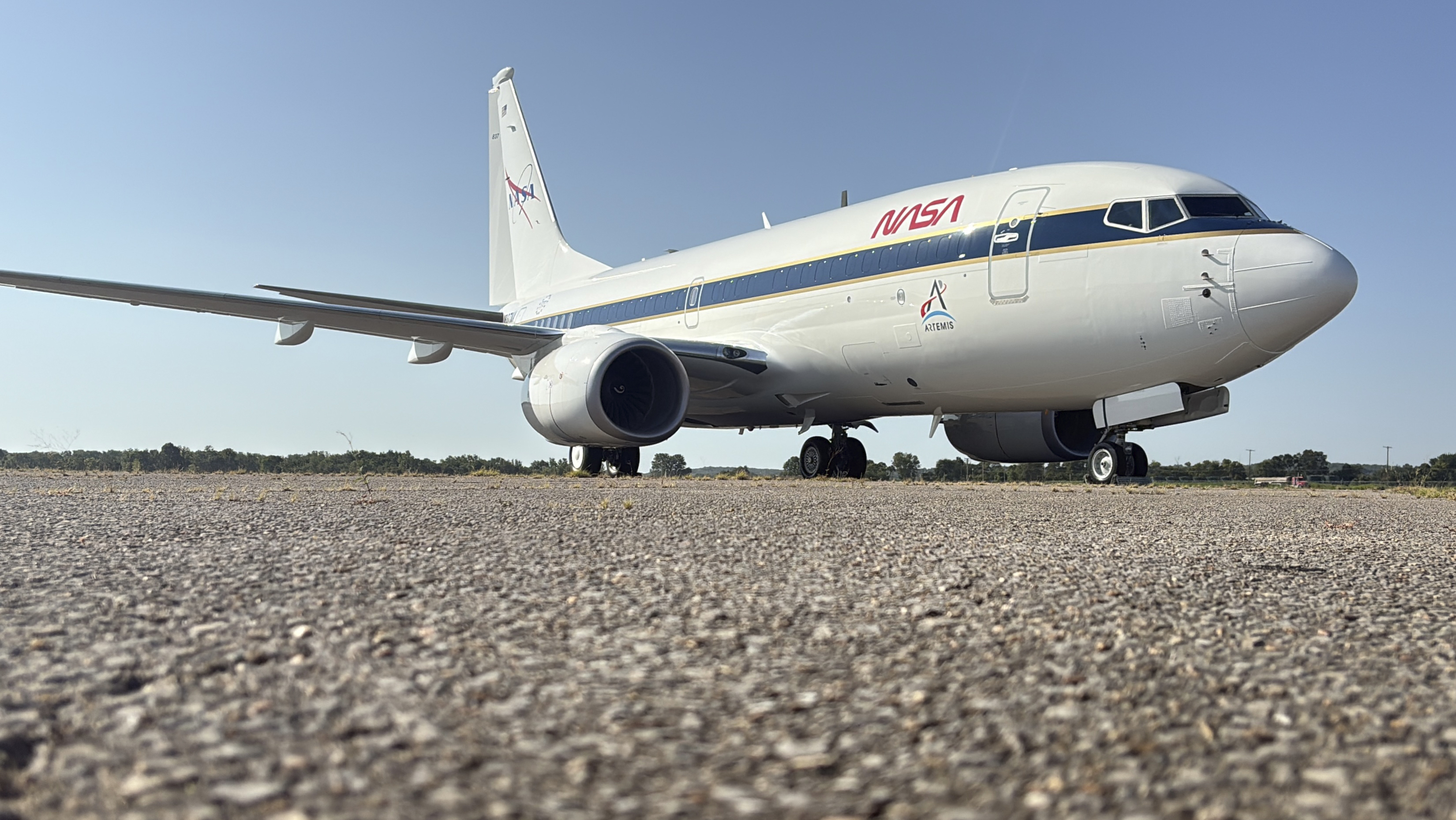
NASA’s 737 Reveals New Paint

1 min read

Preparations for Next Moonwalk Simulations Underway (and Underwater)

A large, white aircraft sits on a concrete surface after being painted with new NASA logos in red, white and blue.
A newly painted NASA 737 aircraft sits on a ramp in Oklahoma on Thursday, Aug. 13, 2026.
NASA/Carla Escamilla

NASA’s 737 aircraft was painted this week in Oklahoma as it progresses with modifications for use as a reduced gravity test aircraft for the agency. NASA’s Armstrong Flight Research Center in Edwards, California, took ownership of the aircraft from the United States Air Force in June. 

The aircraft will perform lunar-gravity parabolic flights to validate astronaut lunar suits and associated crew systems required to support Artemis mission objectives. These flights will happen at NASA’s Johnson Space Center in Houston for reduced-gravity operations, with NASA Armstrong oversight.

In addition, the aircraft will serve as a key asset for systems‑integration research for flight testing autonomy, sensors, and other digital systems.

Share

Details

Last Updated
Aug 13, 2026
Editor
Dede Dinius
Contact
  •  

NASA’s 737 Reveals New Paint

1 min read

Preparations for Next Moonwalk Simulations Underway (and Underwater)

A large, white aircraft sits on a concrete surface after being painted with new NASA logos in red, white and blue.
A newly painted NASA 737 aircraft sits on a ramp in Oklahoma on Thursday, Aug. 13, 2026.
NASA/Carla Escamilla

NASA’s 737 aircraft was painted this week in Oklahoma as it progresses with modifications for use as a reduced gravity test aircraft for the agency. NASA’s Armstrong Flight Research Center in Edwards, California, took ownership of the aircraft from the United States Air Force in June. 

The aircraft will perform lunar-gravity parabolic flights to validate astronaut lunar suits and associated crew systems required to support Artemis mission objectives. These flights will happen at NASA’s Johnson Space Center in Houston for reduced-gravity operations, with NASA Armstrong oversight.

In addition, the aircraft will serve as a key asset for systems‑integration research for flight testing autonomy, sensors, and other digital systems.

Share

Details

Last Updated
Aug 13, 2026
Editor
Dede Dinius
Contact
  •  

For West Virginia Engineer, Home Is Where the Heart Is… and NASA, Too

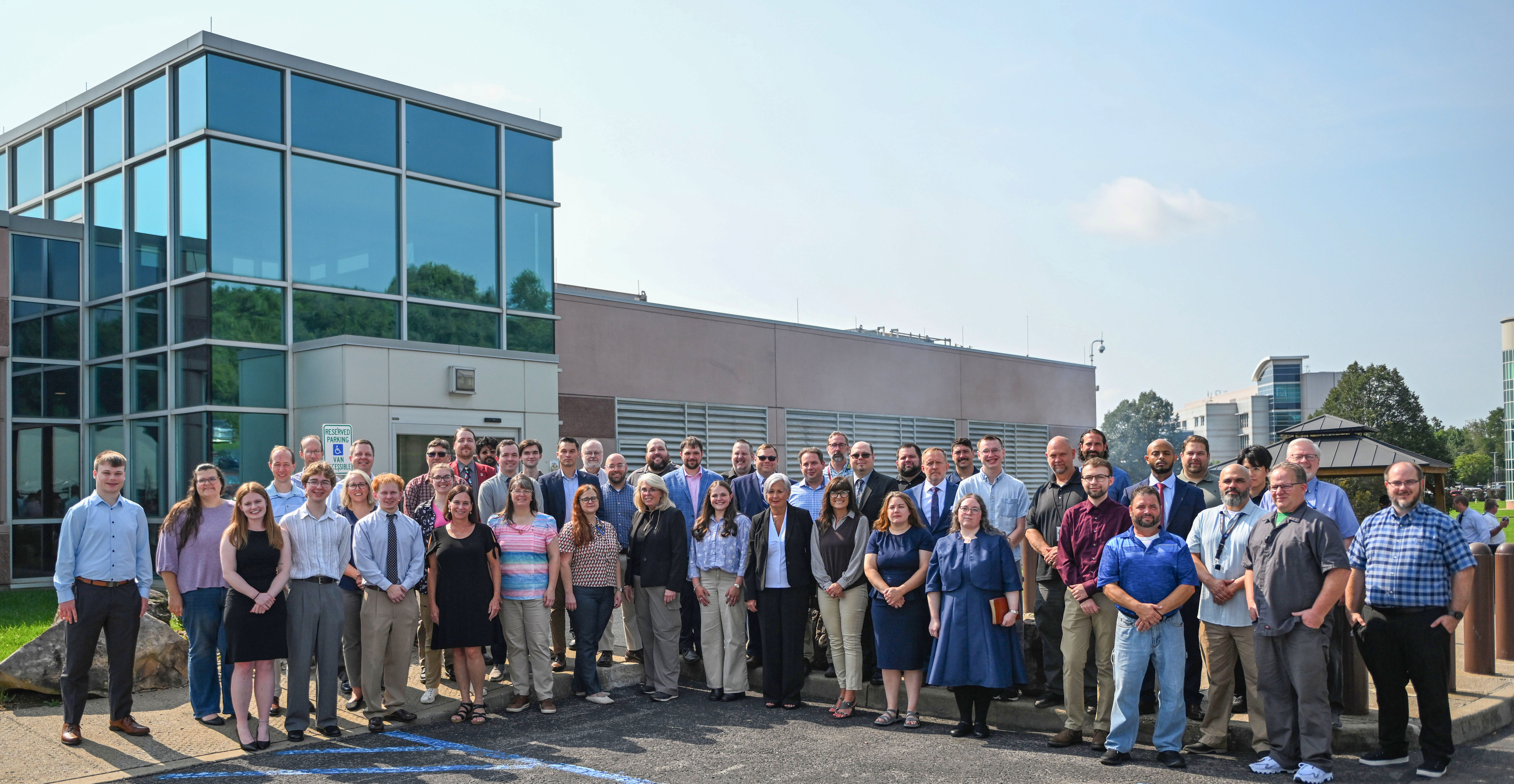
New civil servants pose together.
NASA’s Katherine Johnson Independent Verification and Validation Facility (IV&V) held a swearing-in ceremony for civil servants on Monday, Aug. 10, 2026, at the facility in Fairmont, West Virginia. In total, 51 new employees were hired at IV&V as part of NASA Administrator Jared Isaacman’s directive to strengthen NASA’s technical core competencies.

Growing up in Grafton, West Virginia, engrossed in Star Wars and all things science fiction, Fletcher Newell had an early interest in space exploration. That interest only grew when, in 2013, his fourth-grade class took a field trip to a nearby NASA facility he had not yet heard of – NASA’s Katherine Johnson Independent Verification & Validation Facility, located in Fairmont, West Virginia. Thirteen years later, Newell and 48 of his colleagues at the facility were sworn in as NASA civil servants during a ceremony on Aug. 10.

“I had always admired NASA from afar,” said Newell, who started working at IV&V as a systems engineer contractor in early 2025. “To my surprise, the agency was doing impactful work in my backyard.”
 
During high school, he began cultivating programming skills that would lay the foundation for his future. A self-professed computer aficionado, Newell taught himself how to code. In algebra class, he discovered that his graphing calculator was programmable, leading him to create basic scripts. He quickly moved to popular software applications, learning how they were built in order to develop his own programs. Artificial intelligence was still on the brink of becoming mainstream, but he was already asking himself, “What are the more interesting things we can teach computers to do?” As a junior in 2019, the precocious programmer merged his talents with his passion for space after being accepted into IV&V’s high school internship program.
Newell created a database for engineering methods, processing hundreds of documents to facilitate the work of his colleagues from a procedural aspect.

“Working as a high school intern really elevated my fascination for NASA,” he said.
 
Following graduation in 2020, Newell headed west to Stanford University in Palo Alto, California, majoring in, naturally, computer science, with a focus on AI and machine learning when both were scaling rapidly across industries and in everyday usage.
 
Instead of pursuing internships in the neighboring Silicon Valley – widely considered the global center for technological innovation – he returned to West Virginia for three consecutive summers, cutting his teeth at the Fairmont facility.

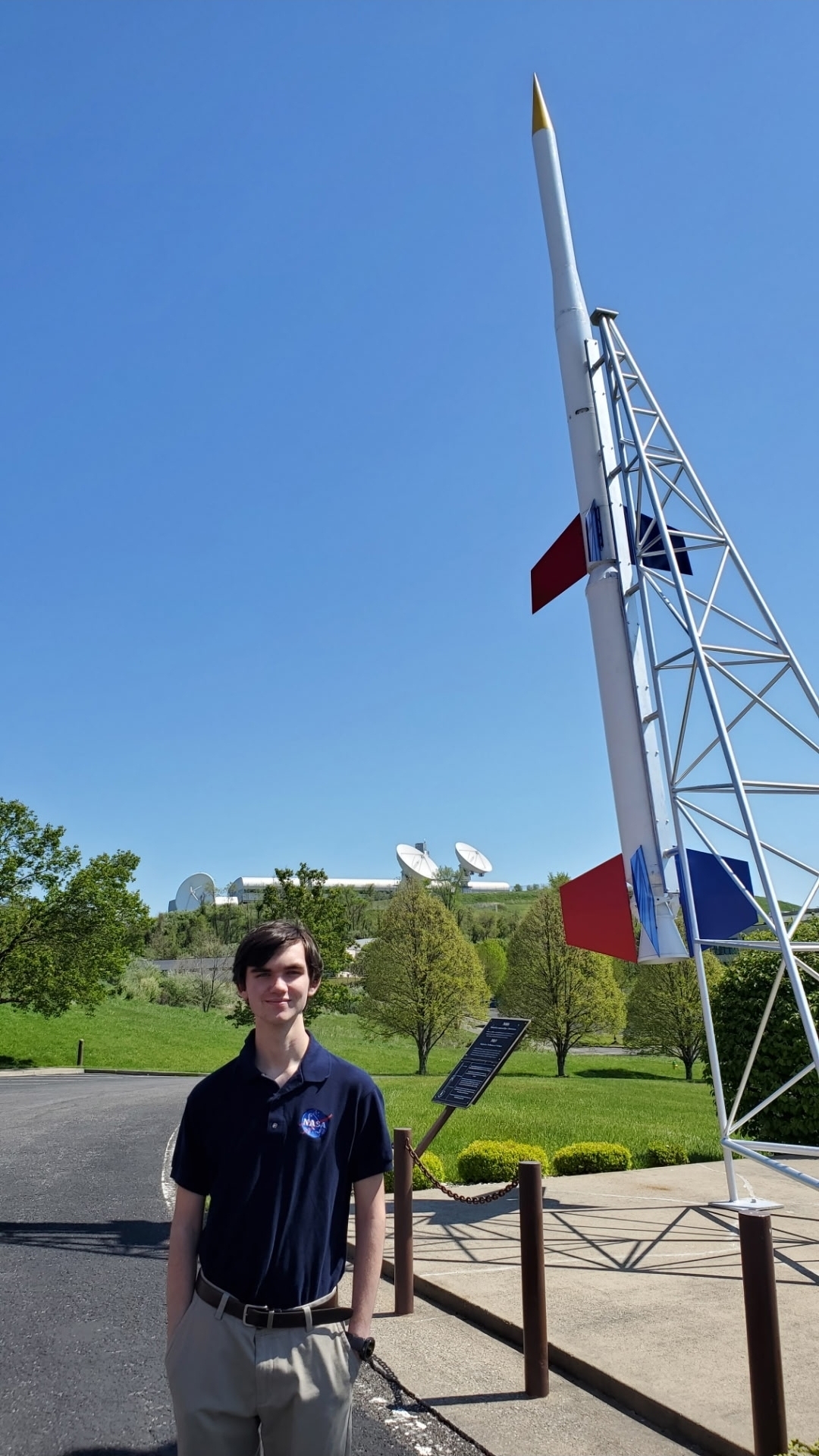
Fletcher Newell stands in front of a sounding rocket.
Fletcher Newell stands in front of the Katherine Johnson Independent Verification & Validation Facility in Fairmont, West Virginia, as a high school intern in 2019.
Photo courtesy: Fletcher Newell

He began researching AI safety as engineers learned how to give spacecraft more onboard autonomy and have them learn on their own. Later, he was on a team responsible for assessing the safety of Terrain Relative Navigation, a vision-based guidance technology that could enable spacecraft to land on planetary surfaces without GPS. During his final internship, generative AI – which creates content based on user prompts – was becoming widespread, and he worked on teams exploring how to responsibly integrate it into mission assurance.
 
Newell also performed research about autonomous space docking at Stanford’s Center for AI Safety, resulting in two publications. Following his undergraduate education, he remained at Stanford to earn a master’s in computer science.
 
When it came time to enter the workforce, one organization was atop his list. A contractor opportunity opened up at IV&V, and he leapt at the chance.
 
“I enjoyed the work at IV&V back in high school and college,” he said. “There’s nothing better than pursuing what aligns with your interests.”
 
As a systems engineer, he has worked primarily on mission safety and security, identifying and resolving system defects and vulnerabilities for such spacecraft as Space Reactor-1 (SR-1) Freedom, Orion, Gateway, and the Human Landing System, all while helping guide NASA’s responsible adoption and development of AI systems.
 
His colleagues took notice of their junior member’s contributions, resulting in Newell being named IV&V Engineer of the Year in 2025 less than a year into the job after identifying more than 70 issues in Gateway – and later SR-1 Freedom – with clear mission impact and, as noted in his award citation, developing a reputation for clearly articulating their implications.
 
“During his internships and now as a full-time engineer, Fletcher has consistently demonstrated exceptional talent, curiosity, and a passion for our mission,” said Wes Deadrick, IV&V director. “He could have gone almost anywhere after Stanford. The fact that he chose to come home to build his career supporting NASA through the IV&V Program makes me incredibly proud.”
 
The Aug. 10 ceremony for Newell and his colleagues was part of NASA’s workforce directive to bring core, mission-critical positions into the civil service, from early-career professionals to seasoned technical experts.
 
“It’s an investment in NASA’s future, giving us the opportunity to bring exceptionally talented people into the civil service while strengthening long-term technical capabilities that support our nation’s most challenging missions,” said Deadrick. “At IV&V, initiatives like this help ensure we continue providing independent expertise and mission assurance that our customers depend on.”
 
For Newell, as he takes this next step in his professional progression as a civil servant computer engineer, he looks forward to expanding on his responsibilities, especially to help NASA return to the Moon. He is currently helping identify safety and security issues, including ones that could impact crew safety and lead to the loss of spacecraft control, related to the agency’s lunar endeavors.
 
“At IV&V, teams are ensuring every major lunar vehicle and system will be ready to safely embark on their missions, not just for flying around the Moon, but also for putting American boots on the surface and eventually establishing and working on a Moon Base,” he said.
 
More than a decade after taking that field trip and now working on some of NASA’s high-priority missions, Newell readily admits he didn’t always envision staying in West Virginia.
 
“It was a little strange coming back, but I was continually getting to do amazing things at an amazing organization in a place I already know,” Newell said. “And that’s really cool.”

  •  

Come un occhio che si chiude

«Capitano, guarda un poco all’orizzonte:/cosa sono quelle nuvole nel/cielo?». Questi versi, a cui mai avrei voluto pensare nella giornata di ieri, mi sono cascati addosso nel pomeriggio, intorno alle 18, quando ho raggiunto il centro di La Coruña per assistere all’eclissi. In un cielo, pulito su ogni fronte fino a poco prima, un fitto assembramento di nubi si addensava a occidente, esattamente dove di lì a una mezzora il Sole si sarebbe piazzato.

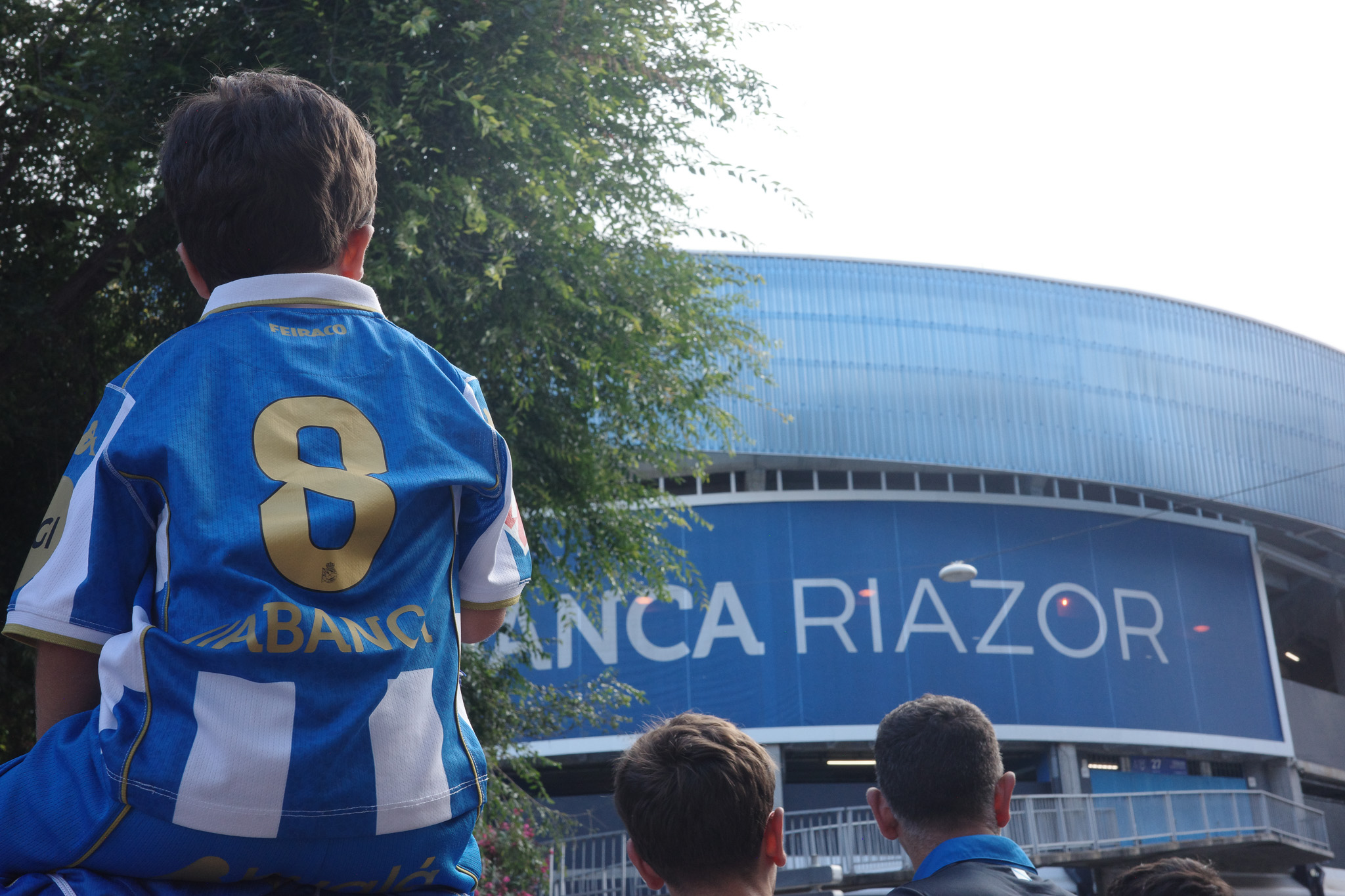
Il lungomare è stato preso d’assalto da migliaia di persone – alla fine saranno oltre duecentoventimila, in totale, secondo i quotidiani locali -, che si vanno raccogliendo su panchine, s’appoggiano alle spallette, si sistemano in spiaggia, o, semplicemente, passeggiano lungo l’Avenida de Pedro Barrié de la Maza. Turbata, percorro il lungomare verso sud-ovest, con lo sguardo piantato sulle nubi, e mi avvicino all’Estadio Riazor. Una torma di individui in casacche biancazzurre sciama nell’area attorno alla struttura. Cerco nei loro occhi il turbamento, e tuttavia non lo trovo. Altro argomento pare infatti quello che tiene impegnate le coscienze di chi mi circonda. Alle 21 si disputerà nientemeno che Deportivo – Real Madrid, partita con cui ci si aggiudica il trofeo Teresa Herrera, a quanto pare molto sentito qui in città.

Tifosi fuori dall’Estadio Riazor prima di Deportivo – Real Madrid. Crediti: F. Loiacono

José, il proprietario di Casa Canosa, il ristorante in cui pranzo ogni giorno da quando sono giunta in Galizia, è uno di quelli che stasera è andato allo stadio, anziché a vedere l’eclissi. Dopo pranzo mi ha mostrato la tessera blu che attesta la sua affiliazione al club, con tanto di abbonamento stagionale. Il club se l’è vista brutta negli ultimi anni, «è fallito come il Parma», mi dice rispolverando vicende antiche, ma ora s’è ripreso. Lui c’era al Riazor nel 2004, il giorno in cui il Milan venne sconfitto 4 a 0 nei quarti di Champions. All’epoca frequentavo la seconda media, e ancora rammento il lutto che adombrò gli allora miei compagni di classe milanisti.

Víctor Manuel  – «come il re d’Italia», stavolta è il paragone prescelto – è il cognato di José. Sono le tre del pomeriggio e ha già indosso la maglia strisciata della squadra cittadina. Secondo lui non vale la pena guardare il cielo durante le eclissi. Quello che accade in cielo infatti si sa, è meccanico, si può calcolare. Quel che non sappiamo è quel che accade sulla Terra, a noi, agli uccelli, alle piante. Per questo, tutto sommato, non gli dispiace essere allo stadio all’ora di un fenomeno che a La Coruña si ripeterà non prima di qualche secolo.

Nel mentre che s’attende l’inizio della partita sono arrivate le 19 e 30, orario che, da queste parti, segna il principio dell’eclissi parziale. Nella Rúa Manuel Murguía, strada che costeggia il Riazor, si comincia a notare un cospicuo numero di tifosi che estrae gli occhiali da eclissi per puntarli verso il Sole. Il Sole è tuttavia disperso tra le nubi, e ogni tanto, quasi per sbaglio, timidamente affiora. «No se vede nada», la frase che si ode più spesso.

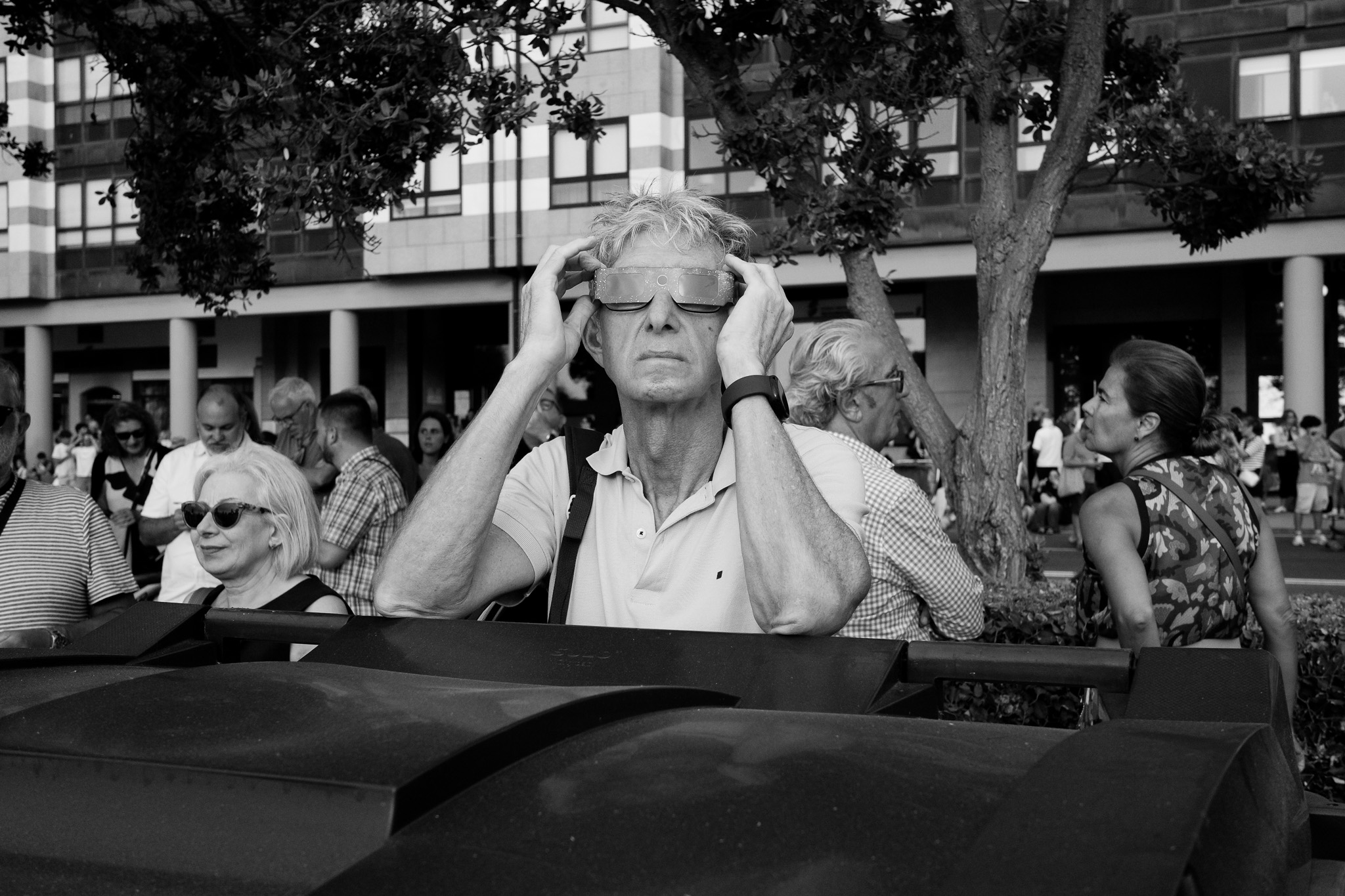
Due tifose guardano l’eclissi fuori dallo stadio, prima che cominci la partita. Crediti: F. Loiacono

Il pullman del Real Madrid passa a una decina di metri, salutato dai fischi dei padroni di casa. Mi faccio largo tra i reiterati Yeremay e Quagliata per raggiungere la spiaggia. A un certo punto confondo Valerón con l’a me più familiare ma incongruente Verón, a dimostrare come le competenze calcistiche della sottoscritta siano talvolta fallaci. Un giovane sfoggia una maglia azzurra che ben si mimetizza con le altre, ma con un non camuffabile R. Baggio che spicca sul dorso. «È la maglia di Usa ‘94», ci tiene a dirmi il proprietario, tanto per gettare ulteriori tristi presagi sull’esito della giornata.

Quando arrivo sul lungomare mi giro a guardare il Sole. Gli manca un pezzo. Nonostante sapessi che sarebbe successo sono incredula. Scopro che avere la certezza che una cosa accadrà non toglie nulla allo stupore che si prova nell’assistere ad essa. Credo sia la prima volta che faccio un’esperienza di questo tipo. O perlomeno, mentre scrivo non mi vengono in mente situazioni avvicinabili.

Su una panchina del Paseo Marítimo di La Coruña si guarda l’eclissi parziale. Crediti: F. Loiacono

Mi inoltro sul Paseo Marítimo di La Coruña – uno dei lungomari più lunghi d’Europa – rivolgendo le spalle al Sole. Mi interessano i volti, le espressioni perplesse, quelle stupite, chi solleva un braccio per indicare un particolare, chi si toglie gli occhiali scocciato perché passa una nuvola. Víctor Manuel aveva ragione, le cose più interessanti stanno sulla terra. La folla tutta pare soggetta a un incantamento. L’attesa è presenza tangibile, su questo marciapiede gremito e, al contempo, incredibilmente silente, rapito. Uno strano ordine si effonde dalla scena. Ogni tanto mi volto e indosso gli occhiali, per guardare com’è messa la nostra stella. Ogni volta la trovo smagrita, assottigliata, spolpata com’è dall’avanzata inarrestabile della Luna.

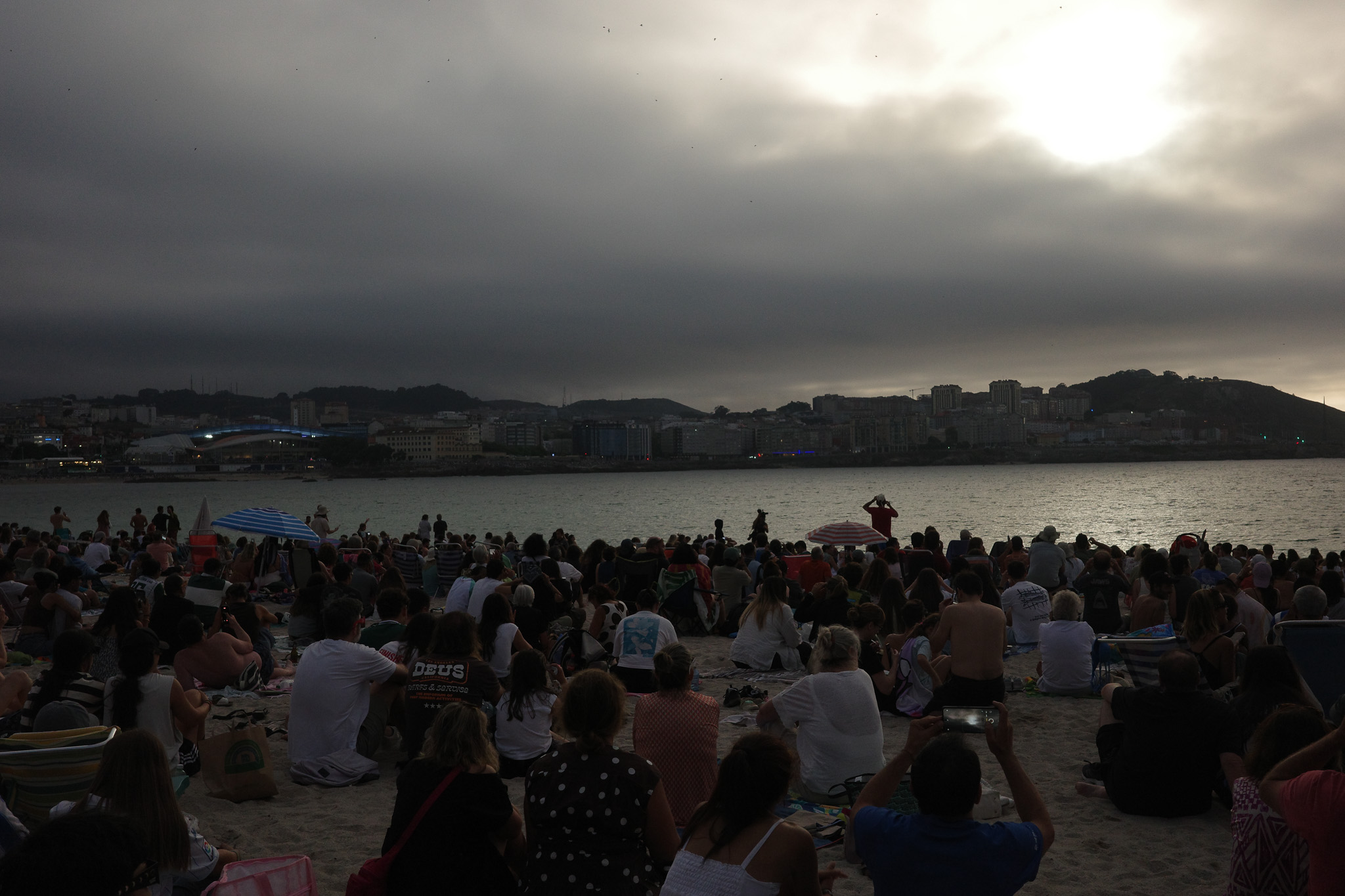
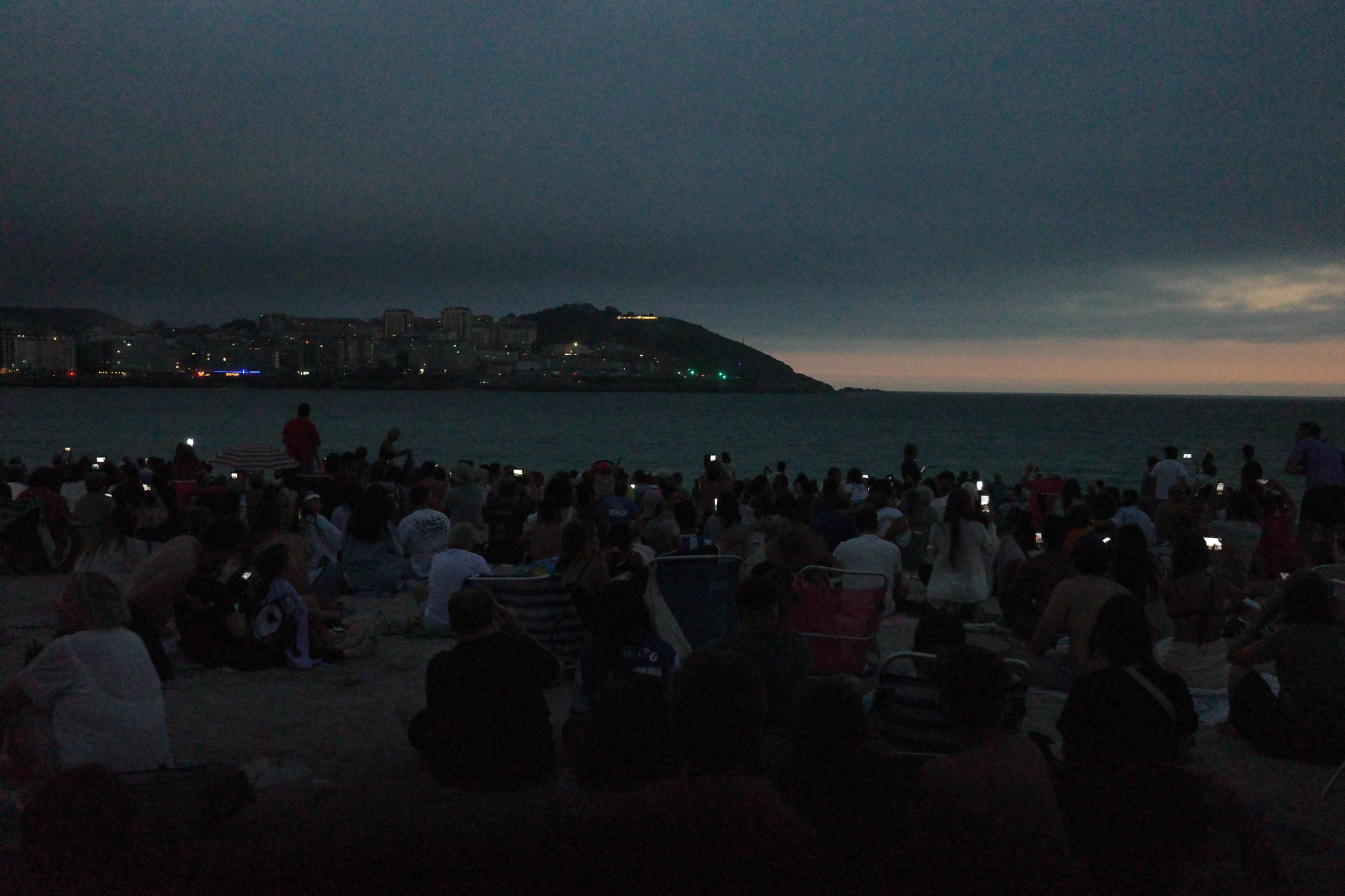
La Playa del Orzán attende l’eclissi totale. Credi: F. Loiacono

L’ora sullo smartphone mi dice che mancano pochi minuti alla totalità. Voglio essere in spiaggia. A malapena scorgo una scalinata per raggiungerla, fitta com’è di individui che aspettano. Nessuno più toglie e mette gli occhiali. Li indossano tutti. Nelle foto commetto innumerevoli sbagli, dimenticando il fuoco della macchina fotografica all’infinito per immortalare soggetti a un metro di distanza. Ma a questo punto m’interessa poco.

La Playa del Orzán è un vasto accampamento. Migliaia di persone siedono sui teli. Se non si sapesse dell’eclissi, si potrebbe pensare che questa gente sia qui per un raduno, che sia in attesa di un concerto, di un’esibizione che a un certo punto affiorerà dalle onde. Comincio a tremare. Un minuto prima della totalità la folla erompe in un applauso. C’è chi ride. Si ride tantissimo, per questa cosa che accade dentro e non si tiene. Io tremo. Quand’ho tremato così l’ultima volta? Ho mai tremato così in vita mia? Lo sapevo, sapevo tutto. Eppure tremo.

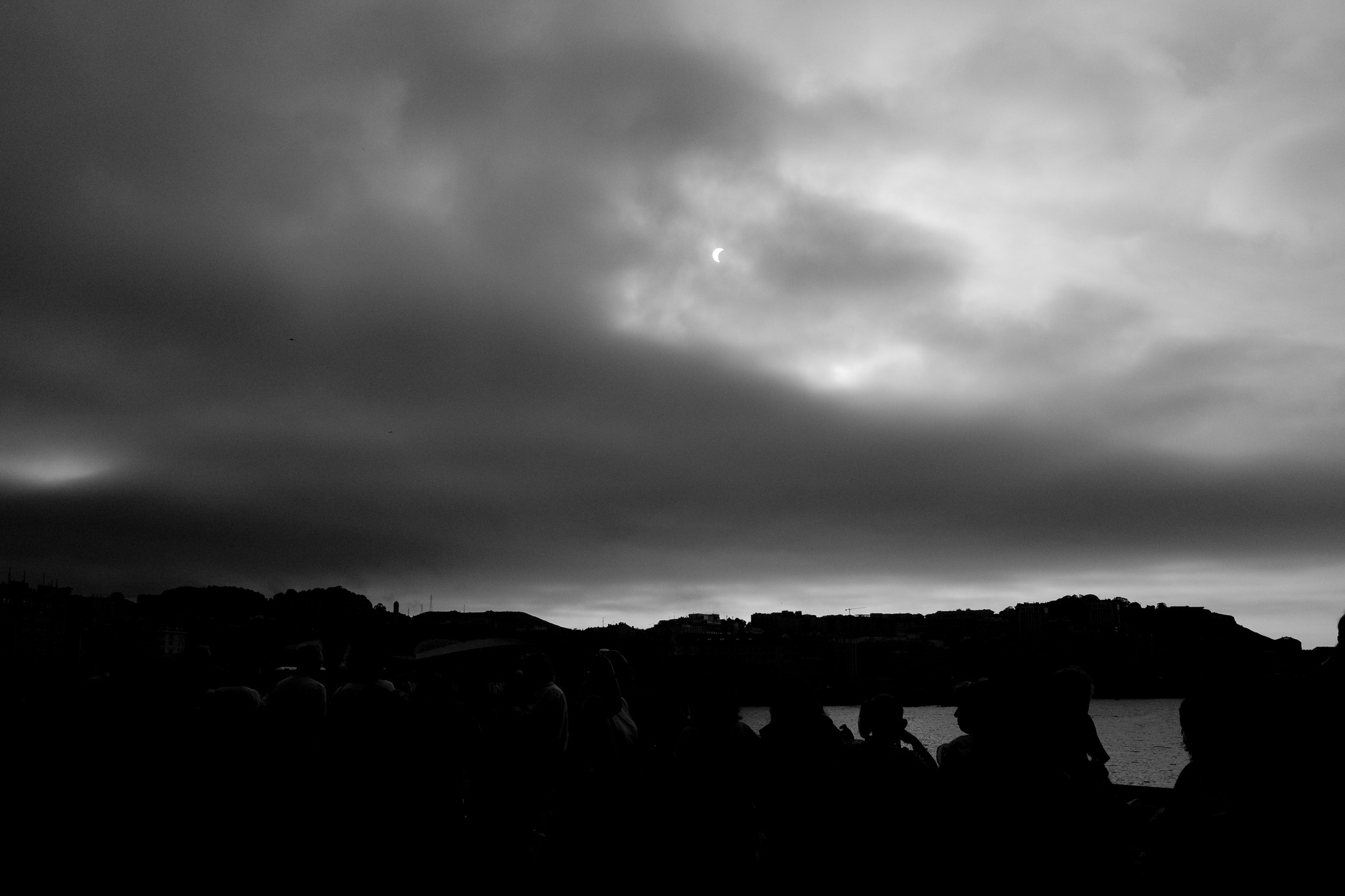
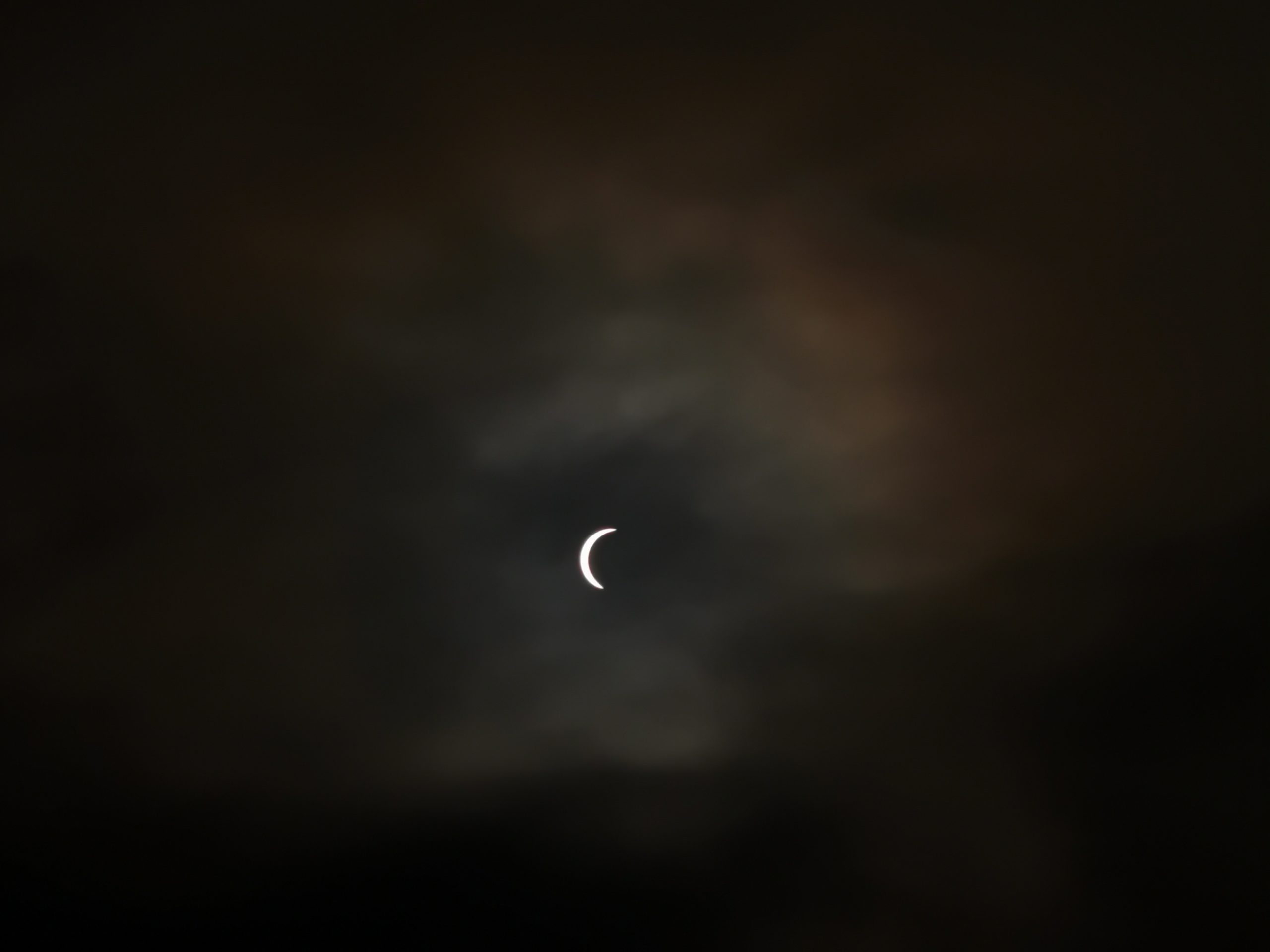
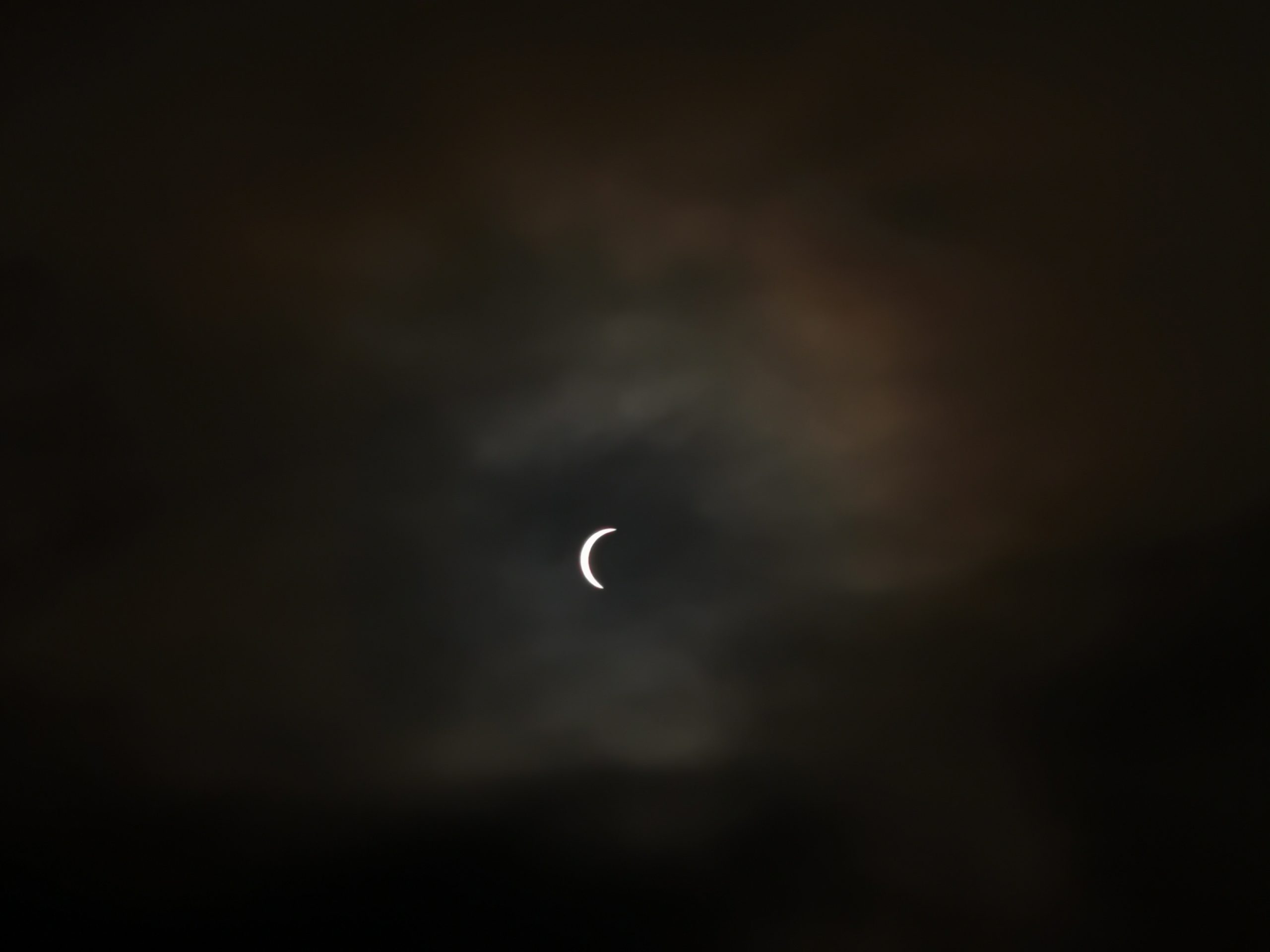
Il Sole eclissato dalla Luna nei cieli nuvolosi sopra La Coruña. Crediti: F. Loiacono

Il Sole si è ridotto a una ciglia sottilissima, che sorride oltre le nubi. Sembra la Luna. I gabbiani gridano impazziti a decine e decine e decine, sopra l’acqua, davanti a questa palpebra sottile che si sfina inesorabilmente. Poi più nulla. Il Sole è un occhio che si chiude. Cerco una parola per chiamare il buio che è caduto sulla spiaggia, la tonalità cupa che si è presa la sera, mentre il vento ci scompiglia tutti. È come. È come. La verità è che la parola non si trova. Stavolta non è la musica, ma la poesia che giunge in mio soccorso. «Che ‘ntender no la può chi no la prova», Dante, Beatrice e il Paradiso, l’ineffabilità delle cose celesti. «Non chiederci la parola che squadri da ogni lato», un altro verso caduto nella testa. Io la parola non ce l’ho. «Come il Parma», «Come il re d’Italia», come José, come Víctor Manuel. Non è come qualcos’altro. È come nelle eclissi. A La Coruña, adesso, in questo cielo di nuvole che viaggiano.

Poco prima della totalità. Crediti: F. Loiacono

Settantasei secondi. Tanto c’è concesso di restare senza una luce che ci guardi. A La Coruña la corona non si vede, l’hanno rubata le nuvole. Il Riazor, con i suoi trentamila spettatori, splende a sinistra come un’astronave parcheggiata sulla terra. Quando quell’esile virgola che è il Sole che riappare si manifesta, dalla parte opposta da cui se n’eran perse le tracce, un applauso torrenziale s’innalza dalla spiaggia tutta. Gli uccelli ritornano a gridare, a disegnare traiettorie irripetibili sul cielo che schiarisce, a mano a mano che la luce solare acquista vigore.

Il giorno è tornato. Pochi minuti dopo, le nubi s’inspessiscono al punto tale che non si vede più nulla. Il lento trascinarsi della Luna, che sveste di sé il Sole, noi non l’abbiamo visto. Ma il prima, c’era tutto. Nella sfortuna, siamo stati fortunati.

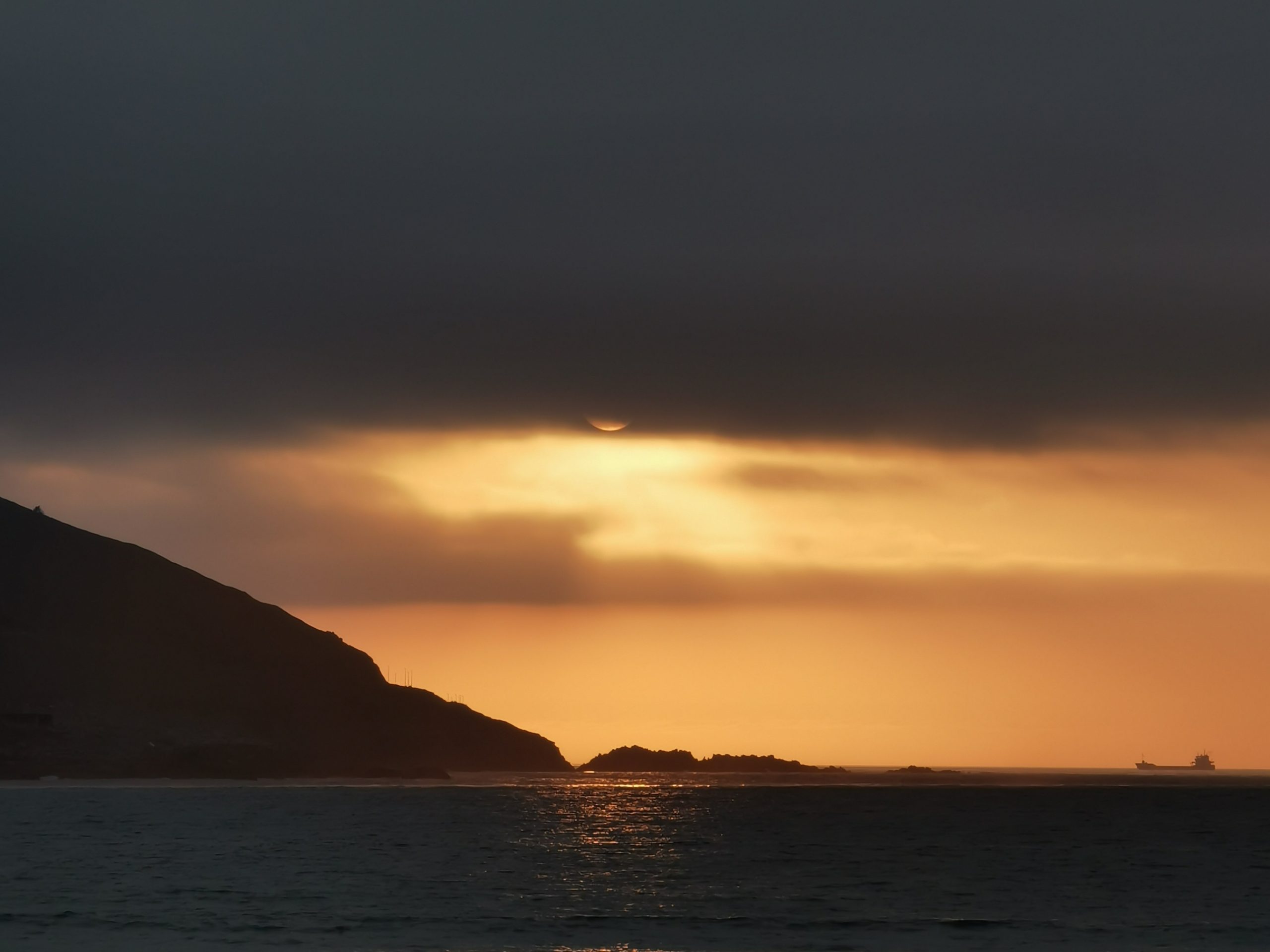
Il Sole scende dalle nuvole quando tutto è passato. Crediti: F. Loiacono

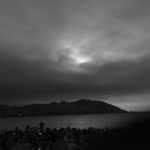
Mi trattengo in spiaggia per un po’, fino alle 22. C’è ancora luce, e il Sole riesce finalmente a palesarsi sporgendo dagli strati di nubi. La Luna torna nuova, preclusa al nostro sguardo. Il transito sulla nostra stella l’ha sottratta all’abituale invisibilità che la caratterizza, in questa fase della sua infaticabile rivoluzione attorno alla Terra.

Il Deportivo ha perso 1 a 0 contro il Real Madrid, si verrà a sapere più tardi. Questo viaggio è cominciato pensando a una partita, e si conclude, imprevedibilmente, nel segno di un’altra. Allo stadio s’è fatto buio durante il riscaldamento. Alcuni tifosi hanno aspettato la fine del fenomeno per salire sugli spalti.

C’è chi ride sui teli, ragazzi che corrono sulla sabbia e si tuffano nell’oceano, chi sta steso ad occhi chiusi. Un signore indossa gli occhiali da eclissi a cercare la nostra stella a festa finita, prima che s’inabissi in mare. Mi scatto un selfie sulla spiaggia, come foto ricordo. Il crollo dell’adrenalina mi taglia le gambe.

Ci sono 23 gradi. Ricevo foto di inaudita bellezza dell’eclissi da Burgos, e da ogni dove della Spagna. Almeno qui non fa caldo, penso. Poteva andare peggio.

«Come l’astronomo Le Gentil», un Whatsapp di mia madre.

Però l’ho vista.

«E allora hai avuto più fortuna di Le Gentil».

Per quello, tutto sommato, basta poco. Di fortuna, credo di averne avuta molta di più.


  •  

Eclissi totale, minuto per minuto

Ieri, 12 agosto, il giorno è diventato notte. Era l’ora del tramonto, ma prima di salutare la Terra come ogni sera, il Sole ha regalato a una sottile fascia di mare e terra uno spettacolo raro e meraviglioso: un’eclissi totale. Vediamo com’è andata attraverso le foto e i commenti di ricercatrici e ricercatori dell’Istituto nazionale di astrofisica (Inaf) che l’hanno osservata nella zona di totalità.
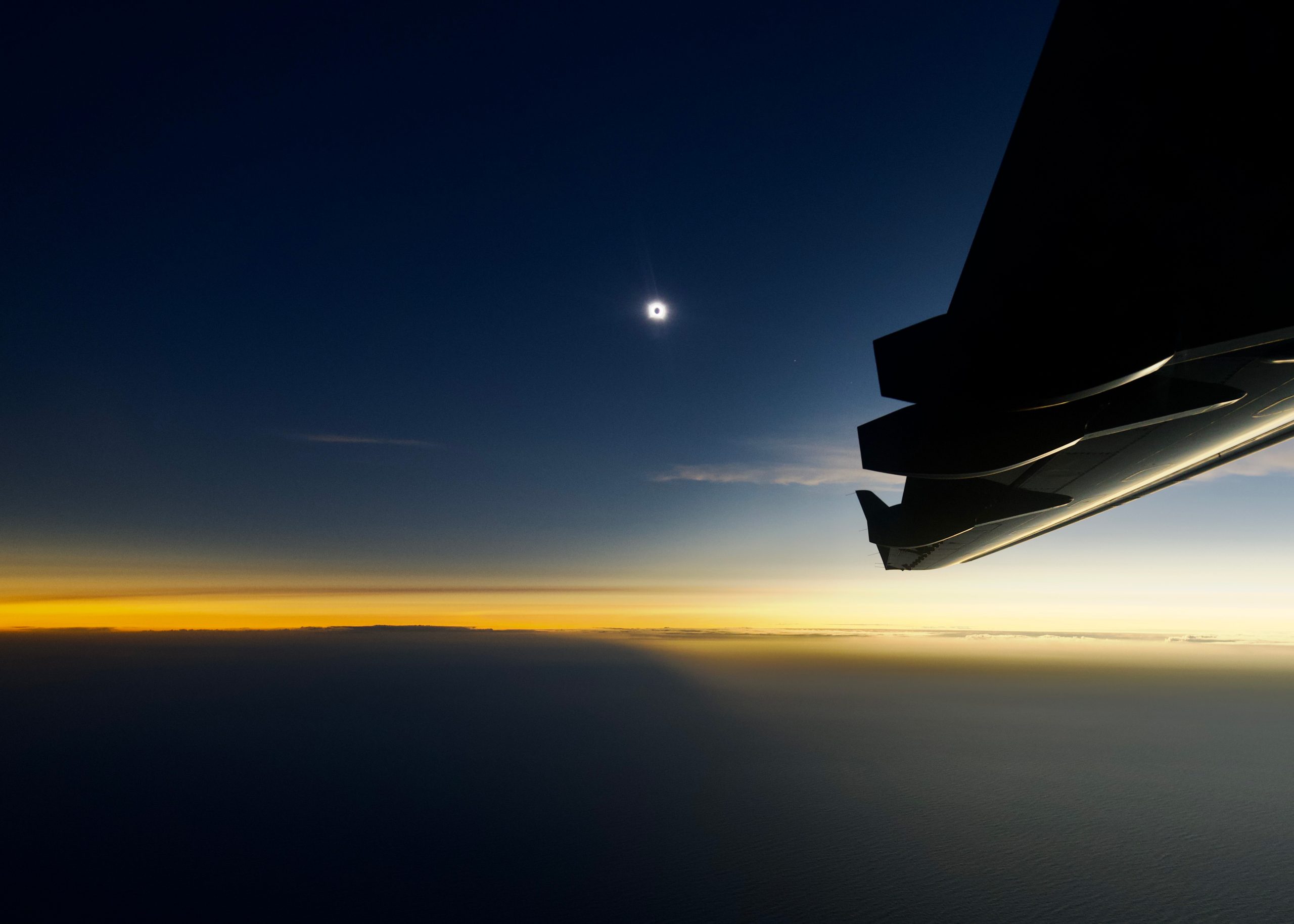
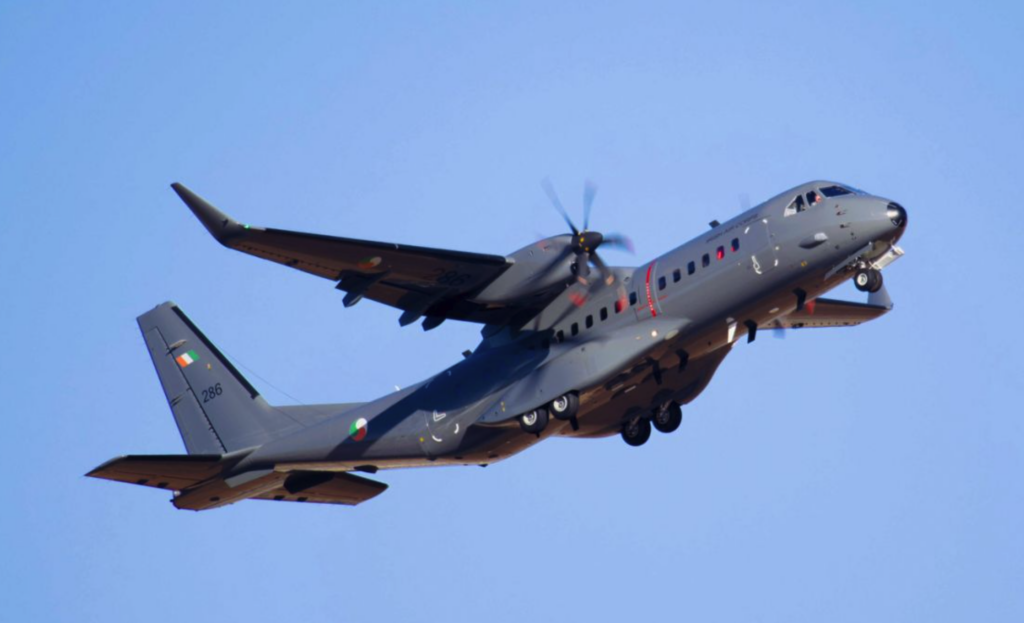
L’eclissi totale di sole del 12 agosto 2026 fotografata dal volo Irish Air Corps C295 a circa 400 km dalla costa occidentale dell’Irlanda. Crediti: Dias, Tcd, Tu Dublin & Inaf

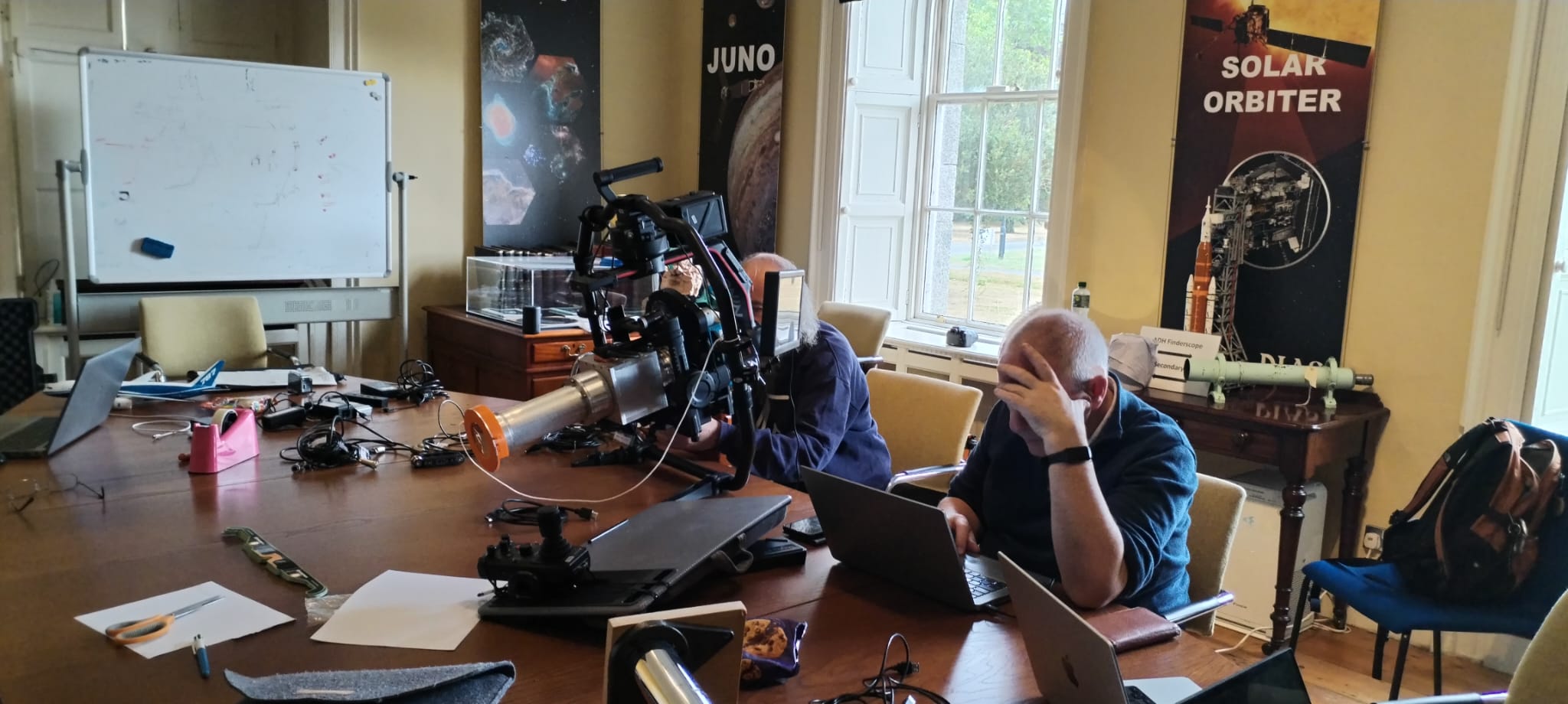
Sull’Oceano Atlantico, a circa 400 chilometri dalla costa d’Irlanda, un team internazionale di ricercatori e ricercatrici ha studiato il fenomeno a bordo di un volo speciale dell’aeronautica militare irlandese con il coronografo E-CorMag sviluppato dall’Inaf. Il volo è durato in totale sei ore e mezza e la totalità, che non era visibile dal territorio irlandese, è stata osservata intorno alle 19.15 ora locale – 20.15 in Spagna e Italia. «Siamo andati sopra le nuvole, cielo sgombro, eclissi ben visibile durante la totalità e anche per molta parte della parzialità», racconta a Media Inaf Lucia Abbo, ricercatrice Inaf a Torino. «Abbiamo belle immagini e soprattutto abbiamo acquisito i dati con E-Cormag, tutte le sequenze osservative sono state eseguite». L’analisi dei dati seguirà nelle prossime settimane, ma intanto il team è soddisfatto, oltre che emozionato (e un po’ stanco).
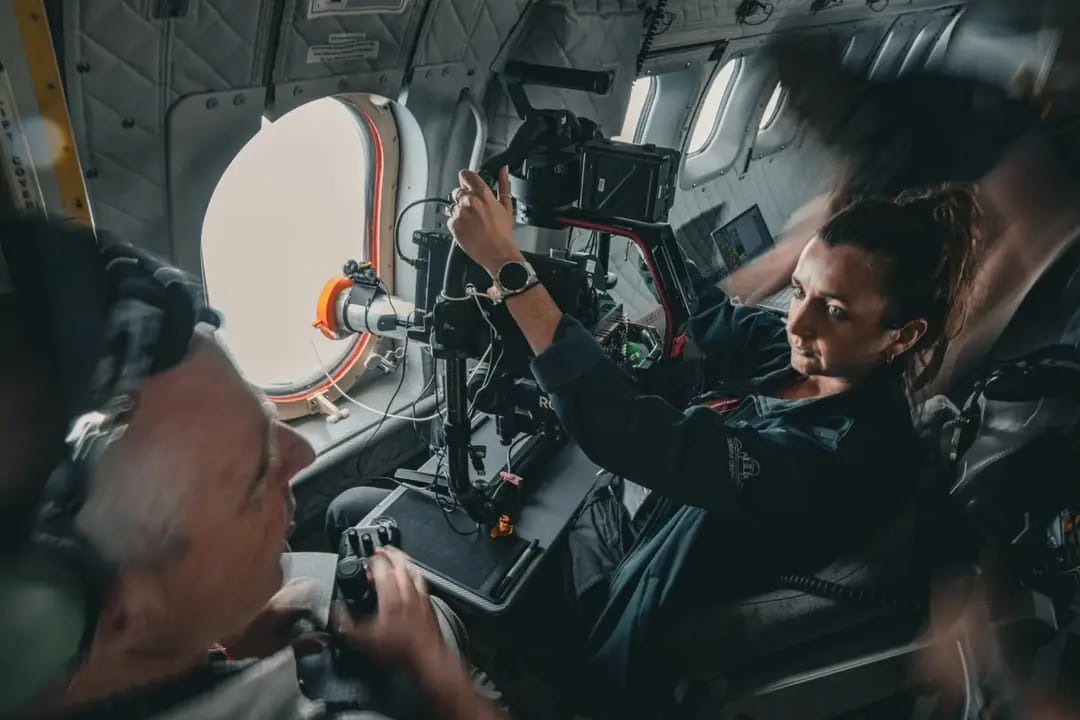
Osservando l’eclissi con lo strumento E-CorMag a bordo del volo Irish Air Corps C295 a circa 400 km dalla costa occidentale dell’Irlanda. Crediti: Dias, Tcd, Tu Dublin & Inaf

A quell’ora, in Spagna ci si godeva ancora l’eclissi parziale, occhi all’insù, opportunamente protetti con i caratteristici occhialini di sicurezza. Meno di un quarto d’ora più tardi, alle 20.28 ora locale, il disco lunare ha oscurato completamente quello solare anche sui cieli della Galizia, al nord-ovest della Spagna, rivelando i colori della cromosfera e l’etereo alone biancastro – la corona – agli obiettivi fotografici di Salvo Guglielmino e Fabiana Ferente dell’Inaf di Catania, che l’hanno osservata in un parco eolico a una cinquantina di chilometri da La Coruña. Nel capoluogo della Galizia c’era anche l’inviata Federica Loiacono dell’Inaf di Bologna, che sta raccontando come la città sta vivendo questa eclissi in un reportage pubblicato giornalmente sulle pagine di Media Inaf.
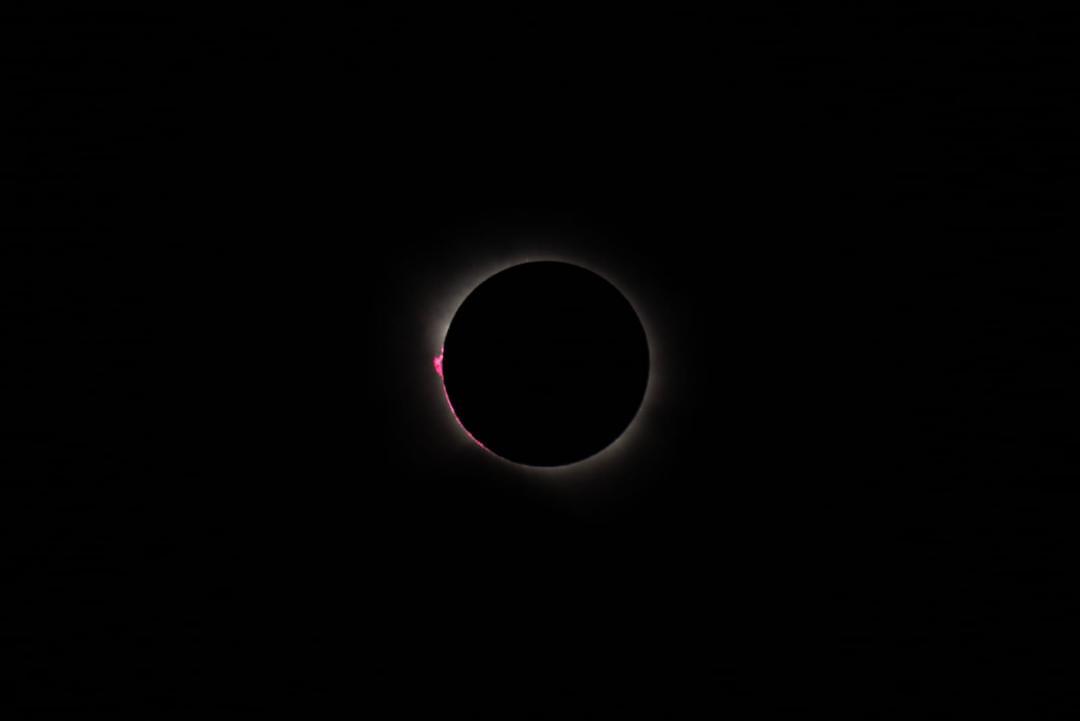
Eclissi totale di sole del 12 agosto 2026, fotografata dalla Galizia. Crediti: Salvo Guglielmino e Fabiana Ferente/Inaf

Un minuto più tardi, alle 20.29, procedendo verso sud-est, la totalità è arrivata nella Castilla y Leon. Qui, nei pressi di Burgos, erano posizionati i ricercatori della missione Vento (Vulcanoid Eclipse Near-sun Test Observations) pronti a fotografare i dintorni del Sole eclissato in cerca di ipotetici asteroidi detti Vulcanoidi. Poco prima dell’eclissi totale, il Sole ha regalato uno straordinario “anello di diamante”, immortalato in una delle immagini di Albino Carbognani dell’Inaf – Osservatorio di astrofisica e scienza dello spazio di Bologna.
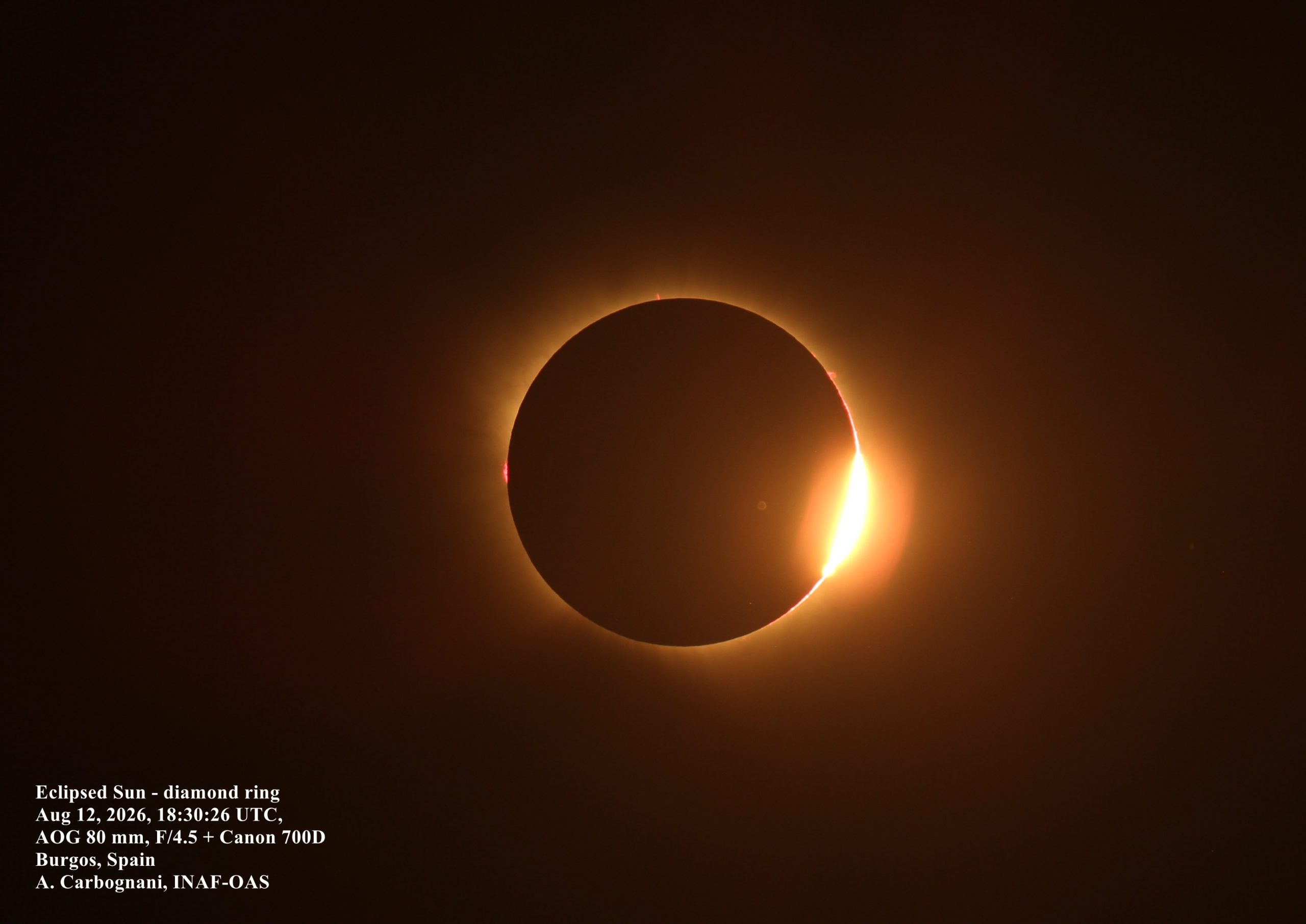
L’effetto “anello di diamante” in una foto dell’eclissi del 12 agosto 2026 ripresa nei pressi di Burgos, in Spagna. Crediti: Albino Carbognani/Inaf Oas Bologna
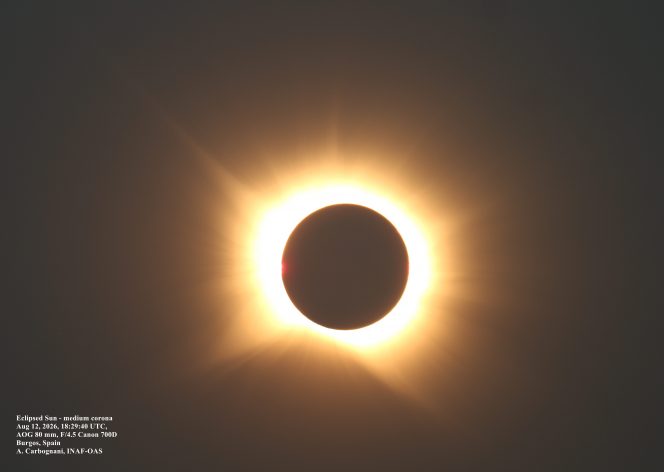
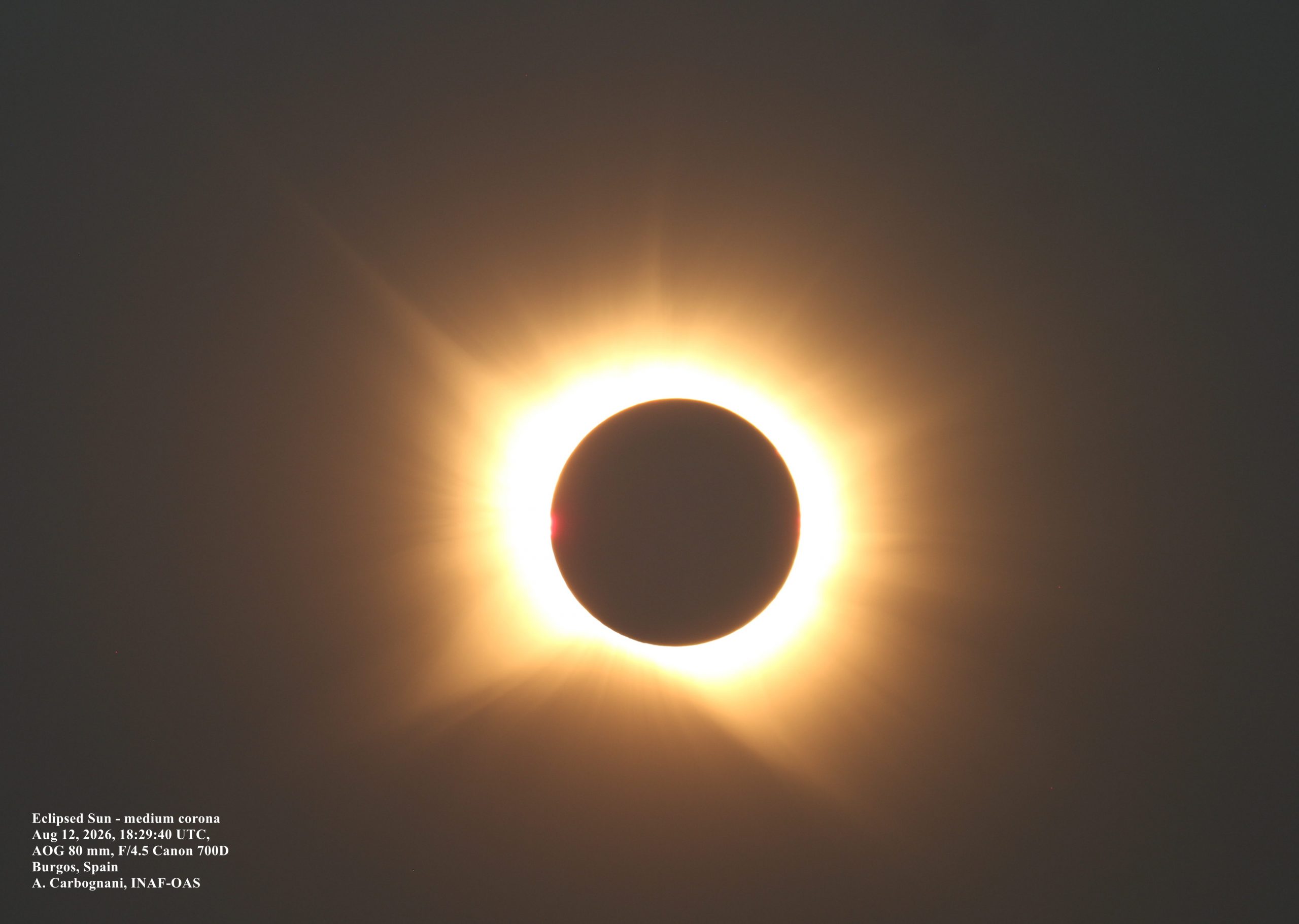
Sua maestà, la corona, in una foto dell’eclissi del 12 agosto 2026 ripresa nei pressi di Burgos. Crediti: Albino Carbognani/Inaf Oas Bologna
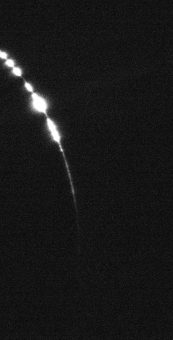
Grani di Baily ripresi durante l’eclissi di Sole del 12 agosto 2026. Crediti: Gabriele Umbriaco e Alessio Taranto (UniBo)

«Ieri abbiamo ripreso cromosfera, protuberanze e corona solare a scopo illustrativo del fenomeno: immagini “spettacolari” come l’anello di diamante oppure quello della grande protuberanza ben visibile a occhio nudo durante la totalità» dichiara Carbognani. «Il vero focus scientifico sono state le misure del valore del background del cielo a distanze diverse dal Sole, e immagini a grandissimo campo della corona esterna che serviranno per costruire modelli di brillanza del cielo. Poi abbiamo ripreso la regione dei Vulcanoidi lungo l’eclittica con due diversi strumenti per determinare la magnitudine limite che si può raggiungere. Infine sono stati ripresi i grani di Baily ad alta risoluzione spaziale e temporale per verificare la presenza di qualche nuovo picco lunare non ancora noto. Ci vorrà un po’ di tempo per analizzare i dati e ottenere i modelli che serviranno per la vera caccia ai Vulcanoidi durante l’eclissi del 2 agosto 2027».

«La campagna ha inoltre raccolto dati sulle ombre volanti e immagini ad alta definizione della totalità, utili sia per lo studio dell’assorbimento atmosferico e del disturbo osservativo nella zona dei Vulcanoidi, sia per la divulgazione», aggiunge Alessio Taranto dell’Università di Bologna.

Poco lontano da Burgos, in provincia di Palencia, Luca Zappacosta dell’Inaf – Osservatorio Astronomico di Roma ha ripreso la corona solare nel cielo crepuscolare sopra il castello medievale di Torremormojón, ritraendo l’atmosfera spettrale che ha caratterizzato il minuto e mezzo di totalità dell’eclissi.
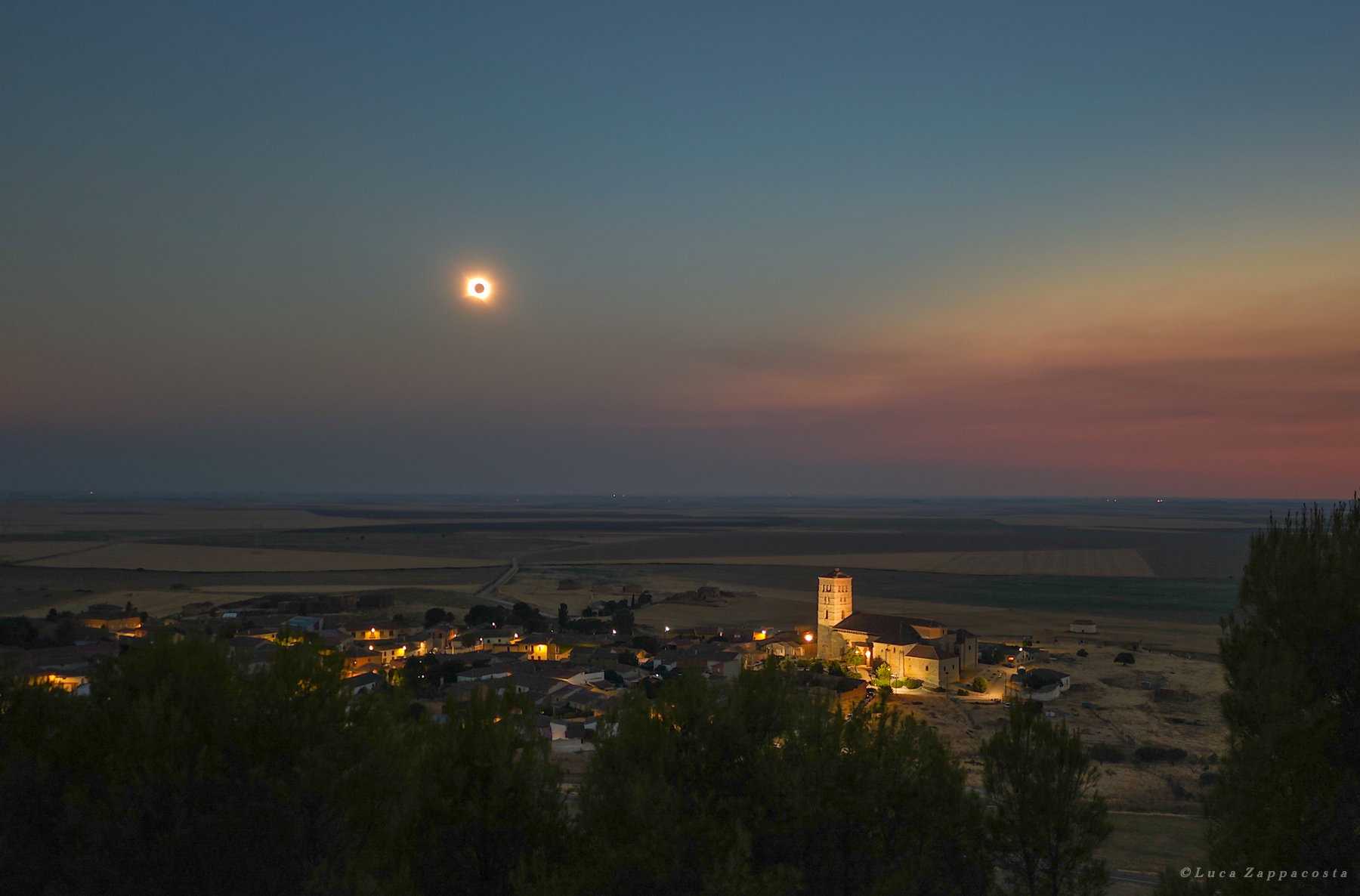
L’eclissi totale di Sole del 12 agosto 2026 sul castello medievale di Torremormojon, in provincia di Palencia, Spagna. Crediti: Luca Zappacosta/Inaf Osservatorio Astronomico di Roma
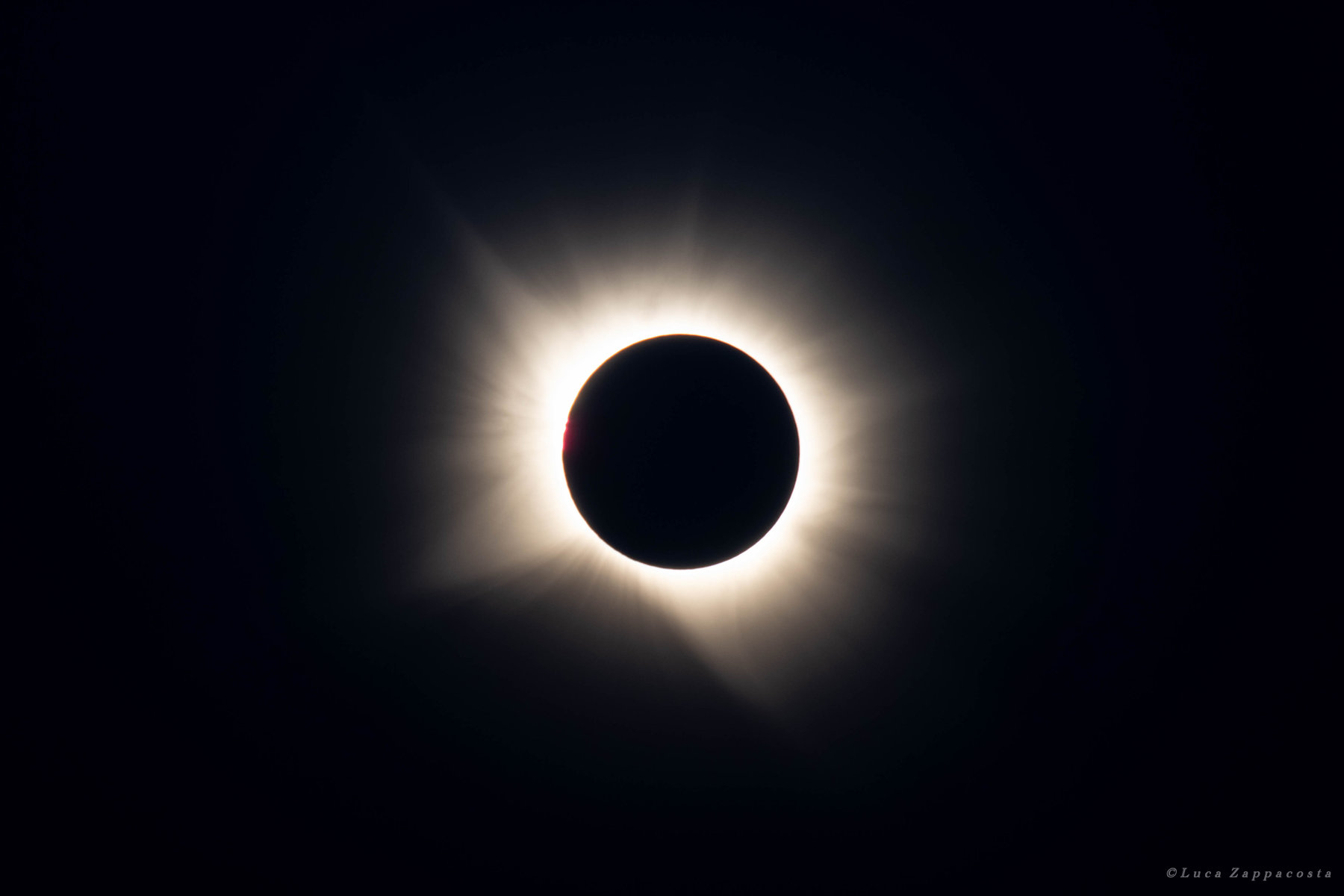
L’eclissi totale di Sole del 12 agosto 2026 fotografata da Torremormojon, in provincia di Palencia, Spagna. Crediti: Luca Zappacosta/Inaf Osservatorio astronomico di Roma
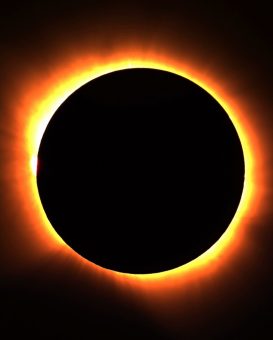
Il Sole durante l’eclissi totale del 12 agosto 2026. Crediti: Sandro Bardelli/Inaf Oas

Nella campagna tra Palencia e Burgos, vicino al paese di Castrojeriz, Sandro Bardelli dell’Inaf di Bologna ha ripreso il Sole durante la fase di totalità con uno smart telescope, il Seestar 50, catturando la corona solare.

Anche un gruppo di cosmologi, riuniti per un congresso presso il monastero La Vid, vicino al comune di Aranda de Duero, ha colto l’occasione per osservare il fenomeno celeste in un campo di grano. I colori suggestivi che caratterizzano l’eclissi sono palpabili nelle istantanee che riceviamo da Carlo Giocoli dell’Inaf di Bologna e Giulia Despali dell’Università di Bologna.
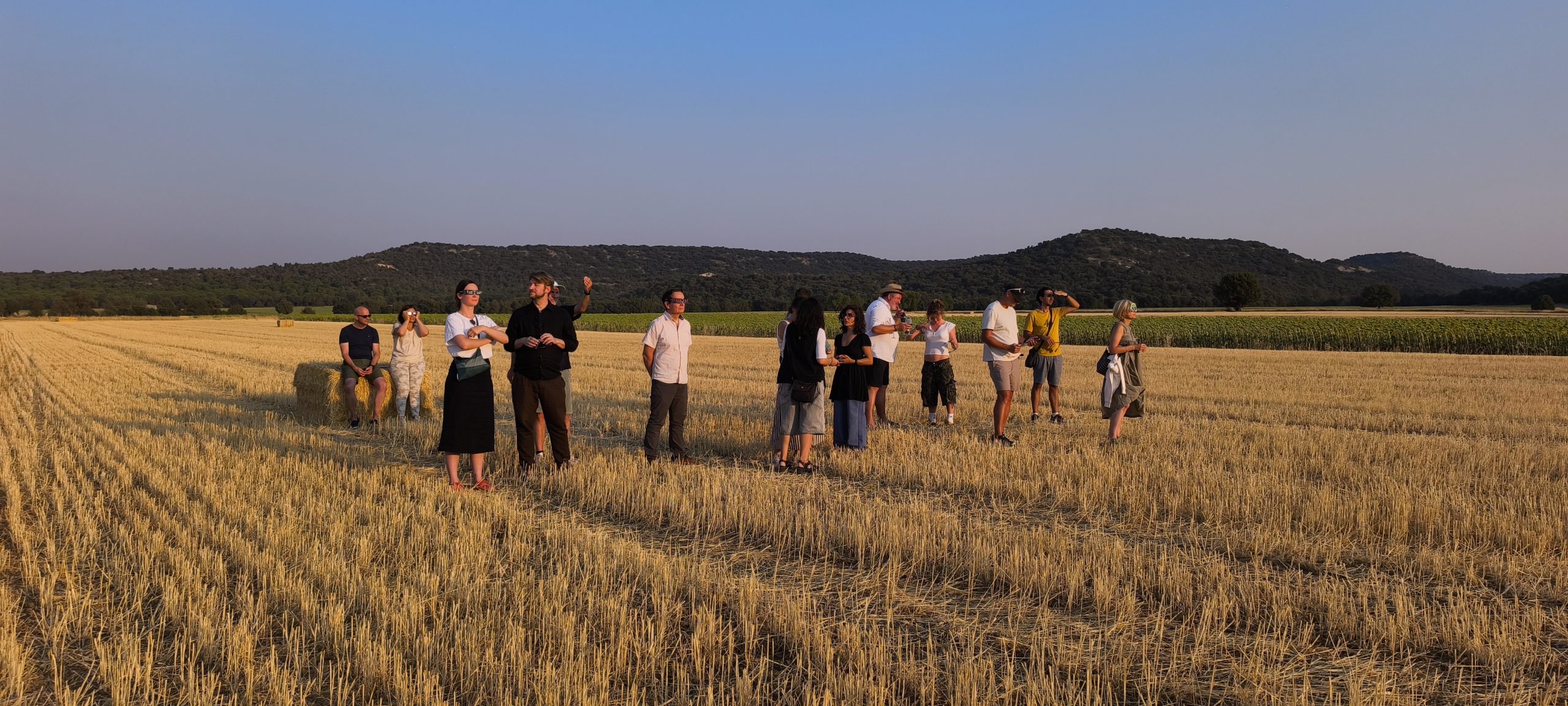
Partecipanti del “Dark Sky Meeting” osservano l’eclissi vicino all’Hospedería Monasterio La Vid, in Spagna. Crediti: C. Giocoli/Inaf Oas Bologna

Nei pressi di Soria, Quirino D’Amato dell’Inaf – Istituto di Astrofisica e Planetologia Spaziali (Iaps) di Roma ha approfittato del cielo sereno per fotografare l’eclissi dal monte Valonsadero, catturando – poco prima della totalità – una mongolfiera in volo davanti al sole eclissato.
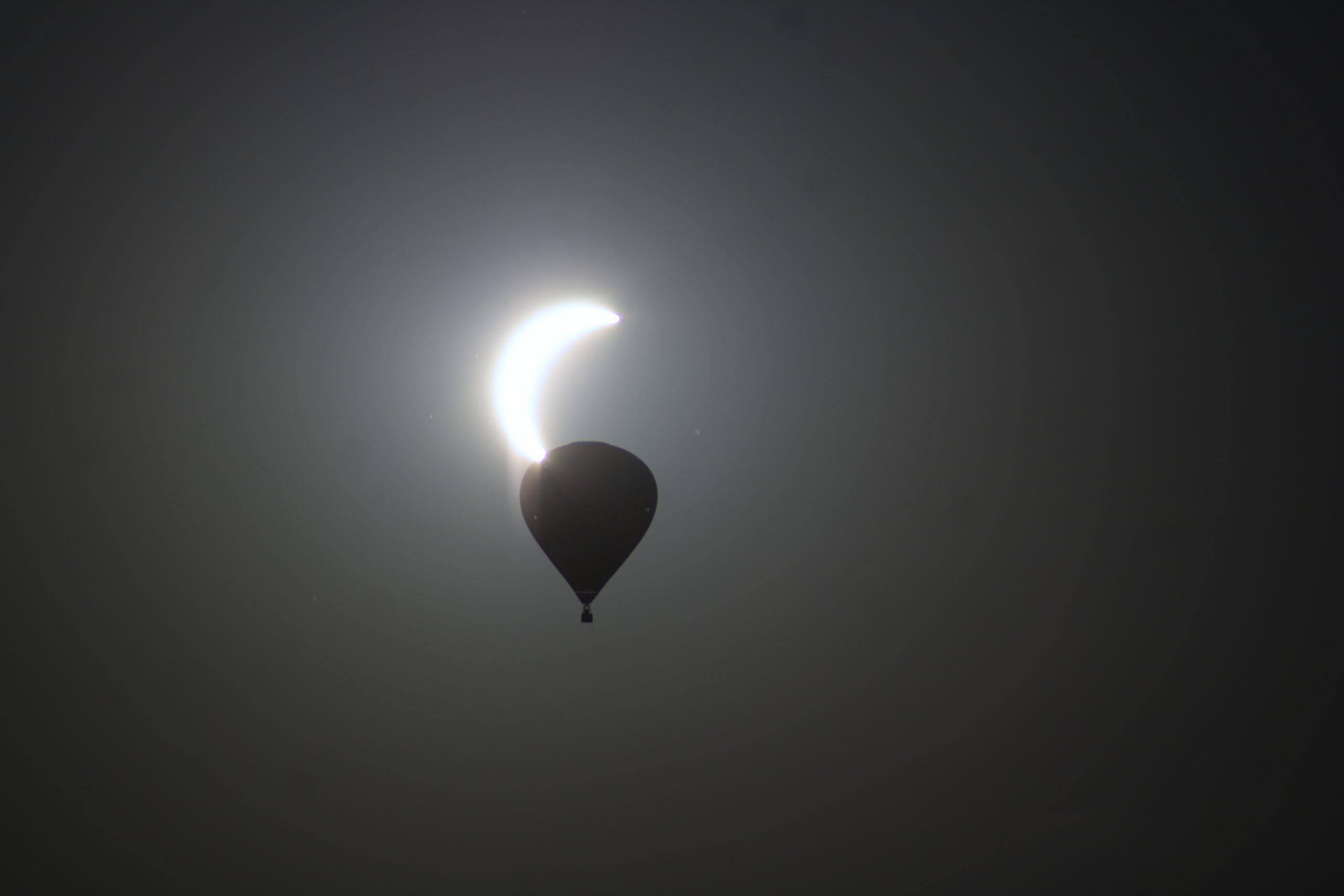
Immagine dell’eclissi di Sole del 12 agosto 2026, poco prima della totalità, scattata dal monte Valonsadero vicino Soria in Spagna; in primo piano, la sagoma di una mongolfiera. Crediti: Quirino D’Amato/Inaf Iaps

Sempre nei pressi di Soria, a Castejón del Campo, Valerio Campobasso dell’Inaf di Padova, durante un road trip con l’associazione “Cieli Stellati di Puglia”, ha trovato il luogo ideale per osservare l’eclissi, ma soprattutto storie, persone e il loro rapporto con il cielo. «Abbiamo attraversato la España Vaciada, una regione caratterizzata da paesaggi aridi e piccoli pueblos segnati dallo spopolamento causato dall’éxodo rural degli anni ‘50-’60», racconta. «A Castejón del Campo abbiamo incontrato una comunità vivace e determinata a resistere all’abbandono: una vecchia scuola, il progetto Sillas Solidarias contra la despoblación, tutto il pueblo in festa dopo l’eclissi, musica, telescopi e racconti sotto le stelle. Ci hanno accolto come amici, invitandoci a restare per la notte e portandoci la colazione il mattino dopo».
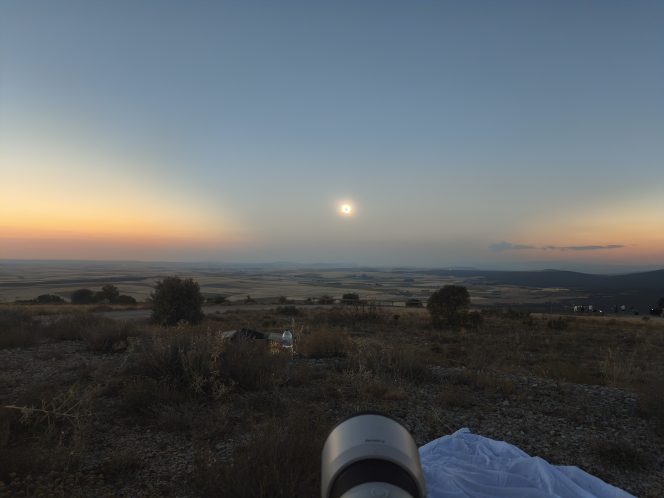
L’eclissi totale del 12 agosto 2026, ripresa da Castejón del Campo. Crediti: Cieli stellati di Puglia; Castejón del Campo; Valerio Campobasso
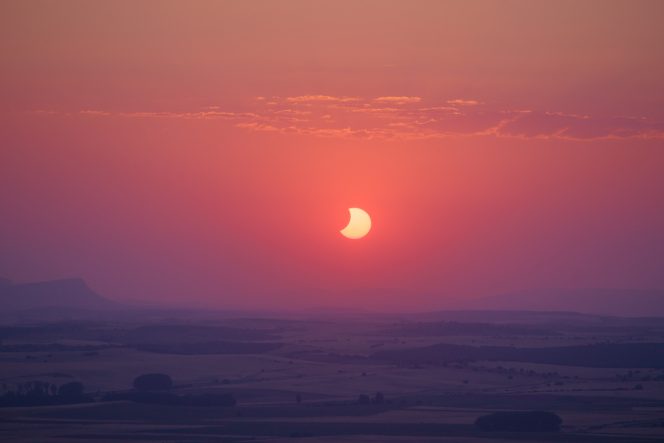
Tramonto del sole eclissato, il 12 agosto 2026, ripreso da Castejón del Campo. Crediti: Cieli stellati di Puglia; Castejón del Campo; Valerio Campobasso

Dopo un altro minuto, la totalità è arrivata anche sull’isola di Minorca, alle 20.30. Qui, a Ciudadella, sulla costa ovest di Minorca, si trovava Antonio Maggio dell’Inaf di Palermo insieme a un gruppo di astrofili guidato da Alberto Villa, responsabile della nuova sezione astroturismo dell’Unione astrofili italiani.
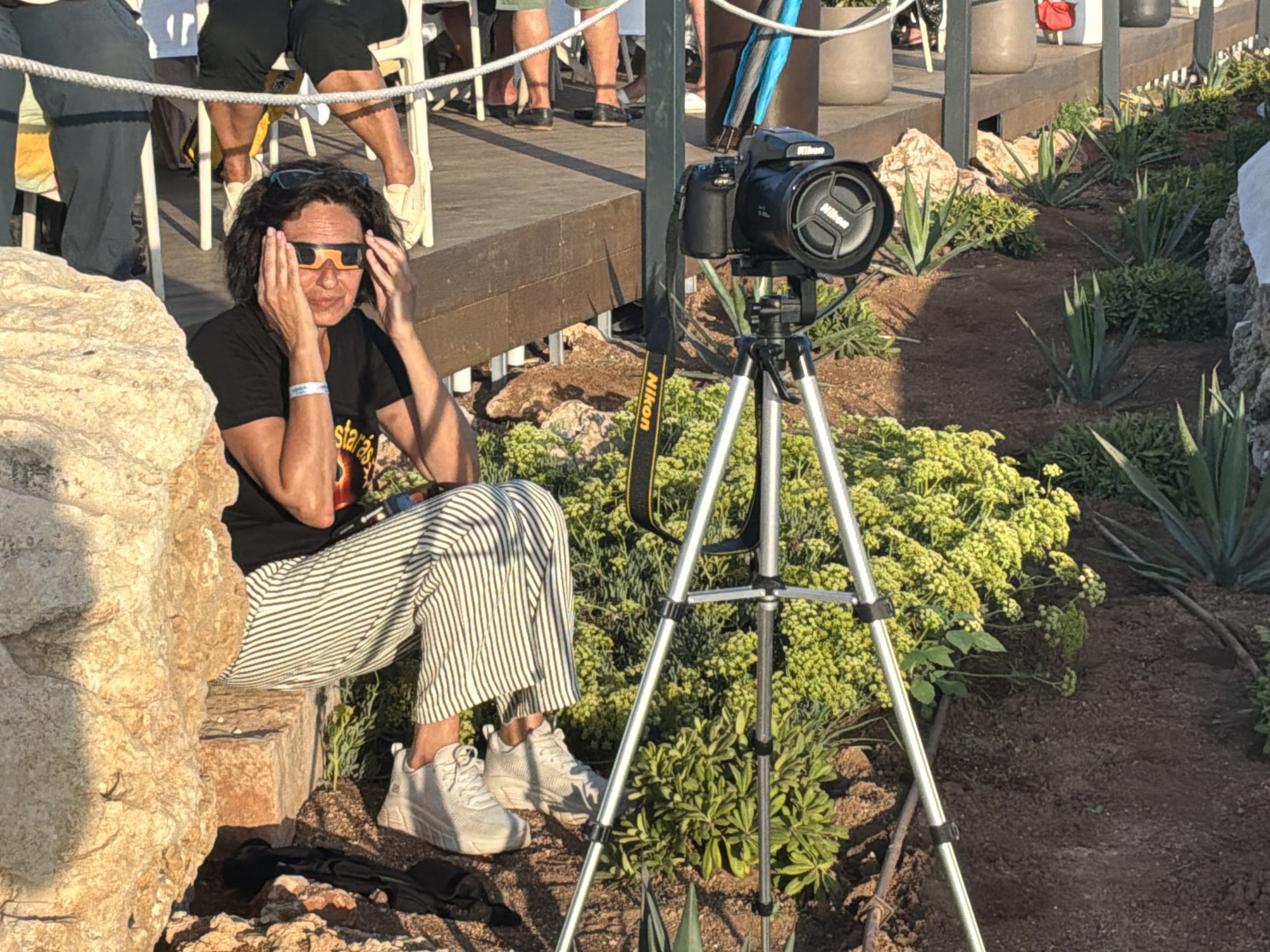
Osservando l’eclissi solare del 12 agosto 2026 sull’isola di Minorca. Crediti: A. Maggio/Inaf Palermo
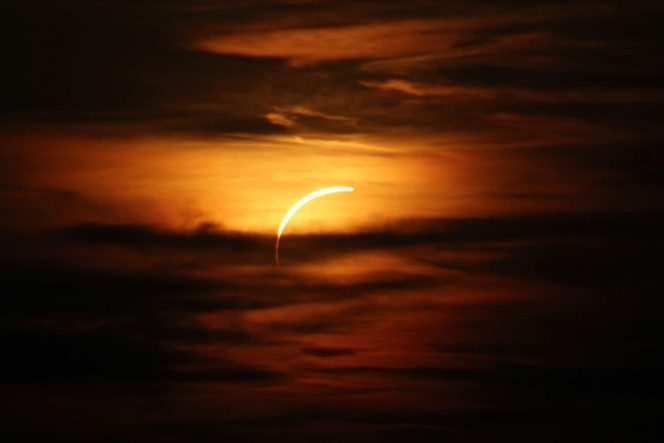
Istanti prima dell’eclissi totale, dall’isola di Minorca. Crediti: Alberto Villa. Riprese effettuate nel viaggio a Minorca organizzato da Associazione Astrofili Alta Vardera (AAAV) e Samovar Viaggi.

Un altro minuto ancora: sono le 20.31 e l’eclissi è totale anche a Palma de Mallorca, dove Marco Mastrofini e Giuliano Raeli dell’Inaf Osservatorio astronomico di Roma la stavano aspettando sul mirador (punto panoramico) di Cala de ses Ortigues, location scelta per le caratteristiche del paesaggio, e perché le autorità locali hanno ristretto e contingentato tutte le aeree più ambite dell’isola. «Dopo un’estenuante attesa che ci ha accompagnato per 12 ore, la ricompensa è stata la sensazione primordiale che l’eclissi nel momento della totalità ha portato con sé», commentano i due ricercatori. «Buio, silenzio assoluto (anche le cicale hanno smesso di cantare) e quando si è incendiato il contorno della Luna tutta la cala si è risvegliata sotto il suono delle trombe delle navi sottostanti. Il bagaglio emozionale che ci portiamo dietro è di dimensioni enormi».
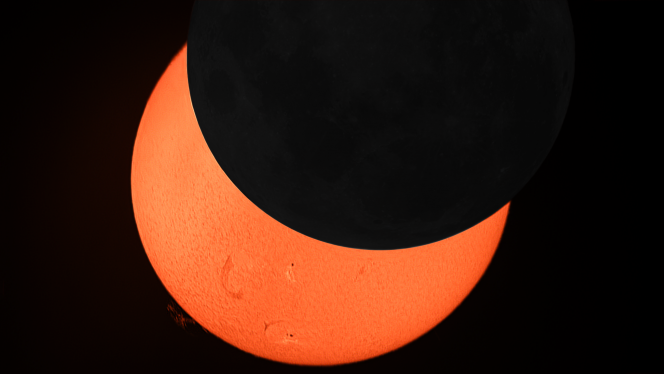
L’eclissi durante la fase parziale, osservata dalla Cala de ses Ortigues a Palma de Mallorca. Crediti: Marco Mastrofini e Giuliano Raeli/Inaf Osservatorio astronomico di Roma
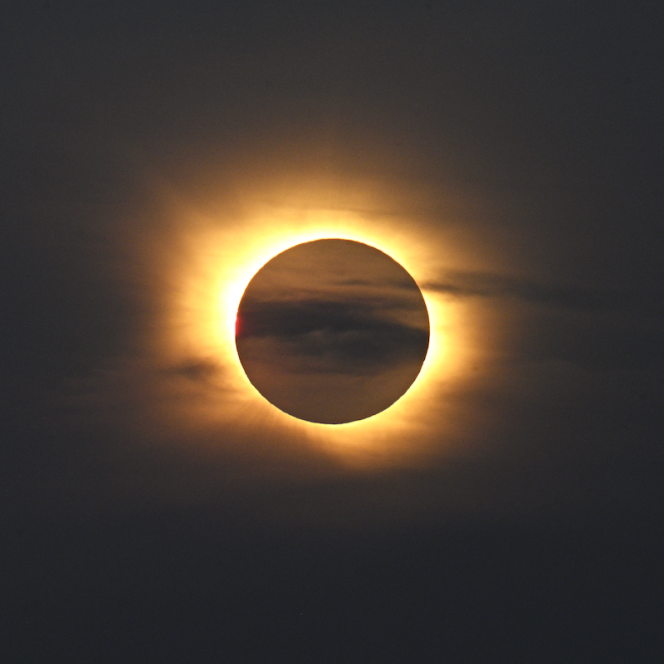
La corona solare durante la totalità, ripresa dalla Cala de ses Ortigues a Palma de Mallorca. Crediti: Marco Mastrofini e Giuliano Raeli/Inaf Osservatorio astronomico di Roma
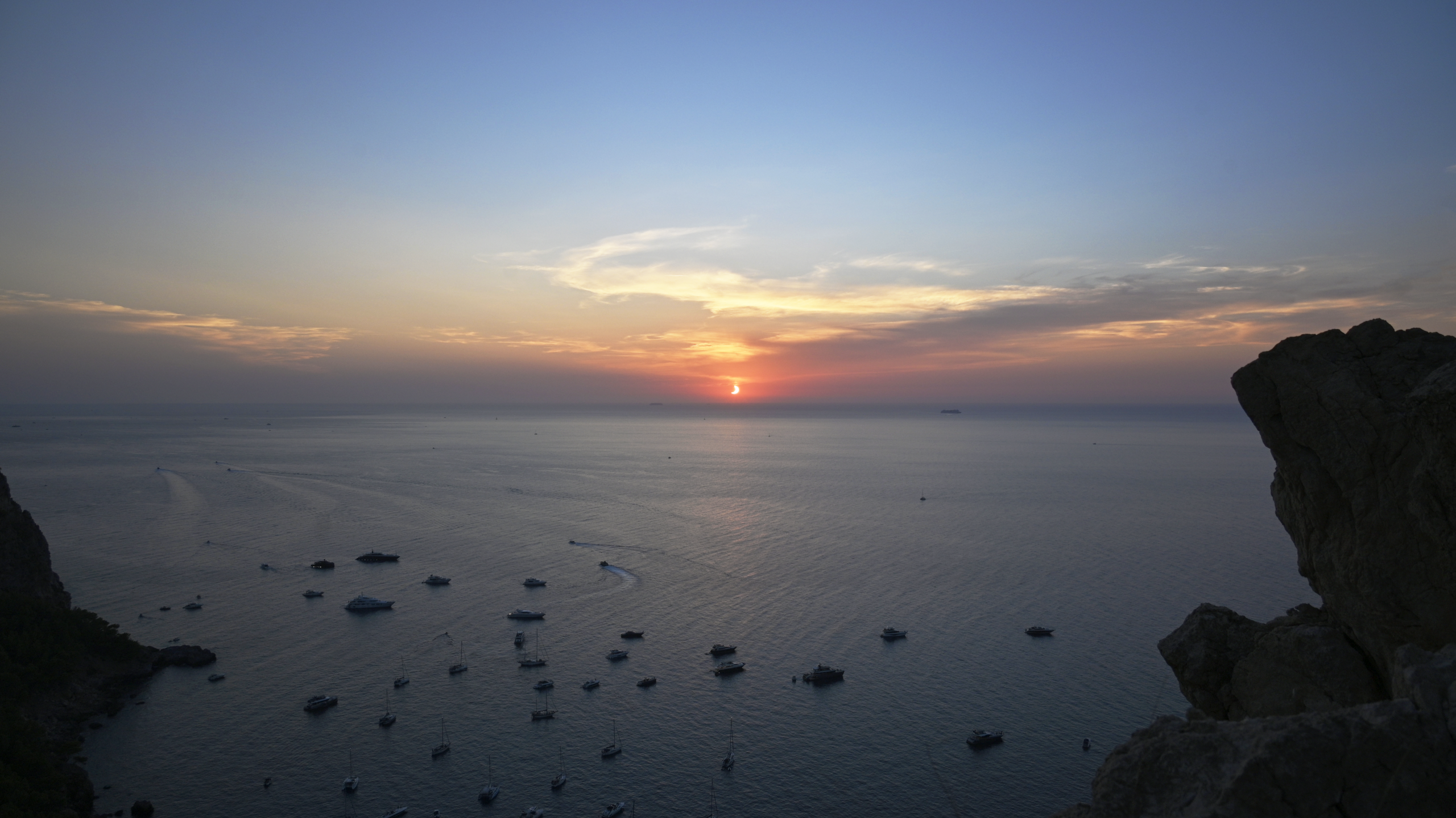
L’eclissi al tramonto dalla Cala de ses Ortigues a Palma de Mallorca. Crediti: Marco Mastrofini e Giuliano Raeli/Inaf Osservatorio astronomico di Roma

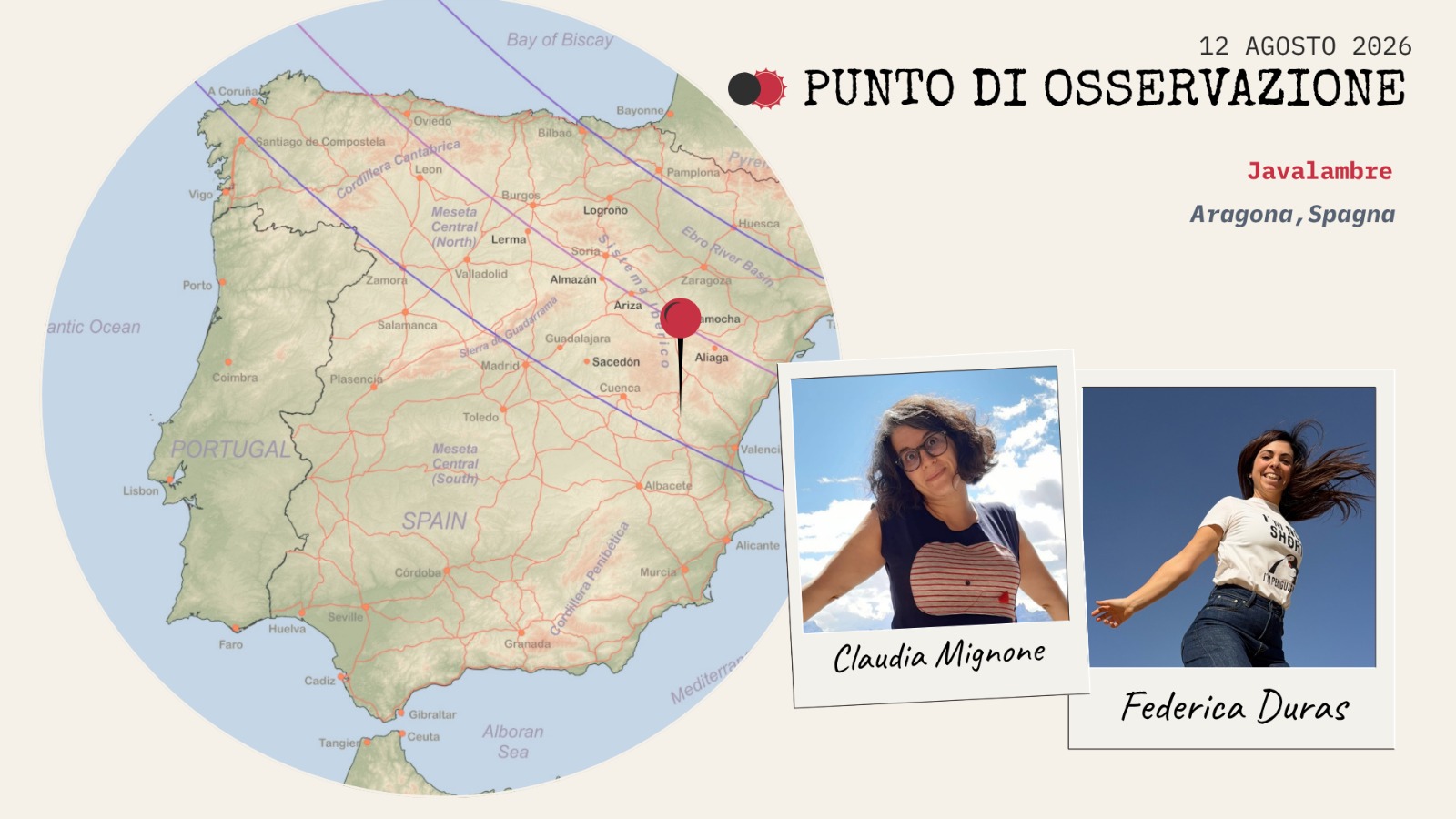
Dopo un altro minuto, la totalità è giunta anche all’Observatorio Astrofisico de Javalambre, duemila metri di quota, in provincia di Teruel. Due inviate speciali dell’Inaf, Federica Duras e la sottoscritta, hanno raccontato l’eclissi vissuta da questo luogo eccezionale nel podcast in cinque puntate “Totalità. Diario di un’eclissi di sole”.
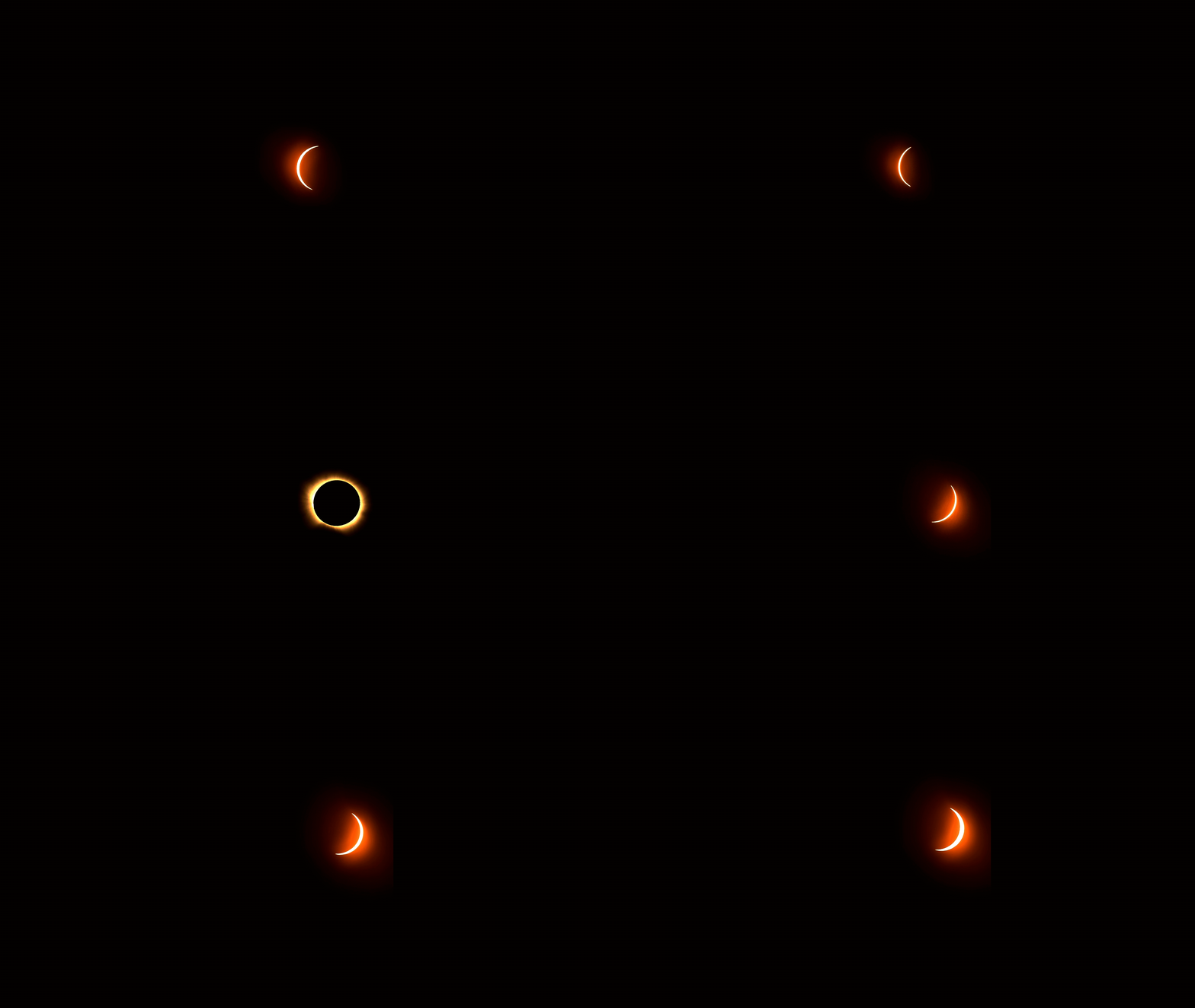
Sequenza dell’eclissi totale di sole del 12 agosto 2026 ripresa con un Seestar 30 Pro dall’Observatorio Astrofisico de Javalambre. Crediti: Inaf/C. Mignone
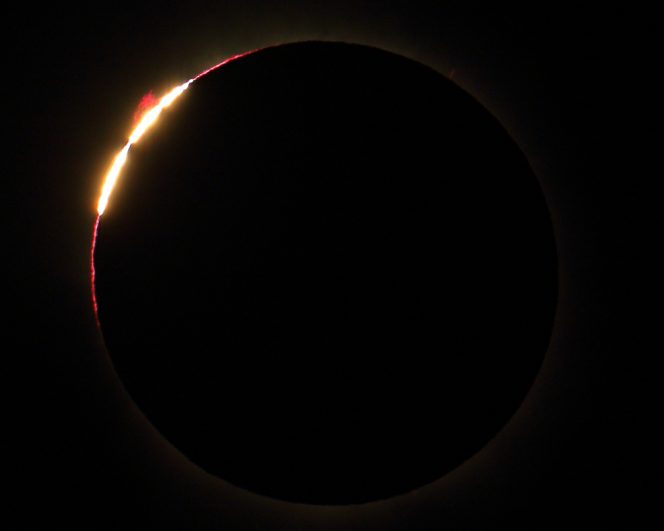
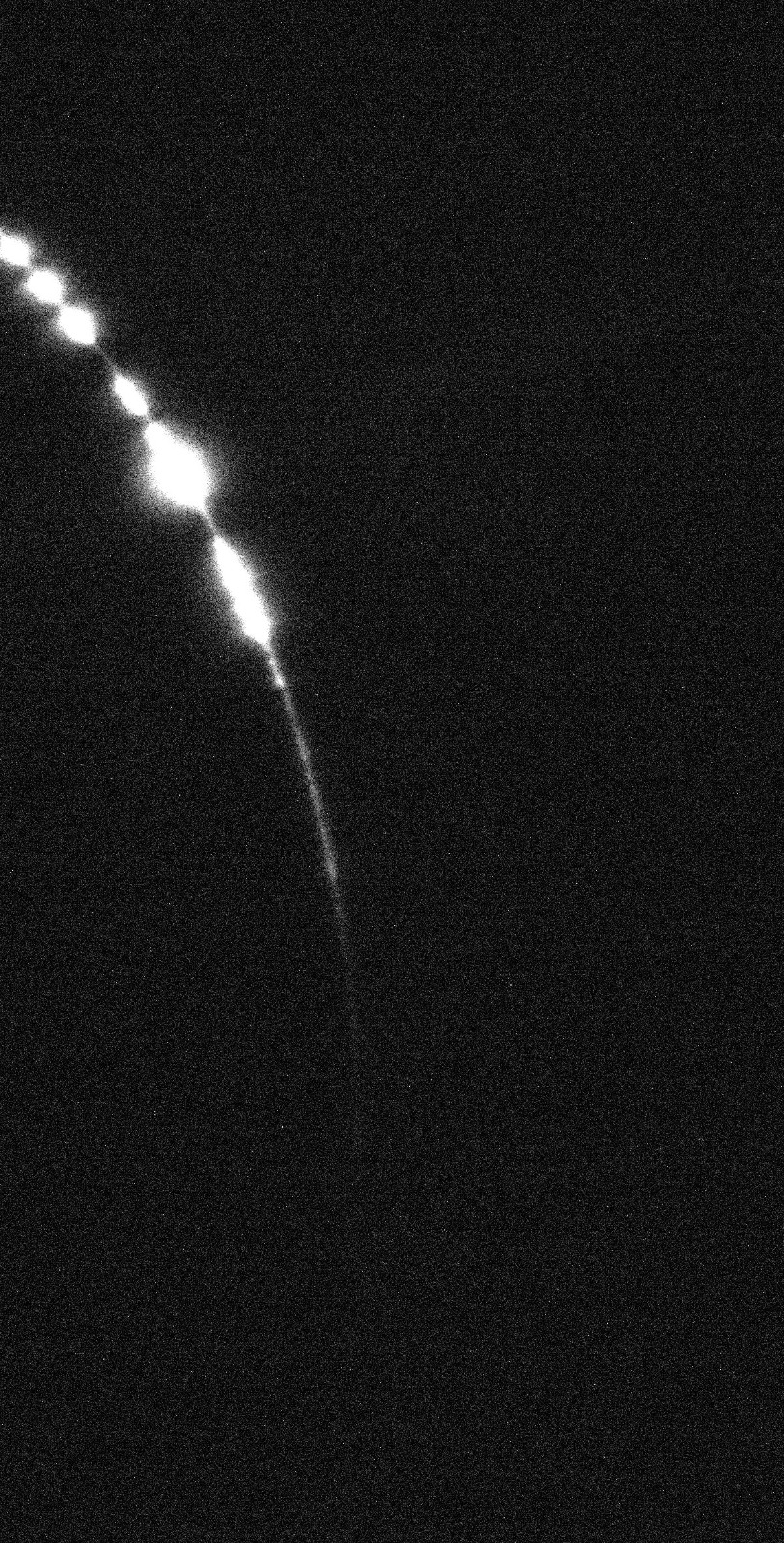
Gli ultimi raggi di sole filtrano attraverso il profilo delle montagne lunari prima della fase di totalità, ripresa dall’Observatorio Astrofisico de Javalambre, in Spagna. Crediti: Lapo Casetti/UniFi
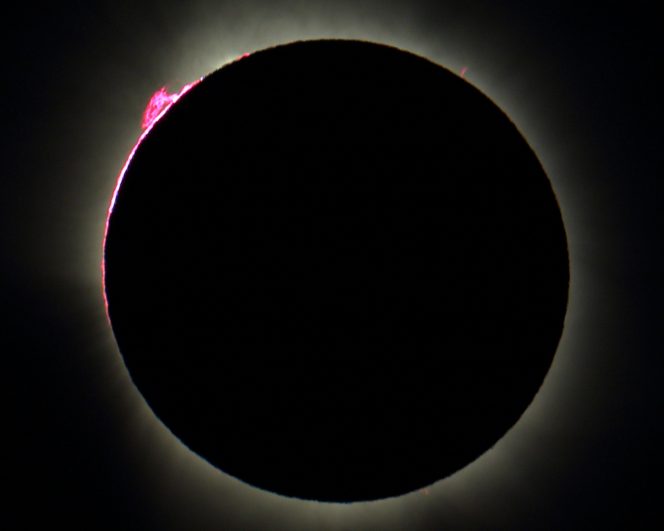
Protuberanze solari e la corona durante la fase di totalità, ripresa dall’Observatorio Astrofisico de Javalambre, in Spagna. Crediti: Lapo Casetti/UniFi
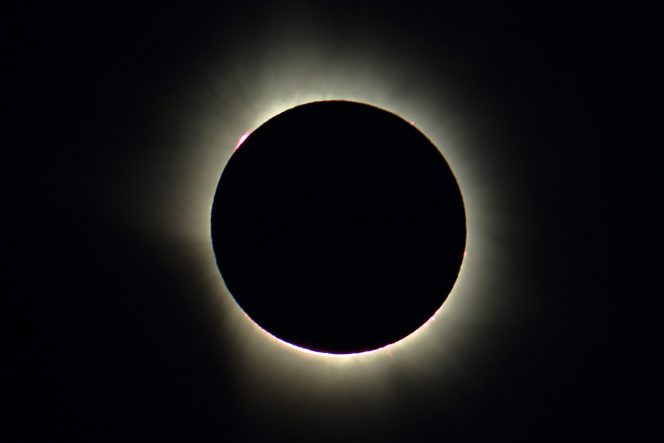
L’eclissi totale, ripresa dall’Observatorio Astrofisico de Javalambre, in Spagna. Crediti: Lapo Casetti/UniFi
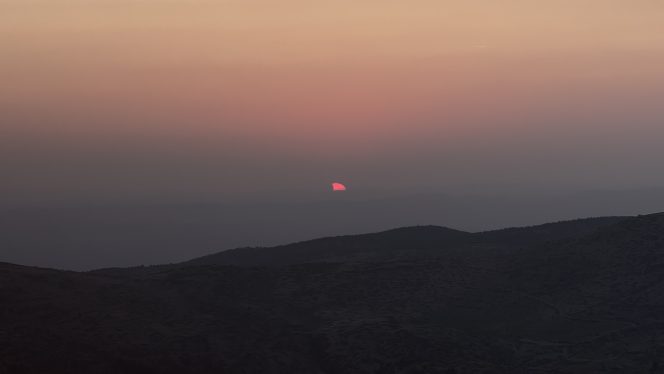
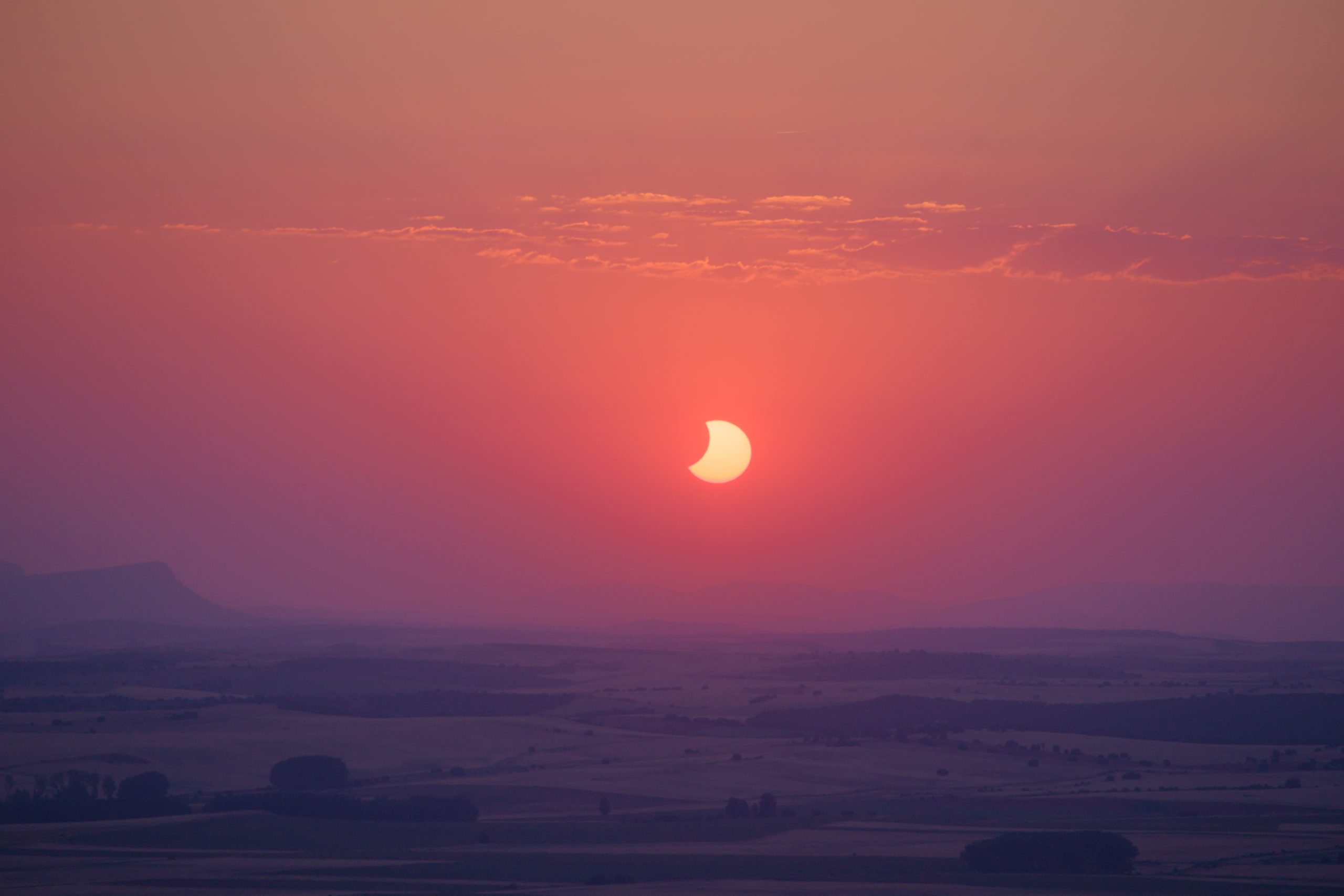
Il sole parzialmente eclissato tramonta dietro le montagne della Sierra de Javalambre, in Spagna. Crediti: Federica Duras/Inaf

Qui, oltre alle dirette dell’Agenzia spaziale europea (Esa) e del planetario di Berlino, c’è anche un esperimento scientifico in corso, guidato dall’Istituto nazionale di astrofisica in collaborazione con il Cnr di Padova e l’Università di Firenze. Un team di fisici solari ha messo alla prova, per la prima volta e con successo, lo strumento Ciss (Circular Slit Spectrograph), un nuovo concetto di spettrometro per studiare la corona solare basato su una fenditura circolare a raggio variabile. «È andata benissimo, oltre le aspettative. Tutto ha funzionato come doveva: spettrometro, montatura, software e non ultimo il meteo!», scrive Federico Landini, ricercatore Inaf a Torino e principal investigator dell’esperimento, mentre rientra verso l’Italia in furgone con a bordo lo strumento. «Abbiamo ottenuto il primo spettro circolare della corona. Negli 87 secondi di durata della totalità abbiamo acquisito spettri completi della corona fra 525 e 670 nanometri per tre diverse altezze eliocentriche: 1.1, 1.2 e 1.3 raggi solari».
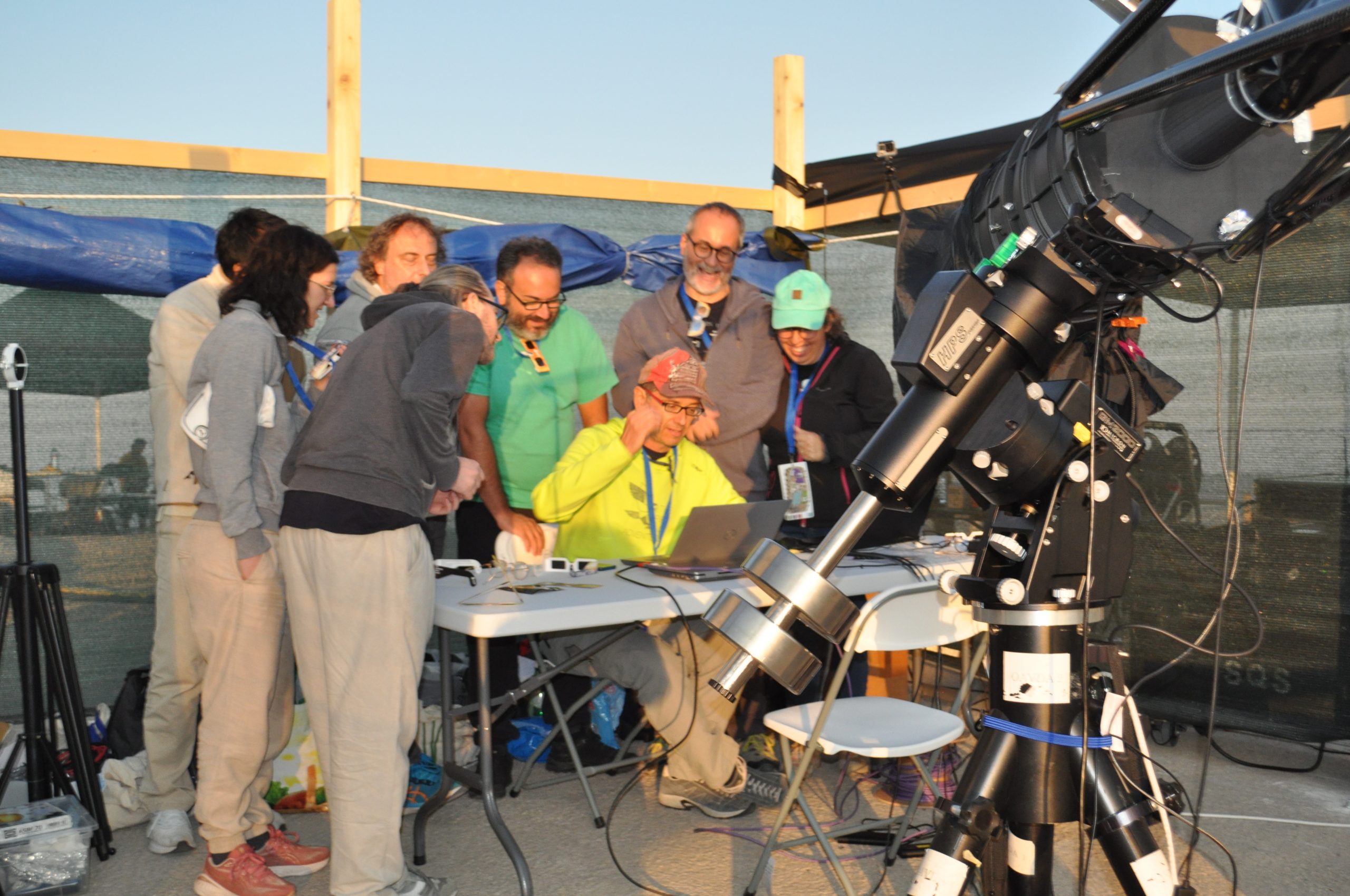
Il team dell’esperimento Ciss (Circular Slit Spectrometer) dopo aver misurato lo spettro radiale della corona solare durante l’eclissi del 12 agosto 2026 all’Observatorio Astrofisico de Javalambre, in Spagna. Crediti: C. Mignone/Inaf

Infine, alle 20.33, la totalità è giunta anche a Ibiza, dove Giacomo Carrozzo, Fabrizio Oliva e Andrea Raponi dell’Inaf Iaps hanno immortalato l’eclissi dal faro dell’isola.
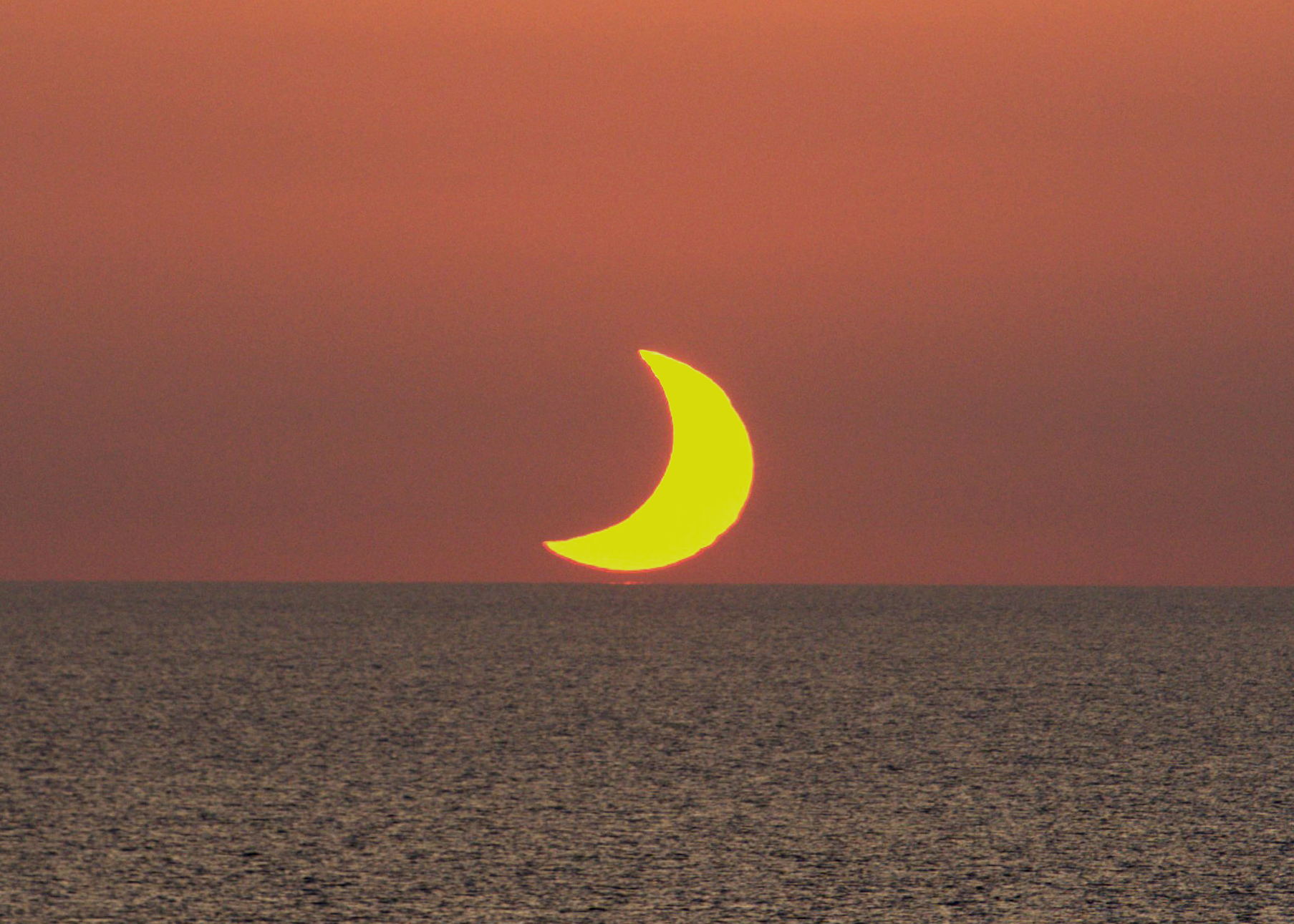
Eclissi al tramonto dal faro di Ibiza. Crediti: F. G. carrozzo, F. Oliva, A. Raponi/Inaf Iaps

In Italia, questa eclissi di Sole è stata parziale, superando il 90 percento di oscuramento del disco solare nelle regioni più settentrionali e occidentali del paese, senza mai raggiungere la totalità ma non per questo riscuotendo meno interesse da parte del pubblico. Arrivederci, dunque, alla prossima eclissi, che dall’Italia sarà sempre parziale – ma di più facile fruizione, la mattina. Dalla fascia di totalità, che taglia il Mediterraneo passando per il sud della Spagna e tutto il Nord Africa, culminando in Egitto e volgendo al termine in Medio Oriente e Corno d’Africa, si preannuncia un’esperienza ancor più spettacolare: al contrario della breve eclissi di ieri (un minuto e mezzo, due minuti al massimo tra Islanda e Groenlandia), l’eclissi totale del 2 agosto 2027 durerà infatti tra i quattro e i sei minuti. E, per fortuna, c’è da aspettare poco meno di un anno.
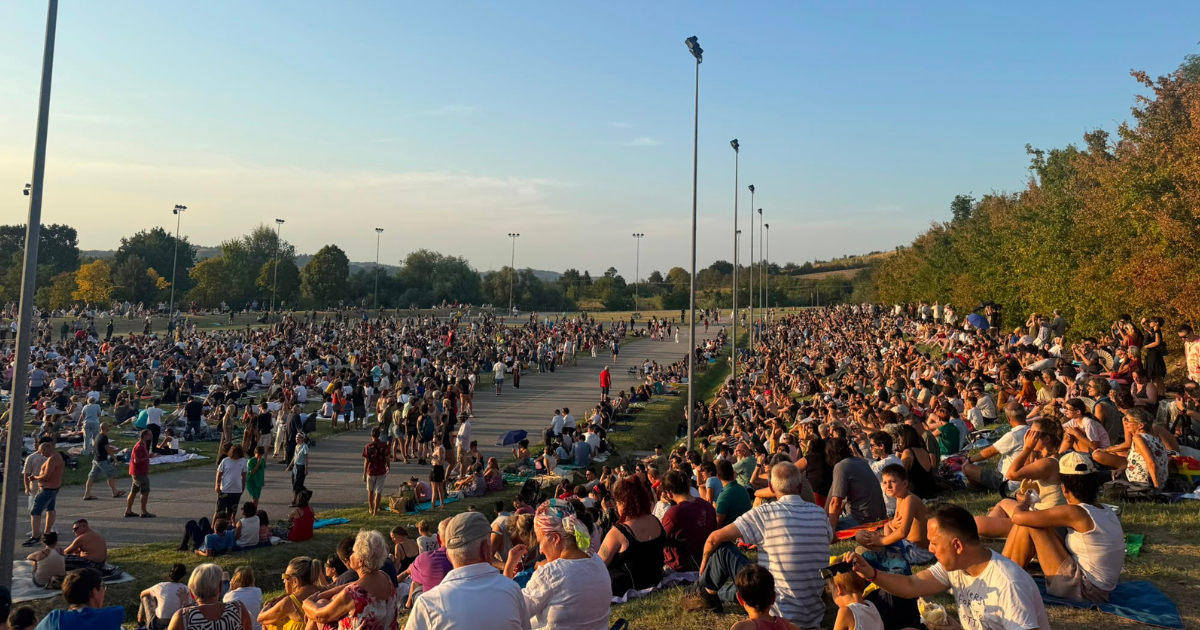
Osservazione pubblica dell’eclissi parziale di sole al velodromo di Pianoro, vicino Bologna. Crediti: A. De Blasi/Inaf Oas Bologna

Per saperne di più: 

  •  

Perseids Meteor Shower

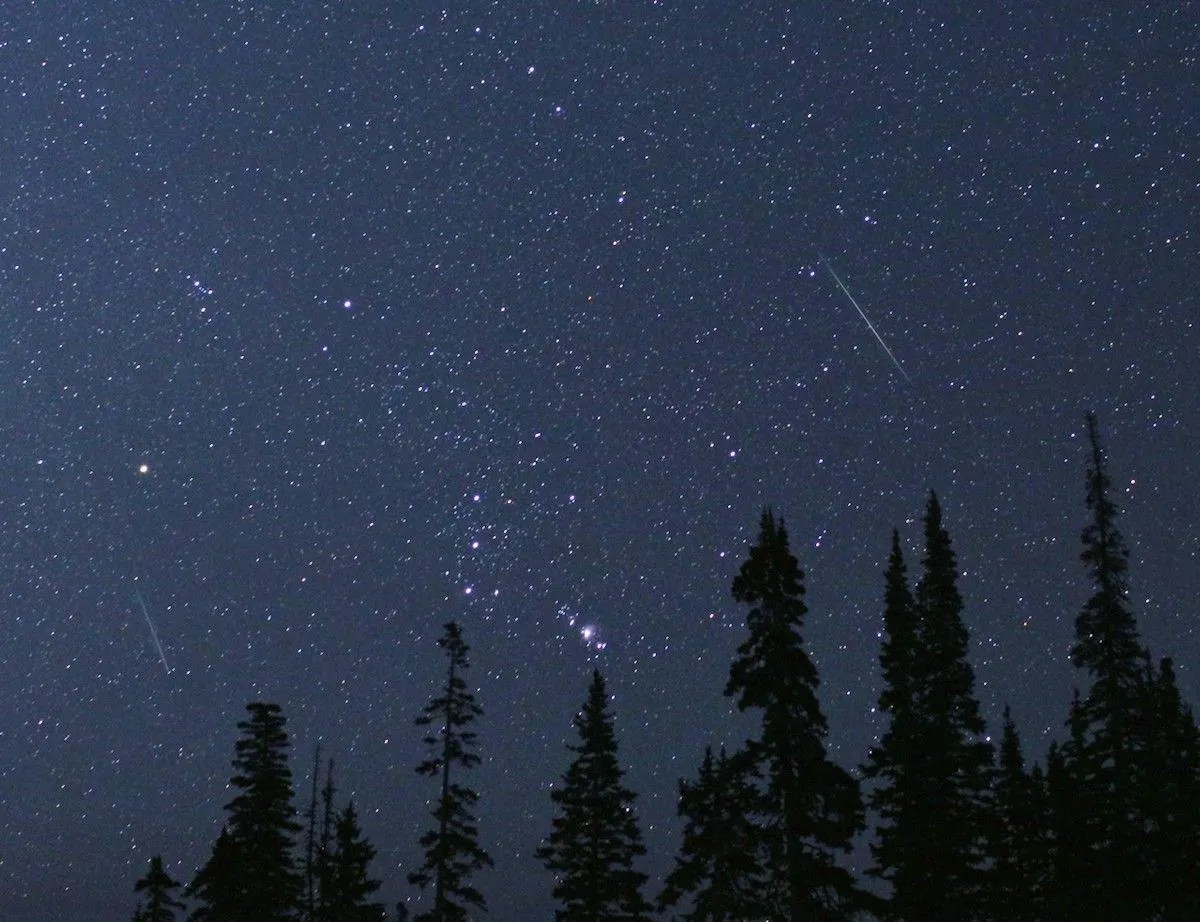
The night sky is filled with stars. Looking toward the bottom left and top right, two streaks are visible. These are meteors. Between the two streaks is the constellation Orion. The bottom of the image is lined with the silhouette of treetops.
NASA/Bill Dunford

The constellation Orion is framed by two Perseid meteors in this photo from Aug. 12, 2018, in Cedar Breaks National Monument, Utah.

The Perseids – one of the year’s brightest and most popular meteor showers – has been ramping up since early July and will sparkle in the skies through the end of August. The shower reached its peak on the night of Aug. 12 into the early morning of Aug. 13.

Rewatch the Aug. 13 meteor shower.

Image credit: NASA/Bill Dunford

💾

Grab a blanket, a snack - maybe some caffeine - and stay up late with us as we watch the 2026 Perseids meteor shower! The Perseids is one of the best annual ...
  •  

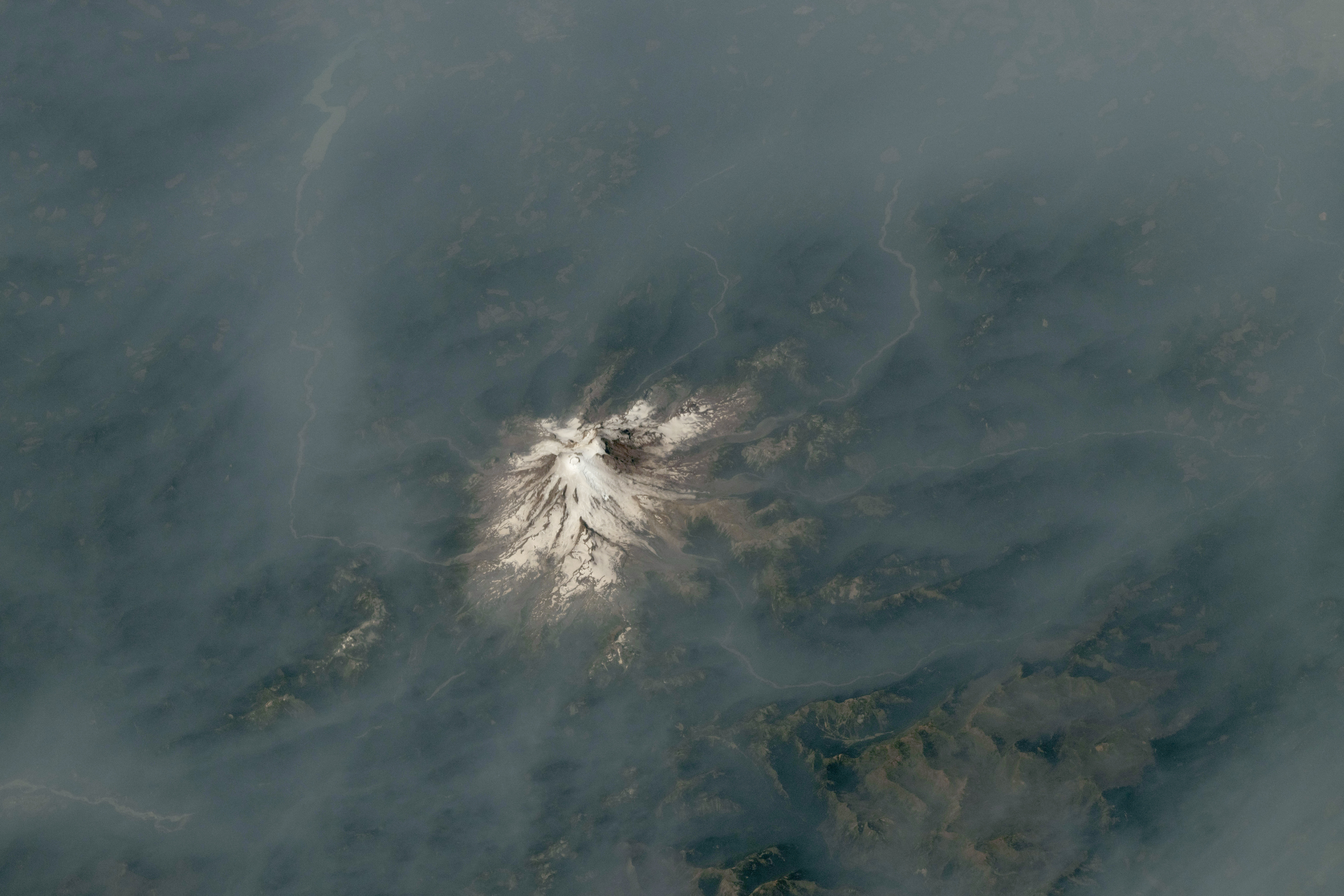
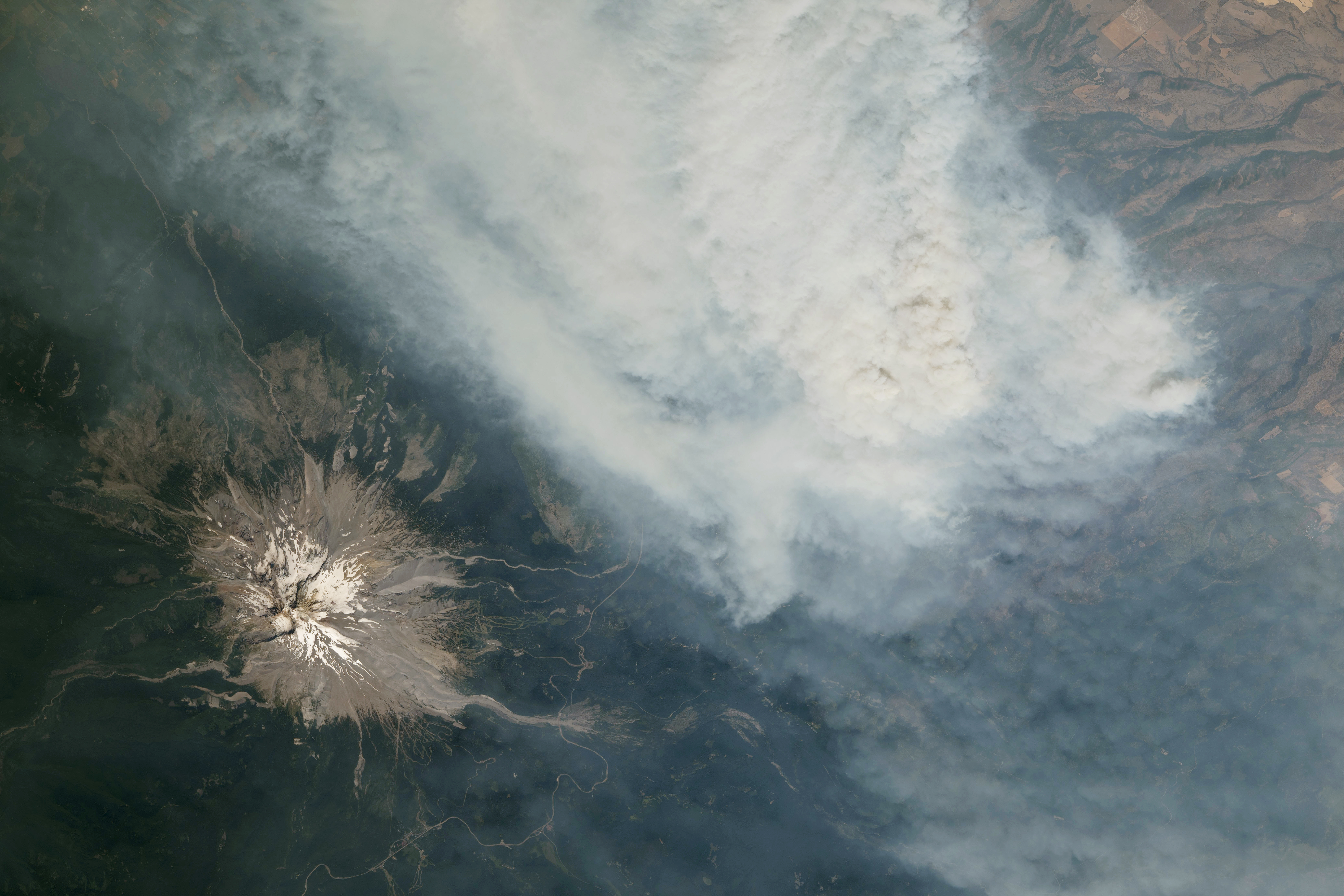
Cascade Volcanoes Shrouded in Smoke

An ice-capped volcano stands at the center of the image, its surrounding terrain blanketed in brown-gray smoke.
July 31, 2026

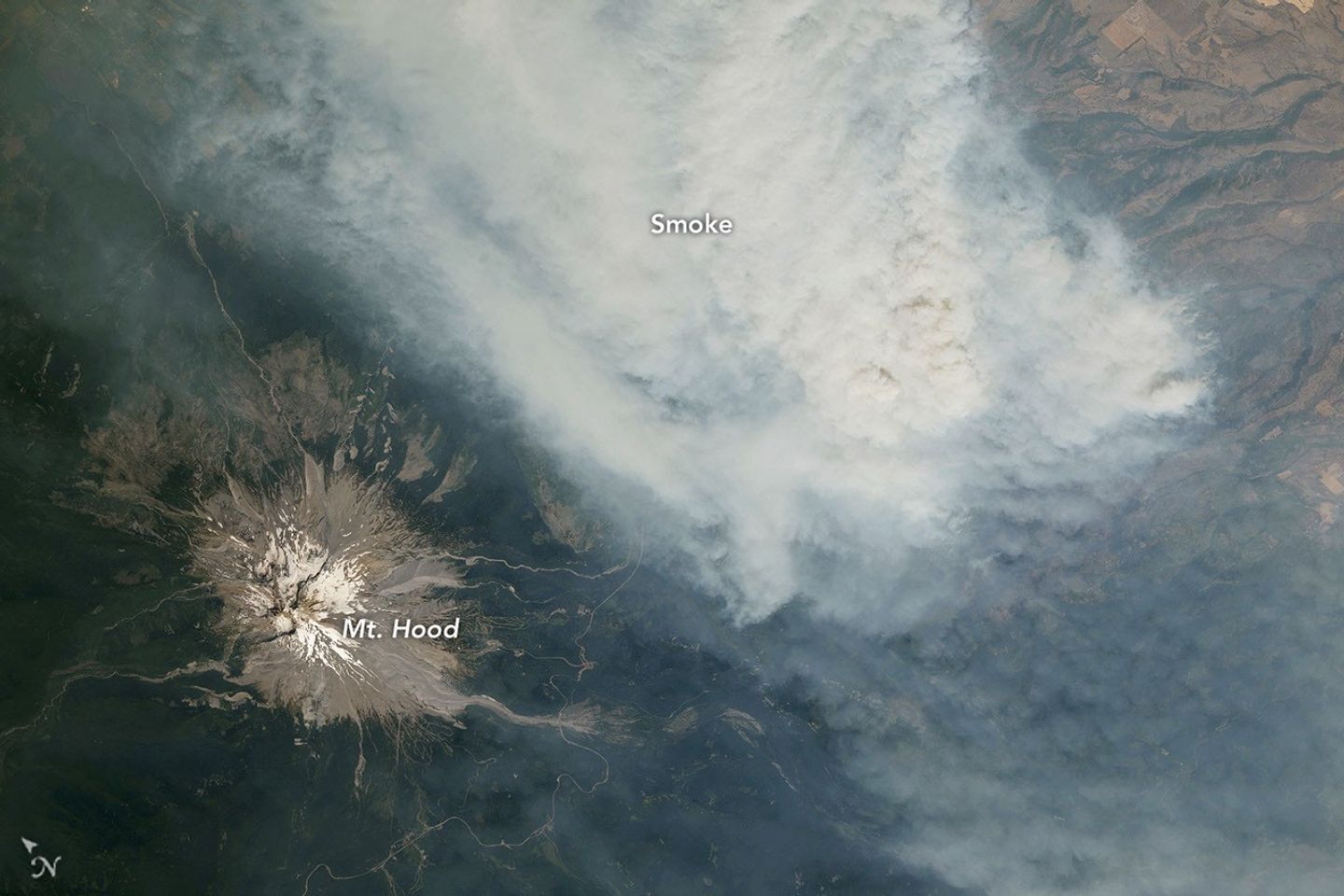
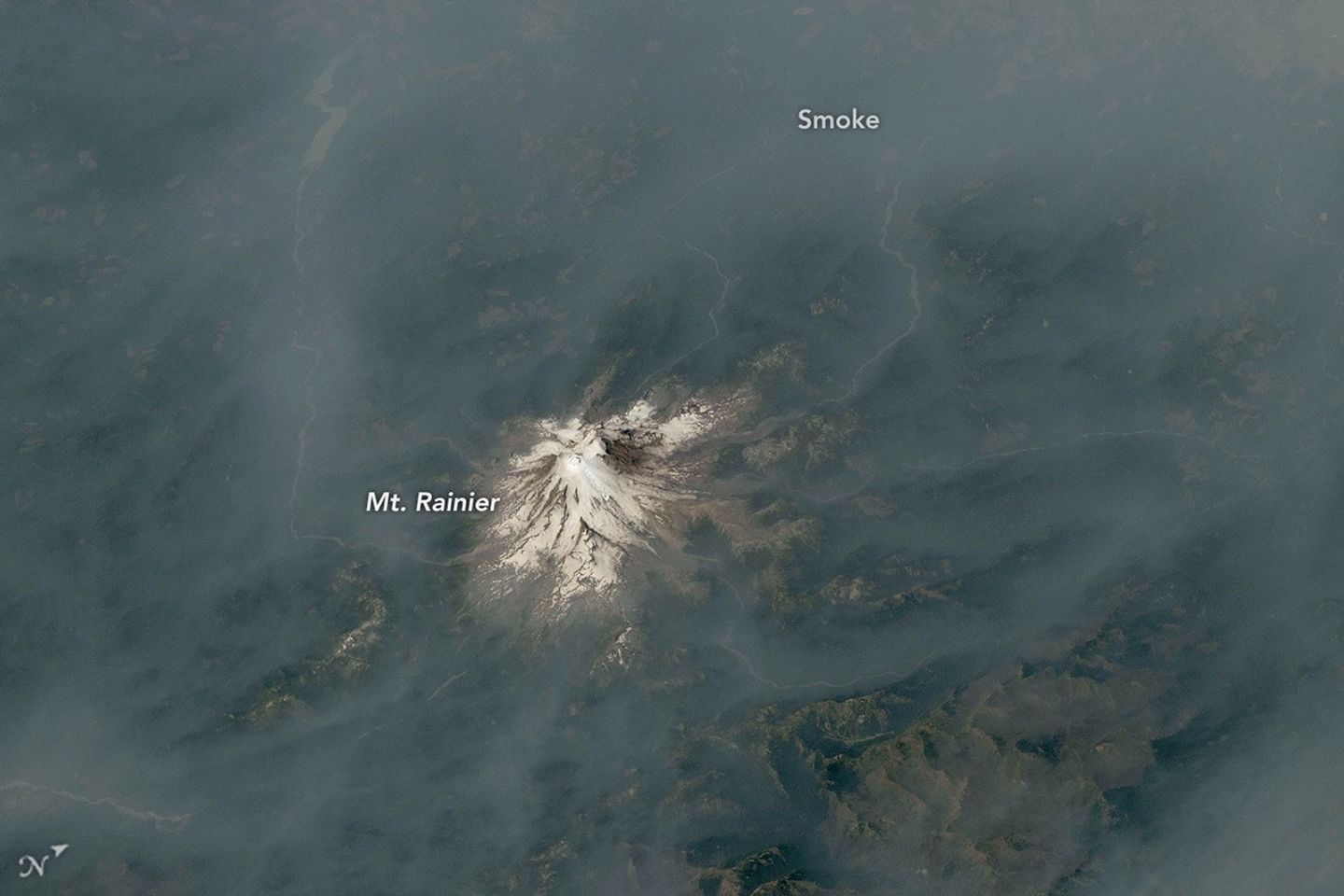
In a contrast of fire and ice, smoke from wildland fires mingled with several of the Cascade Range’s prominent, glaciated volcanoes in summer 2026. Astronauts on the International Space Station photographed the scene while orbiting over the U.S. West in late July and early August.

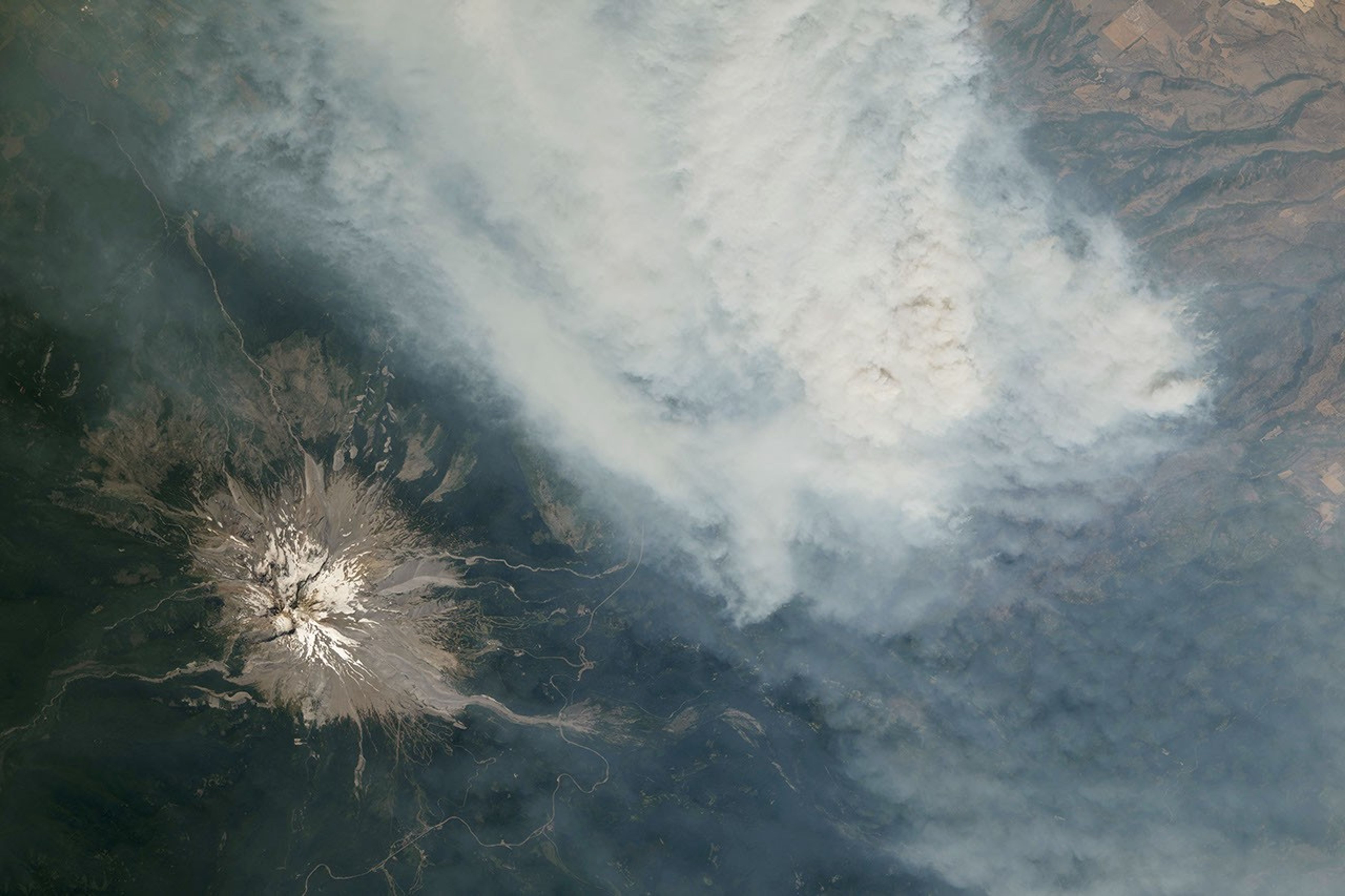
Mount Hood, Oregon’s tallest peak at 11,249 feet (3,429 meters), is pictured above, near a thick plume of smoke pouring from the Grasshopper fire. Thunderstorms passed over the forest in the preceding weeks, and a lightning strike on July 23 ignited the blaze pictured in this July 31 photo. The fire, burning east of the mountain, spread quickly north and east across Mount Hood National Forest amid hot, dry conditions, according to InciWeb.

As of August 12, it had burned nearly 84,000 acres (34,000 hectares) and spread beyond national forest boundaries. Several communities in Wasco County were under “go now” evacuation orders, and the nearby town of Dufur was advised to prepare for immediate evacuation.

An ice-capped volcano stands at the center of the image, its surrounding terrain blanketed in brown-gray smoke.
August 4, 2026

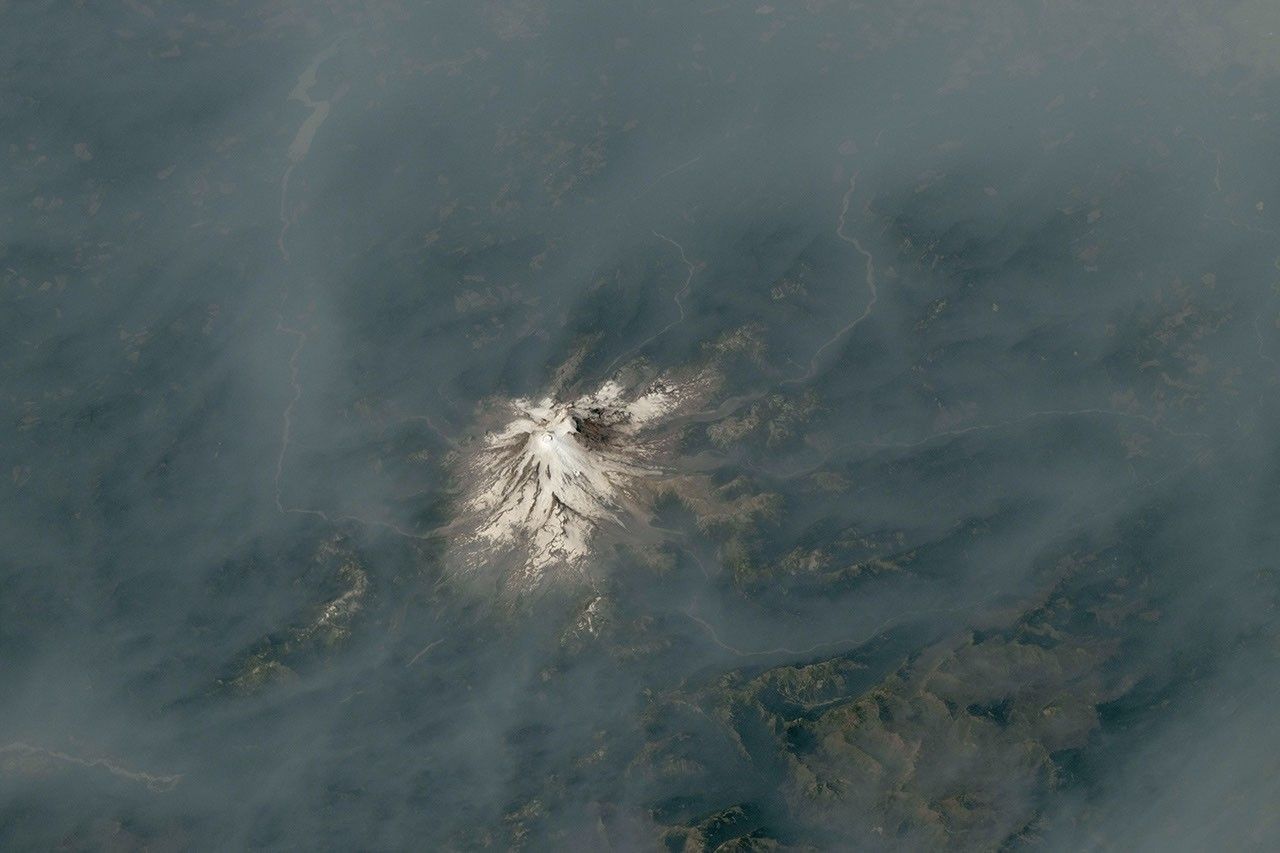
Roughly 100 miles to the north in Washington, Mount Rainier—the state’s tallest peak at 14,411 feet (4,392 meters)—was wreathed in smoke. No major fires burned nearby when this photo was taken on August 4. Instead, smoke drifted in from fires in central and eastern Washington, carried by winds blowing from the east due to a high-pressure system offshore. That day, the National Park Service reported that air quality in the park reached unhealthy levels due to elevated concentrations of fine particulate matter (PM2.5).

Several days later, the Grand Park 2 fire was observed burning within park boundaries, about 3 miles north of the Sunrise Visitor Center. As of August 12, the fire had burned 223 acres (90 hectares) and was uncontained; the cause was yet undetermined.  

Above-normal fire potential was expected to persist across the Northwest through August, according to an outlook from the National Interagency Fire Center. Warm, dry weather—conditions influenced by El Niño—combined with cured fuels to set the stage for large, long-burning fires following lightning- or human-caused ignitions.

Astronaut photographs ISS075-E-1705 and ISS075-E-2221 were acquired on July 31, 2026, and August 4, 2026, respectively, with a Nikon Z9 digital camera using a focal length of 400 millimeters. They are provided by the ISS Crew Earth Observations Facility and the Earth Science and Remote Sensing Unit at NASA Johnson Space Center. The images were taken by a member of the Expedition 75 crew. The images have been cropped and enhanced to improve contrast, and lens artifacts have been removed. The International Space Station Program supports the laboratory as part of the ISS National Lab to help astronauts take pictures of Earth that will be of the greatest value to scientists and the public, and to make those images freely available on the Internet. Additional images taken by astronauts and cosmonauts can be viewed at the NASA/JSC Gateway to Astronaut Photography of Earth. Story by Kathryn Hansen.

Downloads

An ice-capped volcano stands at the center of the image, its surrounding terrain blanketed in brown-gray smoke.

Mt. Rainier: August 4, 2026

JPEG (10.14 MB)

An ice-capped volcano stands in the bottom-left corner, with a wide plume of brown-gray smoke filling most of the rest of the frame.

Mt. Hood: July 31, 2026

JPEG (7.44 MB)

References & Resources

You may also be interested in:

Stay up-to-date with the latest content from NASA as we explore the universe and discover more about our home planet.

Smoke Streams Across Eastern Washington

3 min read

Wildland fires in early August 2026 pushed air quality to unhealthy levels, destroyed hundreds of structures, and triggered mandatory evacuations…

Article

Cottonwood Fire Chars Utah

5 min read

The blaze burned more than 150 square miles and swept through parts of a ski resort.

Article

Ontario Wildfire Smoke Moves East

3 min read

Canadian wildfires sent plumes of smoke streaming over Ontario, Quebec, and parts of the U.S. Midwest and Northeast.

Article
  •  

Cascade Volcanoes Shrouded in Smoke

An ice-capped volcano stands at the center of the image, its surrounding terrain blanketed in brown-gray smoke.
July 31, 2026

In a contrast of fire and ice, smoke from wildland fires mingled with several of the Cascade Range’s prominent, glaciated volcanoes in summer 2026. Astronauts on the International Space Station photographed the scene while orbiting over the U.S. West in late July and early August.

Mount Hood, Oregon’s tallest peak at 11,249 feet (3,429 meters), is pictured above, near a thick plume of smoke pouring from the Grasshopper fire. Thunderstorms passed over the forest in the preceding weeks, and a lightning strike on July 23 ignited the blaze pictured in this July 31 photo. The fire, burning east of the mountain, spread quickly north and east across Mount Hood National Forest amid hot, dry conditions, according to InciWeb.

As of August 12, it had burned nearly 84,000 acres (34,000 hectares) and spread beyond national forest boundaries. Several communities in Wasco County were under “go now” evacuation orders, and the nearby town of Dufur was advised to prepare for immediate evacuation.

An ice-capped volcano stands at the center of the image, its surrounding terrain blanketed in brown-gray smoke.
August 4, 2026

Roughly 100 miles to the north in Washington, Mount Rainier—the state’s tallest peak at 14,411 feet (4,392 meters)—was wreathed in smoke. No major fires burned nearby when this photo was taken on August 4. Instead, smoke drifted in from fires in central and eastern Washington, carried by winds blowing from the east due to a high-pressure system offshore. That day, the National Park Service reported that air quality in the park reached unhealthy levels due to elevated concentrations of fine particulate matter (PM2.5).

Several days later, the Grand Park 2 fire was observed burning within park boundaries, about 3 miles north of the Sunrise Visitor Center. As of August 12, the fire had burned 223 acres (90 hectares) and was uncontained; the cause was yet undetermined.  

Above-normal fire potential was expected to persist across the Northwest through August, according to an outlook from the National Interagency Fire Center. Warm, dry weather—conditions influenced by El Niño—combined with cured fuels to set the stage for large, long-burning fires following lightning- or human-caused ignitions.

Astronaut photographs ISS075-E-1705 and ISS075-E-2221 were acquired on July 31, 2026, and August 4, 2026, respectively, with a Nikon Z9 digital camera using a focal length of 400 millimeters. They are provided by the ISS Crew Earth Observations Facility and the Earth Science and Remote Sensing Unit at NASA Johnson Space Center. The images were taken by a member of the Expedition 75 crew. The images have been cropped and enhanced to improve contrast, and lens artifacts have been removed. The International Space Station Program supports the laboratory as part of the ISS National Lab to help astronauts take pictures of Earth that will be of the greatest value to scientists and the public, and to make those images freely available on the Internet. Additional images taken by astronauts and cosmonauts can be viewed at the NASA/JSC Gateway to Astronaut Photography of Earth. Story by Kathryn Hansen.

Downloads

An ice-capped volcano stands at the center of the image, its surrounding terrain blanketed in brown-gray smoke.

Mt. Rainier: August 4, 2026

JPEG (10.14 MB)

An ice-capped volcano stands in the bottom-left corner, with a wide plume of brown-gray smoke filling most of the rest of the frame.

Mt. Hood: July 31, 2026

JPEG (7.44 MB)

References & Resources

You may also be interested in:

Stay up-to-date with the latest content from NASA as we explore the universe and discover more about our home planet.

Smoke Streams Across Eastern Washington

3 min read

Wildland fires in early August 2026 pushed air quality to unhealthy levels, destroyed hundreds of structures, and triggered mandatory evacuations…

Article

Cottonwood Fire Chars Utah

5 min read

The blaze burned more than 150 square miles and swept through parts of a ski resort.

Article

Ontario Wildfire Smoke Moves East

3 min read

Canadian wildfires sent plumes of smoke streaming over Ontario, Quebec, and parts of the U.S. Midwest and Northeast.

Article
  •  

Entanglement verde

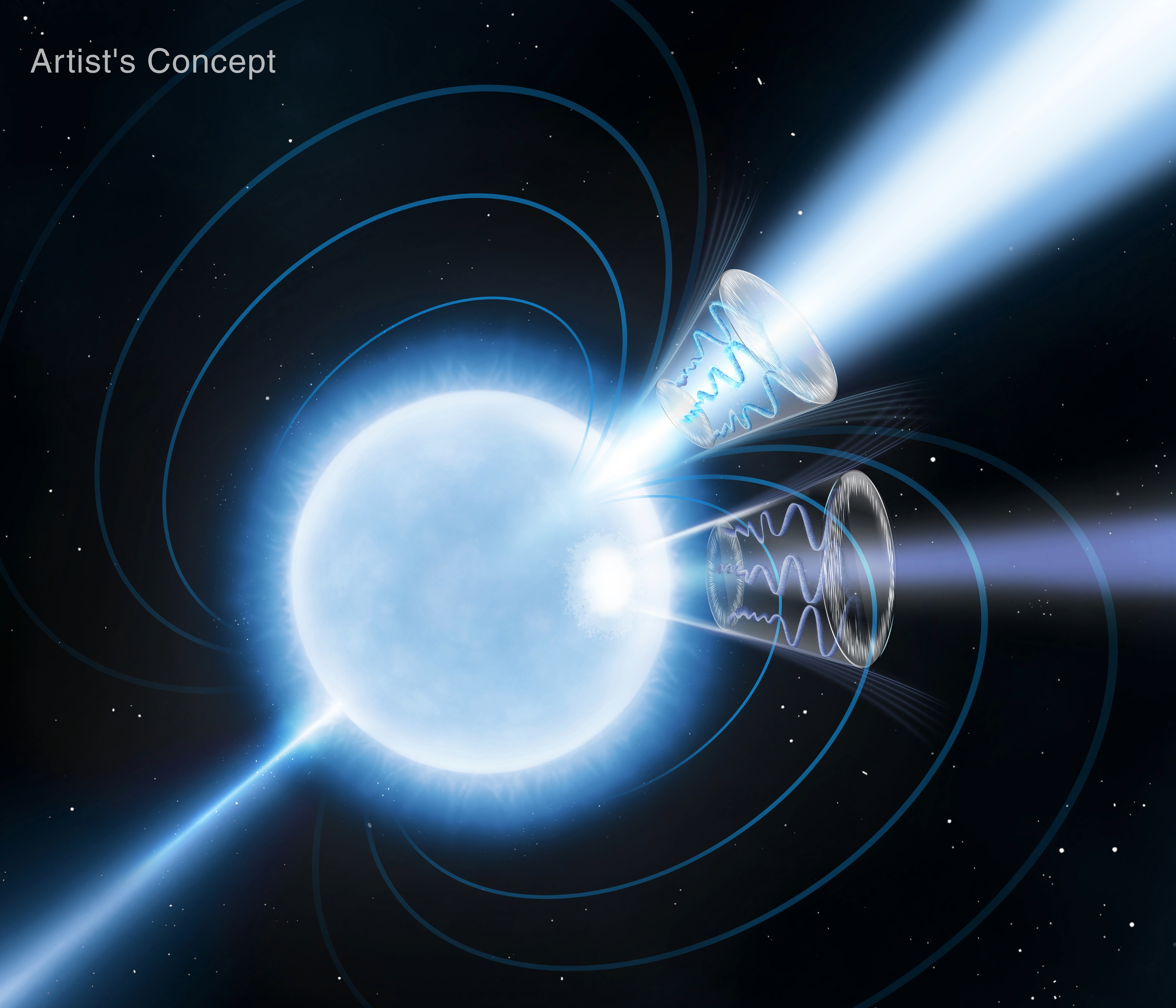
Uno studio prodotto dall’Università di Ottawa e dal Max Planck Institute for the Science of Light (Mpl, Germania) ha trovato una modalità ecologica per produrre fotoni in stato di entanglement quantistico attraverso la luce solare. L’articolo che riporta il risultato, pubblicato il 6 agosto, è disponibile su Optica.

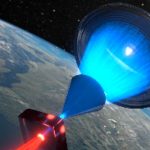
Grazie a un nuovo concentratore solare a forma di cono, un team guidato dall’Università di Ottawa (Canada) e dal Max Planck Institute for the Science of Light (Mpl, Germania) ha  dimostrato che la luce solare può essere utilizzata per generare fotoni in stato di entanglement. Ciò potrebbe un giorno consentire ai satelliti di generare chiavi di crittografia sicure sfruttando la luce solare. Crediti: Florian Sterl and Soledad Cook

L’avvento delle tecnologie quantistiche su larga scala sta rendendo disponibili supercomputer e calcolatori molto potenti, ma che richiedono una notevole quantità di energia: a oggi il settore globale dell’informazione e della comunicazione produce tra l’1,8 e il 3,9 per cento delle emissioni di gas serra e, con la continua crescita del traffico di dati globale, il bilancio energetico sarà sempre più aggravato. Parte di questo consumo deriverà dall’energia necessaria per preparare e controllare i sistemi quantistici: i processori a superconduttori, ad esempio, richiedonosistemi criogenici che consumano, per ogni unità, fino a 10 kilowatt per mantenere temperature prossime allo zero assoluto. Nelle tecnologie quantistiche basate sulla luce lo scoglio energetico è invece rappresentato dai laser. I laser commerciali sono estremamente inefficienti: assorbono watt di potenza elettrica per produrre solo pochi milliwatt di potenza ottica, sprecando enormi quantità di energia sotto forma di calore o per stabilizzare lo spettro e la temperatura del raggio.

L’entanglement quantistico è il fenomeno per cui lo stato quantistico di una particella, come il fotone, non può essere descritto indipendentemente dallo stato delle altre particelle del gruppo in cui si trova, Questo significa che le particelle sono correlate nelle loro misure di quantità fisiche come posizione, momento, spin e polarizzazione. L’entanglement quantistico è uno dei principali indicatori di disparità tra fisica classica e fisica quantistica, in quanto viola il principio di località: due particelle possono essere correlate anche se si trovano a grande distanza l’una dall’altra.

I fotoni entangled sono una risorsa fondamentale per la comunicazione, l’informatica e il rilevamento quantistici e trovano spazio in applicazioni come reti di comunicazione crittografate ultrasicure e sensori di altissima precisione.

Per creare queste coppie di fotoni, gli scienziati utilizzano un processo ottico non lineare chiamato conversione parametrica verso il basso spontanea (Spdc). In questo processo, le particelle di luce provenienti da un raggio “pompa” colpiscono un cristallo non lineare e al loro interno vengono convertite in coppie di fotoni entangled. Tradizionalmente, i laser sono sempre stati considerati indispensabili per fungere da sorgente di pompa, a causa della loro altissima coerenza ottica. Fino a poco tempo fa si pensava infatti che la natura iper-precisa e ordinata (coerente) del raggio laser fosse un requisito fondamentale per riuscire a generare un entanglement di alta qualità. Inoltre, si presumeva che i laser fossero le uniche sorgenti luminose in grado di fornire le densità di potenza ottica necessarie per guidare in modo efficiente i processi ottici non lineari.

La luce solare è invece incoerente e molto meno intensa della luce laser. A causa di queste caratteristiche, molti scienziati avevano scartato la luce solare come sorgente di pompaggio valida per la generazione di entanglement. Gli autori del nuovo studio pubblicato su Optica hanno però dimostrato per la prima volta che, contrariamente alla visione scientifica precedente, è possibile generare fotoni entangled a partire dalla luce solare.

In ottica, la coerenza non è una proprietà unica e globale. La luce possiede diverse caratteristiche fisiche e può presentarsi perfettamente ordinata in una, pur restando caotica in un’altra. Ad esempio, un fascio di luce può essere disordinato nel modo in cui si propaga nello spazio e nel tempo, ma possedere una polarizzazione perfettamente definita. Nel processo di generazione dei fotoni, il disordine del raggio di partenza limita l’entanglement solo se si cerca di crearlo proprio in quella specifica caratteristica disordinata. Ma se l’obiettivo è ottenere fotoni entangled nella loro polarizzazione, la componente spaziale della luce solare non ha importanza.

«Finché il fascio di pompaggio è perfettamente polarizzato, la sua incoerenza spaziale o temporale non dovrebbe precludere la generazione di entanglement di polarizzazione», spiega Cheng Li, ricercatore al’Università di Ottawa e primo autore dello studio. «Il segreto per sfruttare la luce solare consiste nell’impedire che le diverse proprietà della luce si influenzino a vicenda durante il processo. Ciò significa che la luce solare è perfettamente in grado di generare fotoni intrecciati, purché si riesca a concentrarne una quantità sufficiente all’interno del cristallo non lineare per indurre l’Spdc».

La superficie utile di un cristallo ottico non lineare (es. il ppKtp) si estende in genere solo per pochi millimetri. Per convogliare una quantità sufficiente di luce solare – che nell’ambiente naturale diverge ampiamente – in una regione così ristretta, il gruppo di Hanieh Fattahi, responsabile del gruppo di ricerca presso l’Mpl, ha realizzato un sistema di concentrazione della luce solare. Questo sistema raccoglie la radiazione su una superficie di 1,4 metri quadrati e la convoglia in una fibra sottile quanto un capello umano. Il cuore di questo sistema è un concentratore solare sviluppato e realizzato internamente presso l’università tedesca. Si tratta di un dispositivo a forma di cono realizzato in vetro. La base del cono è posizionata nel punto focale di una grande lente di Fresnel, montata su un motore di inseguimento solare. La luce solare focalizzata viene quindi ulteriormente concentrata tramite riflessioni interne totali mentre si propaga verso la punta del cono, che accoppia la luce solare in una fibra multimodale. La fibra può quindi guidare la luce solare in un cristallo non lineare per indurre la generazione di entanglement tramite Spdc. Come previsto dal team guidato da Robert Boyd (Università di Ottawa), coautore dello studio, l’Spdc alimentato dalla luce solare ha generato coppie di fotoni con un grado di entanglement molto elevato: con una fedeltà di quasi il 94 per cento, questo risultato si avvicina molto alle prestazioni di un laser. I fotoni Spdc mostrano inoltre correlazioni in grado di violare una soglia matematica fondamentale: la disuguaglianza di Bell, indicando che la connessione tra le particelle non può essere modellata con le teorie classiche della fisica e sono effettivamente caratteristiche dell’entanglement quantistico.

Illustrazione concettuale della configurazione sperimentale per la generazione di entanglement quantistico dalla luce solare. La configurazione è costituita da un modulo di concentrazione della luce solare e da una sorgente di fotoni entangled. Il modulo di concentrazione della luce solare accoppia la luce solare filtrata spettralmente in una fibra multimodale utilizzando una combinazione di una lente di Fresnel e un concentratore in vetro. La sorgente di fotoni entangled è un cristallo di ppKtp collocato all’interno di un interferometro di Sagnac a polarizzazione. La luce solare accoppiata alla fibra viene diretta nel cristallo per indurre la Spdc. Le correlazioni tra le coppie di fotoni generate vengono quindi misurate per la successiva caratterizzazione degli stati quantistici. Crediti: L. Chen et al., Optica, 2026

Il team ha inoltre scoperto che, quando il tasso di produzione dei fotoni viene normalizzato rispetto alla potenza di pompaggio e alla larghezza di banda effettiva del processo non lineare, l’efficienza della generazione di entanglement indotta dalla luce solare è pari a quella indotta dal laser. Questa scoperta suggerisce che i laser potrebbero non presentare tutti i vantaggi fondamentali rispetto alla luce solare come ipotizzato dai ricercatori, e che sorgenti di luce quantistica pratiche alimentate dalla luce solare possano diventare sempre più realizzabili attraverso ottimizzazioni tecniche, ad esempio, della raccolta della luce solare e dell’utilizzo della larghezza di banda.

«La luce solare è una risorsa abbondante e affidabile in molti ambienti, specialmente nello spazio. La capacità di generare fotoni quantisticamente intrecciati direttamente dalla luce solare, osserva Fattahi, «potrebbe consentire la realizzazione di sistemi quantistici più semplici e resilienti per i satelliti e le future missioni nello spazio profondo».

I dispositivi quantistici alimentati dalla luce solare offrono anche altri vantaggi che i laser non sono in grado di garantire. L’ampio spettro della luce solare potrebbe consentire l’accesso a fotoni entangled su una gamma più ampia di lunghezze d’onda, specialmente laddove i laser non sono disponibili. Ancora più importante, l’alimentazione diretta delle sorgenti di luce quantistica tramite la luce solare elimina completamente la conversione da elettrica a ottica: non è necessaria alcuna stabilizzazione attiva e il calore residuo da gestire è notevolmente inferiore. Un sistema di questo tipo presenterà un minor numero di potenziali punti di guasto. Questa caratteristica è particolarmente interessante per l’impiego in ambienti strategicamente importanti ma con risorse limitate, come a bordo dei satelliti, nelle sonde per missioni interplanetarie e in regioni remote come l’Artico. Un veicolo spaziale in orbita sincrona con il Sole, ad esempio, godrebbe di un accesso quasi ininterrotto alla propria fonte di pompaggio.

«La parte migliore di questa ricerca è che si tratta solo di un inizio», conclude Boyd. «Oltre all’Spdc, esistono molti altri approcci ottici non lineari per generare fotoni intrecciati: la miscelazione a quattro onde ne è un ottimo esempio. Per ciascuna di queste interazioni non lineari, esistono modi per renderle più efficienti. Riteniamo che questo lavoro possa ispirare numerose nuove ricerche nell’ottica non lineare e quantistica, e che tali ricerche possano a loro volta rendere più praticabile la tecnologia quantistica alimentata dalla luce solare».

Per saperne di più: 


  •  

La playlist dell’eclissi

Il sopralluogo alla Torre de Hércules (vedi puntata di ieri) ha dato esito negativo. Due poliziotti interpellati sulla fruibilità della zona durante l’eclissi hanno tranciato di netto ogni qualsivoglia intenzione della sottoscritta di recarvisi questa sera. L’area, magnifica, essendo patrimonio Unesco verrà chiusa da ogni lato per evitare che – il poliziotto imita il gesto con le mani visto il mio sguardo disorientato dinanzi a un irripetibile verbo spagnolo – la gente metta tutto in subbuglio.
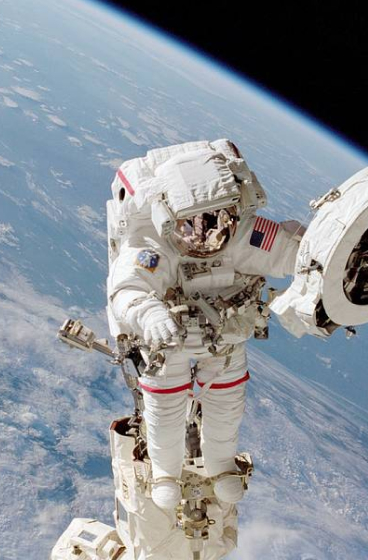
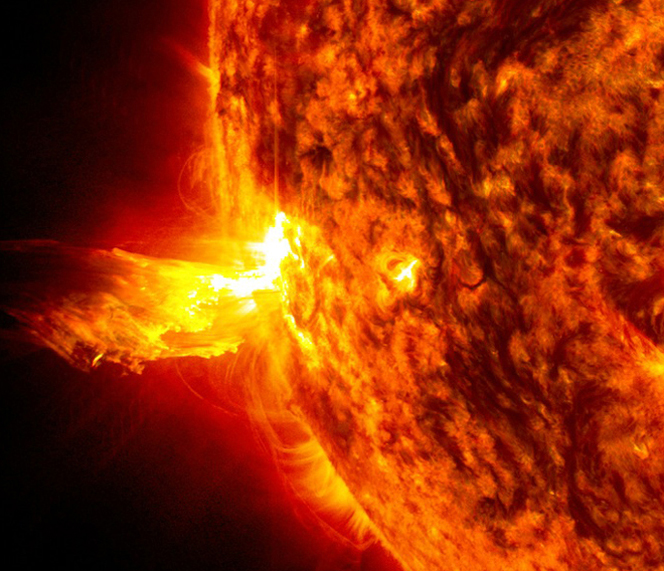
In compenso, mentre andavo via, mi sono imbattuta in una bancherella che esponeva un ricco assortimento di occhiali, evidentemente non da eclissi.

Occhiali non da eclissi su una bancherella nei pressi della Torre de Hércules (La Coruña). Crediti: F. Loiacono

I poliziotti però, notata la mia non celabile delusione, mi hanno detto che posso consolarmi ammirando il fenomeno dal lungomare. Dato l’imponente afflusso di gente che si prevede la sera dell’evento, la strada sarà chiusa al traffico. Nonostante la fitta copertura di nubi riscontrata al mattino (vedi sempre qui), il cielo ora è limpido e il Sole esattamente ventiquattr’ore prima dell’eclissi sfolgora indomito, senza impedimento di nuvola alcuna.
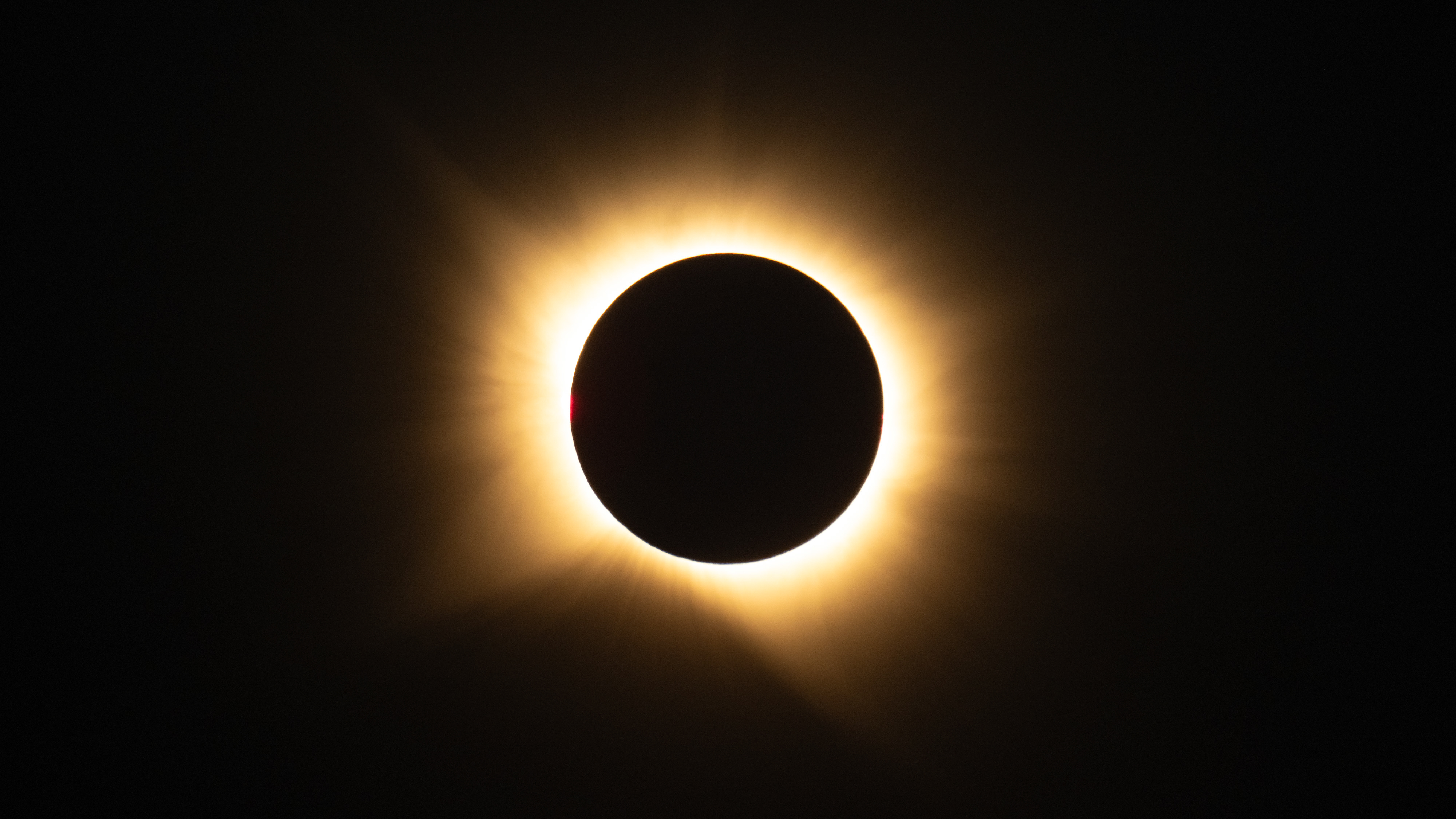
Mentre mi accingo a percorrere questo serpentone dorato che è il lungomare di La Coruña al tramonto, che a questo punto sarà il luogo eletto per contemplare il nascondimento, mi faccio compagnia con una playlist di canzoni confezionata per l’occasione.
Qualche giorno prima di partire, mentre trovavo nelle quiete acque di Palese, quartiere nord di Bari, effimero ristoro alle temperature roventi che hanno afflitto la nostra penisola la scorsa settimana, vengo raggiunta da un verso. Verso ascoltato e urlato innumerevoli volte, ma che alla luce dell’imminente partenza si caricava di un significato nuovo, inedito, imprevisto.

Da quel verso piombato all’improvviso ho messo in piedi, anche grazie al prezioso aiuto di amici e familiari, una playlist dedicata all’evento e che qui vi sottopongo. Fenomeno è infatti l’eclissi che travalica i limiti astronomici per conquistare posizioni inattese in ambiti altri delle cose umane. La musica in particolare ne ha abusato, producendo metafore talvolta audaci, come testimonia il vasto assortimento di canzoni che tirano in ballo più o meno direttamente l’oscuramento della nostra stella da parte della Luna.

E proprio grazie alla Luna ci inoltriamo in questa rassegna. Non è il nostro satellite bensì «qualcuno che conosco» a oscurare la luce dell’amata in “Qualcosa di grande” dei Lùnapop, hit che si aggiudicò l’edizione del 2000 del defunto Festivalbar, e a cui appartiene il verso che mi ha raggiunta in acqua. Tiriamo nuovamente in ballo il gruppo bolognese dopo la puntata di ieri. La constatazione dell’irreversibile eclissi dell’oramai ex-fidanzata culminerà nella sfidante asserzione «E ora provaci dal buio/A brillare senza me».

All’eclissi i Subsonica dedicheranno nientemeno che un intero album nel 2007, denominato per l’appunto “L’eclissi”. A differenza del brano di Cremonini e compagni, il fenomeno astronomico qui evoca splendore: «Nel cuore di un’eclissi tu risplenderai» (il pezzo è “Il centro della fiamma”).

La copertina dell’album dei Subsonica “L’eclissi” (Virgin Records, 2007)

Dolentissima ritroviamo l’eclissi nelle parole di Carmen ConsoliEnnesima eclisse tra un dolore e un altro», “Ennesima eclisse”), mentre protagonista di un connubio fusionale quanto tormentato è quella di Paola Turci in “Eclissi” («Luna e sole, che bel male/da toccare fino ad annullarsi»). In un pezzo omonimo, in quanto a scenari funesti che riguardano l’umanità tutta, non scherza Ginevra Di Marco, come ancora i Subsonica L’eclissi di una sazia e spenta civiltà», “La glaciazione”).

C’è chi invece elegge il momento dell’eclissi per avanzare richieste di varia natura – ci si chiede lecitamente perché ciò non venga fatto in altre circostanze. Parliamo di “Eclissi” di Gianluca De RubertisE mentre guardavo l’eclissi/Non devi partire ti prego ti dissi») e “L’eclisse” di Cristina DonàSalvami dalla realtà quando arriva l’eclisse»). C’è poi chi – vedi Salmo nella recente “Eclissi”, tanto per cambiare – attribuisce al fenomeno astronomico le incomprensioni che affliggono certe nostre relazioni («È inutile capirsi, è colpa dell’eclissi»). Ci pensa Tananai a riscattare l’allineamento di Sole, Luna e Terra con una dichiarazione d’amore e un dubbio accostamento («Ti amo come si amano i rave e le eclissi» in “Rave, Eclissi).

Menzioniamo chi il Sole non lo trova più («Mi chiedo dove mai/sia finito il sole», si domandano i Negramaro in “Sole”), chi se lo dimentica («Con l’eclissi totale si scorda il sole», per delucidazioni chiedere ad Anna Oxa in “Eclissi totale”) e chi lo vuole indietro (Zucchero in “Ridammi il sole”). Sul fatto che il Sole non debba proprio farsi vedere non hanno alcun dubbio i Ministri, vedi “Il Sole (È Importante Che Non Ci Sia)”.

La Torre de Hércules, di origine romana, è il faro più antico al mondo ancora in funzione. L’area attorno alla torre sarà chiusa durante l’eclissi. Crediti: F. Loiacono

Tetro come nelle eclissi diventa il nostro astro quando a chiamarlo in causa sono i Litfiba (“Sole nero”) ma anche gli Snap-Out, con una canzone omonima, o i Formula 3 nelle brutte giornate («Sole giallo, sole nero/giorni belli e giorni no», “Sole giallo, sole nero”). In quanto a cupezza non scherza anche il sole evocato dai Timoria in “Sole spento” («Come in un sole in cui sentire freddo»). A disattivare la nostra stella ci aveva già pensato una quarantina d’anni prima chi rubò il cuore di Adriano CelentanoSi è spento il sole, chi l’ha spento sei tu», “Si è spento il sole”).

Non mancano le incursioni nel cinema – sulla filmografia legata al tema ci sarebbe da scrivere un articolo a parte –, con la frizzante “Eclisse Twist” interpretata da Mina, che ci porta dentro il celebre “L’eclisse” di Michelangelo Antonioni.

A generare l’oscuramento di un quartiere romano sarà Corviale, gigantesco complesso residenziale che s’innalza come maestosa astronave in “Eclissi di periferia” di Max Gazzè.

Infine, in “Replay” di Samuele Bersani l’eclissi è assoluta: persino la luna sparisce.

Mi astengo in questa sede da una disamina su come la musica internazionale si sia approcciata al tema in oggetto: la già folta carrellata diverrebbe oltremodo verbosa e illeggibile. Nella playlist che trovate alla fine dell’articolo ho incluso qualche brano (imprescindibile) di provenienza estera. Mentre leggete vi vengono in mente altri pezzi? Proponeteceli!

Un gruppo di bagnanti improvvisa una partita di calcio lungo la spiaggia cittadina mentre il Sole si nasconde. Crediti: F. Loiacono

Dal lungomare di La Coruña lo scenario è magnifico. Un folto gruppo di individui improvvisa una partita di pallone sul bagnasciuga. Il Sole è stato appena inghiottito dalle famigerate nuvole basse, tanto temute in questi giorni, mentre una nube grassa e veloce, impensabile fino a un’oretta fa, ha divorato buona parte del cielo a sud-ovest.

Questa è l’incertezza che avviluppa la Galizia tutta. Male che vada, se il Sole se lo mangerà una nuvola, se annegherà nella foschia, o il nostro appuntamento fallirà per altre insondabili ragioni, questa notte ci sarà (più d’) una canzone da cui tornare.

La playlist dell’eclissi di Media Inaf (disponibile anche su Spotify):


  •  

Un prototipo di spettrografo alla prova dell’eclissi

È stato testato a lungo in laboratorio, poi osservando la Luna nelle ultime settimane di luglio. Infine è stato impacchettato, caricato su un furgone e trasportato dall’Italia, attraverso la Francia, fino alla Sierra de Javalambre, in Spagna. Qui, la prova finale: osservare la corona solare durante l’eclissi totale del 12 agosto.

Il team scientifico con lo strumento CISS allestito per le osservazioni dell’eclissi all’Observatorio Astrofisico de Javalambre, in Spagna. Da sinistra: Federico Landini (Inaf Torino), Fabio Frassetto (Cnr Padova), Lapo Casetti (Università di Firenze), Valeria Caracci (Inaf Torino).

Parliamo dello strumento Ciss (Circular Slit Spectrograph), un prototipo ideato da Federico Landini dell’Istituto nazionale di astrofisica (Inaf) e finanziato con un large grant Inaf nel 2024. Si tratta di un concetto ottico innovativo, per realizzare spettri di sorgenti astronomiche utilizzando una fenditura circolare a raggio variabile, al posto della classica fenditura lineare – quella degli esperimenti di fisica classica che conosciamo dai libri di scuola – e un reticolo a righe anch’esse circolari e concentriche.

Il progetto, una collaborazione tra Inaf di Torino, Cnr – Istituto di fotonica e nanotecnologie di Padova, Università di Firenze e Inaf di Napoli, prevede lo sviluppo di un prototipo di tecnologia testata e convalidata in laboratorio – quello che in gergo si chiama technology readiness level 4. Una volta validato, lo strumento, che adesso è predisposto per le osservazioni in luce visibile, potrà essere esteso anche all’ultravioletto, in vista di future missioni spaziali dedicate allo studio del Sole. Il concetto nasce infatti dalla fisica solare, ma può essere applicato a qualsiasi altra sorgente a simmetria circolare – in astrofisica, non mancano.

Federico Landini, tecnologo all’Inaf – Osservatorio Astrofisico di Torino

Per scoprire i dettagli di questo ingegnoso esperimento, abbiamo intervistato Federico Landini, che al momento si trova presso l’Observatorio Astrofisico de Javalambre, nella provincia di Teruel, una delle aree meno densamente popolate della Spagna, con cieli tra i più bui d’Europa. Insieme ad altri componenti del team scientifico, è in attesa che la meccanica celeste faccia il suo corso e, con un pizzico di fortuna, regali alla spedizione una splendida eclissi di Sole.

Dottor Landini, perché progettare e costruire un nuovo concetto di spettrografo? Non andavano bene quelli già esistenti?

«Ciss è un prototipo per studiare lo spettro della corona solare e anche la dinamica della corona, che si sviluppa su tempi scala dell’ordine di minuti, ore. Con la fenditura circolare a una certa distanza dal centro del Sole, si ottiene uno spettro completo della corona, poi cambiando il raggio della fenditura si vanno a mappare regioni a distanza diversa dal centro del Sole. Questo riduce di almeno almeno un ordine di grandezza il tempo scala necessario per ottenere uno spettro completo della corona.

L’unico spettrometro ultravioletto che ha funzionato nello spazio finora e ha dato risultati importanti è stato l’UltraViolet Coronagraph Spectrometer (Uvcs), operativo sulla missione spaziale Soho tra il 1995 e il 2009. Per mappare uno spettro della corona impiegava una giornata, perché si basava sul concetto classico di fenditura lineare che veniva spostata sulla corona in modo da misurare lo spettro di regioni a distanza diversa dal centro del Sole: poi veniva effettuata una rotazione dell’intero strumento per andare a coprire angoli diversi, e questo richiede tanto tempo».

A che cosa serve la spettroscopia solare?

«La spettroscopia della corona solare ci consente di studiare la composizione chimica della corona, da cui possiamo dedurre le abbondanze degli elementi. Una volta note quelle, è possibile andare a comprendere meglio la fisica dell’intera corona e dei fenomeni che avvengono in questa regione. La corona è la sede di tutte le esplosioni e le manifestazioni eruttive che hanno un’influenza sull’intera eliosfera, e possono influenzare da vicino anche la vita sulla Terra».

È necessario testare lo strumento durante un’eclissi di Sole?

«Dopo la validazione in laboratorio, l’ideale è testare lo strumento sul campo, osservando la sorgente astronomica di interesse, cioè la corona solare. Da terra, la corona si può osservare solo durante un’eclissi, quando la fotosfera del Sole è occultata dalla Luna, perché è molto tenue: sei ordini di grandezza più debole rispetto alla fotosfera nelle lunghezze d’onda del visibile. Si potrebbe fare anche con un coronografo, lo strumento che simula un’eclissi di Sole, ma in quel caso avremmo dovuto costruire due strumenti, il nostro prototipo più un coronografo, con gli stessi fondi. È chiaramente più facile sfruttare un’eclissi di Sole, visto che se ne verifica una in Europa proprio durante l’arco del progetto».

La luce dispersa sul piano focale dello strumento Ciss. Crediti: F. Landini (Inaf)

Com’è nata l’idea di Ciss?

«L’idea è nata quando ho capito come funziona, veramente, uno spettrometro. Partiamo da uno spettrometro lineare: ha una fenditura attraverso cui passa un pennello di luce che arriva su un reticolo lineare a righe parallele. Queste, a loro volta, disperdono l’informazione che arriva dalla fenditura su un piano. Qui, per ogni punto di quella fenditura, abbiamo una certa scomposizione della luce nelle varie lunghezze d’onda. Quando ho capito che la fenditura serve a selezionare una porzione mono-dimensionale dell’oggetto di osservazione, mi sono detto: ma perché per la corona solare non si utilizza una fenditura circolare, in modo da coprirla tutta? Riduce comunque le dimensioni a una sola e si ha uno spettro radiale anziché uno spettro lineare».

Può spiegarci meglio?

«Supponiamo di avere una fenditura circolare, anziché lineare, e di ingrandire una piccola porzione di questa fenditura fino a che non diventa lineare: il funzionamento è lo stesso. Da quel pezzettino di fenditura lineare che però fa parte della fenditura circolare arriva un pennellino di luce su una porzione lineare del reticolo circolare. Questa radiazione viene dispersa perpendicolarmente alla direzione del reticolo e quindi radialmente, perché quella porzione lineare del reticolo circolare è tanto ingrandita. Quindi sul piano focale avremo tanti cerchi concentrici, ognuno corrispondente a una riga spettrale».

Test dello strumento Ciss (Circular slit spectroscopy) sulla terrazza dell’Inaf – Osservatorio astrofisico di Arcetri, a Firenze.

Ci può raccontare i primi passi del progetto?

«C’è stato un primo prototipo di cartone che ho realizzato quattro anni fa con una scatola di risulta, in cui avevo ricavato la fenditura circolare, usando un CD come reticolo. Il concetto funzionava, così abbiamo fatto domanda ai bandi Inaf per la ricerca fondamentale, il progetto è stato finanziato e l’abbiamo finalmente realizzato. Lo strumento è stato assemblato nei laboratori Luxor del Cnr di Padova, è stato allineato ed è stata ottenuta la prima luce a giugno. Quindi lo strumento è già stato validato: funziona, produce spettri radiali sul piano focale come ci aspettavamo. È stato anche calibrato, identificando a quale lunghezza d’onda corrispondono i vari cerchi concentrici sul piano focale. A fine luglio, abbiamo fatto una serie di test di puntamento all’Osservatorio di Arcetri con la Luna, perché la Luna piena ha un’irradianza che è comparabile a quella della corona solare».

Perché avete scelto proprio questo luogo per osservare l’eclissi?

«L’Observatorio Astrofisico de Javalambre è il candidato ideale perché, oltre a trovarsi nella striscia di totalità, è a duemila metri di altezza sul livello del mare, il che riduce un po’ la probabilità di avere copertura del cielo. Inoltre facilita un po’ tutta la logistica, perché ci consente di avere accesso alle facility dell’osservatorio, di avere un piano in cui posizionare lo strumento, di avere accesso alla corrente elettrica senza doversi portare generatori. E ha una visuale aperta a occidente, dove tramonta il sole: quindi è un luogo che mette insieme diversi vantaggi».

Com’è stato il viaggio?

«Siamo partiti venerdì scorso con il furgone da Firenze, abbiamo fatto una prima tappa a metà della costa francese, poi ci siamo fermati un’altra notte a Valencia e domenica mattina siamo arrivati a Javalambre».

Adesso, in attesa della prova del nove, quali sono le attività che vi tengono impegnati?

«Siccome la zona è un po’ ventosa, abbiamo costruito un box sul piazzale dell’osservatorio, con il permesso del direttore, per proteggere dal vento lo strumento. In queste notti siamo impegnati con il modello di puntamento, ci stiamo preparando osservando alcune stelle note, testando qualche qualche sequenza osservativa. E poi si spera che non sia nuvoloso il giorno dell’eclissi!».

E il futuro?

«Il prototipo al momento è stato realizzato nelle lunghezze d’onda del visibile, perché è più facile da assemblare in laboratorio, non c’è bisogno di andare in vuoto. L’idea è, una volta validato il principio, rifare un altro prototipo, però dedicato all’ultravioletto. La corona solare, per via della sua temperatura di milioni di gradi, ha uno spettro di emissione particolarmente importante nell’ultravioletto. Questo ci permetterà di proporre una futura missione spaziale con uno strumento di questo tipo a bordo: mi piacerebbe iniziare con una missione piccola, per esempio un razzo sonda, per dimostrare che tutto funziona, e poi passare a una missione più importante, come una small o medium class dell’Agenzia spaziale europea».

Lorenzo Cocola dell’Istituto di fotonica e nanotecnologie del Cnr di Padova con lo strumento Ciss, integrato nei laboratori Luxor. Crediti: F. Landini (Inaf)

Metterete in campo lo strumento anche durante la prossima eclissi di Sole, quella del 2 agosto 2027?

«L’eclissi del 2027 avviene allo zenit e dura oltre sei minuti, quindi è una bella eclissi, una delle più lunghe del secolo. Peraltro interessa zone in cui c’è pochissima nuvolosità, nel Nord Africa. Sono zone con tanto sole, anche se magari logisticamente sarà più difficile organizzare una spedizione. Se riusciremo a ottenere dei fondi, chiaramente proveremo lo strumento anche nel 2027».

Guarda l’intervista a Chiara Casini e Valeria Caracci sul canale Youtube di Media Inaf:


Per saperne di più:

  • Leggi su Proceedings of the Spie l’articolo “Design of a circular slit spectrometer” di Federico Landini, Fabio Frassetto, Valeria Caracci, Lorenzo Cocola, Lucia Abbo, Vincenzo Andretta, Chiara Casini, Alberto Riva, Silvano Fineschi, Maurizio Pancrazzi, Marco Romoli, Paola Zuppella

Per seguire i team scientifici dell’Inaf e le inviate di Media Inaf in Spagna per l’eclissi:

  •  

Lion Nebula Roars in Webb's Sights

NASA’s James Webb Space Telescope imaged the planetary nebula NGC 2392, the Lion Nebula, using the observatory’s NIRCam and MIRI instruments. The central star’s remains are responsible for the nebula’s structure, including a lion face-shaped bubble of ionized gas and dust “mane.”

  •  

Ventisette anni dopo

L’11 agosto del 1999 si è verificata l’ultima eclissi di Sole visibile da non trascurabili porzioni del territorio europeo. Dall’Italia la Luna ha occultato solo parzialmente la nostra stella. La percentuale di oscuramento variò tra il 95 per cento nel nord della penisola e il 65 per cento nelle isole maggiori.

Noi cosa facevamo in quei giorni lontani, sul finire degli anni ‘90? Era estate e un giovane Cremonini mechato di rosso imperversava in radio conducendoci su fiabeschi colli bolognesi, favolosi per me, bimbetta di otto anni cresciuta nella provincia barese, per la quale una città del Nord si collocava alla stessa inaudita distanza di una galassia lontana, e nell’inconsapevolezza di noi tutti che mai avremmo giurato che quel pezzo ci saremmo ritrovati a ballarlo a ogni compleanno, matrimonio, festa qualsiasi nei ventisette anni successivi.

Copertina dell’album “Ciao” (1999) di Lucio Dalla (Pressing)

Interrogato rispetto all’album “Ciao”, uscito nel settembre del ’99, Lucio Dalla non mancò di citare l’eclissi, tra gli avvenimenti che scandirono quella fine di millennio: «Ciao alla confusione, ciao al secolo che finisce: con tutto quello che è successo quest’anno, guerre, eclissi, terremoti, vittime, previsioni di fine del mondo, tutto come un groviglio multimediale, uno scontro di luci… ed io lì, nel centro, ad intercettare ogni cosa, perché non potrei mai restare passivo o indifferente».

L’eclissi avvenne alle undici di un mercoledì mattina.

Di come mi apparve il fenomeno e di quale emozione provocò in me, non ricordo nulla. Quello che ricordo benissimo invece fu lo sforzo per procacciarsi un dispositivo che consentisse la visione dell’attesissimo evento. Dispositivo che nel mio caso consistette in un vetro da saldatore, sfoggiato con orgoglio da mia sorella sulla tovaglia immacolata a fine pranzo, e che ci aveva procurato il giorno prima Giovanni, il meccanico nostro vicino di casa. Quella mattina, come ogni giorno di quelle estati a ridosso del 2000, stavo giocando con altri bambini per la strada quando rincasai per assistere al prodigio. Bisognava esserci quel giorno, questo ricordo. Voi dov’eravate?

Particolare dell’Estadio Municipal de Riazor, stadio della squadra di casa, il Deportivo La Coruña. Crediti: F. Loiacono

Ventisette anni dopo a La Coruña tira aria di vigilia. Quando stamattina ho aperto gli occhi, il cielo era compatto, londinese. Adesso timidi raggi di sole stanno aprendosi varchi sempre più significativi, e congiuntamente a essi si avverte una crescente quota di umidità. Per domani, le previsioni parlano di cieli incerti. Sereno, foschia, nubi basse, sereno, questa fastidiosa incostanza è quel che riportano noti siti web sulle condizioni meteorologiche. Io sto andando a fare un sopralluogo dalle parti della Torre de Hércules, un faro di costruzione romana e, leggo su Wikipedia, il più antico al mondo ancora in funzione, per verificare che la zona circostante sia adeguata alla visione dell’eclissi. Il receptionist del complesso di appartamenti in cui soggiorno mi ha suggerito Monte de San Pedro come invitante punto di osservazione, dalla parte opposta della città. Secondo lui ci vuole una mezz’ora di ascesa, ma dato che ieri mi ha riferito un tempo per raggiungere il supermercato che poi, nella pratica, si è rivelato il triplo dello stesso, guardo il suo consiglio con una certa ritrosia.

Ieri sera, sfinita dai passi, dall’ansia di perdere la coincidenza all’aeroporto di Madrid causa vicissitudini Schengen, e dalle cinque ore di sonno della notte precedente, ritrovavo me stessa cenando in un posto denominato El Templo del Gol, situato evidentemente nei paraggi dello Stadio Riazor, santuario del Deportivo La Coruña. Mangio polpette di jamón serrano mescolato a un formaggio indecifrabile mentre assisto all’ossimoro dato da cinque attempate signore, manifestamente più vispe della sottoscritta a partire dai vestitoni coloratissimi sfoggiati al tavolo di fronte, dinanzi a copiosi quantitativi di birra e un gioco di carte non identificato, mentre i Daft Punk sullo schermo in alto suonano a bomba questo pezzo qui. Pezzo cui segue una ballata – a me ignota quanto i suoi esecutori – della band messicana Maná, il cui frontman, mi auguro per stanchezza, avevo confuso con un giovane Gianluca Grignani.

Quando esco è ancora giorno e la città anche a uno sguardo disattento si rivela spalmata di manifesti che anticipano l’evento di domani. Alle fermate degli autobus sovente capita di imbattersi in una locandina dell’Odissea che stranamente non è quella di Nolan ma una rivisitazione in chiave eclittica.

Tipico manifesto alle fermate degli autobus di La Coruña. Crediti: F. Loiacono

Le librerie non sono da meno, sfoggiando per l’occasione un vasto repertorio astronomico in vetrina.

Vetrina di una libreria di La Coruña. Crediti: F. Loiacono

C’è chi mercoledì pomeriggio chiude tutto per andare a vedere l’eclissi, come annuncia, con relative scuse, il foglio affisso davanti a un centro scommesse.

L’annuncio affisso davanti a un centro scommesse in vista dell’eclissi. Crediti: F. Loiacono

Un signore in camicia hawaiana, che scopro essere Fernando Romay, star della pallacanestro spagnola degli anni ‘80, ci invita a seguire l’eclissi sull’emittente locale Televisión de Galicia. Mi aiuto con Google Translate per decifrare quel che dice al riguardo La Voz de Galicia, quotidiano spagnolo che ha sede proprio a La Coruña: «L’ombra dell’altissimo giocatore di basket galiziano (2,13 metri) è identica all’ombra che l’eclissi proietterà in Galizia il 12 agosto.»

Un manifesto della campagna pubblicitaria sull’eclissi della Televisión de Galicia. Crediti: F. Loiacono

Infine, rimanendo in tema di grandi eventi, non mancano attestazioni dell’ultimo mondiale vinto, benché in verità mi aspettassi di trovarne molte di più. Di questa merceria del centro città certamente l’allestimento più laborioso.

Una merceria nel centro di La Coruña ricostruisce le fasi che hanno portato alla vittoria della Spagna nell’ultimo mondiale. Crediti: F. Loiacono

Il receptionist mi ha comunicato che la struttura è colonizzata da persone giunte a La Coruña apposta per l’eclissi – su quest’affermazione non ho ragione di dubitare.

Su Instagram vengo intercettata da Lorenzo, Francesco e Simone, che sono arrivati questa mattina da Genova. Hanno viaggiato tutta la notte per essere qui. Dicono che a Ferrol il cielo dovrebbe essere sgombro da nubi basse durante l’eclissi. E che La Coruña, pur essendo vicina, è molto più a rischio.

Intanto che butto giù queste righe il cielo si è aperto, benché si scorga una lieve foschia diffusa. Ieri guardavo il Sole intorno alle 20 e 20 risplendere sopra lo stadio, ignaro che domani più o meno alla stessa ora qualcuna gli ruberà la scena. Fosse stata ieri, l’eclissi, sarebbe stato perfetto. Ma domani è domani. Nell’incertezza che ammanta la città, e sempre affligge e ravviva le umane vicende, una cosa è certa. Vogliamo esserci. Come nel ’99.


Per seguire i team scientifici dell’Inaf e le inviate di Media Inaf in Spagna per l’eclissi:

  •  

NASA Shares Station Research Today Supporting Moon, Mars Tomorrow

Four astronauts (Chris Williams, Jack Hathaway, Sophie Adenot, and Jessica Meir) gather for a selfie inside the International Space Station's cupola, with Earth visible through the large windows behind them. The crew awaits the Orion spacecraft to reenter Earth’s atmosphere. Chris Williams shades his eyes in search for Orion, while the others smile and look out one window.
International Space Station Expedition 74 astronauts (from left) Chris Williams, Jack Hathaway, Sophie Adenot, and Jessica Meir inside the space station’s cupola waiting to observe the Orion spacecraft—with the Artemis II crew inside—as it reenters Earth’s atmosphere.
NASA

The International Space Station has been busy throughout 2026, as it continues to be a bustling workspace for astronauts conducting a variety of scientific experiments that lay the groundwork for missions to the Moon and beyond.

NASA’s Artemis II mission in April was the first crewed flight around the Moon in more than 50 years, marking a major milestone for humanity’s return to the lunar surface. While the mission validated key systems needed for future deep space human exploration, work aboard the International Space Station continues to support those goals. Astronauts on the orbiting laboratory are testing technologies, studying how the human body adapts to long-duration spaceflight, and conducting experiments to help ensure crews can live and work safely in deep space. Research aboard the space station, coupled with Artemis and Moon Base programs, will continue to demonstrate how NASA is preparing for sustained astronaut exploration of the Moon and, eventually, Mars.

Optimizing space technology 

ESA (European Space Agency) astronaut Sophie Adenot activates the European Enhanced Exploration Exercise Device (E4D), marking the start of a two-year technology demonstration.
ESA/NASA

Astronauts aboard the International Space Station demonstrate and optimize innovative technologies to support exploration missions, reduce the technology footprint, and fine-tune systems ahead of travel beyond low Earth orbit.

Exercise equipment is important for long-duration spaceflight. On average, astronauts lose between 1% and 1.5% of their bone density each month while in microgravity, increasing the potential risk for fractures and other bone-related issues. Regular exercise can help counteract these effects and keep astronauts healthy. The European Enhanced Exploration Exercise Device (E4D) is a compact, versatile system now being tested aboard the space station for exploration crews. The system supports a variety of exercises, can simulate different gravity levels and may lead to even more compact exercise technology for exploration crews. 

During deep space missions, astronauts may need medical care but could be too far from Earth to receive a resupply spacecraft with additional equipment. To prepare for that possibility, researchers are testing medical technologies aboard the station. One of these investigations, the Intravenous Fluid Generation – Mini (IVGEN Mini),evaluates producing intravenous (IV) fluids using the station’s potable water supply. Because commercially available IV fluids have a shelf life of only about 16 months, successful demonstrations of this technology could help meet medical needs while reducing launch mass and volume. 

Medical care is one hurdle crews may face during future missions, while another is the limited time astronauts have to complete tasks that require human intervention. Robotic technologies, such as the Test facility for lab-aUtomation System in Kibo (TUSK), may help address these time constraints. This investigation studies how microgravity affects delicate robotic operations that rely on precise movement. Insights could help improve the design of future automated systems that can execute tasks independently, freeing up astronauts’ valuable time during future missions.

Studying the body in space

NASA astronaut Jessica Meir wears a striped blue and white shirt and smiles at the camera while working inside the International Space Station. Her hair floats in microgravity among equipment and storage compartments. Meir wears gloves and works with freezers containing research samples as NASA astronaut Chris Williams works in the background.
NASA astronauts Jessica Meir and Chris Williams collect frozen research samples from inside the International Space Station’s Destiny laboratory module.
ESA/Sophie Adenot

Astronauts also serve as test subjects. They collect biological samples, conduct medical exams, and perform scans to understand how bodies adapt to life in space. This research helps scientists and medical personnel understand the effects of spaceflight and protects crew health as missions extend farther into the solar system.
 
Past research shows weightlessness during spaceflight can sometimes disrupt astronauts’ normal blood flow, which may increase health risks for conditions, such as blood clots.The Spaceflight Thrombosis and Risk Factors (Venous Haemostasis) experiment examines changes in blood flow to identify unique physiological correlations and create preventative measures for at-risk crew members.
 
Astronauts also may experience changes to their cardiovascular and respiratory systems during spaceflight, which could affect blood pressure regulation. Research with the Causal Analysis of Cardiorespiratory Coupling on the ISS (CARDIOBREATH) uses the Bio-Monitor “smart shirt” to track heart rate, blood pressure, breathing rate, and activity during exercise sessions aboard the orbiting complex. Results will improve understanding of cardiovascular health in microgravity and inform treatments for cardiorespiratory risks during and after long-duration missions.
 
Maintaining mental health in space is as important as physical health. Prolonged isolation and confinement can impact a crew member’s sleep, morale, and decision-making. The Mind/Body Practices for Deep Space Exploration (RelaxPro) experiment evaluates non-invasive practices, such as meditation, to develop a structured system to reduce stress and improve sleep on future missions.

Refining next-generation spaceflight 

A close-up of a compact dosimeter with a glowing red circular ring mounted inside an open black enclosure, with visible electronic components and wiring. The device sits on a white table ahead of launch to the International Space Station.
Preflight imagery shows the Fiber-optic Active Dosimeter (Lumina), an active dosimeter that monitors real-time radiation dose.
NASA

Spacecraft are a critical aspect of deep space missions, providing shelter from the harsh environment of space, along with oxygen, water, and other life-support systems. Testing systems aboard the International Space Station allows researchers to refine technologies for next generation spacecraft traveling beyond low Earth orbit.

The Fiber-optic Active Dosimeter (Lumina) demonstrates real-time radiation monitoring using optical fibers that darken when exposed to radiation. Monitoring ionizing radiation keeps astronauts safe and remains one of the key challenges for future deep space exploration.

Many spacecraft use cryogenic, or extremely cold, fuels for propulsion. These fuels must remain cold to stay in liquid form, but temperature fluctuations in space can cause them to slowly evaporate and escape the tank, affecting fuel efficiency. The Zero Boil-Off Tank Noncondensables (ZBOT-NC)investigation evaluates how gases that do not liquify at low temperatures impact pressure control, evaporation, and condensation rates inside propellant tanks. Data from this experiment will help validate models and support the design of more efficient cryogenic fuel storage systems.

As the crew’s living environment, the spacecraft must also be monitored for microbial activity to help ensure a safe and healthy habitat. The Genomic Enumeration of Antibiotic Resistance in Space (GEARS) investigation surveys the space station for antibiotic-resistant organisms to better understand how bacteria may adapt in space. The study uses DNA sequencing techniques to advance onsite identification and diagnostic capabilities that will be important for future missions.

International Space Station science still is buzzing for the remainder of 2026. To learn more about ongoing research aboard the space station, visit:

NASA.gov/ISS-Research 

Share

Details

Last Updated
Aug 11, 2026
  •  

NASA Shares Station Research Today Supporting Moon, Mars Tomorrow

Four astronauts (Chris Williams, Jack Hathaway, Sophie Adenot, and Jessica Meir) gather for a selfie inside the International Space Station's cupola, with Earth visible through the large windows behind them. The crew awaits the Orion spacecraft to reenter Earth’s atmosphere. Chris Williams shades his eyes in search for Orion, while the others smile and look out one window.
International Space Station Expedition 74 astronauts (from left) Chris Williams, Jack Hathaway, Sophie Adenot, and Jessica Meir inside the space station’s cupola waiting to observe the Orion spacecraft—with the Artemis II crew inside—as it reenters Earth’s atmosphere.
NASA

The International Space Station has been busy throughout 2026, as it continues to be a bustling workspace for astronauts conducting a variety of scientific experiments that lay the groundwork for missions to the Moon and beyond.

NASA’s Artemis II mission in April was the first crewed flight around the Moon in more than 50 years, marking a major milestone for humanity’s return to the lunar surface. While the mission validated key systems needed for future deep space human exploration, work aboard the International Space Station continues to support those goals. Astronauts on the orbiting laboratory are testing technologies, studying how the human body adapts to long-duration spaceflight, and conducting experiments to help ensure crews can live and work safely in deep space. Research aboard the space station, coupled with Artemis and Moon Base programs, will continue to demonstrate how NASA is preparing for sustained astronaut exploration of the Moon and, eventually, Mars.

Optimizing space technology 

ESA (European Space Agency) astronaut Sophie Adenot activates the European Enhanced Exploration Exercise Device (E4D), marking the start of a two-year technology demonstration.
ESA/NASA

Astronauts aboard the International Space Station demonstrate and optimize innovative technologies to support exploration missions, reduce the technology footprint, and fine-tune systems ahead of travel beyond low Earth orbit.

Exercise equipment is important for long-duration spaceflight. On average, astronauts lose between 1% and 1.5% of their bone density each month while in microgravity, increasing the potential risk for fractures and other bone-related issues. Regular exercise can help counteract these effects and keep astronauts healthy. The European Enhanced Exploration Exercise Device (E4D) is a compact, versatile system now being tested aboard the space station for exploration crews. The system supports a variety of exercises, can simulate different gravity levels and may lead to even more compact exercise technology for exploration crews. 

During deep space missions, astronauts may need medical care but could be too far from Earth to receive a resupply spacecraft with additional equipment. To prepare for that possibility, researchers are testing medical technologies aboard the station. One of these investigations, the Intravenous Fluid Generation – Mini (IVGEN Mini),evaluates producing intravenous (IV) fluids using the station’s potable water supply. Because commercially available IV fluids have a shelf life of only about 16 months, successful demonstrations of this technology could help meet medical needs while reducing launch mass and volume. 

Medical care is one hurdle crews may face during future missions, while another is the limited time astronauts have to complete tasks that require human intervention. Robotic technologies, such as the Test facility for lab-aUtomation System in Kibo (TUSK), may help address these time constraints. This investigation studies how microgravity affects delicate robotic operations that rely on precise movement. Insights could help improve the design of future automated systems that can execute tasks independently, freeing up astronauts’ valuable time during future missions.

Studying the body in space

NASA astronaut Jessica Meir wears a striped blue and white shirt and smiles at the camera while working inside the International Space Station. Her hair floats in microgravity among equipment and storage compartments. Meir wears gloves and works with freezers containing research samples as NASA astronaut Chris Williams works in the background.
NASA astronauts Jessica Meir and Chris Williams collect frozen research samples from inside the International Space Station’s Destiny laboratory module.
ESA/Sophie Adenot

Astronauts also serve as test subjects. They collect biological samples, conduct medical exams, and perform scans to understand how bodies adapt to life in space. This research helps scientists and medical personnel understand the effects of spaceflight and protects crew health as missions extend farther into the solar system.
 
Past research shows weightlessness during spaceflight can sometimes disrupt astronauts’ normal blood flow, which may increase health risks for conditions, such as blood clots.The Spaceflight Thrombosis and Risk Factors (Venous Haemostasis) experiment examines changes in blood flow to identify unique physiological correlations and create preventative measures for at-risk crew members.
 
Astronauts also may experience changes to their cardiovascular and respiratory systems during spaceflight, which could affect blood pressure regulation. Research with the Causal Analysis of Cardiorespiratory Coupling on the ISS (CARDIOBREATH) uses the Bio-Monitor “smart shirt” to track heart rate, blood pressure, breathing rate, and activity during exercise sessions aboard the orbiting complex. Results will improve understanding of cardiovascular health in microgravity and inform treatments for cardiorespiratory risks during and after long-duration missions.
 
Maintaining mental health in space is as important as physical health. Prolonged isolation and confinement can impact a crew member’s sleep, morale, and decision-making. The Mind/Body Practices for Deep Space Exploration (RelaxPro) experiment evaluates non-invasive practices, such as meditation, to develop a structured system to reduce stress and improve sleep on future missions.

Refining next-generation spaceflight 

A close-up of a compact dosimeter with a glowing red circular ring mounted inside an open black enclosure, with visible electronic components and wiring. The device sits on a white table ahead of launch to the International Space Station.
Preflight imagery shows the Fiber-optic Active Dosimeter (Lumina), an active dosimeter that monitors real-time radiation dose.
NASA

Spacecraft are a critical aspect of deep space missions, providing shelter from the harsh environment of space, along with oxygen, water, and other life-support systems. Testing systems aboard the International Space Station allows researchers to refine technologies for next generation spacecraft traveling beyond low Earth orbit.

The Fiber-optic Active Dosimeter (Lumina) demonstrates real-time radiation monitoring using optical fibers that darken when exposed to radiation. Monitoring ionizing radiation keeps astronauts safe and remains one of the key challenges for future deep space exploration.

Many spacecraft use cryogenic, or extremely cold, fuels for propulsion. These fuels must remain cold to stay in liquid form, but temperature fluctuations in space can cause them to slowly evaporate and escape the tank, affecting fuel efficiency. The Zero Boil-Off Tank Noncondensables (ZBOT-NC)investigation evaluates how gases that do not liquify at low temperatures impact pressure control, evaporation, and condensation rates inside propellant tanks. Data from this experiment will help validate models and support the design of more efficient cryogenic fuel storage systems.

As the crew’s living environment, the spacecraft must also be monitored for microbial activity to help ensure a safe and healthy habitat. The Genomic Enumeration of Antibiotic Resistance in Space (GEARS) investigation surveys the space station for antibiotic-resistant organisms to better understand how bacteria may adapt in space. The study uses DNA sequencing techniques to advance onsite identification and diagnostic capabilities that will be important for future missions.

International Space Station science still is buzzing for the remainder of 2026. To learn more about ongoing research aboard the space station, visit:

NASA.gov/ISS-Research 

Share

Details

Last Updated
Aug 11, 2026
  •  

L’esplosione del buco nero a 300mila anni luce

Un team di ricerca guidato dall’Università di Tohoku, in Giappone, ha scoperto che i venti generati dai buchi neri supermassicci al centro delle galassie sono cento volte più potenti di quanto si pensasse e trasportano energia a distanze di circa 300mila anni luce. Lo studio, pubblicato due settimane fa sulla rivista Nature Astronomy, dimostra come questi venti influenzino una vasta distesa di spazio ben al di fuori delle galassie in cui risiedono i buchi neri che li originano.

Rappresentazione artistica della struttura gerarchica dell’Universo, da un gruppo di galassie a una singola galassia e al buco nero supermassiccio al suo centro. Sebbene un buco nero sia oltre 100 milioni di volte più piccolo del raggio della sua galassia ospite, esso svolge un ruolo fondamentale nella regione centrale della galassia stessa. Crediti: Tohoku University

«I buchi neri sono noti soprattutto perché risucchiano la materia, ma espellono anche gas sotto forma di potenti venti», spiega Satoshi Yamada dell’Università di Tohoku, primo autore del lavoro. «Si pensava che questi venti rimanessero confinati all’interno della galassia, ma il nostro studio ha rivelato che la loro forza è immensamente più potente di quanto compreso finora». 

Il team di ricerca ha osservato l’attività del quasar H1821+643, situato nella costellazione del Dragone a circa 3,4 miliardi di anni luce dalla Terra, grazie ai dati del satellite per l’astronomia X Xrism della Jaxa. Il buco nero supermassiccio, in rapida crescita, si trova proprio al centro dell’ammasso di galassie e genera turbolenza nel gas caldo circostante che emette raggi X. Il team è riuscito a determinare con precisione il movimento del gas analizzando le linee di emissione degli ioni di ferro.

Illustrazione artistica che mostra un’esplosione generata da un buco nero supermassiccio nascosto al centro di una galassia, la cui energia si propaga oltre la galassia stessa fino all’ambiente del gruppo galattico circostante. L’illustrazione raffigura il trasporto di un’enorme quantità di energia — equivalente a diverse centinaia di miliardi di esplosioni di supernove — nello spazio circostante, innescando il movimento violento del gas caldo che si estende fino a distanze di circa 300mila anni luce. Crediti: Tohoku University

Le osservazioni ad alta precisione condotte dal satellite Xrism hanno rivelato che il gas ad alta temperatura che circonda il buco nero non rimane statico, ma si disperde violentemente su un’ampia area a causa della turbolenza. I ricercatori hanno inoltre confermato che il flusso di gas si estende oltre la galassia ospite, raggiungendo distanze di circa 300mila anni luce. La quantità di energia coinvolta nella turbolenza risulta essere circa cento volte superiore rispetto alle stime precedenti ed equivalente a diverse centinaia di miliardi di esplosioni di supernove – le esplosioni che si verificano quando le stelle di grande massa raggiungono il termine della loro vita.

Per la prima volta è stato possibile dimostrare che i buchi neri supermassicci influenzano il più ampio ambiente cosmico attraverso un’onda d’urto di straordinaria potenza. Questi oggetti sono motori fondamentali dei flussi di gas e della dinamica spaziale, in grado di trasportare immense quantità di energia verso diverse regioni del cosmo. 

In futuro, nuove osservazioni permetteranno di studiare l’effetto di altri buchi neri sull’ambiente circostante e di chiarire le modalità con cui la materia e gli elementi chimici circolano nell’universo.

Per saperne di piu:


  •  

Oltre le nuvole, in volo per studiare l’eclissi

L’eclissi totale del 12 agosto non passa per l’Irlanda. L’isola verde è posizionata molto bene per osservare l’eclissi parziale, con percentuali di oscuramento del Sole che variano dal 93 per cento di Belfast al 97 per cento nell’isola di Valentia, a sud-ovest. Ma per raggiungere la zona di totalità, bisogna inoltrarsi nell’Oceano Atlantico, trecentocinquanta chilometri a ovest della costa occidentale d’Irlanda. È quello che farà un team di ricercatori e ricercatrici irlandesi e italiani, osservando l’eclissi da una postazione decisamente singolare: un Airbus C295 dell’Aeronautica Militare Irlandese, che sorvolerà la fascia di totalità al largo della costa occidentale dell’Irlanda.

La striscia di totalità dell’eclissi del 12 agosto 2026. Crediti: TimeAndDate

Il cuore della spedizione è un telescopio chiamato E-CorMag, sviluppato dall’Istituto nazionale di astrofisica (Inaf) di Torino e l’Università di Firenze, in collaborazione con l’Osservatorio astronomico della Valle d’Aosta, per studiare il campo magnetico della corona solare. L’aereo è dotato di un finestrino apribile (bubble window, in inglese) che permette le misurazioni con un telescopio. In questo modo, lo strumento non dovrà guardare attraverso il finestrino dell’aereo, che introduce distorsioni ottiche sulle immagini. La durata dell’eclissi inoltre si allunga di qualche secondo.

Gerardo Capobianco dell’Inaf – Osservatorio astrofisico di Torino

Per saperne di più, Media Inaf ha raggiunto Gerardo Capobianco, che al momento si trova in Irlanda dove, insieme ai colleghi Lucia Abbo e Hervé Haudemand dell’Inaf di Torino e alle controparti irlandesi del Dublin Institute for Advanced Studies, Trinity College Dublin, Technological University Dublin e Irish Air Corps, sta per prendere parte a questa avventurosa missione scientifica.

Dottor Capobianco, qual è l’obiettivo della spedizione?

«Lo strumento E-CorMag è stato disegnato per permettere osservazioni della corona solare in una delle sue righe più brillanti nello spettro visibile, quella del ferro ionizzato 13 volte (Fe XIV). La stessa riga viene misurata in orbita dalla missione Esa Proba-3 tramite il coronografo Aspiics. Le misure durante l’eclissi permetteranno quindi una cross-calibrazione molto accurata delle misure fornite da Aspiics. Ma non ci limiteremo a questo. Infatti lo strumento E-CorMag, a differenza di Aspiics, permette anche misurazioni della polarizzazione della riga del ferro. Ed è proprio misurando la polarizzazione della luce che potremo mappare la struttura del campo magnetico coronale. Il campo magnetico è la chiave per svelare uno dei più grandi enigmi della fisica solare moderna: perché la corona solare è centinaia di volte più calda della superficie del Sole?».

Sono già state fatte osservazioni scientifiche di un’eclissi a bordo di un aereo?

Il team dell’esperimento, con lo strumento E-CorMag (in primo piano) al Dunsink Observatory, in Irlanda. Lucia Abbo è la terza da sinistra; Gerardo Capobianco è il secondo da destra (cliccare per ingrandire)

«Le osservazioni da aereo sono diventate abbastanza comuni dagli anni Settanta in poi. Volare in quota offre diversi vantaggi: permette di spostarsi dove il meteo o la visibilità sono migliori, di seguire l’ombra dell’eclissi per estenderne la durata — un gruppo francese nel 1973 riuscì a inseguirla per ben 70 minuti a bordo di un Concorde supersonico — e di effettuare misure nell’infrarosso altrimenti impossibili da terra, dove questa luce viene assorbita dall’atmosfera. Lo stesso gruppo irlandese con cui collaboriamo ha già condotto una spedizione simile su un aereo dell’Aeronautica Militare Irlandese durante l’eclissi del 2015 utilizzando camere reflex digitali. Questa volta, invece, porteremo a bordo uno strumento scientifico più complesso, con l’aspettativa di raccogliere dati di ottima qualità».

Perché è così importante osservare il Sole durante un’eclissi totale?

«I pochi minuti della totalità durante un’eclissi solare sono gli unici momenti in cui la corona solare si mostra in tutto il suo splendore in modo naturale, senza che il disco solare l’accechi. Per la fisica solare è una vera e propria corsa contro il tempo: lavoriamo per anni per progettare e calibrare strumenti di precisione che poi avranno solo una manciata di minuti per funzionare alla perfezione. Un’eclissi totale è veramente un’occasione unica per fare da Terra misure ad altissima risoluzione che altrimenti sarebbero impossibili».

Il telescopio E-CorMag. Crediti: Inaf

Ci parli dello strumento E-CorMag.

«E-CorMag è un telescopio compatto di 50 millimetri di apertura e 500 millimetri di focale, equipaggiato con un rivelatore Ccd di classe scientifica. Ma il suo vero “cuore” sta nei filtri e nel polarimetro, che prendono in prestito le tecnologie di due grandi missioni spaziali: i filtri sono gli stessi del coronografo Aspiics a bordo di Proba-3, mentre il polarimetro deriva direttamente dallo strumento Metis su Solar Orbiter di Esa/Nasa. Lo strumento è progettato per catturare la luce polarizzata emessa sia dalla “riga verde” del ferro (Fe XIV a 530.3 nm) sia dal continuo della corona solare (540-570nm). Facendo passare solo questi specifici fotoni, E-CorMag ci permette di ricavare la direzione del campo magnetico coronale. Abbiamo già testato l’esperimento durante l’eclissi del 2024: lo strumento ha mostrato tutto il suo potenziale, anche se le condizioni meteo e alcuni imprevisti hanno reso l’analisi dei dati particolarmente complessa. Questa nuova spedizione è l’occasione perfetta per perfezionare il lavoro e raccogliere le informazioni sul campo magnetico coronale».

Che cosa sperate di scoprire sul campo magnetico solare?

«Il campo magnetico solare è un ingrediente fondamentale per investigare il problema del riscaldamento della corona, come già detto, ma anche per comprendere tutta la dinamica del vento solare e delle eruzioni solari. Mentre sono possibili misure del campo magnetico fotosferico sulla superficie del Sole, quelle coronali sono ricavate da diagnostiche che richiedono segnali collegati alla polarizzazione non facili da acquisire. Quindi con le nostre misure saremo in grado di determinare la direzione del campo magnetico, misure molto utili per la topologia del campo stesso e per dare vincoli ai modelli di campo magnetico».

L’aereo dell’aeronautica militare irlandese. Crediti: Irish Air Corps

Come opererete lo strumento a bordo del volo?

«Lo strumento verrà montato di fronte a un finestrino che durante la parzialità verrà aperto per poter affinare il puntamento e poter acquisire dati di ottima qualità, senza che il finestrino introduca distorsioni ottiche e polarimetriche. Durante la fase di avvicinamento, un filtro solare proteggerà il telescopio; lo rimuoveremo nell’istante del diamond ring (l’effetto chiamato “anello di diamante” che precede la totalità). Questa operazione, inclusa la stabilizzazione del gimbal (la struttura di imbrago) per annullare le vibrazioni, richiede circa 5 secondi. Da quel momento parte la sequenza osservativa vera e propria: acquisiremo circa 70 immagini della corona a tempi di esposizione differenti per ottimizzare il segnale in tutte le sue zone e con i diversi filtri e diversa polarizzazione. È una manovra che richiede una sincronia perfetta con i piloti, i quali dovranno inclinare leggermente l’aereo (manovra di roll), mantenendo invece il puntamento, per evitare che la scia dell’ala e i gas di scarico finiscano nel nostro campo visivo. La missione prevede due check-point decisionali: a 60 e a 15 minuti dalla totalità, per verificare le condizioni meteo ed eventualmente correggere la rotta all’ultimo secondo per assicurarci un cielo del tutto limpido. La nostra campagna di misura, tuttavia, continuerà anche dopo la fine della fase di totalità, quando acquisiremo, con il filtro solare installato nuovamente, i dati di calibrazione».

Lo strumento E-CorMag montato nell’imbrago al Dunsink Observatory, in Irlanda. Crediti: L. Abbo (Inaf)

C’è sinergia tra il vostro esperimento e le missioni spaziali che studiano il Sole in orbita?

«C’è una connessione strettissima. Si può dire che E-CorMag sia un ponte tra terra e spazio per diversi motivi, innanzitutto per la tecnologia condivisa. Lo strumento usa componenti chiave derivati direttamente dai prototipi di Proba-3 (i filtri) e di Solar Orbiter (il polarimetro di Metis). Proprio per questa sinergia, si potrà fare una cross-calibrazione: osservare la corona contemporaneamente dall’aereo e dall’orbita ci permette di “tarare” gli strumenti spaziali come Aspiics su Proba-3 con un livello di accuratezza impossibile in altri momenti. Ma il nostro esperimento non solo ha sinergie con queste due missioni spaziali, ma anche complementarità: mentre le sonde spaziali ci danno una visione globale e continua della corona, E-CorMag aggiunge la misura della polarizzazione della riga verde del ferro. Unendo le due cose, riusciremo a ricostruire la morfologia del campo magnetico coronale».

Tutto pronto, dunque. Ormai l’ultima parola, come sempre in questi casi, spetta al meteo…

«Speriamo nel bel tempo, ovviamente, e che nel punto che abbiamo scelto come target per queste osservazioni non ci siano nuvole, o che almeno siano al di sotto della nostra quota di volo, altrimenti ci sposteremo di qualche chilometro per bucare le nuvole. È uno dei motivi per cui andiamo sull’aereo: andare oltre le nuvole».


Guarda l’intervista a Lucia Abbo sul canale Youtube di Media Inaf:

Per saperne di più:

Per seguire i team scientifici dell’Inaf e le inviate di Media Inaf in Spagna per l’eclissi:


  •  

NASA Astronaut Jessica Meir Uses VR Goggles

NASA astronaut and Expedition 75 commander Jessica Meir wears a set of virtual reality goggles, also called the Nevada Screening Vision System, for a test that measures visual function using a series of vision screening apps testing visual acuity, contrast sensitivity, and more.

  •  

Pubblicato il nuovo Science Book di Skao

Undici anni dopo la pubblicazione della prima edizione, l’Osservatorio Ska (Skao) presenta un nuovo Science Book, intitolato Advancing Astrophysics with the Ska – II. Il volume, organizzato in 221 capitoli, non si limita a documentare la portata della ricerca astronomica che sarà possibile condurre con i telescopi Ska: aggiorna gli obiettivi scientifici del progetto e delinea alcune delle principali scoperte attese nel prossimo futuro grazie alle osservazioni dei radiotelescopi Ska-Mid e Ska-Low, attualmente in costruzione rispettivamente in Sudafrica e nell’Australia Occidentale.


La locandina dello Science Book di Skao 2026. Crediti: Skao

L’opera testimonia anche la dimensione internazionale del progetto: oltre 1500 autori provenienti da 51 paesi hanno contribuito alla sua realizzazione. Tra questi, la comunità scientifica italiana si distingue per il ruolo di primo piano, tanto che l’Italia è il paese con il maggior numero di contributi al volume.

«La pubblicazione di questo secondo volume segna un passaggio fondamentale nella definizione degli obiettivi scientifici che l’Osservatorio Ska affronterà nel prossimo decennio e pone le basi per le prime campagne osservative finalizzate a verificare le prestazioni scientifiche dei telescopi», dice Isabella Prandoni dell’Inaf – Istituto di radioastronomia di Bologna, spokesperson Skao per la Direzione scientifica dell’Istituto nazionale di astrofisica (Inaf).

Infografica sulla percentuale di autori per Paese per la nuova edizione del Science Book di Skao. Crediti: Skao

I dati sul contributo del nostro paese, che schiera oltre 230 coautori, evidenziano una solida leadership scientifica. «I nostri ricercatori», osserva Prandoni, «rappresentano quasi il 15 per cento del totale dei coautori e figurano come primi autori in circa il 20 per cento dei capitoli (45), posizionando l’Italia al primo posto per partecipazione complessiva». Questo dato non riflette soltanto l’ampio coinvolgimento della comunità scientifica italiana nel progetto, «ma dimostra la solidità e la trasversalità delle competenze delle nostre ricercatrici e dei nostri ricercatori, che coprono uno spettro estremamente ampio di tematiche – dalle origini cosmologiche all’evoluzione della struttura a grande scala dell’universo; dallo studio delle galassie alla caratterizzazione dei buchi neri; dalla fisica del mezzo interstellare all’evoluzione delle popolazioni stellari; dall’astrobiologia ai fenomeni transienti e alle onde gravitazionali».

Infografica con le statistiche sul Science Book di Skao, Advancing Astrophysics II. Crediti: Skao

Gli articoli sono suddivisi in sei macro-sezioni: Sole, Terra e pianeti; formazione ed evoluzione delle stelle; dalla Via Lattea alle galassie remote; il cosmo; l’universo estremo; metodi e tecniche. «La nostra ricerca esplora l’universo in ogni regime fisico e a qualsiasi scala, facendo leva sulla sensibilità senza precedenti dei telescopi Ska, sulla rapidità con cui riescono a scandagliare il cielo e sull’alta qualità delle immagini che producono, oltre a sfruttare le importanti sinergie con le principali infrastrutture osservative internazionali», sottolinea Anna Bonaldi, Head of Scientific Services di Skao.

«È un risultato», conclude Prandoni, «che conferma la maturità della radioastronomia italiana e pone le basi per un suo ruolo strategico e di leadership in vista della futura fase operativa dell’Osservatorio Ska».

Per saperne di più:


  •  

Svelata la natura del superammasso della Vela

Un team internazionale di astronomi, con la partecipazione dell’Istituto nazionale di astrofisica (Inaf), ha messo in luce nuovi dettagli di una gigantesca struttura dell’universo, a lungo rimasta invisibile perché nascosta dalle stelle e dalle fitte coltri di polveri presenti nella Via Lattea. Grazie a un’innovativa tecnica ibrida che incrocia diverse tipologie di dati sulle galassie, le ricercatrici e i ricercatori sono riusciti a mappare l’effettiva portata del Superammasso della Vela — a oggi riconosciuto come uno dei più imponenti agglomerati di materia del cosmo a noi vicino.

Mappa dell’Universo locale che evidenzia i principali superammassi. Vela, un’imponente struttura nascosta, si trova sulla sinistra. L’immagine mostra come le galassie fluiscono nello spazio e i “bacini” su larga scala che le incanalano. Crediti: Jérôme Léca, Rsa Cosmos

Per decenni una parte importante dell’Universo è rimasta praticamente invisibile agli astronomi. È la cosiddetta zona di evitamento (zone of avoidance, in inglese), ossia la fascia di cielo nascosta dal disco della nostra galassia, in cui polveri e stelle impediscono di osservare direttamente le galassie più lontane. Proprio dietro questo “velo” cosmico si cela una delle strutture più imponenti dell’universo vicino.

Lo studio, accettato per la pubblicazione sulla rivista Astronomy & Astrophysics, mostra infatti che il superammasso della Vela emerge come una delle principali concentrazioni di massa del cosmo locale, con una massa paragonabile a quella del Superammasso di Shapley e superiore a quella della regione di Laniakea, il superammasso che ospita la Via Lattea.

«Questa scoperta colma una lacuna nella nostra mappa dell’universo vicino», dice Sambatra Rajohnson, ricercatrice dell’Inaf e tra gli autori dello studio. «Ciò che è particolarmente entusiasmante è che, per la prima volta, una grande struttura gravitazionale nascosta dietro la nostra galassia è stata svelata grazie alla sinergia di osservazioni radio sensibili e indagini astronomiche complementari ad altre lunghezze d’onda».

L’universo locale mappato in 3D con i principali superammassi. A sinistra emerge il Superammasso della Vela. Le linee di flusso tracciano i percorsi delle galassie, mentre i bacini cosmici circostanti evidenziano le regioni in cui la materia si accumula. Crediti: Jérôme Léca, Rsa Cosmos

La nuova ricostruzione mostra che il Superammasso della Vela possiede una struttura a doppio nucleo e una massa complessiva stimata in circa 340 milioni di miliardi di masse solari. Si estende per oltre 220 milioni di anni luce: un’estensione quasi quattromila volte superiore al raggio della Via Lattea, che misura circa 55mila anni luce. I ricercatori mostrano inoltre come Vela rappresenti oggi uno dei principali “attrattori gravitazionali” dell’universo locale, esercitando un’influenza paragonabile a quella delle più grandi strutture cosmiche conosciute.

Il risultato è stato ottenuto integrando migliaia di nuove misure di redshift – lo spostamento della luce verso il rosso, che fornisce la distanza e, dunque, la distribuzione 3D delle galassie – con le velocità peculiari, ossia le deviazioni dal moto dovuto alla sola espansione cosmica. Queste velocità rivelano infatti l’azione gravitazionale esercitata dalla materia visibile e oscura. La combinazione dei due insiemi di dati ha consentito di ottenere la ricostruzione tridimensionale e dinamica più completa mai realizzata della zona di evitamento.

Un ruolo determinante è stato svolto dai dati radio raccolti con il radiotelescopio MeerKat, in Sudafrica. Tra gli oltre ottomila nuovi redshift utilizzati nello studio, più di duemila derivano infatti da osservazioni interferometriche ad alta sensibilità che hanno permesso di esplorare la parte più nascosta della zona di evitamento, finora sostanzialmente inaccessibile.

Lo studio dimostra anche l’efficacia di un nuovo approccio di ricostruzione tridimensionale che integra osservazioni di natura diversa. Questa metodologia sarà particolarmente importante per sfruttare appieno i grandi censimenti cosmologici della prossima generazione, come Desi, 4Most e Wallaby, che produrranno milioni di nuove misure della distribuzione delle galassie nell’universo.

Per l’Inaf il risultato conferma il ruolo di primo piano della radioastronomia italiana nelle grandi collaborazioni internazionali dedicate alla cosmologia osservativa e allo studio della struttura su larga scala dell’universo. L’esperienza maturata nell’analisi dei dati di MeerKat, a cui contribuisce anche l’Inaf con il potenziamento MeerKat+ e l’implementazione della banda 5B con il progetto Pnrr Stiles, costituisce inoltre una tappa fondamentale in vista delle future osservazioni con l’Osservatorio Ska (Skao), che sarà il più grande radiotelescopio mai realizzato e destinato a rivoluzionare la nostra conoscenza del cosmo, attualmente in costruzione in Sudafrica e in Australia Occidentale.

Per saperne di più


  •  

Quando ci si mette in viaggio per qualcosa

Mentre mi dirigo verso La Coruña, nel nord della Spagna, con l’intento di documentare l’eclissi totale della nostra stella che si verificherà dopodomani sera, rifletto su tutte quelle volte in cui ci si mette in viaggio per qualcosa. Nello specifico, qualcosa di non facile realizzazione. Quando, insomma, si parte e ci si arrischia in tentativi azzardati, imprese di dubbia natura, al limite dello sfacciato, spedizioni senza promesse di riuscita.

Passeggeri in partenza all’aeroporto di Bari-Palese. Noto è il luogo da cui si parte – a volte, nemmeno quello. Quale, invece, la destinazione? Crediti: F. Loiacono/Media Inaf

Questo mi ha riportato ai miei diciott’anni, all’ardimentoso viaggio che intrapresi con mio padre da Bari a Firenze per assistere a Fiorentina-Liverpool, partita di calcio nella fase a gironi di Champions League, in un giorno d’autunno di un remoto 2009. Meno di dieci giorni prima la Fiorentina era capitolata all’Olimpico sotto i colpi di Totti e De Rossi. Il Liverpool era quello di Torres, Gerrard e Mascherano, e non serve aggiungere altro.

Questo viaggio – quello di oggi – mi fa pensare a quell’altro perché ciò che li accomuna è l’esito improbabile che si va cercando. All’epoca: una vittoria contro una delle massime espressioni del calcio inglese e internazionale. Stavolta, l’ambizione di assistere all’oscuramento del nostro astro da parte del disco lunare, al crepuscolo di un giorno di agosto. Fenomeno che a La Coruña si verificherà alla miserabile altezza di dodici gradi sull’orizzonte, e pertanto facilmente esposto a un’ulteriore eclissi da parte di innumerevoli ostacoli terrestri. Esperienza che viene ricercata non in un luogo asciutto, in qualche zona dell’entroterra spagnolo, certamente più consona a cieli tersi – e dove, avvedutamente, mi pare si stiano recando tutti quelli a cui chiedo – ma in una città esposta ai capricci dell’Oceano Atlantico. Località eletta in maniera assolutamente non ponderata – come la maggior parte delle scelte compiute dalla sottoscritta, forse per una sorta di avversione ai calcoli attenti, calcoli su cui il mio lavoro di astronoma si basa, e che mi è necessario abolire in tutte le altre faccende della mia vita – se non per il fatto di trovarsi nella fascia di totalità, e per il desiderio di realizzare un reportage sull’evento astronomico in un luogo di mare.

In verità, la pur esigua altezza dell’eclissi sull’orizzonte è maggiore di otto gradi rispetto al sud della Spagna, il che rende La Coruña uno dei posti geometricamente meglio disposti per la contemplazione del fenomeno nella penisola iberica. Se favorita dalla geometria, meno giova alla città galiziana la posizione oceanica. Ubicazione in virtù della quale è altamente probabile che l’umidità si manifesti, la foschia all’orizzonte si stenda spietata, un addensarsi di nuvole incomba, o che qualche altro fatto cospiri alla mancata visione di un evento che sarà obiettivamente difficile da osservare, anche ponderando tutto – perlomeno dalla Spagna, per gli elementi detti sopra. Ma pure dall’Islanda, certamente più fortunata in termini di altezza dell’allineamento astronomico in oggetto, ma molto meno, almeno sulla carta, in fatto di cieli sereni.

Le probabilità di riuscita sono minime. E ciononostante si parte comunque. Quante volte lo abbiamo fatto?

La mia modesta impresa me ne ricorda un’altra, ben più ambiziosa e che pure attiene a fatti astronomici, impresa mirabilmente raccontata da Leonardo Piccione in un libro di qualche anno fa – una recensione si legge qui. Quella dell’astronomo Guillaume Le Gentil, che si recò in luoghi remoti per osservare un fenomeno che in verità a un’eclissi rassomiglia assai. In astronomia viene detto transito, ovvero il passaggio di un corpo celeste – nella fattispecie, il pianeta Venere – davanti a un altro corpo celeste – il Sole, nella vicenda raccontata, come nell’eclissi di dopodomani. La posta in gioco era altissima: la misura di Le Gentil avrebbe portato niente meno che alla stima, ignota nel Settecento, delle dimensioni del Sistema solare.

Due volte ebbe la possibilità di mirare l’agognato evento e due volte la mancò. Burrasche, conflitti, personaggi ostili e una «nuvola fatale» fra gli elementi che congiurarono alla mancata visione del passaggio di Venere sul disco solare. Lo sventurato astronomo nei suoi diari annoterà: «Questo è il fato che talvolta attende gli astronomi. Avevo percorso più di diecimila leghe, attraversato innumerevoli mari. Mi ero esiliato dalla mia patria per essere infine spettatore di una nuvola fatale che venne a piazzarsi davanti al sole nel momento esatto delle mia osservazione, per derubarmi dei frutti delle mie pene e delle mie fatiche…»

Cosa impariamo dalle nostre imprese mancate? Dal disallineamento fra esito e aspettativa? Dall’ineliminabile sfasatura fra le nostre manie di perfezione e gli individui maldestri che siamo? Dal dover accettare che ogni misura, anche la più accurata, è soggetta ad un errore?

Pur risiedendo a Bologna da oltre un decennio, il luogo di partenza è Bari, la mia città natale. Come quella volta. Diciassette anni dopo mio padre mi saluta sulla porta di casa.

Quella volta a Firenze, come forse qualcuno rammenterà, la partita si concluse con un invaticinabile 2 a 0 da parte della Fiorentina, in un’irripetibile notte di fine settembre. Per me fu gioia immensa dopo uno dei periodi più bui della mia vita. Soprattutto, fu capire che gli esiti non sono già scritti, ma che si possono costruire. E che partire, provare, anche trasferte scellerate come quella – agli occhi dei miei compagni di classe di un liceo del centro di Bari, nell’anno di rinfervorato e straripante entusiasmo attorno alla squadra cittadina, neopromossa in Serie A dopo otto anni – trasferte scellerate agli occhi dei miei compagni ma mai ai miei, vale sempre la pena. Forse è facile dirlo dopo una vittoria. E forse un po’ ci ho preso il vizio.

«Hai vinto al Superenalotto, Federì».

Come finirà questa volta?


Per seguire i team scientifici dell’Inaf e le inviate di Media Inaf in Spagna per l’eclissi:


  •  

Totalità. Diario di un’eclissi di Sole

La cover di Totalità. Crediti: Davide Coero Borga/Inaf

Cinque giorni, migliaia di chilometri e un’eclissi totale di Sole. La prima nel cuore dell’Europa da ventisette anni. Un’eclissi difficile, di durata relativamente breve – un minuto e mezzo, poco meno o poco più – e per giunta al tramonto. Basta una nuvoletta all’orizzonte a rovinare lo spettacolo.

Sono gli ingredienti di Totalità, un podcast dell’Istituto nazionale di astrofisica ideato e realizzato da Federica Duras e Claudia Mignone – astrofisiche, divulgatrici scientifiche e per l’occasione inviate speciali dalla Spagna per raccontare come si vive, oggi, un’eclissi totale di Sole.

Tutto inizia dalla valigia: cosa portare, a partire dagli occhialini certificati per proteggere la vista (mai osservare a occhio nudo il Sole, intonso o eclissato che sia – l’avrete certamente sentito ripetere più d’una volta negli ultimi giorni), spaziando poi tra macchine fotografiche, filtri, cavalletti e altri strumenti per tentare di immortalare il tanto sospirato evento.

Questo diario di viaggio tutto da ascoltare seguirà le due protagoniste dall’Italia, passando per Valencia, fino all’Aragona, sulle tracce delle antiche spedizioni ottocentesche che dislocavano gli astronomi in giro per il mondo a caccia di qualche minuto di totalità, per cercare di carpire i segreti del stelle partendo da quella a noi più vicina – il Sole. E se tanti misteri cosmici sono ormai stati svelati, molti altri restano ancora irrisolti: è per questo che le eclissi solari continuano a suscitare, ancora oggi, nel 2026, non solo il fascino generale ma anche l’interesse della comunità scientifica. Come quello della spedizione di astrofisici italiani che osserverà il fenomeno il prossimo 12 agosto dall’Observatorio Astrofisico de Javalambre, a duemila metri di quota, nella provincia spagnola di Teruel, per sperimentare un nuovo, ingegnoso strumento per future missioni spaziali.

Il sito da cui le protagoniste del podcast Totalità osserveranno l’eclissi di sole del 12 agosto. Crediti: F. Duras/Inaf

Tra scienza e storia, consigli per le osservazioni e interviste agli esperti, il podcast esplora le molteplici sfaccettature di un avvenimento tra i più travolgenti che il cielo può regalare a noi, piccoli abitanti del terzo pianeta in orbita attorno al Sole. Con le emozioni della narrazione dal vivo, gli imprevisti del viaggio, le sfide della ricerca e l’incognita – onnipresente, imperante e contro la quale ogni scongiuro è vano – del meteo: la cronaca, insomma, di un’eclissi (quasi) impossibile.

Potete ascoltare Totalità su Apple Podcast, su Spotify e su YouTube, oltre che sulla piattaforma di Media Inaf dedicata ai podcast, a partire da oggi, domenica 9 agosto. E poi ogni giorno, fino al 13 agosto. Per scoprire se le protagoniste saranno riuscite nell’intento di contemplare la loro prima eclissi totale di Sole.

Ascolta il podcast su YouTube:

Per seguire i team scientifici dell’Inaf e le inviate di Media Inaf in Spagna per l’eclissi:


  •  

NASA's IXPE Studies Magnetar

A first of its kind measurement of a magnetar may have captured empty space behaving in a way physicists have predicted for 90 years, but never directly observed. The results published Wednesday in Nature.

  •  

Advanced Mini-laboratories Automate Space Station Research

2 Min Read

Advanced Mini-laboratories Automate Space Station Research

NASA astronaut and Expedition 71 Flight Engineer Tracy C. Dyson swaps out sample processors for the Pharmaceutical In-space Laboratory experiment that is exploring the production and manufacturing of medicines to benefit astronauts in space and humans on Earth. The processors were installed in the Advanced Space Experiment Processor, or ADSEP, that can process a variety of research samples and be delivered to the International Space Station and returned to Earth aboard the SpaceX Dragon cargo craft.
NASA astronaut Tracy C. Dyson swaps out sample processors in the Advanced Space Experiment Processor (ADSEP).
Credits: NASA

The International Space Station hosts hundreds of science experiments at a time. Some experiments can take hours to perform, and researchers need to account for astronauts’ limited time. Fully automated devices, like Redwire’s  ADvanced Space Experiment Processors (ADSEPs), have been designed to conduct more space science with less crew time.

Within each ADSEP facility there are three to four “mini-laboratories”, called cassettes, that allow multiple studies with different needs to be performed at the same time. The latest model, ADSEP-4 can accommodate four cassettes and features imagery capabilities. Since 2017, ADSEPs have conducted and supported two dozen investigations aboard space station with new ones on the horizon.

Close-up microscope image of transparent, hexagonal and cubic crystals against a warm orange-pink background.
Crystals are grown aboard the International Space Station as part of ADSEP-PIL-02, an investigation that aims to study the effects of microgravity on various types of crystals.
Redwire

The latest ADSEP investigations are related to growing seed crystals in space, which can be used to reformulate existing drugs or develop entirely new therapeutics. Previous experiments have shown that the unique microgravity environment allows the growth of larger and higher quality crystals. With Redwire’s Pharmaceutical In-Space Laboratory (PIL-BOX), a cassette-based system that uses the ADSEP facility, researchers can grow improved, space-grown seed crystals.

Adenot, wearing light blue polo shirt and black cargo pants, smiles as she holds a gray cassette the size of a lunchbox. The surrounding walls, ceiling, and floor are covered with cables, cameras, laptops, storage bags, and research equipment.
European Space Agency (ESA) astronaut Sophie Adenot displays a cassette for the ADvanced Space Experiment Processor (ADSEP).
NASA

Notable PIL-BOX experiments sponsored by the ISS National Laboratory have focused on cancer research. The ADSEP-PIL-10 investigation, currently being conducted in orbit in collaboration with the Aspera Biomedicines, works to crystallize cancer-blocking and cancer-promoting molecules with the goal of creating an oral cancer medication. ADSEP-PIL-15 crystalized cancer-treating medicines to help refine production, quality, and stability of these cancer drugs. A recent technology demonstration, ADSEP- ICC (Industrial Crystallization Cassette), tested a larger cassette to expand ADSEP function and scale crystallization production for commercial use.

Image of several juvenile bobtail squid suspended in water against a light background. The small, translucent squid have rounded, oblong bodies covered with tiny brown pigment spots and have tiny tentacles extending just below their round black eyes. Four squid are in the forefront in focus while several others are blurred in the background.
Juvenile bobtail squid swimming in seawater just after hatching as part of the ADSEP-UMAMI investigation.
University of Florida

ADSEPs are not limited to crystal growth and can also be used for culturing cells and tissues, studying organisms, and researching materials-sciences. In 2021, ADSEP-UMAMI studied how bobtail squid interacted with beneficial microbes in the space environment. This research found that symbiotic interactions with microbes can lessen a host animal’s stress responses caused by spaceflight and accelerate developmental pathways such as growing neurons and tissues. These findings give insight into the importance of symbiotic relationships in closed ecosystems like spacecraft and have implications for astronauts and their own beneficial bacteria during space missions.

The automation and versatility of ADSEPs permit a wide array of science experiments to be conducted aboard the orbiting laboratory, leading to findings that inform future space missions and are beneficial to people on Earth.

  •  

Advanced Mini-laboratories Automate Space Station Research

2 Min Read

Advanced Mini-laboratories Automate Space Station Research

NASA astronaut and Expedition 71 Flight Engineer Tracy C. Dyson swaps out sample processors for the Pharmaceutical In-space Laboratory experiment that is exploring the production and manufacturing of medicines to benefit astronauts in space and humans on Earth. The processors were installed in the Advanced Space Experiment Processor, or ADSEP, that can process a variety of research samples and be delivered to the International Space Station and returned to Earth aboard the SpaceX Dragon cargo craft.
NASA astronaut Tracy C. Dyson swaps out sample processors in the Advanced Space Experiment Processor (ADSEP).
Credits: NASA

The International Space Station hosts hundreds of science experiments at a time. Some experiments can take hours to perform, and researchers need to account for astronauts’ limited time. Fully automated devices, like Redwire’s  ADvanced Space Experiment Processors (ADSEPs), have been designed to conduct more space science with less crew time.

Within each ADSEP facility there are three to four “mini-laboratories”, called cassettes, that allow multiple studies with different needs to be performed at the same time. The latest model, ADSEP-4 can accommodate four cassettes and features imagery capabilities. Since 2017, ADSEPs have conducted and supported two dozen investigations aboard space station with new ones on the horizon.

Close-up microscope image of transparent, hexagonal and cubic crystals against a warm orange-pink background.
Crystals are grown aboard the International Space Station as part of ADSEP-PIL-02, an investigation that aims to study the effects of microgravity on various types of crystals.
Redwire

The latest ADSEP investigations are related to growing seed crystals in space, which can be used to reformulate existing drugs or develop entirely new therapeutics. Previous experiments have shown that the unique microgravity environment allows the growth of larger and higher quality crystals. With Redwire’s Pharmaceutical In-Space Laboratory (PIL-BOX), a cassette-based system that uses the ADSEP facility, researchers can grow improved, space-grown seed crystals.

Adenot, wearing light blue polo shirt and black cargo pants, smiles as she holds a gray cassette the size of a lunchbox. The surrounding walls, ceiling, and floor are covered with cables, cameras, laptops, storage bags, and research equipment.
European Space Agency (ESA) astronaut Sophie Adenot displays a cassette for the ADvanced Space Experiment Processor (ADSEP).
NASA

Notable PIL-BOX experiments sponsored by the ISS National Laboratory have focused on cancer research. The ADSEP-PIL-10 investigation, currently being conducted in orbit in collaboration with the Aspera Biomedicines, works to crystallize cancer-blocking and cancer-promoting molecules with the goal of creating an oral cancer medication. ADSEP-PIL-15 crystalized cancer-treating medicines to help refine production, quality, and stability of these cancer drugs. A recent technology demonstration, ADSEP- ICC (Industrial Crystallization Cassette), tested a larger cassette to expand ADSEP function and scale crystallization production for commercial use.

Image of several juvenile bobtail squid suspended in water against a light background. The small, translucent squid have rounded, oblong bodies covered with tiny brown pigment spots and have tiny tentacles extending just below their round black eyes. Four squid are in the forefront in focus while several others are blurred in the background.
Juvenile bobtail squid swimming in seawater just after hatching as part of the ADSEP-UMAMI investigation.
University of Florida

ADSEPs are not limited to crystal growth and can also be used for culturing cells and tissues, studying organisms, and researching materials-sciences. In 2021, ADSEP-UMAMI studied how bobtail squid interacted with beneficial microbes in the space environment. This research found that symbiotic interactions with microbes can lessen a host animal’s stress responses caused by spaceflight and accelerate developmental pathways such as growing neurons and tissues. These findings give insight into the importance of symbiotic relationships in closed ecosystems like spacecraft and have implications for astronauts and their own beneficial bacteria during space missions.

The automation and versatility of ADSEPs permit a wide array of science experiments to be conducted aboard the orbiting laboratory, leading to findings that inform future space missions and are beneficial to people on Earth.

  •  

Roman Space Telescope Plaque Install

Technicians inside the Payload Hazardous Servicing Facility at NASA’s Kennedy Space Center complete installation of a commemorative plaque on the agency’s Nancy Grace Roman Space Telescope, as photographed on Tuesday, July 28, 2026.

  •  

Guinea-Bissau Tidal Waters

Relatively low tidal waters expose sandflats and mudflats in the Bijagós Archipelago of Guinea-Bissau in this image acquired on November 28, 2025, with the OLI (Operational Land Imager) on Landsat 8. These coastal landforms support an array of invertebrates, making the archipelago a popular stopover for migratory shorebirds.

  •  

NASA's Newest Wind Tunnel Opens at NASA Langley

NASA opened its newest wind tunnel, the Flight Dynamics Research Facility at NASA’s Langley Research Center in Hampton, Virginia, on Friday, providing a critical resource for the agency and its partners to test the safety and performance of future generations of aircraft, rockets, and space exploration vehicles.

  •  

NASA Opens New Flight Dynamics Research Facility in Virginia

Image of NASA Langley's Flight Dynamics Research Facility
From left to right: Casey Swails, NASA deputy associate administrator; Mike Waller, vice president of BL Harbert International Federal Division; Edward C. Forst, administrator of the U.S. General Services Administration; NASA Administrator Jared Isaacman; Dr. Trina Dyal, director of NASA’s Langley Research Center; Rep. Robert “Bobby” Scott (D-Va.); Virginia Lt. Gov. Ghazala F. Hashmi; Jimmy Gray, mayor, City of Hampton; and Amit Kshatriya, NASA associate administrator, pose for a photo before cutting the ribbon to open the Flight Dynamics Research Facility, NASA’s newest wind tunnel, Friday, July 31, 2026, at NASA’s Langley Research Center in Hampton, Virginia.
Credit: NASA/Keegan Barber

NASA opened its newest wind tunnel, the Flight Dynamics Research Facility, Friday, providing a critical resource for the agency and its partners to test the safety and performance of future generations of aircraft, rockets, and space exploration vehicles.

Located at NASA’s Langley Research Center in Hampton, Virginia, the Flight Dynamics Research Facility will support advances in aircraft safety, X‑plane development, drone research, and spacecraft technology. The facility will enable both free‑flight and mounted testing of a wide range of scale-model vehicles designed to travel through an atmosphere, from airplanes to space capsules returning to Earth.

“The Flight Dynamics Research Facility is NASA’s first major new wind tunnel in more than 40 years and gives us a powerful new platform to test the ideas and technologies that will shape the future of aviation and exploration,” said NASA Administrator Jared Isaacman. “America has led in air and space because we were willing to take on hard problems, challenge assumptions, and build what didn’t exist before. This facility gives the talented team at Langley, and our partners across government, industry, and universities, the tools to keep pushing the boundaries of what’s possible and ensure America remains the world leader in air and space.”

A ribbon-cutting ceremony at NASA Langley marked the start of a new chapter in flight research. Agency leaders, partners, and Virginia officials emphasized how the Flight Dynamics Research Facility’s state-of-the-art capabilities will shape the future of flight and exploration.

“The opening of the Flight Dynamics Research Facility represents a significant advancement for NASA and for the nation,” said Dr. Trina Dyal, NASA Langley center director. “By bringing modernized testing capabilities under one roof, we are enabling transformative research that will ensure the United States remains at the forefront of aeronautics and exploration.”

Built through a partnership with the U.S. General Services Administration (GSA), the facility replaces aging infrastructure with an energy-efficient facility that reduces maintenance costs and provides the flexibility needed for future research. The Flight Dynamics Research Facility is part of a broader, long-term collaboration between the agencies, representing the fourth new building GSA has delivered to NASA under Langley’s 20-year campus revitalization plan.

“GSA is proud to partner with NASA in delivering the Flight Dynamics Research Facility, a state-of-the-art asset that will power the next generation of American dominance in aeronautics and space exploration,” said Edward C. Forst, GSA administrator. “This facility reflects what we do best: provide the advanced, expertly designed installations that federal agencies need to carry out their missions. With these new capabilities, NASA will be better equipped to test bold ideas, validate new designs, and advance technologies that will serve the nation for decades to come.”

The Flight Dynamics Research Facility combines and improves upon the capabilities of two historic NASA Langley wind tunnels – the 20-Foot Vertical Spin Tunnel and the 12-Foot Low-Speed Tunnel. The 25,000-square-foot building features a vertical wind tunnel with improved airflow, modern digital systems, and flexible testing capabilities that will allow researchers to study how aircraft, spacecraft, parachutes, and other vehicles behave during flight.

The facility’s 20-foot diameter test chamber is much larger than those of its NASA Langley predecessors, allowing for more air to pass around test models and improving data accuracy. Its increased size also allows for the use of larger, more detailed models during testing.

The Flight Dynamics Research Facility’s top airspeed of 117 miles per hour is twice as fast as the old  facilities, enabling free-flight tests of heavier scale models. This will allow simulations of full-scale vehicles flying at higher altitudes – a critical capability for operations such as studying the stability of aircraft or reentry capsules coming back from space.

The facility’s wind power comes from four 750-horsepower motors, each with an integrated, 14-foot diameter, eight-bladed fan. The fan blades are made of lightweight carbon fiber, enabling rapid, precise airspeed adjustments during free‑flight tests.

The Flight Dynamics Research Facility illustrates the powerful synergy between NASA’s aeronautics and space exploration efforts, with each driving innovation in the other. The facility will drive experimental research across a wide range of flight systems, advancing the development of autonomous flight vehicles, drones, commercial and military aircraft, and X‑planes.

As NASA prepares for a sustained human presence on the lunar surface through the Artemis program and the development of a Moon Base, the facility will play a key role in testing vehicle designs for entry, descent, and landing that will help reduce mission risk and support the safe return of crews to Earth. NASA also will be able to use the wind tunnel  to help design aircraft for Mars and other destinations in our solar system where atmospheric flight is possible.

With the Flight Dynamics Research Facility now open, NASA is entering a new era in flight research – one that will shape the aircraft and spacecraft of tomorrow, strengthen industry partnerships, and extend the agency’s legacy of pioneering aerospace leadership.

The facility is managed under the Aerosciences Evaluation and Test Capabilities portfolio in the Aeronautics Division of NASA’s Research and Technology Mission Directorate.

Learn more about the Flight Dynamics Research Facility at:

https://go.nasa.gov/4yzKEGQ

-end-

Camille Gallo / Rob Margetta
Headquarters, Washington
202-358-1600
camille.m.gallo@nasa.gov / robert.j.margetta@nasa.gov 

Kimiko Booker / Brittny McGraw
NASA Langley, Hampton, Virginia
757-506-5939 / 757-769-3763
kimiko.s.booker@nasa.gov / brittny.v.mcgraw@nasa.gov

  •  

NASA Assigns Astronaut Deniz Burnham to First Space Station Mission

NASA astronaut Deniz Burnham poses for a portrait at NASA’s Johnson Space Center in Houston.
Credit: NASA/Robert Markowitz

NASA astronaut Deniz Burnham will embark on her first mission to the International Space Station, serving as an Expedition 76 flight engineer.

Burnham will launch aboard the Roscosmos Soyuz MS-30 spacecraft with cosmonauts Dmitri Petelin and Konstantin Borisov. Launch is targeted for March 2027, from the Baikonur Cosmodrome in Kazakhstan, and the trio will spend about seven months aboard the orbiting laboratory.

During her expedition, Burnham will conduct scientific investigations and technology demonstrations to help prepare humans for future exploration missions to the Moon and Mars and to benefit people on Earth.

Selected as a NASA astronaut in 2021, Burnham graduated with the agency’s 23rd astronaut class in 2024. Born at Incirlik Air Base in Adana, Turkey, Burnham moved frequently while growing up in a military family. She was living in Wasilla, Alaska, at the time of her selection.

A former intern at NASA’s Ames Research Center in California’s Silicon Valley, Burnham earned a bachelor’s degree in chemical engineering from the University of California, San Diego, and a master’s degree in mechanical engineering from the University of Southern California in Los Angeles. An experienced leader in the energy industry, she spent more than a decade managing onsite drilling operations on oil rigs across North America. Burnham also served in the U.S. Navy Reserves as an engineering duty officer. She is a licensed private pilot with ratings for airplane single engine land and sea, instrument airplane, and rotorcraft-helicopter.

For more than 25 years, people have lived and worked continuously aboard the International Space Station, advancing scientific knowledge and making research breakthroughs not possible on Earth. The space station helps NASA understand and overcome the challenges of human spaceflight, expand commercial opportunities in low Earth orbit, and build on the foundation for long-duration missions to the Moon, as part of the Artemis program, and to Mars.

To learn more about International Space Station research, operations, and its crews, visit:

https://www.nasa.gov/station

-end-

Joshua Finch
Headquarters, Washington
202-358-1100
joshua.a.finch@nasa.gov

Anna Schneider
Johnson Space Center, Houston
281-483-5111
anna.c.schneider@nasa.gov

Share

Details

Last Updated
Jul 30, 2026
  •  

NASA Assigns Astronaut Deniz Burnham to First Space Station Mission

NASA astronaut Deniz Burnham poses for a portrait at NASA’s Johnson Space Center in Houston.
Credit: NASA/Robert Markowitz

NASA astronaut Deniz Burnham will embark on her first mission to the International Space Station, serving as an Expedition 76 flight engineer.

Burnham will launch aboard the Roscosmos Soyuz MS-30 spacecraft with cosmonauts Dmitri Petelin and Konstantin Borisov. Launch is targeted for March 2027, from the Baikonur Cosmodrome in Kazakhstan, and the trio will spend about seven months aboard the orbiting laboratory.

During her expedition, Burnham will conduct scientific investigations and technology demonstrations to help prepare humans for future exploration missions to the Moon and Mars and to benefit people on Earth.

Selected as a NASA astronaut in 2021, Burnham graduated with the agency’s 23rd astronaut class in 2024. Born at Incirlik Air Base in Adana, Turkey, Burnham moved frequently while growing up in a military family. She was living in Wasilla, Alaska, at the time of her selection.

A former intern at NASA’s Ames Research Center in California’s Silicon Valley, Burnham earned a bachelor’s degree in chemical engineering from the University of California, San Diego, and a master’s degree in mechanical engineering from the University of Southern California in Los Angeles. An experienced leader in the energy industry, she spent more than a decade managing onsite drilling operations on oil rigs across North America. Burnham also served in the U.S. Navy Reserves as an engineering duty officer. She is a licensed private pilot with ratings for airplane single engine land and sea, instrument airplane, and rotorcraft-helicopter.

For more than 25 years, people have lived and worked continuously aboard the International Space Station, advancing scientific knowledge and making research breakthroughs not possible on Earth. The space station helps NASA understand and overcome the challenges of human spaceflight, expand commercial opportunities in low Earth orbit, and build on the foundation for long-duration missions to the Moon, as part of the Artemis program, and to Mars.

To learn more about International Space Station research, operations, and its crews, visit:

https://www.nasa.gov/station

-end-

Joshua Finch
Headquarters, Washington
202-358-1100
joshua.a.finch@nasa.gov

Anna Schneider
Johnson Space Center, Houston
281-483-5111
anna.c.schneider@nasa.gov

Share

Details

Last Updated
Jul 30, 2026
  •  

Starburst Galaxy Centaurus A

NASA’s James Webb Space Telescope’s Mid-Infrared Instrument (MIRI) reveals the nearby galaxy Centaurus A, exposing the dusty structures and hidden activity that shape this unusual system.

  •  

NASA Astronaut Chris Williams Returns to Earth

NASA astronaut Chris Williams is seen outside the Soyuz MS-28 spacecraft after he landed with Expedition 74 Roscosmos cosmonauts Sergey Kud-Sverchkov, and Sergei Mikaev in a remote area near the town of Zhezkazgan, Kazakhstan on Sunday, July 26, 2026. The trio returned to Earth after logging 241 days in space as a members of Expeditions 73 and 74 aboard the International Space Station.

  •  

NASA to Cover Three US Spacewalks, Host Preview News Conference

006B6348.NEF
NASA astronaut Jessica Meir works inside the International Space Station’s Quest airlock in March, her reflection visible in a spacesuit helmet visor as she installs leg and arm components and swaps parts between suits.
Credit: NASA/Jack Hathaway

Editor’s Note: This advisory was updated on Aug. 10, 2026, to reflect the assigned crew members and coverage times for U.S. spacewalk 97, scheduled to take place on Tuesday, Aug. 18. 

Editor’s Note: The advisory was updated on Aug. 7, 2026, with a date change for U.S. spacewalk 97, which is now scheduled for Tuesday, Aug. 18. Read more on the International Space Station blog.

Editor’s note: This media advisory was updated July 27, 2026 to reflect an updated start time for the spacewalk on Thursday, Aug. 6.

NASA will provide coverage as astronauts venture outside the International Space Station during three spacewalks in August to continue upgrading solar arrays, replace a communications antenna, and connect power and data cables in support of space station operations.

Experts will preview the upcoming spacewalks during a news conference at 2 p.m. EDT, Thursday, July 30, from NASA’s Johnson Space Center in Houston.

NASA will stream these events through a variety of platforms. Learn where to watch online:

https://www.nasa.gov/live

NASA participants in the news conference include:

  • Bill Spetch, deputy manager of Commercial, Low Earth Orbit Program
  • Chris Dobbins, spacewalk flight director
  • Chloe Mehring, spacewalk flight director

United States-based media interested in attending in person must contact the Johnson newsroom no later than 3 p.m., Wednesday, July 29, at jsccommu@mail.nasa.gov. Media joining by phone should request dial-in details by the same deadline. To ask a question, media must dial in no later than 15 minutes before the start of the news conference.

Thursday, Aug. 6

NASA astronauts Jessica Meir and Anil Menon will exit the Quest airlock to install hardware that will modify the station’s 3B power channel and prepare it for the future installation of an International Space Station Roll-Out Solar Array (IROSA). The solar array, scheduled for delivery later this year, will be the seventh IROSA and will provide additional power to support critical station operations, including its safe and controlled deorbit.

Watch NASA’s live coverage of U.S. spacewalk 96 beginning at 7 a.m. The spacewalk is expected to start at 8:35 a.m. and last about six and a half hours.

This spacewalk will be the sixth for Meir and the first for Menon. Meir will serve as spacewalk crew member 1 and will wear a suit with red stripes. Menon will serve as crew member 2 and will wear an unmarked suit.

Tuesday, Aug. 18

During U.S. spacewalk 97, NASA astronaut Anil Menon and ESA (European Space Agency) astronaut Sophie Adenot will exit the station’s Quest airlock to replace a Space-to-Ground antenna on the orbital complex. The antenna is a critical communications link NASA uses to transmit data, enabling high-speed communications between the Mission Control Center in Houston and the space station. 

Watch NASA’s live coverage beginning at 7 a.m. The spacewalk is expected to start at approximately 8:35 a.m. and last about six and a half hours.

Menon will serve as spacewalk crew member 1, and Adenot will serve as crew member 2. The spacewalk will be Menon’s second and Adenot’s first. Adenot will become the first French woman to conduct a spacewalk.

Tuesday, Aug. 25

The U.S. spacewalk 98 crew members will connect power channel cables and data relay systems as part of ongoing maintenance, including preparations for the space station’s future deorbit. The astronauts also will replace a navigational aid used for spacecraft docking on the Harmony module’s forward port.

NASA will share additional details about U.S. spacewalk 98, including timing, assigned crew members, and coverage information, closer to the operation.

The spacewalks will be the 281st, 282nd, and 283rd conducted in support of space station assembly, maintenance, and upgrades.

To learn more about International Space Station research, operations, and its crews, visit:

https://www.nasa.gov/station

-end-

Joshua Finch / Jimi Russell
Headquarters, Washington
202-358-1100
joshua.a.finch@nasa.gov / james.j.russell@nasa.gov

Sandra Jones / Anna Schneider 
Johnson Space Center, Houston 
281-483-5111 
sandra.p.jones@nasa.gov / anna.c.schneider@nasa.gov

Share

Details

Last Updated
Aug 10, 2026
Editor
Jennifer M. Dooren
  •  

NASA to Cover Three US Spacewalks, Host Preview News Conference

006B6348.NEF
NASA astronaut Jessica Meir works inside the International Space Station’s Quest airlock in March, her reflection visible in a spacesuit helmet visor as she installs leg and arm components and swaps parts between suits.
Credit: NASA/Jack Hathaway

Editor’s Note: This advisory was updated on Aug. 10, 2026, to reflect the assigned crew members and coverage times for U.S. spacewalk 97, scheduled to take place on Tuesday, Aug. 18. 

Editor’s Note: The advisory was updated on Aug. 7, 2026, with a date change for U.S. spacewalk 97, which is now scheduled for Tuesday, Aug. 18. Read more on the International Space Station blog.

Editor’s note: This media advisory was updated July 27, 2026 to reflect an updated start time for the spacewalk on Thursday, Aug. 6.

NASA will provide coverage as astronauts venture outside the International Space Station during three spacewalks in August to continue upgrading solar arrays, replace a communications antenna, and connect power and data cables in support of space station operations.

Experts will preview the upcoming spacewalks during a news conference at 2 p.m. EDT, Thursday, July 30, from NASA’s Johnson Space Center in Houston.

NASA will stream these events through a variety of platforms. Learn where to watch online:

https://www.nasa.gov/live

NASA participants in the news conference include:

  • Bill Spetch, deputy manager of Commercial, Low Earth Orbit Program
  • Chris Dobbins, spacewalk flight director
  • Chloe Mehring, spacewalk flight director

United States-based media interested in attending in person must contact the Johnson newsroom no later than 3 p.m., Wednesday, July 29, at jsccommu@mail.nasa.gov. Media joining by phone should request dial-in details by the same deadline. To ask a question, media must dial in no later than 15 minutes before the start of the news conference.

Thursday, Aug. 6

NASA astronauts Jessica Meir and Anil Menon will exit the Quest airlock to install hardware that will modify the station’s 3B power channel and prepare it for the future installation of an International Space Station Roll-Out Solar Array (IROSA). The solar array, scheduled for delivery later this year, will be the seventh IROSA and will provide additional power to support critical station operations, including its safe and controlled deorbit.

Watch NASA’s live coverage of U.S. spacewalk 96 beginning at 7 a.m. The spacewalk is expected to start at 8:35 a.m. and last about six and a half hours.

This spacewalk will be the sixth for Meir and the first for Menon. Meir will serve as spacewalk crew member 1 and will wear a suit with red stripes. Menon will serve as crew member 2 and will wear an unmarked suit.

Tuesday, Aug. 18

During U.S. spacewalk 97, NASA astronaut Anil Menon and ESA (European Space Agency) astronaut Sophie Adenot will exit the station’s Quest airlock to replace a Space-to-Ground antenna on the orbital complex. The antenna is a critical communications link NASA uses to transmit data, enabling high-speed communications between the Mission Control Center in Houston and the space station. 

Watch NASA’s live coverage beginning at 7 a.m. The spacewalk is expected to start at approximately 8:35 a.m. and last about six and a half hours.

Menon will serve as spacewalk crew member 1, and Adenot will serve as crew member 2. The spacewalk will be Menon’s second and Adenot’s first. Adenot will become the first French woman to conduct a spacewalk.

Tuesday, Aug. 25

The U.S. spacewalk 98 crew members will connect power channel cables and data relay systems as part of ongoing maintenance, including preparations for the space station’s future deorbit. The astronauts also will replace a navigational aid used for spacecraft docking on the Harmony module’s forward port.

NASA will share additional details about U.S. spacewalk 98, including timing, assigned crew members, and coverage information, closer to the operation.

The spacewalks will be the 281st, 282nd, and 283rd conducted in support of space station assembly, maintenance, and upgrades.

To learn more about International Space Station research, operations, and its crews, visit:

https://www.nasa.gov/station

-end-

Joshua Finch / Jimi Russell
Headquarters, Washington
202-358-1100
joshua.a.finch@nasa.gov / james.j.russell@nasa.gov

Sandra Jones / Anna Schneider 
Johnson Space Center, Houston 
281-483-5111 
sandra.p.jones@nasa.gov / anna.c.schneider@nasa.gov

Share

Details

Last Updated
Aug 10, 2026
Editor
Jennifer M. Dooren
  •  

NASA Astronaut Chris Williams, Crewmates Return from Space Station

The Soyuz MS-28 spacecraft is seen as it lands in a remote area near the town of Zhezkazgan, Kazakhstan
The Soyuz MS-28 spacecraft is seen as it lands in a remote area near the town of Zhezkazgan, Kazakhstan with Expedition 74 NASA astronaut Chris Williams, and Roscosmos cosmonauts Sergey Kud-Sverchkov, and Sergei Mikaev aboard, Sunday, July 26, 2026. 
NASA/Bill Ingalls

Concluding an eight-month science mission aboard the International Space Station, NASA astronaut Chris Williams returned to Earth on Sunday alongside Roscosmos cosmonauts Sergey Kud-Sverchkov and Sergei Mikaev.

The crew made its safe, parachute-assisted landing at 5:27 a.m. CDT (3:27 p.m., Kazakhstan time), southeast of Dzhezkazgan, after departing the space station at 2:03 a.m., aboard the Soyuz MS-28 spacecraft.

The crew was in space for 241 days, orbiting the Earth 3,856 times and traveling more than 102 million miles. They launched to the International Space Station on Nov. 27, 2025. The mission was the first for Williams and Mikaev and the second for Kud-Sverchkov.

While aboard the orbiting laboratory, Williams supported a wide range of scientific investigations and technology demonstrations. He helped advance research for new cancer treatments and improved in-space manufacturing of materials used in high-performance computers and electronics. Williams also completed two spacewalks to prep for space station power system upgrades and to replace a faulty joint on the Canadarm2 robotic arm. The crew’s work aboard the space station helps improve life on Earth and prepare for future human missions to the Moon and Mars.

Following post-landing medical checks, the crew members will fly by helicopter to Karaganda, Kazakhstan, where recovery teams are based. Williams then will board a NASA aircraft bound for the agency’s Johnson Space Center in Houston.

For more than 25 years, people have lived and worked continuously aboard the International Space Station, advancing scientific knowledge and making research breakthroughs not possible on Earth. The space station helps NASA understand and overcome the challenges of human spaceflight, expand commercial opportunities in low Earth orbit, and build on the foundation for long-duration missions to the Moon, as part of the Artemis program, and to Mars.

To learn more about International Space Station research, operations, and its crews, visit:

www.nasa.gov/station

-end-

Joshua Finch / Jimi Russell
Headquarters, Washington
202-358-1100
joshua.a.finch@nasa.gov / james.j.russell@nasa.gov

Leah Cheshier / Anna Schneider
Johnson Space Center, Houston
281-483-5111
leah.d.cheshier@nasa.gov / anna.c.schneider@nasa.gov

Share

Details

Last Updated
Jul 26, 2026
Editor
Jennifer M. Dooren
  •  

NASA Astronaut Chris Williams, Crewmates Return from Space Station

The Soyuz MS-28 spacecraft is seen as it lands in a remote area near the town of Zhezkazgan, Kazakhstan
The Soyuz MS-28 spacecraft is seen as it lands in a remote area near the town of Zhezkazgan, Kazakhstan with Expedition 74 NASA astronaut Chris Williams, and Roscosmos cosmonauts Sergey Kud-Sverchkov, and Sergei Mikaev aboard, Sunday, July 26, 2026. 
NASA/Bill Ingalls

Concluding an eight-month science mission aboard the International Space Station, NASA astronaut Chris Williams returned to Earth on Sunday alongside Roscosmos cosmonauts Sergey Kud-Sverchkov and Sergei Mikaev.

The crew made its safe, parachute-assisted landing at 5:27 a.m. CDT (3:27 p.m., Kazakhstan time), southeast of Dzhezkazgan, after departing the space station at 2:03 a.m., aboard the Soyuz MS-28 spacecraft.

The crew was in space for 241 days, orbiting the Earth 3,856 times and traveling more than 102 million miles. They launched to the International Space Station on Nov. 27, 2025. The mission was the first for Williams and Mikaev and the second for Kud-Sverchkov.

While aboard the orbiting laboratory, Williams supported a wide range of scientific investigations and technology demonstrations. He helped advance research for new cancer treatments and improved in-space manufacturing of materials used in high-performance computers and electronics. Williams also completed two spacewalks to prep for space station power system upgrades and to replace a faulty joint on the Canadarm2 robotic arm. The crew’s work aboard the space station helps improve life on Earth and prepare for future human missions to the Moon and Mars.

Following post-landing medical checks, the crew members will fly by helicopter to Karaganda, Kazakhstan, where recovery teams are based. Williams then will board a NASA aircraft bound for the agency’s Johnson Space Center in Houston.

For more than 25 years, people have lived and worked continuously aboard the International Space Station, advancing scientific knowledge and making research breakthroughs not possible on Earth. The space station helps NASA understand and overcome the challenges of human spaceflight, expand commercial opportunities in low Earth orbit, and build on the foundation for long-duration missions to the Moon, as part of the Artemis program, and to Mars.

To learn more about International Space Station research, operations, and its crews, visit:

www.nasa.gov/station

-end-

Joshua Finch / Jimi Russell
Headquarters, Washington
202-358-1100
joshua.a.finch@nasa.gov / james.j.russell@nasa.gov

Leah Cheshier / Anna Schneider
Johnson Space Center, Houston
281-483-5111
leah.d.cheshier@nasa.gov / anna.c.schneider@nasa.gov

Share

Details

Last Updated
Jul 26, 2026
Editor
Jennifer M. Dooren
  •  

New Crew Members Welcomed to International Space Station

From left, Expedition 74 flight engineers Anna Kikina and Pyotr Dubrov of Roscosmos, and Anil Menon of NASA pose for a portrait while holding a cake celebrating their recent arrival aboard the International Space Station.
NASA/Chris Williams

From left, Expedition 74 flight engineers Anna Kikina and Pyotr Dubrov of Roscosmos, and Anil Menon of NASA pose for a July 18, 2026, photo while holding a cake celebrating their recent arrival aboard the International Space Station. The trio arrived at the space station on July 14, 2026, after launching from the Baikonur Cosmodrome in Kazakhstan earlier the same day.

Kikina, Dubrov, and Menon are in the second week of their planned eight-and-a-half-month mission. They are using their new skills to conduct space research while still familiarizing themselves with living and working in space.

Keep up with space station activity on the International Space Station blog.

Image credit: NASA/Chris Williams

  •  

New Crew Members Welcomed to International Space Station

From left, Expedition 74 flight engineers Anna Kikina and Pyotr Dubrov of Roscosmos, and Anil Menon of NASA pose for a portrait while holding a cake celebrating their recent arrival aboard the International Space Station.
NASA/Chris Williams

From left, Expedition 74 flight engineers Anna Kikina and Pyotr Dubrov of Roscosmos, and Anil Menon of NASA pose for a July 18, 2026, photo while holding a cake celebrating their recent arrival aboard the International Space Station. The trio arrived at the space station on July 14, 2026, after launching from the Baikonur Cosmodrome in Kazakhstan earlier the same day.

Kikina, Dubrov, and Menon are in the second week of their planned eight-and-a-half-month mission. They are using their new skills to conduct space research while still familiarizing themselves with living and working in space.

Keep up with space station activity on the International Space Station blog.

Image credit: NASA/Chris Williams

  •  

 Crews Move Artemis IV Liquid Hydrogen Tank

Crews at NASA’s Michoud Assembly Facility in New Orleans transport the 130-foot-tall liquid hydrogen tank out of a production cell inside the main factory building into a detached test building on a separate portion of the 829-acre site.

  •  

NASA Astronaut Chris Williams Closes Out Space Station Mission

5 Min Read

NASA Astronaut Chris Williams Closes Out Space Station Mission

After eight months aboard the International Space Station for his first mission, NASA astronaut Chris Williams is preparing to return to Earth. During his assignment, Williams contributed to research for new cancer treatments, advanced the production of materials to improve computers and electronics, ventured into the vacuum of space to complete two spacewalks, and much more. Williams’ work aboard the space station helped to improve life on Earth and prepare for future missions to the Moon and Mars.

Here are some of the research highlights from his mission:

Cancer-fighting constructs

NASA astronaut Chris Williams and ESA (European Space Agency) astronaut Sophie Adenot work together at the International Space Station's Life Sciences Glovebox. Sophie reaches into the illuminated glovebox while Chris floats beside her, smiling toward the camera. Blue cables, scientific equipment, and white station walls surround the workstation.
NASA

NASA astronaut Chris Williams and ESA (European Space Agency) astronaut Sophie Adenot work to process DNA-inspired materials that could advance new cancer treatments for people on Earth. In space, these rod-shaped materials form more evenly and consistently, which may improve their performance and readiness for treatments on Earth. While there have been major advancements in cancer therapies, many treatments can affect the whole body and cause side effects without fully treating solid tumors. This research aims to enable targeted cancer therapies that reach deep into tumors, stay in the body longer, and release medicine in a more controlled way.

Learn more about DNA Nano Therapeutics-3.

Superior semiconductors

NASA astronaut Chris Williams smiles while reaching into the Microgravity Science Glovebox. The inside of the rectangular workspace is illuminated by white light. There is a plastic bag floating inside the upper left side of the glovebox, and Chris holds a small black and silver object in his hands.
NASA

NASA astronaut Chris Williams conducts research to grow semiconductor crystals in space. In microgravity, researchers can grow more crystals of the desired size than can be produced on Earth. Previous research shows that space-grown crystals can offer increased performance to help advance technologies like high-performance computers, artificial intelligence, and medical devices. This research lays the groundwork for commercial semiconductor manufacturing in space and advances the semiconductor industry.

Learn more about In-Space Production of Semimetal-Semiconductor Composite Bulk Crystals in Microgravity (SUBSA-InSPA-SSCug).

Eyeing Earth

NASA astronaut Chris Williams gazes out of a trapezoid-shaped window at a glowing red aurora above the Earth. The curvature of the Earth is visible through a bright green curve. It is dark aboard the International Space Station in the photo, and the glow from the aurora softly illuminates Williams' face.
Roscosmos

NASA astronaut Chris Williams looks out of a cupola window at a red aurora glowing above the Earth. Since the 1960s, astronauts have photographed Earth from space to help scientists monitor the planet’s changing landscapes, natural disasters, and other features over time. Along the way, astronauts also have captured images of celestial objects such as comets, auroras, and the Milky Way.

Sub-zero medical samples

NASA astronaut Chris Williams inserts a cryogenic storage unit into the space station's science freezer. The wedge-shaped unit resembles a slice of pie, and Williams wears thick insulated gloves to protect his hands from the extremely cold temperatures. There are many blue cables beneath him.
NASA

NASA astronaut Chris Williams works with a special freezer aboard the International Space Station that keeps research samples at ultra-cold temperatures until they can return to Earth. Throughout each mission, astronauts collect biological samples like blood and urine to help scientists understand how long-duration spaceflight affects the human body. Observing crew members during their space missions and studying these frozen samples back on Earth helps NASA protect astronaut health during future missions to the Moon, Mars, and beyond.

Learn more about the Minus Eighty-Degree Laboratory Freezer for the International Space Station (MELFI) and Human Research.

Capturing cargo

NASA astronauts Jack Hathaway (left) and Chris Williams (right) look through a circular window in the International Space Station's cupola as Northrop Grumman’s Cygnus XL spacecraft approaches. The spacecraft is a silver cylinder with two hexagonal solar arrays extending from either side of the top end of the cylinder. Behind the spacecraft, white clouds cover the Earth.
NASA

NASA astronauts Jack Hathaway and Chris Williams watch from the cupola windows as Northrop Grumman’s Cygnus XL cargo spacecraft approaches the International Space Station. The two played key roles in the capture of the spacecraft, which delivered approximately 11,000 pounds of supplies, including fresh food, life support equipment, and scientific research as part of NASA’s Northrop Grumman Commercial Resupply Services 24 mission. Cargo missions help keep the space station operating and provide astronauts with the supplies they need to live, work, and conduct research in orbit.

Blocking biofilms

NASA astronaut Chris Williams smiles at the camera as he reaches into the clear, sealed Life Sciences Glovebox and holds a transparent orange package. The illuminated workspace contains plastic bags, scientific equipment, and a pair of scissors.
NASA

NASA astronaut Chris Williams works on an investigation that tests the use of ultraviolet light to help prevent the formation of microbial colonies, called biofilms. Biofilms can clog and contaminate water systems, damage equipment, and pose health risks to astronauts. This research aims to keep surfaces cleaner and safeguard systems during long-duration space missions. Using UV light for sanitation also could reduce the need for chemical disinfectants in space, decreasing the risk of chemical exposure and eliminating difficulties in transporting or storing supplies.

Learn more about Germicidal Ultraviolet Light Biofilm Inhibition (GULBI).

Strengthening solar power

NASA astronaut Chris Williams is seen smiling through his spacesuit helmet outside of the International Space Station. Williams is anchored next to several white structures and surrounded by space station equipment. Behind him there is a SpaceX Dragon spacecraft docked to the space station. Earth's blue curvature and scattered white clouds stretch across the background.
NASA

NASA astronaut Chris Williams ventured outside the International Space Station for two spacewalks during his mission. In June, he helped make repairs to Canadarm2, a robotic arm that captures cargo spacecraft and deploys external research. In March, Williams prepared the orbiting laboratory for new solar arrays to be added to the station in a future spacewalk. Once installed, the final set of International Space Station Roll Out Solar Arrays (IROSA) will complete the full suite of additional solar power, increasing the station’s power generation by about 30% and enhancing support for scientific research and daily operations. The same solar array technology also powered NASA’s Double Asteroid Redirection Test and could support future missions to the Moon and Mars.

Learn more about the space station’s IROSAs.

Microgravity medicine

NASA astronaut Chris Williams holds a small, rectangular hard drive as he works to swap computer components for a protein crystal growth investigation. A tablet is secured to one of his legs, while two plastic bags are attached to the other. Bundles of cables float next to him and a circular hatch is visible in the background.
NASA

NASA astronaut Chris Williams works with hardware to support the development of new cancer and disease treatments by studying the growth of protein crystals for pharmaceuticals. In space, protein crystals form higher-quality structures than they do on Earth, allowing researchers to better understand how to target and treat disease. Here, Williams works with a project that aims to develop a new formula for a cancer treatment that could be taken orally. Growing protein crystals in space paves the way for more commercial companies to create new therapies that could improve patient outcomes on Earth.

Learn more about the Pharmaceutical In-space Laboratory (ADSEP-PIL-10).

Robotic refinement

A video shows NASA astronaut Chris Williams working on hardware inside a rectangular space. Facing away from the camera, Williams makes small adjustments to the experiment, which consists of two white robotic arms. There are many white cables on the inside of the compartment.
NASA

NASA astronaut Chris Williams works with equipment that tests the performance of small robotic arms in space. Some experiments and operations require very precise movements, where tiny errors can significantly impact results. Understanding how microgravity affects delicate robotic operations helps researchers improve designs for future automated systems that can perform operations while astronauts focus on the most critical tasks.

Learn more about the Test facility for lab-aUtomation System in Kibo (TUSK).

Share

Details

Last Updated
Jul 23, 2026

💾

NASA astronaut Chris Williams is set to return to Earth after an eight-month mission aboard the International Space Station. During his assignment, Williams ...
  •  

NASA Astronaut Chris Williams Closes Out Space Station Mission

5 Min Read

NASA Astronaut Chris Williams Closes Out Space Station Mission

After eight months aboard the International Space Station for his first mission, NASA astronaut Chris Williams is preparing to return to Earth. During his assignment, Williams contributed to research for new cancer treatments, advanced the production of materials to improve computers and electronics, ventured into the vacuum of space to complete two spacewalks, and much more. Williams’ work aboard the space station helped to improve life on Earth and prepare for future missions to the Moon and Mars.

Here are some of the research highlights from his mission:

Cancer-fighting constructs

NASA astronaut Chris Williams and ESA (European Space Agency) astronaut Sophie Adenot work together at the International Space Station's Life Sciences Glovebox. Sophie reaches into the illuminated glovebox while Chris floats beside her, smiling toward the camera. Blue cables, scientific equipment, and white station walls surround the workstation.
NASA

NASA astronaut Chris Williams and ESA (European Space Agency) astronaut Sophie Adenot work to process DNA-inspired materials that could advance new cancer treatments for people on Earth. In space, these rod-shaped materials form more evenly and consistently, which may improve their performance and readiness for treatments on Earth. While there have been major advancements in cancer therapies, many treatments can affect the whole body and cause side effects without fully treating solid tumors. This research aims to enable targeted cancer therapies that reach deep into tumors, stay in the body longer, and release medicine in a more controlled way.

Learn more about DNA Nano Therapeutics-3.

Superior semiconductors

NASA astronaut Chris Williams smiles while reaching into the Microgravity Science Glovebox. The inside of the rectangular workspace is illuminated by white light. There is a plastic bag floating inside the upper left side of the glovebox, and Chris holds a small black and silver object in his hands.
NASA

NASA astronaut Chris Williams conducts research to grow semiconductor crystals in space. In microgravity, researchers can grow more crystals of the desired size than can be produced on Earth. Previous research shows that space-grown crystals can offer increased performance to help advance technologies like high-performance computers, artificial intelligence, and medical devices. This research lays the groundwork for commercial semiconductor manufacturing in space and advances the semiconductor industry.

Learn more about In-Space Production of Semimetal-Semiconductor Composite Bulk Crystals in Microgravity (SUBSA-InSPA-SSCug).

Eyeing Earth

NASA astronaut Chris Williams gazes out of a trapezoid-shaped window at a glowing red aurora above the Earth. The curvature of the Earth is visible through a bright green curve. It is dark aboard the International Space Station in the photo, and the glow from the aurora softly illuminates Williams' face.
Roscosmos

NASA astronaut Chris Williams looks out of a cupola window at a red aurora glowing above the Earth. Since the 1960s, astronauts have photographed Earth from space to help scientists monitor the planet’s changing landscapes, natural disasters, and other features over time. Along the way, astronauts also have captured images of celestial objects such as comets, auroras, and the Milky Way.

Sub-zero medical samples

NASA astronaut Chris Williams inserts a cryogenic storage unit into the space station's science freezer. The wedge-shaped unit resembles a slice of pie, and Williams wears thick insulated gloves to protect his hands from the extremely cold temperatures. There are many blue cables beneath him.
NASA

NASA astronaut Chris Williams works with a special freezer aboard the International Space Station that keeps research samples at ultra-cold temperatures until they can return to Earth. Throughout each mission, astronauts collect biological samples like blood and urine to help scientists understand how long-duration spaceflight affects the human body. Observing crew members during their space missions and studying these frozen samples back on Earth helps NASA protect astronaut health during future missions to the Moon, Mars, and beyond.

Learn more about the Minus Eighty-Degree Laboratory Freezer for the International Space Station (MELFI) and Human Research.

Capturing cargo

NASA astronauts Jack Hathaway (left) and Chris Williams (right) look through a circular window in the International Space Station's cupola as Northrop Grumman’s Cygnus XL spacecraft approaches. The spacecraft is a silver cylinder with two hexagonal solar arrays extending from either side of the top end of the cylinder. Behind the spacecraft, white clouds cover the Earth.
NASA

NASA astronauts Jack Hathaway and Chris Williams watch from the cupola windows as Northrop Grumman’s Cygnus XL cargo spacecraft approaches the International Space Station. The two played key roles in the capture of the spacecraft, which delivered approximately 11,000 pounds of supplies, including fresh food, life support equipment, and scientific research as part of NASA’s Northrop Grumman Commercial Resupply Services 24 mission. Cargo missions help keep the space station operating and provide astronauts with the supplies they need to live, work, and conduct research in orbit.

Blocking biofilms

NASA astronaut Chris Williams smiles at the camera as he reaches into the clear, sealed Life Sciences Glovebox and holds a transparent orange package. The illuminated workspace contains plastic bags, scientific equipment, and a pair of scissors.
NASA

NASA astronaut Chris Williams works on an investigation that tests the use of ultraviolet light to help prevent the formation of microbial colonies, called biofilms. Biofilms can clog and contaminate water systems, damage equipment, and pose health risks to astronauts. This research aims to keep surfaces cleaner and safeguard systems during long-duration space missions. Using UV light for sanitation also could reduce the need for chemical disinfectants in space, decreasing the risk of chemical exposure and eliminating difficulties in transporting or storing supplies.

Learn more about Germicidal Ultraviolet Light Biofilm Inhibition (GULBI).

Strengthening solar power

NASA astronaut Chris Williams is seen smiling through his spacesuit helmet outside of the International Space Station. Williams is anchored next to several white structures and surrounded by space station equipment. Behind him there is a SpaceX Dragon spacecraft docked to the space station. Earth's blue curvature and scattered white clouds stretch across the background.
NASA

NASA astronaut Chris Williams ventured outside the International Space Station for two spacewalks during his mission. In June, he helped make repairs to Canadarm2, a robotic arm that captures cargo spacecraft and deploys external research. In March, Williams prepared the orbiting laboratory for new solar arrays to be added to the station in a future spacewalk. Once installed, the final set of International Space Station Roll Out Solar Arrays (IROSA) will complete the full suite of additional solar power, increasing the station’s power generation by about 30% and enhancing support for scientific research and daily operations. The same solar array technology also powered NASA’s Double Asteroid Redirection Test and could support future missions to the Moon and Mars.

Learn more about the space station’s IROSAs.

Microgravity medicine

NASA astronaut Chris Williams holds a small, rectangular hard drive as he works to swap computer components for a protein crystal growth investigation. A tablet is secured to one of his legs, while two plastic bags are attached to the other. Bundles of cables float next to him and a circular hatch is visible in the background.
NASA

NASA astronaut Chris Williams works with hardware to support the development of new cancer and disease treatments by studying the growth of protein crystals for pharmaceuticals. In space, protein crystals form higher-quality structures than they do on Earth, allowing researchers to better understand how to target and treat disease. Here, Williams works with a project that aims to develop a new formula for a cancer treatment that could be taken orally. Growing protein crystals in space paves the way for more commercial companies to create new therapies that could improve patient outcomes on Earth.

Learn more about the Pharmaceutical In-space Laboratory (ADSEP-PIL-10).

Robotic refinement

A video shows NASA astronaut Chris Williams working on hardware inside a rectangular space. Facing away from the camera, Williams makes small adjustments to the experiment, which consists of two white robotic arms. There are many white cables on the inside of the compartment.
NASA

NASA astronaut Chris Williams works with equipment that tests the performance of small robotic arms in space. Some experiments and operations require very precise movements, where tiny errors can significantly impact results. Understanding how microgravity affects delicate robotic operations helps researchers improve designs for future automated systems that can perform operations while astronauts focus on the most critical tasks.

Learn more about the Test facility for lab-aUtomation System in Kibo (TUSK).

Share

Details

Last Updated
Jul 23, 2026

💾

NASA astronaut Chris Williams is set to return to Earth after an eight-month mission aboard the International Space Station. During his assignment, Williams ...
  •  

NASA to Showcase Agency’s Newest Wind Tunnel in Virginia

Flight Dynamics Research Facility
The Flight Dynamics Research Facility, located at NASA’s Langley Research Center in Hampton, Virginia, is the agency’s first major wind tunnel built in more than 40 years.
NASA/Mark Knopp

Media are invited to NASA’s Langley Research Center in Hampton, Virginia, on Friday, July 31, to attend a media tour and ribbon-cutting ceremony for the Flight Dynamics Research Facility, the agency’s first new wind tunnel in more than 40 years.

The event will include a brief media availability with:

  • NASA Administrator Jared Isaacman
  • Dr. Trina Dyal, center director, NASA Langley
  • Administrator Edward C. Forst, U.S. General Services Administration

This event is in person only and open to members of the media who are United States citizens or lawful permanent residents. Information about timing will be shared closer to the event. NASA’s media accreditation policy is available online.

Media requesting to participate in person must RSVP no later than 5 p.m. EDT on Wednesday, July 29. Media RSVPs must be sent to Kimiko Booker, kimiko.s.booker@nasa.gov, and Brittny McGraw, brittny.v.mcgraw@nasa.gov, with the following information:

  • Legal first and last names (must match government identification)
  • Email
  • Phone number
  • Job title and organization

The wind tunnel opening marks a major milestone in the evolution of NASA and the nation’s aeronautics and space research capabilities. The state-of-the-art facility will support research and technology development that will advance NASA’s aeronautics, exploration, and science goals, including establishing a sustained human presence on the lunar surface through the Artemis program and the development of a Moon Base.

Learn more about the Flight Dynamics Research Facility at:

https://go.nasa.gov/4yzKEGQ

-end-

Camille Gallo / Rob Margetta
Headquarters, Washington
202-358-1600
camille.m.gallo@nasa.gov / robert.j.margetta@nasa.gov 

Kimiko Booker / Brittny McGraw
NASA Langley, Hampton, Va.
757-506-5939 / 757-769-3763
kimiko.s.booker@nasa.gov / brittny.v.mcgraw@nasa.gov

Share

Details

Last Updated
Jul 22, 2026
Editor
Jennifer M. Dooren
  •  

NASA Sets Coverage for Astronaut Chris Williams, Crewmates Return

D4_2071158_20251127T124233_R_2025-11-27 12-42-38.NEF
The Roscosmos Soyuz MS 28 spacecraft is pictured in November 2025 shortly after docking to the International Space Station’s Rassvet module.
Credit: NASA

Editor’s Note: This advisory was updated on July 23, 2026, to reflect changes to the mission timeline. 

NASA astronaut Chris Williams and Roscosmos cosmonauts Sergey Kud-Sverchkov and Sergei Mikaev are wrapping up their 241‑day mission aboard the International Space Station.

The crew and its Soyuz MS-28 spacecraft will undock from the orbiting laboratory’s Rassvet module at 3:03 a.m. EDT Sunday, July 26, heading for a parachute-assisted landing at 6:25 a.m. (3:25 p.m. local time) on the steppe of Kazakhstan, southeast of Dzhezkazgan.

NASA’s live return coverage will stream through a variety of platforms. Learn where to watch online:

https://www.nasa.gov/live

Williams and his crewmates will complete 3,856 orbits and travel more than 102 million miles before returning to Earth. The flight marks the first mission for Williams and Mikaev and the second for Kud‑Sverchkov.

After landing, the crew will fly by helicopter to Karaganda, Kazakhstan, where recovery teams are based. Williams then will return to NASA’s Johnson Space Center in Houston, while Kud‑Sverchkov and Mikaev head back to their training base in Star City, Russia.

NASA’s live return coverage is as follows (all times Eastern and subject to change based on real-time operations):

Saturday, July 25

9:40 a.m. – Coverage of the Space Station Expedition 74/75 change of command ceremony begins.

Kud‑Sverchkov will transfer command of the orbital complex to NASA astronaut Jessica Meir. Expedition 75 officially begins when Soyuz MS‑28 undocks.

11:10 p.m. – Coverage of crew farewells and hatch closing begins.

11:30 p.m. – Hatch closing

Sunday, July 26

2:30 a.m. – Coverage of undocking begins.

3:03 a.m. – Undocking

5:15 a.m. – Coverage of deorbit and landing begins.

5:31 a.m. – Deorbit burn

6:25 a.m. – Landing

For more than 25 years, people have lived and worked continuously aboard the International Space Station, advancing scientific knowledge and making research breakthroughs not possible on Earth. The space station helps NASA understand and overcome the challenges of human spaceflight, expand commercial opportunities in low Earth orbit, and build on the foundation for long-duration missions to the Moon, as part of the Artemis program, and to Mars.

To learn more about International Space Station research, operations, and its crews, visit:

www.nasa.gov/station

-end-

Joshua Finch / Jimi Russell
Headquarters, Washington
202-358-1100
joshua.a.finch@nasa.gov / james.j.russell@nasa.gov

Leah Cheshier / Anna Schneider
Johnson Space Center, Houston
281-483-5111
leah.d.cheshier@nasa.gov / anna.c.schneider@nasa.gov

  •  

NASA Sets Coverage for Astronaut Chris Williams, Crewmates Return

D4_2071158_20251127T124233_R_2025-11-27 12-42-38.NEF
The Roscosmos Soyuz MS 28 spacecraft is pictured in November 2025 shortly after docking to the International Space Station’s Rassvet module.
Credit: NASA

Editor’s Note: This advisory was updated on July 23, 2026, to reflect changes to the mission timeline. 

NASA astronaut Chris Williams and Roscosmos cosmonauts Sergey Kud-Sverchkov and Sergei Mikaev are wrapping up their 241‑day mission aboard the International Space Station.

The crew and its Soyuz MS-28 spacecraft will undock from the orbiting laboratory’s Rassvet module at 3:03 a.m. EDT Sunday, July 26, heading for a parachute-assisted landing at 6:25 a.m. (3:25 p.m. local time) on the steppe of Kazakhstan, southeast of Dzhezkazgan.

NASA’s live return coverage will stream through a variety of platforms. Learn where to watch online:

https://www.nasa.gov/live

Williams and his crewmates will complete 3,856 orbits and travel more than 102 million miles before returning to Earth. The flight marks the first mission for Williams and Mikaev and the second for Kud‑Sverchkov.

After landing, the crew will fly by helicopter to Karaganda, Kazakhstan, where recovery teams are based. Williams then will return to NASA’s Johnson Space Center in Houston, while Kud‑Sverchkov and Mikaev head back to their training base in Star City, Russia.

NASA’s live return coverage is as follows (all times Eastern and subject to change based on real-time operations):

Saturday, July 25

9:40 a.m. – Coverage of the Space Station Expedition 74/75 change of command ceremony begins.

Kud‑Sverchkov will transfer command of the orbital complex to NASA astronaut Jessica Meir. Expedition 75 officially begins when Soyuz MS‑28 undocks.

11:10 p.m. – Coverage of crew farewells and hatch closing begins.

11:30 p.m. – Hatch closing

Sunday, July 26

2:30 a.m. – Coverage of undocking begins.

3:03 a.m. – Undocking

5:15 a.m. – Coverage of deorbit and landing begins.

5:31 a.m. – Deorbit burn

6:25 a.m. – Landing

For more than 25 years, people have lived and worked continuously aboard the International Space Station, advancing scientific knowledge and making research breakthroughs not possible on Earth. The space station helps NASA understand and overcome the challenges of human spaceflight, expand commercial opportunities in low Earth orbit, and build on the foundation for long-duration missions to the Moon, as part of the Artemis program, and to Mars.

To learn more about International Space Station research, operations, and its crews, visit:

www.nasa.gov/station

-end-

Joshua Finch / Jimi Russell
Headquarters, Washington
202-358-1100
joshua.a.finch@nasa.gov / james.j.russell@nasa.gov

Leah Cheshier / Anna Schneider
Johnson Space Center, Houston
281-483-5111
leah.d.cheshier@nasa.gov / anna.c.schneider@nasa.gov

  •  

Psyche Approaches Mars

This composite of images taken by NASA’s Psyche mission shows the crescent of Mars grow as the spacecraft approached the planet for a gravity assist from May 2 to May 15, 2026. Because Psyche approached Mars from a high phase angle, the planet appeared as a thin crescent in the days running up to the close approach, lit by sunlight reflecting off its surface.

  •  

NASA, GE Aerospace Work Enables Hybrid-Electric Flight Demonstration

4 min read

Preparations for Next Moonwalk Simulations Underway (and Underwater)

Modified Saab 340, a hybrid-electric aircraft in flight.
A modified Saab 340B aircraft in flight powered in part by a hybrid electric system built by GE Aerospace, along with NASA, BETA Technologies, and Boeing.
GE Aerospace

An aircraft powered by a megawatt-class hybrid-electric engine developed in collaboration with NASA and built by GE Aerospace, demonstrated flight of an innovation that can inform new generations of fuel-saving aircraft power systems.

Mounted to a Saab 340B aircraft, the engine flew at Farnborough International Air Show in the United Kingdom. It was the public debut of a system that has in recent months made historic test flights, becoming the first hybrid electric-powered aircraft to fly above 30,000 feet.

“This achievement reflects what NASA does best in aeronautics: we explore bold possibilities, validate them through rigorous research and testing, and work with industry to turn breakthrough ideas into technologies that bring real value for the American people,” said Laurie Grindle, director of the Aeronautics Division within the agency’s Research and Technology Mission Directorate at NASA Headquarters in Washington.

The testing leveraged work done through NASA’s former Electrified Powertrain Flight Demonstration project and the agency’s ongoing Subsonic Vehicle Technologies and Tools project – years of collaborative research that included key testing at NASA test facilities. 

The engine integrates electric motors, a gas turbine, and energy storage capabilities. It was designed to demonstrate the capacity to power an aircraft around the size of a regional-class jet, reducing fuel burn and costs without sacrificing performance. The unit’s technology and designs are expected to be used to help develop future hybrid systems that could lower airline operating costs. 

The demonstration flight came after years of rapid development for the technology. For NASA, it also validates work that stretches back to a time when hybrid aviation propulsion seemed almost beyond the horizon of possibility.

This achievement reflects what NASA does best in aeronautics: we explore bold possibilities, validate them through rigorous research and testing, and work with industry to turn breakthrough ideas into technologies that bring real value for the American people.

LAURIE A. GRINDLE

LAURIE A. GRINDLE

Director of the Aeronautics Division within the agency's Research and Technology Mission Directorate

“This is the culmination of more than 15 years of work, and we did that because it’s going to have an impact for aircraft that will help reduce energy use and help U.S. companies and the public,” said Ralph Jansen, aerospace engineer at NASA’s Glenn Research Center in Cleveland. “It’s about having a vision that no one believes can happen and then doing the work to define and execute the research and development needed to make it happen.”  

This accomplishment was possible because of the collaborative effort of hundreds of people working on Electrified Powertrain Flight Demonstration and Subsonic Vehicle Technologies and Tools projects across NASA centers, in conjunction with GE Aerospace and its partner companies.

Hybird-Electric Evolves

In recent years, aviation has seen a boom in small aircraft and drones powered by electrical systems drawing from batteries. But large passenger and cargo planes require complex engines capable of supplying massive amounts of power. So more than a decade ago when NASA began contemplating hybrid systems, just the possibility of using electric motors to supplement some energy was a daunting engineering challenge. 

NASA spent about seven years performing preliminary research, working with small businesses and other partners to consider technological obstacles and the potential commercial viability of hybrid systems. During that time, the agency addressed several barriers to implementation including the power, thermal, and battery technology, and the integration of the power system, engine, and aircraft.

Through the agency’s Electrified Powertrain Flight Demonstration award, GE Aerospace and NASA worked with researchers to develop lighter and more efficient power systems and shrink key components – sometimes dramatically. 

NASA and GE Aerospace also leveraged agency facilities and resources to further their research. In 2022, GE Aerospace tested an integrated version of its propulsion system at NASA’s Electric Aircraft Testbed at the agency’s Neil A. Armstrong Test Facility in Sandusky, Ohio. Testing allowed the system to operate in conditions simulating 45,000 feet in altitude, the range in which commercial single-aisle aircraft fly. 

The team added components, including electric motors, power converters, propellers, and a GE Aerospace commercial engine, followed by more ground tests and eventual flight tests. For the researchers who’d spent years on the concept, seeing the engine powering an aircraft in flight was a major step in a long journey.

“I’ve got to say, I was pretty touched seeing it fly. It was just awesome,” Jansen said.  “It’s just like a regular plane, which is probably the best thing of all.”

NASA’s current support for this research is through the Aeronautics Division of its Research and Technology Mission Directorate.

  •  

NASA Sets Briefings for SpaceX Crew-13 Mission to Space Station

The SpaceX Crew-13 members are pictured in their pressure suits seated inside a mockup Dragon spacecraft during a preflight training session at the company's headquarters in Hawthorne, California. From left are, Roscosmos Sergey Teteryatnikov, NASA astronauts Luke Delaney and Jessica Watkins, and CSA (Canadian Space Agency) astronaut Joshua Kutryk.
NASA’s SpaceX Crew-13 members are pictured in their pressure suits seated inside a mockup Dragon spacecraft during a preflight training session at the company’s headquarters in Hawthorne, California. From left are Roscosmos Sergey Teteryatnikov, NASA astronauts Luke Delaney and Jessica Watkins, and CSA (Canadian Space Agency) astronaut Joshua Kutryk.
Credit: SpaceX

NASA and its partners will discuss the upcoming crew rotation mission to the International Space Station during a pair of news conferences on Monday, Aug. 3, from the agency’s Johnson Space Center in Houston.

Mission leadership will provide an overview of NASA’s SpaceX Crew‑13 mission at 12 p.m. EDT. Next, crew members will discuss their training and mission preparations at 2 p.m. This is Crew-13’s final media availability prior to traveling to the agency’s Kennedy Space Center in Florida for launch.

NASA will stream these events live. Learn where to watch online:

https://www.nasa.gov/live

The Crew-13 mission will carry NASA astronauts Jessica Watkins and Luke Delaney, CSA (Canadian Space Agency) astronaut Joshua Kutryk, and Roscosmos cosmonaut Sergey Teteryatnikov to the orbiting laboratory. The crew will launch aboard a SpaceX Dragon spacecraft on the company’s Falcon 9 rocket from Space Launch Complex 40 at Cape Canaveral Space Force Station in Florida no earlier than mid-September.

International media attending in person must email the NASA Johnson newsroom at jsccommu@mail.nasa.gov by 5 p.m., Tuesday, July 21. United States-based media attending in person must respond by 5 p.m., Thursday, July 30. Media joining virtually must respond by 10 a.m. the day of the event. NASA’s media accreditation policy is available online.

Briefing participants are as follows (all times Eastern and subject to change based on real-time operations):

12 p.m.: Mission Overview News Conference

  • Joel Montalbano, deputy associate administrator, Human Spaceflight Mission Directorate, NASA Headquarters
  • Dana Weigel, manager, Low Earth Orbit Program, NASA Johnson
  • Mathieu Caron, director, Astronauts, Life Sciences, and Space Medicine, CSA
  • Julianna Scheiman, director, NASA Science and Dragon Programs, SpaceX

2 p.m.: Crew-13 News Conference

  • Jessica Watkins, commander, NASA
  • Luke Delaney, pilot, NASA
  • Joshua Kutryk, mission specialist, CSA
  • Sergey Teteryatnikov, mission specialist, Roscosmos

Following the news conference, crew members will be available for limited media interviews. All interview requests must be submitted by 5 p.m. on July 30, to the NASA Johnson newsroom at: jsccommu@mail.nasa.gov.

This will be the second flight to the space station for Watkins, who was selected as a NASA astronaut in 2017. Watkins grew up in Lafayette, Colorado, and earned an undergraduate degree in geological and environmental sciences from Stanford University, as well as a doctorate in geology from the University of California, Los Angeles. As a geologist, she studied the Martian surface and was a member of the Curiosity rover science team at NASA’s Jet Propulsion Laboratory in Southern California. Watkins first launched to the space station as a crew member aboard NASA’s SpaceX Crew-4 mission, spending a total of 170 days in space across space station Expeditions 67/68 in 2022. She will be the first NASA astronaut to launch aboard a SpaceX Dragon spacecraft twice.

Selected as a NASA astronaut in 2021, Delaney earned a bachelor’s degree in mechanical engineering at the University of North Florida and a master’s degree in aerospace engineering at the Naval Postgraduate School. The Florida native is a distinguished naval aviator who participated in exercises throughout the Asia Pacific region and conducted missions in support of Operation Enduring Freedom. As a test pilot, Delaney evaluated developmental aircraft systems and served as a test pilot instructor. He also worked as a research pilot at NASA’s Langley Research Center in Hampton, Virginia, where he supported airborne science missions. This is the first spaceflight for Delaney.

The Crew-13 mission also is the first spaceflight for Kutryk. Prior to his selection as a CSA astronaut in 2017, he served as a CF-18 fighter pilot, flying missions in support of Canada’s NATO, U.N., and North American Aerospace Defense Command commitments. A native of Fort Saskatchewan, Alberta, Kutryk also worked as an experimental and operational test pilot at the Aerospace Engineering Test Establishment in Cold Lake, Alberta. Kutryk received a bachelor’s degree in mechanical engineering from the Royal Military College of Canada in Kingston, Ontario, and he is a distinguished graduate of the United States Air Force Test Pilot school in Edwards, California. He has master’s degrees in space studies, flight test engineering, and defense studies.

This mission will be Teteryatnikov’s first trip to the orbiting laboratory. He graduated from the Naval Academy, St. Petersburg, Russia, in 2011 as an engineer specializing in ship power plant operations. Before his selection as a test cosmonaut, Teteryatnikov served in various naval engineering roles, including undersea vessels and specialized engine room operations. He was selected for the Gagarin Research and Test Cosmonaut Training Center Cosmonaut Corps in 2021 and has served as a test cosmonaut since 2023.

For more information about the mission, visit:

https://www.nasa.gov/mission/nasas-spacex-crew-13

-end-

Joshua Finch / Jimi Russell
Headquarters, Washington
202-358-1100
joshua.a.finch@nasa.gov / james.j.russell@nasa.gov

Leah Cheshier / Anna Schneider
Johnson Space Center, Houston
281-483-5111
leah.d.cheshier@nasa.gov / anna.c.schneider@nasa.gov

Share

Details

Last Updated
Jul 20, 2026
Editor
Jessica Taveau
  •  

NASA Sets Briefings for SpaceX Crew-13 Mission to Space Station

The SpaceX Crew-13 members are pictured in their pressure suits seated inside a mockup Dragon spacecraft during a preflight training session at the company's headquarters in Hawthorne, California. From left are, Roscosmos Sergey Teteryatnikov, NASA astronauts Luke Delaney and Jessica Watkins, and CSA (Canadian Space Agency) astronaut Joshua Kutryk.
NASA’s SpaceX Crew-13 members are pictured in their pressure suits seated inside a mockup Dragon spacecraft during a preflight training session at the company’s headquarters in Hawthorne, California. From left are Roscosmos Sergey Teteryatnikov, NASA astronauts Luke Delaney and Jessica Watkins, and CSA (Canadian Space Agency) astronaut Joshua Kutryk.
Credit: SpaceX

NASA and its partners will discuss the upcoming crew rotation mission to the International Space Station during a pair of news conferences on Monday, Aug. 3, from the agency’s Johnson Space Center in Houston.

Mission leadership will provide an overview of NASA’s SpaceX Crew‑13 mission at 12 p.m. EDT. Next, crew members will discuss their training and mission preparations at 2 p.m. This is Crew-13’s final media availability prior to traveling to the agency’s Kennedy Space Center in Florida for launch.

NASA will stream these events live. Learn where to watch online:

https://www.nasa.gov/live

The Crew-13 mission will carry NASA astronauts Jessica Watkins and Luke Delaney, CSA (Canadian Space Agency) astronaut Joshua Kutryk, and Roscosmos cosmonaut Sergey Teteryatnikov to the orbiting laboratory. The crew will launch aboard a SpaceX Dragon spacecraft on the company’s Falcon 9 rocket from Space Launch Complex 40 at Cape Canaveral Space Force Station in Florida no earlier than mid-September.

International media attending in person must email the NASA Johnson newsroom at jsccommu@mail.nasa.gov by 5 p.m., Tuesday, July 21. United States-based media attending in person must respond by 5 p.m., Thursday, July 30. Media joining virtually must respond by 10 a.m. the day of the event. NASA’s media accreditation policy is available online.

Briefing participants are as follows (all times Eastern and subject to change based on real-time operations):

12 p.m.: Mission Overview News Conference

  • Joel Montalbano, deputy associate administrator, Human Spaceflight Mission Directorate, NASA Headquarters
  • Dana Weigel, manager, Low Earth Orbit Program, NASA Johnson
  • Mathieu Caron, director, Astronauts, Life Sciences, and Space Medicine, CSA
  • Julianna Scheiman, director, NASA Science and Dragon Programs, SpaceX

2 p.m.: Crew-13 News Conference

  • Jessica Watkins, commander, NASA
  • Luke Delaney, pilot, NASA
  • Joshua Kutryk, mission specialist, CSA
  • Sergey Teteryatnikov, mission specialist, Roscosmos

Following the news conference, crew members will be available for limited media interviews. All interview requests must be submitted by 5 p.m. on July 30, to the NASA Johnson newsroom at: jsccommu@mail.nasa.gov.

This will be the second flight to the space station for Watkins, who was selected as a NASA astronaut in 2017. Watkins grew up in Lafayette, Colorado, and earned an undergraduate degree in geological and environmental sciences from Stanford University, as well as a doctorate in geology from the University of California, Los Angeles. As a geologist, she studied the Martian surface and was a member of the Curiosity rover science team at NASA’s Jet Propulsion Laboratory in Southern California. Watkins first launched to the space station as a crew member aboard NASA’s SpaceX Crew-4 mission, spending a total of 170 days in space across space station Expeditions 67/68 in 2022. She will be the first NASA astronaut to launch aboard a SpaceX Dragon spacecraft twice.

Selected as a NASA astronaut in 2021, Delaney earned a bachelor’s degree in mechanical engineering at the University of North Florida and a master’s degree in aerospace engineering at the Naval Postgraduate School. The Florida native is a distinguished naval aviator who participated in exercises throughout the Asia Pacific region and conducted missions in support of Operation Enduring Freedom. As a test pilot, Delaney evaluated developmental aircraft systems and served as a test pilot instructor. He also worked as a research pilot at NASA’s Langley Research Center in Hampton, Virginia, where he supported airborne science missions. This is the first spaceflight for Delaney.

The Crew-13 mission also is the first spaceflight for Kutryk. Prior to his selection as a CSA astronaut in 2017, he served as a CF-18 fighter pilot, flying missions in support of Canada’s NATO, U.N., and North American Aerospace Defense Command commitments. A native of Fort Saskatchewan, Alberta, Kutryk also worked as an experimental and operational test pilot at the Aerospace Engineering Test Establishment in Cold Lake, Alberta. Kutryk received a bachelor’s degree in mechanical engineering from the Royal Military College of Canada in Kingston, Ontario, and he is a distinguished graduate of the United States Air Force Test Pilot school in Edwards, California. He has master’s degrees in space studies, flight test engineering, and defense studies.

This mission will be Teteryatnikov’s first trip to the orbiting laboratory. He graduated from the Naval Academy, St. Petersburg, Russia, in 2011 as an engineer specializing in ship power plant operations. Before his selection as a test cosmonaut, Teteryatnikov served in various naval engineering roles, including undersea vessels and specialized engine room operations. He was selected for the Gagarin Research and Test Cosmonaut Training Center Cosmonaut Corps in 2021 and has served as a test cosmonaut since 2023.

For more information about the mission, visit:

https://www.nasa.gov/mission/nasas-spacex-crew-13

-end-

Joshua Finch / Jimi Russell
Headquarters, Washington
202-358-1100
joshua.a.finch@nasa.gov / james.j.russell@nasa.gov

Leah Cheshier / Anna Schneider
Johnson Space Center, Houston
281-483-5111
leah.d.cheshier@nasa.gov / anna.c.schneider@nasa.gov

Share

Details

Last Updated
Jul 20, 2026
Editor
Jessica Taveau
  •  

Our First View of the Surface of Mars

On the morning of July 20, 1976, roughly 40 minutes after mission controllers received word that the Viking 1 lander had successfully touched down on the surface of Mars, this photo gave us our first view from the surface of the Red Planet.

  •  

NASA Pushes New Wing Design to Find Structural Limits

3 Min Read

NASA Pushes New Wing Design to Find Structural Limits

A wide view of a test structure in a laboratory shows a full test assembly secured inside a steel rig. Hydraulic lines, sensors, and support equipment surround the structure, with additional lab equipment visible in the background.
The 15-foot Structural Wing Experiment Evaluating Truss-bracing test article is fully installed in the Flight Loads Laboratory at NASA’s Armstrong Flight Research Center in Edwards, California, on Wednesday, May 20, 2026. The model is part of NASA’s research to develop technologies for future ultra-efficient aircraft.
Credits: NASA/Carla Escamilla

NASA researchers recently put a new wing design, appearing long and thin with a lightweight structural design, through a series of grueling tests to find its structural limits. What they found left them encouraged about the wing’s potential, even when they pushed it past its intended limits.

The 15-foot Structural Wing Experiment Evaluating Truss-bracing (SWEET-15) test article is part of NASA’s research to develop future ultra-efficient aircraft. The design incorporates a long wing supported by an aerodynamic strut, based on NASA’s earlier Transonic Truss‑Braced Wing concept.

The research team is working to understand whether SWEET-15’s design and its new lightweight structural designs could help commercial airliners save fuel. But first, they need to understand how it behaves under the kinds of force wings experience in flight.

A group of people work together in a large workshop, handling and inspecting a long metallic structure laid across padded tables. Tools, materials, and protective equipment are spread across the workspace.
Lab technicians Phil Tofts, Chris McLain, and Jeff Howell and NASA engineers Erin Anderson and Richard Larson prepare the 15-foot Structural Wing Experiment Evaluating Truss-bracing model in the Flight Loads Laboratory at NASA’s Armstrong Flight Research Center in Edwards, California, on Thursday, Dec. 11, 2025. The model is part of NASA’s research to develop technologies for future ultra-efficient aircraft. 
NASA/Christopher LC Clark

The SWEET-15 design originated with combining five different advanced composite manufacturing and assembly technologies that enabled the novel structural design. The 15-foot-long test article was then designed and fabricated at NASA’s Langley Research Center in Hampton, Virginia, before traveling to NASA’s Armstrong Flight Research Center in Edwards, California, for testing.

Over several months, NASA engineers intentionally bent the test wing in the Flight Loads Laboratory at NASA Armstrong. Numerous strain and load sensors, including fiber-optic strain sensors, were placed throughout the structure to track how the wing responded as forces increased.

The data from the sensors confirmed the predictions made by NASA’s computer models. According to initial findings, the wing withstood the anticipated in-flight forces without issue. The results provided the team with confidence in the new manufacturing approaches and methods for connecting wing parts used in SWEET-15, which could support future efficient aircraft designs. The manufacturing approach, developed at NASA Langley used the Integrated Structural Assembly of Advanced Composites robot, aims to produce lighter and stronger composite structures for aerospace vehicles.

A long beam is suspended in a laboratory while personnel observe and guide its placement. Overhead support equipment, cables, and lab infrastructure surround the test area.
Lab technicians Jeff Howell, left and Chris Mount install the 15-foot Structural Wing Experiment Evaluating Truss-bracing model in the Flight Loads Lab at NASA’s Armstrong Flight Research Center in Edwards, California, Wednesday, February 11, 2026. The model is part of NASA’s research to develop technologies for future ultra-efficient aircraft.
NASA/Christopher LC Clark

The test concluded with a deliberate test-to-failure, where engineers increased loads beyond the wing’s design limits to determine how and where it would fail. The structure ultimately failed at roughly 127% of its design limit load, with visible damage appearing near the back edge of the wing and in the upper wing cover. This element of testing provided valuable insight into how the joints connecting the wing to its main strut and a secondary one, called a jury strut, behave under forces beyond the expected flight envelope.

This marks the first time a representative composite truss-braced wing configuration has undergone this type of structural evaluation.  It was made possible only through NASA collaboration across centers and projects, with researchers utilizing agency resources such as the Fiber Optic Sensing System developed to gather data on both aircraft and spacecraft.

A man wearing ear protection works closely with multiple hydraulic and instrumentation units connected to a large beam mounted on a test structure. Numerous cables, hoses, and measurement devices extend from the setup.
NASA research engineer Walter Hargis regulates the 15-foot Structural Wing Experiment Evaluating Truss-bracing model in the Flight Loads Laboratory at NASA’s Armstrong Flight Research Center in Edwards, California, on Tuesday, March 31, 2026. The model is part of NASA’s research to develop technologies for future ultra-efficient aircraft. 
NASA/Ryan Kline

To prepare for the testing, engineers at NASA Langley designed, analyzed, and manufactured the wing and completed safety preparations and lab setup.

Researchers will now analyze the data collected during testing to inform future airframe designs and support NASA’s ongoing efforts to develop more efficient aviation technologies.

The work is being conducted through NASA’s Subsonic Flight Demonstrator project in the agency’s Research Technology Mission Directorate. The successful testing of multiple innovative components marks a milestone in NASA’s aeronautics research.

To learn more, visit:

https://www.nasa.gov/aeronautics/

  •  

Young Galaxy Cluster

In the Picture of the Month from the James Webb Space Telescope, we are taken on a visit to a building site of significant scale. The project is a galaxy cluster named MACS J0553.4-3342, located in the constellation Columba (the Dove).

  •  

NASA Uses Subscale Aircraft to Accelerate Flight Innovation

4 Min Read

NASA Uses Subscale Aircraft to Accelerate Flight Innovation

A white, blue, and red probe attached to a rotor with four blades flies in the blue sky, just above the Moon.
An atmospheric probe model attached upside down to a quad rotor remotely piloted aircraft ascends with the Moon visible on Oct. 22, 2024. The quad rotor aircraft released the probe above Rogers Dry Lake, a flight area adjacent NASA’s Armstrong Flight Research Center in Edwards, California. The probe was designed and built at the center.
Credits: NASA/Steve Freeman

Testing new aerospace concepts in flight remains one of NASA’s most effective ways to advance knowledge and reduce risk.

The Dale Reed Subscale Flight Research Laboratory at NASA’s Armstrong Flight Research Center in Edwards, California, supports this mission by using small, remotely piloted and autonomous aircraft as cost‑effective platforms to mature innovative ideas, accelerate learning, and enable smoother transitions to full‑scale flight.

When experiments require a flight platform, several NASA remotely piloted aircraft are available: the Alta‑X quadrotor; the Dryden Remotely Operated Integrated Drone (DROID) with its 10‑foot wingspan; and the Multi‑Use Cub, a 14‑foot‑span fixed‑wing aircraft with an expandable payload capacity for flight experiments. For electric vertical takeoff and landing testing, the HQ‑90 quadrotor provides an additional option.

Once aircraft and experiments are cleared for operations, laboratory pilots support the mission, including ground operations and flight activities.

One man manages engine speed with a hand-held controller, while another firmly holds the subscale aircraft in place.
Justin Link, left, holds the subscale aircraft in place, while Justin Hall manages engine speed during preliminary engine tests on Friday, Sept. 12, 2025, at NASA’s Armstong Flight Research Center in Edwards, California. Link is a pilot for small uncrewed aircraft systems at the center’s Dale Reed Subscale Flight Research Laboratory and Hall is the chief pilot.
NASA/Christopher LC Clark

Flight expertise

Each staff member serves as an experienced and certified subscale aircraft pilot and is prepared to fly unique one-of-a-kind or modified commercial aircraft wherever the mission requires.

NASA’s FireSense project conducted flights in the Geneva State Forest, located about 100 miles south of Montgomery, Alabama. NASA Armstrong flight research staff integrated the instrument onto an Alta-X drone and tested the system before deployment. Two team members then transported the drone and sensor to the forest, prepared the vehicle for flight, and operated it during the mission. The NASA sensor was flown on the drone to demonstrate how remotely piloted aircraft can gather localized weather data that influences smoke movement and fire behavior. This information may help operational agencies improve wildfire decision-making and better allocate firefighters and resources.

Other missions occur closer to NASA Armstrong, such as the Enhancing Parachutes by Instrumenting the Canopy (EPIC) project. EPIC involved air‑launching a capsule containing a parachute and flexible sensor from the Alta‑X. Laboratory staff piloted the flights, supported flight operations, and worked with the EPIC team to design and integrate the parachute‑drop mechanism and safety system into the aircraft.

These tests demonstrated that a flexible sensor could help researchers study supersonic parachutes. Continuation of this work can help fill gaps in computer models, making supersonic parachutes safer and more reliable for delivering science instruments and payloads to Mars.

Two men integrate instruments onto a drone.
Justin Link, left, pilot for small uncrewed aircraft systems, and Justin Hall, chief pilot for small uncrewed aircraft systems, install weather instruments on NASA’s Alta X drone at the agency’s Armstrong Flight Research Center in Edwards, California. Members of the center’s Dale Reed Subscale Flight Research Laboratory used the Alta X to support the agency’s FireSense project in March 2025 for a prescribed burn in Geneva State Forest, which is about 100 miles south of Montgomery, Alabama.
NASA/Steve Freeman

Advancing challenging research

The Dale Reed Subscale Flight Research Laboratory uses rapid design and testing capabilities to help small aircraft fly big ideas. These concepts could lead to future breakthroughs that support NASA’s missions across aeronautics, science, and exploration.

For decades, NASA and its partners have advanced Automatic Collision Avoidance Technology. The research demonstrated an autopilot could detect and recover from an imminent ground collision – a capability now helping save lives in high‑performance U.S. military jets. NASA Armstrong had key roles in that work and developed a simplified version, the Automatic Ground Collision Avoidance System, which was installed on the DROID for testing.

The system demonstrated on the DROID — developed to assist general aviation pilots as well as remotely piloted and autonomous aircraft — performed well and led to further research toward a version that provides alerts and steering cues. The NASA Armstrong Technology Transfer Office is working to license the technology for U.S. businesses to develop the system as a commercial product.

The Prandtl‑D (Preliminary Research Aerodynamic Design to Lower Drag) flying‑wing glider was also designed, fabricated, and flown at NASA Armstrong. Researchers found that its twisted wing design could reduce drag and generate thrust at the wingtips, advancing concepts that may support greater fuel economy for future aircraft. The original Prandtl‑D is now part of the Smithsonian National Air and Space Museum collection in Washington, and the Prandtl-D3 is at the California Science Center in Los Angeles. Researchers continue developing the next generation of the design in the laboratory.

A wide range of capabilities in the laboratory help transform promising concepts into flight-ready test structures. These include rapid prototyping using traditional and advanced 3D manufacturing techniques, as well as composite and conventional fabrication processes. The team of engineers and technicians also provides custom component design and specialized fabrication to meet unique research needs.

The laboratory supports electrical and mechanical design, hardware and software integration, and the safety and flight-readiness processes required for successful missions. Additional technical facilities, such as the Experimental Fabrication Branch and the Environmental Laboratory at NASA Armstrong, further enhance these capabilities. Together, they support development, testing, and validation activities that advance NASA’s aeronautics and exploration goals.

Deborah Jackson, Al Bowers and Abbigail Waddell successfully launch the subscale Prandtl-D 3C glider.
NASA

Share

Details

Last Updated
Jul 15, 2026
Editor
Dede Dinius
Contact

💾

NASA researchers are developing technology to close knowledge gaps and make supersonic parachutes safer and more reliable for delivering science instruments ...
  •  

Anil Menon Launches to Space Station

NASA astronaut candidate Anna Menon and her children watch as a Soyuz rocket launches to the International Space Station with Expedition 75 crewmembers NASA astronaut Anil Menon and Roscosmos cosmonauts Pyotr Dubrov and Anna Kikina, Tuesday, July 14, 2026, at Site 31/6 at the Baikonur Cosmodrome in Kazakhstan.

  •  

NASA Jets Turn Red, White, and Blue

A jet aircraft painted in red, white and blue flies over green trees below.
A NASA F-15 aircraft flies above Washington on Saturday, July 4, 2026, as part of a flyover to celebrate America’s 250th birthday. This aircraft is from NASA’s Armstrong Flight Research Center in Edwards, California, and it joined other NASA aircraft for the flyover.
NASA/Jim Ross

In honor of America’s 250th birthday, two of NASA’s most iconic aircraft got a fresh coat of red, white, and blue paint ahead of a flyover in Washington on July 4, 2026, with other NASA aircraft.  

An F-15 and an F/A-18 from NASA’s Armstrong Flight Research Center in Edwards, California, recently were repainted in patriotic colors as a tribute to the past and a salute to the future.

The red, white, and blue commemorative paint and Freedom 250 logo will remain on these aircraft for at least the next year, so be sure to catch these at local air shows and events.

Follow along on social media and at https://www.nasa.gov/freedom250/ to learn more about where to spot the aircraft (dependent upon availability and flying schedules):

  • July 23-24: EAA AirVenture, Oshkosh, Wisconsin
  • Oct. 3-4: Pacific Airshow, Huntington Beach, California
  • And more…

Check out more images here: https://www.nasa.gov/gallery/freedom-250/

Two red, white and blue jet aircraft are sitting on the ramp ready for takeoff. The body of the aircraft is painted in blue with white stars, and the wings are red and white stripes to mirror the American flag.
NASA’s F-15, right, and F/A-18 aircraft are shown at International Aerospace Coatings Inc.’s facility in Spokane, Washington, on Thursday, July 2, 2026, with new red, white, and blue paint to celebrate America’s 250th birthday. The aircraft, from NASA’s Armstrong Flight Research Center in Edwards, California, participated in the Freedom 250 flyover in Washington on Saturday, July 4, 2026, with other NASA and military aircraft. NASA/Jim Ross
NASA/Jim Ross
Two red, white and blue jet aircraft are sitting on the ramp ready for takeoff. The body of the aircraft is painted in blue with white stars, and the wings are red and white stripes to mirror the American flag.
NASA’s F-15 aircraft is shown at International Aerospace Coatings Inc.’s facility in Spokane, Washington, on Thursday, July 2, 2026, with new red, white, and blue paint to celebrate America’s 250th birthday. The aircraft, from NASA’s Armstrong Flight Research Center in Edwards, California, participated in the Freedom 250 flyover in Washington on Saturday, July 4, 2026, with other NASA and military aircraft. NASA/Jim Ross
NASA/Jim Ross
Two red, white and blue jet aircraft are sitting on the ramp ready for takeoff. The body of the aircraft is painted in blue with white stars, and the wings are red and white stripes to mirror the American flag.
NASA’s F-18 aircraft is shown at International Aerospace Coatings Inc.’s facility in Spokane, Washington, on Thursday, July 2, 2026, with new red, white, and blue paint to celebrate America’s 250th birthday. The aircraft, from NASA’s Armstrong Flight Research Center in Edwards, California, participated in the Freedom 250 flyover in Washington on Saturday, July 4, 2026, with other NASA and military aircraft. NASA/Jim Ross
NASA/Jim Ross

Share

Details

Last Updated
Jul 14, 2026
Editor
Dede Dinius
Contact
  •  

NASA Study Points to Smoother Air Taxi Rides

3 min read

Preparations for Next Moonwalk Simulations Underway (and Underwater)

A brown and yellow platform holding a seat that is raised up in the air is holding one passenger. The passenger is wearing virtual reality goggles and a harness. There is a TV monitor to the right of the monitor showing the words “liftoff” and a second screen behind the passenger.
Matt Kamlet, an employee at NASA’s Armstrong Flight Research Center in Edwards, California, sits atop the virtual reality passenger ride quality simulator during a study of air taxi motion Monday, Dec. 15, 2025. NASA recently completed a multi-year study to understand how large, sudden air taxi motion affects ride comfort.
NASA/Christopher LC Clark

No one wants to get into an uncomfortable aircraft. NASA research could help the emerging industry of air taxis —small, vertical-takeoff-and-landing aircraft meant for short trips — understand the relationship between comfort and willingness to fly.

That’s where NASA comes in, with data that can help identify how to plan air taxi rides that can keep travelers feeling good.

NASA was able to gather that data by putting its own employees through some rough virtual flights. At the agency’s Armstrong Flight Research Center in Edwards, California, volunteers have been strapping into a virtual reality motion simulator to experience the sudden shifts and tilts that tomorrow’s air taxis could encounter, showing researchers those moments feel from a passenger’s point of view.

Their reactions are giving NASA new insight into how aircraft motion influences comfort and confidence in flight — for instance, that certain kinds of large, sudden motions can be especially bothersome. Using that data, the team developed new models linking those sudden motions to passengers’ willingness to fly. The models can help guide future aircraft design and flight operations, letting producers know what maneuvers will be too jarring for future air taxi riders.

Large, sudden movements can also come from gusting winds or landings. The NASA data allows researchers to estimate when passengers may begin to feel uncomfortable as motion increases, giving them the ability to shape aircraft designs and operations to minimize the impact of those situations.

“Through this study and others, we are starting to identify passenger comfort thresholds for aggressive flight motion,” said Curtis Hanson, NASA Armstrong lead researcher for this effort. “We can begin to make predictions about how air taxis should fly so that most passengers will find the experience enjoyable and want to ride again, which will benefit the public and the industry.”

In the simulator, each participant experienced four levels of their aircraft pitching up and down, tilting from side-to-side, rotating, or accelerating quickly into a climb or a dive during flights from downtown San Francisco to Alcatraz Island in California. Even moderate changes in these motions reduced comfort for some participants, while others remained comfortable at higher levels. Participants rated each flight on a five-point scale and identified which motions felt uncomfortable.

Participants were asked whether they would take a real air taxi flight with motion they find uncomfortable. Their answers suggested that today’s travelers may be less tolerant of rough motion than airline passengers 50 years ago, based on comparisons with earlier NASA ride-quality research.

This latest feedback builds on a multiyear NASA study to better understand air taxi passenger comfort. The overall research effort found clear relationships between specific aircraft motions and how comfortable people feel during flight.

This work is currently led under the Subsonic Vehicle Technologies and Tools project in NASA’s Research and Technology Mission Directorate and contributes to the agency’s advanced air mobility research.

Share

Details

Last Updated
Jul 13, 2026
Editor
Dede Dinius
Contact
  •  

NASA Astronaut Anil Menon

NASA astronaut and Expedition 75 flight engineer Anil Menon poses in a spacesuit for a portrait at NASA's Johnson Space Center in Houston, Texas.

  •  

NASA Photographer Captures Images from F-18 Over Washington

2 min read

Preparations for Next Moonwalk Simulations Underway (and Underwater)

A man in a tan flight suit, flight gear, and helmet takes a photo with a camera over his left shoulder inside of a jet aircraft. The red and white wings of the aircraft are seen to the sides of the man. A second jet aircraft with red, white and blue paint is seen to the right of the frame. There are buildings and grassy areas below the two aircraft.
NASA photographer Jim Ross flies above the Washington Monument in Washington on Saturday, July 4, 2026, in an F-18 aircraft, as part of a flyover to celebrate America’s 250th birthday. This aircraft is from NASA’s Armstrong Flight Research Center in Edwards, California, and it joined other NASA aircraft for the flyover.
NASA/Jim Ross

NASA flight photographers capture history from a perspective few ever experience, getting a rare bird’s-eye view of the agency’s missions in action. Their photos document key NASA research and give the public a front-row seat to the work happening behind the scenes.

Jim Ross, a photographer at NASA’s Armstrong Flight Research Center in Edwards, California, flew over Washington during the Fourth of July celebration to document a NASA flyover commemorating America’s 250th birthday. He’s captured some of the agency’s most exhilarating milestones, like early SR-71 flights, the delivery flight of Space Shuttle Endeavour to Los Angeles, and first flights of NASA’s X-59 quiet supersonic research aircraft.

“I grew up in Bozeman, Montana, when it was still considered a small town, so if someone told that little kid that he would be flying in a F-18 over the National Mall, he would have never believed it,” Ross said. “I love documenting history, and having the opportunity to capture flights and launches has kept me doing it for almost 37 years.”

Ross began his aviation photography career in 1989 when he joined the staff at NASA Armstrong (then Dryden). He became the photo lead in 1997, a title he retains.

Check out his images from the flyover here: https://www.nasa.gov/gallery/freedom-250/

A photographer takes a selfie from the rear seat of a jet aircraft during flight, with another jet visible through the window.
NASA photographer Jim Ross takes a selfie from the rear seat of a NASA F/A‑18 during a cross‑country flight from Spokane, Washington, to Washington, D.C., on Thursday, July 2, 2026. The agency’s F‑15, flying alongside the aircraft, is visible through the window. Both aircraft, from NASA’s Armstrong Flight Research Center in Edwards, California, participated in the Freedom 250 flyover with other NASA and military aircraft on Saturday, July 4, 2026.
NASA/Jim Ross
A man in a tan flight suit, flight gear, and helmet looks outside of a jet aircraft cockpit window while holding a camera. One other jet aircraft is seen outside of the cockpit window in the background.
NASA photographer Jim Ross flies above Washington on Saturday, July 4, 2026, in an F-18 aircraft, as part of a flyover to celebrate America’s 250th birthday. This aircraft is from NASA’s Armstrong Flight Research Center in Edwards, California, and it joined other NASA aircraft for the flyover. A NASA F-15 is seen flying to the side of the NASA F-18.
NASA/Jim Ross

Share

Details

Last Updated
Jul 10, 2026
Editor
Dede Dinius
Contact
  •  

Waxing Gibbous Moon

The waxing gibbous Moon is pictured above Earth from the International Space Station as it orbited 264 miles above a partly cloudy Indian Ocean southeast of Madagascar.

  •  

Curiosity Sees Martian Sulfur Up Close

These sulfur crystals were found inside a rock after NASA’s Curiosity Mars rover happened to drive over it and crush it on May 30, 2024, the 4,200th Martian day, or sol, of the mission.

  •  

Artemis II Crew and Apollo 14 Moon Tree

The Artemis II crew participates in the dedication of the Apollo 14 Moon tree at the Lunar Receiving Park at NASA's Johnson Space Center. This tree is a second-generation Apollo Moon tree of the loblolly pine species.

  •  

NASA Takes Flight For America's 250th

NASA Administrator Jared Isaacman leads a flyover featuring his personally owned F-5 Tiger during the Great American State Fair on July 4, 2026, on the National Mall in Washington, D.C.

  •  

Good Morning, Earth!

A bright orange sunburst illuminates Earth's atmosphere during an orbital sunrise in this photograph from the International Space Station as it orbited 264 miles above the Caucasus Mountains.

  •  

A Day of Flight Testing at NASA Armstrong

3 min read

Preparations for Next Moonwalk Simulations Underway (and Underwater)

Two men wearing tan flight suits face each other and walk on a concrete surface. The men both carry pilot helmet bags with flight gear inside. Both men are wearing green flight gear.
NASA flight test engineer A.J. Jaffe and pilot Nils Larson walk on the ramp before a flight Tuesday, Jan. 13, 2026, at NASA’s Armstrong Flight Research Center in Edwards, California. The two support the agency’s Crossflow Attenuated Natural Laminar Flow (CATNLF) project, which aims to lower fuel costs for future commercial aircraft by testing a scale-model wing designed to improve laminar flow.
NASA/Christopher LC Clark

Flight testing is a team sport. For nearly 80 years, teams at NASA’s Armstrong Flight Research Center in Edwards, California, have used flight testing to push the limits of aerodynamics and advance aviation.

Earlier this year, NASA’s Crossflow Attenuated Natural Laminar Flow (CATNLF) initiative tested a wing concept that would maximize the smooth flow of air known as laminar flow, which could lower fuel costs for future airliners. During flight testing, researchers strapped a scale-model CATNLF wing to the bottom of a NASA F-15 aircraft.

Here’s what a day of CATNLF flight testing looked like.

A NASA F-15 research aircraft is parked on a ramp at NASA’s Armstrong Flight Research Center in Edwards, California. Ground crew work beneath the aircraft on an experimental test article, resembling a ventral fin, mounted under the aircraft’s fuselage.
NASA ground crew prepares the agency’s F-15 research aircraft and Cross Flow Attenuated Natural Laminar Flow (CATNLF) test article ahead of its first high-speed taxi test on Tuesday, Jan. 12, 2026, at NASA’s Armstrong Flight Research Center in Edwards, California. The CATNLF design aims to reduce drag on wing surfaces to improve efficiency and, in turn, reduce fuel burn.
NASA/Christopher LC Clark

5 a.m. — Aircraft staging

Ground crews ready the aircraft for the mission. If the operation involves a chase plane — a second aircraft to monitor the test flight — it would also be prepared, along with its crew.  

6 a.m. — Crew brief

Pilots, engineers, maintenance techs, project leads, researchers, photographers, and videographers meet to review the flight’s goals, weather reports, and final details.

Six people sit at a long desk and face computer monitors. The person most in view, to the right of the frame, wears a green plaid button-down shirt and a red lanyard around his neck. Each person is wearing a headset with a microphone that connects to a computer.
NASA researchers Mike Frederick, right, and Michelle Banchy, left, along with Ashante Jordan and intern Phillip Nguyen, sit in a control room and prepare for a flight test Thursday, Jan. 29, 2026, at NASA’s Armstrong Flight Research Center in Edwards, California. The agency’s Crossflow Attenuated Natural Laminar Flow (CATNLF) project aims to lower fuel costs for future commercial aircraft by testing a scale-model wing designed to improve laminar flow.
NASA/Christopher LC Clark

6:30 a.m. — Control room checks, air crew suit-up

Researchers head to the control room to complete day-of checks, confirming all communications, displays, and instruments are functioning.

Pilots suit up in life support, including custom‑fit pressure suits, harnesses, helmets, and masks. If a photographer, videographer, or flight test engineer will be in the aircraft’s back seat, they do the same.

6:45 a.m.Air crew steps, control room preparations

The pilot completes preflight checks with the crew chief and technicians for the aircraft’s electrical systems. The pilot and the crew chief sign a flight preparedness report confirming the aircraft is ready to fly.

Inside the control room, the team prepares to monitor the flight using the same set of test cards, a step-by-step plan for the flight.

7 a.m.Pilot secured in jet

The pilot and backseat crew member climb into their seats, strap in, and secure any gear they’ve brought for the test. The pilot completes preflight ground checks.

7:15 a.m. — Aircraft taxi

The pilot communicates with the control tower and taxis to the runway. Control room teams at NASA Armstrong monitor the aircraft via radio.

7:30 a.m. — Takeoff

The pilot accelerates down the runway and, at the proper speed, pulls back on the stick to take off. Once airborne, the pilot coordinates with air traffic control at Edwards Air Force Base and the NASA Armstrong control room while flying to the designated test area.

A white and blue painted jet aircraft flies above a mountain range. A model wing hangs below the aircraft’s center line. The cockpit is closed and two pilots are visible inside with flight gear on.
A F-15 aircraft owned by NASA’s Armstrong Flight Research Center in Edwards, California, flies above a mountain range on Tuesday, April 21, 2026. The agency’s Crossflow Attenuated Natural Laminar Flow (CATNLF) test article is attached to the bottom of this F-15. This project aims to lower fuel costs for future commercial aircraft by testing a scale-model wing designed to improve laminar flow. 
NASA/Jim Ross

7:30 to 8:30 a.m. — Flight

At the test location, the team coordinates with the pilot on altitude, speed, and maneuvers. The test conductor relays each task, and the pilot completes them one-by-one. The pilot and control room monitor the performance of the hardware, instruments, aircraft, or software throughout the sequence. After completing the test points, the pilot returns to base.

8:45 a.m. — Landing, towing

The pilot lands and taxis to the ramp at NASA Armstrong, where the crew chief meets the jet. After the pilot exits, the aircraft is towed into the hangar for maintenance.

9:30 a.m. — Crew debrief

The pilot, project team, and mission controlstaff return to the briefing room tocapture lessons learned and document items for follow-up.

10 a.m. — Data download, second flight prep

Teams download flight data for analysis. If two flights are scheduled, preparations begin immediately for the second.

Four people walk toward a building on a concrete surface. Each person is wearing a flight harness, and other green flight gear, as well as a tan flight suit and tan boots. Each person also carries a flight helmet bag and other small bags with various flight gear inside.
Four NASA employees walk toward a hangar after a flight Thursday, Feb. 4, 2026, at NASA’s Armstrong Flight Research Center in Edwards, California. The team supports the agency’s Crossflow Attenuated Natural Laminar Flow (CATNLF) project, which aims to lower fuel costs for future commercial aircraft by testing a scale-model wing designed to improve laminar flow.
NASA/Christopher LC Clark
  •  

NASA Astronaut Chris Williams Preps for Spacewalk

Flight engineer Sophie Adenot of ESA (European Space Agency) assists flight engineer Chris Williams of NASA as he tries on his spacesuit, testing its comfort and mobility as well as its communications and life support systems inside the International Space Station’s Quest airlock.

  •  

Euclid Sees Heart of Milky Way

This image by ESA’s (European Space Agency) Euclid (with color added using ground-based images) provides an earlier snapshot of a region of our galaxy that NASA’s Nancy Grace Roman Space Telescope will repeatedly observe during the upcoming years.

  •  

Roman Telescope Comes to Kennedy

NASA’s Pegasus barge arrives at the Launch Complex 39 turn basin at the agency’s Kennedy Space Center in Florida carrying NASA’s Nancy Grace Roman Space Telescope on Sunday, June 21, 2026.

  •  

Hanging in the Balance

The Moon's rocky, uneven, and otherworldly surface features are highlighted by the terminator – the difference between light and darkness.

  •  

Stages of Star Formation

This NASA/ESA/CSA James Webb Space Telescope Picture of the Month shows the giant molecular cloud Orion A, an area of the sky replete with star-forming clouds.

  •  

Aurora Australis

The aurora australis arcs over Earth during an active solar event in this photograph taken at approximately 11:32 p.m. local time from the International Space Station as it orbited 271 miles above the Indian Ocean southwest of Perth, Australia on June 5.

  •  

San Francisco's Patchwork Streets

A period of unsettled weather brought scattered showers and thunderstorms to California’s Bay Area on May 27, 2026. That afternoon, a break in the clouds left downtown San Francisco and nearby communities beneath mostly cloud-free skies, allowing an astronaut aboard the International Space Station to take this photograph.

  •  

Black Eye Galaxy

Easily identified by the spectacular band of dark dust that partially obscures its bright core, Messier 64, or the Black Eye Galaxy, is characterized by its bizarre internal motion.

  •  

Soccer Meets Space Science

Researchers tested soccer balls aboard the International Space Station to study how internal mass affects motion and stability in microgravity.

  •  

Artemis III Crew Announced

NASA announced the Artemis III crew on Tuesday, June 9, 2026. NASA astronaut Andre Douglas, mission specialist; ESA (European Space Agency) astronaut Luca Parmitano, pilot; NASA astronaut Randy Bresnik, commander; and NASA astronaut Frank Rubio, mission specialist, will demonstrate the Orion spacecraft's rendezvous and docking capabilities with test versions from one, or both, American commercial human landing systems in development by Blue Origin and SpaceX.

  •  

Supersonic!

NASA’s X-59 quiet supersonic research aircraft completed its first supersonic flight Friday, June 5, 2026, marking the first time the aircraft exceeded the speed of sound in support of NASA’s Quesst mission. The milestone represents a major step in flight testing as the aircraft expands into the supersonic portion of its flight envelope.

  •  

First Steps: America’s Grueling Second Spacewalk

A year after America’s first spacewalk, Gemini IX-A Eugene Cernan stepped outside his spacecraft for an ambitious extravehicular activity scheduled for 167 minutes. The challenges he faced led NASA to reevaluate plans, equipment, and training for future spacewalks.

  •  

Colorful, Chaotic Jupiter

During its 61st close flyby of Jupiter on May 12, 2024, NASA's Juno spacecraft captured this color-enhanced view of the giant planet's northern hemisphere.

  •  

Look Up!

Astronauts Sophie Adenot of ESA (European Space Agency) and Jack Hathaway of NASA, both Expedition 74 flight engineers, look out a window in the cupola.

  •  

Pretty in Pink

This image of Westerlund 2 features Chandra X-ray Observatory data (pink) and James Webb infrared data (red, orange, green, cyan, and blue).

  •  

Going Low and Slow in Testing

NASA’s X-59 quiet supersonic research aircraft flies above NASA’s Armstrong Flight Research Center in Edwards, California, during testing focused on lower-speed and altitude flight conditions in support of NASA’s Quesst mission. NASA continues to include two-flight days in its envelope expansion as teams work to better understand how the aircraft responds throughout its operating range.

  •  

Students Build Moon Robots for NASA’s 2026 Lunabotics Challenge

Katherine Rauscher, of Michigan Technological University, prepares her team’s prototype lunar robot for its turn during the finals for NASA’s 2026 Lunabotics Challenge competition on Tuesday, May 19, 2026, inside the Astronauts Memorial Foundation’s Center for Space Education at the Kennedy Space Center Visitor Complex in Florida. Forty-seven teams from around the U.S. designed and built remote-controlled robots capable of traversing challenging lunar terrain while constructing regolith-based berm under conditions similar to those the agency will face as it returns to the lunar surface through Artemis.

  •  

Chennai City Lights

Chennai, on India's southern coast along the Bay of Bengal and with a metropolitan population of about 8.7 million, shines with white LED streetlights in this photograph taken at approximately 9:13 p.m. local time on May 2, 2026, from the International Space Station.

  •  

Hubble Sights Galaxy in Transition

This NASA Hubble Space Telescope images reveals the lenticular galaxy, NGC 1266. This enigmatic post-starburst galaxy has a bright center and a face that hints at spiral structure, yet it holds no discernable spiral arms.

  •  

Psyche Spacecraft Completes Mars Flyby

NASA’s Psyche spacecraft completed its close approach of Mars on May 15, capturing images as it came within 2,864 miles (4,609 kilometers) of the planet’s surface. This is an enhanced-color view of the large double-ring crater Huygens and the surrounding heavily cratered southern highlands.

  •  

Moon-Venus Conjunction

The Moon and Venus, center, are seen in conjunction above the Washington Monument, Monday, May 18, 2026, as viewed from the Mary W. Jackson NASA Headquarters Building in Washington.

  •  

Legno solare, la balsa modificata produce elettricità anche al buio

Un gruppo di ricercatori cinesi ha trasformato il legno di balsa in un materiale capace di assorbire energia solare, immagazzinarla sotto forma di calore e restituirla dopo il tramonto, fino a generare elettricità attraverso un dispositivo termoelettrico. Lo studio, pubblicato su Advanced Energy...

  •  

Pozzo di Karahora, la struttura nel Caucaso che sfida la geologia

Nel 2011 lo speleologo russo Arthur Zemukov individua nel Caucaso un pozzo profondo oltre quaranta metri con pareti lisce e geometrie regolari, una struttura che i rilievi descrivono come incompatibile con una formazione naturale. La scoperta arriva dopo anni di ricerche tra archivi locali, mappe...

  •  

Un nuovo super microscopio svela la vita dentro le cellule

Un nuovo strumento di osservazione sviluppato alla Stanford University sembra esser in grado di rivoluzionare il modo in cui gli scienziati studiano la vita a livello cellulare. Il dispositivo, chiamato Interferometric Image Scanning Microscopy (iISM), consente di osservare le cellule vive con...

  •  

NASA’s First Asteroid Sample Has Landed, Now Secure in Clean Room

After years of anticipation and hard work by NASA’s OSIRIS-REx (Origins, Spectral Interpretation, Resource Identification and Security – Regolith Explorer) team, a capsule of rocks and dust collected from asteroid Bennu finally is on Earth. It landed at 8:52 a.m. MDT (10:52 a.m. EDT) on Sunday, in a targeted area of the Department of Defense’s Uta

  •  

La NASA invita a los medios al lanzamiento de Psyche

Ya está abierto el proceso de acreditación de los medios de comunicación para el próximo lanzamiento de la nave espacial Psyche de la NASA en su misión a un asteroide único y rico en metales que orbita alrededor del Sol, entre Marte y Júpiter.

  •  

NASA Hosts OSIRIS-REx Sample Lab Media Day in Houston

Ahead of the first asteroid sample collected by the U.S. arriving on Earth in September, media are invited on Monday, July 24, to see NASA’s newly-built OSIRIS-REx Sample Curation Laboratory where the agency will study the sample at its Johnson Space Center in Houston.

  •  
❌