❌

Modalità di lettura

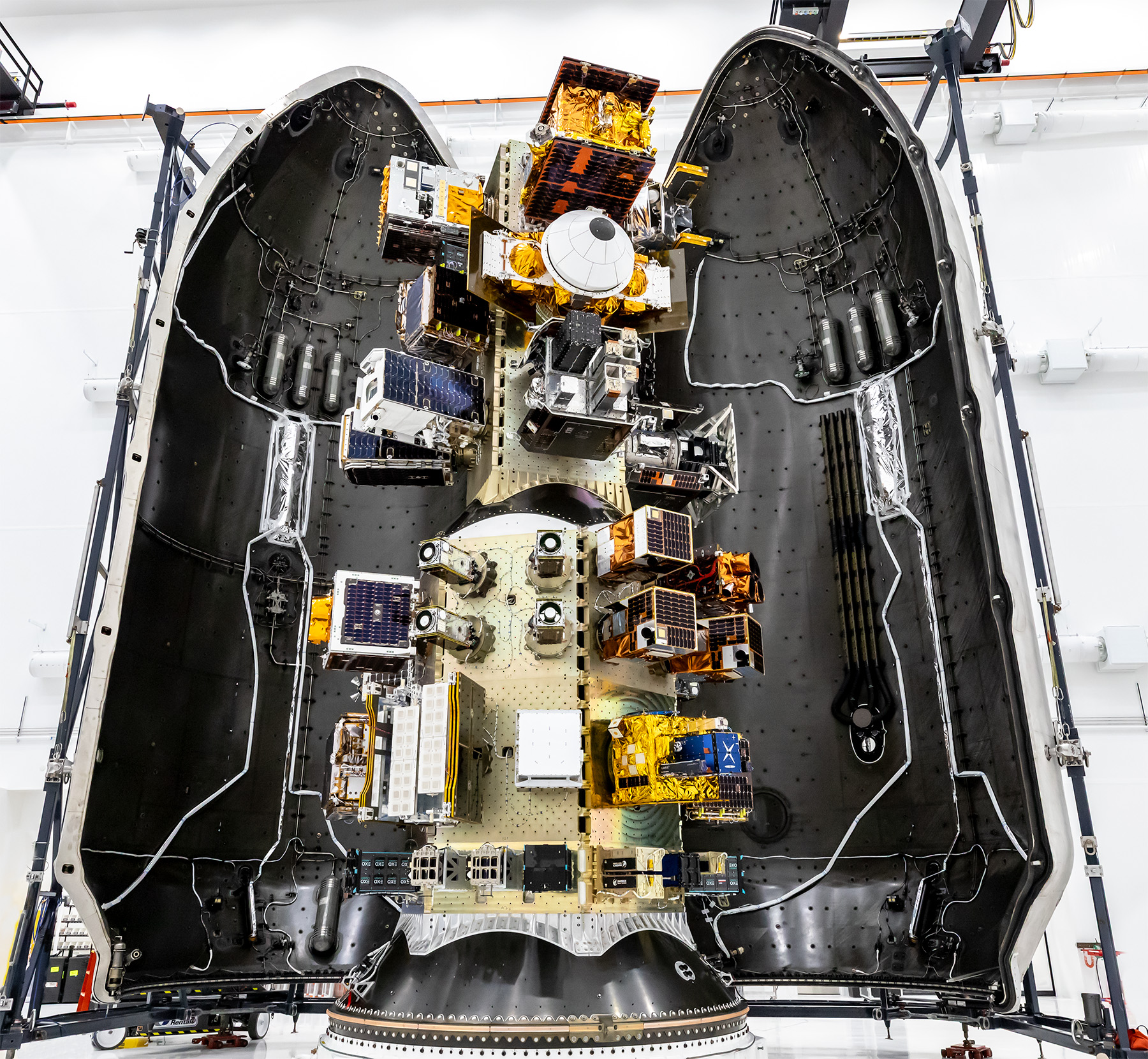
Transporter-18 SmallSats Encapsulation

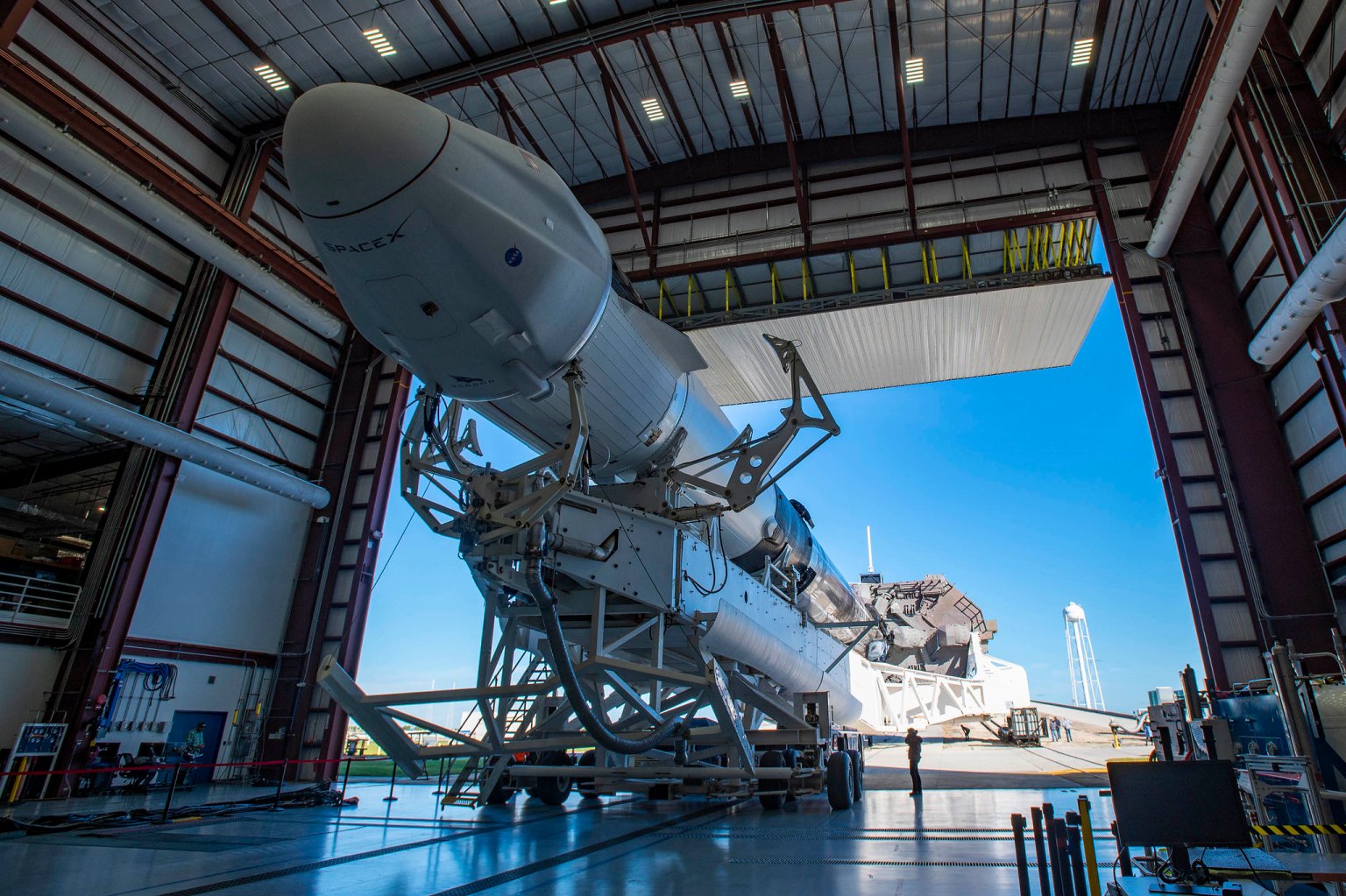
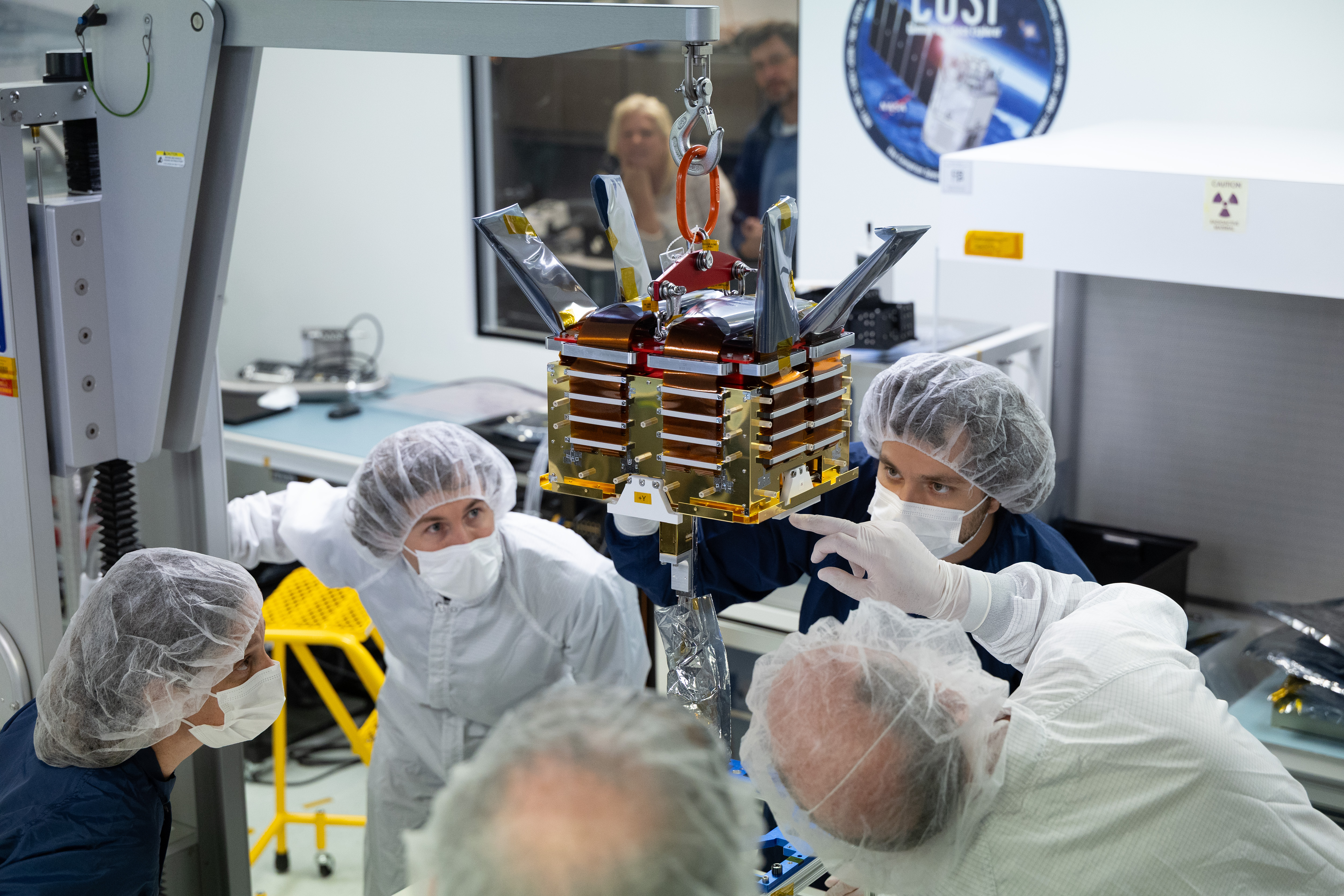
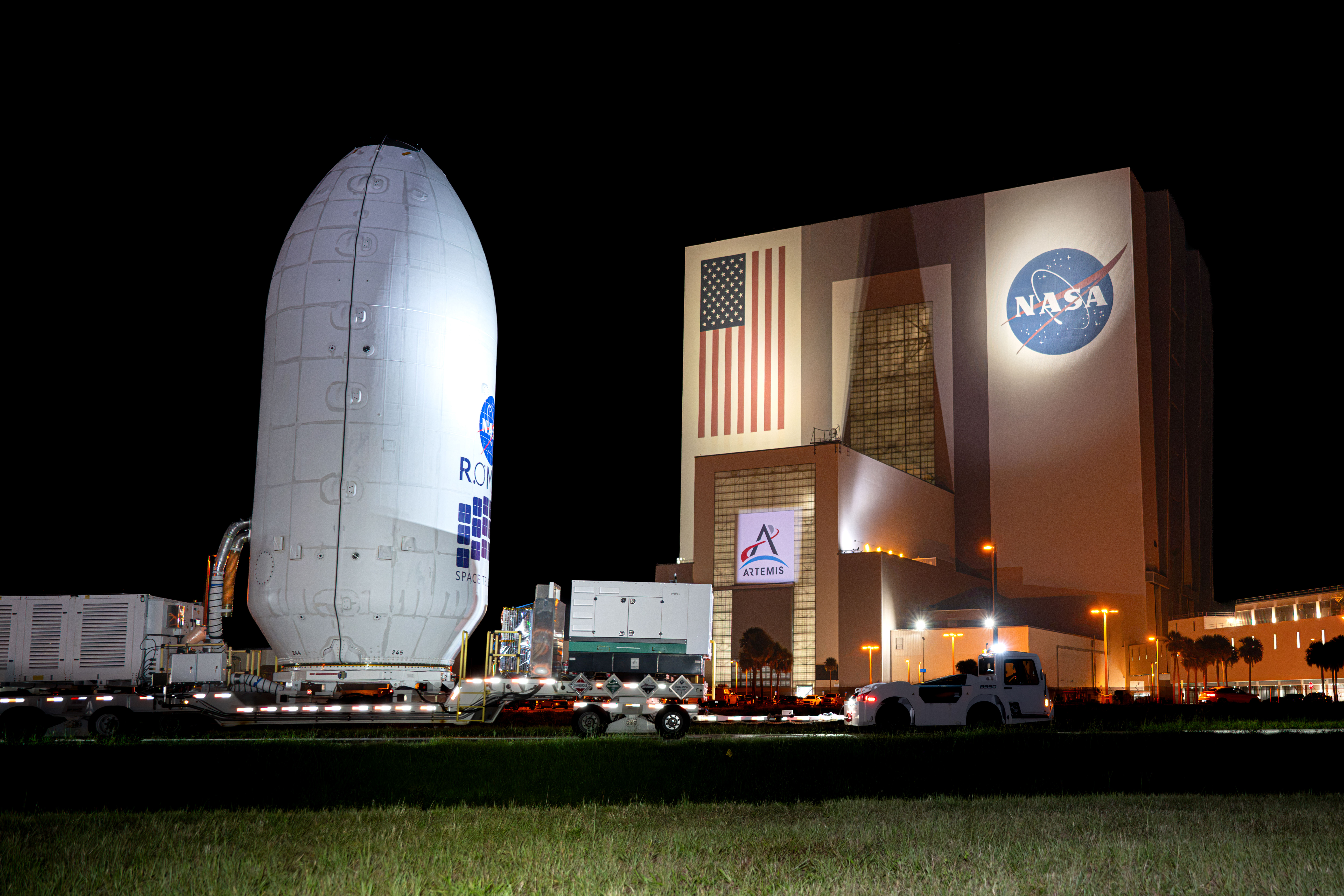
Three NASA-supported small spacecraft, shown along with many commercial payloads, before being encapsulated in a SpaceX Falcon 9. The rocket launched the payloads into low-Earth orbit at 11:32 a.m. PDT Thursday, Oct. 1, 2026, as part of the company’s Transporter-18 mission from Space Launch Complex 4 East at Vandenberg Space Force Base in California.

  •  

NASA Science, Cargo Launch on 35th SpaceX Resupply Mission to Station

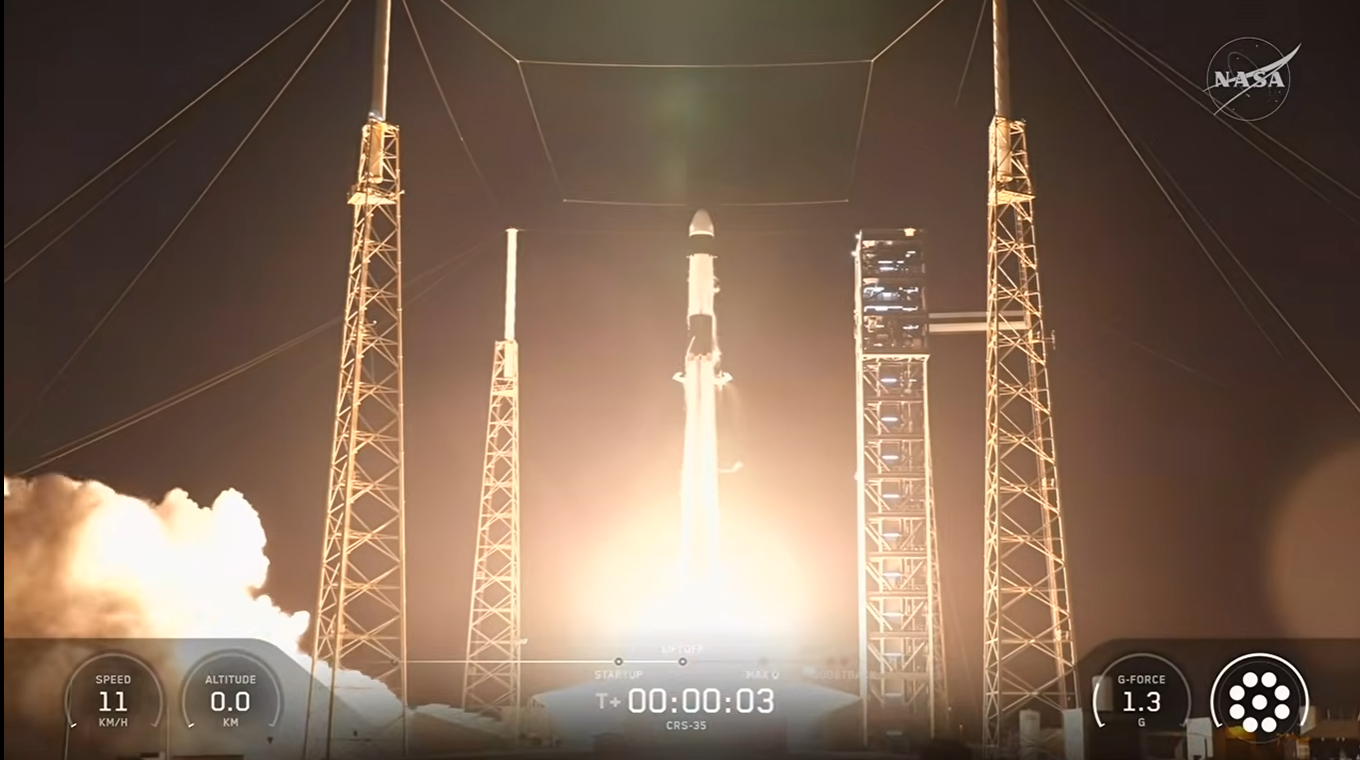
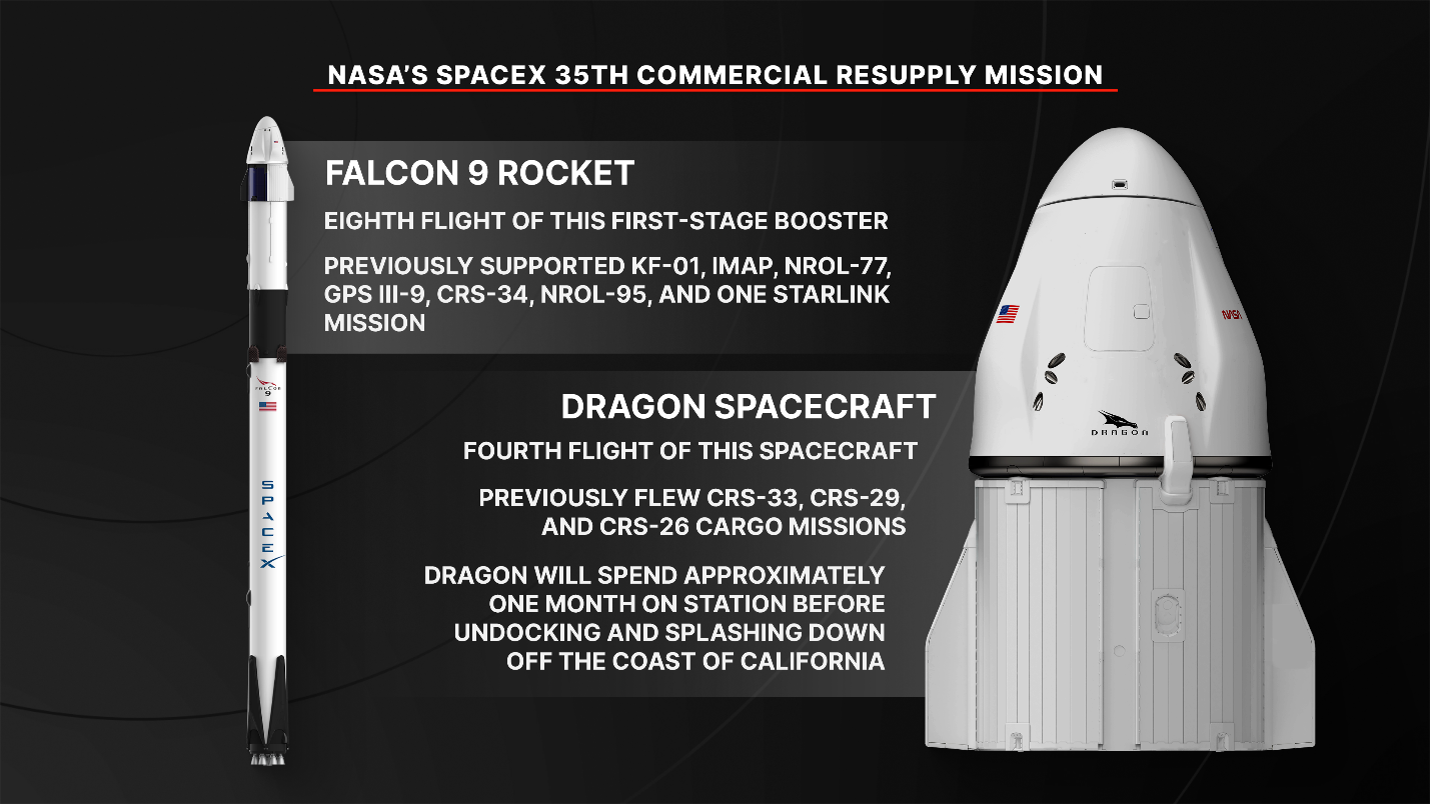
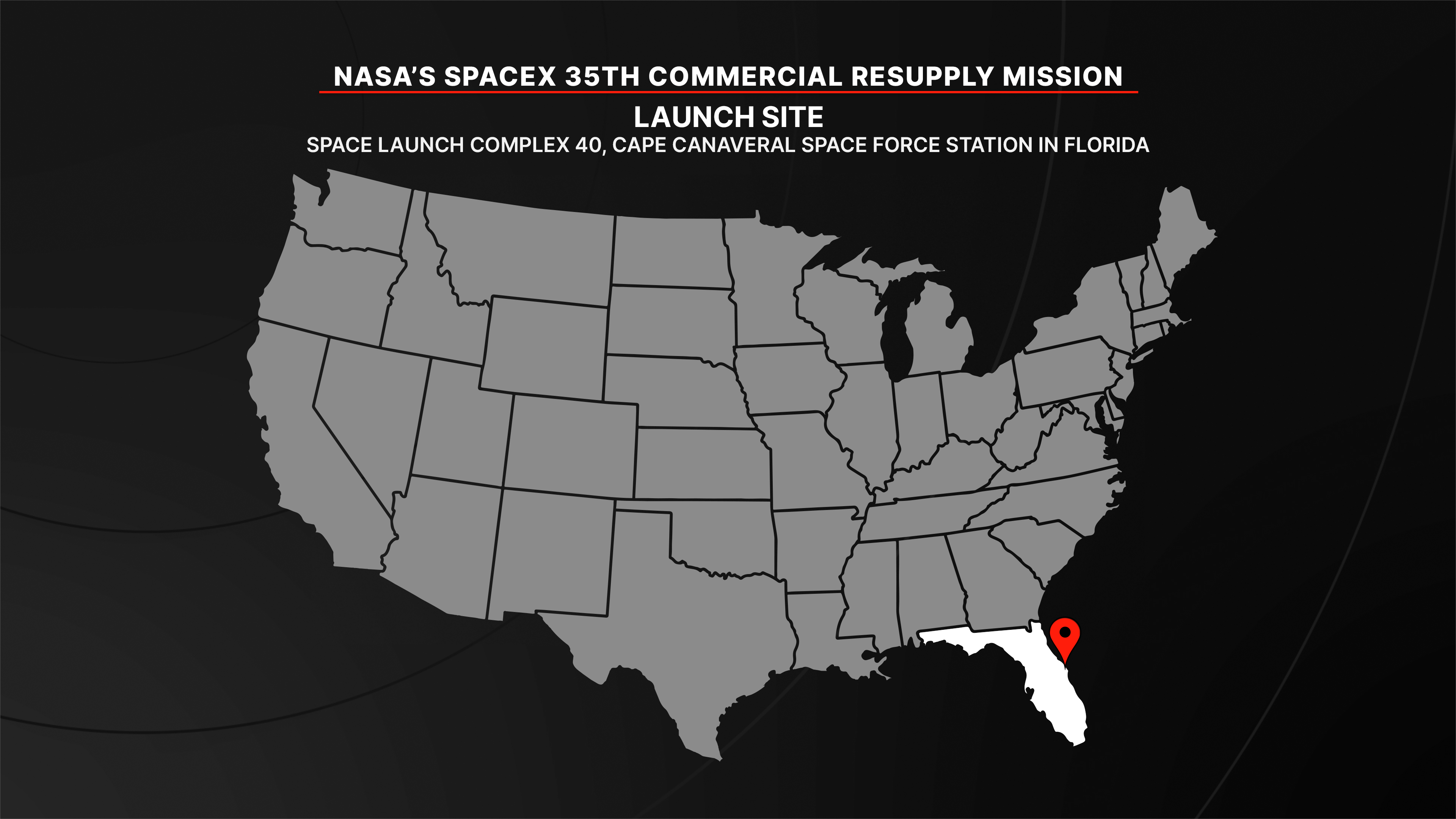
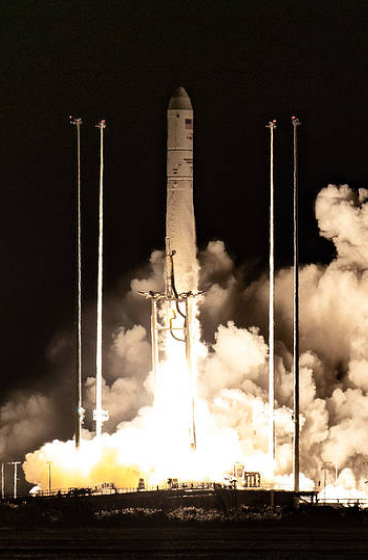
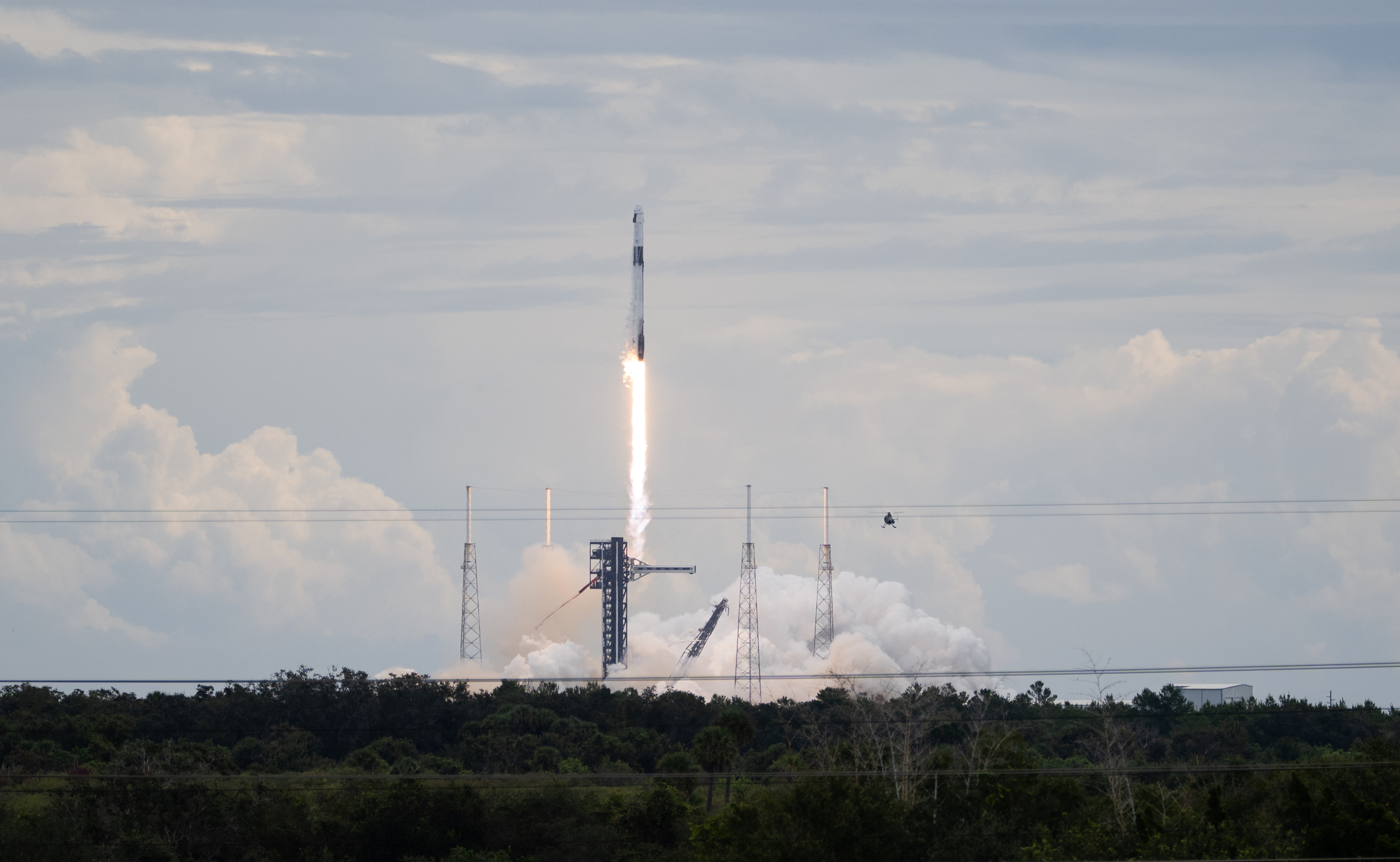
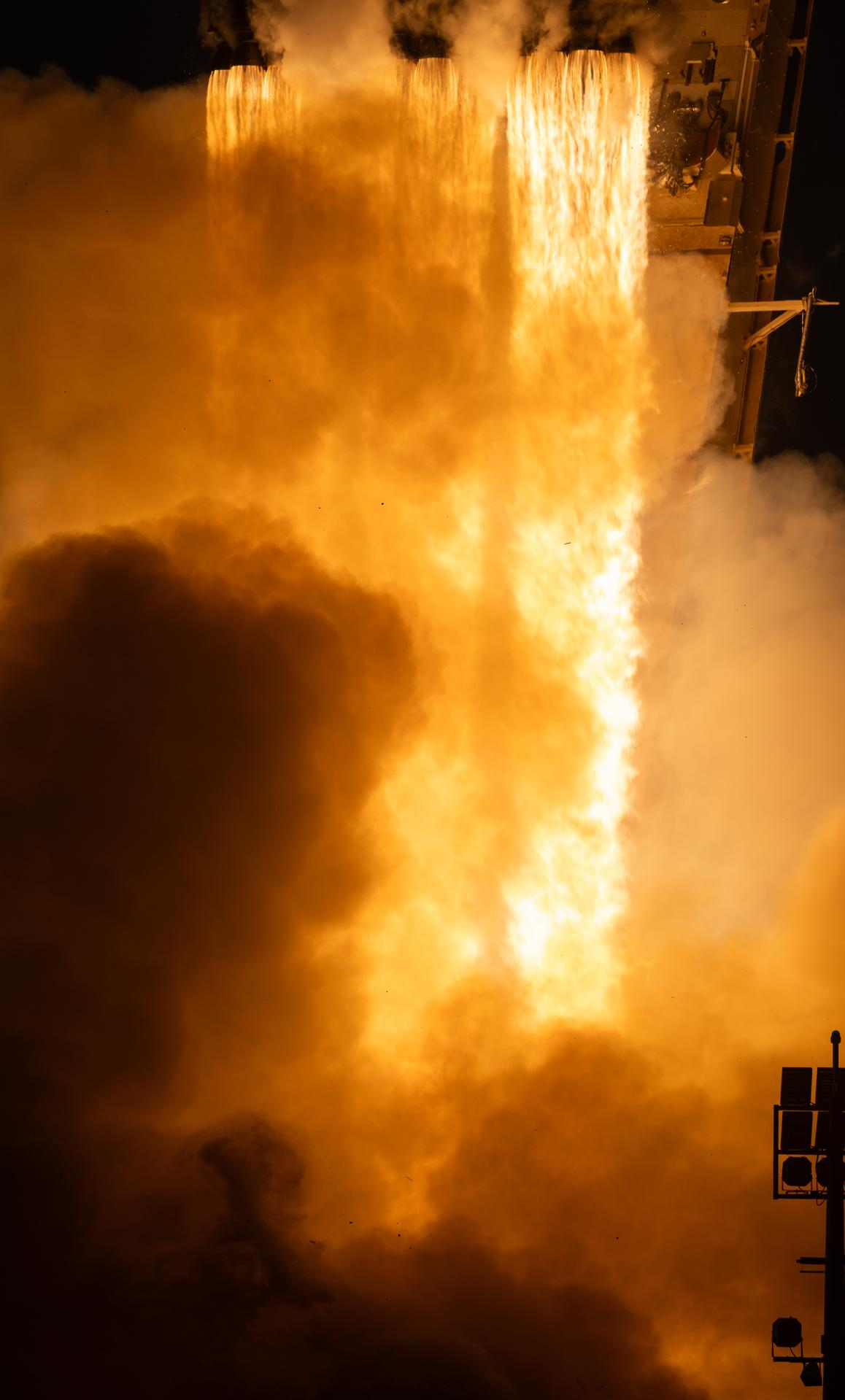
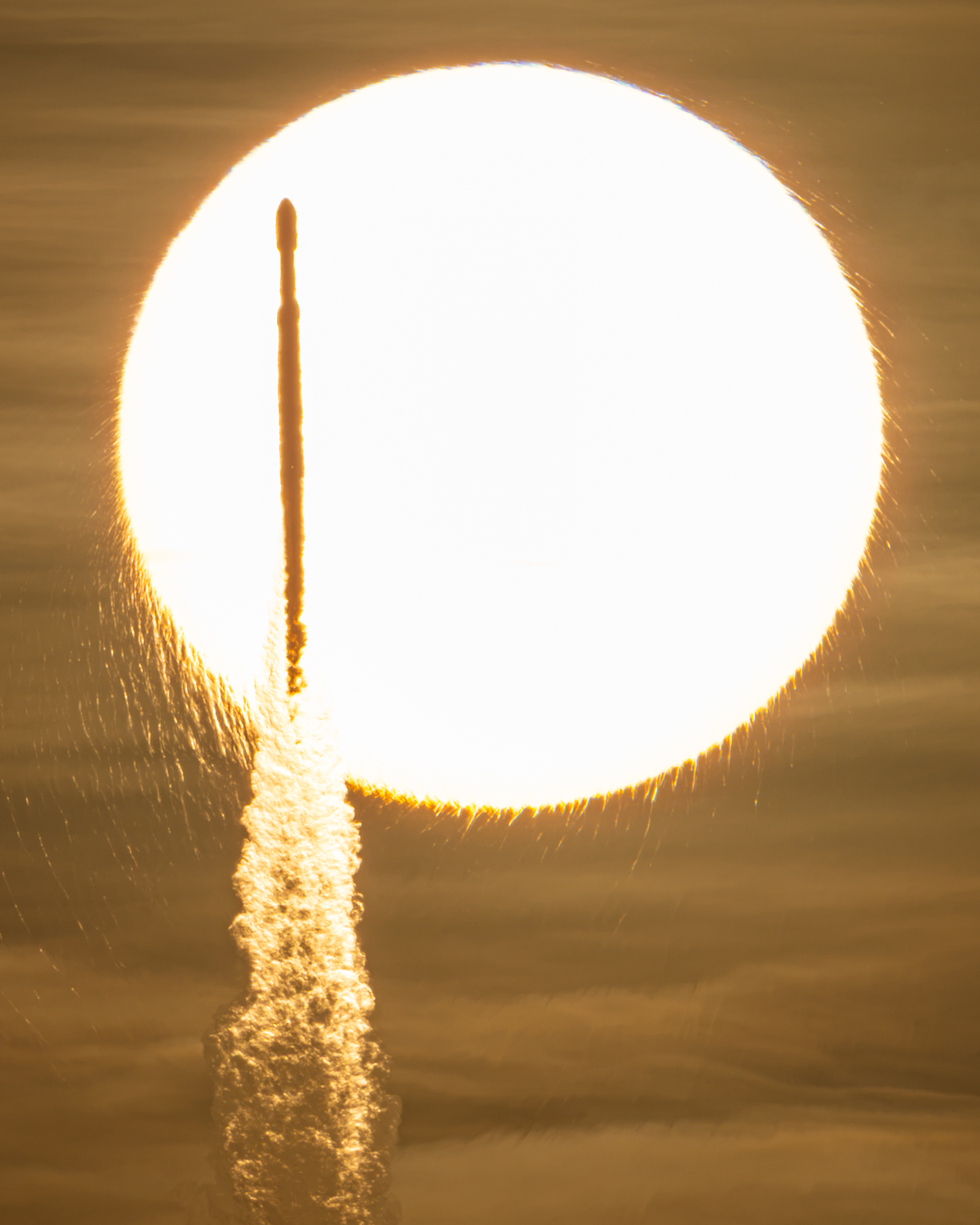
A SpaceX Falcon 9 rocket and Dragon spacecraft launched on Tuesday, Oct. 13, 2026, from Space Launch Complex 40 at Cape Canaveral Space Force Station in Florida as part of the company’s 35th Commercial Resupply Services mission to the International Space Station for NASA.
Credit: NASA

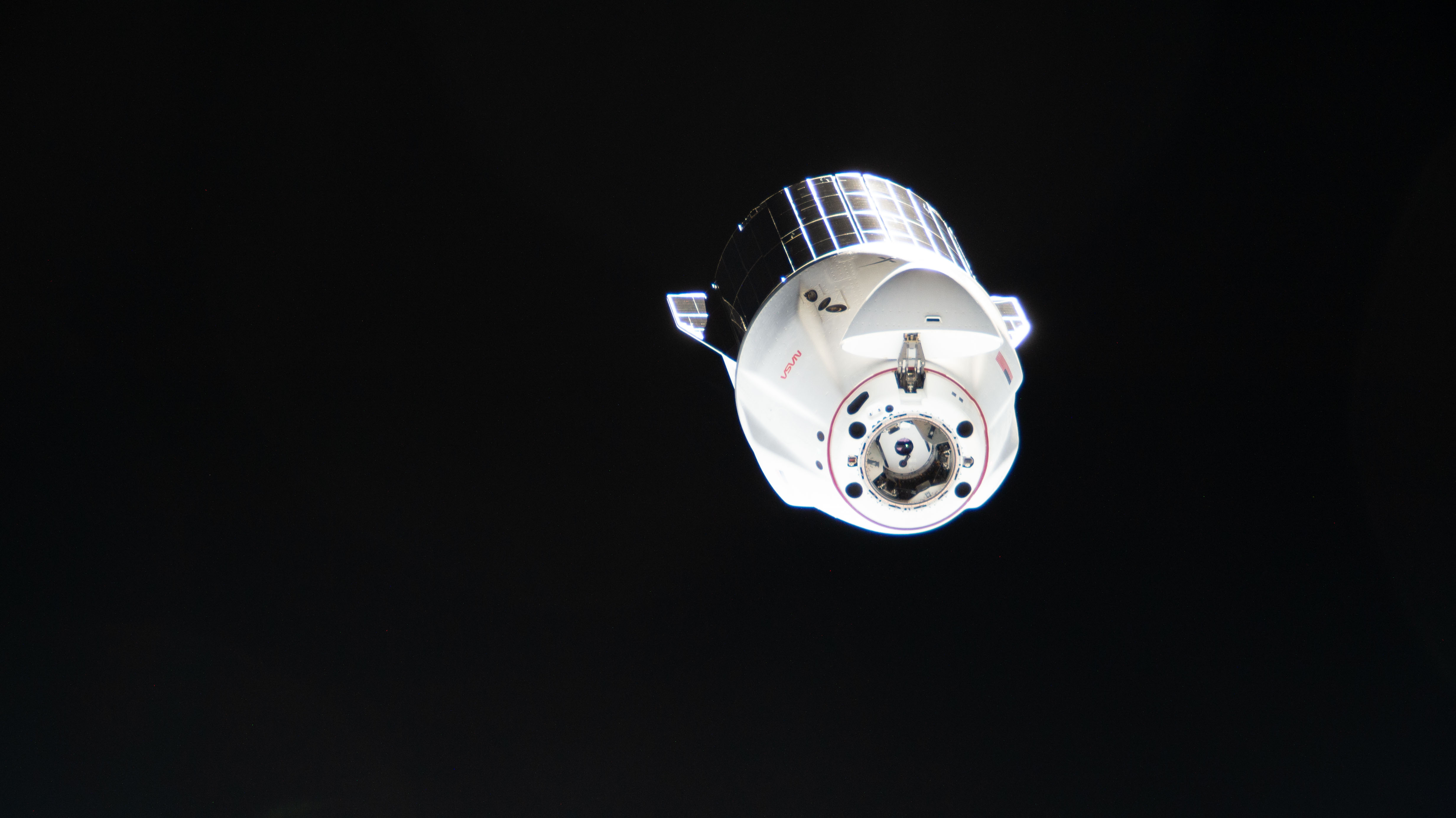
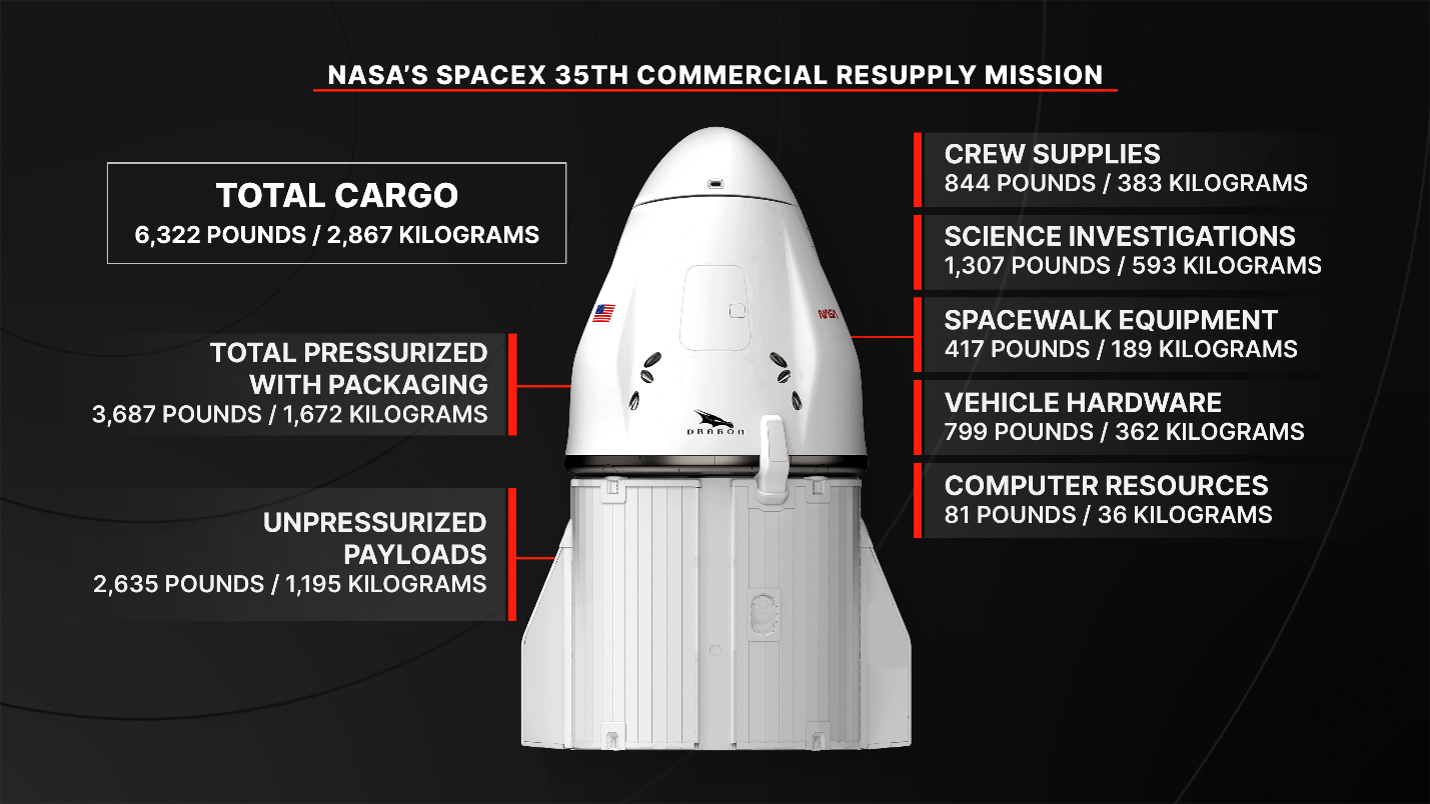
NASA’s SpaceX 35th commercial resupply mission lifted off at 6:33 a.m. EDT Tuesday aboard a Falcon 9 rocket from Space Launch Complex 40 at Cape Canaveral Space Force Station in Florida, carrying more than 6,300 pounds of supplies and hardware, bound for the International Space Station. Following its successful launch, the SpaceX Dragon spacecraft will carry new scientific experiments, cargo, and the final pair of International Space Station Roll-Out Solar Arrays to the orbiting laboratory.

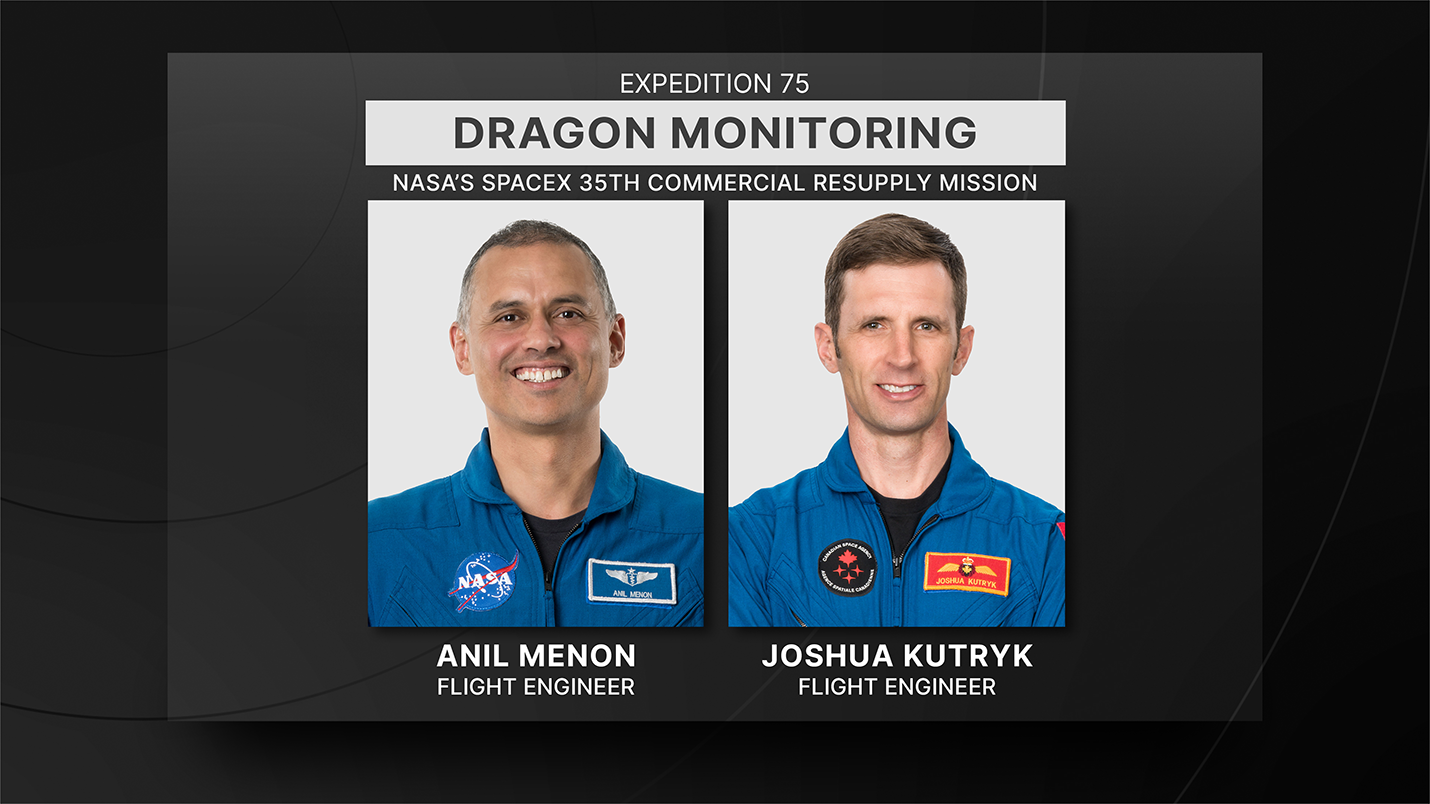
Dragon is scheduled to autonomously dock at 11 a.m., Thursday, Oct. 15, to the space-facing port of the space station’s Harmony module. NASA will stream rendezvous and docking coverage beginning at 9:15 a.m., through a variety of platforms. Learn where to watch online:

https://www.nasa.gov/live

The final pair of solar arrays will complete the space station’s power system augmentation, boosting available electricity for research, operations, and the station’s safe, controlled deorbit. Astronauts will install the arrays during a series of spacewalks planned for later this fall.

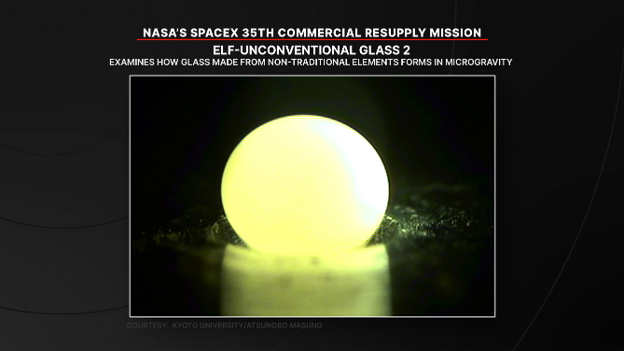
Dragon also is delivering several new experiments, including hardware to manufacture artificial retinas in microgravity that could help restore vision for patients on Earth and 3D heart tissue models to advance large-scale drug testing on future space missions. Dragon also will carry materials to study how a new type of glass is formed in microgravity, and brain organoids that could uncover potential treatment targets for neurodegenerative diseases like Alzheimer’s, Parkinson’s, and multiple sclerosis.

These are just a sample of the hundreds of investigations conducted aboard the orbiting laboratory in the areas of biology and biotechnology, physical sciences, and Earth and space science. Research and technology investigations taking place aboard the space station benefit people on Earth and lay the groundwork for other agency deep space missions. As part of NASA’s Artemis program, the agency will send astronauts to the Moon to prepare for future human exploration of Mars, inspiring the world through discovery in a new Golden Age of innovation and exploration.

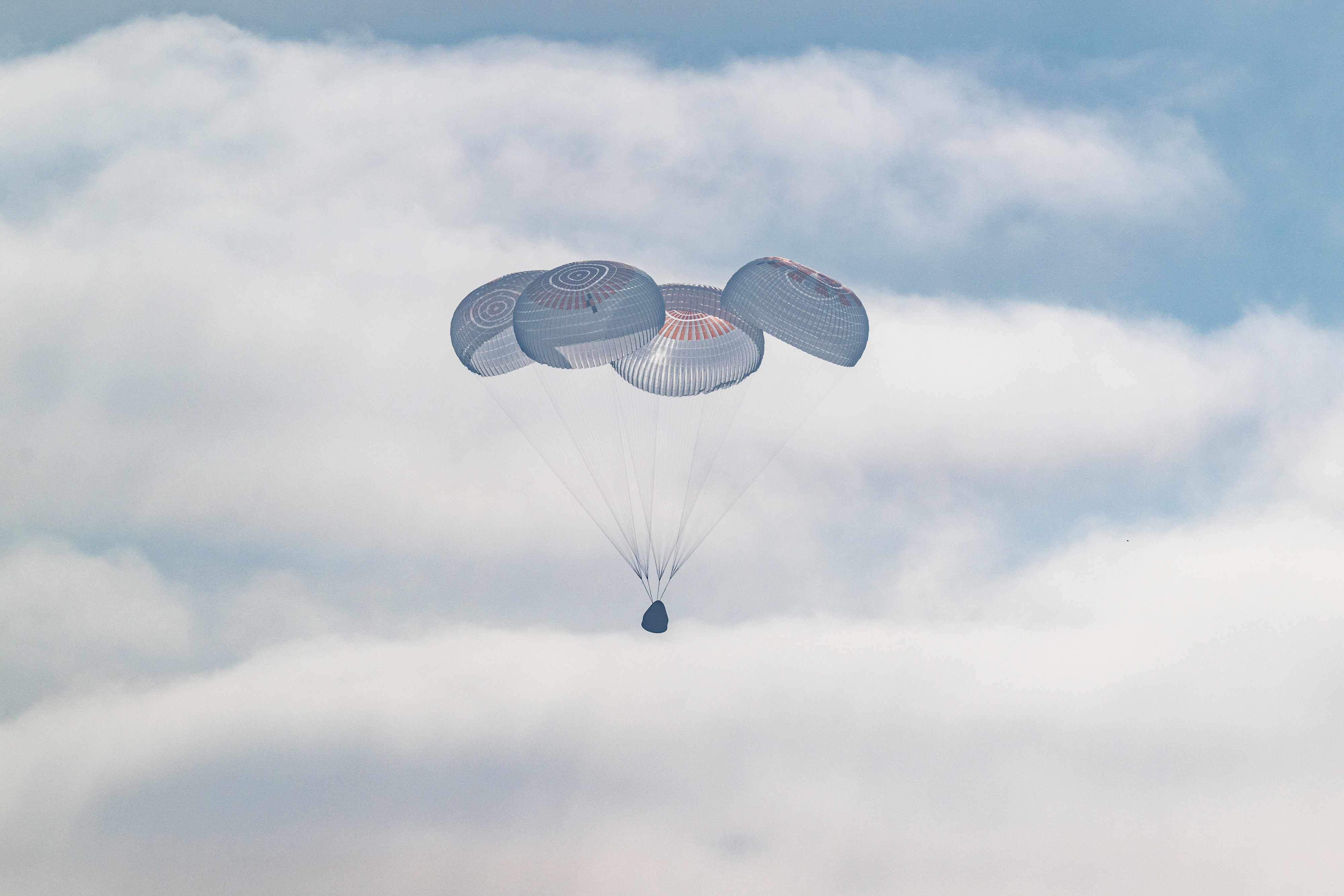
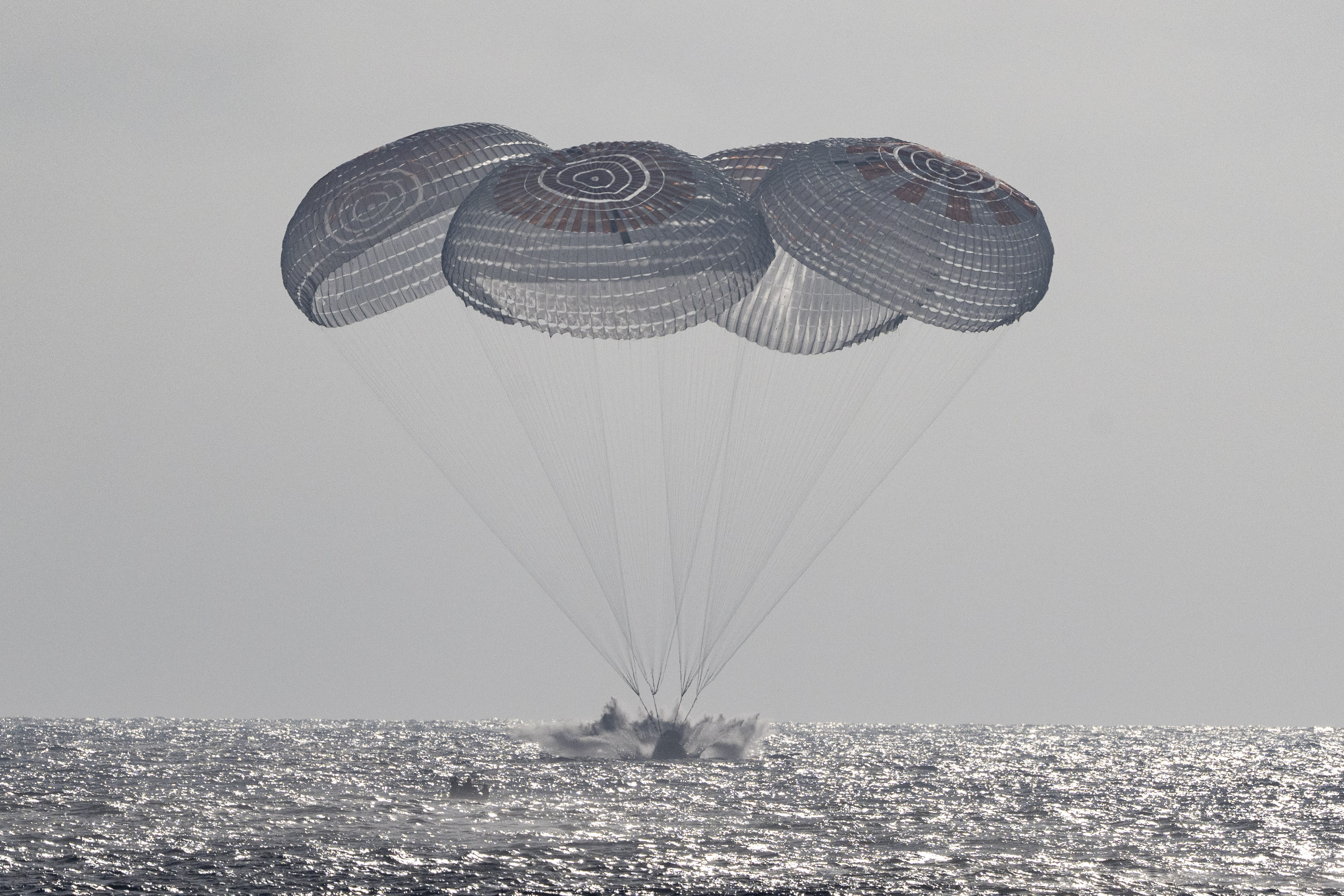
The Dragon spacecraft is scheduled to remain at the space station until mid-November when it will depart and return to Earth with time-critical research and cargo, splashing down off the coast of California.

Learn more about the International Space Station, its research, and crew, at:

https://www.nasa.gov/station

-end-

Joshua Finch / Jimi Russell
Headquarters, Washington
202-358-1100
joshua.a.finch@nasa.gov / james.j.russell@nasa.gov

Steven Siceloff
Kennedy Space Center, Fla.
321-876-2468
steven.p.siceloff@nasa.gov

Sandra Jones / Joseph Zakrzewski
Johnson Space Center, Houston
281-483-5111
sandra.p.jones@nasa.gov / joseph.a.zakrzewski@nasa.gov

  •  

NASA Science, Cargo Launch on 35th SpaceX Resupply Mission to Station

A SpaceX Falcon 9 rocket and Dragon spacecraft launched on Tuesday, Oct. 13, 2026, from Space Launch Complex 40 at Cape Canaveral Space Force Station in Florida as part of the company’s 35th Commercial Resupply Services mission to the International Space Station for NASA.
Credit: NASA

NASA’s SpaceX 35th commercial resupply mission lifted off at 6:33 a.m. EDT Tuesday aboard a Falcon 9 rocket from Space Launch Complex 40 at Cape Canaveral Space Force Station in Florida, carrying more than 6,300 pounds of supplies and hardware, bound for the International Space Station. Following its successful launch, the SpaceX Dragon spacecraft will carry new scientific experiments, cargo, and the final pair of International Space Station Roll-Out Solar Arrays to the orbiting laboratory.

Dragon is scheduled to autonomously dock at 11 a.m., Thursday, Oct. 15, to the space-facing port of the space station’s Harmony module. NASA will stream rendezvous and docking coverage beginning at 9:15 a.m., through a variety of platforms. Learn where to watch online:

https://www.nasa.gov/live

The final pair of solar arrays will complete the space station’s power system augmentation, boosting available electricity for research, operations, and the station’s safe, controlled deorbit. Astronauts will install the arrays during a series of spacewalks planned for later this fall.

Dragon also is delivering several new experiments, including hardware to manufacture artificial retinas in microgravity that could help restore vision for patients on Earth and 3D heart tissue models to advance large-scale drug testing on future space missions. Dragon also will carry materials to study how a new type of glass is formed in microgravity, and brain organoids that could uncover potential treatment targets for neurodegenerative diseases like Alzheimer’s, Parkinson’s, and multiple sclerosis.

These are just a sample of the hundreds of investigations conducted aboard the orbiting laboratory in the areas of biology and biotechnology, physical sciences, and Earth and space science. Research and technology investigations taking place aboard the space station benefit people on Earth and lay the groundwork for other agency deep space missions. As part of NASA’s Artemis program, the agency will send astronauts to the Moon to prepare for future human exploration of Mars, inspiring the world through discovery in a new Golden Age of innovation and exploration.

The Dragon spacecraft is scheduled to remain at the space station until mid-November when it will depart and return to Earth with time-critical research and cargo, splashing down off the coast of California.

Learn more about the International Space Station, its research, and crew, at:

https://www.nasa.gov/station

-end-

Joshua Finch / Jimi Russell
Headquarters, Washington
202-358-1100
joshua.a.finch@nasa.gov / james.j.russell@nasa.gov

Steven Siceloff
Kennedy Space Center, Fla.
321-876-2468
steven.p.siceloff@nasa.gov

Sandra Jones / Joseph Zakrzewski
Johnson Space Center, Houston
281-483-5111
sandra.p.jones@nasa.gov / joseph.a.zakrzewski@nasa.gov

  •  

Tranquilli o turbolenti? Dipende dalla stella madre

Analizzando un campione di trecento sistemi meglio caratterizzati tra gli oltre mille noti nella Via Lattea, un team internazionale di ricerca guidato dall’Istituto nazionale di astrofisica (Inaf) ha scoperto che i sistemi multi-pianeta finora identificati appartengono a due distinte “famiglie”. Lo studio, pubblicato oggi sulla rivista Nature Astronomy, dimostra per la prima volta l’esistenza di un vero e proprio “legame genetico” tra la stella madre e i suoi pianeti, in grado di determinare la nascita, l’evoluzione dinamica e la futura stabilità dell’intero sistema planetario.

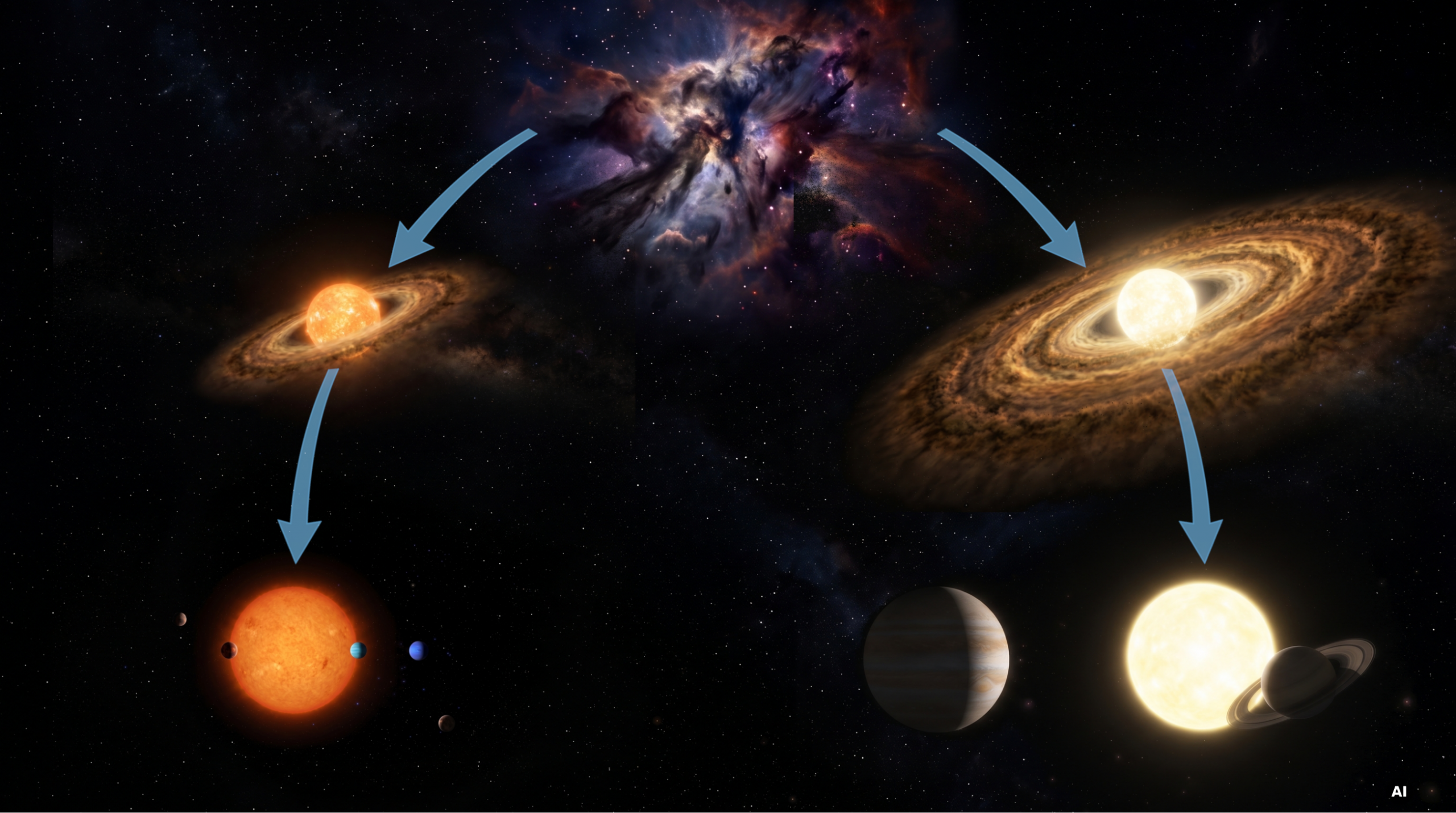
Illustrazione schematica del legame evolutivo tra le proprietà stellari e le architetture dei sistemi planetari. Ambienti di formazione stellare differenti danno origine a stelle e dischi protoplanetari con masse e abbondanze di elementi pesanti diverse, che a loro volta influenzano l’architettura dei sistemi multiplanetari che si formano al loro interno. Le stelle di massa inferiore a quella del Sole e con metallicità subsolare tendono a ospitare sistemi compatti, caratterizzati da livelli più bassi di eccitazione dinamica e da pianeti più piccoli ma più numerosi (a sinistra). Al contrario, le stelle più massicce, con metallicità solare o superiore, tendono a ospitare sistemi con un numero inferiore di pianeti, ma più massicci e distribuiti su orbite più ampie. Questi sistemi presentano una maggiore eccitazione dinamica, probabilmente dovuta a instabilità gravitazionali che possono espellere alcuni dei pianeti formatisi inizialmente (a destra). Crediti: Inaf / Università di Valencia / immagine generata con Ia

La prima famiglia è composta da sistemi ampi e massicci, spesso con masse totali comprese tra il doppio e dieci volte quelle del Sistema solare, che orbitano attorno a stelle più massicce e ricche di metalli (cioè elementi diversi da idrogeno ed elio) del nostro Sole. La seconda famiglia comprende invece sistemi compatti e a massa inferiore, costituiti da pianeti con masse e dimensioni comparabili tra loro – in una configurazione nota come “piselli in un baccello” (peas-in-a-pod, in inglese) – che orbitano attorno a stelle con massa e metallicità uguali o inferiori a quelle del Sole a distanze che, nella maggioranza dei casi, sono ben più strette di quelle di Mercurio nel Sistema solare.

Per poterle distinguere, le ricercatrici e i ricercatori hanno utilizzato una serie di parametri che consentono di confrontare le caratteristiche di sistemi così diversi tra loro. Per esempio, si è visto che quelli della prima famiglia presentano un’elevata “temperatura dinamica”. Misurata tramite un parametro che quantifica lo scostamento del sistema da una configurazione imperturbata con tutte le orbite circolari e sullo stesso piano,  questa caratteristica è la traccia di un passato segnato da violente instabilità gravitazionali, collisioni giganti ed espulsioni di pianeti. I membri della seconda famiglia, invece, mostrano tracce di storie dinamiche meno violente e più vicine a quella del nostro Sistema solare.

«La domanda fondamentale da cui siamo partiti è stata: cosa determina le caratteristiche dei sistemi planetari come li vediamo oggi? Vengono stabilite alla nascita o sono scolpite dall’evoluzione nel tempo? La verità, alla fine, si è rivelata stare nel mezzo», spiega Diego Turrini, ricercatore dell’Inaf e co-primo autore dell’articolo. «I nostri risultati mostrano che esiste un legame genetico tra i sistemi planetari e le loro stelle e che, in funzione della stella attorno cui nascono, questo legame ne determina anche il destino». Variazioni, anche contenute nell’ambiente di formazione planetaria, dovute alle diverse proprietà stellari, possono cambiare radicalmente la natura del sistema in formazione e la sua evoluzione futura, determinando se questa sia caratterizzata da fasi di marcata instabilità e da impatti giganti.

«La difficoltà principale durante l’analisi dei dati è stata determinare se le due famiglie di sistemi planetari fossero reali o solo un’illusione creata dai limiti tecnologici delle attuali tecniche osservative», aggiunge Camilla Danielski, ricercatrice dell’Università di Valencia precedentemente assegnista di ricerca all’Inaf, co-prima autrice del lavoro. «Alla fine del percorso è diventato chiaro che gli effetti di selezione hanno agito come la punta dell’iceberg, rivelando l’esistenza di diversità ben più profonde e strutturali tra questi sistemi».

Per poter provare questa ipotesi, è stata essenziale anche una serie di simulazioni numeriche che hanno esplorato l’evoluzione di sistemi planetari con diverse condizioni iniziali. «Gli scenari che meglio riproducono le proprietà dinamiche della famiglia di sistemi ampi e massivi sono quelli in cui i sistemi sono instabili fin dalla nascita», sottolinea Danae Polychroni, ricercatrice dell’Inaf che ha seguito questa parte dello studio. «La maggiore abbondanza di materiale da cui formare i pianeti attorno alle loro stelle ospite fa sì che questi nascano troppo grandi, impedendo al sistema di rimanere stabile».

La scoperta chiarisce come l’ambiente stellare nativo influisca direttamente sul destino dei pianeti e sulla sopravvivenza di mondi potenzialmente in grado di ospitare la vita. La conoscenza di questo legame genetico costituisce una chiave di lettura essenziale per orientare la ricerca di architetture planetarie simili al Sistema solare e di pianeti potenzialmente abitabili come la Terra.

Per saperne di più:

  • Leggi su Nature Astronomy l’articolo “Two families of multi-planet systems with distinct architectures and stellar hosts”, di Diego Turrini, Camilla Danielski, Danae Polychroni, Robert Przyłuski, Hans Rickman, Diego Bossini, J. M. Diederik Kruijssen, Angelo Zinzi, Simon Goodwin, Steven N. Longmore, Mélanie Chevance e Lise Ramambason. Lo studio, a guida Inaf e supportato dall’International Space Science Institute di Berna tramite il progetto “Transformation of Planetary Systems by Environmental Perturbations” guidato da Diederik Kruijssen, vede la partecipazione di un’ampia collaborazione internazionale, con l’Università di Valencia, l’Agenzia Spaziale Italiana (Asi), il Centrum Badań Kosmicznych Pan, l’Università di Uppsala e diverse università europee.


  •  

Meteo variabile sulla nana bruna più fredda

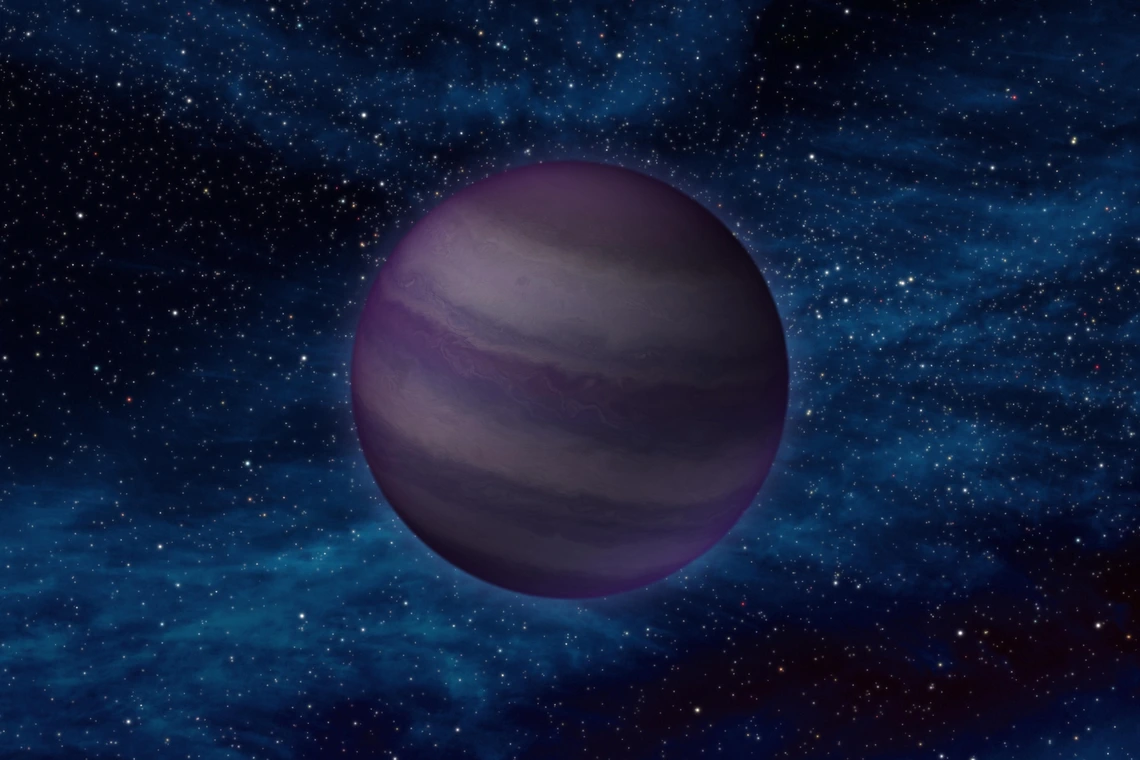
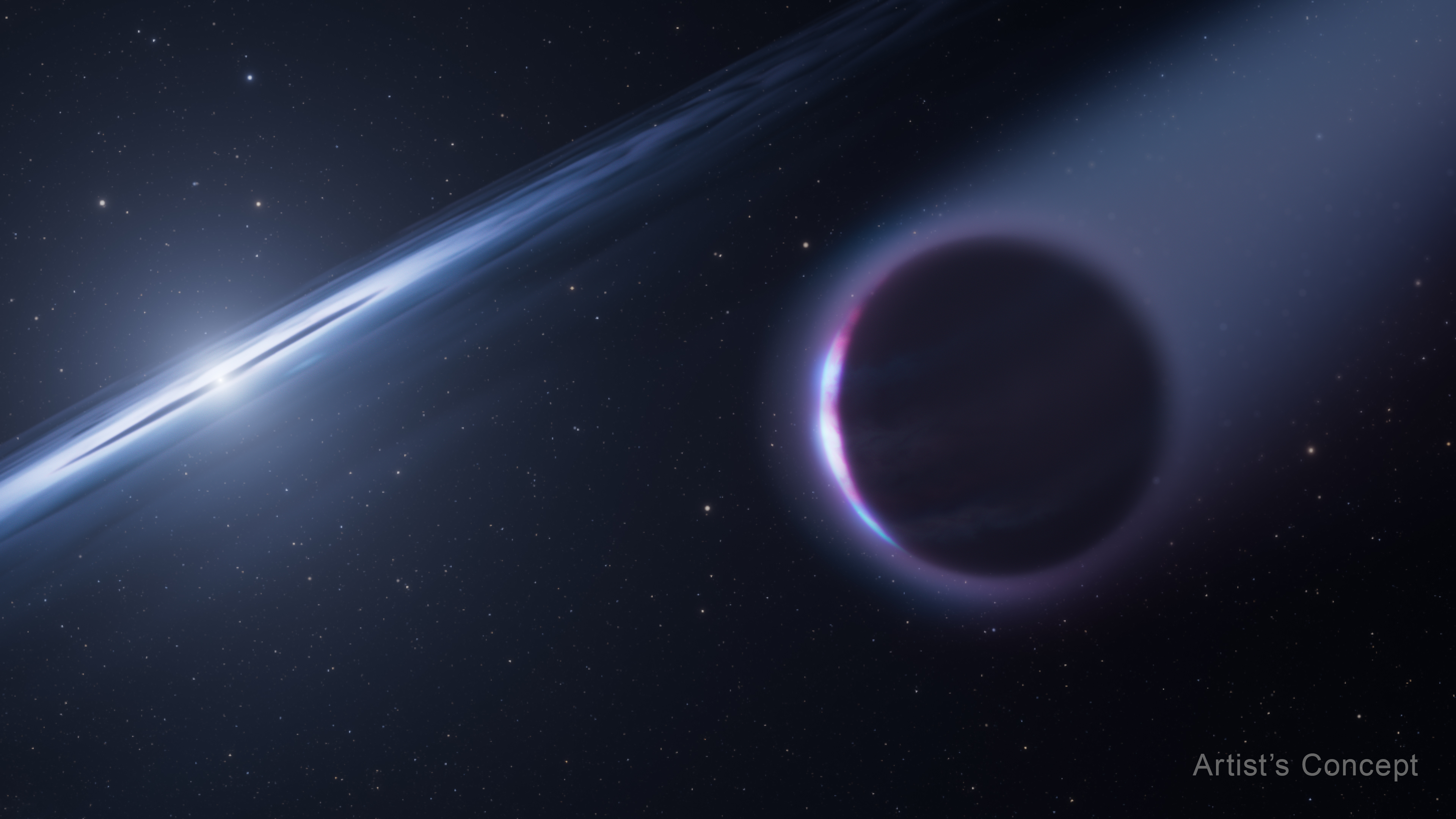
Si trova a 7,5 anni luce di distanza dalla Terra, nella costellazione dell’idra. Ha una massa stimata tra tre e dieci volte quella di Giove, dimensioni pressoché identiche e una temperatura superficiale di circa -8 gradi Celsius. Ma non è né un pianeta né una stella. È Wise 0855, la nana bruna più fredda conosciuta. Grazie a una campagna osservativa condotta con il telescopio spaziale James Webb (Jwst), un team di ricercatori guidato dall’Università dell’Arizona ha studiato l’atmosfera di questo corpo celeste al confine tra una stella e un pianeta. I risultati della ricerca, in uscita su The Astronomical Journal, rivelano una struttura tridimensionale e una chimica complessa, con caratteristiche molto simili a quelle della Terra.

Illustrazione artistica di una nana bruna, un corpo celeste troppo massiccio per essere un pianeta, ma non abbastanza da innescare le reazioni di fusione nucleare che alimentano le stelle. Crediti: Nasa/Jpl-Caltech

Per giungere a queste conclusioni, il team di astronomi guidato da Brittany Miles, ricercatrice dell’Università dell’Arizona, ha osservato Wise 0855 per 11 ore utilizzando lo spettrografo Nirspec di Jwst, ottenendo uno spettro della luce ogni 15 minuti.

Questa tecnica, nota come “spettroscopia a serie temporale”, permette di seguire le variazioni dello spettro di luce nel tempo e studiare così i cambiamenti nelle caratteristiche dell’atmosfera. L’analisi di questi spettri ha permesso di ottenere ciò che i ricercatori stessi definiscono la ricostruzione più dettagliata mai ottenuta della dinamica atmosferica di Wise 0855, nonché la prima conferma diretta che le nubi d’acqua su un altro corpo celeste cambiano spessore nel tempo, proprio come accade sulla Terra.

I dati di Jwst rivelano infatti che l’atmosfera di Wise 0855 è modellata da due processi distinti che si verificano simultaneamente: ad alte quote, nubi d’acqua si addensano e si diradano con la rotazione dell’oggetto; più in profondità, imponenti moti convettivi rimescolano i gas, richiamando e trasportando verso l’alto molecole provenienti dalle regioni sottostanti.

«È la prima volta che riusciamo a confermare che le nubi d’acqua si assottigliano e si inspessiscono su un mondo vicino», sottolinea Miles. «Prima di Jwst avevamo a disposizione soltanto dati fotometrici, nei quali gli effetti delle nubi, della chimica e della temperatura risultavano inevitabilmente mescolati. Ora siamo finalmente in grado di distinguerli».

Le nane brune sono oggetti celesti troppo massicci per essere pianeti, ma non abbastanza da innescare le reazioni di fusione nucleare che alimentano le stelle. Grazie al calore residuo della loro formazione, tuttavia, emettono una debole radiazione. Per spiegare come questa luce attraversi l’atmosfera e raggiunga lo spazio, portando con sé informazioni sulle caratteristiche di questi oggetti, Mark Marley, direttore del Lunar and Planetary Laboratory dell’Università dell’Arizona e coautore dello studio, ricorre alla metafora di una zanzariera: «I fotoni emessi dal corpo celeste attraversano l’atmosfera e si disperdono nello spazio. Per noi è come guardare il mondo attraverso una zanzariera che lascia filtrare parte della luce. Stiamo imparando a conoscere ciò che si trova da entrambi i lati della zanzariera, ma dobbiamo anche capire com’è fatta la zanzariera stessa».

Nel caso di Wise 0855, in particolare, questa “zanzariera” cambia continuamente. Dalle indagini è emerso, infatti, che mentre la nana bruna ruota su sé stessa, “sfilano” nel campo di vista regioni caratterizzate da coperture nuvolose e temperature differenti, creando un mosaico dinamico di zone più calde e più fredde. La sensibilità dello spettrografo di Jwst ha permesso di tracciare queste variazioni analizzando singole impronte molecolari, un risultato che nessun osservatorio precedente era riuscito a ottenere per un oggetto così freddo.

Oltre alle variazioni di temperatura associate alla rotazione della nana bruna, lo strumento Nirspec ha registrato un segnale ritmico e oscillatorio associato alla presenza di due specifici gas: monossido di carbonio e fosfina. Secondo gli scienziati, non v’è dubbio: il segnale è dovuto al calore interno della nana bruna che spinge continuamente i gas verso la superficie, con un meccanismo analogo a quello che fa salire il liquido caldo dal fondo di una pentola in ebollizione.

Si tratta di un processo ben noto in planetologia, noto come “chimica di disequilibrio” (dall’inglese disequilibrium chemistry), spiegano i ricercatori. Su Giove, il rimescolamento convettivo trasporta i gas dagli strati profondi e caldi verso l’atmosfera superiore. Lo stesso processo è già stato osservato nelle nane brune, ma seguirne per la prima volta le variazioni in tempo reale, molecola per molecola, apre una prospettiva del tutto nuova.

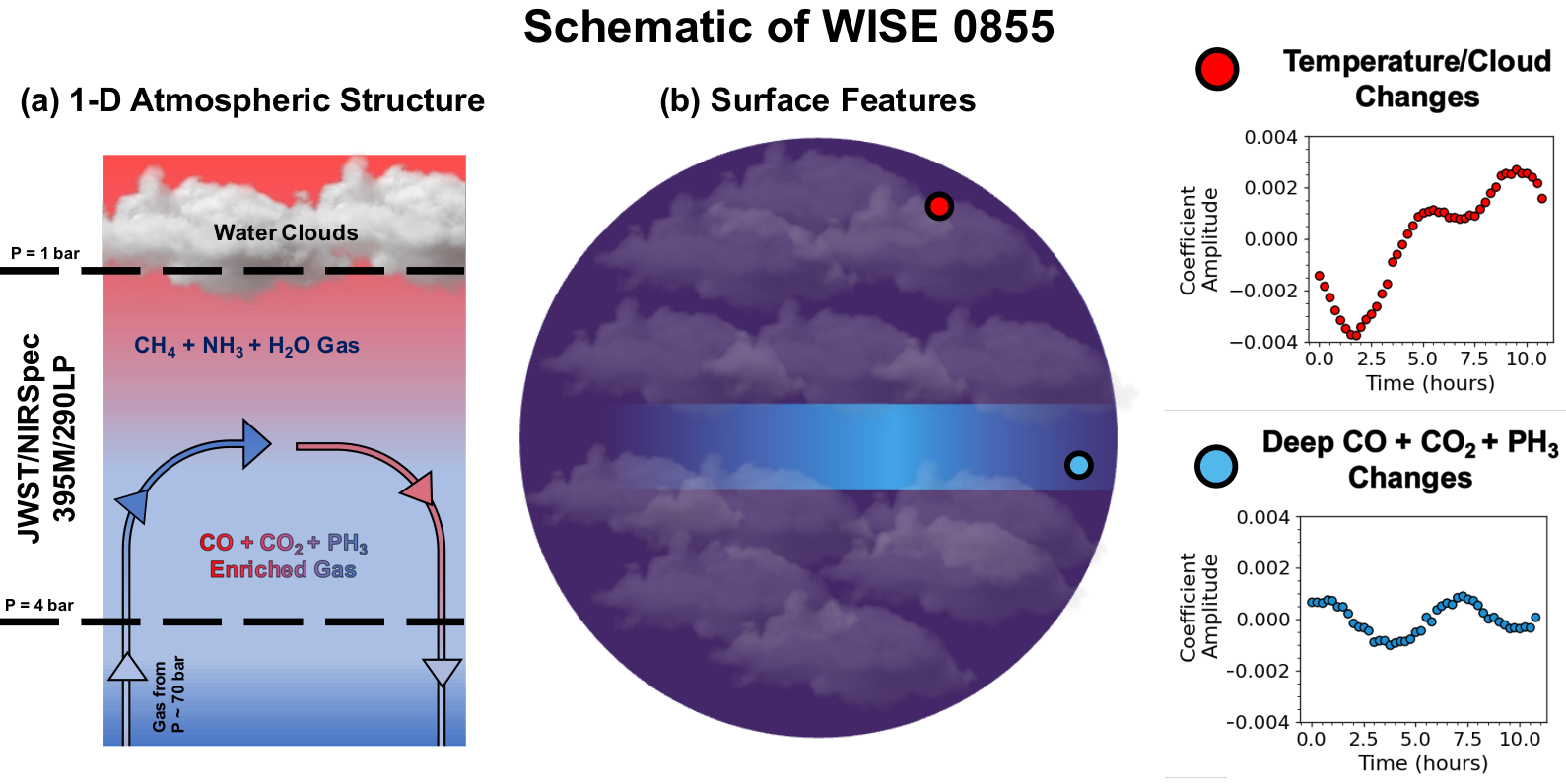
Schema dell’atmosfera di Wise 0855 elaborato sulla base delle osservazioni in serie temporale e dei modelli che meglio riproducono i dati di Jwst. In (a), rappresentazione monodimensionale dell’atmosfera della nana bruna. Le frecce indicano i moti convettivi che trasportano gas caldo ricco di monossido di carbonio (CO), anidride carbonica (CO₂) e fosfina (PH₃) dagli strati più profondi dell’atmosfera, dove la pressione è maggiore, verso la fotosfera, lo strato più esterno. Le linee nere tratteggiate delimitano l’intervallo di pressione a cui è sensibile la modalità osservativa Nirspec del telescopio spaziale James Webb. In (b), rappresentazione bidimensionale semplificata delle caratteristiche superficiali che potrebbero contribuire alla variabilità osservata. Le regioni viola sono più nuvolose e presentano variazioni di temperatura dell’ordine di 1 kelvin. Le regioni blu presentano una copertura nuvolosa inferiore e consentono di sondare strati più profondi, dove le firme del disequilibrio chimico sono più marcate. Entrambi i tipi di regione possono subire variazioni di temperatura. Crediti: Brittany E. Miles et al., The Astrophysical Journal, 2026

Per il team di ricerca, il valore di questo studio non risiede soltanto in ciò che ci rivela su Wise 0855, ma nelle sue implicazioni nella caratterizzazione delle atmosfere planetarie: i principi fisici di convezione, formazione nuvolosa e chimica atmosferica che governano questo mondo si applicano anche ai giganti gassosi del Sistema solare, come Giove. Se questi principi sono universali, valgono anche per gli esopianeti giganti gassosi che gli astronomi stanno iniziando a studiare sistematicamente grazie al telescopio spaziale James Webb.

«Anche se le nane brune non sono veri e propri pianeti, mostrano comportamenti simili a quelli planetari», osserva Miles. «Tra di loro esiste uno spettro continuo di comportamenti, non c’è una linea di demarcazione netta. Giove e Wise 0855 sono chiaramente diversi, ma presentano schemi meteorologici simili. Esistono dunque principi fondamentali di fisica e chimica che possono essere applicati a tutti questi mondi».

I ricercatori guardano ora alle prossime osservazioni con il James Webb, con l’obiettivo di definire con maggiore precisione i dettagli sulla rotazione di Wise 0855 e approfondire la dinamica tridimensionale dei movimenti nella sua atmosfera. Per il momento, il messaggio è chiaro: il tempo meteorologico esiste ovunque e alcuni dei nostri vicini più prossimi hanno cieli che vale la pena osservare.

Per saperne di più:

  • Leggi il preprint dell’articolo in uscita su The Astronomical Journal  “Water Cloud and Chemical Modulations in the Coldest Brown Dwarf” di Brittany E. Miles, James Mang, Caroline V. Morley, Andrew J. I. Skemer, Melanie Rowland, Brianna Lacy, Genaro Suarez, Channon Visscher, Dániel Apai, Gordon Bjoraker, Aarynn L. Carter, Jacqueline K. Faherty, Jonathan J. Fortney, Nguyen Fuda, Thomas Geballe, Harshil Kothari, Mary Anne Limbach, Mark Marley, Allison M. McCarthy, Adam Schneider, Johanna Vos, Michael Cushing, Richard Freedman, Michael Line, Roxana Lupu, Emily Martin e Mikayla J. Wilson


  •  

Eclissi, lo spettacolo più straordinario del cielo

Che cosa cercavano le decine di migliaia di turisti che il 12 agosto hanno affollato una striscia del territorio spagnolo dalla costa atlantica fino alle Baleari? Erano tutti alla ricerca dell’emozione del Sole che si spegne nel corso di un’eclissi totale. Alcuni hanno avuto fortuna, altri no perché nubi sfilacciate o semplicemente foschia hanno rovinato lo spettacolo. È quello che è successo a me: nel cielo perfetto di Ibiza si è materializzata una nuvoletta, giusto prima della totalità. Anche l’Italia è stata lambita dall’ombra della Luna con una preferenza per le regioni del nord che hanno goduto di oltre il 90 per cento di copertura del disco solare.

Indipendentemente dal fascino ancestrale del sole nero, vorrei sottolineare che l’eclisse è un momento magico che ci rende unici nel Sistema solare. Assistere all’oscuramento del Sole è, infatti, possibile solo per noi terrestri grazie a una fortuita combinazione tra dimensioni e distanza del Sole e della Luna, visti dalla Terra. Per dirla in termini astronomici, il Sole e la Luna appaiono avere le stesse dimensioni angolari nel cielo. È questa coincidenza, unica nel Sistema solare, a rendere possibile alla piccola Luna di oscurare il Sole. Avere le stesse dimensioni angolari non è però sufficiente: perché si verifichi un’eclisse occorre che, nel percorrere le loro orbite, Luna e Terra siano allineate con il Sole.

Marco Bastoni, “Il piccolo libro delle eclissi. Tra mito e scienza, lo spettacolo più straordinario del cielo”, Apogeo, 2026, 160 pagine, 16 euro

In questo rapporto a tre astronomico gioca un ruolo fondamentale l’inclinazione, piccola ma non trascurabile, del piano dell’orbita della Luna rispetto al piano dell’orbita della Terra intorno al Sole. Sono poco meno di 5°, ma sono fondamentali per regolare il succedersi dei momenti “speciali” della Luna che si verificano quando i tre corpi celesti si allineano e possono farsi ombra, determinando le eclissi. Si tratta di fenomeni abbastanza rari perché, come spiega molto bene Marco Bastoni nel suo Il piccolo libro delle eclissi, si richiedono delle condizioni particolari perché la Luna deve trovarsi al posto giusto nel momento giusto in modo tale che si verifichi un perfetto allineamento tra Sole, Luna e Terra.

Grazie alla nostra conoscenza delle complicate e molteplici periodicità dei moti della Luna adesso sappiamo predire con precisione le eclissi, ma, esattamente come Marco Bastoni, ammiro le capacità dei nostri antenati. Pur facendo i conti in caratteri cuneiformi su tavolette d’argilla, i babilonesi erano già in grado di prevedere le eclissi di Sole e di Luna. Diciamo che era una necessità: nell’antichità le eclissi erano foriere di sventura e occorreva essere pronti per cercare di correre ai ripari.

Adesso il terrore è scomparso e le eclissi sono diventate magneti turistici che, però, continuano a offrire le stesse antiche suggestioni. Sappiamo che non ci sono i draghi che mangiano il Sole, ma non possiamo restare indifferenti. È madre natura al suo meglio.


  •  

NASA’s SpaceX CRS-35 Mission to Launch Health Research

NASA experiments focused on human and plant health and drug-resistant organisms will travel to the International Space Station aboard SpaceX’s 35th Commercial Resupply Services mission for the agency from Cape Canaveral Space Force Station in Florida, advancing research that benefits life on Earth and future exploration.

This research supports astronaut health during long-duration missions through four investigations from the agency’s Biological and Physical Sciences division, including 3D models of the human brain, a crop disease study, a faster way to assess astronaut health, and an analysis of antibiotic-resistant bacteria aboard the space station.

Tiny brain models, big questions

A new precision health investigation helps address a key question: What happens to the human brain in space?

The experiment sends small, lab-grown models of the human brain to the orbiting laboratory for five weeks. Researchers compare tissue models that traveled to space with identical ones kept on Earth to determine how a short spaceflight affects the human brain at the cellular level.

The effort could deepen our understanding of how the human brain responds to stress and help lay the groundwork for methods that counter risks to brain health that astronauts may face on future missions to the Moon and beyond.

Disease-resistant crops for space

A space crops investigation tests whether crop diseases develop faster and more severely in microgravity.

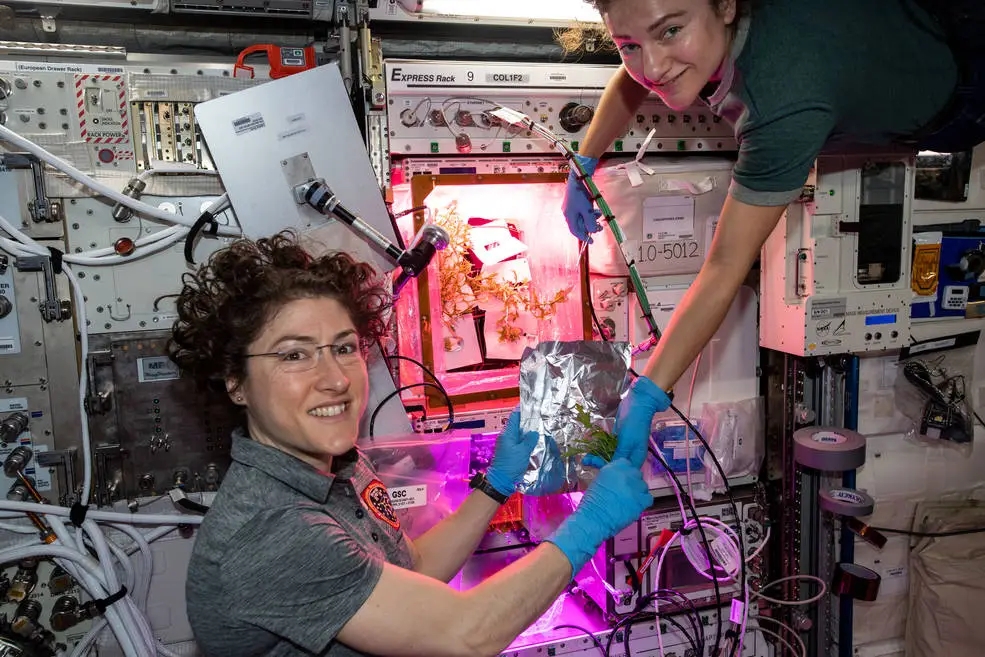
The experiment compares molecular and structural changes between Earth-grown and space station-grown plants infected with a disease-causing fungus. The findings could guide plant breeding on Earth to produce disease-resistant crops and help minimize yield losses in future space agriculture systems.

Space crops provide nutrition, increase dietary variety, and offer psychological benefits for astronauts during extended missions. They also absorb carbon dioxide, produce oxygen, and recycle water, which will become increasingly important as human missions extend farther from Earth.

Analysis helps astronauts thrive

The spacecraft also carries the first test of a compact microplate reader that arrived aboard the space station earlier this year.

The Commercially Enabled Rapid Space Science initiative experiment tests the device’s ability to detect and measure certain biomarkers such as antibodies, antigens, and proteins.

Use of the plate reader would allow scientists to analyze samples aboard the space station and obtain data quickly, rather than wait for the samples to return to Earth for analysis.

Ultimately, the research aims to support the timely detection of infections and other health issues in astronauts while expanding science capabilities in remote exploration locations where resupply will be more difficult.

Tracking antibiotic-resistant bacteria

A precision health investigation returns for its fourth and final planned stay aboard the space station to study how antibiotic-resistant bacteria survive and evolve in microgravity.

As part of the investigation, astronauts repeatedly sample surfaces throughout the space station to monitor for drug-resistant organisms.

The work could help develop ways to protect astronauts against bacterial infections during long-duration missions. On Earth, the findings could provide insight into how superbugs develop from the overuse of antibiotics.

To learn more about NASA’s biological and physical research in space, visit: https://science.nasa.gov/biological-physical/

Biological & Physical Sciences Division

  • NASA’s Biological and Physical Sciences Division pioneers scientific discovery and enables exploration by using space environments to conduct investigations not possible on Earth. Studying biological and physical phenomena under extreme conditions allows researchers to advance the fundamental scientific knowledge required to go farther and stay longer in space, while also benefitting life on Earth.

  •  

NASA’s SpaceX CRS-35 Mission to Launch Health Research

NASA experiments focused on human and plant health and drug-resistant organisms will travel to the International Space Station aboard SpaceX’s 35th Commercial Resupply Services mission for the agency from Cape Canaveral Space Force Station in Florida, advancing research that benefits life on Earth and future exploration.

This research supports astronaut health during long-duration missions through four investigations from the agency’s Biological and Physical Sciences division, including 3D models of the human brain, a crop disease study, a faster way to assess astronaut health, and an analysis of antibiotic-resistant bacteria aboard the space station.

Tiny brain models, big questions

A new precision health investigation helps address a key question: What happens to the human brain in space?

The experiment sends small, lab-grown models of the human brain to the orbiting laboratory for five weeks. Researchers compare tissue models that traveled to space with identical ones kept on Earth to determine how a short spaceflight affects the human brain at the cellular level.

The effort could deepen our understanding of how the human brain responds to stress and help lay the groundwork for methods that counter risks to brain health that astronauts may face on future missions to the Moon and beyond.

Disease-resistant crops for space

A space crops investigation tests whether crop diseases develop faster and more severely in microgravity.

The experiment compares molecular and structural changes between Earth-grown and space station-grown plants infected with a disease-causing fungus. The findings could guide plant breeding on Earth to produce disease-resistant crops and help minimize yield losses in future space agriculture systems.

Space crops provide nutrition, increase dietary variety, and offer psychological benefits for astronauts during extended missions. They also absorb carbon dioxide, produce oxygen, and recycle water, which will become increasingly important as human missions extend farther from Earth.

Analysis helps astronauts thrive

The spacecraft also carries the first test of a compact microplate reader that arrived aboard the space station earlier this year.

The Commercially Enabled Rapid Space Science initiative experiment tests the device’s ability to detect and measure certain biomarkers such as antibodies, antigens, and proteins.

Use of the plate reader would allow scientists to analyze samples aboard the space station and obtain data quickly, rather than wait for the samples to return to Earth for analysis.

Ultimately, the research aims to support the timely detection of infections and other health issues in astronauts while expanding science capabilities in remote exploration locations where resupply will be more difficult.

Tracking antibiotic-resistant bacteria

A precision health investigation returns for its fourth and final planned stay aboard the space station to study how antibiotic-resistant bacteria survive and evolve in microgravity.

As part of the investigation, astronauts repeatedly sample surfaces throughout the space station to monitor for drug-resistant organisms.

The work could help develop ways to protect astronauts against bacterial infections during long-duration missions. On Earth, the findings could provide insight into how superbugs develop from the overuse of antibiotics.

To learn more about NASA’s biological and physical research in space, visit: https://science.nasa.gov/biological-physical/

Biological & Physical Sciences Division

  • NASA’s Biological and Physical Sciences Division pioneers scientific discovery and enables exploration by using space environments to conduct investigations not possible on Earth. Studying biological and physical phenomena under extreme conditions allows researchers to advance the fundamental scientific knowledge required to go farther and stay longer in space, while also benefitting life on Earth.

  •  

Smile, si parte con la scienza

Illuminano i freddi cieli dei poli con colori che vanno dal rosso, al blu fino al verde. Sono le aurore polari. Queste affascinanti luci si formano quando il vento solare, un flusso di particelle energetiche proveniente dal Sole, interagisce con il campo magnetico della Terra che ci difende come uno scudo invisibile. Ad oggi, ci sono ancora varie domande aperte su come si formino queste tempeste geomagnetiche. Inoltre, anche se il nostro pianeta è protetto dal campo magnetico, il vento solare può comunque influenzarci: espone gli astronauti a livelli più elevati di radiazione durante le missioni, e può danneggiare i satelliti e disturbare i sistemi di navigazione, le telecomunicazioni e i servizi meteorologici.

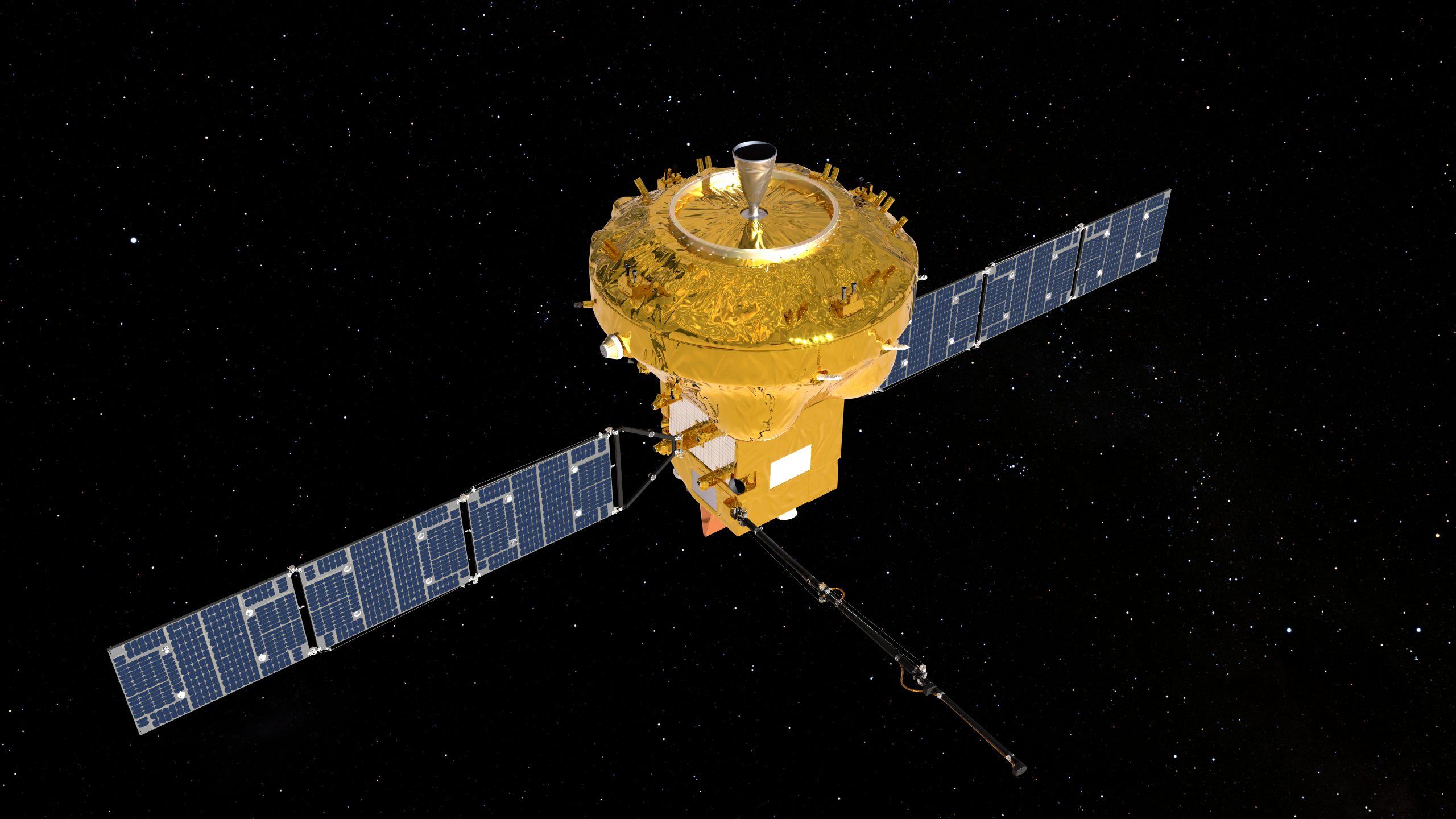
La missione Smile (Solar wind Magnetosphere Ionosphere Link Explorer) per la prima volta permetterà di osservare simultaneamente l’azione del vento solare e la risposta della Terra. Smile è una missione congiunta tra l’Agenzia spaziale europea (Esa) e la Chinese Academy of Sciences. Lo scorso 23 settembre Smile ha ufficialmente avviato la sua attività scientifica, dopo un intenso periodo di in-space commissioning, iniziato quando il satellite è stato lanciato il 19 maggio di quest’anno e ha raggiunto la sua orbita operativa per le attività scientifiche il 20 giugno.

Rappresentazione artistica del satellite Smile. Crediti: Esa

Nella fase di commissioning, una parte importante è stata il collaudo dei quattro strumenti scientifici del satellite: la camera per raggi X a bassa energia (Soft X-ray Imager – Sxi), la camera per le aurore nell’ultravioletto (Uvi), il magnetometro e l’analizzatore di ioni leggeri. Ognuno di questi raccoglierà informazioni utili e diverse per comprendere meglio le tempeste solari, le tempeste geomagnetiche e la meteorologia spaziale.

Il video qui sotto mostra il primo filmato rilasciato da Uvi, la prima camera dal 2008 a catturare l’intero anello dell’aurora boreale intorno al Polo Nord nella luce ultravioletta. Uvi può osservare le aurore per quarantacinque ore consecutive, un vero record. Le immagini sono state riprese il 24 luglio 2026, appena due settimane dopo l’attivazione dello strumento. Mostrano l’attività nell’anello di aurora dovuta a una perturbazione del campo magnetico terrestre causata dalle particelle del vento solare.

Prime immagini della telecamera ultravioletta Uvi di Smile catturate il 24 luglio 2026. Le increspature nell’anello di aurora indicano una perturbazione della magnetosfera terrestre causata dal vento solare. I punti visibili a sinistra sono stelle lontane che emettono luce ultravioletta. Crediti: Esa & Cas/Smile/Uvi

Anche la camera a raggi X (Sxi) è stata attivata con successo. Una delle prime immagini di test, che vedete riportata qui sotto, è stata presa per verificare il corretto funzionamento dello strumento. L’immagine mostra i resti dell’esplosione di una stella lontana. Smile è il primo telescopio spaziale in grado di osservare il campo magnetico terrestre nei raggi X. Rileverà questo tipo di radiazioni emesse ai confini della magnetosfera quando questa viene colpita dalle particelle del vento solare. Sebbene questa telecamera lavori correttamente, attualmente rileva un eccesso di luce diffusa quando è puntata verso la Terra. Per ridurre questo fastidio, gli esperti stanno studiando correzioni specifiche e aggiornamenti software da implementare a bordo. Tuttavia, poiché Smile si sta orientando sempre più lontano dalla Terra e il Polo Nord emette meno luce mentre ci avviciniamo all’inverno boreale, la luce diffusa sta diminuendo naturalmente. Dovrebbe raggiungere un minimo a metà ottobre. A quel punto Sxi catturerà la sua prima immagine nitida della magnetopausa, la zona dove il vento solare incontra il campo magnetico terrestre.

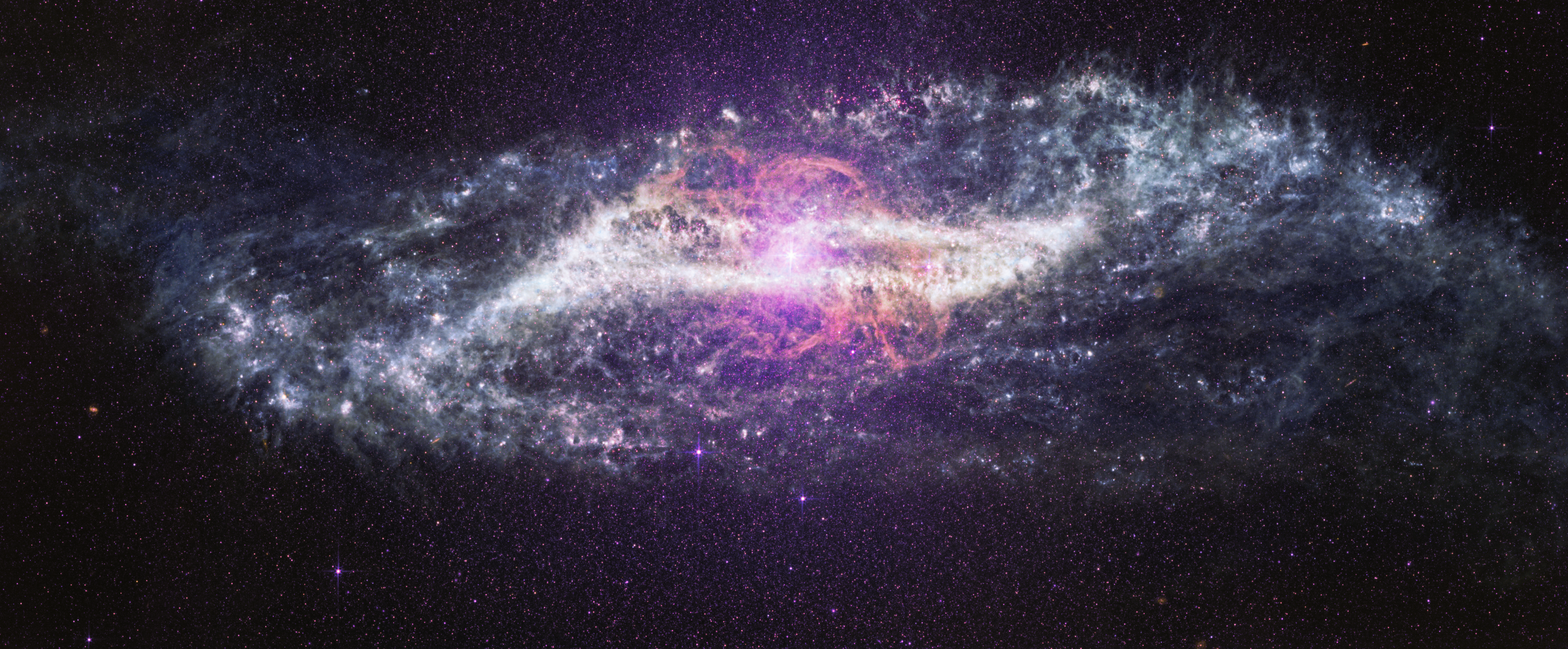
Immagine di test della telecamera a raggi X di Smile che mostra il resto di supernova N132d nella Grande Nube di Magellano, distante circa 160mila anni luce. Crediti: Esa & Cas/Smile/Sxi

L’Esa ha realizzato un film documentario, dal titolo Let’s Smile, che descrive lo sviluppo della missione tra giugno 2024 e maggio 2026. Il video mostra le parti del satellite nelle varie fasi di lavoro: il loro arrivo al centro tecnico dell’Esa nei Paesi Bassi, l’assemblaggio, i test e infine l’invio allo spazioporto europeo in Guyana francese per il lancio. Smile segna inoltre la prima volta in cui l’Esa e la Chinese Academy of Sciences hanno selezionato, costruito e gestito insieme una missione.

«La missione Smile è una testimonianza della fiducia costruita tra i nostri team, della loro dedizione all’eccellenza e della loro determinazione a trovare soluzioni a ogni sfida», dice la professoressa Carole Mundell, Director of Science all’Esa. «Smile ora ha ottenuto il via libera per iniziare le attività scientifiche. Si tratta di un traguardo molto importante – un vero piacere da annunciare – e sono sicura che la nostra eccellente collaborazione fornirà dati rivoluzionari agli scienziati di tutto il mondo».

Guarda il servizio video su MediaInaf Tv:

  •  

Tre candidate galassie backsplash per una matricola

È ancora una matricola, ma ha già un palmarès di tutto rispetto, con una pubblicazione su The Astrophysical Journal a suo nome (unico, tra l’altro) e tre galassie che portano il suo cognome, che sono l’oggetto dello studio. Si chiama Julian Shapiro ed è uno studente del corso di astrofisica all’Università della California a Berkeley. Le tre galassie che ha scoperto sono Shapiro Dg I, II e III.

Shapiro Dg I, II e III sono tre galassie nane, ovvero sistemi galattici di piccole dimensioni e con una quantità relativamente ridotta di stelle, gas e materia oscura rispetto alle galassie più grandi come la Via Lattea.

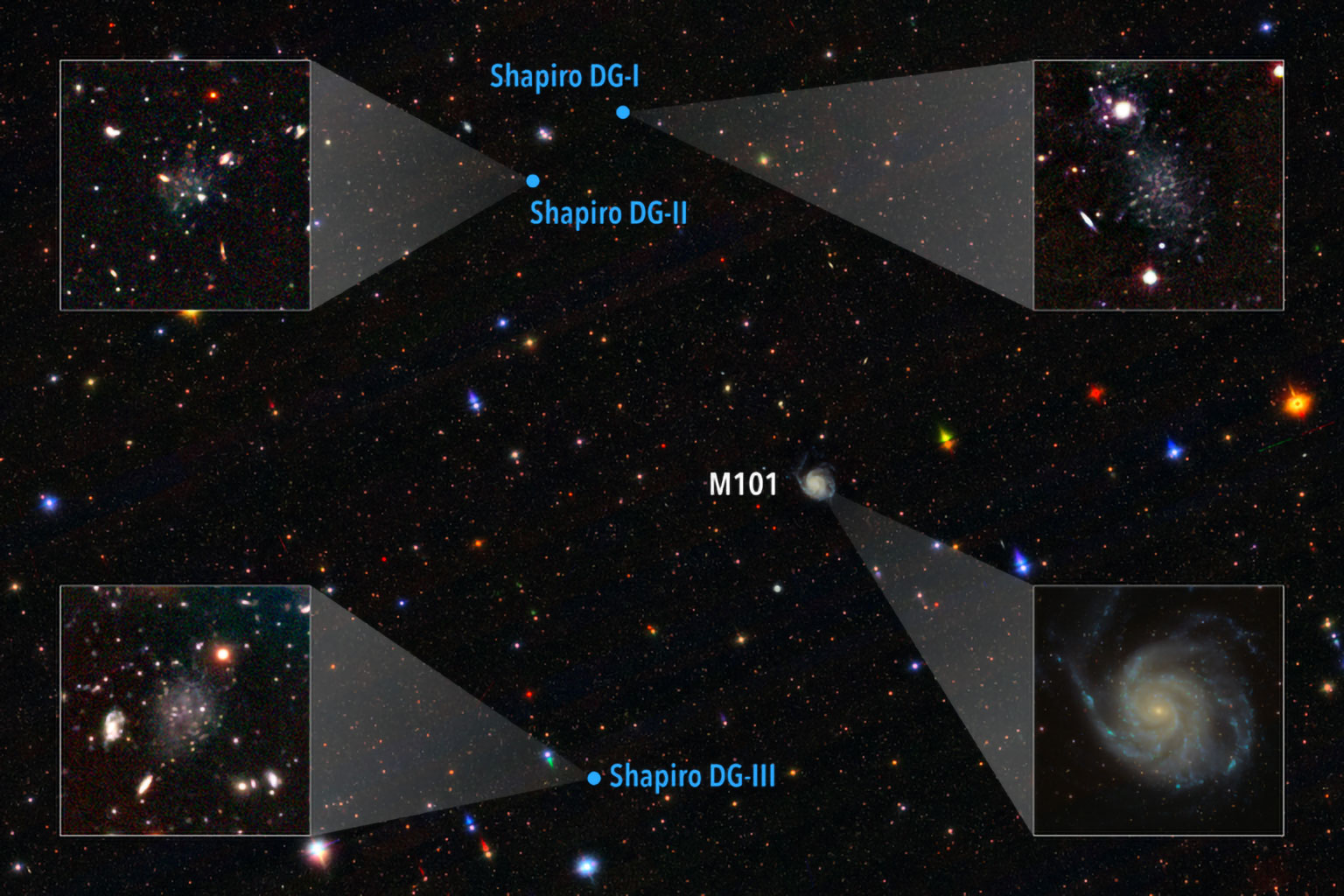
Immagine composita realizzata utilizzando i dati della Sloan Digital Sky Survey, dell’Hyper Suprime-Cam Legacy e del Canada-France-Hawaii Telescope, che mostra le tre galassie nane scoperte nella ricerca. Crediti: Julian Shapiro

Scovate dal giovane ricercatore nei dati d’archivio ottenuti dalla Hyper Suprime-Cam (Hsc), una potente fotocamera installata sul telescopio Subaru e dal Canada–France–Hawaii Telescope, le tre galassie sono isolate, si trovano cioè lontane da altre galassie, e hanno smesso di formare attivamente nuove stelle. Un comportamento, quest’ultimo, che ha attirato l’attenzione del ricercatore.

In genere, infatti, le galassie nane isolate conservano una quantità sufficiente di materia prima per formare nuove stelle. Al contrario di quelle che si trovano in ambienti densi o nelle vicinanze di galassie più massicce, che tendono a esaurire la propria attività di formazione stellare, anche a causa delle interazioni gravitazionali e idrodinamiche con l’ambiente, che possono sottrarre loro il gas freddo necessario. Le tre galassie nane individuate da Shapiro (una delle quali, Dg-1, identificata indipendentemente anche da un altro gruppo di ricerca, nell’ambito del progetto Id-Mage) rappresentano in questo senso un enigma.

«Le galassie nane esistono sia come galassie isolate sia come satelliti di galassie più grandi, come la nostra Via Lattea», spiega Shapiro. «Nel caso delle galassie isolate, ci si aspetta che in questi sistemi galattici la formazione stellare sia ancora attiva, poiché non ci sono galassie più grandi nelle vicinanze che possano privarle del gas necessario a formare nuove stelle. Le galassie che ho scoperto, però, fanno eccezione».

Shapiro Dg I, II e III, infatti, pur trovandosi isolate, sono quiescenti, sembrano cioè aver perso la capacità di formare nuove stelle. Come spiegare questa anomalia? Secondo Shapiro, una soluzione al dilemma c’è e chiama in causa le cosiddette galassie backsplash. «Nel mio articolo suggerisco che le tre galassie potrebbero essere tra le prime candidate galassie backsplash a essere identificate e risolte, ovvero galassie che in passato sono transitate vicino a una grande galassia, perdendo il proprio gas a causa della pressione esercitata da quest’ultima, per poi essere espulse nuovamente verso l’esterno».

Più in dettaglio, secondo Shapiro, le tre galassie potrebbero essere passate in precedenza sotto l’influenza gravitazionale di Messier 101, chiamata anche galassia Girandola (Pinwheel galaxy). Durante questo passaggio, le galassie sarebbero state private del gas necessario a formare nuove stelle, prima di essere poi espulse verso regioni più remote dello spazio. Esclusivamente per Shapiro dg II esisterebbe anche uno scenario alternativo: la sua posizione è sufficientemente vicina alla galassia a spirale Ngc 5585 da rendere possibile che si tratti di una debole galassia satellite, anziché una galassia backsplash, dice Shapiro.

Per determinare dove fosse più probabile trovare galassie nane backsplash nelle vicinanze di una galassia simile alla Via Lattea e in quali condizioni queste galassie potessero essere individuate nei dati d’archivio dei telescopi, Shapiro si è avvalso di sofisticate simulazioni idrodinamiche. Una parte consistente della ricerca è stata inoltre dedicata alla stima delle distanze, fondamentale per stabilire se le tre galassie fossero davvero isolate.

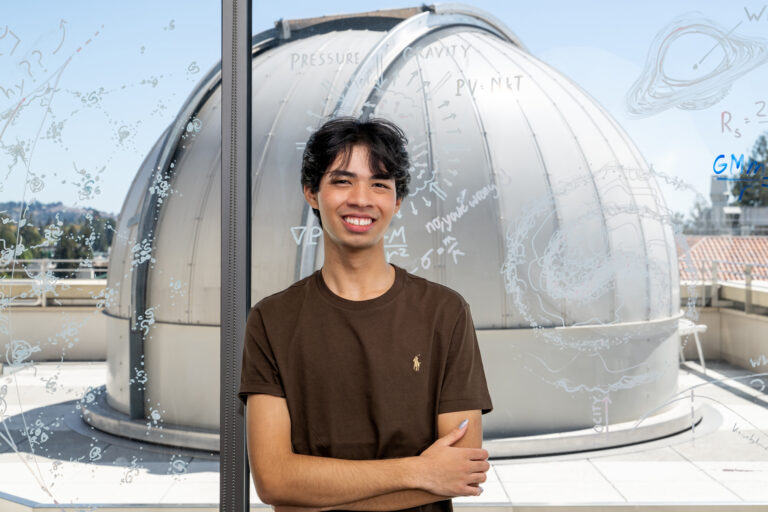
Il giovane ricercatore, autore della scoperta delle tre galassie nane oggetto dello studio, Julian Shapiro

«Costruire le conoscenze di base necessarie per individuare queste galassie, sviluppare il codice per la modellizzazione e l’analisi e confrontare i risultati con il nostro modello cosmologico è stata una sfida», racconta Shapiro. «Sono stato fortunato perché molti dei principali journal del settore sono accessibili gratuitamente: questo mi ha permesso di acquisire le conoscenze e le competenze necessarie».

Shapiro auspica che future osservazioni con telescopi spaziali ad alta risoluzione permettano di determinare con precisione la posizione delle tre galassie ed escludere spiegazioni alternative della loro condizione di galassie quiescenti, mentre il Vera C. Rubin Observatory potrebbe contribuire alla ricerca, individuando numerose altre potenziali galassie backsplash.

Il modello cosmologico standard, la teoria oggi più accreditata per descrivere la struttura dell’universo, prevede che le galassie backsplash siano piuttosto comuni, eppure finora è stato difficile individuarne esempi nell’universo locale. Le tre galassie nane individuate da Shapiro potrebbero offrire nuovi indizi a sostegno del modello, mostrando che i processi che esso prevede possono agire anche in ambienti cosmici meno densi ed estremi. Lo studio rafforza inoltre l’ipotesi secondo cui alcune galassie isolate abbiano perso la capacità di produrre stelle in seguito all’azione di forze esterne, probabilmente durante un precedente passaggio in prossimità di galassie più massicce. Va però sottolineato che si tratta al momento di tre “candidate”: saranno dunque necessarie ulteriori osservazioni per determinarne con maggiore precisione le distanze e la natura.

Shapiro ha condotto gran parte della ricerca quando era ancora alle scuole superiori. Oggi al suo primo semestre alla Uc Berkeley, frequenta i corsi di astrofisica, insieme agli insegnamenti obbligatori di matematica e fisica, con l’obiettivo di conseguire una laurea in questa disciplina.

«Mi piacerebbe che il mio lavoro fosse d’ispirazione per i giovani che desiderano intraprendere una carriera nella ricerca astrofisica», dice Shapiro. «Spesso i programmi scolastici dedicano poco spazio all’astronomia, e per gli studenti può essere difficile trovare un tutor e acquisire esperienza nel campo. Il mio lavoro dimostra che i dati d’archivio provenienti dai telescopi sono uno strumento fondamentale per fare nuove scoperte sulla cosmologia e sull’evoluzione dell’universo, e che anche i giovani astronomi possono contribuire a queste scoperte».

Il Davidson Institute ha riconosciuto il lavoro di Shapiro sulle galassie backsplash nominandolo Davidson Fellow 2026 e assegnandogli un premio in denaro di 25mila dollari. Nel 2025, inoltre, Shapiro aveva ricevuto il National Young Astronomer Award della Astronomical League. E il suo mentore, il professore di astronomia della Berkeley Alex Filippenko, ha elogiato il modo in cui ha condotto la ricerca e analizzato i risultati.

«Julian ha condotto una ricerca di notevole livello quando era ancora alle scuole superiori, un fatto decisamente insolito, che è stato riconosciuto con la prestigiosa Davidson Fellowship», sottolinea Filippenko. «Mi ritengo molto fortunato che abbia scelto la University of California, Berkeley, per i suoi studi universitari in astrofisica e, soprattutto, che abbia deciso di unirsi al mio gruppo di ricerca».

Per saperne di più:


  •  

NASA to Conduct Flyover, Engage NFL Fans at MetLife Stadium

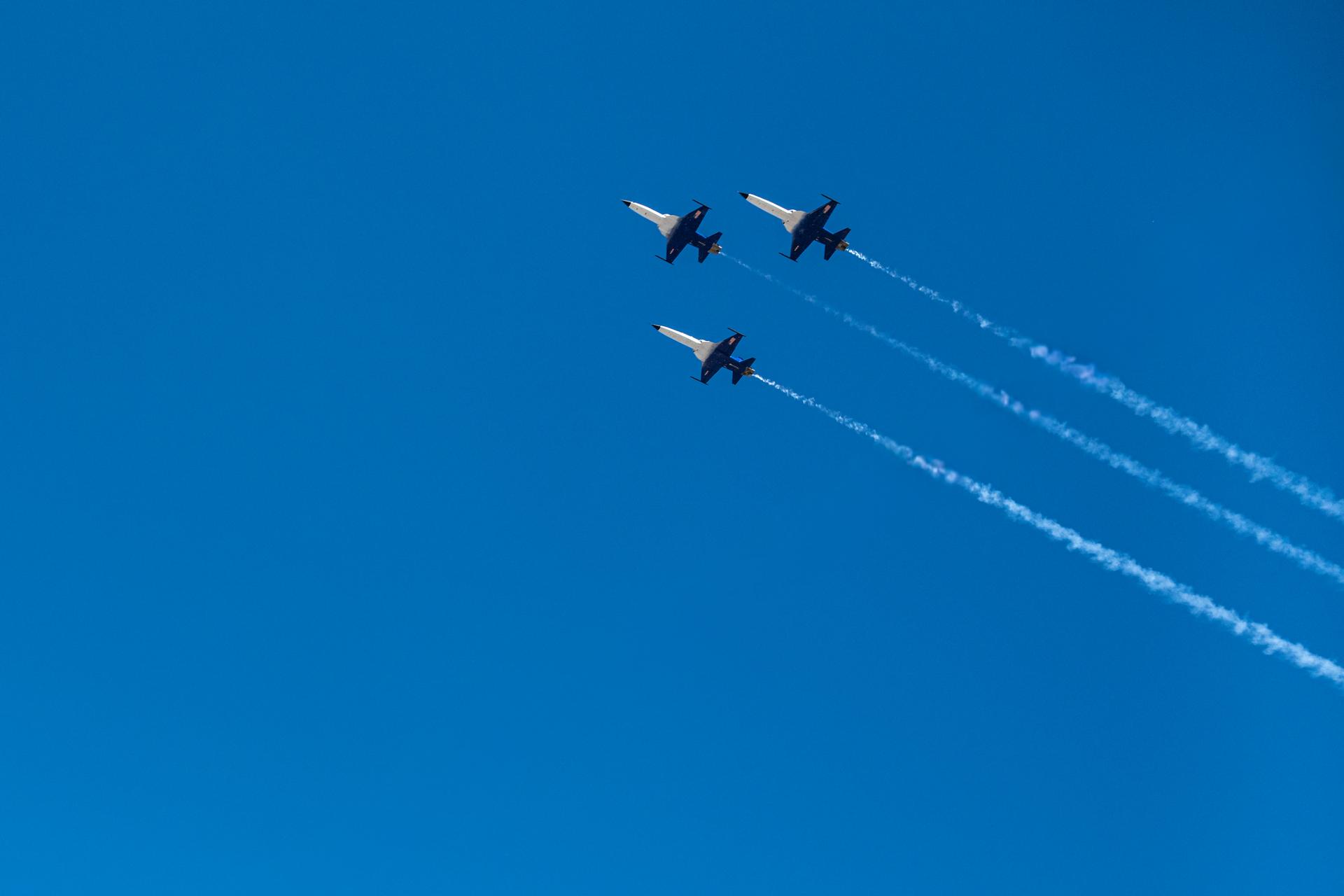
NASA’s Freedom 250 F-5 team, including NASA Administrator Jared Isaacman, performs a flyover during the national anthem at an NFL game between the Cleveland Browns and the Carolina Panthers at Huntington Bank Field, Sept. 27, 2026, in Cleveland.
Credit: NASA/Jordan Cochran

As part of the agency’s Inspiration Tour flyover, NASA Administrator Jared Isaacman will pilot one of three F-5 fighter jets to kick off the New York Jets vs. Cleveland Browns game in East Rutherford, New Jersey, on Sunday, Oct. 11.

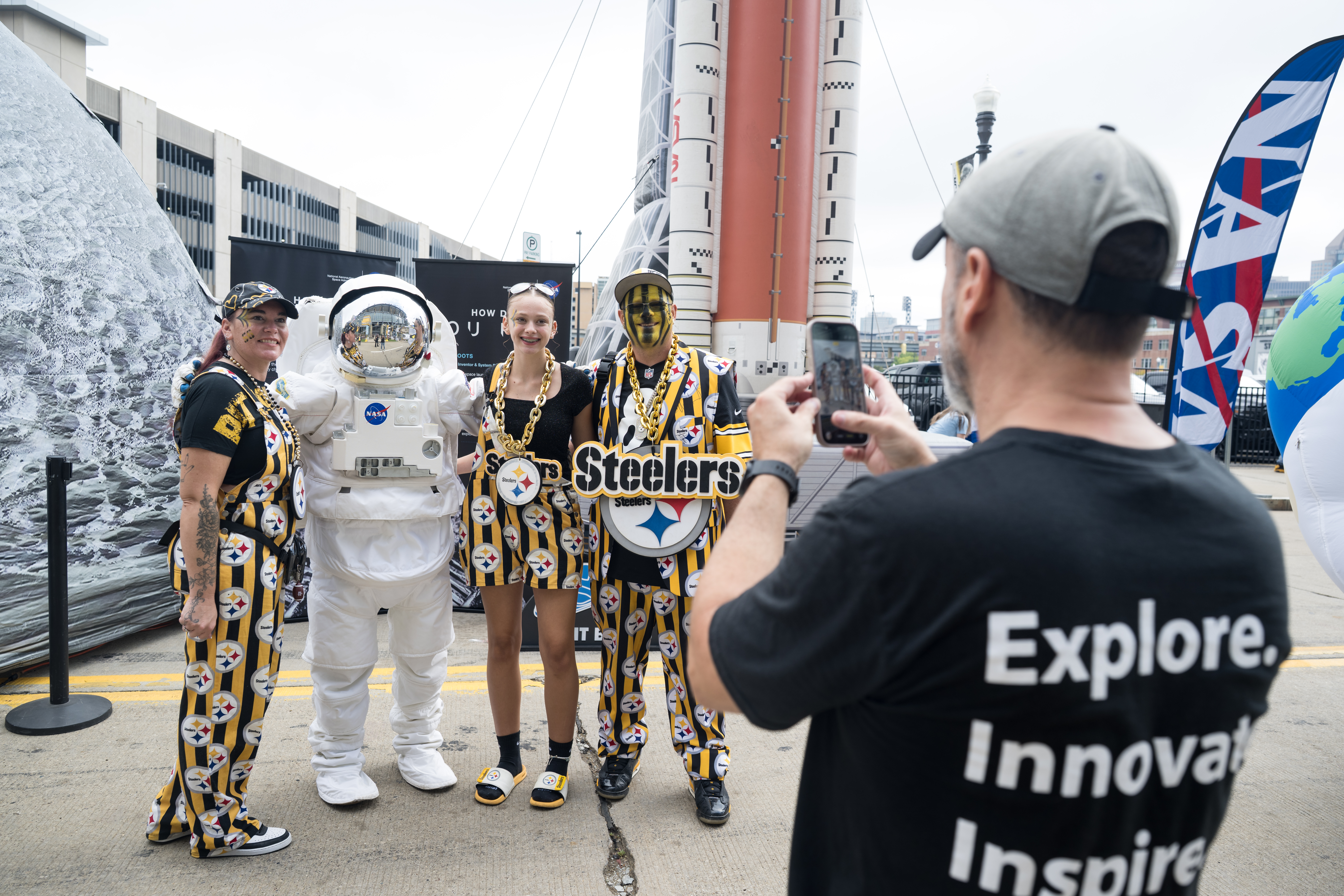
NASA team members will engage with fans at the agency’s Experience Zone, located at the Jets Tailgate Zone outside the stadium, from 10 a.m. to 1 p.m. EDT before the game. Fans can learn more about NASA’s return to the Moon under the agency’s Artemis dome, enjoy interactive games, and capture photos with a large, inflatable SLS (Space Launch System) rocket.

Isaacman will be available for limited media interviews during the game. To arrange interviews, please contact Camille Gallo at: camille.m.gallo@nasa.gov or 202-531-8057.

With stops across the nation, NASA’s Inspiration Tour convenes academic, industry, and public sector stakeholders to connect the agency with the people, technologies, and organizations that drive American leadership in space.

The tour will culminate in MAX POWER, a public exposition of American air and space innovation, Saturday, Nov. 7, and Sunday, Nov. 8, on and near the agency’s Kennedy Space Center in Florida. Held in honor of America’s historic 250th anniversary, the multi-day, family-friendly event will showcase the next-generation aircraft, spacecraft, autonomous vehicles, and technologies that will help define the future of transportation in air and space.

For more information about MAX POWER and the agency’s missions, visit:

https://www.nasa.gov/maxpower

-end-

Camille Gallo / Jessica Taveau
Headquarters, Washington
202-358-1600
camille.m.gallo@nasa.gov / jessica.c.taveau@nasa.gov

Share

Details

Last Updated
Oct 13, 2026
Editor
Jessica Taveau
  •  

NASA Demonstrates Next-Generation Heat Shield Technologies

4 min read

Preparations for Next Moonwalk Simulations Underway (and Underwater)

008Q8328.NEF
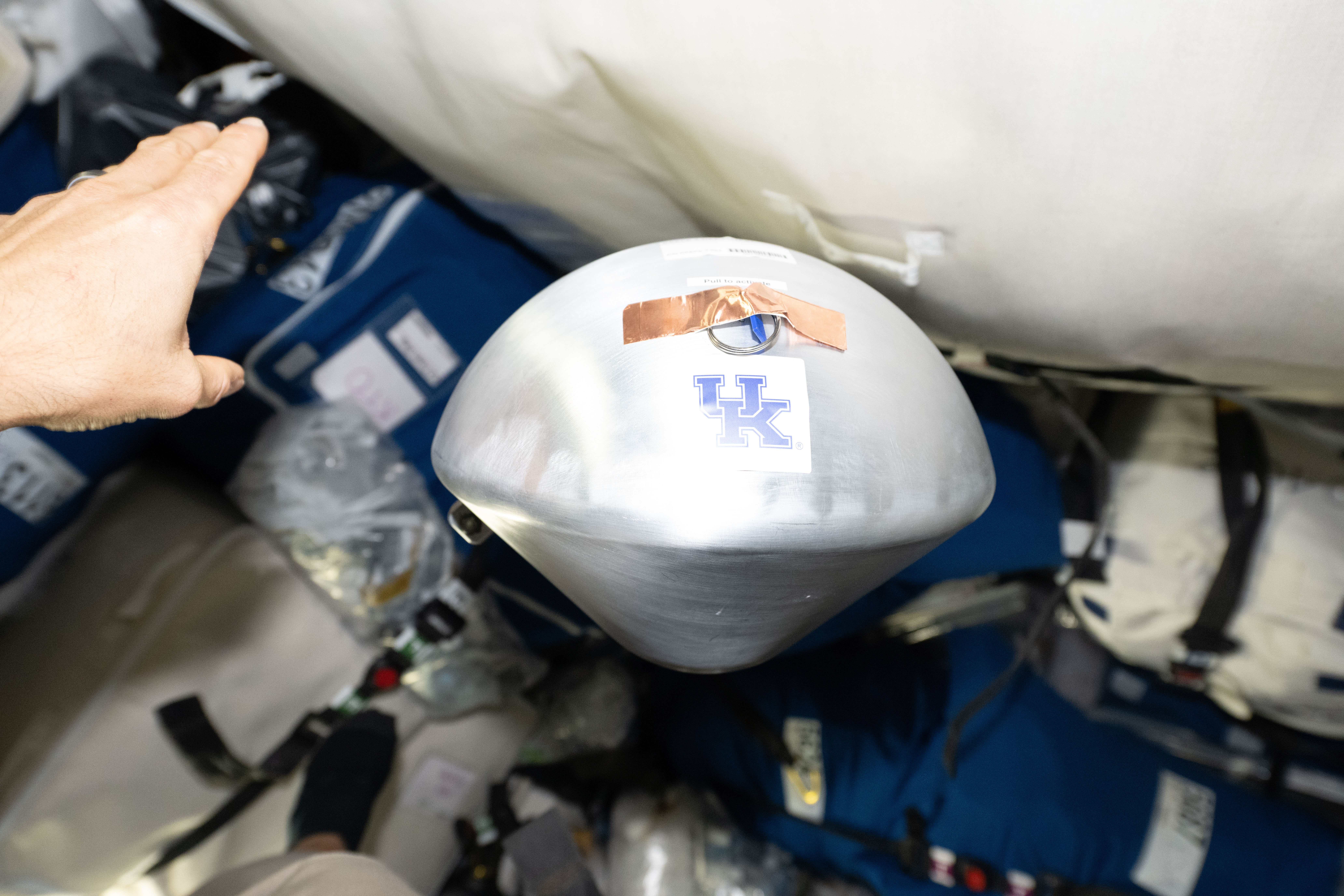
A KREPE-3 capsule floats inside the Northrup Grumman Cygnus XL 24 cargo spacecraft on October 7. Inside the capsule is a 3-D printed heat shield designed by researchers at NASA’s Johnson Space Center in Houston.
NASA

NASA is testing heat shields that can keep astronauts safe as they return from missions to the Moon and Mars in an unusual way: by taking out the trash.

When Northrop Grumman 24th cargo resupply mission for NASA undocked from the International Space Station, it carried a fleet of 12 small, experimental capsules designed to test the next generation of thermal protection materials that could serve as the foundation for future heat shields.

The experiment, called the Kentucky Reentry Probe Experiment (KREPE-3), is the third in a series of low-cost, high-impact missions that use the final moments of the cargo spacecraft’s lifespan to gather valuable data.

The experiment is a collaboration among the University of Kentucky, the state of Kentucky, NASA’s Established Program to Stimulate Competitive Research (EPSCoR), several NASA centers, and other federal and commercial partners.

“KREPE-3 is a great example of the goals of NASA’s EPSCoR program,” said David Berger, EPSCoR program manager at NASA’s Headquarters in Washington. “We are supporting the next generation of scientists and engineers as they develop unique projects that benefit their education and NASA’s mission goals.”

Trash to treasure

Before the mission’s Cygnus XL spacecraft departed the station, astronauts packed it with waste and activated the 12 small capsules carried inside. Designed by University of Kentucky students, the capsules include sensors that will measure temperature, pressure, motion, magnetic field, and light during re-entry. 

As the vehicle harmlessly breaks apart in Earth’s atmosphere on its planned route, the capsules will eject and begin collecting data on how each set of experimental heat shield materials performs. Satellite signals will transfer live data to researchers, offering insights into how larger heat shields could protect future cargo or crew.

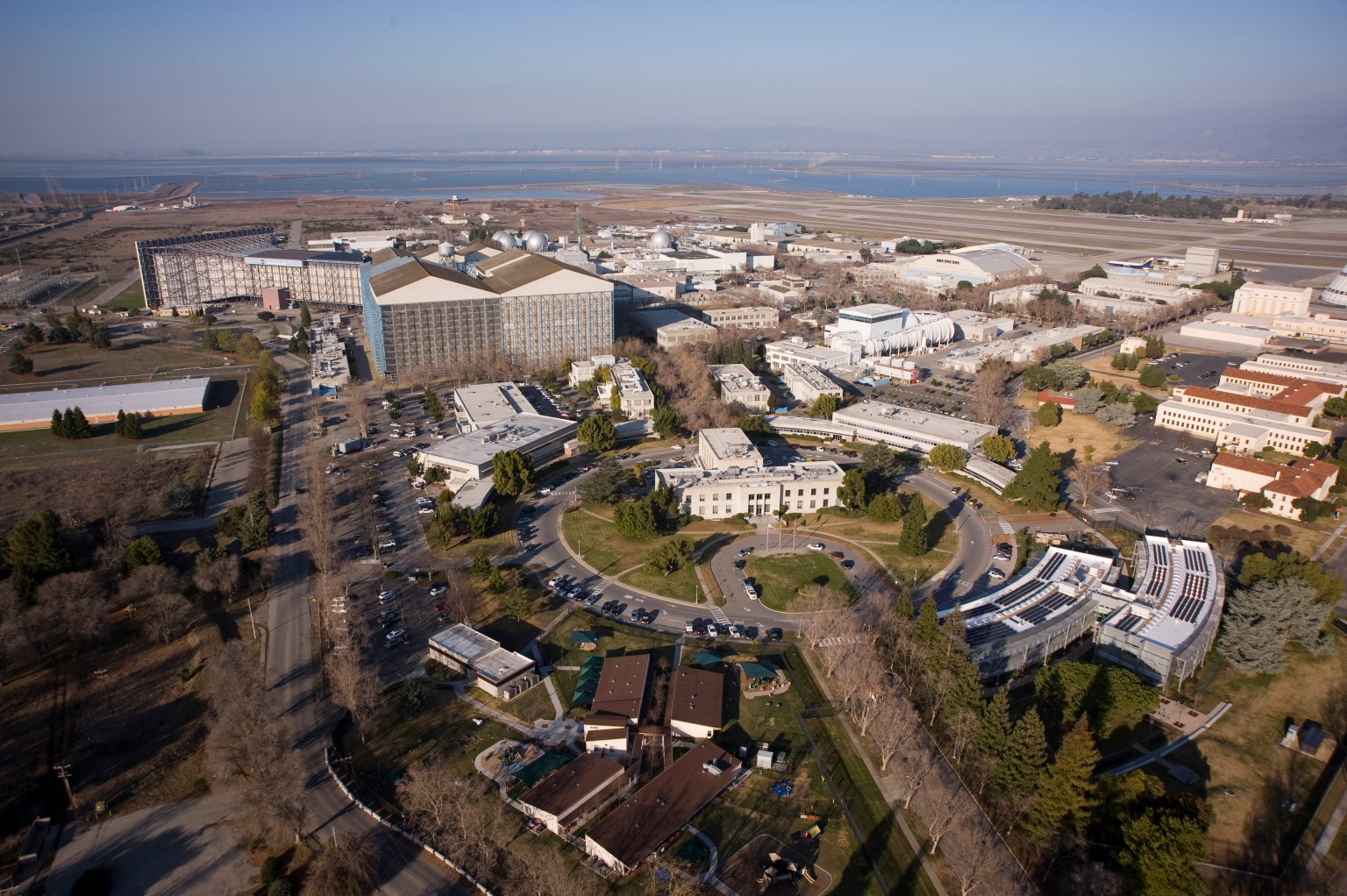
“It’s a smart way to get flight data on materials that are still in development,” said Keith Peterson, a materials engineer at NASA’s Ames Research Center in California’s Silicon Valley. “We’re essentially hitching a ride on a vehicle that’s already coming back to Earth.”

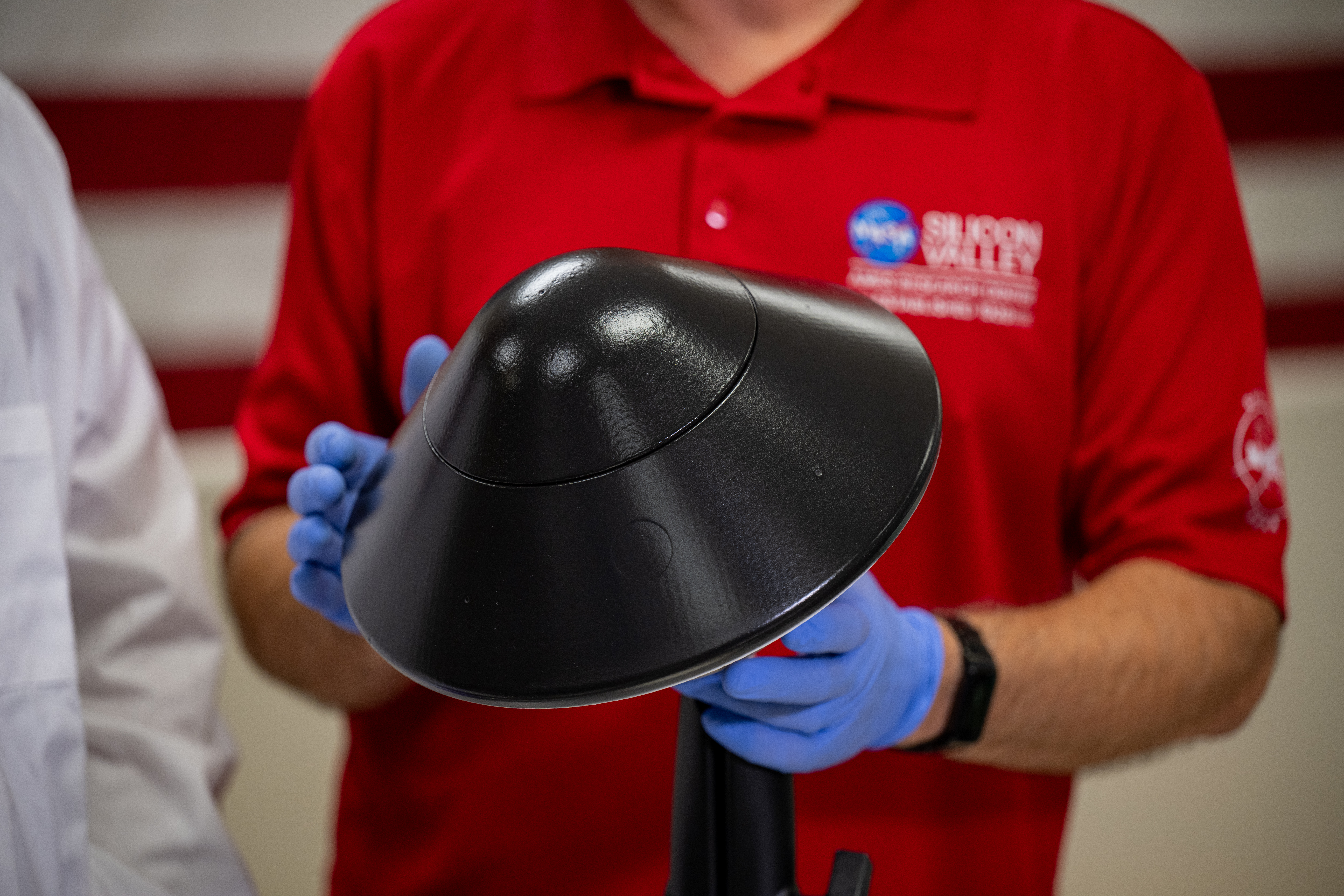
Close up of an Ames-produced thermal protection system (TPS) (heat shield) for the Kentucky Re-Entry Probe Experiment (KREPE) in the Sensors & TPS Advanced Research Laboratories (STAR Labs) N242.
NASA/Brandon Torres-Navarrete

Heating up innovation

The capsules will carry a variety of thermal protective components, including proven technology such as the ceramic tile material used on the space shuttle. Others will test new options, such as a 3D-printed heat shield from the Additive Manufacturing of Thermal Protective Systems project developed at NASA Johnson and Oak Ridge National Laboratory.

Researchers at NASA Ames are contributing several materials to KREPE-3, including two capsules that will fly a next-generation family of protective coverings known as Materials Engineered for Re-entry using Innovative Needling Operations (MERINO). Made from layers of carbon and phenolic fibers stitched together like felt, the materials are more flexible, faster to produce, and less expensive than traditional protective substances – making them promising candidates for Mars missions. Thanks to Mars’ thinner atmosphere, missions to land on the Red Planet involve lower heat loads and allow for lighter protection.

A third capsule will combine those protective coverings with other elements. The Kentucky Instrumented Conical Hypersonic Experiment will utilize a dual-cone shape. It combines a tungsten tip attached to a cone layered with carbon and hear-resistant plastic fibers, and an aft cone wrapped in MERINO. This unique design will validate computer models against real-world data.

Another capsule is shaped like the protective aeroshell that will protect NASA’s upcoming mission, Dragonfly, as it arrives at Saturn’s moon, Titan, and will test the dynamic stability of the design. It is covered in Phenolic Impregnated Carbon Ablator, a material developed at NASA Ames that has applications for commercial vehicles and flew on NASA’s Stardust, Mars Science Laboratory, and Mars 2020 missions.

One capsule will test a deployable heat shield called Adaptable Deployable Entry and Placement Technology, which is shaped like an umbrella to increase surface area and slow descent. At full scale, Adaptable Deployable Entry design could be folded, making it ideal for deploying payloads that are larger than the rockets that launch them into flight.

While some capsules are testing new materials to carry missions to Mars, others are testing new shapes and designs that will further research and understanding of computer modeling and sensor design — technologies that could open doors to another generation of re-entry design innovation.

Additional capsules developed by domestic and international partners will test a variety of known and new materials, including a heat flux sensor developed at the University of Stuttgart in Germany, that will help researchers measure how heat moves across a surface during re-entry.

“We’re pushing the boundaries of what heat shields can do,” said Peterson. “And we’re testing them in a way that’s fast, affordable, and incredibly effective.”

  •  

NASA Demonstrates Next-Generation Heat Shield Technologies

4 min read

Preparations for Next Moonwalk Simulations Underway (and Underwater)

008Q8328.NEF
A KREPE-3 capsule floats inside the Northrup Grumman Cygnus XL 24 cargo spacecraft on October 7. Inside the capsule is a 3-D printed heat shield designed by researchers at NASA’s Johnson Space Center in Houston.
NASA

NASA is testing heat shields that can keep astronauts safe as they return from missions to the Moon and Mars in an unusual way: by taking out the trash.

When Northrop Grumman 24th cargo resupply mission for NASA undocked from the International Space Station, it carried a fleet of 12 small, experimental capsules designed to test the next generation of thermal protection materials that could serve as the foundation for future heat shields.

The experiment, called the Kentucky Reentry Probe Experiment (KREPE-3), is the third in a series of low-cost, high-impact missions that use the final moments of the cargo spacecraft’s lifespan to gather valuable data.

The experiment is a collaboration among the University of Kentucky, the state of Kentucky, NASA’s Established Program to Stimulate Competitive Research (EPSCoR), several NASA centers, and other federal and commercial partners.

“KREPE-3 is a great example of the goals of NASA’s EPSCoR program,” said David Berger, EPSCoR program manager at NASA’s Headquarters in Washington. “We are supporting the next generation of scientists and engineers as they develop unique projects that benefit their education and NASA’s mission goals.”

Trash to treasure

Before the mission’s Cygnus XL spacecraft departed the station, astronauts packed it with waste and activated the 12 small capsules carried inside. Designed by University of Kentucky students, the capsules include sensors that will measure temperature, pressure, motion, magnetic field, and light during re-entry. 

As the vehicle harmlessly breaks apart in Earth’s atmosphere on its planned route, the capsules will eject and begin collecting data on how each set of experimental heat shield materials performs. Satellite signals will transfer live data to researchers, offering insights into how larger heat shields could protect future cargo or crew.

“It’s a smart way to get flight data on materials that are still in development,” said Keith Peterson, a materials engineer at NASA’s Ames Research Center in California’s Silicon Valley. “We’re essentially hitching a ride on a vehicle that’s already coming back to Earth.”

Close up of an Ames-produced thermal protection system (TPS) (heat shield) for the Kentucky Re-Entry Probe Experiment (KREPE) in the Sensors & TPS Advanced Research Laboratories (STAR Labs) N242.
NASA/Brandon Torres-Navarrete

Heating up innovation

The capsules will carry a variety of thermal protective components, including proven technology such as the ceramic tile material used on the space shuttle. Others will test new options, such as a 3D-printed heat shield from the Additive Manufacturing of Thermal Protective Systems project developed at NASA Johnson and Oak Ridge National Laboratory.

Researchers at NASA Ames are contributing several materials to KREPE-3, including two capsules that will fly a next-generation family of protective coverings known as Materials Engineered for Re-entry using Innovative Needling Operations (MERINO). Made from layers of carbon and phenolic fibers stitched together like felt, the materials are more flexible, faster to produce, and less expensive than traditional protective substances – making them promising candidates for Mars missions. Thanks to Mars’ thinner atmosphere, missions to land on the Red Planet involve lower heat loads and allow for lighter protection.

A third capsule will combine those protective coverings with other elements. The Kentucky Instrumented Conical Hypersonic Experiment will utilize a dual-cone shape. It combines a tungsten tip attached to a cone layered with carbon and hear-resistant plastic fibers, and an aft cone wrapped in MERINO. This unique design will validate computer models against real-world data.

Another capsule is shaped like the protective aeroshell that will protect NASA’s upcoming mission, Dragonfly, as it arrives at Saturn’s moon, Titan, and will test the dynamic stability of the design. It is covered in Phenolic Impregnated Carbon Ablator, a material developed at NASA Ames that has applications for commercial vehicles and flew on NASA’s Stardust, Mars Science Laboratory, and Mars 2020 missions.

One capsule will test a deployable heat shield called Adaptable Deployable Entry and Placement Technology, which is shaped like an umbrella to increase surface area and slow descent. At full scale, Adaptable Deployable Entry design could be folded, making it ideal for deploying payloads that are larger than the rockets that launch them into flight.

While some capsules are testing new materials to carry missions to Mars, others are testing new shapes and designs that will further research and understanding of computer modeling and sensor design — technologies that could open doors to another generation of re-entry design innovation.

Additional capsules developed by domestic and international partners will test a variety of known and new materials, including a heat flux sensor developed at the University of Stuttgart in Germany, that will help researchers measure how heat moves across a surface during re-entry.

“We’re pushing the boundaries of what heat shields can do,” said Peterson. “And we’re testing them in a way that’s fast, affordable, and incredibly effective.”

  •  

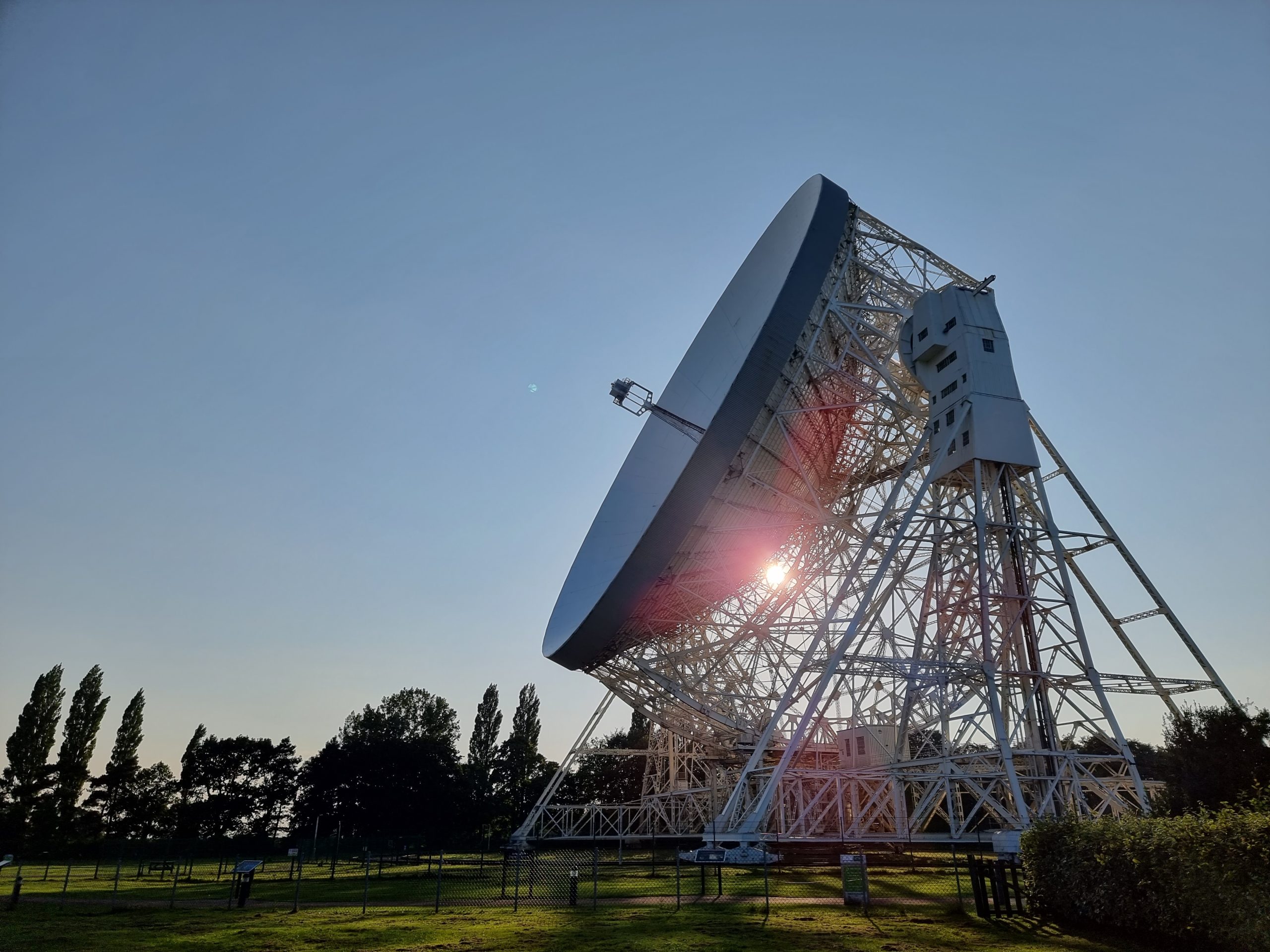
Jodrell Bank – Un osservatorio da salvare

È un simbolo. Che parla dell’umano desiderio di guardare oltre il nostro pianeta per capire cosa c’è, là fuori. Il luogo di battesimo dei futuri scienziati del Regno Unito, con gli oltre venticinquemila scolari in gita scolastica che vi approdano ogni anno. Ma anche un pezzo di fantascienza in una terra verde e piacevole. Che si staglia nella luce del tramonto con una silhouette oltremodo fotogenica.

Parliamo del Jodrell Bank Observatory. O meglio, così ne parlano gli inglesi, di quest’osservatorio astronomico fondato nel 1945 nella regione del Cheshire. Protagonista assoluto della struttura è il Lovell Telescope, il radiotelescopio più grande del Regno Unito.

Sir Bernard Lovell, fondatore dell’osservatorio, interpellato al riguardo ebbe a dire: «Incontro spesso anziani ormai in pensione da tempo, i quali mi raccontano che fu la vista di Jodrell, quando erano ragazzi, a ispirarli a intraprendere una carriera scientifica».

Nel 2006, con un sondaggio indetto dal Bbc News Magazine, il telescopio Lovell si è persino aggiudicato un titolo, quello del più grande monumento non celebrato di tutta la Gran Bretagna.

Talmente non considerato che adesso l’intero osservatorio rischia di chiudere i battenti. Nel mese di luglio l’Uk Research and Innovation Agency (Ukri) ha infatti eliminato i fondi di gestione della struttura, che ammontano a 2.8 milioni di sterline all’anno. In mancanza di altri finanziamenti, il Jodrell Bank cesserà ogni operazione dal 1° aprile 2028. Ventotto posizioni lavorative presso l’osservatorio potrebbero essere cancellate. Certamente intaccate risulterebbero anche le ricerche dei quasi tremila astronomi che in tutto il mondo utilizzano i dati dell’osservatorio. Gli effetti della chiusura si propagherebbero ben oltre i confini del regno, insomma.

L’iconico radiotelescopio Lovell al Jodrell Bank Observatory. Con i suoi 76 metri di diametro è il più grande radiotelescopio del Regno Unito e il secondo più grande d’Europa. Crediti: T. O’ Brien

L’opinione pubblica britannica non l’ha presa bene. Persino le rockstar sono scese in campo, vedi Brian May e il chitarrista degli Smiths Johnny Marr che, assieme ad altre celebrità del mondo anglosassone, hanno scritto una lettera per scongiurare una decisione «folle» e chiedere al governo «di trovare immediatamente un finanziamento per salvare il Jodrell Bank».

Un mese fa il primo ministro del Regno Unito Andy Burnham ha preso l’impegno di salvare il radiotelescopio: «Tutti quelli della mia generazione hanno fatto una gita scolastica a Jodrell Bank. È impensabile assistere alla sua fine, e ciò non accadrà sotto il mio governo».

Due petizioni con oltre trentamila firmatari sono state lanciate per far tornare l’Ukri sui suoi passi. «Non si tratta solo di salvare un telescopio», si legge in una di esse. «Si tratta di salvare il nostro posto in prima linea nella scoperta umana – e mantenere viva l’ambizione che ha definito la scienza britannica per generazioni».

Per capire meglio quale sia il valore scientifico dell’osservatorio, abbiamo intervistato Marcello Giroletti, astronomo in servizio all’Istituto di radioastronomia dell’Inaf di Bologna, che conosce bene questa struttura.

Che cos’è il Jodrell Bank Observatory?

«L’osservatorio di Jodrell Bank è il cuore della radioastronomia inglese e un luogo di riferimento per tutta quella europea. Anzitutto, a Jodrell Bank si trova il Lovell Telescope, costruito nel 1957 ma che con i suoi 76 metri di diametro è tuttora il secondo radiotelescopio più grande d’Europa. Il Lovell Telescope è anche la più grande delle sette antenne dell’e-Merlin, una rete di radiotelescopi distribuiti per tutta l’Inghilterra e collegati con fibre ottiche. Jodrell Bank ospita il correlatore di questa rete, ovvero il supercomputer che combina i dati delle “sette sorelle” per realizzare immagini radio molto più dettagliate di quanto sia possibile fare con una sola antenna. Infine, Jodrell Bank ospita numerosi laboratori dedicati allo sviluppo di tecnologie in ambito elettronico e digitale, utili per il continuo miglioramento delle osservazioni».

E fuori dall’Inghilterra? Che ruolo ha questa struttura?

«Accanto a queste attività, gestite dall’Università di Manchester e oggetto dei tagli previsti, a Jodrell Bank è stato installato anche il quartier generale di Skao, il nuovo radiotelescopio fiore all’occhiello della comunità internazionale, che però è in fase di costruzione in Australia e Sudafrica. Quindi, paradossalmente, se i fondi saranno effettivamente tagliati, resterebbe aperto il quartier generale di uno strumento che si trova lontano mentre tutta la strumentazione locale sarebbe sostanzialmente abbandonata».

Dunque l’osservatorio parrebbe tutt’altro che superato, nonostante il telescopio Lovell abbia quasi settant’anni…

«L’e-Merlin è uno strumento che è stato costantemente aggiornato nel corso degli anni ed è tuttora un osservatorio di punta. Ad esempio, il prefisso “e-” si riferisce all’upgrade per cui i dati delle stazioni remote vengono attualmente inviati in modo “elettronico” tramite fibre ottiche, e non via ponti radio, come si faceva inizialmente. Lo strumento fornisce con regolarità importanti risultati sia operando in modo indipendente che all’interno della più grande rete europea – alla quale fornisce maggiore sensibilità e flessibilità – e in coordinamento con osservatori ad altre frequenze e persino con i rivelatori di onde gravitazionali e neutrini. Ad esempio, in questo lavoro del 2021 e-Merlin e IceCube – il fondatore di quest’ultimo è stato appena insignito del premio Nobel – hanno lavorato assieme per dimostrare che un neutrino rivelato da IceCube era stato prodotto nella distruzione di una stella da parte di un buco nero supermassiccio. E anche con l’entrata in funzione di Skao, la risoluzione angolare di e-Merlin resterà fino a cinque volte migliore! Per non parlare del fatto che potrà continuare a vedere regioni del cielo inaccessibili a Skao, che si trova nell’emisfero opposto».

A che punto è la raccolta firme?

«Le due petizioni principali hanno superato le trentottomila e trentunmila firme, e molte altre ne sono sorte anche da parte della comunità locale per difendere quello che è un vero e proprio patrimonio storico e culturale. L’osservatorio di Jodrell Bank è riconosciuto come patrimonio mondiale dell’umanità dall’Unesco e praticamente tutti gli studenti e le studentesse inglesi lo visitano come parte del proprio percorso formativo. È stato ripetutamente sede di eventi di musica, scienza, arte e cultura. Al di là delle iniziative partite da parte della cittadinanza, anche la comunità scientifica si è espressa in modo molto forte, con lettere aperte da parte di numerosi esponenti di alto livello di tutta la comunità radioastronomica internazionale».

Hai un ricordo personale legato al Jodrell Bank?

«Ne ho almeno un paio che mi sono molto cari. Anzitutto, Jodrell Bank è stata la sede presso cui ho frequentato la mia prima scuola di interferometria radio, quando ero ancora un laureando dell’Università di Bologna. A quei tempi era molto più raro fare esperienze all’estero e per me fu un grande onore poter passare una settimana in quel luogo che era contemporaneamente affascinante e anche un po’ intimorente. E ricordo ancora perfettamente l’emozione, dopo una giornata intera di lezioni ed esercitazioni molto intense, di vedere muovere il radiotelescopio nella luce del tardo pomeriggio di fine aprile. Mi ricordo di averlo definito persino romantico!».

Un ricordo più recente invece?

«Era l’estate del 2021 ed era da poco esplosa una nova in Ofiuco. Attivammo con grande urgenza una serie di osservazioni con la rete Evn, a cui tutto e-Merlin ha partecipato, fornendo sensibilità in particolare alle regioni più tenui visibili quando ormai l’emissione ottica ed X era svanita. Il professor O’Brien dell’Università di Manchester seguì personalmente le osservazioni e mi mandò la foto che correda quest’intervista, che conservo ancora caramente e mostro in tutte le presentazioni su quella campagna, sulla quale abbiamo già basato varie pubblicazioni».


  •  

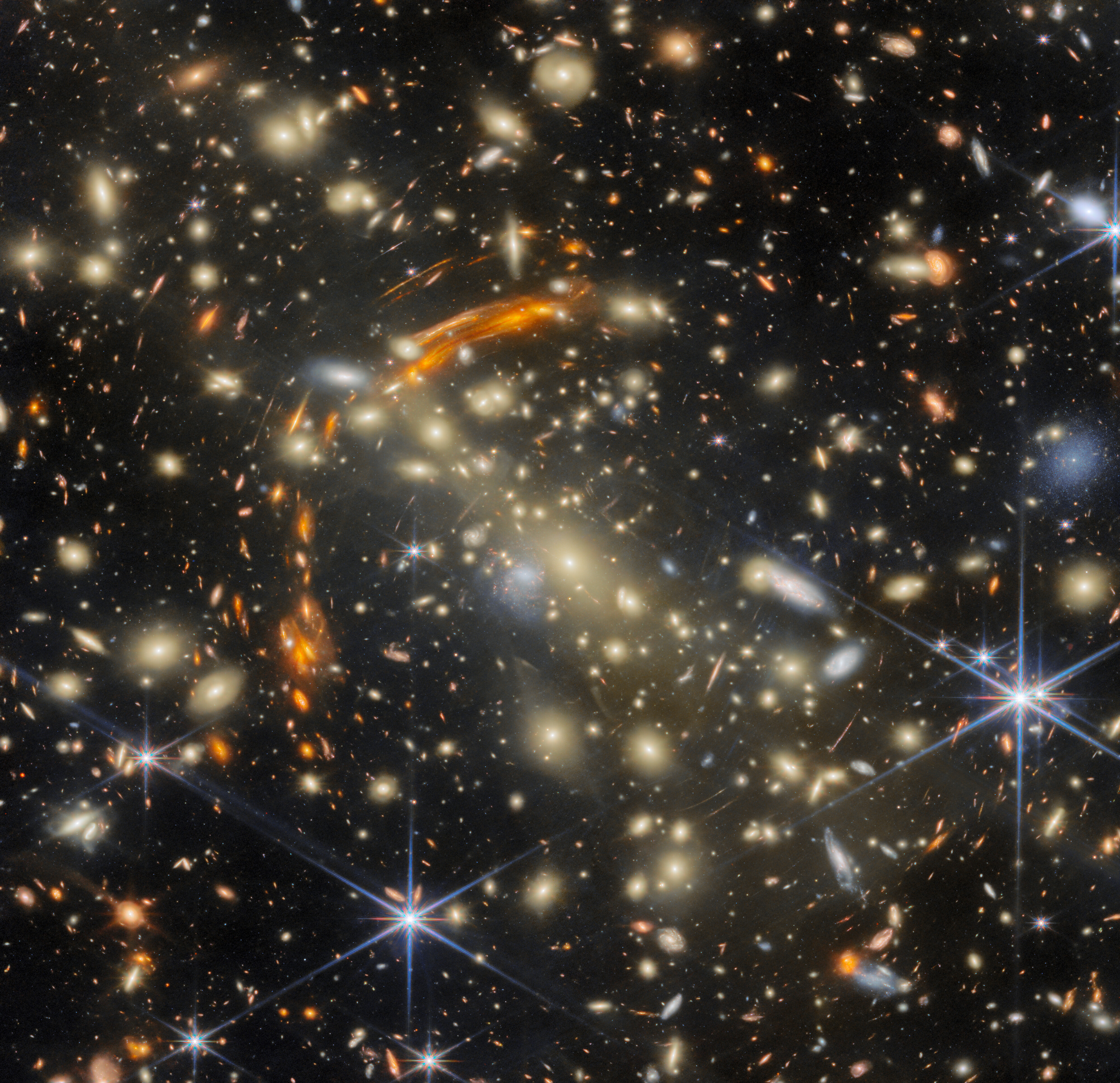
Cosmic House of Mirrors

This NASA/ESA/CSA James Webb Space Telescope Picture of the Month features galaxies in incredible detail that have been warped and multiplied like they’ve stepped into a house of mirrors.

  •  

Quando i bordi non tornano

Da lontano, una stella sembra un punto netto nel cielo. Se riuscissimo a distinguerne il disco, però, vedremmo che non ha contorni così decisi: la sua luce sfuma dal centro verso il bordo, facendosi lentamente più tenue. Una sfumatura ben nota, ma che nuove osservazioni mostrano diversa da quanto prevedono i modelli delle atmosfere stellari.

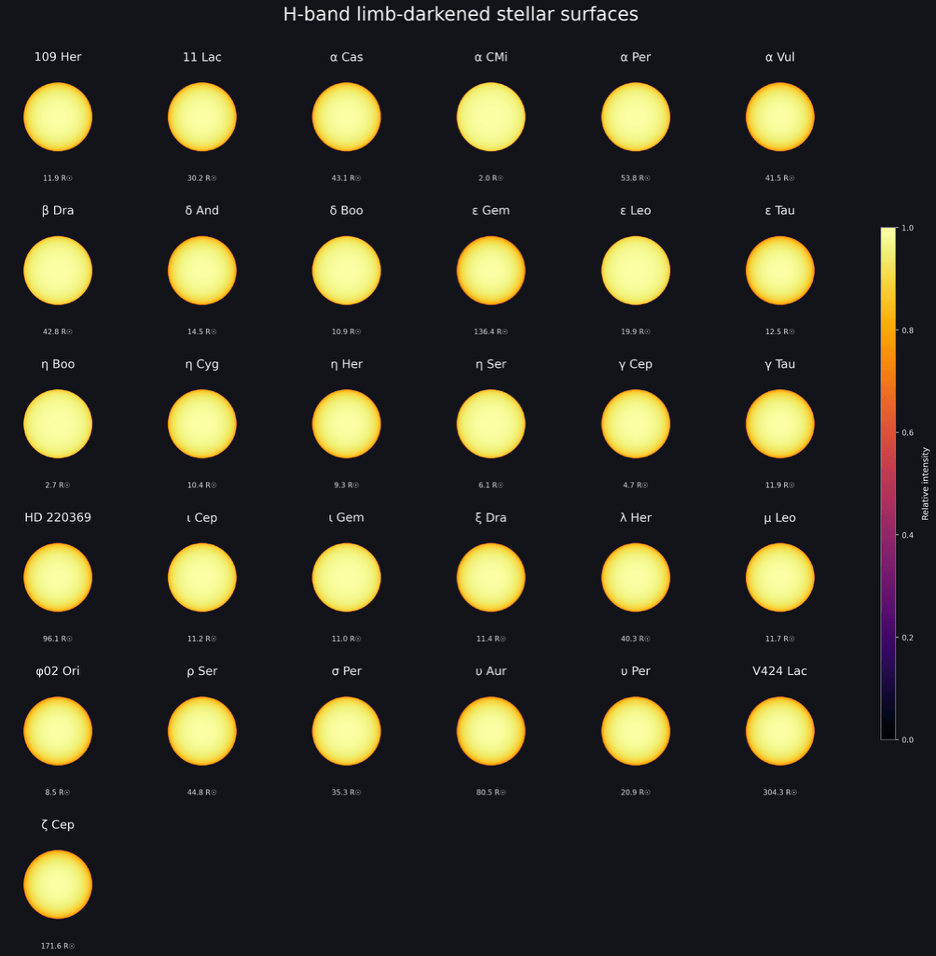
A misurarla con grande precisione è stato un gruppo di ricerca guidato da Narsireddy Anugu, del Center for High Angular Resolution Astronomy della Georgia State University, usando il Chara Array sul Monte Wilson, in California. Lo studio, pubblicato il mese scorso su The Astronomical Journal, prende in esame 31 stelle evolute e confronta il modo in cui la loro luminosità cambia dal centro al margine del disco in due diverse bande dell’infrarosso. Il fenomeno si chiama limb darkening, o oscuramento al bordo, e dipende da quanto in profondità riusciamo a “guardare” nell’atmosfera della stella. Verso il centro del disco, la nostra linea di vista entra quasi perpendicolarmente nell’atmosfera stellare e la luce che riceviamo arriva da regioni più profonde e calde. Avvicinandoci al bordo, invece, lo sguardo diventa sempre più radente e intercetta soprattutto gli strati più esterni, dove la temperatura è più bassa: è per questo che il disco stellare appare più luminoso al centro e sfuma progressivamente verso i margini. Quanto sia marcata questa sfumatura dipende anche dalla lunghezza d’onda alla quale osserviamo la stella.

Le 31 stelle osservate con il Chara Array nel vicino infrarosso, a 1,6 micrometri, mostrano tutte il caratteristico limb darkening: la luce è più intensa al centro, dove vediamo regioni più calde, e si attenua verso il bordo, più freddo. I colori indicano l’intensità relativa, mentre accanto a ciascuna stella è riportato il raggio espresso in raggi solari. Le immagini sono mostrate alla stessa scala relativa. Crediti: Georgia State University/Chara Array

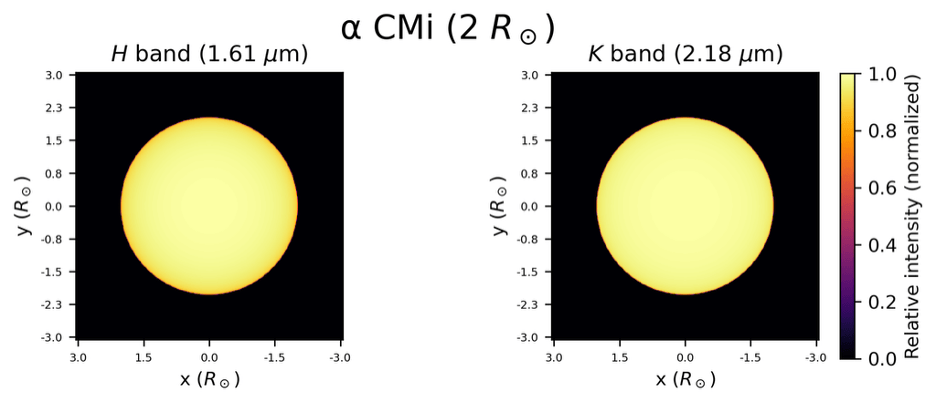
È qui che le nuove misure cominciano a discostarsi dalle previsioni: le osservazioni di Chara sono state effettuate simultaneamente nelle bande H e K dell’infrarosso, centrate rispettivamente attorno a 1,6 e 2,2 micrometri. Alle lunghezze d’onda maggiori l’oscuramento al bordo dovrebbe diventare meno pronunciato, come previsto dai modelli di atmosfera stellare. Ed è proprio quello che mostrano le osservazioni, insieme a un’altra tendenza: il limb darkening è meno marcato nelle stelle con temperature superficiali più elevate. Ma c’è un problema: nel campione osservato, il limb darkening diminuisce tra le due bande di quasi il 40 per cento, molto più di quanto prevedano i modelli. La direzione del cambiamento è quella attesa, ma la sua intensità no.

La differenza non riguarda soltanto un dettaglio dell’aspetto delle stelle: il modo in cui la luminosità varia dal centro al bordo porta infatti informazioni sulla distribuzione della temperatura e sull’opacità negli strati dell’atmosfera stellare e misurarlo direttamente offre quindi un banco di prova per verificare quanto bene i modelli descrivano la struttura delle stelle. Facile a dirsi, meno a farsi. Anche le stelle relativamente vicine sono così lontane da apparire nella maggior parte dei telescopi come puntini luminosi. Chara riesce a spingersi oltre grazie all’interferometria: combina la luce raccolta da sei telescopi distribuiti sul Monte Wilson, raggiungendo un potere risolutivo impossibile per ciascun telescopio preso singolarmente. Invece di produrre una fotografia convenzionale del disco stellare, misura come cambia il segnale interferometrico al variare della distanza fra i telescopi, permettendo di ricavare sia il diametro angolare della stella sia il profilo con cui la sua luminosità diminuisce verso il bordo.

Due modelli di Procyon, una delle stelle più brillanti del cielo e la principale della costellazione del Cane Minore, osservata a diverse lunghezze d’onda nel vicino infrarosso. In entrambi i casi la stella appare più luminosa al centro e più debole verso il bordo, il caratteristico effetto di limb darkening. Le misure del Chara Array mostrano però che questa sfumatura dal centro al margine è più marcata alle lunghezze d’onda più corte. Crediti: Georgia State University/Chara Array

Il confronto è particolarmente interessante perché riguarda stelle evolute, con atmosfere più estese e complesse rispetto a quelle di stelle come il Sole. Proprio per questo, descriverne con precisione il profilo di luminosità è una prova impegnativa per i modelli di atmosfera stellare. Gli autori ne hanno messi alla prova diversi, ma nessuno riesce a riprodurre del tutto quanto rapidamente il limb darkening cambia con la lunghezza d’onda. Conoscere bene il limb darkening serve anche fuori dallo studio delle atmosfere stellari. Quando un esopianeta transita davanti alla propria stella, infatti, non attraversa un disco uniformemente luminoso, ma la quantità di luce che nasconde cambia a seconda della zona del disco che sta coprendo e i modelli delle curve di transito devono tenerne conto per ricavare con precisione le proprietà del pianeta. Le stelle analizzate in questo studio non sono però quelle più comunemente cercate nelle osservazioni di transiti, per cui il prossimo passo sarà ampliare il confronto a stelle di sequenza principale e osservare il limb darkening su un intervallo di lunghezze d’onda ancora più ampio, dal visibile all’infrarosso.

Se anche lì la luce continuerà a sfumare diversamente da quanto previsto, saranno i modelli a dover mettere meglio a fuoco i bordi delle stelle.

Per saperne di più:


  •  

Yambo, esploratore dell’infinito

Un astronomo punta il telescopio verso Marte e, invece di canali e calotte polari, ci trova l’amore. È il 1910 e sugli schermi italiani passa Un matrimonio interplanetario: pochi minuti di pellicola muta, fondali dipinti, una storia sentimentale che attraversa lo spazio. È considerato il primo film di fantascienza girato in Italia. Lo firma un autore che i lettori, soprattutto i più giovani, conoscono già da anni con uno pseudonimo esotico e un po’ buffo: Yambo.

Dietro quel nome c’era Enrico Novelli (Pisa, 1874 – Firenze, 1943), figlio d’arte – il padre Ermete riconosciuto come uno dei più grandi maestri d’arte drammatica – e autore di una produzione che ancora oggi nessuno è riuscito a censire per intero. Romanzi d’avventura e d’anticipazione, racconti, fumetti, illustrazioni, teatro e teatro di figura, cinema, giornalismo, divulgazione scientifica. «Un incursore dell’immaginario», lo definiscono Paolo Tozzi e Francesca Brunetti nella prefazione di Yambo 150. L’universo di Yambo tra scienza, avventura e immaginazione (Felici Editore, 2026). Un artista «radicalmente eclettico al punto da risultare inafferrabile» e che proprio per questo il Novecento ha finito per perdere per strada.

Paolo Tozzi, Fabio Gadducci, Francesca Brunetti (a cura di), Yambo 150. L’universo di Yambo tra scienza, avventura e immaginazione, Felici Editore, 2026, 164 pagine, 20 euro

Per i 150 anni dalla nascita di Yambo un gruppo decisamente eterogeneo – esperti di fumetto e di letteratura per ragazzi, storici del cinema e della scienza, bibliotecari, informatici, autori e astrofisici – ha deciso di festeggiare. A Firenze, la Biblioteca Marucelliana ha esposto autografi, disegni e volumi rari, mentre un ciclo di incontri si è svolto tra la Marucelliana e la biblioteca dell’Inaf di Arcetri. A Torino il MuFant, il Museo del fantastico e della fantascienza, ha ricollocato Yambo nella storia internazionale del genere. A Pisa, sua città natale, Palazzo Blu ha messo in dialogo le tavole originali de Gli esploratori dell’infinito con la loro nuova vita a fumetti, la graphic novel firmata da Davide La Rosa e Armin Barducci.

Il volume curato da Tozzi, Brunetti e Fabio Gadducci raccoglie e racconta queste esperienze. Ma c’è anche la giovinezza bohémienne di Novelli tra Firenze, Milano e la Roma umbertina, il suo rapporto col fumetto, il serrato confronto con il francese Albert Robida.

Chi si occupa di letteratura per l’infanzia e per ragazzi sa bene che fantasia e scienza non sono mondi antitetici. Quando Gianni Rodari parlava del “binomio fantastico” come scintilla per mettere in moto l’immaginazione, evidenziava proprio l’incontro tra elementi apparentemente lontani. Nella storia della letteratura giovanile, i classici topoi della narrazione — dal viaggio verso mondi inesplorati alle macchine prodigiose, dai viaggi nel tempo alla conquista dello spazio — sono sempre stati il terreno d’elezione su cui s’innestano le scoperte e le ipotesi scientifiche del proprio tempo. Yambo ha incarnato questo spirito in modo esemplare. In romanzi come Gli eroi del Gladiator (1900) o La colonia lunare (1908) la meraviglia del racconto non va mai a scapito della cura dell’informazione. Yambo citava fonti scientifiche coeve, dimostrando una curiosità insaziabile e un rispetto profondo per i fatti della scienza, riuscendo al contempo a mantenere un registro ironico e leggero.

Come sottolinea Paolo Tozzi, ricercatore all’Inaf di Arcetri e tra i curatori del volume: «La nostra scoperta dell’universo di Yambo è nata quasi per caso, nell’ambito di iniziative che intrecciavano astrofisica e cinema muto. Ci siamo trovati di fronte a una produzione sterminata e di sorprendente accuratezza scientifica e tecnologica. Basti pensare che nel romanzo Gli esploratori dell’infinito Yambo riporta nozioni astronomiche attinte direttamente dai testi specialistici dell’epoca, citando con precisione le fonti e ricorrendo a geniali espedienti ironici qualora le esigenze narrative lo costringessero a deviare dal rigore filologico. Un atteggiamento intellettuale proprio del vero scienziato, oggi quanto mai raro da rintracciare in chi si occupa di narrazione».

Il primo incontro di Tozzi con questo universo è avvenuto tra gli scaffali di casa: una copia di Ciuffettino del 1940 nella biblioteca paterna. «Da quel momento ho cominciato a indagare», spiega, «e l’universo di Yambo mi si è letteralmente spalancato davanti, come in un big bang».
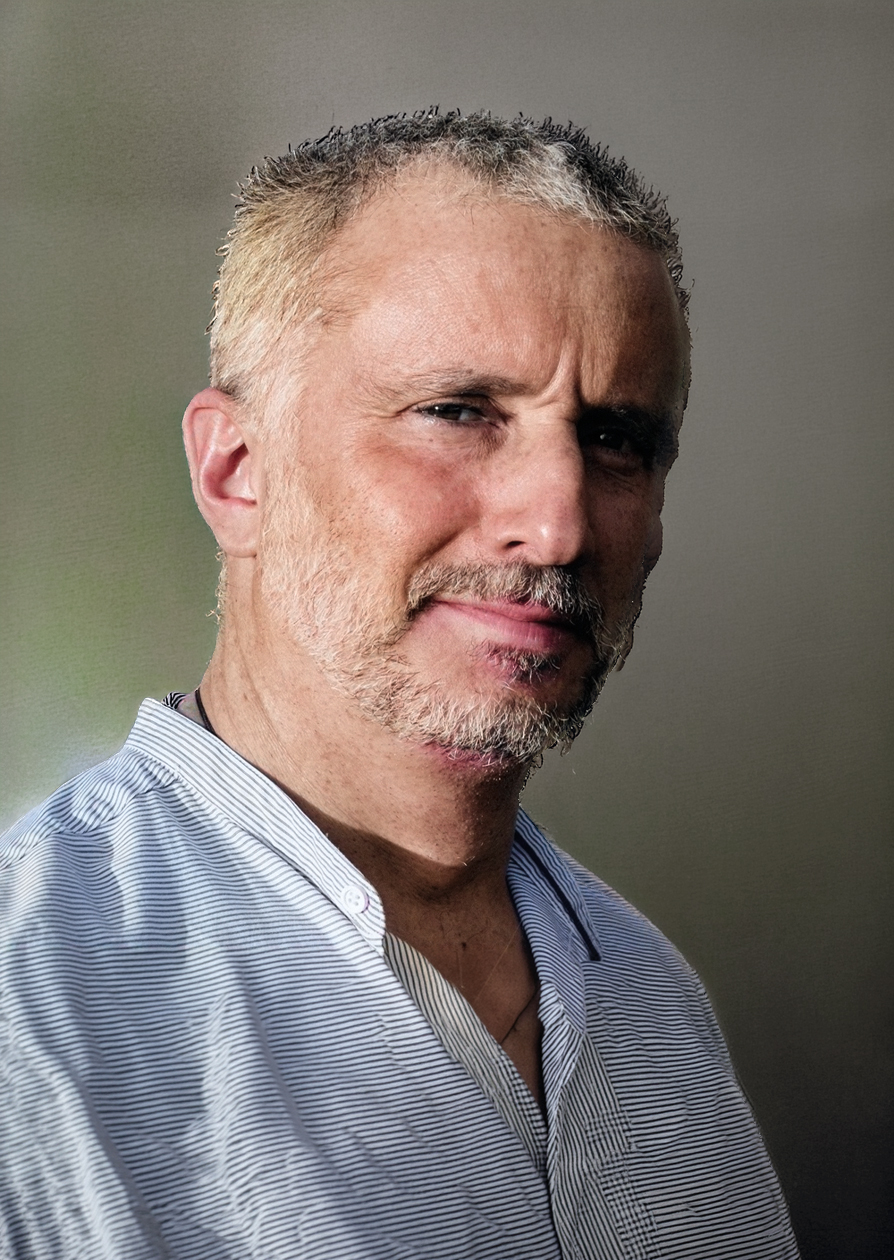
Paolo Tozzi, astronomo all’Inaf – Osservatorio astrofisico di Arcetri

Prendiamo un titolo a caso, scegliendo nell’immensa produzione di Enrico Novelli: il già citato Gli esploratori dell’infinito.  Nel 1898 Carl Gustav Witt e Auguste Charlois scoprono Eros, il primo asteroide noto la cui orbita si avvicina a quella terrestre. Pochi anni dopo Yambo lo ribattezza Cupido, lo fa catturare dall’atmosfera terrestre e lo trasforma in un veicolo: a bordo salgono un milionario misantropo, Harry Shtarr, e il suo segretario Giorgio, in fuga dalla noia della vita sulla Terra. Scopriranno di non essere soli: una banda di falsari ha impiantato lassù una zecca clandestina. Un’esplosione spinge l’asteroide su un’orbita ellittica che porta l’improbabile combriccola fino ai confini del sistema solare.

C’è, in questa trama, tutto l’armamentario della grande letteratura per ragazzi: il viaggio straordinario di ascendenza verniana, l’isola deserta che si fa robinsonata spaziale, i pirati – qui falsari –, i mostri – le «zoologie impossibili» dei mercuriani –, il mondo rovesciato in cui gli adulti appaiono ridicoli. Sono i topoi di sempre della fiaba e del romanzo d’avventura, e Yambo li riempie di scienza e di tecnica: l’isola diventa un corpo celeste, il vascello un’astronave, il talismano un’invenzione. Con un dettaglio che oggi suona profetico: un asteroide agganciato, portato in orbita vicino alla Terra e abitato da chi vuole farci affari. A oltre un secolo di distanza le sonde Hayabusa2 e Osiris-Rex hanno riportato a terra campioni di Ryugu e Bennu, e lo sfruttamento minerario dei piccoli corpi del Sistema solare è entrato nei piani di agenzie spaziali e aziende private.

Se Yambo ha ancora qualcosa da dire, però, non è tanto sull’astrofisica di oggi quanto sul modo di raccontarla. Tozzi ne è convinto: «In questi anni complicati rischiamo di concentrarci troppo sui contenuti e troppo poco sulle narrazioni. I festival scientifici e i libri divulgativi, soprattutto quelli per ragazzi, si rivolgono spesso a chi è già curioso e appassionato di scienza. Ma sono le storie a far nascere la curiosità anche in chi parte lontano dall’astrofisica, e più in generale dalla conoscenza».

Yambo ci riuscì con un successo enorme, in un’epoca e in un contesto molto diversi dal nostro, trasferendo la stessa libertà di scrittura in ogni forma espressiva che toccava: romanzo, teatro, cinema, giornalismo, saggio, fumetto, illustrazione. «Yambo ci lancia una sfida», conclude Tozzi: «affrontare l’enorme complessità del contemporaneo con leggerezza, senza rinunciare a un estremo rigore filologico e, soprattutto, con una piena consapevolezza del potere della narrazione».

Non è un caso che Umberto Eco, ne La misteriosa fiamma della regina Loana, abbia scelto proprio il nome Yambo per il suo protagonista, un uomo che ha perso la memoria e la ritrova sfogliando i libri e i giornalini della propria infanzia. Yambo come chiave d’accesso a un immaginario condiviso, sepolto ma non perduto.

 

  •  

Crew-12 Returns to Earth

A cone-shaped spacecraft and the four large parachutes attached to it against a backdrop of fluffy white clouds in the sky.
NASA/Keegan Barber

The SpaceX Crew Dragon Freedom spacecraft is seen moments before splashing down in the Pacific Ocean off the coast of California in this Oct. 8, 2026, photograph. Aboard were NASA’s SpaceX Crew-12 members NASA astronauts Jessica Meir and Jack Hathaway, ESA (European Space Agency) astronaut Sophie Adenot, and Roscosmos cosmonaut Andrey Fedyaev. The four spent nearly eight months aboard the International Space Station.

See more photos from splashdown.

Image credit: NASA/Keegan Barber

  •  

Crew-12 Returns to Earth

A cone-shaped spacecraft and the four large parachutes attached to it against a backdrop of fluffy white clouds in the sky.
NASA/Keegan Barber

The SpaceX Crew Dragon Freedom spacecraft is seen moments before splashing down in the Pacific Ocean off the coast of California in this Oct. 8, 2026, photograph. Aboard were NASA’s SpaceX Crew-12 members NASA astronauts Jessica Meir and Jack Hathaway, ESA (European Space Agency) astronaut Sophie Adenot, and Roscosmos cosmonaut Andrey Fedyaev. The four spent nearly eight months aboard the International Space Station.

See more photos from splashdown.

Image credit: NASA/Keegan Barber

  •  

Crew-12 Returns to Earth

The SpaceX Crew Dragon Freedom spacecraft is seen as it lands with NASA astronauts Jessica Meir and Jack Hathaway, ESA (European Space Agency) astronaut Sophie Adenot, and Roscosmos cosmonaut Andrey Fedyaev aboard in the Pacific Ocean off the coast of Los Angeles, Calif., Thursday, Oct. 8, 2026.

  •  

NASA’s SpaceX Crew‑12 Splashes Down, Sets Briefing to Discuss Mission

The SpaceX Crew Dragon Freedom spacecraft is seen as it lands with NASA astronauts Jessica Meir, Jack Hathaway, ESA (European Space Agency) astronaut Sophie Adenot, and Roscosmos cosmonaut Andrey Fedyaev aboard in the Pacific Ocean off the coast of Los Angeles on Oct. 8, 2026.
Credit: NASA/Keegan Barber

After more than seven months aboard the International Space Station, NASA’s SpaceX Crew-12 mission safely splashed down Thursday in the Pacific Ocean off the coast of Los Angeles. The crew members will discuss their science mission during a news conference at 3:30 p.m. EDT, Thursday, Oct. 15, at the agency’s Johnson Space Center in Houston.

“Jessica, Jack, Sophie, and Andrey spent 237 days living and working in orbit, traveled more than 100 million miles, advanced important science, and returned safely home because of the extraordinary expertise and competence of thousands across NASA, SpaceX, and our international partners,” said NASA Administrator Jared Isaacman. “Building the capability, experience, and confidence to do this repeatedly is exactly what will allow us to go farther, and I am grateful to Crew-12 and their families for their service to humanity’s greatest adventure.”

NASA astronauts Jessica Meir and Jack Hathaway, ESA (European Space Agency) astronaut Sophie Adenot, and Roscosmos cosmonaut Andrey Fedyaev returned to Earth at 8:34 a.m. PDT. Teams aboard SpaceX recovery vessels retrieved the spacecraft and its crew shortly after. Following standard postflight medical screenings, the crew will fly to shore before returning to NASA’s Johnson Space Center in Houston.

“NASA’s activities supporting the International Space Station — transporting crew, conducting impactful research, and maintaining critical national assets — enable the science, engineering, and risk‑reduction needed for future missions across the solar system,” said Dana Weigel, manager of NASA’s Low Earth Orbit Program at the agency’s Johnson Space Center. “We’re grateful for the dedication across the human spaceflight team that makes this possible, and we’re thrilled to welcome Jessica, Jack, Sophie, and Andrey home.”

During their 237-day mission, the four crew members traveled more than 100 million miles and completed more than 3,792 orbits around Earth. The mission was the second for Meir and Fedyaev and the first for Hathaway and Adenot. Crew-12 lifted off at 5:15 a.m. EST on Feb. 13 and docked to the orbiting laboratory a day later.

Crew‑12 logged hundreds of hours of scientific research to support human exploration beyond low Earth orbit and advance benefits for people on Earth. The crew members’ work included testing stem cell production for cell‑based therapies, demonstrating on‑demand IV fluid generation for future missions, and studying how the bacteria that causes pneumonia can lead to long‑term heart damage. The crew also conducted nutrition-focused research and examined how physical characteristics may affect blood flow during spaceflight to help keep astronauts safe and healthy on future missions. Research conducted aboard the space station advances knowledge and demonstrates new technologies that enable us to prepare for human exploration of the Moon and Mars.

Meir completed four spacewalks, bringing her career total to seven. That places her third all-time in total spacewalks among women at NASA, behind former agency astronauts Peggy Whitson and Suni Williams. Adenot completed three spacewalks, becoming the first French woman to venture outside the orbital outpost.

United States-based media interested in attending the crew news conference in person with Meir, Hathaway, and Fedyaev, must contact the NASA Johnson newsroom no later than 5 p.m. EDT, Tuesday, Oct. 13, at jsc-newsroom@mail.nasa.gov. Media joining by phone must request dial-in details by 9:30 a.m., Oct. 15. To ask a question, media must join no later than 15 minutes before the start of the news conference. The agency’s media credentialing policy is available online. Adenot will return to Europe and not be available during the news conference.

NASA’s Low Earth Orbit Program provides reliable access to space, maximizing the use of the International Space Station for research and development by partnering with private U.S. companies, including SpaceX, to transport astronauts to and from the space station.

Learn more about NASA’s SpaceX Crew-12 at:

https://www.nasa.gov/commercialcrew

-end-

Joshua Finch / Jimi Russell
Headquarters, Washington
202-358-1100
joshua.a.finch@nasa.gov / james.j.russell@nasa.gov

Sandra Jones / Joseph Zakrzewski
Johnson Space Center, Houston
281-483-5111
sandra.p.jones@nasa.gov / joseph.a.zakrzewski@nasa.gov

Steven Siceloff
Kennedy Space Center, Florida
321-867-2468
steven.p.siceloff@nasa.gov

  •  

NASA’s SpaceX Crew‑12 Splashes Down, Sets Briefing to Discuss Mission

The SpaceX Crew Dragon Freedom spacecraft is seen as it lands with NASA astronauts Jessica Meir, Jack Hathaway, ESA (European Space Agency) astronaut Sophie Adenot, and Roscosmos cosmonaut Andrey Fedyaev aboard in the Pacific Ocean off the coast of Los Angeles on Oct. 8, 2026.
Credit: NASA/Keegan Barber

After more than seven months aboard the International Space Station, NASA’s SpaceX Crew-12 mission safely splashed down Thursday in the Pacific Ocean off the coast of Los Angeles. The crew members will discuss their science mission during a news conference at 3:30 p.m. EDT, Thursday, Oct. 15, at the agency’s Johnson Space Center in Houston.

“Jessica, Jack, Sophie, and Andrey spent 237 days living and working in orbit, traveled more than 100 million miles, advanced important science, and returned safely home because of the extraordinary expertise and competence of thousands across NASA, SpaceX, and our international partners,” said NASA Administrator Jared Isaacman. “Building the capability, experience, and confidence to do this repeatedly is exactly what will allow us to go farther, and I am grateful to Crew-12 and their families for their service to humanity’s greatest adventure.”

NASA astronauts Jessica Meir and Jack Hathaway, ESA (European Space Agency) astronaut Sophie Adenot, and Roscosmos cosmonaut Andrey Fedyaev returned to Earth at 8:34 a.m. PDT. Teams aboard SpaceX recovery vessels retrieved the spacecraft and its crew shortly after. Following standard postflight medical screenings, the crew will fly to shore before returning to NASA’s Johnson Space Center in Houston.

“NASA’s activities supporting the International Space Station — transporting crew, conducting impactful research, and maintaining critical national assets — enable the science, engineering, and risk‑reduction needed for future missions across the solar system,” said Dana Weigel, manager of NASA’s Low Earth Orbit Program at the agency’s Johnson Space Center. “We’re grateful for the dedication across the human spaceflight team that makes this possible, and we’re thrilled to welcome Jessica, Jack, Sophie, and Andrey home.”

During their 237-day mission, the four crew members traveled more than 100 million miles and completed more than 3,792 orbits around Earth. The mission was the second for Meir and Fedyaev and the first for Hathaway and Adenot. Crew-12 lifted off at 5:15 a.m. EST on Feb. 13 and docked to the orbiting laboratory a day later.

Crew‑12 logged hundreds of hours of scientific research to support human exploration beyond low Earth orbit and advance benefits for people on Earth. The crew members’ work included testing stem cell production for cell‑based therapies, demonstrating on‑demand IV fluid generation for future missions, and studying how the bacteria that causes pneumonia can lead to long‑term heart damage. The crew also conducted nutrition-focused research and examined how physical characteristics may affect blood flow during spaceflight to help keep astronauts safe and healthy on future missions. Research conducted aboard the space station advances knowledge and demonstrates new technologies that enable us to prepare for human exploration of the Moon and Mars.

Meir completed four spacewalks, bringing her career total to seven. That places her third all-time in total spacewalks among women at NASA, behind former agency astronauts Peggy Whitson and Suni Williams. Adenot completed three spacewalks, becoming the first French woman to venture outside the orbital outpost.

United States-based media interested in attending the crew news conference in person with Meir, Hathaway, and Fedyaev, must contact the NASA Johnson newsroom no later than 5 p.m. EDT, Tuesday, Oct. 13, at jsc-newsroom@mail.nasa.gov. Media joining by phone must request dial-in details by 9:30 a.m., Oct. 15. To ask a question, media must join no later than 15 minutes before the start of the news conference. The agency’s media credentialing policy is available online. Adenot will return to Europe and not be available during the news conference.

NASA’s Low Earth Orbit Program provides reliable access to space, maximizing the use of the International Space Station for research and development by partnering with private U.S. companies, including SpaceX, to transport astronauts to and from the space station.

Learn more about NASA’s SpaceX Crew-12 at:

https://www.nasa.gov/commercialcrew

-end-

Joshua Finch / Jimi Russell
Headquarters, Washington
202-358-1100
joshua.a.finch@nasa.gov / james.j.russell@nasa.gov

Sandra Jones / Joseph Zakrzewski
Johnson Space Center, Houston
281-483-5111
sandra.p.jones@nasa.gov / joseph.a.zakrzewski@nasa.gov

Steven Siceloff
Kennedy Space Center, Florida
321-867-2468
steven.p.siceloff@nasa.gov

  •  

NASA Sets Coverage for SpaceX 35th Station Resupply Launch, Arrival

D4_2067548_20260616T162925_R_2026-06-16 16-29-28.NEF
A SpaceX Dragon cargo spacecraft departs from the International Space Station on June 16 after undocking from the Harmony module’s forward port. Dragon, packed with completed science experiments and cargo for retrieval and analysis on Earth, parachuted to a splashdown off the coast of southern California the following day.
Credit: NASA

Editor’s Note: This advisory was updated on Oct. 15, 2026, to reflect the revised spacecraft docking timeline. 

NASA and SpaceX are targeting 6:33 a.m. EDT, Tuesday, Oct. 13, for the next launch to deliver science investigations, supplies, and equipment, including the final set of International Space Station Roll-Out Solar Arrays, to the space station. This is the 35th SpaceX commercial resupply services mission to the orbital complex for NASA.

NASA also will host a media teleconference on Thursday, Oct. 8 that will preview the cargo resupply flight, as well as provide a post-splashdown update for the agency’s SpaceX Crew-12 mission, which will have returned to Earth from the space station Thursday morning.

Loaded with more than 6,300 pounds of supplies, a SpaceX Dragon spacecraft on a Falcon 9 rocket will lift off from Space Launch Complex 40 at Cape Canaveral Space Force Station in Florida. Dragon will dock autonomously around 10:30 a.m. on Thursday, Oct. 15, to the space-facing port of the station’s Harmony module.

NASA’s live launch and docking coverage will stream through a variety of platforms. Learn where to watch online:

https://www.nasa.gov/live

In addition to the solar arrays, the Dragon spacecraft will deliver hardware to manufacture artificial retinas in microgravity to help restore vision on Earth and 3D heart tissues models to advance large‑scale drug testing on future missions. The spacecraft will carry materials to study how a new type of glass forms in microgravity and brain organoids that could reveal treatment targets for neurodegenerative diseases, such as Alzheimer’s, Parkinson’s, and multiple sclerosis.

The Dragon spacecraft is scheduled to remain at the space station until mid-November when it will depart the orbiting laboratory and return to Earth with time-critical research and cargo, splashing down off the coast of California.

NASA’s mission coverage is as follows (all times Eastern and subject to change based on real-time operations):

Thursday, Oct. 8

1:15 p.m.: International Space Station briefing for Crew-12 return, and SpaceX’s 35th Commercial Resupply Services launch with the following participants:

  • Bill Spetch, deputy manager of Commercial, Low Earth Orbit Program
  • Dr. Liz Warren, deputy chief scientist, NASA’s International Space Station Office
  • Lee Echerd, senior mission manager, Customer Operations and Integration, SpaceX
  • Andreas Mogensen, leader, Human Exploration Group, ESA (European Space Agency)

To participate in the teleconference, media must contact the NASA Johnson Space Center newsroom for call details by 12 p.m., Oct. 8, at: jsccommu@mail.nasa.gov or 281-483-5111. To ask questions, media must dial in no later than 10 minutes before the start of the call. The agency’s media credentialing policy is available online.

Tuesday, Oct. 13

6:15 a.m.: Launch coverage begins

6:33 a.m.: Launch

Thursday, Oct. 15

9 a.m.: Arrival coverage begins

10:30 a.m.: Docking

NASA website launch coverage

Launch day coverage of the mission will be available on the NASA website. Coverage will include live streaming and blog updates beginning no earlier than 6 a.m. on Oct. 13, as the countdown milestones occur. On-demand streaming video on NASA+ and photos of the launch will be available shortly after liftoff. For questions about countdown coverage, contact the NASA Kennedy Space Center newsroom at 321-867-2468. Follow countdown coverage on our International Space Station blog for updates.

Attend launch virtually

Members of the public can register to attend this launch virtually. NASA’s virtual guest program for this mission also includes curated launch resources, notifications about related opportunities or changes, and a stamp for the NASA virtual guest passport following launch.

Watch, engage on social media

Let people know you’re watching the mission on X, Facebook, and Instagram by following and tagging these accounts:

X: @NASA, @NASAKennedy, @NASASpaceOps, @Space_Station, @ISS National Lab

Facebook: NASA, NASAKennedy, ISS, ISS National Lab

Instagram: @NASA, @NASAKennedy, @ISS, @ISSNationalLab

Learn more about this commercial resupply services mission at:

https://www.nasa.gov/mission/nasas-spacex-crs-35/

-end-

Josh Finch / Jimi Russell
Headquarters, Washington
202-358-1100
joshua.a.finch@nasa.gov / james.j.russell@nasa.gov

Steven Siceloff
Kennedy Space Center, Fla.
321-876-2468
steven.p.siceloff@nasa.gov

Sandra Jones / Joseph Zakrzewski
Johnson Space Center, Houston
281-483-5111
sandra.p.jones@nasa.gov / joseph.a.zakrzewskI@nasa.gov

  •  

NASA Sets Coverage for SpaceX 35th Station Resupply Launch, Arrival

D4_2067548_20260616T162925_R_2026-06-16 16-29-28.NEF
A SpaceX Dragon cargo spacecraft departs from the International Space Station on June 16 after undocking from the Harmony module’s forward port. Dragon, packed with completed science experiments and cargo for retrieval and analysis on Earth, parachuted to a splashdown off the coast of southern California the following day.
Credit: NASA

Editor’s Note: This advisory was updated on Oct. 15, 2026, to reflect the revised spacecraft docking timeline. 

NASA and SpaceX are targeting 6:33 a.m. EDT, Tuesday, Oct. 13, for the next launch to deliver science investigations, supplies, and equipment, including the final set of International Space Station Roll-Out Solar Arrays, to the space station. This is the 35th SpaceX commercial resupply services mission to the orbital complex for NASA.

NASA also will host a media teleconference on Thursday, Oct. 8 that will preview the cargo resupply flight, as well as provide a post-splashdown update for the agency’s SpaceX Crew-12 mission, which will have returned to Earth from the space station Thursday morning.

Loaded with more than 6,300 pounds of supplies, a SpaceX Dragon spacecraft on a Falcon 9 rocket will lift off from Space Launch Complex 40 at Cape Canaveral Space Force Station in Florida. Dragon will dock autonomously around 10:30 a.m. on Thursday, Oct. 15, to the space-facing port of the station’s Harmony module.

NASA’s live launch and docking coverage will stream through a variety of platforms. Learn where to watch online:

https://www.nasa.gov/live

In addition to the solar arrays, the Dragon spacecraft will deliver hardware to manufacture artificial retinas in microgravity to help restore vision on Earth and 3D heart tissues models to advance large‑scale drug testing on future missions. The spacecraft will carry materials to study how a new type of glass forms in microgravity and brain organoids that could reveal treatment targets for neurodegenerative diseases, such as Alzheimer’s, Parkinson’s, and multiple sclerosis.

The Dragon spacecraft is scheduled to remain at the space station until mid-November when it will depart the orbiting laboratory and return to Earth with time-critical research and cargo, splashing down off the coast of California.

NASA’s mission coverage is as follows (all times Eastern and subject to change based on real-time operations):

Thursday, Oct. 8

1:15 p.m.: International Space Station briefing for Crew-12 return, and SpaceX’s 35th Commercial Resupply Services launch with the following participants:

  • Bill Spetch, deputy manager of Commercial, Low Earth Orbit Program
  • Dr. Liz Warren, deputy chief scientist, NASA’s International Space Station Office
  • Lee Echerd, senior mission manager, Customer Operations and Integration, SpaceX
  • Andreas Mogensen, leader, Human Exploration Group, ESA (European Space Agency)

To participate in the teleconference, media must contact the NASA Johnson Space Center newsroom for call details by 12 p.m., Oct. 8, at: jsccommu@mail.nasa.gov or 281-483-5111. To ask questions, media must dial in no later than 10 minutes before the start of the call. The agency’s media credentialing policy is available online.

Tuesday, Oct. 13

6:15 a.m.: Launch coverage begins

6:33 a.m.: Launch

Thursday, Oct. 15

9 a.m.: Arrival coverage begins

10:30 a.m.: Docking

NASA website launch coverage

Launch day coverage of the mission will be available on the NASA website. Coverage will include live streaming and blog updates beginning no earlier than 6 a.m. on Oct. 13, as the countdown milestones occur. On-demand streaming video on NASA+ and photos of the launch will be available shortly after liftoff. For questions about countdown coverage, contact the NASA Kennedy Space Center newsroom at 321-867-2468. Follow countdown coverage on our International Space Station blog for updates.

Attend launch virtually

Members of the public can register to attend this launch virtually. NASA’s virtual guest program for this mission also includes curated launch resources, notifications about related opportunities or changes, and a stamp for the NASA virtual guest passport following launch.

Watch, engage on social media

Let people know you’re watching the mission on X, Facebook, and Instagram by following and tagging these accounts:

X: @NASA, @NASAKennedy, @NASASpaceOps, @Space_Station, @ISS National Lab

Facebook: NASA, NASAKennedy, ISS, ISS National Lab

Instagram: @NASA, @NASAKennedy, @ISS, @ISSNationalLab

Learn more about this commercial resupply services mission at:

https://www.nasa.gov/mission/nasas-spacex-crs-35/

-end-

Josh Finch / Jimi Russell
Headquarters, Washington
202-358-1100
joshua.a.finch@nasa.gov / james.j.russell@nasa.gov

Steven Siceloff
Kennedy Space Center, Fla.
321-876-2468
steven.p.siceloff@nasa.gov

Sandra Jones / Joseph Zakrzewski
Johnson Space Center, Houston
281-483-5111
sandra.p.jones@nasa.gov / joseph.a.zakrzewskI@nasa.gov

  •  

NASA’s SpaceX 35th Commercial Resupply Mission Overview

NASA’s SpaceX 35th commercial resupply mission will launch on the company’s Dragon spacecraft on the SpaceX Falcon 9 rocket to deliver research and supplies to the International Space Station.
NASA

NASA and SpaceX are targeting no earlier than Tuesday, Oct. 13 to launch scientific investigations, supplies, and equipment to the International Space Station. 

Loaded with more than 6,300 pounds of supplies, the SpaceX Dragon spacecraft will lift off aboard the company’s Falcon 9 rocket from Space Launch Complex 40 at Cape Canaveral Space Force Station in Florida. Following its arrival to the orbital complex, Dragon will autonomously dock to the space-facing port of the space station’s Harmony module. 

NASA will stream launch and docking coverage through a variety of platforms. Learn where to watch online:

https://www.nasa.gov/live

NASA’s SpaceX 35th commercial resupply mission will launch from Launch Complex 40 at Cape Canaveral Space Force Station in Florida.
NASA

For more than 25 years, the International Space Station has supported research by scientists from more than 110 countries, enabling more than 4,000 experiments in microgravity. Research conducted aboard the station helps advance long-duration missions to the Moon as part of the Artemis program and to Mars, while also providing multiple benefits to humanity.

Science Highlights

In addition to cargo for the crew aboard the space station, Dragon will deliver several new science experiments, including:

Lambda-Vision-1 studies artificial retinas in microgravity and could help patients with incurable retinal diseases on Earth.
NASA

With LambdaVision-1, NASA is testing how to manufacture artificial eye retinas in microgravity, building them one thin layer at a time. Reduced settling in microgravity may create more uniform, stable layers, potentially improving implants’ performance. These artificial retinas could help restore vision for patients with currently incurable retinal diseases on Earth.

Stellar Spheroids examines growth and function of 3D heart tissues models in microgravity. Credit: NASA
NASA

NASA will use the Stellar Spheroids experiment to study how microgravity affects the growth and function of 3D human heart tissue models. Researchers will assess whether microgravity improves the formation of advanced vascular networks. Results could help researchers develop more realistic heart tissue models for disease research and support larger‑scale drug testing on future space missions.

ELF-Unconventional Glass 2 studies how glass forms in microgravity when made from non-traditional elements.
NASA

Using non-traditional elements, ELF-Unconventional Glass 2 studies how glass forms in microgravity. Researchers will observe molten behavior in space, then return solid samples to Earth for detailed analysis. These unconventional glasses could offer higher strength, improved optical capabilities, and greater durability for spacecraft, habitats, and other exploration technologies.

MINDS seeks to reveal new targets to treat diseases like Alzheimer’s, Parkinson’s, and multiple sclerosis.
NASA

The MINDS experiment studies brain organoids to better understand inflammation linked to neurodegenerative diseases. The investigation uses “organoid villages,” which combine cells from multiple people to better represent patient diversity. Results could help identify new treatment targets for diseases like Alzheimer’s, Parkinson’s, and multiple sclerosis.

Arrival and Return

NASA astronaut Anil Menon and CSA (Canadian Space Agency) astronaut Joshua Kutryk will monitor the arrival of the SpaceX Dragon cargo spacecraft from the International Space Station.

NASA astronaut Anil Menon and CSA (Canadian Space Agency) astronaut Joshua Kutryk will monitor the Dragon spacecraft’s arrival. It will remain docked to the orbiting laboratory for about a month before splashing down in the Pacific Ocean, returning critical science and hardware to teams on Earth. 

Cargo Highlights

NASA’s SpaceX 35th commercial resupply mission will launch on the company’s Dragon spacecraft on the SpaceX Falcon 9 rocket to deliver research and supplies to the International Space Station
NASA

Launch 

International Space Station Roll-Out Solar Arrays (IROSA) – The final pair of IROSAs that will be installed on the space station, completing the augmentation of its power system to support critical operations, including its safe and controlled deorbit.

Collapsible Continency Urinal and supporting hardware – A demonstration and test unit supporting NASA’s Artemis III mission.  

Canadarm2 joint flight support equipment – A large foam clamshell will fly empty to return the failed robotic arm joint that was replaced during a June 30 spacewalk. After its return to Earth, teams will analyze the joint on the ground.

Additional equipment launching includes a toilet dose pump, a toilet pretreat quality sensor, and a robot micro-conical tool used for space station maintenance and utilization tasks with external replacement units and payloads.

Return

When Dragon returns in mid‑November, it will bring back the failed joint on the Canadarm2 for analysis and refurbishment, a spacesuit for ground refurbishment, a fluid- and pressure-control pump assembly from the urine processor, and a filtration unit for the water processor assembly. 

  •  

NASA to Cover Northrop Grumman CRS-24 Spacecraft Departure

iss074e0458241 (April 13, 2026) --- Northrop Grumman's Cygnus XL cargo spacecraft rests at its capture point, 12 meters from the International Space Station, as the Canadarm2 robotic arm prepares to grapple the resupply ship. Cygnus XL delivered more than 11,000 pounds of new science experiments, lab hardware, and crew supplies for the Expedition 74 crew.
Northrop Grumman’s Cygnus XL cargo spacecraft rests at its capture point on April 13, 2026, 12 meters from the International Space Station, as the Canadarm2 robotic arm prepares to grapple the resupply ship.
Credit: NASA/Jessica Meir

Editor’s Note: This advisory was updated Oct. 8, 2026, to reflect revised timing for the Cygnus XL spacecraft’s deorbit and information about its departure.

After delivering more than 11,000 pounds of supplies, science experiments, and other cargo to the International Space Station for NASA, Northrop Grumman’s Cygnus XL spacecraft is scheduled to depart Friday, Oct. 9, as part of the company’s Commercial Resupply Services-24 mission, or Northrop Grumman CRS-24.

Watch NASA’s live coverage of departure beginning at 12:30 p.m. EDT through a variety of platforms. Learn where to watch online:

https://www.nasa.gov/live

Flight controllers on the ground will send commands for the space station’s Canadarm2 robotic arm to detach the Cygnus XL spacecraft from the Unity module’s Earth-facing port and maneuver it into position for release at 12:45 p.m. NASA astronaut Luke Delaney will monitor the operation from aboard the orbital complex.

Loaded with thousands of pounds of disposal items and other unneeded cargo, Cygnus XL will deorbit Monday, Oct. 12, for a destructive re-entry into Earth’s atmosphere, where it will safely burn up. NASA will not provide coverage of the spacecraft’s deorbit.

The resupply spacecraft launched on April 11 on a SpaceX Falcon 9 rocket from Space Launch Complex 40 at Cape Canaveral Space Force Station in Florida.

Learn more about this NASA commercial resupply mission at:

https://www.nasa.gov/mission/nasas-northrop-grumman-crs-24/

-end-

Josh Finch / Jimi Russell
Headquarters, Washington
202-358-1100
joshua.a.finch@nasa.gov / james.j.russell@nasa.gov

Sandra Jones
Johnson Space Center, Houston
281-483-5111
sandra.p.jones@nasa.gov

  •  

NASA Astronaut Christina Koch at Eagles vs. Rams

NASA astronaut and mission specialist of the agency's Artemis II mission, Christina Koch, led the fans in singing the Eagles Fight Song from the field at an NFL game between the Philadelphia Eagles and the Los Angeles Rams at Lincoln Financial Field on Sunday, Oct. 4, 2026, in Philadelphia.

  •  

NASA Testing Aims at Supercooled Large Droplet Aviation Safety

3 Min Read

NASA Testing Aims at Supercooled Large Droplet Aviation Safety

Ice collection seen on un-heated sections of the 1D2D-X ice drop detection probe in the test section of the IRT (Icing Research Tunnel). Drop Size Probe testing – SFD (Subsonic Flight Demonstrator) of SLD (Supercooled Large Drop) Instrumentation Test in IRT (Icing Research Tunnel) – Particle Size Distribution Entry, June 8-11, 2026 Large Drop Testing in IRT
Credits: NASA/Quentin Schwinn

NASA is leveraging its expertise and enhancing its test facilities to help address a rare but persistent aviation hazard: icing that occurs when aircraft encounter unusually large, very cold water droplets in clouds.  

The problem, known as “supercooled large droplet icing,” occurs when aircraft fly through clouds containing unusually large drops of water that are very cold but remain liquid. When a plane passes through those drops, they can rapidly freeze to surfaces that are not protected from ice buildup.  

With a series of tests in the Icing Research Tunnel at Glenn Research Center in Cleveland, NASA researchers are helping U.S. industry better understand the phenomenon. 

SFD (Subsonic Flight Demonstrator) of SLD (Supercooled Large Drop) Instrumentation Test – Particle Size Measurement in the IRT (Icing Research Tunnel), June 8-11, 2026. Drop size shown on computer from Drop Sizing Probe seen in the IRT test section.
NASA/Quentin Schwinn

Supercooled water is common in clouds – droplets can go below 32 degrees Farenheit but not freeze unless they encounter dust or other tiny particles around which they can crystalize. Aircraft are designed to encounter typical icing conditions where droplets range from 2 to 100 microns in diameter (for comparison, a human hair is about 70 microns wide). But in rarer cases, clouds can contain supercooled large drops up to 2,000 microns in diameter (if you’ve ever been caught in freezing rain, you’ve encountered these droplets at ground level). These much larger droplets can hit or splash to the aft of an aircraft, including areas behind conventional ice protection systems.  

The aviation industry relies on engineering tools to help design their aircraft. Current tools work well for typical clouds, but engineers have questions about how well they account for the physics of supercooled large drops. To help answer those questions, NASA is working to enhance the equipment it uses to generate and measure experimental clouds for testing in the Icing Research Tunnel.  

Ice collection seen on un-heated sections of the ice drop detection probe in the test section of the IRT (Icing Research Tunnel). Drop Size Probe testing – SFD (Subsonic Flight Demonstrator) of SLD (Supercooled Large Drop) Instrumentation Test in IRT (Icing Research Tunnel) – Particle Size Distribution Entry, June 8-11, 2026
NASA/Quentin Schwinn

NASA researchers have experimented with brand new probes that help calibrate the sizes of the drops in the clouds the tunnel produces. The probes can “see” drops larger than 45 microns and perform a real-time analysis of their sizes. NASA will compare these results, a laborious technique of post-processing droplet size image data from the tunnel. The results will be mated to results from a different probe that measures droplets smaller than 45 microns. With this, the complete droplet size spectrum is known. 

The test campaign marks an important milestone for the Subsonic Flight Demonstrator project, part of NASA’s Research and Technology Mission Directorate. Detailed analysis of the collected data continues, and NASA’s project team will share results with the broader aerospace community once complete.

Keep Exploring

Discover More Topics From NASA

  •  

NASA's DAVINCI Probe Can Stand the Heat

An engineering model of NASA’s DAVINCI (Deep Atmosphere Venus Investigation of Noble gases, Chemistry, and Imaging) descent probe passed a key test that ran from Aug. 28 to Sept. 10, showing it can survive the extreme temperatures of Venus.

  •  

NASA Model Wing Lights Up During First Pressure Sensitive Paint Tests

2 min read

Preparations for Next Moonwalk Simulations Underway (and Underwater)

Side‑by‑side images showing a wing-like test article mounted in a wind tunnel. The left image displays the pale, unlit test article attached to instrumentation inside the tunnel. The right image shows the same article under aerodynamic heating, glowing bright pinkish‑purple as test data parameters appear around it, including readings for pressure, temperature, Mach number, and angle of attack.
Left: The Benchmark Supercritical Wing not illuminated in unsteady Pressure Sensitive Paint inside the Transonic Dynamics Tunnel at NASA’s Langley Research Center. Right: The Benchmark Supercritical Wing illuminated in unsteady Pressure Sensitive Paint during testing inside the Transonic Dynamics Tunnel at NASA’s Langley Research Center.
Left: NASA/Sarah Peak | Right: NASA

Groundbreaking tests at NASA’s Langley Research Center in Hampton, Virginia, are paving the way for new wind tunnel capabilities for designing the aircraft technologies of the future. 

In a first-of-its-kind test in NASA Langley’s Transonic Dynamics Tunnel, researchers used unsteady Pressure Sensitive Paint to study how air flows around a standard wind tunnel model known as the Benchmark Supercritical Wing. As the team observed the test, the paint’s special capabilities made the model wing glow pink-purple when exposed to special ultraviolet lights, while high-speed cameras captured every detail. 

The test combined two valuable NASA tools. NASA’s benchmark wings don’t represent a particular type of aircraft, rather they are meant as universal models to help researchers improve computer modeling using wind tunnel data.  

Unsteady pressure sensitive paint is a specialized coating that varies in brightness according to how much pressure the air flow applies to the wing. High-speed cameras capture those changes, providing data for computer models. For years, NASA researchers at centers including Langley and the agency’s Ames Research Center in California’s Silicon Valley have been working to integrate the paint into wind tunnel tests for aircraft and rockets. NASA researchers consider the paint a vital tool and expect to find many more wind tunnel applications in the future.  

This test marked the technique’s first use on a large-scale, freely moving model in a low‑oxygen environment, an achievement made possible by the Transonic Dynamic Tunnel’s unique testing capabilities. 

This milestone opens the door for upcoming tests on flexible aircraft models that are designed to bend and adapt during flight to improve efficiency. It also lays the foundation for better simulations and designs as NASA advances the future of flight. 

  •  

NASA’s SpaceX Crew-13 Launches

A SpaceX Falcon 9 rocket carrying the company's Dragon spacecraft is launched on NASA’s SpaceX Crew-13 mission to the International Space Station with NASA astronauts Jessica Watkins and Luke Delaney, CSA (Canadian Space Agency) astronaut Joshua Kutryk, and Roscosmos cosmonaut Sergey Teteryatnikov aboard, Thursday, Oct. 1, 2026, from Cape Canaveral Space Force Station in Florida.

  •  

Star Trails

This long-duration image shows star trails above Earth and the blue lights of fishing boats and the yellow lights of Indonesian cities stretching below the International Space Station as it orbited 258 miles above the Banda Sea.

  •  

Crew-13 Rocket and Spacecraft at Launch Pad

Ahead of launch of NASA’s SpaceX Crew-13 mission, a SpaceX Falcon 9 rocket, with the Dragon spacecraft atop, is vertical at the launch pad of Space Launch Complex 40 at Cape Canaveral Space Force Station in Florida on Sunday, Sept. 27, 2026.

  •  

NASA Armstrong Celebrates 80 Years of Flight Innovation

On Sept. 30, 1946, five National Advisory Committee of Aeronautics (NACA) engineers arrived at Muroc Army Airfield in California’s high desert to achieve supersonic flight for the first time. In less than two years, NACA flew the X-1 aircraft faster than the speed of sound, marking an important milestone in aviation history.

Fast forward 80 years, and that former NACA outpost is now NASA’s Armstrong Flight Research Center in Edwards, California, flying the X-59 supersonic X-plane in the same skies to demonstrate that supersonic flight doesn’t have to come with a boom.

Over Armstrong’s 80-year history, the center has supported milestone missions ranging from space shuttle landings to SR-71 flights, shaping the evolution of science, aeronautics, and space research.

This Southern California NASA center is poised to lead the next era of aeronautics and human spaceflight, advancing technologies that will define the future of flight.

Fast facts

  • NASA Administrator Jared Isaacman recently named Armstrong as the agency’s Center of Excellence for Flight Test and Aircraft Operations, recognizing the center’s unmatched rigor in executing unique missions only NASA can fly.
  • To support NASA’s Artemis missions and return to the Moon, Armstrong uses research aircraft such as a 737 for astronaut suit testing, the G-III for Artemis II heat-shield data collection, and an F/A-18 aircraft that tested the autopilot for the SLS (Space Launch System) rocket.
  • NASA’s aeronautics centerpiece, the X-59, is undergoing rigorous testing and a series of flights at Armstrong to prepare for upcoming quiet supersonic demonstrations over U.S. communities.
  • NASA Armstrong has transformed commercial and military aviation — from early supersonic flight research to digital fly-by-wire — and continues working with other government agencies, industry, and academia to make flying safer, more autonomous, and more efficient.
  • The center plays a vital role in global science by flying aircraft like the ER-2, C-20A, and Gulfstream G-III/IV/V to collect critical data on wildfires, glacier melt, pollution, minerals, and more.

Behind these achievements are the engineers, pilots, technicians, and mission support teams who continue to push the boundaries of what’s possible.

For more about NASA Armstrong, visit:

https://www.nasa.gov/armstrong

-end-

Dede Dinius / Teresa Whiting
Armstrong Flight Research Center, Edwards, California
661-276-3449
darin.l.dinius@nasa.gov / teresa.whiting@nasa.gov

💾

Red, White, and Boom, the U.S. Air Force Test Center’s celebration of America’s 250th anniversary and NASA Armstrong’s commemoration of its 80th year, was Fr...
  •  

Space Station View of Earth at Night

This nighttime view of the United States, dotted with city lights looking toward New York City (center), was taken at approximately 3:40 a.m. local time from the International Space Station as it orbited 259 miles above Earth.

  •  

Practicing for Safe Landings on the Moon and Beyond

A remotely piloted drone with four rotors carries a guidance and navigation experiment through flight maneuvers.
NASA/Ryan Kline

In this Aug. 27, 2026, image, an Alta-X drone flies an advanced guidance and navigation system known as the Safe and Precise Landing – Integrated Capabilities Evolution (SPLICE) experiment near NASA’s Armstrong Flight Research Center in Edwards, California.

Researchers at NASA’s Johnson Space Center in Houston developed SPLICE, which successfully completed simulated lunar descent and landing maneuvers during recent testing. Its technologies provide safe and precise landing for the Moon, Mars, icy worlds, and other destinations using specialized navigation, guidance, and processing techniques. It enables landing in hard-to-reach and unknown areas that are of high scientific interest.

Image credit: NASA/Ryan Kline

  •  

2026-2027 DWU: Middle School Design Challenge

10 min read

Preparations for Next Moonwalk Simulations Underway (and Underwater)

2026-2027 DWU Middle School Design Challenge Artist concept illustration for the Fueling Flight Design Challenge showing a blueprint in the background a 3D airport, X-59 and a BWB aircraft on top. There is also a container of LNG gas, an iPad showing fuel analysis and drawings of the BWB and wright flyer on transparent paper.

2026-2027 DWU: Middle School Design Challenge

Overview

The 2026-2027 challenge theme is, “Fueling Flight Design Challenge: New Energy Systems.” 

As more and more aircraft are a part of the US’ National Airspace System (NAS), NASA and partners at the FAA, at universities, and in the aviation industry are searching for ways to increase safety, make flight more affordable, find new fuels for aircraft, and reduce the amount of time passengers and cargo spend in the air. This year’s Dream with Us Challenge focuses on new aircraft fuels and how even the addition of one new fuel will change both the aircraft they are used in and the airports where aircraft take off and land.  

The “Fueling Flight Design Challenge: New Energy Systems” challenge is open to middle and high school students, with a different task for middle school teams and high school teams. Teams for both categories will focus on the addition of an emerging aircraft fuel source, liquid natural gas (LNG) into our aviation environment. This will require teams to learn more about LNG, how it might be used in aviation, the benefits of an additional fuel source, and what kind of changes would need to be made to aircraft and to airports to adapt to these new changes.  

Since the early days of aviation, commercial aircraft have relied on traditional designs and infrastructure. Aircraft have been a similar “tube-and-wing” design, with limitations that were made because of the materials aircraft were made with, along with the technology to build these aircraft. With the increasing availability of new technologies and new materials, aircraft no longer need to follow the same basic design. In addition, new research about fuel types, increasing demand for more flights and more fuel has resulted in many different options that include types of fuel, increasing electrification, and more. That also means airports are going to need to adjust. Changes in airport infrastructure will be needed to add multiple fuel types, different gateway configurations to allow for new aircraft types, and perhaps even different areas for different aircraft. What will this all look like? That partially depends on researchers and designers in the future since these are challenges the aeronautics community is starting to face now and will continue to do in the future.   

Challenge Description

Middle school student teams of 2-4 members will adapt an existing airport (or create one of their own) that incorporates the use of both liquefied natural gas (LNG) and traditional aviation fuel. The airport design should include the overall airport layout that includes (but is not limited to): control tower(s), hangars, fuel locations, terminal, passenger parking, runways. See requirements below for specific details. 

Challenge Rules

The 2026/2027 Dream with Us Design Challenge for middle and high school students opens September 25, 2026. The submission period for middle school entrants begins September 25, 2026, and concludes on January 22, 2027, at 11:59 pm ET. Schools, organizations, and community groups should communicate to parents and guardians that submissions are limited to one entry per team and team registration requires someone over the age of 13 to create the account (adult team sponsors may create the registration on the team’s behalf if desired). Entries must be submitted through the submission link on the Dream with Us Design Challenge webpage: https://www.nasa.gov/dream-with-us/. Signed permission forms from parents or legal guardians are required for all participants that agree to the terms and requirements listed below and on the submission form. 

Use of SI

Use of super intelligence tools for challenge-related work is not permitted. Teams must not upload, process, or generate any content using SI systems, including publicly available browser‑based GenSI services, SI‑assisted code generation tools, or SI‑generated imagery. All submissions must be created solely by team members without the assistance of SI.

Grade Eligibility

The middle school challenge is open to all participants in grades 6 – 8 who are attending public, private, parochial, and home schools in the United States of America and children of U.S. military members stationed overseas.

Students in grades 9 – 12 will use the high school module. See the Dream with Us main webpage for details. Note: for teams that have both middle and high school students, those teams will compete in the high school challenge. 

Dates

Submissions for the Dream with Us: Middle School Aviation Challenge are accepted September 25, 2026 – January 22, 2027. Submission link: https://stemgateway.nasa.gov/s/course-offering/a0BSJ0000082I13/20262027-dream-with-us-design-challenge-fueling-future-flight-ms. Winners will first be announced during a virtual awards reception (date TBD) then shared on social media and the Dream with Us design challenge webpage after the reception. 

Key Dates

Submissions for the Dream with Us: Middle School Aviation Challenge are accepted September 25, 2026 – January 22, 2027. Submission link: https://stemgateway.nasa.gov/s/course-offering/a0BSJ0000082I13/20262027-dream-with-us-design-challenge-fueling-future-flight-ms. Winners will first be announced during a virtual awards reception (date TBD) then shared on social media and the Dream with Us design challenge webpage after the reception. 

  • Sep. 25, 2026 – Challenge begins
  • Dec. 08, 2026 – Registration Deadline
  • Jan. 25, 2027 – Submission Deadline
  • Feb. 26, 2027 – Winners Announcement

Challenge Rules

Challenge Rules

The 2026/2027 Dream with Us Design Challenge for middle and high school students opens September 25, 2026. The submission period for middle school entrants begins September 25, 2026, and concludes on January 22, 2027, at 11:59 pm ET. Schools, organizations, and community groups should communicate to parents and guardians that submissions are limited to one entry per team and team registration requires someone over the age of 13 to create the account (adult team sponsors may create the registration on the team’s behalf if desired). Entries must be submitted through the submission link on the Dream with Us Design Challenge webpage: https://www.nasa.gov/dream-with-us/. Signed permission forms from parents or legal guardians are required for all participants that agree to the terms and requirements listed below and on the submission form.  

Requirements

Each team submission will have two separate categories: technical and creative. Both categories must be included for consideration. Note: all sources for the presentation should be cited, including images. Please see the section above for rules about the use of AI. 

  1. All submissions must be the original work of the students.  
  2. Any graphics that are included in your submission must meet accessibility standards. 
    • To make your documents accessible and compliant with Section 508, it’s important to add descriptive alt tags to all images, diagrams, and graphics. Alt tags provide text descriptions that assist screen readers in conveying visual information to users with disabilities. When adding alt tags, use clear and concise language to describe the purpose and content of each image. In Microsoft Word, right-click the image, select “Edit Alt Text,” and enter your description. This simple step ensures everyone can access and understand your content, regardless of their abilities. 
    • Alt Text Sample on a PC (right click over the image and a drop down will appear, select “inspect accessibility properties and it will open the web inspector.”View Alt Text” option. If you select that option an “Alt Text” window opens with a grey box and instructions for how to create the alt tag.
    • Alt Text Sample on a Mac (right click over the image and a drop down will appear, select inspect accessibility properties and it will open the web inspector. There is a gray area that is highlighted. It is the location of the image alt tag in the code. You may need to click the gray arrow next to the word “image” in order to see the whole alt tag. To hide the properties window click on the X in the top right corner of the window.
The NASA 'meatball' logo featuring a blue planetary sphere, white stars, a red chevron vector, and the white text NASA wrapped in a white orbit wave.
Official insignia of the National Aeronautics and Space Administration.
NASA

Technical Category Requirements

The technical presentation, using PowerPoint or similar, must include: 

  1. Title slide: Include Team name, school or organization, and first name, last initial of each team member (DO NOT INCLUDE LAST NAMES OF TEAM MEMBERS) 
  2. Labeled layout of the airport 
  3. Explanation of the changes that were made to the airport to accommodate multiple fuel types  
  4. There should be a focus on safety, airport benefits, and any considerations of new types of aircraft that will be taking off and landing from the airport. 
  5. The presentation can be recorded with a narrative but is not required. If there is no audio with the presentation, slides should be self explanatory. 

Creative Product

The team’s creative submission will be a presentation that advertises the benefits of the new airport modification, allowing two different types of fuels to be utilized at the airport. The audience could be city or state leadership, stores interested in investing in a location at the airport, airlines who may want to now fly to this airport (this is up to you!). How you choose to present this advertisement for improvements is up to you. It could be any of the following (or maybe you have another creative idea): 

  1. Video 
  2. Brochure 
  3. Flyer 
  4. Infographic 
  5. Commercial 
  6. Website 
  7. Other 
  8. Any videos, commercials, websites, or similar will require you to provide a link to us (this can be done by attaching a Word document or PDF with a link or QR code to access the content); be sure we are able to access those links to accurately judge the project.  

Submitting Entries

All middle school entries will be submitted through the NASA Gateway link found INSERT GATEWAY LINK HERE and on the Dream with Us Design Challenge webpage. All entries must include the following:  

  1. Signed permission form completed by parent or legal guardian of each student.   
  1. Presentations must be submitted in a PDF format. PDFs are limited to 10 MB.  
  1. Artwork must be submitted as high-resolution images of the original artwork in .jpg or .png format (minimum of 2,400 pixels on the longest edge). Note: AI-generated work will not be accepted. 
  1. Any included videos must be uploaded to YouTube with a “watch URL” link  or QR code submitted as a PDF document. 

Challenge Resources

The following lessons and activities can be used to help participants learn more about aircraft and airport design, along with other aircraft considerations: 

Do you need to find out more about research on liquefied natural gas (LNG) as an aviation fuel source? Find out more here: 

Judging and Criteria

Entries will be evaluated by industry experts based on impact, practicality, originality, and how well the idea is communicated. Judges will make award selections based on the above-mentioned criteria to determine which projects will be recognized.  

Mid-Point Check-In

Are you an educator who needs to know more about how to support a team or multiple teams? Are you a student wanting to know more about how to participate? Join us in October, when we will set up a mid-point check-in! Stay tuned for those dates to be released on the Dream with Us design challenge webpage.  

Questions: 

If you have any additional questions, please reach out to the NASA Aeronautics STEM team at aeroSTEM@nasa.onmicrosoft.com.  

Dream With Us: High School Engineering Challenge

Dream With Us

Share

Details

Last Updated
Oct 07, 2026
Editor
Lillian Gipson
Contact
April Lanotte

Related Terms

  •  

2026-2027 DWU: High School Engineering Challenge

9 min read

Preparations for Next Moonwalk Simulations Underway (and Underwater)

2026-2027 DWU High School Engineering Challenge artist concept illustration showing a blueprint in the background the wright brother flyer, X-59 and a BWB aircraft on top. There is also a container of LNG gas, an iPad showing fuel analysis and drawings of the BWB and wright flyer on transparent paper.

2026-2027 DWU: High School Engineering Challenge

Challenge Materials

  1. Engineering Notebook Template
  2. Scoring Rubric

Overview

The 2026-2027 challenge theme is, “Fueling Flight Design Challenge: New Energy Systems.”

As more and more aircraft are a part of the US’ National Airspace System (NAS), NASA and partners at the FAA, at universities, and in the aviation industry are searching for ways to increase safety, make flight more affordable, find new fuels for aircraft, and reduce the amount of time passengers and cargo spend in the air. This year’s Dream with Us Challenge focuses on new aircraft fuels and how even the addition of one new fuel will change both the aircraft they are used in and the airports where aircraft take off and land.  

The “Fueling Flight Design Challenge: New Energy Systems” challenge is open to middle and high school students, with a different task for middle school teams and high school teams. Teams for both categories will focus on the addition of an emerging aircraft fuel source, liquefied natural gas (LNG) into our aviation environment. This will require teams to learn more about LNG, how it might be used in aviation, the benefits of an additional fuel source, and what kind of changes would need to be made to aircraft and to airports to adapt to these new changes.  

Since the early days of aviation, commercial aircraft have relied on traditional designs and infrastructure. Aircraft have been a similar “tube-and-wing” design, with limitations that were made because of the materials aircraft were made with, along with the technology to build these aircraft. With the increasing availability of new technologies and new materials, aircraft no longer need to follow the same basic design. In addition, new research about fuel types, increasing demand for more flights and more fuel has resulted in many different options that include types of fuel, increasing electrification, and more. That also means airports are going to need to adjust. Changes in airport infrastructure will be needed to add multiple fuel types, different gateway configurations to allow for new aircraft types, and perhaps even different areas for different aircraft. What will this all look like? That partially depends on researchers and designers in the future since these are challenges the aeronautics community is starting to face now and will continue to do in the future.   

Scenario

Globally each year, over 62 million metric tons of air cargo are transported, which is more than 33% of global trade by value. This equates to about $8.3 trillion annually. With these large numbers, even a small increase in efficiency can have a large economic impact.

A major air freight company has announced that they are looking to replace some of their fleet with a new aircraft and are interested in new designs to increase efficiency and that will utilize a different type of fuel. Your team has been tasked by your aircraft company to develop a new concept cargo aircraft to present to the air freight company. Your team has been directed to focus on a design that will use liquefied natural gas, or LNG. Since LNG must be stored differently than traditional jet fuel, the aircraft design needs to adapt. These changes, however, may lead to innovative designs that are more aerodynamically efficient.

The air freight company has provided the following requirements.

  • Crew: 2 pilots. Assumed weight of 190 lb/person with a baggage weight of 30 lb
  • Takeoff Field Length (Max Takeoff Weight, Sea Level, ISA+15 deg C, over a 35 ft obstacle to a runway with dry pavement, balanced field) ≤ 12,000 ft
  • Landing Field Length (Max Landing Weight, Sea Level, ISA+15 deg C, dry pavement) ≤ 12,000 ft
  • Approach Speed (Max Landing Weight, Sea Level, ISA) ≤ 150 knots
  • Range: 3000 nmi at max payload weight
  • Cruise altitude: 35,000 ft—40,000 ft
  • Cruise speed: Mach 0.8
  • Reserve mission: Loiter for 30 min at 13,000 ft, Mach 0.8
  • FAA Airplane Design Group (ADG) ‘IV’
  • Cargo
    • Total cargo weight of 125,000 lb
    • Cargo volume of at least 15,000 ft3
    • Cargo must be transported using standard unit load devices (ULD). Selection of the specific ULD type(s) is up to the team. The weight of the ULDs is included in total cargo weight.

Teams will be provided with performance information for the jet engine.

Challenge Rules

The high school module is for students in grades 9 – 12. Students in grades 6 – 8 will use the middle school module. See the Dream with Us main webpage for details. Note: for teams that have both middle and high school students, those teams will compete in the high school challenge. 

The high school challenge is open to all participants in grades 9 – 12 who are attending public, private, parochial, and home schools in the United States of America and children of U.S. military members stationed overseas.  

The 2026/2027 Dream with Us Design Challenge for middle and high school students opens September 25, 2026. The submission period for middle school entrants begins September 25, 2026, and concludes on January 22, 2027, at 11:59 pm ET. Schools, organizations, and community groups should communicate to parents and guardians that submissions are limited to one entry per team and team registration requires someone over the age of 13 to create the account (adult team sponsors may create the registration on the team’s behalf if desired). Entries must be submitted through the submission link on the Dream with Us Design Challenge webpage: https://www.nasa.gov/dream-with-us/. Signed permission forms from parents or legal guardians are required for all participants that agree to the terms and requirements listed below and on the submission form. 

Use of SI

Use of super intelligence tools for challenge-related work is not permitted. Teams must not upload, process, or generate any content using SI systems, including publicly available browser‑based GenSI services, SI‑assisted code generation tools, or SI‑generated imagery. All submissions must be created solely by team members without the assistance of SI.

Engineering Design Notebook

The final product for this challenge is to prepare and submit an Engineering Design Notebook. 

Teams of judges will evaluate your work based on what you submit in your Engineering Design Notebook. Your team should look through the Scoring Rubric and begin to do research to design a system to address the requirements of the notebook; specifics about the notebook requirements can be found in the Scoring Rubric. The headings in the Scoring Rubric should be used as the headings in your Engineering Design Notebook. Fill in sections of the Engineering Design Notebook as you complete the work in each section.  

Engineering Design Template

Scoring Rubric

Resources

The following research resources can get you started on your work. This is not an all-inclusive list of resources publicly available but is meant to give you a strong starting point: 

AACES 2050 

Fundamental Experimental Tests and Modeling of LOX/CH4 Engines at High Pressures 

“As Jet Fuel Supplies Tighten, Can Other Fuels Meet Demand?” 

Important Dates and Deadlines

  • Sep. 25, 2026 – Challenge goes live
  • TBD (check back soon!) – Information Session
  • Dec. 08, 2026 – Registration Deadline
  • Jan. 25, 2027 – Submission Deadline
  • Mar. 19, 2027 – Finalists selected and announced
  • Apr. 2, 2027 – Finalist presentations (virtual)
  • Apr. 9, 2027 –Winners Announcement

Submitting Entries

All high school entries will be submitted through the NASA Gateway link found INSERT GATEWAY LINK HERE and on the Dream with Us Design Challenge webpage. All entries must include the following:  

  1. Signed permission form completed by parent or legal guardian of each student.   
  2. Presentations must be submitted in a PDF format. PDFs are limited to 10 MB. While each participant should sign up for the challenge in NASA Gateway, ONLY ONE STUDENT SHOULD SUBMIT THEIR TEAM’S PROJECT ON THE TEAM’S BEHALF.  
  3. Artwork must be submitted as high-resolution images of the original artwork in .jpg or .png format (minimum of 2,400 pixels on the longest edge). Note: AI-generated work will not be accepted. 
  4. The submitted Engineering Notebook must meet accessibility standards. 
    • To make your documents accessible and compliant with Section 508, it’s important to add descriptive alt tags to all images, diagrams, and graphics. Alt tags provide text descriptions that assist screen readers in conveying visual information to users with disabilities. When adding alt tags, use clear and concise language to describe the purpose and content of each image. In Microsoft Word, right-click the image, select “Edit Alt Text,” and enter your description. This simple step ensures everyone can access and understand your content, regardless of their abilities. 
    • Alt Text Sample on a PC (right click over the image and a drop down will appear, select “inspect accessibility properties and it will open the web inspector.”View Alt Text” option. If you select that option an “Alt Text” window opens with a grey box and instructions for how to create the alt tag.
    • Alt Text Sample on a Mac (right click over the image and a drop down will appear, select inspect accessibility properties and it will open the web inspector. There is a gray area that is highlighted. It is the location of the image alt tag in the code. You may need to click the gray arrow next to the word “image” in order to see the whole alt tag. To hide the properties window click on the X in the top right corner of the window.
The NASA 'meatball' logo featuring a blue planetary sphere, white stars, a red chevron vector, and the white text NASA wrapped in a white orbit wave.
Official insignia of the National Aeronautics and Space Administration.
NASA

Judging and Criteria

Entries will be evaluated by industry experts based on impact, practicality, originality, and how well the idea is communicated. Projects will go through several levels of judging. Top teams will be asked to take part in the finalist stage, where participants will be asked to join a select group of industry judges and virtually present their projects (see timeline for dates). A panel of Blue Ribbon Judges will then make award selections based to determine which projects will be recognized.  

A Scoring Rubric (see above) is available as a guide for teams. This does not need to be submitted with the team’s project. 

Mid-Point Check-In

Are you an educator who needs to know more about how to support a team or multiple teams? Are you a student wanting to know more about how to participate? Join us in October, when we will set up a mid-point check-in! Stay tuned for those dates to be released on the Dream with Us design challenge webpage.  

Questions: 

If you have any additional questions, please reach out to the NASA Aeronautics STEM team at aeroSTEM@nasa.onmicrosoft.com.  

Dream With Us: High School Engineering Challenge

Dream With Us

Share

Details

Last Updated
Oct 06, 2026
Editor
Lillian Gipson
Contact
April Lanotte

Related Terms

  •  

Practicing for Safe Landings on the Moon and Beyond

An Alta-X drone flies an advanced guidance and navigation system known as the Safe and Precise Landing – Integrated Capabilities Evolution (SPLICE) experiment near NASA’s Armstrong Flight Research Center in Edwards, California, on Thursday, Aug. 27, 2026.

  •  

NASA Modernizes Commercial Airline Systems

4 min read

Preparations for Next Moonwalk Simulations Underway (and Underwater)

Testing at NASA’s Ames Research Center in California’s Silicon Valley in March 2026 demonstrated autonomous technology that could identify an incursion – a vehicle, wayward suitcase, or other runway obstacle that could impact an aircraft’s safe landing.
NASA/Brandon Torres-Navarrete

NASA’s researchers know that when you settle into your seat on a commercial flight, you expect a smooth takeoff, views over the clouds, a steady descent, and hopefully an early arrival at your destination. But when your flight gets delayed on the tarmac instead of lifting off, or it ends up in a holding pattern rather than landing on time, things start to change. Your experience goes from smooth to anxiety-inducing as you worry about making your connection or getting home in time for dinner.

Large airports are among the busiest, most complex environments in aviation, with aircraft, ground crews, and service vehicles sharing crowded taxiways. Researchers at NASA’s Ames Research Center in California’s Silicon Valley recently worked with Boeing to advance three types of field tests – digital taxi information, safe taxiway, and safe runways – that could lead to safer, more efficient runway environments at airports.

During the digital taxi tests, pilots were given taxiway guidance directly on cockpit displays or tablets, instead of verbally from air traffic controllers. Aircraft autonomously followed digital routes while researchers monitored a suite of sensors designed to identify vehicles or other aircraft impeding the taxi path and runway. The system reduced pilot and air traffic controller workloads and the risk of verbal errors.  

Safe runway technology testing can also improve situational awareness for approaching aircraft. While preparing to land a Boeing aircraft during testing, the same sensors successfully flagged a vehicle on the runway, providing additional awareness to ensure pilots could avoid potential collisions or other safety concerns.

Together, these NASA capabilities aim to reduce miscommunication, ease pilot workloads, and keep airport traffic moving smoothly. Future testing will integrate the sensor and digital taxi systems into a simulated air traffic control environment to evaluate how the technologies can benefit overall management of the airspace.

For years, NASA has worked to improve your experience when flying by developing new technologies to modernize the commercial airline system. Key NASA technologies streamline and digitize the flying experience – from the departure gate, to the skies, to your safe arrival at your destination.

“Aviation safety is key to NASA’s research,” said Parimal Kopardekar, director of NASA’s Airspace Operations and Safety project. “Technology that can provide additional autonomy and support a future airspace with multiple aircraft operating in harmony is key to advancing the National Airspace System.”

NASA’s research innovations continue after your flight takes off. Modern flights constantly respond to shifting weather, turbulence, and traffic. Even small changes in direction or altitude can affect when a plane arrives. These changes can force flights into holding patterns while air traffic controllers attempt to rebalance the busy airspace.

NASA’s air traffic management researchers have been working for years to reduce those situations. In a 2025 collaborative effort with Boeing, United Airlines, and international partners, NASA evaluated real‑time trajectory sharing on domestic and transoceanic flights.

During that testing, a United Airlines Boeing 737 aircraft shared frequent flight information with airline operations centers and air traffic control. NASA used the data to understand how frequently those updates should be sent and what details matter most for generating accurate arrival predictions. Better information helps controllers sequence traffic more precisely, which means fewer holding patterns and more direct descents for passengers.

A computer display of a map shows several lines which represent possible air traffic routes for an airplane to follow.
Digital rerouting technology could reduce workloads for controllers, suggesting new routes to prevent or avoid delays without the back-and-forth needed to adjust flight paths manually.
NASA

Pre-departure rerouting technology and digital exchange tools developed at NASA allow dispatchers and controllers to see the same digital picture of flights preparing to depart.

When a better route becomes available, controllers could coordinate the change digitally instead of relying on verbal communication between pilots, controllers, and dispatchers. The technology could lead to fewer delays, reduced fuel consumption, and more predictable operations for passengers.

NASA has now transferred the routing technology to the Federal Aviation Administration (FAA) and airlines will continue to test it. These tools build on decades of NASA contributions to national airspace modernization.

In coordination with the FAA, NASA has advanced automation concepts, improved how arrival and departure flows are managed, and introduced data‑driven software that commercial airlines use every day.

By working closely with airlines, manufacturers, and global partners, NASA is helping to improve every phase of flight to make air travel safer and more reliable, now and in the future.

  •  

COSI Telescope Comes Together

UC Berkeley engineers and managers watch as the COSI (Compton Spectrometer and Imager) detector assembly is slowly raised from a table in this July 8, 2026, image.

  •  

NASA Unveils Enterprise, the First Space Shuttle

The rollout ceremony for NASA’s first space shuttle, OV-101, coincided with Constitution Day of the nation’s bicentennial on Sept.17, 1976. Although the orbiter was originally planned to be named Constitution, Star Trek fans successfully convinced President Gerald Ford to name it Enterprise after the series’ fictional starship.

  •  

Passion Meets Precision at NASA’s Flight Research Lab

4 min read

Preparations for Next Moonwalk Simulations Underway (and Underwater)

One man communicates with a hand-held radio, as two other men wait to the side for the go-ahead command to fly an experiment on a drone.
Derek Abramson, Dale Reed Subscale Flight Research Laboratory chief engineer, left, communicates with the Edwards Air Force Base air traffic control tower for approval to fly the Alta-X drone near NASA’s Armstrong Flight Research Center in Edwards, California, on Thursday, Aug. 27, 2026. Justin Link, small uncrewed aircraft pilot, second from left, and laboratory chief pilot Justin Hall await flight clearance. Researchers at NASA’s Johnson Space Center in Houston developed the advanced guidance and navigation system known as the Safe and Precise Landing – Integrated Capabilities Evolution (SPLICE) experiment, which is installed on the Alta-X. SPLICE will help spacecraft land precisely and detect and avoid potential hazards, which is critical for NASA missions to the Moon and to Mars.
NASA/Ryan Kline

Long before they helped shape NASA’s future aerospace breakthroughs, Derek Abramson, Justin Hall, and Justin Link were in their garages and homes building radio‑controlled aircraft, testing new ideas, and flying their creations at hobby events. That early passion now fuels the work of NASA’s Dale Reed Subscale Flight Research Laboratory at the agency’s Armstrong Flight Research Center in Edwards, California.

At NASA Armstrong’s subscale flight lab, the team turns that lifelong enthusiasm into mission-focused innovation. The laboratory supports research that ranges from advanced navigation systems for future landings on the Moon and Mars to emerging aeronautics concepts that need quick, low-cost evaluation. NASA’s small, remotely piloted and autonomous aircraft allow engineers to explore ideas that could be difficult, risky or expensive to test at full scale.

Skilled team

Abramson, Hall, and Link play key roles in that work. Abramson serves as the laboratory’s chief engineer. Hall is the chief pilot. Link is a drone pilot. Together, they integrate emerging aerospace technologies with the lab’s subscale aircraft fleet and, when needed, design and build aircraft or flight experiments to evaluate new concepts.

A boy holds a large radio-controlled black-and-yellow helicopter.
Derek Abramson, chief engineer at the Dale Reed Subscale Flight Research Laboratory at NASA’s Armstrong Flight Research Center in Edwards, California, is shown with his Kalt Cyclone radio-controlled helicopter in the mid-1980s. Abramson loved flying this aircraft as a child, and he has been an aviation enthusiast for as long as he can remember.
Derek Abramson

Abramson’s expertise, built through service in the U.S. Navy and the aerospace industry, centers on technical oversight, management, and system design. Hall is known for creative approaches to problem solving and uses practical methods to address technical challenges and maintain flight safety. Link specializes in designing and fabricating research vehicles and draws on extensive hands-on experience to understand what works, and what does not, in flight. 

On weekends, the team often tinkers in their garages or hangars building radio-control aircraft, researching hobby trends, or exploring new technologies. You might see them flying their creations at hobby events or attending trade shows. Their passion for flight brought Abramson, Hall, and Link together years before they one-by-one joined NASA more than a decade ago, though each discovered that spark in a different way.

Early influences

Abramson’s interest began as a child with rubber-band powered stick and tissue aircraft and radio-controlled models. His early aviation pursuits led to his first solo flight while in high school and a pilot’s license. In the Navy, he worked on multiple aircraft, including EA-6B and the F-18, as an avionics technician. As an engineer, he supported the B-1 and CV-22 Osprey aircraft flight tests. As an intern at NASA Armstrong, he used his operational and engineering experience on remotely piloted and autonomous aircraft.

Hall’s interest grew after seeing historic aircraft including the Mach 3 SR-71 fly over his elementary school playground and watching Space Shuttle Challenger land from above his dad’s shoulders. He has built and flown model and remotely piloted aircraft for as long as he can remember. His reputation flying radio-controlled hobby aircraft at fly-ins and trade events led to an offer to fly subscale aircraft at NASA.

Two men stand by a yellow and black radio-controlled aircraft.
Justin Hall, chief pilot at the Dale Reed Subscale Flight Research Laboratory at NASA’s Armstrong Flight Research Center in Edwards, California, stands in front of a radio-controlled aircraft with his dad, David Hall, in August 2020. David Hall built the Gee Bee aircraft years earlier but was unable to fly it due to his health. He asked his son to fly the aircraft so he could see it in the air, which Justin did the day of this photo. Shortly afterward, David Hall passed away.
Justin Hall
Two men hold a large radio-controlled aircraft. The aircraft is red with white and black stripes.
Justin link, drone pilot at the Dale Reed Subscale Flight Research Laboratory at NASA’s Armstrong Flight Research Center in Edwards, California, and his dad, Don Link, hold a Firebird radio-controlled aircraft on the day of its first flight in September 2023. It was a project they worked on together. Don Link reduced the dimensions of the original larger-scale model aircraft and drew the plans, while Justin Link manufactured composite molds and built the aircraft from scratch.
Justin Link

Link was five years old when he built balsa-wood aircraft with his dad and flew them in a field near their home. As he grew older, his hobby expanded to include radio-controlled cars, boats, helicopters, and aircraft. Aviation runs deep in Link’s family. His great grandfather served in the U.S. Army Air Corps, his grandfathers served in the U.S. Air Force, and his dad was an Air Force avionics technician. Link raced sailplanes, competed with scaled warbird aircraft, and was encouraged by family and friends to pursue an aviation profession. He has worked with large drones for more than 11 years, focusing on research and development, composite materials, and specialized fabrication methods.

Together, the team applies its experience and knowledge in rapid design, fabrication, integration and flight testing to bring new ideas to flight. Their work continues to support NASA’s missions across aeronautics, science, and exploration.

  •  

Indonesia's Anak Krakatau

Anak Krakatau erupts ash and volcanic gases in this image acquired with the OLI (Operational Land Imager) on Landsat 8 on Sept. 5, 2026.

  •  

NASA's Chandra Spots Galactic Gem

Galaxies are like cosmic gems, each with characteristics including size and shape that make them distinct. A gallery from NASA’s Chandra X-ray Observatory and other telescopes displays a collection of galactic images that showcase this variety.

  •  

Dust and Water in Sagittarius A*

Using the James Webb Space Telescope, an international team of astronomers have discovered that dust and water can form and survive surprisingly close to the supermassive black hole at the center of our Milky Way galaxy.

  •  

Superbubble in the Large Magellanic Cloud

N44 is a complex nebula filled with glowing hydrogen gas, dark lanes of dust, massive stars, and many populations of stars of different ages. One of its most distinctive features, however, is the dark, starry gap called a “superbubble,” visible in this Hubble Space Telescope image in the upper central region.

  •  

Lunar Occultation of Venus

On Wednesday, June 17, skywatchers across the United States—and parts of Canada—enjoyed a rare event: a daytime lunar occultation of Venus. A lunar occultation occurs when the Moon moves directly in front of another celestial object from our viewpoint on Earth, briefly hiding it from sight.

  •  

Igniting Roman's Journey

Now on a three-month, million-mile journey to its final orbit, NASA’s Nancy Grace Roman Space Telescope will soon reveal the universe’s darkest secrets. The mission launched at 7:26 a.m. EDT on Aug. 30 aboard a SpaceX Falcon Heavy rocket from Launch Complex 39A at the agency’s Kennedy Space Center in Florida.

  •  

August Lunar Eclipse Rises Over Louisiana

A lunar eclipse is visible over southern Louisiana. The lunar eclipse was visible throughout much of North and South America and part of Europe and Africa between Aug. 27-28. The Full Moon slipped through Earth’s shadow on Aug. 27, continuing into Aug. 28 for some parts of the world, resulting in the lunar eclipse. At maximum eclipse, the Moon takes on a dramatic dark, ruddy or coppery tint along the covered edge. New Orleans is home to NASA’s Michoud Assembly Facility, where stages for NASA’s SLS (Space Launch System) rocket and structures for Orion spacecraft are produced for the Artemis missions.

  •  

Artemis III RS-25 Engine Processing: #3 Lift

Technicians prepare to transfer the #2 RS-25 SLS (Space Launch System) rocket engine (front) to the work stand with the #3 engine (back) for integration with the Artemis III core stage rocket on Tuesday, Aug. 25, 2026, inside the Vehicle Assembly Building at NASA’s Kennedy Space Center in Florida. During Artemis III, the four RS‑25 engines will launch the Orion spacecraft and its crew of four into low Earth orbit, generating more than two million pounds of thrust at liftoff.

  •  

Astronauts Anil Menon and Sophie Adenot on Spacewalk

From left, Expedition 75 flight engineers Anil Menon of NASA (partially obscured and wearing the spacesuit with a red stripe on the legs) and Sophie Adenot of ESA (European Space Agency) work together during a six‑hour and 23‑minute spacewalk outside the International Space Station.

  •  

NASA Astronaut Reid Wiseman at Freedom 250 Grand Prix

NASA astronaut Reid Wiseman, Artemis II commander, is seen in the two-seat IndyCar as he prepares for driver Conor Daly to take him on a lap in the fastest seat in sport ahead of the start of the Freedom 250 Grand Prix, Sunday, Aug. 23, 2026, in Washington, D.C. Photo Credit: (NASA/Joel Kowsky)

  •  

Webb Opens Treasure Chest

This NASA/ESA/CSA James Webb Space Telescope Picture of the Month takes us to a fantastical realm within our home galaxy, where piercing starlight and billowing winds sculpt dust clouds into inventive shapes. This scene is from the Carina Nebula, which lies just 7500 light-years away in the constellation Carina (the Keel).

  •  

Artemis Mission Patches

A NASA jacket containing Artemis I and II mission patches, along with other NASA patches hangs on the back of a chair on Thursday, Aug. 6, 2026, inside Firing Room 1 of the Rocco A. Petrone Launch Control Center at NASA’s Kennedy Space Center in Florida during a terminal countdown simulation for the Artemis III mission.

  •  

Ancient Milky Way Merger

About 12 billion years ago, a dwarf galaxy known as LKH collided with a young Milky Way and merged with it. This artist’s concept portrays that collision. NASA’s Hubble Space Telescope uncovered definitive evidence of this collision by studying globular star clusters.

  •  

Colorful Collage of Tarantula Nebula

Like a collage made of layered sheets of colored cellophane, a vibrant new image layers observations of a famous star-forming nebula from NASA space telescopes. The resulting cosmic “craft” reveals new details about the star formation region known as 30 Doradus, or the Tarantula Nebula.

  •  

Lion Nebula Roars in Webb's Sights

NASA’s James Webb Space Telescope imaged the planetary nebula NGC 2392, the Lion Nebula, using the observatory’s NIRCam and MIRI instruments. The central star’s remains are responsible for the nebula’s structure, including a lion face-shaped bubble of ionized gas and dust “mane.”

  •  

NASA Astronaut Jessica Meir Uses VR Goggles

NASA astronaut and Expedition 75 commander Jessica Meir wears a set of virtual reality goggles, also called the Nevada Screening Vision System, for a test that measures visual function using a series of vision screening apps testing visual acuity, contrast sensitivity, and more.

  •  

NASA's IXPE Studies Magnetar

A first of its kind measurement of a magnetar may have captured empty space behaving in a way physicists have predicted for 90 years, but never directly observed. The results published Wednesday in Nature.

  •  

Roman Space Telescope Plaque Install

Technicians inside the Payload Hazardous Servicing Facility at NASA’s Kennedy Space Center complete installation of a commemorative plaque on the agency’s Nancy Grace Roman Space Telescope, as photographed on Tuesday, July 28, 2026.

  •  

Guinea-Bissau Tidal Waters

Relatively low tidal waters expose sandflats and mudflats in the Bijagós Archipelago of Guinea-Bissau in this image acquired on November 28, 2025, with the OLI (Operational Land Imager) on Landsat 8. These coastal landforms support an array of invertebrates, making the archipelago a popular stopover for migratory shorebirds.

  •  

NASA's Newest Wind Tunnel Opens at NASA Langley

NASA opened its newest wind tunnel, the Flight Dynamics Research Facility at NASA’s Langley Research Center in Hampton, Virginia, on Friday, providing a critical resource for the agency and its partners to test the safety and performance of future generations of aircraft, rockets, and space exploration vehicles.

  •  

Starburst Galaxy Centaurus A

NASA’s James Webb Space Telescope’s Mid-Infrared Instrument (MIRI) reveals the nearby galaxy Centaurus A, exposing the dusty structures and hidden activity that shape this unusual system.

  •  

NASA Astronaut Chris Williams Returns to Earth

NASA astronaut Chris Williams is seen outside the Soyuz MS-28 spacecraft after he landed with Expedition 74 Roscosmos cosmonauts Sergey Kud-Sverchkov, and Sergei Mikaev in a remote area near the town of Zhezkazgan, Kazakhstan on Sunday, July 26, 2026. The trio returned to Earth after logging 241 days in space as a members of Expeditions 73 and 74 aboard the International Space Station.

  •  

 Crews Move Artemis IV Liquid Hydrogen Tank

Crews at NASA’s Michoud Assembly Facility in New Orleans transport the 130-foot-tall liquid hydrogen tank out of a production cell inside the main factory building into a detached test building on a separate portion of the 829-acre site.

  •  

Psyche Approaches Mars

This composite of images taken by NASA’s Psyche mission shows the crescent of Mars grow as the spacecraft approached the planet for a gravity assist from May 2 to May 15, 2026. Because Psyche approached Mars from a high phase angle, the planet appeared as a thin crescent in the days running up to the close approach, lit by sunlight reflecting off its surface.

  •  

Legno solare, la balsa modificata produce elettricità anche al buio

Un gruppo di ricercatori cinesi ha trasformato il legno di balsa in un materiale capace di assorbire energia solare, immagazzinarla sotto forma di calore e restituirla dopo il tramonto, fino a generare elettricità attraverso un dispositivo termoelettrico. Lo studio, pubblicato su Advanced Energy...
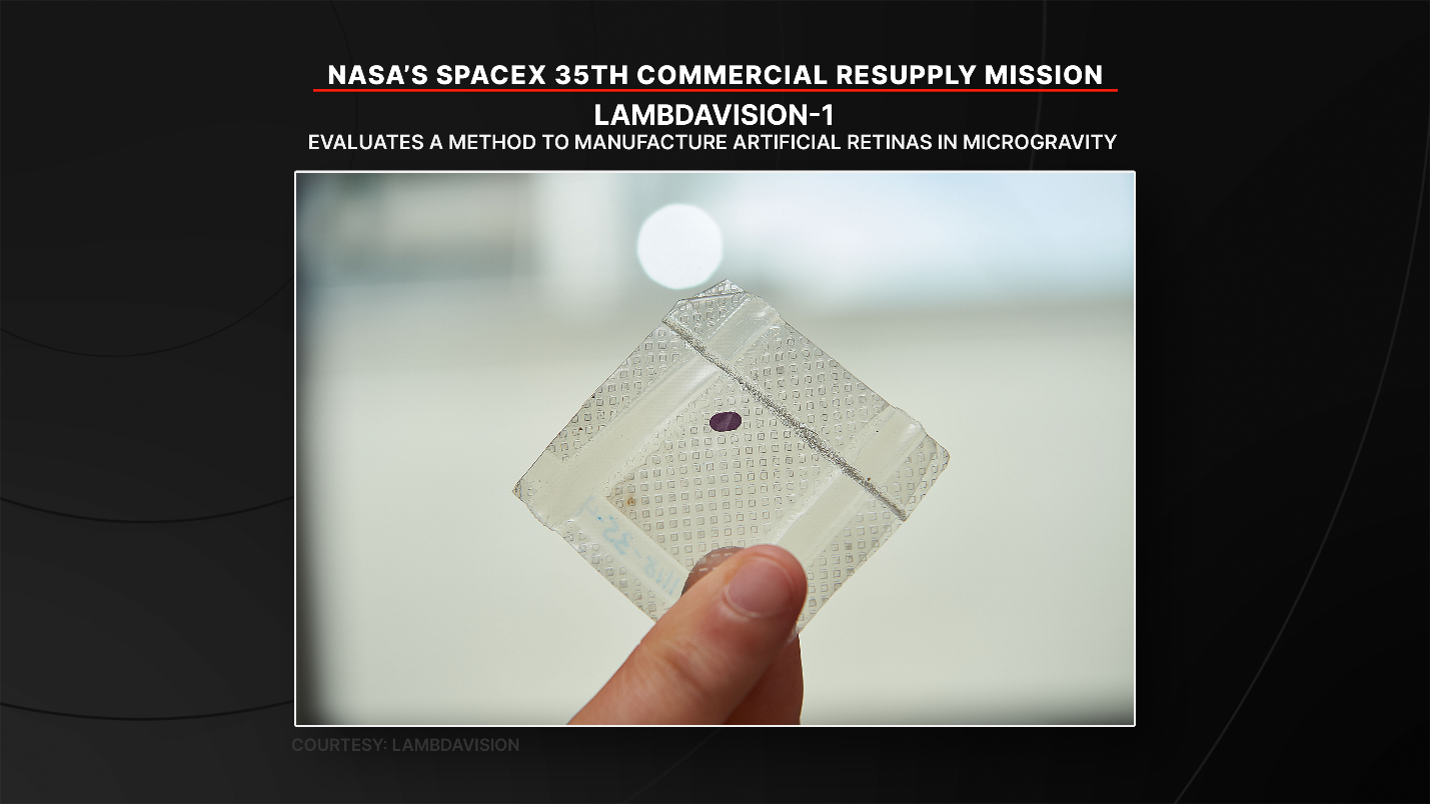
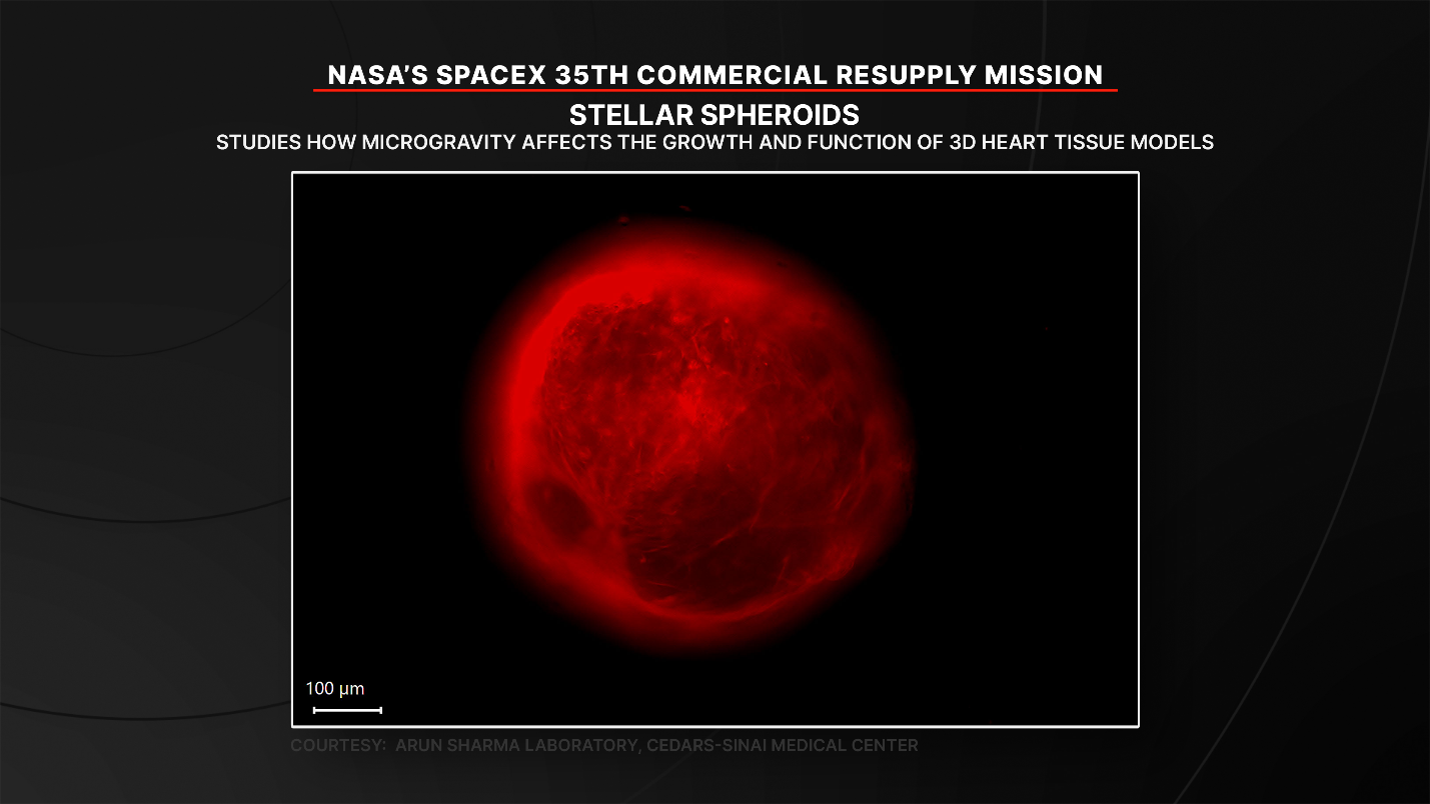
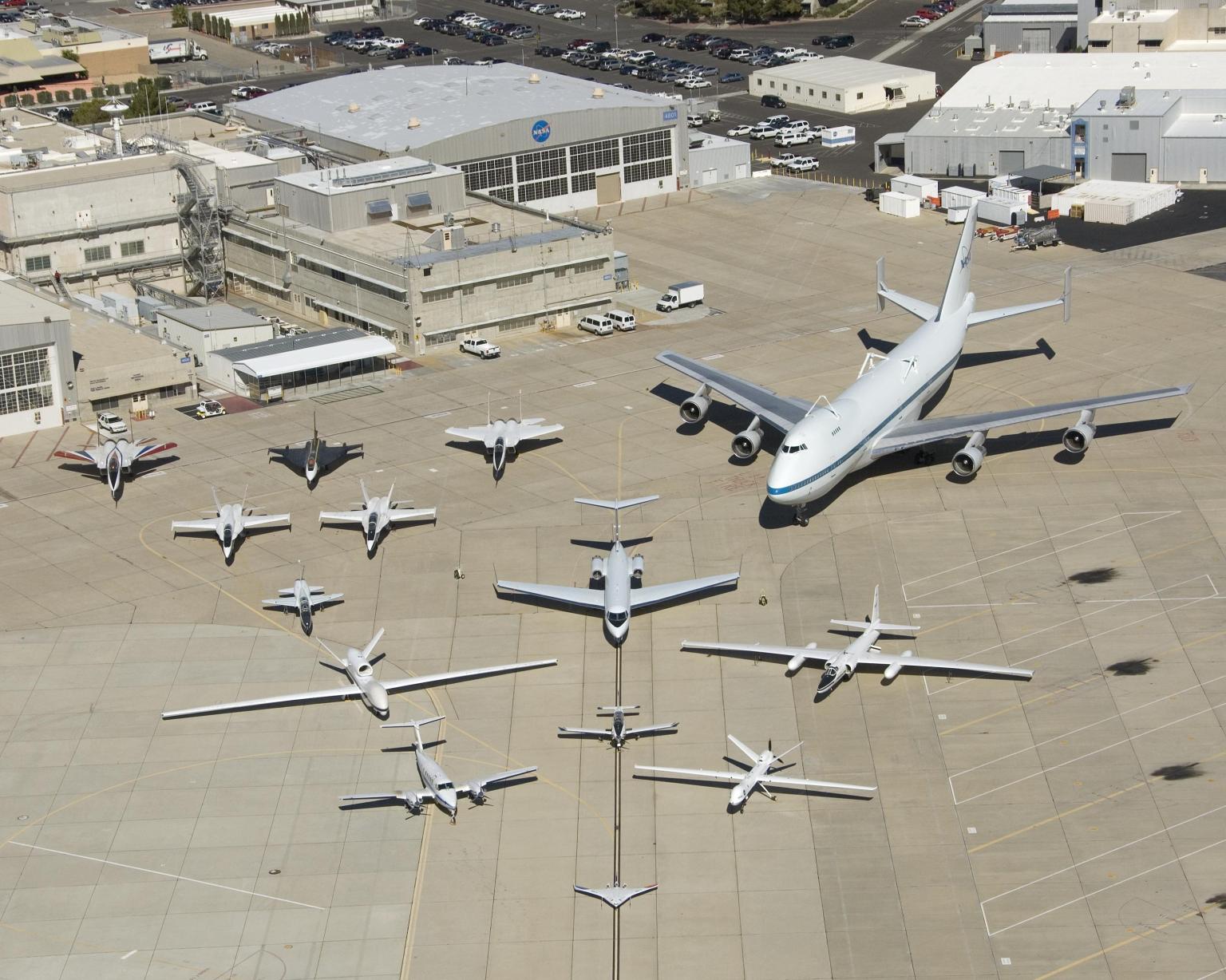
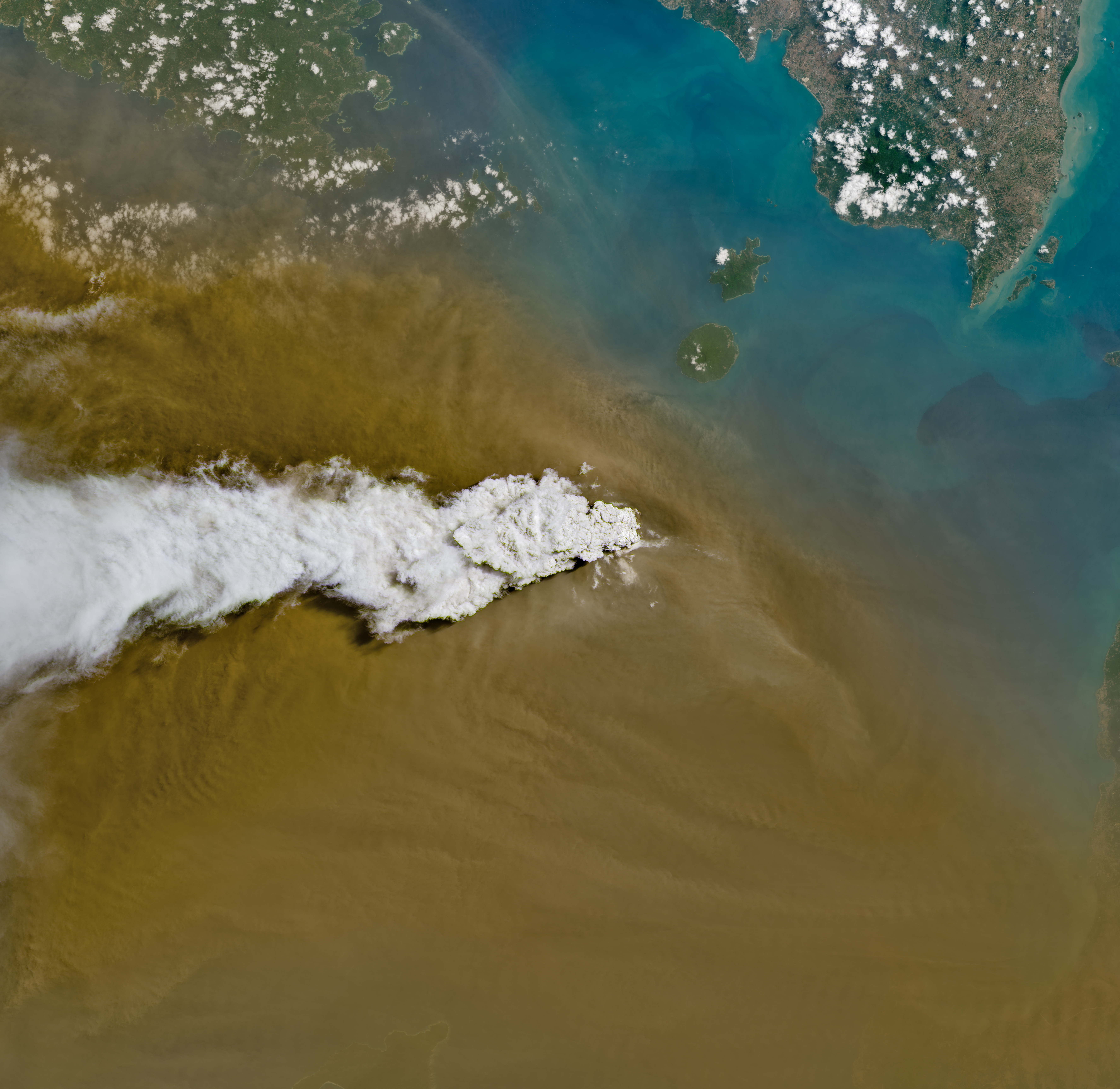
  •  

Pozzo di Karahora, la struttura nel Caucaso che sfida la geologia

Nel 2011 lo speleologo russo Arthur Zemukov individua nel Caucaso un pozzo profondo oltre quaranta metri con pareti lisce e geometrie regolari, una struttura che i rilievi descrivono come incompatibile con una formazione naturale. La scoperta arriva dopo anni di ricerche tra archivi locali, mappe...

  •  

Un nuovo super microscopio svela la vita dentro le cellule

Un nuovo strumento di osservazione sviluppato alla Stanford University sembra esser in grado di rivoluzionare il modo in cui gli scienziati studiano la vita a livello cellulare. Il dispositivo, chiamato Interferometric Image Scanning Microscopy (iISM), consente di osservare le cellule vive con...

  •  

NASA’s First Asteroid Sample Has Landed, Now Secure in Clean Room

After years of anticipation and hard work by NASA’s OSIRIS-REx (Origins, Spectral Interpretation, Resource Identification and Security – Regolith Explorer) team, a capsule of rocks and dust collected from asteroid Bennu finally is on Earth. It landed at 8:52 a.m. MDT (10:52 a.m. EDT) on Sunday, in a targeted area of the Department of Defense’s Uta

  •  

La NASA invita a los medios al lanzamiento de Psyche

Ya está abierto el proceso de acreditación de los medios de comunicación para el próximo lanzamiento de la nave espacial Psyche de la NASA en su misión a un asteroide único y rico en metales que orbita alrededor del Sol, entre Marte y Júpiter.

  •  

NASA Hosts OSIRIS-REx Sample Lab Media Day in Houston

Ahead of the first asteroid sample collected by the U.S. arriving on Earth in September, media are invited on Monday, July 24, to see NASA’s newly-built OSIRIS-REx Sample Curation Laboratory where the agency will study the sample at its Johnson Space Center in Houston.

  •  
❌