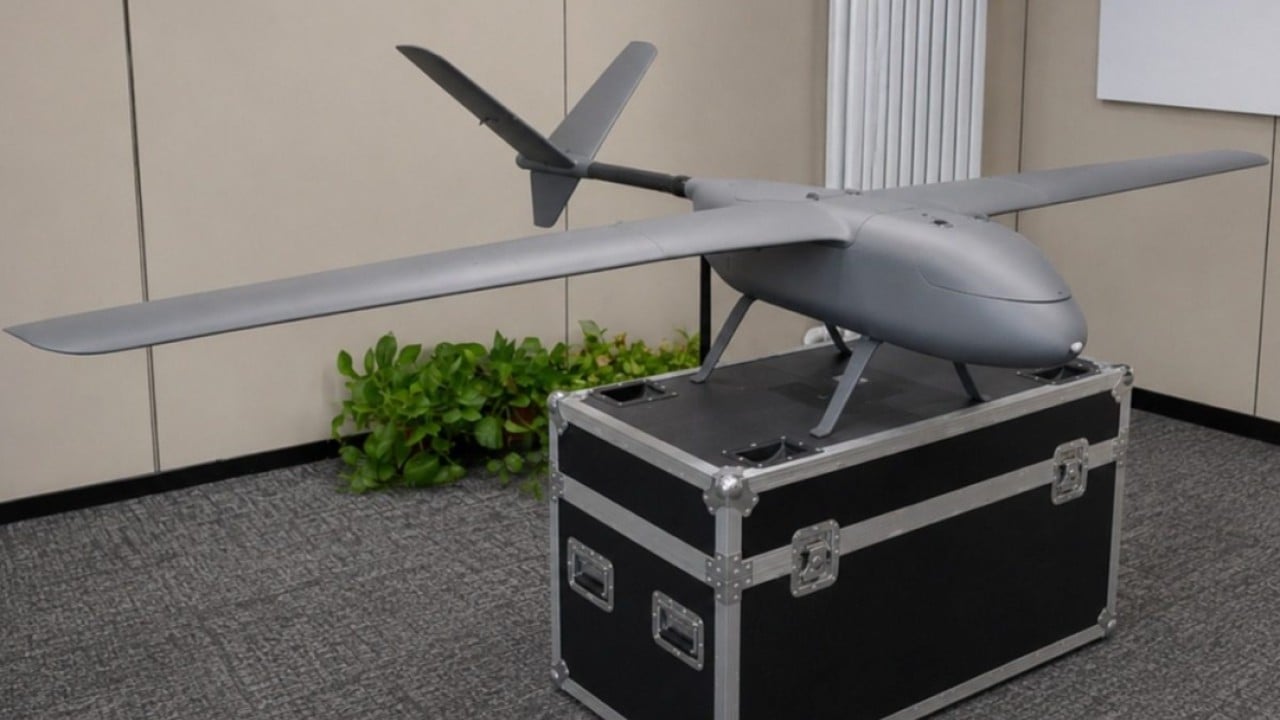
Radar-absorbing materials have long been associated with stealth fighters, cruise missiles and other high-end military platforms for which performance often comes at a high cost.
But in China, some stealth coatings could be moving into large-scale industrial production and driving prices down fast.
A team from Foshan University reported a low-cost microwave-absorbing composite made from expanded graphite and titanium dioxide, according to a peer-reviewed paper published in the Journal of...
Radar-absorbing materials have long been associated with stealth fighters, cruise missiles and other high-end military platforms for which performance often comes at a high cost.
But in China, some stealth coatings could be moving into large-scale industrial production and driving prices down fast.
A team from Foshan University reported a low-cost microwave-absorbing composite made from expanded graphite and titanium dioxide, according to a peer-reviewed paper published in the Journal of...
When Harbin Institute of Technology (HIT) held its 11th group wedding for doctoral students on May 31, each of the 187 newlywed couples was presented with a one-carat diamond ring, with the diamonds grown in the university’s laboratory.
The gems were developed by Zhu Jiaqi and his team from HIT’s School of Astronautics using a technology that in theory could produce high-purity, single crystal diamonds of any shape and size – from wedding jewellery to a wafer as wide as a basketball.
Known as...
When Harbin Institute of Technology (HIT) held its 11th group wedding for doctoral students on May 31, each of the 187 newlywed couples was presented with a one-carat diamond ring, with the diamonds grown in the university’s laboratory.
The gems were developed by Zhu Jiaqi and his team from HIT’s School of Astronautics using a technology that in theory could produce high-purity, single crystal diamonds of any shape and size – from wedding jewellery to a wafer as wide as a basketball.
Known as...

 Accedi