
Modalità di lettura

Linux Kernel 7.1.4 Released with Bug Fixes, Security Updates, and Hardware Improvements

Linux Kernel 7.1.4 Released with Bug Fixes, Security Updates, and Hardware Improvements

Greg Kroah-Hartman has announced the release of Linux Kernel 7.1.4, the latest stable maintenance update for the Linux 7.1 series. As with other stable kernel releases, version 7.1.4 focuses on fixing bugs, improving hardware compatibility, and addressing security and reliability issues without introducing new features. The update became available on July 18, 2026, and users of the Linux 7.1 branch are encouraged to upgrade as soon as possible.

Rather than changing the kernel's feature set, Linux 7.1.4 delivers dozens of targeted fixes collected from developers across multiple kernel subsystems, helping ensure a more stable experience for desktops, servers, embedded devices, and cloud deployments.

Another Important Stable Maintenance Release

The Linux stable branch exists to provide safe updates between major kernel versions. Every stable release undergoes review before being published and contains fixes that have already been tested in the mainline kernel.

Linux 7.1.4 continues this process by incorporating patches that resolve regressions, improve system stability, and fix issues reported by users since the release of Linux 7.1.3.

For most users, these maintenance updates are recommended because they improve reliability without altering existing functionality.

Bug Fixes Across Multiple Kernel Subsystems

Like previous stable releases, Linux 7.1.4 includes fixes spanning many areas of the kernel.

The update addresses issues affecting:

  • Memory management
  • File systems
  • Networking
  • Device drivers
  • Architecture-specific code
  • Core kernel infrastructure
  • USB and storage subsystems

These targeted patches help eliminate crashes, improve compatibility with newer hardware, and resolve edge cases that may only appear under specific workloads.

Improved Hardware Compatibility

One of the ongoing goals of Linux stable releases is expanding support for existing and newly released hardware.

Linux 7.1.4 includes updated drivers and compatibility fixes for various devices, helping improve support for:

  • Graphics hardware
  • Storage controllers
  • Networking devices
  • USB peripherals
  • Laptop components
  • ARM development boards

Although no major driver additions are expected in a maintenance release, incremental improvements like these often resolve hardware-specific bugs reported by users after earlier releases.

Security and Reliability Updates

Stable kernel releases also include security-related fixes that have been accepted into the maintenance branch.

  •  

Firefox 153 Released with HDR Video, Smarter PDF Tools, Better Privacy, and New Linux Improvements

Firefox 153 Released with HDR Video, Smarter PDF Tools, Better Privacy, and New Linux Improvements

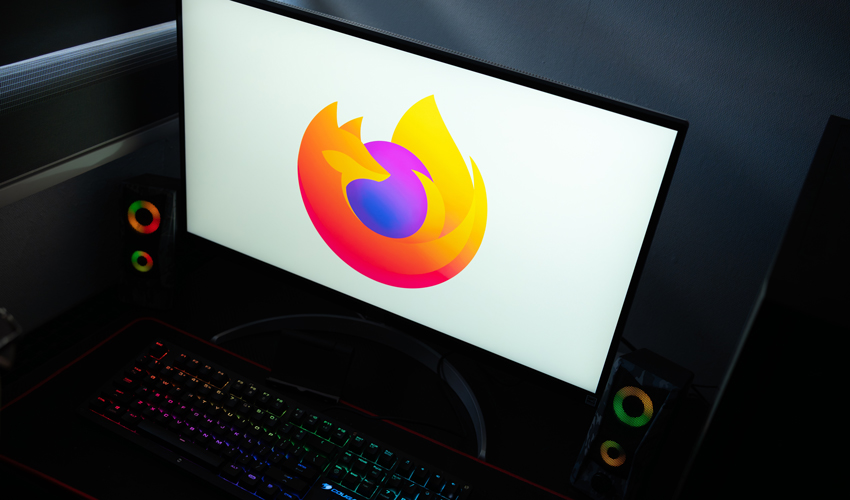
Mozilla has officially released Firefox 153, bringing another round of improvements to its open-source web browser. The latest version introduces new multimedia capabilities, enhanced PDF editing tools, stronger privacy protections, better support for modern web technologies, and several features aimed at improving the browsing experience across Linux, Windows, and macOS. Firefox 153 became available on the stable release channel on July 21, 2026.

While this isn't a major redesign, Firefox 153 delivers a collection of practical updates that benefit both everyday users and web developers.

HDR Video Playback Comes to Windows

One of the headline features in Firefox 153 is support for High Dynamic Range (HDR) video playback on compatible Windows systems.

Users with HDR-capable displays and Windows HDR enabled can now enjoy richer colors, improved contrast, and brighter highlights when watching supported online video content. Mozilla notes that certain laptop displays offering only "HDR video streaming" are not currently supported, and some HDR videos recorded on mobile phones may still have limitations.

Although this feature is Windows-specific, it represents another step toward bringing Firefox in line with modern multimedia standards.

PDF Editing Becomes Even More Powerful

Mozilla continues expanding Firefox's built-in PDF editor, eliminating the need for third-party applications in many situations.

Firefox 153 introduces the ability to:

  • Merge multiple PDF documents
  • Insert images as new PDF pages
  • Continue using existing editing tools such as annotations, page organization, and text editing

These additions make Firefox an even more capable document viewer and editor, especially for users who frequently work with PDF files.

Stronger Privacy and Permission Controls

Privacy remains one of Firefox's biggest selling points, and version 153 introduces several enhancements designed to give users more visibility and control over website permissions.

New improvements include:

  • A visual indicator when a website is actively accessing your location
  • More restrictive default permissions for browser extensions accessing local files
  • Local Area Network (LAN) restrictions enabled by default for all users

These changes reduce unnecessary exposure of local resources while making it easier to understand what websites and extensions can access.

Experimental JPEG XL Support

Firefox 153 also adds experimental support for the JPEG XL image format, which many developers consider a promising successor to older image standards.

JPEG XL offers several advantages, including:

  •  

NanoKVM-Go Brings AI-Powered Hardware Control to Linux with a Compact USB-C KVM

NanoKVM-Go Brings AI-Powered Hardware Control to Linux with a Compact USB-C KVM

Sipeed has introduced NanoKVM-Go, a compact USB-C KVM-over-IP device that combines remote hardware management with AI integration. Designed for Linux, Windows, macOS, and other USB-C devices, NanoKVM-Go allows users to remotely view and control a system through a web browser while exposing its keyboard, mouse, and display functions to AI agents via the Model Context Protocol (MCP).

Unlike traditional KVM-over-IP solutions that require multiple cables and dedicated networking hardware, NanoKVM-Go simplifies the setup into a single USB-C connection, making remote administration and AI-assisted automation more accessible for developers, system administrators, and homelab enthusiasts.

A Portable USB-C KVM

NanoKVM-Go is roughly the size of a smartwatch, measuring about 45 × 40 × 15 mm, yet it combines several functions into a single device.

Key hardware features include:

  • USB-C connection for video, audio, keyboard, mouse, and power
  • Wi-Fi 6 connectivity
  • Browser-based remote management
  • Support for virtual USB storage
  • Built-in Tailscale integration for secure remote access
  • Fanless aluminum enclosure with low power consumption

Because it connects over USB-C using DisplayPort Alt Mode, the device can manage a wide variety of hardware without requiring software installation on the target system.

Designed for Linux and Beyond

NanoKVM-Go supports numerous USB-C devices, including:

  • Linux desktops and laptops
  • Windows PCs
  • macOS systems
  • Mini PCs
  • Steam Deck
  • Android devices with DisplayPort Alt Mode
  • iPhone 15 and newer models
  • Tablets supporting USB-C video output

For Linux users, this provides an easy way to perform BIOS configuration, operating system installation, kernel debugging, or remote troubleshooting—even when the operating system is unavailable.

AI Integration Through MCP

One of NanoKVM-Go's defining features is its AI-native design.

Rather than simply streaming a desktop remotely, the device exposes its KVM functions as an MCP (Model Context Protocol) server, allowing compatible AI agents to interact with the connected computer using hardware-level keyboard and mouse input.

This enables AI systems to:

  • View the screen
  • Move the mouse
  • Type on the keyboard
  • Launch applications
  • Navigate user interfaces
  • Complete repetitive desktop workflows

Because control happens at the hardware level, AI agents can interact with systems regardless of the operating system installed.

  •  

AI Uncovers a 15-Year-Old Linux Kernel Root Vulnerability Hidden Since 2011

AI Uncovers a 15-Year-Old Linux Kernel Root Vulnerability Hidden Since 2011

Artificial intelligence has helped uncover one of the most significant Linux kernel security flaws in recent years. Security researchers at Nebula Security announced the discovery of GhostLock (CVE-2026-43499), a critical local privilege escalation vulnerability that remained hidden in the Linux kernel for approximately 15 years before being identified by the company's AI-powered vulnerability research platform, VEGA.

The vulnerability affects Linux kernels dating back to version 2.6.39 (2011) and allows an unprivileged local user to obtain full root privileges on vulnerable systems. Its discovery not only highlights the importance of timely kernel updates but also demonstrates how AI is beginning to transform vulnerability research.

What Is GhostLock?

GhostLock is a use-after-free (UAF) vulnerability located in the Linux kernel's futex (fast userspace mutex) implementation.

Futexes are synchronization primitives that allow user-space applications to efficiently coordinate access to shared resources while minimizing expensive kernel interactions. Because they are widely used throughout Linux, any flaw within this subsystem can have broad security implications.

According to Nebula Security, incorrect handling of the remove_waiter() function can leave behind a dangling kernel pointer that an attacker can manipulate to execute arbitrary code with kernel privileges.

A Reliable Path to Root Access

One of the reasons GhostLock has attracted so much attention is the reported reliability of the exploit.

Researchers demonstrated that an attacker with nothing more than a standard local user account can escalate privileges to root in roughly five seconds, with a reported success rate of 97% on vulnerable systems.

Unlike many kernel exploits that are unstable or require highly specific system configurations, GhostLock appears to be both practical and repeatable, making it particularly concerning for administrators.

Container Escapes Are Also Possible

The implications extend beyond traditional Linux desktops and servers.

Researchers report that GhostLock can also be used to escape containers and compromise the underlying host operating system. Because containers share the host kernel, a successful privilege escalation inside a container can potentially grant root access to the host itself.

This makes the vulnerability especially important for environments running:

  •  

Azure Linux 4.0 Released: Microsoft Expands Its Enterprise Linux Platform Beyond the Cloud

Azure Linux 4.0 Released: Microsoft Expands Its Enterprise Linux Platform Beyond the Cloud

Microsoft has officially unveiled Azure Linux 4.0, the latest version of its open-source Linux distribution designed for cloud infrastructure, enterprise workloads, and modern data centers. Formerly known as CBL-Mariner, Azure Linux has powered Microsoft's internal cloud services for years, but version 4.0 marks its biggest evolution yet by becoming a general-purpose server operating system that organizations can deploy both inside and outside Azure.

The release introduces updated core components, expanded hardware support, a predictable long-term lifecycle, and improved compatibility for enterprise environments, reinforcing Microsoft's growing investment in the Linux ecosystem.

A New Chapter for Azure Linux

Azure Linux began as Microsoft's internal operating system for Azure services, containers, and cloud infrastructure. Over time, it evolved into the foundation for many Azure-hosted workloads.

With Azure Linux 4.0, Microsoft is positioning the distribution as a broader enterprise Linux platform rather than one limited to Azure infrastructure. The operating system is now available through Azure virtual machine images, container images, and downloadable ISO files for testing and deployment in a wider range of environments.

Built for Enterprise and Cloud Workloads

Unlike desktop-focused Linux distributions, Azure Linux is optimized for infrastructure, virtualization, containers, and cloud-native applications.

Typical deployment scenarios include:

  • Cloud virtual machines
  • Kubernetes clusters
  • Container hosts
  • AI infrastructure
  • Edge computing
  • Enterprise servers

Microsoft has designed the distribution to provide a consistent operating system foundation across Azure services while remaining suitable for on-premises deployments.

Updated Core Components

Azure Linux 4.0 modernizes much of the operating system's software stack.

Highlights include:

  • Linux Kernel 7.0
  • glibc 2.42
  • OpenSSL 3.5
  • Python 3.13
  • OpenSSH 10
  • dnf5 as the default package manager

These updates improve hardware compatibility, application support, security, and overall system performance while providing developers with a more current software platform.

Security Remains a Primary Focus

Security continues to be one of Azure Linux's defining characteristics.

Version 4.0 includes:

  •  
❌