Microsoft's June Windows update has upset some third-party applications that use Object Linking and Embedding (OLE) automation to open or control Office apps, leaving users with failed document launches and, in some cases, no error message to explain what went wrong. According to Microsoft, "reports indicate that this issue may affect applications such as CCH Engagement, Workpaper Manager, dental software (such as Dentrix and Softdent), and Zotero; other similar applications might also be impacted." The workaround is to "open the application or document directly instead of launching it from the affected third-party application." Microsoft was quick to point out that this wasn't its problem. The third parties concerned are "independent of Microsoft." "We make no warranty, implied or otherwise, about the performance or reliability of these products." That would be fair enough were it not for the fact that these third parties are relying on Windows plumbing that has been around since the 1990s, and abruptly breaking or changing something in a Windows release doesn't give those vendors much time to deal with the problem. OLE allows one application to control another – for example, firing up a Word document or Excel spreadsheet from an accounting application. When it works properly, users don't need to switch between applications. The process should be seamless. If opening the file directly, which somewhat defeats the point of OLE, doesn't help, ordinary users will have to wait for a fix in "a future Windows update." There is a mitigation for affected devices within organizations, though obtaining it requires contacting Microsoft support for business customers. Veteran techies may find this mess ironic, given that in the 1990s Microsoft went all-in on OLE and ultimately saw off the rival OpenDoc tech backed by Apple and IBM. The issue is the first that Microsoft has acknowledged in the patch, although the company's forums are full of users complaining about other difficulties, including OneDrive and BitLocker problems. ®
INTERVIEW There are only a handful of dedicated Linux PC vendors. One of the best-known is the 20-year-old American company System76. It's not just a business that installs Linux on PCs. System76 is building something rare in 2026: a vertically integrated Linux‑first computing stack that treats open source as an engineering north star, not just marketing copy. We spoke to founder and CEO Carl Richell about where System76 began and where it's going. When Richell started System76 20 years ago, he had "$1,500 in my basement" and no venture capital. He only had a bet that there were enough serious Linux users to sustain an honest, Linux‑only PC company. It has since grown organically into a factory operation in Denver, where raw aluminum sheets and billets come in one end and finished Thelio desktops roll out the other, complete with in‑house firmware and Linux preloads. It wasn't an immediate success. The growth curve was incremental. The company started in a basement, moved to a tiny office, then a slightly larger office, a still bigger one in downtown Denver, and, more recently, System76 operates out of its own factory. There, the company says, its servers, desktops, and laptops are "designed by nerds. Engineered by experts. Handcrafted by humans." All this was funded, Richell said, by reinvested profits and conventional machinery loans rather than venture capitalists. This was by design. That choice means there's no VC partner demanding an "exit" or pushing for a pivot away from Linux and open source; Richell says they "work for our customers and we work for each other," and have "never had to really roll the dice on the company," just take calculated risks. That deliberate pacing also shaped the culture. Many of the engineers who could "go work at Google" stay, he argues, because their "true beliefs align" with System76's open source‑first mission, not a retrofit of openness onto an ad business. For a niche OEM in a hostile, margin‑thin PC market, that ideological stickiness might be as important an asset as any product spec sheet. System76 likes to talk about its community roots, but the company's survival story is written in purchase orders. More than half of its sales are business‑to‑business, and Richell says there are "very few Fortune 500 companies that we don't ship products to," even if those deals are typically developer and engineering rigs rather than sprawling, company‑wide rollouts. Those systems often land in engineering departments and university labs as developer desktops, AI workstations, or high‑end Linux boxes for research workloads rather than accounting PCs. The pitch is a fully integrated Linux platform: hardware designed and manufactured for Linux in Denver, Pop!_OS and COSMIC developed in‑house, and open firmware that can be audited, modified, and redeployed. In a year when AI datacenters have driven up the cost of memory and storage, System76 entered 2026 expecting "much harsher headwinds" from component prices. Instead, demand stayed strong, and the business continues to grow year‑over‑year, suggesting that for a certain class of customer – developers, researchers, and Linux‑centric organizations – the premium for a well‑supported Linux workstation is easier to swallow than the friction of fighting Windows or bespoke dual‑boot setups. System76 keeps that business by pairing the product with the kind of operational plumbing most open hardware upstarts never quite build. That includes tightly coupled support, sales, and engineering teams (support is "ten feet from the sales team") and the ability to trace customer pain directly into product changes. It's a Linux company built like a small enterprise vendor, not a boutique enthusiast shop. On the hardware side, 2026 is the beginning of a new design era, centered on the freshly redesigned Thelio desktop family. Mira is the high‑performance mid‑tower, aimed at users who need serious CPU and GPU throughput in a comparatively compact box. Thelio Major stretches into high‑end desktop territory with support for Threadripper‑class CPUs, ECC memory, and dual power supplies to feed multiple top‑end GPUs. Richell describes Mira as the "beginning of that new desktop design refresh," a platform that lets System76 relearn thermal dynamics, structural design, and manufacturability at scale. They put the chassis through adhesive and mechanical torture tests – robots repeatedly pulling the side and front panels off thousands of times – to ensure the new modular construction would withstand years of use and field servicing. Next up is the Prime, a mini‑ITX desktop that shrinks the new design language into an "adorable, tiny desktop" now going through thermal testing. Further out is "Paleo Mega," an AI workstation designed to carry the thermal and power lessons from Mira and Major into multi‑GPU, AI‑first configurations, where cooling and power delivery are often the limiting factors. The product cadence shows a company that now thinks in platform terms: reuse chassis and thermal designs across a family, and then specialize for AI, compact workstations, and other niches. COSMIC and Pop!_OS as a buildable desktop If hardware is where System76 proves it can build real machines, software is where it tries to shape the broader Linux ecosystem. COSMIC, its Rust‑based desktop for Pop!_OS and other distros, is explicitly designed to be "modular and composable," with components you can replace, extend, or use as building blocks for entirely new UI experiences. Richell argues that before COSMIC, there "wasn't really a Linux desktop… designed to build things" in the way the kernel or the LAMP stack are foundations for other work. COSMIC's components have strict, well‑defined dependencies and are built to be reassembled – by OEMs, distro maintainers, or specialized platforms – into custom desktops for different devices and use cases. In System76's ideal world, COSMIC becomes the UI layer you reach for when you're building your own Linux‑based system, not just the default skin on Pop!_OS. On the user‑facing side, COSMIC is already shipping as a rolling‑release desktop, with new features and fixes flowing into users' machines as soon as they clear QA rather than on slow, monolithic schedules. Since its December 11 release, the project has seen roughly 1,200 merges from 172 contributors, a pace more reminiscent of a popular upstream project than a vendor‑specific shell. That rolling strategy matters right now in gaming, where System76 is devoting fresh attention. The team has recently added support for Wayland's pointer capture protocol, so first‑person shooters and "infinite scroll" scenarios behave correctly, fixed full‑screen window handling for workflows like Steam Big Picture, and tightened a long list of "around the edges" behaviors that used to require user workarounds. In Richell's telling, the aim is to make gaming "just work" on Pop!_OS + COSMIC without hidden incantations, a necessity if Linux gaming is going to be credible outside the hobbyist circle. Pop!_OS itself runs atop Ubuntu LTS, with System76 adopting what Richell – over some internal grumbling – still calls a "hardware enablement stack": newer kernels, Mesa, and related bits to keep up with GPUs and emerging hardware, while COSMIC continues to roll on top. The current release tracks Ubuntu 24.04 LTS; Pop!_OS 26.04 is expected to follow roughly a month after its upstream release, with some delay thanks to Canonical's recent DDoS‑related infrastructure issues. Critically, Pop!_OS has gone "entirely over to Wayland." That move, Richell says, freed the team from trying to build a cutting‑edge desktop on top of legacy X11 stacks and let them align COSMIC with the latest graphics and input pipelines from the start. Ask any Linux vendor about AI in 2026, and you'll likely get a flurry of product names; System76 is more circumspect. While Canonical, for example, is busy wiring "agentic AI tools" into Ubuntu so they're easy to add, Richell says System76 is still "thinking about it" and sees "more questions than answers" for now. The areas where he does see clear value for AI are pragmatic, Linux-user-focused ones, including accessibility features that can leverage AI, and smarter launchers that go beyond fuzzy string matching to actually understand user intent when they hit Super and start typing. In that world, the launcher might answer questions, locate files, or trigger workflows that shrink the distance between "I want this" and "it's done." But AI features will have to be optional, he insists, and designed with "the community's concerns around AI" in mind. For now, the company's to-do list prioritizes HDR, gaming polish, and foundational desktop work over embedding language models everywhere. That restraint might frustrate some early adopters, but it aligns with System76's tendency to ship infrastructure first and pretty features later. On the hardware side, AI shows up more directly in plans for the Paleo Mega workstation and in the market forces buffeting System76's bill of materials. GPU and memory prices are being driven upward by datacenter AI demand, which in turn raises the costs of high‑end desktops and workstations. The surprise for Richell is that demand for System76's boxes has held steady despite those increases, suggesting a base of customers who see local, Linux‑native AI workstations as a necessary capital expense rather than a nice‑to‑have. If there's a single idea that animates Richell when he talks about System76's next decade, it's the dream of "liberating the entire stack." Open source has already transformed the operating system and much of the software above it; he'd like to see hardware follow, turning the motherboard, firmware, and even some silicon into something you can read, fork, and improve. To that end, he said, "anything that we design inside of System76 is open hardware." System76 wants to go further with open hardware by creating reusable components that others can build into their own designs. Think of chassis elements, power distribution boards, or controller modules that can be dropped into third‑party projects – hardware analogs to open libraries and frameworks. The obstacles are obvious: CPUs, memory, and most major silicon are still dominated by opaque supply chains, NDAs, and closed firmware. RISC‑V offers a path toward open instruction set architectures, and System76 is watching that space as a way to eventually reduce its dependence on closed processor platforms. In the meantime, it has chipped away where it can, shipping its own open EC (embedded controller) firmware and adopting coreboot‑based system firmware on many laptops, closing a gap Richell once thought might never be solved. "It took us 15 years, but we got there," he says about open firmware. That timeline is probably the right yardstick for the rest of the hardware vision. Over the next decade, he wants System76 to take on more design and manufacturing in‑house, build more of its own components, and gradually expand the platform's surface area that can be studied, modified, and reused by others. The company will never be able to satisfy the most uncompromising free‑software purists – Richell readily admits they can't "work in a totally purist fashion" and stay in business – but its trajectory is pointed toward more openness, not less. For many developers and organizations who want control without giving up modern hardware, that may be enough. In 2026, most stories about PCs involve consolidation, commoditization, or retreat from the desktop toward cloud services and locked‑down devices. System76 is betting on a different future: one where there's enduring demand for machines you can understand, repair, and reimagine, running an OS that treats you as the operator rather than the product. It's a risky path. The company operates in a small, noisy niche where many rivals have tried and failed; Linux‑only hardware vendors have come and gone, often leaving behind little more than a blog post and some unfulfilled orders. System76's answer is to behave less like a startup and more like a craft manufacturer crossed with a small enterprise vendor: design your own hardware, invest in a factory, write your own desktop, and grow slowly enough that you never lose sight of the people actually using the machines. If the next ten years look anything like what Richell hopes, System76 could end up not just as "the company that still makes Linux desktops," but as the reference implementation for an open, full‑stack computing platform. In a world increasingly defined by black‑box AI and sealed hardware, that might be its most radical feature. ®
UK retail giant Tesco is replacing VMware with an alternative product and pressing ahead with its licensing lawsuit against the virtualization pioneer's parent company, Broadcom, which will be considered by the UK's High Court no sooner than November 2027. The roots of the dispute are a January 2021 contract that saw Tesco acquire perpetual licenses for VMware's vSphere Foundation and Cloud Foundation products, plus subscriptions to Virtzilla's Tanzu products. The supermarket giant also signed up for support services and software upgrades until 2026, with an option to extend that deal for four years. Computacenter signed up as a reseller and relied on Dell as the distributor of VMware's products. Tesco also uses some of Broadcom's mainframe software, and wanted to extend licences and support for that too. Tesco and VMware struck that deal before Broadcom acquired VMware. After the acquisition, Broadcom stopped selling standalone services for customers who did not adopt subscriptions for its software bundles. Broadcom was therefore unwilling to extend support for Tesco's VMware estate. The supermarket chain sued Broadcom in mid-2025, alleging breach of contract and anti-competitive behavior. The case picked up again in late May with a flurry of filings that The Register has just digested. The new documents reveal that Tesco has decided to quit VMware and Broadcom's mainframe products, is rushing to migrate to alternatives, has turned to third-party support providers for its VMware estate, and alleges Broadcom is abusing its market power. "Faced with Broadcom's abusive conduct, and given the criticality of virtualization and mainframe software and services to its business, Tesco has been forced to incur material costs to procure alternative solutions with reduced functionality, and to migrate to that software in a manner, and on a timeframe, that creates very significant risks to its business," the filing states. Those costs include payments for third-party VMware support because Broadcom stopped supporting the virtualization software in January 2026. The supermarket hopes to be off VMware by the end of 2027 but says that target is its earliest possible date and will require it to work "at exceptional pace." Elsewhere in the filing, Tesco says "the timeframe in which that migration must be undertaken has created and continues to create operational and commercial risk, and at material ongoing cost and disruption to the business." The risks aren't abstract: Tesco says it uses Broadcom mainframe software to order products for its stores and process its payroll. The retailer is also worried about data security and protection because the virtualization product it has chosen as a VMware replacement isn't compatible with the Veeam and Zerto tools it uses. Rejecting offers Broadcom appears to have made Tesco at least four offers, including a "Strategic proposal" in July 2024 that covered virtualization and mainframe products. Another offer delivered on January 9, 2026, offered separate terms for VMware products and mainframe software – the first time Broadcom dangled discrete deals. Tesco struggled to process it because Broadcom offered the deal just 19 days before the end of its existing agreements. Two offers arrived in April. Tesco says one proposed charges of $23.5 million (around £17.4 million) for a year of VMware Cloud Foundation 9.0 and Mainframe Software and Support Services. The retailer says that offer represented an increase of "around 175 percent" compared to the prices Tesco believes it was entitled to under its 2021 contract for VMware software and services, and a 350 percent increase for the mainframe products and services. The retailer described those price hikes as "manifestly unfair and excessive." Broadcom's amended defence rejects that characterisation, and also Tesco's claim that it deserves damages as it could not find an alternative supplier before its deals expire. Now that Tesco has found alternatives, Broadcom thinks the retailer can't easily point to losses that deserve damages payments. Other recent filings reveal that the matter is due to be heard in the UK's High Court during a window that opens on November 1, 2027, and closes on February 25, 2028. That doesn't mean the trial will consume all that time – it's an indication of when the court thinks it will have time to consider the matter. Broadcom has fought other high-profile cases over its licensing changes, most notably with AT&T and Siemens. The telco giant reached a confidential settlement, but the Siemens case is ongoing. On The Reg's reading of Tesco's filings, the retailer appears comfortable with litigating its claims with an argument that Broadcom refused to honor past agreements and that its main defense – it can't support products that don't exist since it reorganized VMware – is weak. Broadcom execs have told The Register they have an enormous dislike for providing extended support for old products and a huge preference to shift customers to subscriptions for the company's flagship Cloud Foundation (VCF). They argue that that continuing to use old VMware software sold under perpetual licenses is an act of corporate self-harm because VCF is so powerful it quickly pays for itself by improving IT department operations and improving business efficiency. But those messages aren't landing with some customers. We've reported organizations including Western Union, GEICO, and Computershare moving away from VMware, and even some VMware partners like Rackspace reducing their use of the virtualization giant's wares. We've also just learned that Belgian technical secondary school Scheppers Instituut Wetteren shifted to local contender Whitesky.Cloud to avoid a 400 percent price hike, and made the move without needing any new hardware. ®
Forty years ago, while working for a tiny subsidiary of a gigantic telco, I stumbled through pre-Git source code management and tried to avoid explosively devolving into a mess of conflicts after every merge. Thankfully, modern practices make it possible to work in massive, distributed teams, swarming around a codebase, working independently toward a collective goal. That sounds a lot like what we're heading toward with agents, and here it touches a nerve: nearly everyone in software engineering feels a deep terror as an invasion of agentic systems sweep all before them. Now that Stack Overflow has gone agent-first, what's left for us meatsacks? Shoulder-to-shoulder with the flesh-based cohort most immediately under the pump at a conference called AI Engineer Melbourne, I heard conversations about the future of software engineering working their way through denial, anger, bargaining, and depression, to ... coupon clipping? Now that organisations have been weaned off earlier 'all you can eat' subscription plans and onto 'pay-as-you-go' metered token consumption, they're all in various stages of sticker shock. Several talks at the conference discussed managing token costs, such as AJ Fisher's exploration of 'diffusion' models. Analogous to the diffusers used to generate images, they generate text at lighting speed, making them cheaper to operate while also being less accurate than the pricey and slower “autoregressive” frontier models. Fisher's solution? Use a low-quality model and make it iterate on a problem (that new classic, the Ralph Wiggum loop) until it gets a satisfactory solution. This approach delivers the same result as a full-fat model, for anywhere from one half to one tenth the spend. Google released its DiffusionGemma mode, which produces text at prodigious speed, just days after Fisher's talk, giving everyone the ability to try this approach. But some engineers reject AI in 'all the things'. Annie Vella, author of the seminal essay "The Software Engineering Identity Crisis" shared what she's learned about the feelings of grief experienced by a cohort of software engineers, provoked by AI tooling. We've seen the field divide into 'all in' and 'never ever' camps (even in the pages of El Reg), with a broad middle cautiously getting their feet wet. That divide has roots in two styles of work: those who look for outcomes, and those who look for learning, for whom the journey into understanding is the whole point of the exercise. Short circuiting that journey with AI tools makes folks for whom the journey is the reward feel cheated. How do we breach the divide? Annie suggests sensitivity, listening, and openness to change on both sides - highlighting human qualities in the machine age. Kaggle and fast.ai alum Jeremy Howard took a different tack, reminding the audience of the importance of critical thinking - really, a plea to just keep thinking, a refrain we'll be hearing a lot as we struggle to avoid nodding off in the warm bath of machine thoughts. He followed up with a demo of SolveIT, his still-in-beta tool combining some of the best aspects of Python notebooks, Mathematica, Wikipedia, and a chatbot, offering up a counterexample of an environment designed for swimming in the sea of knowledge, rather than floating off into mindless oblivion. Finally, Daniel Rodgers-Pryor's "Fully Automated Luxury Gay Space Engineering" blew my mind with a practical, working vision for AI in the engineering department. Rodgers-Pryor's entire CI/CD pipeline feeds all of its metrics, messages, logs and user feedback into a set of AI agents that quickly identify issues, find the underlying problems, fix them, integrate solutions into the codebase, test them, and push them out to users. What sounds like a recipe for disaster turns out to be a formula for a self-healing, 'anti-fragile' system that improves as the pressure on it increases. More users? Good. More metrics? Great! More messages and logs? Even better. Agents eat all of that data and use it to improve the performance of the overall system. Rodgers-Pryor's "closed feedback loop" reminds me of a 20th century production line worker dipping into the stream of bonbons (or widgets) eyeing a few for quality, then tossing them back into the stream. "This is your job now," he concludes. "How can you can make those feedback loops shorter and tighter?" Software engineers have been forced to absorb more change in the last three years than in the previous thirty, and have every right to be a aggrieved about that. Yet as AJ Fisher, Annie Vella, Jeremy Howard and Daniel Rodgers-Pryor all portrayed in their own ways, adopting AI looks less like rolling over before the dictates of the machine, and more like exploring a whole new world. Like any journey into a new realm, perils and hardships await. Who's to say that's not the price of admission for a once-in-a-lifetime opportunity? ® The author attended AI Engineer Melbourne as a guest of the conference.
A cyberattack on Australia’s second-largest sugar producer has forced farmers to keep crops in the ground, and looks like denting their incomes. Mackay Sugar, based in the Australian state of Queensland, processes sugar cane farmed in nearby districts. The company disclosed a cyberattack on June 10 and limited operations while it dealt with the fallout. Some operations remain restricted, but the company said on Monday that it managed to perform some manual crushing at its Farleigh Mill site, working with sugar cane that was harvested before the attack. “Significant progress has been made over the weekend in restoring the systems that support cane supply, harvesting, and mill operations,” Mackay Sugar said in a statement. “Steam trials are now underway, and subject to final validation activities, some harvesting is expected to recommence this week in preparation for the staged restart of crushing operations later this week.” While the company is optimistic it can resume crushing, it's advised growers not to harvest their crops for the time being. That edict works for Mackay Sugar because sugar producers need to process crops within 48 hours of harvest. Doing so preserves high sugar content and overall yield. Delaying the processing for any longer after harvesting could result in sucrose converting to simple sugars, unwanted fermentation, and lower yields. But late harvesting can reduce the quality of cane, reducing the price they earn for their crops. Interrupted harvesting also impacts the railways used to move cane from farms to mills. Mackay Sugar acknowledged the impact its downtime could have on growers and other partners, and committed to restoring systems safely. “We are communicating directly and regularly with our employees, growers, and key partners,” it said. “We recognise the impact this incident is having on our growers, and we are doing everything we can to support them and to safely resume full operations as soon as possible. “We take our responsibility to protect our systems, operations, and information very seriously. We apologise for any disruption this incident has caused and will continue to provide updates as we continue our investigation.” The company operates three mills across Queensland, two of which were operating at a limited capacity due to the attack. Its Racecourse Mill, described as the heart of the business and home to its corporate offices, was among those affected. Racecourse Mill typically generates 213,000 tons of raw sugar and 58,000 tons of molasses a year, and the site’s cogeneration plant generates 156,000 MWhs of renewable electricity a year, around 71 percent of which is sent back into the national electricity grid. Mackay’s mill in Farleigh, the company’s oldest, was also affected. It typically produces around 196,000 tons of raw sugar and 49,000 tons of molasses per year. The company’s largest and most productive factory, Marian Mill, was unscathed. Ungentlemanly conduct Cybercrime group The Gentlemen claimed responsibility for the attack on Mackay Sugar, posting the company to its data leak site without offering any details about the attack or whether it stole data to use as leverage for extortion demands. Cyber threat intelligence professionals have known of the group for almost a year, after spotting it in July 2025 and classifying it as a ransomware-as-a-service provider. However, there is no evidence that ransomware was used in the attack on Makay Sugar. The company has never mentioned ransomware in its statements, referring to the attack only as a “cyber security incident.” However, The Gentlemen is known for using file-encrypting malware in its double extortion attacks. The group caught the attention of Microsoft’s researchers, who last month published a deep dive into how it carries out attacks. Microsoft’s report noted that not only do The Gentlemen affiliates have access to a powerful file encryptor, but also one that self-propagates, which “increases the likelihood of widespread impact once initial access is achieved.” It has also recently established a partnership with BreachForums, which allows the group to recruit prospective new affiliates with different skillsets, such as penetration testers and initial access brokers. ®
With no end in sight to the memory crunch, AMD thinks that AI, the main cause of the shortage, could be part of the solution. This week, the House of Zen acquired predictive memory startup Mext for an undisclosed sum, setting the stage for a world where bots decide which data to put into RAM and which to store in less-expensive flash. Founded in 2023, the Mext proactive memory platform uses machine learning algorithms and learned heuristics to proactively offload "cold" memory to flash storage, and, based on data access patterns, restore it before its needed again. Modern flash arrays are already approaching main memory in terms of aggregate bandwidth, but swapping to disk still imposes a stiff latency penalty. Mext claims it can expand the effective memory of a system by 2 to 4x using flash, which gig for gig is still vastly less expensive than DRAM. This flash memory is exposed to the operating system like regular memory simply by running the Mextd daemon. Memory tiering is nothing new and has seen various reincarnations over the years with some being software based and others, like Intel Optane persistent memory, using special 3D XPoint memory tech co-developed by Micron. Mext stands out for its use of machine learning to migrate data from hot memory to cold storage almost like a branch predictor — something AMD has an awful lot of experience with. Mext isn't using one model to decide when to shuffle your data. Instead it uses a series of heuristics, long short term memory, and modern transformer architectures depending on which combination renders the best results. “This approach has the potential to reduce infrastructure costs, improve resource utilization, and help customers more effectively scale general-purpose and AI workloads,” Dan McNamara SVP of AMD’s compute and enterprise AI biz wrote in a blog post this week. Beyond enterprise applications, the technology could have implications for AI serving. Modern mixture of experts (MoE) models are, as their name suggests, comprised of multiple sub-models. For each token predicted, a different selection of experts may be used. In practice an LLM may use some experts more frequently and others rarely. We wouldn't be surprised to see AMD use Mext's prediction algorithms to offload infrequently utilized experts from HBM to slower system memory, enabling enterprises to take advantage of larger more capable models with fewer resources. That’s just speculation of course, but we've reached out to AMD for comment; we'll let you know if we hear anything back. ®
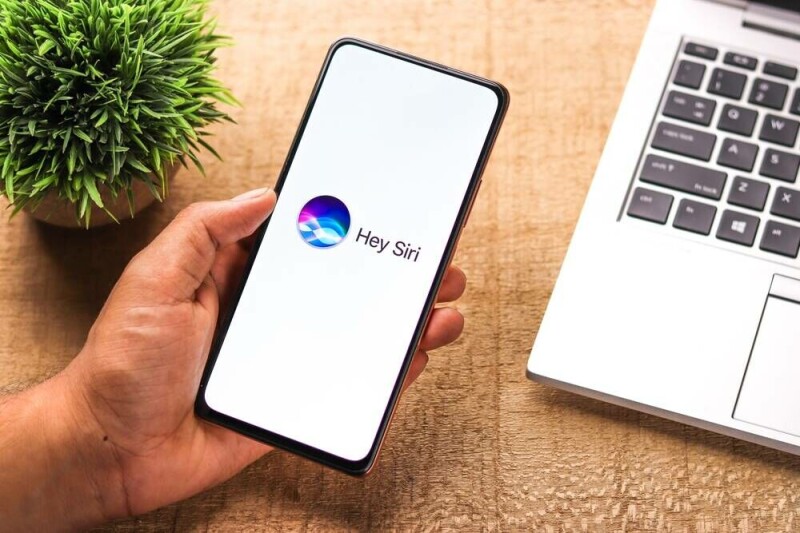
HANDS ON That new AI-juiced Siri that Apple rolled out last week at WWDC was supposed to set a new paradigm for on-device AI. But don't believe the hype coming out of Tim Cook's final big event. After a week-long test drive, it seems like Apple just crammed Google AI Overviews on top of the most useful parts of its various operating systems and made the whole ecosystem more cumbersome to use. But hey, it has more AIs! I’ve been running the iOS and macOS 27 developer betas since they were made available on June 8, and I was blessed by the waitlist gods with access to the new version of Siri a few days after that. There are definitely some useful new features: Siri now carries on actual conversations, which makes it far more useful than the ask, get a response, we’re-done-here flow of the old Siri that left no room for clarifying questions or follow ups. Siri is now able to find things on my device more easily too – at least on my M1 MacBook. My iPhone 15 Pro has been telling me it’s still re-indexing my device after the update for more than a week, but I was still able to use it to conduct web searches and find some things on my phone – it's possible this message itself was an error. The dedicated Siri app is also nice in its own way, as it shows a record of every conversation I’ve had with the new Apple Intelligence front end for later review, but that comes with a caveat, too. Even the most brief questions – the overnight weather forecast, for example – is now stored in perpetuity, cluttering up the list of chats we’ve had until I manually delete it. The only apparent alternative is setting an expiration window for past chats and losing records of the more useful conversations we’ve had. Who turned out my Spotlight? Those are small inconveniences, however, compared to my biggest gripe with Siri AI: It’s completely ruined Spotlight. I’ve come to rely on Apple’s embedded search/launcher feature almost exclusively for digging up apps that I don’t keep a shortcut for, and on my iPhone, it’s the main method I use to kick off a web search because it's so simple. Swipe down from the center of the screen, type what I want to search for, and tap on the item that points to my query as a Google search in Safari. Swipe, type, and a tap and I’m perusing a search result page. Not anymore. The new Siri-first interface that presumes that if you’re searching for anything but an app or file, you must want Siri to feed you a few links of Apple Intelligence’s choosing. Getting to a web search from a Spotlight query now requires multiple taps: Type your query, tap “Show Results” (careful: hitting enter will trigger Siri to craft a response, eliminating the possibility of seeing any actual Spotlight content), tap on “Show More” next to the list of Siri-surfaced web results, scroll down until you see Search Google (or whatever engine you have set as your default), then tap that. Maybe I’m being a grumpy old journalist who likes things the way they used to be, the transformation of Spotlight into a Siri interface seems like intentional degradation of a basic feature in order to front-load an AI that in my experience so far is largely an inconvenience. Overall, the experience reminds me of Google’s much-maligned and often wrong AI Overviews, which push actual search results down the page in favor of force-fed info from Google Gemini. There's a logical reason for the similarity. At the end of 2025, Apple replaced its former AI chief John Giannandrea, formerly Google's SVP of search and AI, in a bid to right the Siri ship. Taking his place was another Google alum with even closer ties to The Chocolate Factory’s AI strategy, Amar Subramanya, who spent 16 years there, including a turn as the head of Gemini engineering. Subramanya, now Apple’s VP of AI, now reports directly to Apple's SVP of software engineering, Craig Federighi, who himself has assumed responsibility for Apple’s machine learning initiatives, including the construction of Apple foundation models. As we learned at WWDC last week, Apple has leaned heavily on a partnership with Google to build its foundation models, and it appears Subramanya has brought some of that Google AI ethos with him as well. So, what’s the alternative to the new AI bloat in iOS 27? Siri can still be turned off entirely in the Settings app, so there’s that, but I’ve decided to take another tack and use one of Apple’s other AI features to get what I want. As the iMaker mentioned at WWDC, you can now create shortcuts (tiny scripts that automate basic tasks) by making a natural language request to Siri. In my case, I asked it to build a shortcut I could drop on my home screen to do a Google search with whatever text I input. It works perfectly, and is available to duplicate on your own iDevice should you see fit. Again, this is a developer beta, so it’s entirely possible that Apple will wise up and stop burying basic Spotlight search functionality before its 27 series of OSes release to the public this fall. We asked Apple if the change was intentional, but didn’t hear back. ®

 Accedi