Open-weight models more than quadrupled their share of spending through Vercel's AI Gateway between June and September, when they processed more than seven in 10 tokens. "In August, open-weight models processed the majority of AI Gateway token volume for the first time," the biz said. "The money is now following. Open weight's share of spend has more than quadrupled over the last three months, from one in twenty gateway dollars in June to nearly one in four in September." AI Gateway, like OpenRouter, acts as an intermediary that allows customers to purchase tokens from different AI providers through a common interface. While it works with popular harnesses like Claude Code and Codex and provides access to proprietary and open-weight models, it doesn't see usage through other gateways or from customers who access AI models directly from vendors or through on-premises hosting. While gateway spending in September was about 13x higher than recorded in December 2025, the average price per token was about 47 percent lower, according to Vercel. At the same time, almost one in three teams changed their most-used AI provider in September, suggesting that market competition may be limiting vendor lock-in. The most popular model in September was TypeSafe AI's Jev. In just 14 days, it reached 35 percent of paid teams using Vercel's AI Gateway, the company said. Its popularity didn't generate much spending due to the model's architecture – usage accounted for only 1 percent of the month’s tokens and 0.15 percent of spending. US-based models from Anthropic and OpenAI still attract the largest portion of spending in September, with 11.03 percent going to Claude Opus 5.5, followed by GPT-6 Astra at 4.86 percent. But models from Chinese AI providers have become more popular. DeepSeek V4.1 Flash ranked third in spending, at 4.19 percent. More than two-thirds of the September spending on Chinese models went to US providers serving those models, up from less than a tenth in December 2025, Vercel said. Moonshot AI, maker of Kimi, captured 3.6 percent of gateway tokens and 13.2 percent of spend in September; DeepSeek took 58 percent of tokens for just 6.6 percent of spend; and Z.ai, maker of GLM-5.3, took 7.2 percent of tokens and 4.5 percent of spend. So efforts to ban or limit open-weight models, something considered by the current US administration, would affect American businesses serving those models and their customers. Even if the US continues to dither on AI policy, trade barriers affecting AI models may alter market dynamics. China on Friday proposed adding 40 technology items to its export control list, 23 of them related to AI. The Associated Press notes that Moonshot’s Kimi K3 and Alibaba’s Qwen 3.8-Max are among the models that meet the parameter threshold set by Chinese authorities, though the official message did not identify affected models. "This introduces significant uncertainty for US businesses that host or rely on Chinese models," Chris McGuire, a senior fellow for China and emerging technologies at the Council on Foreign Relations, said in a social media post. "Particularly given that Chinese AI labs are moving toward licensing the use of open-source models to generate revenue, the Chinese government stating that it has the ability to curtail those licensing agreements at any time should make US businesses more hesitant to rely on those models going forward." McGuire said the US needs to adopt a comprehensive regulatory framework governing the use of US AI technology overseas and include Chinese AI models used or hosted in the United States in its domestic AI regulations.®
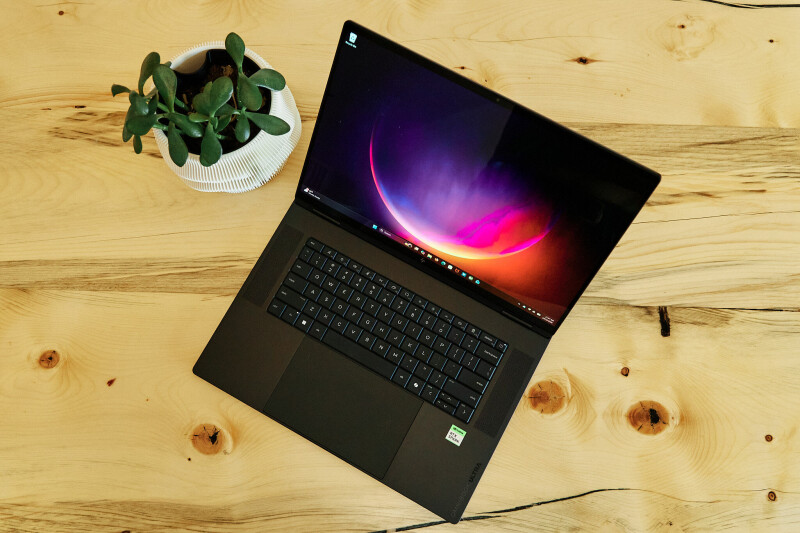
Nvidia's RTX Spark partner systems are here, and spec-for-spec they've got all the ingredients for a hit: a potent CPU, blisteringly fast integrated graphics, and up to 128 GB of unified memory in a lightweight, ultra-premium package that's ready to run demanding models locally. But with prices for these systems starting around $2,600 and going well north of $6,000 for the top spec trims, the one thing RTX Spark isn't is a good deal. However, for the right person, by which we mostly mean AI enthusiasts, researchers, and/or creative professionals who need tons of video memory and don't want to get lost in Apple's walled garden or would prefer Nvidia's CUDA ecosystem over AMD's ROCm, the RTX Spark still has a lot to offer. As such, we'll be largely focusing on the local agentic AI use cases Nvidia and Microsoft are pushing for these "builder-class" systems. The Register had the opportunity this week to put the OmniBook Ultra, HP's unique spin on the RTX Spark platform, through a series of AI benchmarks to see just how well it performs. And spoiler alert: you'll be hard pressed to find a faster Windows notebook for local AI. But before diving into performance, let's take a closer look at the hardware itself. No-compromise quality Lifting the lid on the OmniBook Ultra 16, the first thing you'll notice is the gorgeous 2880x1800 pixel OLED touchscreen with a 16:10 aspect ratio. Touch screens on professional notebooks can be a contentious topic. You either love them or hate them, but at the end of the day, if the idea of fingerprints obscuring your work gives you pause, no one is forcing you to use it, and we're happy to see it here. The OmniBook Ultra's display is mounted to a surprisingly stiff hinge mechanism mounted to the top of the chassis. This has the benefit of keeping the hinge out of the way of the notebook's ample exhaust, which is kind of important because the 20-core N1X system-on-chip powering our review unit runs hot. The system's ample venting keeps most of that heat concentrated around the base of the display and for the most part, away from the keyboard. Speaking of keyboards, the OmniBook Ultra's digit fidgets are a bit of a throwback. Instead of the now-ubiquitous chiclet keys popularized by Apple in the early '10s, HP has gone for a more traditional notebook keyboard, which we found refreshingly easy to type on. Keyboards of course are subjective so if there's any question on whether this one is right for you, it might be worth a trip to your local big box store to give one a good pecking before you commit. Framing the keyboard are a pair of speaker grilles backed by four Cirrus Logic amplifiers which sound excellent for a Windows notebook, but can't quite match the clarity and bass of Apple's MacBook Pros. With that said, we don't expect anyone will be disappointed by the OmniBook Ultra's speakers. Directly below the keyboard is a haptic trackpad that is as precise as it is enormous. No product in this price class should be shipping with a diving board mechanism in 2026, so it's nice to see HP didn't cheap out on us. Moving to the sides of the notebook, you'll find a refreshingly comprehensive set of ports including: 3.5mm headphone microphone combo port. 2x USB-4 Type C ports (40 Gbps) HDMI 2x USB-A (10 Gbps). MicroSD Our only real critique here is that the OmniBook Ultra, like other laptops, lacks a full size SD card slot. MicroSD cards are convenient, but they're not widely used in professional environments and we'd have preferred to see a full size SD card reader or better yet a CFexpress card reader. However, it's rare if not impossible to see these on notebooks. The chassis itself weighs in at 4.89 pounds and is milled from aluminum with a remarkably premium-feeling finish on the palm rest, lid, and bottom panels. HP has done a nice job building a notebook that feels as premium as it is powerful. Into the belly of the beast While the OmniBook Ultra is an objectively nice machine, the main attraction of any of the RTX Spark systems is going to be the N1X chip powering them. The SoC features a MediaTek-derived CPU chiplet that's melded using advanced packaging and Nvidia's NVLink Fusion chip-to-chip interconnect to a Blackwell GPU. The N1X comes in two flavors: An entry level version with 18 CPU cores and a GPU with 5,120 CUDAs. Meanwhile, the highest-end SKU — the one found in our review unit — features up to 20 CPU cores and a GPU with 6,144 CUDA cores. If you're wondering, that's exactly the same number as found in Nvidia's RTX 5070 just with access to a whole lot more memory. We'll note that not all of those CPU cores are created equal. Like most Arm-based SoCs, the N1X contains a mix of big and little cores. Specifically, it has an equal complement of Arm X925 and Cortex A725 cores. While all of this sounds impressive, it's worth noting that the chip really isn't all that new. The N1X is based heavily on the GB10, which launched in the Linux-based DGX Spark over a year ago. With that said, there have been some improvements. At Hot Chips 2025, we learned the GB10 would support memory up to 9,400 MT/s. But, when the DGX Spark finally arrived that fall, it was only sporting 8,533 MT/s memory. The N1X rectifies this by boosting memory bandwidth to around 300 GB/s. Higher memory bandwidth usually translates to faster token generation in AI inference and agentic workloads. So, while a fairly modest boost in bandwidth over the DGX Spark's 273 GB/s, it's still a meaningful one. And that brings us to performance. Your own personal AI assistant There aren't many modern workloads that really need 128 GB of unified memory, but local AI certainly is one of them. While you can certainly get away with less, it opens the door to models with a decent shot at replacing something like Claude Code or Codex. In fact, Microsoft believes that the future of Windows will be that of Copilot+ PCs that can run a mix of local and remote models with prompts routed between them based on things like complexity or privacy. Redmond is calling this technique hybrid intelligence. But even with 128 GB of shared memory on board, you're still somewhat limited on what models can actually fit. That's because, unlike on Linux, which allocates memory dynamically to the DGX Spark's GPU as needed, Windows isn't quite asur testi smart. The HP OmniBook Ultra arrived with a 50:50 split with 64 GB dedicated to the CPU and GPU respectively. This can be reconfigured as needed, but it's not exactly ideal. The good news is that, with the right software, you can get around this. Llama.cpp, one of the most popular local LLM inference frameworks, allows for overflowing into CPU memory as needed and, since the CPU and GPU share the same memory, the performance penalty isn't nearly as stark as it would when using a dedicated GPU. Having said that, you have to fit a lot more than just the model's weights into memory. For agentic AI harnesses like Claude Code, models need to support large context windows with 128,000 tokens being a sweet spot these days. Depending on the model, that can chew up an awful lot of memory. There is also the issue of the available models. While you could theoretically cram a 200 billion parameter model onto an RTX Spark using Llama.cpp, there aren't really many models that size. Batch 1 performance Since Nvidia's RTX Spark platform ships with Windows, we conducted all of our tests using the v0.6.0 build of Llama.cpp across five models developed by Meta, Google, and Alibaba in sizes ranging from around 26 to 122 billion parameters. Our first test simulates a chatbot-like environment tasking each system and model to process and generate a 256 token input and output. There are two metrics worth paying attention to here: Time to first token (TTFT) measures the time in milliseconds required for the GPU to process the prompt and generally reflects the GPU's compute performance. Tokens per second (Tok/s) is a little more obvious and reflects how quickly the system can churn out tokens once the prompt has been processed. Also called decode, token generation is usually dependent on memory bandwidth, so faster memory tends to perform better here. Across our test suite, we see performance scales neatly with model size and active parameter count. Pitted against AMD's Strix Halo and Nvidia's earlier DGX Spark systems, which, again, aren't ideal comparison points since they're mini PCs with more robust cooling systems, the HP OmniBook Ultra performs quite well. In Qwen3.6-35B-A3B — the fastest model we tested on any of the systems — the N1X's faster memory did give it an edge over the DGX Spark in token generation. The GB10 does appear to offer slightly higher compute performance, perhaps due to better thermals. Both Nvidia-based systems offer better performance than AMD's Strix Halo platform in our tests, though this shouldn't come as a surprise. On paper, Strix Halo offers less performance and memory bandwidth than either Nvidia chip and we've repeatedly shown this in testing over the past year. AMD's saving grace is that it has consistently offered better value. Local AI agents While our single batch and context scaling benchmarks are useful for quantifying system performance across models, they aren't necessarily representative of how you're likely to use local models today. If our numbers seem a little low compared to other benchmarks for the N1X and GB10, that's because our single batch results don't take advantage of prefill caching or speculative decoding. If you're not familiar, prefill caching helps to speed up prompt processing time for information the model has already seen before. Speculative decoding meanwhile involves using a small draft model to predict the outputs of a larger one. In highly repetitive workloads, like agentic coding, speculative decoding speeds up token generation by 2-3x without any loss in quality. AI agents, like code assistants, pass over the same prompts, code bases, and resources recursively, which makes them prime candidates for both techniques. In real world benchmarks, the overall line up remains unchanged to see high overall performance from these systems. This test measures system performance when running an agentic coding workflow using Alibaba's Qwen Code (not to be confused with the Qwen-Coder family of models) harness and measures how quickly each system and model can solve a bin packing problem. This addresses one of the more interesting phenomena that has cropped up around agentic AI. Faster token generation doesn't necessarily translate to a faster time to solve. Smarter but slower models can still be faster if they use fewer tokens to arrive at the correct answer. And we see that here. Large models like Qwen3.5-122B-A10B ran slower on our test systems, generating tokens at roughly half the rate of the smaller 35B parameter model. Yet, the median time to solve was roughly 40 seconds faster on the larger model because it needed only a fraction of the tokens. Having said that, given the extreme cost of memory right now, we believe the sweet spot for local AI code assistants is somewhere in the 20-60 billion parameter range, which is small enough to run on less expensive 64 GB versions of Nvidia's RTX Spark systems. Teething troubles As you might expect, any new platform is going to have a few growing pains at launch. It was certainly true when Intel introduced its performance and efficiency cores and when Qualcomm brought its Arm-based Snapdragon X Elite SoCs to the PC. Nvidia's RTX Spark platform is no different. During our testing, we observed issues with thermal throttling or rather an apparent lack thereof. Under a constant AI inference load, we experienced occasional lock ups and, on one occasion, graphical artifacts as the GPU exceeded 90 degrees Celsius. AI inference and training are some of the most resource-intensive workloads ever developed and to call them resource viruses wouldn't be inaccurate. So it's not surprising that a sustained inference load over the course of several hours might overwhelm the thin-and-light's thermal management system. Under real world conditions we don't expect this will be an issue. Even a few seconds between prompts was enough for the notebook to remain stable and artifact free. With that said, if you were hoping to fine tune LLMs, you might want to look at Nvidia's DGX Spark or any one of the other GB10-based AI workstations from HP, Dell, Lenovo, and others. Their larger chassis and thermal management systems make them far better candidates for the often hours-long process of fine tuning models. Software support for PyTorch also happens to be a bit better on Linux than on Windows. Beyond a cooling system that's perhaps a bit optimistic for what is supposed to be a 140 watt SoC, the only glitch we ran into was the Cirrus Logic audio outputs disabling themselves out of the blue. Thankfully all it took to get them running again was to uninstall them in device manager and reboot. Summing up The OmniBook Ultra 16 and the rest of the RTX Spark lineup occupy a rather niche segment in 2026. With memory prices at an all time high, the system spans the gamut from ultra-premium thin-and-light in its base config and mobile workstation at the upper end of the spectrum. The OmniBook Ultra 16 is an objectively strong performer and an extremely well built one at that. But at around $3,200 for the base model OmniBook Ultra 16 with the N1X and $6,229 as tested here, none of these systems are cheap. Had Nvidia and its partners launched these notebooks a year ago at between $2,000 and $4,000, the story might have been different. Unless you've drunk the AI Kool-Aid and are buying an RTX Spark system for local AI development or happen to have a particularly VRAM hungry workload that makes you money, these systems are going to be a tough sell for the same reason it's hard to recommend workstation components to the average consumer. Most folks can't take full advantage of them and their money is usually better spent elsewhere. And if you can and you're willing to give up a little performance, AMD's Strix and Gorgon Halo-based notebooks and mini PCs are definitely worth cross shopping. As memory prices normalize, we do expect Nvidia's next-generation of RTX Spark systems to be both faster and more attractively priced. Unfortunately, we will wait a while for that to happen. The memory fabs expect DRAM supplies to remain constrained through at least 2028. We've got a whole lot more testing planned for the RTX Spark and HP's OmniBook Ultra, including a comprehensive set of CPU and gaming benchmarks, along with a deeper dive into agentic AI performance as we look to answer the question whether these systems can actually save you money. So far that argument isn't looking good. ®
Node.js creator Ryan Dahl is sacrificing a battle to win the war … for server-side computing and allowing Node-replacement Deno to fall by the wayside. Last week, Cloudflare announced that it had purchased Dahl’s company Deno, which was built around an open source server-side JavaScript runtime of the same name that he created, to compete with the Node.js runtime, which he also created. Nonetheless, Deno has no future at Cloudflare, which will maintain the runtime for another year before ending its development. That’s OK with Dahl. "I am now of the opinion that if you're choosing Node.js for building servers, you’re doing it wrong," Dahl told The Register. For Cloudflare, the Deno buy is an acquihire for Dahl and 12 of his Deno colleagues, who will work to build out Cloudflare’s Workers platform, expanding it for potential open-source use. He feels this approach is the way to go. “Right now, every other server is really operating at the Linux VM layer. That is not what Cloudflare Workers are," he said. The unstoppable force of Node.js Dahl’s Node.js, which he presented to the world in 2009, sparked a revolution in Web application architecture. He was fed up with the Apache web server hogging all the memory. Using the Google V8 JavaScript engine, Node not only could execute JavaScript code on the server, but it could concurrently serve thousands of requests per second with a fraction of the memory required by the traditional choice of the time, Apache Web server. Today, Node powers about 30 million websites worldwide. With 130 million downloads, it probably runs a lot more internal operations as well. The ever-fickle Dahl first debuted Deno in 2018 as a rewrite of Node. The name ‘Deno’ is an anagram of Node, and it was Dahl’s attempt to fix everything he felt he got wrong with Node – built-in fetch, a permission model, native TypeScript support et al. Sequoia backed Dahl’s company for $21 million in 2022, and as of August, Deno amassed 400,000 monthly users. Nonetheless, Node’s gravity proved too heavy for Deno to achieve escape velocity. “What we found over years of working on Deno is that you can't really deviate from Node.js very much," Dahl told The Register. "As we continued to try to get adoption for Deno, we found we had to essentially backpedal on some of the original promises and become more Node compatible over time, and that left us as a kind of an alternative Node.js implementation.” Going forward, Cloudflare will supply Deno with bug fixes and security patches for the next year, while Dahl looks for a new home for the MIT-licensed open source project (the OpenJS Foundation perhaps?). The new way: distributed micro-servers In August, Dahl released an entirely new project, called celld, which was an open source implementation of Cloudflare’s Durable Objects. He was fascinated by the technology, originally created by Kenton Varda. “A primitive this good deserves to run anywhere,” the celld page stated. Durable Objects allow developers to build stateful, real-time distributed applications. Unlike Node or Deno, the resulting application doesn’t require a dedicated runtime environment. It runs on Cloudflare’s serverless Workers runtime, which executes code inside Google JavaScript V8 isolates — a lightweight sandbox running within a single OS process. Individual instances of the application can be spun up at an edge location closest to the user. Each Durable Object instance acts as a single-threaded micro-server with a unique global ID and its own co-located storage, where user data for the session is stored in its own dedicated copy of SQLite. Durable Objects “is kind of the perfect distributed systems abstraction,” Dahl said. The drawback of Durable Objects for Dahl was that it was hard-wired into Cloudflare’s infrastructure. He created celld as an implementation that could be hosted anywhere, not just on Cloudflare. As it turns out, Cloudflare had similar aspirations. In 2022, the company had open-sourced a version of the Workers runtime, called workerd, but the release was more geared towards developer testing. The company never got around to making Workers fully self hosting, much less giving it the chops to maintain distributed state, a power Dahl gave to celld. So the mission for Dahl's team is to merge the work of celld with workerd for a stand-alone JavaScript/WebAssembly runtime, while integrating it with Workers and Durable Objects as much as possible. (celld is also going bye-bye.) Such a technology could be yet another revolutionary turn for server-side JavaScript, offering a runtime that would require only 300 KB of memory per instance, rather than the hundreds of megabytes now required for Node/Deno. Such savings could quickly add up for a cloud provider, especially one serving the voracious agentic market. But until we see the fruits of Dahl’s team, the market for independent runtimes will be squeezed, what with the absence of Deno and Anthropic’s recent acquisition (and rewriting) of Bun. Now, Dahl’s first creation, the mighty Node, will have to go it alone.®
Businesses using Facebook commercially may want to think twice about what information they share online. At the end of the month, Meta plans to introduce terms that would authorize it to collect content from websites associated with its business customers and use it to train AI models or otherwise improve its products. The ad biz has revised its commercial terms of service, and the new contractual language takes effect on October 30, 2026. There are at least a million businesses using the company's AI agents in WhatsApp and Messenger, to say nothing of other services like Instagram, Facebook, its widely used advertising service, or its less widely used business suite. As noted by Nieman Lab, almost every news publisher has at least one Meta business account. Meta defines business customers as those "using ads or marketing messages, selling or listing products, developing apps, creating or using a product catalog, managing a Page, managing a Group for business purposes, using any business product, such as Ads Manager or Meta Business Suite." The added language grants Meta the right to use automated software with created credentials to scrape customer content and use it for the enhancement of its products, including AI models. You authorize us (or any entity acting on our behalf) to use automated software (such as web scrapers, bots, robots, spiders, crawlers, and user agents) and create test credentials to access, index, cache, analyze, collect, retrieve, or crawl the domains, web pages, or URLs (and any content available through them) that are associated with your products or services, or that are made available through your or users' use of Meta Company Products and services, and to periodically pull updates from such domains, web pages, or URLs. Meta may use any content from such domains, web pages, or URLs to provide, develop, improve, research, train, and maintain the integrity of, the Meta Company Products, services, and features provided under these Commercial Terms and any other applicable supplemental terms. Danielle Coffey, president and CEO of the News/Media Alliance, condemned Meta's move. "Meta’s new commercial terms of use are outrageous and probably illegal," she said in a statement. "The company’s decision to withhold access to its audience unless businesses allow Meta to scrape content from their websites is an appalling, bad-faith policy, and a clear abuse of the company’s market power. It cannot be allowed to be implemented on October 30." Coffey said any business with intellectual property and a Meta account should question what these terms allow. Eric Goldman, associate dean for research and professor of law at Santa Clara University School of Law, told The Register in an interview that Meta's revised terms of service raise both procedural and substantive issues. While it's already commonplace for businesses to change their contractual terms after customers sign up, he said, applying these changes to customers who already have a multifaceted relationship with Meta can be challenging. "When I talk to my students about how to amend [terms of service agreements], I say that you have to give users a bona fide option to reject the terms," he explained. "Otherwise it's just Hobson's choice or Morton's fork." For example, he said, if Meta's business customers have prepaid for anything, is the only option to avoid these terms to end the business relationship, and if so, is Meta prepared to refund the prepaid fees? The procedural issue, he said, is what this does to existing business relationships and how it can be properly enforced as a change to existing terms. Then in terms of the substance of the change, Goldman said that, while he's inclined to assume those drafting contracts do so in good faith, "Meta has no reservoir of good faith among the community that it can draw upon." Meta's history of sacrificing user privacy and mental health, as documented in the Cambridge Analytica scandal and the social media addiction settlement with 52 state attorneys general, drained that reservoir in the course of the company's 22-year history of data harvesting. Goldman said that it's easy to assume the worst possible interpretation of Meta's contractual language because the company has "disrespected our trust so often." He added that while news reports have indicated that Meta intends to allow businesses to signal their crawling preferences through robots.txt directives, that's not spelled out. "That all sounds great, but the language doesn't expressly say that Meta will respect those robots.txt instructions," he said. "The law doesn't necessarily compel anyone to respect robots.txt files. And now we're back to the good faith/bad faith scenario." Goldman said there have been past terms of service controversies, like GeoCities in 1999 and Instagram in 2012, that haven't led to disaster. "The drafters [in those instances] had some particular problem they were trying to solve, but in drafting around that problem may not have been careful enough to avoid grabbing rights that really set people off," he said. "This looks a lot like that to me. But again, that's actually giving Meta the presumption of good faith. And I just can't do that anymore." Meta did not respond to a request for comment.®

 Accedi