Modalità di lettura

San Francisco’s Metropolitan Mosaic

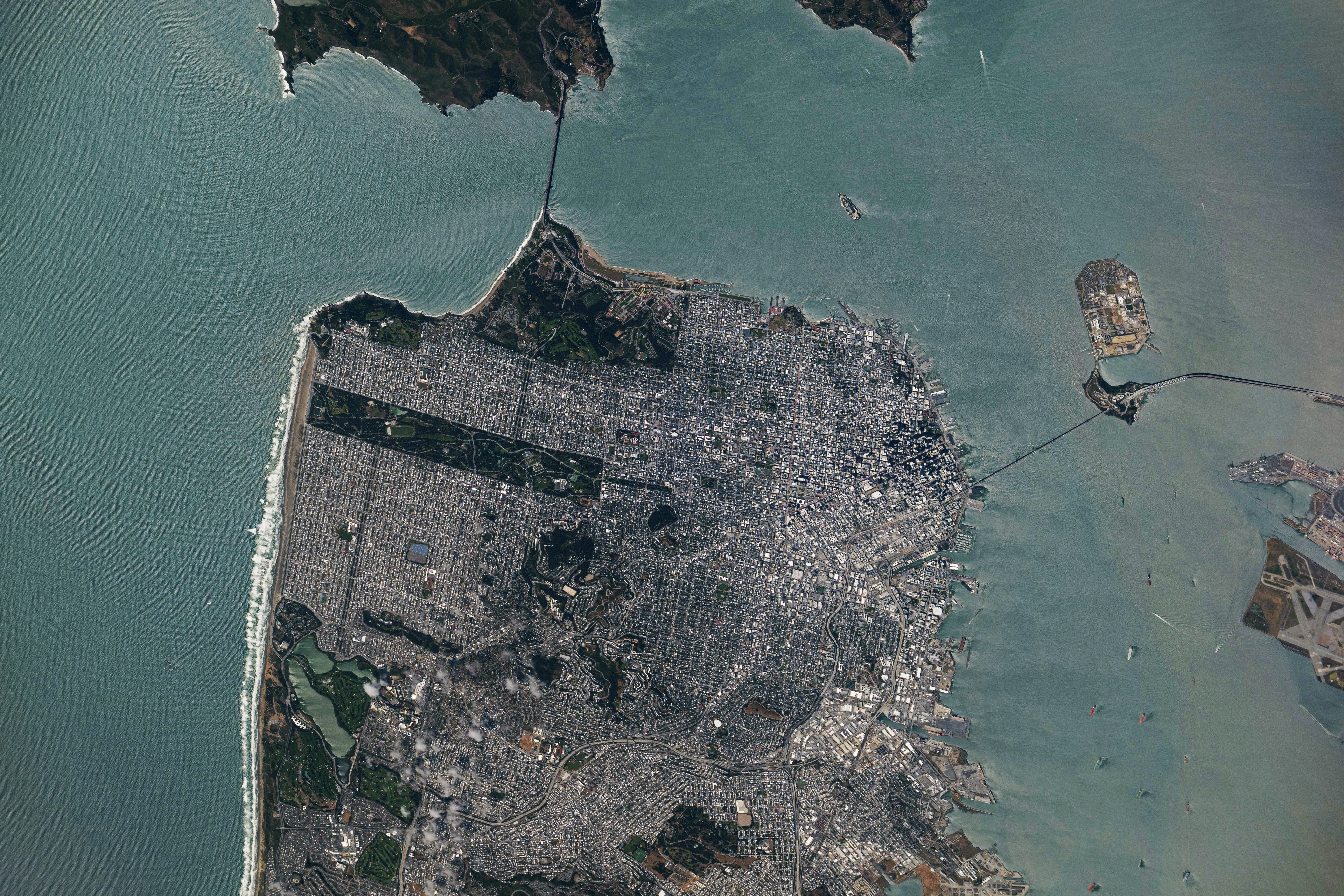
A top-down photo of San Francisco shows dense gray urban infrastructure interspersed with green parks. Waves and ships are visible in the surrounding blue-green water.
May 27, 2026

A period of unsettled weather brought scattered showers and thunderstorms to California’s Bay Area on May 27, 2026. That afternoon, a break in the clouds left downtown San Francisco and nearby communities beneath mostly cloud-free skies, allowing an astronaut aboard the International Space Station to take this photograph.

The image captures two of the region’s iconic bridges. The Golden Gate Bridge connects the northern San Francisco Peninsula with Marin County to the north, while the San Francisco-Oakland Bay Bridge spans the bay toward Oakland to the east.  

Near the center of the image, Golden Gate Park stands out as a long, rectangular strip of green amid the dense urban landscape. Spanning more than 1,000 acres (400 hectares), the park encompasses meadows, gardens, wooded areas, and lakes. Additional green space toward the north around the Golden Gate Bridge is part of a national recreation area

The nadir (downward-looking) perspective also provides a clear view of the patchwork of street grids, which were laid out over San Francisco’s hilly terrain as the city grew in successive stages. In the heart of the downtown area, Market Street runs southwest to northeast and serves as a prominent divider between two distinct grid orientations: one aligned with the bay and the other aligned with the street.  

Along the northeastern and eastern waterfront, various structures extend into the bay. Toward the north, these include a historic wharf, seawalls, and piers—most built in the early 1900s, though some date back into the 1800s. The adjacent waters support heavy maritime traffic, including cargo and container ships, cruise vessels, and regional ferries.

Breaking waves are visible along the western coast, including at Ocean Beach, the 3.5-mile stretch of sandy shore adjacent to Golden Gate Park. On May 27, the National Weather Service warned of hazardous conditions at the region’s beaches due to strong northerly winds. Long-period swells from the northwest contributed to the increased risk of rip currents as well as sneaker waves in the days after this image was acquired.

Astronaut photograph ISS074-E-619284 was acquired on May 27, 2026, with a Nikon Z9 digital camera using a focal length of 800 millimeters. It is provided by the ISS Crew Earth Observations Facility and the Earth Science and Remote Sensing Unit at NASA Johnson Space Center. The image was taken by a member of the Expedition 74 crew. The image has been cropped and enhanced to improve contrast, and lens artifacts have been removed. The International Space Station Program supports the laboratory as part of the ISS National Lab to help astronauts take pictures of Earth that will be of the greatest value to scientists and the public, and to make those images freely available on the Internet. Additional images taken by astronauts and cosmonauts can be viewed at the NASA/JSC Gateway to Astronaut Photography of Earth. Story by Kathryn Hansen.
Downloads

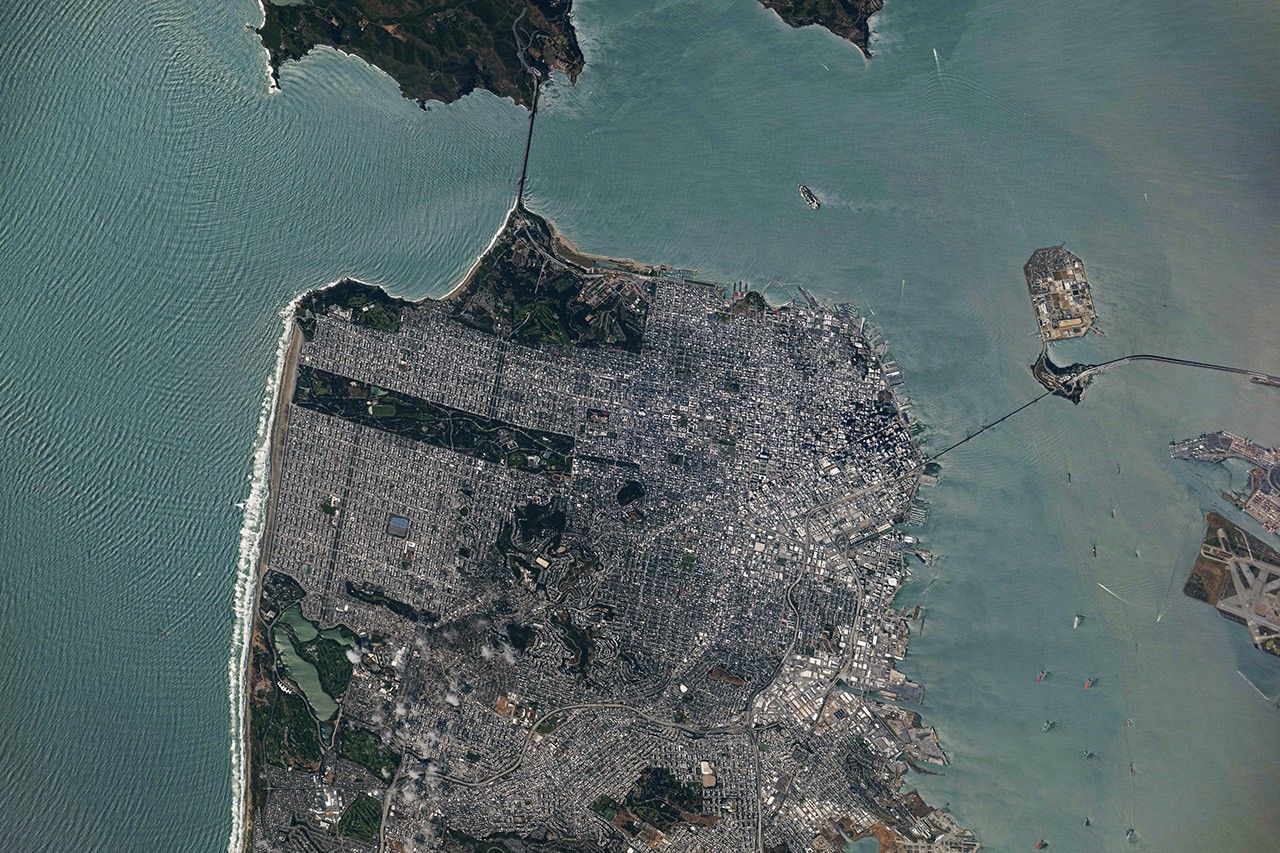
A top-down photo of San Francisco shows dense gray urban infrastructure interspersed with green parks. Waves and ships are visible in the surrounding blue-green water.

May 27, 2026

JPEG (12.13 MB)

References & Resources

You may also be interested in:

Stay up-to-date with the latest content from NASA as we explore the universe and discover more about our home planet.
Belts of Green in the Washington Suburbs

3 min read

Along the northeast side of the Capital Beltway in Maryland, green spaces weave through the developed landscape.

Article

Contours of the James Bay Lowlands

3 min read

After the Laurentide Ice Sheet retreated from present-day Hudson Bay, rebounding land has revealed striking nearshore topography.
Article

Great Balls of Fire

4 min read

An astronaut on the International Space Station was surprised to photograph a shower of light streaking through the darkness while…

Article
  •  

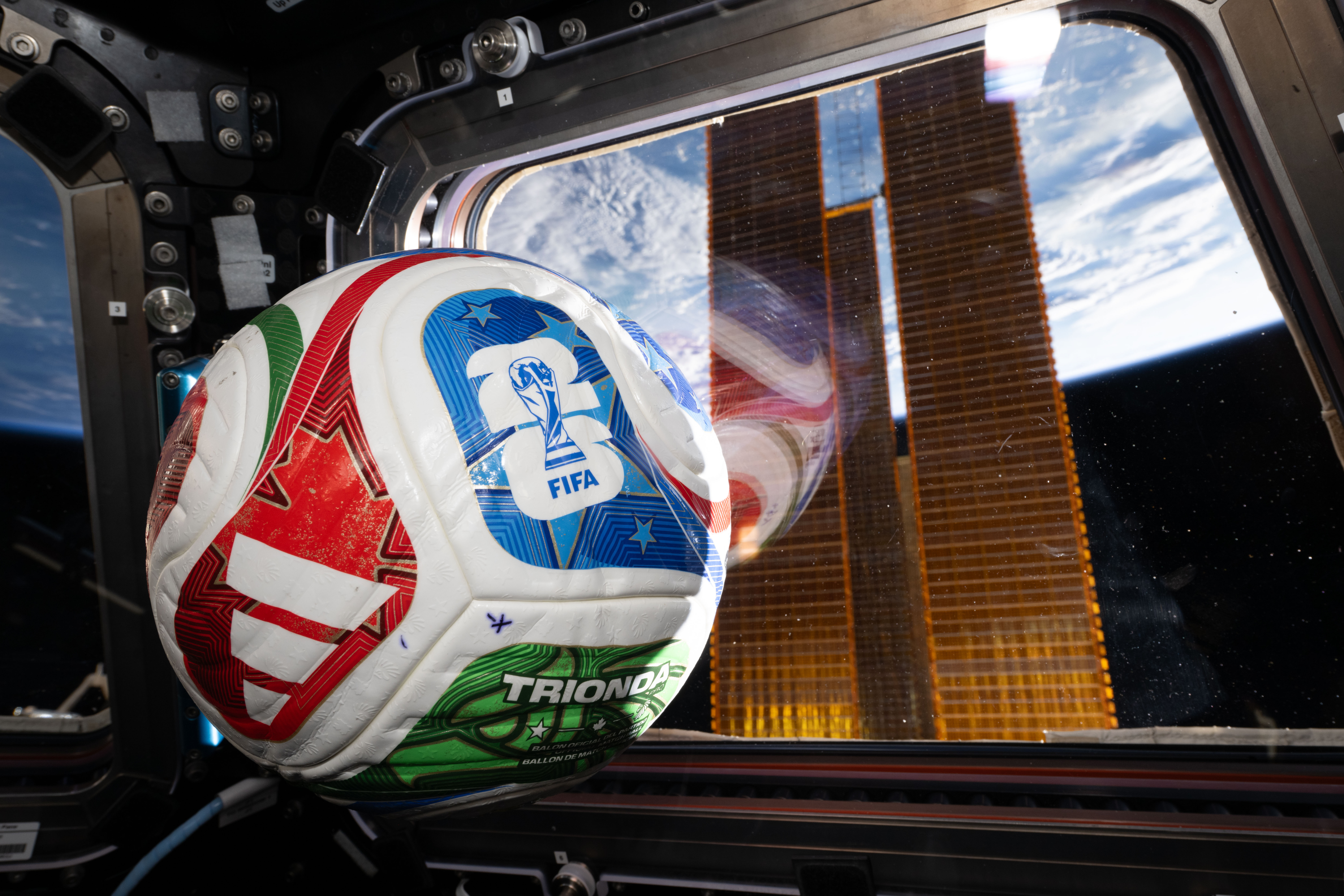
How NASA Science and Artemis Are Shaping the 2026 FIFA World Cup 

Researchers tested soccer balls aboard the International Space Station to study how internal mass affects motion and stability in microgravity.
NASA

As the FIFA World Cup approaches, NASA is bringing space science and engineering to soccer fans worldwide. From June 11 to July 19, 2026, NASA will host an exhibit at FIFA Fan Festival™ Houston where visitors can learn how research aboard the International Space Station benefits life on Earth and experience missions in low Earth orbit, the Moon, and beyond through the Artemis program. 

On June 11, as the FIFA World Cup begins, NASA’s exhibit at Fan Festival Houston will open to the public. The event is free to attend and open for every match of the tournament in East Downtown, Houston. On June 20, Johnson Space Center Director Vanessa Wyche will introduce select Artemis II crew members following their historic mission around the Moon. The crew will participate in World Cup activities ahead of the Netherlands-Sweden match in Houston and will appear on the Fan Festival Houston main stage to share their experience with fans. 

The connection between NASA and the World Cup goes beyond the exhibit floor, reaching all the way to orbit. NASA spinoff technologies are innovations developed for space exploration that go on to shape commercial products and everyday life – even on the soccer field. 

For more than 25 years, research aboard the International Space Station has enabled breakthroughs in science, technology, and human health while advancing innovations that benefit people on Earth. That work includes studies that improve understanding of the aerodynamics and physics involved in soccer ball flight. 

In partnership with the ISS National Laboratory in 2019, researchers used the station’s microgravity environment to study how a soccer ball’s internal mass affects its motion, stability, and rotation. The findings have improved understanding of how embedded technologies, including match-ball sensors, can influence performance during play. The research contributed to studies used in the development and evaluation of soccer balls for major international tournaments, including FIFA World Cup competition. 

Understanding the relationship between an object’s center of mass and its geometric center is key to predicting how free-flying objects move, including spacecraft, satellites, and aircraft. 

Since 2022, Adidas has embedded electronics inside official match balls used in major tournaments. The sensors track speed, position, and contact in real time to support officiating and broadcast technology. But those sensors also add mass in specific locations inside the ball, and uneven mass distribution can affect how a ball moves through the air. 

The space-based research has helped improve understanding of how internal mass, including embedded sensors, can influence stability and rotation in real-world playing conditions. 

This work builds on earlier research into how spinning objects behave in microgravity. 

Engineers at NASA’s Ames Research Center in Silicon Valley, California tested Adidas’ Brazuca ball, developed for the 2014 FIFA World Cup, in wind tunnel conditions at the Fluid Mechanics Laboratory. Researchers studied aerodynamic behavior, including how low-spin kicks can produce “knuckling,” where the ball moves unpredictably due to unstable airflow across the seams. NASA engineers measured the speeds and flow conditions where this effect was most pronounced. 

Adjustments in panel shape, seam depth, and surface texture can influence flight consistency, helping determine whether a ball curves, dips, or holds its line during play. 

Now, NASA and Adidas are presenting that science through a STEMonstration that compares how differently balanced soccer balls spin and move in microgravity. The experiment shows how the same physics that governs motion in space also shape the game millions watch on Earth. 

Through research aboard the International Space Station and technology developed for exploration, NASA continues to demonstrate how discoveries made for space can benefit people on Earth—including athletes and fans participating in the world’s most popular sport. 

Watch the soccer ball STEMonstration video: 

💾

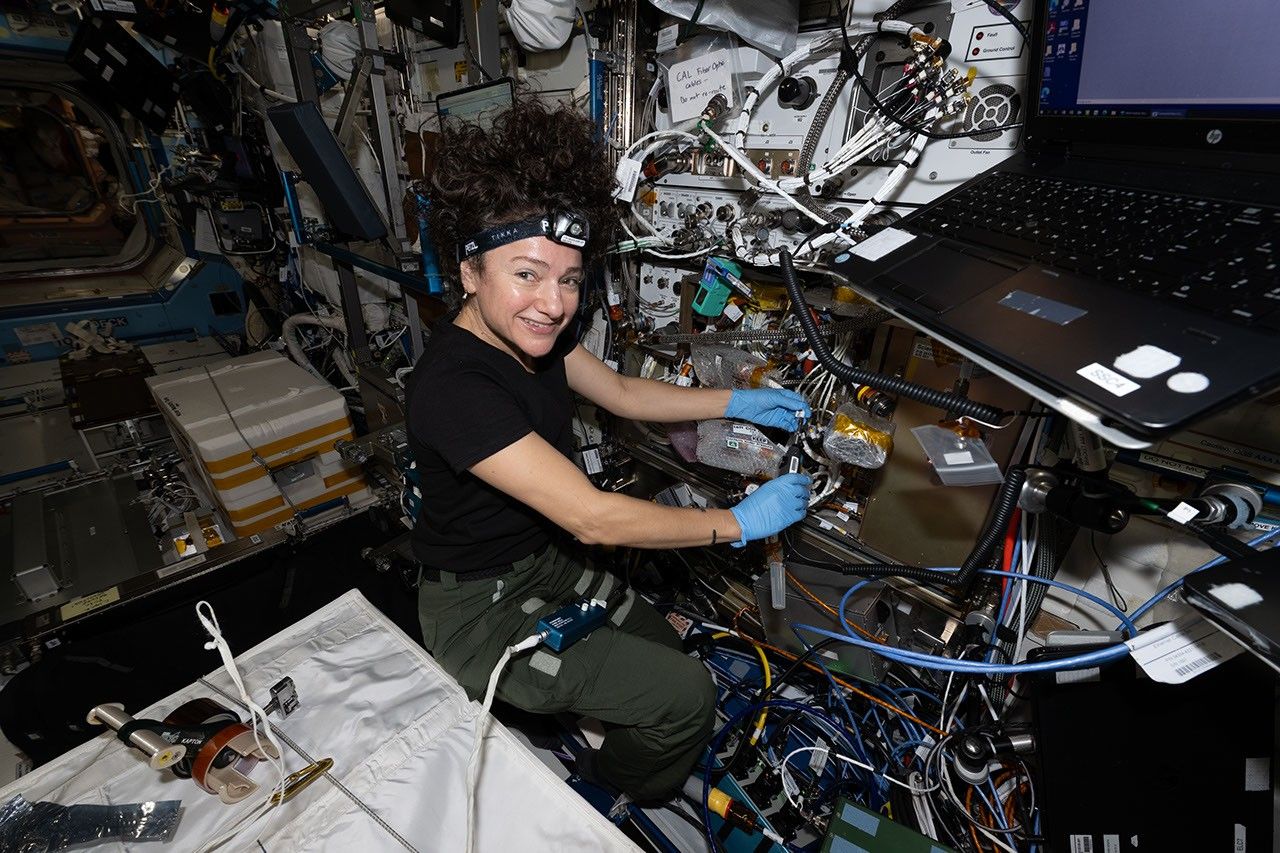
Have you ever kicked a soccer ball and wondered why it curves, spins, or sometimes wobbles? NASA astronaut Jessica Meir aboard the International Space Statio...
  •  

Look Up!

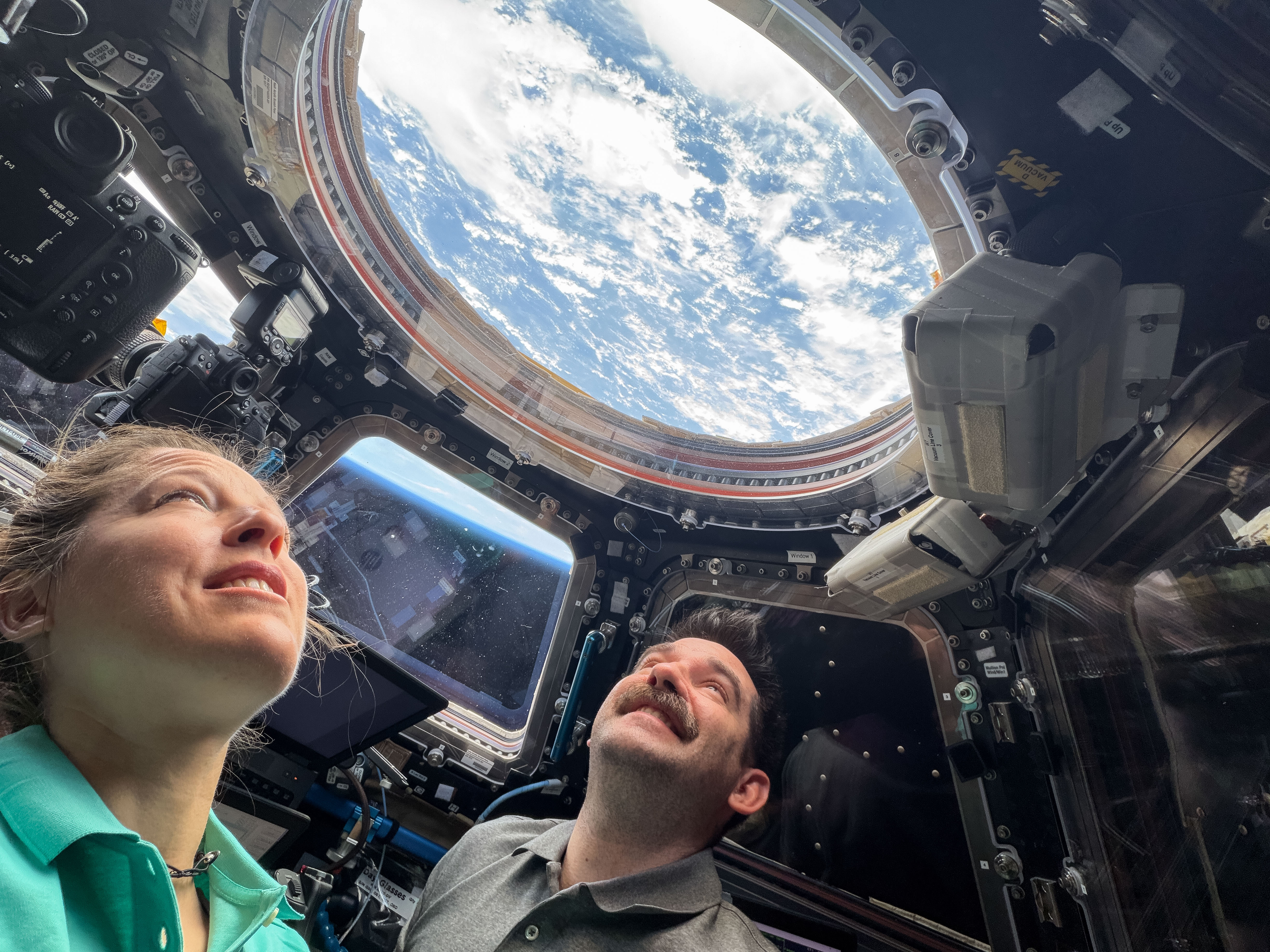
Two astronauts look up through a round window in the International Space Station's cupola. Earth's blue water and white clouds are visible. In a trapezoid-shaped window between the two astronauts, we can see the blue haze of Earth's atmosphere.
ESA/Sophie Adenot

Astronauts Sophie Adenot of ESA (European Space Agency) and Jack Hathaway of NASA, both Expedition 74 flight engineers, look out a window in the cupola, monitoring the automated approach and docking of the SpaceX Dragon cargo spacecraft to the International Space Station on May 17, 2026. The orbital outpost was soaring 259 miles above the Indian Ocean just west of the Maldives at the time of this photograph.

See the cupola and other parts of the space station in our guided tour.

Image credit: ESA/Sophie Adenot

  •  

NASA Hosts SpaceX Crew-11 Astronauts for Public Event at Headquarters

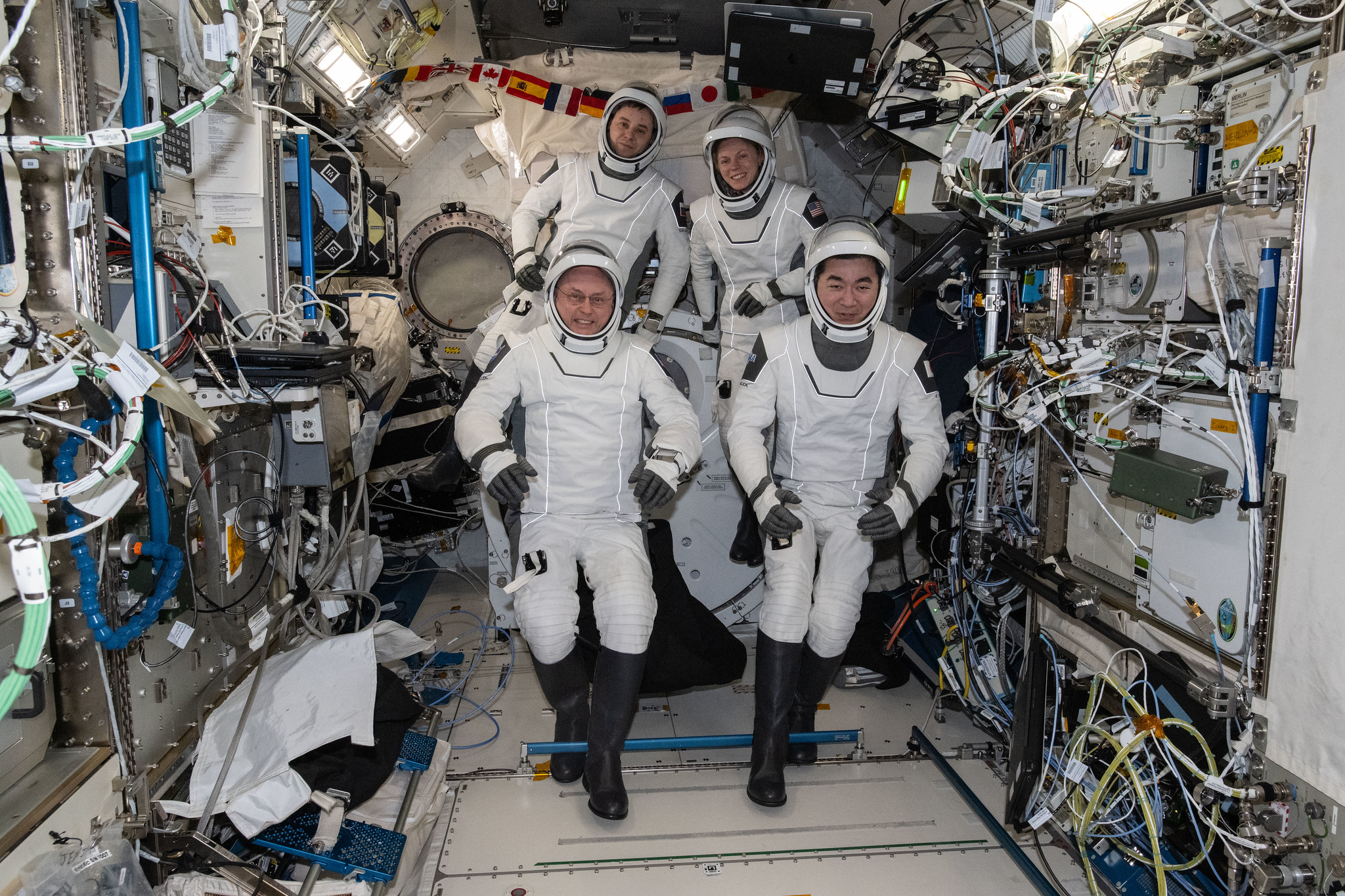
NASA's SpaceX Crew-11 astronauts gather together for a crew portrait wearing their Dragon pressure suits during a suit verification check inside the International Space Station's Kibo laboratory module. Clockwise from bottom left are, NASA astronaut Mike Fincke, Roscosmos cosmonaut Oleg Platonov, NASA astronaut Zena Cardman, and JAXA (Japan Aerospace Exploration Agency) astronaut Kimiya Yui.
NASA’s SpaceX Crew-11 astronauts gather together for a crew portrait wearing their Dragon pressure suits during a suit verification check inside the International Space Station’s Kibo laboratory module. Clockwise from bottom left are, NASA astronaut Mike Fincke, Roscosmos cosmonaut Oleg Platonov, NASA astronaut Zena Cardman, and JAXA (Japan Aerospace Exploration Agency) astronaut Kimiya Yui.
Credit: NASA

NASA will host a public event featuring three crew members from the agency’s SpaceX Crew-11 mission at 11 a.m. EDT Monday, June 1. The event, which takes place during the crew’s standard postflight visit, will be held in the Webb Auditorium at NASA Headquarters in the Mary W. Jackson building, 300 E. Street SW in Washington.

The crew members, including NASA astronauts Zena Cardman and Mike Fincke and JAXA (Japan Aerospace Exploration Agency) astronaut Kimiya Yui, will discuss their recent 167-day mission aboard the International Space Station, where they conducted a wide range of science experiments to benefit life on Earth and advance human space exploration as part of International Space Station Expedition 73/74.

The Crew-11 mission lifted off on Aug.1, 2025, from Launch Complex 39A at NASA’s Kennedy Space Center in Florida. The crew’s SpaceX Dragon spacecraft docked to the orbital outpost on Aug. 2.

During their mission, the three astronauts, along with crewmate Roscosmos cosmonaut Oleg Platonov, traveled nearly 71 million miles and completed more than 2,670 orbits around Earth. The Crew-11 mission was Fincke’s fourth spaceflight, Yui’s second, and the first for Cardman and Platonov. Fincke has logged 549 days in space, ranking him fourth among all NASA astronauts for cumulative days in space. The crew members returned to Earth on Jan. 15, splashing down off the coast of San Diego.

Along the way, Crew-11 logged hundreds of hours of research, maintenance, and technology demonstrations. The crew members also celebrated the 25th anniversary of continuous human presence aboard the orbiting laboratory on Nov. 2, 2025. Research conducted aboard the space station advances scientific knowledge and demonstrates new technologies that enable us to prepare for human exploration of the Moon and Mars.

Media interested in attending the event must RSVP by 8 a.m., June 1, by emailing the NASA Headquarters newsroom at hq-media@mail.nasa.gov. NASA’s media accreditation policy is online. Based on the crew’s schedule, NASA will not be able to accommodate interviews.

This opportunity also is part of NASA’s Frontiers Forum: Voices Shaping the Future of Space speaking series designed to convene bold thinkers and senior leaders at the forefront of exploration and innovation. The series will spotlight mission-critical priorities from advancing the Artemis campaign and strengthening commercial partnerships to shaping the future workforce and accelerating breakthrough technologies. The agency will share more details soon.

To learn more about the International Space Station and its research and crews, visit:

https://www.nasa.gov/station

-end-

Gerelle Dodson
Headquarters, Washington
202-358-1600
gerelle.q.dodson@nasa.gov

Share

Details

Last Updated
May 29, 2026
  •  
❌