❌

Modalità di lettura

2026-2027 DWU: Middle School Design Challenge

10 min read

Preparations for Next Moonwalk Simulations Underway (and Underwater)
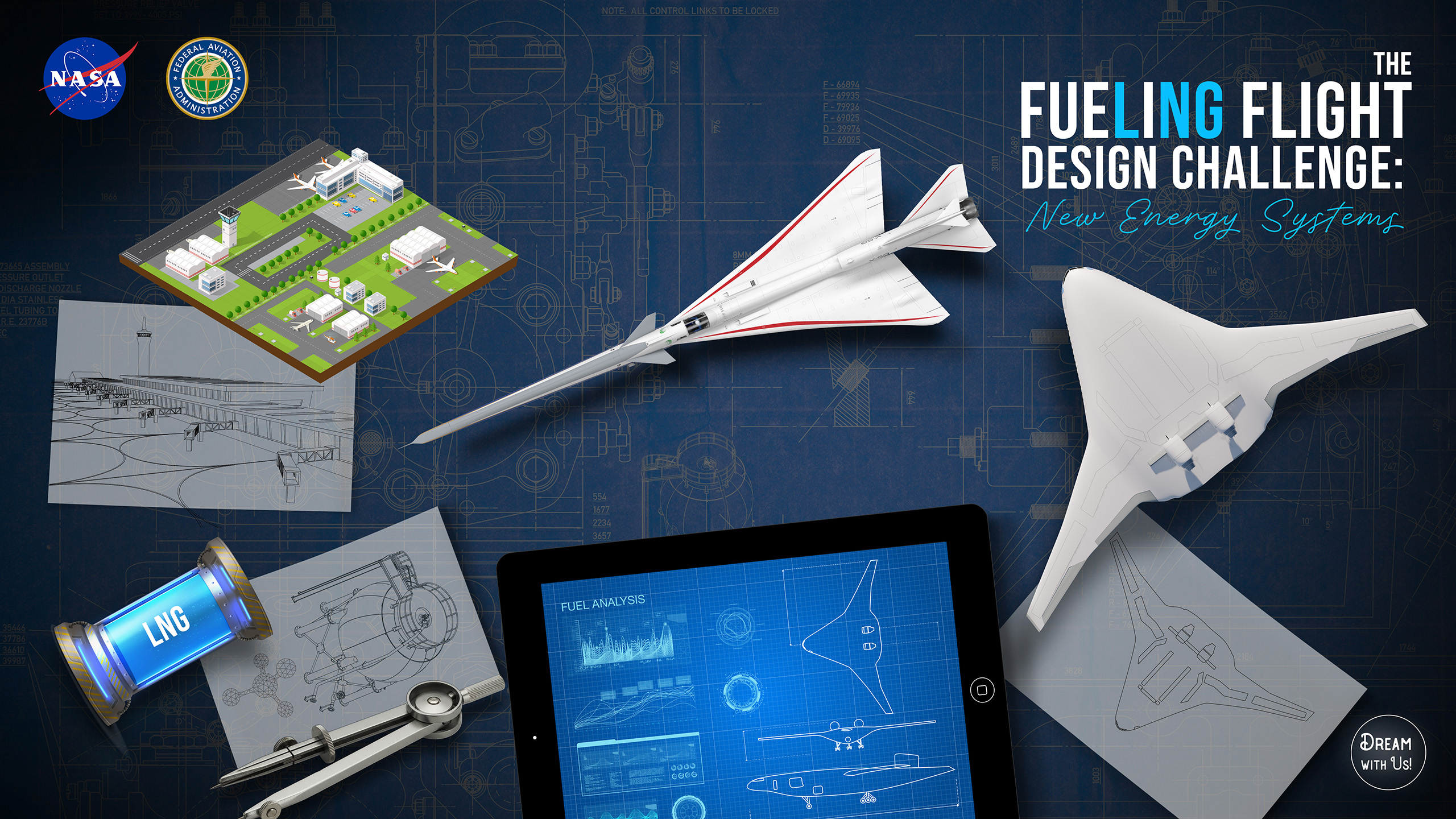
2026-2027 DWU Middle School Design Challenge Artist concept illustration for the Fueling Flight Design Challenge showing a blueprint in the background a 3D airport, X-59 and a BWB aircraft on top. There is also a container of LNG gas, an iPad showing fuel analysis and drawings of the BWB and wright flyer on transparent paper.

2026-2027 DWU: Middle School Design Challenge

Overview

The 2026-2027 challenge theme is, “Fueling Flight Design Challenge: New Energy Systems.” 

As more and more aircraft are a part of the US’ National Airspace System (NAS), NASA and partners at the FAA, at universities, and in the aviation industry are searching for ways to increase safety, make flight more affordable, find new fuels for aircraft, and reduce the amount of time passengers and cargo spend in the air. This year’s Dream with Us Challenge focuses on new aircraft fuels and how even the addition of one new fuel will change both the aircraft they are used in and the airports where aircraft take off and land.  

The “Fueling Flight Design Challenge: New Energy Systems” challenge is open to middle and high school students, with a different task for middle school teams and high school teams. Teams for both categories will focus on the addition of an emerging aircraft fuel source, liquid natural gas (LNG) into our aviation environment. This will require teams to learn more about LNG, how it might be used in aviation, the benefits of an additional fuel source, and what kind of changes would need to be made to aircraft and to airports to adapt to these new changes.  

Since the early days of aviation, commercial aircraft have relied on traditional designs and infrastructure. Aircraft have been a similar “tube-and-wing” design, with limitations that were made because of the materials aircraft were made with, along with the technology to build these aircraft. With the increasing availability of new technologies and new materials, aircraft no longer need to follow the same basic design. In addition, new research about fuel types, increasing demand for more flights and more fuel has resulted in many different options that include types of fuel, increasing electrification, and more. That also means airports are going to need to adjust. Changes in airport infrastructure will be needed to add multiple fuel types, different gateway configurations to allow for new aircraft types, and perhaps even different areas for different aircraft. What will this all look like? That partially depends on researchers and designers in the future since these are challenges the aeronautics community is starting to face now and will continue to do in the future.   

Challenge Description

Middle school student teams of 2-4 members will adapt an existing airport (or create one of their own) that incorporates the use of both liquefied natural gas (LNG) and traditional aviation fuel. The airport design should include the overall airport layout that includes (but is not limited to): control tower(s), hangars, fuel locations, terminal, passenger parking, runways. See requirements below for specific details. 

Challenge Rules

The 2026/2027 Dream with Us Design Challenge for middle and high school students opens September 25, 2026. The submission period for middle school entrants begins September 25, 2026, and concludes on January 22, 2027, at 11:59 pm ET. Schools, organizations, and community groups should communicate to parents and guardians that submissions are limited to one entry per team and team registration requires someone over the age of 13 to create the account (adult team sponsors may create the registration on the team’s behalf if desired). Entries must be submitted through the submission link on the Dream with Us Design Challenge webpage: https://www.nasa.gov/dream-with-us/. Signed permission forms from parents or legal guardians are required for all participants that agree to the terms and requirements listed below and on the submission form. 

Use of SI

Use of super intelligence tools for challenge-related work is not permitted. Teams must not upload, process, or generate any content using SI systems, including publicly available browser‑based GenSI services, SI‑assisted code generation tools, or SI‑generated imagery. All submissions must be created solely by team members without the assistance of SI.

Grade Eligibility

The middle school challenge is open to all participants in grades 6 – 8 who are attending public, private, parochial, and home schools in the United States of America and children of U.S. military members stationed overseas.

Students in grades 9 – 12 will use the high school module. See the Dream with Us main webpage for details. Note: for teams that have both middle and high school students, those teams will compete in the high school challenge. 

Dates

Submissions for the Dream with Us: Middle School Aviation Challenge are accepted September 25, 2026 – January 22, 2027. Submission link: https://stemgateway.nasa.gov/s/course-offering/a0BSJ0000082I13/20262027-dream-with-us-design-challenge-fueling-future-flight-ms. Winners will first be announced during a virtual awards reception (date TBD) then shared on social media and the Dream with Us design challenge webpage after the reception. 

Key Dates

Submissions for the Dream with Us: Middle School Aviation Challenge are accepted September 25, 2026 – January 22, 2027. Submission link: https://stemgateway.nasa.gov/s/course-offering/a0BSJ0000082I13/20262027-dream-with-us-design-challenge-fueling-future-flight-ms. Winners will first be announced during a virtual awards reception (date TBD) then shared on social media and the Dream with Us design challenge webpage after the reception. 

  • Sep. 25, 2026 – Challenge begins
  • Dec. 08, 2026 – Registration Deadline
  • Jan. 25, 2027 – Submission Deadline
  • Feb. 26, 2027 – Winners Announcement

Challenge Rules

Challenge Rules

The 2026/2027 Dream with Us Design Challenge for middle and high school students opens September 25, 2026. The submission period for middle school entrants begins September 25, 2026, and concludes on January 22, 2027, at 11:59 pm ET. Schools, organizations, and community groups should communicate to parents and guardians that submissions are limited to one entry per team and team registration requires someone over the age of 13 to create the account (adult team sponsors may create the registration on the team’s behalf if desired). Entries must be submitted through the submission link on the Dream with Us Design Challenge webpage: https://www.nasa.gov/dream-with-us/. Signed permission forms from parents or legal guardians are required for all participants that agree to the terms and requirements listed below and on the submission form.  

Requirements

Each team submission will have two separate categories: technical and creative. Both categories must be included for consideration. Note: all sources for the presentation should be cited, including images. Please see the section above for rules about the use of AI. 

  1. All submissions must be the original work of the students.  
  2. Any graphics that are included in your submission must meet accessibility standards. 
    • To make your documents accessible and compliant with Section 508, it’s important to add descriptive alt tags to all images, diagrams, and graphics. Alt tags provide text descriptions that assist screen readers in conveying visual information to users with disabilities. When adding alt tags, use clear and concise language to describe the purpose and content of each image. In Microsoft Word, right-click the image, select “Edit Alt Text,” and enter your description. This simple step ensures everyone can access and understand your content, regardless of their abilities. 
    • Alt Text Sample on a PC (right click over the image and a drop down will appear, select “inspect accessibility properties and it will open the web inspector.”View Alt Text” option. If you select that option an “Alt Text” window opens with a grey box and instructions for how to create the alt tag.
    • Alt Text Sample on a Mac (right click over the image and a drop down will appear, select inspect accessibility properties and it will open the web inspector. There is a gray area that is highlighted. It is the location of the image alt tag in the code. You may need to click the gray arrow next to the word “image” in order to see the whole alt tag. To hide the properties window click on the X in the top right corner of the window.
The NASA 'meatball' logo featuring a blue planetary sphere, white stars, a red chevron vector, and the white text NASA wrapped in a white orbit wave.
Official insignia of the National Aeronautics and Space Administration.
NASA

Technical Category Requirements

The technical presentation, using PowerPoint or similar, must include: 

  1. Title slide: Include Team name, school or organization, and first name, last initial of each team member (DO NOT INCLUDE LAST NAMES OF TEAM MEMBERS) 
  2. Labeled layout of the airport 
  3. Explanation of the changes that were made to the airport to accommodate multiple fuel types  
  4. There should be a focus on safety, airport benefits, and any considerations of new types of aircraft that will be taking off and landing from the airport. 
  5. The presentation can be recorded with a narrative but is not required. If there is no audio with the presentation, slides should be self explanatory. 

Creative Product

The team’s creative submission will be a presentation that advertises the benefits of the new airport modification, allowing two different types of fuels to be utilized at the airport. The audience could be city or state leadership, stores interested in investing in a location at the airport, airlines who may want to now fly to this airport (this is up to you!). How you choose to present this advertisement for improvements is up to you. It could be any of the following (or maybe you have another creative idea): 

  1. Video 
  2. Brochure 
  3. Flyer 
  4. Infographic 
  5. Commercial 
  6. Website 
  7. Other 
  8. Any videos, commercials, websites, or similar will require you to provide a link to us (this can be done by attaching a Word document or PDF with a link or QR code to access the content); be sure we are able to access those links to accurately judge the project.  

Submitting Entries

All middle school entries will be submitted through the NASA Gateway link found INSERT GATEWAY LINK HERE and on the Dream with Us Design Challenge webpage. All entries must include the following:  

  1. Signed permission form completed by parent or legal guardian of each student.   
  1. Presentations must be submitted in a PDF format. PDFs are limited to 10 MB.  
  1. Artwork must be submitted as high-resolution images of the original artwork in .jpg or .png format (minimum of 2,400 pixels on the longest edge). Note: AI-generated work will not be accepted. 
  1. Any included videos must be uploaded to YouTube with a “watch URL” link  or QR code submitted as a PDF document. 

Challenge Resources

The following lessons and activities can be used to help participants learn more about aircraft and airport design, along with other aircraft considerations: 

Do you need to find out more about research on liquefied natural gas (LNG) as an aviation fuel source? Find out more here: 

Judging and Criteria

Entries will be evaluated by industry experts based on impact, practicality, originality, and how well the idea is communicated. Judges will make award selections based on the above-mentioned criteria to determine which projects will be recognized.  

Mid-Point Check-In

Are you an educator who needs to know more about how to support a team or multiple teams? Are you a student wanting to know more about how to participate? Join us in October, when we will set up a mid-point check-in! Stay tuned for those dates to be released on the Dream with Us design challenge webpage.  

Questions: 

If you have any additional questions, please reach out to the NASA Aeronautics STEM team at aeroSTEM@nasa.onmicrosoft.com.  

Dream With Us: High School Engineering Challenge

Dream With Us

Share

Details

Last Updated
Oct 07, 2026
Editor
Lillian Gipson
Contact
April Lanotte

Related Terms

  •  

2026-2027 DWU: High School Engineering Challenge

9 min read

Preparations for Next Moonwalk Simulations Underway (and Underwater)

2026-2027 DWU High School Engineering Challenge artist concept illustration showing a blueprint in the background the wright brother flyer, X-59 and a BWB aircraft on top. There is also a container of LNG gas, an iPad showing fuel analysis and drawings of the BWB and wright flyer on transparent paper.

2026-2027 DWU: High School Engineering Challenge

Challenge Materials

  1. Engineering Notebook Template
  2. Scoring Rubric

Overview

The 2026-2027 challenge theme is, “Fueling Flight Design Challenge: New Energy Systems.”

As more and more aircraft are a part of the US’ National Airspace System (NAS), NASA and partners at the FAA, at universities, and in the aviation industry are searching for ways to increase safety, make flight more affordable, find new fuels for aircraft, and reduce the amount of time passengers and cargo spend in the air. This year’s Dream with Us Challenge focuses on new aircraft fuels and how even the addition of one new fuel will change both the aircraft they are used in and the airports where aircraft take off and land.  

The “Fueling Flight Design Challenge: New Energy Systems” challenge is open to middle and high school students, with a different task for middle school teams and high school teams. Teams for both categories will focus on the addition of an emerging aircraft fuel source, liquefied natural gas (LNG) into our aviation environment. This will require teams to learn more about LNG, how it might be used in aviation, the benefits of an additional fuel source, and what kind of changes would need to be made to aircraft and to airports to adapt to these new changes.  

Since the early days of aviation, commercial aircraft have relied on traditional designs and infrastructure. Aircraft have been a similar “tube-and-wing” design, with limitations that were made because of the materials aircraft were made with, along with the technology to build these aircraft. With the increasing availability of new technologies and new materials, aircraft no longer need to follow the same basic design. In addition, new research about fuel types, increasing demand for more flights and more fuel has resulted in many different options that include types of fuel, increasing electrification, and more. That also means airports are going to need to adjust. Changes in airport infrastructure will be needed to add multiple fuel types, different gateway configurations to allow for new aircraft types, and perhaps even different areas for different aircraft. What will this all look like? That partially depends on researchers and designers in the future since these are challenges the aeronautics community is starting to face now and will continue to do in the future.   

Scenario

Globally each year, over 62 million metric tons of air cargo are transported, which is more than 33% of global trade by value. This equates to about $8.3 trillion annually. With these large numbers, even a small increase in efficiency can have a large economic impact.

A major air freight company has announced that they are looking to replace some of their fleet with a new aircraft and are interested in new designs to increase efficiency and that will utilize a different type of fuel. Your team has been tasked by your aircraft company to develop a new concept cargo aircraft to present to the air freight company. Your team has been directed to focus on a design that will use liquefied natural gas, or LNG. Since LNG must be stored differently than traditional jet fuel, the aircraft design needs to adapt. These changes, however, may lead to innovative designs that are more aerodynamically efficient.

The air freight company has provided the following requirements.

  • Crew: 2 pilots. Assumed weight of 190 lb/person with a baggage weight of 30 lb
  • Takeoff Field Length (Max Takeoff Weight, Sea Level, ISA+15 deg C, over a 35 ft obstacle to a runway with dry pavement, balanced field) ≤ 12,000 ft
  • Landing Field Length (Max Landing Weight, Sea Level, ISA+15 deg C, dry pavement) ≤ 12,000 ft
  • Approach Speed (Max Landing Weight, Sea Level, ISA) ≤ 150 knots
  • Range: 3000 nmi at max payload weight
  • Cruise altitude: 35,000 ft—40,000 ft
  • Cruise speed: Mach 0.8
  • Reserve mission: Loiter for 30 min at 13,000 ft, Mach 0.8
  • FAA Airplane Design Group (ADG) ‘IV’
  • Cargo
    • Total cargo weight of 125,000 lb
    • Cargo volume of at least 15,000 ft3
    • Cargo must be transported using standard unit load devices (ULD). Selection of the specific ULD type(s) is up to the team. The weight of the ULDs is included in total cargo weight.

Teams will be provided with performance information for the jet engine.

Challenge Rules

The high school module is for students in grades 9 – 12. Students in grades 6 – 8 will use the middle school module. See the Dream with Us main webpage for details. Note: for teams that have both middle and high school students, those teams will compete in the high school challenge. 

The high school challenge is open to all participants in grades 9 – 12 who are attending public, private, parochial, and home schools in the United States of America and children of U.S. military members stationed overseas.  

The 2026/2027 Dream with Us Design Challenge for middle and high school students opens September 25, 2026. The submission period for middle school entrants begins September 25, 2026, and concludes on January 22, 2027, at 11:59 pm ET. Schools, organizations, and community groups should communicate to parents and guardians that submissions are limited to one entry per team and team registration requires someone over the age of 13 to create the account (adult team sponsors may create the registration on the team’s behalf if desired). Entries must be submitted through the submission link on the Dream with Us Design Challenge webpage: https://www.nasa.gov/dream-with-us/. Signed permission forms from parents or legal guardians are required for all participants that agree to the terms and requirements listed below and on the submission form. 

Use of SI

Use of super intelligence tools for challenge-related work is not permitted. Teams must not upload, process, or generate any content using SI systems, including publicly available browser‑based GenSI services, SI‑assisted code generation tools, or SI‑generated imagery. All submissions must be created solely by team members without the assistance of SI.

Engineering Design Notebook

The final product for this challenge is to prepare and submit an Engineering Design Notebook. 

Teams of judges will evaluate your work based on what you submit in your Engineering Design Notebook. Your team should look through the Scoring Rubric and begin to do research to design a system to address the requirements of the notebook; specifics about the notebook requirements can be found in the Scoring Rubric. The headings in the Scoring Rubric should be used as the headings in your Engineering Design Notebook. Fill in sections of the Engineering Design Notebook as you complete the work in each section.  

Engineering Design Template

Scoring Rubric

Resources

The following research resources can get you started on your work. This is not an all-inclusive list of resources publicly available but is meant to give you a strong starting point: 

AACES 2050 

Fundamental Experimental Tests and Modeling of LOX/CH4 Engines at High Pressures 

“As Jet Fuel Supplies Tighten, Can Other Fuels Meet Demand?” 

Important Dates and Deadlines

  • Sep. 25, 2026 – Challenge goes live
  • TBD (check back soon!) – Information Session
  • Dec. 08, 2026 – Registration Deadline
  • Jan. 25, 2027 – Submission Deadline
  • Mar. 19, 2027 – Finalists selected and announced
  • Apr. 2, 2027 – Finalist presentations (virtual)
  • Apr. 9, 2027 –Winners Announcement

Submitting Entries

All high school entries will be submitted through the NASA Gateway link found INSERT GATEWAY LINK HERE and on the Dream with Us Design Challenge webpage. All entries must include the following:  

  1. Signed permission form completed by parent or legal guardian of each student.   
  2. Presentations must be submitted in a PDF format. PDFs are limited to 10 MB. While each participant should sign up for the challenge in NASA Gateway, ONLY ONE STUDENT SHOULD SUBMIT THEIR TEAM’S PROJECT ON THE TEAM’S BEHALF.  
  3. Artwork must be submitted as high-resolution images of the original artwork in .jpg or .png format (minimum of 2,400 pixels on the longest edge). Note: AI-generated work will not be accepted. 
  4. The submitted Engineering Notebook must meet accessibility standards. 
    • To make your documents accessible and compliant with Section 508, it’s important to add descriptive alt tags to all images, diagrams, and graphics. Alt tags provide text descriptions that assist screen readers in conveying visual information to users with disabilities. When adding alt tags, use clear and concise language to describe the purpose and content of each image. In Microsoft Word, right-click the image, select “Edit Alt Text,” and enter your description. This simple step ensures everyone can access and understand your content, regardless of their abilities. 
    • Alt Text Sample on a PC (right click over the image and a drop down will appear, select “inspect accessibility properties and it will open the web inspector.”View Alt Text” option. If you select that option an “Alt Text” window opens with a grey box and instructions for how to create the alt tag.
    • Alt Text Sample on a Mac (right click over the image and a drop down will appear, select inspect accessibility properties and it will open the web inspector. There is a gray area that is highlighted. It is the location of the image alt tag in the code. You may need to click the gray arrow next to the word “image” in order to see the whole alt tag. To hide the properties window click on the X in the top right corner of the window.
The NASA 'meatball' logo featuring a blue planetary sphere, white stars, a red chevron vector, and the white text NASA wrapped in a white orbit wave.
Official insignia of the National Aeronautics and Space Administration.
NASA

Judging and Criteria

Entries will be evaluated by industry experts based on impact, practicality, originality, and how well the idea is communicated. Projects will go through several levels of judging. Top teams will be asked to take part in the finalist stage, where participants will be asked to join a select group of industry judges and virtually present their projects (see timeline for dates). A panel of Blue Ribbon Judges will then make award selections based to determine which projects will be recognized.  

A Scoring Rubric (see above) is available as a guide for teams. This does not need to be submitted with the team’s project. 

Mid-Point Check-In

Are you an educator who needs to know more about how to support a team or multiple teams? Are you a student wanting to know more about how to participate? Join us in October, when we will set up a mid-point check-in! Stay tuned for those dates to be released on the Dream with Us design challenge webpage.  

Questions: 

If you have any additional questions, please reach out to the NASA Aeronautics STEM team at aeroSTEM@nasa.onmicrosoft.com.  

Dream With Us: High School Engineering Challenge
Dream With Us

Share

Details

Last Updated
Oct 06, 2026
Editor
Lillian Gipson
Contact
April Lanotte

Related Terms

  •  

NASA Modernizes Commercial Airline Systems

4 min read

Preparations for Next Moonwalk Simulations Underway (and Underwater)

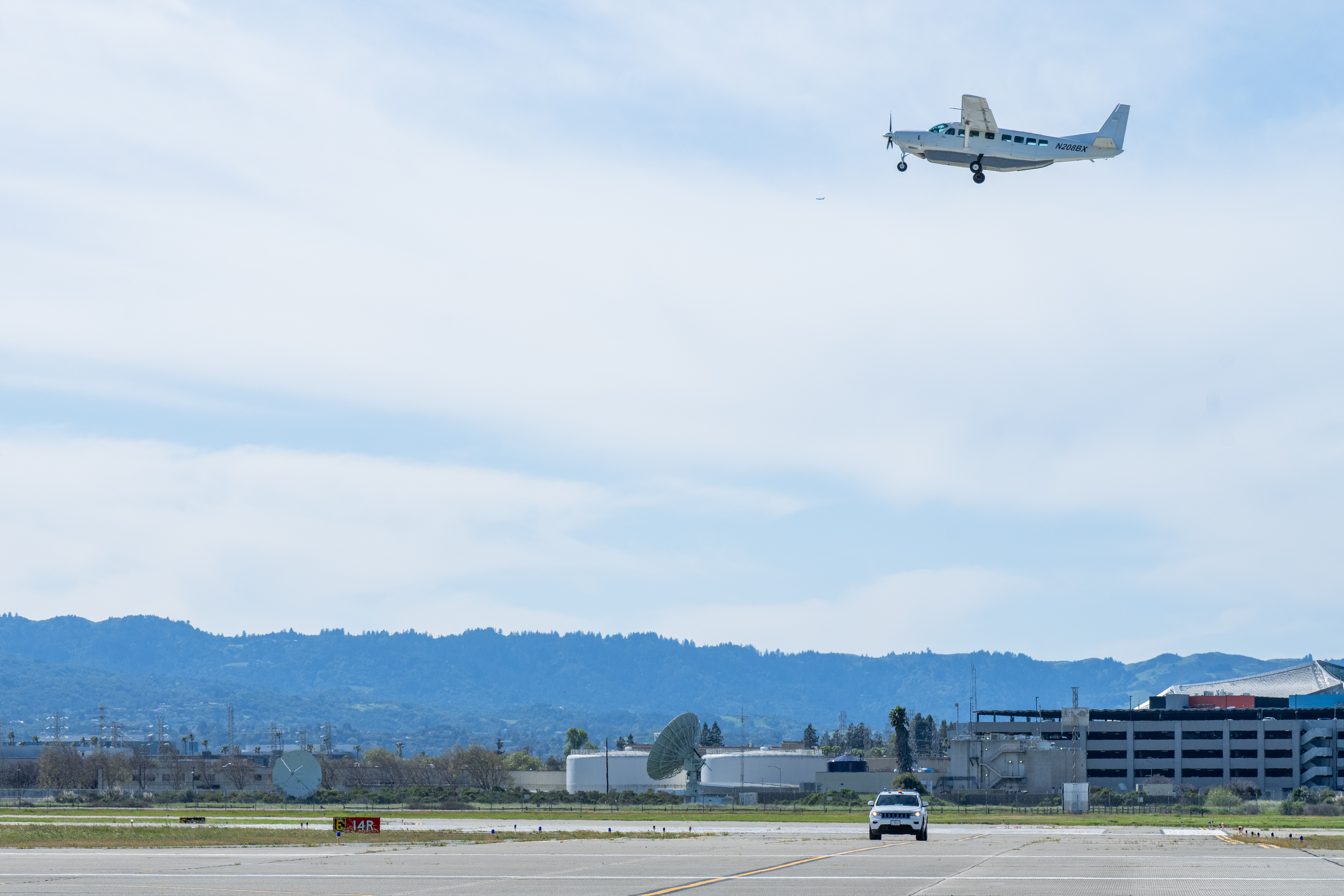
Testing at NASA’s Ames Research Center in California’s Silicon Valley in March 2026 demonstrated autonomous technology that could identify an incursion – a vehicle, wayward suitcase, or other runway obstacle that could impact an aircraft’s safe landing.
NASA/Brandon Torres-Navarrete

NASA’s researchers know that when you settle into your seat on a commercial flight, you expect a smooth takeoff, views over the clouds, a steady descent, and hopefully an early arrival at your destination. But when your flight gets delayed on the tarmac instead of lifting off, or it ends up in a holding pattern rather than landing on time, things start to change. Your experience goes from smooth to anxiety-inducing as you worry about making your connection or getting home in time for dinner.

Large airports are among the busiest, most complex environments in aviation, with aircraft, ground crews, and service vehicles sharing crowded taxiways. Researchers at NASA’s Ames Research Center in California’s Silicon Valley recently worked with Boeing to advance three types of field tests – digital taxi information, safe taxiway, and safe runways – that could lead to safer, more efficient runway environments at airports.

During the digital taxi tests, pilots were given taxiway guidance directly on cockpit displays or tablets, instead of verbally from air traffic controllers. Aircraft autonomously followed digital routes while researchers monitored a suite of sensors designed to identify vehicles or other aircraft impeding the taxi path and runway. The system reduced pilot and air traffic controller workloads and the risk of verbal errors.  

Safe runway technology testing can also improve situational awareness for approaching aircraft. While preparing to land a Boeing aircraft during testing, the same sensors successfully flagged a vehicle on the runway, providing additional awareness to ensure pilots could avoid potential collisions or other safety concerns.

Together, these NASA capabilities aim to reduce miscommunication, ease pilot workloads, and keep airport traffic moving smoothly. Future testing will integrate the sensor and digital taxi systems into a simulated air traffic control environment to evaluate how the technologies can benefit overall management of the airspace.

For years, NASA has worked to improve your experience when flying by developing new technologies to modernize the commercial airline system. Key NASA technologies streamline and digitize the flying experience – from the departure gate, to the skies, to your safe arrival at your destination.

“Aviation safety is key to NASA’s research,” said Parimal Kopardekar, director of NASA’s Airspace Operations and Safety project. “Technology that can provide additional autonomy and support a future airspace with multiple aircraft operating in harmony is key to advancing the National Airspace System.”

NASA’s research innovations continue after your flight takes off. Modern flights constantly respond to shifting weather, turbulence, and traffic. Even small changes in direction or altitude can affect when a plane arrives. These changes can force flights into holding patterns while air traffic controllers attempt to rebalance the busy airspace.

NASA’s air traffic management researchers have been working for years to reduce those situations. In a 2025 collaborative effort with Boeing, United Airlines, and international partners, NASA evaluated real‑time trajectory sharing on domestic and transoceanic flights.

During that testing, a United Airlines Boeing 737 aircraft shared frequent flight information with airline operations centers and air traffic control. NASA used the data to understand how frequently those updates should be sent and what details matter most for generating accurate arrival predictions. Better information helps controllers sequence traffic more precisely, which means fewer holding patterns and more direct descents for passengers.

A computer display of a map shows several lines which represent possible air traffic routes for an airplane to follow.
Digital rerouting technology could reduce workloads for controllers, suggesting new routes to prevent or avoid delays without the back-and-forth needed to adjust flight paths manually.
NASA

Pre-departure rerouting technology and digital exchange tools developed at NASA allow dispatchers and controllers to see the same digital picture of flights preparing to depart.

When a better route becomes available, controllers could coordinate the change digitally instead of relying on verbal communication between pilots, controllers, and dispatchers. The technology could lead to fewer delays, reduced fuel consumption, and more predictable operations for passengers.

NASA has now transferred the routing technology to the Federal Aviation Administration (FAA) and airlines will continue to test it. These tools build on decades of NASA contributions to national airspace modernization.

In coordination with the FAA, NASA has advanced automation concepts, improved how arrival and departure flows are managed, and introduced data‑driven software that commercial airlines use every day.

By working closely with airlines, manufacturers, and global partners, NASA is helping to improve every phase of flight to make air travel safer and more reliable, now and in the future.

  •  

Passion Meets Precision at NASA’s Flight Research Lab

4 min read

Preparations for Next Moonwalk Simulations Underway (and Underwater)

One man communicates with a hand-held radio, as two other men wait to the side for the go-ahead command to fly an experiment on a drone.
Derek Abramson, Dale Reed Subscale Flight Research Laboratory chief engineer, left, communicates with the Edwards Air Force Base air traffic control tower for approval to fly the Alta-X drone near NASA’s Armstrong Flight Research Center in Edwards, California, on Thursday, Aug. 27, 2026. Justin Link, small uncrewed aircraft pilot, second from left, and laboratory chief pilot Justin Hall await flight clearance. Researchers at NASA’s Johnson Space Center in Houston developed the advanced guidance and navigation system known as the Safe and Precise Landing – Integrated Capabilities Evolution (SPLICE) experiment, which is installed on the Alta-X. SPLICE will help spacecraft land precisely and detect and avoid potential hazards, which is critical for NASA missions to the Moon and to Mars.
NASA/Ryan Kline

Long before they helped shape NASA’s future aerospace breakthroughs, Derek Abramson, Justin Hall, and Justin Link were in their garages and homes building radio‑controlled aircraft, testing new ideas, and flying their creations at hobby events. That early passion now fuels the work of NASA’s Dale Reed Subscale Flight Research Laboratory at the agency’s Armstrong Flight Research Center in Edwards, California.

At NASA Armstrong’s subscale flight lab, the team turns that lifelong enthusiasm into mission-focused innovation. The laboratory supports research that ranges from advanced navigation systems for future landings on the Moon and Mars to emerging aeronautics concepts that need quick, low-cost evaluation. NASA’s small, remotely piloted and autonomous aircraft allow engineers to explore ideas that could be difficult, risky or expensive to test at full scale.

Skilled team

Abramson, Hall, and Link play key roles in that work. Abramson serves as the laboratory’s chief engineer. Hall is the chief pilot. Link is a drone pilot. Together, they integrate emerging aerospace technologies with the lab’s subscale aircraft fleet and, when needed, design and build aircraft or flight experiments to evaluate new concepts.

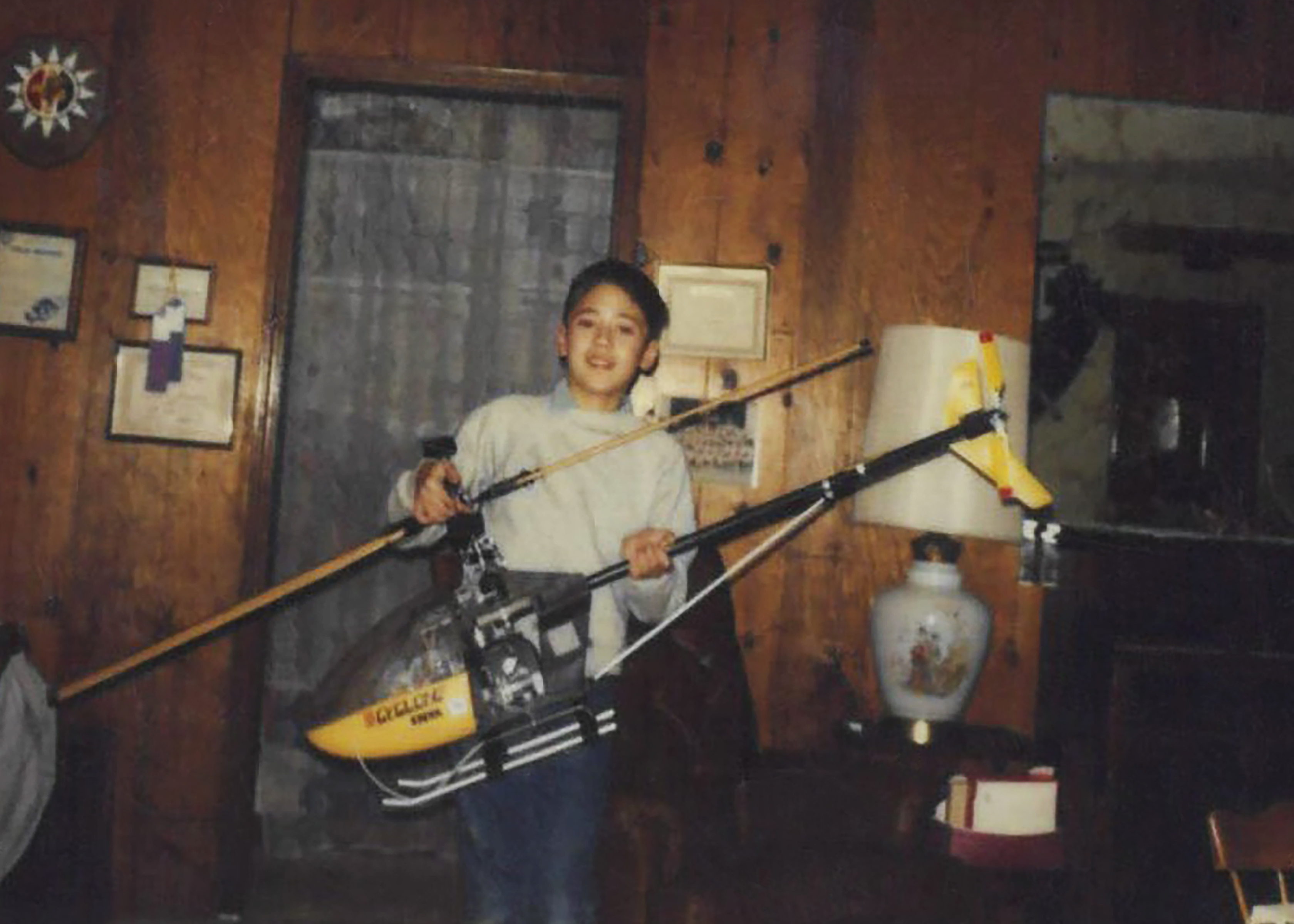
A boy holds a large radio-controlled black-and-yellow helicopter.
Derek Abramson, chief engineer at the Dale Reed Subscale Flight Research Laboratory at NASA’s Armstrong Flight Research Center in Edwards, California, is shown with his Kalt Cyclone radio-controlled helicopter in the mid-1980s. Abramson loved flying this aircraft as a child, and he has been an aviation enthusiast for as long as he can remember.
Derek Abramson

Abramson’s expertise, built through service in the U.S. Navy and the aerospace industry, centers on technical oversight, management, and system design. Hall is known for creative approaches to problem solving and uses practical methods to address technical challenges and maintain flight safety. Link specializes in designing and fabricating research vehicles and draws on extensive hands-on experience to understand what works, and what does not, in flight. 

On weekends, the team often tinkers in their garages or hangars building radio-control aircraft, researching hobby trends, or exploring new technologies. You might see them flying their creations at hobby events or attending trade shows. Their passion for flight brought Abramson, Hall, and Link together years before they one-by-one joined NASA more than a decade ago, though each discovered that spark in a different way.

Early influences

Abramson’s interest began as a child with rubber-band powered stick and tissue aircraft and radio-controlled models. His early aviation pursuits led to his first solo flight while in high school and a pilot’s license. In the Navy, he worked on multiple aircraft, including EA-6B and the F-18, as an avionics technician. As an engineer, he supported the B-1 and CV-22 Osprey aircraft flight tests. As an intern at NASA Armstrong, he used his operational and engineering experience on remotely piloted and autonomous aircraft.

Hall’s interest grew after seeing historic aircraft including the Mach 3 SR-71 fly over his elementary school playground and watching Space Shuttle Challenger land from above his dad’s shoulders. He has built and flown model and remotely piloted aircraft for as long as he can remember. His reputation flying radio-controlled hobby aircraft at fly-ins and trade events led to an offer to fly subscale aircraft at NASA.

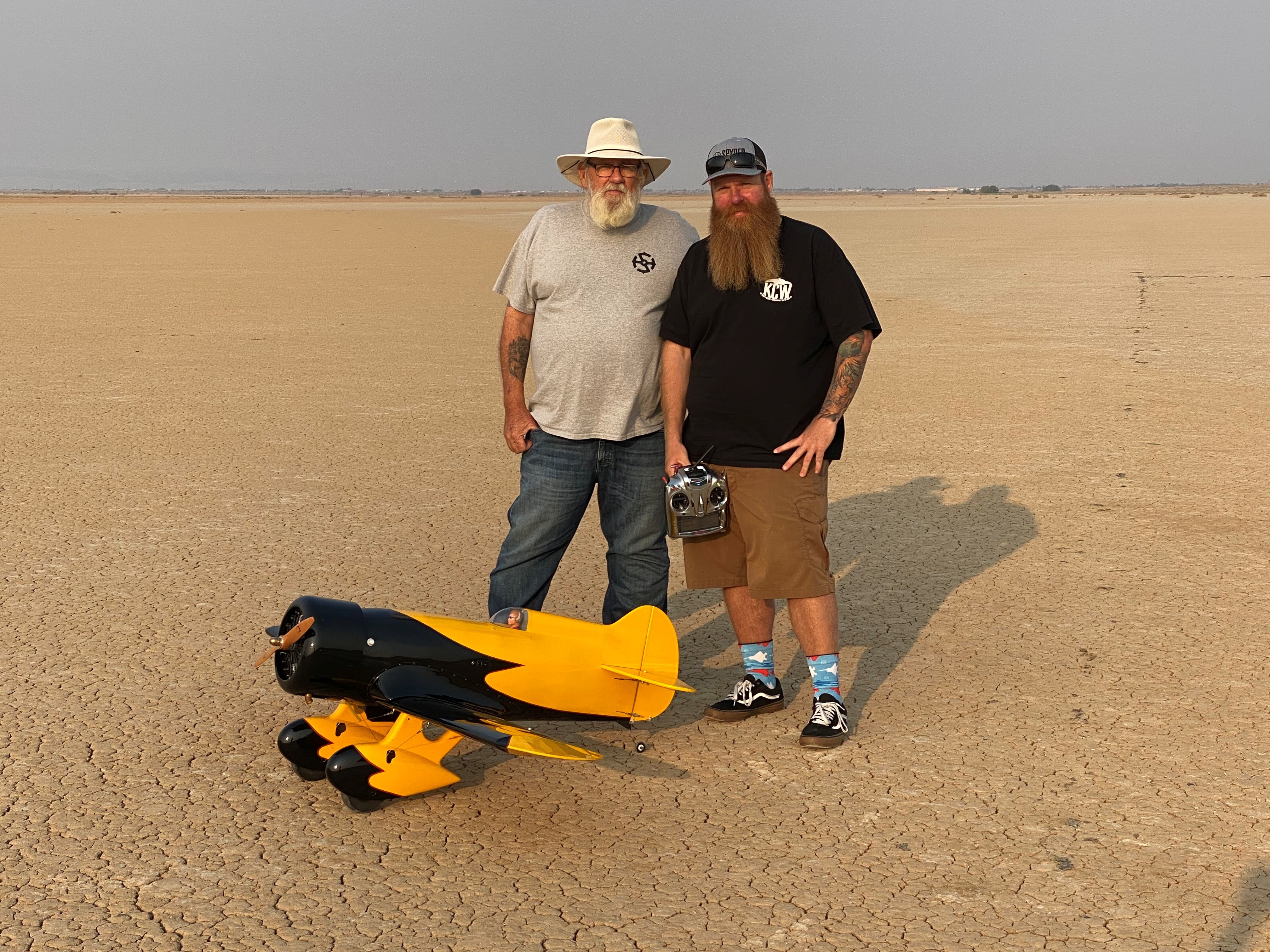
Two men stand by a yellow and black radio-controlled aircraft.
Justin Hall, chief pilot at the Dale Reed Subscale Flight Research Laboratory at NASA’s Armstrong Flight Research Center in Edwards, California, stands in front of a radio-controlled aircraft with his dad, David Hall, in August 2020. David Hall built the Gee Bee aircraft years earlier but was unable to fly it due to his health. He asked his son to fly the aircraft so he could see it in the air, which Justin did the day of this photo. Shortly afterward, David Hall passed away.
Justin Hall
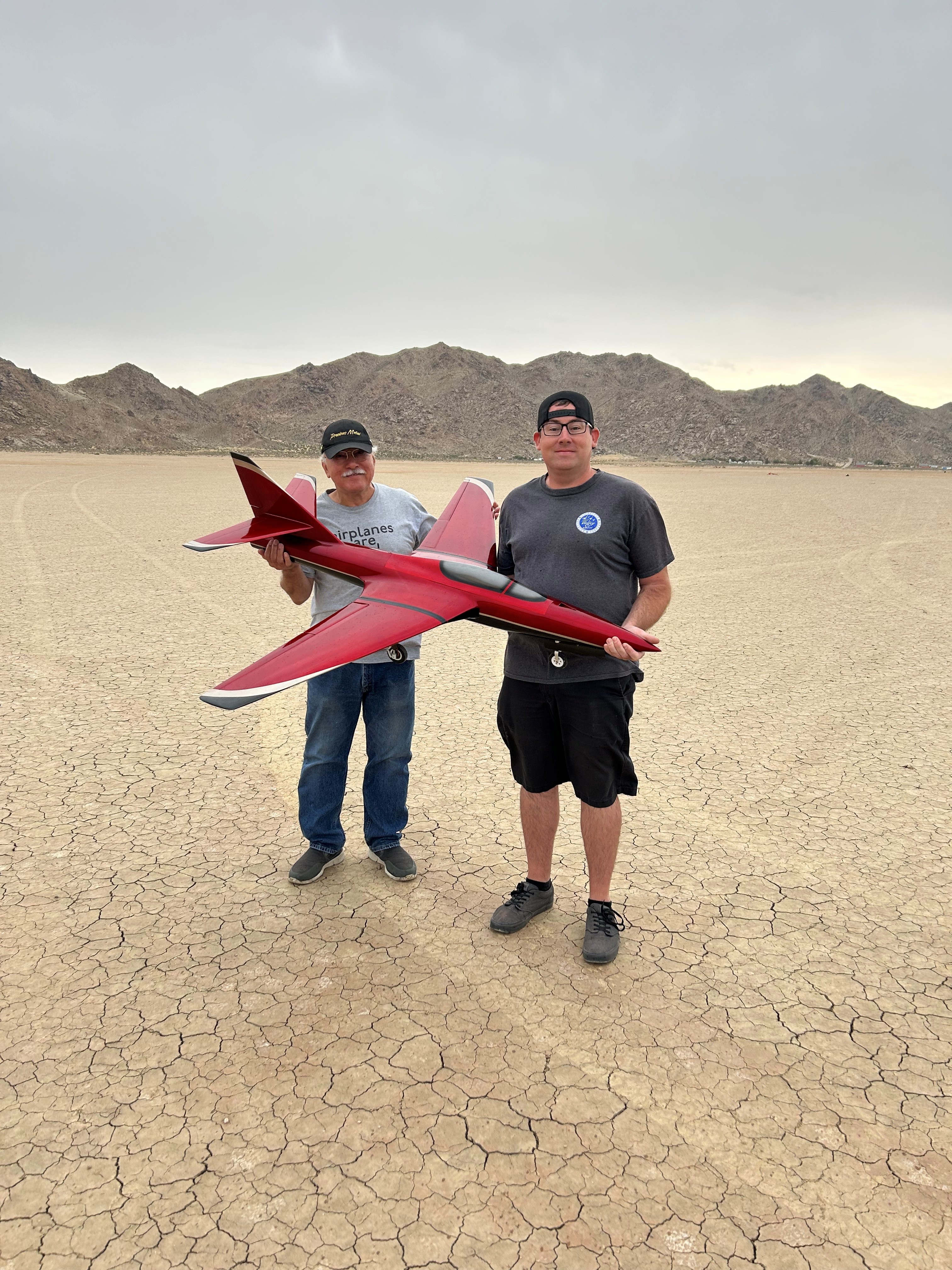
Two men hold a large radio-controlled aircraft. The aircraft is red with white and black stripes.
Justin link, drone pilot at the Dale Reed Subscale Flight Research Laboratory at NASA’s Armstrong Flight Research Center in Edwards, California, and his dad, Don Link, hold a Firebird radio-controlled aircraft on the day of its first flight in September 2023. It was a project they worked on together. Don Link reduced the dimensions of the original larger-scale model aircraft and drew the plans, while Justin Link manufactured composite molds and built the aircraft from scratch.
Justin Link

Link was five years old when he built balsa-wood aircraft with his dad and flew them in a field near their home. As he grew older, his hobby expanded to include radio-controlled cars, boats, helicopters, and aircraft. Aviation runs deep in Link’s family. His great grandfather served in the U.S. Army Air Corps, his grandfathers served in the U.S. Air Force, and his dad was an Air Force avionics technician. Link raced sailplanes, competed with scaled warbird aircraft, and was encouraged by family and friends to pursue an aviation profession. He has worked with large drones for more than 11 years, focusing on research and development, composite materials, and specialized fabrication methods.

Together, the team applies its experience and knowledge in rapid design, fabrication, integration and flight testing to bring new ideas to flight. Their work continues to support NASA’s missions across aeronautics, science, and exploration.

  •  
❌