Long-time Slashdot reader schwit1 shared this report from Futurism:
China has unveiled an extremely powerful "hypergravity machine" that can generate forces almost two thousand times stronger than Earth's regular gravity.
The futuristic-looking machine, called CHIEF1900, was constructed at China's Centrifugal Hypergravity and Interdisciplinary Experiment Facility (CHIEF) at Zheijang University in Eastern China, and allows researchers to study how extreme forces affect various materials, plants, cells, or other structures, as the South China Morning Post reports... [Once up and running, it will allow researchers to recreate "catastrophic events such as dam failures and earthquakes inside a laboratory, according to the university."] For instance, it can analyze the structural stability of an almost 1,000-feet-tall dam by spinning a ten-foot model at 100 Gs, meaning 100 times the Earth's regular gravity. It could also be used to study the resonance frequencies of high-speed rail tracks, or how pollutants seep into soil over thousands of years.
The machine officially dethroned its predecessor, CHIEF1300, which became the world's most powerful centrifuge a mere four months ago... It can generate 1,900 g-tonnes of force, or 1,900 times the Earth's gravity. To put that into perspective, a washing machine only reaches about two g-tonnes.
An anonymous reader quotes a report from the Guardian: Even low levels of common agricultural pesticides can stunt the long-term lifespan of fish, according to research led by Jason Rohr, a biologist at the University of Notre Dame in Indiana. Signs of aging accelerated when fish were exposed to the chemicals, according to the study, published in Science, which could have implications for other organisms. [...] The research found that fish from pesticide-affected lakes showed shortened telomeres, the caps at the end of chromosomes that are known as the biological clock for aging. When they shorten, it is a sign of cellular aging and a decline in the body's regenerative capacity. The lake populations consisted of younger fish, indicating that the pesticides contributed to shortened lives. Laboratory experiments confirmed the findings and showed chronic low-dose exposure reduced fish survival and degraded telomeres. These effects were not seen with acute high-dose exposure.
Chemical analysis showed chlorpyrifos, which is banned in the UK and the EU but used in the US and China, was the only compound found in the fish tissues that was consistently associated with signs of aging. These included shortened telomeres and lipofuscin deposition -- a buildup of insoluble proteins often described as cellular "junk". The worrying aging effects occurred at concentrations below current US freshwater safety standards, Rohr said, suggesting the effects of chemicals and pesticides could be occurring at low levels over the long term. While short-term exposure to high doses did not appear to cause these aging issues -- though it did cause high toxicity and death in fish -- the researchers concluded that it was long-term exposure to low doses that drove the changes. The scientists added that reduced lifespan was particularly problematic because older fish often contribute disproportionately to reproduction, genetic diversity and population stability.
A new study from Cornell and University of Toronto researchers has found that polyester microfibers shed from synthetic clothing during laundry can interfere with cherry tomato plant development [non-paywalled source] when these particles accumulate in agricultural soil. Plants grown in contaminated soil were 11% less likely to emerge, grew smaller and took several days longer to flower and ripen.
Household laundry is a leading source of this contamination. Treated sewage sludge retains roughly 90% of microfibers from washers, and farmers in some countries apply this material to up to 75% of cropland as fertilizer. Some scientists have questioned the methodology.
Willie Peijnenburg, a professor of environmental toxicology at Leiden University, told WaPo the microfiber concentration used was much higher than field observations. His research suggests plants primarily absorb microplastics through airborne particles entering leaf stomata rather than through soil.
Preparations for Next Moonwalk Simulations Underway (and Underwater)
In 2025, NASA’s Armstrong Flight Research Center in Edwards, California, advanced work across aeronautics, Earth science, exploration technologies, and emerging aviation systems, reinforcing its role as one of the agency’s primary test sites for aeronautics research. From early concept evaluations to full flight test campaigns, teams enhanced measurement tools, refined safety systems, and generated data that supported missions across NASA. Operating from the Mojave Desert, NASA Armstrong continued applying engineering design with real-world performance, carrying forward research that informs how aircraft operate today and how new systems may function in the future.
The year’s progress also reflects the people behind the work – engineers, technicians, pilots, operators, and mission support staff who navigate complex tests and ensure each mission advances safely and deliberately. Their efforts strengthened partnerships with industry, small businesses, and universities while expanding opportunities for students and early career professionals. Together they sustained NASA Armstrong’s long-standing identity as a center where innovation is proven in flight and where research helps chart the course for future aviation and exploration.
“We executed our mission work safely, including flight of the first piloted NASA X-plane in decades, while under challenging conditions,” said Brad Flick, center director of NASA Armstrong. “It tells me our people embrace the work we do and are willing to maintain high levels of professionalism while enduring personal stress and uncertainty. It’s a testimony to the dedication of our NASA and contractor workforce.”
Teams continued advancing key projects, supporting partners, and generating data that contributes to NASA’s broader mission.
Quiet supersonic flight and the Quesst mission
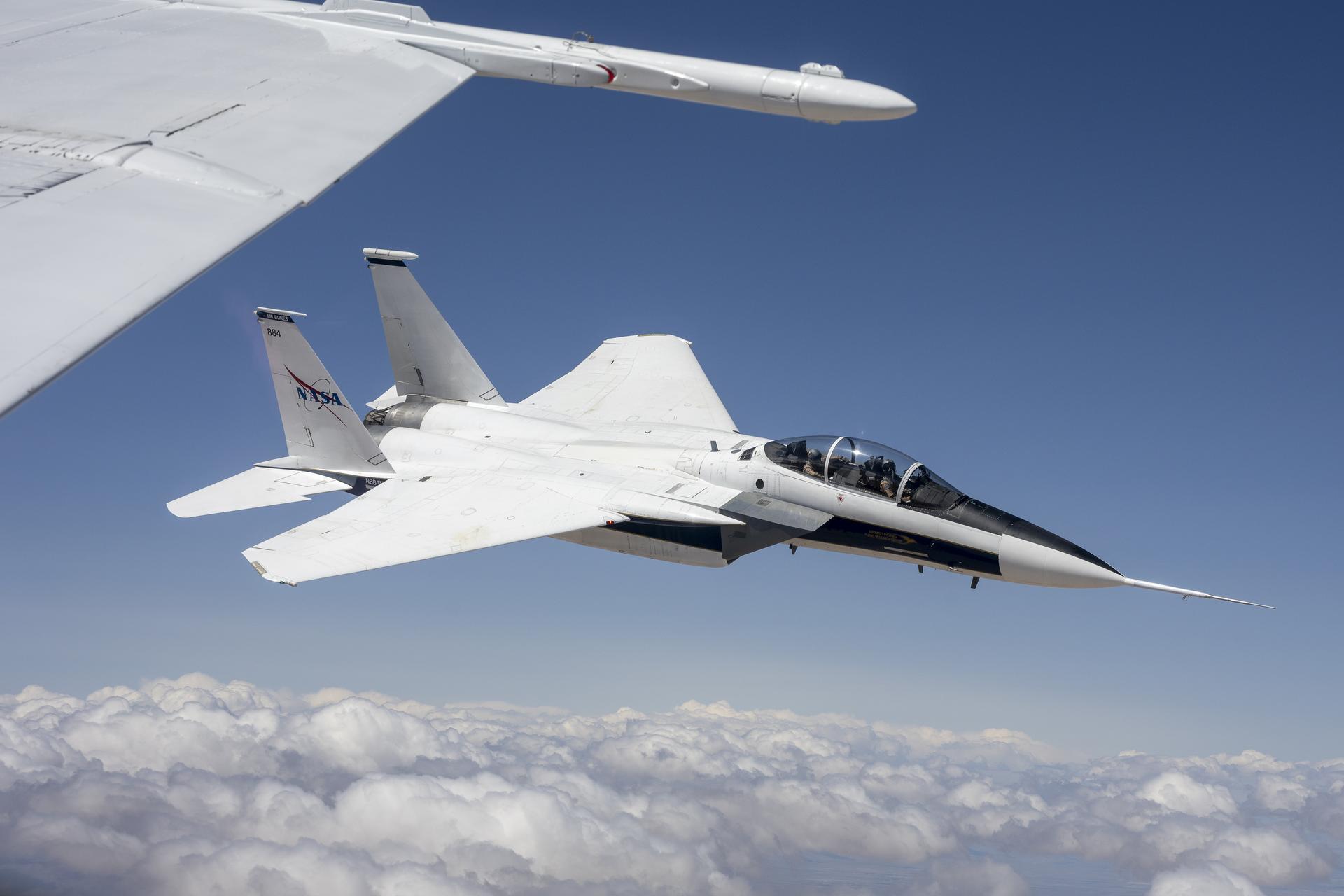
NASA’s F-15D research aircraft conducts a calibration flight of a shock-sensing probe near NASA’s Armstrong Flight Research Center in Edwards, California. The shock-sensing probe is designed to measure the signature and strength of shock waves in flight. The probe was validated during dual F-15 flights and will be flown behind NASA’s X-59 to measure small pressure changes caused by shock waves in support of the agency’s Quesst mission.
NASA/Jim Ross
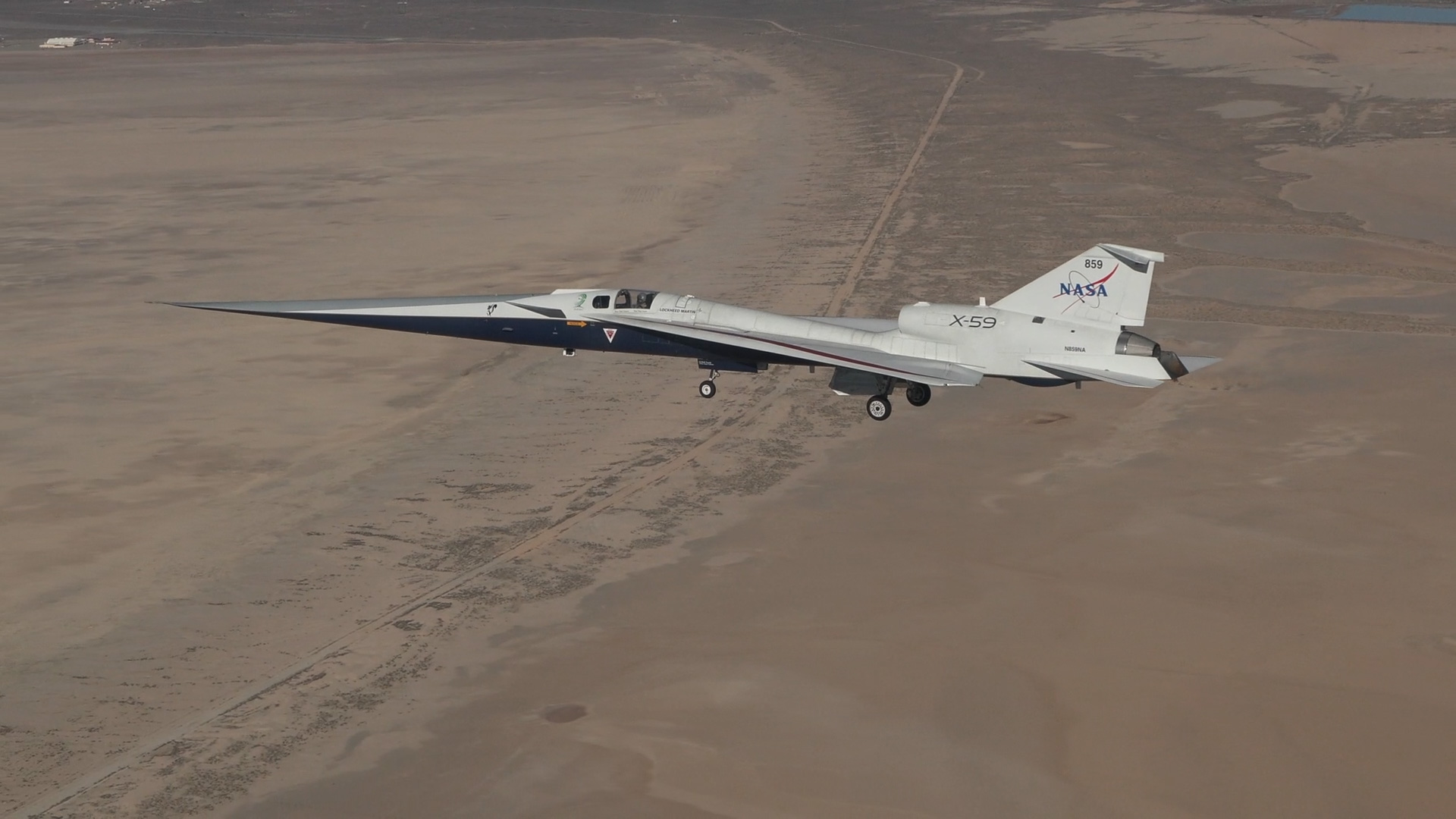
NASA Armstrong continued its quiet supersonic research, completing a series of activities in support of NASA’s Quesst mission. On the X-59 quiet supersonic research aircraft, the team performed electromagnetic interference tests and ran engine checks to prepare the aircraft for taxi tests. The Schlieren, Airborne Measurements, and Range Operations for Quesst (SCHAMROQ) team completed aircraft integration and shock-sensing probe calibration flights, refining the tools needed to characterize shock waves from the X-59. These efforts supported the aircraft’s progression toward its first flight on Oct. 28, marking a historic milestone and the beginning of its transition to NASA Armstrong for continued testing.
The center’s Commercial Supersonic Technology (CST) team also conducted airborne validation flights using NASA F-15s, confirming measurement systems essential for Quesst’s next research phase. Together, this work forms the technical backbone for upcoming community response studies, where NASA will evaluate whether quieter supersonic thumps could support future commercial applications.
The X-59 team completed electromagnetic interference testing on the aircraft, verifying system performance and confirming that all its systems could reliably operate together.
NASA’s X-59 engine testing concluded with a maximum afterburner test that demonstrated the engine’s ability to generate the thrust required for supersonic flight.
Engineers conducted engine speed-hold evaluations to assess how the X-59’s engine responds under sustained throttle conditions, generating data used to refine control settings for upcoming flight profiles.
NASA Armstrong’s CST team validated the tools that will gather airborne data in support the second phase of the agency’s Quesst mission.
NASA’s X-59 team advanced preparations on the aircraft through taxi tests, ensuring aircraft handling systems performed correctly ahead of its first flight.
NASA Armstrong’s photo and video team documented X-59 taxi tests as the aircraft moved under its own power for the first time.
The X-59 team evaluated braking, steering, and integrated systems performance after the completion of the aircraft’s low-speed taxi tests marking one of the final steps before flight.
NASA Armstrong teams advanced the X-59 toward first flight by prioritizing safety at every step, completing checks, evaluations, and system verifications to ensure the aircraft was ready when the team was confident it could move forward.
NASA and the Lockheed Martin contractor team completed the X-59’s historic first flight, delivering the aircraft to NASA Armstrong for the start of its next phase of research.
Ultra-efficient and high-speed aircraft research
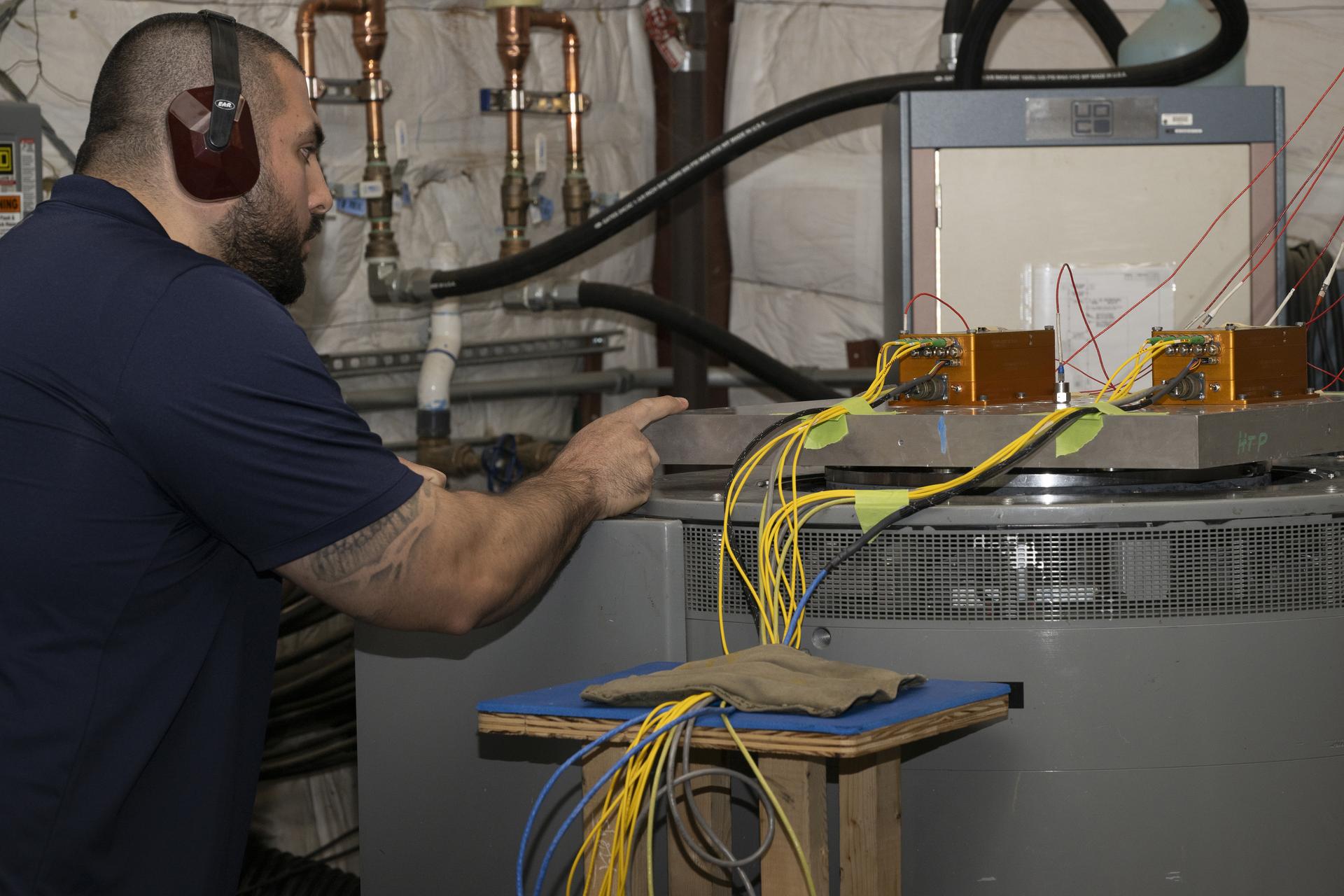
Jonathan Lopez prepares the hypersonic Fiber Optic Sensing System for vibration tests in the Environmental Laboratory at NASA’s Armstrong Flight Research Center in Edwards, California. Testing on a machine called a shaker proved that the system could withstand the severe vibration it will endure in hypersonic flight, or travel at five times the speed of sound.
NASA/Jim Ross
Across aeronautics programs, Armstrong supported work that strengthens NASA’s ability to study sustainable, efficient, and high-performance aircraft. Teams conducted aerodynamic measurements and improved test-article access for instrumentation, enabling more precise evaluations of advanced aircraft concepts. Engineers continued developing tools and techniques to study aircraft performance under high-speed and high-temperature conditions, supporting research in hypersonic flight.
The Sustainable Flight Demonstrator research team measured airflow over key wing surfaces in a series of wind tunnel tests, generating data used to refine future sustainable aircraft designs.
Technicians at NASA Armstrong installed a custom structural floor inside the X-66 demonstrator, improving access for instrumentation work and enabling more efficient modification and evaluation.
Transforming air mobility and new aviation systems
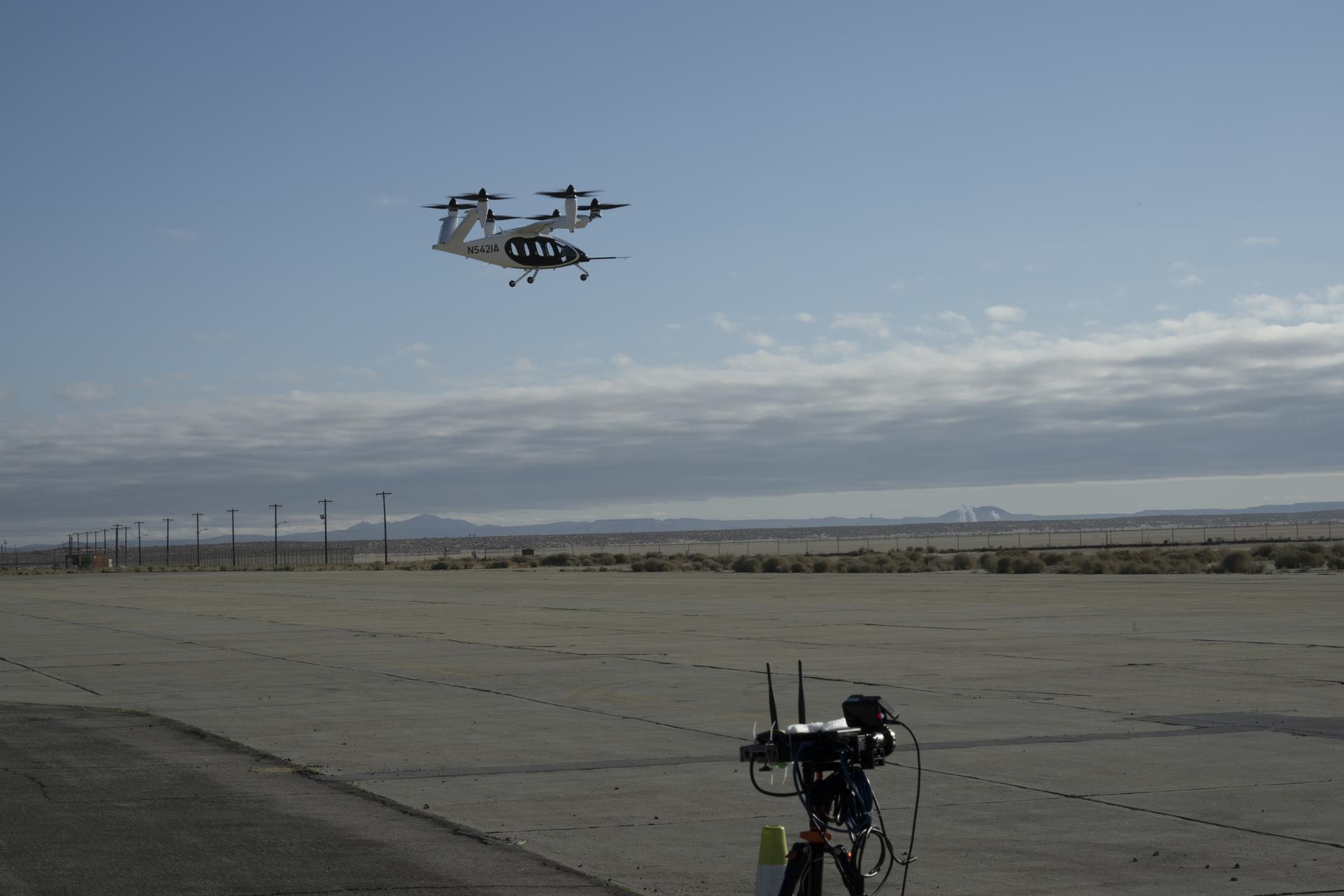
One of multiple NASA distributed sensing ground nodes is set up in the foreground while an experimental air taxi aircraft owned by Joby Aviation hovers in the background near NASA’s Armstrong Flight Research Center in Edwards, California, on March 12, 2025. NASA is collecting information during this study to help advance future air taxi flights, especially those occurring in cities, to track aircraft moving through traffic corridors and around landing zones.
NASA/Genaro Vavuris
NASA Armstrong supported multiple aspects of the nation’s growing air mobility ecosystem. Researchers conducted tests and evaluations to better understand aircraft performance, airflow, and passenger experience. Additional work included assessing drone-based inspection techniques, developing advanced communication networks, performing drop tests, and refining methods to evaluate emerging mobility aircraft.
These studies support NASA’s broader goal of integrating new electric, autonomous, and hybrid aircraft safely into the national airspace.
A small business partnership demonstrated drone-based inspection techniques that could reduce maintenance time and improve safety for commercial aircraft operations.
NASA Armstrong researchers tested air traffic surveillance technology against the demands of air taxis flying at low altitudes through densely populated cities, using the agency’s Pilatus PC-12 to support safer air traffic operations.
Researchers at NASA Armstrong collected airflow data from Joby using a ground array of sensors to examine how its circular wind patterns might affect electric air taxi performance in future urban operations.
NASA Armstrong’s Ride Quality Laboratory conducted air taxi passenger comfort studies in support of the agency’s Advanced Air Mobility mission to better understand how motion, vibration, and other factors affect ride comfort, informing the industry’s development of electric air taxis and drones.
Earth observation and environmental research
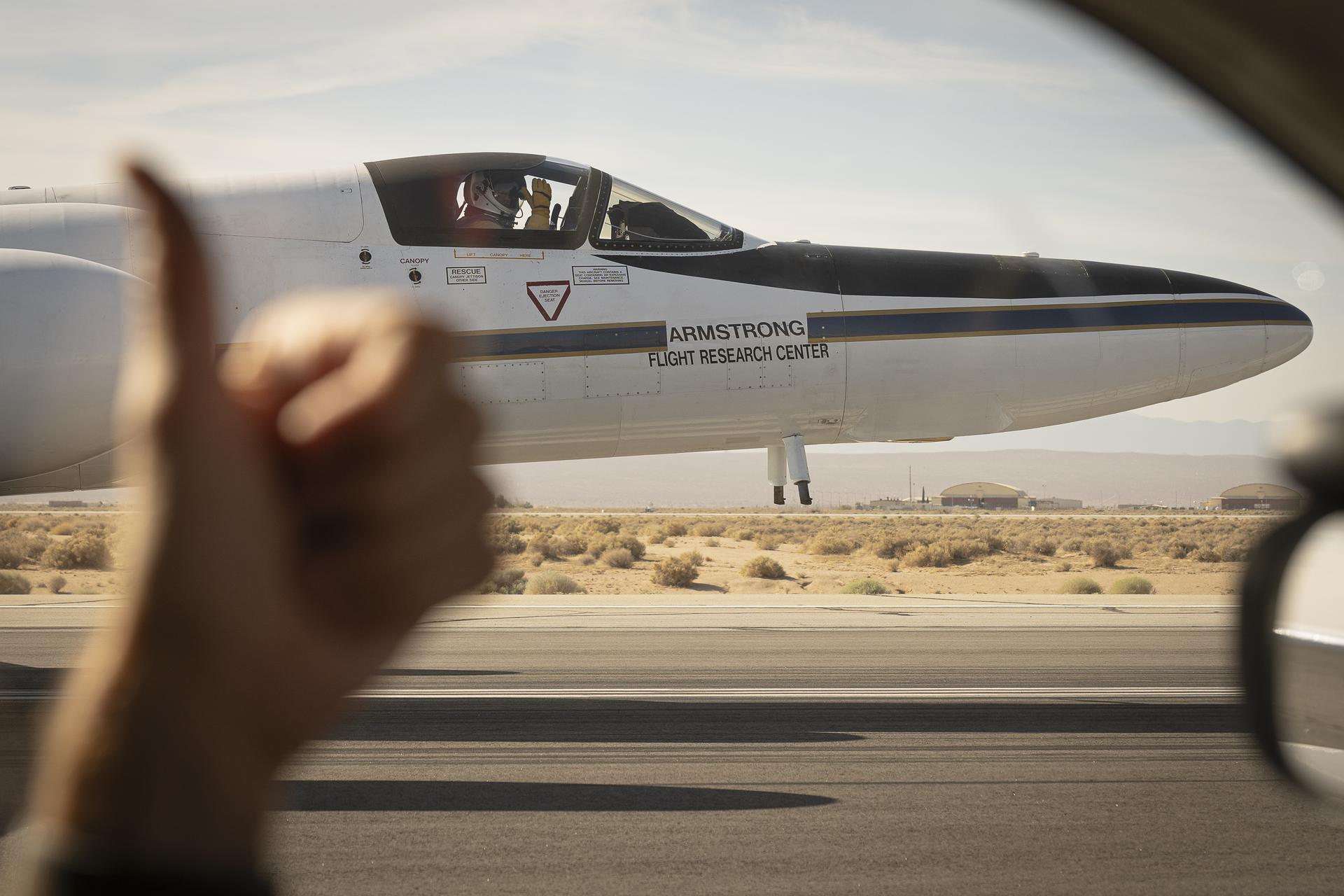
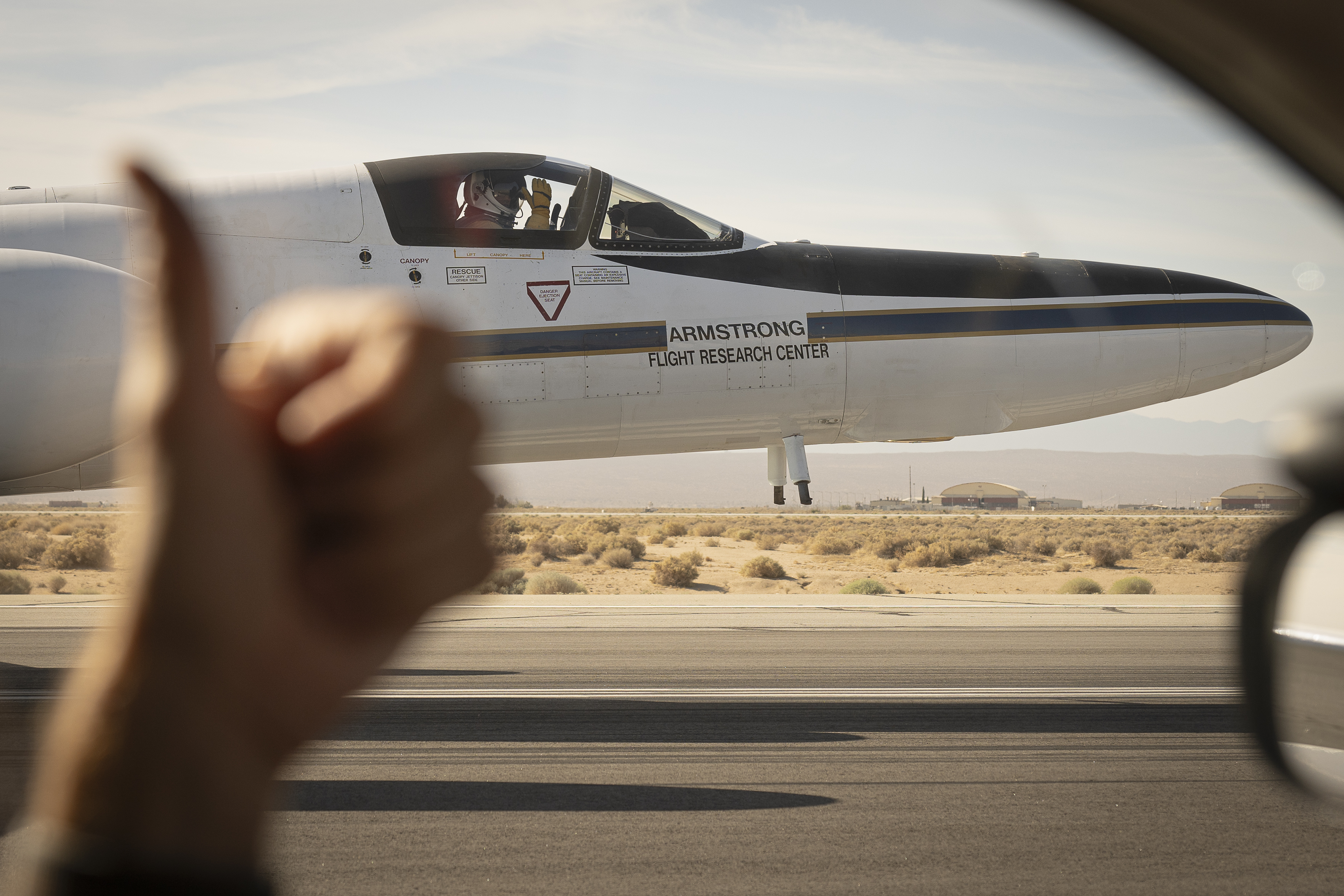
From the window of the ER-2 chase car, a crew member gives a thumbs up to the pilot as NASA Armstrong Flight Research Center’s ER-2 aircraft taxis at Edwards, California, on Thursday, Aug. 21, 2025. The gesture signals a final check before takeoff for the high-altitude mission supporting the Geological Earth Mapping Experiment (GEMx).
NASA/Christopher LC Clark
Earth science campaigns at NASA Armstrong contributed to the agency’s ability to monitor environmental changes and improve satellite data accuracy. Researchers tested precision navigation systems that keep high-speed aircraft on path, supporting more accurate atmospheric and climate surveys. Airborne measurements and drone flights documented wildfire behavior, smoke transport, and post-fire impacts while gathering temperature, humidity, and airflow data during controlled burns. These efforts also supported early-stage technology demonstrations, evaluating new wildfire sensing tools under real flight conditions to advance fire response research. High-altitude aircraft contributed to missions that improved satellite calibration, refined atmospheric measurements, and supported snowpack and melt studies to enhance regional water-resource forecasting.
Researchers at NASA Armstrong tested a new precision‑navigation system that can keep high‑speed research aircraft on exact flight paths, enabling more accurate Earth science data collection during airborne environmental and climate‑survey missions.
NASA’s B200 King Air flew over wildfire‑affected regions equipped with the Compact Fire Infrared Radiance Spectral Tracker (c‑FIRST), collecting thermal‑infrared data to study wildfire behavior, smoke spread, and post‑fire ecological impacts in near real time.
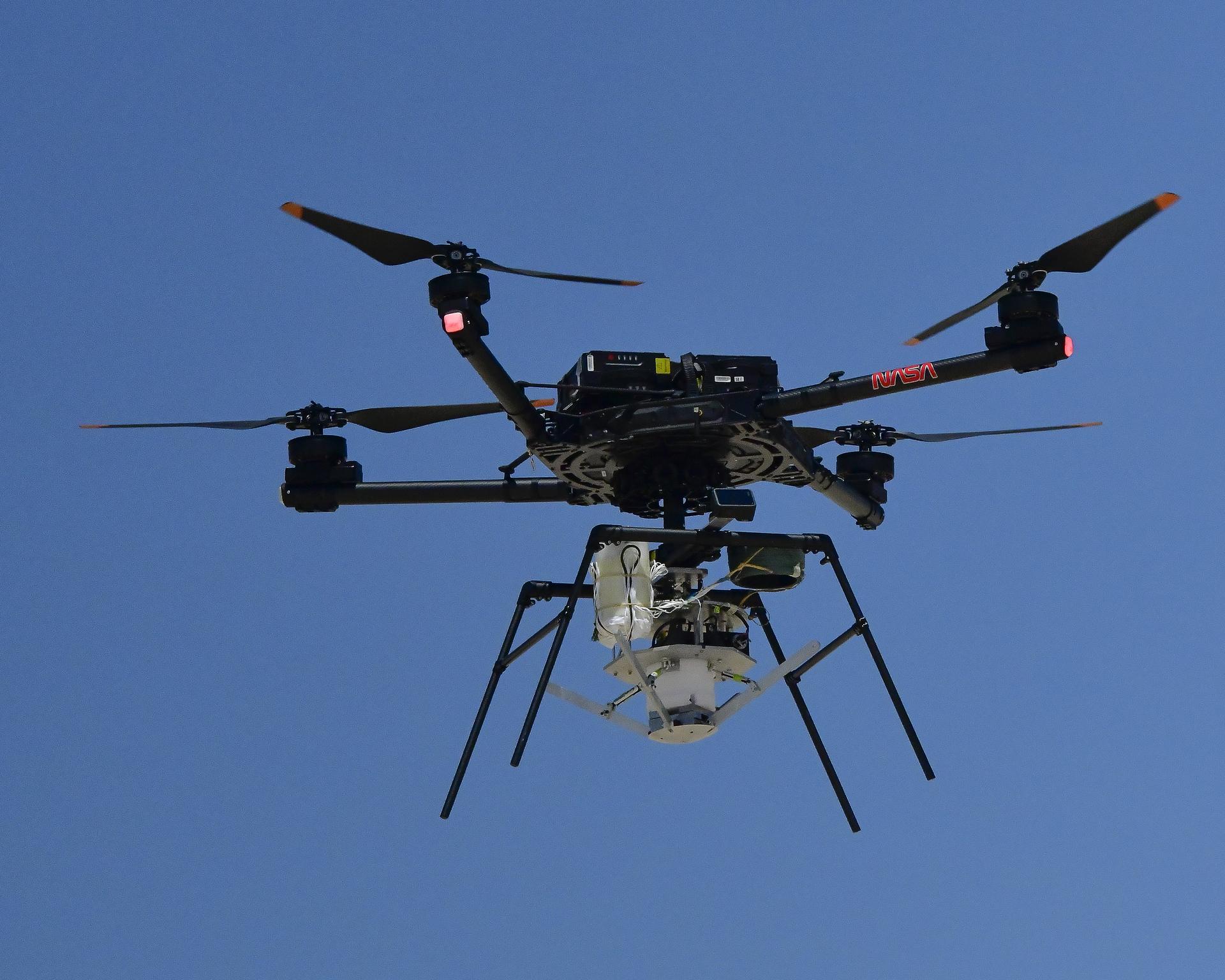
NASA Armstrong’s Alta X drone carried a 3D wind sensor and a radiosonde to measure temperature, pressure, humidity, and airflow during a prescribed burn in Geneva State Forest, gathering data to help improve wildland fire behavior models and support firefighting agencies.
NASA’s ER‑2 aircraft carried the Airborne Lunar Spectral Irradiance (air-LUSI) instrument on night flights, measuring moonlight reflectance to generate calibration data – improving the accuracy of Earth‑observing satellite measurements.
The center’s ER-2 also flew above cloud layers with specialized instrumentation to collect atmospheric and cloud measurements. These data help validate and refine Earth observing satellite retrievals, improving climate, weather, and aerosol observations.
Airborne campaigns at NASA Armstrong measured snowpack and melt patterns in the western U.S., providing data to improve water-resource forecasting for local communities.
Exploration technology and Artemis support
An Alta X drone is positioned at altitude for an air launch of the Enhancing Parachutes by Instrumenting the Canopy test experiment on June 4, 2025, at NASA’s Armstong Flight Research Center in Edwards, California. NASA researchers are developing technology to make supersonic parachutes safer and more reliable for delivering science instruments and payloads to Mars.
NASA/Christopher LC Clark
NASA Armstrong supported exploration technologies that will contribute to agency’s return to the Moon and future missions deeper into the solar system, including sending the first astronauts – American astronauts – to Mars. Teams advanced sensor systems and conducted high-altitude drop tests to capture critical performance data, supporting the need for precise entry, descent, and landing capabilities on future planetary missions.
Contributions from NASA Armstrong also strengthen the systems and technologies that help make Artemis – the agency’s top priority – safer, more reliable, and more scientifically productive, supporting a sustained human presence on the Moon and preparing for future human exploration of Mars.
The EPIC team at NASA Armstrong conducted research flights to advance sensor technology for supersonic parachute deployments, evaluating performance during high-speed, high-altitude drops relevant to future planetary missions.
Imagery from the EPIC test flights at NASA Armstrong highlights the parachute system’s high-altitude deployment sequence and demonstrated its potential for future Mars delivery concepts.
People, workforce, and community engagement
The center expanded outreach, education, and workforce development efforts throughout the year. Students visited NASA Armstrong for hands-on exposure to careers in aeronautics, while staff and volunteers supported a regional robotics competition that encouraged exploration of the field. Educators brought aeronautics concepts directly into classrooms across the region, and interns from around the country gained experience supporting real flight research projects.
NASA Armstrong also highlighted unique career pathways and recognized employees whose work showcases the human side of NASA missions. A youth aviation program launched with a regional museum provided additional opportunities for young learners to explore flight science, further strengthening the center’s community impact:
Students from Palmdale High School Engineering Club visited NASA Armstrong, where staff engaged with them to explore facilities, discuss aerospace work, and promote STEM careers as part of the center’s community outreach.
NASA Armstrong staff and volunteers mentored high school teams at the 2025 Aerospace Valley FIRST Robotics Competition, helping students build and test robots and providing hands-on experience with engineering to foster interest in STEM careers.
In April, NASA Armstrong expanded outreach in 2025 by bringing aeronautics concepts to students through classroom workshops, presentations, and hands-on activities, giving young learners direct exposure to NASA research and inspiring possible future careers in science and engineering.
Students from across the country participated in internships at NASA Armstrong, gaining hands-on experience in flight research and operations while contributing to real-world aerospace projects.
In May, a NASA Armstrong videographer earned national recognition for work that highlights the people behind the center’s research missions, showing how scientists, engineers, and flight crews collaborate to advance aeronautics and space exploration.
Daniel Eng, a systems engineer with NASA’s Air Mobility Pathfinders project, shared his career path from the garment industry to aerospace, illustrating how diverse experiences contribute to the center’s technical workforce and support its advanced flight research and engineering projects.
In June, NASA Armstrong recognized one of its interns for hands-on work with the center’s aircraft. With more than a decade in the auto industry, they demonstrated how early career engineers can gain real-world experience and develop skills for careers in aerospace and flight research.
NASA Armstrong partnered with a regional museum to create a youth aviation program that introduces students to flight science and operations, providing hands-on learning opportunities and inspiring interest in aerospace and STEM careers.
Center infrastructure and research capabilities
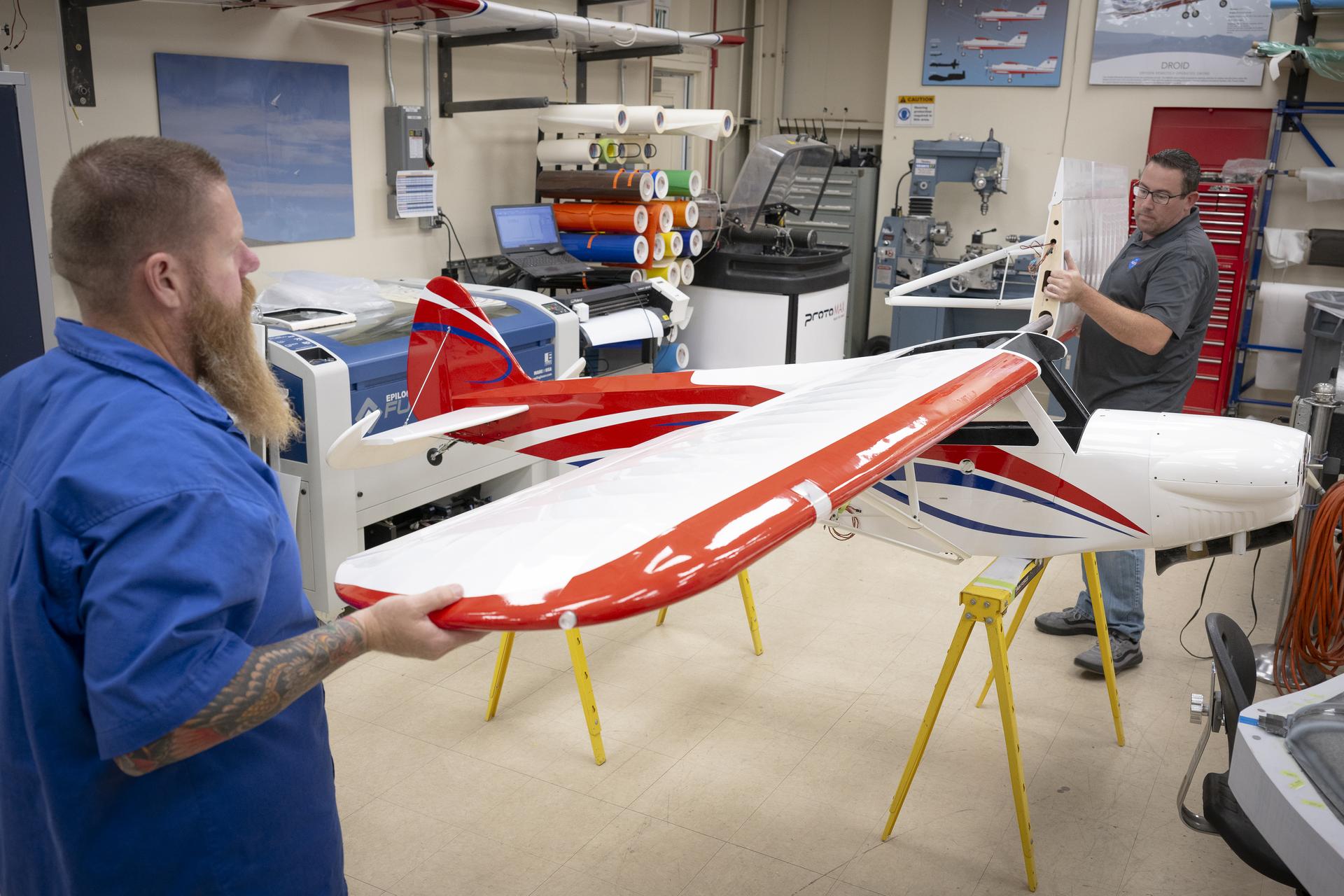
Justin Hall, left, and Justin Link attach the wings onto a subscale aircraft on Wednesday, Sept. 3, 2025, at NASA’s Armstong Flight Research Center in Edwards, California. Hall is chief pilot at the center’s Dale Reed Subscale Flight Research Laboratory and Link is a pilot for small uncrewed aircraft systems.
NASA/Christopher LC Clark
Facility improvements and new platforms strengthened NASA Armstrong’s research capabilities. A rooftop operation removed a historic telemetry pedestal to make way for updated infrastructure, while preserving an important artifact of the center’s flight test heritage. Engineers also completed a new subscale research aircraft, providing a flexible, cost-effective platform for evaluating aerodynamics, instrumentation, and flight control concepts in preparation for full-scale testing:
The center improved workspace access and supported a re-roofing project during a helicopter crew operation that removed a 2,500-pound telemetry pedestal from a building rooftop, preserving a piece of the center’s flight history heritage.
Engineers at NASA Armstrong built a new subscale experimental aircraft to replace the center’s aging MicroCub. The 14-foot wingspan, 60-pound aircraft provides a flexible, cost-effective platform for testing aerodynamics, instrumentation, and flight control concepts while reducing risk before full-scale or crewed flight tests.
Looking ahead
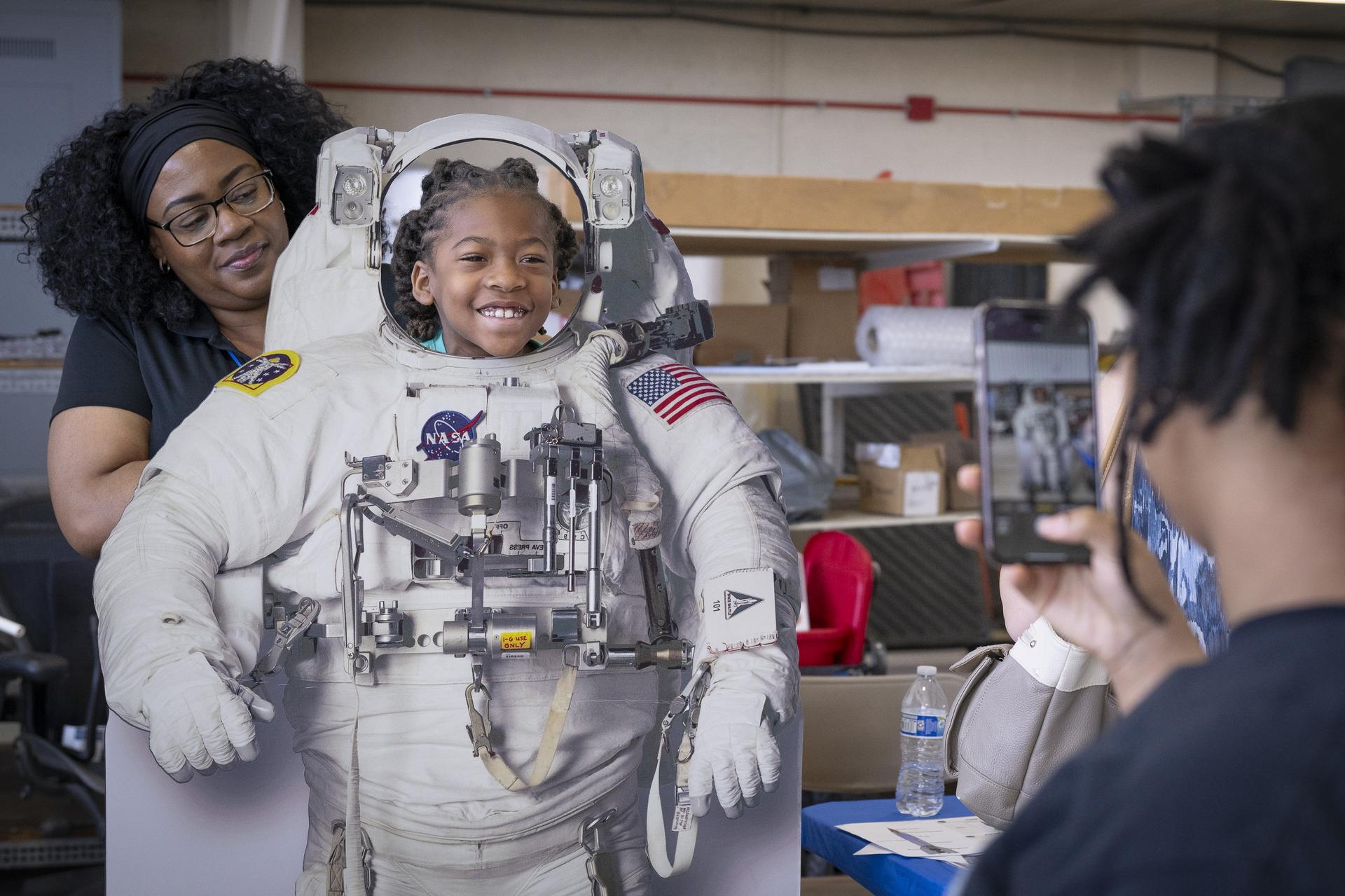
On June 17, 2025, NASA’s Armstrong Flight Research Center in Edwards, California, hosted Bring Kids to Work Day, offering hands-on activities that introduced children and their families to the exciting world of aeronautics and flight research.
NASA/Christopher LC Clark
NASA Armstrong will continue advancing flight research across aeronautics and Earth science, building on this year’s achievements. Upcoming efforts include additional X-59 flights, expanded quiet supersonic studies, new air mobility evaluations, high-altitude science campaigns, and maturing technologies that support hypersonic research and the Artemis program for future planetary missions.
“Next year will be a year of continuity, but also change,” Flick said. “The agency’s new Administrator, Jared Isaacman, will bring a renewed mission-first focus to the agency, and NASA Armstrong will push the boundaries of what’s possible. But the most important thing we can do is safely and successfully execute our portfolio of work within budget and schedule.”
For more than seven decades, NASA Armstrong has strengthened the nation’s understanding of flight. This year’s work builds on that legacy, helping shape the future of aviation and exploration through research proven in the air.
To explore more about NASA Armstrong’s missions, research, and discoveries, visit:
NASA videographer Jacob Shaw recently earned first place for outstanding documentation for his film, Reflections, which chronicles the 2024 Airborne Science ...
A pilot signals to a crew member before takeoff from NASA’s Armstrong Flight Research Center in Edwards, California, on Aug. 21, 2025. Accompanying him in the high-flying ER-2 aircraft is one of the most advanced imaging spectrometers in the solar system.
NASA/Christopher LC Clark
Called AVIRIS-5, it’s the latest in a long line of sensors pioneered by NASA JPL to survey Earth, the Moon, and other worlds.
Cradled in the nose of a high-altitude research airplane, a new NASA sensor has taken to the skies to help geoscientists map rocks hosting lithium and other critical minerals on Earth’s surface some 60,000 feet below. In collaboration with the U.S. Geological Survey (USGS), the flights are part of the largest airborne campaign of its kind in the country’s history.
But that’s just one of many tasks that are on the horizon for AVIRIS-5, short for Airborne Visible/Infrared Imaging Spectrometer-5, which has a lot in common with sensors used to explore other planets.
NASA’s AVIRIS flies aboard a research plane in this animation, detecting minerals on the ground such as hectorite — a lithium-bearing clay — by the unique patterns of light that they reflect. The different wavelengths, measured in nanometers, look like colorful squiggles in the box on the right. Credit: NASA’s Conceptual Image Lab
About the size of a microwave oven, AVIRIS-5 detects the spectral “fingerprints” of minerals and other compounds in reflected sunlight. Like its cousins flying in space, the sensor takes advantage of the fact that all kinds of molecules, from rare earth elements to flower pigments, have unique chemical structures that absorb and reflect different wavelengths of light.
The technology was pioneered at NASA’s Jet Propulsion Laboratory in Southern California in the late 1970s. Over the decades, imaging spectrometers have visited every major rocky body in the solar system from Mercury to Pluto. They’ve traced Martian crust in full spectral detail, revealed lakes on Titan, and tracked mineral-rich dust across the Sahara and other deserts. One is en route to Europa, an ocean moon of Jupiter, to search for the chemical ingredients needed to support life.
Image cubes illustrate the volume of data returned by JPL imaging spectrometers. The front panel shows roads and fields around Tulare, California, as seen by AVIRIS-5 during a checkout flight earlier this year. The side panels depict the spectral fingerprint captured for every point in the image.
NASA/JPL-Caltech
Another imaging spectrometer, NASA’s Moon Mineralogy Mapper, was the first to discover water on the lunar surface in 2009. “That dataset continues to drive our investigations as we look for in situ resources on the Moon” as part of NASA’s Artemis campaign, said Robert Green, a senior research scientist at NASA JPL who’s contributed to multiple spectroscopy missions across the solar system.
Prisms, black silicon
While imaging spectrometers vary depending on their mission, they have certain hardware in common — including mirrors, detector arrays, and electron-beam gratings — designed to capture light shimmering off a surface and then separate it into its constituent colors, like a prism.
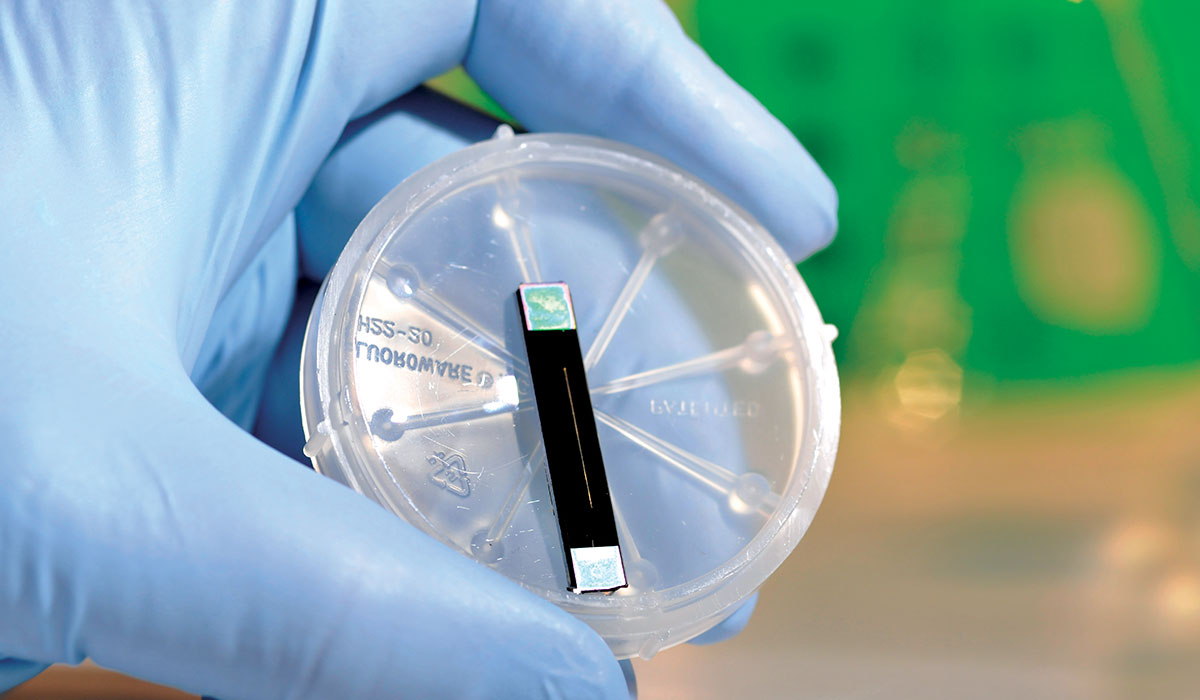
Light-trapping black silicon is one of the darkest materials ever fabricated. The technology is standard for JPL’s ultraprecise imaging spectrometers.
NASA/JPL-Caltech
Many of the best-in-class imaging spectrometers flying today were made possible by components invented at NASA JPL’s Microdevices Laboratory. Instrument-makers there combine breakthroughs in physics, chemistry, and material science with the classical properties of light discovered by physicist Isaac Newton in the 17th century. Newton’s prism experiments revealed that visible light is composed of a rainbow of colors.
Today, NASA JPL engineers work with advanced materials such as black silicon — one of the darkest substances ever manufactured — to push performance. Under a powerful microscope, black silicon looks like a forest of spiky needles. Etched by lasers or chemicals, the nanoscale structures prevent stray light from interfering with the sample by trapping it in their spikes.
Treasure hunting
The optical techniques used at the Microdevices Laboratory have advanced continuously since the first AVIRIS instrument took flight in 1986. Four generations of these sensors have now hit the skies, analyzing erupting volcanoes, diseased crops, ground zero debris in New York City, and wildfires in Alabama, among many other deployments. The latest model, AVIRIS-5, features spatial resolution that’s twice as fine as that of its predecessor and can resolve areas ranging from less than a foot (30 centimeters) to about 30 feet (10 meters).
So far this year, it has logged more than 200 hours of high-altitude flights over Nevada, California, and other Western states as part of a project called GEMx (Geological Earth Mapping Experiment). The flights are conducted using NASA’s ER-2 aircraft, operated out of the agency’s Armstrong Flight Research Center in Edwards, California. The effort is the airborne component of a larger USGS initiative, called Earth Mapping Resources Initiative (Earth MRI), to modernize mapping of the nation’s surface and subsurface.
The NASA and USGS team has, since 2023, gathered data over more than 366,000 square miles (950,000 square kilometers) of the American West, where dry, treeless expanses are well suited to mineral spectroscopy.
An exciting early finding is a lithium-bearing clay called hectorite, identified in the tailings of an abandoned mine in California, among other locations. Lithium is one of about 50 minerals at risk of supply chain disruption that USGS has deemed critical to national security and the economy.
Helping communities capture new value from old and abandoned prospects is one of the long-term aspirations of GEMx, said Dana Chadwick, an Earth system scientist at NASA JPL. So is identifying sources of acid mine drainage, which can occur when waste rocks weather and leach into the environment.
“The breadth of different questions you can take on with this technology is really exciting, from land management to snowpack water resources to wildfire risk,” Chadwick said. “Critical minerals are just the beginning for AVIRIS-5.”
More about GEMx
The GEMx research project is expected to last four years and is funded by the USGS Earth MRI, through investments from the Bipartisan Infrastructure Law. The initiative will capitalize on both the technology developed by NASA for spectroscopic imaging, as well as the expertise in analyzing the datasets and extracting critical mineral information from them.
NASA’s AVIRIS flies aboard a research plane in this animation, identifying minerals on the ground such as hectorite — a lithium-bearing clay — by the unique ...

 Accedi