
❌

ModalitΓ  di lettura

NASA’s Crawler Preps for Artemis II Rollout
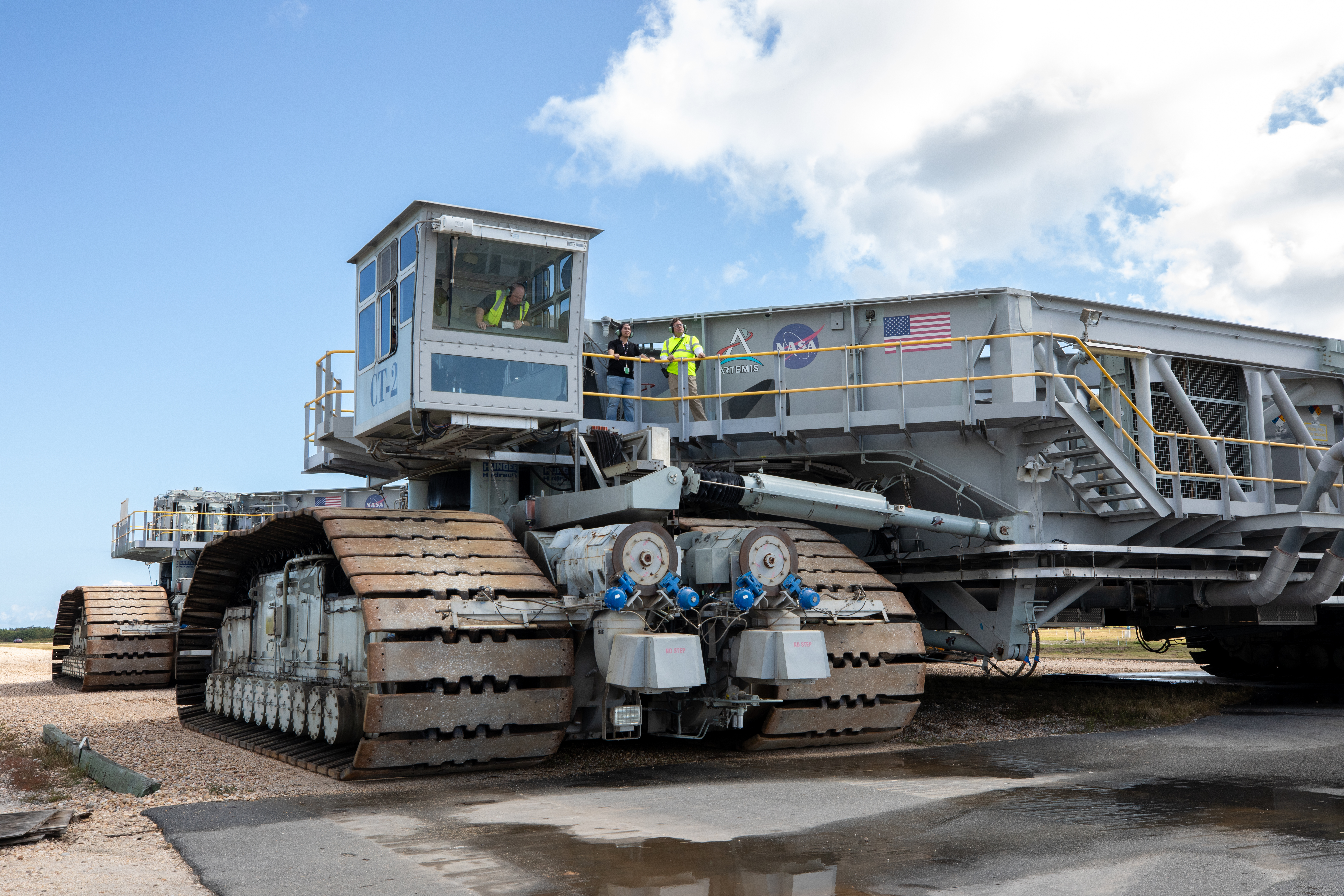
A crawler-transporter, including its massive treads take up the majority of the image. In fact, the entire crawler cannot be seen. There are a few people at the top of the crawler, which allows you to see just how massive the machine is.
NASA/Ben Smegelsky

NASA’s Crawler-transporter 2 moves toward the Vehicle Assembly Building at NASA’s Kennedy Space Center in Florida on Friday, Jan. 9, 2026. The crawler will transport NASA’s SLS (Space Launch System) rocket with the Orion spacecraft to Launch Complex 39B ahead of the Artemis II launch which will journey Commander Reid Wiseman, Pilot Victor Glover, and Mission Specialist Christina Koch from NASA, and Mission Specialist Jeremy Hansen from the CSA (Canadian Space Agency), around the Moon and back to Earth no later than April 2026.

The crawler-transporters have carried the load of taking rockets and spacecraft to the launch pad for more than 50 years at NASA’s Kennedy Space Center in Florida. Each the size of a baseball infield and powered by locomotive and large electrical power generator engines, the crawler-transporters stand ready to keep up the work for the next generation of launch vehicles to lift astronauts into space; Crawler-transporter 2 in particular is integral to the Artemis missions.

Image credit: NASA/Ben Smegelsky
  •  

NASA’s Quesst Mission Marks X-59’s Historic First Flight

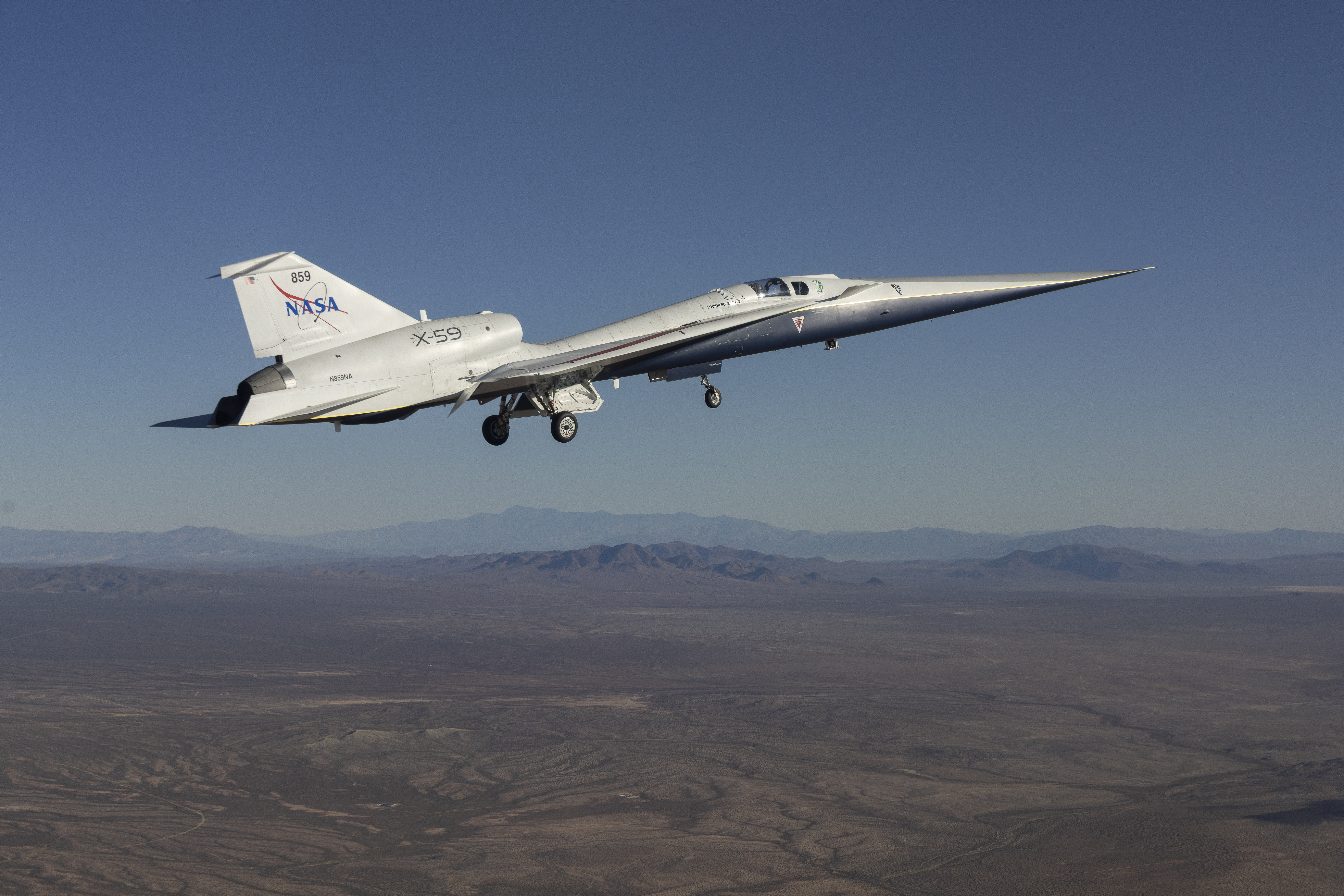
The X-59 quiet supersonic research aircraft flies above California. The plane has a distinctive shape with a long, sharply pointed nose. The nose is silver, while the rest of the body looks white. The words "NASA" and "X-59" are on the body of the aircraft. In the background, we can see brown earth below the plane as well as hazy mountains in the distance.
NASA/Lori Losey

NASA’s X-59 quiet supersonic research aircraft took off for its historic first flight on Oct. 28, 2025, at 11:14 a.m. EDT from Lockheed Martin Skunk Works in Palmdale, California. The one-of-a-kind aircraft flew for 67 minutes before landing and taxiing to NASA’s Armstrong Flight Research Center in Edwards, California.

NASA test pilot Nils Larson flew the X-59 up to an altitude of about 12,000 feet and an approximate top speed of 230 mph, precisely as planned. The plane’s landing gear remained down during the entire flight, a common practice for experimental aircraft flying for the first time.

Now that the X-59’s first flight is in the books, the team is focused on preparing for a series of test flights where the aircraft will operate at higher altitudes and supersonic speeds.Β This test flight phase of NASA’s Quesst mission will ensure the X-59 meets performance and safety expectations.

Through the Quesst mission, NASA aims to usher in a new age of quiet supersonic flight, achieved through the unique design and technology of the X-59 in future supersonic transport aircraft.

Image Credit: NASA/Lori Losey

  •