❌

Modalità di lettura

Astronomers Discover the First Green Star

Astronomers have identified what may be the first genuinely green star, a white dwarf called WD J1330+6435 located about 326 light-years from Earth. Space.com reports: The researchers found that some dead star white dwarfs can go a little green around the gills after snacking on orbiting planets. An example of this is WD J1330+6435, a cool white dwarf located around 326 light-years away, which has been accreting rocky material from a planetary companion. This has enriched its atmosphere with calcium, lithium, and sodium, and the team's model suggests this would have led WD J1330+6435 to adopt a green hue. [...] The researchers think that no other star, living or dead, has ever been credibly reported as green. That makes WD J1330+6435 the first known genuinely green star. "The traces of sodium in the atmosphere of this white dwarf absorb the orange part of the spectrum, leaving behind a ghostly green glow," Hollands said. "Imagine standing on a planet and looking up at a green star. It feels like something out of science fiction." The researchers also discovered what may be the reddest star ever observed, the white dwarf WD J1011+2845, located just 48 light-years away. The findings have been published in the journal RAS Techniques and Instruments.

Read more of this story at Slashdot.

  •  

NASA to Host News Conference Previewing US Spacewalks 100, 101

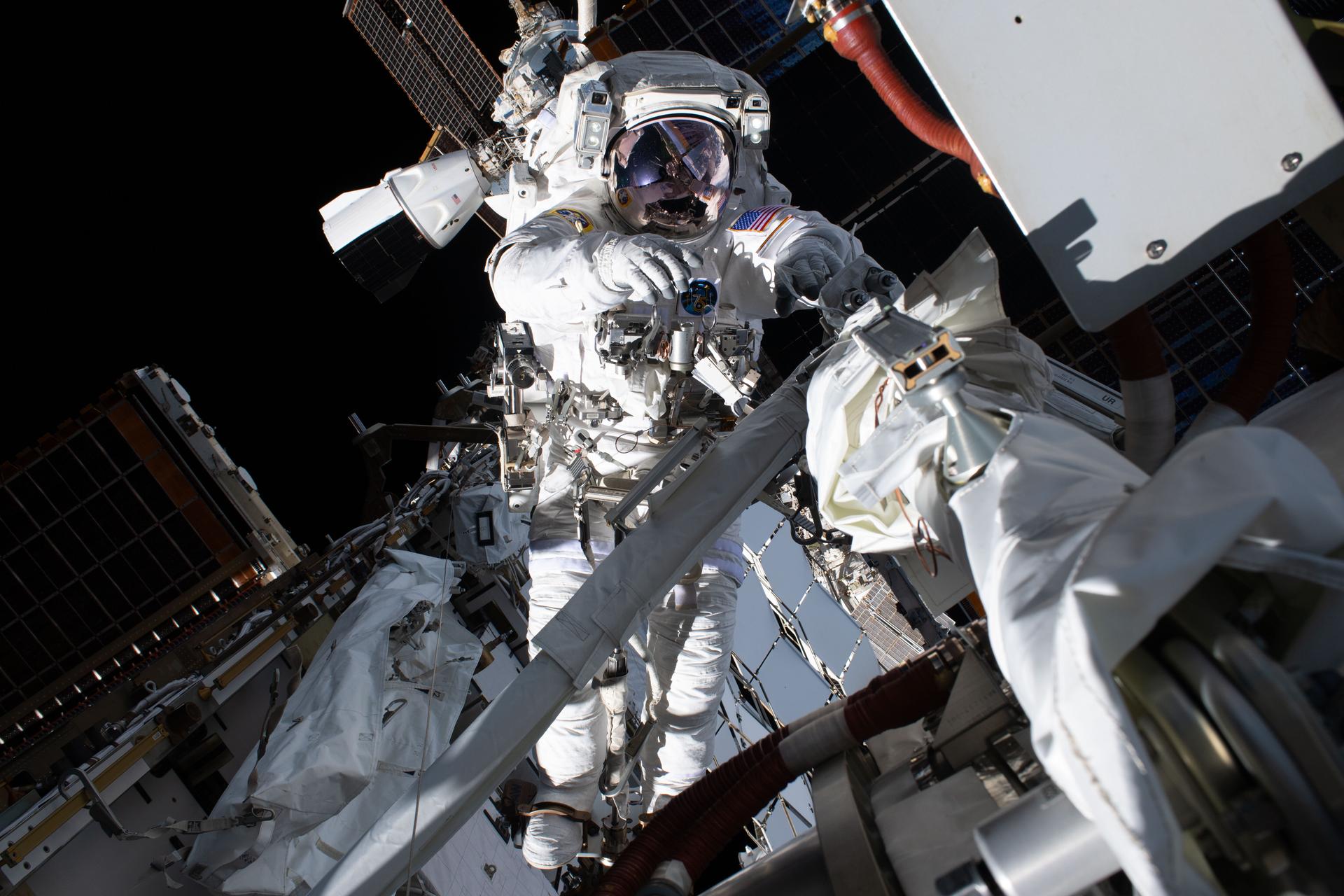
NASA astronaut and Expedition 75 flight engineer Anil Menon conducts a spacewalk to prepare the International Space Station for future upgrades to its power system. Menon helped build a modification kit on the station’s Starboard 6 truss segment where a roll out solar array is slated to be installed later this year.
NASA astronaut Anil Menon conducts a spacewalk on Aug. 6, 2026, to prepare the International Space Station for future upgrades to its power system.
Credit: NASA

NASA will preview two upcoming spacewalks to complete solar array installation and power augmentation of the International Space Station during a news conference at 2 p.m. EDT, Tuesday, Oct. 20, from NASA’s Johnson Space Center in Houston.

NASA will stream the event through a variety of platforms. Learn where to watch online:

https://www.nasa.gov/live

NASA participants in the news conference include:

  • Gaurang Patel, operations integration manager, Low Earth Orbit Program
  • Garrett Hehn, spacewalk flight director, Flight Operations Directorate

United States-based media interested in attending in person must contact the Johnson newsroom no later than 3 p.m., Monday, Oct. 19, at: jsccommu@mail.nasa.gov. Media joining by phone should request dial-in details by the same deadline. To ask a question, media must dial in no later than 15 minutes before the start of the news conference.

Thursday, Oct. 29

During U.S. spacewalk 100, NASA astronaut Anil Menon and CSA (Canadian Space Agency) astronaut Joshua Kutryk will exit the station’s Quest airlock to install and deploy an International Space Station Roll-Out Solar Array (IROSA) on the 2A electrical power channel. The solar array will be the seventh IROSA and will provide additional power to support critical station operations, including its safe and controlled deorbit.

Thursday, Nov. 5

During U.S. spacewalk 101, Menon and Kutryk will install and deploy the eighth and final IROSA on the 3B channel of the space station, completing the power augmentation upgrades.

The final two roll-out solar arrays will complete the space station’s power system augmentation. Together, the eight roll-out arrays will increase available power by up to 30%, boosting the station’s electric power generation capacity from 160 kilowatts to approximately 215 kilowatts.

NASA will share additional coverage details about U.S. spacewalks 100 and 101 closer to each operation on the agency’s live events web page and the space station blog. The spacewalks will be the 285th and 286th conducted in support of space station assembly, maintenance, and upgrades.

To learn more about International Space Station research, operations, and its crews, visit:

https://www.nasa.gov/station

-end-

Joshua Finch / Jimi Russell
Headquarters, Washington
202-358-1100
joshua.a.finch@nasa.gov / james.j.russell@nasa.gov

Sandra Jones / Anna Schneider
Johnson Space Center, Houston
281-483-5111
sandra.p.jones@nasa.gov / anna.c.schneider@nasa.gov

  •  

NASA to Host News Conference Previewing US Spacewalks 100, 101

NASA astronaut and Expedition 75 flight engineer Anil Menon conducts a spacewalk to prepare the International Space Station for future upgrades to its power system. Menon helped build a modification kit on the station’s Starboard 6 truss segment where a roll out solar array is slated to be installed later this year.
NASA astronaut Anil Menon conducts a spacewalk on Aug. 6, 2026, to prepare the International Space Station for future upgrades to its power system.
Credit: NASA

NASA will preview two upcoming spacewalks to complete solar array installation and power augmentation of the International Space Station during a news conference at 2 p.m. EDT, Tuesday, Oct. 20, from NASA’s Johnson Space Center in Houston.

NASA will stream the event through a variety of platforms. Learn where to watch online:

https://www.nasa.gov/live

NASA participants in the news conference include:

  • Gaurang Patel, operations integration manager, Low Earth Orbit Program
  • Garrett Hehn, spacewalk flight director, Flight Operations Directorate

United States-based media interested in attending in person must contact the Johnson newsroom no later than 3 p.m., Monday, Oct. 19, at: jsccommu@mail.nasa.gov. Media joining by phone should request dial-in details by the same deadline. To ask a question, media must dial in no later than 15 minutes before the start of the news conference.

Thursday, Oct. 29

During U.S. spacewalk 100, NASA astronaut Anil Menon and CSA (Canadian Space Agency) astronaut Joshua Kutryk will exit the station’s Quest airlock to install and deploy an International Space Station Roll-Out Solar Array (IROSA) on the 2A electrical power channel. The solar array will be the seventh IROSA and will provide additional power to support critical station operations, including its safe and controlled deorbit.

Thursday, Nov. 5

During U.S. spacewalk 101, Menon and Kutryk will install and deploy the eighth and final IROSA on the 3B channel of the space station, completing the power augmentation upgrades.

The final two roll-out solar arrays will complete the space station’s power system augmentation. Together, the eight roll-out arrays will increase available power by up to 30%, boosting the station’s electric power generation capacity from 160 kilowatts to approximately 215 kilowatts.

NASA will share additional coverage details about U.S. spacewalks 100 and 101 closer to each operation on the agency’s live events web page and the space station blog. The spacewalks will be the 285th and 286th conducted in support of space station assembly, maintenance, and upgrades.

To learn more about International Space Station research, operations, and its crews, visit:

https://www.nasa.gov/station

-end-

Joshua Finch / Jimi Russell
Headquarters, Washington
202-358-1100
joshua.a.finch@nasa.gov / james.j.russell@nasa.gov

Sandra Jones / Anna Schneider
Johnson Space Center, Houston
281-483-5111
sandra.p.jones@nasa.gov / anna.c.schneider@nasa.gov

  •  

NASA to Host News Conference Previewing US Spacewalks 100, 101

NASA astronaut and Expedition 75 flight engineer Anil Menon conducts a spacewalk to prepare the International Space Station for future upgrades to its power system. Menon helped build a modification kit on the station’s Starboard 6 truss segment where a roll out solar array is slated to be installed later this year.
NASA astronaut Anil Menon conducts a spacewalk on Aug. 6, 2026, to prepare the International Space Station for future upgrades to its power system.
Credit: NASA

NASA will preview two upcoming spacewalks to complete solar array installation and power augmentation of the International Space Station during a news conference at 2 p.m. EDT, Tuesday, Oct. 20, from NASA’s Johnson Space Center in Houston.

NASA will stream the event through a variety of platforms. Learn where to watch online:

https://www.nasa.gov/live

NASA participants in the news conference include:

  • Gaurang Patel, operations integration manager, Low Earth Orbit Program
  • Garrett Hehn, spacewalk flight director, Flight Operations Directorate

United States-based media interested in attending in person must contact the Johnson newsroom no later than 3 p.m., Monday, Oct. 19, at: jsccommu@mail.nasa.gov. Media joining by phone should request dial-in details by the same deadline. To ask a question, media must dial in no later than 15 minutes before the start of the news conference.

Thursday, Oct. 29

During U.S. spacewalk 100, NASA astronaut Anil Menon and CSA (Canadian Space Agency) astronaut Joshua Kutryk will exit the station’s Quest airlock to install and deploy an International Space Station Roll-Out Solar Array (IROSA) on the 2A electrical power channel. The solar array will be the seventh IROSA and will provide additional power to support critical station operations, including its safe and controlled deorbit.

Thursday, Nov. 5

During U.S. spacewalk 101, Menon and Kutryk will install and deploy the eighth and final IROSA on the 3B channel of the space station, completing the power augmentation upgrades.

The final two roll-out solar arrays will complete the space station’s power system augmentation. Together, the eight roll-out arrays will increase available power by up to 30%, boosting the station’s electric power generation capacity from 160 kilowatts to approximately 215 kilowatts.

NASA will share additional coverage details about U.S. spacewalks 100 and 101 closer to each operation on the agency’s live events web page and the space station blog. The spacewalks will be the 285th and 286th conducted in support of space station assembly, maintenance, and upgrades.

To learn more about International Space Station research, operations, and its crews, visit:

https://www.nasa.gov/station

-end-

Joshua Finch / Jimi Russell
Headquarters, Washington
202-358-1100
joshua.a.finch@nasa.gov / james.j.russell@nasa.gov

Sandra Jones / Anna Schneider
Johnson Space Center, Houston
281-483-5111
sandra.p.jones@nasa.gov / anna.c.schneider@nasa.gov

  •  

NASA Astronauts to Answer Questions from Florida Students

NASA astronaut Jessica Watkins assists NASA astronaut Luke Delaney as he practices suiting up in a spacesuit in an International Space Station airlock simulator on May, 5, 2026, at the agency's Johnson Space Center Space Vehicle Mockup Facility in Houston.
NASA astronaut Jessica Watkins assists NASA astronaut Luke Delaney as he practices suiting up in a spacesuit in an International Space Station airlock simulator on May 5, 2026, at the agency’s Johnson Space Center Space Vehicle Mockup Facility in Houston.
Credit: NASA

Editor’s Note: This article was updated Thursday, Oct. 15, 2026, to reflect a change to the event start time.

Students in Florida will hear from NASA astronauts Jessica Watkins and Luke Delaney as they answer prerecorded STEM questions while aboard the International Space Station.

The Earth-to-space call will begin at 12:30 p.m. EDT Friday, Oct. 16, and will stream live on the agency’s Learn With NASA YouTube channel.

This event is hosted by Sally Ride Elementary School in Orlando, Florida, for students in grades K-12, and the community. This unique opportunity aims to deepen understanding of space exploration and enhance awareness of STEM careers.

Media interested in covering the event must RSVP no later than 5 p.m. EDT, Thursday, Oct. 15, to Jenny Morgan at (407) 858-3100, or at jenny.morgan@ocps.net.

For more than 25 years, people have lived and worked continuously aboard the International Space Station, advancing scientific knowledge and making research breakthroughs not possible on Earth. The space station helps NASA understand and overcome the challenges of human spaceflight, expand commercial opportunities in low Earth orbit, and build on the foundation for long-duration missions to the Moon, as part of the Artemis program, and to Mars.

For more information on NASA in-flight calls, visit:

https://www.nasa.gov/stemonstation

  •  

NASA Astronauts to Answer Questions from Florida Students

NASA astronaut Jessica Watkins assists NASA astronaut Luke Delaney as he practices suiting up in a spacesuit in an International Space Station airlock simulator on May, 5, 2026, at the agency's Johnson Space Center Space Vehicle Mockup Facility in Houston.
NASA astronaut Jessica Watkins assists NASA astronaut Luke Delaney as he practices suiting up in a spacesuit in an International Space Station airlock simulator on May 5, 2026, at the agency’s Johnson Space Center Space Vehicle Mockup Facility in Houston.
Credit: NASA

Editor’s Note: This article was updated Thursday, Oct. 15, 2026, to reflect a change to the event start time.

Students in Florida will hear from NASA astronauts Jessica Watkins and Luke Delaney as they answer prerecorded STEM questions while aboard the International Space Station.

The Earth-to-space call will begin at 12:30 p.m. EDT Friday, Oct. 16, and will stream live on the agency’s Learn With NASA YouTube channel.

This event is hosted by Sally Ride Elementary School in Orlando, Florida, for students in grades K-12, and the community. This unique opportunity aims to deepen understanding of space exploration and enhance awareness of STEM careers.

Media interested in covering the event must RSVP no later than 5 p.m. EDT, Thursday, Oct. 15, to Jenny Morgan at (407) 858-3100, or at jenny.morgan@ocps.net.

For more than 25 years, people have lived and worked continuously aboard the International Space Station, advancing scientific knowledge and making research breakthroughs not possible on Earth. The space station helps NASA understand and overcome the challenges of human spaceflight, expand commercial opportunities in low Earth orbit, and build on the foundation for long-duration missions to the Moon, as part of the Artemis program, and to Mars.

For more information on NASA in-flight calls, visit:

https://www.nasa.gov/stemonstation

  •  

NASA Astronauts to Answer Questions from Florida Students

NASA astronaut Jessica Watkins assists NASA astronaut Luke Delaney as he practices suiting up in a spacesuit in an International Space Station airlock simulator on May, 5, 2026, at the agency's Johnson Space Center Space Vehicle Mockup Facility in Houston.
NASA astronaut Jessica Watkins assists NASA astronaut Luke Delaney as he practices suiting up in a spacesuit in an International Space Station airlock simulator on May 5, 2026, at the agency’s Johnson Space Center Space Vehicle Mockup Facility in Houston.
Credit: NASA

Editor’s Note: This article was updated Thursday, Oct. 15, 2026, to reflect a change to the event start time.

Students in Florida will hear from NASA astronauts Jessica Watkins and Luke Delaney as they answer prerecorded STEM questions while aboard the International Space Station.

The Earth-to-space call will begin at 12:30 p.m. EDT Friday, Oct. 16, and will stream live on the agency’s Learn With NASA YouTube channel.

This event is hosted by Sally Ride Elementary School in Orlando, Florida, for students in grades K-12, and the community. This unique opportunity aims to deepen understanding of space exploration and enhance awareness of STEM careers.

Media interested in covering the event must RSVP no later than 5 p.m. EDT, Thursday, Oct. 15, to Jenny Morgan at (407) 858-3100, or at jenny.morgan@ocps.net.

For more than 25 years, people have lived and worked continuously aboard the International Space Station, advancing scientific knowledge and making research breakthroughs not possible on Earth. The space station helps NASA understand and overcome the challenges of human spaceflight, expand commercial opportunities in low Earth orbit, and build on the foundation for long-duration missions to the Moon, as part of the Artemis program, and to Mars.

For more information on NASA in-flight calls, visit:

https://www.nasa.gov/stemonstation

  •  

NASA Develops Batteries to Power Humanity’s Return to Moon

5 min read

Preparations for Next Moonwalk Simulations Underway (and Underwater)

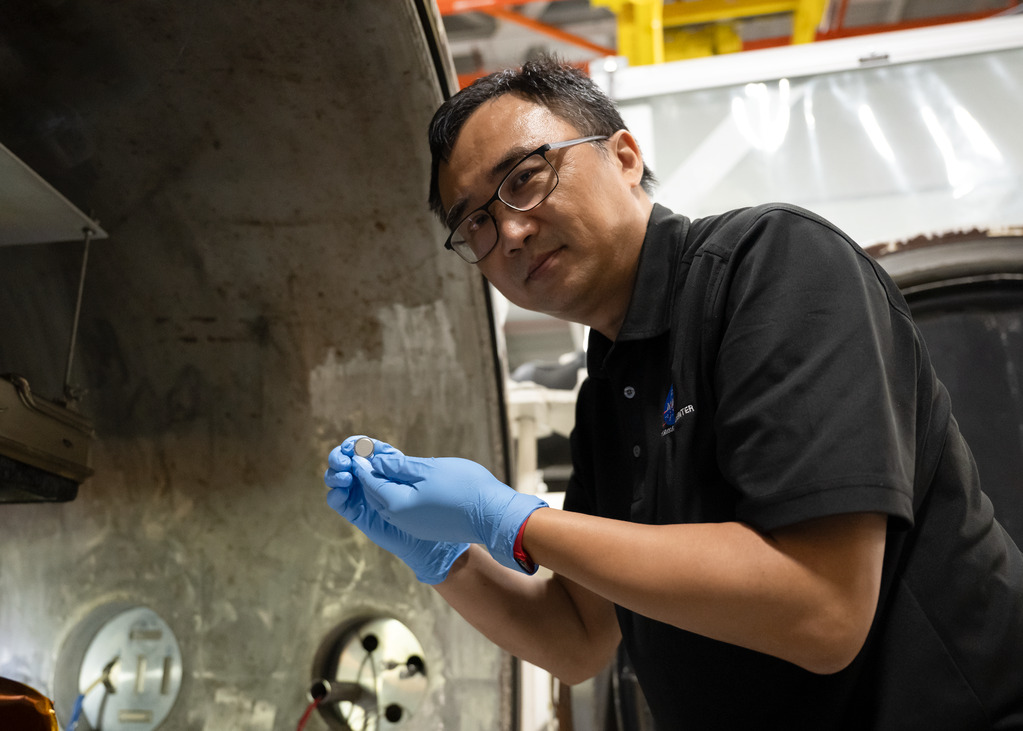
Yi Lin, SPEARS testing and research lead at NASA Langley, holds one of the small coin-cell batteries that had just undergone thermal vacuum testing.
NASA/Ryan Hill

If you’ve ever had your car start sluggishly, or not at all, on a particularly frigid winter morning, you know standard batteries do not like extreme cold. That’s why NASA researchers are working to develop a battery that could function in the brutal cold of the Moon’s South Pole, where nighttime temperatures plunge to minus 328 degrees Fahrenheit (minus 200 Celsius). 

For future lunar operations, a battery will need to work immediately when warmed up and be able to power everything from an astronaut’s emergency kit to a rover capable of exploring the Moon’s darkest craters — all without posing a fire hazard. 

A team of NASA researchers is working to make all that happen. The project is called Solid Power for Extreme Environment Adaptability and Resilience in Space (SPEARS), and it could provide NASA with an important tool to help power humanity’s sustained presence on the Moon through the Artemis campaign. 

“Batteries have become an important part of our lives here on Earth, which enable our laptops, cell phones, power tools, and even our vehicles,” said Donald Dornbusch, principal investigator for SPEARS at NASA’s Glenn Research Center in Cleveland, where the project is led. “We will need them on the Moon, too, and these batteries will be required to operate reliably and safely in this harsh environment. That’s why we’re working on this technology.” 

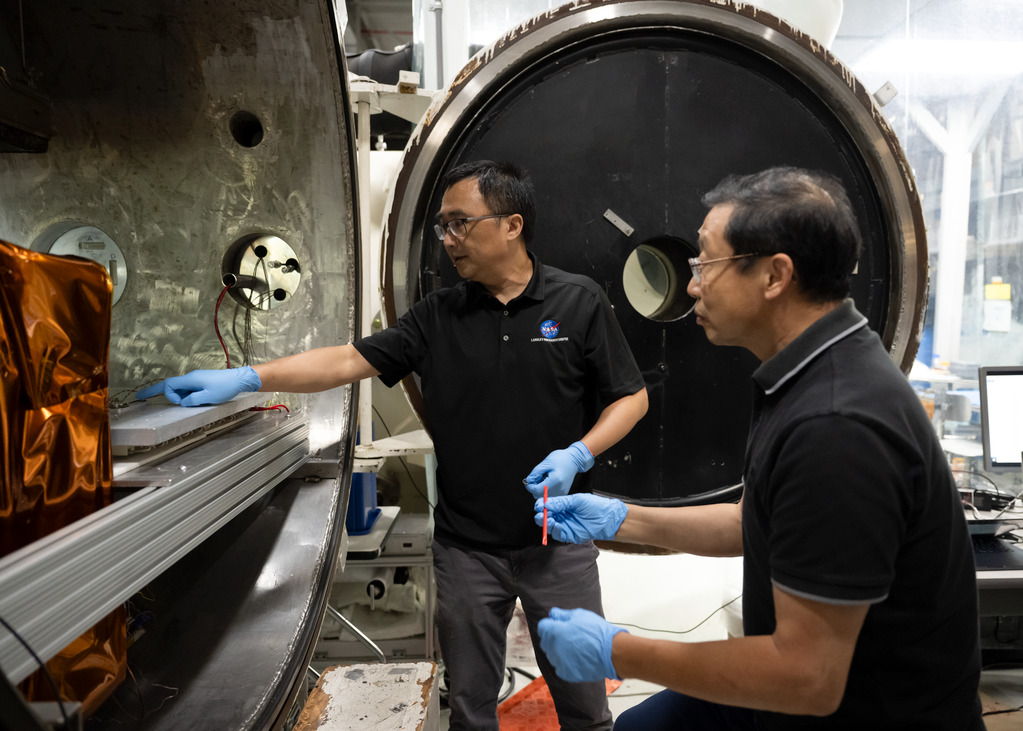
Yi Lin, left, SPEARS testing and research lead, and Ji Su, a polymer materials scientist and the task lead, during the removal of SPEARS batteries from thermal vacuum testing at NASA Langley.
NASA/Ryan Hill

Splashy problem, solid solution

Traditional lithium-ion batteries like those in your cell phone and laptop have a critical weakness: they rely on liquid electrolytes. Cool a conventional battery to the Moon’s nighttime temperatures, and that liquid would freeze, potentially damaging the battery. Heat it up too much — say, to daytime lunar temperatures of 212 F (100 C) — and it won’t work until cooled. Expose the liquid to the vacuum of space, and it evaporates. 

SPEARS batteries solve these problems by replacing the liquid electrolyte with a solid ceramic- or polymer-based material. This change could unlock several advantages. First and foremost, they could operate in the heat and extreme cold. 

During recent thermal vacuum testing at NASA’s Langley Research Center in Hampton, Virginia, small prototype battery cells operated well up to 176 F (80 C), down to minus 76 F (minus 60 C), and with slightly reduced performance down to minus 112 F (minus 80 C). 

“We proved for the first time that these cells can work down to minus 80 degrees Celsius,” said Yi Lin, SPEARS testing and research lead at NASA Langley.  

Lin also said he’s confident they can improve performance and maybe even expand that range in coming years. 

The batteries need to remain reliable through exposure to the Moon’s wild temperature swings between day and night. The thermal vacuum testing showed that after exposure to temperature extremes from 212 F (100 C) to minus 274 F (minus 170 C), SPEARS batteries don’t sustain damage.  

Just like the chemistry in your earbuds is different from the chemistry in your phone, which is different from the chemistry in your car, all these chemistries can still function with a solid electrolyte. We can tune for energy, tune for power, tune for durability, depending on the application.

Yi Lin

Yi Lin

SPEARS testing and research lead

Not even solid-state batteries will function while they’re at a temperature as low as minus 274 F, but because solid electrolytes don’t freeze like a liquid, the batteries can survive the extreme low temperatures.  

In order to get the batteries working again after exposure to such cold, small heaters come into play. SPEARS batteries wouldn’t need to be kept warm all the time, just warmed up to operational temperature. That could reduce the need for heavy thermal management systems in spacecraft and lunar habitats, allowing for lighter designs, lower costs, and longer mission durations. 

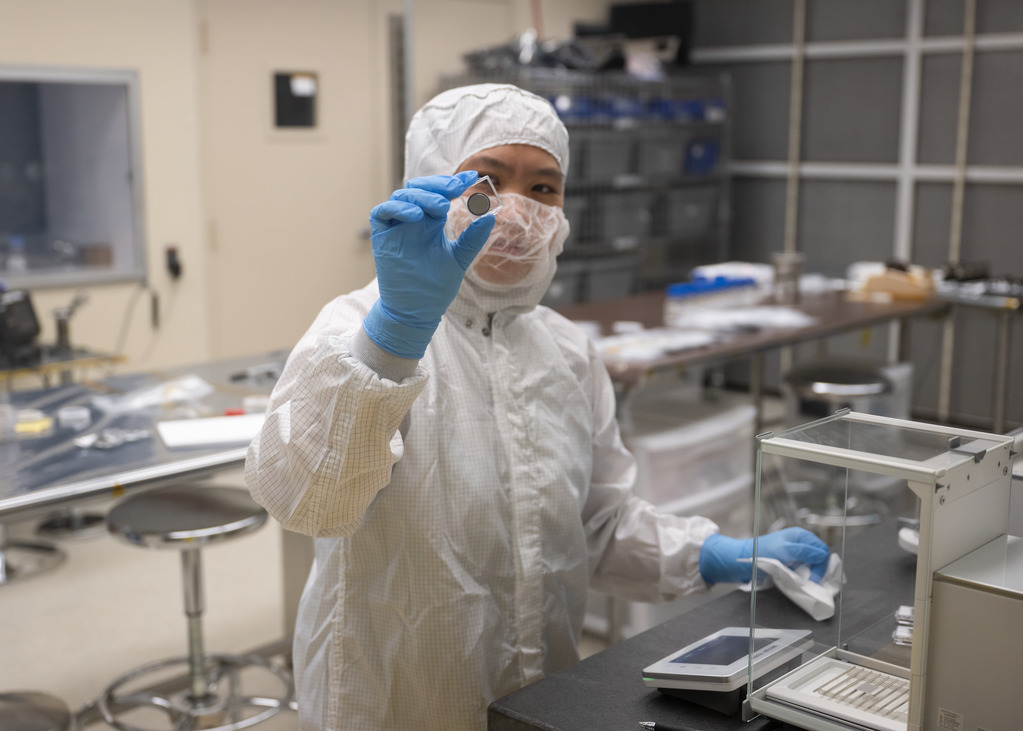
Nike Lin, a support engineer/technician on the thermal vacuum team, holds up a battery.
Nike Lin, a support engineer/technician on the thermal vacuum team, takes weight measurements of batteries following thermal vacuum testing.
NASA/Ryan Hill

Power for Moon, Earth

The applications for these solid-state batteries are nearly limitless, from small tools like drills that must operate in shadowed lunar craters, to rovers and emergency power packs for astronauts. They also could provide power solutions for long-duration scientific instruments. 

“We can tune the chemistry by using different electrode materials,” said Lin. “Just like the chemistry in your earbuds is different from the chemistry in your phone, which is different from the chemistry in your car, all these chemistries can still function with a solid electrolyte. We can tune for energy, tune for power, tune for durability, depending on the application.” 

While SPEARS is designed for space, the technology could be spun off into Earth-based applications. In fact, SPEARS evolved out of a previous battery project Lin and Dornbusch worked on that focused on aeronautic applications. 

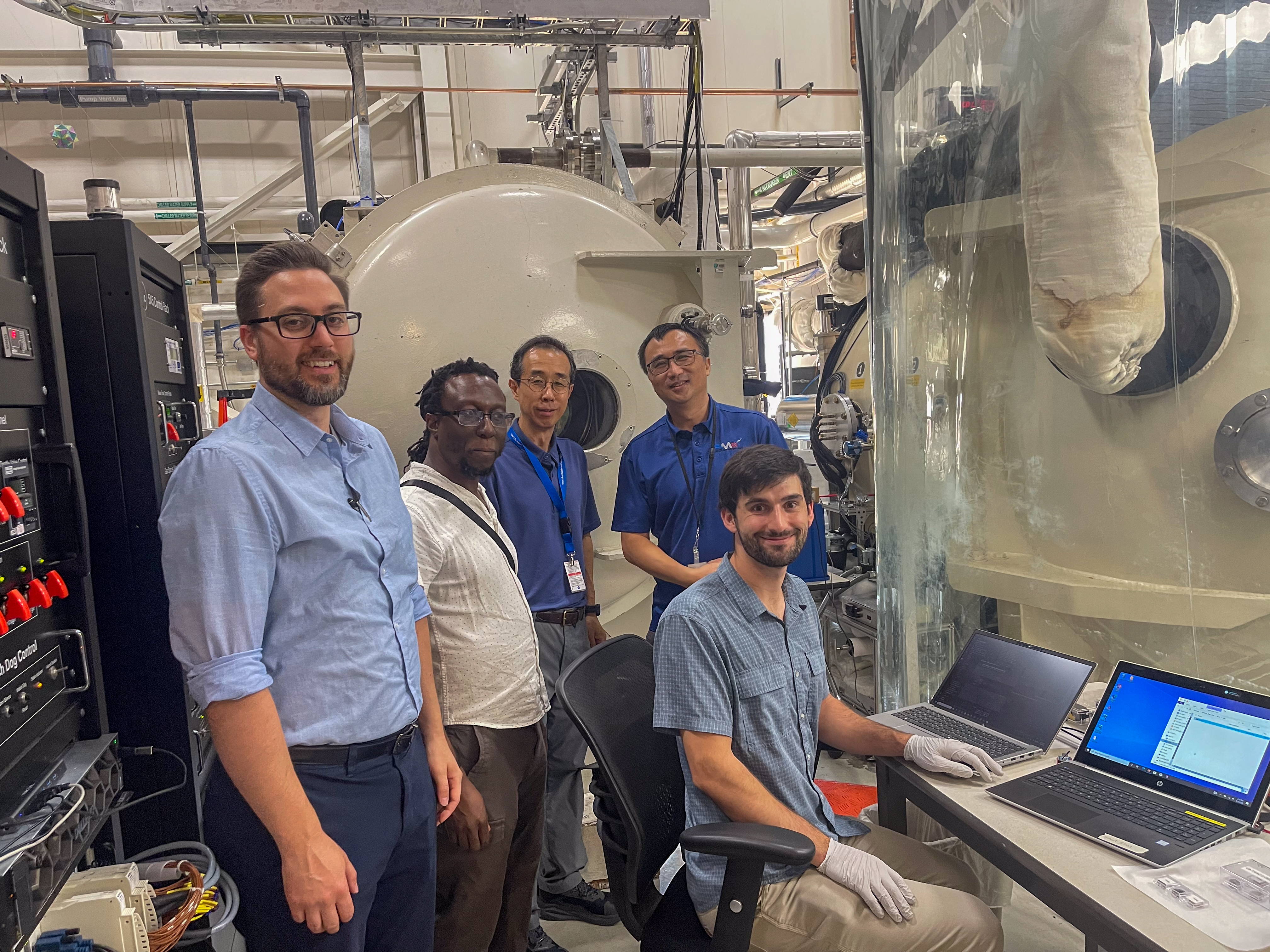
From left to right: Donald Dornbusch (NASA Glenn), Godfrey Sauti, Sang-Hyon Chu, Yi Lin (NASA Langley), and Malachi Mooney-Rivkin (NASA Ames), during a round of TVAC testing at NASA Langley.
NASA

“The potential market for solid-state batteries is very broad,” said Ji Su, a polymer materials scientist and the task lead at NASA Langley. “Automobiles, cell phones, communication devices, drones — anything that needs a portable power supply.” 

The SPEARS project began in 2026 with funding through the Advanced Research and Technology division within the agency’s Research and Technology Mission Directorate. The project is set to focus on technology development in its first stages before potentially shifting toward commercial collaboration. NASA’s Ames Research Center in California’s Silicon Valley is working to develop flight hardware such as test boards and electronics to help prepare the SPEARS batteries for spaceflight and test them in space environments. 

  •  

NASA Science, Cargo Launch on 35th SpaceX Resupply Mission to Station

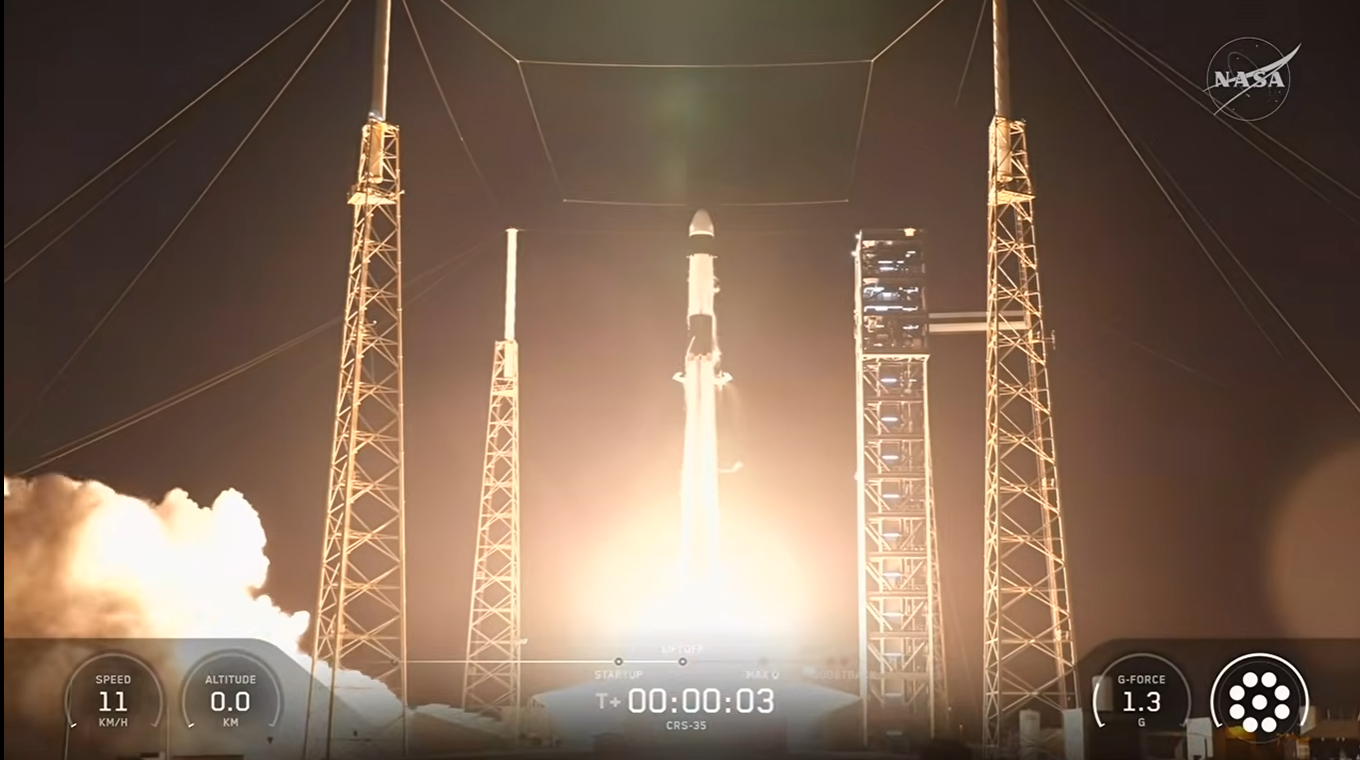
A SpaceX Falcon 9 rocket and Dragon spacecraft launched on Tuesday, Oct. 13, 2026, from Space Launch Complex 40 at Cape Canaveral Space Force Station in Florida as part of the company’s 35th Commercial Resupply Services mission to the International Space Station for NASA.
Credit: NASA

NASA’s SpaceX 35th commercial resupply mission lifted off at 6:33 a.m. EDT Tuesday aboard a Falcon 9 rocket from Space Launch Complex 40 at Cape Canaveral Space Force Station in Florida, carrying more than 6,300 pounds of supplies and hardware, bound for the International Space Station. Following its successful launch, the SpaceX Dragon spacecraft will carry new scientific experiments, cargo, and the final pair of International Space Station Roll-Out Solar Arrays to the orbiting laboratory.

Dragon is scheduled to autonomously dock at 11 a.m., Thursday, Oct. 15, to the space-facing port of the space station’s Harmony module. NASA will stream rendezvous and docking coverage beginning at 9:15 a.m., through a variety of platforms. Learn where to watch online:

https://www.nasa.gov/live

The final pair of solar arrays will complete the space station’s power system augmentation, boosting available electricity for research, operations, and the station’s safe, controlled deorbit. Astronauts will install the arrays during a series of spacewalks planned for later this fall.

Dragon also is delivering several new experiments, including hardware to manufacture artificial retinas in microgravity that could help restore vision for patients on Earth and 3D heart tissue models to advance large-scale drug testing on future space missions. Dragon also will carry materials to study how a new type of glass is formed in microgravity, and brain organoids that could uncover potential treatment targets for neurodegenerative diseases like Alzheimer’s, Parkinson’s, and multiple sclerosis.

These are just a sample of the hundreds of investigations conducted aboard the orbiting laboratory in the areas of biology and biotechnology, physical sciences, and Earth and space science. Research and technology investigations taking place aboard the space station benefit people on Earth and lay the groundwork for other agency deep space missions. As part of NASA’s Artemis program, the agency will send astronauts to the Moon to prepare for future human exploration of Mars, inspiring the world through discovery in a new Golden Age of innovation and exploration.

The Dragon spacecraft is scheduled to remain at the space station until mid-November when it will depart and return to Earth with time-critical research and cargo, splashing down off the coast of California.

Learn more about the International Space Station, its research, and crew, at:

https://www.nasa.gov/station

-end-

Joshua Finch / Jimi Russell
Headquarters, Washington
202-358-1100
joshua.a.finch@nasa.gov / james.j.russell@nasa.gov

Steven Siceloff
Kennedy Space Center, Fla.
321-876-2468
steven.p.siceloff@nasa.gov

Sandra Jones / Joseph Zakrzewski
Johnson Space Center, Houston
281-483-5111
sandra.p.jones@nasa.gov / joseph.a.zakrzewski@nasa.gov

  •  

NASA Science, Cargo Launch on 35th SpaceX Resupply Mission to Station

A SpaceX Falcon 9 rocket and Dragon spacecraft launched on Tuesday, Oct. 13, 2026, from Space Launch Complex 40 at Cape Canaveral Space Force Station in Florida as part of the company’s 35th Commercial Resupply Services mission to the International Space Station for NASA.
Credit: NASA

NASA’s SpaceX 35th commercial resupply mission lifted off at 6:33 a.m. EDT Tuesday aboard a Falcon 9 rocket from Space Launch Complex 40 at Cape Canaveral Space Force Station in Florida, carrying more than 6,300 pounds of supplies and hardware, bound for the International Space Station. Following its successful launch, the SpaceX Dragon spacecraft will carry new scientific experiments, cargo, and the final pair of International Space Station Roll-Out Solar Arrays to the orbiting laboratory.

Dragon is scheduled to autonomously dock at 11 a.m., Thursday, Oct. 15, to the space-facing port of the space station’s Harmony module. NASA will stream rendezvous and docking coverage beginning at 9:15 a.m., through a variety of platforms. Learn where to watch online:

https://www.nasa.gov/live

The final pair of solar arrays will complete the space station’s power system augmentation, boosting available electricity for research, operations, and the station’s safe, controlled deorbit. Astronauts will install the arrays during a series of spacewalks planned for later this fall.

Dragon also is delivering several new experiments, including hardware to manufacture artificial retinas in microgravity that could help restore vision for patients on Earth and 3D heart tissue models to advance large-scale drug testing on future space missions. Dragon also will carry materials to study how a new type of glass is formed in microgravity, and brain organoids that could uncover potential treatment targets for neurodegenerative diseases like Alzheimer’s, Parkinson’s, and multiple sclerosis.

These are just a sample of the hundreds of investigations conducted aboard the orbiting laboratory in the areas of biology and biotechnology, physical sciences, and Earth and space science. Research and technology investigations taking place aboard the space station benefit people on Earth and lay the groundwork for other agency deep space missions. As part of NASA’s Artemis program, the agency will send astronauts to the Moon to prepare for future human exploration of Mars, inspiring the world through discovery in a new Golden Age of innovation and exploration.

The Dragon spacecraft is scheduled to remain at the space station until mid-November when it will depart and return to Earth with time-critical research and cargo, splashing down off the coast of California.

Learn more about the International Space Station, its research, and crew, at:

https://www.nasa.gov/station

-end-

Joshua Finch / Jimi Russell
Headquarters, Washington
202-358-1100
joshua.a.finch@nasa.gov / james.j.russell@nasa.gov

Steven Siceloff
Kennedy Space Center, Fla.
321-876-2468
steven.p.siceloff@nasa.gov

Sandra Jones / Joseph Zakrzewski
Johnson Space Center, Houston
281-483-5111
sandra.p.jones@nasa.gov / joseph.a.zakrzewski@nasa.gov

  •  

Quando la sofferenza umana diventa secondaria: quale futuro per l’azione umanitaria?

Nel 1999 Intersos, riflettendo sulle guerre degli anni precedenti, denunciava che «l’accesso alle vittime è usato ormai come arma da guerra». Impedire l’arrivo dei soccorsi significava privare le popolazioni dell’assistenza necessaria, ma anche allontanare testimoni scomodi. Era una constatazione grave, che metteva in discussione uno dei presupposti dell’azione umanitaria: anche nelle guerre più violente esistono limiti da rispettare e persone che devono poter essere soccorse.

A quasi trent’anni di distanza, quella denuncia appare ancora più attuale. Non soltanto perché l’accesso alle popolazioni continua spesso a essere impedito, ma perché si sono moltiplicati gli ostacoli che rendono difficile, talvolta impossibile, prestare soccorso. Alle armi si aggiungono restrizioni politiche, impedimenti amministrativi, normative antiterrorismo, sanzioni, diffidenza verso le organizzazioni internazionali, riduzioni e improvvise interruzioni dei finanziamenti.

Ma ciò che maggiormente interroga è il progressivo indebolimento della protezione dei civili e di quanti cercano di assisterli. La sofferenza delle popolazioni sembra sempre più spesso subordinata agli obiettivi militari, alle convenienze politiche e agli interessi geopolitici. Il dovere del soccorso, pur riconosciuto dalle regole internazionali, incontra ostacoli crescenti proprio quando dovrebbe prevalere su ogni altra considerazione.

Non è soltanto lo spazio umanitario a restringersi. È messa alla prova la volontà della comunità internazionale di riconoscere limiti alla violenza e responsabilità comuni.

Soccorrere non significa schierarsi

L’accesso umanitario non è soltanto far passare un convoglio o ottenere un’autorizzazione. Richiede una progressiva conoscenza delle realtà locali, la costruzione di rapporti di fiducia, l’interlocuzione con chi esercita il potere sul territorio e garanzie di sicurezza per le persone colpite e per gli operatori umanitari.

Secondo il Comitato internazionale della Croce Rossa, nel 2025 circa 204 milioni di persone vivevano in aree controllate o contese da gruppi armati. Raggiungerle significa spesso dover dialogare con soggetti che la comunità internazionale considera ostili o illegittimi. Intersos lo aveva chiarito già nel 2006: interloquire non significa identificarsi con le parti. Significa comprendere le condizioni delle popolazioni e cercare di proteggerle. Una distinzione essenziale, che oggi rischia di essere oscurata dalla logica delle contrapposizioni.

Anche le normative antiterrorismo e i regimi sanzionatori possono ostacolare operazioni umanitarie legittime. Banche, fornitori e intermediari rinunciano talvolta a operare per timore di conseguenze legali. Si produce così un paradosso: nel tentativo di isolare politicamente un gruppo armato si finisce per isolare anche la popolazione sotto il suo controllo, estranea alle sue azioni. Le esenzioni umanitarie introdotte dalle Nazioni Unite e dall’Unione europea rappresentano un correttivo importante, ma devono poter funzionare concretamente.

Quando anche chi soccorre diventa una vittima

In Sudan la guerra ha provocato milioni di sfollati, distrutto servizi essenziali e reso sempre più difficile raggiungere le popolazioni. Nel vicino Sud Sudan, nei primi sette mesi del 2026, sono stati uccisi 36 operatori e collaboratori umanitari. In Ucraina, nello stesso periodo, sono stati registrati 168 incidenti relativi all’accesso umanitario, con sette operatori uccisi e diciannove feriti. Tra le vittime vi è stato anche Volodymyr Shpek, operatore di Intersos, morto dopo essere stato colpito da un drone. A Gaza, dove la devastazione delle infrastrutture civili e sanitarie ha assunto dimensioni eccezionali, alla fine di aprile 2026 le Nazioni Unite registravano almeno 593 operatori umanitari uccisi dall’ottobre 2023. Nel mondo, oltre mille operatori uccisi in tre anni, quasi il triplo del triennio precedente.

Questi dati pongono interrogativi che vanno oltre la sicurezza degli operatori umanitari. Riguardano la protezione dei civili, del personale sanitario, dei giornalisti, di quanti non partecipano alle ostilità. E soprattutto l’effettiva capacità del diritto internazionale umanitario di limitare la violenza della guerra. 

Quel diritto impone obblighi precisi a tutte le parti, senza eccezioni: le violazioni commesse da una parte non possono giustificare quelle dell’altra né attenuarne le responsabilità. Eppure, assistiamo non soltanto a ripetute violazioni delle regole, ma anche alla contestazione delle istituzioni chiamate ad accertarle. Le sanzioni statunitensi contro giudici e funzionari della Corte penale internazionale sono un segnale particolarmente grave.

Che cosa rimane di un ordine internazionale fondato su regole comuni se gli Stati ne riconoscono l’autorità soltanto quando le decisioni coincidono con i propri interessi? 

La neutralità umanitaria non significa indifferenza verso le violazioni del diritto. Resta però, per le organizzazioni umanitarie, il difficile equilibrio tra testimoniare e denunciare e mantenere l’accesso alle popolazioni.

Sovranità, legittimità e ruolo degli attori locali

La crisi dello spazio umanitario assume forme diverse. In alcuni Paesi del Sahel, come Burkina Faso, Mali e Niger, crescono le rivendicazioni di sovranità e la diffidenza verso parte della presenza internazionale. Le organizzazioni umanitarie possono essere percepite come espressione degli interessi dei governi che le finanziano.

Questi interrogativi non possono essere liquidati come semplice propaganda. Riguardano anche la storia delle relazioni internazionali, la distribuzione del potere e la partecipazione delle società locali. Ma il rispetto della sovranità non può trasformarsi nella subordinazione dell’assistenza umanitaria alle convenienze politiche.

Occorre costruire legittimità attraverso l’indipendenza dell’azione umanitaria, il rapporto di fiducia con le comunità e il rafforzamento delle organizzazioni locali. Affidare loro maggiori responsabilità senza risorse adeguate e reale potere decisionale significa rischiare di esporle a pericoli che non sono messe in condizione di affrontare.

La scelta politica di ridurre gli aiuti

Un’altra trasformazione riguarda le risorse. La drastica contrazione dell’assistenza internazionale statunitense avviata nel 2025 ha provocato interruzioni di programmi, licenziamenti e riduzioni della capacità operativa in molti Paesi.

La questione non riguarda soltanto la disponibilità di denaro. Le decisioni di pochi governi possono compromettere in poche settimane un sistema umanitario costruito in decenni, lasciando senza assistenza persone già estremamente vulnerabili. È necessario renderlo più efficiente, ridurre duplicazioni e ampliare la base dei finanziatori. Ma non si può confondere il miglioramento dell’efficacia e dell’efficienza del sistema umanitario con il suo ridimensionamento imposto dalla diminuzione delle risorse stanziate. Le conseguenze sono particolarmente gravi nella sanità: nelle crisi prolungate non basta curare i feriti, occorre anche preservare ospedali, vaccinazioni e servizi essenziali per garantire la continuità delle cure.

Anche fuori dai conflitti armati, come mostra Cuba, sanzioni e restrizioni economiche possono aggravare le condizioni della popolazione e ostacolare l’assistenza. La finalità politica di una misura non dovrebbe mai dispensare dal valutarne e limitarne le conseguenze umanitarie.

Uno spazio da difendere, responsabilità da ricostruire

Le crisi non sono sovrapponibili. Differiscono per cause, responsabilità e condizioni operative. Mostrano però come la possibilità di raggiungere le popolazioni, la protezione dei civili e la legittimità dell’azione umanitaria siano diventate dimensioni strettamente intrecciate di una crisi più generale.

È questo lo scenario nel quale si svolgerà, il 15 ottobre all’Ara Pacis di Roma, la quinta edizione del Rome Humanitarian Congress di INTERSOS, appuntamento annuale di approfondimento, confronto e ricerca di proposte per affrontare le sfide dell’azione umanitaria.

Gli interrogativi sono impegnativi. Come mantenere aperto l’accesso e dialogare con tutte le parti senza diventarne strumenti né identificarsi con esse? Come impedire che l’isolamento politico e finanziario di un gruppo armato diventi isolamento umanitario delle popolazioni? Come rafforzare gli attori locali trasferendo effettivo potere decisionale e risorse, senza scaricare su di loro soltanto rischi? Come evitare che sanzioni dirette contro un governo aggravino le condizioni della popolazione? Come rispondere all’emergenza senza lasciare sistemi sanitari ancora più fragili? Come rendere più efficace l’azione umanitaria senza trasformare la scarsità delle risorse nell’accettazione della rinuncia? Come proteggere i civili quando le norme che dovrebbero proteggerli vengono ripetutamente violate?

Non esistono risposte semplici, né possono darle da sole le organizzazioni umanitarie. Servono scelte operative e soprattutto responsabilità degli Stati, dei donatori e delle istituzioni internazionali. Molti dei principi e degli strumenti necessari esistono già. Il problema è renderli effettivi in un mondo più frammentato, nel quale la sofferenza delle persone rischia di contare sempre meno nelle decisioni che ne determinano la vita.

La questione, in definitiva, va oltre il futuro dell’aiuto umanitario. Riguarda la direzione nella quale si stanno muovendo le relazioni internazionali: verso un mondo in cui il rispetto delle regole e il soccorso a chi soffre continuano a rappresentare responsabilità comuni, oppure verso un mondo nel quale anche questi obblighi diventano subordinati ai rapporti di forza e alle convenienze del momento.

Credit foto Hasib Hazinyar


L'articolo Quando la sofferenza umana diventa secondaria: quale futuro per l’azione umanitaria? proviene da Vita.it.

  •  

NASA’s SpaceX Crew‑12 Splashes Down, Sets Briefing to Discuss Mission

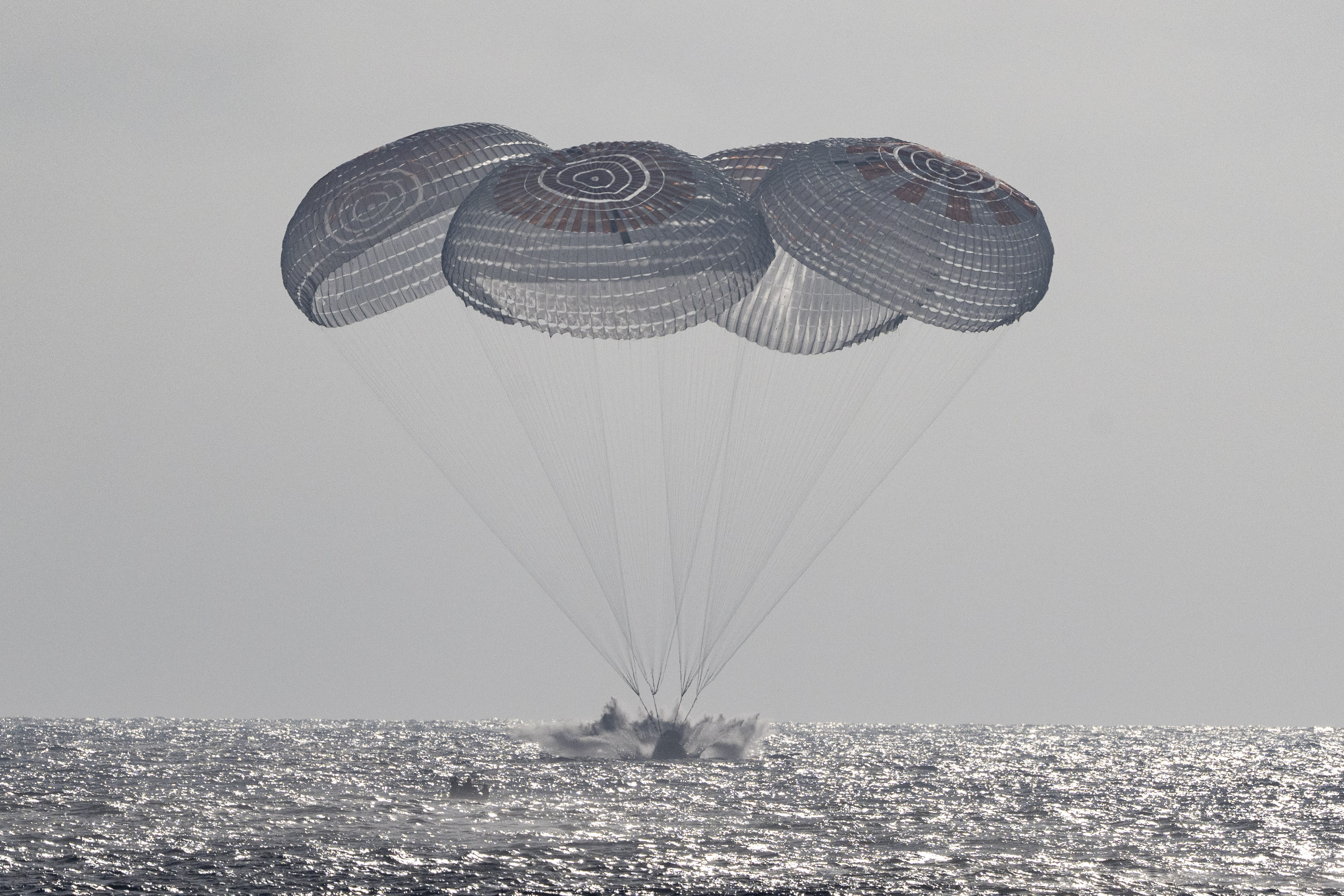
The SpaceX Crew Dragon Freedom spacecraft is seen as it lands with NASA astronauts Jessica Meir, Jack Hathaway, ESA (European Space Agency) astronaut Sophie Adenot, and Roscosmos cosmonaut Andrey Fedyaev aboard in the Pacific Ocean off the coast of Los Angeles on Oct. 8, 2026.
Credit: NASA/Keegan Barber

After more than seven months aboard the International Space Station, NASA’s SpaceX Crew-12 mission safely splashed down Thursday in the Pacific Ocean off the coast of Los Angeles. The crew members will discuss their science mission during a news conference at 3:30 p.m. EDT, Thursday, Oct. 15, at the agency’s Johnson Space Center in Houston.

“Jessica, Jack, Sophie, and Andrey spent 237 days living and working in orbit, traveled more than 100 million miles, advanced important science, and returned safely home because of the extraordinary expertise and competence of thousands across NASA, SpaceX, and our international partners,” said NASA Administrator Jared Isaacman. “Building the capability, experience, and confidence to do this repeatedly is exactly what will allow us to go farther, and I am grateful to Crew-12 and their families for their service to humanity’s greatest adventure.”

NASA astronauts Jessica Meir and Jack Hathaway, ESA (European Space Agency) astronaut Sophie Adenot, and Roscosmos cosmonaut Andrey Fedyaev returned to Earth at 8:34 a.m. PDT. Teams aboard SpaceX recovery vessels retrieved the spacecraft and its crew shortly after. Following standard postflight medical screenings, the crew will fly to shore before returning to NASA’s Johnson Space Center in Houston.

“NASA’s activities supporting the International Space Station — transporting crew, conducting impactful research, and maintaining critical national assets — enable the science, engineering, and risk‑reduction needed for future missions across the solar system,” said Dana Weigel, manager of NASA’s Low Earth Orbit Program at the agency’s Johnson Space Center. “We’re grateful for the dedication across the human spaceflight team that makes this possible, and we’re thrilled to welcome Jessica, Jack, Sophie, and Andrey home.”

During their 237-day mission, the four crew members traveled more than 100 million miles and completed more than 3,792 orbits around Earth. The mission was the second for Meir and Fedyaev and the first for Hathaway and Adenot. Crew-12 lifted off at 5:15 a.m. EST on Feb. 13 and docked to the orbiting laboratory a day later.

Crew‑12 logged hundreds of hours of scientific research to support human exploration beyond low Earth orbit and advance benefits for people on Earth. The crew members’ work included testing stem cell production for cell‑based therapies, demonstrating on‑demand IV fluid generation for future missions, and studying how the bacteria that causes pneumonia can lead to long‑term heart damage. The crew also conducted nutrition-focused research and examined how physical characteristics may affect blood flow during spaceflight to help keep astronauts safe and healthy on future missions. Research conducted aboard the space station advances knowledge and demonstrates new technologies that enable us to prepare for human exploration of the Moon and Mars.

Meir completed four spacewalks, bringing her career total to seven. That places her third all-time in total spacewalks among women at NASA, behind former agency astronauts Peggy Whitson and Suni Williams. Adenot completed three spacewalks, becoming the first French woman to venture outside the orbital outpost.

United States-based media interested in attending the crew news conference in person with Meir, Hathaway, and Fedyaev, must contact the NASA Johnson newsroom no later than 5 p.m. EDT, Tuesday, Oct. 13, at jsc-newsroom@mail.nasa.gov. Media joining by phone must request dial-in details by 9:30 a.m., Oct. 15. To ask a question, media must join no later than 15 minutes before the start of the news conference. The agency’s media credentialing policy is available online. Adenot will return to Europe and not be available during the news conference.

NASA’s Low Earth Orbit Program provides reliable access to space, maximizing the use of the International Space Station for research and development by partnering with private U.S. companies, including SpaceX, to transport astronauts to and from the space station.

Learn more about NASA’s SpaceX Crew-12 at:

https://www.nasa.gov/commercialcrew

-end-

Joshua Finch / Jimi Russell
Headquarters, Washington
202-358-1100
joshua.a.finch@nasa.gov / james.j.russell@nasa.gov

Sandra Jones / Joseph Zakrzewski
Johnson Space Center, Houston
281-483-5111
sandra.p.jones@nasa.gov / joseph.a.zakrzewski@nasa.gov

Steven Siceloff
Kennedy Space Center, Florida
321-867-2468
steven.p.siceloff@nasa.gov

  •  

NASA’s SpaceX Crew‑12 Splashes Down, Sets Briefing to Discuss Mission

The SpaceX Crew Dragon Freedom spacecraft is seen as it lands with NASA astronauts Jessica Meir, Jack Hathaway, ESA (European Space Agency) astronaut Sophie Adenot, and Roscosmos cosmonaut Andrey Fedyaev aboard in the Pacific Ocean off the coast of Los Angeles on Oct. 8, 2026.
Credit: NASA/Keegan Barber

After more than seven months aboard the International Space Station, NASA’s SpaceX Crew-12 mission safely splashed down Thursday in the Pacific Ocean off the coast of Los Angeles. The crew members will discuss their science mission during a news conference at 3:30 p.m. EDT, Thursday, Oct. 15, at the agency’s Johnson Space Center in Houston.

“Jessica, Jack, Sophie, and Andrey spent 237 days living and working in orbit, traveled more than 100 million miles, advanced important science, and returned safely home because of the extraordinary expertise and competence of thousands across NASA, SpaceX, and our international partners,” said NASA Administrator Jared Isaacman. “Building the capability, experience, and confidence to do this repeatedly is exactly what will allow us to go farther, and I am grateful to Crew-12 and their families for their service to humanity’s greatest adventure.”

NASA astronauts Jessica Meir and Jack Hathaway, ESA (European Space Agency) astronaut Sophie Adenot, and Roscosmos cosmonaut Andrey Fedyaev returned to Earth at 8:34 a.m. PDT. Teams aboard SpaceX recovery vessels retrieved the spacecraft and its crew shortly after. Following standard postflight medical screenings, the crew will fly to shore before returning to NASA’s Johnson Space Center in Houston.

“NASA’s activities supporting the International Space Station — transporting crew, conducting impactful research, and maintaining critical national assets — enable the science, engineering, and risk‑reduction needed for future missions across the solar system,” said Dana Weigel, manager of NASA’s Low Earth Orbit Program at the agency’s Johnson Space Center. “We’re grateful for the dedication across the human spaceflight team that makes this possible, and we’re thrilled to welcome Jessica, Jack, Sophie, and Andrey home.”

During their 237-day mission, the four crew members traveled more than 100 million miles and completed more than 3,792 orbits around Earth. The mission was the second for Meir and Fedyaev and the first for Hathaway and Adenot. Crew-12 lifted off at 5:15 a.m. EST on Feb. 13 and docked to the orbiting laboratory a day later.

Crew‑12 logged hundreds of hours of scientific research to support human exploration beyond low Earth orbit and advance benefits for people on Earth. The crew members’ work included testing stem cell production for cell‑based therapies, demonstrating on‑demand IV fluid generation for future missions, and studying how the bacteria that causes pneumonia can lead to long‑term heart damage. The crew also conducted nutrition-focused research and examined how physical characteristics may affect blood flow during spaceflight to help keep astronauts safe and healthy on future missions. Research conducted aboard the space station advances knowledge and demonstrates new technologies that enable us to prepare for human exploration of the Moon and Mars.

Meir completed four spacewalks, bringing her career total to seven. That places her third all-time in total spacewalks among women at NASA, behind former agency astronauts Peggy Whitson and Suni Williams. Adenot completed three spacewalks, becoming the first French woman to venture outside the orbital outpost.

United States-based media interested in attending the crew news conference in person with Meir, Hathaway, and Fedyaev, must contact the NASA Johnson newsroom no later than 5 p.m. EDT, Tuesday, Oct. 13, at jsc-newsroom@mail.nasa.gov. Media joining by phone must request dial-in details by 9:30 a.m., Oct. 15. To ask a question, media must join no later than 15 minutes before the start of the news conference. The agency’s media credentialing policy is available online. Adenot will return to Europe and not be available during the news conference.

NASA’s Low Earth Orbit Program provides reliable access to space, maximizing the use of the International Space Station for research and development by partnering with private U.S. companies, including SpaceX, to transport astronauts to and from the space station.

Learn more about NASA’s SpaceX Crew-12 at:

https://www.nasa.gov/commercialcrew

-end-

Joshua Finch / Jimi Russell
Headquarters, Washington
202-358-1100
joshua.a.finch@nasa.gov / james.j.russell@nasa.gov

Sandra Jones / Joseph Zakrzewski
Johnson Space Center, Houston
281-483-5111
sandra.p.jones@nasa.gov / joseph.a.zakrzewski@nasa.gov

Steven Siceloff
Kennedy Space Center, Florida
321-867-2468
steven.p.siceloff@nasa.gov

  •  

Stop al conflitto e al riarmo: quattro proposte al «campo largo»

Armare l’Ucraina o no? La discussione nel “campo largo” si è incagliata, ma che la questione non si ponga in questi termini lo sta chiarendo il dibattito aperto sul manifesto dall’articolo di Francesco Strazzari, con Francesco Vignarca e l’intervista a Pasquale Tridico.

Il problema vero è come mettere fine alla guerra tra Russia e Ucraina, offrendo una soluzione di lungo periodo per la pace e la stabilità in tutta Europa. Un’esigenza tanto più urgente di fronte agli attacchi russi e ucraini sulle città e le infrastrutture civili, con l’illusione di entrambe le parti che qualche drone (o Patriot) in più possa piegare l’avversario. Quello che l’escalation produce è invece l’estensione della guerra, anche in quelle forme ibride che rischiano di coinvolgere direttamente altri paesi europei. Un grave pericolo che va fermato al più presto, non con le armi ma con la politica. Ad esempio, quella del centrosinistra: il “campo largo” potrebbe convenire su quattro punti.

LA GUERRA VA FERMATA AL PIÙ PRESTO. Ha causato morti e distruzioni terribili in Ucraina e in Russia, ed è stata il pretesto per una militarizzazione dell’Europa che ne stravolge la natura, fa arretrare la democrazia e moltiplica l’instabilità. Entrambe le parti hanno esaurito le risorse per alimentare la guerra. L’Ucraina dipende interamente dal sostegno finanziario esterno sia per le azioni militari che per il funzionamento del paese, sette milioni di ucraini sono rifugiati all’estero, anche per sfuggire al servizio militare. La Russia concentra le risorse sullo sforzo bellico, mettendo in crisi il resto dell’economia, e deve trovare soldati in Corea del nord o in Africa. Entrambi i paesi sono divisi al loro interno; le voci contro la guerra sono soppresse, ma esistono; è la continuazione della guerra che rinsalda Putin e Zelensky.

Una guerra alimentata dall’esterno, può essere fermata dall’esterno. Per quattro anni e mezzo l’Europa non è stata capace di una proposta di pace. Forniamo supporto bellico senza alcuna trasparenza: non sappiamo quali armi l’Italia fornisce a Kiev, che presenza militare c’è, che accordi ci sono. L’imprevedibilità di Trump – che offre armi a Kiev, promette accordi, fa affari con la Russia – è una ragione in più per un’iniziativa europea. Il segretario generale della Nato Rutte non potrà far nulla contro le priorità degli Stati uniti: il cancelliere tedesco Merz è stato l’ultimo leader europeo a riconoscere questa scomoda verità.

VA PRESENTATA UNA PROPOSTA EUROPEA DI NEGOZIATO TRA RUSSIA E UCRAINA. Ogni aiuto – finanziario o militare – all’Ucraina dovrà essere condizionato all’accettazione da parte di Kiev della proposta europea. La coalizione di centrosinistra italiana può avanzare questa proposta, confrontarsi con i partiti e la società civile di altri paesi, discuterla al parlamento europeo. Il progetto potrà tener conto degli accordi Minsk I e II che erano stati sviluppati con l’Osce – l’Organizzazione per la sicurezza e la cooperazione in Europa, con sede a Vienna – per evitare la guerra prima del 2022. Il negoziato potrà svolgersi sotto l’egida dell’Osce e potrà utilizzare la possibile mediazione di autorità neutrali, come il Vaticano. Stati uniti e i governi europei non dovranno sedere al tavolo delle trattative. Le Nazioni unite e la Cina potrebbero essere coinvolte per sostenere il progetto di trattative.

In queste condizioni la Russia avrebbe rassicurazioni sulle possibilità di un negoziato costruttivo; la riduzione delle tensioni fermerebbe la spirale tra attacchi e ritorsioni, lo scambio di prigionieri porterebbe a un miglioramento della fiducia, una tregua potrebbe essere raggiunta. Se rifiutasse di prendere questa strada, Mosca si troverebbe di fronte l’insostenibilità interna e una pressione internazionale molto più ampia, questa volta anche dalla Cina.

Chi pensa – in Italia e in Europa – che la spesa per il riarmo dell’Occidente sia sufficiente per scoraggiare l’aggressività russa è già stato smentito. Un’Europa militarista ma frammentata, con strategie divergenti tra i paesi maggiori, aggressiva ma dipendente dagli Stati uniti, non può costruire una deterrenza sul piano puramente militare; è la strada della politica che può garantire una sicurezza comune, come ricordava su queste pagine Fabrizio Coticchia, e come argomentiamo nelle nostre conclusioni al volume Se l’Europa va alla guerra (Feltrinelli).

L’ITALIA CONGELA L’AUMENTO DELLA SPESA MILITARE. Come segno di distensione, rifiuta l’impegno chiesto dalla Nato di aumentare fino al 5% del Pil la spesa militare – su questo il campo largo è già d’accordo – e rifiuta di chiedere a Bruxelles i prestiti per gli acquisti di armi previsti dal programma Safe di debito comune europeo. Per il periodo di svolgimento dei negoziati, il centrosinistra potrebbe chiedere un congelamento dei programmi di riarmo dell’Unione europea. La corsa a spendere per armi 800 miliardi di euro nei paesi europei e 130 miliardi del bilancio Ue potrebbe avere una pausa, la spesa sociale e ambientale potrebbero risollevarsi, un’Europa diversa dal militarismo potrebbe risvegliarsi.

L’ITALIA PROPONE ALLA UE NUOVE FORME DI ASSOCIAZIONE PER L’UCRAINA E ALTRI PAESI. Nonché la riapertura dei rapporti economici con la Russia. Sono contributi alla ricerca di una pace stabile. Questo esito può rappresentare l’obiettivo che più può incoraggiare le parti a raggiungere un accordo. L’Ucraina si troverebbe legata alla Ue – ma non alla Nato – e sostenuta nella sua ricostruzione, senza tuttavia le rigidità dell’adesione formale. La Russia, senza le sanzioni, potrebbe tornare a esportare gas e petrolio in Europa, ritrovare il proprio ruolo, rilanciare la crescita, stabilizzare la situazione sociale.

Un’agenda di questo tipo per il campo largo avrebbe effetti rilevanti per tutta l’Europa. Una proposta di pace darebbe uno sbocco politico ai sentimenti contro la guerra che sono largamente diffusi, anche – ad esempio – tra le spinte populiste che in Germania hanno contribuito al voto per l’estrema destra. Con una proposta politica di pace e sicurezza comune, le forze progressiste in Europa potrebbero recuperare una parte dei consensi perduti in questi anni di sostegno alla guerra. Ma non solo, di fronte alla possibilità di governi di estrema destra dopo le elezioni in Spagna, Francia e Italia dei prossimi dodici mesi, un accordo di pace in Ucraina e uno stop al riarmo europeo eviterebbe che il dito sul grilletto di una guerra europea sia quello di leader reazionari.

Questo articolo è comparso su il Manifesto del 7 ottobre 2026

  •  

Ottobre di Pace a Verona

Programma denso di festeggiamenti e celebrazioni per il mese più pacifista dell’anno 2 ottobre, compleanno di Gandhi, Giornata internazionale della Nonviolenza. 4 ottobre, giorno di San Francesco, ottavo centenario del Transito. 9 ottobre, compleanno di John Lennon, suoi gli inni del movimento pacifista mondiale. Inoltre è festa per il risultato del quorum raggiunto e superato con [...]

L'articolo Ottobre di Pace a Verona proviene da Movimento Nonviolento.

  •  

LA FOLLIA È TORNATA | Elogio erasmiano dell’uomo contemporaneo

La Follia di Erasmo è tornata. E, dopo cinquecento anni, trova un mondo che si crede più razionale, più libero, più civile. Scopre però che la guerra può chiamarsi pace, la libertà può convivere con il conformismo, la scuola può dimenticare il sapere e la superiorità morale può diventare una nuova forma di arroganza. E […]

  •  

BIDEN ABBASSA LA CRESTA. DA “CI SARANNO CONSEGUENZE” A ” VOGLIAMO COMPETERE”

ALL’INTERVENTO A MUSO DURO DEL NUOVO MINISTRO DEGLI ESTERI QUIN GANG , IL GOVERNO USA ABBASSA I TONI E CERCA DI RAFFREDDARE LA POLEMICA. SI RIVELA LA TIGRE DI CARTA PROFETIZZATA DA MAO.

Il tono minaccioso e la lista delle posizioni criticabili della Cina rispetto alla guerra Ucraina ( mancata condanna della Russia all’ONU, rafforzamento della collaborazione economica russo-cinese, possibilità di invio di armi e munizioni ai russi) si sono dissolte come neve al sole.

Il tono irritante del dipartimento di stato e i solenni avvertimenti a non toccare Taiwan anche. Lo sceriffo si é reso conto di avere a che fare con un osso duro ed é diventato più conciliante. Niente più oscure minacce di ritorsioni: qua la mano !

Nel link sottostante troverete il testo che Biden finse di snobbare, inducendo molti alla imitazione, e che adesso dovrà imparare a memoria. E’ il decalogo cinese per essere coerenti col concetto di pace.

https://corrieredellacollera.wordpress.com/wp-admin/post.php?post=35641&action=edit

In effetti, la storia degli Stati Uniti é caratterizzata dalla violenza e dall’espansione il suo budget assomma al 40% di quello di tutti i paesi del mondo messi insieme ed hanno 800 basi militari sparse in paesi esteri, senza contare le flotte. Difficile dire che lo fanno per la pace.

Aver fatto notare queste verità che sono sotto gli occhi di tutti, la Cina si é vista sbeffeggiare dal presidente Joe Biden che ha snobbato il documento, implacabile ma pacato. Poco dopo il nuovo ministro degli Esteri cinese, ha cambiato il tono ed ha dichiarato che se gli USA continueranno con questi comportamenti miranti a soggiogare, prima psicologicamente, poi economicamente, la Cina, ” lo scontro sarebbe inevitabile”. Una notizia d’agenzia ha fatto circolare la cifra dei coscritti possibili: 20 milioni.

Gli USA – che sono già stati impressionati dal richiamo alle armi di trecentomila uomini fatto dalla Russia e memori della definizione di “unwise” data da Henri Kissinger all’atteggiamento bullesco di affrontare due crisi in contemporanea – hanno cambiato tono e smesso di cercare di stanare la Cina. Ancor oggi non sono riusciti a capire fino a che punto il celeste impero sia coinvolto con l’impero del male. Il timone punta a neutrale.

XI JINPING ha infatti confermato che non c’é stata nessuna cessione di armi ai duellanti, non ha dedicato una sola riga all’Europa e si é concentrato sui temi anticinesi degli USA: Taiwan, TIK TOK vessata quotidianamente, Huawei, le strumentali campagne per i diritti umani a favore degli Uiguri ( una delle sedici etnie presenti in Cina); la costruzione di una catena strategica attorno alla Cina ( AUKUS) , mirante a mortificarla nel suo mare, l’appoggio dato alla Filippine per il contenzioso per le isole Spratly, il riarmo accelerato giapponese. Tutte questioni sollevate ( o risollevate) dagli USA nell’ultimo anno miranti a indebolire XI.

La superiorità intellettuale cinese ha fatto fronte a tutte questi ostacoli affrontati senza ai usare toni aggressivi.

In questo secondo link troverete un estratto di un documento americano che tratta a un dipresso degli stessi temi del cinese, ma lo fa concentrandosi sulla Russia, al punto che affronta la situazione globale senza mai nominare Cina e India, nel tentativo di affrontare un avversario alla volta. Forse pensano che i cinesi siano tanto sciocchi da non averci pensato.

https://corrieredellacollera.wordpress.com/wp-admin/post.php?post=35317&action=edit

L’ultimo link é al più completo documento Rand sulla Russia: Extending Russia ci ho messo un pò a capire che intendevano l’espansione delle spese russe a causa di guerre e rivolte ( indicate analiticamente) fino al punto da provocarne il crollo. Ed é qui che risalta il concetto di competitive advantage, ossia ottenere un vantaggio competitivo provocando una proxy war ( guerra per procura). Non si sono resi conto che , a partire da oggi, molti, sentendo parlare di competition la prenderanno per un sinonimo di guerra. Dovranno spolverare il vocabolario.

https://www.rand.org/pubs/research_reports/RR3063.html

  •  
❌