❌

Modalità di lettura

Artemis II Heat Shield After Splashdown

The Orion spacecraft's heat shield dominates this underwater photo. Due to the water, the heat shield appears to be teal-colored.
US Navy

Shortly after NASA’s Artemis II mission splashed down on April 10, 2026, U.S. Navy divers captured underwater imagery of the Orion spacecraft’s heat shield. In the months after, the agency measured whether the thermal protection system effectively safeguarded the crew and Orion systems as the spacecraft reentered Earth’s atmosphere. This rigorous analysis confirmed that the heat shield performed as expected.

Learn how Orion’s heat shield was examined.

Image credit: US Navy
  •  

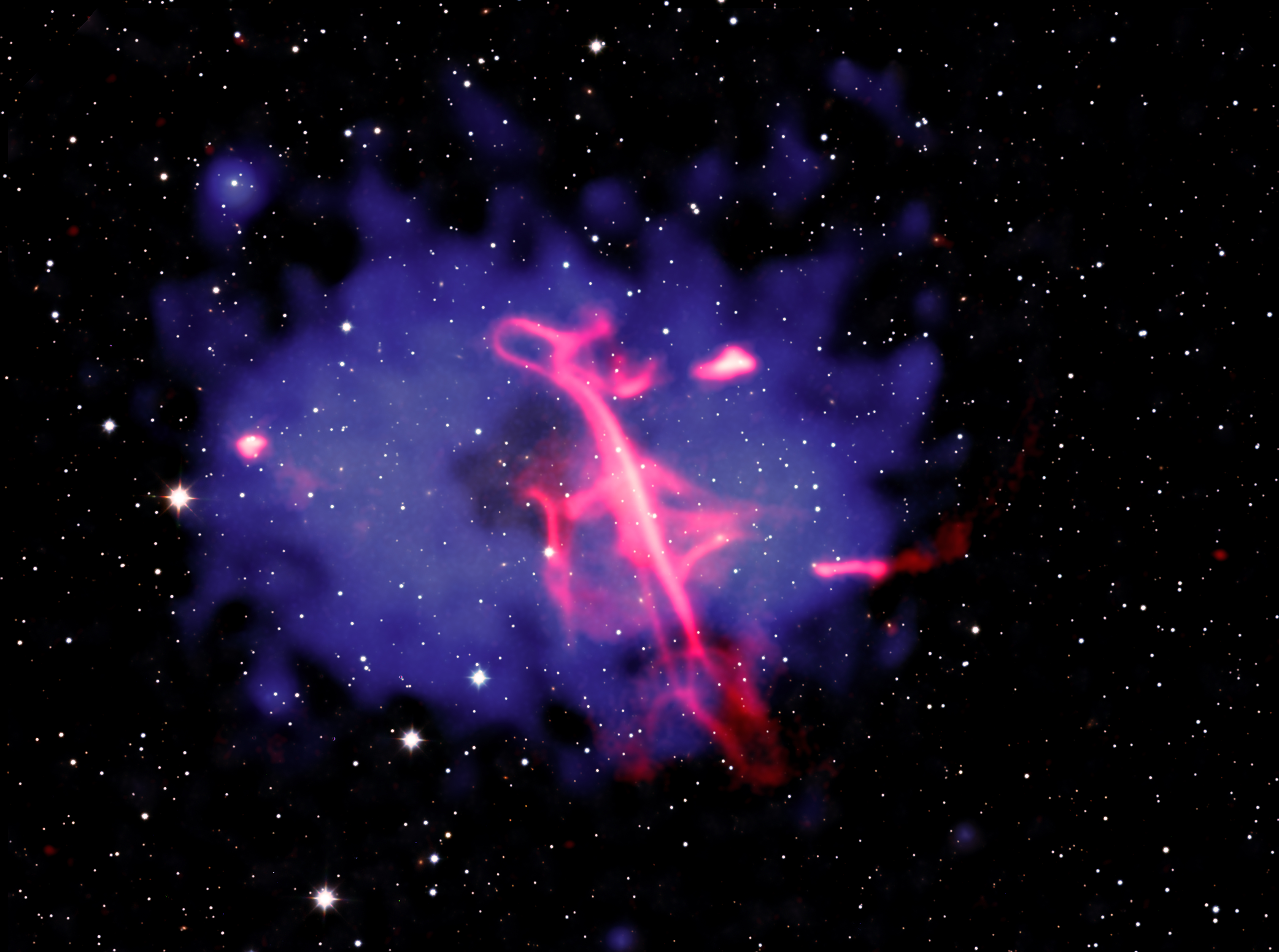
Chandra Finds Possible Origin of ‘Treble Clef’ Waves

A composite image of a remarkable radio wave formation that strongly resembles a treble clef musical symbol, hovering in the midst of two colliding galaxy clusters. Here, galaxies in the galaxy clusters, plus foreground and background stars and galaxies, blanket the image with specks of light set against the blackness of space. At the center of the frame is a large, oval, blue-purple cloud with ragged edges. In the middle of the purple field, tilting slightly to our left, is what appears to be a giant treble clef, loosely drawn with a neon pink marker. Like the musical notation for which it's named, the formation has a strong vertical stroke with a continuous, fluid line swooping back and forth as it moves from top to bottom.
X-ray: NASA/CXC/INAF-IRA/A. Botteon et al.; Infrared: UKIDSS-GPS ; Radio: ASTRON/LOFAR; Image processing: NASA/CXC/SAO/N. Wolk

A formation of radio waves looks remarkably like a treble clef in this Oct. 14, 2026, image from NASA’s Chandra X-Ray Observatory. Researchers used Chandra to find that the Treble Clef is likely caused by an outburst from a supermassive black hole, followed by a collision of two galaxy clusters.

Read more about this discovery.

Image credit: X-ray: NASA/CXC/INAF-IRA/A. Botteon et al.; Infrared: UKIDSS-GPS ; Radio: ASTRON/LOFAR; Image processing: NASA/CXC/SAO/N. Wolk

  •  

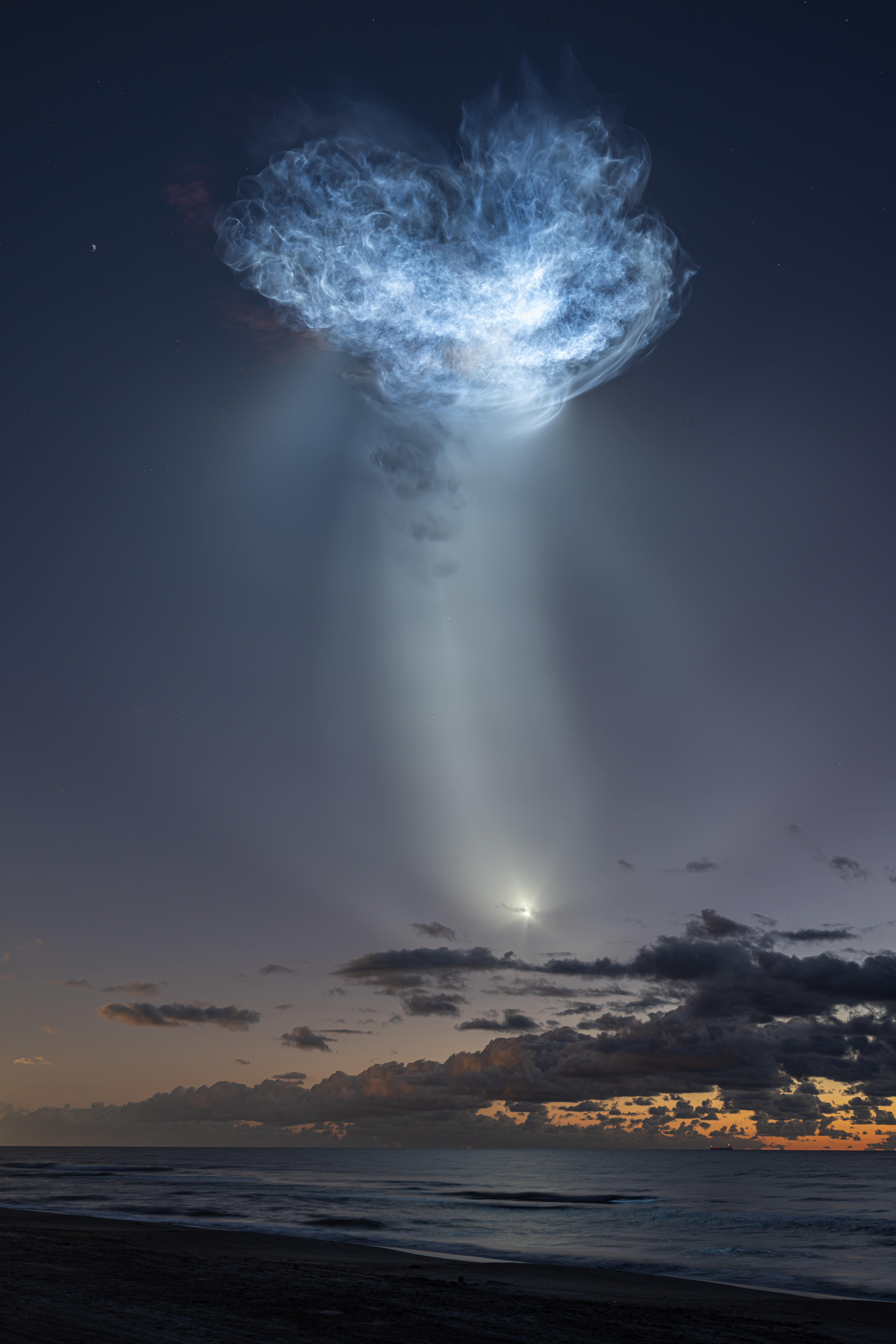
NASA’s Space X CRS-35 Launch Jellyfish

The exhaust plumes of a SpaceX Falcon 9 rocket carrying the company’s Dragon spacecraft are seen illuminated by sunlight against the predawn sky.
NASA/John Kraus

Sunlight illuminates the exhaust plumes of a SpaceX Falcon 9 rocket carrying the company’s Dragon spacecraft on Oct. 13, 2026. This visual phenomenon is known as a “jellyfish”; it happens near sunrise or sunset when the exhaust plume from the rocket becomes brightly illuminated, creating a glowing shape resembling a jellyfish.

The mission lifted off at 6:33 a.m. EDT from Space Launch Complex 40 at Cape Canaveral Space Force Station, carrying scientific investigations, supplies, and equipment to the International Space Station on SpaceX’s 35th commercial resupply services mission for NASA. The rocket’s exhaust plumes were visible across the eastern United States.

Watch the uncrewed Dragon spacecraft rendezvous with and dock to the International Space Station on Oct. 15. Coverage begins at 9:15 a.m. EDT.

Image credit: NASA/John Kraus

  •  

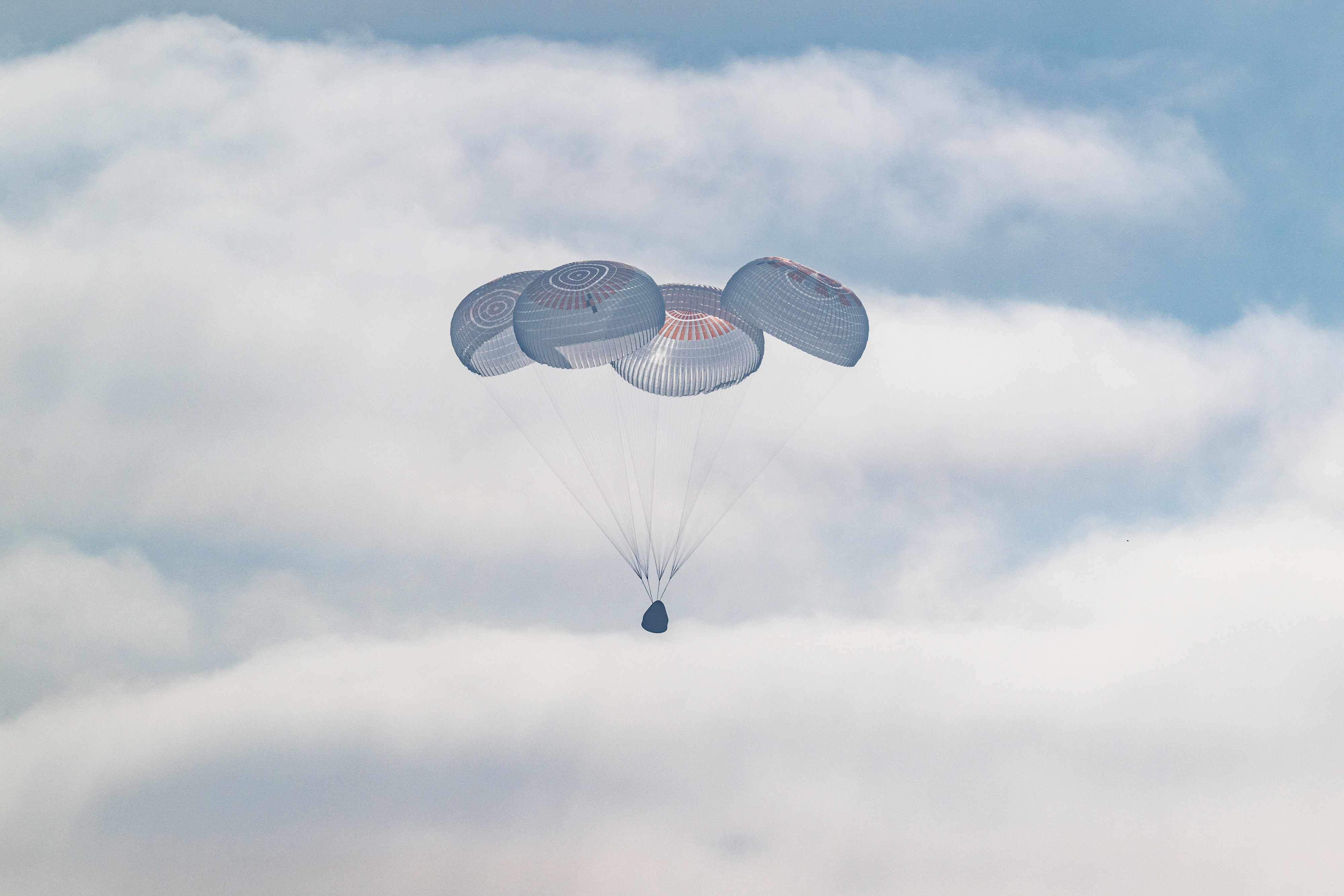
Crew-12 Returns to Earth

A cone-shaped spacecraft and the four large parachutes attached to it against a backdrop of fluffy white clouds in the sky.
NASA/Keegan Barber

The SpaceX Crew Dragon Freedom spacecraft is seen moments before splashing down in the Pacific Ocean off the coast of California in this Oct. 8, 2026, photograph. Aboard were NASA’s SpaceX Crew-12 members NASA astronauts Jessica Meir and Jack Hathaway, ESA (European Space Agency) astronaut Sophie Adenot, and Roscosmos cosmonaut Andrey Fedyaev. The four spent nearly eight months aboard the International Space Station.

See more photos from splashdown.

Image credit: NASA/Keegan Barber

  •  

Crew-12 Returns to Earth

A cone-shaped spacecraft and the four large parachutes attached to it against a backdrop of fluffy white clouds in the sky.
NASA/Keegan Barber

The SpaceX Crew Dragon Freedom spacecraft is seen moments before splashing down in the Pacific Ocean off the coast of California in this Oct. 8, 2026, photograph. Aboard were NASA’s SpaceX Crew-12 members NASA astronauts Jessica Meir and Jack Hathaway, ESA (European Space Agency) astronaut Sophie Adenot, and Roscosmos cosmonaut Andrey Fedyaev. The four spent nearly eight months aboard the International Space Station.

See more photos from splashdown.

Image credit: NASA/Keegan Barber

  •  

Practicing for Safe Landings on the Moon and Beyond

A remotely piloted drone with four rotors carries a guidance and navigation experiment through flight maneuvers.
NASA/Ryan Kline

In this Aug. 27, 2026, image, an Alta-X drone flies an advanced guidance and navigation system known as the Safe and Precise Landing – Integrated Capabilities Evolution (SPLICE) experiment near NASA’s Armstrong Flight Research Center in Edwards, California.

Researchers at NASA’s Johnson Space Center in Houston developed SPLICE, which successfully completed simulated lunar descent and landing maneuvers during recent testing. Its technologies provide safe and precise landing for the Moon, Mars, icy worlds, and other destinations using specialized navigation, guidance, and processing techniques. It enables landing in hard-to-reach and unknown areas that are of high scientific interest.

Image credit: NASA/Ryan Kline

  •  
❌