
Modalità di lettura

Anti-DDoS Firm Heaped Attacks on Brazilian ISPs

A Brazilian tech firm that specializes in protecting networks from distributed denial-of-service (DDoS) attacks has been enabling a botnet responsible for an extended campaign of massive DDoS attacks against other network operators in Brazil, KrebsOnSecurity has learned. The firm’s chief executive says the malicious activity resulted from a security breach and was likely the work of a competitor trying to tarnish his company’s public image.

An Archer AX21 router from TP-Link. Image: tp-link.com.

For the past several years, security experts have tracked a series of massive DDoS attacks originating from Brazil and solely targeting Brazilian ISPs. Until recently, it was less than clear who or what was behind these digital sieges. That changed earlier this month when a trusted source who asked to remain anonymous shared a curious file archive that was exposed in an open directory online.

The exposed archive contained several Portuguese-language malicious programs written in Python. It also included the private SSH authentication keys belonging to the CEO of Huge Networks, a Brazilian ISP that primarily offers DDoS protection to other Brazilian network operators.

Founded in Miami, Fla. in 2014, Huge Networks’s operations are centered in Brazil. The company originated from protecting game servers against DDoS attacks and evolved into an ISP-focused DDoS mitigation provider. It does not appear in any public abuse complaints and is not associated with any known DDoS-for-hire services.

Nevertheless, the exposed archive shows that a Brazil-based threat actor maintained root access to Huge Networks infrastructure and built a powerful DDoS botnet by routinely mass-scanning the Internet for insecure Internet routers and unmanaged domain name system (DNS) servers on the Web that could be enlisted in attacks.

DNS is what allows Internet users to reach websites by typing familiar domain names instead of the associated IP addresses. Ideally, DNS servers only provide answers to machines within a trusted domain. But so-called “DNS reflection” attacks rely on DNS servers that are (mis)configured to accept queries from anywhere on the Web. Attackers can send spoofed DNS queries to these servers so that the request appears to come from the target’s network. That way, when the DNS servers respond, they reply to the spoofed (targeted) address.

By taking advantage of an extension to the DNS protocol that enables large DNS messages, botmasters can dramatically boost the size and impact of a reflection attack — crafting DNS queries so that the responses are much bigger than the requests. For example, an attacker could compose a DNS request of less than 100 bytes, prompting a response that is 60-70 times as large. This amplification effect is especially pronounced when the perpetrators can query many DNS servers with these spoofed requests from tens of thousands of compromised devices simultaneously.
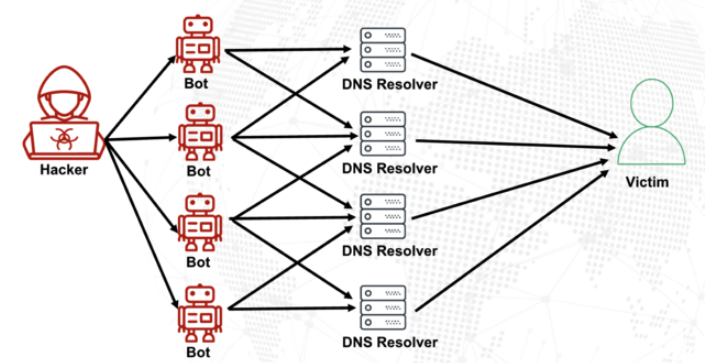
A DNS amplification attack, illustrated. It shows an attacker on the left, sending malicious commands to a number of bots to the immediate right, which then make spoofed DNS queries with the source address as the target's IP address.

A DNS amplification and reflection attack, illustrated. Image: veracara.digicert.com.

The exposed file archive includes a command-line history showing exactly how this attacker built and maintained a powerful botnet by scouring the Internet for TP-Link Archer AX21 routers. Specifically, the botnet seeks out TP-Link devices that remain vulnerable to CVE-2023-1389, an unauthenticated command injection vulnerability that was patched back in April 2023.

Malicious domains in the exposed Python attack scripts included DNS lookups for hikylover[.]st, and c.loyaltyservices[.]lol, both domains that have been flagged in the past year as control servers for an Internet of Things (IoT) botnet powered by a Mirai malware variant.

The leaked archive shows the botmaster coordinated their scanning from a Digital Ocean server that has been flagged for abusive activity hundreds of times in the past year. The Python scripts invoke multiple Internet addresses assigned to Huge Networks that were used to identify targets and execute DDoS campaigns. The attacks were strictly limited to Brazilian IP address ranges, and the scripts show that each selected IP address prefix was attacked for 10-60 seconds with four parallel processes per host before the botnet moved on to the next target.

The archive also shows these malicious Python scripts relied on private SSH keys belonging to Huge Networks’s CEO, Erick Nascimento. Reached for comment about the files, Mr. Nascimento said he did not write the attack programs and that he didn’t realize the extent of the DDoS campaigns until contacted by KrebsOnSecurity.

“We received and notified many Tier 1 upstreams regarding very very large DDoS attacks against small ISPs,” Nascimento said. “We didn’t dig deep enough at the time, and what you sent makes that clear.”

Nascimento said the unauthorized activity is likely related to a digital intrusion first detected in January 2026 that compromised two of the company’s development servers, as well as his personal SSH keys. But he said there’s no evidence those keys were used after January.

“We notified the team in writing the same day, wiped the boxes, and rotated keys,” Nascimento said, sharing a screenshot of a January 11 notification from Digital Ocean. “All documented internally.”

Mr. Nascimento said Huge Networks has since engaged a third-party network forensics firm to investigate further.

“Our working assessment so far is that this all started with a single internal compromise — one pivot point that gave the attacker downstream access to some resources, including a legacy personal droplet of mine,” he wrote.

“The compromise happened through a bastion/jump server that several people had access to,” Nascimento continued. “Digital Ocean flagged the droplet on January 11 — compromised due to a leaked SSH key, in their wording — I was traveling at the time and addressed it on return. That droplet was deprecated and destroyed, and it was never part of Huge Networks infrastructure.”

The malicious software that powers the botnet of TP-Link devices used in the DDoS attacks on Brazilian ISPs is based on Mirai, a malware strain that made its public debut in September 2016 by launching a then record-smashing DDoS attack that kept this website offline for four days. In January 2017, KrebsOnSecurity identified the Mirai authors as the co-owners of a DDoS mitigation firm that was using the botnet to attack gaming servers and scare up new clients.

In May 2025, KrebsOnSecurity was hit by another Mirai-based DDoS that Google called the largest attack it had ever mitigated. That report implicated a 20-something Brazilian man who was running a DDoS mitigation company as well as several DDoS-for-hire services that have since been seized by the FBI.

Nascimento flatly denied being involved in DDoS attacks against Brazilian operators to generate business for his company’s services.

“We don’t run DDoS attacks against Brazilian operators to sell protection,” Nascimento wrote in response to questions. “Our sales model is mostly inbound and through channel integrator, distributors, partners — not active prospecting based on market incidents. The targets in the scripts you received are small regional providers, the vast majority of which are neither in our customer base nor in our commercial pipeline — a fact verifiable through public sources like QRator.”

Nascimento maintains he has “strong evidence stored on the blockchain” that this was all done by a competitor. As for who that competitor might be, the CEO wouldn’t say.

“I would love to share this with you, but it could not be published as it would lose the surprise factor against my dishonest competitor,” he explained. “Coincidentally or not, your contact happened a week before an important event – ​​one that this competitor has NEVER participated in (and it’s a traditional event in the sector). And this year, they will be participating. Strange, isn’t it?”

Strange indeed.

  •  

La Cina è in vantaggio sui robot umanoidi

Immagine in evidenza da Unitree

A fine marzo, l’azienda cinese AgiBot ha annunciato di aver prodotto in serie il suo robot umanoide numero diecimila. La startup con sede a Shanghai, fondata da alcuni ex ingegneri di Huawei, è nata nel 2023 con l’obiettivo di sviluppare humanoid robots per applicazioni industriali e di servizio. Dopo una prima fase di ricerca e prototipazione, nel 2024 ha avviato la produzione di massa dei primi modelli operativi, avviando una rapida scalata industriale che l’ha portata a raggiungere le cinquemila unità prodotte nel 2025 e poi al traguardo delle 10mila macchine: tutto nell’arco di tre anni.

Qualche settimana prima di questo traguardo, sul palco del Gala del Capodanno lunare – lo show televisivo più seguito in Cina – una schiera di robot dalle sembianze antropomorfe si è esibita in perfetta sincronia con ballerini in carne e ossa, eseguendo con naturalezza una coreografia fatta di mosse di kung fu e danza. In questo caso, i “device” erano soprattutto di un’altra azienda concorrente: Unitree Robotics. Dietro la suggestione della performance, tra capriole a mezz’aria e calci acrobatici, si è intravisto un segnale chiaro: la dimostrazione plastica del vantaggio accumulato in una corsa tecnologica che Pechino ambisce a dominare su scala globale. La vera partita legata al mercato dei robot umanoidi, tuttavia, non si gioca sui palchi: si gioca nelle fabbriche e nei centri logistici. In altre parole, nel cuore pulsante dell’economia reale.

Nell’ultimo decennio la Cina ha identificato nella robotica uno dei cardini della propria trasformazione economica. Il settore era già stato inserito tra le priorità nel piano industriale Made in China 2025, anche se in una prima fase l’attenzione si era concentrata prevalentemente sull’automazione industriale tradizionale. Oggi, invece, il focus si sta spostando proprio verso gli humanoid robots: macchine progettate per operare negli stessi contesti degli esseri umani e per svolgere attività che richiedono adattabilità, coordinazione e capacità di interazione con l’ambiente reale.

Prezzi, supply chain e open source

Alla base di questo ambito salto tecnologico c’è, naturalmente, l’intelligenza artificiale. L’integrazione tra sistemi di visione, linguaggio e movimento sta dando forma alla cosiddetta embodied AI: algoritmi che non si limitano a elaborare dati, ma agiscono fisicamente nello spazio attraverso un corpo robotico. In un Paese alle prese con l’invecchiamento della popolazione e con una forza lavoro in progressiva contrazione, questa prospettiva assume un valore strategico. I robot vengono infatti sempre più considerati una possibile risposta alla carenza di manodopera e uno strumento per incrementare la produttività industriale.

I numeri aiutano a mettere in prospettiva il fenomeno. Nel 2025 le spedizioni globali di robot umanoidi si sono fermate poco sopra le 13mila unità, pur registrando una crescita superiore a cinque volte rispetto all’anno precedente. I dati parlano di un business ancora microscopico, ma in fortissima accelerazione: secondo la società di ricerca Omdia, il settore potrebbe crescere rapidamente fino a raggiungere circa 2,6 milioni di unità vendute entro il 2035, mentre UBS stima che la popolazione globale di robot umanoidi potrebbe superare i 300 milioni entro il 2050. Una ricerca di Citigroup si spinge persino oltre, parlando di oltre 600 milioni entro la metà del secolo. In questo scenario, la Repubblica Popolare si è ritagliata una posizione dominante: nel 2024, AgiBot ha spedito oltre 5.000 unità, mentre Unitree Robotics ha superato le 5.500 nel 2025.

La principale leva competitiva dei modelli cinesi sta nel prezzo. Unitree propone modelli entry-level attorno ai seimila dollari, mentre AgiBot offre versioni ridotte dei propri sistemi per circa 14mila dollari. Tesla, con il progetto Optimus, ha indicato un range tra i 20mila e i 30mila dollari senza aver ancora avviato una produzione su larga scala. A gennaio, dal palco del World Economic Forum di Davos, Elon Musk ha indicato la fine del 2027 come orizzonte per il lancio del modello; nel frattempo, l’azienda ha già annunciato l’obiettivo di avviare le linee produttive entro l’anno in vista della commercializzazione. L’esperienza, tuttavia, ci insegna che le tempistiche di Musk tendono a slittare e lui stesso ha più volte riconosciuto una propensione sistematica a promettere scadenze più ambiziose di quanto poi riesca a mantenere. Sul fronte statunitense, anche Figure AI ha iniziato a consegnare i propri modelli (Figure 02) a clienti paganti in scenari industriali, ma senza aver comunicato ancora un listino pubblico e operando solo tramite contratti su misura. 

Un altro vantaggio decisivo è la catena di approvvigionamento. Negli ultimi anni la Cina ha dato vita a una supply chain hardware estremamente efficiente, spinta soprattutto dall’exploit del settore dei veicoli elettrici e dell’elettronica di consumo. La produzione di batterie, sensori, attuatori e altri elementi elettronici può avvenire in tempi brevi e con costi contenuti, permettendo alle imprese di sviluppare e testare rapidamente nuovi prototipi e di immetterli sul mercato con una rapidità difficilmente replicabile in altri contesti.

Uno dei fattori chiave spesso dimenticati, invece, è il software. “I cinesi hanno saputo intercettare per tempo un trend che ha dato loro un vantaggio competitivo enorme: l’open source”, spiega Bruno Siciliano, professore ordinario di Automatica e robotica all’Università Federico II, luminare tra i massimi esperti europei del settore, insignito nel 2024 dell’IEEE Ras Pioneer in Robotics and Automation Award, tra i più prestigiosi riconoscimenti a livello mondiale. “L’intuizione brillante è stata realizzare piattaforme aperte per la condivisione di dataset per gli algoritmi che controllano il robot”.

In Cina l’adozione dell’open source sta creando da tempo un ecosistema collaborativo e, al tempo stesso, propulsivo. Lo abbiamo imparato con Deepseek: modelli AI aperti e a basso costo sviluppati anche da aziende come Alibaba, Moonshot AI e MiniMax stanno rapidamente scalando le classifiche globali di utilizzo su piattaforme come Hugging Face e OpenRouter. Anche sul fronte della robotica, startup come RoboParty hanno aperto l’intero stack – dall’hardware al software fino ai dataset – dei propri robot umanoidi, favorendo la nascita di una comunità di sviluppatori sempre più gremita e interconnessa. 

Un fenomeno, quest’ultimo, che rappresenta “l’unico vero modo di competere con gli Stati Uniti”. Bruno Siciliano dirige il Prisma Lab, laboratorio dell’Università di Napoli specializzato in robotica industriale, meccatronica e automazione, che ha in dotazione “un robot umanoide di Unitree Robotics, con cui stiamo sviluppando tecniche di controllo per la deambulazione e, soprattutto, per l’esecuzione di operazioni di contatto in cooperazione con esseri umani. Stiamo lavorando su approcci avanzati di model predictive control che integrano algoritmi di intelligenza artificiale open source. Possiamo farlo proprio perché abbiamo acquistato una piattaforma dedicata open source, dal costo comunque significativo: circa 100mila euro”.

Il problema delle mani

Dal punto di vista prettamente tecnico, la difficoltà di introdurre dei robot umanoidi nella dimensione industriale riguarda soprattutto il tatto. È quello che Elon Musk ha definito “the hands problem”: senza mani realmente versatili, un robot resta limitato e l’utilizzo universale in ambienti sconosciuti resta una chimera. Replicare la mano umana significa integrare controllo di precisione e percezione distribuito: alcuni dei prototipi statunitensi più avanzati, come quelli sviluppati alla Northwestern University, utilizzano sensori nei polpastrelli che misurano variazioni elettriche per inferire il contatto. Ma la complessità tecnologica resta, e afferrare una penna richiede di ricevere feedback attraverso varie parti delle dita, non solo sulla punta.

“La vera sfida dei robot umanoidi, è sviluppare entità che possano interagire con gli umani in totale sicurezza”, prosegue Siciliano. “Quando vediamo i video spettacolari dei robot che ballano durante lo spettacolo del capodanno cinese, ci impressioniamo. Ma quelle macchine non stanno interagendo con le persone. Nel momento in cui c’è un contatto, cambia tutto. Il vero ostacolo è il tatto: un conto è fare movimenti ‘in freestyle’, un altro è fare una qualunque operazione robotica, come un montaggio, in cui c’è uno scambio di forze”.

Verso la killer app

Eppure, nonostante tutte le difficoltà, molti colossi sembrano già aver imboccato questa direzione. Un segnale concreto arriva dall’automotive, dove i robot umanoidi stanno entrando nelle fabbriche. Renault prevede di introdurre circa 350 unità entro il 2027, già testate nello stabilimento francese di Douai con il robot Calvin per la movimentazione di componenti, con l’obiettivo dichiarato di ridurre del 30% le ore necessarie per produrre un veicolo. Le stesse case automobilistiche cinesi, come Byd, Nio e Zeekr – marchio del gruppo Geely – stanno testando robot umanoidi sviluppati da UBTech all’interno delle proprie fabbriche. Questi vengono impiegati per la movimentazione dei materiali, l’ispezione dei componenti e il supporto agli operai nelle attività più ripetitive. In uno stabilimento Zeekr a Ningbo, per esempio, alcuni robot del modello Walker di UBTech vengono utilizzati per trasportare scatole e parti tra diverse linee di assemblaggio.

Anche in Europa diversi grandi gruppi industriali stanno esplorando soluzioni simili: Mercedes-Benz, per esempio, ha avviato test con robot umanoidi realizzati dalla startup americana Apptronik nei propri impianti, mentre BMW ha sperimentato i robot di Figure AI nello stabilimento di Spartanburg, negli Stati Uniti, per operazioni come la movimentazione di componenti metallici. Hyundai Motor Group, invece, punta a introdurre migliaia di robot del modello Atlas, sviluppati da Boston Dynamics, società acquisita dal gruppo nel 2021.

Proprio il colosso coreano dell’automotive vuole inserirsi a gamba tesa in uno scenario competitivo che, almeno sulla carta, sembra delineare un duopolio sempre più serrato tra Cina e Stati Uniti. L’annuncio al CES di Las Vegas di quest’anno potrebbe segnare una svolta dirompente. Boston Dynamics ha infatti siglato un accordo strategico con DeepMind (il laboratorio di Google che ha dato vita a Gemini) per potenziare Atlas, attraverso l’integrazione dei modelli Gemini Robotics. L’obiettivo è rafforzarne le capacità cognitive, migliorando al contempo l’interazione con l’ambiente e l’autonomia operativa.

“Quello di gennaio è un annuncio importantissimo”, sottolinea Siciliano. “Questi grossi investimenti, ovviamente, fanno da traino per tutti gli altri, innescando una dinamica di mercato che potrebbe accelerare l’individuazione della prima vera applicazione industriale su larga scala”, la cosiddetta killer application capace di cambiare gli equilibri del settore. Perché sarà l’azienda capace di sviluppare il primo prodotto di massa, realmente pervasivo, a conquistare un vantaggio decisivo e ad aprire una nuova fase del mercato. Una rivoluzione destinata a toccare anche l’Europa e il nostro Paese: “Oggi è difficile fare delle stime su quando vedremo i robot umanoidi nelle fabbriche italiane. Tuttavia, ragionevolmente, la larga diffusione entro un decennio è verosimile”.

L'articolo La Cina è in vantaggio sui robot umanoidi proviene da Guerre di Rete.

  •  

La schermata iniziale di Gemini potrebbe ricevere un restyling

Come quasi tutti i chatbot basati sull’intelligenza artificiale, Gemini ha coltivato fin dall’inizio un aspetto minimalista. All’apertura dell’app, si presenta una schermata iniziale ordinata e, negli ultimi mesi, Google ha testato piccole modifiche all’interfaccia utente. Tuttavia, secondo le ultime indiscrezioni sembra che Google stia considerando un cambio più radicale del modo in cui gli utenti interagiscono con l’app.

[ad#ad-celli]

Nella versione 16.38.62.sa.arm64 dell’app Google è stata individuata una schermata iniziale Gemini riprogettata durante i test. Il layout attuale accoglie l’utente con un messaggio di benvenuto e scorciatoie per gli strumenti principali, come “Crea immagine” e “Ricerca approfondita“. Nel nuovo design, questi pulsanti si spostano verso l’alto per far spazio a un feed scorrevole di suggerimenti.

I suggerimenti visualizzati fungono da spunti di conversazione con un solo tocco. Alcuni evidenziano le capacità di Gemini in fatto di immagini, come “Datemi un look vintage”. Altri mettono in risalto abilità diverse, come l’invio di un notiziario quotidiano, un quiz di biologia di base o la programmazione di un piccolo gioco. Ovviamente essendo queste versioni ancora beta e non pensate per il pubblico, non si sa ancora quando e se questa nuova interfaccia farà capolinea su tutti gli smartphone nella versione stabile.

  •  

bitume - diritti sociali e digitali - podcast

✇unit
di: Unit

Bitume, trasmissione radiofonica aperiodica, impreparata e inaspettata, a "cura" di Unit hacklab Milano.

logo-bitume

Mercoledì 5 luglio 2023, dallo studio radio di ZAM

Diritti sociali e digitali

  • Twitter e la rivoluzione francese

  • Immaginazione teoretica

  • API, social media, scraping e la possibilità di informarsi anonimamente

durata: 50 minuti

  •  

bitume - mare crudele - podcast

✇unit
di: Unit

Bitume, trasmissione radiofonica aperiodica, impreparata e inaspettata, a "cura" di Unit hacklab Milano.

logo-bitume

Mercoledì 28 giugno 2023, dallo studio radio di ZAM

Mare crudele

  • IBM aveva una sua AI e la chiamava Watson

  • Aggiornamenti sul sottomarino che scese a visitare il Titanic

  • Viaggi su Marte e altri ambienti scomodi che …

  •  

Meta Transitions PyTorch to the Linux Foundation, Further Accelerating AI/ML Open Source Collaboration

PyTorch Foundation to foster an ecosystem of vendor-neutral projects alongside founding members AMD, AWS, Google Cloud, Meta, Microsoft Azure, and NVIDIA 

DUBLIN – September 12, 2022 –  The Linux Foundation, a global nonprofit organization enabling innovation through open source, today announced PyTorch is moving to the Linux Foundation from Meta where it will live under the newly-formed PyTorch Foundation. Since its release in 2016, over 2400 contributors and 18,0000 organizations have adopted the PyTorch machine learning framework for use in academic research and production environments. The Linux Foundation will work with project maintainers, its developer community, and initial founding members of PyTorch to support the ecosystem at its new home.

Projects like PyTorch—that have the potential to become a foundational platform for critical technology—benefit from a neutral home. As part of the Linux Foundation, PyTorch and its community will benefit from many programs and support infrastructure like training and certification programs, research, and local to global events. Working inside and alongside the Linux Foundation, PyTorch will have access to the LFX collaboration portal—enabling mentorships and helping the PyTorch community identify future leaders, find potential hires, and observe shared project dynamics. 

“Growth around AI/ML and Deep Learning has been nothing short of extraordinary—and the community embrace of PyTorch has led to it becoming one of the five-fastest growing open source software projects in the world,” said Jim Zemlin, executive director for the Linux Foundation. “Bringing PyTorch to the Linux Foundation where its global community will continue to thrive is a true honor. We are grateful to the team at Meta—where PyTorch was incubated and grown into a massive ecosystem—for trusting the Linux Foundation with this crucial effort.”

“Some AI news: we’re moving PyTorch, the open source AI framework led by Meta researchers, to become a project governed under the Linux Foundation. PyTorch has become one of the leading AI platforms with more than 150,000 projects on GitHub built on the framework. The new PyTorch Foundation board will include many of the AI leaders who’ve helped get the community where it is today, including Meta and our partners at AMD, Amazon, Google, Microsoft, and NVIDIA. I’m excited to keep building the PyTorch community and advancing AI research,” said Mark Zuckerberg, Founder & CEO, Meta.

The Linux Foundation has named Dr. Ibrahim Haddad, its Vice President of Strategic Programs, as the Executive Director of the PyTorch Foundation.  The PyTorch Foundation will support a strong member ecosystem with a diverse governing board including founding members: AMD, Amazon Web Services (AWS), Google Cloud, Meta, Microsoft Azure and NVIDIA. The project will promote continued advancement of the PyTorch ecosystem through its thriving maintainer and contributor communities. The PyTorch Foundation will ensure the transparency and governance required of such critical open source projects, while also continuing to support its unprecedented growth.

Member Quotes

AMD

“Open software is critical to advancing HPC, AI and ML research, and we’re ready to bring our experience with open software platforms and innovation to the PyTorch Foundation,” said Brad McCredie, corporate vice president, Data Center and Accelerated Processing, AMD. “AMD Instinct accelerators and ROCm software power important HPC and ML sites around the world, from exascale supercomputers at research labs to major cloud deployments showcasing the convergence of HPC and AI/ML. Together with other foundation members, we will support the acceleration of science and research that can make a dramatic impact on the world.”

Amazon Web Services

“AWS is committed to democratizing data science and machine learning, and PyTorch is a foundational open source tool that furthers that goal,” said Brian Granger, senior principal technologist at AWS. “The creation of the PyTorch Foundation is a significant step forward for the PyTorch community. Working alongside The Linux Foundation and other foundation members, we will continue to help build and grow PyTorch to deliver more value to our customers and the PyTorch community at large.”

Google Cloud

“At Google Cloud we’re committed to meeting our customers where they are in their digital transformation journey and that means ensuring they have the power of choice,” said Andrew Moore, vice president and general manager of Google Cloud AI and industry solutions. “We’re participating in the PyTorch Foundation to further demonstrate our commitment of choice in ML development. We look forward to working closely on its mission to drive adoption of AI tooling by building an ecosystem of open source projects with PyTorch along with our continued investment in JAX and Tensorflow.”

Microsoft Azure

“We’re honored to participate in the PyTorch Foundation and partner with industry leaders to make open source innovation with PyTorch accessible to everyone,” Eric Boyd, CVP, AI Platform, Microsoft, said. “Over the years, Microsoft has invested heavily to create an optimized environment for our customers to create, train and deploy their PyTorch workloads on Azure. Microsoft products and services run on trust, and we’re committed to continuing to deliver innovation that fosters a healthy open source ecosystem that developers love to use. We look forward to helping the global AI community evolve, expand and thrive by providing technical direction based on our latest AI technologies and research.”

NVIDIA

“PyTorch was developed from the beginning as an open source framework with first-class support on NVIDIA Accelerated Computing”, said Ian Buck, General Manager and Vice President of Accelerated Computing at NVIDIA. “NVIDIA is excited to be an originating member of the PyTorch Foundation to encourage community adoption and to ensure using PyTorch on the NVIDIA AI platform delivers excellent performance with the best experience possible.”

Additional Resources:

  • Visit pytorch.org to learn more about the project and the PyTorch Foundation
  • Read Jim Zemlin’s blog discussing the PyTorch transition
  • Read Meta AI’s blog about transitioning PyTorch to the Linux Foundation
  • Read this blog from Soumith Chintala, PyTorch Lead Maintainer and AI Researcher at Meta, about the future of the project
  • Join Soumith Chintala and Dr. Ibahim Haddad for a fireside chat on Thursday, September 15, at 3pm GMT / 11am ET / 8am PT
  • Learn more about PyTorch training opportunities from the Linux Foundation
  • Follow PyTorch on Facebook, LinkedIn, Spotify, Twitter, and YouTube

About the Linux Foundation

Founded in 2000, the Linux Foundation and its projects are supported by more than 3,000 members. The Linux Foundation is the world’s leading home for collaboration on open source software, hardware, standards, and data. Linux Foundation projects are critical to the world’s infrastructure including Linux, Kubernetes, Node.js, ONAP, Hyperledger, RISC-V, PyTorch, and more. The Linux Foundation’s methodology focuses on leveraging best practices and addressing the needs of contributors, users, and solution providers to create sustainable models for open collaboration. For more information, please visit us at linuxfoundation.org.

###

The Linux Foundation has registered trademarks and uses trademarks. For a list of trademarks of The Linux Foundation, please see our trademark usage page:  https://www.linuxfoundation.org/trademark-usage. Linux is a registered trademark of Linus Torvalds.

Media Contact

Dan Whiting

for the Linux Foundation

202-531-9091

dwhiting@linuxfoundation.org

The post Meta Transitions PyTorch to the Linux Foundation, Further Accelerating AI/ML Open Source Collaboration appeared first on Linux Foundation.

  •  
❌