Imu, scatta l’acconto sulle seconde case: vale 17 miliardi l’anno
L’agenzia delle entrate chiama i possessori di immobili (le prime case non pagano) a versare l’acconto dell’Imu. A dicembre ci sarà il saldo. Si tratta di una spesa che per i contribuenti vale quasi 17 miliardi l’anno. Chi ritarda può comunque pagare in più con il ravvedimento operoso.
La Uil contesta le differenze tra le città
La Uil critica le forti disparità in Italia: si va dai 3.499 euro all’anno a Roma ai 1.514 euro di Salerno. Meno della metà. Il sindacato chiede una “riforma strutturale che rafforzi l’attuazione del principio di progressività, riduca la pressione sui redditi da lavoro e da pensione e contrasti con maggiore efficacia l’evasione” e un “aggiornamento dei valori catastali”. Il tema dell’Imu resta aperto e potrebbe cambiare presto con le novità del Piano Casa.
NASA Award Boosts Space Technology Research Capabilities
NASA is introducing a new funding opportunity to accelerate academic research and technology development. The Minority University Research and Education Project Space Technology Artemis Research (M‑STAR) application window opened Thursday and will remain open through 11:59 p.m. EDT on Tuesday, Aug. 11.
The research funded through this award supports the agency’s priorities for exploring the Moon, Mars, and deep space, while strengthening eligible institutions in the future of space exploration. Through M-STAR, institutions are encouraged to grow their scientific and engineering capabilities, enhance faculty and student engagement in aerospace research, and expand their ability to compete for future federal and commercial research awards.
Administered by NASA’s Office of STEM Engagement, this initiative contributes to NASA’s Space Technology Mission Directorate, and supports the agency’s broader mission to develop innovative technologies that improve space transportation, human exploration, robotic discovery, and the growing space economy.
NASA’s Office of STEM Engagement fosters an ecosystem across education, industry, and government to cultivate a well‑prepared talent pool, while the agency’s Space Technology Mission Directorate develops the transformative space technologies that enable future NASA missions and ensure U.S. leadership in aerospace. Together, they accelerate mission readiness by aligning cutting edge technological innovation with the workforce needed to carry it forward.
For complete eligibility information, help session registration, and to submit an M-STAR proposal, visit:
Preparations for Next Moonwalk Simulations Underway (and Underwater)
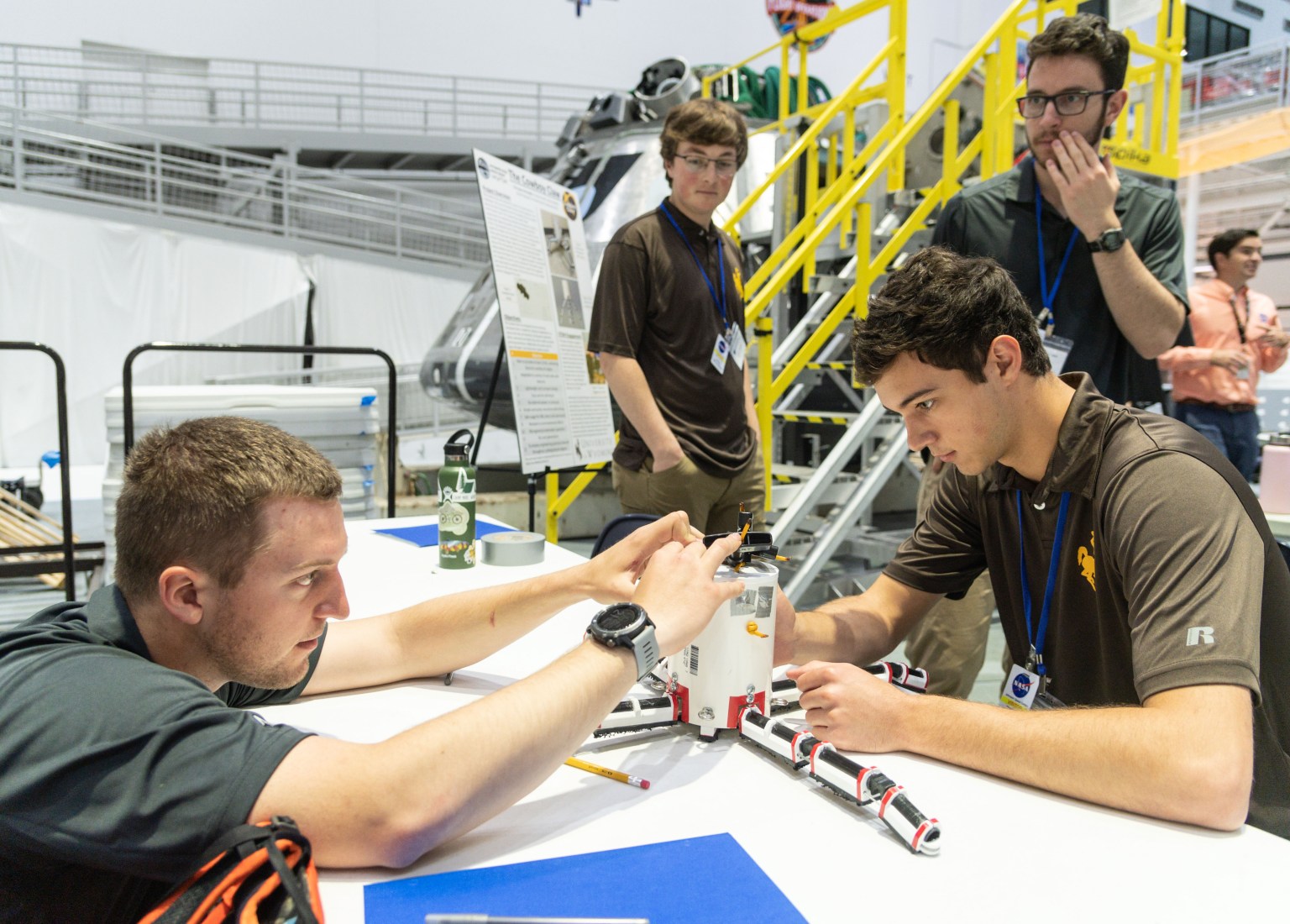
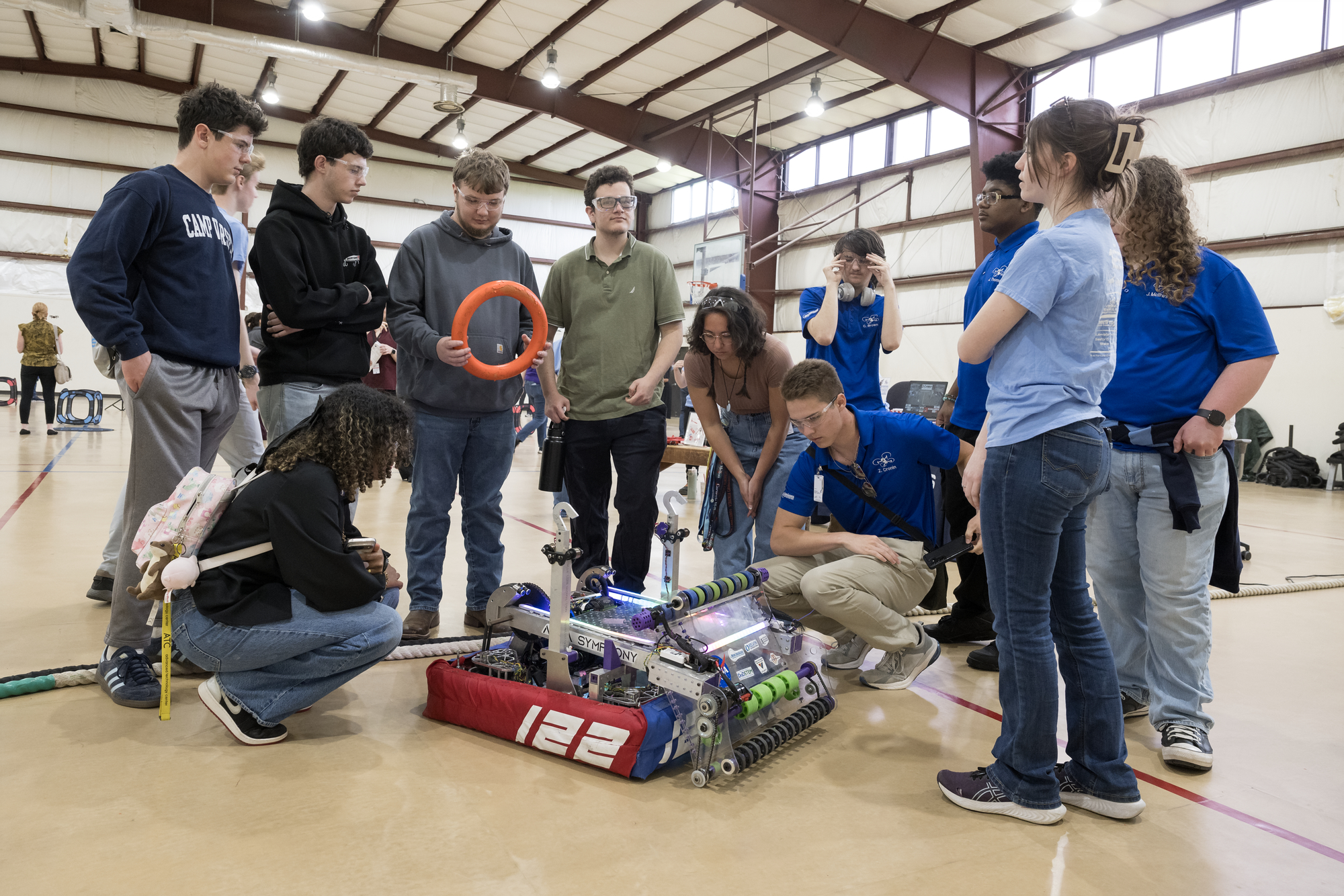
Students participate in a hands-on robotics demonstration during Career Technical Education Day at NASA’s Langley Research Center in Hampton, Virginia.
NASA/Mark Knopp
At NASA, remaining a global leader in exploration and innovation includes having a skilled and dedicated workforce. Technicians play a critical role in advancing the agency’s research and missions, applying hands-on expertise across engineering, fabrication, electronics, and countless other technical fields.
To help cultivate the next generation of technical talent, NASA’s Office of STEM Engagement hosted Career Technical Education Day recently at NASA’s Langley Research Center in Hampton, Virginia. One hundred high school and community college students from Virginia and North Carolina attended, eager to explore the technical career paths that help drive NASA’s work.
“Many students picture NASA as only astronauts or engineers and therefore never consider a career at NASA to be within their reach,” said Bonnie Murray, lead for the Office of STEM Engagement at NASA Langley. “Bringing students from local career and technical education programs to Langley allows them the opportunity to see technicians at work, hear the pathways those technicians followed, and understand how the skills they are developing in their related classes have a place in the NASA workforce.”
The event opened with remarks from NASA Langley’s Steve Gayle, who traced his path from an engineering technician co-op in the center’s Fabrication Division and a graduate of Langley’s Engineering Technician Apprentice Program to his current role as acting associate director. Gayle encouraged students to embrace challenges, think critically, stay curious, and create their own opportunities as they pursue their career goals.
“We need young, bright minds,” Gayle said. “At NASA, we rely on skilled hands-on professionals — technicians who operate our wind tunnels, apply their skills in our fabrication shops, and use their electronics knowledge to design, test, and build critical systems.”
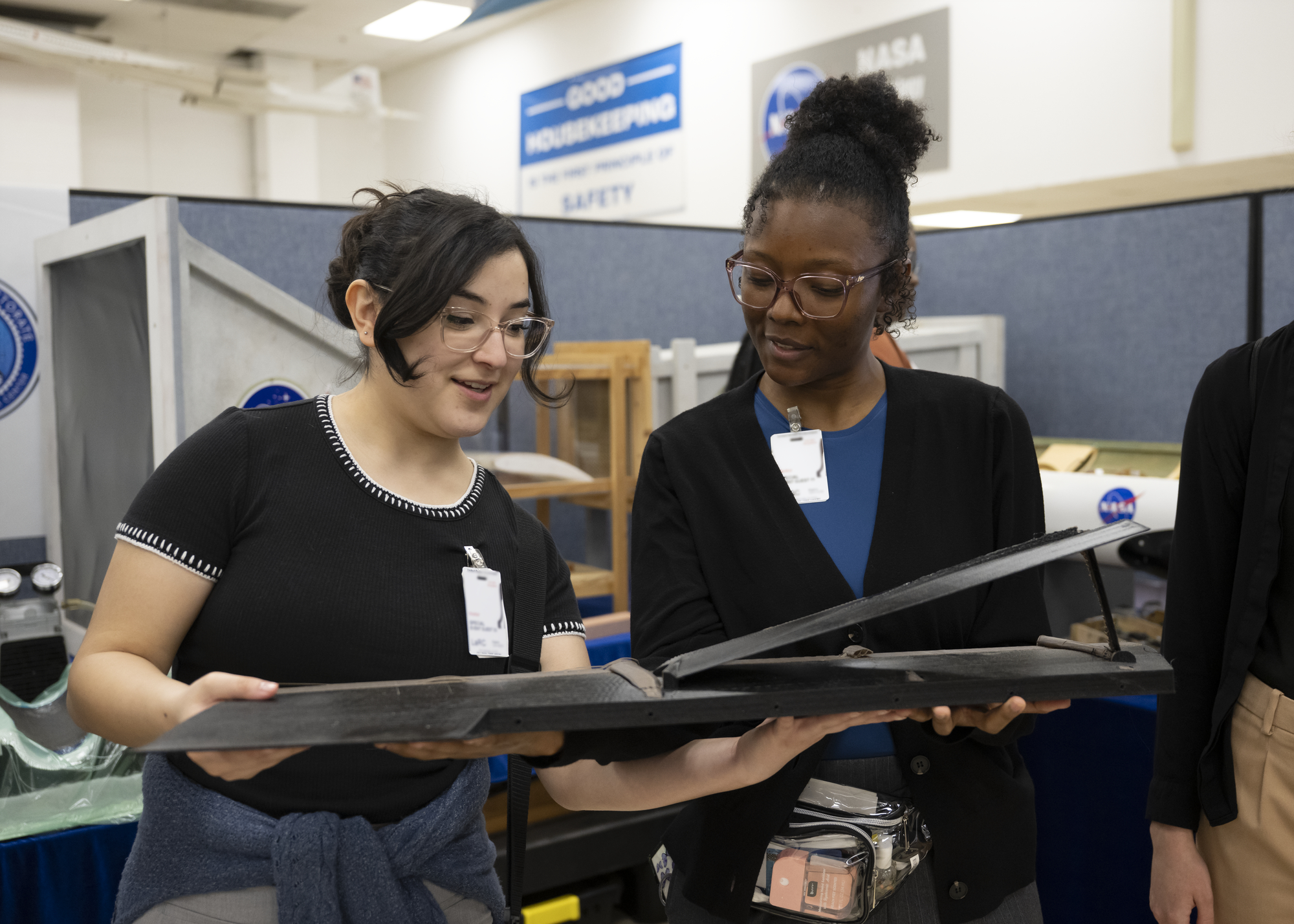
Students visit NASA Langley Research Center’s model shop during Career Technical Education Day to learn about the materials and techniques technicians use to build model aircraft and spacecraft.
NASA/Ryan Hill
Throughout the day, students toured several of Langley’s world-class facilities, including the historic Landing and Impact Research Facility and one of the center’s wind tunnels. At each stop, they received a behind-the-scenes look at the spaces where NASA technicians build, test, and refine the tools and technologies that support the agency’s missions. The technicians spoke with students about their work, their career paths, and the skills needed to excel in technical roles.
Hands-on demonstrations and interactive activities lead by NASA technicians and aerospace industry partners helped students connect their classroom experience with real-world applications. Whether observing fabrication techniques, seeing instrumentation up close, or engaging with engineering demonstrations, participants experienced how STEM and technical skills directly translate into meaningful careers.
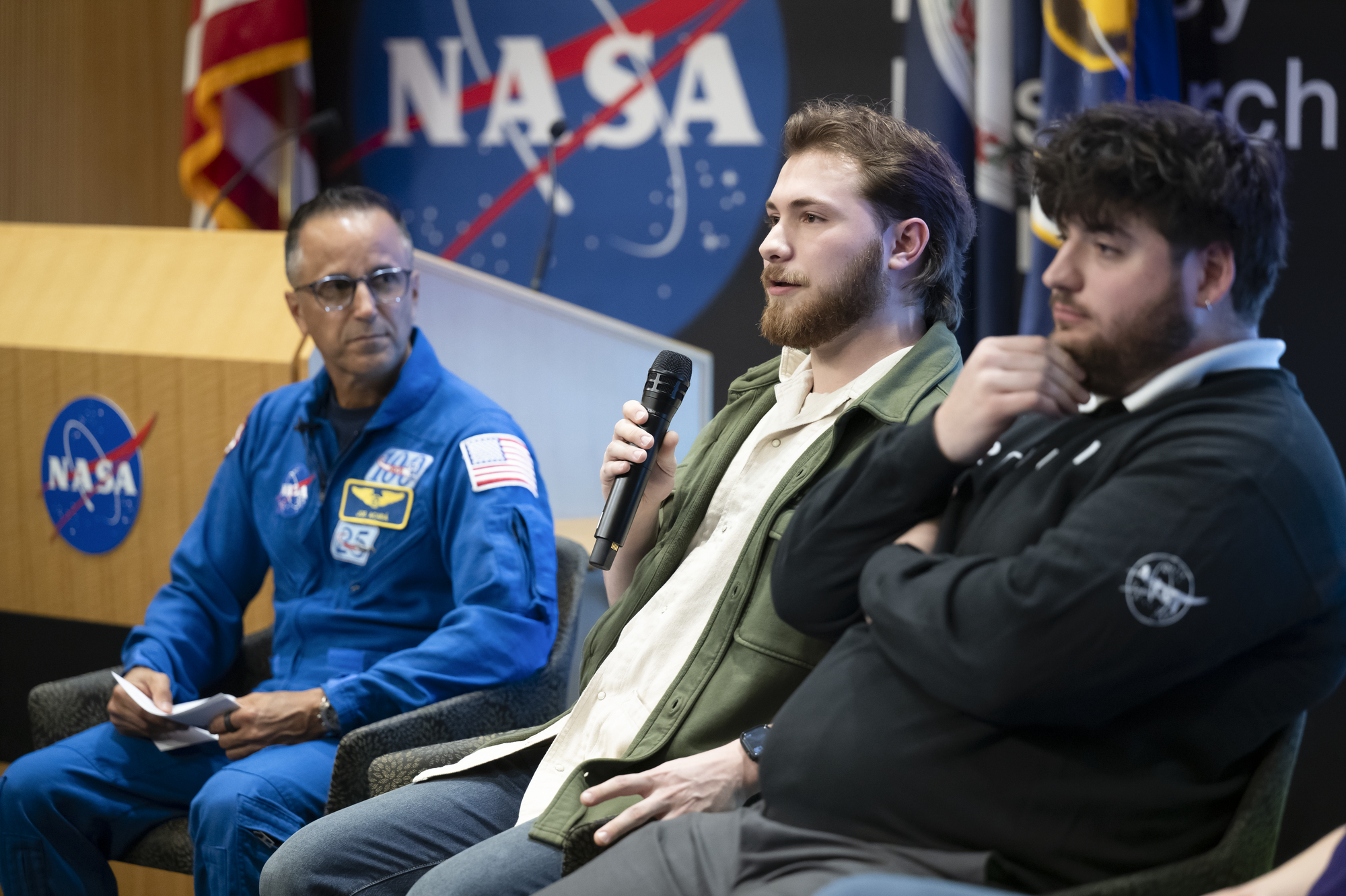
“Through events such as this, NASA seeks to prepare students for aerospace careers through experiences and investments that strengthen research capacity, build technical expertise, and expand reach in alignment with agency missions and needs,” Murray said. The event ended with a career panel moderated by NASA astronaut Joe Acaba, associate director of mission and strategy at NASA’s Johnson Space Center in Houston and former math and science teacher. The panel featured four Langley technician apprentices who shared insights into their roles and the value of strong foundational skills in technical fields.
Wyatt Healy, mechanical engineering technician apprentice at NASA’s Langley Research Center, answers questions during a career panel featuring NASA Langley technician apprentices during Career Technical Education Day.
NASA/Ryan Hill
“A basic grasp of how software, systems, and even everyday items function goes a long way as you progress in your technician journey,” said Wyatt Healy, mechanical engineering technician apprentice at NASA Langley. “When you have those fundamentals down, learning the more advanced concepts becomes much easier. It doesn’t happen overnight, but with a strong foundation, the sky is the limit.”
By connecting students with NASA professionals, facilities, and hands-on experiences, the event showcased a broad range of opportunities available in technical careers. It also underscored NASA’s commitment to building a strong, skilled workforce equipped to support the agency’s mission and tackle the challenges of tomorrow.
For more information about opportunities to connect students with NASA’s mission, work, and people, visit:
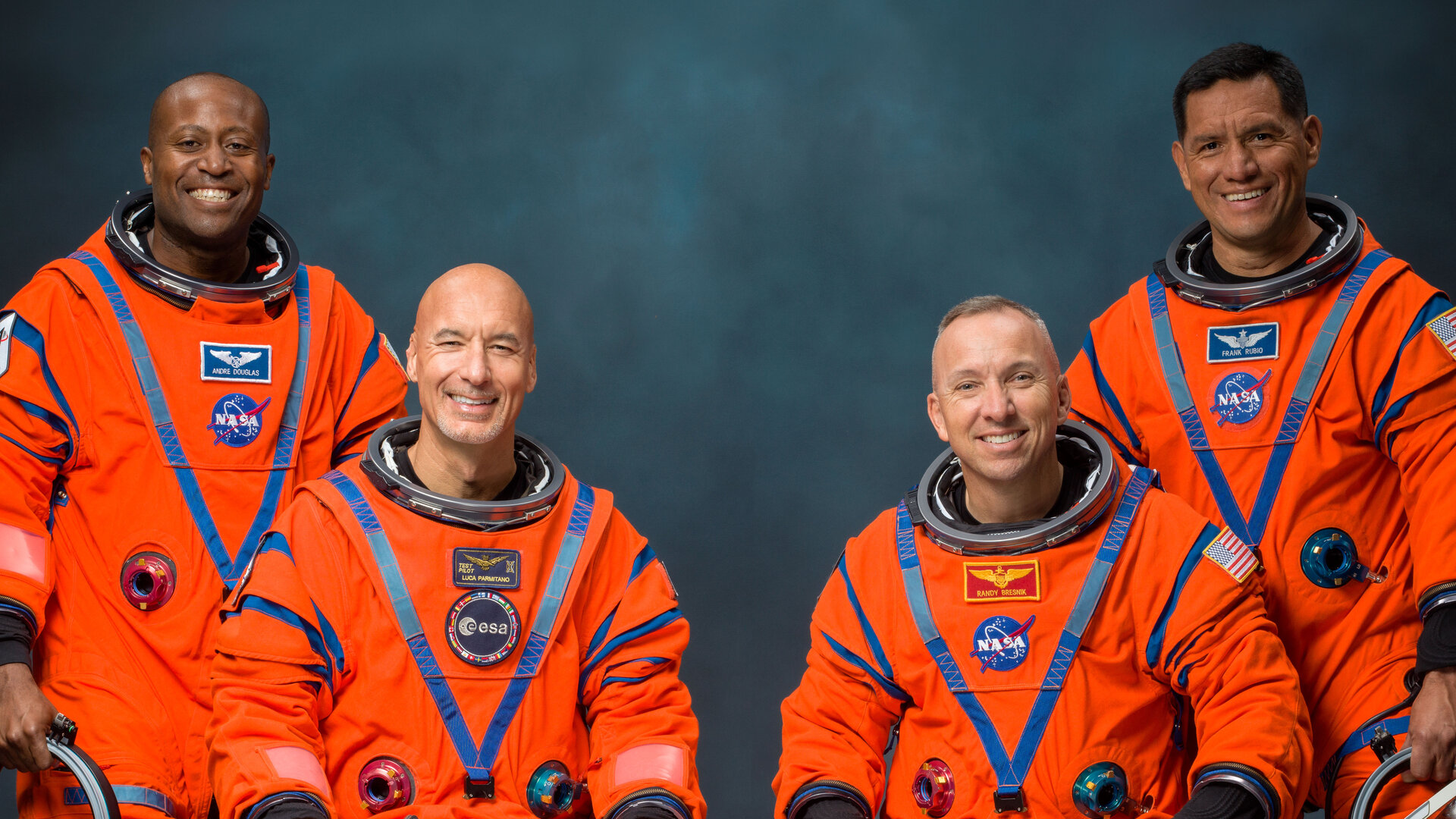
La Nasa ha annunciato oggi la composizione dell’equipaggio della missione Artemis III: Randy Bresnik (comandante, Nasa), Luca Parmitano (Esa), Frank Rubio e Andre Douglas (specialisti di atterraggio, entrambi Nasa). È stato inoltre designato come membro di riserva dell’equipaggio l’astronauta Bob Hines (Nasa). L’equipaggio inizierà ora un rigoroso programma di addestramento per familiarizzarsi con i sistemi della navicella Orion e con il funzionamento dei sistemi di atterraggio con equipaggio umano, in vista di un’ambiziosa serie di dimostrazioni che precederanno la missione di atterraggio sulla Luna.
L’equipaggio della missione Artemis III. Da sinistra: Andre Douglas, Luca Parmitano, Randy Bresnik e Frank Rubio. Crediti: Nasa
Luca Parmitano, astronauta italiano dell’Esa, ha trascorso 366 giorni nello spazio nel corso di due missioni di lunga durata sulla Stazione spaziale internazionale, Volare e Beyond. Durante queste missioni, ha collaborato a centinaia di esperimenti, ha effettuato sei passeggiate spaziali per un totale di oltre 30 ore ed è diventato comandante della Stazione. Da quando è tornato sulla Terra, Parmitano ha ricoperto il ruolo di referente dell’Esa presso il Johnson Space Center della Nasa a Houston, agendo come “CapCom” e addestrando gli astronauti dell’Esa per le passeggiate spaziali e le operazioni robotiche. L’anno scorso Parmitano ha partecipato all’Underway Recovery Test 12 della Nasa, al largo delle coste della California, per simulare l’ammaraggio e il recupero degli astronauti di Artemis da un modello in scala reale della navicella Orion.
«Sono onorato di far parte di questo equipaggio e allo stesso tempo mi sento umile: i miei compagni di missione apportano un bagaglio di esperienze molto variegato, e non vedo l’ora di lavorare con loro, desideroso di imparare e di dare il mio massimo contributo nel mio ruolo. In qualità di pilota collaudatore, questa è davvero una missione da sogno, poiché potremo contribuire a testare i sistemi e a sviluppare le procedure affinché i futuri equipaggi possano spingersi più lontano e, in ultima analisi, riportare l’umanità sulla Luna», ha detto Luca Parmitano. «Sono molto grato all’Aeronautica militare per avermi fornito l’addestramento nelle mie prime fasi; all’Agenzia spaziale italiana – e all’Italia nel suo complesso – per avermi affidato il loro primissimo volo di lunga durata quando ero solo un novellino; all’Agenzia spaziale europea per l’addestramento, il sostegno infinito e le incredibili opportunità che ho avuto da quando sono diventato un astronauta dell’Esa, e alla Nasa per la sua leadership nel riportare l’umanità sulla Luna. È la conferma che l’Esa è un partner affidabile e la continuazione di una solida collaborazione che porterà un europeo sulla Luna».
«Artemis III amplierà i confini delle operazioni spaziali in orbita. La nomina dell’astronauta dell’Esa Luca Parmitano a pilota riflette la profonda competenza europea nel campo dei voli spaziali con equipaggio umano e fa leva sulla sua vasta esperienza operativa in situazioni di forte pressione», ha detto Josef Aschbacher, direttore generale dell’Esa. «Allo stesso tempo, il Modulo di servizio europeo (Esm) dell’Esa fornirà ancora una volta le capacità fondamentali che alimentano Orion, dimostrando il ruolo duraturo dell’Europa nel cuore stesso del programma Artemis. La notizia giunta oggi da Houston è un forte riconoscimento del ruolo dell’Esa nel rendere possibile il ritorno dell’umanità sulla Luna – e un progresso chiave nella nostra collaborazione con la Nasa. Gli europei possono essere orgogliosi di far parte di questo emozionante viaggio».

 Accedi