❌

Modalità di lettura

Crew-12 Returns to Earth

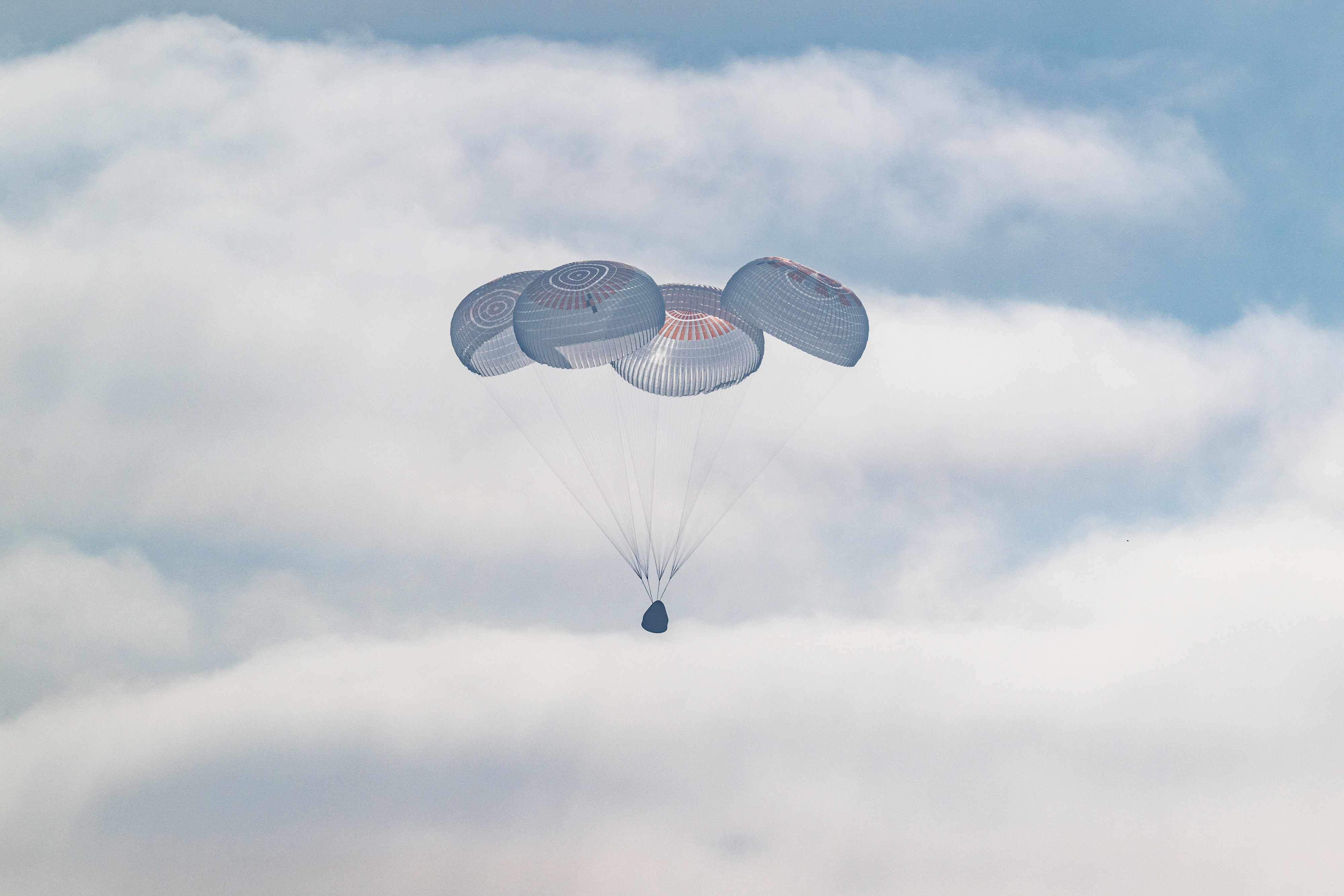
A cone-shaped spacecraft and the four large parachutes attached to it against a backdrop of fluffy white clouds in the sky.
NASA/Keegan Barber

The SpaceX Crew Dragon Freedom spacecraft is seen moments before splashing down in the Pacific Ocean off the coast of California in this Oct. 8, 2026, photograph. Aboard were NASA’s SpaceX Crew-12 members NASA astronauts Jessica Meir and Jack Hathaway, ESA (European Space Agency) astronaut Sophie Adenot, and Roscosmos cosmonaut Andrey Fedyaev. The four spent nearly eight months aboard the International Space Station.

See more photos from splashdown.

Image credit: NASA/Keegan Barber
  •  

Crew-12 Returns to Earth

A cone-shaped spacecraft and the four large parachutes attached to it against a backdrop of fluffy white clouds in the sky.
NASA/Keegan Barber

The SpaceX Crew Dragon Freedom spacecraft is seen moments before splashing down in the Pacific Ocean off the coast of California in this Oct. 8, 2026, photograph. Aboard were NASA’s SpaceX Crew-12 members NASA astronauts Jessica Meir and Jack Hathaway, ESA (European Space Agency) astronaut Sophie Adenot, and Roscosmos cosmonaut Andrey Fedyaev. The four spent nearly eight months aboard the International Space Station.

See more photos from splashdown.

Image credit: NASA/Keegan Barber

  •  

Practicing for Safe Landings on the Moon and Beyond

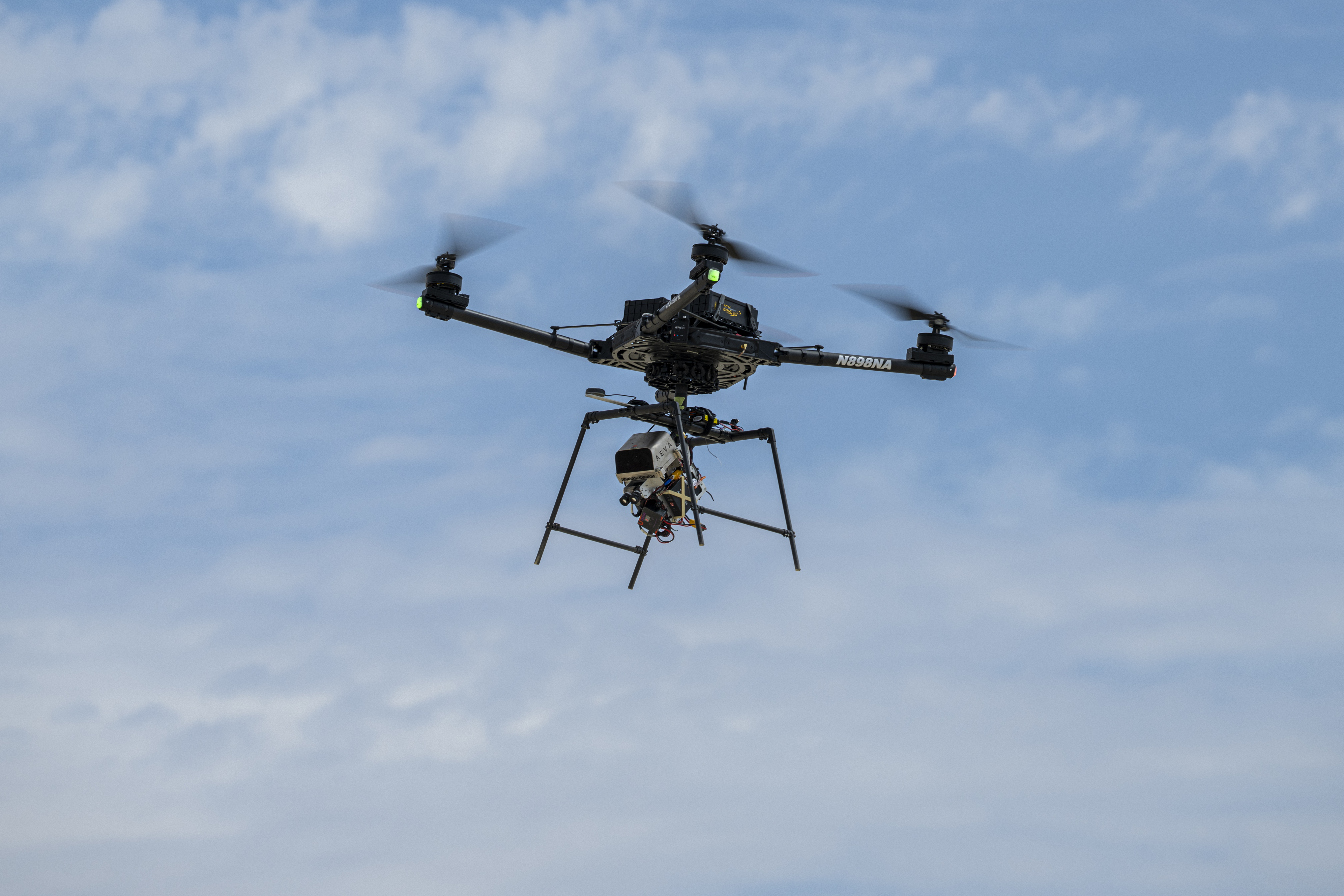
A remotely piloted drone with four rotors carries a guidance and navigation experiment through flight maneuvers.
NASA/Ryan Kline

In this Aug. 27, 2026, image, an Alta-X drone flies an advanced guidance and navigation system known as the Safe and Precise Landing – Integrated Capabilities Evolution (SPLICE) experiment near NASA’s Armstrong Flight Research Center in Edwards, California.

Researchers at NASA’s Johnson Space Center in Houston developed SPLICE, which successfully completed simulated lunar descent and landing maneuvers during recent testing. Its technologies provide safe and precise landing for the Moon, Mars, icy worlds, and other destinations using specialized navigation, guidance, and processing techniques. It enables landing in hard-to-reach and unknown areas that are of high scientific interest.

Image credit: NASA/Ryan Kline

  •  
❌