Modalità di lettura

NASA’s SpaceX CRS-34 Dragon Returns Packed with Space Station Science

Scientists await a big splash in the Pacific Ocean as one of the most research-packed Dragon spacecraft to date returns, completing the 34th SpaceX commercial resupply mission to the International Space Station for NASA. Biological and materials samples, along with tested hardware, are heading back to research teams on Earth for further analysis, advancing NASA’s work to prepare humans for exploration beyond low Earth orbit and to deliver benefits back home.

Tiny cells, huge health insights
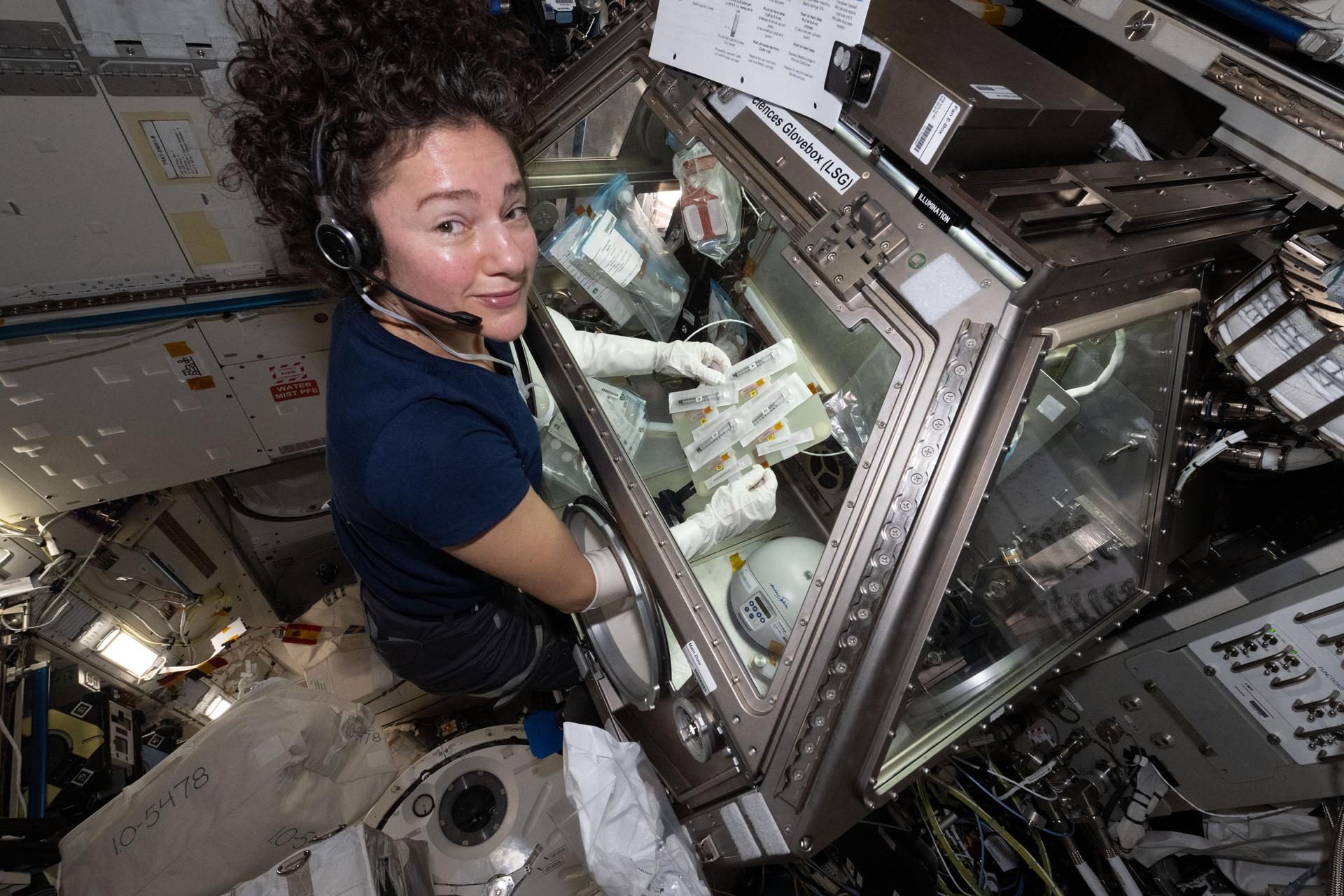
Jessica Meir wears a navy-blue T-shirt and a headset. She looks at the camera while her arms are inserted into the Life Sciences Glovebox. She holds a rectangular plate with multiple sealed syringes and tubes. There are many bags within the glovebox with lab supplies. Metallic surfaces and electronics surround the area outside the glovebox.
NASA astronaut Jessica Meir prepares samples in the Life Sciences Glovebox to study how weightlessness affects crew blood clotting and immune function for the Megakaryocyte Flying-One investigation.
NASA

Some samples returning are for NASA’s Hematopoietic Stem Cell Expansion in Space: Pathfinder Investigation (InSPA-StemCellEX-H2), which seeks to use the microgravity environment to scale up the production of stems cells. On Earth, lab-produced blood stem cells lose their ability to form different cell types, like red and white blood cells that are critical to treating patients with certain blood diseases and cancers. In microgravity, researchers believe this ability will be better preserved while also growing these stem cells in greater numbers. The returning samples will undergo further analysis to determine if space-based efforts produce larger quantities of enhanced stem cells suitable for clinical use.

The team behind NASA’s Streptococcus pneumoniae (Spn) Infection of Cardiac Tissue (MVP Cell-09) experiment is awaiting the return of stem cell-derived heart tissues that were intentionally infected with a pneumonia-causing bacterium as part of ongoing microgravity research. Pneumonia increases the risk of heart disease, which is not fully understood. Because bacteria tend to become more active and virulent in microgravity, this experiment could amplify their effects, making it possible to detect cellular responses that cannot be observed on Earth.

NASA’s Megakaryocyte Flying-One (MeF1) samples are returning to Earth to help understand how large cells found in bone marrow, known as megakaryocytes, and the platelets they produce adapt to spaceflight. Megakaryocytes and platelets play important roles in the formation of blood clots and immune responses. The returning samples, including those taken from astronauts, could show us how the human immune system reacts aboard the space station and help prepare for future exploration missions.

Driving design enhancements
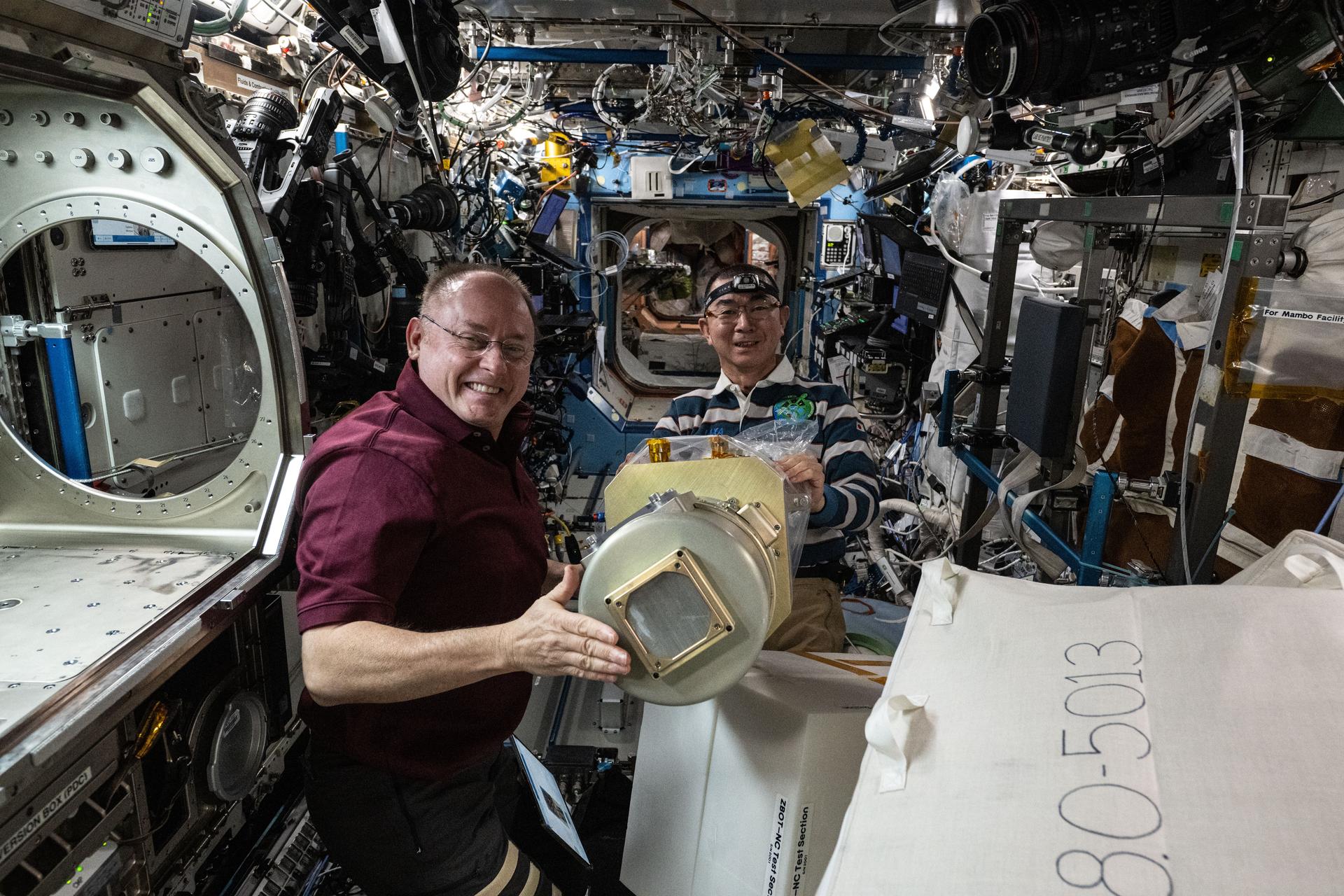
Fincke wears a maroon shirt and smiles as he holds a metallic cylindrical tank with a square outcrop on its flat end. Yui, wearing a striped white and blue shirt, stands next to Fincke and removes a bag from the tank. The surrounding walls of the space station have many cables and electronics embedded into the walls.
NASA astronaut Mike Fincke and JAXA (Japan Aerospace Exploration Agency) astronaut Kimiya Yui work on hardware for the Zero Boil-Off Tank investigation.
NASA

Many spacecraft use cryogenic fuels for propulsion, but temperature swings in space can cause these extremely cold fuels to slowly evaporate and escape their tank, reducing fuel efficiency and complicating mission planning. NASA’s Zero Boil-Off Tank Noncondensables (ZBOT-NC) investigation aboard station studies how gases that do not condense into liquids at cold temperatures affect pressure control and fluid behaviors in propellant tanks. Hardware returning aboard Dragon, including drives containing fluid-physics data, could help validate models and contribute to the design of more efficient cryogenic fuel storage systems for long-duration missions.

Semiconductor research samples as part of NASA’s In-Space Production of Semimetal-Semiconductor Composite Bulk Crystals in Microgravity (SUBSA-InSPA-SSCug) investigation are returning to Earth for further analysis. This study manufactured semimetal-semiconductor composite alloy crystals in space, which have applications in many electronics, including sensors and lasers. Researchers believe microgravity could enable the production of significantly greater and higher-quality crystals, supporting the development of next-generation semiconductor technologies.

Innovative medical research mix

A microscopic image with a black background and enhanced with fluorescence to distinguish a red porous material. This nanomaterial is embedded with many stem cells, represented as tiny, blue, oval-shaped dots.
Stem cells grown along a DNA-inspired nanomaterial on space station as part of DNA Nano Therapeutics-Mission 2, a percussor to DNA Nano Therapeutics-3.
University of Connecticut

NASA’s DNA Nano Therapeutics-3 research team will receive tiny, space-assembled DNA-inspired materials that are combined with medicines to create active cancer treatments. Producing these treatments in microgravity can improve how well they perform in the body. This research could improve patient outcomes by helping therapies reach tumors more effectively, stay in the body longer, and improve medicine release.

Tissue models of the brain, heart, liver, and kidney that were tested with novel RNA-based medicines as part of NASA’s InSPA-Sachi Nanoligomer investigation are also returning. Microgravity can accelerate aging and disease processes, giving researchers a unique environment to better observe how well these new drugs work on different organs ahead of clinical trials.
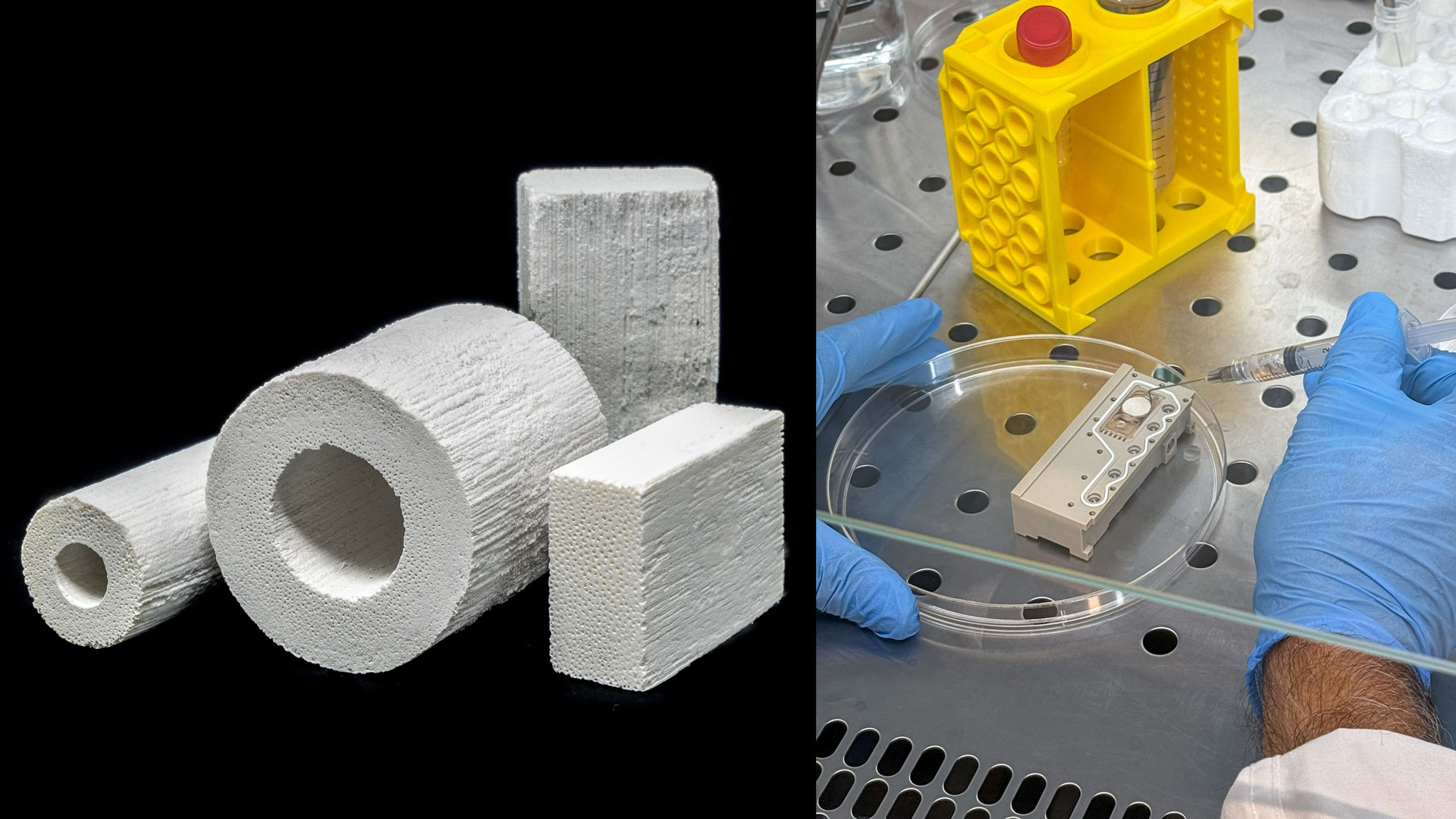
A composite made up of two images. The left image shows four white structures – two cylinders of different diameters and two blocks of different lengths. The right image shows a grey metallic surface with a rectangular device resting on a round petri dish. A pair of hands wearing blue latex gloves are within the frame; the left hand holds the petri dish and the right hand injects a substance into the rectangular device.
The left image shows various wood-derived products of different shapes, and the right image shows a sample of this same material in a laboratory setting on Earth. These products may have applications in the medical field by providing scaffolding for patients with fragile bones.
GreenBone Ortho

Samples from ESA’s (European Space Agency) Green Bone investigation are returning to Earth to help understand how bone cells grow and develop on a new scaffold made from wood. Designed to mimic real bone, this scaffold was tested in microgravity to understand its ability to heal defects and fractures. Because living in microgravity simulates conditions like osteoporosis, a skeletal disorder which affects millions of people worldwide, the results could help treat patients with these fragile bone conditions. 

NASA’s 3D Bone Marrow Analog research team will analyze the returning 3D-printed tissues that mimic parts of the bone marrow. Spaceflight can cause aging-like changes, including bone and muscle loss. To investigate potential countermeasures, these tissue models were exposed to small vibrations aboard the space station to simulate exercise. After the samples return to Earth, researchers will measure bone-like mineral formations and observe cellular and genetic changes. Findings from this investigation could help develop new strategies to maintain astronaut bone and muscle health during future long-duration missions.

In the United States, more than 900,000 knee cartilage injuries occur annually, with many requiring surgery. NASA’s InSPA-Auxilium Bioprinter-Cell Printing is investigating how to treat these injuries and is returning 3D-printed cartilage tissue samples from space station. This investigation uses the orbiting laboratory’s unique microgravity environment to bioprint cartilage tissues with more evenly distributed cells compared to those printed on Earth. The results could help produce higher-quality cartilage prints to treat joint injuries.
  •  

NASA’s SpaceX CRS-34 Dragon Returns Packed with Space Station Science

Scientists await a big splash in the Pacific Ocean as one of the most research-packed Dragon spacecraft to date returns, completing the 34th SpaceX commercial resupply mission to the International Space Station for NASA. Biological and materials samples, along with tested hardware, are heading back to research teams on Earth for further analysis, advancing NASA’s work to prepare humans for exploration beyond low Earth orbit and to deliver benefits back home.

Tiny cells, huge health insights

Jessica Meir wears a navy-blue T-shirt and a headset. She looks at the camera while her arms are inserted into the Life Sciences Glovebox. She holds a rectangular plate with multiple sealed syringes and tubes. There are many bags within the glovebox with lab supplies. Metallic surfaces and electronics surround the area outside the glovebox.
NASA astronaut Jessica Meir prepares samples in the Life Sciences Glovebox to study how weightlessness affects crew blood clotting and immune function for the Megakaryocyte Flying-One investigation.
NASA

Some samples returning are for NASA’s Hematopoietic Stem Cell Expansion in Space: Pathfinder Investigation (InSPA-StemCellEX-H2), which seeks to use the microgravity environment to scale up the production of stems cells. On Earth, lab-produced blood stem cells lose their ability to form different cell types, like red and white blood cells that are critical to treating patients with certain blood diseases and cancers. In microgravity, researchers believe this ability will be better preserved while also growing these stem cells in greater numbers. The returning samples will undergo further analysis to determine if space-based efforts produce larger quantities of enhanced stem cells suitable for clinical use.

The team behind NASA’s Streptococcus pneumoniae (Spn) Infection of Cardiac Tissue (MVP Cell-09) experiment is awaiting the return of stem cell-derived heart tissues that were intentionally infected with a pneumonia-causing bacterium as part of ongoing microgravity research. Pneumonia increases the risk of heart disease, which is not fully understood. Because bacteria tend to become more active and virulent in microgravity, this experiment could amplify their effects, making it possible to detect cellular responses that cannot be observed on Earth.

NASA’s Megakaryocyte Flying-One (MeF1) samples are returning to Earth to help understand how large cells found in bone marrow, known as megakaryocytes, and the platelets they produce adapt to spaceflight. Megakaryocytes and platelets play important roles in the formation of blood clots and immune responses. The returning samples, including those taken from astronauts, could show us how the human immune system reacts aboard the space station and help prepare for future exploration missions.

Driving design enhancements

Fincke wears a maroon shirt and smiles as he holds a metallic cylindrical tank with a square outcrop on its flat end. Yui, wearing a striped white and blue shirt, stands next to Fincke and removes a bag from the tank. The surrounding walls of the space station have many cables and electronics embedded into the walls.
NASA astronaut Mike Fincke and JAXA (Japan Aerospace Exploration Agency) astronaut Kimiya Yui work on hardware for the Zero Boil-Off Tank investigation.
NASA

Many spacecraft use cryogenic fuels for propulsion, but temperature swings in space can cause these extremely cold fuels to slowly evaporate and escape their tank, reducing fuel efficiency and complicating mission planning. NASA’s Zero Boil-Off Tank Noncondensables (ZBOT-NC) investigation aboard station studies how gases that do not condense into liquids at cold temperatures affect pressure control and fluid behaviors in propellant tanks. Hardware returning aboard Dragon, including drives containing fluid-physics data, could help validate models and contribute to the design of more efficient cryogenic fuel storage systems for long-duration missions.

Semiconductor research samples as part of NASA’s In-Space Production of Semimetal-Semiconductor Composite Bulk Crystals in Microgravity (SUBSA-InSPA-SSCug) investigation are returning to Earth for further analysis. This study manufactured semimetal-semiconductor composite alloy crystals in space, which have applications in many electronics, including sensors and lasers. Researchers believe microgravity could enable the production of significantly greater and higher-quality crystals, supporting the development of next-generation semiconductor technologies.

Innovative medical research mix

A microscopic image with a black background and enhanced with fluorescence to distinguish a red porous material. This nanomaterial is embedded with many stem cells, represented as tiny, blue, oval-shaped dots.
Stem cells grown along a DNA-inspired nanomaterial on space station as part of DNA Nano Therapeutics-Mission 2, a percussor to DNA Nano Therapeutics-3.
University of Connecticut

NASA’s DNA Nano Therapeutics-3 research team will receive tiny, space-assembled DNA-inspired materials that are combined with medicines to create active cancer treatments. Producing these treatments in microgravity can improve how well they perform in the body. This research could improve patient outcomes by helping therapies reach tumors more effectively, stay in the body longer, and improve medicine release.

Tissue models of the brain, heart, liver, and kidney that were tested with novel RNA-based medicines as part of NASA’s InSPA-Sachi Nanoligomer investigation are also returning. Microgravity can accelerate aging and disease processes, giving researchers a unique environment to better observe how well these new drugs work on different organs ahead of clinical trials.

A composite made up of two images. The left image shows four white structures – two cylinders of different diameters and two blocks of different lengths. The right image shows a grey metallic surface with a rectangular device resting on a round petri dish. A pair of hands wearing blue latex gloves are within the frame; the left hand holds the petri dish and the right hand injects a substance into the rectangular device.
The left image shows various wood-derived products of different shapes, and the right image shows a sample of this same material in a laboratory setting on Earth. These products may have applications in the medical field by providing scaffolding for patients with fragile bones.
GreenBone Ortho

Samples from ESA’s (European Space Agency) Green Bone investigation are returning to Earth to help understand how bone cells grow and develop on a new scaffold made from wood. Designed to mimic real bone, this scaffold was tested in microgravity to understand its ability to heal defects and fractures. Because living in microgravity simulates conditions like osteoporosis, a skeletal disorder which affects millions of people worldwide, the results could help treat patients with these fragile bone conditions. 

NASA’s 3D Bone Marrow Analog research team will analyze the returning 3D-printed tissues that mimic parts of the bone marrow. Spaceflight can cause aging-like changes, including bone and muscle loss. To investigate potential countermeasures, these tissue models were exposed to small vibrations aboard the space station to simulate exercise. After the samples return to Earth, researchers will measure bone-like mineral formations and observe cellular and genetic changes. Findings from this investigation could help develop new strategies to maintain astronaut bone and muscle health during future long-duration missions.

In the United States, more than 900,000 knee cartilage injuries occur annually, with many requiring surgery. NASA’s InSPA-Auxilium Bioprinter-Cell Printing is investigating how to treat these injuries and is returning 3D-printed cartilage tissue samples from space station. This investigation uses the orbiting laboratory’s unique microgravity environment to bioprint cartilage tissues with more evenly distributed cells compared to those printed on Earth. The results could help produce higher-quality cartilage prints to treat joint injuries.
  •  

PRC-linked spies hid inside medical and military networks for more than a year, snooping through Gmail and stealing data

Chinese government spies remained hidden in the networks of multiple North American medical and military research organizations for more than a year, deploying custom malware and snooping through Gmail inboxes and stealing sensitive data. This PRC-nexus espionage crew, which Google tracks as UNC6508, used some particularly noteworthy search terms as they were scanning for data to steal. They included such esoteric topics as drone technology and a viral disease that spreads from mosquitoes to humans. “It’s one of the most interesting grocery shopping lists of things to collect that I’ve seen from a state-sponsored actor,” Luke McNamara, deputy chief analyst at Google Threat Intelligence Group, told The Register. “We have defense-related activity, which was a significant bulk of the different terms, or emails related to defense platform systems or companies,” McNamara said. “Some of those were looking for any emails that were coming in or going out that used @ and then a big defense name. Others were specific email addresses of individuals at more niche defense companies.” While most of the terms related to defense and technology, the intruders also searched for some medical research facilities – and the very specific pathogen, “Chikungunya,” a viral disease transmitted to humans from mosquitoes that was responsible for an outbreak in China's Guangdong province in July 2025. Google won’t say how many organizations were compromised in this campaign. A Monday report said the operation targeted several national, state, and private medical entities. “These organizations comprise world-renowned clinical providers, premier academic centers, North American military health institutions, professional advocacy groups, and health regulatory bodies,” according to the report. “Their research areas span a broad spectrum of modern medicine, from molecular discovery and clinical drug trials to state-level public health policy and military readiness.” McNamara told us that the tech company’s incident responders notified all the victims they identified, “and we suspect there's probably even more.” Incident responders first detected this campaign in early 2025, but told us it dates back to at least 2023. And all of these attacks began with the digital intruders somehow exploiting externally facing REDCap (Research Electronic Data Capture) servers. These servers are primarily used by universities, hospitals, and research institutions to build and manage online databases and surveys, and to store sensitive clinical research data. The earliest known intrusion happened in September 2023, when UNC6508 compromised a REDCap server belonging to a North American medical research institution. McNamara told us that all of the intrusions followed this same pattern. Seeing (Infinite)Red After three months, the snoops silently deployed custom malware named InfiniteRed to capture legitimate REDCap login credentials. The malware includes three modular components. The first allows it to maintain persistent remote access by injecting its code into new REDCap versions after intercepting the upgrade process. Then it injects a credential harvester into the authentication system file to compromise user accounts. Finally, it functions as a backdoor with custom hooks that executes on every REDCap page load. Google’s threat intelligence team identified “multiple” US and Canada-based organizations infected with InfiniteRed, and offered assistance with removing the malware. After remaining undetected for more than a year, UNC6508 used the stolen credentials to access admin accounts and the victims’ internal network. Finally, the attackers added sneaky domain content compliance rules for data theft. All 'Patroit' themed emails sent to BebitaBarefoot774 Content compliance rules are legitimate features in many cloud-based enterprise productivity suites - like Google Workspace - to exfiltrate specific email communications. Administrators can create these rules to manage messages that contain predefined sets of words or phrases, and these rules apply to all of the users in an organizational unit. UNC6508 created a compliance rule named "Patroit" (yes, they misspelled “Patriot”) to match keywords and email address patterns in sent or received emails. These messages were then silently BCC-forwarded to an attacker-controlled Gmail address, BebitaBarefoot774[@]gmail[.]com, delivering a steady stream of geo-strategic policy, military strategy, advanced technology, and medical research emails to the PRC-linked crew. The search terms also included professional email addresses and phone numbers for members of organizations in these spaces. GTIG disabled the Gmail account to prevent further data exfiltration. “One of the questions that we've had internally around this is: We're seeing this show up primarily at medical research institutions,” McNamara said. “Why are they searching for things like unmanned drones and unmanned vehicles? Why would you expect to find that there?” One theory, he said, is that this particular threat group was tasked with collecting data across different categories of national-security-related terms and information. “Maybe they were copy-and-pasting this across multiple victims, including ones outside of this medical research space?” Plus, some of the targeted institutions were likely working on research with a military or government agency connection. “So there was a potential that they could be in correspondence with someone where one of these terms showed up, and the actors were casting a very wide net,” McNamara said.®

  •  
❌