As tech giants rush to build infrastructure, some residents who live near data centers say a constant low-frequency vibration is ruining their health and homes.
A 350,000-square-foot data center in Lowell, Mass., is abutted by homes. The site was once the Lowell Bleachery and Dye Works, and then for six decades the Prince Spaghetti factory.
ROMA – La chiusura dello Stretto di Hormuz ha costretto il settore marittimo a riorganizzare i flussi logistici verso i Paesi del Golfo. I porti di Gedda, sul Mar Rosso, e Sohar, in Oman, sono diventati i principali snodi alternativi: le merci provenienti da Europa e Asia vengono sbarcate in questi scali e poi trasferite via terra o tramite servizi feeder verso le destinazioni finali. La soluzione garantisce la continuità degli approvvigionamenti, ma comporta costi più elevati, tempi di trasporto più lunghi, maggiori rischi di congestione e costi assicurativi maggiorati dai “war risk”. Stefano Messina, presidente di Assarmatori, ha affrontato questi temi in un’intervista rilasciata a margine, poco prima dell’inizio dell’Annual Meeting dell’Associazione di Assarmatori, svoltosi ieri mattina a Roma presso il Grand Hotel Parco dei Principi.
Presidente Messina, chiusura di Hormuz: dal punto di vista logistico quale è il quadro?
«Tutto si concentra sulla costa occidentale dell’Arabia Saudita a Sohar, in Oman, dove attualmente il porto funziona benissimo. Ovviamente tende a congestionarsi perché qui la merce affluisce per essere trasferita via terra con i camion a Gedda».
«I prezzi dei camion sono arrivati a 4-5.000 dollari al giorno, rispetto a una tariffa normale di circa 2.000 dollari» – spiega Messina – «Un container standard sulla linea Genova-Dubai: i nostri clienti lo sanno bene, il nolo marittimo era 900-1.000 dollari. Oggi e, negli ultimi tre mesi, ne costa 6-7.000, ma di questi circa 5.000 sono il costo del camion. Però la merce va, se la gente compra, questo dimostra che alla fine, salvo eccezioni di merci che cubano molto e hanno un valore economico basso, il sistema regge».
I vettori marittimi globali stanno infatti applicando noli sensibilmente più elevati ai clienti finali per coprire la complessità delle catene di trasporto, i sovrapprezzi assicurativi e l’impiego di servizi intermodali alternativi. In molti casi, tuttavia, la componente più onerosa non è il trasporto marittimo bensì quello terrestre: il costo dei camion impiegati per attraversare la Penisola Arabica è aumentato fino a rappresentare la quota prevalente del costo complessivo della spedizione. Nonostante ciò, l’incremento si riflette sul nolo complessivo fatturato al cliente, con conseguente aumento del costo finale delle merci importate nel Golfo.
«Se ho una merce povera che occupa un container il nolo di 5.000 dollari incide molto. Ma nella stragrande maggioranza dei casi, il costo del nolo su materie prime come: caffè, cacao e prodotti alimentari incide in misura minima. La pasta al sugo, ad esempio, subisce un’incidenza di pochi millesimi al chilo. Quindi un aumento di 2-3.000 dollari su una merce che vale mezzo milione o un milione di dollari ha un impatto limitato».
L’aumento delle materie prime negli ultimi due anni, il mercato non continuerà a mantenere alte le tariffe anche dopo la riapertura di Hormuz?
«Da armatore di linea lo spero molto per il mio conto economico e per i flussi di cassa. Però anche per i suoi fornitori, per esempio i camionisti. Però dopo i camion non dovranno più fare mille chilometri tra una destinazione e l’altra perché la nave tornerà ad andare direttamente a Dubai. Credo che nel giro di qualche mese la situazione possa normalizzarsi».
Il tema della sicurezza della navigazione e dello sminamento, sarà determinante per la normalizzazione della situazione?
«Da un mese stiamo parlando con la Marina Militare, oggi l’intervento dell’ammiraglio Berutti Bergotto sarà molto interessante. Esiste già una pipeline operativa: le navi “Rimini” e “Crotone” della Marina Militare sono già a Gibuti e prevedono di partecipare a una missione di sminamento».
Per un possibile pedaggio di Hormuz, quale è la sua opinione?
«Secondo me è un po’ prematuro parlarne, però non credo. Sembra che l’ufficializzazione dell’accordo non arriverà prima di venerdì. Non prevedo che l’Iran voglia introdurre condizioni particolarmente aggressive. Nel momento in cui si raggiunge un accordo internazionale di pace, sarebbe difficile immaginare una condizione che vada contro la libertà di navigazione. Oggi è difficile dirlo, ma credo che nel giro di due o tre settimane lo capiremo».
Presidente, sul tema delle assicurazioni: secondo un’interessante teoria, i Lloyd’s di Londra avrebbero di fatto contribuito alla chiusura del traffico nello Stretto di Hormuz?
«No, il traffico lo hanno chiuso soprattutto gli armatori. La gran parte degli armatori non se la sono sentita di entrare nello Stretto di Hormuz, nonostante ci fosse una domanda elevatissima. Le assicurazioni è vero sono aumentate, tuttavia, se un armatore decide di andare e dispone di un nolo che copre ampiamente il costo assicurativo, può comunque farlo. Sono però operazioni molto rischiose e tipiche di operatori molto aggressivi. Non stiamo parlando di operatori italiani, probabilmente neppure europei, ma di soggetti che operano soprattutto in Estremo Oriente o in Paesi dove la deregolamentazione è molto più spinta rispetto all’Unione Europea. Quindi il tema delle assicurazioni è ancora oggi presente, da un lato, con l’aumento dei premi assicurativi, anche noi armatori abbiamo cercato di recuperare questo costo extra, il cosiddetto “war risk”».
Gli extra “war risk” assicurativi sono solo nell’area di Hormuz?
«Non sono solo dentro Hormuz, ad esempio a Gedda, in Arabia Saudita, sul lato occidentale del Mar Rosso non c’è una guerra in corso, eppure paghiamo un extra war risk. Lo stesso vale per Sohar, in Oman, che è fuori da Hormuz, paghiamo comunque un sovrapprezzo per il rischio e, quando possibile, lo ribaltiamo sul cliente distribuendolo sui singoli contratti. Il Mar Rosso oggi è relativamente tranquillo, c’è sempre la missione Aspides, noi europei continuiamo a transitare con la scorta. Esiste un sistema molto monitorato e l’Unione Europea, con gli italiani in prima linea, svolge un ruolo importante, la Marina Militare dispone ormai da anni di una presenza stabile nell’area».
Questi passaggi si ripetono con frequenza ormai?
«Si, recentemente abbiamo svolto anche esercitazioni con alcune compagnie italiane impegnate nel traffico internazionale. Sono stati implementati numerosi miglioramenti operativi e procedure condivise con gli equipaggi, perché questi sono passaggi che si ripetono continuamente. Southbound: cioè in discesa da Suez verso il Mar Rosso e Bab el-Mandeb. Northbound: si arriva dall’India o dall’Estremo Oriente, per entrare da Bab el-Mandeb e risalire verso nord. Ormai esistono veri e propri convogli organizzati per questi transiti».
Annual Meeting Assarmatori 2026 – Gli articoli di Corriere marittimo:
As people in Arizona continue to lose their SNAP benefits, St. Mary’s Food Bank in Phoenix has seen an increase in visits. Rob Schumacher/The Republic/Imagn
As a House committee debated President Donald Trump’s signature domestic policy bill last year, Republican backers repeatedly emphasized that its changes to the Supplemental Nutrition Assistance Program, also known as food stamps, wouldn’t affect vulnerable people.
SNAP reforms would “restore integrity” to the program and ensure it works for the “most vulnerable among us, including children,” said Rep. Glenn “GT” Thompson, a Pennsylvania Republican and chair of the House Agriculture Committee.
And Rep. Dusty Johnson, a South Dakota Republican, said the bill would focus resources on the “neediest” Americans. “If you are a pregnant woman, your benefits are unaffected. If you have young children at home, your benefits are unaffected by this bill. If you are disabled, your benefits are unaffected by this bill.”
But nearly a year after the measure was signed into law, the number of children receiving food assistance has plummeted by at least 776,000, according to a ProPublica analysis. At least 12 states break down program participation by age, and of the 1,670,011 people who are no longer receiving benefits in those states, 776,134, or 46%, were children.
Another analysis reached the same conclusion: Just last month, the nonpartisan Center on Budget and Policy Priorities found there were 700,000 fewer children receiving food assistance.
Arizona has seen the nation’s largest percentage decline in SNAP participants; 205,223 children are no longer receiving the benefit since July 2025, a 55% drop. Louisiana had the second largest percent decline among children, 22%.
The U.S. Department of Agriculture, which oversees SNAP, hasn’t detailed the impact on children aided by the program, but initial figures show that compared to February 2025, 4.3 million fewer people received SNAP nationwide in February 2026, leaving 37.8 million participants.
Although children weren’t the intended targets of the legislation’s changes, they’re increasingly “collateral damage,” said Katie Bergh, a senior policy analyst at the Center on Budget and Policy Priorities.
If states are trying to comply with the law’s changes to SNAP, they’re likely not focusing on making the program accessible, Bergh said. Other experts said that people may be pushed off the program because of increased paperwork requirements to remain eligible.
States are required to impose work requirements for most adult recipients, while preparing for two major cost shifts. In October, states will begin covering 75% of the program’s administrative costs. States have been paying 50% of those costs.
In addition, states will have to pay a larger share of SNAP benefits starting in October 2027, based on their error rate. Error rates reflect overpayments or underpayments of SNAP benefits. While sometimes characterized as fraud, such errors are usually the fault of the state agency or the SNAP recipient, according to USDA, which describes them as “largely unintentional.”
If a state agency is facing staffing shortages and struggling to comply with new regulations, it will be harder for low-income families to access the benefits, Bergh said. “Families are falling through the cracks.”
In Massachusetts, for example, the share of SNAP applicants who called an assistance line and couldn’t reach a worker rose from 61% in November to nearly 81% in March, according to the Department of Transitional Assistance, which administers SNAP in the state. The state agency did not respond to a request for comment.
A USDA spokesperson did not address ProPublica’s questions about the number of children who have lost access to SNAP. “There is no shortage of resources for the most vulnerable among us, including children,” the spokesperson said.
The three members of the House Agriculture Committee who defended last year’s bill before its passage — Rose, Thompson and Johnson — did not respond to ProPublica’s questions about their statements now that many children no longer receive SNAP benefits.
Rep. Jim McGovern, a Massachusetts Democrat, asked Secretary of Agriculture Brooke Rollins about her recent comments that it was “good news” that millions of people no longer receive SNAP. If more than 700,000 children have been dropped in the 12 states that report those figures, “that number’s going to be into the millions” when other states are included, he said.
Rollins responded, “The 700,000 number of children is not correct,” contending that most people who were kicked off SNAP were “fraudulent.”
“That is not a nonpartisan group that gave you that number,” she said. (ProPublica independently verified the figures reported by the Center on Budget and Policy Priorities.)
McGovern said he has talked to people who have lost food assistance. “These are people who actually need and rely on this food assistance to provide basic nutrition for their families,” he said.
Pressure to lower error rates “creates a temptation for the states to bump off working families,” said Parke Wilde, a food economist at Tufts University. Working families may have more volatile incomes, making it harder for state agencies to assess benefits accurately.
“When they say we want to preserve SNAP for those with the greatest need, they’re sort of acknowledging that they want the scale of the SNAP program to be smaller,” he said.
Mariana Chilton, an expert in child hunger at University of Massachusetts, Amherst, said a smaller program won’t save money in the long run. Research shows that children who receive SNAP benefits are healthier, have better academic outcomes, use hospitals less often and have better mental health as teenagers.
She called the situation a “public health crisis” in the making. “When children are not healthy, this affects children today and it affects them throughout their lifetimes,” she said, likening hunger during early childhood to a brain injury.
As Arizona’s SNAP participation drops, nonprofits are feeling the effects. St. Mary’s Food Bank, the largest in the state, has seen a 15% increase in need this year, which translates into 300,000 more visits from people in search of food, said Milt Liu, the chief executive officer.
“It’s important for everyone to realize that policies have implications for people on the edge, and we’re seeing that in our line every day,” he said.
On a recent morning, Ana Alvarez waited in a line of vehicles at a St. Mary’s food bank in Phoenix. Alvarez, a single mother of five who works at a restaurant, started coming to St. Mary’s after she lost her SNAP benefits in September.
She reapplied for SNAP with the Arizona Department of Economic Security in December, but the application is still pending. The department did not respond to questions about its backlog.
She clips coupons and has cut out trips to the zoo and restaurants with her children. The slow season at the restaurant where she works is about to hit. And as summer temperatures rise, Alvarez wonders how she will afford her electric bill, her rent and her car payment.
At least once a week she contacts the agency about her application. The last time she called, a worker told her what others have in the past: She will have to keep waiting.
This artist’s concept shows exoplanet HD 80606 b being “roasted” as its orbit approaches periastron, the point at which it is closest to its host star, which is similar to our Sun.
Credits: Artwork: NASA, ESA, CSA, Joseph Olmsted (STScI)
4 min read
NASA’s Webb Catches Exoplanet Getting Roasted
One well-done gas giant, coming right up! That’s the latest from researchers analyzing NASA’s James Webb Space Telescope’s observations of HD 80606 b, an exoplanet four times the mass of Jupiter with an extremely elliptical orbit that sweeps close by its Sun-like star. The research team is presenting their study and preliminary findings Tuesday at the 248th meeting of the American Astronomical Society in Pasadena, California.
“Hot Jupiters are already considered some of the most extreme exoplanets we know of, but even among that population, HD 80606 b is one of the most extreme,” said Tiffany Kataria, the study’s principal investigator at NASA’s Jet Propulsion Laboratory in Southern California. “We typically think of hot Jupiters as hot gas giants sitting right next to their stars, but this planet’s highly eccentric orbit creates a completely different beast.”
As the planet plunges close to its star, Webb shows its temperature skyrockets by 1,100 degrees Fahrenheit. Previous studies have shown that radical temperature swings can cause an exoplanet’s chemistry and clouds to change in real time. According to the research team, the dynamic conditions of HD 80606 b make the planet an ideal target to observe these changes with Webb’s powerful instruments.
Image: Artist’s concept exoplanet HD 80606 b
This artist’s concept shows exoplanet HD 80606 b being “roasted” as its orbit approaches periastron, the point at which it is closest to its host star, which is similar to our Sun.
Artwork: NASA, ESA, CSA, Joseph Olmsted (STScI)
“Observing a planet like HD 80606 b is actually very efficient because its unusual orbit, with the corresponding swings in temperature and chemical composition, allow us to gather data under varying conditions in just hours and apply those findings to other hot Jupiters or more conventional exoplanets,” said Laura C. Mayorga, co-investigator on the study and an exoplanet astronomer at the Johns Hopkins Applied Physics Laboratory in Laurel, Maryland.
Measurements of temperature and chemical composition were done with spectroscopy, a technique scientists use to break light into its component colors to reveal information about the composition, temperature, motion, and physical properties of objects in space. The team used Webb’s MIRI (Mid-Infrared Instrument) for an extended observation of HD 80606 b before, during, and after its periastron, or closest pass by its star. During periastron, the planet also passed behind the star from Webb’s perspective in what’s known as a secondary eclipse. The observation was years in the planning, as scheduling the time to catch the planet at this point was complex given its extremely elliptical 111-day orbit, and Webb’s own restrictions on where it can look during specific times of the year, based on Earth’s position in orbit around the Sun.
Researchers say they have only begun to peel back the layers of an incredibly rich dataset, but they can clearly see a dramatic shift in the exoplanet’s temperature. “Webb has shown that the planet’s increase in temperature was even more extreme than we anticipated based on Spitzer data,” said Kataria.
In fact, the planet had already been dubbed the “roasted exoplanet” and even got its own poster in NASA’s popular series. NASA’s now-retired Spitzer Space Telescope laid the groundwork of infrared observations of HD 80606 b, showing that more detailed spectroscopic data from Webb would be especially compelling.
“Spitzer did amazing work on this exoplanet, and now Webb is building on that legacy by enabling us to drill down to distinguish specific chemical signatures like methane and carbon dioxide, which is just amazing progress,” said Ryan Challener, co-author and research associate at the Cornell Center for Astrophysics and Planetary Science. “There’s so much to learn from this one dataset here — we really are just getting started deciphering what Webb has to tell us.”
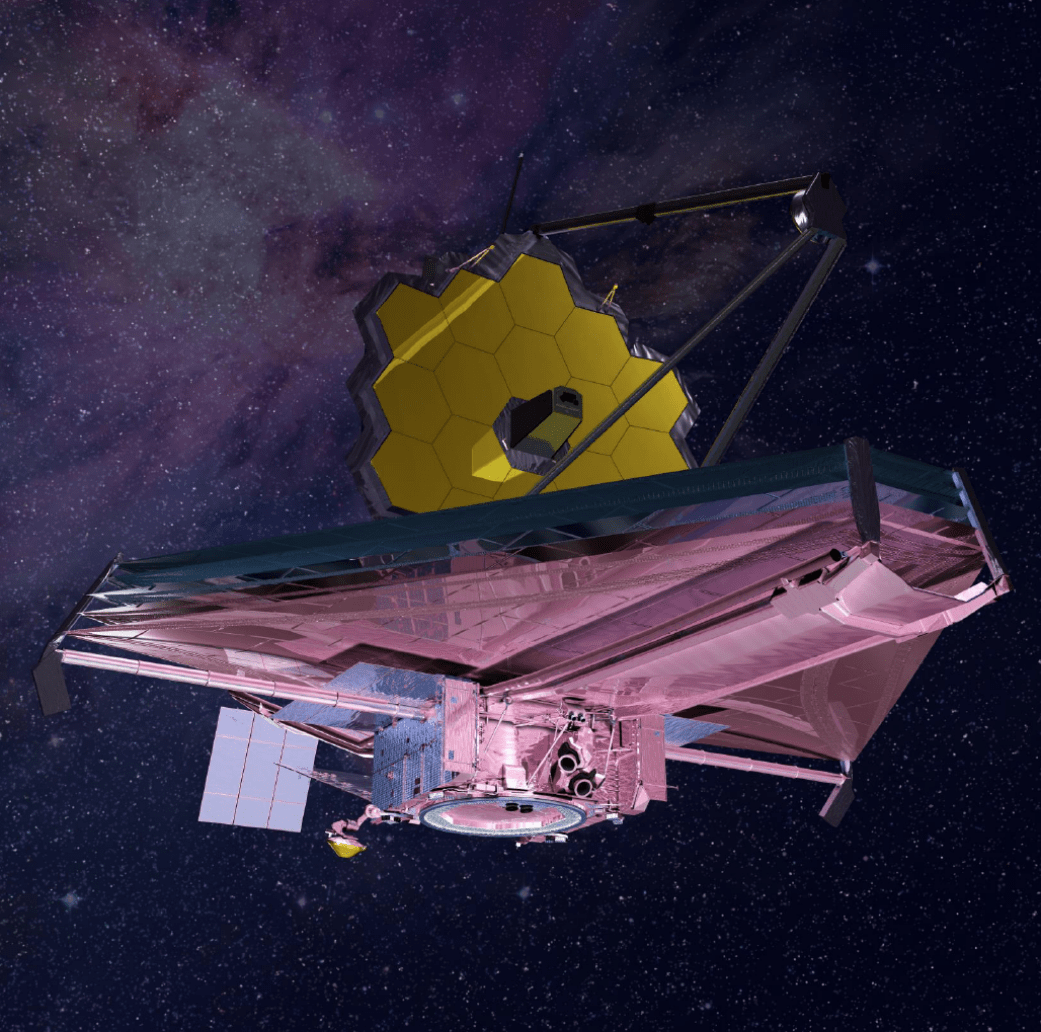
The James Webb Space Telescope is the world’s premier space science observatory. Webb is solving mysteries in our solar system, looking beyond to distant worlds around other stars, and probing the mysterious structures and origins of our universe and our place in it. Webb is an international program led by NASA with its partners, ESA (European Space Agency) and CSA (Canadian Space Agency).
The following sections contain links to download this article’s images and videos in all available resolutions followed by related information links, media contacts, and if available, research paper and Spanish translation links.
Related Images & Videos
HD 80606 b (Artist’s Concept)
This artist’s concept shows exoplanet HD 80606 b being “roasted” as its orbit approaches periastron, the point at which it is closest to its host star, which is similar to our Sun.

 Accedi