Accedi
LA STORIA DI BELLA CIAO
LA STORIA DI BELLA CIAO
L'intervista di due amministratori delle CCG a Cesare Bermani e Carlo Pestelli sulla storia di Bella Ciao

A new community of KDE wants the project to adopt a strict no-AI policy for KDE Plasma.
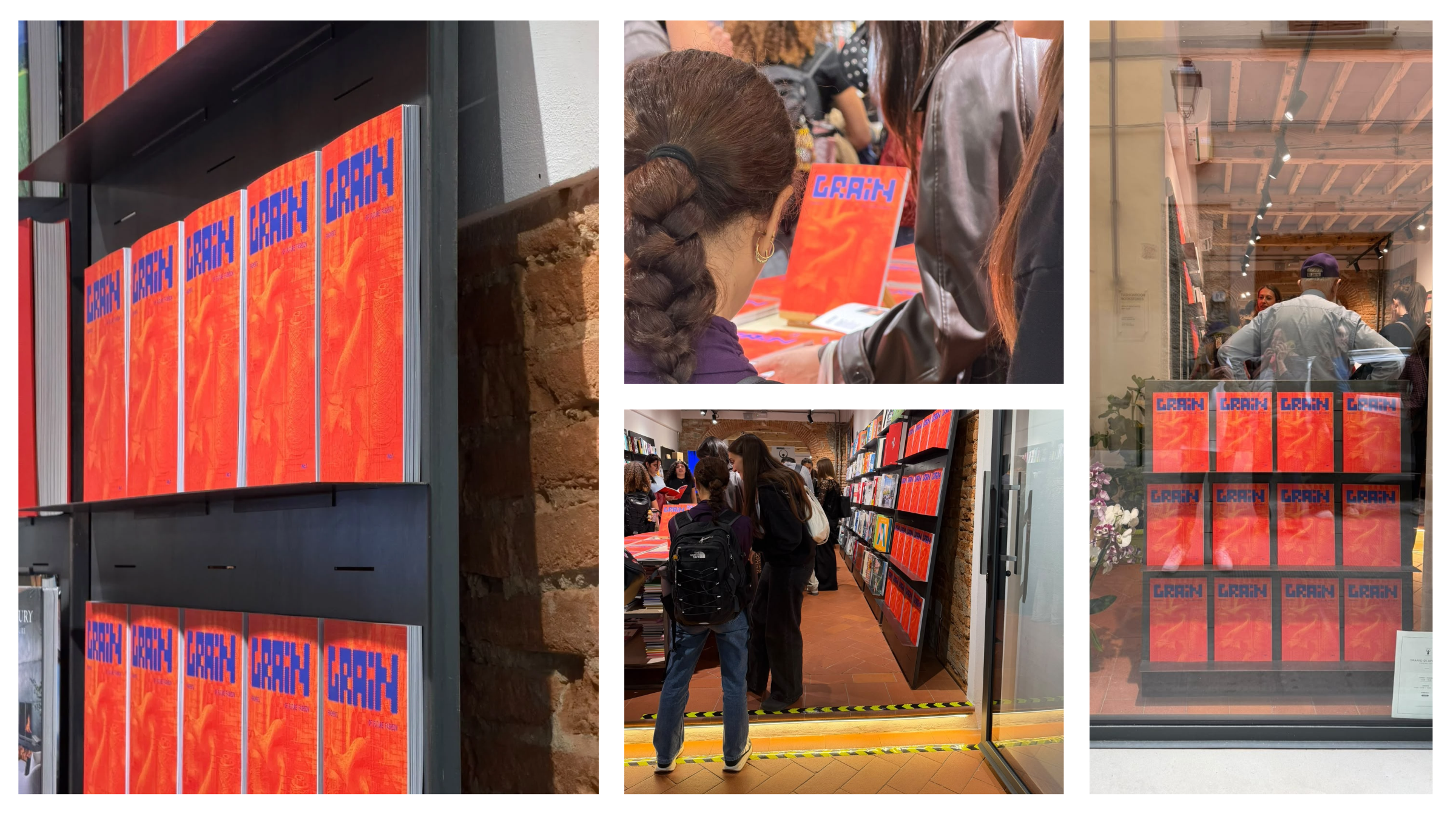
Presentato a Prato negli spazi di Fashion Room il primo numero della rivista GRAIN promosso dai Corsi di Laurea in Design tessile e moda e Design sistema moda dell'Ateneo fiorentino.
Presentato a Prato negli spazi di Fashion Room il primo numero della rivista GRAIN promosso dai Corsi di Laurea in Design tessile e moda e Design sistema moda dell'Ateneo fiorentino.
10 min read
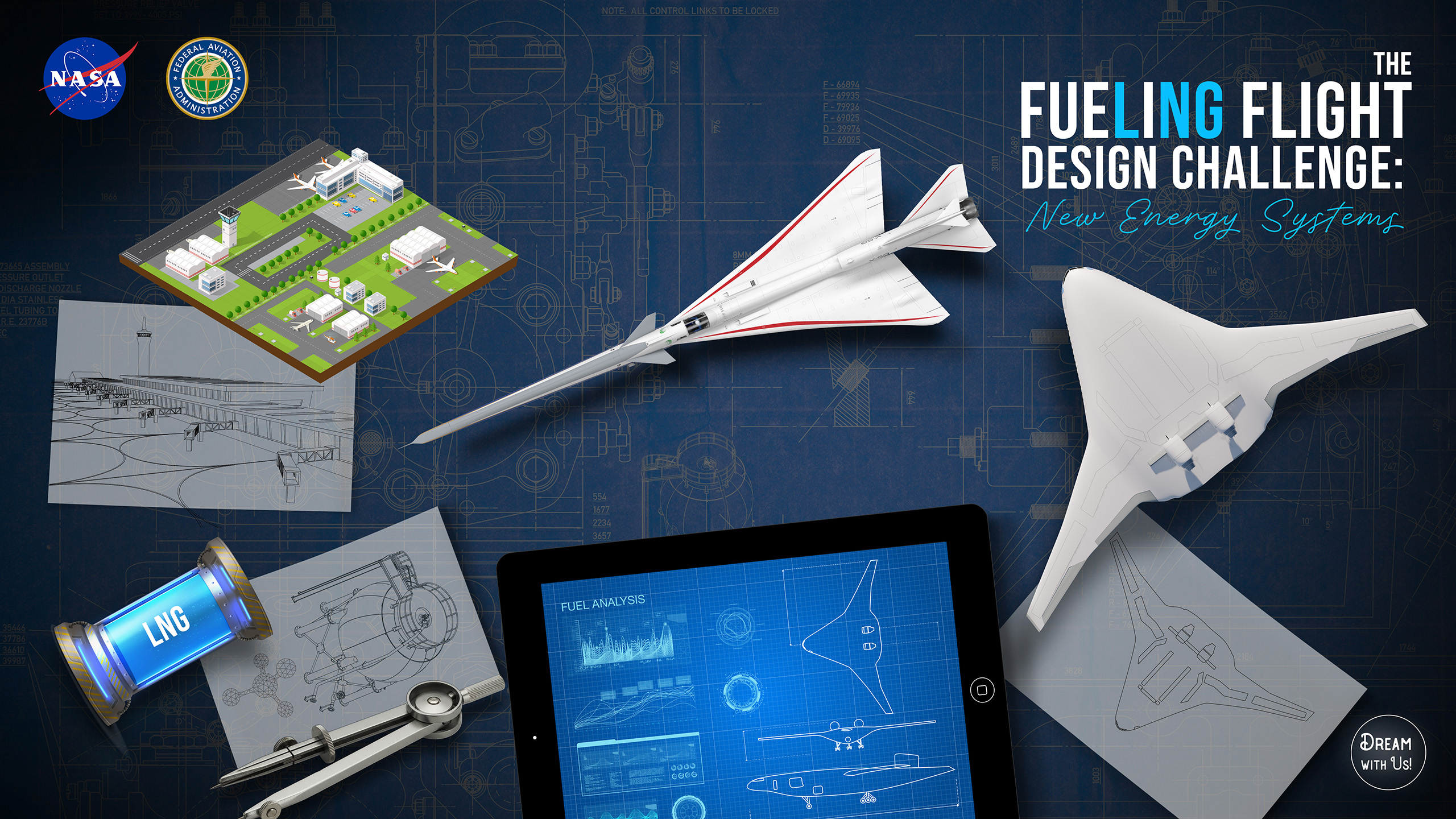
The 2026-2027 challenge theme is, “Fueling Flight Design Challenge: New Energy Systems.”
As more and more aircraft are a part of the US’ National Airspace System (NAS), NASA and partners at the FAA, at universities, and in the aviation industry are searching for ways to increase safety, make flight more affordable, find new fuels for aircraft, and reduce the amount of time passengers and cargo spend in the air. This year’s Dream with Us Challenge focuses on new aircraft fuels and how even the addition of one new fuel will change both the aircraft they are used in and the airports where aircraft take off and land.
The “Fueling Flight Design Challenge: New Energy Systems” challenge is open to middle and high school students, with a different task for middle school teams and high school teams. Teams for both categories will focus on the addition of an emerging aircraft fuel source, liquid natural gas (LNG) into our aviation environment. This will require teams to learn more about LNG, how it might be used in aviation, the benefits of an additional fuel source, and what kind of changes would need to be made to aircraft and to airports to adapt to these new changes.
Since the early days of aviation, commercial aircraft have relied on traditional designs and infrastructure. Aircraft have been a similar “tube-and-wing” design, with limitations that were made because of the materials aircraft were made with, along with the technology to build these aircraft. With the increasing availability of new technologies and new materials, aircraft no longer need to follow the same basic design. In addition, new research about fuel types, increasing demand for more flights and more fuel has resulted in many different options that include types of fuel, increasing electrification, and more. That also means airports are going to need to adjust. Changes in airport infrastructure will be needed to add multiple fuel types, different gateway configurations to allow for new aircraft types, and perhaps even different areas for different aircraft. What will this all look like? That partially depends on researchers and designers in the future since these are challenges the aeronautics community is starting to face now and will continue to do in the future.
Middle school student teams of 2-4 members will adapt an existing airport (or create one of their own) that incorporates the use of both liquefied natural gas (LNG) and traditional aviation fuel. The airport design should include the overall airport layout that includes (but is not limited to): control tower(s), hangars, fuel locations, terminal, passenger parking, runways. See requirements below for specific details.
The 2026/2027 Dream with Us Design Challenge for middle and high school students opens September 25, 2026. The submission period for middle school entrants begins September 25, 2026, and concludes on January 22, 2027, at 11:59 pm ET. Schools, organizations, and community groups should communicate to parents and guardians that submissions are limited to one entry per team and team registration requires someone over the age of 13 to create the account (adult team sponsors may create the registration on the team’s behalf if desired). Entries must be submitted through the submission link on the Dream with Us Design Challenge webpage: https://www.nasa.gov/dream-with-us/. Signed permission forms from parents or legal guardians are required for all participants that agree to the terms and requirements listed below and on the submission form.
Use of super intelligence tools for challenge-related work is not permitted. Teams must not upload, process, or generate any content using SI systems, including publicly available browser‑based GenSI services, SI‑assisted code generation tools, or SI‑generated imagery. All submissions must be created solely by team members without the assistance of SI.
The middle school challenge is open to all participants in grades 6 – 8 who are attending public, private, parochial, and home schools in the United States of America and children of U.S. military members stationed overseas.
Students in grades 9 – 12 will use the high school module. See the Dream with Us main webpage for details. Note: for teams that have both middle and high school students, those teams will compete in the high school challenge.
Submissions for the Dream with Us: Middle School Aviation Challenge are accepted September 25, 2026 – January 22, 2027. Submission link: https://stemgateway.nasa.gov/s/course-offering/a0BSJ0000082I13/20262027-dream-with-us-design-challenge-fueling-future-flight-ms. Winners will first be announced during a virtual awards reception (date TBD) then shared on social media and the Dream with Us design challenge webpage after the reception.
Submissions for the Dream with Us: Middle School Aviation Challenge are accepted September 25, 2026 – January 22, 2027. Submission link: https://stemgateway.nasa.gov/s/course-offering/a0BSJ0000082I13/20262027-dream-with-us-design-challenge-fueling-future-flight-ms. Winners will first be announced during a virtual awards reception (date TBD) then shared on social media and the Dream with Us design challenge webpage after the reception.
Challenge Rules
The 2026/2027 Dream with Us Design Challenge for middle and high school students opens September 25, 2026. The submission period for middle school entrants begins September 25, 2026, and concludes on January 22, 2027, at 11:59 pm ET. Schools, organizations, and community groups should communicate to parents and guardians that submissions are limited to one entry per team and team registration requires someone over the age of 13 to create the account (adult team sponsors may create the registration on the team’s behalf if desired). Entries must be submitted through the submission link on the Dream with Us Design Challenge webpage: https://www.nasa.gov/dream-with-us/. Signed permission forms from parents or legal guardians are required for all participants that agree to the terms and requirements listed below and on the submission form.
Each team submission will have two separate categories: technical and creative. Both categories must be included for consideration. Note: all sources for the presentation should be cited, including images. Please see the section above for rules about the use of AI.
The technical presentation, using PowerPoint or similar, must include:
The team’s creative submission will be a presentation that advertises the benefits of the new airport modification, allowing two different types of fuels to be utilized at the airport. The audience could be city or state leadership, stores interested in investing in a location at the airport, airlines who may want to now fly to this airport (this is up to you!). How you choose to present this advertisement for improvements is up to you. It could be any of the following (or maybe you have another creative idea):
All middle school entries will be submitted through the NASA Gateway link found INSERT GATEWAY LINK HERE and on the Dream with Us Design Challenge webpage. All entries must include the following:
The following lessons and activities can be used to help participants learn more about aircraft and airport design, along with other aircraft considerations:
Do you need to find out more about research on liquefied natural gas (LNG) as an aviation fuel source? Find out more here:
Entries will be evaluated by industry experts based on impact, practicality, originality, and how well the idea is communicated. Judges will make award selections based on the above-mentioned criteria to determine which projects will be recognized.
Are you an educator who needs to know more about how to support a team or multiple teams? Are you a student wanting to know more about how to participate? Join us in October, when we will set up a mid-point check-in! Stay tuned for those dates to be released on the Dream with Us design challenge webpage.
Questions:
If you have any additional questions, please reach out to the NASA Aeronautics STEM team at aeroSTEM@nasa.onmicrosoft.com.
Dream With Us: High School Engineering Challenge
9 min read

The 2026-2027 challenge theme is, “Fueling Flight Design Challenge: New Energy Systems.”
As more and more aircraft are a part of the US’ National Airspace System (NAS), NASA and partners at the FAA, at universities, and in the aviation industry are searching for ways to increase safety, make flight more affordable, find new fuels for aircraft, and reduce the amount of time passengers and cargo spend in the air. This year’s Dream with Us Challenge focuses on new aircraft fuels and how even the addition of one new fuel will change both the aircraft they are used in and the airports where aircraft take off and land.
The “Fueling Flight Design Challenge: New Energy Systems” challenge is open to middle and high school students, with a different task for middle school teams and high school teams. Teams for both categories will focus on the addition of an emerging aircraft fuel source, liquefied natural gas (LNG) into our aviation environment. This will require teams to learn more about LNG, how it might be used in aviation, the benefits of an additional fuel source, and what kind of changes would need to be made to aircraft and to airports to adapt to these new changes.
Since the early days of aviation, commercial aircraft have relied on traditional designs and infrastructure. Aircraft have been a similar “tube-and-wing” design, with limitations that were made because of the materials aircraft were made with, along with the technology to build these aircraft. With the increasing availability of new technologies and new materials, aircraft no longer need to follow the same basic design. In addition, new research about fuel types, increasing demand for more flights and more fuel has resulted in many different options that include types of fuel, increasing electrification, and more. That also means airports are going to need to adjust. Changes in airport infrastructure will be needed to add multiple fuel types, different gateway configurations to allow for new aircraft types, and perhaps even different areas for different aircraft. What will this all look like? That partially depends on researchers and designers in the future since these are challenges the aeronautics community is starting to face now and will continue to do in the future.
Globally each year, over 62 million metric tons of air cargo are transported, which is more than 33% of global trade by value. This equates to about $8.3 trillion annually. With these large numbers, even a small increase in efficiency can have a large economic impact.
A major air freight company has announced that they are looking to replace some of their fleet with a new aircraft and are interested in new designs to increase efficiency and that will utilize a different type of fuel. Your team has been tasked by your aircraft company to develop a new concept cargo aircraft to present to the air freight company. Your team has been directed to focus on a design that will use liquefied natural gas, or LNG. Since LNG must be stored differently than traditional jet fuel, the aircraft design needs to adapt. These changes, however, may lead to innovative designs that are more aerodynamically efficient.
The air freight company has provided the following requirements.
Teams will be provided with performance information for the jet engine.
The high school module is for students in grades 9 – 12. Students in grades 6 – 8 will use the middle school module. See the Dream with Us main webpage for details. Note: for teams that have both middle and high school students, those teams will compete in the high school challenge.
The high school challenge is open to all participants in grades 9 – 12 who are attending public, private, parochial, and home schools in the United States of America and children of U.S. military members stationed overseas.
The 2026/2027 Dream with Us Design Challenge for middle and high school students opens September 25, 2026. The submission period for middle school entrants begins September 25, 2026, and concludes on January 22, 2027, at 11:59 pm ET. Schools, organizations, and community groups should communicate to parents and guardians that submissions are limited to one entry per team and team registration requires someone over the age of 13 to create the account (adult team sponsors may create the registration on the team’s behalf if desired). Entries must be submitted through the submission link on the Dream with Us Design Challenge webpage: https://www.nasa.gov/dream-with-us/. Signed permission forms from parents or legal guardians are required for all participants that agree to the terms and requirements listed below and on the submission form.
Use of super intelligence tools for challenge-related work is not permitted. Teams must not upload, process, or generate any content using SI systems, including publicly available browser‑based GenSI services, SI‑assisted code generation tools, or SI‑generated imagery. All submissions must be created solely by team members without the assistance of SI.
The final product for this challenge is to prepare and submit an Engineering Design Notebook.
Teams of judges will evaluate your work based on what you submit in your Engineering Design Notebook. Your team should look through the Scoring Rubric and begin to do research to design a system to address the requirements of the notebook; specifics about the notebook requirements can be found in the Scoring Rubric. The headings in the Scoring Rubric should be used as the headings in your Engineering Design Notebook. Fill in sections of the Engineering Design Notebook as you complete the work in each section.
The following research resources can get you started on your work. This is not an all-inclusive list of resources publicly available but is meant to give you a strong starting point:
Fundamental Experimental Tests and Modeling of LOX/CH4 Engines at High Pressures
“As Jet Fuel Supplies Tighten, Can Other Fuels Meet Demand?”
All high school entries will be submitted through the NASA Gateway link found INSERT GATEWAY LINK HERE and on the Dream with Us Design Challenge webpage. All entries must include the following:
Entries will be evaluated by industry experts based on impact, practicality, originality, and how well the idea is communicated. Projects will go through several levels of judging. Top teams will be asked to take part in the finalist stage, where participants will be asked to join a select group of industry judges and virtually present their projects (see timeline for dates). A panel of Blue Ribbon Judges will then make award selections based to determine which projects will be recognized.
A Scoring Rubric (see above) is available as a guide for teams. This does not need to be submitted with the team’s project.
Are you an educator who needs to know more about how to support a team or multiple teams? Are you a student wanting to know more about how to participate? Join us in October, when we will set up a mid-point check-in! Stay tuned for those dates to be released on the Dream with Us design challenge webpage.
Questions:
If you have any additional questions, please reach out to the NASA Aeronautics STEM team at aeroSTEM@nasa.onmicrosoft.com.
Dream With Us: High School Engineering Challenge


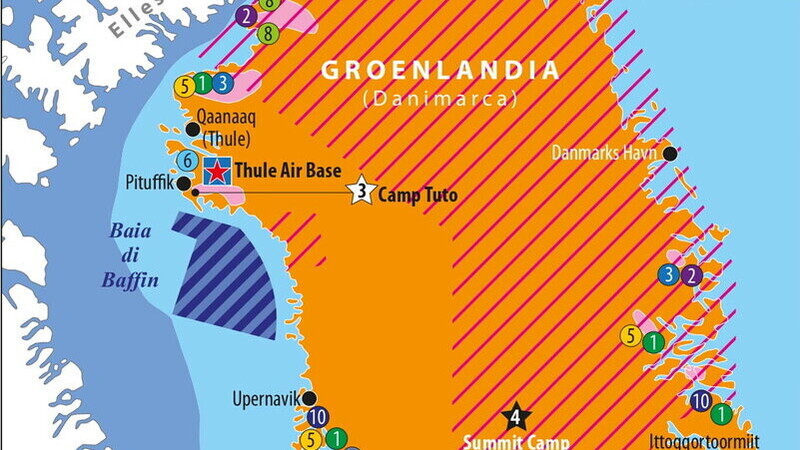 Con il nuovo accordo, Washington rafforza il proprio controllo sull’isola, tra nuove basi, risorse e veti sugli investimenti sgraditi. La sovranità della Danimarca si affievolisce. Perché l’intesa svincola la presenza militare americana dalla Nato. Il margine d’azione dei satelliti europei e il nodo del testo ufficiale.
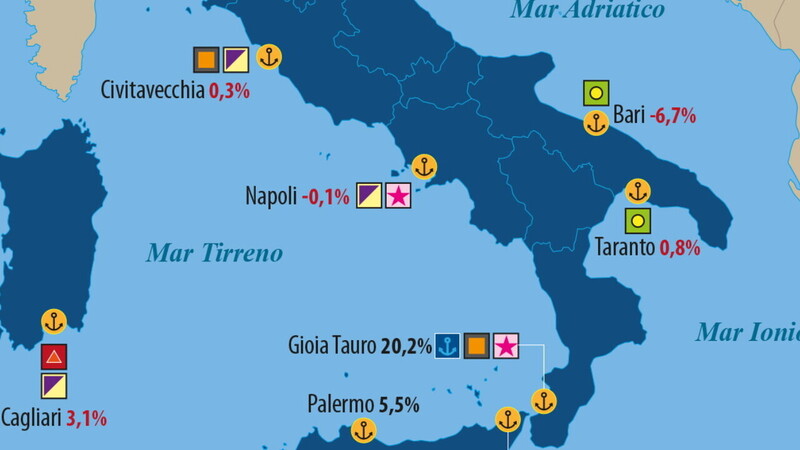 La carta inedita della settimana.
Por Ivone Alves García
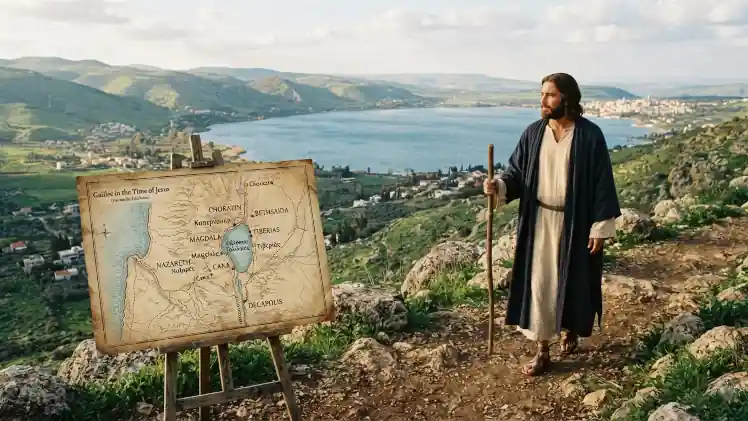
Buena parte del planeta todavía mide convencionalmente el tiempo a partir de una fecha construida alrededor del nacimiento de Jesús de Nazaret, cuya vida pública transcurrió dentro de un territorio extraordinariamente reducido. Su predicación se dio, en lo esencial, en un radio de unos cien kilómetros: Galilea, Jerusalén, algunas incursiones hacia Tiro y Sidón, la Decápolis, Samaria, la orilla este del Jordán. Ese fue, aproximadamente, el mapa completo de su paso terrenal.
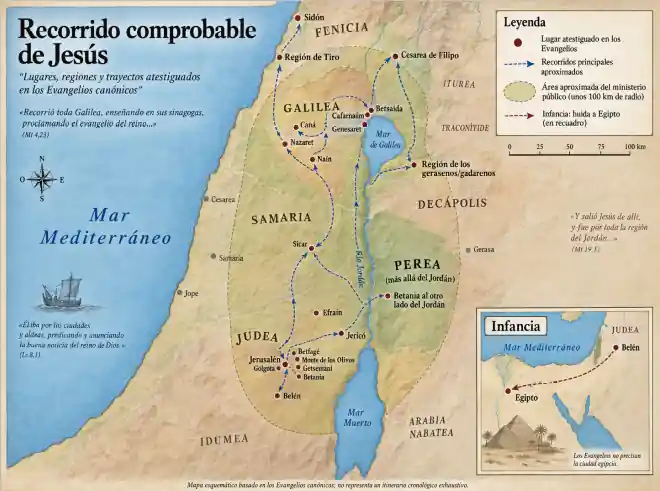
Midamos ese paso con la vara que el poder siempre usó para medirse a sí mismo. No comandó ejércitos ni acumuló fortuna, no ocupó cargo político ni dirigió un Estado, no fundó una dinastía ni dispuso de imprenta, correo imperial o aparato de propaganda alguno. Los Evangelios, de hecho, no se escribieron mientras predicaba: nacieron después, de la memoria de quienes lo habían escuchado. Nació en una provincia periférica de un imperio que gobernaba el mundo conocido, y ahí mismo terminó crucificado bajo la autoridad romana, sometido a una muerte pública e infamante, pensada específicamente para quebrar al condenado y advertir a los demás.
Según todas las reglas humanas del poder, ahí debía terminar la historia. Pero los discípulos no se comportaron como los seguidores de un maestro derrotado. Pocos días después de la crucifixión, comenzaron a afirmar algo completamente inesperado: que Jesús había resucitado. En lugar de limitarse a difundir una filosofía o guardar un respetuoso recuerdo, anunciaron este hecho de forma directa. Fue esa convicción la que realmente puso en marcha la historia del cristianismo.
A partir de ahí, ese movimiento minúsculo se extendió por las ciudades del Mediterráneo oriental, atravesó las persecuciones imperiales y permaneció en pie cuando cayó el propio Imperio romano de Occidente, que en su momento debió de parecer bastante más sólido que cualquier fe. Echó raíces en el feudalismo, resistió el cisma de la Reforma, la crítica religiosa de la Ilustración, las lecturas críticas del siglo XIX y dos guerras mundiales, y llega al mundo tecnológico de hoy con hombres y mujeres que siguen rezando en su nombre, celebrando su muerte y su Resurrección y reconociéndolo como Cristo en todos los continentes.
Compárese esto con lo que puede hacer hoy cualquiera con poder real: un presidente que llega a media humanidad apenas abre la boca, un empresario que compra la plataforma entera donde discuten millones, un artista que acumula miles de millones de reproducciones en semanas. Nunca tuvimos tantos medios para hablarle a tantos. Y sin embargo casi todas esas voces se apagan de la memoria colectiva en el plazo de una generación. Un hombre que no dispuso de nada de esto sigue siendo, dos mil años después, más recordado que la mayoría de ellos.
Un historiador puede explicar buena parte de este proceso sin necesidad de apelar a la fe, y no hay por qué temerle a esa mirada: las rutas romanas, el griego común a todo el Mediterráneo oriental, la prédica de Pablo, la organización de las primeras comunidades, la conversión de Constantino tres siglos más tarde. Ese último dato importa más de lo que suele reconocerse: cuando el poder imperial por fin favoreció al cristianismo, el cristianismo ya llevaba trescientos años extendiéndose sin ese poder. La explicación sociológica cubre cómo se propagó una vez que ya existía algo capaz de propagarse. Lo que no cubre es la pregunta anterior: qué había en aquel hombre y en aquel mensaje para que existiera, en primer lugar, algo con esa capacidad. Roma crucificó a miles de personas antes y después de aquel viernes, y ninguna cambió la manera en que la humanidad cuenta los años. Judea produjo, en el mismo siglo, decenas de predicadores y mesías fracasados que hoy son apenas una nota al pie en algún historiador antiguo.
La fe cristiana no nació del éxito posterior del cristianismo. Nació del encuentro con Cristo, de sus palabras y sus obras, de su muerte y de la certeza proclamada por sus discípulos de que había resucitado. La expansión que vino después pertenece a otro orden: constituye una huella histórica de aquello que comenzó en un territorio diminuto y que ninguna explicación puramente material consigue agotar.
Jesús triunfó, además, con una lógica inversa a la que usa siempre el poder, que se expande con ejércitos, con acumulación, con organización partidaria o con propaganda. Él empezó con doce discípulos, caminos de tierra, aldeas sin importancia y parábolas contadas junto a un lago. La distancia entre esos medios iniciales y sus consecuencias históricas es enorme. Vivimos, hoy, obsesionados con el alcance inmediato —seguidores, reproducciones, capacidad instantánea de influencia— y medimos la importancia de algo por cuánta gente llega en las primeras horas. Jesús es casi la inversión exacta de ese criterio: un alcance inicial mínimo y una profundidad histórica que todavía no terminamos de medir.
Cristo no prometió comodidad ni poder terrenal. Prometió algo infinitamente mayor y mucho más difícil de convertir en propaganda: perdón, salvación, vida eterna, reconciliación con Dios. A cambio pedía conversión, amor al prójimo, misericordia hacia el enemigo y una vida entera puesta al servicio de algo superior al propio yo. Casi ninguna de las fórmulas que hoy garantizan viralidad estaba en aquel ofrecimiento. Y sin embargo sigue ahí, dos mil años después, más vivo que cualquiera de nuestros fenómenos de audiencia instantánea.
Un hombre recorrió apenas una pequeña franja del mundo antiguo. Desde la lógica humana carecía de todos los instrumentos necesarios para atravesar fronteras, generaciones e imperios. Fue crucificado, y según toda razón humana ahí debía terminar la historia. Sus discípulos proclamaron que había resucitado. Dos mil años después, Cristo sigue siendo adorado en lugares que ninguno de aquellos hombres sabía siquiera que existían. Para quien cree, esa historia no es una casualidad extraordinaria: pertenece exactamente a lo que Él dijo que había venido a hacer. ¿Cómo mirar todo esto desde el siglo XXI, con toda nuestra ciencia, nuestra tecnología y nuestra pretendida sofisticación, y concluir simplemente que se trató de un predicador exitoso de una pequeña provincia romana?
La tecnología consiguió, en dos mil años, lo que ningún imperio había logrado antes: hizo pequeño al planeta entero. Pero no consiguió volver pequeño a aquel hombre que caminó apenas un centenar de kilómetros a la redonda. Jesús recorrió un territorio pequeño. Fue el mundo el que terminó recorriendo el camino hacia él. El imperio bajo cuyo poder fue crucificado desapareció hace siglos. La Iglesia nacida de aquel pequeño grupo de discípulos continúa reuniéndose en su nombre, dos mil años después, en todos los continentes.
Por eso, en medio de los conflictos que sacuden al mundo y de las tempestades personales que a cada uno le toca atravesar, vale la pena volver la mirada a lo que ocurrió en aquella pequeña franja de tierra. Recordar lo que aquel hombre —y la obra del Padre, del Hijo y del Espíritu Santo— hizo por nosotros no es un refugio abstracto, sino una certeza viva. Si aquel comienzo tan humilde transformó la historia para siempre, hoy más que nunca, ante cualquier adversidad, tenemos un motivo profundo para no bajar los brazos y renovar la esperanza.
Thanks, Martin.
Well, as an old "EMC-Chap", I have seen several examples and been
able to "identify" them in some way.
Our village has 500 souls. All of them have a terrestrial birth
certificate and most probably no
relatives up there, hi.
I will carry on to run my OWRX and observe possible further
phenomena.
Such developments may change the orbital spectrum in the future:
https://www.heise.de/en/news/Data-centers-in-space-Google-to-launch-satellite-with-four-AI-accelerators-11465062.html
Regards
Wolfgang
Il 24 settembre del 1961 un’inedita esperienza di nonviolenza popolare si svolse tra Perugia ed Assisi: la Marcia della pace per la fratellanza tra i popoli. Una marcia alla quale Aldo Capitini pensava da anni che passò alla fase organizzativa in quella drammatica estate, mentre a Berlino veniva innalzato il muro che avrebbe diviso per [...]
L'articolo 65 anni dopo la Marcia di Aldo Capitini la nuova Mozione del popolo della pace: un’altra difesa ora è davvero possibile proviene da Movimento Nonviolento.
By Philipp Reisner, CEO LINBIT®
Sovereignty is a word borrowed from statecraft. A sovereign country is independent in its decisions. The term “digital sovereignty” is a more recent invention that applies to organizations and even individuals.
In this article, I discuss what the push for digital sovereignty implies for Linux-focused, open source developers and companies. The framework I use is a European one, because I am Vienna-based and familiar with it. As I discuss later, the implications are not limited to Europe.
The European Commission published the EU Cloud Sovereignty Framework (CSF), which breaks sovereignty down into eight objectives:
The framework rates providers on two scales: a Sovereignty Effectiveness Assurance Level (SEAL), and a complementary Sovereignty Score for cloud services. The first indicates a minimum level of sovereignty objectives met. The second shows a provider’s strengths and weaknesses across the objectives.
Each objective is rated from SEAL-0 to SEAL-4. SEAL-4 means an EU supply chain, from the physical chips up to the software.
The mechanic I find most interesting is that a provider does not get one SEAL level. It receives eight, and the overall level is the lowest of them. Your weakest objective decides your rating, not your average. Anyone who has ever tuned a storage stack will recognize that logic.
Open source software can put providers in a strong position to address the technology-openness objective, SOV-6, because customers can inspect the code, operate it independently, and avoid dependencies on proprietary implementation. Because the source is open, that argument does not stop at the EU border. A service provider in the US or in Asia aiming for full SEAL-4 is not held back by choosing open source software.
SOV-6 specifies two things: open standards and the freedom to choose technologies. In software, an open standard might define an interface that anyone can implement, but if only one vendor has implemented it, a buyer still has a single supplier for it. Depending on a single supplier also weakens a provider on SOV-5, the supply-chain objective, which protects against vendor lock-in. Freedom to choose means being able to substitute one implementation for another.
An example is the Container Storage Interface (CSI), a vendor-neutral storage standard developed under the Cloud Native Computing Foundation (CNCF) and used by Kubernetes. CSI is the standard, LINBIT provides a CSI driver for LINSTOR® and its upstream CNCF project, Piraeus Datastore, and a buyer running Kubernetes can use this driver. Because of the open standard nature of the interface, the buyer can also move between storage back ends. This is freedom for the buyer, motivation for providers to make a better solution, and neutrality from a foundation like the CNCF.
Digital sovereignty is no longer an exercise on paper. In April 2026, the European Commission awarded a sovereign cloud contract worth up to €180 million over six years to four European providers, with SEAL-2 as the minimum bar for eligibility. Sovereignty has become a procurement instrument with money attached. Predictably, one of the awards is already being publicly contested as “sovereignty-washing”.
What poured oil on the fire was an incident involving the chief prosecutor of the International Criminal Court. After the US sanctioned court officials, the chief prosecutor reportedly lost access to his Microsoft-hosted email account, and bank accounts in the United Kingdom were frozen. Since these actions, some EU banks with US exposure are preferring to over-comply rather than take any risk. Microsoft disputes the framing and maintains it never suspended services to the ICC as an organization. For me, the detail of who pressed which button matters far less than the lesson: neither the email nor the banking depended on a European decision.
In the US, similar discussions have taken place, only with different verbiage. There it is “economic security” and “supply chain resilience”, mostly aimed at China, and where Europe says “technological sovereignty”, Washington says “technological leadership”. Different branding, same substance.
As digital sovereignty gains weight in technology sourcing decisions, smaller vendors benefit.
A framework that asks, “Who owns you? Whose laws apply? Can I operate this without you, and can I read the source?” rewards exactly the properties a small open source company has by default. The hyperscalers will feel some headwind, though they are not standing still, and “sovereign” regions run by local operating entities are their answer. Whether that clears a SEAL-3 or SEAL-4 bar is the argument of the next few years.
LINBIT already made an investment in developing in the open. An open license is necessary but not enough on its own, because a project can be open and still be controlled by a single company that can relicense it. What makes the openness durable is governance that the original vendor cannot reverse. DRBD® ships in the mainline Linux kernel, and we are working to upstream the current DRBD 9 code. Code in the commons, for example, in the mainline kernel, under a foundation such as the CNCF, or in another home that no single vendor controls, is the strongest answer to SOV-6 I know of. Every project that puts it there widens the set of technology a sovereign buyer can choose from.
The post The Impact of Digital Sovereignty on Open Source Companies appeared first on Linux.com.
Le Reti promotrici della campagna “Un’altra difesa è possibile” hanno depositato questa mattina al Senato della Repubblica le firme raccolte a sostegno della proposta di legge di iniziativa popolare per la difesa civile, non armata e nonviolenta: 57.136 sottoscrizioni, ben oltre il quorum di 50.000 richiesto dalla normativa. Quello compiuto oggi al Senato dalla campagna [...]
L'articolo 57.136 firme consegnate al Senato: “Un’altra difesa è possibile” apre la fase due, ora la parola al Parlamento proviene da Movimento Nonviolento.


Macerie e libertà. Le giunte del CLN e l’amministrazione dei Comuni (1944-1946): convegno e tappa finale di un percorso di ricerca che ha coinvolto tutta la rete degli Istituti della Resistenza toscani.
Promosso dall’Istituto Storico Toscano della Resistenza e dell’Età contemporanea (ISRT) in collaborazione con la rete toscana degli Istituti storici della Resistenza e dell’età contemporanea e con la Fondazione CDSE, il Convegno riunirà studiosi e studiose provenienti da tutta la Toscana per riflettere su una fase decisiva della nostra storia: il passaggio dalla Liberazione alla costruzione delle prime istituzioni democratiche locali.
Attraverso le esperienze dei territori toscani, saranno approfonditi il ruolo dei Comitati di Liberazione Nazionale, la formazione della nuova classe dirigente, profili e politiche delle amministrazioni comunali nella ricostruzione civile e democratica del Paese nell’immediato dopoguerra.
Qui di seguito le locandine di entrambi gli eventi con tutte le informazioni ed orari.
Proiezione gratuita del film BERLINGUER. A LOVE STORY, scritto e diretto da Pierpaolo Farina
Al termine della proiezione seguirà un dibattito con il regista Pierpaolo Farina, Gianfranco Francese (Segretario generale CGIL Livorno) e Catia Sonetti (Direttrice ISTORECO). A coordinare l’incontro sarà Chiara Macchi (ARCI Livorno).
Un’occasione per vedere il film e discutere insieme della figura di Enrico Berlinguer, della sua esperienza politica e della memoria di una stagione importante della storia italiana.
L’iniziativa è a ingresso gratuito (fino ad esaurimento posti) ed è promossa da CGIL Livorno, ISTORECO e ARCI Livorno.

The systemd project has officially released systemd 262, delivering another substantial update to the system and service manager used by most major Linux distributions. The final release was tagged on September 22, 2026, following three release candidates earlier in the month.
Systemd 262 introduces improvements across service management, containers, virtualization, encrypted storage, TPM security, networking, journal recovery, system updates, and unattended installations. Among the most interesting additions are the ability to build systemd as a single statically linked PID 1 binary, Intel TDX support in systemd-vmspawn, Live Update Orchestrator integration, improved TPM-backed encryption, and new fallback unit files embedded directly into the systemd manager.
The release also contains a rather unusual development safeguard: an AI/LLM canary intended to help identify code contributions generated by AI that haven't been properly reviewed by a human before submission.
The final systemd 262 source was tagged by systemd developer Luca Boccassi on September 22.
The upstream tag identifies commit 8cc40e0c5e9234bf45084751ac53b1fbfe70b492 as systemd v262, following release candidates published throughout September.
The release has already begun reaching Linux distribution development repositories.
Debian accepted systemd 262-1 into Debian Unstable on September 22, while Fedora has prepared systemd 262 packages for Fedora 45.
As usual, the speed at which systemd 262 reaches ordinary users will depend on each distribution's update policy.
One of the most interesting changes in systemd 262 is support for building systemd as a single statically linked PID 1 and executor binary.
The feature is primarily intended for extremely small container environments.
Normally, systemd depends on a collection of dynamically linked libraries and supporting components. That architecture makes sense for a complete Linux distribution, but containers sometimes need a much smaller runtime environment.
The new static configuration makes it possible to create a more self-contained systemd executable suitable for minimal container images.
These builds avoid dynamically loading optional libraries and use simplified mechanisms for resolving users and groups rather than relying on the complete Name Service Switch infrastructure.
This doesn't mean normal Linux distributions will suddenly replace their standard systemd packages with a giant static executable. The capability is specifically useful for specialized container and minimal-system deployments.