Modalità di lettura

NASA Develops Blockchain Technology to Enhance Air Travel Safety and Security 

3 min read

Preparations for Next Moonwalk Simulations Underway (and Underwater)

By Supreet Kaur

In an era where data security is critical to aviation safety, NASA is exploring bold new solutions. 
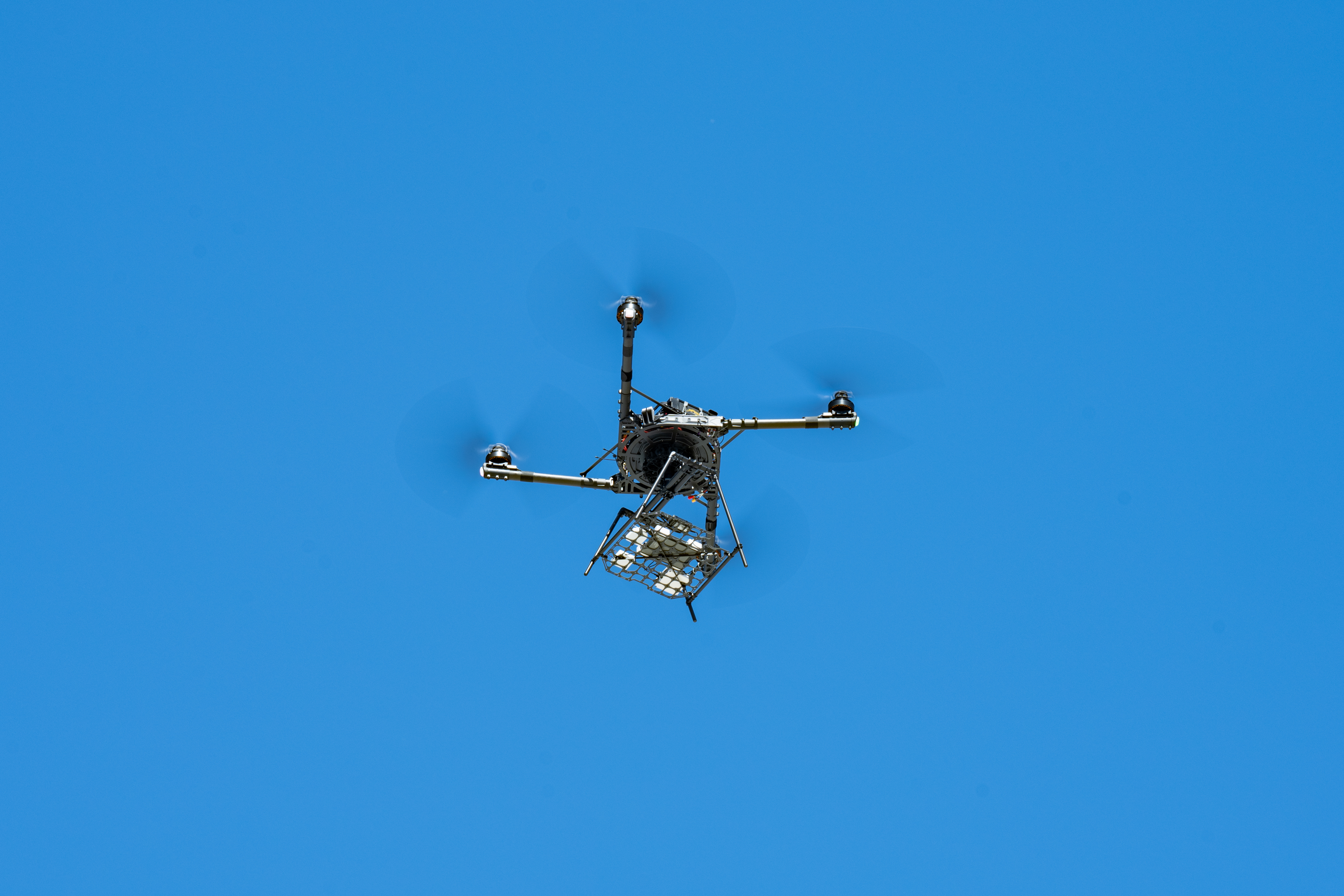
An Alta-X drone carries a custom built simulated Unmanned Aircraft Systems environment payload for the new blockchain system tests.   
Credit: NASA/Brandon Torres Navarette 

Through a drone flight test at NASA’s Ames Research Center in California’s Silicon Valley, researchers tested a blockchain-based system for protecting flight data. The system aims to keep air traffic management safe from disruption and protect data transferred between aircraft and ground stations from being intercepted or manipulated. 

For aviation and airspace operations to remain safe, users need to be able to trust that data is reliable and transparent. While current systems have been able to protect flight data systems, cyberthreats continue to evolve, requiring new approaches. NASA researchers found the blockchain-based system can safely transmit and store information in real time. 

Blockchain operates like a decentralized database — it does not rely on a single computer or centralized system. Instead, it shares information across a vast network, recording and verifying every change to a dataset. The system ensures the data stays safe, accurate, and trustworthy.  

Previous cybersecurity research focused on implementing a layered security architecture — using multiple physical and digital security measures to control system access. For this test, researchers took a different approach using blockchain to address potential threats.  

Using drones allowed the team to show that the blockchain framework could yield benefits across several priority areas in aviation development, including autonomous air traffic management, urban air mobility, and high-altitude aircraft.  
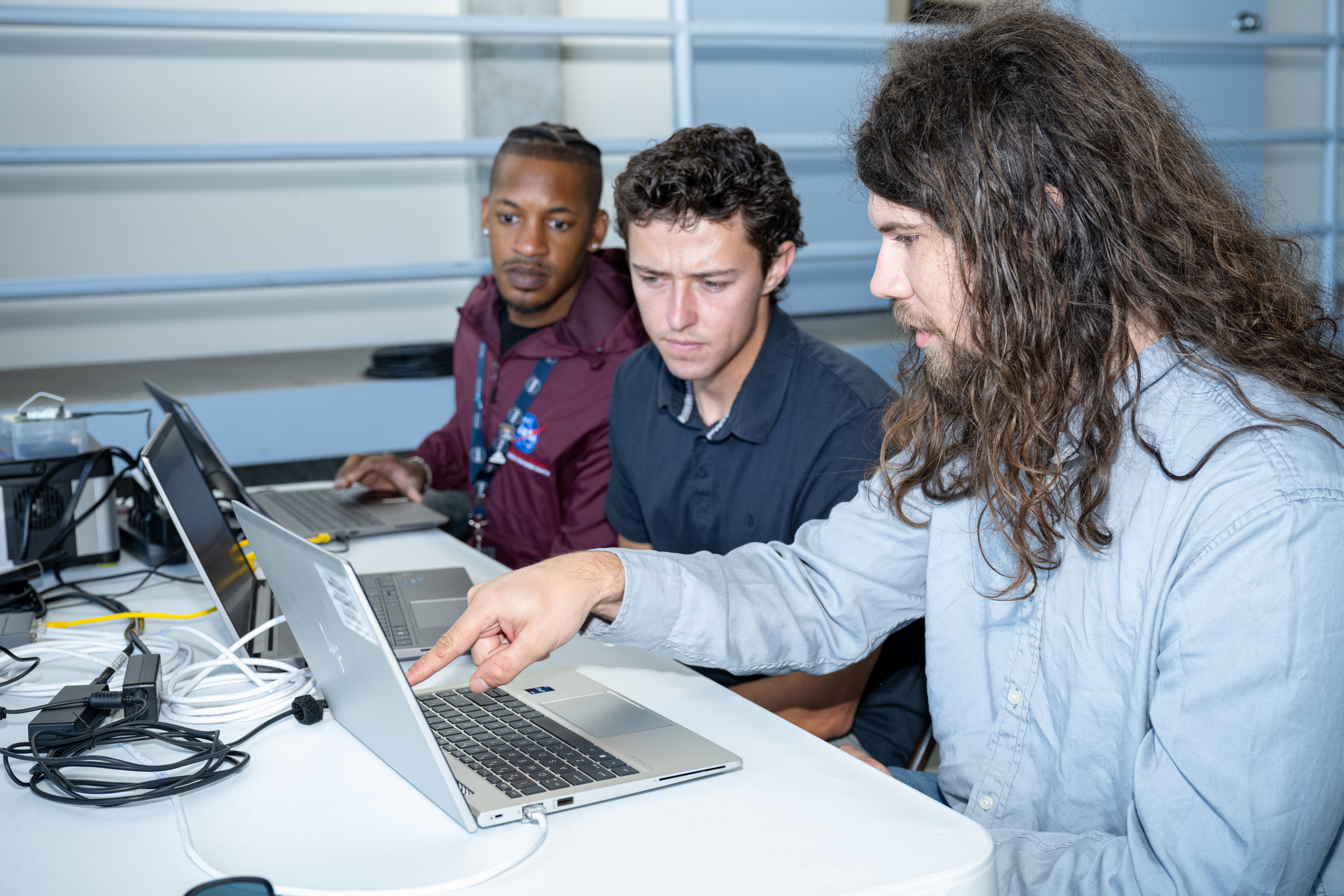
Three people sit at a table looking over laptop computers. The one nearest the camera is pointing at the laptop monitor.
Terrence D. Lewis (left), Kale Dunlap (center), and Aidan Jones monitor the flow of telemetry from both actual and simulated flights, ensuring the simulation and blockchain systems are processing and recording data accurately. 
Credit: NASA/Brandon Torres Navarette 

This NASA research explored how blockchain can secure digital transactions between multiple systems and operators. The team used an open-source blockchain framework that allows trusted users real-time sharing and storage of critical data like aircraft operator registration information, flight plans, and telemetry. This framework restricts access to this data to trusted parties and approved users only. 

To further examine system resilience, the team introduced a set of cybersecurity tests designed to assess, improve, and reinforce security during operations in airspace environments. During an August flight at Ames, the team demonstrated these capabilities using an Alta-X drone with a custom-built software and hardware package that included a computer, radio, GPS system, and battery.  

The test simulated an environment with a drone flying in real-world conditions, complete with a separate ground control station and the blockchain and security infrastructure. The underlying blockchain framework and cybersecurity protocols can be extended to support high-altitude operations at 60,000 feet and higher and Urban Air Mobility operations, paving the way for a more secure, scalable, and trusted ecosystem. 

NASA researchers will continue to look at the data gathered during the test and apply what they’ve learned to future work. The testing will ultimately benefit U.S. aviation stakeholders looking for new tools to improve operations. 

Through its Air Traffic Management and Safety project, NASA performed research to transform air traffic management systems to safely accommodate the growing demand of new air vehicles. The project falls under NASA’s Airspace Operations and Safety Program, a part the agency’s Aeronautics Research Mission Directorate that works to enable safe, efficient aviation transportation operations that benefit the flying public and industry.
  •  

NASA Develops Blockchain Technology to Enhance Air Travel Safety and Security 

3 min read

Preparations for Next Moonwalk Simulations Underway (and Underwater)

By Supreet Kaur

In an era where data security is critical to aviation safety, NASA is exploring bold new solutions. 

An Alta-X drone carries a custom built simulated Unmanned Aircraft Systems environment payload for the new blockchain system tests.   
Credit: NASA/Brandon Torres Navarette 

Through a drone flight test at NASA’s Ames Research Center in California’s Silicon Valley, researchers tested a blockchain-based system for protecting flight data. The system aims to keep air traffic management safe from disruption and protect data transferred between aircraft and ground stations from being intercepted or manipulated. 

For aviation and airspace operations to remain safe, users need to be able to trust that data is reliable and transparent. While current systems have been able to protect flight data systems, cyberthreats continue to evolve, requiring new approaches. NASA researchers found the blockchain-based system can safely transmit and store information in real time. 

Blockchain operates like a decentralized database — it does not rely on a single computer or centralized system. Instead, it shares information across a vast network, recording and verifying every change to a dataset. The system ensures the data stays safe, accurate, and trustworthy.  

Previous cybersecurity research focused on implementing a layered security architecture — using multiple physical and digital security measures to control system access. For this test, researchers took a different approach using blockchain to address potential threats.  

Using drones allowed the team to show that the blockchain framework could yield benefits across several priority areas in aviation development, including autonomous air traffic management, urban air mobility, and high-altitude aircraft.  

Three people sit at a table looking over laptop computers. The one nearest the camera is pointing at the laptop monitor.
Terrence D. Lewis (left), Kale Dunlap (center), and Aidan Jones monitor the flow of telemetry from both actual and simulated flights, ensuring the simulation and blockchain systems are processing and recording data accurately. 
Credit: NASA/Brandon Torres Navarette 

This NASA research explored how blockchain can secure digital transactions between multiple systems and operators. The team used an open-source blockchain framework that allows trusted users real-time sharing and storage of critical data like aircraft operator registration information, flight plans, and telemetry. This framework restricts access to this data to trusted parties and approved users only. 

To further examine system resilience, the team introduced a set of cybersecurity tests designed to assess, improve, and reinforce security during operations in airspace environments. During an August flight at Ames, the team demonstrated these capabilities using an Alta-X drone with a custom-built software and hardware package that included a computer, radio, GPS system, and battery.  

The test simulated an environment with a drone flying in real-world conditions, complete with a separate ground control station and the blockchain and security infrastructure. The underlying blockchain framework and cybersecurity protocols can be extended to support high-altitude operations at 60,000 feet and higher and Urban Air Mobility operations, paving the way for a more secure, scalable, and trusted ecosystem. 

NASA researchers will continue to look at the data gathered during the test and apply what they’ve learned to future work. The testing will ultimately benefit U.S. aviation stakeholders looking for new tools to improve operations. 

Through its Air Traffic Management and Safety project, NASA performed research to transform air traffic management systems to safely accommodate the growing demand of new air vehicles. The project falls under NASA’s Airspace Operations and Safety Program, a part the agency’s Aeronautics Research Mission Directorate that works to enable safe, efficient aviation transportation operations that benefit the flying public and industry.

  •  

NASA, Boeing Test How to Improve Performance of Longer, Narrower Aircraft Wings 

5 min read

Preparations for Next Moonwalk Simulations Underway (and Underwater)

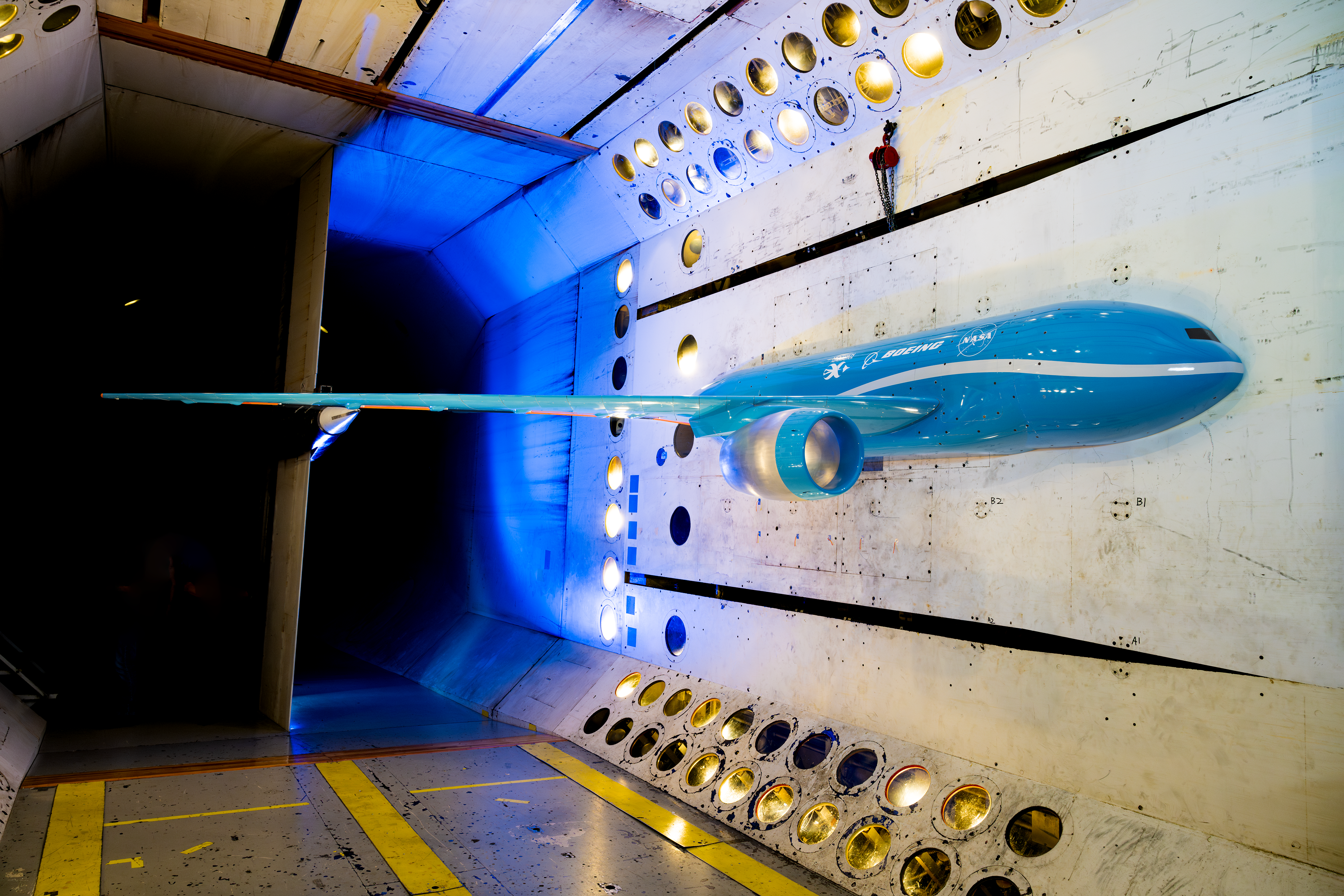
A scale model of possible future commercial jet airplane sits inside a NASA wind tunnel where the aircraft wing was tested.
The Integrated Adaptive Wing Technology Maturation wind-tunnel model installed in the Transonic Dynamics Tunnel at NASA Langley Research Center in Hampton, Virginia.
NASA / Mark Knopp

The airliner you board in the future could look a lot different from today’s, with longer, thinner wings that provide a smoother ride while saving fuel.

Those wings would be a revolutionary design for commercial aircraft, but like any breakthrough technology, they come with their own development challenges – which experts from NASA and Boeing are now working to solve. 

When creating lift, longer, thinner wings can reduce drag, making them efficient. However, they can become very flexible in flight.

Through their Integrated Adaptive Wing Technology Maturation collaboration, NASA and Boeing recently completed wind tunnel tests of a “higher aspect ratio wing model” looking for ways to get the efficiency gains without the potential issues these kinds of wings can experience. 

“When you have a very flexible wing, you’re getting into greater motions,” said Jennifer Pinkerton, a NASA aerospace engineer at NASA Langley Research Center in Hampton, Virginia. “Things like gust loads and maneuver loads can cause even more of an excitation than with a smaller aspect ratio wing. Higher aspect ratio wings also tend to be more fuel efficient, so we’re trying to take advantage of that while simultaneously controlling the aeroelastic response.”  


Take a minute to watch this video about the testing NASA and Boeing are doing on longer, narrower aircraft wings.

Without the right engineering, long, thin wings could potentially bend or experience a condition known as wing flutter, causing aircraft to vibrate and shake in gusting winds.  

“Flutter is a very violent interaction,” Pinkerton said. “When the flow over a wing interacts with the aircraft structure and the natural frequencies of the wing are excited, wing oscillations are amplified and can grow exponentially, leading to potentially catastrophic failure. Part of the testing we do is to characterize aeroelastic instabilities like flutter for aircraft concepts so that in actual flight, those instabilities can be safely avoided.” 

To help demonstrate and understand this, researchers from NASA and Boeing sought to soften the impacts of wind gusts on the aircraft, lessen the wing loads from aircraft turns and movements, and suppress wing flutter.

Reducing or controlling those factors can have a significant impact on an aircraft’s performance, fuel efficiency, and passenger comfort. 

Testing for this in a controlled environment is impossible with a full-sized commercial airliner, as no wind tunnel could accommodate one.

However, NASA Langley’s Transonic Dynamics Tunnel, which has been contributing to the design of U.S. commercial transports, military aircraft, launch vehicles, and spacecraft for over 60 years, features a test section 16 feet high by 16 feet wide, big enough for large-scale models. 

 To shrink a full-size plane down to scale, NASA and Boeing worked with NextGen Aeronautics, which designed and fabricated a complex model resembling an aircraft divided down the middle, with one 13-foot wing.

Mounted to the wall of the wind tunnel, the model was outfitted with 10 control surfaces – moveable panels – along the wing’s rear edge. Researchers adjusted those control surfaces to control airflow and reduce the forces that were causing the wing to vibrate.

Instruments and sensors mounted inside the model measured the forces acting on the model, as well as the vehicle’s responses.

A scale model of possible future commercial jet airplane sits inside a NASA wind tunnel where the aircraft wing was tested.
Another view of the Integrated Adaptive Wing Technology Maturation wind-tunnel model installed in the Transonic Dynamics Tunnel at NASA Langley Research Center in Hampton, Virginia.
NASA / Mark Knopp

The model wing represented a leap in sophistication from a smaller one developed during a previous NASA-Boeing collaboration called the Subsonic Ultra Green Aircraft Research (SUGAR).

“The SUGAR model had two active control surfaces,” said Patrick S. Heaney, principal investigator at NASA for the Integrated Adaptive Wing Technology Maturation collaboration. “And now on this particular model we have ten. We’re increasing the complexity as well as expanding what our control objectives are.”  

A first set of tests, conducted in 2024, gave experts baseline readings that they compared to NASA computational simulations, allowing them to refine their models. A second set of tests in 2025 used the additional control surfaces in new configurations.

The most visible benefits of these new capabilities appeared during testing to alleviate the forces from gusting winds, when researchers saw the wing’s shaking greatly reduced.

With testing completed, NASA and Boeing experts are analyzing data and preparing to share their results with the aviation community. Airlines and original equipment manufacturers can learn and benefit from the lessons learned, deciding which to apply to the next generation of aircraft.  

“Initial data analyses have shown that controllers developed by NASA and Boeing and used during the test demonstrated large performance improvements,” Heaney said. “We’re excited to continue analyzing the data and sharing results in the months to come.” 

NASA’s Advanced Air Transport Technology project works to advance aircraft design and technology under the agency’s Advanced Air Vehicles program, which studies, evaluates, and develops technologies and capabilities for new aircraft systems. The project and program fall within NASA’s Aeronautics Research Mission Directorate. 

Facebook logo
Instagram logo
Linkedin logo
Keep Exploring

Discover More Topics From NASA

💾

What can we do to help aircraft wings perform better in flight, creating a smoother, more fuel efficient, and safer experience for travelers? This is a quest...
  •  

NASA Works with Boeing, Other Collaborators Toward More Efficient Global Flights 

3 min read

Preparations for Next Moonwalk Simulations Underway (and Underwater)

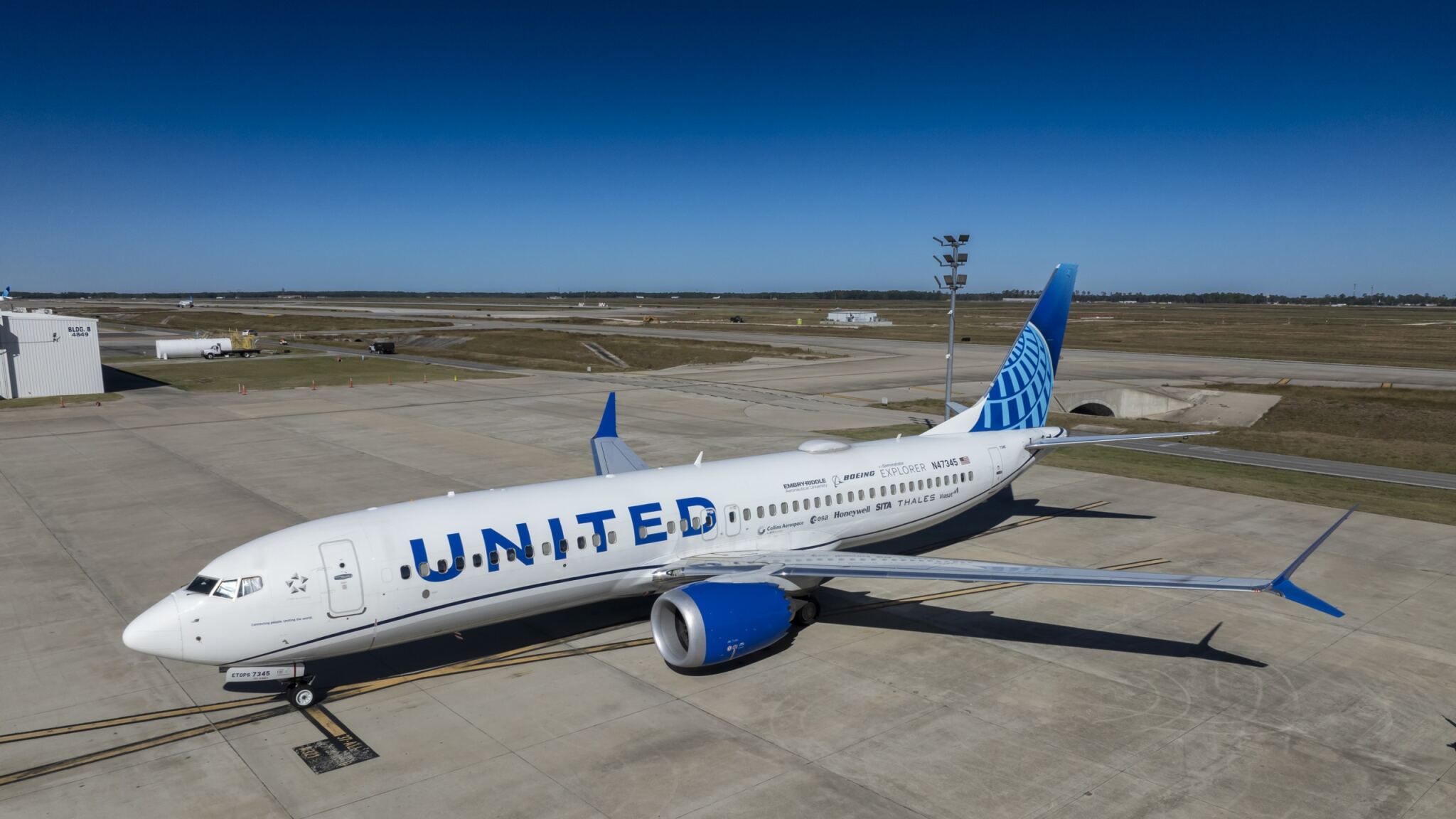
NASA works with Boeing and the ecodemonstrator plane is parked on the tarmac.
The 2025 Boeing ecoDemonstrator Explorer, a United Airlines 737-8, sits outside a United hangar in Houston.
Boeing / Paul Weatherman

Picture this: You’re just about done with a transoceanic flight, and the tracker in your seat-back screen shows you approaching your destination airport. And then … you notice your plane is moving away. Pretty far away. You approach again and again, only to realize you’re on a long, circling loop that can last an hour or more before you land. 

If this sounds familiar, there’s a good chance the delay was caused by issues with trajectory prediction. Your plane changed its course, perhaps altering its altitude or path to avoid weather or turbulence, and as a result its predicted arrival time was thrown off.  

“Often, if there’s a change in your trajectory – you’re arriving slightly early, you’re arriving slightly late – you can get stuck in this really long, rotational holding pattern,” said Shivanjli Sharma, NASA’s Air Traffic Management–eXploration (ATM-X) project manager at the agency’s Ames Research Center in California’s Silicon Valley. 

This inconvenience to travelers is also an economic and efficiency challenge for the aviation sector, which is why NASA has worked for years to study the issue, and recently teamed with Boeing to conduct real-time tests of an advanced system that shares trajectory data between an aircraft and its support systems. 

Boeing began flying a United Airlines 737 for about two weeks in October, testing a data communication system designed to improve information flow between the flight deck, air traffic control, and airline operations centers. The work involved several domestic flights based in Houston, as well as a flight over the Atlantic to Edinburgh, Scotland. 

This partnership has allowed NASA to further its commitment to transformational aviation research.

Shivanjli sharma

Shivanjli sharma

NASA's Air Traffic Management—eXploration project manager

The testing was Boeing’s most recent with its ecoDemonstrator Explorer program, through which the company works with public and private partners to accelerate aviation innovations. This year’s ecoDemonstrator flight partners included NASA, the Federal Aviation Administration, United Airlines, several aerospace companies, as well as academic and government researchers. 

NASA’s work in the testing involved the development of an oceanic trajectory prediction service – a system for sharing and updating trajectory information, even over a long, transoceanic flight that involves crossing over from U.S. air traffic systems into those of another country. The collaboration allowed NASA to get a more accurate look at what’s required to reduce gaps in data sharing. 

“At what rate do you need these updates in an oceanic environment?” Sharma said. “What information do you need from the aircraft? Having the most accurate trajectory information will allow aircraft to move more efficiently around the globe.” 

Boeing and the ecoDemonstrator collaborators plan to use the flight data to move the data communication system toward operational service. The work has allowed NASA to continue its work to improve trajectory prediction, and through its connection with partners, put its research into practical use as quickly as possible. 

“This partnership has allowed NASA to further its commitment to transformational aviation research,” Sharma said. “Bringing our expertise in trajectory prediction together with the contributions of so many innovative partners contributes to global aviation efficiency that will yield real benefits for travelers and industry.” 

NASA ATM-X’s part in the collaboration falls under the agency’s Airspace Operations and Safety Program, which works to enable safe, efficient aviation transportation operations that benefit the flying public and industry. The work is supported through NASA’s Aeronautics Research Mission Directorate.  

Facebook logo
Instagram logo
Linkedin logo
  •  

NASA Demonstrates Safer Skies for Future Urban Air Travel 

2 min read

Preparations for Next Moonwalk Simulations Underway (and Underwater)

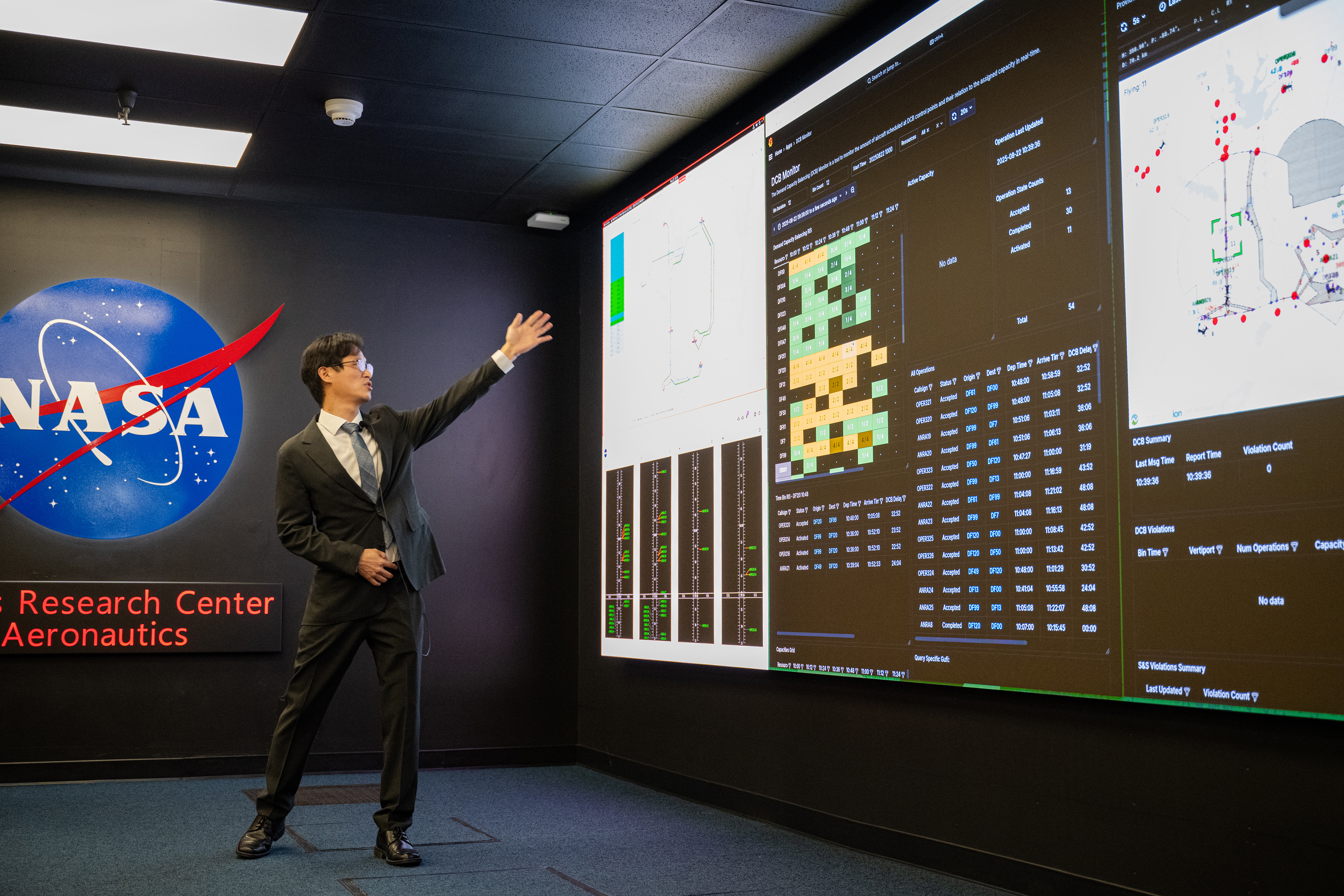
NASA engineer Hanbong Lee demonstrates capabilities to manage busy urban airspace traffic during a recent simulation at NASA’s Ames Research Center in California’s Silicon Valley.
NASA/Brandon Torres-Navarrete

NASA is helping shape the future of urban air travel with a new simulation that will manage how electric air taxis and drones can successfully operate within busy areas.  

The demonstration, held at NASA’s Ames Research Center in California’s Silicon Valley earlier this year, focused on a system called the Strategic Deconfliction Simulation, which helps coordinate flight plans before takeoff, reducing the risk of conflicts in busy urban environments 

At the event, researchers demonstrated NASA’s Situational Viewer and Demand-Capacity Balancing Monitor, which visualizes air traffic and adjusts flight plans in real time. The simulation demonstrated traffic scenarios involving drone operations throughout the Dallas-Fort Worth area, testing how preplanned flights could improve congestion and manage the demand and capacity of the airspace – ensuring that all aircraft can operate smoothly even in crowded conditions. 

Working with industry partners is critical to NASA’s efforts to develop and refine technologies needed for future air mobility. During the simulation, the company, ANRA Technologies, demonstrated its fleet and vertiport management systems, which are designed to support the coordination of multiple aircraft and ground operations. 

“Simulating these complex environments supports broader efforts to ensure safe integration of drones and other advanced vehicles into the US airspace,” said Hanbong Lee, engineer at NASA Ames. “By showcasing these capabilities, we’re delivering critical data and lessons learned to support efforts at NASA and industry.” 

This demonstration is another step toward the NASA team’s plan to hold a technical capability level simulation in 2026. This upcoming simulation would help shape the development of services aimed at managing aircraft flying in urban areas.  

The simulation was created through a NASA team from its Air Mobility Pathfinders project, part of the agency’s continuing work to find solutions for safely integrating innovative new aircraft such as air taxis into U.S. cities and the national airspace. By developing advanced evaluations and simulations, the project supports safe, scalable, and publicly trusted air travel in urban areas, paving the way for a future where air taxis and drones are a safe and reliable part of everyday life. 

The project falls under NASA’s Airspace Operations and Safety Program, which works to enable safe and efficient aviation transportation. 

Keep Exploring

Discover More Topics From NASA

  •