Modalità di lettura

NASA Adds Two F-15 Aircraft to Support Supersonic Flight Research

3 min read

Preparations for Next Moonwalk Simulations Underway (and Underwater)
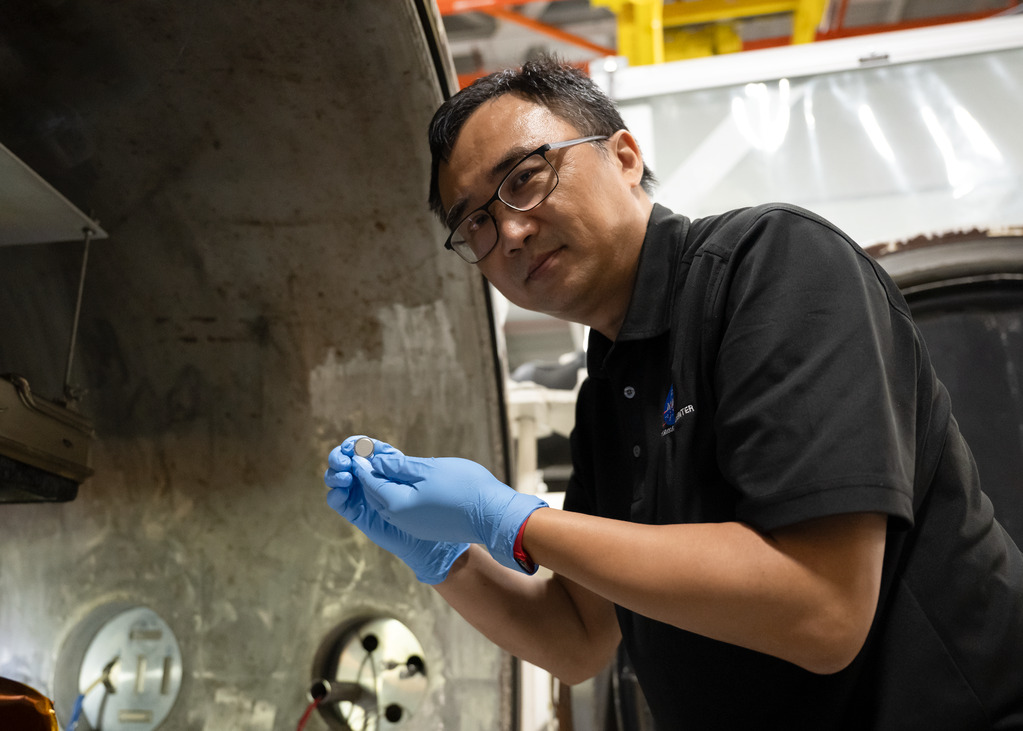
Alt Text: A ground crew member wearing hearing protection raises both arms to guide an F-15 aircraft taxiing on the ramp at NASA Armstrong Flight Research Center.
Oregon Air National Guard ground crew guides one of the NASA’s newest F-15 aircraft onto the ramp at the agency’s Armstrong Flight Research Center in Edwards, California, on Monday, Dec. 22, 2025. The retired U.S. Air Force F-15s come from the Oregon Air National Guard’s 173rd Fighter Wing and will transition from military service to support NASA’s flight research fleet.
NASA/Christopher LC Clark
U.S. Air Force and NASA flight crew stand on the ramp at NASA’s Armstrong Flight Research Center, facing the runway, with a desert landscape and an aircraft visible in the distance.
Oregon Air National Guard and NASA flight crew look out across the desert while awaiting the arrival of the NASA’s newest F-15 aircraft from the Oregon Air National Guard’s 173rd Fighter Wing to NASA’s Armstrong Flight Research Center in Edwards, California, on Monday, Dec. 22, 2025
NASA/Christopher LC Clark
Two F-15 aircraft sit side by side on the ramp at NASA’s Armstrong Flight Research Center, displaying tail numbers 045 and 063 and tail markings that read “Oregon” above an eagle graphic. A NASA hangar with the agency’s logo is visible in the background
NASA’s newest F-15 aircraft arrive at the agency’s Armstrong Flight Research Center in Edwards, California, on Monday, Dec. 22, 2025. The two retired U.S. Air Force F-15s will support ongoing supersonic flight research for NASA’s Flight Demonstrations and Capabilities Project and the Quesst mission’s X-59 quiet supersonic research aircraft.
NASA/Christopher LC Clark
U.S. Air Force service members in uniform and NASA civilians stand in two rows in front of a gray F-15 with its canopy open and a ladder attached on the ramp at NASA Armstrong Flight Research Center, posing for a photo with a hangar and NASA logo visible in the background.
NASA staff and Oregon Air National Guard’s 173rd Fighter Wing crew pose for a group photo at NASA’s Armstrong Flight Research Center in Edwards, California, on Monday, Dec. 22, 2025. The group stands in front of one of two F-15 aircraft added to the agency’s flight research fleet.
NASA/Christopher LC Clark
Two U.S. Air Force pilots in flight suits and a NASA civilian walk away from the agency’s newest F-15 aircraft; two gray F-15s, a white truck, and the desert are visible in the background.
Oregon Air National Guard pilots deliver NASA’s newest F-15 aircraft from the Oregon Air National Guard’s 173rd Fighter Wing at Kingsley Field to NASA’s Armstrong Flight Research Center in Edwards, California, on Monday, Dec. 22, 2025. After completing their final flights with the Air Force, the two aircraft begin their new role supporting NASA’s flight research.
NASA/Christopher LC Clark

Two retired U.S. Air Force F-15 jets have joined the flight research fleet at NASA’s Armstrong Flight Research Center in Edwards, California, transitioning from military service to a new role enabling breakthrough advancements in aerospace.

The F-15s will support supersonic flight research for NASA’s Flight Demonstrations and Capabilities project, including testing for the Quesst mission’s X-59 quiet supersonic research aircraft. One of the aircraft will return to the air as an active NASA research aircraft. The second will be used for parts to support long-term fleet sustainment.

“These two aircraft will enable successful data collection and chase plane capabilities for the X-59 through the life of the Low Boom Flight Demonstrator project” said Troy Asher, director for flight operations at NASA Armstrong. “They will also enable us to resume operations with various external partners, including the Department of War and commercial aviation companies.”

The aircraft came from the Oregon Air National Guard’s 173rd Fighter Wing at Kingsley Field. After completing their final flights with the Air Force, the two aircraft arrived at NASA Armstrong Dec. 22, 2025. 

“NASA has been flying F-15s since some of the earliest models came out in the early 1970s,” Asher said. “Dozens of scientific experiments have been flown over the decades on NASA’s F-15s and have made a significant contribution to aeronautics and high-speed flight research.”

The F-15s allow NASA to operate in high-speed, high-altitude flight-testing environments. The aircraft can carry experimental hardware externally – under its wings or slung under the center – and can be modified to support flight research.

Now that these aircraft have joined NASA’s fleet, the team at Armstrong can modify their software, systems, and flight controls to suit mission needs. The F-15’s ground clearance allows researchers to install instruments and experiments that would not fit beneath many other aircraft.

NASA has already been operating two F-15s modified so their pilots can operate safely at up to 60,000 feet, the top of the flight envelop for the X-59, which will cruise at 55,000 feet. The new F-15 that will fly for NASA will receive the same modification, allowing for operations at altitudes most standard aircraft cannot reach. The combination of capability, capacity, and adaptability makes the F-15s uniquely suited for flight research at NASA Armstrong.

“The priority is for them to successfully support the X-59 through completion of that mission,” Asher said. “And over the longer term, these aircraft will help position NASA to continue supporting advanced aeronautics research and partnerships.”

  •  

NASA Adds Two F-15 Aircraft to Support Supersonic Flight Research

3 min read

Preparations for Next Moonwalk Simulations Underway (and Underwater)

Alt Text: A ground crew member wearing hearing protection raises both arms to guide an F-15 aircraft taxiing on the ramp at NASA Armstrong Flight Research Center.
Oregon Air National Guard ground crew guides one of the NASA’s newest F-15 aircraft onto the ramp at the agency’s Armstrong Flight Research Center in Edwards, California, on Monday, Dec. 22, 2025. The retired U.S. Air Force F-15s come from the Oregon Air National Guard’s 173rd Fighter Wing and will transition from military service to support NASA’s flight research fleet.
NASA/Christopher LC Clark
U.S. Air Force and NASA flight crew stand on the ramp at NASA’s Armstrong Flight Research Center, facing the runway, with a desert landscape and an aircraft visible in the distance.
Oregon Air National Guard and NASA flight crew look out across the desert while awaiting the arrival of the NASA’s newest F-15 aircraft from the Oregon Air National Guard’s 173rd Fighter Wing to NASA’s Armstrong Flight Research Center in Edwards, California, on Monday, Dec. 22, 2025
NASA/Christopher LC Clark
Two F-15 aircraft sit side by side on the ramp at NASA’s Armstrong Flight Research Center, displaying tail numbers 045 and 063 and tail markings that read “Oregon” above an eagle graphic. A NASA hangar with the agency’s logo is visible in the background
NASA’s newest F-15 aircraft arrive at the agency’s Armstrong Flight Research Center in Edwards, California, on Monday, Dec. 22, 2025. The two retired U.S. Air Force F-15s will support ongoing supersonic flight research for NASA’s Flight Demonstrations and Capabilities Project and the Quesst mission’s X-59 quiet supersonic research aircraft.
NASA/Christopher LC Clark
U.S. Air Force service members in uniform and NASA civilians stand in two rows in front of a gray F-15 with its canopy open and a ladder attached on the ramp at NASA Armstrong Flight Research Center, posing for a photo with a hangar and NASA logo visible in the background.
NASA staff and Oregon Air National Guard’s 173rd Fighter Wing crew pose for a group photo at NASA’s Armstrong Flight Research Center in Edwards, California, on Monday, Dec. 22, 2025. The group stands in front of one of two F-15 aircraft added to the agency’s flight research fleet.
NASA/Christopher LC Clark
Two U.S. Air Force pilots in flight suits and a NASA civilian walk away from the agency’s newest F-15 aircraft; two gray F-15s, a white truck, and the desert are visible in the background.
Oregon Air National Guard pilots deliver NASA’s newest F-15 aircraft from the Oregon Air National Guard’s 173rd Fighter Wing at Kingsley Field to NASA’s Armstrong Flight Research Center in Edwards, California, on Monday, Dec. 22, 2025. After completing their final flights with the Air Force, the two aircraft begin their new role supporting NASA’s flight research.
NASA/Christopher LC Clark

Two retired U.S. Air Force F-15 jets have joined the flight research fleet at NASA’s Armstrong Flight Research Center in Edwards, California, transitioning from military service to a new role enabling breakthrough advancements in aerospace.

The F-15s will support supersonic flight research for NASA’s Flight Demonstrations and Capabilities project, including testing for the Quesst mission’s X-59 quiet supersonic research aircraft. One of the aircraft will return to the air as an active NASA research aircraft. The second will be used for parts to support long-term fleet sustainment.

“These two aircraft will enable successful data collection and chase plane capabilities for the X-59 through the life of the Low Boom Flight Demonstrator project” said Troy Asher, director for flight operations at NASA Armstrong. “They will also enable us to resume operations with various external partners, including the Department of War and commercial aviation companies.”

The aircraft came from the Oregon Air National Guard’s 173rd Fighter Wing at Kingsley Field. After completing their final flights with the Air Force, the two aircraft arrived at NASA Armstrong Dec. 22, 2025. 

“NASA has been flying F-15s since some of the earliest models came out in the early 1970s,” Asher said. “Dozens of scientific experiments have been flown over the decades on NASA’s F-15s and have made a significant contribution to aeronautics and high-speed flight research.”

The F-15s allow NASA to operate in high-speed, high-altitude flight-testing environments. The aircraft can carry experimental hardware externally – under its wings or slung under the center – and can be modified to support flight research.

Now that these aircraft have joined NASA’s fleet, the team at Armstrong can modify their software, systems, and flight controls to suit mission needs. The F-15’s ground clearance allows researchers to install instruments and experiments that would not fit beneath many other aircraft.

NASA has already been operating two F-15s modified so their pilots can operate safely at up to 60,000 feet, the top of the flight envelop for the X-59, which will cruise at 55,000 feet. The new F-15 that will fly for NASA will receive the same modification, allowing for operations at altitudes most standard aircraft cannot reach. The combination of capability, capacity, and adaptability makes the F-15s uniquely suited for flight research at NASA Armstrong.

“The priority is for them to successfully support the X-59 through completion of that mission,” Asher said. “And over the longer term, these aircraft will help position NASA to continue supporting advanced aeronautics research and partnerships.”

  •  

NASA, Boeing Test How to Improve Performance of Longer, Narrower Aircraft Wings 

5 min read

Preparations for Next Moonwalk Simulations Underway (and Underwater)

A scale model of possible future commercial jet airplane sits inside a NASA wind tunnel where the aircraft wing was tested.
The Integrated Adaptive Wing Technology Maturation wind-tunnel model installed in the Transonic Dynamics Tunnel at NASA Langley Research Center in Hampton, Virginia.
NASA / Mark Knopp

The airliner you board in the future could look a lot different from today’s, with longer, thinner wings that provide a smoother ride while saving fuel.

Those wings would be a revolutionary design for commercial aircraft, but like any breakthrough technology, they come with their own development challenges – which experts from NASA and Boeing are now working to solve. 

When creating lift, longer, thinner wings can reduce drag, making them efficient. However, they can become very flexible in flight.

Through their Integrated Adaptive Wing Technology Maturation collaboration, NASA and Boeing recently completed wind tunnel tests of a “higher aspect ratio wing model” looking for ways to get the efficiency gains without the potential issues these kinds of wings can experience. 

“When you have a very flexible wing, you’re getting into greater motions,” said Jennifer Pinkerton, a NASA aerospace engineer at NASA Langley Research Center in Hampton, Virginia. “Things like gust loads and maneuver loads can cause even more of an excitation than with a smaller aspect ratio wing. Higher aspect ratio wings also tend to be more fuel efficient, so we’re trying to take advantage of that while simultaneously controlling the aeroelastic response.”  


Take a minute to watch this video about the testing NASA and Boeing are doing on longer, narrower aircraft wings.

Without the right engineering, long, thin wings could potentially bend or experience a condition known as wing flutter, causing aircraft to vibrate and shake in gusting winds.  

“Flutter is a very violent interaction,” Pinkerton said. “When the flow over a wing interacts with the aircraft structure and the natural frequencies of the wing are excited, wing oscillations are amplified and can grow exponentially, leading to potentially catastrophic failure. Part of the testing we do is to characterize aeroelastic instabilities like flutter for aircraft concepts so that in actual flight, those instabilities can be safely avoided.” 

To help demonstrate and understand this, researchers from NASA and Boeing sought to soften the impacts of wind gusts on the aircraft, lessen the wing loads from aircraft turns and movements, and suppress wing flutter.

Reducing or controlling those factors can have a significant impact on an aircraft’s performance, fuel efficiency, and passenger comfort. 

Testing for this in a controlled environment is impossible with a full-sized commercial airliner, as no wind tunnel could accommodate one.

However, NASA Langley’s Transonic Dynamics Tunnel, which has been contributing to the design of U.S. commercial transports, military aircraft, launch vehicles, and spacecraft for over 60 years, features a test section 16 feet high by 16 feet wide, big enough for large-scale models. 

 To shrink a full-size plane down to scale, NASA and Boeing worked with NextGen Aeronautics, which designed and fabricated a complex model resembling an aircraft divided down the middle, with one 13-foot wing.

Mounted to the wall of the wind tunnel, the model was outfitted with 10 control surfaces – moveable panels – along the wing’s rear edge. Researchers adjusted those control surfaces to control airflow and reduce the forces that were causing the wing to vibrate.

Instruments and sensors mounted inside the model measured the forces acting on the model, as well as the vehicle’s responses.

A scale model of possible future commercial jet airplane sits inside a NASA wind tunnel where the aircraft wing was tested.
Another view of the Integrated Adaptive Wing Technology Maturation wind-tunnel model installed in the Transonic Dynamics Tunnel at NASA Langley Research Center in Hampton, Virginia.
NASA / Mark Knopp

The model wing represented a leap in sophistication from a smaller one developed during a previous NASA-Boeing collaboration called the Subsonic Ultra Green Aircraft Research (SUGAR).

“The SUGAR model had two active control surfaces,” said Patrick S. Heaney, principal investigator at NASA for the Integrated Adaptive Wing Technology Maturation collaboration. “And now on this particular model we have ten. We’re increasing the complexity as well as expanding what our control objectives are.”  

A first set of tests, conducted in 2024, gave experts baseline readings that they compared to NASA computational simulations, allowing them to refine their models. A second set of tests in 2025 used the additional control surfaces in new configurations.

The most visible benefits of these new capabilities appeared during testing to alleviate the forces from gusting winds, when researchers saw the wing’s shaking greatly reduced.

With testing completed, NASA and Boeing experts are analyzing data and preparing to share their results with the aviation community. Airlines and original equipment manufacturers can learn and benefit from the lessons learned, deciding which to apply to the next generation of aircraft.  

“Initial data analyses have shown that controllers developed by NASA and Boeing and used during the test demonstrated large performance improvements,” Heaney said. “We’re excited to continue analyzing the data and sharing results in the months to come.” 

NASA’s Advanced Air Transport Technology project works to advance aircraft design and technology under the agency’s Advanced Air Vehicles program, which studies, evaluates, and develops technologies and capabilities for new aircraft systems. The project and program fall within NASA’s Aeronautics Research Mission Directorate. 

Facebook logo
Instagram logo
Linkedin logo
Keep Exploring

Discover More Topics From NASA

💾

What can we do to help aircraft wings perform better in flight, creating a smoother, more fuel efficient, and safer experience for travelers? This is a quest...
  •