Modalità di lettura

SpaceX Launches Two Falcon 9 Rockets just 38 Minutes Apart

An anonymous reader shares this report from Space.com: On Saturday evening (Aug. 15), SpaceX set another mark, for the shortest time between orbital flights: It launched two Falcon 9 rockets just 38 minutes apart, besting its old mark — set on Aug. 31, 2024 with two Starlink missions — by 27 minutes. The first liftoff, from Florida's Cape Canaveral Space Force Station, occurred Saturday at 9:12 p.m. EDT (0112 GMT on Aug. 16) and carried eight satellites to low Earth orbit (LEO) for Louisiana-based telecom company Globalstar. All eight spacecraft were deployed successfully, separating over a six-minute span beginning 56.5 minutes after liftoff, SpaceX announced via social media. While that Falcon 9 was powering its way to low Earth orbit, another one launched from Vandenberg Space Force Base, on California's central coast. That liftoff, at 9:50 p.m. EDT (6:50 p.m. local time; 0150 GMT on Aug. 16), kicked off a mission for the U.S. Space Force called USSF-366... Both of Saturday's missions featured successful rocket landings. The Falcon 9 first stage that launched the Globalstar mission came back for a touchdown at Cape Canaveral about eight minutes after launch. It was the 14th flight for that particular booster. The USSF-366 Falcon 9 first stage, meanwhile, came back to Earth about 8.5 minutes after its launch, touching down in the Pacific Ocean on the SpaceX droneship "Of Course I Still Love You." That booster now has 18 missions under its belt. Saturday's doubleheader brought the tally of Falcon 9 launches in 2026 to 96. The vast majority of those — about 75% — have been Starlink missions.

Read more of this story at Slashdot.

  •  

Teorie e controstorie della catastrofe / 1 – Si salvi chi può!

di Sandro Moiso

Lawrence Osborne, L’angelo in fiamme, Adelphi Edizioni, Milano 2026, pp. 318, 20 euro

«A volte uno deve vedere cosa c’è in giro. E’ la legge della vita. Quando i tempi sono difficili, bisogna andare.» (Lawrence Osborne – Camino Real)

Ha inizio con questa recensione una riflessione sul tema della catastrofe e le sue teorizzazioni e rappresentazioni, sia di carattere scientifico che filosofico, politico, letterario o cinematografico; ovvero su come la catastrofe è immaginata e su come ciò che ne deriva finisca col riflettersi sulla realtà e le sue possibili trasformazioni. In qualsiasi direzione queste possano orientarsi o dirigersi.

Sia il titolo di questa nuova serie di articoli e recensioni che l’intento che la anima sono sicuramente in debito con la “teoria delle catastrofi”, elaborata dal matematico e filosofo francese René Thom fin dagli anni cinquanta, che, a partire da una teoria matematica della morfogenesi1, dovrebbe servire ad anticipare i mutamenti discontinui che si presentano con una certa frequenza nei fenomeni naturali, in particolare in biologia, ma anche nella geologia oppure nell’economia, nelle società complesse e, anche se non fu Thom a teorizzarlo, nella Storia. In tale contesto il termine catastrofe non va dunque inteso soltanto come sinonimo di un evento luttuoso o drammatico, ma anche come particolare e significativa discontinuità nell’evoluzione di un sistema dato. In altre parole come significativo punto di svolta destinato a mutare l’assetto originario dello stesso.

Una teoria, quella inaugurata da Renare Thom, che attraverso la logica e il calcolo matematico cerca di prevedere e fornire modelli relativamente certi dei cambiamenti improvvisi causati da piccole alterazioni nei parametri del sistema come le transizioni di fase, i movimenti tellurici, i cedimenti strutturali, i crolli dei mercati finanziari. Per mezzo della quale si evidenzia l’importanza dell’accumulo di piccole perturbazioni cui, inizialmente, la stabilità strutturale, intesa come insensibilità del sistema nei loro confronti, risulta apparentemente indifferente, ma che, successivamente, vede l’azione cumulativa delle stesse portare ad una variazione, spesso significativa, del medesimo. Finendo sostanzialmente col dare vita ad un sistema di equilibri dinamici in cui mai nessun cambiamento o mutazione dell’equilibrio può essere considerato definitivo.

Poiché non sarebbe qui utile sviluppare ulteriormente la descrizione dei risvolti scientifici e matematici della medesima teoria, occorre a questo punto segnalare che la catastrofe qui inseguita, pur prevedibile attraverso le scosse piccole e grandi che la anticipano, non è riconducibile soltanto alle certezze indotte dal calcolo matematico, ma piuttosto alla percezione che se ne può avere, sia dal punto di vista soggettivo che collettivo.

Una percezione che spesso viaggia in direzione contraria a quella indotta sia dalla matematica che dal suo corollario più invasivo ovvero quell’idea di progresso inteso come risultato di una previsione certificata e della messa in atto cosciente di un’azione destinata a modificare e migliorare sia le conoscenze che le condizioni delle società a venire, sia dal punto di vista scientifico che tecnologico, economico e politico.

Una percezione antica che, in molte culture e società, ha colto più o meno coscientemente, proprio nella direzione indicata, dalle forme dello svolgimento delle attività dell’uomo e della natura il sintomo di una fine dei tempi o dei singoli percorsi individuali: dalle apocalissi gnostiche oppure evangeliche fino al mito nordico del Ragnarok che comprende non soltanto la fine del modo umano, ma anche quello degli Dei, affinché la storia e la vita possano ripartire in un’altra direzione. Non per forza migliore o superiore, come ancora una volta l’ideologia del progresso vorrebbe invece imporre più che suggerire.

La pretesa condizione stazionaria di un sistema di culti, riferimenti morali, strutture politiche, conoscenze e certezze, che si vorrebbero dati una volta per tutte, è solo e sempre apparente, mentre è proprio la mancata comprensione dell’instabilità strutturale di ogni sistema ad accelerare i processi caotici destinati a determinarne la catastrofe, ovvero una svolta radicale e improvvisa per la dinamica, gli equilibri e la sopravvivenza dello stesso.

Risulta, quindi, quasi inutile sottolineare come tale percezione abbia continuato ad agire attraverso la filosofia, la religione e l’arte fino ai nostri giorni, nelle forme e nelle modalità più disparate e, in particolare a partire dal Novecento, per mezzo della letteratura di anticipazione o noir. Si pensi soltanto ad autori come George Orwell e Aldous Huxley, con le loro distopiche apocalissi, oppure a James Ballard o Philip K. Dick, con le loro catastrofi psicologiche o dell’inner space, oppure, ancora, a Jim Thompson e David Goodis con le loro storie criminali di donne e uomini destinati, quasi sempre, a compiere il male e finire sconfitti, ma che nonostante tutto non possono e non vogliono modificare un percorso esistenziale destinato a portarli in quella direzione, sia per intima natura che per soggettiva incapacità di comprendere gli avvenimenti che li circondano e che finiscono col condurli alla rovina.

Tutto questo per dire che le nove storie raccolte da Lawrence Osborne nel volume appena pubblicato dalle Edizioni Adelphi appartengono a pieno titolo al quadro sin qui delineato. L’angelo in fiamme (titolo originale: Burning Angel: Collected Stories, 2023) ci presenta infatti, con una tecnica narrativa in debito sia con Ballard che con Thompson, più che con Graham Greene cui certa critica preferirebbe avvicinare l’autore, vicende che portano alla sconfitta, al disfacimento morale ed esistenziale oppure alla morte violenta di individui appartenenti ad entrambi i sessi.

Vicende in cui i protagonisti, come si è visto in epigrafe, «devono andare» anche se non sanno bene dove e come oppure immaginando percorsi e risultati diversi da quelli che poi raggiungeranno. Storie di salti in un buio che sarebbe, però, assolutamente prevedibile se i personaggi sapessero tener conto delle tante piccole alterazioni che hanno accompagnato la loro vita fino al punto in cui li incontriamo nelle pagine dei singoli racconti.

Lawrence Osborne è uno scrittore e viaggiatore inglese, autore di racconti di viaggio, romanzi e saggi, nato in Inghilterra nel 1958 e che oggi vive e lavora a Bangkok. Come giornalista, collabora con testate come «The New York Times», il «New Yorker», il «Financial Times», «The New York Observer» e l’«Independent», mentre in Italia molte delle sue opere sono pubblicate da Adelphi2.

Le sue catastrofi appaiono sempre di natura soggettiva più che oggettiva, a differenza di quanto vorrebbe in egual misura un pensiero deterministico riferibile sia al positivismo che a certo economicismo marxista. Più in linea, le prime, con una concezione che vede in ogni cambiamento radicale, compresa la morte, la fine di una storia o di una delle tante storie possibili più che la fine della Storia. Fine della Storia che, invece, non solo è compresa nella concezione trionfalistica di Francis Fukuyama secondo il quale il modello di sviluppo occidentale si sarebbe imposto definitivamente, in virtù della forza dei suoi valori, su tutti gli altri modelli possibili, ma anche nelle concezioni politiche, filosofiche e religiose di carattere teleologico secondo le quali la fine di un certo modello di organizzazione sociale coinciderebbe sempre con la fine del mondo.

Di cui le attuali polemiche sulla crisi ambientale costituiscono un perfetto esempio, considerato che se da una parte vedono schierati coloro che negano il riscaldamento globale, dall’altra vedono allineato chi, nel denunciarne la drammaticità, la fa derivare quasi esclusivamente dall’azione dell’Uomo e il suo superamento soltanto da un ulteriore avanzamento tecnologico (energie alternative, auto elettriche, etc.). Una visione ancora eccessivamente antropocentrica che si dimostra incapace di accettare il fatto che debba essere la specie ad adattarsi ai corsi e ricorsi delle ere terrestri e della Natura e delle loro contingenti conseguenze sul piano dell’ambiente e della vita e non viceversa.

Concezioni della crisi sostanzialmente speculari che non possono far altro che annunciare la fine del mondo poiché entrambe convinte che la fine dell’attuali società non potrebbe far altro che portare alla fine della Storia. Una concezione incapace di andare al di là di uno sguardo impregnato di scientificità presunta, fiducia nel progresso (ancora una volta), volontà di controllo e dominio della e sulla Natura che diventa una sorta di religione laica stravolta dalla rivelazione della fine dei tempi. In cui si nega che il pianeta, come ben sapevano anche i nostri più lontani antenati, sia abitato e trasformato in continuazione anche da altre infinite specie animali, dai virus ai mammiferi colossali che vivono nei mari, destinate quasi tutte a sopravvivere all’estinzione degli esseri umani e di un’organizzazione sociale basata sul più barbaro dei sistemi di sfruttamento dell’uomo sull’uomo e dell’uomo sull’ambiente e le sue, non rinnovabili in tempi brevi, risorse.

Così non è, forse, un caso che in queste nove racconti ambientati in differenti e tra loro lontane aree del mondo, la natura, con la fauna e la flora che ne rivelano sempre la presenza, costituisca uno sfondo estraneo ed estremamente simbolico allo stesso tempo per le vicende che travolgono i protagonisti. Dalle giungle asiatiche, al deserto messicano oppure alle nebbiose brughiere inglesi fino al Golfo Persico e agli tsunami dell’Oceano Indiano.

Come non può essere un caso che in molti racconti i personaggi provenienti dal nostro mondo occidentale finiscano sotto lo sguardo altro di popoli dall’organizzazione sociale e dalle credenze arcaiche oppure di agenti scaltri e privi di scrupoli dell’odierno Partito comunista cinese. Mettendo in scena anche sia i danni arrecati in loco dalla diffusione delle chiese evangeliche che il confronto tra le grandi aree metropolitane, come quelle di Hong Kong o Los Angeles, e l’ambiente selvaggio che ancora le circonda, contribuendo a sminuirne la loro pretesa grandezza.

Così, tutto sommato, il broker in rovina ma alla ricerca di nuovi e facili guadagni, l’entomologa concentrata sulla scoperta di nuove specie di insetti, l’antropologa impegnata nella comprensione di una lingua indigena, la psicoanalista incapace di liberarsi del proprio passato, il corriere della droga messicano preso in un loop tra disoccupazione e scelta del rischio, i turisti sprovveduti e gli altri differenti tipi umani presenti nell’Angelo in fiamme, mossi soltanto dall’egoismo o dalla speranza in una impossibile redenzione, sono tutti destinati ad abitare una catastrofe già avvenuta oppure in corso o, ancora, semplicemente possibile, finendo col costituire un cumulo di detriti e scarti, come quelli che le grandi metropoli vedono sorgere in continuazione alla loro periferia, in cui Osborne affonda le mani con crudeltà, cinismo, grande tecnica narrativa e implacabile ironia. Dando vita a figure destinate a subire o scatenare un male privo di qualsiasi fascino oppure, come spesso accade, banale e scontato nelle sue manifestazioni.


  1. La morfogenesi è il processo che porta allo sviluppo di una determinata forma o struttura. In biologia è lo sviluppo della forma e della struttura di un organismo, sia da un punto di vista evolutivo, sia dal punto di vista dello sviluppo ontogenetico di un singolo organismo a partire dallo sviluppo embrionale; mentre in geologia la morfogenesi è la formazione delle strutture e dei rilievi della crosta terrestre, dovuti a cause diverse. a  

  2. Nella polvere (The Forgiven, 2012), trad. di Mariagrazia Gini, Milano, Adelphi, 2021; La ballata di un piccolo giocatore (The Ballad of a Small Player, 2014), Adelphi, 2018; Cacciatori nel buio (Hunters in the Dark, 2015), 2017; L’estate dei fantasmi (Beautiful Animals, 2017), 2020; Il regno di vetro (The Glass Kingdom, 2020), 2022; Java Road (On Java Road, 2022), 2023; Il turista nudo (The Naked Tourist: In Search of Adventure and Beauty in the Age of the Airport Mall, 2006), trad. di Matteo Codignola, 2006; Shangri-la, 2008 e Santi e bevitori. Un viaggio alcolico in terre astemie (The Wet and the Dry: A Drinker’s Journey, 2013), 2024.  

  •  

La Pace cambia l’economia

Si terrà sabato 5 settembre 2026 a Cernobbio (Sala di Via delle Cinque Giornate 5) il XVI Forum nazionale dell’altra Cernobbio, promosso dalla campagna Sbilanciamoci! insieme alla Rete Italiana Pace e Disarmo. Il titolo dell’edizione di quest’anno è “Un’economia di pace. Contro la guerra, un nuovo modello di sviluppo“.

Parteciperanno (clicca per scaricare il programma) economiste ed economisti, ricercatori, sindacalisti ed esponenti della variegata galassia delle associazioni che fanno parte delle due reti promotrici, alle quali aderiscono oltre 100 organizzazioni.

I temi affrontati quest’anno sono quelli della riduzione delle spese militari e della riconversione dell’industria bellica, delle conseguenze dannose delle guerre sull’economia e sulla vita delle persone, della necessità di un modello di sviluppo sostenibile e di qualità fondato sui diritti, la pace, l’ambiente. Faro per le organizzazioni promotrici è una politica di pace fondata sulla cooperazione e sulla democrazia internazionale, un’economia di giustizia, contro le diseguaglianze.

Il Forum si concluderà con gli impegni e le proposte verso la legge di bilancio 2027 e le elezioni politiche: al centro gli investimenti pubblici per la transizione ecologica, la riconversione del sistema produttivo, la sanità e l’istruzione pubblica, i servizi sociali per il welfare e l’accoglienza dei cittadini migranti.

“Mentre al workshop dello Studio Ambrosetti – affermano Cecilia Begal e Giulio Marcon, co-portavoce  di Sbilanciamoci- ci ripropongono da 40 anni le stesse ricette fallimentari che hanno fatto crescere diseguaglianze, guerre e peggioramento del clima, noi vogliamo dire che un’altra economia è possibile: quella fondata sulla pace, i diritti, la sostenibilità”

I lavori si articolano in due momenti: la mattina (ore 9.30-13.00) dedicata a “L’impatto della guerra sull’economia e la società”, con le sessioni sulla militarizzazione dell’economia e sulle conseguenze per la globalizzazione, il lavoro e le produzioni; il pomeriggio (ore 14.00-17.00) dedicato a “Le alternative dell’economia di pace”, con le sessioni su un’economia del lavoro, dell’ambiente e dei diritti e su un modello di sviluppo sostenibile.

La giornata si chiuderà alle ore 21.00 allo Spazio Gloria (Via Varesina 72, Como) con “Ho visto un Re…”, “concerto” teatrale di diverse compagnie contro i Re e le loro guerre, presentato da Dario Onofrio (Arci) e con l’intervento di Cecilia Begal, co-portavoce di Sbilanciamoci!.

L'articolo La Pace cambia l’economia sembra essere il primo su Sbilanciamoci - L’economia com’è e come può essere. Per un’Italia capace di futuro.

  •  

L’economia che vogliamo

A Cernobbio quest’anno — nel forum alternativo a quello dello Studio Ambrosetti, promosso da Sbilanciamoci! e Rete Italiana Pace e Disarmo — decliniamo i temi e le alternative di un’economia di pace, fondata sul disarmo, sulle politiche di cooperazione, sui diritti, sull’eguaglianza, su un modello di sviluppo ancorato alla sostenibilità e alla lotta ai cambiamenti climatici.

La pace non è, come si sa, semplicemente l’assenza di guerra, ma l’affermazione dei valori fondamentali della comunità umana: la libertà, la giustizia, la solidarietà, l’eguaglianza. I principi della Rivoluzione francese del 1789 e della nostra Costituzione repubblicana.

Principi, com’è noto, realizzati solo in parte e solo in una parte del mondo. E oggi rimessi in discussione dai governi di destra, nazionalisti e autoritari, dalla presidenza Trump negli Stati Uniti al governo Meloni in Italia. Anche la pace come assenza di guerra è lontana dall’essere realizzata: ci sono oggi oltre 50 conflitti armati nel mondo, con centinaia di migliaia di morti, milioni di profughi, città e territori devastati. Guerre alimentate anche dal business delle armi, enormemente cresciuto negli ultimi decenni e favorito dalle politiche di riarmo che i paesi della NATO stanno realizzando.

L’economia che vogliamo è un’economia disarmata, capace di dare risposte ai veri bisogni della comunità: non portaerei, cacciabombardieri e sottomarini, ma posti di lavoro con diritti, ospedali e la fine delle liste d’attesa, scuole e università gratuite e per tutte e tutti, fiumi puliti, aria non inquinata, energia pulita. Non si tratta di un libro dei sogni.

Ci sono alternative e proposte concrete, che si possono realizzare costruendo una prospettiva diversa, anche con la riconversione dell’industria militare a scopi civili. Invece di fare cacciabombardieri si possono costruire Canadair per spegnere gli incendi; invece di produrre blindati si possono fare autobus per il servizio pubblico; invece di elicotteri da combattimento si possono fabbricare elicotteri per l’elisoccorso, per le aree interne e là dove le ambulanze non arrivano in tempo. Si può fare. E sono queste le proposte che presentiamo ogni anno, quando si discute la legge di bilancio, con la controfinanziaria: proposte dettagliate per un uso della spesa pubblica a favore dei diritti, della pace, dell’ambiente.

Abbiamo un Paese che soffre: milioni di lavoratori e lavoratrici poveri e precari, centinaia di migliaia di giovani che emigrano per studiare e per trovare lavoro, donne pagate meno degli uomini, 4 milioni di italiani e italiane che non si curano più perché le liste d’attesa sono troppo lunghe e non hanno i soldi per andare nelle strutture private, colline e montagne che franano alla prima alluvione. Il governo Meloni, oltre a non rispondere a questi problemi — in questi ultimi quattro anni sono aumentate la povertà e la precarietà del lavoro, la sanità pubblica è sottofinanziata, mancano le politiche industriali, metà delle scuole italiane non rispetta le normative di sicurezza — prova a dare al Paese, con il decreto sicurezza, la legge elettorale, il bavaglio all’informazione, una stretta autoritaria senza precedenti: sono a rischio la nostra democrazia, i diritti politici e civili, la nostra Costituzione.

Serve un nuovo modello di sviluppo, fondato sulla qualità sociale, sulla sostenibilità ambientale, sull’eguaglianza di genere, economica e sociale.

È questo il messaggio che vogliamo lanciare con la XVI edizione dell’altra Cernobbio.

L'articolo L’economia che vogliamo sembra essere il primo su Sbilanciamoci - L’economia com’è e come può essere. Per un’Italia capace di futuro.

  •  

NASA Assigns Astronaut Deniz Burnham to First Space Station Mission

NASA astronaut Deniz Burnham poses for a portrait at NASA’s Johnson Space Center in Houston.
Credit: NASA/Robert Markowitz

NASA astronaut Deniz Burnham will embark on her first mission to the International Space Station, serving as an Expedition 76 flight engineer.

Burnham will launch aboard the Roscosmos Soyuz MS-30 spacecraft with cosmonauts Dmitri Petelin and Konstantin Borisov. Launch is targeted for March 2027, from the Baikonur Cosmodrome in Kazakhstan, and the trio will spend about seven months aboard the orbiting laboratory.

During her expedition, Burnham will conduct scientific investigations and technology demonstrations to help prepare humans for future exploration missions to the Moon and Mars and to benefit people on Earth.

Selected as a NASA astronaut in 2021, Burnham graduated with the agency’s 23rd astronaut class in 2024. Born at Incirlik Air Base in Adana, Turkey, Burnham moved frequently while growing up in a military family. She was living in Wasilla, Alaska, at the time of her selection.

A former intern at NASA’s Ames Research Center in California’s Silicon Valley, Burnham earned a bachelor’s degree in chemical engineering from the University of California, San Diego, and a master’s degree in mechanical engineering from the University of Southern California in Los Angeles. An experienced leader in the energy industry, she spent more than a decade managing onsite drilling operations on oil rigs across North America. Burnham also served in the U.S. Navy Reserves as an engineering duty officer. She is a licensed private pilot with ratings for airplane single engine land and sea, instrument airplane, and rotorcraft-helicopter.

For more than 25 years, people have lived and worked continuously aboard the International Space Station, advancing scientific knowledge and making research breakthroughs not possible on Earth. The space station helps NASA understand and overcome the challenges of human spaceflight, expand commercial opportunities in low Earth orbit, and build on the foundation for long-duration missions to the Moon, as part of the Artemis program, and to Mars.

To learn more about International Space Station research, operations, and its crews, visit:

https://www.nasa.gov/station

-end-

Joshua Finch
Headquarters, Washington
202-358-1100
joshua.a.finch@nasa.gov

Anna Schneider
Johnson Space Center, Houston
281-483-5111
anna.c.schneider@nasa.gov

Share

Details

Last Updated
Jul 30, 2026
  •  

NASA Assigns Astronaut Deniz Burnham to First Space Station Mission

NASA astronaut Deniz Burnham poses for a portrait at NASA’s Johnson Space Center in Houston.
Credit: NASA/Robert Markowitz

NASA astronaut Deniz Burnham will embark on her first mission to the International Space Station, serving as an Expedition 76 flight engineer.

Burnham will launch aboard the Roscosmos Soyuz MS-30 spacecraft with cosmonauts Dmitri Petelin and Konstantin Borisov. Launch is targeted for March 2027, from the Baikonur Cosmodrome in Kazakhstan, and the trio will spend about seven months aboard the orbiting laboratory.

During her expedition, Burnham will conduct scientific investigations and technology demonstrations to help prepare humans for future exploration missions to the Moon and Mars and to benefit people on Earth.

Selected as a NASA astronaut in 2021, Burnham graduated with the agency’s 23rd astronaut class in 2024. Born at Incirlik Air Base in Adana, Turkey, Burnham moved frequently while growing up in a military family. She was living in Wasilla, Alaska, at the time of her selection.

A former intern at NASA’s Ames Research Center in California’s Silicon Valley, Burnham earned a bachelor’s degree in chemical engineering from the University of California, San Diego, and a master’s degree in mechanical engineering from the University of Southern California in Los Angeles. An experienced leader in the energy industry, she spent more than a decade managing onsite drilling operations on oil rigs across North America. Burnham also served in the U.S. Navy Reserves as an engineering duty officer. She is a licensed private pilot with ratings for airplane single engine land and sea, instrument airplane, and rotorcraft-helicopter.

For more than 25 years, people have lived and worked continuously aboard the International Space Station, advancing scientific knowledge and making research breakthroughs not possible on Earth. The space station helps NASA understand and overcome the challenges of human spaceflight, expand commercial opportunities in low Earth orbit, and build on the foundation for long-duration missions to the Moon, as part of the Artemis program, and to Mars.

To learn more about International Space Station research, operations, and its crews, visit:

https://www.nasa.gov/station

-end-

Joshua Finch
Headquarters, Washington
202-358-1100
joshua.a.finch@nasa.gov

Anna Schneider
Johnson Space Center, Houston
281-483-5111
anna.c.schneider@nasa.gov

Share

Details

Last Updated
Jul 30, 2026
  •  

NASA to Cover Three US Spacewalks, Host Preview News Conference

006B6348.NEF
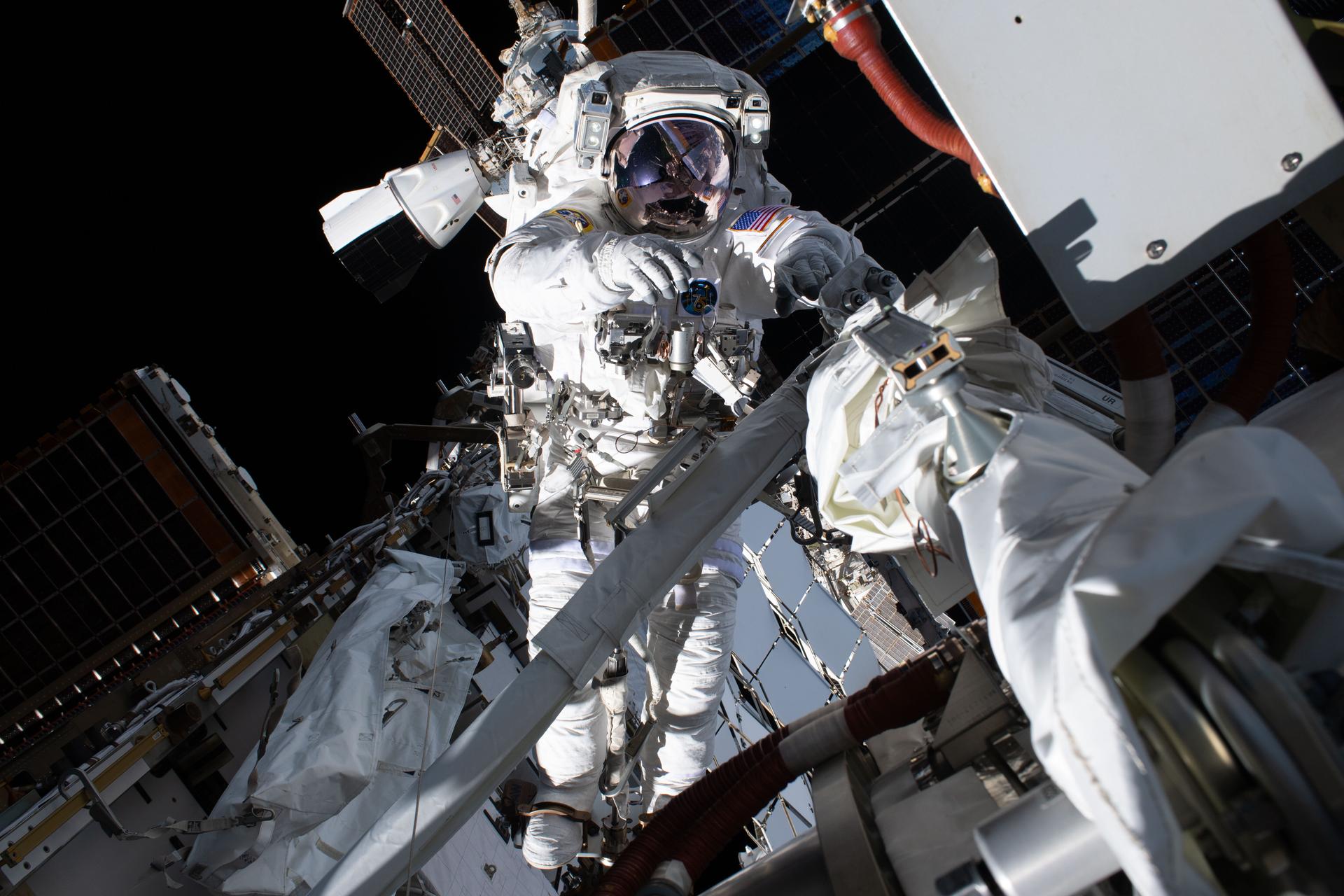
NASA astronaut Jessica Meir works inside the International Space Station’s Quest airlock in March, her reflection visible in a spacesuit helmet visor as she installs leg and arm components and swaps parts between suits.
Credit: NASA/Jack Hathaway

Editor’s Note: This advisory was updated on Aug. 10, 2026, to reflect the assigned crew members and coverage times for U.S. spacewalk 97, scheduled to take place on Tuesday, Aug. 18. 

Editor’s Note: The advisory was updated on Aug. 7, 2026, with a date change for U.S. spacewalk 97, which is now scheduled for Tuesday, Aug. 18. Read more on the International Space Station blog.

Editor’s note: This media advisory was updated July 27, 2026 to reflect an updated start time for the spacewalk on Thursday, Aug. 6.

NASA will provide coverage as astronauts venture outside the International Space Station during three spacewalks in August to continue upgrading solar arrays, replace a communications antenna, and connect power and data cables in support of space station operations.

Experts will preview the upcoming spacewalks during a news conference at 2 p.m. EDT, Thursday, July 30, from NASA’s Johnson Space Center in Houston.

NASA will stream these events through a variety of platforms. Learn where to watch online:

https://www.nasa.gov/live

NASA participants in the news conference include:

  • Bill Spetch, deputy manager of Commercial, Low Earth Orbit Program
  • Chris Dobbins, spacewalk flight director
  • Chloe Mehring, spacewalk flight director

United States-based media interested in attending in person must contact the Johnson newsroom no later than 3 p.m., Wednesday, July 29, at jsccommu@mail.nasa.gov. Media joining by phone should request dial-in details by the same deadline. To ask a question, media must dial in no later than 15 minutes before the start of the news conference.

Thursday, Aug. 6

NASA astronauts Jessica Meir and Anil Menon will exit the Quest airlock to install hardware that will modify the station’s 3B power channel and prepare it for the future installation of an International Space Station Roll-Out Solar Array (IROSA). The solar array, scheduled for delivery later this year, will be the seventh IROSA and will provide additional power to support critical station operations, including its safe and controlled deorbit.

Watch NASA’s live coverage of U.S. spacewalk 96 beginning at 7 a.m. The spacewalk is expected to start at 8:35 a.m. and last about six and a half hours.

This spacewalk will be the sixth for Meir and the first for Menon. Meir will serve as spacewalk crew member 1 and will wear a suit with red stripes. Menon will serve as crew member 2 and will wear an unmarked suit.

Tuesday, Aug. 18

During U.S. spacewalk 97, NASA astronaut Anil Menon and ESA (European Space Agency) astronaut Sophie Adenot will exit the station’s Quest airlock to replace a Space-to-Ground antenna on the orbital complex. The antenna is a critical communications link NASA uses to transmit data, enabling high-speed communications between the Mission Control Center in Houston and the space station. 

Watch NASA’s live coverage beginning at 7 a.m. The spacewalk is expected to start at approximately 8:35 a.m. and last about six and a half hours.

Menon will serve as spacewalk crew member 1, and Adenot will serve as crew member 2. The spacewalk will be Menon’s second and Adenot’s first. Adenot will become the first French woman to conduct a spacewalk.

Tuesday, Aug. 25

The U.S. spacewalk 98 crew members will connect power channel cables and data relay systems as part of ongoing maintenance, including preparations for the space station’s future deorbit. The astronauts also will replace a navigational aid used for spacecraft docking on the Harmony module’s forward port.

NASA will share additional details about U.S. spacewalk 98, including timing, assigned crew members, and coverage information, closer to the operation.

The spacewalks will be the 281st, 282nd, and 283rd conducted in support of space station assembly, maintenance, and upgrades.

To learn more about International Space Station research, operations, and its crews, visit:

https://www.nasa.gov/station

-end-

Joshua Finch / Jimi Russell
Headquarters, Washington
202-358-1100
joshua.a.finch@nasa.gov / james.j.russell@nasa.gov

Sandra Jones / Anna Schneider 
Johnson Space Center, Houston 
281-483-5111 
sandra.p.jones@nasa.gov / anna.c.schneider@nasa.gov

Share

Details

Last Updated
Aug 10, 2026
Editor
Jennifer M. Dooren
  •  

NASA to Cover Three US Spacewalks, Host Preview News Conference

006B6348.NEF
NASA astronaut Jessica Meir works inside the International Space Station’s Quest airlock in March, her reflection visible in a spacesuit helmet visor as she installs leg and arm components and swaps parts between suits.
Credit: NASA/Jack Hathaway

Editor’s Note: This advisory was updated on Aug. 10, 2026, to reflect the assigned crew members and coverage times for U.S. spacewalk 97, scheduled to take place on Tuesday, Aug. 18. 

Editor’s Note: The advisory was updated on Aug. 7, 2026, with a date change for U.S. spacewalk 97, which is now scheduled for Tuesday, Aug. 18. Read more on the International Space Station blog.

Editor’s note: This media advisory was updated July 27, 2026 to reflect an updated start time for the spacewalk on Thursday, Aug. 6.

NASA will provide coverage as astronauts venture outside the International Space Station during three spacewalks in August to continue upgrading solar arrays, replace a communications antenna, and connect power and data cables in support of space station operations.

Experts will preview the upcoming spacewalks during a news conference at 2 p.m. EDT, Thursday, July 30, from NASA’s Johnson Space Center in Houston.

NASA will stream these events through a variety of platforms. Learn where to watch online:

https://www.nasa.gov/live

NASA participants in the news conference include:

  • Bill Spetch, deputy manager of Commercial, Low Earth Orbit Program
  • Chris Dobbins, spacewalk flight director
  • Chloe Mehring, spacewalk flight director

United States-based media interested in attending in person must contact the Johnson newsroom no later than 3 p.m., Wednesday, July 29, at jsccommu@mail.nasa.gov. Media joining by phone should request dial-in details by the same deadline. To ask a question, media must dial in no later than 15 minutes before the start of the news conference.

Thursday, Aug. 6

NASA astronauts Jessica Meir and Anil Menon will exit the Quest airlock to install hardware that will modify the station’s 3B power channel and prepare it for the future installation of an International Space Station Roll-Out Solar Array (IROSA). The solar array, scheduled for delivery later this year, will be the seventh IROSA and will provide additional power to support critical station operations, including its safe and controlled deorbit.

Watch NASA’s live coverage of U.S. spacewalk 96 beginning at 7 a.m. The spacewalk is expected to start at 8:35 a.m. and last about six and a half hours.

This spacewalk will be the sixth for Meir and the first for Menon. Meir will serve as spacewalk crew member 1 and will wear a suit with red stripes. Menon will serve as crew member 2 and will wear an unmarked suit.

Tuesday, Aug. 18

During U.S. spacewalk 97, NASA astronaut Anil Menon and ESA (European Space Agency) astronaut Sophie Adenot will exit the station’s Quest airlock to replace a Space-to-Ground antenna on the orbital complex. The antenna is a critical communications link NASA uses to transmit data, enabling high-speed communications between the Mission Control Center in Houston and the space station. 

Watch NASA’s live coverage beginning at 7 a.m. The spacewalk is expected to start at approximately 8:35 a.m. and last about six and a half hours.

Menon will serve as spacewalk crew member 1, and Adenot will serve as crew member 2. The spacewalk will be Menon’s second and Adenot’s first. Adenot will become the first French woman to conduct a spacewalk.

Tuesday, Aug. 25

The U.S. spacewalk 98 crew members will connect power channel cables and data relay systems as part of ongoing maintenance, including preparations for the space station’s future deorbit. The astronauts also will replace a navigational aid used for spacecraft docking on the Harmony module’s forward port.

NASA will share additional details about U.S. spacewalk 98, including timing, assigned crew members, and coverage information, closer to the operation.

The spacewalks will be the 281st, 282nd, and 283rd conducted in support of space station assembly, maintenance, and upgrades.

To learn more about International Space Station research, operations, and its crews, visit:

https://www.nasa.gov/station

-end-

Joshua Finch / Jimi Russell
Headquarters, Washington
202-358-1100
joshua.a.finch@nasa.gov / james.j.russell@nasa.gov

Sandra Jones / Anna Schneider 
Johnson Space Center, Houston 
281-483-5111 
sandra.p.jones@nasa.gov / anna.c.schneider@nasa.gov

Share

Details

Last Updated
Aug 10, 2026
Editor
Jennifer M. Dooren
  •  

NASA Astronaut Chris Williams, Crewmates Return from Space Station

The Soyuz MS-28 spacecraft is seen as it lands in a remote area near the town of Zhezkazgan, Kazakhstan
The Soyuz MS-28 spacecraft is seen as it lands in a remote area near the town of Zhezkazgan, Kazakhstan with Expedition 74 NASA astronaut Chris Williams, and Roscosmos cosmonauts Sergey Kud-Sverchkov, and Sergei Mikaev aboard, Sunday, July 26, 2026. 
NASA/Bill Ingalls

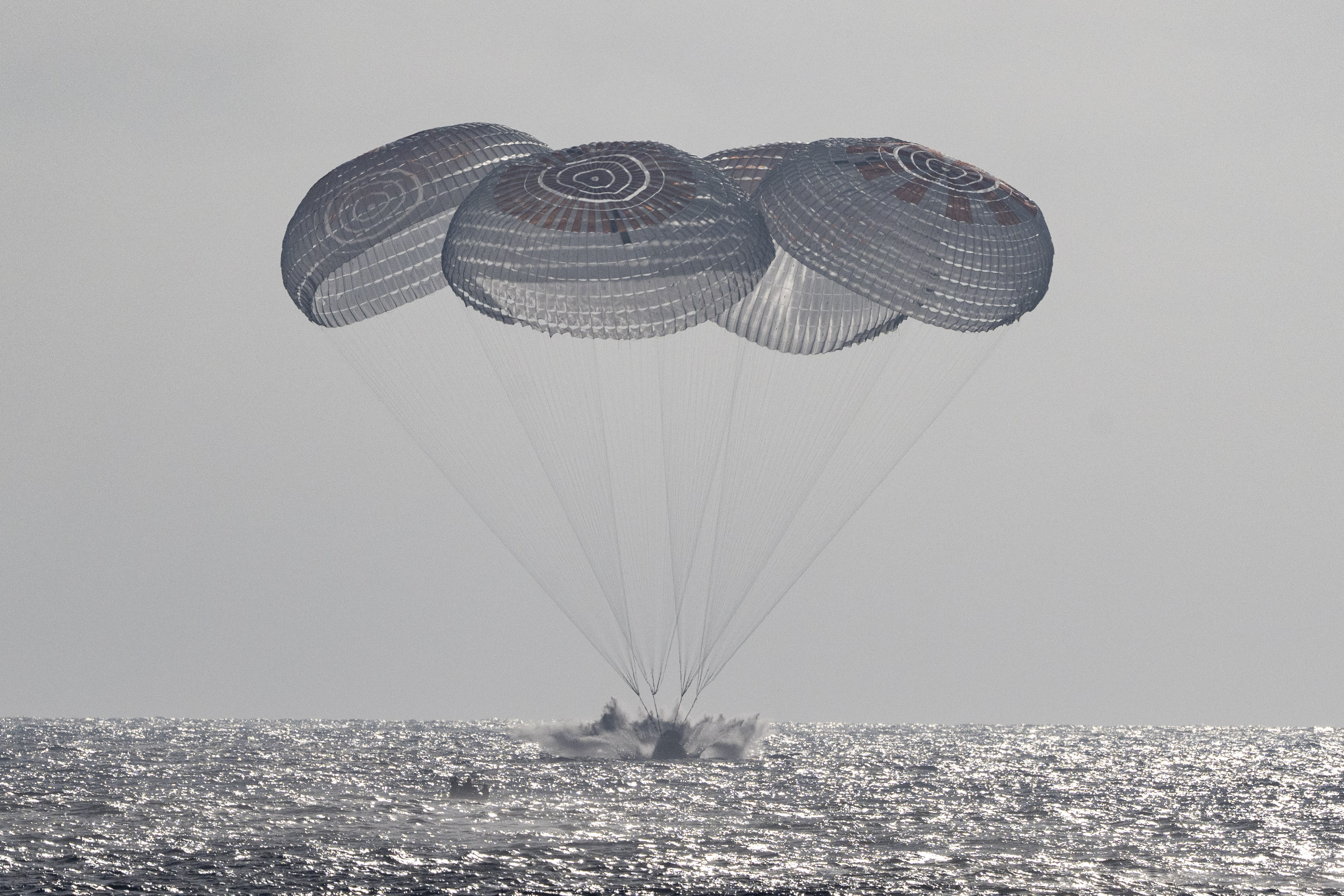
Concluding an eight-month science mission aboard the International Space Station, NASA astronaut Chris Williams returned to Earth on Sunday alongside Roscosmos cosmonauts Sergey Kud-Sverchkov and Sergei Mikaev.

The crew made its safe, parachute-assisted landing at 5:27 a.m. CDT (3:27 p.m., Kazakhstan time), southeast of Dzhezkazgan, after departing the space station at 2:03 a.m., aboard the Soyuz MS-28 spacecraft.

The crew was in space for 241 days, orbiting the Earth 3,856 times and traveling more than 102 million miles. They launched to the International Space Station on Nov. 27, 2025. The mission was the first for Williams and Mikaev and the second for Kud-Sverchkov.

While aboard the orbiting laboratory, Williams supported a wide range of scientific investigations and technology demonstrations. He helped advance research for new cancer treatments and improved in-space manufacturing of materials used in high-performance computers and electronics. Williams also completed two spacewalks to prep for space station power system upgrades and to replace a faulty joint on the Canadarm2 robotic arm. The crew’s work aboard the space station helps improve life on Earth and prepare for future human missions to the Moon and Mars.

Following post-landing medical checks, the crew members will fly by helicopter to Karaganda, Kazakhstan, where recovery teams are based. Williams then will board a NASA aircraft bound for the agency’s Johnson Space Center in Houston.

For more than 25 years, people have lived and worked continuously aboard the International Space Station, advancing scientific knowledge and making research breakthroughs not possible on Earth. The space station helps NASA understand and overcome the challenges of human spaceflight, expand commercial opportunities in low Earth orbit, and build on the foundation for long-duration missions to the Moon, as part of the Artemis program, and to Mars.

To learn more about International Space Station research, operations, and its crews, visit:

www.nasa.gov/station

-end-

Joshua Finch / Jimi Russell
Headquarters, Washington
202-358-1100
joshua.a.finch@nasa.gov / james.j.russell@nasa.gov

Leah Cheshier / Anna Schneider
Johnson Space Center, Houston
281-483-5111
leah.d.cheshier@nasa.gov / anna.c.schneider@nasa.gov

Share

Details

Last Updated
Jul 26, 2026
Editor
Jennifer M. Dooren
  •  

NASA Astronaut Chris Williams, Crewmates Return from Space Station

The Soyuz MS-28 spacecraft is seen as it lands in a remote area near the town of Zhezkazgan, Kazakhstan
The Soyuz MS-28 spacecraft is seen as it lands in a remote area near the town of Zhezkazgan, Kazakhstan with Expedition 74 NASA astronaut Chris Williams, and Roscosmos cosmonauts Sergey Kud-Sverchkov, and Sergei Mikaev aboard, Sunday, July 26, 2026. 
NASA/Bill Ingalls

Concluding an eight-month science mission aboard the International Space Station, NASA astronaut Chris Williams returned to Earth on Sunday alongside Roscosmos cosmonauts Sergey Kud-Sverchkov and Sergei Mikaev.

The crew made its safe, parachute-assisted landing at 5:27 a.m. CDT (3:27 p.m., Kazakhstan time), southeast of Dzhezkazgan, after departing the space station at 2:03 a.m., aboard the Soyuz MS-28 spacecraft.

The crew was in space for 241 days, orbiting the Earth 3,856 times and traveling more than 102 million miles. They launched to the International Space Station on Nov. 27, 2025. The mission was the first for Williams and Mikaev and the second for Kud-Sverchkov.

While aboard the orbiting laboratory, Williams supported a wide range of scientific investigations and technology demonstrations. He helped advance research for new cancer treatments and improved in-space manufacturing of materials used in high-performance computers and electronics. Williams also completed two spacewalks to prep for space station power system upgrades and to replace a faulty joint on the Canadarm2 robotic arm. The crew’s work aboard the space station helps improve life on Earth and prepare for future human missions to the Moon and Mars.

Following post-landing medical checks, the crew members will fly by helicopter to Karaganda, Kazakhstan, where recovery teams are based. Williams then will board a NASA aircraft bound for the agency’s Johnson Space Center in Houston.

For more than 25 years, people have lived and worked continuously aboard the International Space Station, advancing scientific knowledge and making research breakthroughs not possible on Earth. The space station helps NASA understand and overcome the challenges of human spaceflight, expand commercial opportunities in low Earth orbit, and build on the foundation for long-duration missions to the Moon, as part of the Artemis program, and to Mars.

To learn more about International Space Station research, operations, and its crews, visit:

www.nasa.gov/station

-end-

Joshua Finch / Jimi Russell
Headquarters, Washington
202-358-1100
joshua.a.finch@nasa.gov / james.j.russell@nasa.gov

Leah Cheshier / Anna Schneider
Johnson Space Center, Houston
281-483-5111
leah.d.cheshier@nasa.gov / anna.c.schneider@nasa.gov

Share

Details

Last Updated
Jul 26, 2026
Editor
Jennifer M. Dooren
  •  

NASA Sets Coverage for Astronaut Chris Williams, Crewmates Return

D4_2071158_20251127T124233_R_2025-11-27 12-42-38.NEF
The Roscosmos Soyuz MS 28 spacecraft is pictured in November 2025 shortly after docking to the International Space Station’s Rassvet module.
Credit: NASA

Editor’s Note: This advisory was updated on July 23, 2026, to reflect changes to the mission timeline. 

NASA astronaut Chris Williams and Roscosmos cosmonauts Sergey Kud-Sverchkov and Sergei Mikaev are wrapping up their 241‑day mission aboard the International Space Station.

The crew and its Soyuz MS-28 spacecraft will undock from the orbiting laboratory’s Rassvet module at 3:03 a.m. EDT Sunday, July 26, heading for a parachute-assisted landing at 6:25 a.m. (3:25 p.m. local time) on the steppe of Kazakhstan, southeast of Dzhezkazgan.

NASA’s live return coverage will stream through a variety of platforms. Learn where to watch online:

https://www.nasa.gov/live

Williams and his crewmates will complete 3,856 orbits and travel more than 102 million miles before returning to Earth. The flight marks the first mission for Williams and Mikaev and the second for Kud‑Sverchkov.

After landing, the crew will fly by helicopter to Karaganda, Kazakhstan, where recovery teams are based. Williams then will return to NASA’s Johnson Space Center in Houston, while Kud‑Sverchkov and Mikaev head back to their training base in Star City, Russia.

NASA’s live return coverage is as follows (all times Eastern and subject to change based on real-time operations):

Saturday, July 25

9:40 a.m. – Coverage of the Space Station Expedition 74/75 change of command ceremony begins.

Kud‑Sverchkov will transfer command of the orbital complex to NASA astronaut Jessica Meir. Expedition 75 officially begins when Soyuz MS‑28 undocks.

11:10 p.m. – Coverage of crew farewells and hatch closing begins.

11:30 p.m. – Hatch closing

Sunday, July 26

2:30 a.m. – Coverage of undocking begins.

3:03 a.m. – Undocking

5:15 a.m. – Coverage of deorbit and landing begins.

5:31 a.m. – Deorbit burn

6:25 a.m. – Landing

For more than 25 years, people have lived and worked continuously aboard the International Space Station, advancing scientific knowledge and making research breakthroughs not possible on Earth. The space station helps NASA understand and overcome the challenges of human spaceflight, expand commercial opportunities in low Earth orbit, and build on the foundation for long-duration missions to the Moon, as part of the Artemis program, and to Mars.

To learn more about International Space Station research, operations, and its crews, visit:

www.nasa.gov/station

-end-

Joshua Finch / Jimi Russell
Headquarters, Washington
202-358-1100
joshua.a.finch@nasa.gov / james.j.russell@nasa.gov

Leah Cheshier / Anna Schneider
Johnson Space Center, Houston
281-483-5111
leah.d.cheshier@nasa.gov / anna.c.schneider@nasa.gov

  •  

NASA Sets Coverage for Astronaut Chris Williams, Crewmates Return

D4_2071158_20251127T124233_R_2025-11-27 12-42-38.NEF
The Roscosmos Soyuz MS 28 spacecraft is pictured in November 2025 shortly after docking to the International Space Station’s Rassvet module.
Credit: NASA

Editor’s Note: This advisory was updated on July 23, 2026, to reflect changes to the mission timeline. 

NASA astronaut Chris Williams and Roscosmos cosmonauts Sergey Kud-Sverchkov and Sergei Mikaev are wrapping up their 241‑day mission aboard the International Space Station.

The crew and its Soyuz MS-28 spacecraft will undock from the orbiting laboratory’s Rassvet module at 3:03 a.m. EDT Sunday, July 26, heading for a parachute-assisted landing at 6:25 a.m. (3:25 p.m. local time) on the steppe of Kazakhstan, southeast of Dzhezkazgan.

NASA’s live return coverage will stream through a variety of platforms. Learn where to watch online:

https://www.nasa.gov/live

Williams and his crewmates will complete 3,856 orbits and travel more than 102 million miles before returning to Earth. The flight marks the first mission for Williams and Mikaev and the second for Kud‑Sverchkov.

After landing, the crew will fly by helicopter to Karaganda, Kazakhstan, where recovery teams are based. Williams then will return to NASA’s Johnson Space Center in Houston, while Kud‑Sverchkov and Mikaev head back to their training base in Star City, Russia.

NASA’s live return coverage is as follows (all times Eastern and subject to change based on real-time operations):

Saturday, July 25

9:40 a.m. – Coverage of the Space Station Expedition 74/75 change of command ceremony begins.

Kud‑Sverchkov will transfer command of the orbital complex to NASA astronaut Jessica Meir. Expedition 75 officially begins when Soyuz MS‑28 undocks.

11:10 p.m. – Coverage of crew farewells and hatch closing begins.

11:30 p.m. – Hatch closing

Sunday, July 26

2:30 a.m. – Coverage of undocking begins.

3:03 a.m. – Undocking

5:15 a.m. – Coverage of deorbit and landing begins.

5:31 a.m. – Deorbit burn

6:25 a.m. – Landing

For more than 25 years, people have lived and worked continuously aboard the International Space Station, advancing scientific knowledge and making research breakthroughs not possible on Earth. The space station helps NASA understand and overcome the challenges of human spaceflight, expand commercial opportunities in low Earth orbit, and build on the foundation for long-duration missions to the Moon, as part of the Artemis program, and to Mars.

To learn more about International Space Station research, operations, and its crews, visit:

www.nasa.gov/station

-end-

Joshua Finch / Jimi Russell
Headquarters, Washington
202-358-1100
joshua.a.finch@nasa.gov / james.j.russell@nasa.gov

Leah Cheshier / Anna Schneider
Johnson Space Center, Houston
281-483-5111
leah.d.cheshier@nasa.gov / anna.c.schneider@nasa.gov

  •  

NASA Sets Briefings for SpaceX Crew-13 Mission to Space Station

The SpaceX Crew-13 members are pictured in their pressure suits seated inside a mockup Dragon spacecraft during a preflight training session at the company's headquarters in Hawthorne, California. From left are, Roscosmos Sergey Teteryatnikov, NASA astronauts Luke Delaney and Jessica Watkins, and CSA (Canadian Space Agency) astronaut Joshua Kutryk.
NASA’s SpaceX Crew-13 members are pictured in their pressure suits seated inside a mockup Dragon spacecraft during a preflight training session at the company’s headquarters in Hawthorne, California. From left are Roscosmos Sergey Teteryatnikov, NASA astronauts Luke Delaney and Jessica Watkins, and CSA (Canadian Space Agency) astronaut Joshua Kutryk.
Credit: SpaceX

NASA and its partners will discuss the upcoming crew rotation mission to the International Space Station during a pair of news conferences on Monday, Aug. 3, from the agency’s Johnson Space Center in Houston.

Mission leadership will provide an overview of NASA’s SpaceX Crew‑13 mission at 12 p.m. EDT. Next, crew members will discuss their training and mission preparations at 2 p.m. This is Crew-13’s final media availability prior to traveling to the agency’s Kennedy Space Center in Florida for launch.

NASA will stream these events live. Learn where to watch online:

https://www.nasa.gov/live

The Crew-13 mission will carry NASA astronauts Jessica Watkins and Luke Delaney, CSA (Canadian Space Agency) astronaut Joshua Kutryk, and Roscosmos cosmonaut Sergey Teteryatnikov to the orbiting laboratory. The crew will launch aboard a SpaceX Dragon spacecraft on the company’s Falcon 9 rocket from Space Launch Complex 40 at Cape Canaveral Space Force Station in Florida no earlier than mid-September.

International media attending in person must email the NASA Johnson newsroom at jsccommu@mail.nasa.gov by 5 p.m., Tuesday, July 21. United States-based media attending in person must respond by 5 p.m., Thursday, July 30. Media joining virtually must respond by 10 a.m. the day of the event. NASA’s media accreditation policy is available online.

Briefing participants are as follows (all times Eastern and subject to change based on real-time operations):

12 p.m.: Mission Overview News Conference

  • Joel Montalbano, deputy associate administrator, Human Spaceflight Mission Directorate, NASA Headquarters
  • Dana Weigel, manager, Low Earth Orbit Program, NASA Johnson
  • Mathieu Caron, director, Astronauts, Life Sciences, and Space Medicine, CSA
  • Julianna Scheiman, director, NASA Science and Dragon Programs, SpaceX

2 p.m.: Crew-13 News Conference

  • Jessica Watkins, commander, NASA
  • Luke Delaney, pilot, NASA
  • Joshua Kutryk, mission specialist, CSA
  • Sergey Teteryatnikov, mission specialist, Roscosmos

Following the news conference, crew members will be available for limited media interviews. All interview requests must be submitted by 5 p.m. on July 30, to the NASA Johnson newsroom at: jsccommu@mail.nasa.gov.

This will be the second flight to the space station for Watkins, who was selected as a NASA astronaut in 2017. Watkins grew up in Lafayette, Colorado, and earned an undergraduate degree in geological and environmental sciences from Stanford University, as well as a doctorate in geology from the University of California, Los Angeles. As a geologist, she studied the Martian surface and was a member of the Curiosity rover science team at NASA’s Jet Propulsion Laboratory in Southern California. Watkins first launched to the space station as a crew member aboard NASA’s SpaceX Crew-4 mission, spending a total of 170 days in space across space station Expeditions 67/68 in 2022. She will be the first NASA astronaut to launch aboard a SpaceX Dragon spacecraft twice.

Selected as a NASA astronaut in 2021, Delaney earned a bachelor’s degree in mechanical engineering at the University of North Florida and a master’s degree in aerospace engineering at the Naval Postgraduate School. The Florida native is a distinguished naval aviator who participated in exercises throughout the Asia Pacific region and conducted missions in support of Operation Enduring Freedom. As a test pilot, Delaney evaluated developmental aircraft systems and served as a test pilot instructor. He also worked as a research pilot at NASA’s Langley Research Center in Hampton, Virginia, where he supported airborne science missions. This is the first spaceflight for Delaney.

The Crew-13 mission also is the first spaceflight for Kutryk. Prior to his selection as a CSA astronaut in 2017, he served as a CF-18 fighter pilot, flying missions in support of Canada’s NATO, U.N., and North American Aerospace Defense Command commitments. A native of Fort Saskatchewan, Alberta, Kutryk also worked as an experimental and operational test pilot at the Aerospace Engineering Test Establishment in Cold Lake, Alberta. Kutryk received a bachelor’s degree in mechanical engineering from the Royal Military College of Canada in Kingston, Ontario, and he is a distinguished graduate of the United States Air Force Test Pilot school in Edwards, California. He has master’s degrees in space studies, flight test engineering, and defense studies.

This mission will be Teteryatnikov’s first trip to the orbiting laboratory. He graduated from the Naval Academy, St. Petersburg, Russia, in 2011 as an engineer specializing in ship power plant operations. Before his selection as a test cosmonaut, Teteryatnikov served in various naval engineering roles, including undersea vessels and specialized engine room operations. He was selected for the Gagarin Research and Test Cosmonaut Training Center Cosmonaut Corps in 2021 and has served as a test cosmonaut since 2023.

For more information about the mission, visit:

https://www.nasa.gov/mission/nasas-spacex-crew-13

-end-

Joshua Finch / Jimi Russell
Headquarters, Washington
202-358-1100
joshua.a.finch@nasa.gov / james.j.russell@nasa.gov

Leah Cheshier / Anna Schneider
Johnson Space Center, Houston
281-483-5111
leah.d.cheshier@nasa.gov / anna.c.schneider@nasa.gov

Share

Details

Last Updated
Jul 20, 2026
Editor
Jessica Taveau
  •  

NASA Sets Briefings for SpaceX Crew-13 Mission to Space Station

The SpaceX Crew-13 members are pictured in their pressure suits seated inside a mockup Dragon spacecraft during a preflight training session at the company's headquarters in Hawthorne, California. From left are, Roscosmos Sergey Teteryatnikov, NASA astronauts Luke Delaney and Jessica Watkins, and CSA (Canadian Space Agency) astronaut Joshua Kutryk.
NASA’s SpaceX Crew-13 members are pictured in their pressure suits seated inside a mockup Dragon spacecraft during a preflight training session at the company’s headquarters in Hawthorne, California. From left are Roscosmos Sergey Teteryatnikov, NASA astronauts Luke Delaney and Jessica Watkins, and CSA (Canadian Space Agency) astronaut Joshua Kutryk.
Credit: SpaceX

NASA and its partners will discuss the upcoming crew rotation mission to the International Space Station during a pair of news conferences on Monday, Aug. 3, from the agency’s Johnson Space Center in Houston.

Mission leadership will provide an overview of NASA’s SpaceX Crew‑13 mission at 12 p.m. EDT. Next, crew members will discuss their training and mission preparations at 2 p.m. This is Crew-13’s final media availability prior to traveling to the agency’s Kennedy Space Center in Florida for launch.

NASA will stream these events live. Learn where to watch online:

https://www.nasa.gov/live

The Crew-13 mission will carry NASA astronauts Jessica Watkins and Luke Delaney, CSA (Canadian Space Agency) astronaut Joshua Kutryk, and Roscosmos cosmonaut Sergey Teteryatnikov to the orbiting laboratory. The crew will launch aboard a SpaceX Dragon spacecraft on the company’s Falcon 9 rocket from Space Launch Complex 40 at Cape Canaveral Space Force Station in Florida no earlier than mid-September.

International media attending in person must email the NASA Johnson newsroom at jsccommu@mail.nasa.gov by 5 p.m., Tuesday, July 21. United States-based media attending in person must respond by 5 p.m., Thursday, July 30. Media joining virtually must respond by 10 a.m. the day of the event. NASA’s media accreditation policy is available online.

Briefing participants are as follows (all times Eastern and subject to change based on real-time operations):

12 p.m.: Mission Overview News Conference

  • Joel Montalbano, deputy associate administrator, Human Spaceflight Mission Directorate, NASA Headquarters
  • Dana Weigel, manager, Low Earth Orbit Program, NASA Johnson
  • Mathieu Caron, director, Astronauts, Life Sciences, and Space Medicine, CSA
  • Julianna Scheiman, director, NASA Science and Dragon Programs, SpaceX

2 p.m.: Crew-13 News Conference

  • Jessica Watkins, commander, NASA
  • Luke Delaney, pilot, NASA
  • Joshua Kutryk, mission specialist, CSA
  • Sergey Teteryatnikov, mission specialist, Roscosmos

Following the news conference, crew members will be available for limited media interviews. All interview requests must be submitted by 5 p.m. on July 30, to the NASA Johnson newsroom at: jsccommu@mail.nasa.gov.

This will be the second flight to the space station for Watkins, who was selected as a NASA astronaut in 2017. Watkins grew up in Lafayette, Colorado, and earned an undergraduate degree in geological and environmental sciences from Stanford University, as well as a doctorate in geology from the University of California, Los Angeles. As a geologist, she studied the Martian surface and was a member of the Curiosity rover science team at NASA’s Jet Propulsion Laboratory in Southern California. Watkins first launched to the space station as a crew member aboard NASA’s SpaceX Crew-4 mission, spending a total of 170 days in space across space station Expeditions 67/68 in 2022. She will be the first NASA astronaut to launch aboard a SpaceX Dragon spacecraft twice.

Selected as a NASA astronaut in 2021, Delaney earned a bachelor’s degree in mechanical engineering at the University of North Florida and a master’s degree in aerospace engineering at the Naval Postgraduate School. The Florida native is a distinguished naval aviator who participated in exercises throughout the Asia Pacific region and conducted missions in support of Operation Enduring Freedom. As a test pilot, Delaney evaluated developmental aircraft systems and served as a test pilot instructor. He also worked as a research pilot at NASA’s Langley Research Center in Hampton, Virginia, where he supported airborne science missions. This is the first spaceflight for Delaney.

The Crew-13 mission also is the first spaceflight for Kutryk. Prior to his selection as a CSA astronaut in 2017, he served as a CF-18 fighter pilot, flying missions in support of Canada’s NATO, U.N., and North American Aerospace Defense Command commitments. A native of Fort Saskatchewan, Alberta, Kutryk also worked as an experimental and operational test pilot at the Aerospace Engineering Test Establishment in Cold Lake, Alberta. Kutryk received a bachelor’s degree in mechanical engineering from the Royal Military College of Canada in Kingston, Ontario, and he is a distinguished graduate of the United States Air Force Test Pilot school in Edwards, California. He has master’s degrees in space studies, flight test engineering, and defense studies.

This mission will be Teteryatnikov’s first trip to the orbiting laboratory. He graduated from the Naval Academy, St. Petersburg, Russia, in 2011 as an engineer specializing in ship power plant operations. Before his selection as a test cosmonaut, Teteryatnikov served in various naval engineering roles, including undersea vessels and specialized engine room operations. He was selected for the Gagarin Research and Test Cosmonaut Training Center Cosmonaut Corps in 2021 and has served as a test cosmonaut since 2023.

For more information about the mission, visit:

https://www.nasa.gov/mission/nasas-spacex-crew-13

-end-

Joshua Finch / Jimi Russell
Headquarters, Washington
202-358-1100
joshua.a.finch@nasa.gov / james.j.russell@nasa.gov

Leah Cheshier / Anna Schneider
Johnson Space Center, Houston
281-483-5111
leah.d.cheshier@nasa.gov / anna.c.schneider@nasa.gov

Share

Details

Last Updated
Jul 20, 2026
Editor
Jessica Taveau
  •  

BIDEN ABBASSA LA CRESTA. DA “CI SARANNO CONSEGUENZE” A ” VOGLIAMO COMPETERE”

ALL’INTERVENTO A MUSO DURO DEL NUOVO MINISTRO DEGLI ESTERI QUIN GANG , IL GOVERNO USA ABBASSA I TONI E CERCA DI RAFFREDDARE LA POLEMICA. SI RIVELA LA TIGRE DI CARTA PROFETIZZATA DA MAO.

Il tono minaccioso e la lista delle posizioni criticabili della Cina rispetto alla guerra Ucraina ( mancata condanna della Russia all’ONU, rafforzamento della collaborazione economica russo-cinese, possibilità di invio di armi e munizioni ai russi) si sono dissolte come neve al sole.

Il tono irritante del dipartimento di stato e i solenni avvertimenti a non toccare Taiwan anche. Lo sceriffo si é reso conto di avere a che fare con un osso duro ed é diventato più conciliante. Niente più oscure minacce di ritorsioni: qua la mano !

Nel link sottostante troverete il testo che Biden finse di snobbare, inducendo molti alla imitazione, e che adesso dovrà imparare a memoria. E’ il decalogo cinese per essere coerenti col concetto di pace.

https://corrieredellacollera.wordpress.com/wp-admin/post.php?post=35641&action=edit

In effetti, la storia degli Stati Uniti é caratterizzata dalla violenza e dall’espansione il suo budget assomma al 40% di quello di tutti i paesi del mondo messi insieme ed hanno 800 basi militari sparse in paesi esteri, senza contare le flotte. Difficile dire che lo fanno per la pace.

Aver fatto notare queste verità che sono sotto gli occhi di tutti, la Cina si é vista sbeffeggiare dal presidente Joe Biden che ha snobbato il documento, implacabile ma pacato. Poco dopo il nuovo ministro degli Esteri cinese, ha cambiato il tono ed ha dichiarato che se gli USA continueranno con questi comportamenti miranti a soggiogare, prima psicologicamente, poi economicamente, la Cina, ” lo scontro sarebbe inevitabile”. Una notizia d’agenzia ha fatto circolare la cifra dei coscritti possibili: 20 milioni.

Gli USA – che sono già stati impressionati dal richiamo alle armi di trecentomila uomini fatto dalla Russia e memori della definizione di “unwise” data da Henri Kissinger all’atteggiamento bullesco di affrontare due crisi in contemporanea – hanno cambiato tono e smesso di cercare di stanare la Cina. Ancor oggi non sono riusciti a capire fino a che punto il celeste impero sia coinvolto con l’impero del male. Il timone punta a neutrale.

XI JINPING ha infatti confermato che non c’é stata nessuna cessione di armi ai duellanti, non ha dedicato una sola riga all’Europa e si é concentrato sui temi anticinesi degli USA: Taiwan, TIK TOK vessata quotidianamente, Huawei, le strumentali campagne per i diritti umani a favore degli Uiguri ( una delle sedici etnie presenti in Cina); la costruzione di una catena strategica attorno alla Cina ( AUKUS) , mirante a mortificarla nel suo mare, l’appoggio dato alla Filippine per il contenzioso per le isole Spratly, il riarmo accelerato giapponese. Tutte questioni sollevate ( o risollevate) dagli USA nell’ultimo anno miranti a indebolire XI.

La superiorità intellettuale cinese ha fatto fronte a tutte questi ostacoli affrontati senza ai usare toni aggressivi.

In questo secondo link troverete un estratto di un documento americano che tratta a un dipresso degli stessi temi del cinese, ma lo fa concentrandosi sulla Russia, al punto che affronta la situazione globale senza mai nominare Cina e India, nel tentativo di affrontare un avversario alla volta. Forse pensano che i cinesi siano tanto sciocchi da non averci pensato.

https://corrieredellacollera.wordpress.com/wp-admin/post.php?post=35317&action=edit

L’ultimo link é al più completo documento Rand sulla Russia: Extending Russia ci ho messo un pò a capire che intendevano l’espansione delle spese russe a causa di guerre e rivolte ( indicate analiticamente) fino al punto da provocarne il crollo. Ed é qui che risalta il concetto di competitive advantage, ossia ottenere un vantaggio competitivo provocando una proxy war ( guerra per procura). Non si sono resi conto che , a partire da oggi, molti, sentendo parlare di competition la prenderanno per un sinonimo di guerra. Dovranno spolverare il vocabolario.

https://www.rand.org/pubs/research_reports/RR3063.html

  •  
❌