❌

Modalità di lettura

NASA Develops Batteries to Power Humanity’s Return to Moon

5 min read

Preparations for Next Moonwalk Simulations Underway (and Underwater)
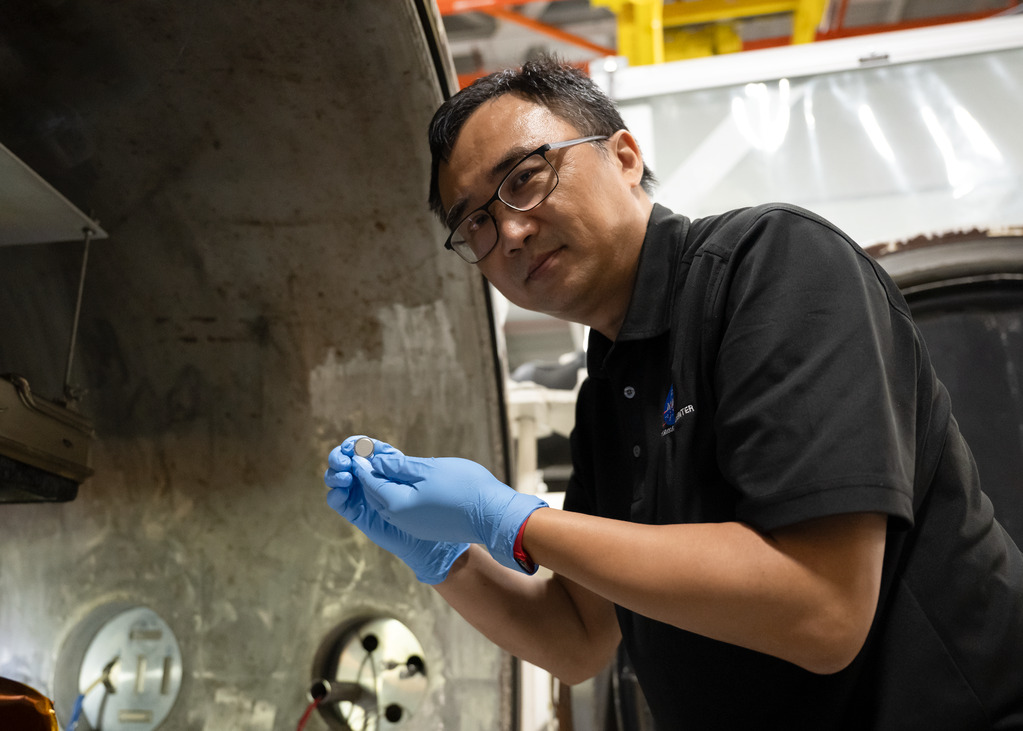
Yi Lin, SPEARS testing and research lead at NASA Langley, holds one of the small coin-cell batteries that had just undergone thermal vacuum testing.
NASA/Ryan Hill

If you’ve ever had your car start sluggishly, or not at all, on a particularly frigid winter morning, you know standard batteries do not like extreme cold. That’s why NASA researchers are working to develop a battery that could function in the brutal cold of the Moon’s South Pole, where nighttime temperatures plunge to minus 328 degrees Fahrenheit (minus 200 Celsius). 

For future lunar operations, a battery will need to work immediately when warmed up and be able to power everything from an astronaut’s emergency kit to a rover capable of exploring the Moon’s darkest craters — all without posing a fire hazard. 

A team of NASA researchers is working to make all that happen. The project is called Solid Power for Extreme Environment Adaptability and Resilience in Space (SPEARS), and it could provide NASA with an important tool to help power humanity’s sustained presence on the Moon through the Artemis campaign. 

“Batteries have become an important part of our lives here on Earth, which enable our laptops, cell phones, power tools, and even our vehicles,” said Donald Dornbusch, principal investigator for SPEARS at NASA’s Glenn Research Center in Cleveland, where the project is led. “We will need them on the Moon, too, and these batteries will be required to operate reliably and safely in this harsh environment. That’s why we’re working on this technology.” 
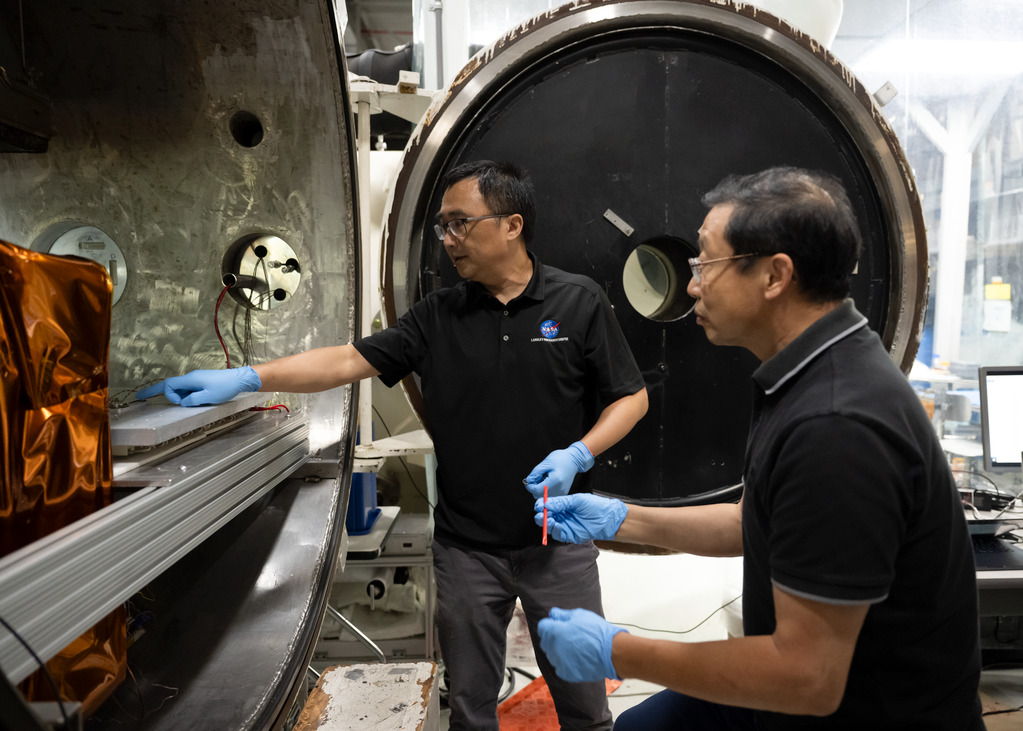
Yi Lin, left, SPEARS testing and research lead, and Ji Su, a polymer materials scientist and the task lead, during the removal of SPEARS batteries from thermal vacuum testing at NASA Langley.
NASA/Ryan Hill

Splashy problem, solid solution

Traditional lithium-ion batteries like those in your cell phone and laptop have a critical weakness: they rely on liquid electrolytes. Cool a conventional battery to the Moon’s nighttime temperatures, and that liquid would freeze, potentially damaging the battery. Heat it up too much — say, to daytime lunar temperatures of 212 F (100 C) — and it won’t work until cooled. Expose the liquid to the vacuum of space, and it evaporates. 

SPEARS batteries solve these problems by replacing the liquid electrolyte with a solid ceramic- or polymer-based material. This change could unlock several advantages. First and foremost, they could operate in the heat and extreme cold. 

During recent thermal vacuum testing at NASA’s Langley Research Center in Hampton, Virginia, small prototype battery cells operated well up to 176 F (80 C), down to minus 76 F (minus 60 C), and with slightly reduced performance down to minus 112 F (minus 80 C). 

“We proved for the first time that these cells can work down to minus 80 degrees Celsius,” said Yi Lin, SPEARS testing and research lead at NASA Langley.  

Lin also said he’s confident they can improve performance and maybe even expand that range in coming years. 

The batteries need to remain reliable through exposure to the Moon’s wild temperature swings between day and night. The thermal vacuum testing showed that after exposure to temperature extremes from 212 F (100 C) to minus 274 F (minus 170 C), SPEARS batteries don’t sustain damage.  

Just like the chemistry in your earbuds is different from the chemistry in your phone, which is different from the chemistry in your car, all these chemistries can still function with a solid electrolyte. We can tune for energy, tune for power, tune for durability, depending on the application.

Yi Lin

Yi Lin

SPEARS testing and research lead

Not even solid-state batteries will function while they’re at a temperature as low as minus 274 F, but because solid electrolytes don’t freeze like a liquid, the batteries can survive the extreme low temperatures.  

In order to get the batteries working again after exposure to such cold, small heaters come into play. SPEARS batteries wouldn’t need to be kept warm all the time, just warmed up to operational temperature. That could reduce the need for heavy thermal management systems in spacecraft and lunar habitats, allowing for lighter designs, lower costs, and longer mission durations. 
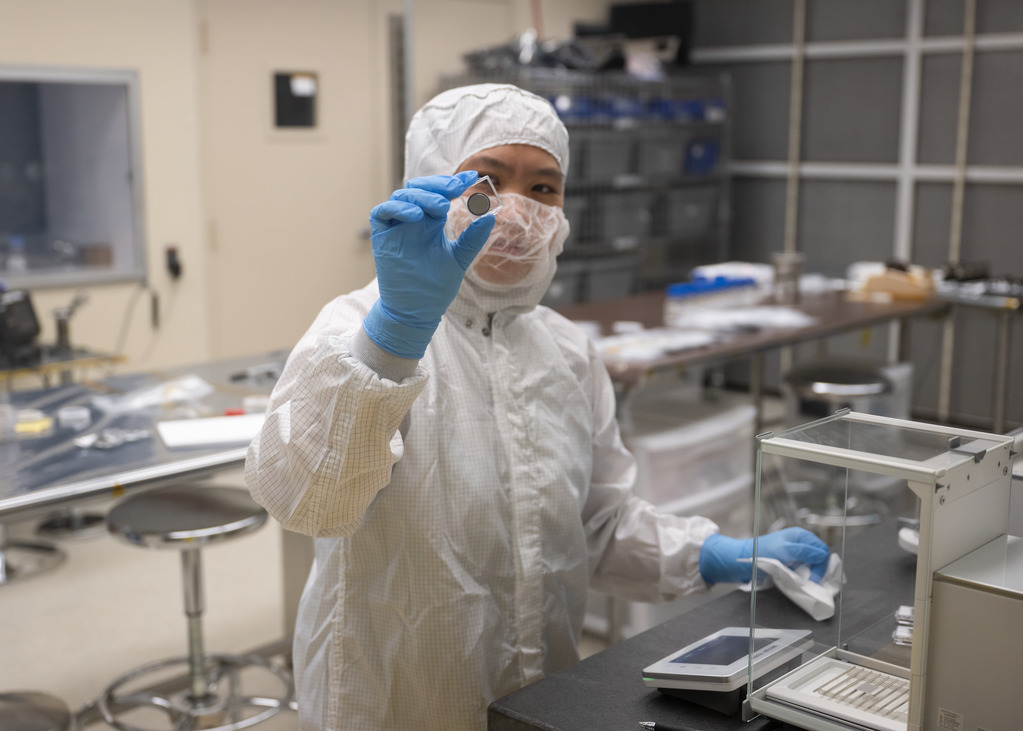
Nike Lin, a support engineer/technician on the thermal vacuum team, holds up a battery.
Nike Lin, a support engineer/technician on the thermal vacuum team, takes weight measurements of batteries following thermal vacuum testing.
NASA/Ryan Hill

Power for Moon, Earth

The applications for these solid-state batteries are nearly limitless, from small tools like drills that must operate in shadowed lunar craters, to rovers and emergency power packs for astronauts. They also could provide power solutions for long-duration scientific instruments. 

“We can tune the chemistry by using different electrode materials,” said Lin. “Just like the chemistry in your earbuds is different from the chemistry in your phone, which is different from the chemistry in your car, all these chemistries can still function with a solid electrolyte. We can tune for energy, tune for power, tune for durability, depending on the application.” 

While SPEARS is designed for space, the technology could be spun off into Earth-based applications. In fact, SPEARS evolved out of a previous battery project Lin and Dornbusch worked on that focused on aeronautic applications. 
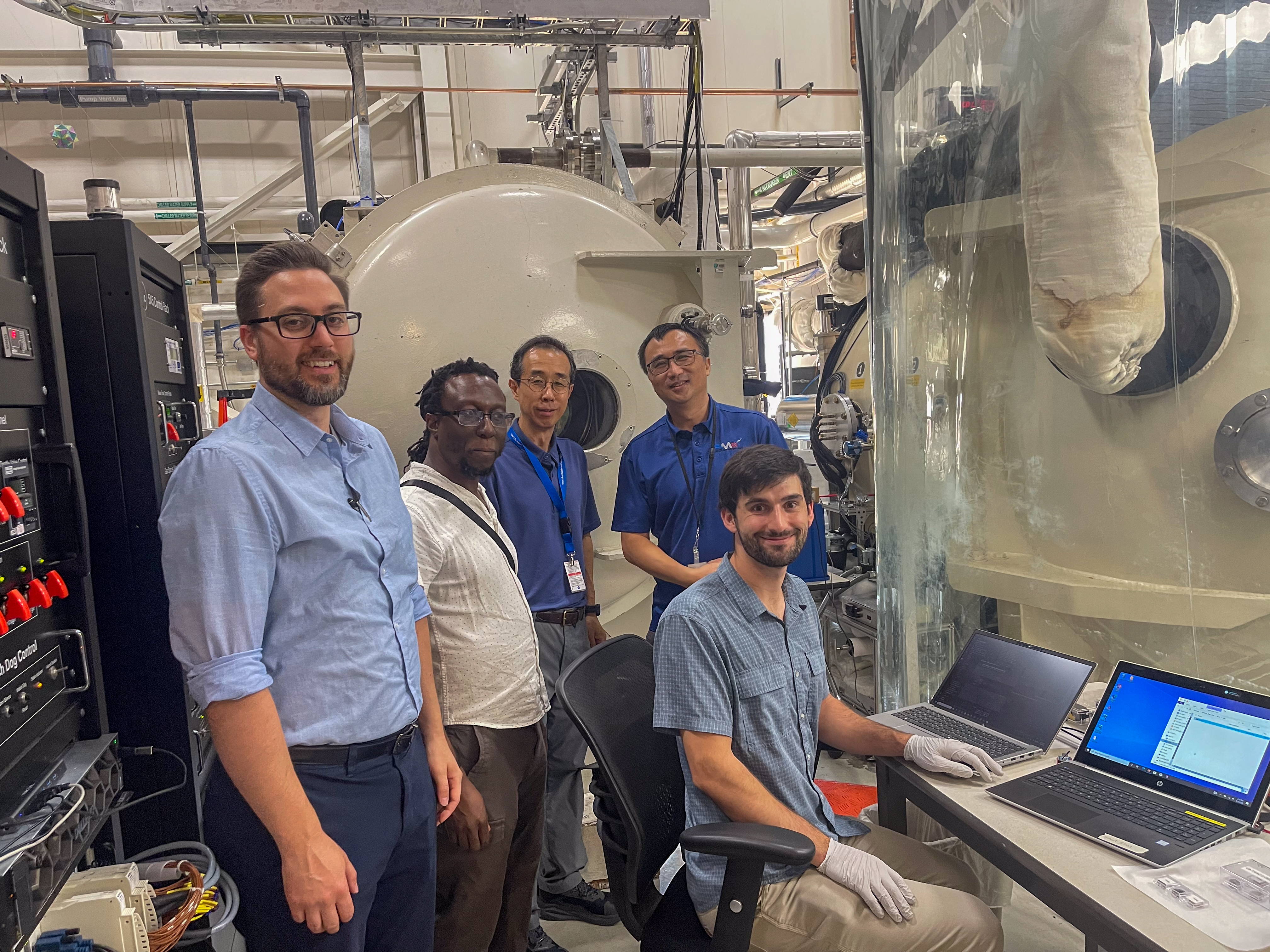
From left to right: Donald Dornbusch (NASA Glenn), Godfrey Sauti, Sang-Hyon Chu, Yi Lin (NASA Langley), and Malachi Mooney-Rivkin (NASA Ames), during a round of TVAC testing at NASA Langley.
NASA

“The potential market for solid-state batteries is very broad,” said Ji Su, a polymer materials scientist and the task lead at NASA Langley. “Automobiles, cell phones, communication devices, drones — anything that needs a portable power supply.” 

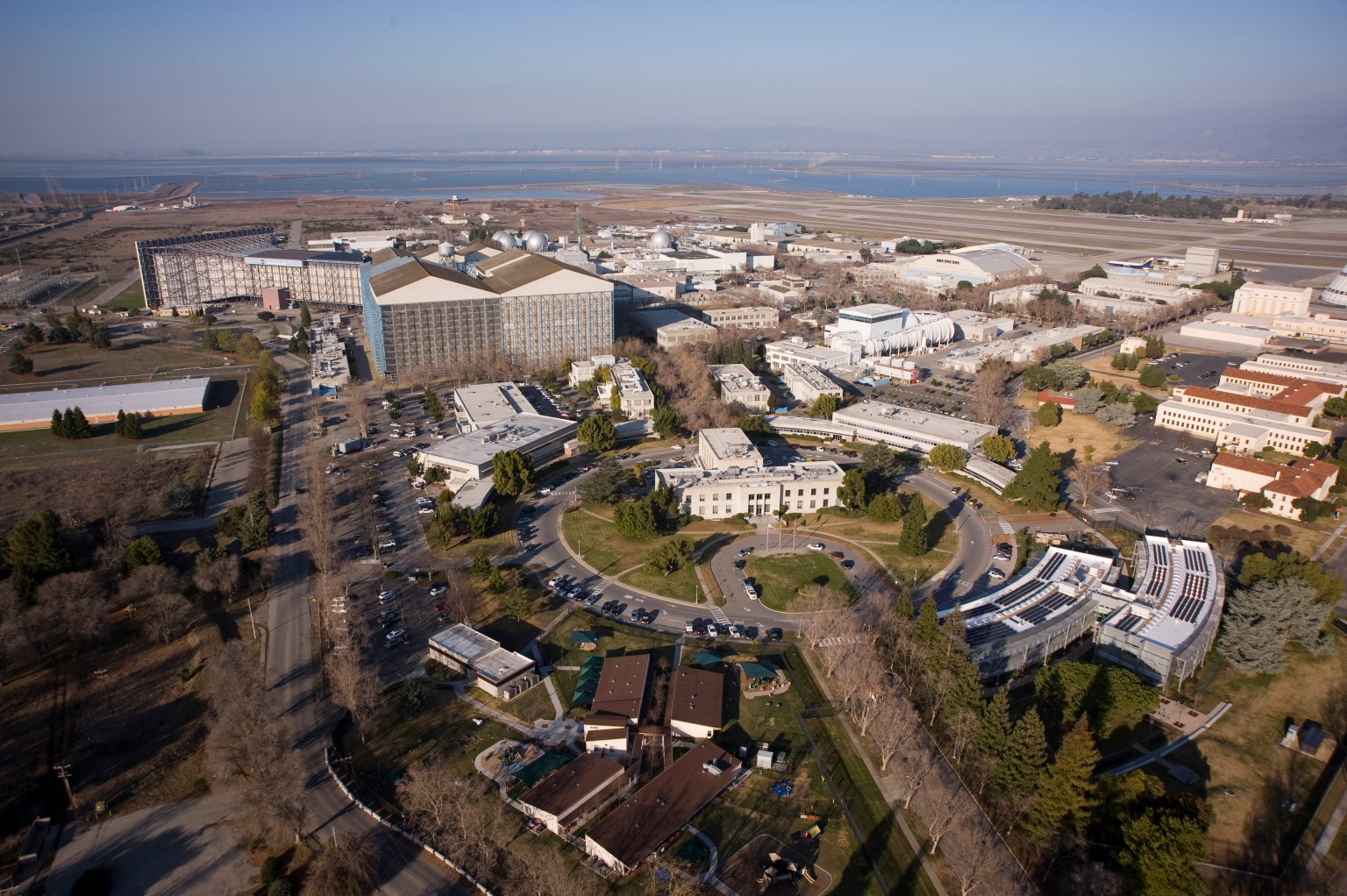
The SPEARS project began in 2026 with funding through the Advanced Research and Technology division within the agency’s Research and Technology Mission Directorate. The project is set to focus on technology development in its first stages before potentially shifting toward commercial collaboration. NASA’s Ames Research Center in California’s Silicon Valley is working to develop flight hardware such as test boards and electronics to help prepare the SPEARS batteries for spaceflight and test them in space environments. 

  •  

NASA Armstrong Celebrates 80 Years of Flight Innovation

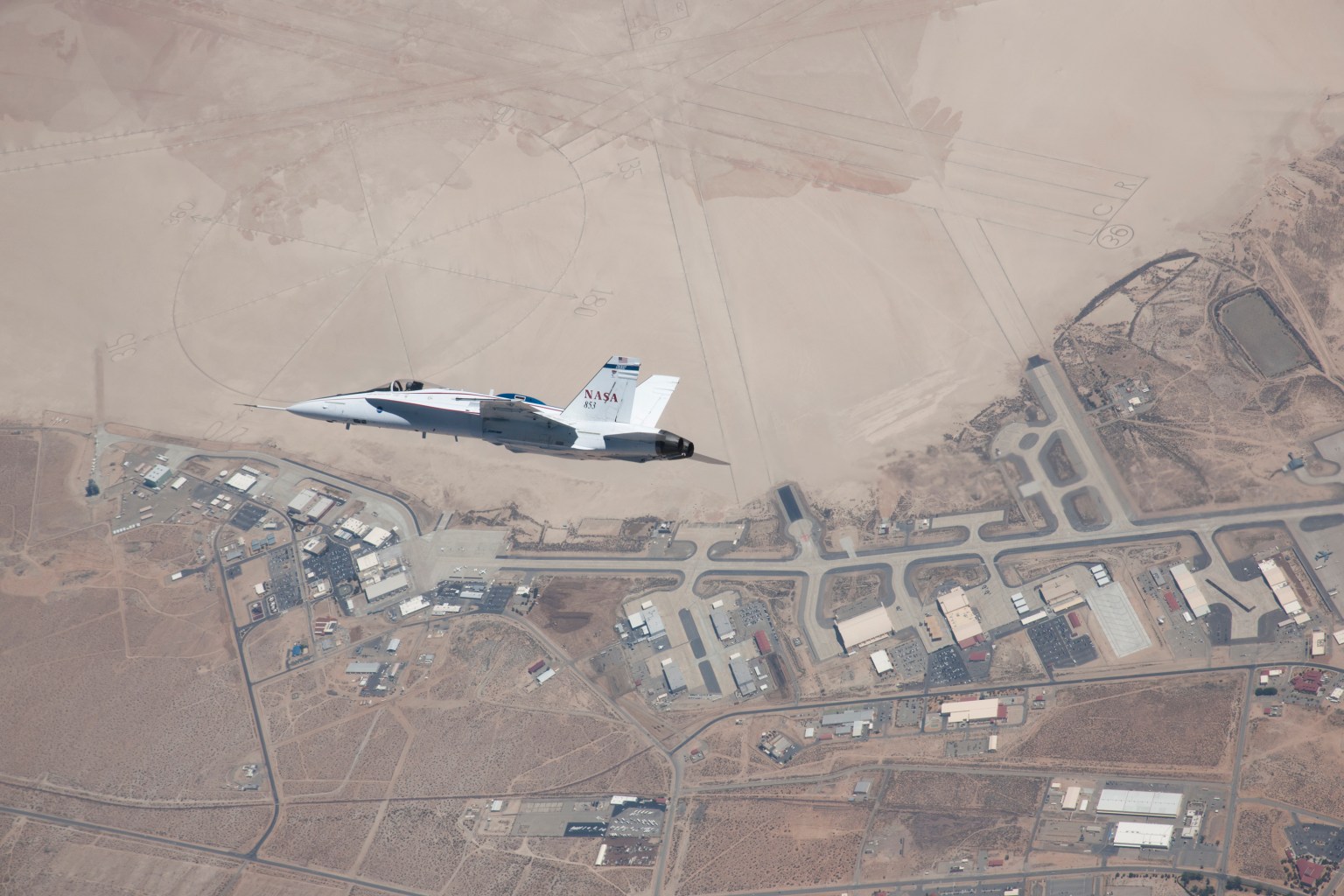
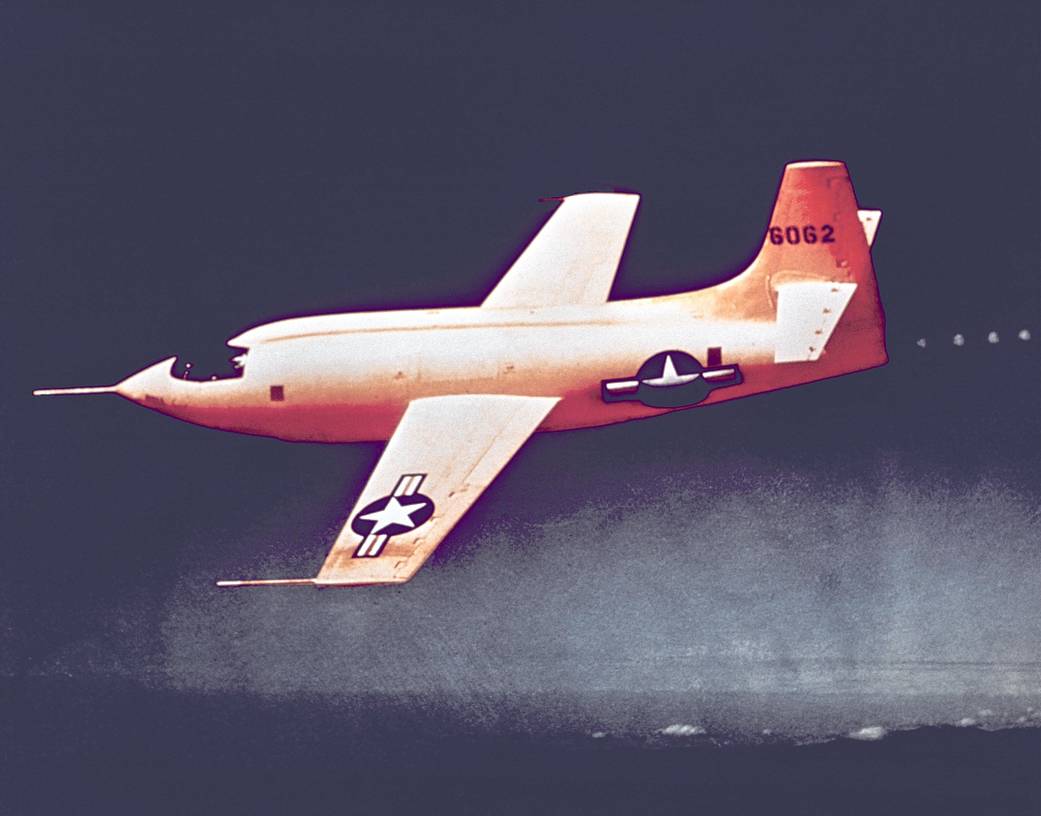
On Sept. 30, 1946, five National Advisory Committee of Aeronautics (NACA) engineers arrived at Muroc Army Airfield in California’s high desert to achieve supersonic flight for the first time. In less than two years, NACA flew the X-1 aircraft faster than the speed of sound, marking an important milestone in aviation history.

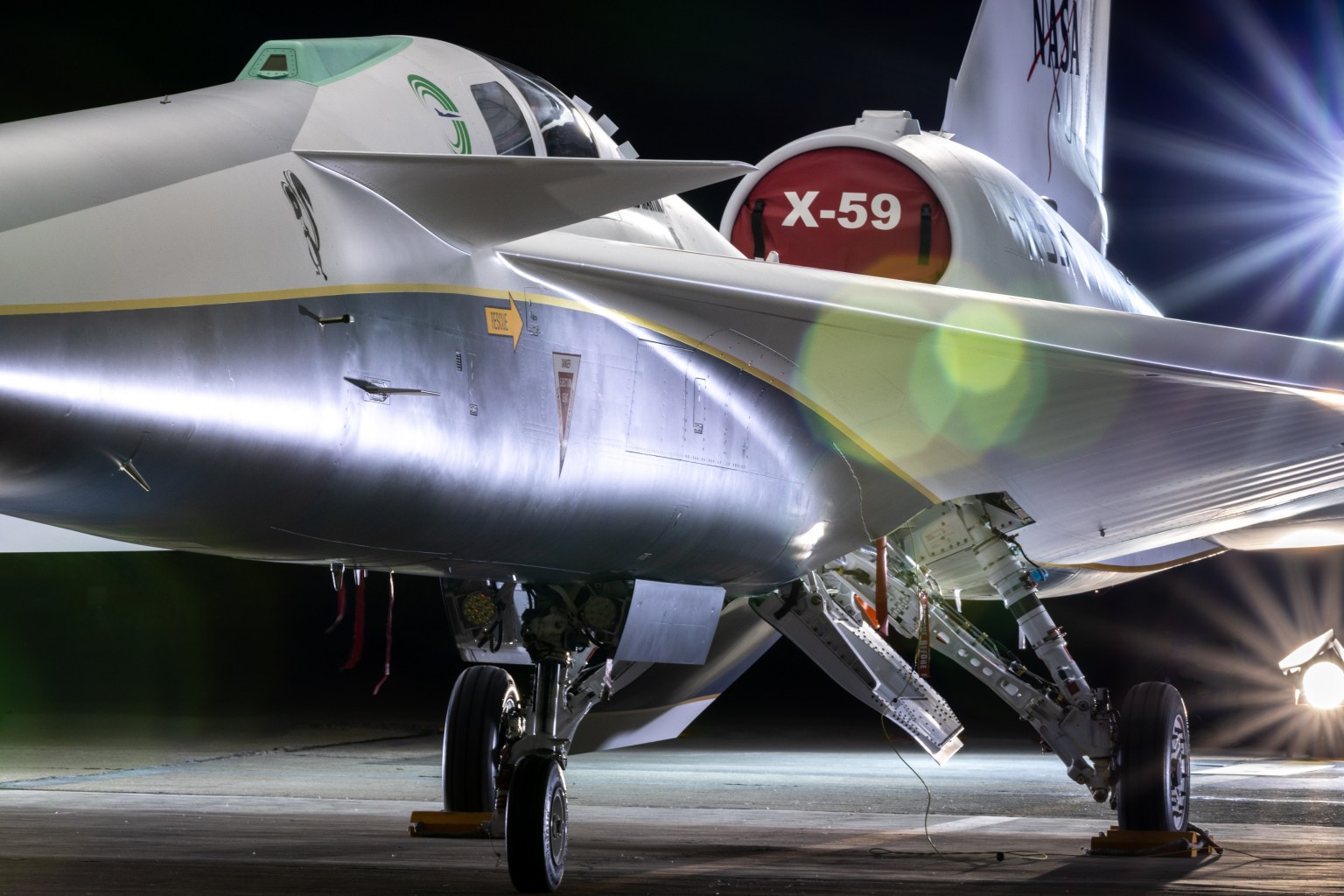
Fast forward 80 years, and that former NACA outpost is now NASA’s Armstrong Flight Research Center in Edwards, California, flying the X-59 supersonic X-plane in the same skies to demonstrate that supersonic flight doesn’t have to come with a boom.

Over Armstrong’s 80-year history, the center has supported milestone missions ranging from space shuttle landings to SR-71 flights, shaping the evolution of science, aeronautics, and space research.

This Southern California NASA center is poised to lead the next era of aeronautics and human spaceflight, advancing technologies that will define the future of flight.

Fast facts

  • NASA Administrator Jared Isaacman recently named Armstrong as the agency’s Center of Excellence for Flight Test and Aircraft Operations, recognizing the center’s unmatched rigor in executing unique missions only NASA can fly.
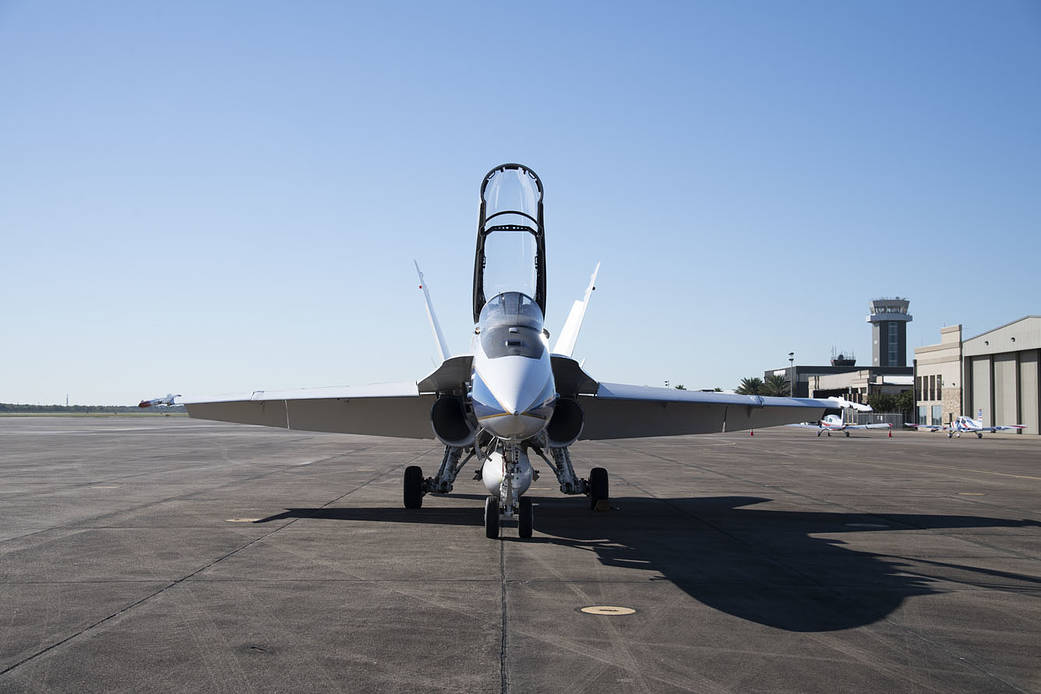
  • To support NASA’s Artemis missions and return to the Moon, Armstrong uses research aircraft such as a 737 for astronaut suit testing, the G-III for Artemis II heat-shield data collection, and an F/A-18 aircraft that tested the autopilot for the SLS (Space Launch System) rocket.
  • NASA’s aeronautics centerpiece, the X-59, is undergoing rigorous testing and a series of flights at Armstrong to prepare for upcoming quiet supersonic demonstrations over U.S. communities.
  • NASA Armstrong has transformed commercial and military aviation — from early supersonic flight research to digital fly-by-wire — and continues working with other government agencies, industry, and academia to make flying safer, more autonomous, and more efficient.
  • The center plays a vital role in global science by flying aircraft like the ER-2, C-20A, and Gulfstream G-III/IV/V to collect critical data on wildfires, glacier melt, pollution, minerals, and more.

Behind these achievements are the engineers, pilots, technicians, and mission support teams who continue to push the boundaries of what’s possible.

For more about NASA Armstrong, visit:

https://www.nasa.gov/armstrong

-end-

Dede Dinius / Teresa Whiting
Armstrong Flight Research Center, Edwards, California
661-276-3449
darin.l.dinius@nasa.gov / teresa.whiting@nasa.gov

💾

Red, White, and Boom, the U.S. Air Force Test Center’s celebration of America’s 250th anniversary and NASA Armstrong’s commemoration of its 80th year, was Fr...
  •  

NASA Modernizes Commercial Airline Systems

4 min read

Preparations for Next Moonwalk Simulations Underway (and Underwater)

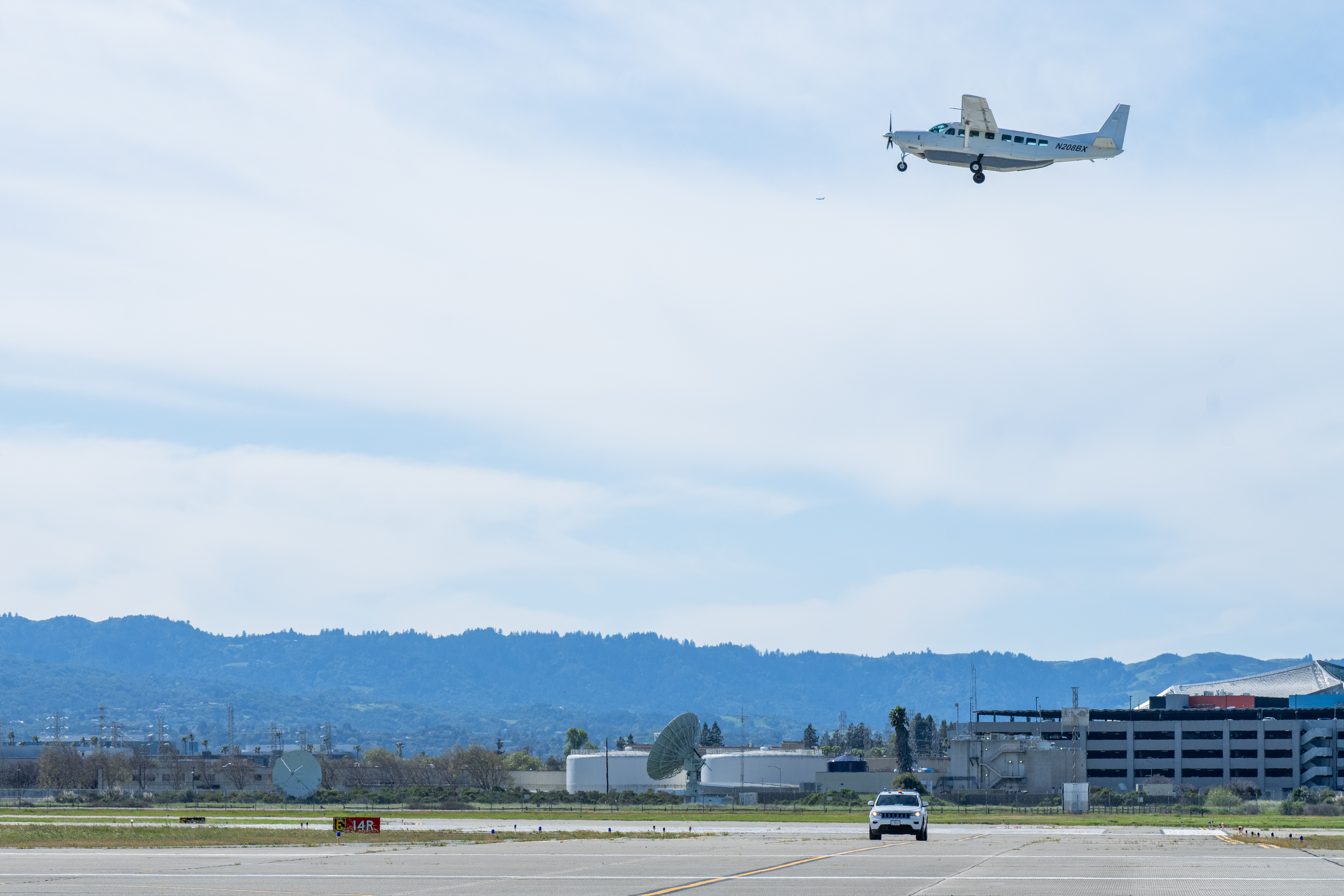
Testing at NASA’s Ames Research Center in California’s Silicon Valley in March 2026 demonstrated autonomous technology that could identify an incursion – a vehicle, wayward suitcase, or other runway obstacle that could impact an aircraft’s safe landing.
NASA/Brandon Torres-Navarrete

NASA’s researchers know that when you settle into your seat on a commercial flight, you expect a smooth takeoff, views over the clouds, a steady descent, and hopefully an early arrival at your destination. But when your flight gets delayed on the tarmac instead of lifting off, or it ends up in a holding pattern rather than landing on time, things start to change. Your experience goes from smooth to anxiety-inducing as you worry about making your connection or getting home in time for dinner.

Large airports are among the busiest, most complex environments in aviation, with aircraft, ground crews, and service vehicles sharing crowded taxiways. Researchers at NASA’s Ames Research Center in California’s Silicon Valley recently worked with Boeing to advance three types of field tests – digital taxi information, safe taxiway, and safe runways – that could lead to safer, more efficient runway environments at airports.

During the digital taxi tests, pilots were given taxiway guidance directly on cockpit displays or tablets, instead of verbally from air traffic controllers. Aircraft autonomously followed digital routes while researchers monitored a suite of sensors designed to identify vehicles or other aircraft impeding the taxi path and runway. The system reduced pilot and air traffic controller workloads and the risk of verbal errors.  

Safe runway technology testing can also improve situational awareness for approaching aircraft. While preparing to land a Boeing aircraft during testing, the same sensors successfully flagged a vehicle on the runway, providing additional awareness to ensure pilots could avoid potential collisions or other safety concerns.

Together, these NASA capabilities aim to reduce miscommunication, ease pilot workloads, and keep airport traffic moving smoothly. Future testing will integrate the sensor and digital taxi systems into a simulated air traffic control environment to evaluate how the technologies can benefit overall management of the airspace.

For years, NASA has worked to improve your experience when flying by developing new technologies to modernize the commercial airline system. Key NASA technologies streamline and digitize the flying experience – from the departure gate, to the skies, to your safe arrival at your destination.

“Aviation safety is key to NASA’s research,” said Parimal Kopardekar, director of NASA’s Airspace Operations and Safety project. “Technology that can provide additional autonomy and support a future airspace with multiple aircraft operating in harmony is key to advancing the National Airspace System.”

NASA’s research innovations continue after your flight takes off. Modern flights constantly respond to shifting weather, turbulence, and traffic. Even small changes in direction or altitude can affect when a plane arrives. These changes can force flights into holding patterns while air traffic controllers attempt to rebalance the busy airspace.

NASA’s air traffic management researchers have been working for years to reduce those situations. In a 2025 collaborative effort with Boeing, United Airlines, and international partners, NASA evaluated real‑time trajectory sharing on domestic and transoceanic flights.

During that testing, a United Airlines Boeing 737 aircraft shared frequent flight information with airline operations centers and air traffic control. NASA used the data to understand how frequently those updates should be sent and what details matter most for generating accurate arrival predictions. Better information helps controllers sequence traffic more precisely, which means fewer holding patterns and more direct descents for passengers.

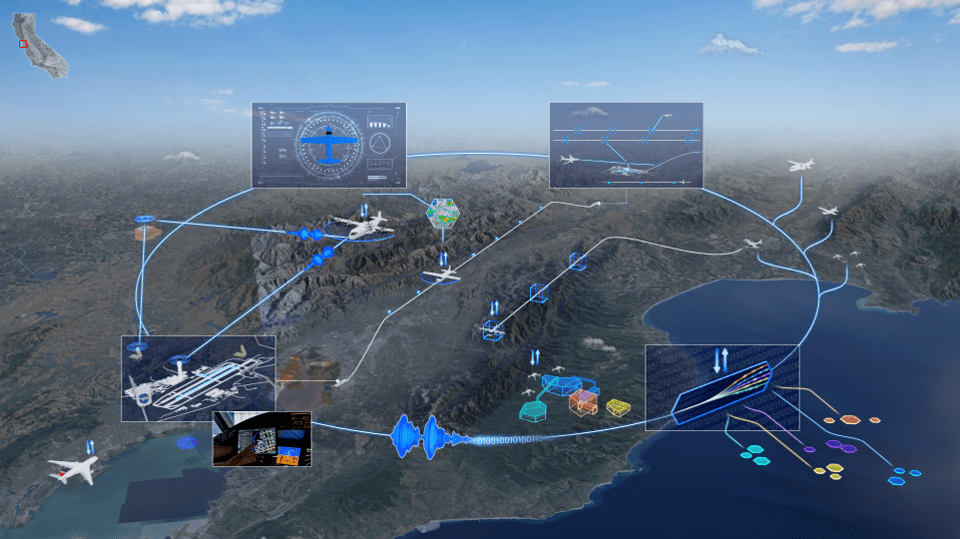
A computer display of a map shows several lines which represent possible air traffic routes for an airplane to follow.
Digital rerouting technology could reduce workloads for controllers, suggesting new routes to prevent or avoid delays without the back-and-forth needed to adjust flight paths manually.
NASA

Pre-departure rerouting technology and digital exchange tools developed at NASA allow dispatchers and controllers to see the same digital picture of flights preparing to depart.

When a better route becomes available, controllers could coordinate the change digitally instead of relying on verbal communication between pilots, controllers, and dispatchers. The technology could lead to fewer delays, reduced fuel consumption, and more predictable operations for passengers.

NASA has now transferred the routing technology to the Federal Aviation Administration (FAA) and airlines will continue to test it. These tools build on decades of NASA contributions to national airspace modernization.

In coordination with the FAA, NASA has advanced automation concepts, improved how arrival and departure flows are managed, and introduced data‑driven software that commercial airlines use every day.

By working closely with airlines, manufacturers, and global partners, NASA is helping to improve every phase of flight to make air travel safer and more reliable, now and in the future.

  •  
❌