❌

Modalità di lettura

Il Papa sente Putin ma nessuna risposta per il cessate il fuoco

Il Cremlino al Pontefice: “Lavoriamo per proteggere i cristiani nel mondo”. Parolin: “Spero che Mosca accetti di mettere in atto la richiesta del Vaticano”. Zakharova: L’Italia obbedisce ai padroni di Bruxelles. Le notti di Kiev sotto le bombe

© RaiNews

  •  

t

Il Cremlino al Pontefice: “Lavoriamo insieme per proteggere i cristiani nel mondo”. Parolin: “Spero che Mosca accetti di mettere in atto la richiesta del Vaticano”. Zakharova: L’Italia obbedisce ai padroni di Bruxelles

© RaiNews

  •  

Giornalista chiede a Zelensky: “Si sente il capro espiatorio dei problemi di Trump?”. Lui rimane zitto, poi ride: “Ecco la mia risposta”| Video

Il tradimento di Trump nei confronti di Zelensky rischia di cambiare le sorti del conflitto russo-ucraino, con conseguenze dirette anche in Unione europea. Così, alla prima occasione utile, i giornalisti del Vecchio Continente hanno voluto chiedere al leader di Kiev quali fossero le sue impressioni dopo l’accordo sul gasolio tra Washington e Mosca e la richiesta del tycoon di un cambio al vertice nel suo Paese. Così, un reporter presente alla conferenza stampa a margine del Consiglio europeo di Bruxelles glielo ha chiesto direttamente: “Il presidente Trump si appresta ad affrontare delle difficili elezioni di midterm. La sua popolarità è molto bassa, i prezzi molto alti e la guerra iniziata in Medio Oriente non sta andando come lui voleva. Crede di essere stato trattato come capro espiatorio dei suoi problemi?”. A questo punto Zelensky tiene lo sguardo basso qualche secondo, poi lo alza, guarda i giornalisti e accenna una risatina, con la sala che scoppia a ridere. “Questa è la mia risposta“, ha concluso il presidente ucraino.

L'articolo Giornalista chiede a Zelensky: “Si sente il capro espiatorio dei problemi di Trump?”. Lui rimane zitto, poi ride: “Ecco la mia risposta”| Video proviene da Il Fatto Quotidiano.

  •  

70 miliardi e scorte di Patriot. Cosa chiede Zelensky all’Ue per l’inverno

Chiede i Patriot all’Ue, prevede un’invasione di profughi in caso di sconfitta, fa i conti della serva sulle risorse che gli occorrono per il prossimo anno, incassa il supporto di alcuni senatori americani critici sul depotenziamento di Starlink per le difese ucraine. Volodymyr Zelensky, ospite del Consiglio Europeo, fa il punto sullo stato della guerra e delle relazioni politiche a supporto della sua parte, con una consapevolezza di base: se Washington sta mollando Kyiv, Bruxelles no.

“Per Putin non è mai abbastanza, ci vuole distruggere – parte in quarta – e poi vorrà di più e ancora di più. Ora sta mettendo alla prova i Paesi Nato con questi droni. Siamo di fronte a un’escalation”. Il tema è allo stesso tempo bellico, economico, geopolitico e militare. Perché se è vero come è vero che dagli europei ha ricevuto solo sostegno (“comprendono che la nostra posizione è totalmente giustificata”), mette l’accento sul ruolo americano. Quando dice che Putin darà ascolto all’America se eserciterà pressione fa riferimento alle tante persone presenti negli Stati Uniti “dal cuore nobile che desiderano sinceramente la sconfitta del male e che l’Ucraina rimanga salda. Sono proprio queste le persone che hanno aiutato l’Europa a difendere la propria libertà, che hanno combattuto durante lo sbarco in Normandia, che hanno vinto la Guerra Fredda e che vogliono il meglio per l’Europa. Persone che desiderano essere alleate, non dividere o umiliare l’Europa. Credo che la maggior parte degli americani la pensi ancora così. E, in ultima analisi, sarà il popolo americano a dire la sua”.

Una stoccata a quella minoranza che invece vorrebbe togliergli gli aiuti. In questo senso va letto il suo riferimento all’accordo Russia-Usa sul diesel che è stato “una sorpresa per tutti”, mentre per quanto riguarda il rapporto con Trump annuncia che “ci sarà nei prossimi giorni un incontro tra i negoziatori, col presidente abbiamo sempre temi da discutere”.

Ma oltre agli auspici ci sono previsioni e richieste. Sulle prime spicca lo scenario che si potrebbe abbattere sull’Europa in caso di caduta di Kyiv, ovvero 20 milioni di profughi ucraini, “perché ci distruggeranno, ci spingeranno fuori per questo vi chiediamo di difendere il nostro Paese”. La parte del leone in questo senso la sta facendo il nuovo strumento di guerra che risponde al nome di drone. Putin “sta già testando i droni sui Paesi europei, sull’Ucraina sono arrivati migliaia di droni. Migliaia. E gli americani dicono che è difficile parlare con Zelensky, che è più facile parlare con Putin”, come a voler rimarcare il passaggio iniziale. Sulle seconde, ecco la lista della spesa: altri 70 miliardi per i 2027, “per tenere a bada la Russia”, oltre agli intercettori per i sistemi Patriot (Pac-2 e Pac-3). Quelli disponibili in Europa permetteranno all’Ucraina di superare l’inverno e tutti i leader sono a conoscenza di questo pacchetto. La questione è sul tavolo dei paesi Ue, che stanno riflettendo sul da farsi.

Quel che è certo è che arriveranno presto nuovi F-16, verosimilmente entro la fine dell’anno. Infine una considerazione sull’accordo Trump-Putin sul gasolio: “ci ha sorpresi, non possiamo accettarlo”. Il timore di Zelensky è che il passo successivo verta un altro accordo simile sul gas, oppure l’esenzione da nuove sanzioni legate ai sistemi bancari, ad alcuni individui o all’industria chimica.

Tutto finito? Per nulla. Alcuni senatori americani hanno richiesto un’indagine urgente sulle interruzioni della rete Starlink in Ucraina, lo strumento che Musk aveva offerto a Kyiv per indirizzare i droni verso gli obiettivi russi. E in una missiva indirizzata all’ispettore generale del dipartimento della Difesa i senatori esprimono “grave preoccupazione” in merito al depotenziamento della rete, perché queste restrizioni “avrebbero compromesso la capacità dell’Ucraina di condurre operazioni difensive contro gli attacchi russi, effettuati tramite droni e missili, diretti verso le infrastrutture civili”.

  •  

The Rupturing Trump-Zelensky Relationship Stands to Hurt Ukraine and Its European Allies

Where the two presidents’ war of words will end is anybody’s guess. But if it continues, it could threaten the crucial operational help that Ukraine still gets from the United States.

© Tierney L. Cross/The New York Times

President Volodymyr Zelensky of Ukraine with President Trump at Mar-a-Lago in Florida in December.
  •  

The Rupturing Trump-Zelensky Relationship Stands to Hurt Ukraine and Its European Allies

Where the two presidents’ war of words will end is anybody’s guess. But if it continues, it could threaten the crucial operational help that Ukraine still gets from the United States.

© Tierney L. Cross/The New York Times

President Volodymyr Zelensky of Ukraine with President Trump at Mar-a-Lago in Florida in December.
  •  

The Rupturing Trump-Zelensky Relationship Stands to Hurt Ukraine and Its European Allies

Where the two presidents’ war of words will end is anybody’s guess. But if it continues, it could threaten the crucial operational help that Ukraine still gets from the United States.

© Tierney L. Cross/The New York Times

President Volodymyr Zelensky of Ukraine with President Trump at Mar-a-Lago in Florida in December.
  •  

Kiev ignora Trump e torna a colpire le raffinerie – Il Controcanto – Rassegna Stampa del 16-10-2026


Il Corriere ricorda come Zelensky intenda ignorare Trump per riprendere a colpire le raffinerie in Russia. Repubblica nota che in Italia esistono milioni di poveri che non riescono a sopravvivere. Il Fatto spiega che la guerra in Medio Oriente è destinata a riaccendersi

📺 Tutte le interviste e i format di Visione TV: https://www.youtube.com/@VisioneTV
🌐 Articolo e approfondimenti: https://visionetv.it
📲 Canale Telegram: https://t.me/visionetv

L'articolo Kiev ignora Trump e torna a colpire le raffinerie – Il Controcanto – Rassegna Stampa del 16-10-2026 proviene da Visione TV.

  •  

Il whisky resiste e a Milano c’è un festival per i suoi appassionati

Milano Whisky Festival & Rum Show

Mercato e nicchia. Industria e artigianato. Quantità e qualità. Vendite e cultura. Le direttrici secondo cui analizzare un fenomeno, un prodotto, una filiera spesso possono sembrare due linee parallele alternative, destinate a non incrociarsi, ma la realtà si trova invece proprio nelle intersezioni, nei punti di incontro, dove le tonalità si sfumano e i numeri devono essere interpretati.

Prendiamo ad esempio il mondo dei distillati. I dati diffusi da Iwsr (società internazionale di ricerca e analisi di mercato specializzata nel settore delle bevande alcoliche) confermano nel 2025 un’ulteriore (dopo il 2024 e il 2023) riduzione nel volume delle bevande alcoliche totali (Tba) commercializzate a livello mondiale, meno due per cento, ma l’analisi di dettaglio del dato offre valori e trend diversi a seconda del tipo di prodotto in esame. Siamo consapevoli infatti della crescente attenzione nei confronti di prodotti no e low alchool, così come della diminuzione in corso nei consumi di vino, mentre può creare sorpresa constatare che per la prima volta, a livello di macro categoria, questo calo avviene a fronte di un sorpasso da parte degli spirits.

Come anticipato, un conto sono però i macro numeri, un altro le storie e i Paesi dietro le singole produzioni, le loro tipologie, i livelli qualitativi, le quantità distribuite, secondo quali canali e a quali prezzi. E le dinamiche di mercato vanno inserite in contesti più ampi, che comprendono eventi geopolitici, cambiamenti climatici, trend generazionali. Tornando al settore in esame, un altro elemento di sorpresa può essere scoprire ad esempio che nell’area dei superalcolici il volume globale relativo al whisky risulta in crescita, più due per cento, e che ciò sia effetto anche dell’incredibile risultato del whisky indiano, capace di segnare un aumento di consumo interno del quattro per cento.

In realtà i cultori della materia probabilmente non saranno stupiti da questi dati, ma sia per loro sia per chi desidera capire perché il distillato da cereali sia in questa fase storica così apprezzato c’è un appuntamento che offre l’occasione di immergersi (per metafora) nel suo universo. Si tratta del Milano Whisky Festival & Rum Show, pronto ad aprire le porte per la ventunesima volta dal 7 al 9 novembre.

L’evento, ospitato all’Hotel Marriott di Milano, riunisce distributori, imbottigliatori indipendenti e distillerie di scotch whisky, irish whiskey, bourbon, whisky giapponesi e orientali, rum, ron e rhum tra le più apprezzate al mondo. Naturalmente ci sarà spazio anche per i tanti produttori italiani che con sempre più passione e professionalità si stanno ritagliando un ruolo di rilievo nel settore, come dimostrano ad esempio le medaglie guadagnate da Strada Ferrata ai World Whiskies Awards 2026.

Il festival offrirà l’occasione di partecipare a diverse masterclass a tema, da quella dedicata al carpathian whisky a quella di approfondimento sul whisky giapponese o a quella che permetterà di degustare whisky old & rare da Islay, come da tradizione invece l’ultima giornata sarà riservata solo ai professionisti e agli operatori del settore. Le etichette presenti saranno più di quattromila, sul sito dedicato è possibile leggere le modalità di degustazione e acquisto previste, oltre che comprare il biglietto in anticipo.

Per chi vuole arrivare all’evento preparato in materia, può essere una buona idea imparare qui il vocabolario minimo degli spirits, scoprire qui la sostanziale differenza tra le due diciture whisky e whiskey, studiare qui le caratteristiche di una degustazione tecnica, approfondire qui i segreti della torba, leggere qui, qui e qui la storia del whiskey americano, e infine conoscere qui oppure qui alcuni dei migliori produttori di whisky italiano.

L'articolo Il whisky resiste e a Milano c’è un festival per i suoi appassionati proviene da Linkiesta.it.

  •  

Quelli che non criticano Trump sull’Ucraina non sono pacifisti, ma guerrafondai che tifano per gli avversari

La dimostrazione eclatante che la posizione cosiddetta pacifista sulla guerra scatenata dalla Russia contro l’Ucraina è, quando va bene, ipocrita si è avuta in queste ore di ennesimo e vile attacco di Donald Trump e Elon Musk all’Ucraina, al suo presidente e al suo popolo.

Trump ha stretto un grottesco, inutile, e inapplicabile accordo con Vladimir Putin sul gasolio russo, in violazione delle leggi del suo Congresso e al solo fine propagandistico interno per scaricare sull’Ucraina, e non sulla guerra in Iran, le responsabilità del prezzo alto della benzina a poche settimane dal voto di metà mandato. Inoltre, da Mar-a-Lago, Trump ha ripreso a insultare e a minacciare Volodymyr Zelensky, dopo qualche mese di pausa, e ha smesso di passare agli ucraini parte delle informazioni di intelligence che servono ad anticipare la difesa della contraerea missilistica. Musk, invece, ha rallentato la connessione di Starlink in Ucraina e ha minacciato di staccare del tutto la spina, costringendo gli ucraini a rinunciare alle azioni belliche con i droni che così tanti danni hanno fatto alle infrastrutture offensive, energetiche e di approvvigionamento russe.

Il risultato della bravata del duo Trump-Musk è che i missili russi ora entrano nello spazio aereo ucraino indisturbati e poi colpiscono i civili ucraini come mai prima d’ora.

In linea generale, se le parole avessero un senso, un pacifista dovrebbe chiedere all’aggressore di fermare gli attacchi e non all’aggredito di smettere di difendersi, invece mai in quasi quattro anni abbondanti di guerra russa all’Ucraina ci sono state iniziative dei leader progressisti italiani o manifestazioni del fronte pacifista per chiedere alla Russia di fermare la guerra.

Ormai è diventato normale, malgrado sia un atteggiamento controintuitivo e moralmente osceno, che il sedicente pacifista italiano chieda all’Europa di non sostenere più l’aggredito, di non fornirgli le batterie antimissili che difendono la popolazione civile dall’attacco russo, e di inviare in Ucraina, anziché missili, un inviato di pace, come se fosse l’Ucraina a volere le guerra, al fine poi di intavolare una trattativa che la Russia non ha nessuna intenzione di intraprendere e che ogni giorno rigetta in tutte le lingue, a meno che la soluzione diplomatica sia la completa resa degli ucraini.

Questo è il teatrino dell’orrore cui assistiamo da oltre quattro anni, inscenato soprattutto da una parte della sinistra che si riempie la bocca della parola pace mentre con i fatti lavora per la continuazione della guerra russa.

Le ultimissime intemerate di Trump e Musk contro Zelensky e l’Ucraina scoperchiano però l’ipocrisia politica di quello che a buon diritto viene chiamato Campo Lavrov.

Qui non si tratta di cambiare linea politica sul “no alle armi” o sulla necessità di far terminare la guerra, né di mettere in difficoltà i leader dei partiti che provano a mantenere unita la coalizione elettorale. Qui ci sono i due più spudorati esponenti della destra nazionalista globale che, prendendosi una pausa dal gettare nel caos il mondo e dal sostenere tutti i movimenti neonazi del pianeta, minacciano l’aggredito, accarezzano l’aggressore cercando anche di fare affari personali, e mettono in pratica un piano di disimpegno per massimizzare le vittime civili ucraine.

Per i capi della sinistra “pacifista” non potrebbe esserci un’occasione più facile e doverosa di questa per criticare Trump e Musk e difendere le vittime innocenti della guerra, anche senza cambiare la linea politica sullo stop all’invio delle armi difensive.

Eppure non c’è stato nessun leader del Campo Largo o del fronte intellettuale pacifista che in queste ore abbia criticato Trump e Musk, dimostrando così in modo plastico l’impostura della posizione “pacifista”, ma anche la fine della gloriosa sinistra anti totalitaria, e la trasformazione del Campo Largo non solo in Campo Lavrov ma anche in Campo Mar-a-Largo.

Un fronte progressista che rifiuta di difendere l’aggredito, che non disturba mai l’aggressore, e che non riesce nemmeno a criticare i due più grandi fascistoni del pianeta impegnati a facilitare l’imperialismo russo può essere definito in qualsiasi modo, tranne che con l’aggettivo progressista.

Il più grande intellettuale della sinistra anti totalitaria, il compianto Christopher Hitchens, aveva svelato la vera natura dei pacifisti pro Saddam Hussein. Una lezione valida anche nel 2026. Oggi i pacifisti italiani non solo pretendono la resa degli aggrediti ucraini e non fanno niente per fermare l’aggressore russo, ma non trovano nemmeno il modo di censurare le mascalzonate di Trump e Musk contro l’Ucraina e l’Europa. Come scriveva Hitchens, questi non sono pacifisti, «non vogliono la pace, sono a favore della guerra, e tifano per gli avversari».

L'articolo Quelli che non criticano Trump sull’Ucraina non sono pacifisti, ma guerrafondai che tifano per gli avversari proviene da Linkiesta.it.

  •  

Trump’s Deal With Russia Inflames Ukraine War He Vowed to End

The Ukrainian president’s defiant decision to continue attacking Russian refineries underscores President Trump’s inability to end a war he had promised to resolve.

© Doug Mills/The New York Times

President Trump during a campaign stop in Alaska on Tuesday. He has not delivered on his promises to end the war in Ukraine, or to lower prices, and recent deals with Russia could complicate both issues.
  •  

Trump’s Deal With Russia Inflames Ukraine War He Vowed to End

The Ukrainian president’s defiant decision to continue attacking Russian refineries underscores President Trump’s inability to end a war he had promised to resolve.

© Doug Mills/The New York Times

President Trump during a campaign stop in Alaska on Tuesday. He has not delivered on his promises to end the war in Ukraine, or to lower prices, and recent deals with Russia could complicate both issues.
  •  

Trump’s Deal With Russia Inflames Ukraine War He Vowed to End

The Ukrainian president’s defiant decision to continue attacking Russian refineries underscores President Trump’s inability to end a war he had promised to resolve.

© Doug Mills/The New York Times

President Trump during a campaign stop in Alaska on Tuesday. He has not delivered on his promises to end the war in Ukraine, or to lower prices, and recent deals with Russia could complicate both issues.
  •  

America’s Most Expensive Senate Race

The Senate showdown in Texas shows why Donald Trump and the Republican Party are worried about the midterm elections.

© Kenny Holston/The New York Times; Antranik Tavitian for The New York Times

Ken Paxton and James Talarico.
  •  

Zelensky va a piangere da Re Carlo – Il Controcanto – Rassegna Stampa del 15 Ottobre 2026


Il Corriere ricorda che è iniziato il processo in Germania contro gli attentatori ucraini che hanno fatto saltare il North Stream. Repubblica rilancia le pulsioni russofobiche di Giorgia Meloni mentre Il Fatto ricorda come gli inglesi siano ancora oggi i maggiori sponsor di Zelensky

📺 Tutte le interviste e i format di Visione TV: https://www.youtube.com/@VisioneTV
🌐 Articolo e approfondimenti: https://visionetv.it
📲 Canale Telegram: https://t.me/visionetv

L'articolo Zelensky va a piangere da Re Carlo – Il Controcanto – Rassegna Stampa del 15 Ottobre 2026 proviene da Visione TV.

  •  

Meloni lega il destino dell’Italia a quello di Zelensky – Dietro il Sipario – Talk Show


Meloni giura fedeltà eterna a Zelensky mentre Trump e Putin cercano un accordo. Ne parliamo a “Dietro il Sipario” in compagnia di Luca Marfé, Davide Rossi e Francesco Forciniti

📺 Tutte le interviste e i format di Visione TV: https://www.youtube.com/@VisioneTV
🌐 Articolo e approfondimenti: https://visionetv.it
📲 Canale Telegram: https://t.me/visionetv

L'articolo Meloni lega il destino dell’Italia a quello di Zelensky – Dietro il Sipario – Talk Show proviene da Visione TV.

  •  

Burnham Pledges to Back Zelensky as Trump’s Ukraine Support Wavers

President Volodymyr Zelensky, who met with Britain’s prime minister, has said Ukraine received no warning of Russian attacks, but President Trump has said Washington is still “sharing intel.”

© Jack Taylor/Reuters

Prime Minister Andy Burnham welcoming President Volodymyr Zelenskiy of Ukraine outside 10 Downing Street, in London, on Wednesday.
  •  

Burnham Pledges to Back Zelensky as Trump’s Ukraine Support Wavers

President Volodymyr Zelensky, who met with Britain’s prime minister, has said Ukraine received no warning of Russian attacks, but President Trump has said Washington is still “sharing intel.”

© Jack Taylor/Reuters

Prime Minister Andy Burnham welcoming President Volodymyr Zelenskiy of Ukraine outside 10 Downing Street, in London, on Wednesday.
  •  

Ukraine Says It Received No Intelligence About Strikes 2 Nights in a Row

Asked about apparent U.S. threats to cut off intelligence sharing with Kyiv, which can warn of Russian aerial attacks, President Trump said information continued to flow.

© Mauricio Lima for The New York Times

A resident collecting belongings from an apartment building that was struck in Kharkiv, Ukraine, on Tuesday.
  •  

Ukraine Says It Received No Intelligence About Strikes 2 Nights in a Row

Asked about apparent U.S. threats to cut off intelligence sharing with Kyiv, which can warn of Russian aerial attacks, President Trump said information continued to flow.

© Mauricio Lima for The New York Times

A resident collecting belongings from an apartment building that was struck in Kharkiv, Ukraine, on Tuesday.
  •  

NATO Details Plan to Shield Ukraine’s European Allies From Russia

With the Russians intensifying sabotage, arson and cyberattacks against European nations supporting Ukraine, NATO divulged a blueprint, in case of war, to deter the Kremlin.

© Omar Marques/Getty Images

Gen. Alexus G. Grynkewich of the U.S. Air Force, NATO’s top military commander, speaking at the Warsaw Security Forum on Monday.
  •  

FBI Arrests Executive at Ransomware Negotiation Firm

Agents with the Federal Bureau of Investigation (FBI) on Thursday arrested an executive at a Canadian cybersecurity firm in connection with an investigation into the ShinyHunters hacking group that recently relieved the FBI of sensitive data on thousands of agents, multiple sources tell KrebsOnSecurity.

The New York Times reported today that the FBI has arrested a Canadian man in Pennsylvania on suspicion of assisting ShinyHunters. The Times story did not identify the man, nor did a statement on Twitter/X about the arrest from FBI Director Kash Patel.

One source close to the investigation told KrebsOnSecurity the Canadian person arrested this week was visiting Pennsylvania for a cyber insurance conference, and that the suspect’s company specialized in handling ransomware negotiations with cybercrime groups. Another shared that control over the ShinyHunters investigation has been centralized at an FBI field office in Texas.

An online search reveals the Cyber Risk Summit was held at the Loews Philadelphia Hotel between Oct. 5 and Oct. 7. The conference had several sponsors, but according to the summit’s website its biggest sponsor was a Canadian security company called Cypfer.

According to LinkedIn, one of Cypfer’s “ex-founders” was Edward Dubrovsky, who is now associated with another Canadian security firm and sponsor called CyberSteward. In a post to LinkedIn approximately one month ago, Dubrovsky said he had plans to attend the Cyber Risk Summit with the rest of the CyberSteward team.

[Update: Oct. 10, 9:58 a.m. ET: A spokesperson for Cypfer said Dubrovsky was not a founder or co-founder as his LinkedIn profile claims, but instead served as a managing director before resigning in December 2025].

Edward Dubrovsky’s LinkedIn profile.

“Looking forward to continuing conversations around strategy & compliant driven coercive (ransomware, extortion) advisory, negotiations and settlement services that are global and truly agnostic,” Dubrovsky wrote.

Federal court records show that on October 8, an Edward Dobrovsky (note the slight misspelling of the last name) was arrested in Pennsylvania on cyber extortion and conspiracy charges. Several of those documents — including the core complaint — are now sealed. But a handful of them were indexed at Courtlistener.com, including a summary of the complaint, which charges the defendant with “conspiracy to threaten to impair the confidentiality of information with the intent to extort money,” and “interference with commerce by threats.”

Image: Courtlistener.com

The inmate locator at the U.S. Bureau of Prisons website reports that a 54-year-old Edward Dubrovsky is currently being held at a federal facility in Philadelphia. But the court records indexed by CourtListener include a notice filed on October 9 that moved the case to the Eastern District of Texas, which sources say is now the epicenter of the FBI’s ShinyHunters investigation. The FBI declined to comment for this story.

Dubrovsky’s LinkedIn profile states he is the author of Cyber Extortion Strategic Response, a 252-page book that promises to “take readers beyond the ransom note and into the decisions that determine how an organization responds, recovers, and protects what matters.”

Edward Dubrovsky’s book, which centers on the intricacies of ransomware negotiations.

“At the heart of the book is a critical distinction: communicating with a criminal is not the same as negotiating a payment, and negotiating is not a commitment to pay,” reads an excerpt from the book’s listing on Amazon. “Engagement can serve other objectives, including testing claims, gathering information, creating time, and preserving options while the organization evaluates its next move.”

Mr. Dubrovsky could not be immediately reached for comment. KrebsOnSecurity also sought comment from other executives at CyberSteward, and will update this post in the event they respond. The available court records in Dubrovsky’s case show that he does not currently have an attorney and has yet to be appointed a public defender by the courts.

ShinyHunters typically uses phishing and stolen credentials to siphon data from corporate accounts at software-as-a-service companies, and then threatens to publish the stolen data online unless a ransom demand is paid. According to the FBI, the group has extorted more than $70 million from victims so far this year.

Sources tell KrebsOnSecurity the FBI has been poring over devices that were seized last month when the Dutch police arrested the convicted cybercriminal Pepijn van der Stap in connection with the ShinyHunters investigation, and that charges against principals at other companies that specialize in ransomware negotiation may be forthcoming.

Immediately after Van der Stap’s arrest, another member of ShinyHunters named “Rey” assumed control over the group and began taunting the FBI over data the group stole from the agency’s online recruitment portal, which included each’s person’s unit and specialization, as well as medical and psychiatric records.

Last week, Reuters reported that Rey — identified as a teenager named Saif Al-din Khader — had been detained and was cooperating with FBI investigators. On October 7, we detailed how Rey was apprehended as the cybercrime group allegedly sought to extort a navigation and digital aviation unit that was divested by Boeing in late 2025.

This is likely to be a fast-moving story. Updates will be noted along with timestamps.

  •  

Data Broker Radaris Loses Domains in Privacy Fight

The consumer data broker Radaris.com has long had a reputation for ignoring requests to remove personal information from its vast empire of people-search services online. That reputation caught up with the company recently in a lawsuit alleging Radaris violated a New Jersey privacy law that provides for hefty fines against data brokers that publish personal information on state law enforcement officials. In the face of repeated stonewalling and prevarication by attorneys for Radaris, the judge in the case ordered that radaris.com and more than a dozen other data broker domains be transferred to the plaintiffs.
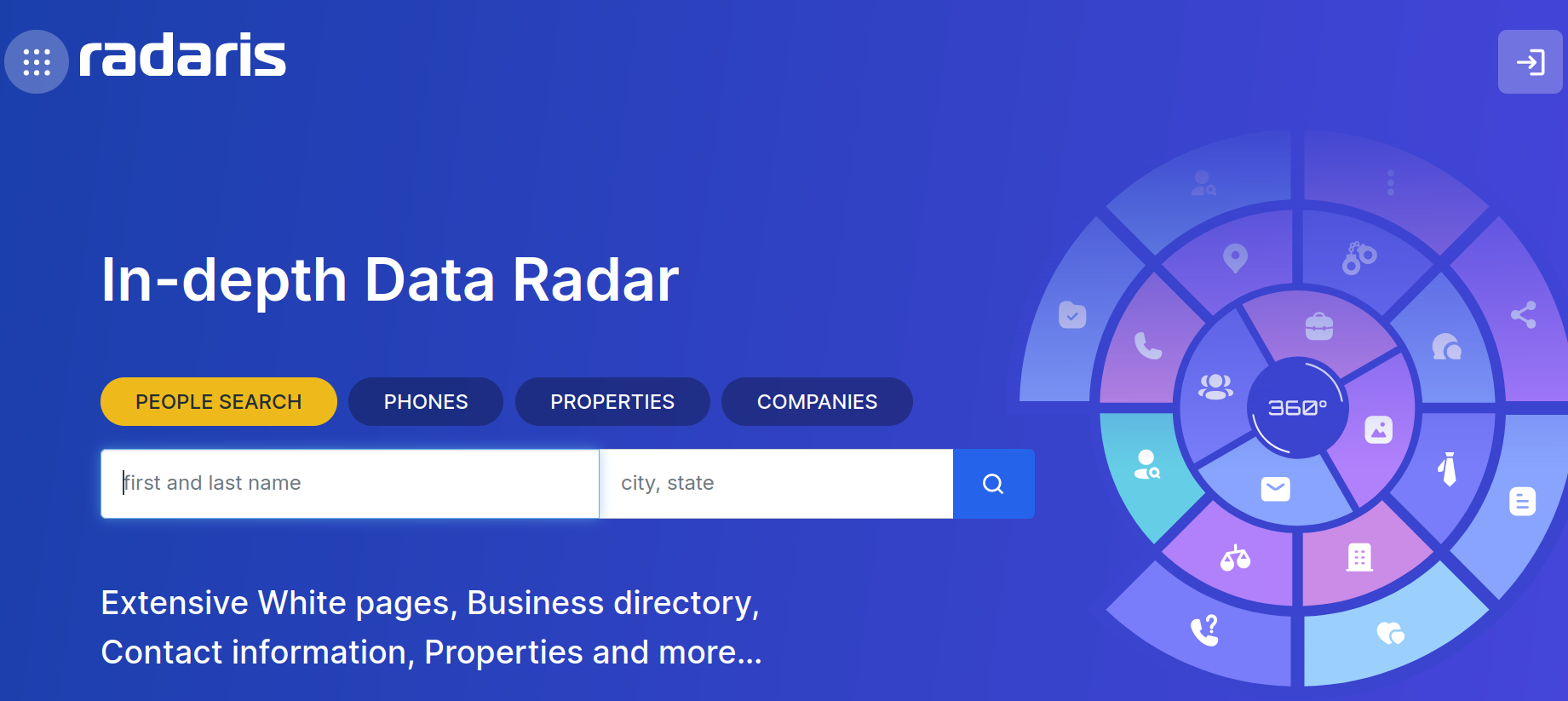
The radaris.com website, prior to the domain transfer to Atlas.

In February 2024, Radaris was sued by Atlas Data Privacy Corp, a company that has been pursuing data brokers alleged to be violating a New Jersey statute called Daniel’s Law. The statute allows state law enforcement officials, government personnel, judges and their families to have their information completely removed from commercial data brokers and people-search services, and provides for fines of $1,000 per violation against companies that ignore removal requests.

Less than a month after Atlas sued Radaris, KrebsOnSecurity published a deep dive into the Radaris co-founders — Igor and Dmitry Lubarsky (also spelled Lybarsky) — Russian-born brothers living in Massachusetts who operate a dizzying array of people-search companies as well as a number of Russian language dating services and affiliate programs.

Attorneys for the Lubarsky brothers threatened to sue for defamation if the story wasn’t removed and an apology issued. Their attorney asserted that our reporting was wildly inaccurate, and that the true owners of the company were Ukrainians living in Ukraine.
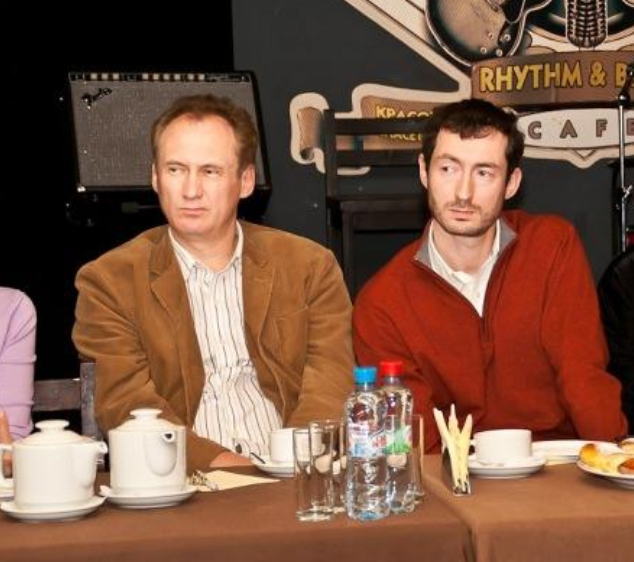
The Lubarsky brothers Dmitry or “Dan” (left) and Gary/Igor.

KrebsOnSecurity doubled down and showed how the Lubarsky brothers built and operated Radaris and other data broker companies using a fictitious CEO’s name. Our follow-up story noted that Radaris’s attorney — a lawyer with the Boston Law Group named Val Gurvits — admitted his clients had invented the CEO pseudonym “Gary Norden,” and that Radaris also had issued multiple press releases over the years that quoted the fake CEO while seeking money from potential investors.

Attorneys for Radaris waited until the last minute to appear in court and contest what was all but certain to be a default judgment in favor of the plaintiffs, and then told the court that Atlas had failed to serve the real owners and operators of Radaris and several of its sister data broker companies.

Atlas re-filed the lawsuit in June 2025, this time dramatically expanding the number of Radaris family data brokers accused of violating Daniel’s Law. Matt Adkisson, president and CEO of Atlas, said Radaris turned to a tried-and-true playbook: Delaying in court until the last possible minute, and playing shell games with Radaris’s true country of origin and the individuals listed as owners and operators of these sites.

“We refer to this period as their island-hopping phase. Privacy policies changed constantly, and new entities kept appearing from places like the Marshall Islands, the British Virgin Islands, and Seychelles,” Adkisson told KrebsOnSecurity. “Behind the scenes, it felt like a shell game. Defense lawyers told the court that certain entities merely operated the domains and were the proper parties to sue. But by the time a judgment neared, those entities would be discarded and new entities would appear. Meanwhile, the lawyers claimed the other entities that actually owned the domains should not be held responsible.”

Adkisson said when the defendants updated their terms of service to state that Radaris was suddenly managed by a company in the Marshall Islands, Atlas hired an investigator in that country and soon learned the brand new entity that Radaris claimed was managing the company didn’t even exist yet.

Mr. Gurvits stepped forward as Radaris’s attorney in a class action lawsuit the company temporarily lost in 2017 because it never contested the claim in court. When the plaintiffs told the judge they couldn’t collect on the $7.5 million default judgment, the court ordered the domain registry Verisign to transfer the radaris.com domain name to the plaintiffs.

Mr. Gurvits appealed that verdict, arguing the lawsuit hadn’t named the actual owners of the Radaris domain name — a Cyprus company called Bitseller Expert Limited — and thus taking the domain away would be a violation of their due process rights.

The judge in the 2017 case ruled in Radaris’ favor — halting the domain transfer — and told the plaintiffs they could refile their complaint. Soon after, the operator of Radaris changed from Bitseller to Andtop Company, an entity formed (PDF) in the Marshall Islands in Oct. 2020. The plaintiffs never re-filed their lawsuit.
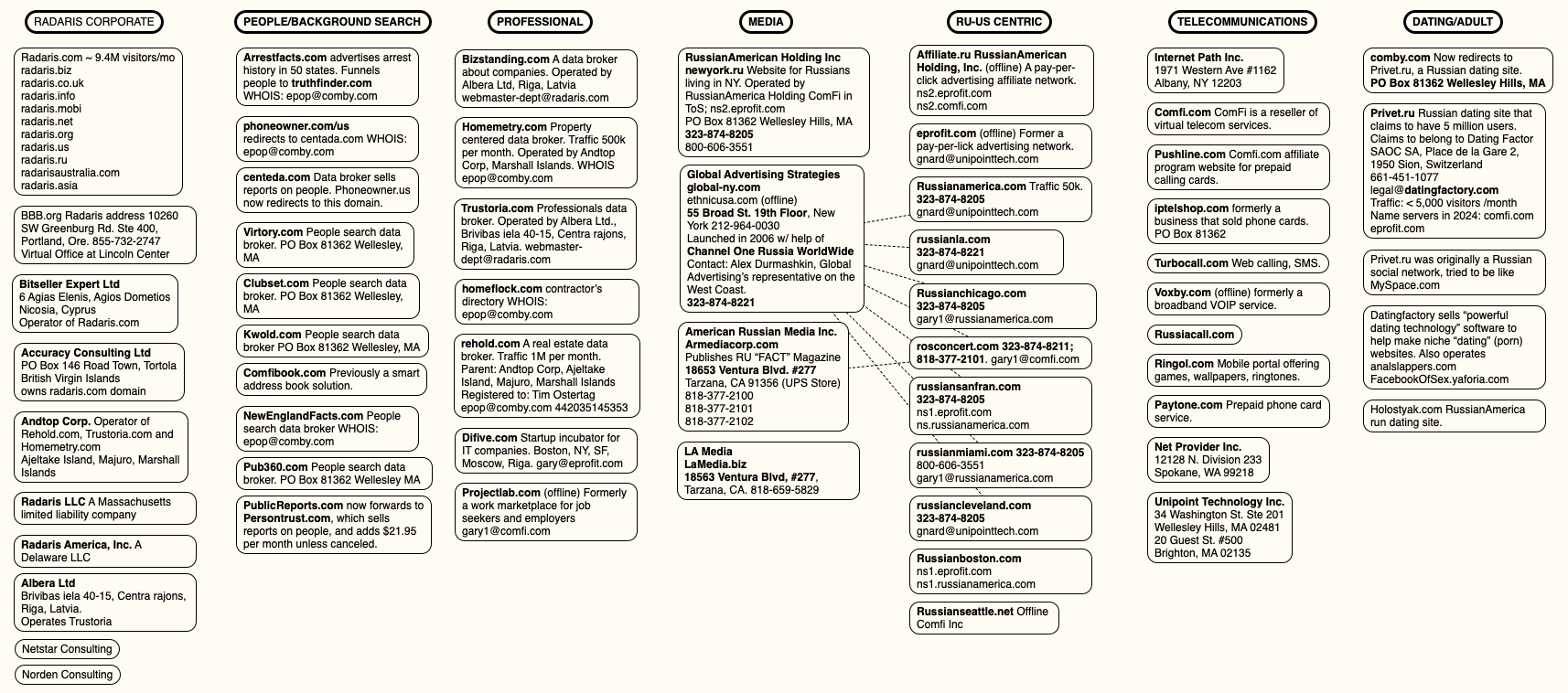
A mind map of various entities tied to Radaris and the company’s co-founders. Click to enlarge.

“That seemed to be their modus operandi,” said Raj Parikh, a partner at PEM Law in New Jersey who handles most of the Daniel’s Law litigation for Atlas. “In the past, they won by attrition. Plaintiffs’ attorneys tired of the procedural games and just gave up. That strategy worked for a decade, and it probably would have worked in this case too, since any financial recovery from foreign actors will be difficult. But we were acutely aware of the threat this website posed to law enforcement officers and other public officials in New Jersey, and decided early on to commit whatever time and resources were necessary to remove that threat.”

On August 26, the judge in the New Jersey case found the defendants were given multiple chances to appear and defend the claims against them but had failed to do so. Mr. Gurvits declined to comment on the case, saying it had been assigned to another attorney, a Mr. Victor Worms. In response to questions, Mr. Worms asserted the New Jersey court transferred Radaris.com to Atlas as part of a default judgment against Radaris.com, which is not a legal entity.

“We have made a motion to vacate that default judgment on the grounds that it is void since a non-entity has no legal capacity to sue or be sued,” Worms replied. “We also intend to pursue all appropriate appeals because we believe the transfer of Radaris.com amounts to a forfeiture in violation of various constitutional principles.”

While radaris.com still comes up prominently in results when searching online for U.S. residents by name, the domain no longer sells detailed personal dossiers on millions of Americans. Its homepage now displays a notice from Atlas, as well as links to our previous reporting on Radaris.

EMAIL CONFIRMATIONS

Atlas told KrebsOnSecurity that it has obtained more than 10,000 emails and documents in the course of litigation, and that those messages confirm our previous reporting on the owners and operators of Radaris and its myriad companies.

Atlas said the emails clearly establish that the nominal legal vehicles — Radaris America, Inc.; Bitseller Expert Limited; Digital Orbit Corp; Core Solutions Group Inc; Lucky Solutions Inc; Virtura Corp; Veripages Inc.; Nuform Solutions Inc.; Growth Data Advisors Inc.; Property Experts, Inc — are all administered by the same three or four people from the same mailboxes, share one bank or payment card set, and are all managed from one virtual office address.

“The corpus establishes, with documentary evidence generated independently by banks, payment processors, hosting providers, registrars, software-as-a-service vendors and the operators’ own systems, that radaris.com and at least twenty-five other people-search websites are one operation run by a small Boston-area group whose administrative, financial and technical functions sit on the difive.com mail domain and its successors (centerex.com, scienteco.com, eprofit.com, realmo.com, pub360.com),” reads a summary shared by Atlas.

Atlas said the emails show Radaris.com earns approximately $42,000 a month, while Veripages.com earns around $45,000 monthly via its partnership with the Lifetime Value Company, a marketing and advertising firm whose brands include PeopleLooker, PeopleSmart, NumberGuru, and Bumper, a car history site.

According to Atlas, the emails also showed the Radaris family of websites earns as much as $25,000 each month from their partnership with Onerep, a company that claims to help people remove their information from people-search sites. In March 2024, KrebsOnSecurity revealed how the Belarusian founder of Onerep had launched and operated dozens of people-search sites over the years and was continuing to operate one of them (Nuwber), effectively spreading the disease and selling the cure.

The domain radaris.com now redirects to this notice from Atlas about the court-ordered domain transfer.

The domain radaris.com now redirects to this notice from Atlas about the court-ordered domain transfer.

All told, the New Jersey court has so far transferred 14 domain names from the Radaris family of companies to Atlas. Radaris.com now redirects to a notice of the court-ordered domain transfer.

THE ROAD AHEAD

The Radaris family of companies is still potentially facing fines of $1,000 per alleged violation of Daniel’s Law. For the time being, however, Daniel’s Law is facing a constitutional challenge from virtually all of the 150 other consumer data broker firms being sued by Atlas.

The data broker industry responded by having at least 70 of the Atlas lawsuits moved to federal court, challenging the New Jersey statute as overly broad and a violation of the First Amendment. The U.S. Court of Appeals for the Third Circuit has not yet issued a decision on the constitutional challenge, but either way the case is widely expected to be appealed all the way to the U.S. Supreme Court.

Meanwhile, at least 14 other states have now passed laws modeled after the New Jersey statute, with more states considering similar measures. However, West Virginia’s Daniel’s Law was ruled facially unconstitutional under the First Amendment by a federal district court in August 2025.

Justin Sherman is a privacy expert and author of the forthcoming book “The Middlemen,” which examines how the data broker industry powers modern surveillance. Sherman said federal lawmakers have long faced intense lobbying by the technology industry against more restrictive U.S. data privacy laws, but that many powerful industries are now working against passing comprehensive data privacy legislation.

“These days at the federal level, add in the intense amount of lobbying against these laws from social media companies, big tech, cryptocurrency firms, and now AI proponents in the mix who claim that limiting their data scraping is somehow going to collapse the whole U.S. economy under Chinese rule,” he said.

Sherman said people-search companies will continue to thrive unless and until Congress enacts meaningful consumer privacy and data protection laws that are relevant to life in the 21st century. That’s because virtually all state privacy laws exempt records that might be considered “public” or “government” documents, including voting registries, property filings, marriage certificates, motor vehicle records, criminal records, court documents, death records, professional licenses, bankruptcy filings, and more.

At least 25 states have passed or implemented laws requiring age verification for residents seeking to access adult content online, but there is no federal law that limits how the companies that are scanning everyone’s drivers license can use, share or keep the data provided. Had such restrictions been enshrined in law, we may have avoided the recent breach at IDScan.net, which exposed the drivers license information on more than 153 million Americans when the records were briefly turned into a point-and-click identity theft service on the dark web.

“The average person can look at Daniel’s Law and have a perfectly normal reaction, which is that everyone should be covered, not just police and judges,” Sherman said. “But we don’t need more wake-up calls. We’ve had eight million wake-up calls already on the need for better privacy laws. The lack of comprehensive federal privacy law is not for a lack of knowledge, and anyone claiming otherwise is either not reading the news or kidding themselves.”

  •  
❌