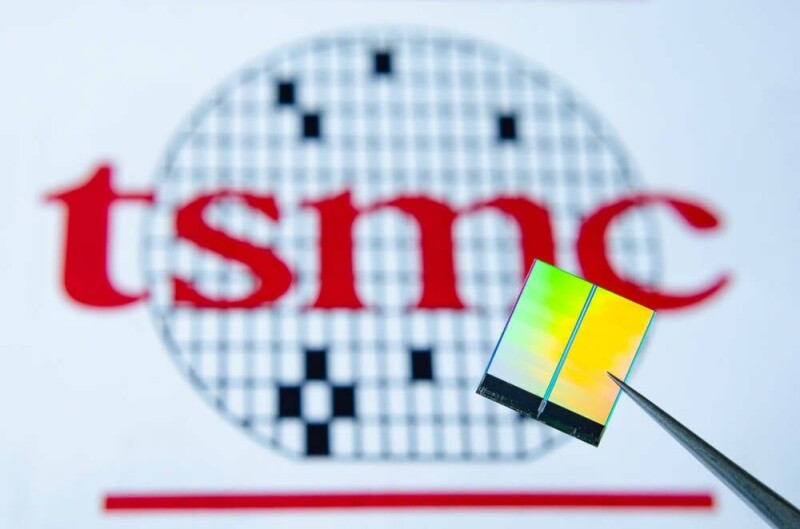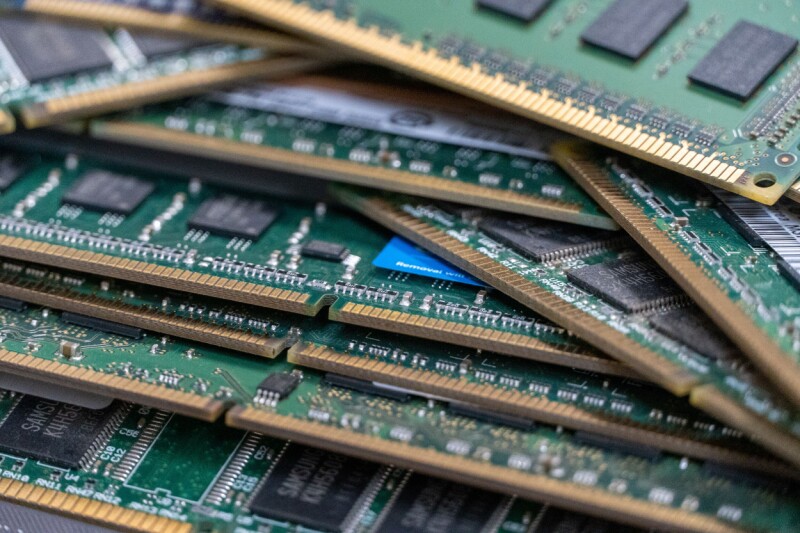
Amid the unrelenting demand for AI infrastructure, SK Hynix, the world’s largest supplier of HBM memory used in high-end GPUs, now expects to triple its wafer capacity. You'll just have to wait through two more US presidential elections and then some. All that capacity won’t come online until 2034, SK Group Chairman Chey Tae-won told Nikkei Asia in a recent interview. SK Hynix’s valuation has soared in recent months. The company is one of three major producers of NAND flash and DRAM memory, large quantities of which are required to support the burgeoning AI inference market. Samsung and Micron are the other two major players in this space. This demand has led to skyrocketing memory prices for consumer DRAM and SSDs, some of which have more than tripled in price compared to this time last year. SK Hynix and the other major memory makers meanwhile have seen their revenues explode. Chey's comments come just a week after SK Hynix said that it planned to double its production capacity within the next five years. “Our calculations show that our wafer capacity will double within five years. But honestly once all these facilities are built, it won’t just double, it will triple by around 2034,” Chey told Nikkei. SK is in the process of bringing four additional wafer fabs online, with the first phase reportedly on track to come online as early as 2027. The South Korean memory slinger had previously planned to ramp production of these facilities over the next two decades, but has pulled in its timeline in hopes of satiating AI’s memory addiction. “There is currently no way to move faster than this,” Chey told the newswire. While much of this capacity will be built on SK’s home turf, the company is exploring its options for overseas manufacturing, with Japan being one of the potential destinations, with Chey calling it an “excellent” candidate due to its robust semiconductor supply chains. Unfortunately, the buildout is unlikely to drive down memory prices for consumers any time soon. As we previously reported, memory prices are not expected to peak until later this year at the earliest. Analysts warn that memory prices are more likely to plateau going into 2027 rather than plummeting like we’ve seen in past DRAM and NAND boom-bust cycles. These boom-bust cycles have been a fact of life for commodity electronics manufacturers, like SK Hynix and Samsung, for years. Prices typically spike as inventories are drawn down and crater as new capacity is brought online. On the one hand, AI infrastructure demand has helped to stabilize this to some extent. On the other hand, the AI boom kicked off in 2022 at what was arguably the worst possible time. "This demand started in the Valley for the DRAM industry. That makes financially trying to build additional capacity really challenging," TechInsights analyst James Sanders told El Reg late last year. Business is once again booming for memory vendors presenting ample opportunities for labor disputes over competition as well as fab expansions. Unfortunately, there’s no changing the fact that the fastest anyone can bring a leading edge memory fab online is about three years. ®
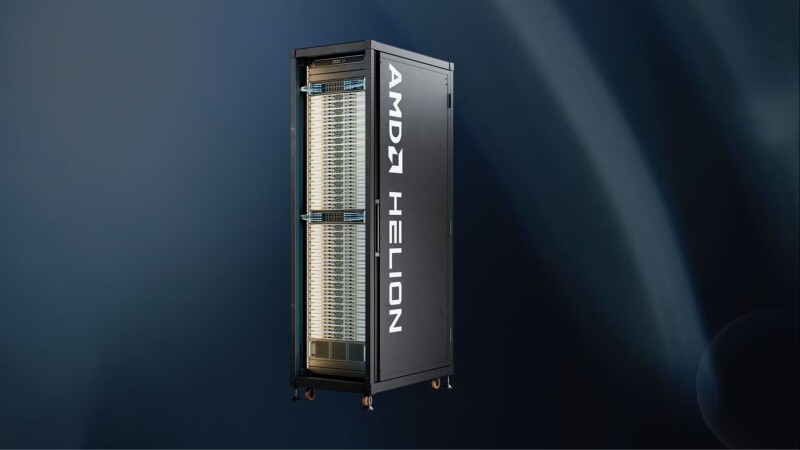
COMPUTEX 2026 It’s hard enough for startups to compete with AMD and Nvidia on chip design. The rise of rack-scale architectures has only made things harder. Companies not only have to invest in chip design but also the mechanical, thermal, and power engineering necessary to pack six dozen or more AI accelerators into a single rack that functions as one enormous GPU. At Computex last week, Delos Data, a startup funded by former Intel and Barefoot Networks execs, showed off a modular server platform aimed at giving chip startups a shortcut to rack scale. One of the challenges with the move to rack scale is actually the sheer amount of networking that needs to be enabled at the box. A typical eight GPU HGX node only needs one or two ports per GPU. By comparison, a GB300 NVL72 needs 18 400 Gbps ports per GPU. Nvidia and AMD have developed custom racks with integrated backplanes, power delivery, and cooling. Delos by comparison is keeping things relatively simple by designing a chassis that, at least from the front, looks more like a switch than a GPU server. It features 36 OSFP ports, nine for each of the four OAM sockets at the heart of the system. OAM, if you’re not familiar, is an open socket commonly used by high-performance accelerators requiring more interconnect bandwidth and power delivery than standard PCIe cards can manage. Assuming 200 Gbps SerDes, that works out to 3.6 TB/s per chip of interconnect, the same as Nvidia's new Rubin GPUs. OSFP means that customers can use standard DACs or pluggable transceivers, and switches depending on how large they want their scale-up domain to be. And while OSFP is usually associated with Ethernet, you can run just about anything you want through them, whether it be UALink, Ultra Ethernet, PCIe, or something else. From a deployment standpoint, these systems would be wired up like any other hyperscale system, just a whole lot denser. Delos isn’t the only option out there for chip startups looking for scale up reference design. AWS for example appears to be repurposing Nvidia’s MGX form factor for its Trainium 3 rack systems, while AMD’s Helios rack is now an OCP standard. Both designs would, in theory, be easier to service, but Delos argues that its modular design offers greater flexibility. “It makes it a little bit more flexible in terms of, maybe you want a scale up domain of 100 or maybe you want it a scale up domain of one,” CTO Dan Daly told El Reg. “It just depends on how many cables you want to plug in. This also allows you to go plug into different types of switches… it could be simpler switches, maybe even optical circuit switches (OCS).” Using existing packet switches from Broadcom or Marvell, such a design could support 512-1,024 accelerators in a single layer fabric depending on whether you're using 200 Gbps or 100 Gbps SerDes. Using multi-layer fabrics, OCS, and/or 2D/3D toruses, the compute domain could scale even further, all while using off-the-shelf components. While OSFP keeps things simple and easy, it also means power consumption could become problematic for larger compute domains requiring pluggable optics. In fact, this is why Nvidia has taken so long to embrace optical scale-up. Copper may not have the reach, but it uses a fraction of the power. Delos CEO Ed Doe tells us the company is already exploring versions of the system that will use near package or co-packaged optics out to MPO-style connectors rather than the OSFP. The startup isn't just doing hardware. As anyone who's done large scale networking knows, the physical and logical topologies — that is, the way devices communicate with one another on the network — can look very different depending on the workload. Delos has developed a software orchestration platform designed to facilitate the configuration and monitoring of these switched fabrics or meshes in order to enable dynamic rerouting of traffic in the event of a link failure. At Computex, this software platform, which Delos has dubbed its Nonstop AI network, was on display, allowing attendees to pull links at random and see the network react and correct itself automatically. The company's ambitions don't stop at network orchestration and systems. We're told Delos has additional products in the works, and we don't know for sure what they are, but a high radix switch design built atop merchant silicon would certainly complement its Nonstop AI systems. ®
As the largest World Cup kicked off in Mexico City on Thursday, the security around Estadio Azteca was strict, as law enforcement officers held off protesters.
Dutch semiconductor startup Qualinx is claiming a breakthrough of sorts in European sovereign manufacturing thanks to an end-to-end semiconductor fabrication flow it is using for its new satnav chips. The firm, a spin-off from Delft University of Technology, says it has demonstrated that security-critical chips for aerospace, defense, and critical infrastructure can be designed, manufactured, and delivered entirely within Europe. Tape-out of the Qualinx QLX3xx, a family of ultra-low-power Global Navigation Satellite System (GNSS) systems-on-chip (SoCs), represents the first step on the path toward a fully automated trusted European manufacturing flow, the company claims. But Qualinx is a fabless design shop and relies on a contract manufacturer to make the chips for it. In this case, it is GlobalFoundries (GF), an international business with its headquarters in the US – so much for sovereign manufacturing. The pair say that GF's Dresden fab is establishing a European manufacturing flow with funding from the European Chips Act. This will ensure that every step of the production process occurs within the EU, so that no sensitive design data leaves the region. "This first secure product demonstrates that a fully European manufacturing path – from mask services to wafer production – is already a reality today," said Qualinx CEO Tom Trill. Qualinx is perhaps placing an emphasis on security-critical chips because there are already European semiconductor firms that design and manufacture their own products, such as STMicroelectronics. And Reg readers with long memories will recall that the UK once had its own processor company in the shape of Bristol-based Inmos, which made the Transputer, manufactured at Newport Wafer Fab (NWF) in South Wales – now sold off to US chip biz Vishay Intertechnology. The Qualinx chip will be made using GF's FDX fully depleted silicon-on-insulator manufacturing process, which we understand is a 12nm node. While advanced, this is some way behind cutting-edge processes such as Taiwanese chip giant TSMC's 2nm N2 process, now in mass production. But there has been debate about whether Europe really needs cutting-edge fabs. The European Commission's new Digital Sovereignty package proposes a Chips Act 2.0 that would fund a sovereign "AI chip factory." But as the Center for European Policy Analysis (CEPA) points out, European chip demand comes mostly from the automotive sector and industrial applications, which rely on 28/22nm technology, not cutting-edge silicon. "We are demonstrating that Europe can rely on a secure, end-to-end semiconductor manufacturing flow that meets the highest requirements of aerospace and defense," stated GF SVP and general manager Dr Manfred Horstmann. "Our partnership with Qualinx marks the first operational milestone." ®