Vista elenco

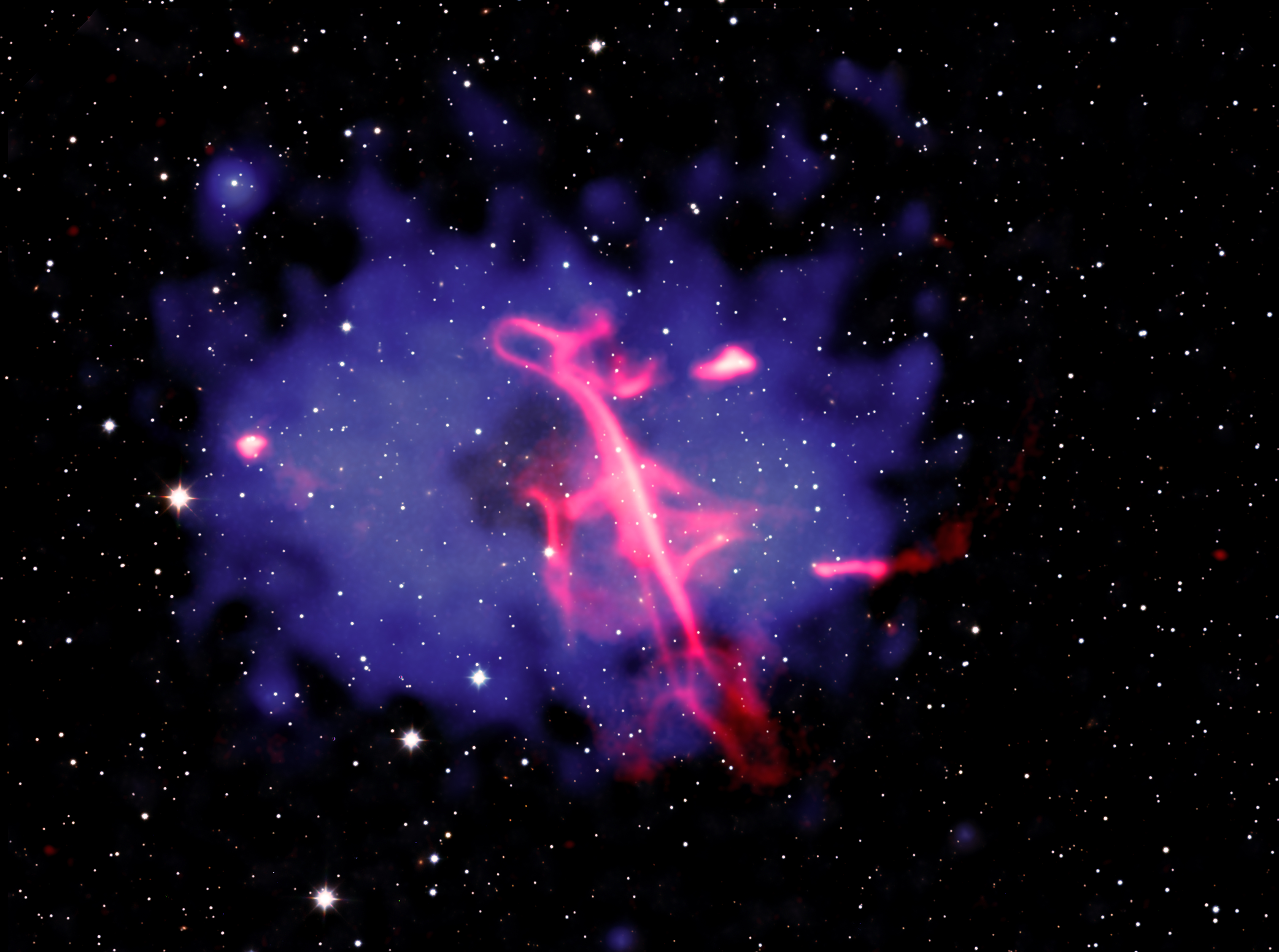
Colorful Collage of Tarantula Nebula

17 Agosto 2026 ore 18:00
This multiwavelength image of the Tarantula Nebula, one of the brightest and largest regions of star formation to Earth, shows X-rays from Chandra that reveal gas that has been blown away in winds from the surfaces of young, massive stars and heated to millions of degrees by shock waves, like sonic booms from supersonic jets. The infrared data from Webb shows thousands of young stars, plus swaths of cool dust that will provide the ingredients to one day form new stars and planets. Hubble optical data uncovers hydrogen gas that is warmer than seen with Webb, as well as some individual stars through the nebula.
X-ray: NASA/CXC/Ohio State Univ./J. Rodriguez et al; Infrared: NASA/ESA/CSA/STScI; Optical: NASA/ESA/STScI; Image Processing: NASA/CXC/SAO/P. Edmonds

Data from NASA’s Chandra X-ray Observatory, NASA’s James Webb Space Telescope, and NASA’s Hubble Space Telescope combine to reveal a vibrant view of 30 Doradus, or the Tarantula Nebula, in this Aug. 11, 2026, image. Located in the Large Magellanic Cloud, a small neighbor galaxy to the Milky Way about 160,000 light-years from Earth, the Tarantula has thousands of young stars embedded in a vibrant honeycomb-like structure of gas and dust.

By studying the data from Chandra, Hubble, and Webb, combined with data from the agency’s retired Spitzer Space Telescope, astronomers determined that the Tarantula may be losing energy from several sources, including hot gas escaping from the nebula.

Learn more about this image.

Image credit: X-ray: NASA/CXC/Ohio State Univ./J. Rodriguez et al; Infrared: NASA/ESA/CSA/STScI; Optical: NASA/ESA/STScI; Image Processing: NASA/CXC/SAO/P. Edmonds

Total Solar Eclipse in Sunflower Field

14 Agosto 2026 ore 16:48
This composite image shows the progression of a total solar eclipse over a sunflower field in Spain. Credit: NASA/Bill Ingalls
NASA/Bill Ingalls

This composite image shows the progression of a total solar eclipse over San Millán de los Caballeros, Spain on, Wednesday, Aug. 12, 2026.

A total solar eclipse swept across parts of Greenland, Iceland, northern Russia, the Atlantic Ocean, Spain, and a small corner of Portugal. A partial eclipse was visible in parts of the U.S., most of Canada, much of Europe, and northwest Africa.

Image credit: NASA/Bill Ingalls

Perseids Meteor Shower

13 Agosto 2026 ore 17:08
The night sky is filled with stars. Looking toward the bottom left and top right, two streaks are visible. These are meteors. Between the two streaks is the constellation Orion. The bottom of the image is lined with the silhouette of treetops.
NASA/Bill Dunford

The constellation Orion is framed by two Perseid meteors in this photo from Aug. 12, 2018, in Cedar Breaks National Monument, Utah.

The Perseids – one of the year’s brightest and most popular meteor showers – has been ramping up since early July and will sparkle in the skies through the end of August. The shower reached its peak on the night of Aug. 12 into the early morning of Aug. 13.

Rewatch the Aug. 13 meteor shower.

Image credit: NASA/Bill Dunford

💾

Grab a blanket, a snack - maybe some caffeine - and stay up late with us as we watch the 2026 Perseids meteor shower! The Perseids is one of the best annual ...

New Crew Members Welcomed to International Space Station

24 Luglio 2026 ore 18:43
From left, Expedition 74 flight engineers Anna Kikina and Pyotr Dubrov of Roscosmos, and Anil Menon of NASA pose for a portrait while holding a cake celebrating their recent arrival aboard the International Space Station.
NASA/Chris Williams

From left, Expedition 74 flight engineers Anna Kikina and Pyotr Dubrov of Roscosmos, and Anil Menon of NASA pose for a July 18, 2026, photo while holding a cake celebrating their recent arrival aboard the International Space Station. The trio arrived at the space station on July 14, 2026, after launching from the Baikonur Cosmodrome in Kazakhstan earlier the same day.

Kikina, Dubrov, and Menon are in the second week of their planned eight-and-a-half-month mission. They are using their new skills to conduct space research while still familiarizing themselves with living and working in space.

Keep up with space station activity on the International Space Station blog.

Image credit: NASA/Chris Williams

New Crew Members Welcomed to International Space Station

24 Luglio 2026 ore 18:43
From left, Expedition 74 flight engineers Anna Kikina and Pyotr Dubrov of Roscosmos, and Anil Menon of NASA pose for a portrait while holding a cake celebrating their recent arrival aboard the International Space Station.
NASA/Chris Williams

From left, Expedition 74 flight engineers Anna Kikina and Pyotr Dubrov of Roscosmos, and Anil Menon of NASA pose for a July 18, 2026, photo while holding a cake celebrating their recent arrival aboard the International Space Station. The trio arrived at the space station on July 14, 2026, after launching from the Baikonur Cosmodrome in Kazakhstan earlier the same day.

Kikina, Dubrov, and Menon are in the second week of their planned eight-and-a-half-month mission. They are using their new skills to conduct space research while still familiarizing themselves with living and working in space.

Keep up with space station activity on the International Space Station blog.

Image credit: NASA/Chris Williams

❌