Vista elenco

Artemis III Crew Announced

9 Giugno 2026 ore 21:39
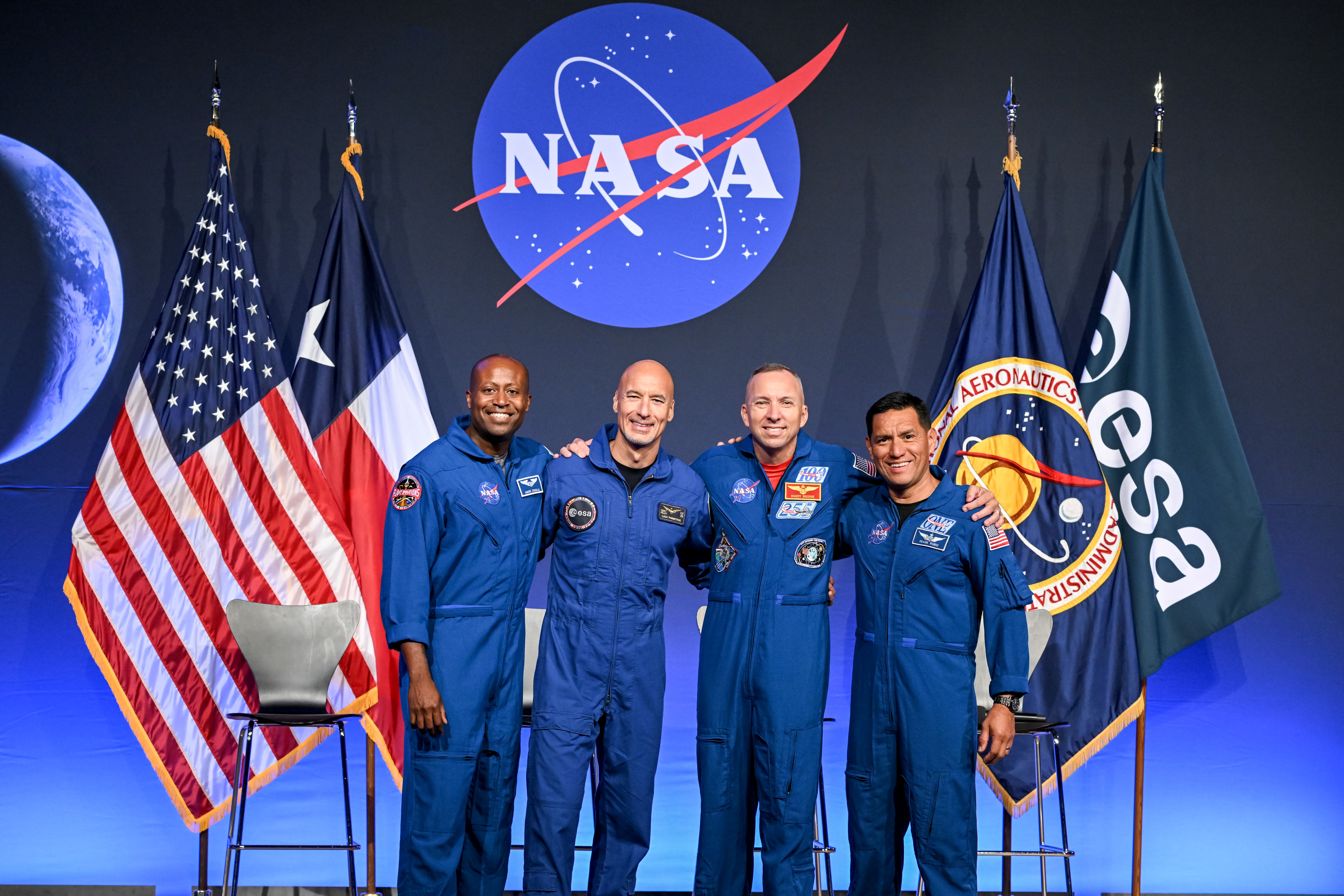
NASA announced the Artemis III crew on Tuesday, June 9, 2026. NASA astronaut Andre Douglas, mission specialist; ESA (European Space Agency) astronaut Luca Parmitano, pilot; NASA astronaut Randy Bresnik, commander; and NASA astronaut Frank Rubio, mission specialist, will demonstrate the Orion spacecraft's rendezvous and docking capabilities with test versions from one, or both, American commercial human landing systems in development by Blue Origin and SpaceX.

Sarà Luca Parmitano il pilota di Artemis III

9 Giugno 2026 ore 19:12

La Nasa ha annunciato oggi la composizione dell’equipaggio della missione Artemis III: Randy Bresnik (comandante, Nasa), Luca Parmitano (Esa), Frank Rubio e Andre Douglas (specialisti di atterraggio, entrambi Nasa). È stato inoltre designato come membro di riserva dell’equipaggio l’astronauta Bob Hines (Nasa). L’equipaggio inizierà ora un rigoroso programma di addestramento per familiarizzarsi con i sistemi della navicella Orion e con il funzionamento dei sistemi di atterraggio con equipaggio umano, in vista di un’ambiziosa serie di dimostrazioni che precederanno la missione di atterraggio sulla Luna.

L’equipaggio della missione Artemis III. Da sinistra: Andre Douglas, Luca Parmitano, Randy Bresnik e Frank Rubio. Crediti: Nasa

Luca Parmitano, astronauta italiano dell’Esa, ha trascorso 366 giorni nello spazio nel corso di due missioni di lunga durata sulla Stazione spaziale internazionale, Volare e Beyond. Durante queste missioni, ha collaborato a centinaia di esperimenti, ha effettuato sei passeggiate spaziali per un totale di oltre 30 ore ed è diventato comandante della Stazione. Da quando è tornato sulla Terra, Parmitano ha ricoperto il ruolo di referente dell’Esa presso il Johnson Space Center della Nasa a Houston, agendo come “CapCom” e addestrando gli astronauti dell’Esa per le passeggiate spaziali e le operazioni robotiche. L’anno scorso Parmitano ha partecipato all’Underway Recovery Test 12 della Nasa, al largo delle coste della California, per simulare l’ammaraggio e il recupero degli astronauti di Artemis da un modello in scala reale della navicella Orion.

«Sono onorato di far parte di questo equipaggio e allo stesso tempo mi sento umile: i miei compagni di missione apportano un bagaglio di esperienze molto variegato, e non vedo l’ora di lavorare con loro, desideroso di imparare e di dare il mio massimo contributo nel mio ruolo. In qualità di pilota collaudatore, questa è davvero una missione da sogno, poiché potremo contribuire a testare i sistemi e a sviluppare le procedure affinché i futuri equipaggi possano spingersi più lontano e, in ultima analisi, riportare l’umanità sulla Luna», ha detto Luca Parmitano. «Sono molto grato all’Aeronautica militare per avermi fornito l’addestramento nelle mie prime fasi; all’Agenzia spaziale italiana – e all’Italia nel suo complesso – per avermi affidato il loro primissimo volo di lunga durata quando ero solo un novellino; all’Agenzia spaziale europea per l’addestramento, il sostegno infinito e le incredibili opportunità che ho avuto da quando sono diventato un astronauta dell’Esa, e alla Nasa per la sua leadership nel riportare l’umanità sulla Luna. È la conferma che l’Esa è un partner affidabile e la continuazione di una solida collaborazione che porterà un europeo sulla Luna».

«Artemis III amplierà i confini delle operazioni spaziali in orbita. La nomina dell’astronauta dell’Esa Luca Parmitano a pilota riflette la profonda competenza europea nel campo dei voli spaziali con equipaggio umano e fa leva sulla sua vasta esperienza operativa in situazioni di forte pressione», ha detto Josef Aschbacher, direttore generale dell’Esa. «Allo stesso tempo, il Modulo di servizio europeo (Esm) dell’Esa fornirà ancora una volta le capacità fondamentali che alimentano Orion, dimostrando il ruolo duraturo dell’Europa nel cuore stesso del programma Artemis. La notizia giunta oggi da Houston è un forte riconoscimento del ruolo dell’Esa nel rendere possibile il ritorno dell’umanità sulla Luna – e un progresso chiave nella nostra collaborazione con la Nasa. Gli europei possono essere orgogliosi di far parte di questo emozionante viaggio».

Fonte: press release Esa

La dichiarazione di Luca Parmitano (in inglese) sul canale YouTube dell’Esa:


San Francisco’s Metropolitan Mosaic

9 Giugno 2026 ore 06:00
A top-down photo of San Francisco shows dense gray urban infrastructure interspersed with green parks. Waves and ships are visible in the surrounding blue-green water.
May 27, 2026

A period of unsettled weather brought scattered showers and thunderstorms to California’s Bay Area on May 27, 2026. That afternoon, a break in the clouds left downtown San Francisco and nearby communities beneath mostly cloud-free skies, allowing an astronaut aboard the International Space Station to take this photograph.

The image captures two of the region’s iconic bridges. The Golden Gate Bridge connects the northern San Francisco Peninsula with Marin County to the north, while the San Francisco-Oakland Bay Bridge spans the bay toward Oakland to the east.  

Near the center of the image, Golden Gate Park stands out as a long, rectangular strip of green amid the dense urban landscape. Spanning more than 1,000 acres (400 hectares), the park encompasses meadows, gardens, wooded areas, and lakes. Additional green space toward the north around the Golden Gate Bridge is part of a national recreation area

The nadir (downward-looking) perspective also provides a clear view of the patchwork of street grids, which were laid out over San Francisco’s hilly terrain as the city grew in successive stages. In the heart of the downtown area, Market Street runs southwest to northeast and serves as a prominent divider between two distinct grid orientations: one aligned with the bay and the other aligned with the street.  

Along the northeastern and eastern waterfront, various structures extend into the bay. Toward the north, these include a historic wharf, seawalls, and piers—most built in the early 1900s, though some date back into the 1800s. The adjacent waters support heavy maritime traffic, including cargo and container ships, cruise vessels, and regional ferries.

Breaking waves are visible along the western coast, including at Ocean Beach, the 3.5-mile stretch of sandy shore adjacent to Golden Gate Park. On May 27, the National Weather Service warned of hazardous conditions at the region’s beaches due to strong northerly winds. Long-period swells from the northwest contributed to the increased risk of rip currents as well as sneaker waves in the days after this image was acquired.

Astronaut photograph ISS074-E-619284 was acquired on May 27, 2026, with a Nikon Z9 digital camera using a focal length of 800 millimeters. It is provided by the ISS Crew Earth Observations Facility and the Earth Science and Remote Sensing Unit at NASA Johnson Space Center. The image was taken by a member of the Expedition 74 crew. The image has been cropped and enhanced to improve contrast, and lens artifacts have been removed. The International Space Station Program supports the laboratory as part of the ISS National Lab to help astronauts take pictures of Earth that will be of the greatest value to scientists and the public, and to make those images freely available on the Internet. Additional images taken by astronauts and cosmonauts can be viewed at the NASA/JSC Gateway to Astronaut Photography of Earth. Story by Kathryn Hansen.

Downloads

A top-down photo of San Francisco shows dense gray urban infrastructure interspersed with green parks. Waves and ships are visible in the surrounding blue-green water.

May 27, 2026

JPEG (12.13 MB)

References & Resources

You may also be interested in:

Stay up-to-date with the latest content from NASA as we explore the universe and discover more about our home planet.

Belts of Green in the Washington Suburbs

3 min read

Along the northeast side of the Capital Beltway in Maryland, green spaces weave through the developed landscape.

Article

Contours of the James Bay Lowlands

3 min read

After the Laurentide Ice Sheet retreated from present-day Hudson Bay, rebounding land has revealed striking nearshore topography.

Article

Great Balls of Fire

4 min read

An astronaut on the International Space Station was surprised to photograph a shower of light streaking through the darkness while…

Article

San Francisco’s Metropolitan Mosaic

9 Giugno 2026 ore 06:00
A top-down photo of San Francisco shows dense gray urban infrastructure interspersed with green parks. Waves and ships are visible in the surrounding blue-green water.
May 27, 2026

A period of unsettled weather brought scattered showers and thunderstorms to California’s Bay Area on May 27, 2026. That afternoon, a break in the clouds left downtown San Francisco and nearby communities beneath mostly cloud-free skies, allowing an astronaut aboard the International Space Station to take this photograph.

The image captures two of the region’s iconic bridges. The Golden Gate Bridge connects the northern San Francisco Peninsula with Marin County to the north, while the San Francisco-Oakland Bay Bridge spans the bay toward Oakland to the east.  

Near the center of the image, Golden Gate Park stands out as a long, rectangular strip of green amid the dense urban landscape. Spanning more than 1,000 acres (400 hectares), the park encompasses meadows, gardens, wooded areas, and lakes. Additional green space toward the north around the Golden Gate Bridge is part of a national recreation area

The nadir (downward-looking) perspective also provides a clear view of the patchwork of street grids, which were laid out over San Francisco’s hilly terrain as the city grew in successive stages. In the heart of the downtown area, Market Street runs southwest to northeast and serves as a prominent divider between two distinct grid orientations: one aligned with the bay and the other aligned with the street.  

Along the northeastern and eastern waterfront, various structures extend into the bay. Toward the north, these include a historic wharf, seawalls, and piers—most built in the early 1900s, though some date back into the 1800s. The adjacent waters support heavy maritime traffic, including cargo and container ships, cruise vessels, and regional ferries.

Breaking waves are visible along the western coast, including at Ocean Beach, the 3.5-mile stretch of sandy shore adjacent to Golden Gate Park. On May 27, the National Weather Service warned of hazardous conditions at the region’s beaches due to strong northerly winds. Long-period swells from the northwest contributed to the increased risk of rip currents as well as sneaker waves in the days after this image was acquired.

Astronaut photograph ISS074-E-619284 was acquired on May 27, 2026, with a Nikon Z9 digital camera using a focal length of 800 millimeters. It is provided by the ISS Crew Earth Observations Facility and the Earth Science and Remote Sensing Unit at NASA Johnson Space Center. The image was taken by a member of the Expedition 74 crew. The image has been cropped and enhanced to improve contrast, and lens artifacts have been removed. The International Space Station Program supports the laboratory as part of the ISS National Lab to help astronauts take pictures of Earth that will be of the greatest value to scientists and the public, and to make those images freely available on the Internet. Additional images taken by astronauts and cosmonauts can be viewed at the NASA/JSC Gateway to Astronaut Photography of Earth. Story by Kathryn Hansen.

Downloads

A top-down photo of San Francisco shows dense gray urban infrastructure interspersed with green parks. Waves and ships are visible in the surrounding blue-green water.

May 27, 2026

JPEG (12.13 MB)

References & Resources

You may also be interested in:

Stay up-to-date with the latest content from NASA as we explore the universe and discover more about our home planet.

Belts of Green in the Washington Suburbs

3 min read

Along the northeast side of the Capital Beltway in Maryland, green spaces weave through the developed landscape.

Article

Contours of the James Bay Lowlands

3 min read

After the Laurentide Ice Sheet retreated from present-day Hudson Bay, rebounding land has revealed striking nearshore topography.

Article

Great Balls of Fire

4 min read

An astronaut on the International Space Station was surprised to photograph a shower of light streaking through the darkness while…

Article
❌