Je viens de créer un formulaire pour faire une pétition. Votre outil est excellent, c’est du très bon travail. Bravo à toute l’équipe.
Comme vous avez bloquer la modification de la structure des emails comment faire maintenant pour vérifier si une adresse email saisie sur le formulaire est valide ?
A public policy expert mapped global cybercrime laws to develop a five-point framework for protecting ethical hackers and good-faith security research.
The crime solver wore disguises, spied on targets, and built intelligence networks long before modern-day tactics emerged. He has lessons for today's ethical- and unethical hackers.
Cela fait des années ( 15 ? ) que je donne à Framasoft tous les mois. Je dois avouer que plus le temps passe plus le militantisme politique et sociale ( et sexuel ! ? ) de Framasoft me gène. N’y a t’il pas eu un tournant ces dernières années sur ces thèmes ?
Ce à quoi tu résiste persiste, ce que tu juges tu deviendras et ce que tu condamnes te condamnera.
Parfois il faut prendre de la hauteur et je ne prends plus vraiment de plaisir à lire ce qui provient de vous mes chers amis, notamment ce Khryspresso, auquel je préfère les cerises de hiatus, https://lescerisesdehiatus.bearblog.dev/ . Je pense prendre mes distances et me conforter avec l’APRIL, que je trouve plus posé, plus centré, moins dans le jugement et plus dans l’apport de solutions.
Disponibile un Proof of Concept (PoC) per la vulnerabilità identificata dalla CVE-2026-64638, già sanata dal vendor, che interessa il noto CMS WordPress.
Bonjour, dans mon association, j’essaie de convaincre de passer de MS 365/Teams à des outils Framasoft. Mais je fais face a une résistance assez farouche.
Pour ce qui concerne Framateam, outre l’absence d’integration avec framaspace pour le partage de document, ce qui bloque, c’est le manque de possibilité d’avoir des discussions séparées dans un canal. Avec Teams, il y a 2 mode :
discussion continue, comme Framateam, ou tous les échanges sont mélés
discussions séparées ou chaque discussion reste indépendante
Proseguono le campagne malware che sfruttano tecniche di ingegneria sociale per indurre gli utenti ad eseguire codice malevolo sui propri sistemi tramite la funzione “incolla”
Aggiornamenti di sicurezza Cisco sanano 7 vulnerabilità con gravità "alta" presenti in ClamAV, software open source per l'analisi antivirus. Tra queste si evidenziano le CVE-2026-20337 e CVE-2026-20338 per le quali il vendor conferma la presenza di Proof of Concept (PoC) disponibili in rete.
Omaha resident Natalie Thorpe’s 3-year-old tested high for lead as a baby. Thorpe’s yard has enough lead to be risky but not enough to qualify for government cleanup. Rebecca S. Gratz for ProPublica
Despite hundreds of millions of dollars spent on environmental cleanup, more than half the yards in a section of Omaha, Nebraska, that used to surround a lead smelter still have enough contamination to cause high blood-lead levels in kids, according to tests by the Flatwater Free Press and ProPublica.
The findings were consistent across the city’s older urban core — in the historically Black neighborhoods north of downtown, the predominantly Hispanic areas to the south and the more white and affluent areas in midtown. However, homes closest to where a lead smelter and other downtown factories operated tended to have slightly higher concentrations than those farther out.
As part of the Environmental Protection Agency’s Superfund program, the federal government and the city of Omaha have been attempting to remove lead from Omaha’s yards since the late 1990s.
The EPA’s cleanup standard for Omaha was set in 2009 and is based on health recommendations from 1994. Since then, research has shown that lower exposures can cause IQ loss in kids and heart attacks in adults. Twice in the last 15 years, the Centers for Disease Control and Prevention lowered what it considers a high blood-lead level. An EPA risk model found that to protect most kids according to those new health guidelines, soil levels would have to be below 100 parts per million — about 10 grains of rice in a 10-pound bucket of dirt.
The Flatwater Free Press and ProPublica tested 388 homes in the Omaha Superfund site and found that 208 had levels over 100 parts per million.
But the EPA has never required that level of cleanup in Omaha or as a national remediation standard. Current EPA policy for the Omaha cleanup site directs contractors to dig up and replace yards if tests show they contain more than 400 parts per million of lead — about a marble’s worth of the metal dispersed across a 10-gallon bucket of dirt. Last week, the Flatwater Free Press and ProPublica reported that 1 in 10 of the homes we tested that were remediated still has a lead concentration over that threshold.
The risk worries Natalie Thorpe, whose 3-year-old daughter tested high for lead as a baby. When the history and English teacher bought a house in Omaha, she knew about the Superfund site, but friends assured her the EPA had taken care of any problems with the dirt. Instead, her yard has enough lead to be risky but not enough to qualify for government cleanup.
“It feels a little bit like being a sitting duck,” Thorpe said.
Thorpe’s 3-year-old picks a tomato from their garden.Rebecca S. Gratz for ProPublica
EPA spokesperson Kellen Ashford said removing lead in soil is only one factor in protecting communities. Because no level of lead in the body is safe and it would be impossible to remove all lead from a site, the agency works with local health officials to protect the community from lead risks in other ways, he said.
Those include establishing the Omaha Lead Registry, a website where people can search for the highest lead level and remediation status of any property in the site. The EPA also funds the Douglas County Health Department’s lead poisoning prevention program, which performs home visits when a child tests high for exposure to the toxic metal.
Work on lead has historically been focused on protecting people from extreme poisonings, often caused by paint, said Tom Neltner, who heads the lead poisoning prevention nonprofit Unleaded Kids. As more public health experts have acknowledged the risks of smaller exposures, they’ve had to examine soil more closely. Confronting that will require new research and renewed advocacy, he said.
But even with updated science, politics have complicated potential cleanups. The first step in any cleanup is to identify which properties deserve attention. So the EPA typically tests soil to screen for potential problem areas. If results hit a certain level of lead concentration, it kicks off a more in-depth process of monitoring that site and discussing cleanup options. In 2024, President Joe Biden’s EPA lowered that recommended screening level to as little as 100 parts per million.
Cleaning up to 100 parts per million would have carried enormous costs. About 40% of U.S. homes exceed those levels, according to a 2024 study by some of the country’s top researchers of lead-contaminated soil, and it could cost $500 billion to $1.4 trillion to clean up all of them. The authors argued the government could take a more cost-effective approach by covering lead-laced soil with clean soil or mulch rather than digging it out.
Last year, the Trump administration rolled back Biden’s standards in what it said was an effort to speed up cleanups of the highest-risk areas, raising the lowest screening level from 100 parts per million to 200 parts per million.
Thorpe and her daughter pick vegetables from their raised garden bed. Zinnias, basil, golden beets, squash and other plants grow in store-bought soil.Rebecca S. Gratz for ProPublica
However, some local and state governments, as well as other countries, have committed to standards of 100 parts per million or lower.
Norway recommends risk assessments for any dirt that children have regular access to that has more than 100 parts per million of lead in it. In 2006, the country required all playgrounds and daycares be remediated to that level.
Even in the United States, some areas have lower limits. Minnesota requires replacing any soil that has more than 100 parts per million of lead around the home of a child with a high blood level, said Minnesota Department of Health spokesperson Scott Smith. In April, New Orleans announced plans to clean up its parks after an investigation by Verite News and KFF Health News found more than half of the 80 sites the organizations tested had levels above 100 parts per million.
California has cleaned up properties to 80 parts per million of lead, its screening level for potentially risky soil, though residents of properties exceeding that threshold more often receive safety education rather than a new lawn, said Seth John, a University of Southern California earth sciences professor.
An Omaha lead smelter spread dust that seeped into the soil and bodies of many residents. The EPA spent decades cleaning up the surrounding area — but not Council Bluffs, Carter Lake or Bellevue.
This summer the EPA is testing soil around Omaha as part of an investigation that may help the agency determine if it should expand the site’s boundaries or lower the amount of lead that would qualify for cleanup. The agency expects to share its findings by October 2027, Ashford said.
Earlier research suggests there may be more homes with lead-soil concentrations over 100 parts per million than the Flatwater Free Press and ProPublica identified: EPA testing found 84% of the Superfund site in Omaha — more than 36,000 properties — had areas with lead concentrations above 100 parts per million, according to a March 2024 email sent by an EPA manager to a Nebraska Department of Environment and Energy official.
But trying to determine what the agency might do in Omaha is difficult because the EPA has applied its new guidance in different ways, setting higher lead levels for cleanup at some Superfund sites and lower levels at others.
Without cleanup, there are several things Omaha residents can do to lower their risk, said Neltner of Unleaded Kids. Maintaining ground cover like grass reduces the amount of lead dust that can spread from the dirt to kids’ hands and bodies, he said. The EPA also recommends washing hands and taking shoes off inside.
Those are easy things that lower risk, Neltner said, but he noted that they’re not a long-term solution.
“We have to keep doing what we can,” he said. “We need our leadership at local, state and federal levels to support people in finding solutions.”
Thorpe’s 3-year-old daughter stands barefoot in her family’s garden.Rebecca S. Gratz for ProPublica
L'attacco alla supply chain di WordPres tramite un'API avvelenata rappresenta una nuova e insidiosa frontiera negli attacchi alla sicurezza. Immagina questo scenario: hai installato plugin popolari e affidabili e mantieni tutto aggiornato, ma il tuo sito viene compromesso ugualmente. Come è possibile? Ora non stiamo più parlando di un classico plugin con una falla nel codice. La vulnerabilità, in questo caso, è molto più subdola e colpisce la cosiddetta "supply chain", ovvero la catena di fiducia su cui si basa l'intero ecosistema di WordPress. Infatti in recente incidente ha dimostrato come gli hacker possano sfruttare non il plugin in sé, ma le risorse esterne a cui si collega.
Analizziamo nel dettaglio come funziona questo attacco e, soprattutto, come puoi proteggere il tuo sito.
Come funziona l'attacco alla supply chain di WordPress?
L'attacco ha preso di mira diversi plugin molto noti sviluppati da BdThemes, tra cui Element Pack, Prime Slider e Ultimate Post Kit. Questi strumenti utilizzano un componente interno per mostrare banner promozionali nella bacheca di WordPress. Per farlo, si collegano a un server esterno e recuperano i dati da un semplice file JSON. Ed è proprio qui che si nasconde il problema.
Gli aggressori non hanno violato il repository di WordPress.org né hanno modificato il codice sorgente dei plugin. Hanno invece trovato il modo di compromettere il file JSON ospitato sul server esterno. In pratica, hanno "avvelenato" la fonte dei dati. Il componente del plugin, fidandosi ciecamente di questa fonte, recuperava le informazioni malevole.
A causa di una vulnerabilità di tipo cross-site scripting (XSS), il codice dannoso veniva eseguito direttamente nel browser dell'amministratore del sito non appena accedeva a una qualsiasi pagina del back-end. Un'operazione silenziosa, che si completa in pochi millisecondi e apre le porte del sito agli aggressori.
Una volta che il codice malevolo è in esecuzione, le conseguenze possono essere devastanti. L'attacco è progettato per ottenere il controllo completo e persistente del sito compromesso, agendo su più livelli.
Creazione di amministratori fantasma e backdoor
Il primo passo dello script è creare un nuovo account amministratore-truffa. Spesso questi account usano nomi utente prevedibili, come "bd_" seguito da una stringa di caratteri, garantendo agli aggressori un accesso privilegiato e diretto al sito. Successivamente, il malware installa un finto plugin con un nome innocuo, come "wp-smart-thumbnails". Al suo interno, però, si nasconde una webshell: un file, spesso chiamato emer-run.php, che permette agli hacker di eseguire comandi sul server da remoto, come se fossero seduti di fronte al tuo computer.
Meccanismi di persistenza e occultamento
Gli aggressori non si sono fermati al primo accesso, ma hanno puntato alla persistenza. Per assicurarsi di poter rientrare anche se l'account admin venisse scoperto, installavano dei Must-Use plugin. Si tratta di plugin speciali che sono sempre attivi e non possono essere disattivati dalla bacheca.
Infine, per rendere tutto più difficile da scoprire, il malware manipolava il database per nascondere l'account amministratore-truffa dalla normale lista degli utenti. Alterava persino il contatore totale per non destare sospetti: un'operazione studiata per eludere i controlli.
Come rilevare e mitigare l'attacco alla supply chain di WordPress
Anche se la fonte dell'attacco è stata bonificata, il tuo sito potrebbe essere già compromesso. Ecco una checklist pratica per verificare la sicurezza del tuo sito WordPress:
Controlla gli account amministratore: vai nella sezione Utenti e cerca profili sospetti che non hai creato tu. Presta particolare attenzione a username che iniziano con "bd_" o che utilizzano email strane.
Ispeziona i plugin installati: verifica la lista dei tuoi plugin e, se ne trovi uno che non ricordi di aver installato, indaga. Controlla anche la cartella mu-plugins tramite FTP o il File Manager del tuo hosting.
Cerca file malevoli: esegui una scansione dei file del tuo sito alla ricerca di nomi sospetti come emer-run.php o file che iniziano con class-wp-query-.
Verifica il database: se hai competenze tecniche, cerca nel database opzioni sospette, come fz_emer_login_tokens, che è legata a questo specifico attacco.
L'uso di un plugin di sicurezza affidabile può aiutarti ad automatizzare molte di queste verifiche e a ricevere notifiche in tempo reale.
Una lezione per il futuro: la fiducia non basta
Questo attacco alla supply chain di WordPress è un potente campanello d'allarme per tutta la community. Ci insegna che la sicurezza non riguarda solo il codice che installiamo sul nostro server, ma anche la catena di fiducia che si estende a servizi e API esterne. Infatti un plugin può essere scritto in modo impeccabile, ma se si affida a una risorsa esterna non sicura, diventa un cavallo di Troia. Inoltre questi attacchi non hanno colpito solo WordPress, ma in passato hanno coinvolto anche GitHub.
Per gli sviluppatori la lezione è chiara: ogni dato proveniente dall'esterno deve essere validato e sanificato prima di essere utilizzato. Per gli utenti, invece, la consapevolezza di questi nuovi vettori di attacco è il primo passo per una difesa più efficace.
Ricordati sempre che la sicurezza non è un'azione una tantum, ma un processo continuo di vigilanza e manutenzione.
Comme chaque lundi, un coup d’œil dans le rétroviseur pour découvrir les informations que vous avez peut-être ratées la semaine dernière.
Tous les liens listés ci-dessous sont a priori accessibles librement. Si ce n’est pas le cas, pensez à activer votre bloqueur de javascript favori ou à passer en “mode lecture” (Firefox) ;-)
As countries around the world look to follow Australia’s lead in restricting young people’s access to social media, a new report by the eSafety Commissioner might give them reason to pause, at least temporarily.
Des records absolus de température sur terre et en mer, des forêts en feu, des fleuves à sec, une surmortalité importante, et un seuil de + 2 °C qui pourrait être franchi pour la première fois dès le début de l’année 2027.
Eight of the biggest oil companies amassed profits of more than $90bn (£67bn) in just three months as the Iran conflict sent energy prices soaring and the emissions-fuelled climate crisis caused deadly heatwaves.
Starting last week, the German automaker started blasting a promotion for the new Spider-Man movie into its customers’ cars without warning — because nothing says riding in luxury like a full-vehicle pop-up ad. BMW, showing that it was about as in-touch as its drivers are familiar with turn signals, teased the promotion as a “special surprise.”
Selon une nouvelle étude publiée dans Nature Sustainability et relayée par Live Science, environ un cinquième des réservoirs dans le monde sont déjà à haut risque de remplissage par les sédiments, et d’ici 2060, la moitié pourraient devenir inopérants.
Le village indonésien de Somang, dans l’ouest de l’île de Java, était englouti sous les eaux d’un réservoir créé en 2023 pour approvisionner Jakarta. Mais la baisse du niveau de l’eau due à la sécheresse fait réapparaître les ruines de bâtiments.
Six expéditions archéologiques sont en cours en Crimée, sous l’égide de Moscou. Des agents russes sont accusés de fermer les yeux sur le pillage de sites antiques en échange de pots-de-vin, laissant disparaître de précieux vestiges.
En quelques jours, la Hongrie s’est improvisée laboratoire grandeur nature de la sobriété électrique. Pas par amour soudain de la décroissance, mais parce que le Danube, épuisé par la sécheresse, ne fournit presque plus assez d’eau pour refroidir Paks, l’unique centrale nucléaire du pays.
Un projet financé par l’UE et publié en open source peut-il vraiment rester ouvert s’il exige des puces propriétaires ? Le système de vérification de l’âge européen impose l’attestation matérielle, excluant de fait les ROM personnalisées et les environnements Linux indépendants.
Un incident de sécurité impliquant au moins un drone a entraîné la suspension temporaire du trafic à l’aéroport de Leipzig, hub militaire utilisé par l’Otan et pour l’Ukraine, près duquel un avion a heurté un objet volant. Les enquêteurs confirment que le drone portait une charge explosive.
German singer-songwriter Danger Dan and pianist Igor Levit were invited to perform a song titled “Keine Angst” (No Fear) for the 100th episode of a political satire TV show called “Die Anstalt” (The Institution). But shortly before the recording of the program, public broadcaster ZDF withdrew the invitation.
Une enquête OSINT retrace la diffusion des appels au passage et décrit un réseau horizontal, sans commandement apparent, capable de se reconstituer rapidement.
En réponse aux mesures similaires imposées par Rome après l’afflux massif de migrants à Ceuta, l’Espagne va instaurer des contrôles temporaires aux frontières à ses ports et aéroports pour les voyageurs en provenance d’Italie.
Inoffensifs pour l’humain, ces reptiles, qui peuvent dépasser les 2 m de long et sont capables de nager sur de longues distances, représentent toutefois une grande menace pour le lézard des Pityuses (Podarcis pityusensis). Une espèce endémique d’Ibiza et véritable emblème de l’île, qui se retrouve aujourd’hui menacée d’extinction.
Les villes d’Agadir et de Marrakech testent un nouveau revêtement poreux à la place du bitume conventionnel. La surface perméable pourrait refroidir les routes jusqu’à 9°C, notamment grâce à l’évaporation de l’eau.[…] Petit bémol, cependant : une étude de l’université Rutgers a montré que si le béton perméable dégage 25 % à 30 % de chaleur en moins les jours de pluie, il peut en dégager légèrement plus que l’asphalte conventionnel par temps sec et ensoleillé.
As Abelardo de la Espriella takes office as president vowing a new military offensive, the country’s last leftwing rebels are getting ready to fight back
the $2,000 figure covers the successful runs rather than every attempt the model made […] Outside researchers have also noted that OpenAI staff helped prepare the papers and formalize the arguments, with the company saying the mathematical content came from Astra. And nobody outside the company can run the model that did the work, so the result cannot be reproduced independently, only checked.
Studies show, over and over, that when we engage in AI-assisted learning we give up sooner. One found that after just “10 minutes of AI-assisted problem-solving, people who lost access to the AI performed worse and gave up more frequently than those who never used it”. An MIT study showed that test groups who used ChatGPT had the lowest brain activity and “consistently underperformed at neural, linguistic, and behavioural levels”. We undergo not just cognitive offloading, but cognitive surrender : we forget what was possible.
Dans un message publié sur ses réseaux sociaux, le premier ministre israélien a affirmé que Tel-Aviv rejetait le plan de Donald Trump pour Gaza, malgré des garanties sur le désarmement du Hamas. A l’approche des élections législatives, Benyamin Netanyahou ménage ses alliés d’extrême droite qui restent opposés à tout accord de paix dans l’enclave.
Dans la foulée de la décision de l’Unesco, le gouvernement israélien a annoncé, ce 30 juillet, une allocation de 112 millions de shekels (31,8 millions d’euros environ) à l’Administration civile israélienne pour restaurer et développer des sites archéologiques, y compris dans des secteurs relevant théoriquement de l’Autorité palestinienne.
In country after country, more women are dying from the heat than men. But researchers say biology isn’t the main reason. Age, working conditions, and unequal access to rest may drive the gap.
De nombreuses normes de conception reposent encore sur le modèle du « corps masculin par défaut », qui suppose une utilisation rapide des toilettes, en position debout et avec un temps de passage minimal. Lorsque les espaces sont aménagés en fonction du corps et des habitudes des hommes, les retards sont facilement imputés au comportement des femmes
With less than a third of cycling journeys taken by women, Colombia’s capital, Bogotá, is installing bike lanes, teaching cycling and making sure ‘stereotypes are left behind’
« Chaque postier sera intégralement rémunéré malgré la suspension temporaire de son activité », écrivait la direction de la Nouvelle-Aquitaine dans un courrier du 26 juillet […] mais « les heures non réalisées seront reportées ».
Dans les Pyrénées-Orientales, des habitants ont reçu l’ordre d’évacuer des jardins communaux afin que soit créée une « ceinture de protection » contre les incendies. Ils dénoncent la violence de cette décision et l’hypocrisie des autorités locales.
En raison des changements climatiques en cours, la manière de gérer l’eau en France sera déterminante au cours de ce XXIème siècle. Le temps ayant passé, il convient de rappeler la manière dont fut géré le bassin versant de la Seine au XXème siècle. Comparé à la non gestion du cours de la Loire, il donne à voir les bons choix en la matière.
De premières vendanges ont débuté ce 6 août en Champagne. Jamais elles n’avaient eu lieu aussi tôt dans l’année, le signe d’un été record en chaleur et en sécheresse.
30 000 personnes ont été appelées à se confiner pendant plusieurs heures, dimanche 2 août, en raison de l’incendie d’un entrepôt classé Seveso, à Gandrange (Moselle). Un nouvel épisode révélateur de la vulnérabilité des industries à la sécheresse et aux canicules ?
Le jeune homme de 17 ans est le seul homme sélectionné dans l’équipe de France aux Championnats d’Europe qui se déroulent actuellement à Paris. […] Longtemps exclusivement féminine, la natation artistique s’est ouverte récemment aux participants masculins.
45 membres d’un canal Telegram masculiniste ont été interpellés après une enquête du parquet de Paris. 34 seront jugés notamment pour provocation à la haine envers les femmes.
Selon le quotidien « La Provence », le quinquagénaire, déjà connu pour des faits de violence sur son ex-compagne, était colistier du candidat Rassemblement national dans la commune de Bollène, lors des élections municipales de mars.
Plusieurs candidats à l’élection présidentielle ont été récemment visés par des campagnes de désinformation sur les réseaux sociaux. Sans grande visibilité directe pour certaines au moins, elles arrivent quand même à se faire une place dans l’actualité via leur dénonciation par les autorités, les candidats et les médias.
D’abord en pause puis remis à l’ordre du jour cet été, le projet lancé par la présidente de l’Assemblée et chiffré à 52,8 millions d’euros cristallise les critiques.
Saisie par les députés « insoumis », écologistes et communistes, notamment au sujet de la création d’un « état d’alerte de sécurité nationale », l’instance n’a censuré aucune mesure de ce texte
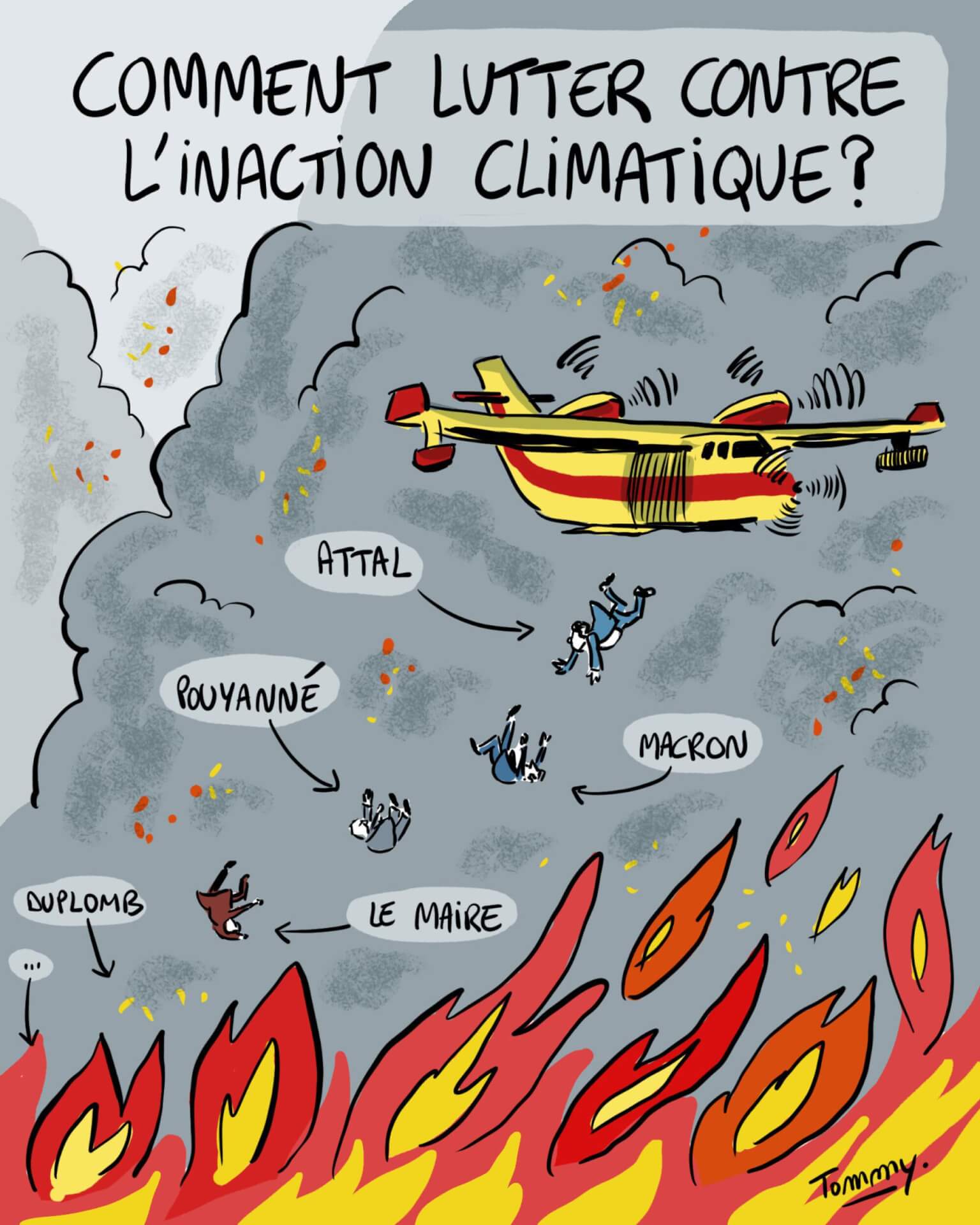
Par un mécanisme d’inversion du blâme, les politiques environnementales et les écologistes sont accusé·es d’entraver la prévention des risques et d’accroître la vulnérabilité des populations.
Le DJ a connu un « torrent de harcèlement » après son tweet en réponse à l’hommage de Jordan Bardella à Kavinsky : « Merci de vous abstenir de cet hommage : la musique électronique vous déteste » […] il est devenu la cible de nombreux messages d’insultes et de menaces, dont il cite des exemples : « On s’en souviendra et tu seras le premier qu’on viendra chercher. »
À l’initiative de l’association Bio Consom’acteurs, près de 1000 personnes ont signé une lettre ouverte au président de la République, Emmanuel Macron, pour exiger un plan d’urgence, d’adaptation et d’atténuation face au réchauffement climatique.
À l’AfricaMuseum de Tervuren, en Belgique, des archives géologiques héritées du Congo belge attisent les convoitises de KoBold Metals, une start-up minière étasunienne dopée à l’IA et soutenue par des milliardaires de la tech.
Meta was paying out-and-out neo-Nazis to post on Facebook, an investigation from Australia’s ABC News found. These pages and individual creators posted content that appeared to be in clear violation of Facebook’s own hate speech policies. Nonetheless, they were able to earn money on their posts through the platform’s “Content Monetization” program — which is invitation-only.
« J’exige qu’elle soit “shut down” [qu’on peut ici traduire par “réduite au silence”] pour trahison envers la France », a écrit le milliardaire au sujet de Marine Tondelier, dans un message vu plus de 400 000 fois.
Longtemps restée dans l’ombre de son mari, Suzanne Césaire a pourtant, dans sa courte carrière littéraire, tracé les lignes d’une identité martiniquaise singulière, ancrée dans son rapport à la terre.
Une méduse de la taille d’un dé à coudre est capable de vivre éternellement, du moins en laboratoire.[…] Dans leur environnement naturel, en revanche, leur prétendue immortalité se heurte à une limite beaucoup plus terre à terre : les prédateurs peuvent tout simplement les dévorer.
Retrouvez les revues de web précédentes dans la catégorie Libre Veille du Framablog.
Les articles, commentaires et autres images qui composent ces « Khrys’presso » n’engagent que moi (Khrys).
 Accedi