Vista elenco

Ricevuto prima di ieri

Out of This World Discoveries: Space Station Research in 2025
5 Min Read

Out of This World Discoveries: Space Station Research in 2025

693K9731.NEF

As Earth completed its orbit around the Sun to close out 2025, the International Space Station circled our planet more than 5,800 times. Serving as humanity’s unique laboratory in space, the station has hosted thousands of experiments and technology demonstrations, advancing science in ways that cannot be replicated on Earth.

In 2025 alone, more than 750 experiments supported exploration missions, improved life on Earth, and opened commercial opportunities in low Earth orbit. The space station continues to drive innovation by enabling human exploration of the Moon and Mars, transforming medical research, deepening our understanding of the universe, and fostering a growing commercial economy.

Read through just a handful of 2025’s innovative research achievements from the orbiting laboratory.

25 Years of humans researching in orbit
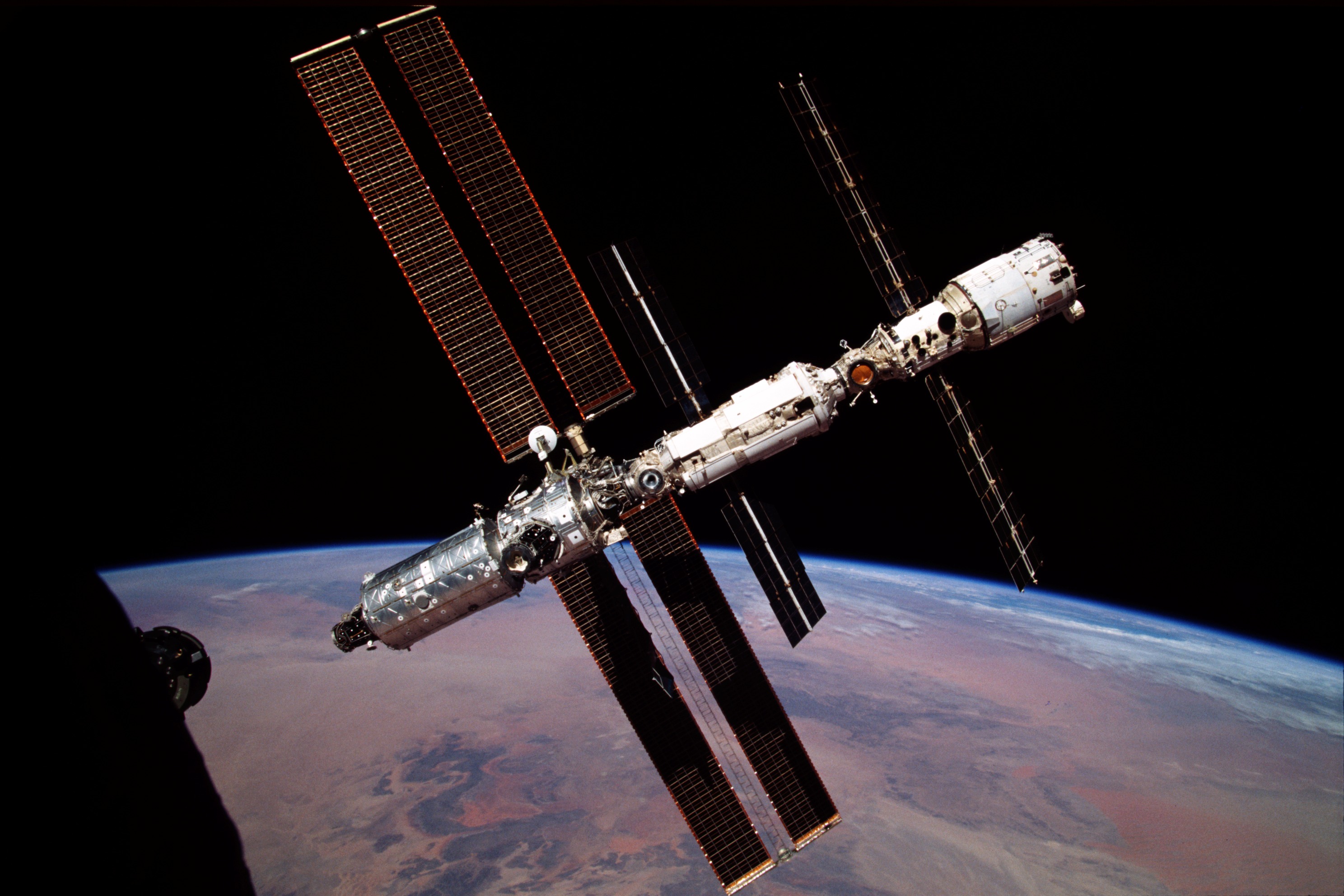
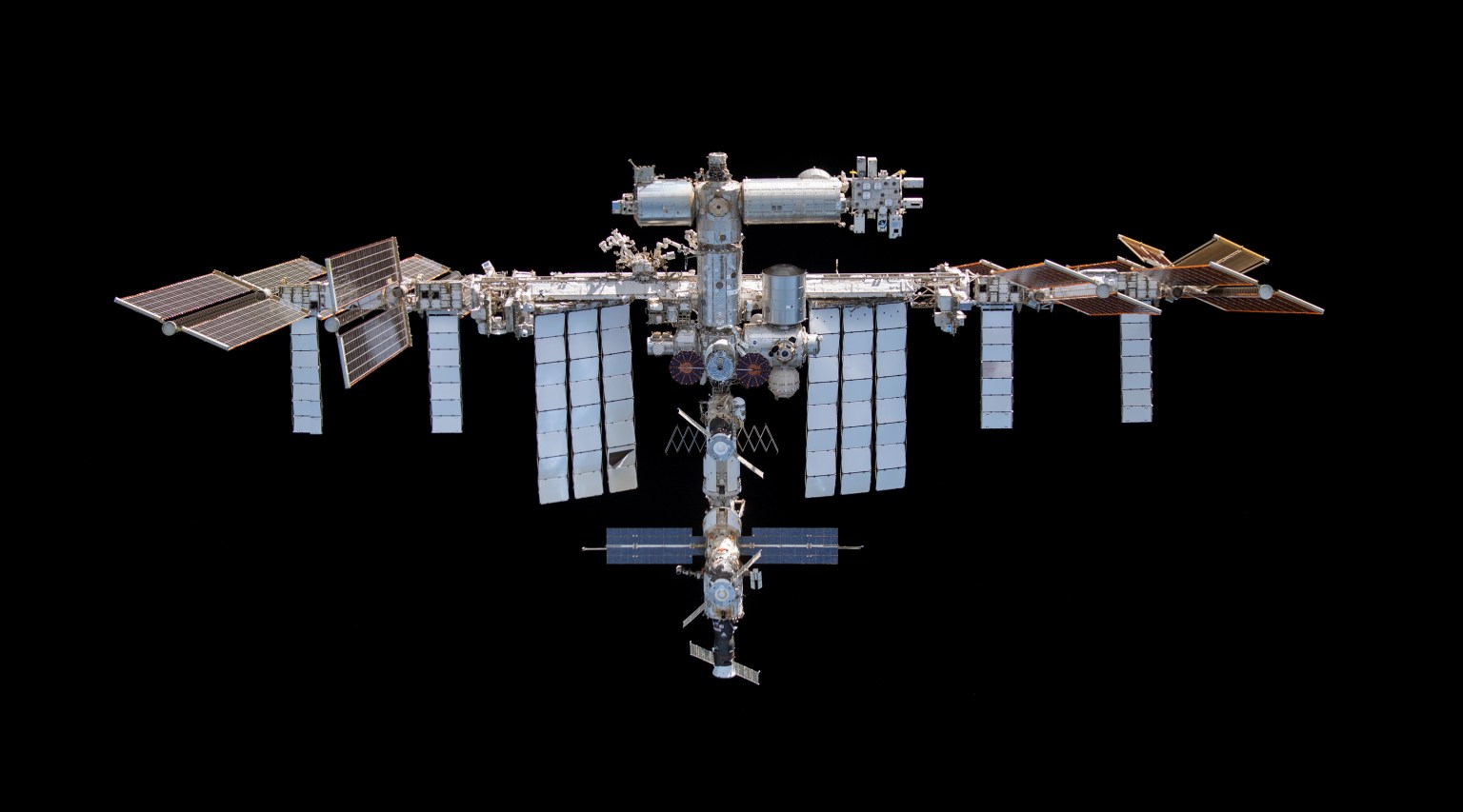
The International Space Station, backdropped against the darkness of space and Earth at its horizon, was photographed by the Expedition 1 crew in 2000, during a fly around aboard a Soyuz capsule.
The International Space Station photographed in 2000 by the Expedition 1 crew.
NASA

On Nov. 2, 2025, humanity reached a milestone of cosmic proportions: 25 years of continuous human presence aboard the International Space Station. Since the first crew arrived on Nov. 2, 2000, NASA and its partners from around the world have conducted more than 4,000 research investigations and technology demonstrations. More than 290 people from 26 countries have visited the space station, where continuous human presence enables research that surpasses the capabilities of satellites and autonomous platforms. The space station’s unique microgravity environment, paired with crew operations, continues to unlock discoveries and push the boundaries of humanity’s curiosity and innovation.

A breakthrough cancer treatment
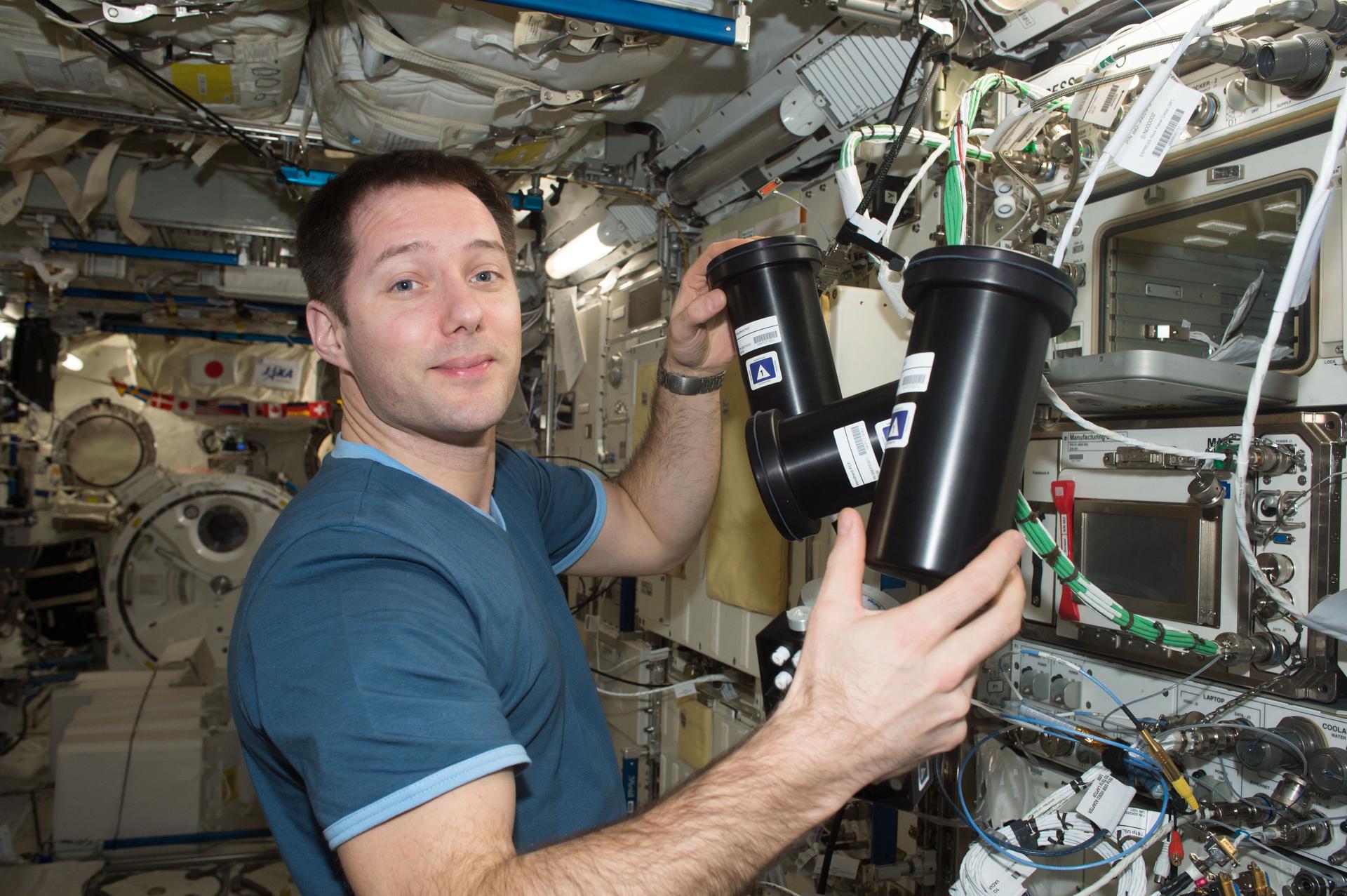
European Space Agency astronaut Thomas Pesquet works inside the International Space Station, holding two black cylindrical experiment containers as part of the Protein Crystal Growth-5 study. Behind him, computer displays are mounted to the station’s wall, along with many other instruments, cables, and silver knobs.
ESA (European Space Agency) astronaut Thomas Pesquet conducts research aboard the International Space Station supporting the advancement of cancer therapeutics.
NASA

Research aboard the International Space Station helped inform the development of a newly FDA-approved injectable medication used to treat several types of early-stage cancers. The research yielded early insights into the structure and size of particles needed to develop the medication through protein crystal growth experiments. This new delivery method promises to lower costs and significantly reduce treatment time for patients and healthcare providers, while maintaining drug efficiency. Microgravity research can produce higher-quality, medically relevant crystals than Earth-based labs, enabling these types of medical advances. These developments showcase how space station research can drive innovation, improve lives, and foster commercial opportunities.

Medical implants printed in orbit
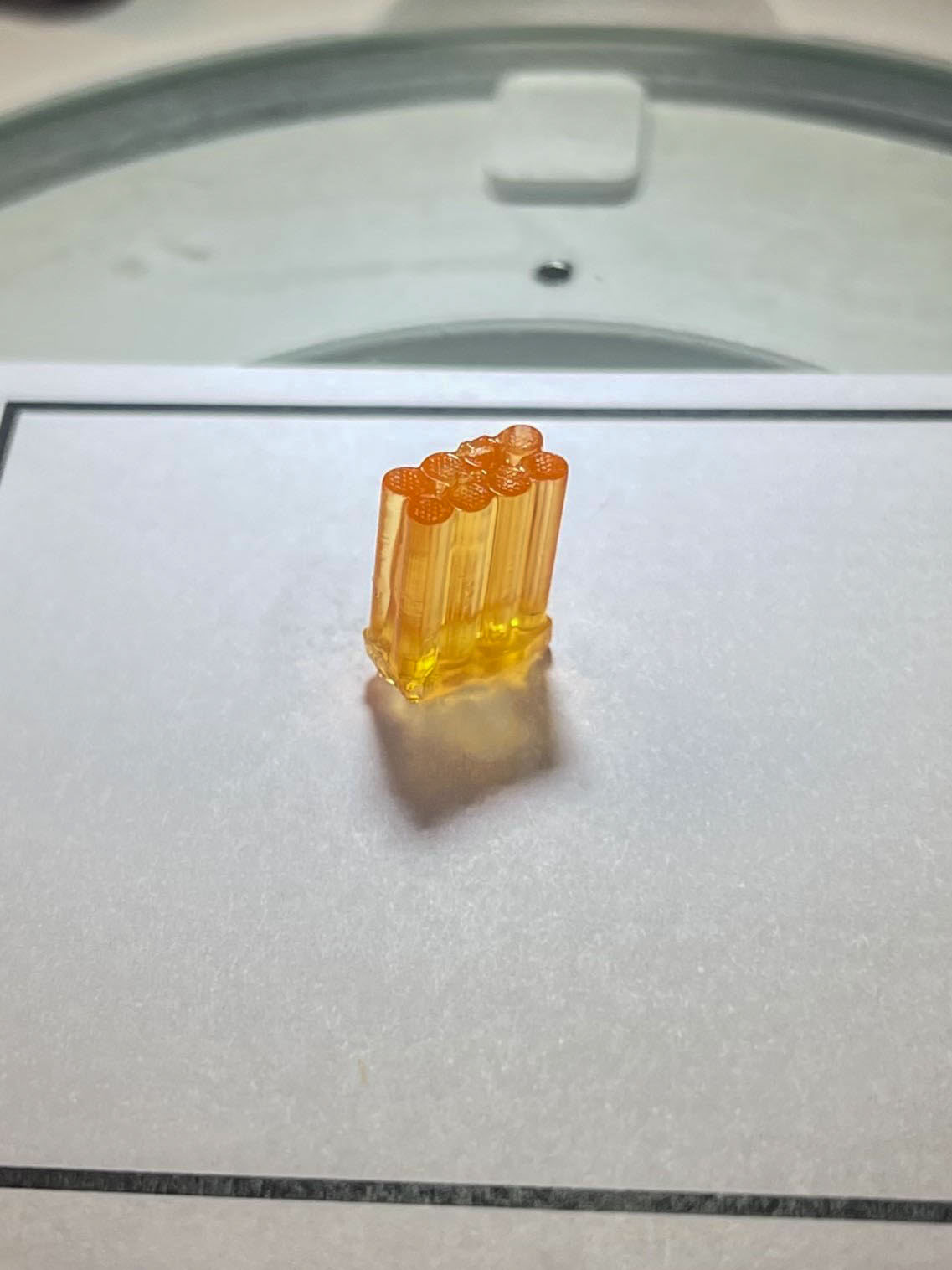
A rectangular, eight-pronged crystalline-yellow object is displayed on a metallic surface.
Eight medical devices for peripheral nerve repair were printed simultaneously aboard the International Space Station. Credit: Auxilium Biotechnologies.

Eight medical implants designed to support nerve regeneration were successfully 3D printed aboard the International Space Station for preclinical trials on Earth. When nerve damage occurs, these types of implants are designed to improve blood flow and enable targeted drug delivery. Printing in microgravity can prevent particle settling, resulting in more uniform and stable structures. In-space manufacturing is helping to advance medical treatments and other technologies while also enabling astronauts to print devices and tools on demand during future missions.

Learn more about InSPA-Auxilium Bioprinter.

A new understanding of our Sun
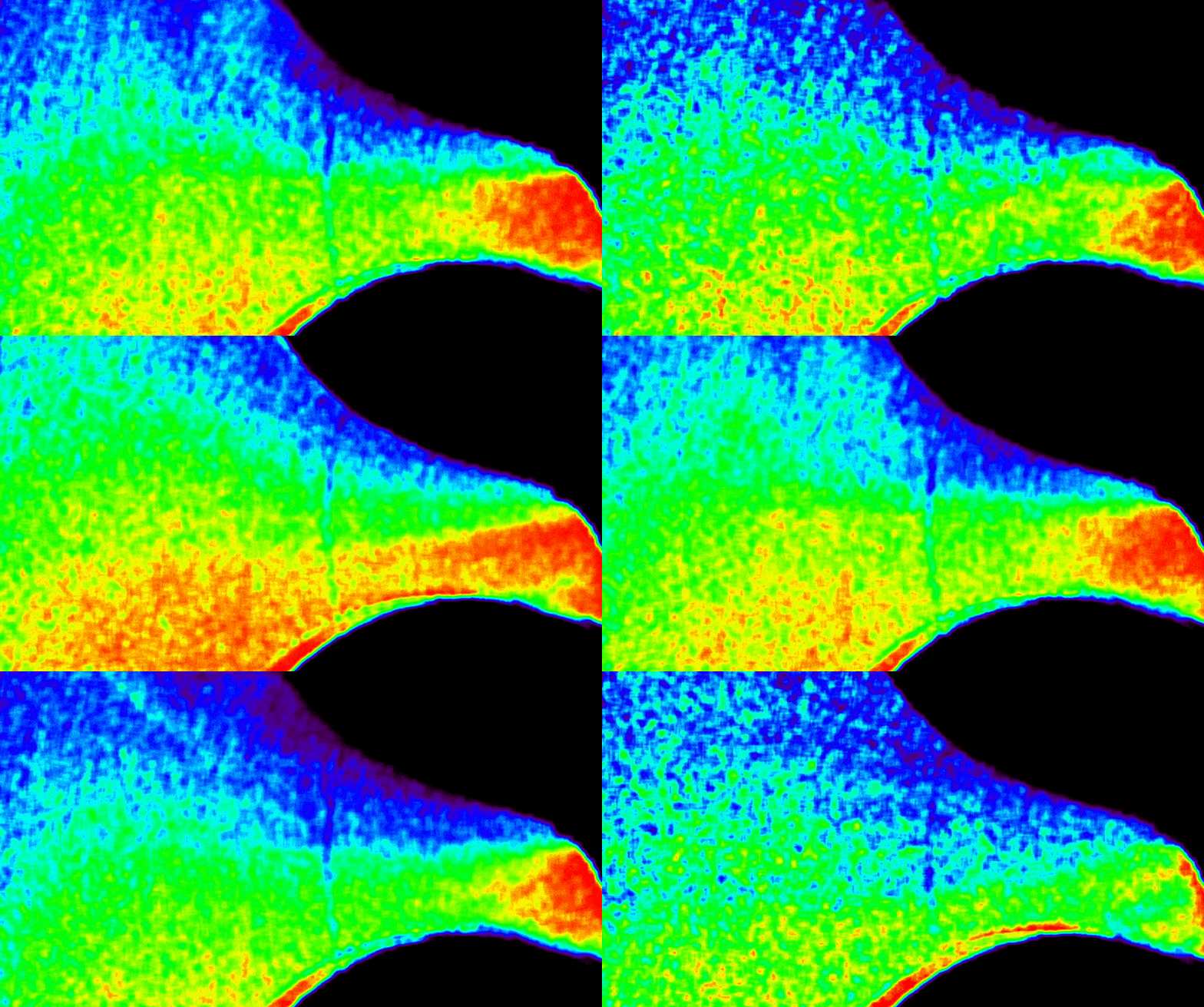
A color-coded heat map of the Sun's outer atmosphere showing a large, fan-like plume. Colors transitions from cool purple and blue on the left to greens in the middle to yellow and bright red on the right, indicating temperature changes over several days.
Using data from NASA’s CODEX (Coronal Diagnostic Experiment), this animated, color-coded heat map shows temperature changes of the Sun over the course of couple days, where red indicates hotter regions and purple indicates cooler ones.
NASA/KASI/INAF/CODEX
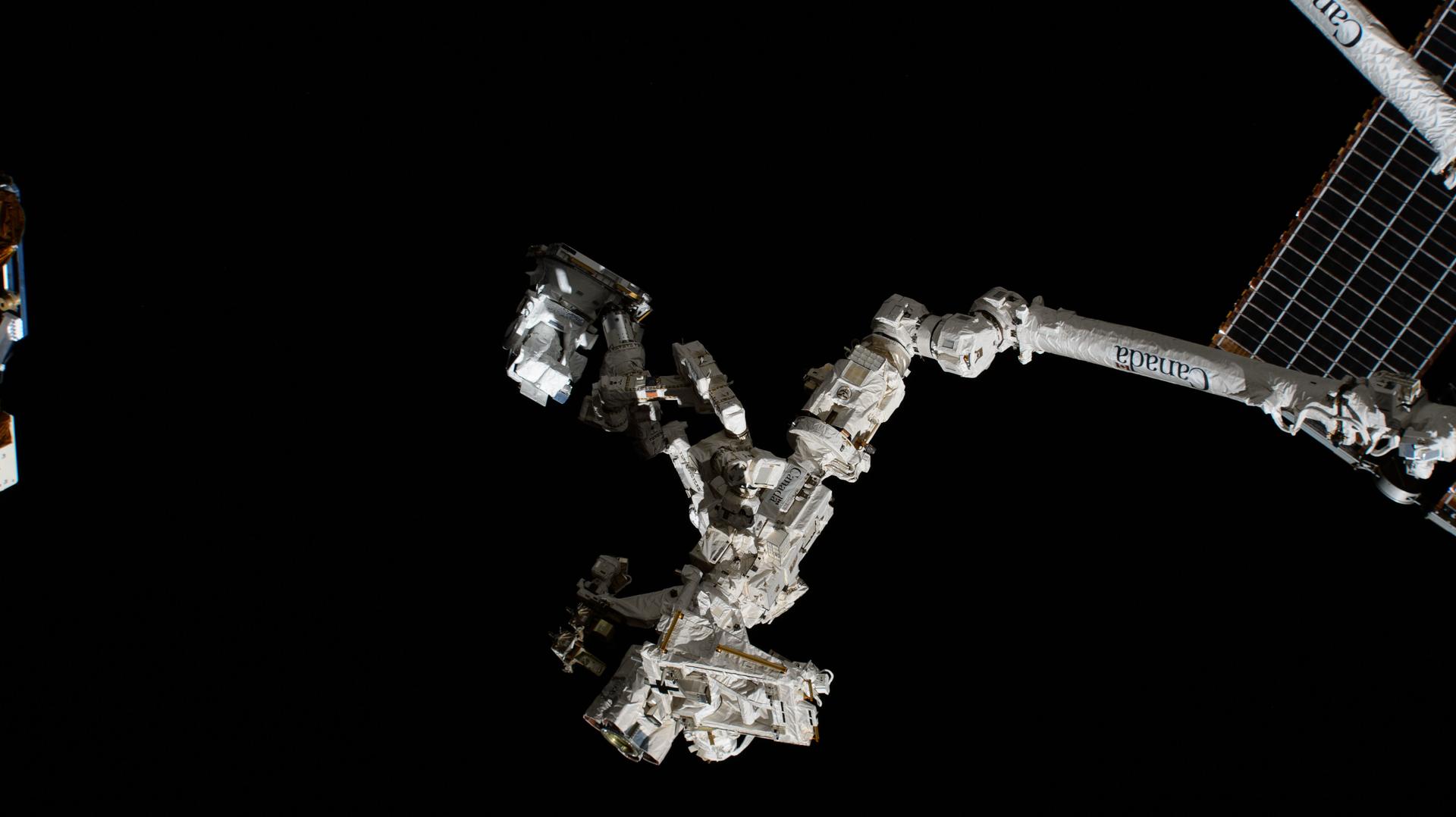
The robotic hand, better known as Dextre, attached to the white tube-like Canadarm2 robotic arm, carries the CODEX experiment after extracting the research hardware from the trunk of the SpaceX Dragon cargo spacecraft. The space station hardware’s white color contrasts against the black background of space.
Dextre, attached to the International Space Station’s Canadarm2 robotic arm, carries CODEX.
NASA

A solar coronagraph aboard the International Space Station captured its first unique images detailing the Sun’s outer atmosphere while measuring  solar wind temperature and speed. The instrument blocks the Sun’s bright light to reveal its faint outer atmosphere, or corona, where solar wind originates. Earlier experiments focused on the corona’s density, but this new device enables the study of what heats and accelerates the solar wind, offering a more complete picture of how energy moves through the Sun’s atmosphere. These observations help researchers understand how solar activity affects Earth and space-based technology, such as satellites, communications networks, and power systems.

Learn more about CODEX.

Hunting for microscopic space travelers

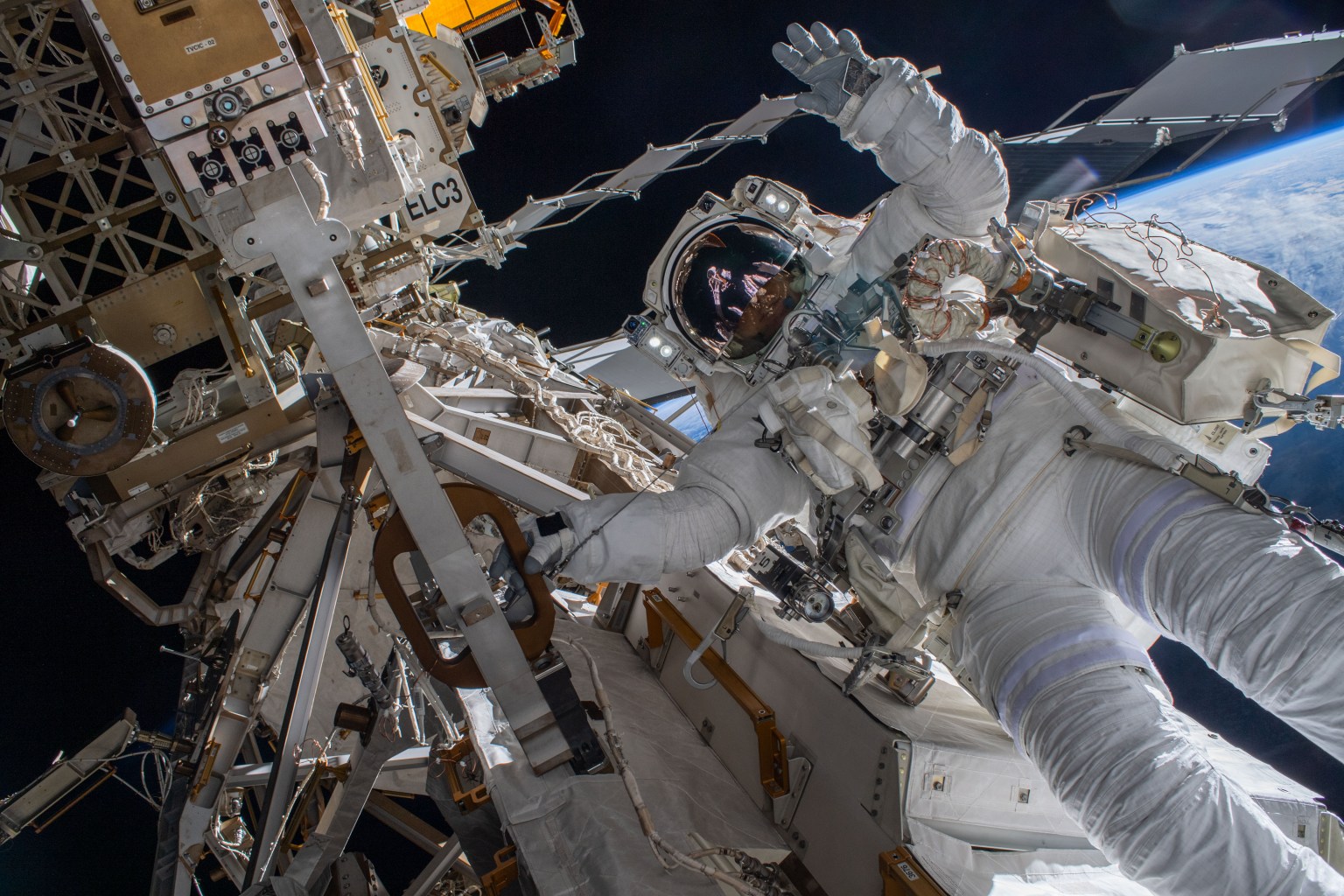
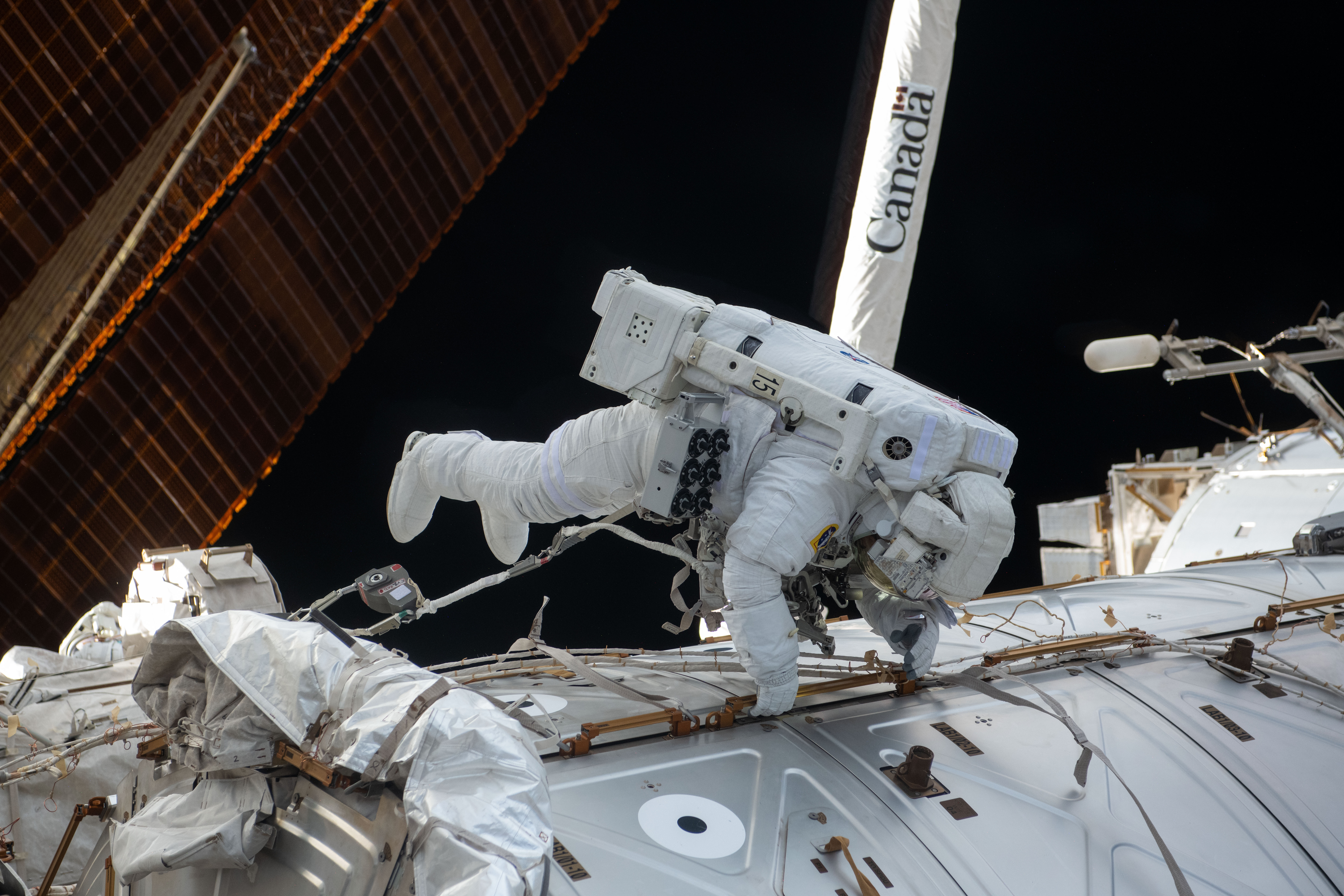
NASA astronaut Butch Wilmore wears a white spacesuit while performing a spacewalk outside the International Space Station. Wilmore is positioned horizontally against the station’s exterior. In the background, the black of space contrasts with the station’s copper-colored solar arrays and the white robotic Canadarm, which has "Canada" printed vertically in black letters.
NASA astronaut Butch Wilmore works outside the International Space Station on Jan. 30, 2025, during a five-hour and 26-minute spacewalk.
NASA

NASA astronaut Butch Wilmore collected microbiological samples during a spacewalk outside the International Space Station. Samples were taken near the life support system vents to see if the orbital complex releases microorganisms. This experiment helps researchers examine if and how these microorganisms survive and reproduce in the harsh space environment, as well as how they may behave at destinations such as the Moon and Mars. After returning to Earth, the samples underwent DNA extraction and sequencing. Another round of collections is planned for future spacewalks. The data could help determine whether changes are needed on crewed spacecraft and spacesuits to reduce biocontamination during missions to explore destinations where life may exist now or in the past.

Learn more about ISS External Microorganisms.

A fully docked space station

A shot from the International Space Station showing a long, white robotic arm maneuvering the cylindrical silver Cygnus XL cargo spacecraft. Earth’s blue oceans and white clouds are visible in the background. In the foreground, the HTVX-1 vehicle docked to the space station, covered in reflective gold foil with its silver solar panels visible.
Northrop Grumman’s Cygnus XL spacecraft is grappled by the International Space Station’s Canadarm2. In the background, JAXA’s (Japan Aerospace Exploration Agency) HTV-X1 cargo craft is docked to the orbital complex.
NASA
An artistic concept of the International Space Station, displaying its large gold solar arrays and eight different spacecraft attached to it, including the SpaceX Dragon cargo craft, the SpaceX Crew-11 Dragon spacecraft, JAXA’s HTV-X1 cargo craft, Northrop Grumman’s Cygnus XL cargo craft, the Soyuz MS-27 and MS-28 crew spacecraft, and the Progress 92 and 93 resupply ships.
The International Space Station visiting spacecraft configuration on Dec.1, 2025 showing eight spacecraft parked at the orbital complex.
NASA

For the first time in International Space Station history, all eight docking ports of the orbiting laboratory were occupied at once. Three crew spacecraft and five cargo resupply craft were attached to station, including JAXA’s new cargo vehicle HTV-X1 and Northrup Grumman’s new Cygnus XL. The eight spacecraft delivered astronauts, cargo, and scientific experiments from around the world to be conducted in the unique microgravity environment. This milestone highlights the space station’s evolution, inviting commercial partners and international collaboration to continue expanding the orbiting laboratory’s research capabilities.

Space station research meets the Moon’s surface

A split-screen image showing two different space missions. On the left, a silver box-shaped instrument with a grid of circular sensors, is attached to the International Space Station, with bright orange solar arrays in the background. On the right, an artist’s concept of a gold-foil-wrapped lunar lander with four thin legs stands on the grey, cratered Moon’s surface under a black, star-filled sky. The lander features a black stylized bird logo on its side.
NICER (Neutron Star Interior Composition Explorer) is shown mounted to the International Space Station in the image on the left, and LEXI (right) is shown attached to the top of Firefly Aerospace’s Blue Ghost in an artist’s concept.
NASA/Firefly Aerospace

Three experiments that landed on the Moon during Firefly Aerospace’s Blue Ghost Mission-1 were enabled by earlier research aboard the International Space Station. These studies help improve space weather monitoring, test computer recovery from radiation damage, and advance lunar navigation systems. The orbiting laboratory continues to lay the foundation for missions beyond low Earth orbit, driving exploration deeper into space. 

Learn more.  

The space station continues to deliver out-of-this-world achievements that cannot be replicated on Earth. Its research capabilities are a springboard for humanity’s future in innovation and testing the limits of what’s possible.

Here’s to 2026 — another year of defying physics and pushing the boundaries of science and exploration.

Out of This World Discoveries: Space Station Research in 2025

16 Gennaio 2026 ore 16:00
5 Min Read

Out of This World Discoveries: Space Station Research in 2025

693K9731.NEF

As Earth completed its orbit around the Sun to close out 2025, the International Space Station circled our planet more than 5,800 times. Serving as humanity’s unique laboratory in space, the station has hosted thousands of experiments and technology demonstrations, advancing science in ways that cannot be replicated on Earth.

In 2025 alone, more than 750 experiments supported exploration missions, improved life on Earth, and opened commercial opportunities in low Earth orbit. The space station continues to drive innovation by enabling human exploration of the Moon and Mars, transforming medical research, deepening our understanding of the universe, and fostering a growing commercial economy.

Read through just a handful of 2025’s innovative research achievements from the orbiting laboratory.

25 Years of humans researching in orbit

The International Space Station, backdropped against the darkness of space and Earth at its horizon, was photographed by the Expedition 1 crew in 2000, during a fly around aboard a Soyuz capsule.
The International Space Station photographed in 2000 by the Expedition 1 crew.
NASA

On Nov. 2, 2025, humanity reached a milestone of cosmic proportions: 25 years of continuous human presence aboard the International Space Station. Since the first crew arrived on Nov. 2, 2000, NASA and its partners from around the world have conducted more than 4,000 research investigations and technology demonstrations. More than 290 people from 26 countries have visited the space station, where continuous human presence enables research that surpasses the capabilities of satellites and autonomous platforms. The space station’s unique microgravity environment, paired with crew operations, continues to unlock discoveries and push the boundaries of humanity’s curiosity and innovation.

A breakthrough cancer treatment

European Space Agency astronaut Thomas Pesquet works inside the International Space Station, holding two black cylindrical experiment containers as part of the Protein Crystal Growth-5 study. Behind him, computer displays are mounted to the station’s wall, along with many other instruments, cables, and silver knobs.
ESA (European Space Agency) astronaut Thomas Pesquet conducts research aboard the International Space Station supporting the advancement of cancer therapeutics.
NASA

Research aboard the International Space Station helped inform the development of a newly FDA-approved injectable medication used to treat several types of early-stage cancers. The research yielded early insights into the structure and size of particles needed to develop the medication through protein crystal growth experiments. This new delivery method promises to lower costs and significantly reduce treatment time for patients and healthcare providers, while maintaining drug efficiency. Microgravity research can produce higher-quality, medically relevant crystals than Earth-based labs, enabling these types of medical advances. These developments showcase how space station research can drive innovation, improve lives, and foster commercial opportunities.

Medical implants printed in orbit

A rectangular, eight-pronged crystalline-yellow object is displayed on a metallic surface.
Eight medical devices for peripheral nerve repair were printed simultaneously aboard the International Space Station. Credit: Auxilium Biotechnologies.

Eight medical implants designed to support nerve regeneration were successfully 3D printed aboard the International Space Station for preclinical trials on Earth. When nerve damage occurs, these types of implants are designed to improve blood flow and enable targeted drug delivery. Printing in microgravity can prevent particle settling, resulting in more uniform and stable structures. In-space manufacturing is helping to advance medical treatments and other technologies while also enabling astronauts to print devices and tools on demand during future missions.

Learn more about InSPA-Auxilium Bioprinter.

A new understanding of our Sun
A color-coded heat map of the Sun's outer atmosphere showing a large, fan-like plume. Colors transitions from cool purple and blue on the left to greens in the middle to yellow and bright red on the right, indicating temperature changes over several days.
Using data from NASA’s CODEX (Coronal Diagnostic Experiment), this animated, color-coded heat map shows temperature changes of the Sun over the course of couple days, where red indicates hotter regions and purple indicates cooler ones.
NASA/KASI/INAF/CODEX
The robotic hand, better known as Dextre, attached to the white tube-like Canadarm2 robotic arm, carries the CODEX experiment after extracting the research hardware from the trunk of the SpaceX Dragon cargo spacecraft. The space station hardware’s white color contrasts against the black background of space.
Dextre, attached to the International Space Station’s Canadarm2 robotic arm, carries CODEX.
NASA

A solar coronagraph aboard the International Space Station captured its first unique images detailing the Sun’s outer atmosphere while measuring  solar wind temperature and speed. The instrument blocks the Sun’s bright light to reveal its faint outer atmosphere, or corona, where solar wind originates. Earlier experiments focused on the corona’s density, but this new device enables the study of what heats and accelerates the solar wind, offering a more complete picture of how energy moves through the Sun’s atmosphere. These observations help researchers understand how solar activity affects Earth and space-based technology, such as satellites, communications networks, and power systems.

Learn more about CODEX.

Hunting for microscopic space travelers
NASA astronaut Butch Wilmore wears a white spacesuit while performing a spacewalk outside the International Space Station. Wilmore is positioned horizontally against the station’s exterior. In the background, the black of space contrasts with the station’s copper-colored solar arrays and the white robotic Canadarm, which has "Canada" printed vertically in black letters.
NASA astronaut Butch Wilmore works outside the International Space Station on Jan. 30, 2025, during a five-hour and 26-minute spacewalk.
NASA

NASA astronaut Butch Wilmore collected microbiological samples during a spacewalk outside the International Space Station. Samples were taken near the life support system vents to see if the orbital complex releases microorganisms. This experiment helps researchers examine if and how these microorganisms survive and reproduce in the harsh space environment, as well as how they may behave at destinations such as the Moon and Mars. After returning to Earth, the samples underwent DNA extraction and sequencing. Another round of collections is planned for future spacewalks. The data could help determine whether changes are needed on crewed spacecraft and spacesuits to reduce biocontamination during missions to explore destinations where life may exist now or in the past.

Learn more about ISS External Microorganisms.

A fully docked space station
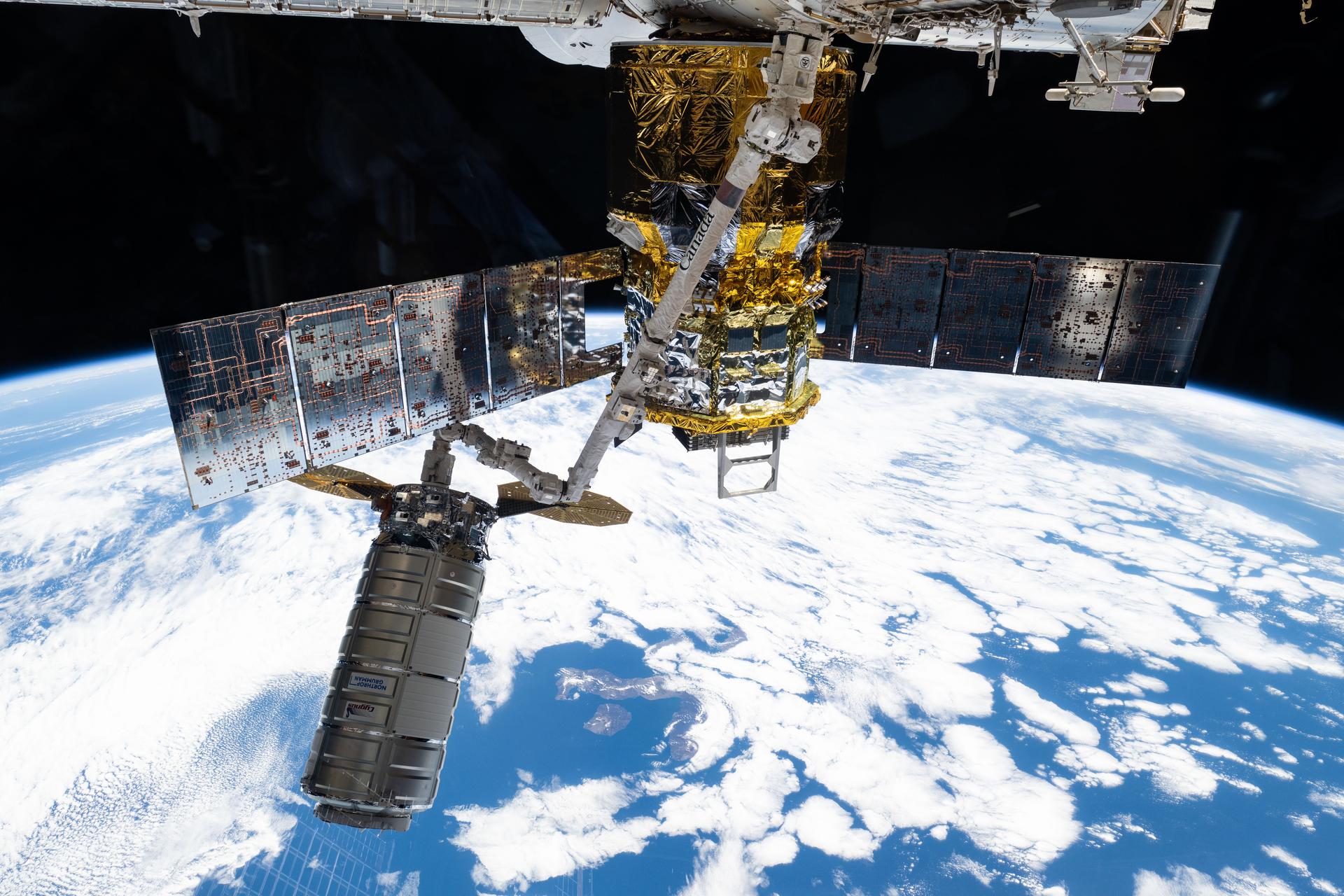
A shot from the International Space Station showing a long, white robotic arm maneuvering the cylindrical silver Cygnus XL cargo spacecraft. Earth’s blue oceans and white clouds are visible in the background. In the foreground, the HTVX-1 vehicle docked to the space station, covered in reflective gold foil with its silver solar panels visible.
Northrop Grumman’s Cygnus XL spacecraft is grappled by the International Space Station’s Canadarm2. In the background, JAXA’s (Japan Aerospace Exploration Agency) HTV-X1 cargo craft is docked to the orbital complex.
NASA
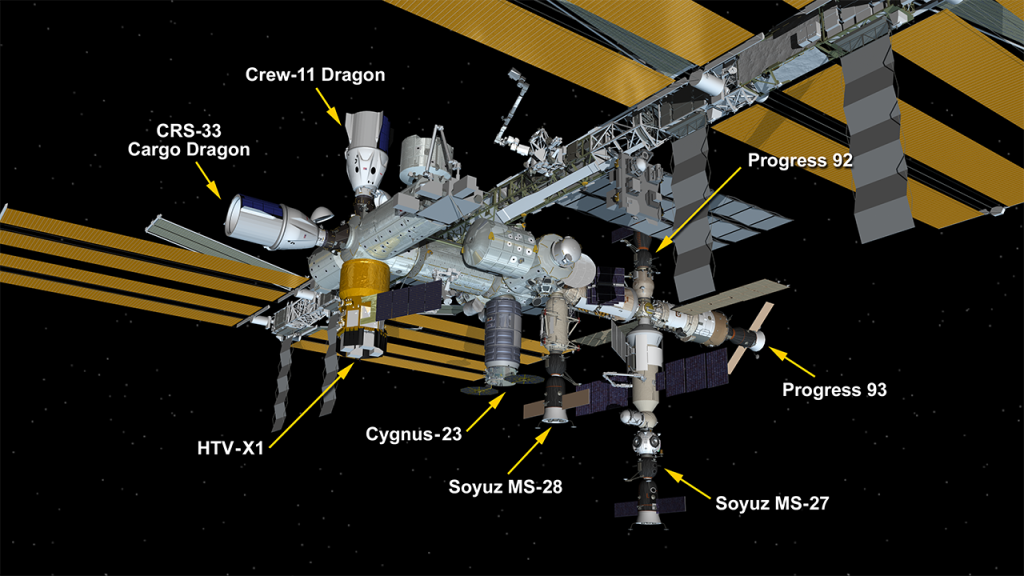
An artistic concept of the International Space Station, displaying its large gold solar arrays and eight different spacecraft attached to it, including the SpaceX Dragon cargo craft, the SpaceX Crew-11 Dragon spacecraft, JAXA’s HTV-X1 cargo craft, Northrop Grumman’s Cygnus XL cargo craft, the Soyuz MS-27 and MS-28 crew spacecraft, and the Progress 92 and 93 resupply ships.
The International Space Station visiting spacecraft configuration on Dec.1, 2025 showing eight spacecraft parked at the orbital complex.
NASA

For the first time in International Space Station history, all eight docking ports of the orbiting laboratory were occupied at once. Three crew spacecraft and five cargo resupply craft were attached to station, including JAXA’s new cargo vehicle HTV-X1 and Northrup Grumman’s new Cygnus XL. The eight spacecraft delivered astronauts, cargo, and scientific experiments from around the world to be conducted in the unique microgravity environment. This milestone highlights the space station’s evolution, inviting commercial partners and international collaboration to continue expanding the orbiting laboratory’s research capabilities.

Space station research meets the Moon’s surface

A split-screen image showing two different space missions. On the left, a silver box-shaped instrument with a grid of circular sensors, is attached to the International Space Station, with bright orange solar arrays in the background. On the right, an artist’s concept of a gold-foil-wrapped lunar lander with four thin legs stands on the grey, cratered Moon’s surface under a black, star-filled sky. The lander features a black stylized bird logo on its side.
NICER (Neutron Star Interior Composition Explorer) is shown mounted to the International Space Station in the image on the left, and LEXI (right) is shown attached to the top of Firefly Aerospace’s Blue Ghost in an artist’s concept.
NASA/Firefly Aerospace

Three experiments that landed on the Moon during Firefly Aerospace’s Blue Ghost Mission-1 were enabled by earlier research aboard the International Space Station. These studies help improve space weather monitoring, test computer recovery from radiation damage, and advance lunar navigation systems. The orbiting laboratory continues to lay the foundation for missions beyond low Earth orbit, driving exploration deeper into space. 

Learn more.  

The space station continues to deliver out-of-this-world achievements that cannot be replicated on Earth. Its research capabilities are a springboard for humanity’s future in innovation and testing the limits of what’s possible.

Here’s to 2026 — another year of defying physics and pushing the boundaries of science and exploration.

Out of This World Discoveries: Space Station Research in 2025

16 Gennaio 2026 ore 16:00
5 Min Read

Out of This World Discoveries: Space Station Research in 2025

693K9731.NEF

As Earth completed its orbit around the Sun to close out 2025, the International Space Station circled our planet more than 5,800 times. Serving as humanity’s unique laboratory in space, the station has hosted thousands of experiments and technology demonstrations, advancing science in ways that cannot be replicated on Earth.

In 2025 alone, more than 750 experiments supported exploration missions, improved life on Earth, and opened commercial opportunities in low Earth orbit. The space station continues to drive innovation by enabling human exploration of the Moon and Mars, transforming medical research, deepening our understanding of the universe, and fostering a growing commercial economy.

Read through just a handful of 2025’s innovative research achievements from the orbiting laboratory.

25 Years of humans researching in orbit

The International Space Station, backdropped against the darkness of space and Earth at its horizon, was photographed by the Expedition 1 crew in 2000, during a fly around aboard a Soyuz capsule.
The International Space Station photographed in 2000 by the Expedition 1 crew.
NASA

On Nov. 2, 2025, humanity reached a milestone of cosmic proportions: 25 years of continuous human presence aboard the International Space Station. Since the first crew arrived on Nov. 2, 2000, NASA and its partners from around the world have conducted more than 4,000 research investigations and technology demonstrations. More than 290 people from 26 countries have visited the space station, where continuous human presence enables research that surpasses the capabilities of satellites and autonomous platforms. The space station’s unique microgravity environment, paired with crew operations, continues to unlock discoveries and push the boundaries of humanity’s curiosity and innovation.

A breakthrough cancer treatment

European Space Agency astronaut Thomas Pesquet works inside the International Space Station, holding two black cylindrical experiment containers as part of the Protein Crystal Growth-5 study. Behind him, computer displays are mounted to the station’s wall, along with many other instruments, cables, and silver knobs.
ESA (European Space Agency) astronaut Thomas Pesquet conducts research aboard the International Space Station supporting the advancement of cancer therapeutics.
NASA

Research aboard the International Space Station helped inform the development of a newly FDA-approved injectable medication used to treat several types of early-stage cancers. The research yielded early insights into the structure and size of particles needed to develop the medication through protein crystal growth experiments. This new delivery method promises to lower costs and significantly reduce treatment time for patients and healthcare providers, while maintaining drug efficiency. Microgravity research can produce higher-quality, medically relevant crystals than Earth-based labs, enabling these types of medical advances. These developments showcase how space station research can drive innovation, improve lives, and foster commercial opportunities.

Medical implants printed in orbit

A rectangular, eight-pronged crystalline-yellow object is displayed on a metallic surface.
Eight medical devices for peripheral nerve repair were printed simultaneously aboard the International Space Station. Credit: Auxilium Biotechnologies.

Eight medical implants designed to support nerve regeneration were successfully 3D printed aboard the International Space Station for preclinical trials on Earth. When nerve damage occurs, these types of implants are designed to improve blood flow and enable targeted drug delivery. Printing in microgravity can prevent particle settling, resulting in more uniform and stable structures. In-space manufacturing is helping to advance medical treatments and other technologies while also enabling astronauts to print devices and tools on demand during future missions.

Learn more about InSPA-Auxilium Bioprinter.

A new understanding of our Sun

A color-coded heat map of the Sun's outer atmosphere showing a large, fan-like plume. Colors transitions from cool purple and blue on the left to greens in the middle to yellow and bright red on the right, indicating temperature changes over several days.
Using data from NASA’s CODEX (Coronal Diagnostic Experiment), this animated, color-coded heat map shows temperature changes of the Sun over the course of couple days, where red indicates hotter regions and purple indicates cooler ones.
NASA/KASI/INAF/CODEX
The robotic hand, better known as Dextre, attached to the white tube-like Canadarm2 robotic arm, carries the CODEX experiment after extracting the research hardware from the trunk of the SpaceX Dragon cargo spacecraft. The space station hardware’s white color contrasts against the black background of space.
Dextre, attached to the International Space Station’s Canadarm2 robotic arm, carries CODEX.
NASA

A solar coronagraph aboard the International Space Station captured its first unique images detailing the Sun’s outer atmosphere while measuring  solar wind temperature and speed. The instrument blocks the Sun’s bright light to reveal its faint outer atmosphere, or corona, where solar wind originates. Earlier experiments focused on the corona’s density, but this new device enables the study of what heats and accelerates the solar wind, offering a more complete picture of how energy moves through the Sun’s atmosphere. These observations help researchers understand how solar activity affects Earth and space-based technology, such as satellites, communications networks, and power systems.

Learn more about CODEX.

Hunting for microscopic space travelers

NASA astronaut Butch Wilmore wears a white spacesuit while performing a spacewalk outside the International Space Station. Wilmore is positioned horizontally against the station’s exterior. In the background, the black of space contrasts with the station’s copper-colored solar arrays and the white robotic Canadarm, which has "Canada" printed vertically in black letters.
NASA astronaut Butch Wilmore works outside the International Space Station on Jan. 30, 2025, during a five-hour and 26-minute spacewalk.
NASA

NASA astronaut Butch Wilmore collected microbiological samples during a spacewalk outside the International Space Station. Samples were taken near the life support system vents to see if the orbital complex releases microorganisms. This experiment helps researchers examine if and how these microorganisms survive and reproduce in the harsh space environment, as well as how they may behave at destinations such as the Moon and Mars. After returning to Earth, the samples underwent DNA extraction and sequencing. Another round of collections is planned for future spacewalks. The data could help determine whether changes are needed on crewed spacecraft and spacesuits to reduce biocontamination during missions to explore destinations where life may exist now or in the past.

Learn more about ISS External Microorganisms.

A fully docked space station
A shot from the International Space Station showing a long, white robotic arm maneuvering the cylindrical silver Cygnus XL cargo spacecraft. Earth’s blue oceans and white clouds are visible in the background. In the foreground, the HTVX-1 vehicle docked to the space station, covered in reflective gold foil with its silver solar panels visible.
Northrop Grumman’s Cygnus XL spacecraft is grappled by the International Space Station’s Canadarm2. In the background, JAXA’s (Japan Aerospace Exploration Agency) HTV-X1 cargo craft is docked to the orbital complex.
NASA
An artistic concept of the International Space Station, displaying its large gold solar arrays and eight different spacecraft attached to it, including the SpaceX Dragon cargo craft, the SpaceX Crew-11 Dragon spacecraft, JAXA’s HTV-X1 cargo craft, Northrop Grumman’s Cygnus XL cargo craft, the Soyuz MS-27 and MS-28 crew spacecraft, and the Progress 92 and 93 resupply ships.
The International Space Station visiting spacecraft configuration on Dec.1, 2025 showing eight spacecraft parked at the orbital complex.
NASA

For the first time in International Space Station history, all eight docking ports of the orbiting laboratory were occupied at once. Three crew spacecraft and five cargo resupply craft were attached to station, including JAXA’s new cargo vehicle HTV-X1 and Northrup Grumman’s new Cygnus XL. The eight spacecraft delivered astronauts, cargo, and scientific experiments from around the world to be conducted in the unique microgravity environment. This milestone highlights the space station’s evolution, inviting commercial partners and international collaboration to continue expanding the orbiting laboratory’s research capabilities.

Space station research meets the Moon’s surface

A split-screen image showing two different space missions. On the left, a silver box-shaped instrument with a grid of circular sensors, is attached to the International Space Station, with bright orange solar arrays in the background. On the right, an artist’s concept of a gold-foil-wrapped lunar lander with four thin legs stands on the grey, cratered Moon’s surface under a black, star-filled sky. The lander features a black stylized bird logo on its side.
NICER (Neutron Star Interior Composition Explorer) is shown mounted to the International Space Station in the image on the left, and LEXI (right) is shown attached to the top of Firefly Aerospace’s Blue Ghost in an artist’s concept.
NASA/Firefly Aerospace

Three experiments that landed on the Moon during Firefly Aerospace’s Blue Ghost Mission-1 were enabled by earlier research aboard the International Space Station. These studies help improve space weather monitoring, test computer recovery from radiation damage, and advance lunar navigation systems. The orbiting laboratory continues to lay the foundation for missions beyond low Earth orbit, driving exploration deeper into space. 

Learn more.  

The space station continues to deliver out-of-this-world achievements that cannot be replicated on Earth. Its research capabilities are a springboard for humanity’s future in innovation and testing the limits of what’s possible.

Here’s to 2026 — another year of defying physics and pushing the boundaries of science and exploration.
NASA’s SpaceX Crew-11 Wraps Up Space Station Science

4 Min Read

NASA’s SpaceX Crew-11 Wraps Up Space Station Science

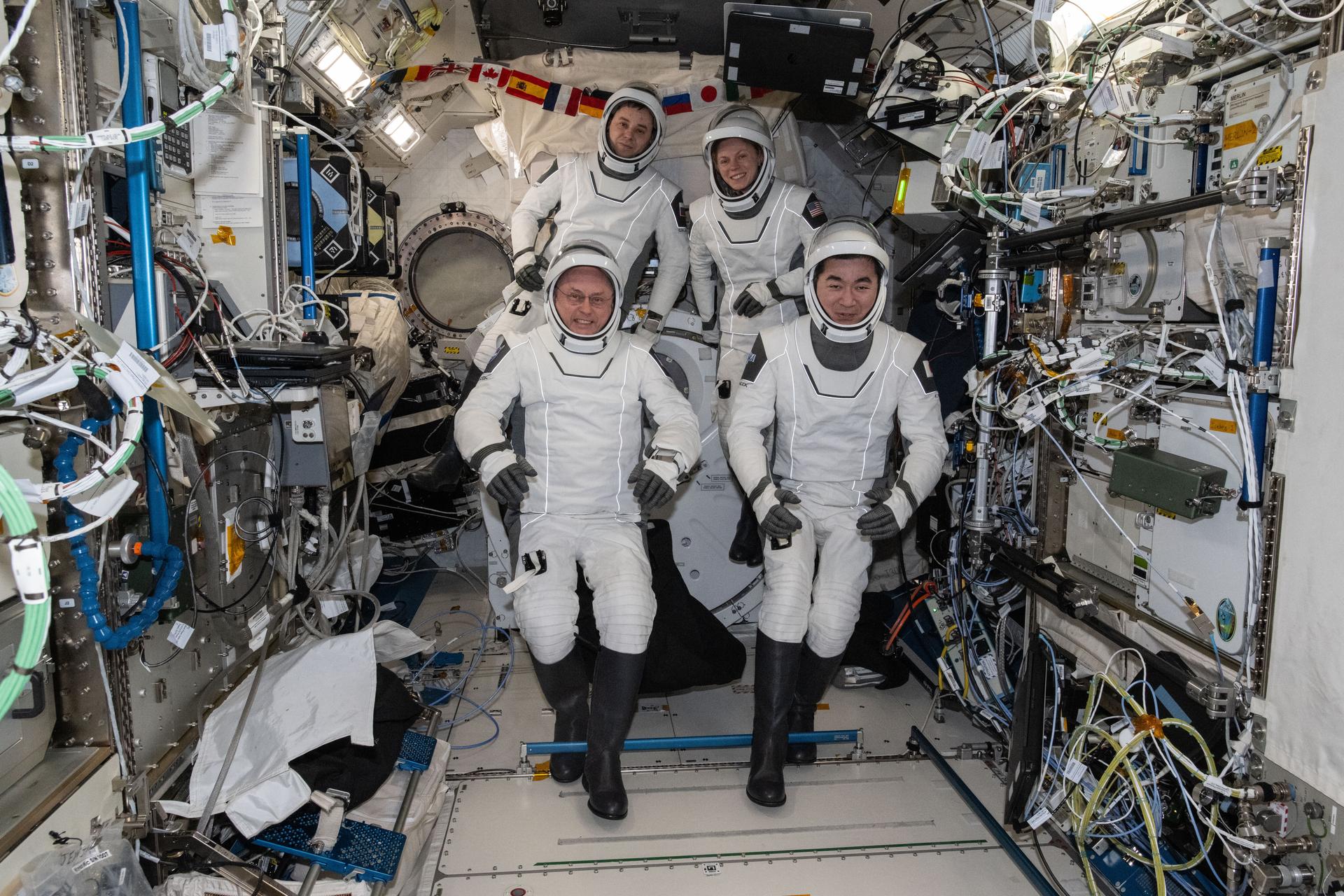
Four SpaceX Crew-11 members gather together for a crew portrait wearing their Dragon pressure suits during a suit verification check inside the International Space Station's Kibo laboratory module. Clockwise from bottom left are, NASA astronaut Mike Fincke, Roscosmos cosmonaut Oleg Platonov, NASA astronaut Zena Cardman, and JAXA (Japan Aerospace Exploration Agency) astronaut Kimiya Yui.

NASA’s SpaceX Crew-11 mission with agency astronauts Zena Cardman and Mike Fincke, JAXA (Japan Aerospace Exploration Agency) astronaut Kimiya Yui, and Roscosmos cosmonaut Oleg Platonov returned to Earth after a long-duration mission aboard the International Space Station.

During their stay, Cardman, Fincke, and Yui contributed more than 850 hours of research to help prepare humanity for the return to the Moon and future missions to Mars, while improving life back on Earth.

Here’s a glimpse into the science completed during the Crew-11 mission:

Bolstering bone resilience

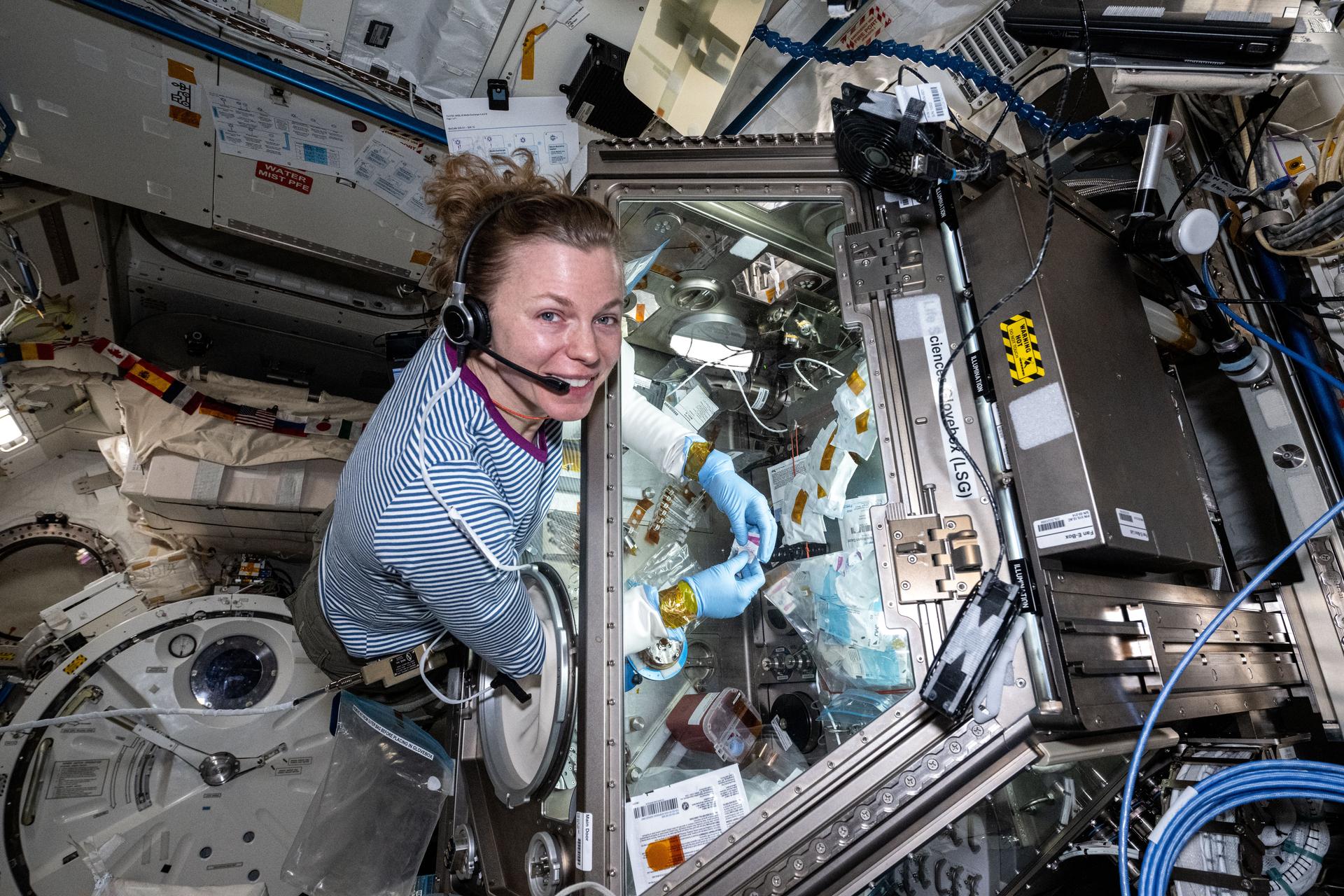
NASA astronaut Zena Cardman reaches into the clear, sealed Life Science Glovebox and holds a small packet. The inside of the rectangular workspace is illuminated by white light and is full of small containers and bags.

NASA astronaut Zena Cardman works with bone stem cells aboard the International Space Station to improve our understanding of how bone loss occurs during spaceflight. Studying bone cell activity in microgravity could help researchers learn how to control bone loss to protect astronauts’ bone density during future long-duration space missions and inform treatments for diseases like osteoporosis on Earth. 

Learn more about MABL-B.

Observing Earth and beyond

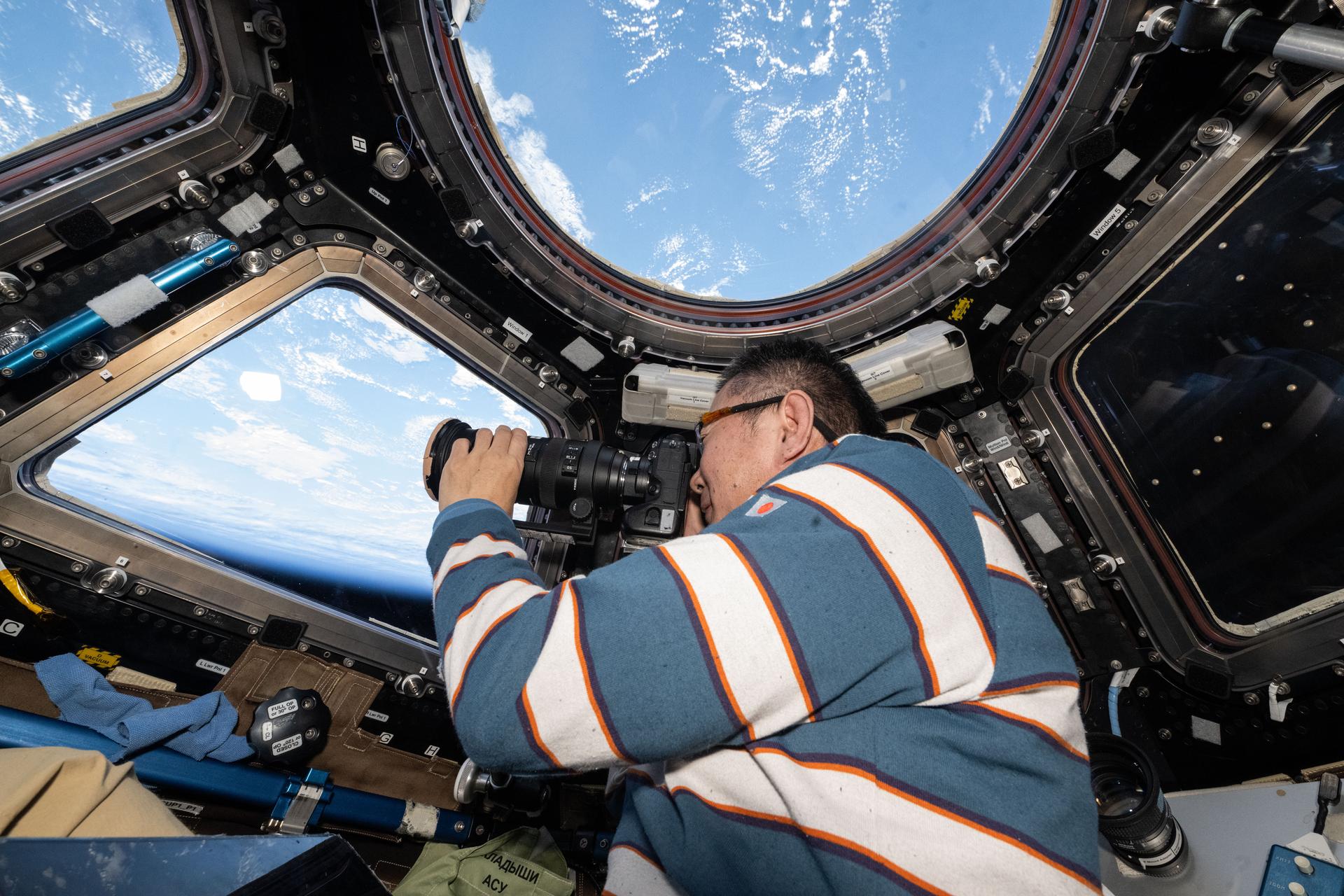
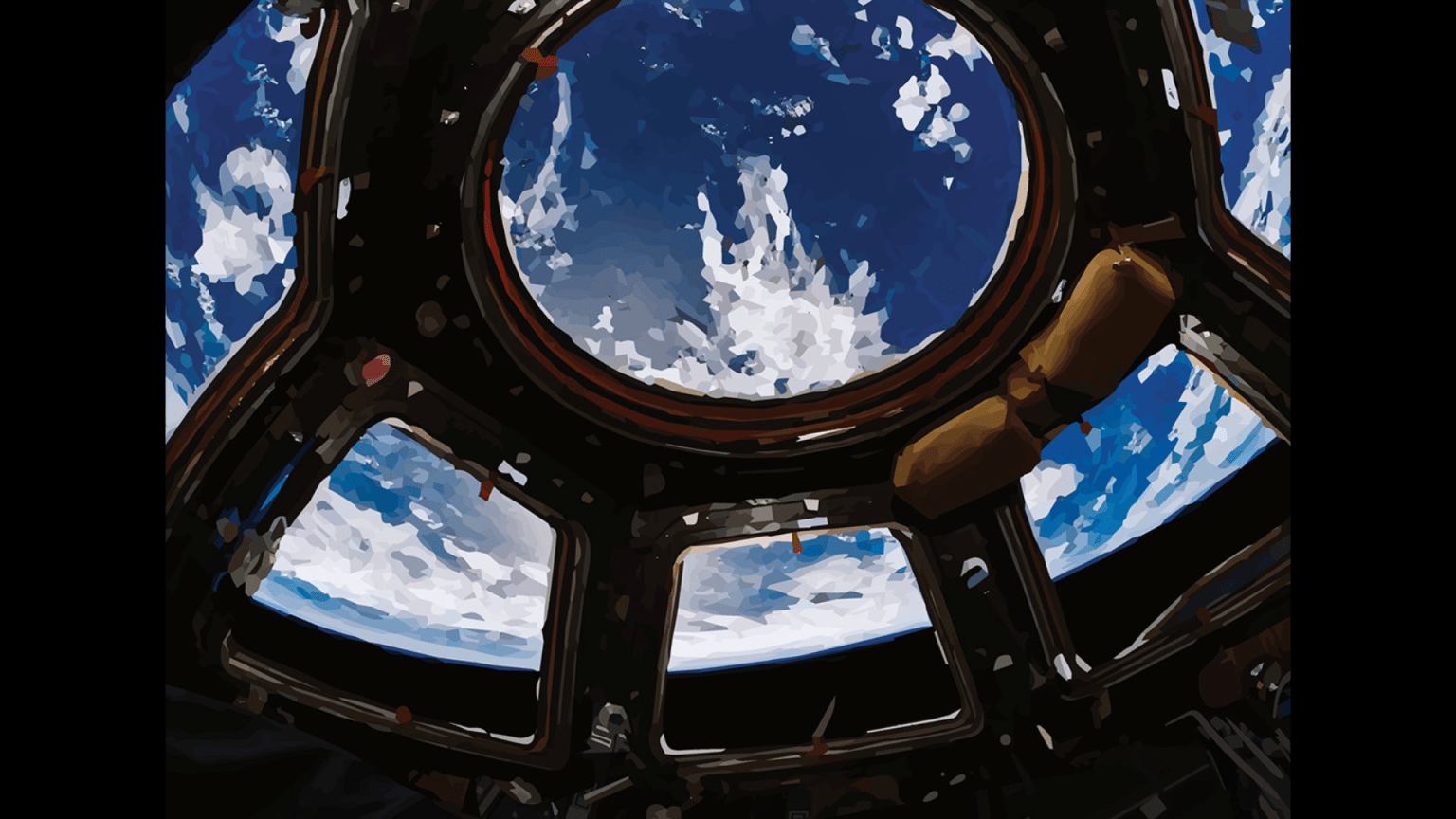
JAXA (Japan Aerospace Exploration Agency) astronaut Kimiya Yui, wearing a blue-and-white striped shirt, looksthrough a camera inside of the space station’s cupola. The blue Earth, speckled with clouds, can be seen through a circular window above and trapezoid-shaped windows in front of him.

JAXA (Japan Aerospace Exploration Agency) astronaut Kimiya Yui photographs the Earth from the International Space Station’s cupola. For more than 40 years, astronauts have used hand-held cameras to capture millions of images documenting Earth’s geographic features, weather patterns, urban growth, changes to its surface, and the impacts of natural disasters such as hurricanes and floods.

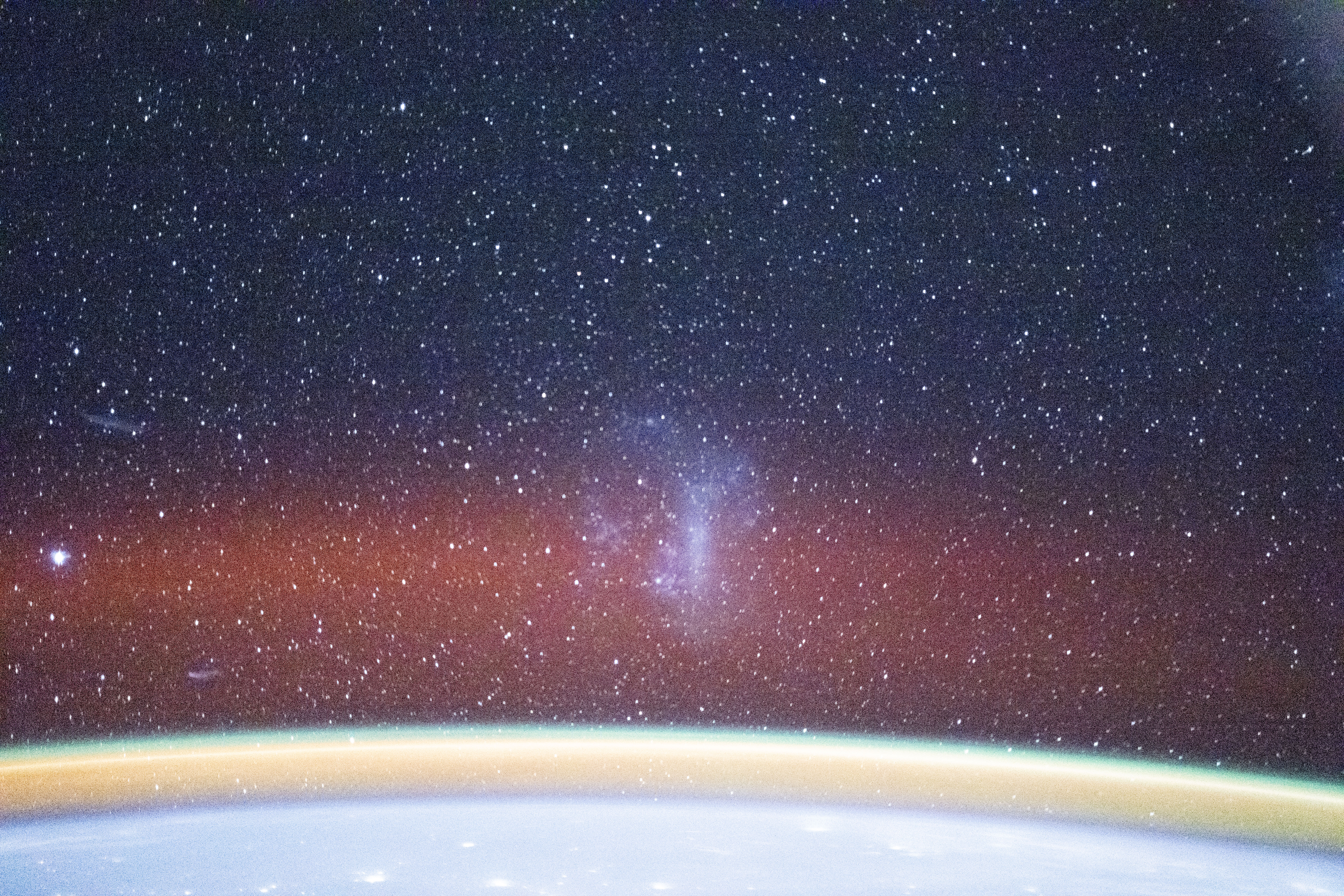
The blue curvature of the Earth’s atmosphere is visible with yellow, green, and red layers of airglow above it. In the center, just above Earth and peeking through the red haze, a blue collection of stars is visible.

Astronauts also use the cupola and other viewports aboard the space station to gaze into the cosmos without Earth’s atmospheric interference. Just as viewing Earth from 250 miles above provides a new perspective on our home planet, looking out into the stars from the orbiting laboratory offers a clearer view of our universe.

Space catch

NASA astronaut Mike Fincke floats in a cylindrical airlock. He wears blue latex gloves and gestures toward a silver box with a black, hexagonal shape in the center. He is surrounded by wires and various panels along the space station’s walls.

NASA astronaut Mike Fincke poses aboard the International Space Station with a new device designed to test an inflatable capture bag’s ability to open, close, and stay airtight in microgravity. This technology could be used to remove space debris from orbit, protecting future spacecraft and crew members. It also may enable trapping samples during exploration missions and support the capture and mining of small asteroids.

Learn more about Capture Bag Demo.

Tracking internal temperature

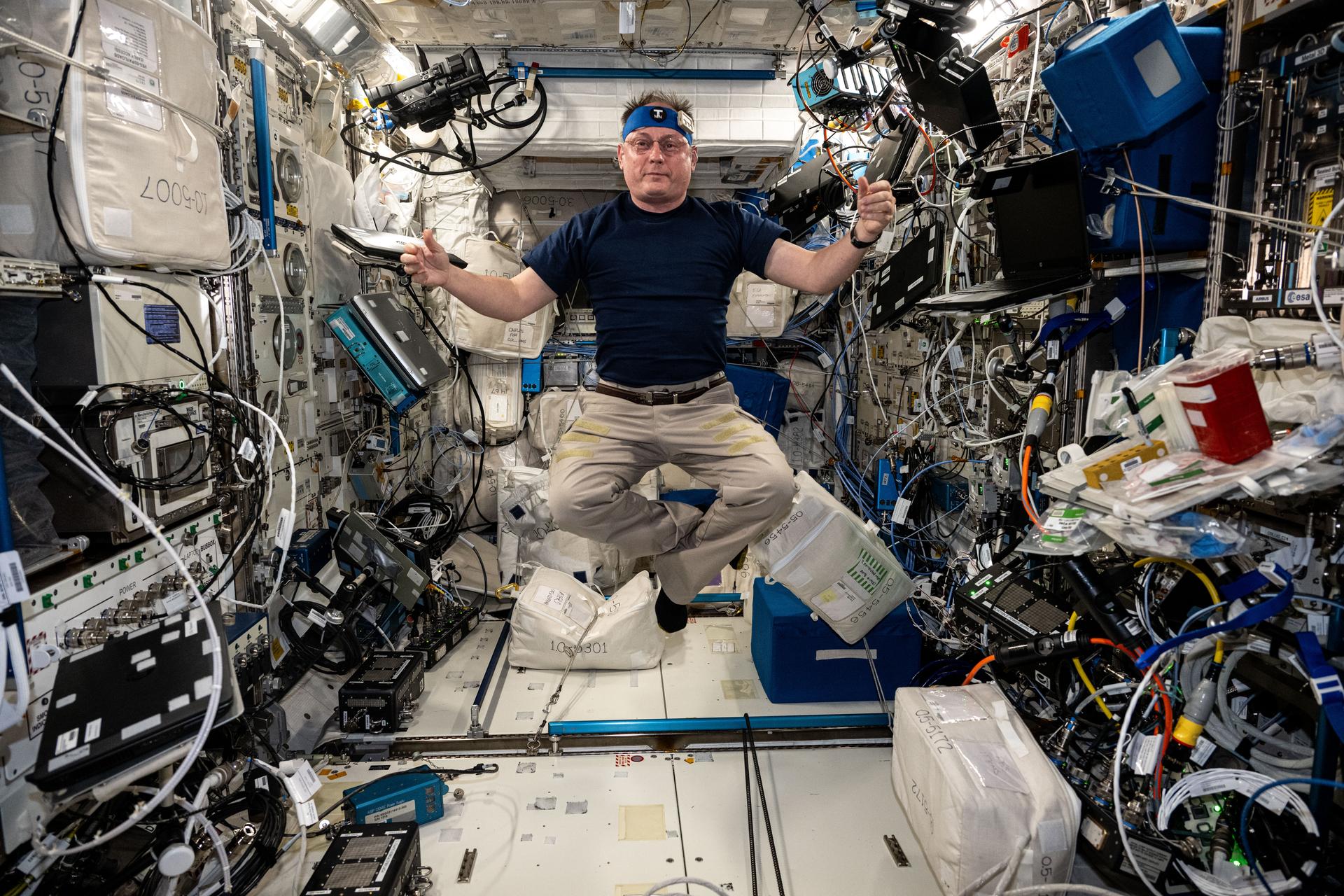
NASA astronaut Mike Fincke, wearing a black shirt and khaki pants, floats in the space station with his arms up and legs crossed. He wears the blue T-Mini headband. The surrounding walls of the space station are lined with equipment and wires.

NASA astronaut Mike Fincke wears a temperature-monitoring headband that tracks how the human body regulates its core temperature during spaceflight. Adjusting to living and working aboard the International Space Station can influence human temperature regulation. This headband provides an easy, non-invasive way to collect temperature data while astronauts conduct their daily activities. The sensor is also being tested on Earth and may help prevent hyperthermia in people working in high-temperature environments.

Learn more about T-Mini.

A new cargo vehicle

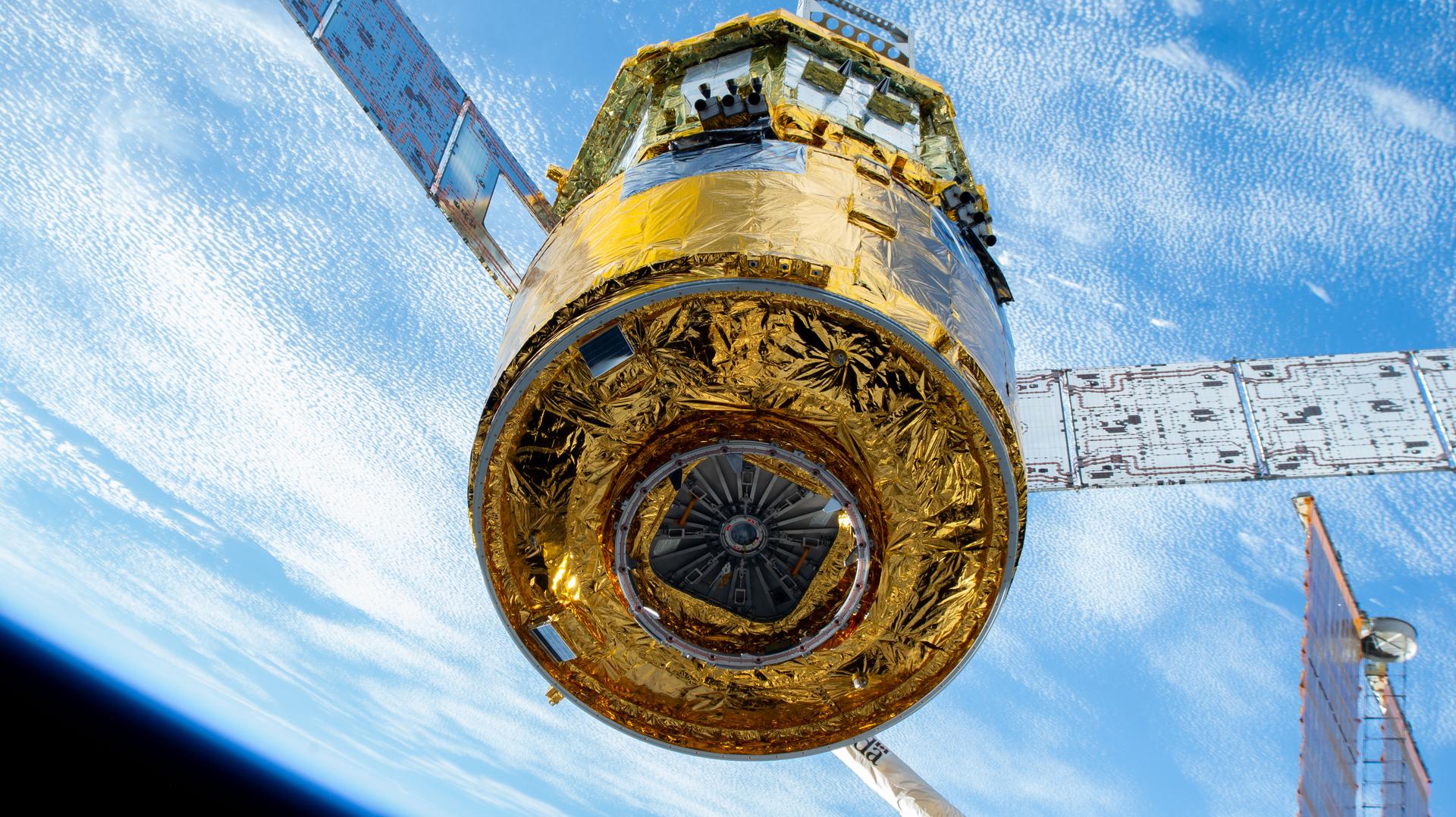
The cylinder-shaped HTV-X1 spacecraft is shown gripped by the Canadarm2. The surface of the vehicle is reflective gold, and a silver-colored solar array panel juts from either side. The Earth fills the background, with white streaky clouds covering much of the blue ocean.

JAXA’s (Japan Aerospace Exploration Agency) new cargo resupply spacecraft, HTV-X1, is shown after being captured by the International Space Station’s Canadarm2 robotic arm during the Crew-11 mission. The spacecraft launched from Tanegashima Space Center on Oct. 26, 2025, delivering approximately 12,800 pounds of science, supplies, and hardware to the orbital complex. New cargo spacecraft expand the station’s capability to support more research and receive critical supplies.

Making nutrients on demand

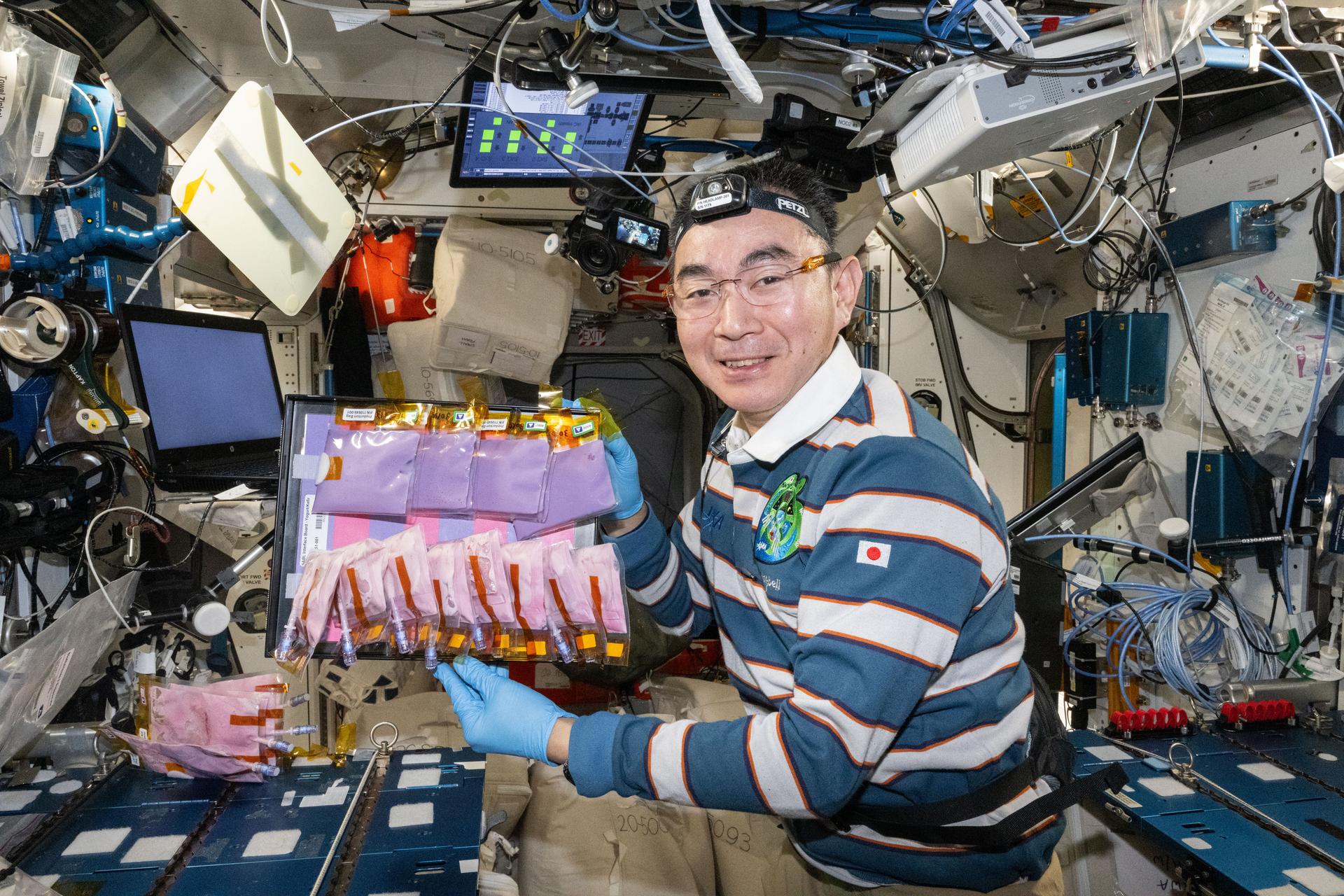
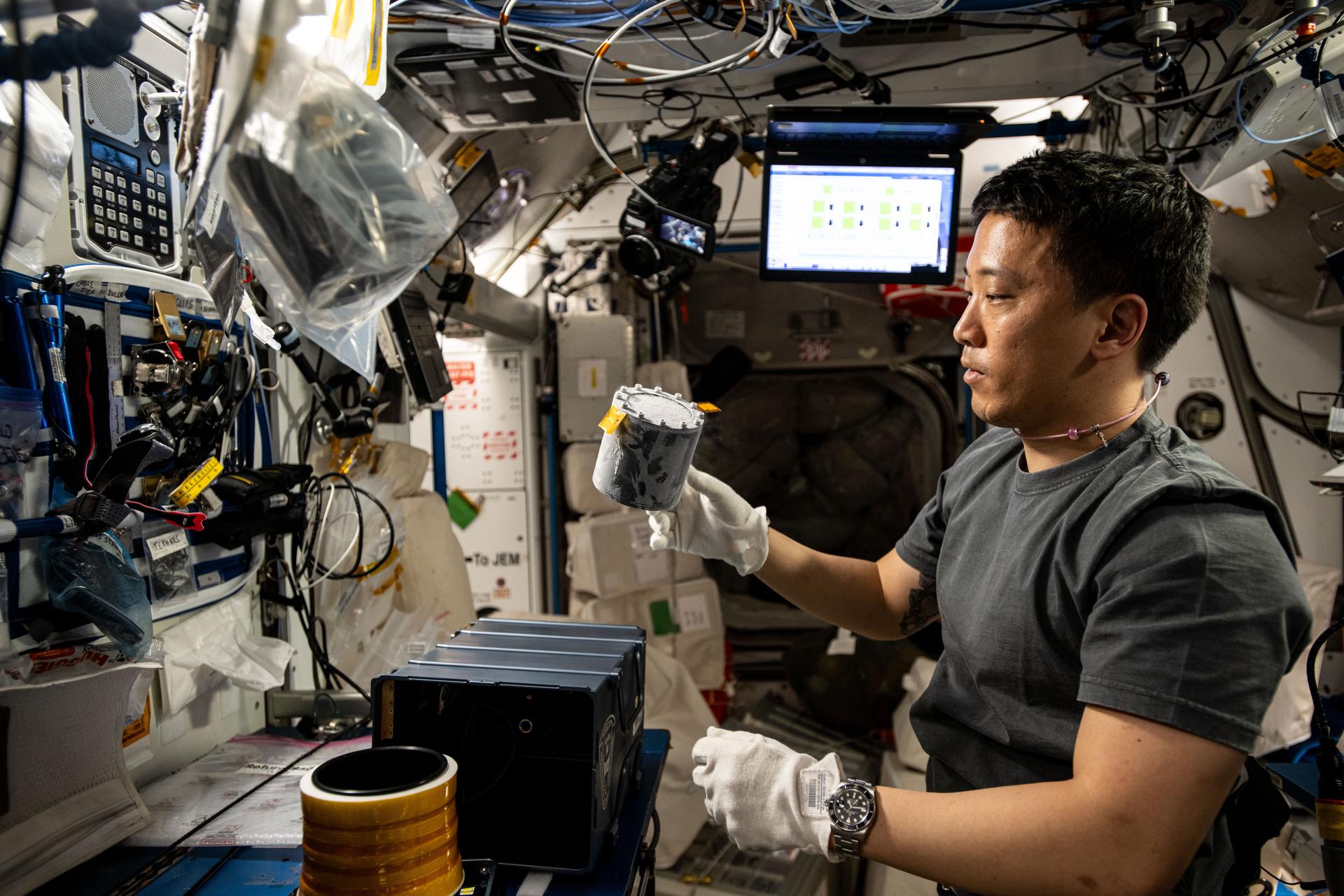
JAXA (Japan Aerospace Exploration Agency) astronaut Kimiya Yui, wearing a blue-and-white striped shirt, holds a tray with two rows of plastic bags. The top row has four bags filled with purple fluid, and the bottom row has eight bags filled with pale pink fluid.

JAXA (Japan Aerospace Exploration Agency) astronaut Kimiya Yui holds yogurt bags produced aboard the International Space Station that could provide important nutrients during missions far from Earth. Certain nutrients degrade when stored for long periods of time, and deficiency in even one can lead to illness. Researchers are building on previous experiments to develop a method for producing on-demand vitamins and nutrients in space using microorganisms.

Learn more about BioNutrients-3.

Celebrating a historic milestone

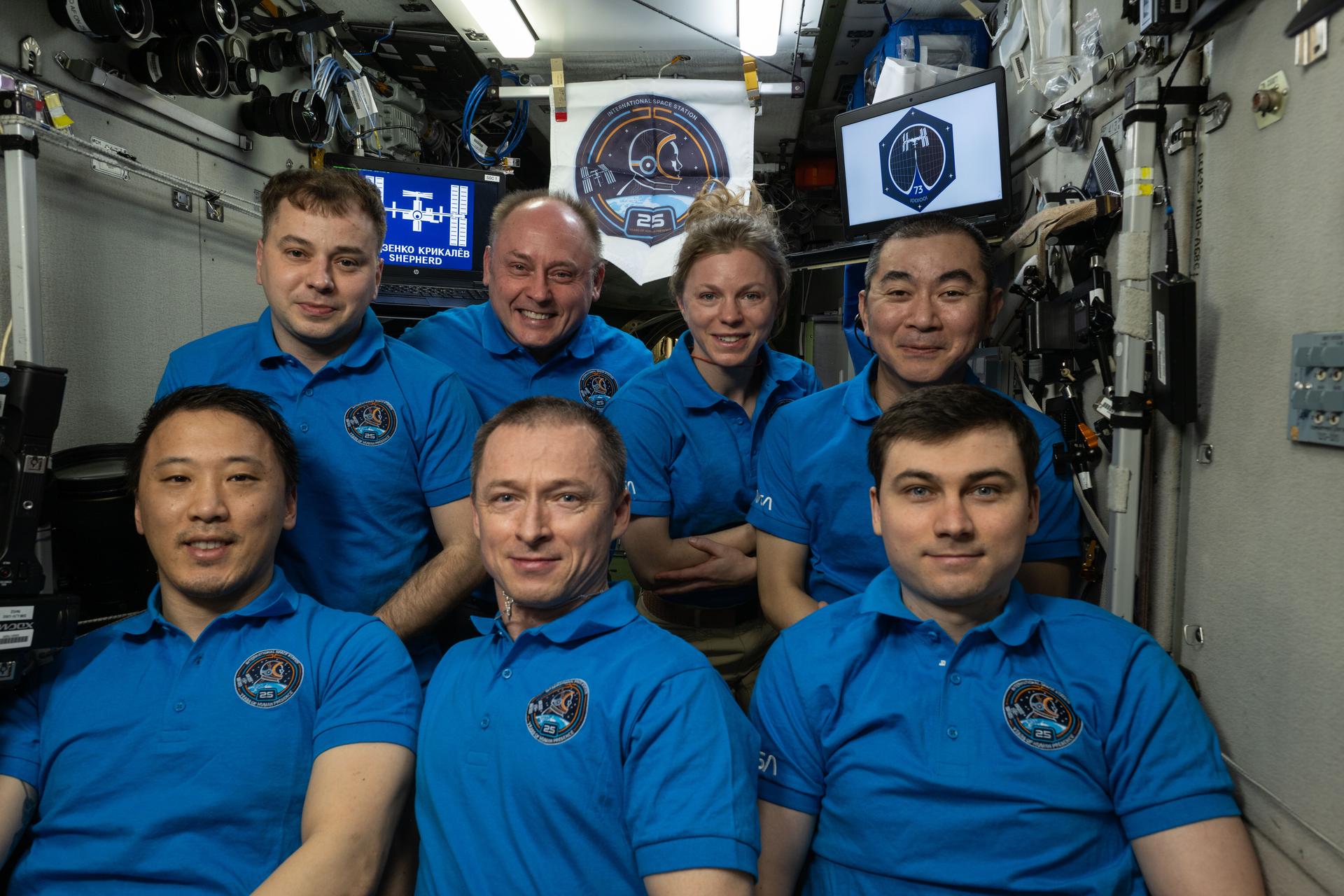
The seven-member Expedition 73 crew poses for a portrait, each of them in a light blue polo. In the front row from left are, NASA astronaut Jonny Kim, Roscosmos cosmonaut Sergey Ryzhikov, and Roscosmos cosmonaut Alexey Zubritsky. In the back row are, Roscosmos cosmonaut Oleg Platonov, NASA astronauts Mike Fincke and Zena Cardman, and JAXA (Japan Aerospace Exploration Agency) astronaut Kimiya Yui.

The Expedition 73 crew poses for a portrait to commemorate 25 years of continuous human presence aboard the International Space Station. In the front row from left, NASA astronaut Jonny Kim, Roscosmos cosmonaut Sergey Ryzhikov, and Roscosmos cosmonaut Alexey Zubritsky. In the back row, Roscosmos cosmonaut Oleg Platonov, NASA astronauts Mike Fincke and Zena Cardman, and JAXA (Japan Aerospace Exploration Agency) astronaut Kimiya Yui.

A truly global endeavor, the space station has been visited by more than 290 people from 26 countries, along with a variety of international and commercial spacecraft. Since the first crew arrived, NASA and its partners have conducted thousands of research investigations and technology demonstrations to advance exploration of the Moon and Mars and benefit life on Earth.

NASA’s SpaceX Crew-11 Wraps Up Space Station Science

15 Gennaio 2026 ore 21:37
4 Min Read

NASA’s SpaceX Crew-11 Wraps Up Space Station Science

Four SpaceX Crew-11 members gather together for a crew portrait wearing their Dragon pressure suits during a suit verification check inside the International Space Station's Kibo laboratory module. Clockwise from bottom left are, NASA astronaut Mike Fincke, Roscosmos cosmonaut Oleg Platonov, NASA astronaut Zena Cardman, and JAXA (Japan Aerospace Exploration Agency) astronaut Kimiya Yui.

NASA’s SpaceX Crew-11 mission with agency astronauts Zena Cardman and Mike Fincke, JAXA (Japan Aerospace Exploration Agency) astronaut Kimiya Yui, and Roscosmos cosmonaut Oleg Platonov returned to Earth after a long-duration mission aboard the International Space Station.

During their stay, Cardman, Fincke, and Yui contributed more than 850 hours of research to help prepare humanity for the return to the Moon and future missions to Mars, while improving life back on Earth.

Here’s a glimpse into the science completed during the Crew-11 mission:

Bolstering bone resilience

NASA astronaut Zena Cardman reaches into the clear, sealed Life Science Glovebox and holds a small packet. The inside of the rectangular workspace is illuminated by white light and is full of small containers and bags.

NASA astronaut Zena Cardman works with bone stem cells aboard the International Space Station to improve our understanding of how bone loss occurs during spaceflight. Studying bone cell activity in microgravity could help researchers learn how to control bone loss to protect astronauts’ bone density during future long-duration space missions and inform treatments for diseases like osteoporosis on Earth. 

Learn more about MABL-B.

Observing Earth and beyond

JAXA (Japan Aerospace Exploration Agency) astronaut Kimiya Yui, wearing a blue-and-white striped shirt, looksthrough a camera inside of the space station’s cupola. The blue Earth, speckled with clouds, can be seen through a circular window above and trapezoid-shaped windows in front of him.

JAXA (Japan Aerospace Exploration Agency) astronaut Kimiya Yui photographs the Earth from the International Space Station’s cupola. For more than 40 years, astronauts have used hand-held cameras to capture millions of images documenting Earth’s geographic features, weather patterns, urban growth, changes to its surface, and the impacts of natural disasters such as hurricanes and floods.

The blue curvature of the Earth’s atmosphere is visible with yellow, green, and red layers of airglow above it. In the center, just above Earth and peeking through the red haze, a blue collection of stars is visible.

Astronauts also use the cupola and other viewports aboard the space station to gaze into the cosmos without Earth’s atmospheric interference. Just as viewing Earth from 250 miles above provides a new perspective on our home planet, looking out into the stars from the orbiting laboratory offers a clearer view of our universe.

Space catch

NASA astronaut Mike Fincke floats in a cylindrical airlock. He wears blue latex gloves and gestures toward a silver box with a black, hexagonal shape in the center. He is surrounded by wires and various panels along the space station’s walls.

NASA astronaut Mike Fincke poses aboard the International Space Station with a new device designed to test an inflatable capture bag’s ability to open, close, and stay airtight in microgravity. This technology could be used to remove space debris from orbit, protecting future spacecraft and crew members. It also may enable trapping samples during exploration missions and support the capture and mining of small asteroids.

Learn more about Capture Bag Demo.

Tracking internal temperature

NASA astronaut Mike Fincke, wearing a black shirt and khaki pants, floats in the space station with his arms up and legs crossed. He wears the blue T-Mini headband. The surrounding walls of the space station are lined with equipment and wires.

NASA astronaut Mike Fincke wears a temperature-monitoring headband that tracks how the human body regulates its core temperature during spaceflight. Adjusting to living and working aboard the International Space Station can influence human temperature regulation. This headband provides an easy, non-invasive way to collect temperature data while astronauts conduct their daily activities. The sensor is also being tested on Earth and may help prevent hyperthermia in people working in high-temperature environments.

Learn more about T-Mini.

A new cargo vehicle

The cylinder-shaped HTV-X1 spacecraft is shown gripped by the Canadarm2. The surface of the vehicle is reflective gold, and a silver-colored solar array panel juts from either side. The Earth fills the background, with white streaky clouds covering much of the blue ocean.

JAXA’s (Japan Aerospace Exploration Agency) new cargo resupply spacecraft, HTV-X1, is shown after being captured by the International Space Station’s Canadarm2 robotic arm during the Crew-11 mission. The spacecraft launched from Tanegashima Space Center on Oct. 26, 2025, delivering approximately 12,800 pounds of science, supplies, and hardware to the orbital complex. New cargo spacecraft expand the station’s capability to support more research and receive critical supplies.

Making nutrients on demand

JAXA (Japan Aerospace Exploration Agency) astronaut Kimiya Yui, wearing a blue-and-white striped shirt, holds a tray with two rows of plastic bags. The top row has four bags filled with purple fluid, and the bottom row has eight bags filled with pale pink fluid.

JAXA (Japan Aerospace Exploration Agency) astronaut Kimiya Yui holds yogurt bags produced aboard the International Space Station that could provide important nutrients during missions far from Earth. Certain nutrients degrade when stored for long periods of time, and deficiency in even one can lead to illness. Researchers are building on previous experiments to develop a method for producing on-demand vitamins and nutrients in space using microorganisms.

Learn more about BioNutrients-3.

Celebrating a historic milestone

The seven-member Expedition 73 crew poses for a portrait, each of them in a light blue polo. In the front row from left are, NASA astronaut Jonny Kim, Roscosmos cosmonaut Sergey Ryzhikov, and Roscosmos cosmonaut Alexey Zubritsky. In the back row are, Roscosmos cosmonaut Oleg Platonov, NASA astronauts Mike Fincke and Zena Cardman, and JAXA (Japan Aerospace Exploration Agency) astronaut Kimiya Yui.

The Expedition 73 crew poses for a portrait to commemorate 25 years of continuous human presence aboard the International Space Station. In the front row from left, NASA astronaut Jonny Kim, Roscosmos cosmonaut Sergey Ryzhikov, and Roscosmos cosmonaut Alexey Zubritsky. In the back row, Roscosmos cosmonaut Oleg Platonov, NASA astronauts Mike Fincke and Zena Cardman, and JAXA (Japan Aerospace Exploration Agency) astronaut Kimiya Yui.

A truly global endeavor, the space station has been visited by more than 290 people from 26 countries, along with a variety of international and commercial spacecraft. Since the first crew arrived, NASA and its partners have conducted thousands of research investigations and technology demonstrations to advance exploration of the Moon and Mars and benefit life on Earth.

Space Station Research Informs New FDA-Approved Cancer Therapy

European Space Agency astronaut Thomas Pesquet works inside the International Space Station. He is holding two cylindrical black experiment containers to deactivate and stow the Protein Crystal Growth-5 hardware. In the background, cables, silver knobs, instruments, and research equipment are visible.
European Space Agency (ESA) astronaut Thomas Pesquet removes the Protein Crystallization Facility hardware from an incubator aboard the International Space Station for the CASIS PCG-5 investigation, which crystallized a monoclonal antibody developed by Merck Research Labs.
NASA

NASA opens the International Space Station for scientists and researchers, inviting them to use the benefits of microgravity for commercial and public research, technology demonstrations, and more. Today, a portion of the crew’s time aboard station is devoted to private industry, including medical research that addresses complex health challenges on Earth and prepares astronauts for future deep space missions.

In collaboration with scientists at Merck, protein crystal growth research on the space station yielded early insights regarding the structure and size of particles best suited for the development of a new formulation of the company’s cancer medicine pembrolizumab for subcutaneous injection. This new route of delivery was approved by the U.S. Food and Drug Administration in September and offers a time-saving alternative to intravenous infusion for certain patients. These research efforts aboard the space station were supported by the ISS National Laboratory.

Originally, the treatment was delivered during an in-office visit via infusion therapy into the patient’s veins, a process that could take up to two hours. Initial delivery improvements reduced infusion times to less than 30 minutes every three weeks. The newly approved subcutaneous injectable form takes about one minute every three weeks, promising to improve quality of life for patients by reducing cost and significantly reducing treatment time for patients and healthcare providers.

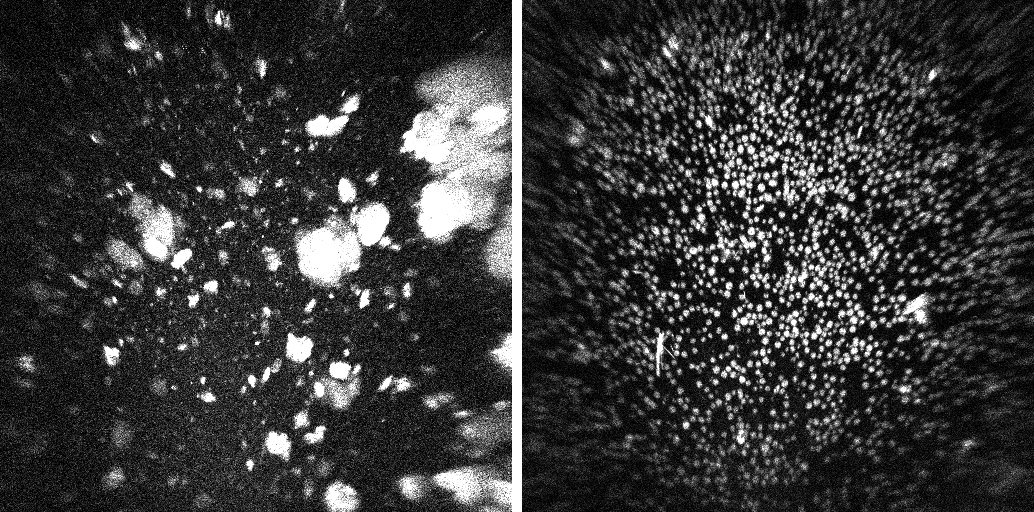
Black-and-white UV images show white crystals against a black background, comparing crystal growth on Earth and in space. The ground sample on the left features large, coarse clusters with varying sizes and shapes, while the spaceflight sample on the right exhibits more uniform size distribution, characterized by fine, evenly spaced bright dots.
UV imaging of a ground control sample (left) and spaceflight sample (right) from Merck’s research shows the much more uniform size and distribution of crystals grown in microgravity. These results helped researchers to refine ground-based production of uniform crystalline suspensions required for an injectable version of the company’s cancer medicine, pembrolizumab.
Merck

Since 2014, Merck has flown crystal growth experiments to the space station to better understand how crystals form, including the monoclonal antibody used in this cancer treatment. Monoclonal antibodies are lab-made proteins that help the body fight diseases. This research focused on producing crystalline suspensions that dissolve easily in liquid, making it possible to deliver the medication by injection. In microgravity, the absence of gravity’s physical forces allows scientists to grow larger, more uniform, and higher-quality crystals than those grown in ground-based labs, advancing medication development and structural modeling.

Research aboard the space station has provided valuable insights into how gravity influences crystallization, helping to improve drug formulations. The work of NASA and its partners aboard the space station improves lives on Earth, grows a commercial economy in low Earth orbit, and prepares for human exploration of the Moon and Mars.

❌