Vista elenco

GALAXY FOLD 8 vs FOLD 8 Ultra vs FLIP 8

8 Agosto 2026 ore 10:30
La naturale evoluzione degli smartphone pieghevoli ha raggiunto una fase di maturità in cui, a mio parere, le specifiche tecniche pure lasciano sempre più spazio a valutazioni sull’ergonomia e sull’esperienza d’uso quotidiana. L’arrivo della nuova gamma composta da Galaxy Z […]

Read This Before You Buy That TV Streaming Stick

30 Luglio 2026 ore 18:49

Security experts have been sounding the alarm for years about the risks of using generic TV boxes that promise unlimited content streaming for a one-time fee, warning that they secretly rent the user’s Internet connection out to strangers. But a groundbreaking new analysis finds these devices also routinely spoof themselves as mobile phones clicking ads on AI-generated websites as part of a sprawling operation that seeks to defraud online merchants and advertising networks.

Pedro Falé is a threat researcher with the security firm Bitsight. Falé told KrebsOnSecurity he was able to peer inside a vast and complex ad fraud network by registering an expired domain name that was used to coordinate fake ad clicks across a particularly popular brand of these streaming devices known as H96.

An H96 TV streaming device currently advertised for sale on Amazon.

Falé said the domain he scooped up was previously used for telemetry, periodically collecting full hardware information and the entire list of installed apps from tens of thousands of H96 streaming sticks plugged into television sets around the globe. But upon inspecting the traffic being funneled to the domain, he discovered nearly all of the TV boxes transmitting data claimed to be mobile phone models from a variety of manufacturers, including Samsung, Vivo, Huawei, and Xiaomi.

“We noticed something was wildly wrong,” Falé said. “Multiple devices reporting to this factory Android TV Box backdoor were ‘phones.'”

Image: Bitsight.

The researcher found all of the devices reported having the same two apps installed, and that those apps were made by a company called Zhejiang Fengwo IoT Technology Ltd, an entity founded in 2019 in mainland China which operates an ad-publishing portfolio under the name Fengwo Group. Further investigation into the Fengwo Group revealed it has registered multiple patents that match the inner workings of these apps.

“Bitsight TRACE identified several Hong Kong, Singapore, and single person ‘legal’ shell identities used to collect the monetization and traced the operation back to a mainland China company known as Zhejiang Fengwo IoT Technology Co., Ltd, which operates under the Fengwo Group,” Falé wrote in a report released today about their findings.

Falé said an analysis of the apps shows they help to coordinate an ad fraud network that uses these H96 devices as a captive traffic source to click on ads at AI-generated websites operated by the Fengwo Group.

Bitsight discovered the websites contain machine-generated news articles and graphics across a range of categories, including finance, health, education, gaming, music and food blogs. But they also found none of those sites displayed ads unless the device visiting the page matched the spoofed mobile profile of these H96 devices.

AI DIGITAL HUMANS

The domain for the Fengwo Group — fwgcloud[.]com — claims the company is “redefining the boundaries of human-AI interaction,” and that it has created more than 120,000 “AI digital humans” available to rent for everything from emotional companionship to 24/7 customer service and creative design.

The homepage for fwgcloud dot com.

Falé said the Fengwo Group’s domain shared its SSL certificate data with other domains associated with the apps found on H96 devices, specifically the phone spoofing mechanism. He noted the domain also has an internal wiki platform that directly ties the Fengwo Group to a proprietary implementation of a Google-built visual programming language called Blockly, which was originally designed to help kids learn how to write software.

According to Bitsight, the Fengwo Group’s employees use Blockly to build the sham websites, allowing low-skilled operators to drag blocks of code together in their Blockly editor — without any need to understand what the underlying code blocks do or how they work.

The Blockly homepage.

“An operator can drag blocks together in their Blockly editor, to define each fraud routine, given a task type,” reads Bitsight’s report. “Once the routine is saved, it gets exported as JavaScript and uploaded to the S3 buckets. An operator doesn’t need as much understanding of the underlying technicalities, as it is all set in place for ease of use.”

Bitsight even found one of the Fengwo Group app developers mentioning exactly these advantages, noting the developer remarked that “only a small number of highly-skilled developers are needed to build the template execution-unit images,” and that “developers who create execution units from those templates have significantly lower technical requirements, greatly reducing the company’s operating costs.”

Falé said if a user’s H96 streaming stick is selected for a specific fraud task, it will be pushed the appropriate Blockly module according to the task desired, which can include silently launching a web browser, visiting websites, browsing pages, managing tabs, and clicking on ads.

To ensure the TV boxes masquerading as mobile phones can reliably click on ads displayed via the AI-generated websites, the Fengwo group “fuses three vision and reasoning systems into a single interface,” allowing the bots to correctly identify an ad on the webpage and navigate the site much like a human would, the Bitsight report observed.

Examples of ad landing pages linked to the Fengwo Group. Image: Bitsight.

TV ON? PROXY. TV OFF? AD FRAUD

Bitsight found the H96 devices were either relaying residential proxy traffic or participating in ad fraud, but never both at the same time. In fact, they concluded that when these TV boxes detect an HDMI signal from an attached television — indicating the user intends to stream video content — the box is usually functioning as a residential proxy. When the TV is off, it switches back to waiting for ad fraud jobs.

Falé said he believes the TV boxes are set up this way because its ad fraud activities are far more resource intensive and could interfere with the device’s stated purpose — streaming video content over the Internet.

Despite repeated warnings from the FBI and security industry leaders about the security and privacy risks of using these streaming devices, major e-commerce providers like Amazon, Best Buy, Newegg and others continue to sell hundreds of different models and brands that bundle unofficial versions of Google’s Android operating system and are frequently marketed (via online influencers) as a way to access a broad array of streaming services and live broadcasts without a subscription.

Image: fbi.gov.

In addition to enlisting the user’s TV box in ad fraud networks, these off-brand streaming devices almost universally come with residential proxy software pre-installed. This software rents the user’s Internet address out to anonymous paying customers, who run the gamut from aggressive content scraping firms to ticket scalpers and outright cybercriminals.

What’s more, because these generic (and generally dirt cheap) TV boxes are all horribly insecure by default and bereft of any kind of authentication, installing one on your home or office network only invites further mischief. In January, the proxy tracking service Synthient documented how multiple botnets had rapidly enslaved millions of TV boxes using a complex interplay of security vulnerabilities in both the residential proxy software and the streaming devices themselves.

SHOW ME THE MONEY

Bitsight said it tracked approximately 38,000 TV boxes globally phoning home to the expired Fengwo Group domain, and based on that number the report estimates this ad fraud network brings in revenues of close to $50,000 a day (not counting substantial revenue from the residential proxy side of the business). However, Falé emphasized that these estimates are highly conservative and based on telemetry from just one of the Fengwo Group’s core (but older) domains.

As for the Fengwo Group’s claim to have 120,000 “digital humans” at their disposal, Bitsight’s report concludes it could be just a clever marketing scheme and/or a way to avoid drawing suspicion to the company’s operations.

“Historically, when dealing with proxy services or DDoS, we sometimes see these websites undertake inconspicuous facades, so as not to advertise their DDoS capability or botnet size,” Falé wrote in the report. “This could also be the case here.”

If the Fengwo Group truly does have tens of thousands of “AI humans” at its beck and call, it does not appear to have dedicated any of them to fielding inquiries from its own website. KrebsOnSecurity sought comment from the Fengwo Group by emailing the contact address listed on the company’s homepage, but the request bounced back with the reply, “Your message couldn’t be delivered to postmaster@fwgcloud[.]com. Their inbox is full, or it’s getting too much mail right now.”

As Bitsight’s analysis shows, when it comes to TV boxes and streaming sticks, it’s best to stick to name brands from reputable manufacturers, and then to be sparing and careful with any apps you choose to install on the device — as many of those can bundle residential proxy software as well. Google says consumers can confirm whether or not a device is built with the official Android TV OS and Play Protect certification by following these instructions.

Additionally, Synthient maintains a running list of IoT devices that have been known to ship to consumers with residential proxy software and other malicious apps pre-installed. Careful readers will notice Synthient’s list includes other IoT devices apart from streaming sticks and boxes: As the FBI has warned, residential proxy software has also been found in other popular consumer IoT devices from random brands, particularly digital photo frames.

LG to Ban Residential Proxies from Smart TV Apps

22 Luglio 2026 ore 03:10

The home appliance giant LG Electronics USA said this week it plans to suspend any apps built for its smart TVs that turn one’s television into an always-on residential proxy node. The move comes less than a month after researchers found that more than 42 percent of games and other apps available for download on LG’s webOS store allow unknown third-parties to route their Internet traffic through a user’s TV.

Proxy SDK prevalence among smart TV apps for LG (webOS) and Samsung (Tizen OS) televisions. Image: Spur.us.

On July 2, we featured research by the security firm Spur that examined the prevalence of residential proxy software development kits (SDKs) in smart TV apps. Spur found more than 42 percent of apps available for download on LG smart TVs include SDKs that turn one’s television in a proxy node indefinitely, and that more than a quarter of the apps made for Samsung’s Tizen operating system had similar residential proxy components.

Responding to questions about Spur’s research, LG Senior Vice President John Taylor told KrebsOnSecurity the company was working with app developers to remove the residential proxy option from their apps on the webOS platform. Developers that fail to comply, he said, will find their apps suspended.

“A residential proxy network is not an intended use for LG smart TVs, and LG Electronics is working with developers to remove the residential proxy option from their apps on the webOS platform,” Taylor said. “If this option is not removed, these apps will be suspended.”

Taylor said LG is committed to keeping residential proxy networks out of its smart TV apps going forward, and that the company’s review of those apps is “well underway now.”

“As part of our ongoing efforts to enhance platform quality and the user experience, LG will continue to strengthen our evaluation process for developer-submitted apps, including those that incorporate residential proxy SDKs,” Taylor wrote in an emailed statement.

App makers looking for ways to monetize their creations can turn to residential proxy providers, which pay developers to include SDKs that turn the user’s device into a residential proxy node that is rented to paying customers. In the case of LG and Samsung smart TVs, Spur found residential proxy SDKs bundled with everything from simple games like Pac-Man to screensavers and file utilities.

A Pac-Man smart TV app from Bright Data offers users the choice between viewing ads in the game or agreeing to allow their TV to serve as a residential proxy node. Image: Spur.us.

Spur’s report found the residential proxy network Bright Data accounted for a majority of proxy SDKs across both Samsung and LG smart TVs. In a statement shared with KrebsOnSecurity, Bright Data said its network is built on consent and responsibility and operates by LG and Samsung terms.

“Every peer opts in through a dedicated screen and receives value in return; every customer is vetted, and our practices have now undergone a second independent audit by PwC,” the statement reads. “We remain committed to an open, transparent internet where legitimate businesses, researchers, and institutions can responsibly access data that lives in the public domain.”

Bright Data and other proxy providers named in Spur’s report all say they follow rigorous know-your-customer processes to validate legitimate uses of their services, which is often heavily tied to content-scraping activities by said customers. The proxy companies also say they incorporate technological countermeasures to prevent proxy service customers from being able to interact with and control other devices on the proxy user’s local network.

Spur argues the problem is not that residential proxy networks exist, but rather that they are being embedded at scale in devices that most consumers do not think of as computers and are not equipped to audit.

“A one-time consent prompt buried in a TV app is not a substitute for meaningful transparency, ongoing control, and platform oversight,” Spur’s Trevor Sutter wrote. “The risk is amplified when consent comes from individuals within the household who use the device but shouldn’t give consent, such as minors.”

LG’s announcement that it is culling residential proxy SDKs from its app store is welcome news, but the company recently came under fire for another questionable partnership: Pimping McAfee security products via software drivers included in its high-end LCD monitors.

Earlier this week, the Youtube channel Gamers Nexus showed that certain LG LCD monitors will automatically install an app that promotes paid McAfee antivirus subscriptions, and that the app arrives through Windows Update without an approval prompt.

Update, July 22, 1:06 p.m. ET: Added statement from Bright Data.

FBI Seizes NetNut Proxy Platform, Popa Botnet

2 Luglio 2026 ore 21:27

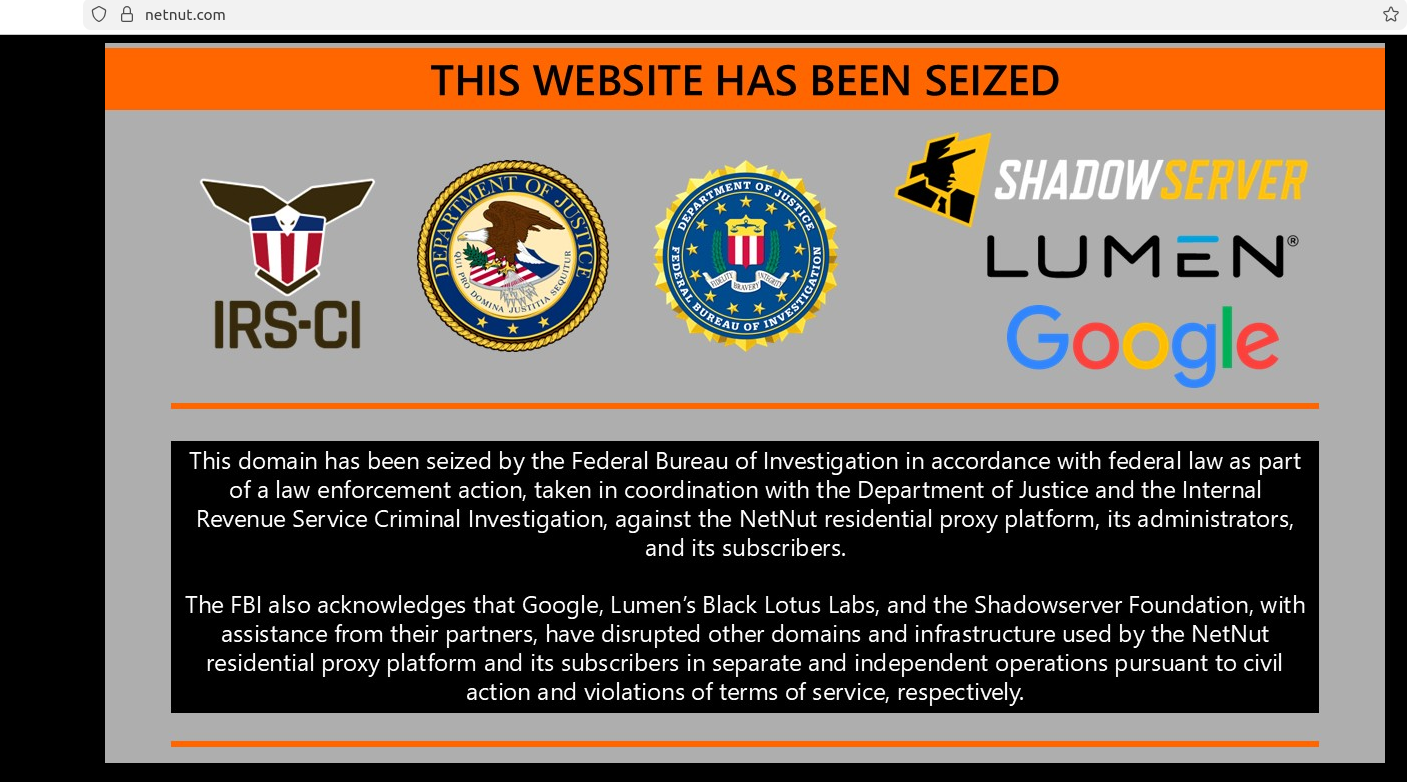
The Federal Bureau of Investigation (FBI) said today it worked with industry partners to seize hundreds of domains associated with NetNut, a sprawling residential proxy service operated by the publicly-traded Israeli company Alarum Technologies [NASDAQ: ALAR]. The action comes roughly two weeks after KrebsOnSecurity published findings from multiple security firms connecting NetNut to the Popa botnet, a collection of at least two million devices that have been compromised by malicious software with little or no consent from victims.

The NetNut homepage today was replaced by this seizure banner from the FBI.

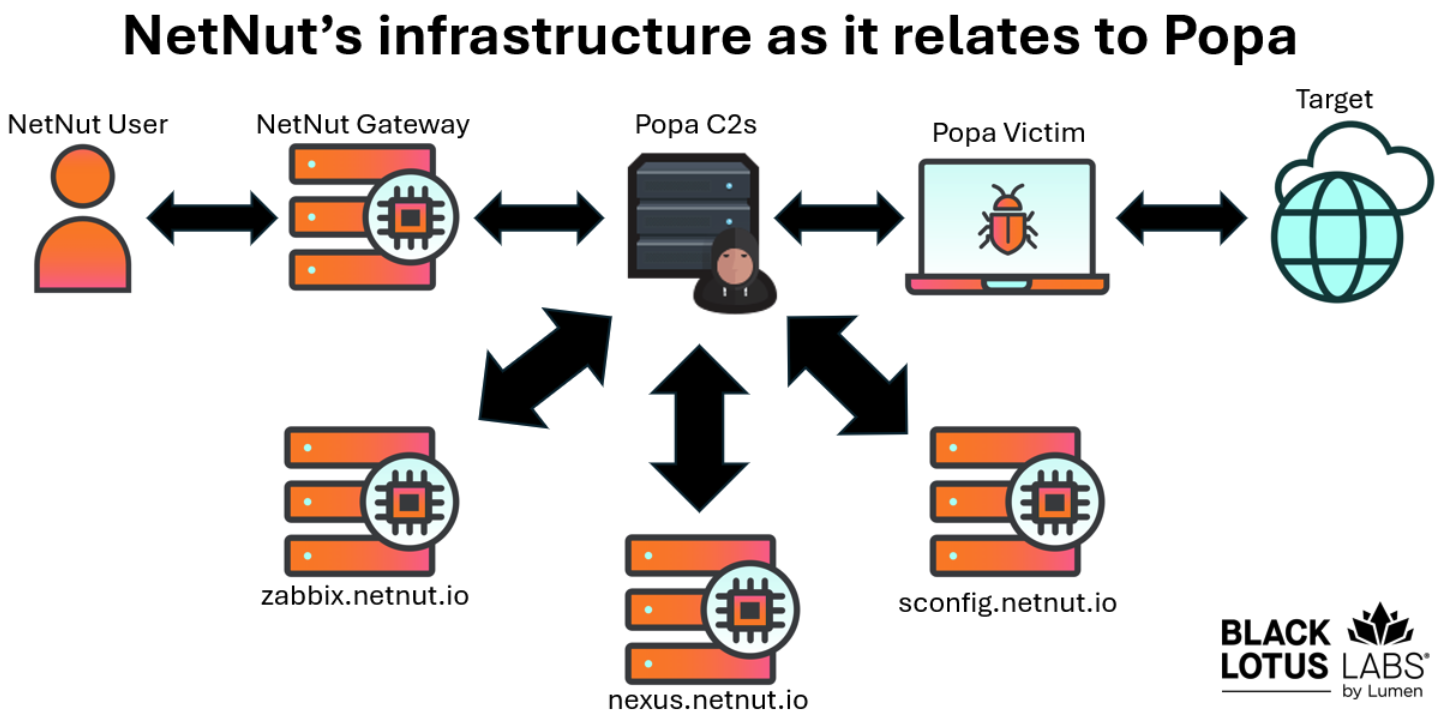
On June 19, three different security firms issued similar findings: That NetNut is a residential proxy network which populates a botnet called Popa, and distributes software for devices commonly found in homes, such as smart TVs and streaming boxes. NetNut’s software turns those systems into always-on residential proxy nodes that are rented to others, who predominantly use them to relay abusive and intrusive Internet traffic, such as mass content scraping, advertising fraud, and account takeover activity.

Earlier today, NetNut’s homepage was replaced with a seizure notice from the FBI and the Internal Revenue Service Criminal Investigation division. The seizure notice thanked Google, Lumen, Shadowserver and other industry partners for their help in dismantling hundreds of domains tied to the Popa botnet, which experts say has long been synonymous with NetNut’s residential proxy infrastructure.

In a blog post published today, the Google Threat Intelligence Group (GTIG) said NetNut’s proxy network is widely resold and white-labeled by a number of third-party proxy providers, and that its services are heavily sought out by cybercriminals seeking to obfuscate the source of their malicious traffic. The GTIG said that in a single week during June 2026, they observed 316 distinct clusters of threat actors using suspected NetNut exit nodes, including cybercriminal and espionage groups.

“These bad actors can use NetNut to mask their origin IP address when accessing victim environments, accessing their own infrastructure, and conducting password spray attacks,” Google’s GTIG wrote. “Furthermore, when a consumer device becomes an exit node, unauthorized network traffic passes through it. This means bad actors can access other private devices on the same home network, effectively exposing them to Internet threats.”

Google said it disabled Google accounts and services used by NetNut for malware command and control, and that it shared technical intelligence on NetNut’s software development kits (SDKs) and backend infrastructure with platform providers, law enforcement and research firms. The company also disabled apps known to bundle NetNut’s various SDKs.

Omer Weiss, legal counsel for NetNut parent Alarum Technologies, said the company was aware of the FBI seizure and cooperating with investigators.

“Alarum takes this matter seriously and will fully cooperate with law enforcement to ensure any misuse of its infrastructure is thoroughly investigated and those responsible are held to account,” Weiss said in a written statement.

Benjamin Brundage is founder of the proxy tracking service Synthient, one of the companies that published evidence last month linking the Popa botnet to NetNut and Alarum Technologies. Brundage said the domain seizures appear to have disrupted both the Popa botnet and the NetNut proxy network that rides on top of it.

Brundage said NetNut’s apparent demise is likely to be a great disadvantage for the cybercrime community, which was already reeling from legal actions by Google earlier this year that seized infrastructure for NetNut’s biggest competitor — IPIDEA.

“I think this takedown is going to have a big impact, because NetNut gained significant popularity after the IPIDEA takedown,” he said. “Also NetNut has been incredibly common among resellers, and they were on par with IPIDEA in terms of their daily traffic, quality, size, price per gigabyte, all of it.”

NetNut’s infrastructure, in a nutshell. Image: Black Lotus Labs, Lumen.

The NetNut and Popa botnet takedown may have another added benefit, Brundage said: Lessening the impact of large distributed denial-of-service botnets that have been built on the backs of poorly configured residential proxy services. In January, Synthient revealed how cybercriminals had built the world’s largest DDoS botnet (Kimwolf) by tunneling through IPIDEA proxy connections into the local networks of TV box owners, and infecting other Android-based devices behind the victim’s firewall.

While many of the bigger proxy providers took steps to block this activity, resellers of the major proxy networks have been far slower to respond to the threat, Brundage said.

“In terms of all these TV box devices getting compromised from the proxy network, it will have an impact on the DDoS botnets out there,” he said.

For its part, Google reckons today’s actions have caused “significant degradation to NetNut’s proxy network and its business operations, reducing the available pool of devices for the proxy operator by millions.” But the company warns that proxy networks can rebuild themselves by effectively reselling other proxy services, as IPIDEA has done over the past few months.

“Google has high confidence that many popular residential proxy brands are in fact whitelabeling the NetNut botnet,” the GTIG report concludes. “While we expect this disruption to have a larger ripple effect across the residential proxy ecosystem, observations after the disruption of IPIDEA proved that individual networks can appear resilient. What we have observed is that when faced with the degradation of their own botnet, proxy operators begin buying capacity from their competitors, effectively becoming a reseller. We recognize that creating a lasting disruption in this fluid ecosystem means we must scale our efforts to target the infrastructure of several interconnected providers.”

As KrebsOnSecurity has warned repeatedly, most of the no-name TV streaming boxes for sale on the major e-commerce websites either come pre-installed with residential proxy software, or require the installation of proxy SDKs in order to use the device for its stated purpose (streaming pirated movies, sporting events and TV shows). Google’s advice here is sound: When it comes to TV boxes, stick to name brands from reputable manufacturers, and then be sparing and judicious with any apps you choose to install.

The sketchy TV boxes that are being commandeered by the Popa botnet and other threats all come with or require the user to install unofficial Android operating systems that do not operate within the confines of Google’s Official Play Protect store. Google says consumers can confirm whether or not a device is built with the official Android TV OS and Play Protect certification by following these instructions.

Even people without TV streaming boxes can find their smart TVs enrolled in residential proxy networks, just by installing one of thousands of apps available for download on Samsung and LG smart TVs. In a report released last month, the proxy tracking company Spur found 42 percent of apps available for download via the webOS operating system on LG smart TVs include SDKs that turn one’s television into an always-on residential proxy node. More than a quarter of the apps made for Samsung’s Tizen operating system had similar residential proxy components, Spur found.

Image: Spur.us.

Update, 4:24 p.m. ET: Included a statement shared post-publication from an attorney representing NetNut parent Alarum Technologies.

Update, July 8, 2:34 p.m. ET: The website for Alarum Technologies — alarum[.]io — now also features a seizure notice from the FBI. The company’s stock has taken a beating since the FBI action, and is currently trading at $2.62 a share, a roughly 67 percent decline over the past week.

Questa novità della One UI 8.5 proviene direttamente dall’era Touchwiz di Samsung

3 Ottobre 2025 ore 11:14

Lo sviluppo del prossimo importante aggiornamento Samsung per dispositivi mobili è in pieno svolgimento. Un flusso incontrollato di novità dalle build trapelate di One UI 8.5 ha già rivelato numerose nuove funzionalità che possiamo aspettarci dall’aggiornamento. Il mese scorso, abbiamo visto indizi che Samsung si stesse preparando a modifiche di design ispirate a iOS nell’app Impostazioni, ed oggi scopriamo le modifiche alle icone dell’app.

[ad#ad-celli]

Abbandonando il design piatto che ha caratterizzato One UI per diversi anni, Samsung sta passando ad un aspetto 3D per le icone. Il leaker Ice Universe ha presentato oggi su Weibo delle immagini aggiornate delle icone delle app.

One UI One UI

Questa modifica è in linea con i recenti  aggiornamenti dell’app Impostazioni, in cui le bolle contenenti le diverse opzioni di menu appaiono leggermente in rilievo. Sebbene le app di sistema abbiano un aspetto notevolmente diverso, sembra che Samsung stia applicando lo stesso effetto anche alle icone di altre app popolari, tra cui YouTube e Google Play Store, nonché a una serie di app di terze parti.

In particolare, questa non è la prima volta che Samsung sperimenta con le icone 3D. Se siete utenti Samsung di lunga data, ricorderete subito allora le versioni successive dell’interfaccia TouchWiz di Samsung.

❌