❌

Vista elenco

NASA to Help Unlock Mysteries of Mars’ Moons in Upcoming Mission

15 Ottobre 2026 ore 21:58

NASA is playing an important role in JAXA’s (Japan Aerospace Exploration Agency) MMX (Martian Moons eXploration) mission, to advance our understanding of Mars’ moons and build on the agency’s long history of exploring the Red Planet.

The mission aims to characterize and determine the origin of Mars’ moons Phobos and Deimos and deliver a sample of Phobos to Earth. The MMX spacecraft is targeting launch from JAXA’s Tanegashima Space Center in Japan at 3:41 p.m. EDT on Monday, Oct. 19 (4:41 a.m. JST on Tuesday, Oct. 20).
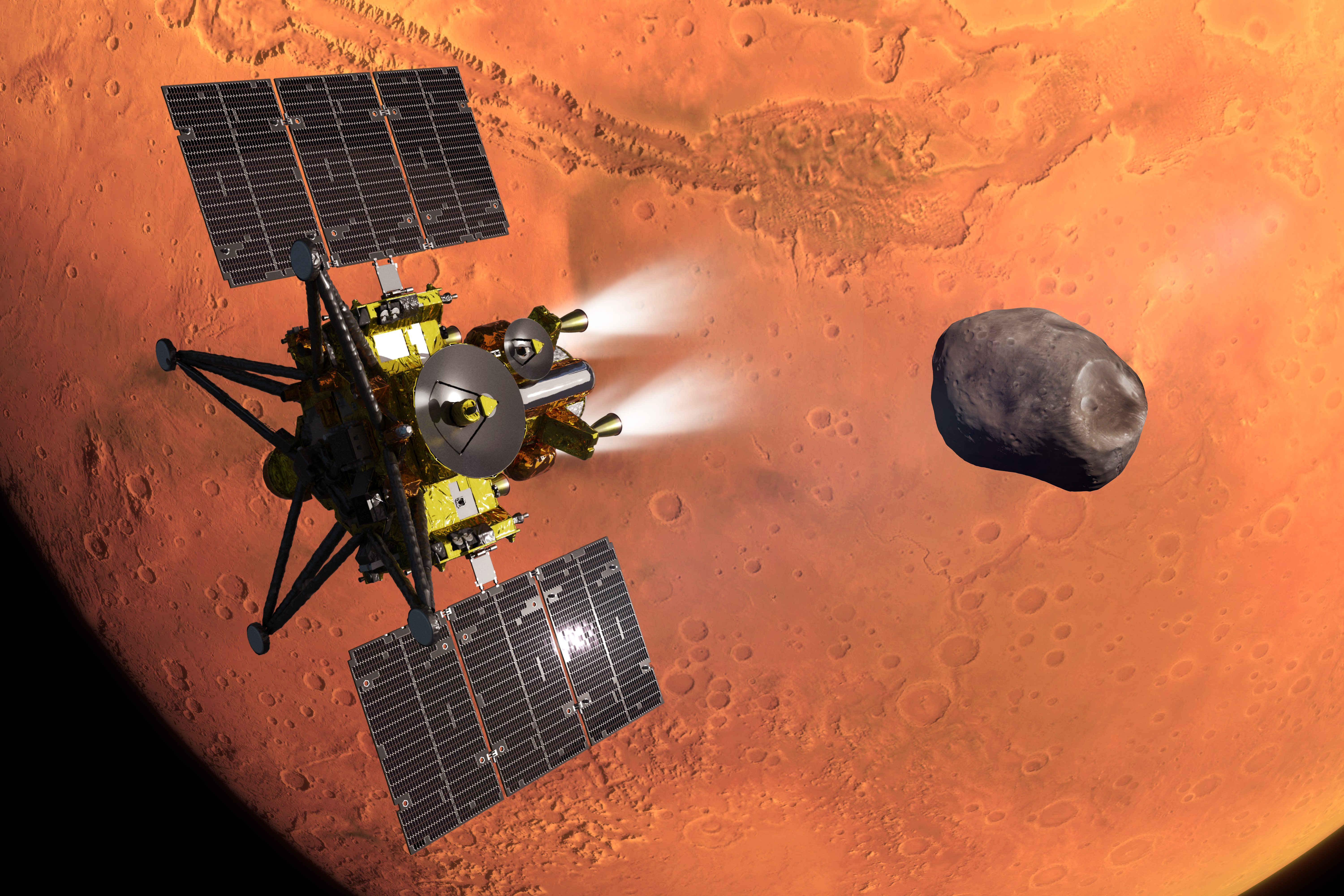
Artist's concept of JAXA's MMX spacecraft with the Martian moon Phobos and planet Mars in the background
An artist’s concept of JAXA’s MMX spacecraft during its Mars’ orbit insertion. The Martian moon Phobos, which MMX will explore and sample, is in the background.
JAXA

“The samples from MMX will bring forth paradigm-shifting science on the Mars system for generations to come, especially as NASA prepares to send the first humans to Mars,” said Nicky Fox, associate administrator, Science Mission Directorate, NASA Headquarters in Washington. “The NASA-JAXA sample curation partnership is extremely valuable, and I am proud that NASA Science is supporting MMX sample curation and will be sharing portions of these samples for study as we continue to expand humanity’s understanding of the universe for the benefit of all.”

NASA’s contributions to the mission include the Mars-moon Exploration with Gamma rays and Neutrons (MEGANE) spectrograph instrument, the Pneumatic Sampler (P-Sampler) technology demonstration, and communications and navigation support from the agency’s Deep Space Network, as well as funding United States scientists participating on the MMX science team.

Scientists have long debated the origin of Mars’ two moons. The data and samples collected by the MMX mission will help answer essential questions about the origins of these moons and the history of the solar system.

“Phobos and Deimos may be the remains of a massive impact on Mars that sent material into orbit around the planet, or they could be ancient asteroids that were captured by Mars’ gravity billions of years ago,” said Tom Statler, MMX program executive and program scientist at NASA Headquarters. “Having the answer will help illuminate that early era when Earth and the other inner planets may have been acquiring much of their water and organic compounds.”

The MEGANE (pronounced meh-GAH-nay, the Japanese word for eyeglasses) spectrograph will help scientists “see” what Phobos is made of by measuring neutrons and gamma rays emitted from the moon’s surface and determining its chemical elemental composition, which will provide important clues about its origin.

Mounted on one of the spacecraft’s landing legs, the P-Sampler is designed to collect a ground sample from Phobos. The system gathers surface material using bursts of high-pressure nitrogen gas, complementing JAXA’s C-Sampler, which will extract cores from a few inches deeper. NASA will obtain and curate about 15% of the total returned sample at the agency’s Johnson Space Center Astromaterials Lab in Houston, making it available for research for decades.

Another key part of NASA’s contribution to MMX is its scientific partnership with JAXA. NASA-supported researchers are working alongside international colleagues to help reveal the story of Phobos and will use mission data and returned samples to uncover new clues about the moon’s origin and the evolution of the Mars system.

The MMX spacecraft will arrive at Mars in August 2027 to begin its survey of the Red Planet’s two moons. After surveying Phobos in detail, the spacecraft will collect a sample of the moon’s surface no earlier than December 2028 and deliver it to Earth in 2031.

The MEGANE instrument was developed by the Johns Hopkins Applied Physics Laboratory. Honeybee Robotics, a Blue Origin company, developed the spacecraft’s pneumatic sampler mechanism. NASA’s contributions to the MMX mission were developed under the agency’s Discovery Program. The Discovery Program is managed by NASA’s Marshall Space Flight Center in Huntsville, Alabama, for the agency’s Science Mission Directorate in Washington.

For more information about the MMX mission, visit:

https://science.nasa.gov/mission/mmx

Karen Fox / Alana Johnson
Headquarters, Washington
240-285-5155 / 202-672-4780
karen.c.fox@nasa.gov / alana.r.johnson@nasa.gov
NASA Welcomes All Ages, Experience Levels for Space Apps Challenge

15 Ottobre 2026 ore 18:13

Registration is open for the 2026 NASA Space Apps Challenge, a two-day global event on Saturday, Nov. 14 and Sunday, Nov. 15, where teams work to create solutions inspired by NASA’s most ambitious exploration goals and making use of the agency’s free and open data. The annual challenge, often called a hackathon, is an intensive, collaborative problem-solving experience where participants tackle real-world challenges created by NASA subject matter experts.

This year’s Space Apps Challenge collectively supports three major focus areas: returning humans to the Moon, preparing for missions deeper into the solar system, and expanding understanding of the universe. Participants do not have to be programmers. Students, scientists, engineers, designers, storytellers, technologists, and space enthusiasts of all ages and experience levels can contribute their skills.

“At NASA, science is for everyone, and we’re inviting the next generation to help tackle some of humanity’s most critical challenges in space through the NASA Space Apps Challenge,” said Nicky Fox, associate administrator, Science Mission Directorate, NASA Headquarters in Washington. “Everything in NASA Science is interconnected, and this year, students from around the world can use NASA’s powerful data sets to help us build the ultimate interplanetary survival guide – supporting the science that will enable astronauts to thrive on the Moon and, eventually, Mars, while also inspiring ideas that improve everyday life on Earth and in space for the benefit of all.”

Supporting lunar exploration, Artemis planning

NASA continues to advance plans for a sustained human presence on the Moon through the Artemis program and Moon Base. Several of this year’s Space Apps challenges relate to analytical tools, operational considerations, and human‑system needs relevant to lunar missions. These include work related to surface operations at the Moon’s South Pole, the management of environmental constraints such as sunlight and communications windows, as well as approaches for evaluating the logistical and scientific demands of long‑duration lunar stays. Broader system‑level modeling challenges, such as those that simulate outpost operations or consider astronaut health and safety, mirror the complexity of planning for human activity on the lunar surface.

Strengthening readiness for Mars, deep space

NASA’s exploration strategy includes continued robotic exploration of the outer solar system and preparing for future human missions to Mars. Several challenges involve operational concepts for Martian surface activities, integrating data from multiple Mars missions, or reflecting the mission‑design trade‑offs required for deep‑space exploration. Others address fundamental concerns for long‑duration travel, such as monitoring physiological and behavioral health indicators, or examining how engineering and scientific choices shape mission execution in environments far from Earth.

Some of these challenges also align with NASA’s broader exploration portfolio, which includes ongoing work on future missions to destinations such as Jupiter’s moon Europa and Saturn’s moon Titan. By simulating mission‑design decisions or evaluating environmental analogs on Earth, certain challenges offer frameworks related to how NASA prepares for complex operational scenarios throughout the solar system.

Enhancing access to astrophysics

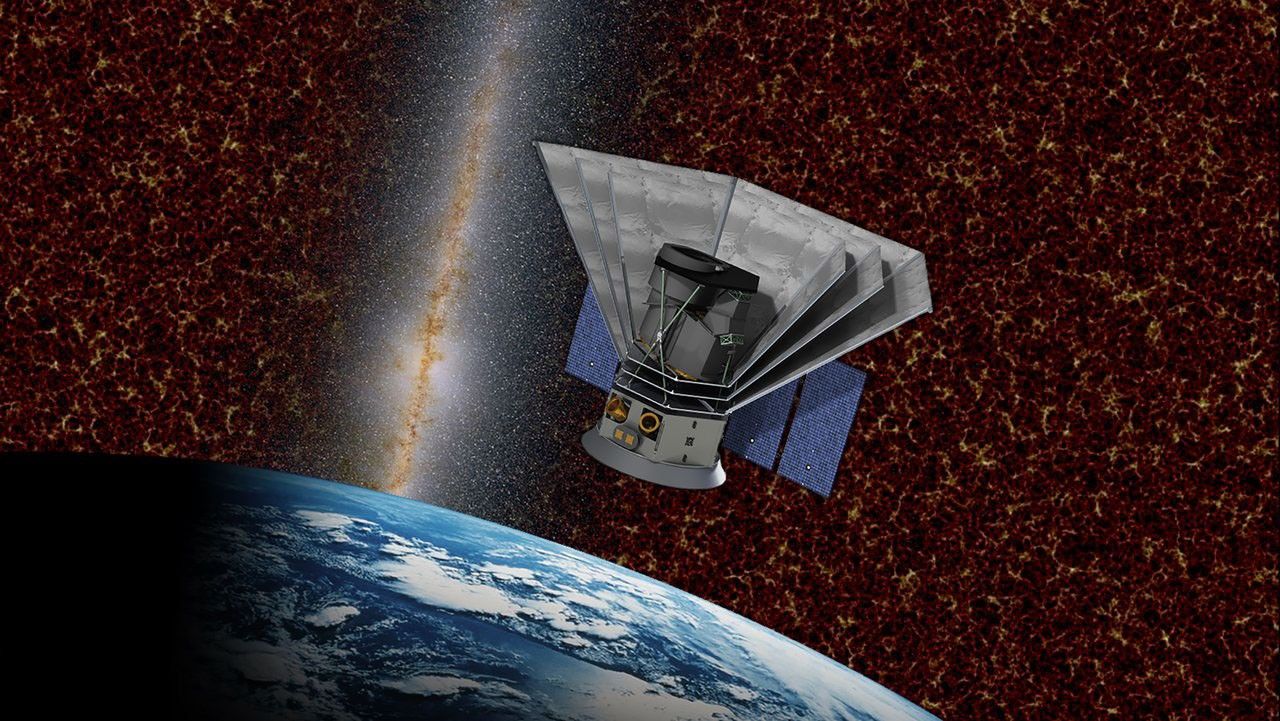
NASA’s astrophysics missions contribute to understanding the structure and history of the universe. In 2026, this includes active missions like Spectro-Photometer for the History of the Universe, Epoch of Reionization and Ices Explorer (SPHEREx), which is conducting a full‑sky spectral survey, as well as the continued development and deployment of observatories designed to investigate cosmic evolution and exoplanet, which are planets outside our solar system, populations.

Challenges associated with these efforts focus on improving public access to mission data, designing tools that help visualize changes in the sky over time, and supporting broader engagement with the scientific products derived from these missions.

Broader impact across NASA’s mission landscape

Together, these challenges illustrate how NASA’s open data ecosystem enables gold standard science, by freely offering such a wide breadth of information and research. By engaging with the Space Apps event, the entire nation can interact with the kind of real‑world needs defined by the agency.

Registration is available at the NASA Space Apps Challenge. Participants can join in one of 500+ local events, join a team, and select the challenge that they are most interested in addressing during the November hackathon.

NASA’s SpaceX CRS-35 Mission to Launch Health Research

12 Ottobre 2026 ore 19:45

NASA experiments focused on human and plant health and drug-resistant organisms will travel to the International Space Station aboard SpaceX’s 35th Commercial Resupply Services mission for the agency from Cape Canaveral Space Force Station in Florida, advancing research that benefits life on Earth and future exploration.

This research supports astronaut health during long-duration missions through four investigations from the agency’s Biological and Physical Sciences division, including 3D models of the human brain, a crop disease study, a faster way to assess astronaut health, and an analysis of antibiotic-resistant bacteria aboard the space station.

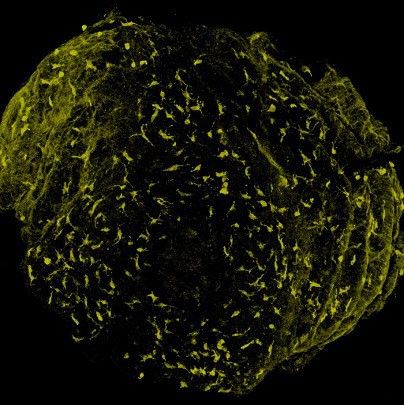
Tiny brain models, big questions

A new precision health investigation helps address a key question: What happens to the human brain in space?

The experiment sends small, lab-grown models of the human brain to the orbiting laboratory for five weeks. Researchers compare tissue models that traveled to space with identical ones kept on Earth to determine how a short spaceflight affects the human brain at the cellular level.

The effort could deepen our understanding of how the human brain responds to stress and help lay the groundwork for methods that counter risks to brain health that astronauts may face on future missions to the Moon and beyond.

Disease-resistant crops for space

A space crops investigation tests whether crop diseases develop faster and more severely in microgravity.

The experiment compares molecular and structural changes between Earth-grown and space station-grown plants infected with a disease-causing fungus. The findings could guide plant breeding on Earth to produce disease-resistant crops and help minimize yield losses in future space agriculture systems.

Space crops provide nutrition, increase dietary variety, and offer psychological benefits for astronauts during extended missions. They also absorb carbon dioxide, produce oxygen, and recycle water, which will become increasingly important as human missions extend farther from Earth.

Analysis helps astronauts thrive

The spacecraft also carries the first test of a compact microplate reader that arrived aboard the space station earlier this year.

The Commercially Enabled Rapid Space Science initiative experiment tests the device’s ability to detect and measure certain biomarkers such as antibodies, antigens, and proteins.

Use of the plate reader would allow scientists to analyze samples aboard the space station and obtain data quickly, rather than wait for the samples to return to Earth for analysis.

Ultimately, the research aims to support the timely detection of infections and other health issues in astronauts while expanding science capabilities in remote exploration locations where resupply will be more difficult.

Tracking antibiotic-resistant bacteria

A precision health investigation returns for its fourth and final planned stay aboard the space station to study how antibiotic-resistant bacteria survive and evolve in microgravity.

As part of the investigation, astronauts repeatedly sample surfaces throughout the space station to monitor for drug-resistant organisms.

The work could help develop ways to protect astronauts against bacterial infections during long-duration missions. On Earth, the findings could provide insight into how superbugs develop from the overuse of antibiotics.

To learn more about NASA’s biological and physical research in space, visit: https://science.nasa.gov/biological-physical/

Biological & Physical Sciences Division

  • NASA’s Biological and Physical Sciences Division pioneers scientific discovery and enables exploration by using space environments to conduct investigations not possible on Earth. Studying biological and physical phenomena under extreme conditions allows researchers to advance the fundamental scientific knowledge required to go farther and stay longer in space, while also benefitting life on Earth.

NASA’s SpaceX CRS-35 Mission to Launch Health Research

12 Ottobre 2026 ore 19:45

NASA experiments focused on human and plant health and drug-resistant organisms will travel to the International Space Station aboard SpaceX’s 35th Commercial Resupply Services mission for the agency from Cape Canaveral Space Force Station in Florida, advancing research that benefits life on Earth and future exploration.

This research supports astronaut health during long-duration missions through four investigations from the agency’s Biological and Physical Sciences division, including 3D models of the human brain, a crop disease study, a faster way to assess astronaut health, and an analysis of antibiotic-resistant bacteria aboard the space station.

Tiny brain models, big questions

A new precision health investigation helps address a key question: What happens to the human brain in space?

The experiment sends small, lab-grown models of the human brain to the orbiting laboratory for five weeks. Researchers compare tissue models that traveled to space with identical ones kept on Earth to determine how a short spaceflight affects the human brain at the cellular level.

The effort could deepen our understanding of how the human brain responds to stress and help lay the groundwork for methods that counter risks to brain health that astronauts may face on future missions to the Moon and beyond.

Disease-resistant crops for space

A space crops investigation tests whether crop diseases develop faster and more severely in microgravity.

The experiment compares molecular and structural changes between Earth-grown and space station-grown plants infected with a disease-causing fungus. The findings could guide plant breeding on Earth to produce disease-resistant crops and help minimize yield losses in future space agriculture systems.

Space crops provide nutrition, increase dietary variety, and offer psychological benefits for astronauts during extended missions. They also absorb carbon dioxide, produce oxygen, and recycle water, which will become increasingly important as human missions extend farther from Earth.

Analysis helps astronauts thrive

The spacecraft also carries the first test of a compact microplate reader that arrived aboard the space station earlier this year.

The Commercially Enabled Rapid Space Science initiative experiment tests the device’s ability to detect and measure certain biomarkers such as antibodies, antigens, and proteins.

Use of the plate reader would allow scientists to analyze samples aboard the space station and obtain data quickly, rather than wait for the samples to return to Earth for analysis.

Ultimately, the research aims to support the timely detection of infections and other health issues in astronauts while expanding science capabilities in remote exploration locations where resupply will be more difficult.

Tracking antibiotic-resistant bacteria

A precision health investigation returns for its fourth and final planned stay aboard the space station to study how antibiotic-resistant bacteria survive and evolve in microgravity.

As part of the investigation, astronauts repeatedly sample surfaces throughout the space station to monitor for drug-resistant organisms.

The work could help develop ways to protect astronauts against bacterial infections during long-duration missions. On Earth, the findings could provide insight into how superbugs develop from the overuse of antibiotics.

To learn more about NASA’s biological and physical research in space, visit: https://science.nasa.gov/biological-physical/

Biological & Physical Sciences Division

  • NASA’s Biological and Physical Sciences Division pioneers scientific discovery and enables exploration by using space environments to conduct investigations not possible on Earth. Studying biological and physical phenomena under extreme conditions allows researchers to advance the fundamental scientific knowledge required to go farther and stay longer in space, while also benefitting life on Earth.

❌