Vista elenco

System76 boss reckons he can liberate the entire PC stack... just give him another 15 years

17 Giugno 2026 ore 11:15
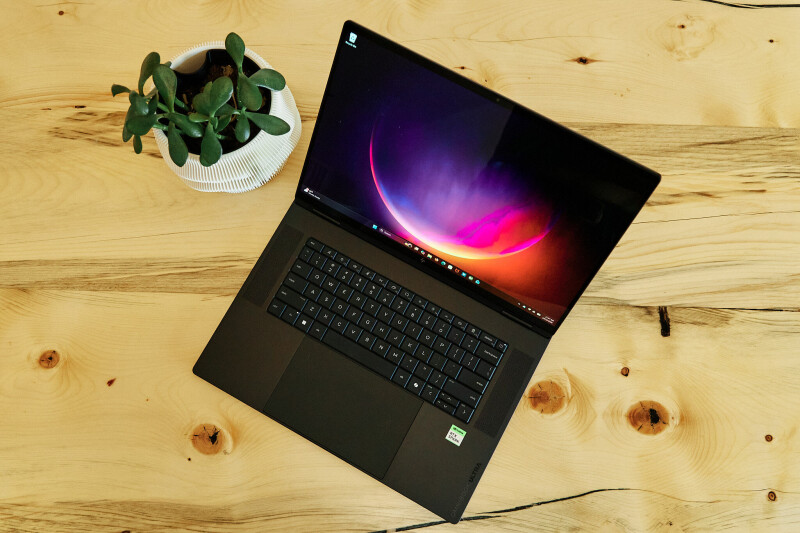
INTERVIEW There are only a handful of dedicated Linux PC vendors. One of the best-known is the 20-year-old American company System76. It's not just a business that installs Linux on PCs. System76 is building something rare in 2026: a vertically integrated Linux‑first computing stack that treats open source as an engineering north star, not just marketing copy. We spoke to founder and CEO Carl Richell about where System76 began and where it's going. When Richell started System76 20 years ago, he had "$1,500 in my basement" and no venture capital. He only had a bet that there were enough serious Linux users to sustain an honest, Linux‑only PC company. It has since grown organically into a factory operation in Denver, where raw aluminum sheets and billets come in one end and finished Thelio desktops roll out the other, complete with in‑house firmware and Linux preloads. It wasn't an immediate success. The growth curve was incremental. The company started in a basement, moved to a tiny office, then a slightly larger office, a still bigger one in downtown Denver, and, more recently, System76 operates out of its own factory. There, the company says, its servers, desktops, and laptops are "designed by nerds. Engineered by experts. Handcrafted by humans." All this was funded, Richell said, by reinvested profits and conventional machinery loans rather than venture capitalists. This was by design. That choice means there's no VC partner demanding an "exit" or pushing for a pivot away from Linux and open source; Richell says they "work for our customers and we work for each other," and have "never had to really roll the dice on the company," just take calculated risks. That deliberate pacing also shaped the culture. Many of the engineers who could "go work at Google" stay, he argues, because their "true beliefs align" with System76's open source‑first mission, not a retrofit of openness onto an ad business. For a niche OEM in a hostile, margin‑thin PC market, that ideological stickiness might be as important an asset as any product spec sheet. System76 likes to talk about its community roots, but the company's survival story is written in purchase orders. More than half of its sales are business‑to‑business, and Richell says there are "very few Fortune 500 companies that we don't ship products to," even if those deals are typically developer and engineering rigs rather than sprawling, company‑wide rollouts. Those systems often land in engineering departments and university labs as developer desktops, AI workstations, or high‑end Linux boxes for research workloads rather than accounting PCs. The pitch is a fully integrated Linux platform: hardware designed and manufactured for Linux in Denver, Pop!_OS and COSMIC developed in‑house, and open firmware that can be audited, modified, and redeployed. In a year when AI datacenters have driven up the cost of memory and storage, System76 entered 2026 expecting "much harsher headwinds" from component prices. Instead, demand stayed strong, and the business continues to grow year‑over‑year, suggesting that for a certain class of customer – developers, researchers, and Linux‑centric organizations – the premium for a well‑supported Linux workstation is easier to swallow than the friction of fighting Windows or bespoke dual‑boot setups. System76 keeps that business by pairing the product with the kind of operational plumbing most open hardware upstarts never quite build. That includes tightly coupled support, sales, and engineering teams (support is "ten feet from the sales team") and the ability to trace customer pain directly into product changes. It's a Linux company built like a small enterprise vendor, not a boutique enthusiast shop. On the hardware side, 2026 is the beginning of a new design era, centered on the freshly redesigned Thelio desktop family. Mira is the high‑performance mid‑tower, aimed at users who need serious CPU and GPU throughput in a comparatively compact box. Thelio Major stretches into high‑end desktop territory with support for Threadripper‑class CPUs, ECC memory, and dual power supplies to feed multiple top‑end GPUs. Richell describes Mira as the "beginning of that new desktop design refresh," a platform that lets System76 relearn thermal dynamics, structural design, and manufacturability at scale. They put the chassis through adhesive and mechanical torture tests – robots repeatedly pulling the side and front panels off thousands of times – to ensure the new modular construction would withstand years of use and field servicing. Next up is the Prime, a mini‑ITX desktop that shrinks the new design language into an "adorable, tiny desktop" now going through thermal testing. Further out is "Paleo Mega," an AI workstation designed to carry the thermal and power lessons from Mira and Major into multi‑GPU, AI‑first configurations, where cooling and power delivery are often the limiting factors. The product cadence shows a company that now thinks in platform terms: reuse chassis and thermal designs across a family, and then specialize for AI, compact workstations, and other niches. COSMIC and Pop!_OS as a buildable desktop If hardware is where System76 proves it can build real machines, software is where it tries to shape the broader Linux ecosystem. COSMIC, its Rust‑based desktop for Pop!_OS and other distros, is explicitly designed to be "modular and composable," with components you can replace, extend, or use as building blocks for entirely new UI experiences. Richell argues that before COSMIC, there "wasn't really a Linux desktop… designed to build things" in the way the kernel or the LAMP stack are foundations for other work. COSMIC's components have strict, well‑defined dependencies and are built to be reassembled – by OEMs, distro maintainers, or specialized platforms – into custom desktops for different devices and use cases. In System76's ideal world, COSMIC becomes the UI layer you reach for when you're building your own Linux‑based system, not just the default skin on Pop!_OS. On the user‑facing side, COSMIC is already shipping as a rolling‑release desktop, with new features and fixes flowing into users' machines as soon as they clear QA rather than on slow, monolithic schedules. Since its December 11 release, the project has seen roughly 1,200 merges from 172 contributors, a pace more reminiscent of a popular upstream project than a vendor‑specific shell. That rolling strategy matters right now in gaming, where System76 is devoting fresh attention. The team has recently added support for Wayland's pointer capture protocol, so first‑person shooters and "infinite scroll" scenarios behave correctly, fixed full‑screen window handling for workflows like Steam Big Picture, and tightened a long list of "around the edges" behaviors that used to require user workarounds. In Richell's telling, the aim is to make gaming "just work" on Pop!_OS + COSMIC without hidden incantations, a necessity if Linux gaming is going to be credible outside the hobbyist circle. Pop!_OS itself runs atop Ubuntu LTS, with System76 adopting what Richell – over some internal grumbling – still calls a "hardware enablement stack": newer kernels, Mesa, and related bits to keep up with GPUs and emerging hardware, while COSMIC continues to roll on top. The current release tracks Ubuntu 24.04 LTS; Pop!_OS 26.04 is expected to follow roughly a month after its upstream release, with some delay thanks to Canonical's recent DDoS‑related infrastructure issues. Critically, Pop!_OS has gone "entirely over to Wayland." That move, Richell says, freed the team from trying to build a cutting‑edge desktop on top of legacy X11 stacks and let them align COSMIC with the latest graphics and input pipelines from the start. Ask any Linux vendor about AI in 2026, and you'll likely get a flurry of product names; System76 is more circumspect. While Canonical, for example, is busy wiring "agentic AI tools" into Ubuntu so they're easy to add, Richell says System76 is still "thinking about it" and sees "more questions than answers" for now. The areas where he does see clear value for AI are pragmatic, Linux-user-focused ones, including accessibility features that can leverage AI, and smarter launchers that go beyond fuzzy string matching to actually understand user intent when they hit Super and start typing. In that world, the launcher might answer questions, locate files, or trigger workflows that shrink the distance between "I want this" and "it's done." But AI features will have to be optional, he insists, and designed with "the community's concerns around AI" in mind. For now, the company's to-do list prioritizes HDR, gaming polish, and foundational desktop work over embedding language models everywhere. That restraint might frustrate some early adopters, but it aligns with System76's tendency to ship infrastructure first and pretty features later. On the hardware side, AI shows up more directly in plans for the Paleo Mega workstation and in the market forces buffeting System76's bill of materials. GPU and memory prices are being driven upward by datacenter AI demand, which in turn raises the costs of high‑end desktops and workstations. The surprise for Richell is that demand for System76's boxes has held steady despite those increases, suggesting a base of customers who see local, Linux‑native AI workstations as a necessary capital expense rather than a nice‑to‑have. If there's a single idea that animates Richell when he talks about System76's next decade, it's the dream of "liberating the entire stack." Open source has already transformed the operating system and much of the software above it; he'd like to see hardware follow, turning the motherboard, firmware, and even some silicon into something you can read, fork, and improve. To that end, he said, "anything that we design inside of System76 is open hardware." System76 wants to go further with open hardware by creating reusable components that others can build into their own designs. Think of chassis elements, power distribution boards, or controller modules that can be dropped into third‑party projects – hardware analogs to open libraries and frameworks. The obstacles are obvious: CPUs, memory, and most major silicon are still dominated by opaque supply chains, NDAs, and closed firmware. RISC‑V offers a path toward open instruction set architectures, and System76 is watching that space as a way to eventually reduce its dependence on closed processor platforms. In the meantime, it has chipped away where it can, shipping its own open EC (embedded controller) firmware and adopting coreboot‑based system firmware on many laptops, closing a gap Richell once thought might never be solved. "It took us 15 years, but we got there," he says about open firmware. That timeline is probably the right yardstick for the rest of the hardware vision. Over the next decade, he wants System76 to take on more design and manufacturing in‑house, build more of its own components, and gradually expand the platform's surface area that can be studied, modified, and reused by others. The company will never be able to satisfy the most uncompromising free‑software purists – Richell readily admits they can't "work in a totally purist fashion" and stay in business – but its trajectory is pointed toward more openness, not less. For many developers and organizations who want control without giving up modern hardware, that may be enough. In 2026, most stories about PCs involve consolidation, commoditization, or retreat from the desktop toward cloud services and locked‑down devices. System76 is betting on a different future: one where there's enduring demand for machines you can understand, repair, and reimagine, running an OS that treats you as the operator rather than the product. It's a risky path. The company operates in a small, noisy niche where many rivals have tried and failed; Linux‑only hardware vendors have come and gone, often leaving behind little more than a blog post and some unfulfilled orders. System76's answer is to behave less like a startup and more like a craft manufacturer crossed with a small enterprise vendor: design your own hardware, invest in a factory, write your own desktop, and grow slowly enough that you never lose sight of the people actually using the machines. If the next ten years look anything like what Richell hopes, System76 could end up not just as "the company that still makes Linux desktops," but as the reference implementation for an open, full‑stack computing platform. In a world increasingly defined by black‑box AI and sealed hardware, that might be its most radical feature. ®

Commodore gets into the phone biz with Sailfish-powered retro 'Callback'

16 Giugno 2026 ore 20:01
Retro computing brand Commodore has brought its pre-internet sensibilities to the mobile phone market with a $500 flip handset that proudly ships without social media, email, a web browser, or most of the things people typically buy smartphones to use. The company unveiled the device, dubbed Callback, this week and pitched it as a privacy-focused antidote to doomscrolling. Built in partnership with Finnish outfit Jolla, whose Sailfish OS traces its roots back to former Nokia engineers, the Linux-based handset attempts to split the difference between a feature phone and a smartphone. If your idea of progress is deleting half the apps on your phone, Callback may be for you. Commodore has removed email, social media, web browsing, workplace chat apps, and AI assistants, while bringing back physical controls and T9-style texting. Instead, buyers get a flip phone with a 48 MP Sony camera, FM radio, HD audio support, a selection of Commodore-themed games, and enough Android compatibility to run "99 percent" of Android applications through Sailfish OS's compatibility layer. "Phones were fun. Then they got too smart for their own good, and ours," said Commodore chief executive Peri Fractic, who said the idea grew out of his own efforts to reduce screen time before becoming a father. The company leans heavily on privacy as a selling point, promising no hidden data collection, no account sign-ins, encrypted storage, and what it describes as a "private not profit" business model. For many tech veterans, however, the real selling point may simply be the badge on the front. Long before smartphones, app stores, and algorithmic feeds, Commodore systems occupied bedrooms, classrooms, and living rooms around the world. For a generation of geeks, the brand still evokes cassette tape loading screens, SID-chip soundtracks, and countless hours spent typing programs from magazine listings. That's also why the company keeps getting resurrected. Commodore International collapsed in 1994, but the brand has spent much of the intervening decades bouncing between various owners eager to capitalize on the affection still attached to the name. Callback will initially launch in five versions, ranging from a $500 BASIC Beige model to a $640 Founders Edition complete with a 24-carat gold Commodore button. Whether nostalgia translates into sales remains another matter. Privacy-focused and minimalist phones have appeared regularly over the past decade, such as Punkt, usually attracting plenty of headlines and relatively few customers compared with the hundreds of millions of mainstream smartphones sold each year. Still, for anyone nostalgic for the days when hanging up the phone actually ended the conversation, Commodore has an answer: snap it shut and walk away. ®

Britain plots digital bedtime after kicking under-16s off social media

15 Giugno 2026 ore 11:14
The UK government is preparing to kick under-16s off social media and clamp down on a range of online features aimed at children, declaring that Big Tech has had its chance to police itself and failed. Prime Minister Keir Starmer announced plans on Monday to ban under-16s from social media as part of a package that also includes new restrictions on livestreaming, stranger contact, disappearing messages, and AI companion chatbots. The legislation is expected to be introduced before Parliament's Christmas recess, with the new rules due to take effect in spring 2027. "Parents want to keep their kids safe and happy, but the online world has made that harder than ever," Starmer said. "I've heard firsthand from families crying out for change and we will do right by them." The prime minister reserved his sharpest criticism for the technology industry. "This is a line in the sand," he said. "Tech giants had their chance and failed, but we're stepping in to protect children, back parents, and set a new normal for future generations." The government is pitching the move as a direct response to parental concerns. According to its Growing Up in an Online World consultation, 91 percent of parents who responded supported a minimum age of 16 before social media platforms can offer services to children. More than four in five respondents said the risks of social media outweigh the benefits for children, while 88 percent said fewer children would be exposed to inappropriate or harmful content if age restrictions were introduced. Ministers also point to evidence that many parents are simply exhausted by the battle over screen time. Three-quarters of respondents said restrictions would lead to fewer arguments at home, while 77 percent said schools and teachers would find it easier to manage children's digital behavior. The government said it intends to follow Australia's model by targeting user-to-user platforms whose primary purpose is social interaction and user-generated content. That would include services such as Snapchat, TikTok, YouTube, Instagram, Facebook, and X. The social media ban is only part of the package. Ministers also want to restrict a range of features they say expose children to harm, including stranger contact, explicit image sharing, livestreaming, and AI companion chatbots. Those restrictions would remain in force by default for 16 and 17-year-olds as well to avoid what ministers describe as a "cliff edge" when children turn 16. Ministers are also examining further measures for under-18s, including overnight social media curfews and mandatory breaks in infinite scrolling, with additional details expected in July. The government said it will seek to avoid some of the problems encountered in Australia by requiring what it describes as "highly effective age assurance" measures. Whether those systems prove any better at telling teenagers from adults remains unclear: recent age-verification trials have already produced examples of youngsters reportedly bypassing checks using little more than a drawn-on mustache. Ofcom, which will be responsible for enforcing much of the regime, signaled support for the government's plans. "So far, Ofcom has driven some of the strongest changes of any online safety regulation in the world, from widespread age checks to grooming protections for children," a spokesperson said. "But the industry needs to go much further to make people safe. The government has entrusted us to build on this progress with new measures to protect children, and we're ready to work closely with them as the detailed regulations take shape." But not everyone is convinced the government has found the right answer. James Baker, Platform Power and Freedom of Expression Programme Manager at the Open Rights Group, warned that lawmakers risk repeating a familiar pattern. "Every failed attempt to make children safer online is followed by more surveillance and censorship," he said. "Children have rights too and these policies will harm their free expression and privacy rights, and push them into less regulated spaces. Meanwhile the business models driving harms are untouched." Others questioned whether the measures can realistically be enforced. Mark Jones, an online harms specialist and partner at law firm Payne Hicks Beach, noted that the consultation closed only weeks ago and warned that determined teenagers have a habit of finding ways around restrictions. "A social media ban only helps if it is genuinely enforceable," Jones said. "If large numbers of young people simply circumvent the restrictions, parents will just lose visibility into where their children are actually spending time online rather than reclaiming any control." The political case for the crackdown appears relatively straightforward, but the practical one is less so. The government now has to persuade social media companies to enforce the rules and teenagers not to find ways around them. ®

Scientists pour cold water on claims phones are rewiring kids' brains

14 Giugno 2026 ore 09:30
MPs looking for proof that smartphones and social media are rotting children's brains got a less satisfying answer from neuroscientists on Wednesday: nobody can really prove it. Appearing before the Science, Innovation and Technology Committee this week, three researchers spent much of the session explaining that concern and evidence are not quite the same thing. Asked what evidence exists on the impact of digital devices on infants and young children, Professor Denis Mareschal, director of the Centre for Brain and Cognitive Development at Birkbeck, replied: "There is very little, if any, causal research in the early years. Almost everything is correlational." MPs kept coming back to the question – and the experts kept coming back to the same answer. When questioned about social media's impact on adolescents, Professor Sarah-Jayne Blakemore of the University of Cambridge was equally cautious. "What evidence do we have of the impact of digital devices or social media on the adolescent brain?" she asked. "Almost nothing. There are a few small studies, but they haven't been replicated, and they're purely correlational." However, that didn't stop the witnesses from expressing concern. Blakemore noted that adolescence is a period when reward systems in the brain are highly active while regions involved in self-control are still developing. "Even as adults, it's really hard to put our phones down if we're seeing constantly interesting things, but as a child or an adolescent whose prefrontal cortex is developing, it's even harder," she said. For Dr Dusana Dorjee, a senior lecturer in psychology in education at the University of York, the bigger concern was displacement. Children learn self-regulation through conversation, play, sport, and social interaction, she said, which can be crowded out by excessive screen use. "What would children do if they were not on their devices?" she asked. "They would interact with others, they would play, they would have multi-sensory input that digital devices can't provide." The researchers were also reluctant to throw every screen into the same bucket. Mareschal pointed to evidence that video calls can help families stay connected, while Dorjee drew a distinction between educational apps and endlessly scrolling whatever an algorithm decides comes next. MPs also wanted to know whether neuroscience could settle one of the liveliest arguments in the debate: how old a child should be before they're allowed onto social media. "What neuroscience can't do is pinpoint a precise age," Blakemore said. "The individual differences in brain development are vast." AI companions also got their turn in the hot seat, and the answers were even fuzzier than they were for social media. "We don't really have any evidence, and that's one area where I think we really urgently need new evidence," Blakemore said. "We need to think about, and this is the research question, how children and young people are interpreting AI chatbots, and whether they're interpreting them just like they would be interpreting a friend's behavior and suggestions and mental states." If there was a takeaway from the hearing, it was that concern about digital childhood is running well ahead of the evidence needed to settle the argument. ®

This is your BIOS speaking. Please fix me. Your PC is broken

12 Giugno 2026 ore 08:30
ON CALL 你好 Nǐ hǎo, dear reader, and welcome to another installment of On Call, The Register's Friday column that shares your stories of translating technical trauma while delivering transcendent tech support. This week, meet a reader we'll Regomize as "Jackson" who told us about his time providing tech support in a university's biology department. "It was sometime in the mid-2000s and our IT group at the time consisted of myself, my boss, and a part-timer," he told On Call. "We were a very casual IT group; nothing in the way of any formal policies or standards for anything at all. If someone needed a new PC, we just ordered parts and assembled them ourselves." The department's PC fleet therefore had a diverse gene pool, with no two machines possessing the same bill of materials. "This was fine by me – I enjoyed building them and it never really caused any issues that I couldn't handle," Jackson told On Call. "Until one day we got a panicked support call from one of the secretaries who claimed that her PC just rebooted and then started talking to her." Jackson and his colleagues didn't believe a word of it until the secretary stopped talking and placed her phone next to the talking PC. "I could clearly hear a muffled voice repeating a message of some sort," Jackson told On Call. There was nothing for it but to visit the PC, which he found hung in the middle of a Power-On Self-Test, flashing an alphanumeric error code and unmistakably playing a voice through its internal speaker. In Chinese! Jackson rebooted the machine and it ended up in the same state, reciting the same message. Chinese isn't a language in which Jackson is fluent, so he had no idea what the PC was trying to tell him. "After poking around in the BIOS, I found the culprit," Jackson revealed. "This particular model of motherboard had a 'talking error BIOS' whereby certain POST codes triggered the playback of a friendly, spoken error message, with Chinese set as the default language." Jackson found the relevant BIOS settings, changed the default language to English, and the next time he rebooted the machine it helpfully let him know: "Your floppy drive may not be connected properly." In his mail to On Call, Jackson hypothesized that the PC's CMOS battery died, so the BIOS was unable to access its stored settings and reverted to factory settings that assumed the presence of a nonexistent second floppy drive. "It triggered a feature I didn't even know the motherboard had!" Jackson told On Call. Have you found yourself flummoxed by a feature you didn't know about? If so, click here to send On Call an email – we'll assume that's a feature you know well – so we can tell your story on a future Friday. ®

Trump phone has HTC guts. Tremendous guts. The best guts

11 Giugno 2026 ore 18:13
It won't be making smartphones great again. The long-awaited Trump-branded smartphone has finally arrived, and it appears to be exactly what many suspected: an existing handset in gold drag. Repair biz iFixit got its hands on the Trump Mobile T1 after the device became available in May, and its teardown found the model is essentially an HTC U24 Pro with cosmetic tweaks and a Trump-friendly gold finish. It was almost exactly a year ago that the Trump Organization unveiled the Trump Mobile cellular service and heralded the coming of the T1 Phone, described as "a sleek, gold smartphone engineered for performance and proudly designed and built in the United States." Few expected the gilt gadget to live up to that promise, as there are effectively no mass-market smartphones built in the US, with the possible exception of Purism's Liberty Phone, which is priced at a challenging $1,999 for those who absolutely must have a smartphone made outside China. Despite accepting $100 deposits to pre-order the coveted handwarmer, Trump Mobile failed to deliver the device by August last year, as promised, and many started to believe it would never show up. But it arrived this May amid claims that the Trump Mobile website was leaking customer data to anyone who sent an HTTP POST request. The nerds at iFixit passed the Trump Phone through a CT scanner alongside an HTC U24 Pro to confirm that the internals of the two devices are almost an exact match. They even went so far as swapping the main board of the T1 for that of the HTC phone, and showed that it not only fits, but the phone still works. One difference iFixit noted is that the multichip package housing the 12 GB of LPDDR5 memory and 512 GB of storage is from Micron, whereas the corresponding package in HTC's phone is supplied by SK hynix. The HTC U24 Pro is a mid-range smartphone that was launched almost exactly two years ago in June 2024. It is based on the Qualcomm Snapdragon 7 Gen 3 platform, has a 6.8-inch display, and came with Android 14 at launch, whereas the Trump phone features Android 15. In other words, it's a fairly unremarkable smartphone, sprayed gold and marketed to Trump fans for a promotional price of $499. To be fair, as iFixit makes clear, this is not a bad price for a device like this, so aureate wannabes are not being overcharged here. But as iFixit also makes clear, the device may be assembled in Florida, but it was designed in China and the vast majority of its parts have been sourced from and made in China as well. ®

Met Police joins forces with Apple to choke London's stolen phone trade

11 Giugno 2026 ore 14:27
London's Metropolitan Police and Apple have agreed to share stolen device identifiers, building intelligence they hope will curb the capital's phone theft epidemic. These identifiers will help both organizations track which stolen devices reconnect to mobile networks, giving law enforcement better insight into where the criminal networks behind the thefts operate. The Met has access to stolen device information, such as serial numbers, provided by victims. Apple has access to data indicating when a device has been reactivated and where it's being used. Together, the two organizations believe this combined intelligence will help stamp down on the thefts that have ravaged London's streets for years, earning the city the unofficial title of "phone theft capital of Europe." "If stolen phones cannot be reactivated, their value collapses, and so does the incentive to steal them," said Metropolitan Police commissioner Sir Mark Rowley. "We are driving up the risk for offenders while cutting off the reward. "Policing is playing its part. In the West End, where this crime was most concentrated, phone theft has fallen by 50 percent through relentless, targeted policing. But we have also gone further by working directly with Apple to address the global market that has allowed this crime to thrive. "This is an important step, but it must not stop here. If you are stealing phones in London, the reality is changing fast. The opportunities are shrinking, the risks are rising, and we are determined to dismantle this criminal model completely." The intelligence-sharing pact follows months of pressure on both the Met and tech companies to take action. Dame Chi Onwurah, chair of the Science, Innovation and Technology Committee, wrote to Home Secretary Shabana Mahmood in December, asking why companies like Apple had not implemented cloud-based blocking or IMEI-linked device locks. Apple launched Stolen Device Protection in January 2024 and has since expanded default-on protections with the iOS 26.4 update, but there has long been a feeling that not enough was being done to tackle London's phone thefts. Rowley reiterated the ultimatum he issued to tech companies in March, demanding that they implement methods of reducing the value of stolen devices, or the UK will push through legislation. The collaboration with Apple is an extension of that, and the Met said Samsung and Google are also making security changes. Google uses several mitigations, including the need for authentication after a factory reset in order to return devices to working order, and an AI-powered feature that detects when devices are snatched and automatically locks the screen. A spokesperson at Google told The Register: "Android's theft protection features provide added security for billions of people, including Londoners. We have expanded default-on protections for UK devices, such as Remote Lock and Theft Detection, and we assist law enforcement with device recovery. Phone theft causes real distress and harm, and we work closely with the Met to protect all those who use our devices." Samsung said last year that it was working with the Home Office to deploy similar measures to tackle phone thefts. It implemented theft-detection tech similar to Google's that locks the screen when the device registers a possible snatching-related movement. It also requires biometric authentication to make security changes when devices are in unfamiliar locations, among other features. Not enough In spite of these actions, the Met announced today that it has asked the Home Office to start drafting anti-phone-theft legislation. "The Met has asked the Home Office to begin preparing legislation to introduce minimum technical standards so that any phone stolen in the UK is effectively unusable," it said. "These standards are complex, but we must be ready to act if industry fails to deliver. "Public support for stronger measures is clear, with 83 per cent of people backing the permanent blocking of stolen smartphones." It added: "While enforcement activity will continue, the Met is clear that the long-term solution lies in collapsing the criminal market." The Register has asked Apple to comment. A Samsung spokesperson said: "Samsung is fully committed to protecting customers with the very latest anti-theft feature technology. We recognise how distressing phone theft can be and have worked at pace to make a significant amount of security enhancements to help address this issue. "We would also like to reiterate that we have completed several requests from both the Home Office and the Met Police to demonstrate how seriously we take phone theft crime." The spokesperson added: "We believe this issue is a collective responsibility and we will continue to work with key stakeholders to help tackle phone-theft crime." The Met said it has almost halved rates of phone thefts in Westminster, with officers making hundreds of arrests and seizing thousands of devices. Thefts are down 45.8 percent, according to data gathered between January and May, although the picture across the wider city is a little less optimistic. The number of theft and robbery offenses in which a mobile phone was stolen has fallen by 14,000 in the last 12 months, representing an 18 percent decrease from the previous year. So far in 2026, overall offenses are down 20.6 percent compared to the same period in 2025. These arrests and seizures were secured through focused periods of enforcement action, namely through Operation Reckoning sprints, the fifth instalment of which concluded on Wednesday. The ten-day operational crackdown on phone thefts across London began on June 1 and resulted in the arrest of "prolific and violent phone thieves," the execution of search warrants at shops suspected of handling stolen devices, and the deployment of pursuit drivers to detain thieves on e-bikes. One visit to a single shop in April saw officers seize more than 1,000 suspected stolen phones and arrest four men between the ages of 22 and 63 on suspicion of handling stolen goods, as well as drug possession with intent to supply. Operation Reckoning is just one initiative targeting phone theft. The Met said last year that in September it dismantled a phone-robbing gang thought to be responsible for roughly half of all phone thefts in London – part of Operation Echosteep. ®

❌