❌

Vista elenco

NASA Names Stephen Cash Marshall Space Flight Center Director
16 Ottobre 2026 ore 22:14
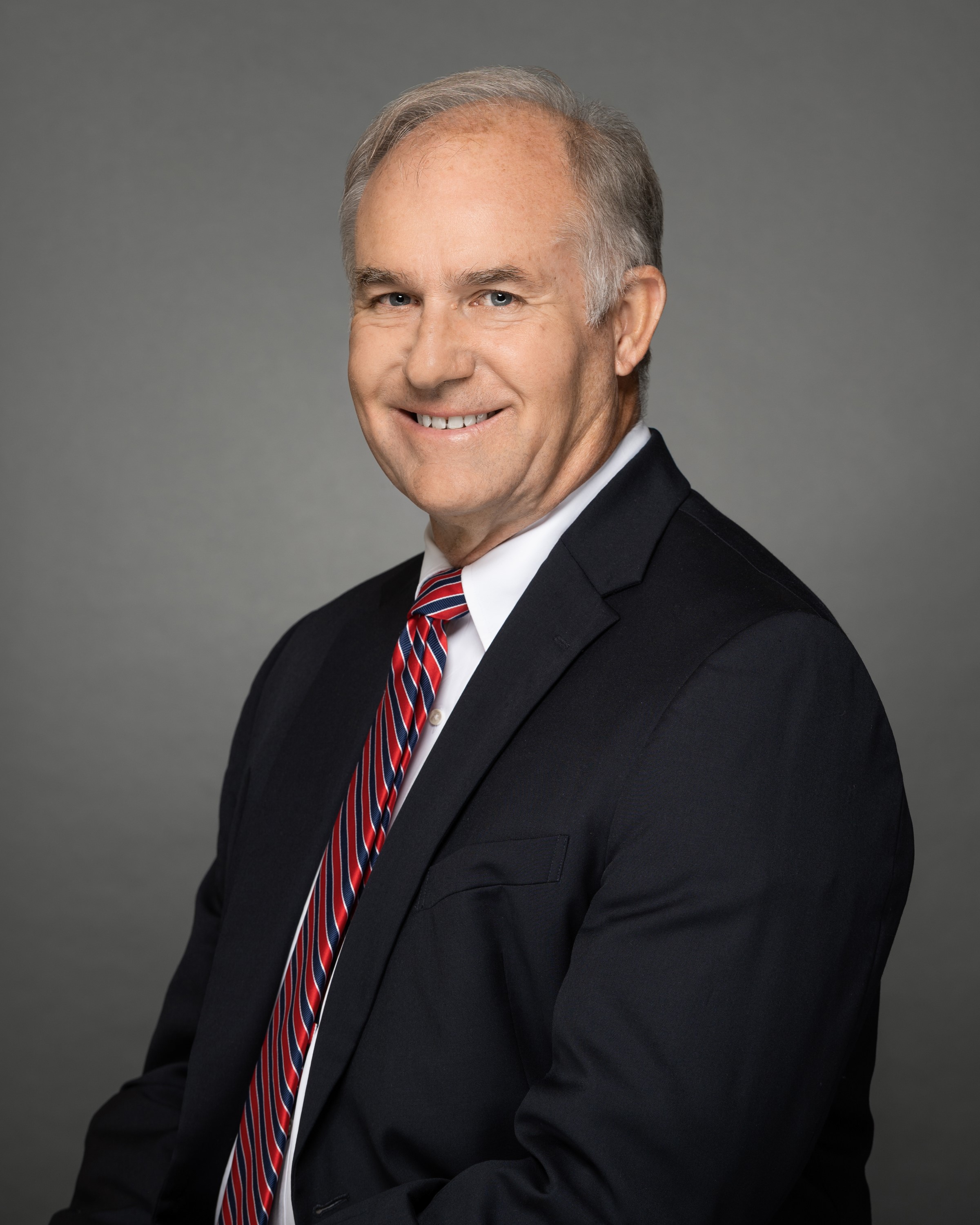
Stephen Cash
Photo of Stephen Cash

NASA Administrator Jared Isaacman has named Stephen Cash director of the agency’s Marshall Space Flight Center in Huntsville, Alabama, effective Monday, Oct. 19. Cash, a veteran NASA engineer and aerospace executive, returns to lead the center where he began his career more than four decades ago.

“Marshall contributions to NASA’s missions are historic and it’s no question why it’s the Center of Excellence for propulsion,” said Isaacman. “Steve Cash is a Marshall legend, has spent his career around the hardware, the people and has been in the seat before making the decisions when human spaceflight is on the line. As Marshall continues its critical role in Artemis and takes on new challenges in advanced propulsion, nuclear power, and the systems that will carry us deeper into the solar system, Steve brings the experience, technical judgment, and mission focus needed to lead the center into that next chapter. I am also grateful to Rae Ann Meyer for the leadership she has provided to Marshall during this transition and for her continued service to NASA.” 

“Leading a NASA center requires a commitment to its people and to the technical capabilities entrusted to them,” said Amit Kshatriya, NASA associate administrator and chief engineer. “Steve understands that the jewel of Marshall is its workforce and that engineering excellence is sustained by giving talented people the opportunity to design, build, test, and learn through hands-on work. As Marshall continues strengthening the manufacturing, structural loads and dynamics, and propulsion capabilities that underpin NASA’s exploration enterprise, Steve’s leadership will help ensure the workforce has opportunities to develop and apply the expertise needed to deliver the agency’s most ambitious missions.”

 As center director, Cash will lead one of NASA’s largest field centers, overseeing a workforce of more than 5,000 civil service and contractor employees and a broad portfolio of propulsion, space systems, scientific research, and technology development activities.  Marshall plays a critical role in NASA’s Artemis program, including the development of NASA’s SLS (Space Launch System) rocket, management of the Human Landing System Program, as well as other capabilities supporting sustained exploration of the Moon and future missions to Mars. Further, Marshall plays a key role in the advancement of nuclear power and propulsion, an area of focus that is expected to grow as NASA works towards sending the first humans to Mars.  

“It is a profound honor to be back home at the Marshall Space Flight Center,” said Cash. “I am humbled to stand alongside the brilliant minds here as we continue to turn the impossible into everyday history.”

Cash began his NASA career at Marshall in 1982 and spent 34 years with the agency, holding senior engineering and management positions supporting some of the nation’s most significant human spaceflight programs.

During his NASA career, Cash served as manager of Marshall’s Space Shuttle Propulsion Office, overseeing critical propulsion systems supporting shuttle through its final missions. He later served as director of Marshall’s Safety and Mission Assurance Directorate from 2011 until his retirement in 2016, providing leadership in safety, reliability, and quality engineering to support mission success across the center.

Following his retirement from NASA, Cash continued his work in the aerospace industry, including serving as vice president for advanced space systems at Axient, supporting the development and execution of major spaceflight programs. In 2024, he was inducted into the Alabama Engineering Hall of Fame in recognition of his contributions to engineering and the nation’s space program.

Cash succeeds Rae Ann Meyer, who has served as Marshall’s acting center director since September 2025. Meyer, who previously served as Marshall’s deputy center director and associate director, has provided leadership and continuity across the center’s programs and operations during her tenure as acting director. Meyer will return to her role as Deputy Center Director.

Established in 1960, Marshall has played a central role in American space exploration for more than six decades, from developing the Saturn rockets that carried astronauts to the Moon during Apollo to advancing the propulsion systems, infrastructure, and technologies supporting the next era of human spaceflight.

For more information about NASA’s Marshall Space Flight Center, visit:

https://www.nasa.gov/marshall

-end-

George Alderman / Cheryl Warner
Headquarters, Washington
202-358-1600
george.a.alderman@nasa.gov / cheryl.m.warner@nasa.gov

Lance Davis
Marshall Space Flight Center, Huntsville, Ala.
256-544-0034
lance.d.davis@nasa.gov

Share

Details

Last Updated
Oct 16, 2026

NASA Astronauts to Answer Questions from Florida Students

14 Ottobre 2026 ore 21:12
NASA astronaut Jessica Watkins assists NASA astronaut Luke Delaney as he practices suiting up in a spacesuit in an International Space Station airlock simulator on May, 5, 2026, at the agency's Johnson Space Center Space Vehicle Mockup Facility in Houston.
NASA astronaut Jessica Watkins assists NASA astronaut Luke Delaney as he practices suiting up in a spacesuit in an International Space Station airlock simulator on May 5, 2026, at the agency’s Johnson Space Center Space Vehicle Mockup Facility in Houston.
Credit: NASA

Editor’s Note: This article was updated Thursday, Oct. 15, 2026, to reflect a change to the event start time.

Students in Florida will hear from NASA astronauts Jessica Watkins and Luke Delaney as they answer prerecorded STEM questions while aboard the International Space Station.

The Earth-to-space call will begin at 12:30 p.m. EDT Friday, Oct. 16, and will stream live on the agency’s Learn With NASA YouTube channel.

This event is hosted by Sally Ride Elementary School in Orlando, Florida, for students in grades K-12, and the community. This unique opportunity aims to deepen understanding of space exploration and enhance awareness of STEM careers.

Media interested in covering the event must RSVP no later than 5 p.m. EDT, Thursday, Oct. 15, to Jenny Morgan at (407) 858-3100, or at jenny.morgan@ocps.net.

For more than 25 years, people have lived and worked continuously aboard the International Space Station, advancing scientific knowledge and making research breakthroughs not possible on Earth. The space station helps NASA understand and overcome the challenges of human spaceflight, expand commercial opportunities in low Earth orbit, and build on the foundation for long-duration missions to the Moon, as part of the Artemis program, and to Mars.

For more information on NASA in-flight calls, visit:

https://www.nasa.gov/stemonstation

NASA Astronauts to Answer Questions from Florida Students

14 Ottobre 2026 ore 21:12
NASA astronaut Jessica Watkins assists NASA astronaut Luke Delaney as he practices suiting up in a spacesuit in an International Space Station airlock simulator on May, 5, 2026, at the agency's Johnson Space Center Space Vehicle Mockup Facility in Houston.
NASA astronaut Jessica Watkins assists NASA astronaut Luke Delaney as he practices suiting up in a spacesuit in an International Space Station airlock simulator on May 5, 2026, at the agency’s Johnson Space Center Space Vehicle Mockup Facility in Houston.
Credit: NASA

Editor’s Note: This article was updated Thursday, Oct. 15, 2026, to reflect a change to the event start time.

Students in Florida will hear from NASA astronauts Jessica Watkins and Luke Delaney as they answer prerecorded STEM questions while aboard the International Space Station.

The Earth-to-space call will begin at 12:30 p.m. EDT Friday, Oct. 16, and will stream live on the agency’s Learn With NASA YouTube channel.

This event is hosted by Sally Ride Elementary School in Orlando, Florida, for students in grades K-12, and the community. This unique opportunity aims to deepen understanding of space exploration and enhance awareness of STEM careers.

Media interested in covering the event must RSVP no later than 5 p.m. EDT, Thursday, Oct. 15, to Jenny Morgan at (407) 858-3100, or at jenny.morgan@ocps.net.

For more than 25 years, people have lived and worked continuously aboard the International Space Station, advancing scientific knowledge and making research breakthroughs not possible on Earth. The space station helps NASA understand and overcome the challenges of human spaceflight, expand commercial opportunities in low Earth orbit, and build on the foundation for long-duration missions to the Moon, as part of the Artemis program, and to Mars.

For more information on NASA in-flight calls, visit:

https://www.nasa.gov/stemonstation

NASA Astronauts to Answer Questions from Florida Students

14 Ottobre 2026 ore 21:12
NASA astronaut Jessica Watkins assists NASA astronaut Luke Delaney as he practices suiting up in a spacesuit in an International Space Station airlock simulator on May, 5, 2026, at the agency's Johnson Space Center Space Vehicle Mockup Facility in Houston.
NASA astronaut Jessica Watkins assists NASA astronaut Luke Delaney as he practices suiting up in a spacesuit in an International Space Station airlock simulator on May 5, 2026, at the agency’s Johnson Space Center Space Vehicle Mockup Facility in Houston.
Credit: NASA

Editor’s Note: This article was updated Thursday, Oct. 15, 2026, to reflect a change to the event start time.

Students in Florida will hear from NASA astronauts Jessica Watkins and Luke Delaney as they answer prerecorded STEM questions while aboard the International Space Station.

The Earth-to-space call will begin at 12:30 p.m. EDT Friday, Oct. 16, and will stream live on the agency’s Learn With NASA YouTube channel.

This event is hosted by Sally Ride Elementary School in Orlando, Florida, for students in grades K-12, and the community. This unique opportunity aims to deepen understanding of space exploration and enhance awareness of STEM careers.

Media interested in covering the event must RSVP no later than 5 p.m. EDT, Thursday, Oct. 15, to Jenny Morgan at (407) 858-3100, or at jenny.morgan@ocps.net.

For more than 25 years, people have lived and worked continuously aboard the International Space Station, advancing scientific knowledge and making research breakthroughs not possible on Earth. The space station helps NASA understand and overcome the challenges of human spaceflight, expand commercial opportunities in low Earth orbit, and build on the foundation for long-duration missions to the Moon, as part of the Artemis program, and to Mars.

For more information on NASA in-flight calls, visit:

https://www.nasa.gov/stemonstation

NASA to Discuss Artemis Acceleration, Status of Upcoming Moon Missions

14 Ottobre 2026 ore 15:32
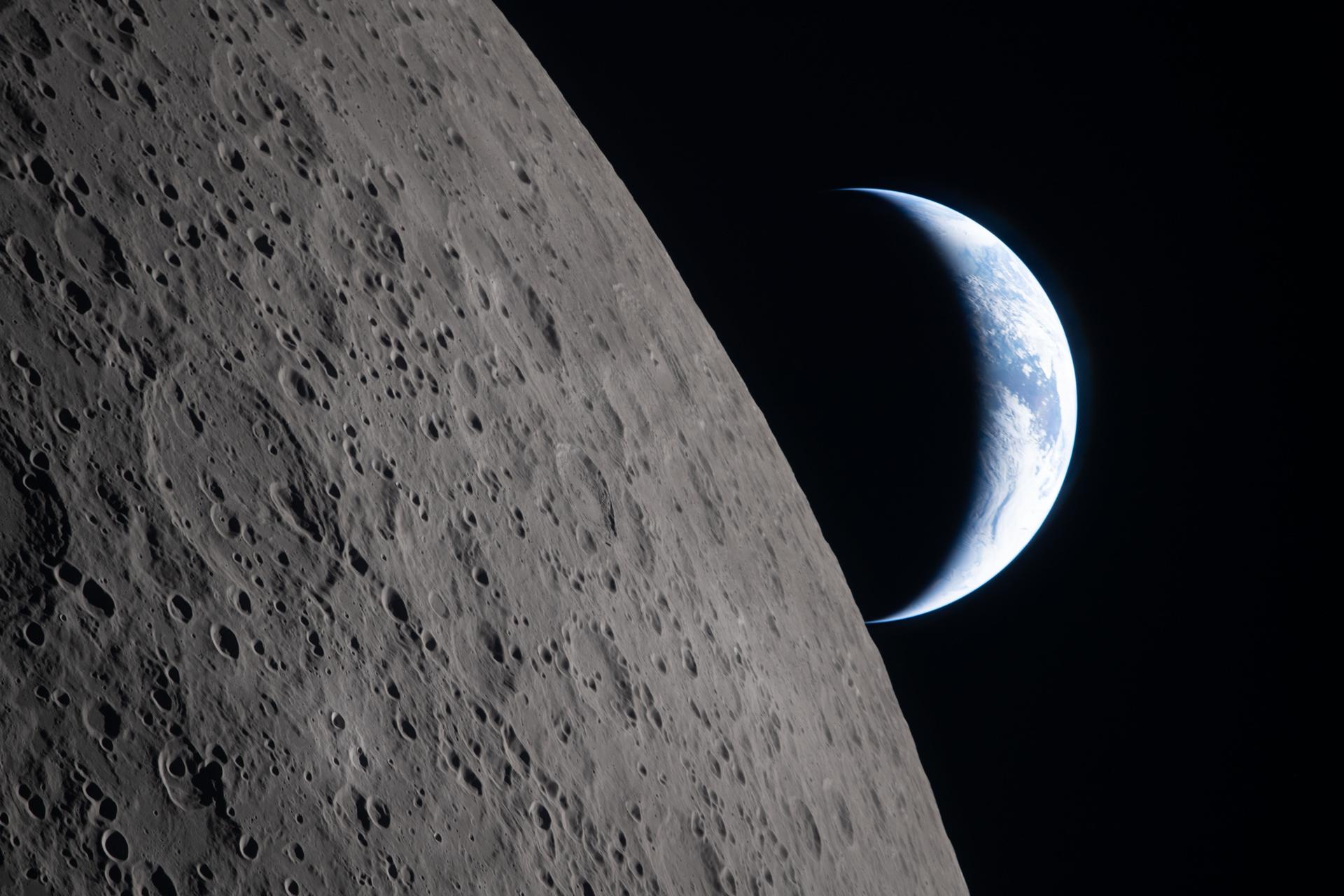
As the Artemis II crew members came close to passing behind the Moon and experiencing a planned loss of signal, they captured this image of a crescent Earth setting on the Moon’s limb on April 6, 2026. The edge of the visible surface of the Moon is called the “lunar limb."
As the Artemis II crew members came close to passing behind the Moon and experiencing a planned loss of signal, they captured this image of a crescent Earth setting on the Moon’s limb on April 6, 2026. The edge of the visible surface of the Moon is called the “lunar limb.”
Credit: NASA

NASA will provide an update on its plans to return American astronauts to the surface of the Moon by 2028 at 2 p.m. EDT, Friday, Oct. 23, at the agency’s Kennedy Space Center in Florida.

Learn where to watch online:

https://www.nasa.gov/live

Participants in the briefing include:

  • NASA Administrator Jared Isaacman
  • NASA Associate Administrator Amit Kshatriya
  • Jeremy Parsons, NASA’s Artemis program manager

The update will include details about NASA’s Artemis III mission that will send four astronauts to low Earth orbit next year to test critical systems needed for future lunar landings, and how plans to return American astronauts to the Moon by 2028 are progressing.

U.S. media interested in attending in person must apply online by 12 p.m., Friday, Oct. 16. To ask questions remotely, media must request the dial-in number from the Kennedy newsroom no later than one hour prior to the start of the update by emailing: ksc-newsroom@mail.nasa.gov. NASA’s media accreditation policy is online. 

As part of a Golden Age of innovation and exploration, NASA will send Artemis astronauts on increasingly difficult missions near the lunar South Pole to explore more of the Moon than ever before. In addition to providing economic benefits and advancing scientific discovery through its Moon missions, NASA will establish an enduring human presence on the lunar surface and build on the agency’s foundation for the first crewed mission to Mars.

Learn more about Artemis:

https://www.nasa.gov/artemis

-end-

Rachel Kraft
Headquarters, Washington
202-358-1600
rachel.h.kraft@nasa.gov

Tiffany Fairley
Kennedy Space Center, Fla.
321-867-2468
tiffany.l.fairley@nasa.gov

Share

Details

Last Updated
Oct 14, 2026
❌