ON CALL 你好 Nǐ hǎo, dear reader, and welcome to another installment of On Call, The Register's Friday column that shares your stories of translating technical trauma while delivering transcendent tech support. This week, meet a reader we'll Regomize as "Jackson" who told us about his time providing tech support in a university's biology department. "It was sometime in the mid-2000s and our IT group at the time consisted of myself, my boss, and a part-timer," he told On Call. "We were a very casual IT group; nothing in the way of any formal policies or standards for anything at all. If someone needed a new PC, we just ordered parts and assembled them ourselves." The department's PC fleet therefore had a diverse gene pool, with no two machines possessing the same bill of materials. "This was fine by me – I enjoyed building them and it never really caused any issues that I couldn't handle," Jackson told On Call. "Until one day we got a panicked support call from one of the secretaries who claimed that her PC just rebooted and then started talking to her." Jackson and his colleagues didn't believe a word of it until the secretary stopped talking and placed her phone next to the talking PC. "I could clearly hear a muffled voice repeating a message of some sort," Jackson told On Call. There was nothing for it but to visit the PC, which he found hung in the middle of a Power-On Self-Test, flashing an alphanumeric error code and unmistakably playing a voice through its internal speaker. In Chinese! Jackson rebooted the machine and it ended up in the same state, reciting the same message. Chinese isn't a language in which Jackson is fluent, so he had no idea what the PC was trying to tell him. "After poking around in the BIOS, I found the culprit," Jackson revealed. "This particular model of motherboard had a 'talking error BIOS' whereby certain POST codes triggered the playback of a friendly, spoken error message, with Chinese set as the default language." Jackson found the relevant BIOS settings, changed the default language to English, and the next time he rebooted the machine it helpfully let him know: "Your floppy drive may not be connected properly." In his mail to On Call, Jackson hypothesized that the PC's CMOS battery died, so the BIOS was unable to access its stored settings and reverted to factory settings that assumed the presence of a nonexistent second floppy drive. "It triggered a feature I didn't even know the motherboard had!" Jackson told On Call. Have you found yourself flummoxed by a feature you didn't know about? If so, click here to send On Call an email – we'll assume that's a feature you know well – so we can tell your story on a future Friday. ®
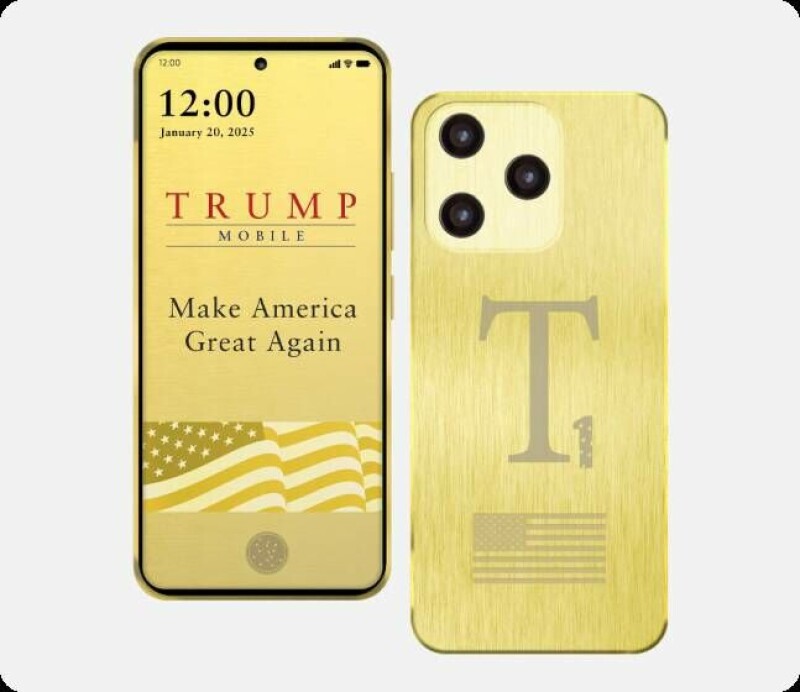
It won't be making smartphones great again. The long-awaited Trump-branded smartphone has finally arrived, and it appears to be exactly what many suspected: an existing handset in gold drag. Repair biz iFixit got its hands on the Trump Mobile T1 after the device became available in May, and its teardown found the model is essentially an HTC U24 Pro with cosmetic tweaks and a Trump-friendly gold finish. It was almost exactly a year ago that the Trump Organization unveiled the Trump Mobile cellular service and heralded the coming of the T1 Phone, described as "a sleek, gold smartphone engineered for performance and proudly designed and built in the United States." Few expected the gilt gadget to live up to that promise, as there are effectively no mass-market smartphones built in the US, with the possible exception of Purism's Liberty Phone, which is priced at a challenging $1,999 for those who absolutely must have a smartphone made outside China. Despite accepting $100 deposits to pre-order the coveted handwarmer, Trump Mobile failed to deliver the device by August last year, as promised, and many started to believe it would never show up. But it arrived this May amid claims that the Trump Mobile website was leaking customer data to anyone who sent an HTTP POST request. The nerds at iFixit passed the Trump Phone through a CT scanner alongside an HTC U24 Pro to confirm that the internals of the two devices are almost an exact match. They even went so far as swapping the main board of the T1 for that of the HTC phone, and showed that it not only fits, but the phone still works. One difference iFixit noted is that the multichip package housing the 12 GB of LPDDR5 memory and 512 GB of storage is from Micron, whereas the corresponding package in HTC's phone is supplied by SK hynix. The HTC U24 Pro is a mid-range smartphone that was launched almost exactly two years ago in June 2024. It is based on the Qualcomm Snapdragon 7 Gen 3 platform, has a 6.8-inch display, and came with Android 14 at launch, whereas the Trump phone features Android 15. In other words, it's a fairly unremarkable smartphone, sprayed gold and marketed to Trump fans for a promotional price of $499. To be fair, as iFixit makes clear, this is not a bad price for a device like this, so aureate wannabes are not being overcharged here. But as iFixit also makes clear, the device may be assembled in Florida, but it was designed in China and the vast majority of its parts have been sourced from and made in China as well. ®
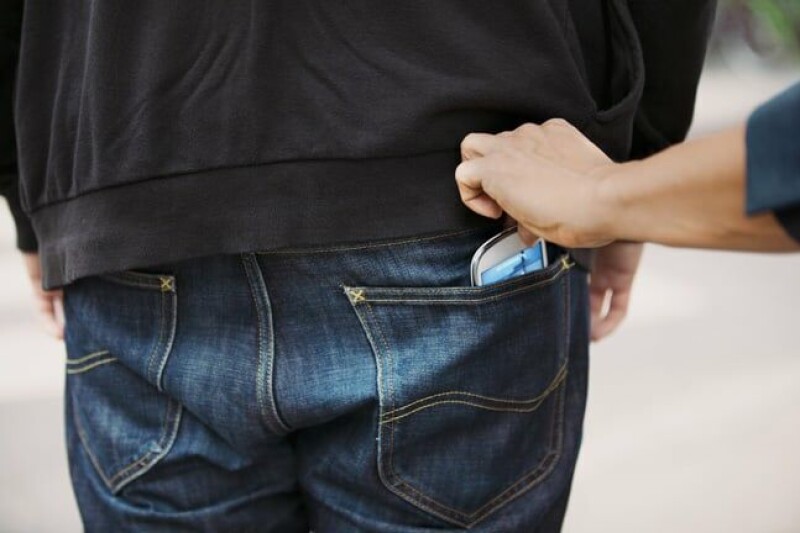
London's Metropolitan Police and Apple have agreed to share stolen device identifiers, building intelligence they hope will curb the capital's phone theft epidemic. These identifiers will help both organizations track which stolen devices reconnect to mobile networks, giving law enforcement better insight into where the criminal networks behind the thefts operate. The Met has access to stolen device information, such as serial numbers, provided by victims. Apple has access to data indicating when a device has been reactivated and where it's being used. Together, the two organizations believe this combined intelligence will help stamp down on the thefts that have ravaged London's streets for years, earning the city the unofficial title of "phone theft capital of Europe." "If stolen phones cannot be reactivated, their value collapses, and so does the incentive to steal them," said Metropolitan Police commissioner Sir Mark Rowley. "We are driving up the risk for offenders while cutting off the reward. "Policing is playing its part. In the West End, where this crime was most concentrated, phone theft has fallen by 50 percent through relentless, targeted policing. But we have also gone further by working directly with Apple to address the global market that has allowed this crime to thrive. "This is an important step, but it must not stop here. If you are stealing phones in London, the reality is changing fast. The opportunities are shrinking, the risks are rising, and we are determined to dismantle this criminal model completely." The intelligence-sharing pact follows months of pressure on both the Met and tech companies to take action. Dame Chi Onwurah, chair of the Science, Innovation and Technology Committee, wrote to Home Secretary Shabana Mahmood in December, asking why companies like Apple had not implemented cloud-based blocking or IMEI-linked device locks. Apple launched Stolen Device Protection in January 2024 and has since expanded default-on protections with the iOS 26.4 update, but there has long been a feeling that not enough was being done to tackle London's phone thefts. Rowley reiterated the ultimatum he issued to tech companies in March, demanding that they implement methods of reducing the value of stolen devices, or the UK will push through legislation. The collaboration with Apple is an extension of that, and the Met said Samsung and Google are also making security changes. Google uses several mitigations, including the need for authentication after a factory reset in order to return devices to working order, and an AI-powered feature that detects when devices are snatched and automatically locks the screen. A spokesperson at Google told The Register: "Android's theft protection features provide added security for billions of people, including Londoners. We have expanded default-on protections for UK devices, such as Remote Lock and Theft Detection, and we assist law enforcement with device recovery. Phone theft causes real distress and harm, and we work closely with the Met to protect all those who use our devices." Samsung said last year that it was working with the Home Office to deploy similar measures to tackle phone thefts. It implemented theft-detection tech similar to Google's that locks the screen when the device registers a possible snatching-related movement. It also requires biometric authentication to make security changes when devices are in unfamiliar locations, among other features. Not enough In spite of these actions, the Met announced today that it has asked the Home Office to start drafting anti-phone-theft legislation. "The Met has asked the Home Office to begin preparing legislation to introduce minimum technical standards so that any phone stolen in the UK is effectively unusable," it said. "These standards are complex, but we must be ready to act if industry fails to deliver. "Public support for stronger measures is clear, with 83 per cent of people backing the permanent blocking of stolen smartphones." It added: "While enforcement activity will continue, the Met is clear that the long-term solution lies in collapsing the criminal market." The Register has asked Apple to comment. A Samsung spokesperson said: "Samsung is fully committed to protecting customers with the very latest anti-theft feature technology. We recognise how distressing phone theft can be and have worked at pace to make a significant amount of security enhancements to help address this issue. "We would also like to reiterate that we have completed several requests from both the Home Office and the Met Police to demonstrate how seriously we take phone theft crime." The spokesperson added: "We believe this issue is a collective responsibility and we will continue to work with key stakeholders to help tackle phone-theft crime." The Met said it has almost halved rates of phone thefts in Westminster, with officers making hundreds of arrests and seizing thousands of devices. Thefts are down 45.8 percent, according to data gathered between January and May, although the picture across the wider city is a little less optimistic. The number of theft and robbery offenses in which a mobile phone was stolen has fallen by 14,000 in the last 12 months, representing an 18 percent decrease from the previous year. So far in 2026, overall offenses are down 20.6 percent compared to the same period in 2025. These arrests and seizures were secured through focused periods of enforcement action, namely through Operation Reckoning sprints, the fifth instalment of which concluded on Wednesday. The ten-day operational crackdown on phone thefts across London began on June 1 and resulted in the arrest of "prolific and violent phone thieves," the execution of search warrants at shops suspected of handling stolen devices, and the deployment of pursuit drivers to detain thieves on e-bikes. One visit to a single shop in April saw officers seize more than 1,000 suspected stolen phones and arrest four men between the ages of 22 and 63 on suspicion of handling stolen goods, as well as drug possession with intent to supply. Operation Reckoning is just one initiative targeting phone theft. The Met said last year that in September it dismantled a phone-robbing gang thought to be responsible for roughly half of all phone thefts in London – part of Operation Echosteep. ®

 Accedi