Vista elenco

Less than a year on, Microsoft tells Mico to pipe down

14 Agosto 2026 ore 14:16
Microsoft has yanked Mico from the Copilot spotlight less than a year after unveiling the anthropomorphic assistant intended to make its AI a little less soulless. As part of Microsoft's announcement that its consumer and work Copilot applications will merge, the company confirmed that the weird blob thing would shuffle out of Copilot Voice and into Learn Live, a voice-based study mode that guides users through subjects and assignments. "Mico helped us learn about warmth, expressiveness, and how people want to talk with AI," Microsoft wrote. "Those learnings are shaping Copilot going forward." "Learn is where the character has the most room to grow, with tutoring sessions that give Mico more to react to and teach through." As the update rolls out, Mico will no longer be the face of Copilot Voice. Users can still speak to Copilot and receive responses, but will be spared the blob's gurning. Mico is only the latest in Microsoft's long line of anthropomorphic assistants. There was Clippy (or Clippit), which arrived with Office 97 but had been pushed into Microsoft's desk drawer of doom by the time Office 2007 appeared. Then came Cortana, named after the character from the Halo video game franchise and pitched as a far more intelligent assistant. Microsoft introduced Cortana on Windows Phone in 2014 and brought it to PCs with Windows 10 the following year, before losing interest. Mico didn't even last a year as the face of Copilot Voice before Microsoft pulled it from the spotlight, although both the character and its Copilot "brain" live on in Learn Live. In terms of lifespans, it's easy to compare it to the catastrophic Microsoft Bob, which was launched in 1995, with the last release happening that same year. However, the product lingered a little longer and later resurfaced, hidden as digital ballast on the Windows XP installation CD for licensing and encryption. Modern digital distribution means that such a second life is unlikely to await Mico. Dave Plummer, the engineer responsible for Bob's inclusion as an encrypted blob, said: "What's ultimately important is that while Bob never got to play on the big stage, he always followed the band around and got to ride on the bus." Mico hasn't been thrown off the bus just yet. Microsoft has merely made the blob sit with the schoolchildren. ®

Claude Code returns blank thinking blocks, but reasoning still costs you

14 Agosto 2026 ore 09:30
Anthropic's Claude Code appears to be having trouble displaying summaries of its "thinking," according to several bug reports, while the underlying reasoning tokens still cost money. According to complaints, the API has been returning empty thinking blocks for Opus 4.8 and Sonnet 5 even when users explicitly request summarized thinking. Models from several sources can display their "thinking," a process that gives models additional tokens to reason through complex problems before producing a response. Software with this capability delivers a summary that explains how it tackled a task. Some can also indulge in "extended thinking," though this capability is now deprecated. Developers often enable "thinking" in the hope that it produces better results, at the cost of additional tokens and latency. Developer Michael Hood has noticed that some of Anthropic's models are currently not always good at sharing their thinking. "As of 2026-07-16 ~15:00Z, the API returns empty thinking blocks (thinking: '', signature only) for Claude Opus 4.8 and Sonnet 5, even when display: 'summarized' is explicitly requested — including when injected directly into the raw request body," Hood recently observed. We're told this issue is under investigation but doesn't appear to be a broad, ongoing concern. It may simply be an artefact of tests that change how Anthripic displays summaries. Similar behavior involving missing thinking blocks has been reported in Claude Code for VS Code. Another bug report claims thinking block summaries are being truncated while token bills are not adjusted accordingly. "The thinking is generated (and billed) in full; a portion of the summary stream is silently dropped," the anonymous author claims. This particular claim, that customers are being billed for text not delivered, may follow from a misunderstanding of Anthropic's terms: "You are charged for all thinking tokens generated, even when collapsed or redacted," the company's documentation explains. Under that legalese, a thinking summary costs the same as the full output. And it's unclear whether bug-based truncation would change the billing picture. "Thinking has a cost: the tokens Claude spends reasoning are billed as output tokens, even when the thinking text isn't returned to you, and they count toward max_tokens alongside the response text," the company explains. To reduce spending on thinking, customers are advised to lower their budget setting or disable thinking. Separately, the Anthropic API has been seen terminating data streams during long-running thinking sessions. There have been at least seven other related API bug reports, but the streaming issue identified by developer Hector Bernstorff describes client-side defects. The Register understands this particular issue has to do with tuning network behavior, specifically to terminate or retry long running requests. Work is ongoing to balance perceived latency against the risk of requests getting stuck. "Claude Code ships updates nearly every day, and reports from the community like these GitHub issues are a big part of how we catch problems quickly," an Anthropic spokesperson told The Register. "We're grateful to the developers who take the time to file them, and we'll keep fixing things as they come up." ®

OpenAI ditches Recall-style screenshot surveillance for friendly keylogging

14 Agosto 2026 ore 02:27
If you want to record whatever you do on a computer, send those records to OpenAI, use more ChatGPT tokens, and increase your vulnerability to prompt injection, then OpenAI has something for you. It's called Computer History, an opt-in way to record your computer interactions across apps and websites as memories organized on a timeline. Why would you want to do so? Maybe you found Chronicle, the predecessor of Computer History which compiled similar histories using screenshots, a bit too intrusive but don't mind Computer History's approach – recording input events and storing them unencrypted locally for 48 hours (or more), with a brief visit to OpenAI's servers. Maybe you're not bothered by the warning OpenAI includes in its documentation: "Computer History files can contain sensitive information. They are not encrypted by Computer History, and other programs running as your macOS user may be able to access them." Perhaps, having given OpenAI's Codex and GPT Work the run of your computer, you're already sold on the suggestion that storing your computer activity in memory files and arranging those interactions in a timeline will improve ChatGPT responses, surface opportunities for automation, and make it easier to resume prior work. Computer History is, to put it bluntly, a keylogging and event capture system. There was a time before eyeglass cameras, license plate readers, surveillance capitalism, and police drones when such snooping might have provoked an outcry from privacy advocates. But the tech industry has found it can outsource surveillance to its own customers and in so doing make the panopticon harder to protest once it becomes a personal choice. "Computer History creates an interaction-event stream from allowed apps and websites," OpenAI's documentation explains. "Events can include clicks, typing, keyboard shortcuts, app switches, and context that macOS exposes through its accessibility system. Computer History periodically turns these events into text summaries and local memory files." The AI biz makes a point of noting that Computer History does not capture screen images, microphone input, or system audio. Nor does it capture private-mode browsing. Off by default, Computer History is available for ChatGPT Pro, Business, and Enterprise users in the ChatGPT desktop app on macOS. Pro users can enable it individually; Business and Enterprise users need an admin to approve it. It's not available currently in the European Economic Area (EEA), Switzerland, or the United Kingdom or to those accessing ChatGPT via API key or Amazon Bedrock. There are circumstances in which OpenAI suggests Computer History users might want to suspend the service if they have some scruples about capturing user activity in apps and websites without permission. "Turn it off during communications with other people unless you have their prior express consent," the company advises, perhaps in acknowledgement of legal risk. "Consider pausing it or excluding apps that contain sensitive health, financial, or personal information." Computer History interaction events are supposed to be saved locally for up to 48 hours before being deleted by ChatGPT and Codex. Events, however, get sent to OpenAI servers to generate memories, and those may be stored locally for longer periods of time and may be used in future chats that get passed back to OpenAI. "OpenAI does not retain those event files after processing unless required by law and does not use them for training," the company says. While it has opposed demands for chat logs, it has nonetheless provided chat logs in response to legal process. Computer History adds cost because it uses tokens during the summarization of activities and the creation of memory data. It also expands the prompt injection attack surface. "Computer History increases the risk of prompt injection from content in apps and websites," the company says. "For example, if you visit a website containing malicious instructions, ChatGPT or Codex might follow those instructions." But at least you get a nice timeline of your recent activity. ®

Microsoft's dueling Copilot apps have combined into a single entity

13 Agosto 2026 ore 21:04
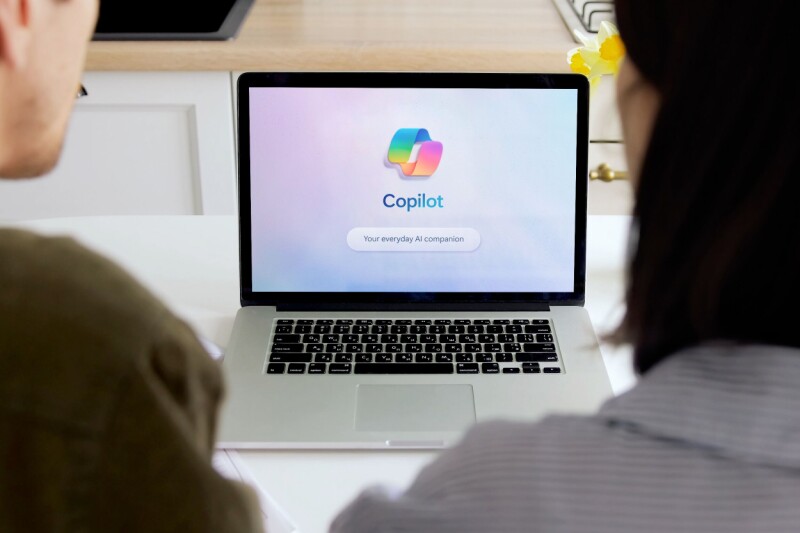
Microsoft’s consumer Copilot app and Microsoft 365 Copilot are separate no more, with a unified Copilot app beginning its rollout Thursday - minus a few features. The Windows maker and AI pusher announced the Copilot superapp rollout in a help page update Thursday, describing the move as a way to simplify its app ecosystem and make the entire Copilot-first experience “more cohesive” for both consumer and business users. “Depending on the account and device you use, you will see changes to the Copilot app including changes to appearance and functionality, such as navigation, feature availability, or sign-in experience,” Microsoft explained on the help page. The new Copilot app brings not only new branding but structural changes as well. The Copilot bot and its image generation features now live alongside the Microsoft 365 suite, files, and other content, allowing users with an account supporting the classic Office package to access their productivity software alongside Redmond's chatty LLM. Copilot users without a paid subscription, naturally, face lower usage limits and fewer features, but support for multiple accounts means users can switch between personal and work or school profiles instead of having to hop between entirely separate apps. “You can continue to chat with Copilot, create images, upload files and more for free, subject to available capacity and limits,” Microsoft said. “For higher limits to chat and create, use agents, or tackle complex multi-step tasks, purchase a Microsoft 365 subscription.” Whether the new combined app will come with nag messages is up to users to find out. What this change will look like in practice varies based on the sort of account a Copilot user had before the merger. Those who just use Copilot with a personal account “will be moved to an updated version of Copilot,” with chat history and most content transferring to the updated app. Files shared and generated with the old standalone Copilot app will be shunted to OneDrive if you’re wondering where they went. Users of Microsoft 365 Copilot, the name Redmond slapped on the Microsoft 365 (Office) app in January 2025, “may notice some updates to appearance and navigation,” so get ready to rediscover where certain options and buttons are. What Microsoft left behind Microsoft is abandoning a few features from the old Copilot apps as part of the merger: It is removing Podcasts and Group Chat and scrapping Deep Research from the consumer Copilot app, while Microsoft 365 Premium subscribers can instead use the separate Researcher feature. All of this will be effective as of August 18. Podcasts that were created or saved in Copilot will be entirely unavailable, per an FAQ page, and links to any shared podcasts will stop working. Microsoft recommends downloading any podcasts users want to save before updating to the new app, or they’ll be lost. Group chats, along with any shared content and images created in group chats, will be wiped. Microsoft recommends downloading any messages and content users want to save and tossing them in a document, as Redmond doesn’t appear to be offering an automated way to preserve them. As for Deep Research, which offered standalone Copilot app users a version of Microsoft’s chatbot able to look stuff up on the web and compile reports, those reports are being preserved in chat history for Microsoft 365 Personal and Family subscribers, while Premium subscribers can access saved research through Researcher. Researcher offers similar abilities to Deep Research, but sorry free and lower-tier users: It’s only available to premium customers now. Windows Central reported on Thursday that the rollout of the unified Copilot app is beginning now, with mobile and web coming in the initial wave and an early-access option for Windows and Mac, ahead of a broader desktop rollout expected in the middle of next month. We’ve been unable to confirm that timeline with Microsoft. ®

OpenAI ad service can bill customers for up to one day after they pause campaigns

13 Agosto 2026 ore 02:28
OpenAI appears to be serving ads after buyers have halted their campaigns, and charging them for the privilege. OpenAI began testing ad sales in ChatGPT in the US back in February and has been gradually expanding the service in other regions, including the United Kingdom, Mexico, Brazil, Japan, and South Korea as of Tuesday. Given that a substantial minority of ChatGPT's user base pays for the service (50 million out of 900 million weekly users as of February 2026), advertising revenue appears to be an important part of OpenAI's plan to defray the cost of providing its service and to convince investors that it has a path to profitability ahead of a future initial public offering. Online ad-marts from the likes of Google and Facebook give advertisers control over when and where their ads will appear, but don't always stick to instructions. The AI biz's ad service appears to have similar ad timing and billing accuracy issues. Ed Bolton, managing director of UK-based Excel4Business, told The Register that his company encountered "an odd billing practice" when it started experimenting with ChatGPT Ads in the US and Canada. "We were running campaigns in the US and Canada … and noticed ads were being delivered through the night/morning on paused campaigns," he explained. When Bolton pointed this out in a support message thread, an OpenAI customer service representative initially acknowledged the failure. "We have now confirmed that your campaigns continued serving after they were paused," said an OpenAI support specialist in an email provided to The Register. "This was not a reporting delay. The campaign was marked as paused, but the separate ad-level status used by the serving system did not refresh promptly, so an ad that was still active at the ad level continued to run. Our Ads Engineering team has escalated this defect and is working on an additional production fix." The support reply goes on to state: "Our review has confirmed £60.72 in invalid charges from the original occurrence and approximately £6.47 from the August 4–5 recurrence. We are extending that reconciliation to the additional activity you reported on August 6. We are preparing the confirmed invalid charges for billing review, but I cannot confirm the final refund or credit amount until the latest activity has been reconciled and that review is complete." Bolton responded that the acknowledged problem – ads being served after he disabled the campaign – had been occurring for a longer period of time and requested a more complete reconciliation of ad billing. Several days later, OpenAI's support rep reversed the prior determination and declined to offer any refund or credit because the company's Advertising Terms state that ChatGPT Ads may be delivered even after a customer cancels a campaign and the advertiser still has to pay for those unwanted ads. "Section 11.1 of our Advertising Terms provides that ads may continue running for up to one business day after a campaign is canceled or changed, and advertisers remain responsible for ads delivered during that period," the support message explains. "Pausing a campaign constitutes a campaign change and does not guarantee that delivery or associated charges stop immediately." A spokesperson for OpenAI confirmed that's the case, explaining that it can take a business day to cancel or change a campaign and that this doesn't represent an intentional effort to run ads after an advertiser has disabled a campaign. Based on the times cited in the support message thread, the most delayed ChatGPT ad ran about 94 minutes after Excel4Business paused a campaign. Bolton said unwanted ads appeared for a far longer period — more than 10 hours after campaigns were paused. OpenAI isn't the only ad provider that allows itself a business day to turn off its ad spigot for a particular customer. Other advertising services impose similar terms. "So the terms … seem to be a standard which is used in digital advertising, which some legal team wrote at some point, saying that we've got a 24-hour grace period if you stop a campaign," Bolton said - before adding that he has run Google AdWords campaigns for 17 or 18 years and has never had that issue. If ad buyers were not able to stop an AdWords campaign quickly, you could easily spend half a million dollars, he said. Nonetheless, some Google advertising customers have complained about post-pause ad serving. Why it might take so long to stop serving ads at a time when applications and servers can be spun up and torn down in seconds isn't immediately clear. One can order and receive physical goods from Amazon.com in less than one business day. It may be that there's no financial incentive or regulatory pressure to tackle the problem, and a significant financial incentive to ignore it. "My understanding is that such a clause is included in terms and conditions so as to cover issues with latency, and not to allow them to run ads for 24 hours longer than instructed," said Bolton. "Regardless, they cannot retroactively apply a clause from terms and conditions after making a written settlement offer." ®

Nvidia's latest solution to soaring enterprise AI costs is...a router?

12 Agosto 2026 ore 21:00
Soaring AI infrastructure costs and model pricing, combined with uncertain returns on investment, threaten to stall enterprise adoption. To make enterprise AI spend a bit more manageable, Nvidia this week unveiled a new software platform that blurs the line between expensive proprietary models and open weights alternatives. Announced alongside Nemotron 3.5-30B-A3B-Lightning, Nvidia’s latest open weights model, NeMo Switchyard is the GPU giant’s latest overture to enterprise. So what exactly is it? Well, it’s a router. The idea is simple. Switchyard essentially functions as a proxy that sits between the inference server’s API endpoint and the models. But rather than sending every request to the same model, Switchyard can be configured to route prompts to different models in order to optimize for cost, latency, or output quality. By routing some requests to smaller, cheaper, and potentially locally hosted AI models, Nvidia claims Switchyard can cut job completion costs by 74 percent relative to using Claude Opus 4.8 alone, albeit with an approximately six-point accuracy tradeoff. The right tool for the job The key metric in all of this is completion cost rather than price per token. A model might cost one-tenth as much as OpenAI’s or Anthropic’s top model, but if it requires 10x the tokens to complete the request, it isn't actually cheaper. Certain elements of an AI workload may benefit from a larger, smarter model, but not all do. For example, it’d be overkill to ask Claude Opus to generate a title card or summarize a website. It’ll certainly work, but it’ll also cost a fortune compared to Haiku or a locally hosted model that’s been fine tuned just for that purpose. The fewer tokens you burn on the big smart model, the less expensive your API bill is going to be. Nvidia software teams have spent the last several years developing models for this reason. The Lightning model announced this week is only its latest. The 30 billion-parameter MoE model is positioned as a low-latency, general purpose model that can either be used on its own or in conjunction with a larger, smarter model via a router like Switchyard. The company has also developed several application-specific models. Nemotron Parse is one such example. “It’s a small model, one billion parameters, and it’s really good at one task, which is taking a PDF in and then explaining the context inside that PDF whether it’s charts or graphs or tables,” Joey Conway, senior director of AI software and models at Nvidia, explained in a recent interview with The Reg. Many frontier models struggle with this task because PDFs are designed by humans for humans, so by offloading that work to task-specific models, enterprises can not only improve the accuracy of their AI apps, but also reduce costs in the process. This all might sound familiar: It's not the first time we’ve seen model routers employed as a cost-saving measure. Back when OpenAI launched GPT-5, ChatGPT would dynamically route prompts to different versions of the model based on their complexity. As we wrote at the time, OpenAI’s router was likely implemented to reduce the number of compute cycles spent on mundane tasks like rewording emails to sound more professional ("not only … but also"). OpenAI wasn't alone in using routers to reduce model costs. The Wall Street Journal recently reported that AT&T has implemented a “smart router” of its own to automatically select which model to use. Switching from proprietary to open-weight models has reportedly saved the telecommunications giant between 80 and 90 percent in certain applications. Today about 25 percent of the company’s AI workloads are powered by open models. The company’s leadership expects that over the next few years that’ll climb to 70-80 percent. The implementation challenge While the idea of offloading simpler requests to smaller, cheaper-running models sounds intuitive, it’s easier said than done. Title cards and web summaries are relatively straightforward to implement. Open source chatbots like Open WebUI have supported this kind of functionality for more than a year now because it just makes sense. However, sometimes it’s not obvious when and where these task models should be used. Switchyard is Nvidia’s latest attempt to simplify this by automatically routing requests to the right model for the job. However, it’s not the only approach Nvidia is exploring. AI agents and code assistants have the ability to work through problems and then generate skills — essentially standard operating procedures — documenting the process for future reference. Through this iterative process, Conway suggests, agents could essentially teach themselves when and where they can get away with using a smaller, cheaper task model, and where a larger frontier model may be required. “We’re starting to see signs of this sort of agent and subagent type workflow,” Conway said, describing how a frontier model might function as an orchestrator that farms out work to smaller models that are faster and more specialized. It reflects the way companies are structured, he said. “We have people who are specialists and then we have people who help orchestrate that and understand the complexity of the problem.” As an added step, it’s possible for the agents to generate training data on the fly, which could then be used to fine-tune the models to operate more efficiently. Regardless of which approach ultimately wins out, anything that promotes enterprise AI adoption is a win for Nvidia. ®

OpenWALDO aims to blow the doors off proprietary AI training models

12 Agosto 2026 ore 18:57
A new project aims to build a shared, open source AI training dataset that anyone can contribute to, much like an open source software project. It aims to make training data more transparent than that of many open-weight models that have recently taken the industry by storm. CentOS and Rocky Linux founder Gregory Kurtzer is behind the effort, dubbed Open Weights, Artifacts, Licenses, Data, Origins (OpenWALDO), and it's funded by CIQ, his AI infrastructure company, which also sponsors Rocky Linux. Kurtzer described the effort as trying to bring the open-source ethos to AI model design, which has yet to be truly open – even downloadable open-weight models still have closed-source training data that is unknown to users, alongside other limitations that make them less than truly open source. “I’ve spent my career watching open source turn users into builders, competitors into collaborators, and shared problems into common infrastructure that operates at massive scale,” Kurtzer said in the announcement. “OpenWALDO brings that proven model to AI. Let’s work together, build its foundation in the open, and collaboratively take AI to the next level.” CIQ, which authored the announcement, argues that open-weight models keep that foundation a secret because of where it comes from: Copyrighted data, responses distilled from other models, user-generated content that may not have been given in a truly open manner, and the like. “There is often no way to know what data trained a given model, under what license, or with what consent,” CIQ said, adding that hidden training data content could taint models, putting customer software stacks at risk. In addition to that, there’s the simple fact that, when everyone is training their AI models in secret, a lot of duplicate work is happening that wastes lots of time and computing resources. A single, shared set of public training data, the OpenWALDO team argues, would not only make training more efficient across the industry, but also mean that every improvement to the dataset could benefit future models trained on it. “A lab or company can take the corpus and its bill of materials as a verified baseline, add its own proprietary data, build, and ship, with a clear, auditable line back to its sources,” CIQ explained. With prices steep and ROI still largely absent, open AI models (not to be confused with OpenAI models) have risen to prominence in the AI zeitgeist lately. Models out of the home of open-weight AI, China, are closing in on the capabilities of closed-source frontier lab models like ChatGPT and Claude, leaving many businesses wondering why they ought to pay through the nose for AI services they don’t own, can’t truly control, and have no visibility into. Some frontier labs have warned that open-weight models pose security and misuse risks. Kurtzer argues that open source software faced similar concerns. “Open source has won this argument before,” he said, pointing to similar arguments made about open code, namely that it’s insecure, impossible to trust, and the like. “Linux didn't win by being certified safe. It won by being inspectable, forkable, and community validated.” “AI is missing that same property, and OpenWALDO is how we build it,” Kurtzer said. Turning to open-source training datasets is a big ask for an industry already so far down the closed training data path, of course, and only time will tell if OpenWALDO is a revolution or another obscure OSS project that gets minimal attention from the AI community. So far, the OpenWALDO dataset contains 167.3 billion reference tokens pulled from things like government records, open-source academic papers, mailing lists, and public domain literature - a drop in the bucket next to the tens of trillions of tokens used to train frontier AI models and their open-weight counterparts. We asked if anyone has trained a model on the OpenWALDO set yet, but CIQ didn’t respond. Those interested in contributing to, or making use of, OpenWALDO can find more on the project’s website (linked above) and its GitHub page. ®

Meta Transitions PyTorch to the Linux Foundation, Further Accelerating AI/ML Open Source Collaboration

12 Settembre 2022 ore 15:25

PyTorch Foundation to foster an ecosystem of vendor-neutral projects alongside founding members AMD, AWS, Google Cloud, Meta, Microsoft Azure, and NVIDIA 

DUBLIN – September 12, 2022 –  The Linux Foundation, a global nonprofit organization enabling innovation through open source, today announced PyTorch is moving to the Linux Foundation from Meta where it will live under the newly-formed PyTorch Foundation. Since its release in 2016, over 2400 contributors and 18,0000 organizations have adopted the PyTorch machine learning framework for use in academic research and production environments. The Linux Foundation will work with project maintainers, its developer community, and initial founding members of PyTorch to support the ecosystem at its new home.

Projects like PyTorch—that have the potential to become a foundational platform for critical technology—benefit from a neutral home. As part of the Linux Foundation, PyTorch and its community will benefit from many programs and support infrastructure like training and certification programs, research, and local to global events. Working inside and alongside the Linux Foundation, PyTorch will have access to the LFX collaboration portal—enabling mentorships and helping the PyTorch community identify future leaders, find potential hires, and observe shared project dynamics. 

“Growth around AI/ML and Deep Learning has been nothing short of extraordinary—and the community embrace of PyTorch has led to it becoming one of the five-fastest growing open source software projects in the world,” said Jim Zemlin, executive director for the Linux Foundation. “Bringing PyTorch to the Linux Foundation where its global community will continue to thrive is a true honor. We are grateful to the team at Meta—where PyTorch was incubated and grown into a massive ecosystem—for trusting the Linux Foundation with this crucial effort.”

“Some AI news: we’re moving PyTorch, the open source AI framework led by Meta researchers, to become a project governed under the Linux Foundation. PyTorch has become one of the leading AI platforms with more than 150,000 projects on GitHub built on the framework. The new PyTorch Foundation board will include many of the AI leaders who’ve helped get the community where it is today, including Meta and our partners at AMD, Amazon, Google, Microsoft, and NVIDIA. I’m excited to keep building the PyTorch community and advancing AI research,” said Mark Zuckerberg, Founder & CEO, Meta.

The Linux Foundation has named Dr. Ibrahim Haddad, its Vice President of Strategic Programs, as the Executive Director of the PyTorch Foundation.  The PyTorch Foundation will support a strong member ecosystem with a diverse governing board including founding members: AMD, Amazon Web Services (AWS), Google Cloud, Meta, Microsoft Azure and NVIDIA. The project will promote continued advancement of the PyTorch ecosystem through its thriving maintainer and contributor communities. The PyTorch Foundation will ensure the transparency and governance required of such critical open source projects, while also continuing to support its unprecedented growth.

Member Quotes

AMD

“Open software is critical to advancing HPC, AI and ML research, and we’re ready to bring our experience with open software platforms and innovation to the PyTorch Foundation,” said Brad McCredie, corporate vice president, Data Center and Accelerated Processing, AMD. “AMD Instinct accelerators and ROCm software power important HPC and ML sites around the world, from exascale supercomputers at research labs to major cloud deployments showcasing the convergence of HPC and AI/ML. Together with other foundation members, we will support the acceleration of science and research that can make a dramatic impact on the world.”

Amazon Web Services

“AWS is committed to democratizing data science and machine learning, and PyTorch is a foundational open source tool that furthers that goal,” said Brian Granger, senior principal technologist at AWS. “The creation of the PyTorch Foundation is a significant step forward for the PyTorch community. Working alongside The Linux Foundation and other foundation members, we will continue to help build and grow PyTorch to deliver more value to our customers and the PyTorch community at large.”

Google Cloud

“At Google Cloud we’re committed to meeting our customers where they are in their digital transformation journey and that means ensuring they have the power of choice,” said Andrew Moore, vice president and general manager of Google Cloud AI and industry solutions. “We’re participating in the PyTorch Foundation to further demonstrate our commitment of choice in ML development. We look forward to working closely on its mission to drive adoption of AI tooling by building an ecosystem of open source projects with PyTorch along with our continued investment in JAX and Tensorflow.”

Microsoft Azure

“We’re honored to participate in the PyTorch Foundation and partner with industry leaders to make open source innovation with PyTorch accessible to everyone,” Eric Boyd, CVP, AI Platform, Microsoft, said. “Over the years, Microsoft has invested heavily to create an optimized environment for our customers to create, train and deploy their PyTorch workloads on Azure. Microsoft products and services run on trust, and we’re committed to continuing to deliver innovation that fosters a healthy open source ecosystem that developers love to use. We look forward to helping the global AI community evolve, expand and thrive by providing technical direction based on our latest AI technologies and research.”

NVIDIA

“PyTorch was developed from the beginning as an open source framework with first-class support on NVIDIA Accelerated Computing”, said Ian Buck, General Manager and Vice President of Accelerated Computing at NVIDIA. “NVIDIA is excited to be an originating member of the PyTorch Foundation to encourage community adoption and to ensure using PyTorch on the NVIDIA AI platform delivers excellent performance with the best experience possible.”

Additional Resources:

  • Visit pytorch.org to learn more about the project and the PyTorch Foundation
  • Read Jim Zemlin’s blog discussing the PyTorch transition
  • Read Meta AI’s blog about transitioning PyTorch to the Linux Foundation
  • Read this blog from Soumith Chintala, PyTorch Lead Maintainer and AI Researcher at Meta, about the future of the project
  • Join Soumith Chintala and Dr. Ibahim Haddad for a fireside chat on Thursday, September 15, at 3pm GMT / 11am ET / 8am PT
  • Learn more about PyTorch training opportunities from the Linux Foundation
  • Follow PyTorch on Facebook, LinkedIn, Spotify, Twitter, and YouTube

About the Linux Foundation

Founded in 2000, the Linux Foundation and its projects are supported by more than 3,000 members. The Linux Foundation is the world’s leading home for collaboration on open source software, hardware, standards, and data. Linux Foundation projects are critical to the world’s infrastructure including Linux, Kubernetes, Node.js, ONAP, Hyperledger, RISC-V, PyTorch, and more. The Linux Foundation’s methodology focuses on leveraging best practices and addressing the needs of contributors, users, and solution providers to create sustainable models for open collaboration. For more information, please visit us at linuxfoundation.org.

###

The Linux Foundation has registered trademarks and uses trademarks. For a list of trademarks of The Linux Foundation, please see our trademark usage page:  https://www.linuxfoundation.org/trademark-usage. Linux is a registered trademark of Linus Torvalds.

Media Contact

Dan Whiting

for the Linux Foundation

202-531-9091

dwhiting@linuxfoundation.org

The post Meta Transitions PyTorch to the Linux Foundation, Further Accelerating AI/ML Open Source Collaboration appeared first on Linux Foundation.

❌