Displaced people at a campsite in Lebanon in early April. Israel’s military offensive there had driven more than a million people from their homes by mid-May, the United Nations said.
Beijing has completed a seabed survey in the complex waters east of Taiwan, its latest move to strengthen management of the waters around Taiwan following maritime border talks between Japan and the Philippines, according to state media.
It is the first time mainland Chinese maritime authorities have conducted hydrographic survey operations east of Taiwan to fill in previously incomplete seabed mapping data for the area, according to an article published on Wednesday by Yuyuan Tantian, a social...
L’Interferometria SAR, anche conosciuta con l’acronimo InSAR, è una tecnica di telerilevamento che utilizza immagini satellitari acquisite da sensori noti come Radar ad Apertura Sintetica (SAR) per misurare le deformazioni del suolo con precisione millimetrica. Il SAR è un sensore attivo in grado di acquisire immagini della superficie terrestre sia di giorno che di notte, anche in presenza di copertura nuvolosa. Il principio di funzionamento è basato sull’invio a terra di un segnale elettromagnetico caratterizzato da un’ampiezza, che ci dice quanto è intenso, e una fase, ossia la posizione dell’onda in un certo momento, espressa con valori tra 0 e 360 gradi, che equivalgono a [0 – 2π] radianti. Raggiunto il suolo, il segnale viene diffuso in diverse direzioni e la frazione che torna al sensore è quella che si utilizza nella tecnologia SAR. Avremo quindi un contributo di ampiezza, dipendente dalle caratteristiche degli oggetti a terra e dalla loro capacità di riflettere, e un contributo di fase, legato alla distanza percorsa dal segnale per coprire il tragitto satellite-superficie terrestre. E’ proprio tramite l’analisi dei contributi di fase inviati da un sensore SAR in intervalli temporali differenti che è possibile ricostruire i campi di spostamento indotti sulla superficie terrestre da fenomeni naturali o antropici.
Se il suolo si deforma, ad esempio a causa di un terremoto, immagini SAR acquisite prima (T1) e dopo (T2) l’evento sismico saranno infatti caratterizzate da contributi di fase diversi tra loro. Questo perché la deformazione del suolo indotta dal sisma, avrà un impatto sul tempo di percorrenza del segnale inviato dai sensori (Figura 1).
Figura 1: Principio di funzionamento dell’Interferometria SAR. Se il terreno si deforma nell’intervallo temporale tra la prima acquisizione (T1) e la seconda acquisizione (T2), ci sarà un diverso tempo di percorrenza del segnale elettromagnetico che si traduce in un contributo di fase addizionale nella seconda immagine (linea rossa).
L’interferometria SAR utilizza l’informazione contenuta nella differenza di fase tra due immagini acquisite a cavallo di un evento per calcolare di quanto si è deformato il terreno nell’intervallo temporale tra le due acquisizioni. La mappa delle differenze di fase tra due immagini, pixel per pixel, è il cosiddetto interferogramma, ed è il principale prodotto dell’analisi interferometrica. Esso consiste in un’immagine composta da frange di colore, le frange interferometriche, ognuna delle quali rappresenta un valore di differenza di fase nell’intervallo [-π, π], a sua volta rappresentativo di una deformazione di pochi centimetri. Per avere una rappresentazione maggiormente comprensibile del processo deformativo in atto è quindi necessario trasformare, mediante alcuni passaggi matematici, l’interferogramma in una vera e propria mappa di deformazione, in cui ogni pixel riporta un valore di deformazione assoluto del terreno. Il primo terremoto a essere studiato con questa tecnica è stato il terremoto di magnitudo momento Mw 7.3 nella comunità di Landers, in California, nel 1992. In un lavoro su Nature, gli autori evidenziarono le potenzialità dell’Interferometria SAR, applicata a immagini acquisite dalle missioni ERS-1 dell’Agenzia Spaziale Europea, mostrando per la prima volta come appariva un terremoto visto da satellite (Figura 2).
Figura 2: Interferogramma relativo al terremoto di magnitudo momento Mw 7.3 avvenuto a Landers, in California, nel 1992. Questo evento fu il primo a essere studiato con la tecnica InSAR. Sono ben visibili le cosiddette frange interferometriche in cicli di colore, ognuna delle quali è rappresentativa di una deformazione del terreno di circa 3 centimetri.
I principali eventi in epoca strumentale in Italia
La tecnica interferometrica è sensibile a deformazioni superficiali dell’ordine di diversi centimetri, associate solitamente a eventi sismici di magnitudo momento Mw superiore a 5, che fortunatamente non sono molto frequenti in Italia. A partire dai primi anni ’90, quando i satelliti ERS dell’Agenzia Spaziale Europea hanno acquisito e reso per la prima volta disponibili alla comunità scientifica immagini SAR della superficie terrestre, si possono individuare quattro principali sequenze sismiche che hanno interessato in modo significativo il territorio italiano, con conseguenze talvolta anche drammatiche (Figura 3).
Figura 3: Principali eventi sismici registrati in Italia e analizzati con le immagini SAR. Le stelle gialle rappresentano gli epicentri dei terremoti.
Nel nostro paese, la prima applicazione dell’Interferometria SAR allo studio di un evento sismico risale al terremoto di Colfiorito del 1997 . Il 26 settembre 1997 alle ore 11:40 (ora italiana) un evento sismico di magnitudo locale ML 5.8 (https://terremoti.ingv.it/event/849549) colpì un’area di circa 15 km di lunghezza tra Umbria e Marche, tra Colfiorito (PG) e Serravalle di Chienti (MC). Il sisma enucleò a una profondità di circa 6 km e i risentimenti furono avvertiti distintamente in gran parte dell’Italia centrale. L’analisi InSAR, applicata a una coppia di immagini SAR acquisite dalle costellazioni ERS-2 dell’Agenzia Spaziale Europea, mostrò un abbassamento dell’Altopiano di Colfiorito di circa 25 centimetri (Figura 4), consistente con un meccanismo di faglia di tipo normale tipico delle zone dell’Appennino centrale.
Figura 4: Mappa di deformazione del terreno ottenuta tramite analisi InSAR relativa al terremoto di Colfiorito del 26 settembre 1997 (dati ERS-2).
Il secondo terremoto analizzato con la tecnica dell’Interferometria SAR è stato l’evento di magnitudo momento Mw 6.1 (https://terremoti.ingv.it/event/1895389) che ha colpito L’Aquila durante la notte del 6 aprile 2009. In questo caso le immagini SAR applicate a dati acquisiti durante la missione Envisat dell’Agenzia Spaziale Europea, hanno dato la possibilità di stimare spostamenti cosismici massimi pari a circa 25 cm e un’area di deformazione estesa circa 30 chilometri in lunghezza (Figura 5), permettendo di ricostruire la faglia responsabile dell’evento, anche in questo caso con un meccanismo normale consistente con il regime estensionale dell’Appennino (Atzori et al., 2009).
Figura 5: Mappa di deformazione del terreno relativa al terremoto che ha colpito l’Aquila il 6 aprile 2009 (dati Envisat).
Successivamente, nel maggio 2012 il territorio emiliano è stato colpito da due forti terremoti. Il primo, di magnitudo momento Mw 5.8 e profondità 10 km, avvenuto il 20 maggio nei pressi di Finale Emilia (https://terremoti.ingv.it/event/772691), mentre il secondo di magnitudo momento Mw 5.6 e profondità 8 km localizzato a sud della città di Mirandola (https://terremoti.ingv.it/event/841091), entrambi in provincia di Modena. Questi eventi sono stati oggetto di analisi InSAR utilizzando i dati acquisiti dalle missioni spaziali Radarsat (Agenzia Spaziale Canadese) e COSMO-SkyMed (Pezzo et al., 2013). In particolare questi ultimi dati, distribuiti dall’Agenzia Spaziale Italiana, sono stati fondamentali fin dalle prime fasi di gestione dell’emergenza per una rapida valutazione degli spostamenti cosismici nell’area, stimati intorno ai 14 cm (Figura 6).
Figura 6: Mappa di deformazione del terreno relativa al terremoto dell’Emilia del 2012 (dati Cosmo-SkyMed).
L’ultimo forte evento che ha colpito la nostra penisola è rappresentato dalla sequenza sismica che ha interessato il centro Italia nel 2016-2017 per circa 8 mesi, con più di 3500 eventi di magnitudo maggiore di 2.5, causando gravi danni all’edificato, danneggiando irrimediabilmente il patrimonio artistico e provocando, purtroppo, anche più di 300 vittime. La sequenza è stata caratterizzata da 4 eventi principali: il terremoto di Amatrice/Accumoli (RI) del 24 agosto 2016, con una magnitudo momento Mw pari a 6.0 (https://terremoti.ingv.it/event/7073641), il terremoto di Visso (MC) del 26 ottobre 2016, con una magnitudo momento Mw di 5.9 (https://terremoti.ingv.it/event/8669321), il terremoto di Norcia (PG) del 30 ottobre 2016, con una magnitudo momento Mw di 6.5 (https://terremoti.ingv.it/event/8863681) e il terremoto di magnitudo momento Mw 5.5 avvenuto a Capitignano (AQ) il 18 gennaio 2017 (https://terremoti.ingv.it/event/12697591). Il dato interferometrico ha permesso di stimare la deformazione totale causata dalla sequenza, che ha determinato un abbassamento di circa 1 metro della Piana di Castelluccio (Figura 7), e vincolare geometria, meccanismo e profondità delle faglie responsabili. In questo ultimo caso, l’Interferometria SAR è stata applicata alle immagini delle costellazioni Sentinel-1 dell’ESA, il cui primo satellite è stato lanciato nel 2014.
Figura 7: Mappa di deformazione del terreno relativa al terremoto di Norcia del 30 ottobre 2016 (dati Sentinel-1).
Questo excursus sui principali eventi sismici, che hanno interessato il territorio italiano e che sono stati studiati mediante la tecnica InSAR, ha consentito di apprezzare i significativi miglioramenti raggiunti in questi decenni sia dagli algoritmi e dai software utilizzati per il calcolo degli interferogrammi, che dalla tecnologia applicata ai sensori SAR. Dall’evento di Colfiorito, analizzato con dati ERS, fino alla sequenza che ha colpito il centro Italia tra il 2016 e il 2017, investigata nel dettaglio con dati Sentinel-1, risultano evidenti i progressi nella qualità delle immagini ottenute. I miglioramenti in termini di risoluzione spaziale, tempo di rivisita, prestazioni dei sensori, insieme ad algoritmi di elaborazione dei dati sempre più sofisticati, hanno permesso di affinare in modo sostanziale l’informazione estratta dal dato satellitare, contribuendo a una conoscenza sempre più approfondita e accurata dei fenomeni sismici e della sismicità del nostro Paese.
A cura del Laboratorio GEOSAR dell’INGV
Riferimenti
Massonnet, D., Rossi, M., Carmona, C. et al. (1993). The displacement field of the Landers earthquake mapped by radar interferometry. Nature, 364, 138–142. https://doi.org/10.1038/364138a0
Stramondo, S., Tesauro, M., Briole, P., Sansosti, E., Salvi, S., Lanari, R., Anzidei, M., Baldi, P., Fornaro, G., Avallone, A,, Buongiorno, M. F., Franceschetti, G., Boschi E. (1999). The September 26, 1997 Colfiorito, Italy, earthquakes: Modeled coseismic surface displacement from SAR interferometry and GPS. Geophys. Res. Lett., 26, https://doi.org/10.1029/1999GL900141.
Atzori, S., Hunstad, I., Chini, M., Salvi, S., Tolomei, C., Bignami, C., Stramondo, S., Trasatti, E., Antonioli, A., and E. Boschi (2009). Finite fault inversion of DInSAR coseismic displacement of the 2009 L’Aquila earthquake (central Italy). Geophys. Res. Lett., 36, L15305, doi:10.1029/2009GL039293.
Pezzo, G., Merryman Boncori, J. P., Tolomei, C., Salvi, S., Atzori, S., Antonioli, A., … & Giuliani, R. (2013). Coseismic deformation and source modeling of the May 2012 Emilia (Northern Italy) earthquakes. Seismological Research Letters, 84(4), 645-655.
Cheloni, D., et al. (2017). Geodetic model of the 2016 Central Italy earthquake sequence inferred from InSAR and GPS data. Geophys. Res. Lett., 44, 6778–6787, doi:10.1002/2017GL073580.
China has sanctioned Philippine Defence Secretary Gilberto Teodoro Jnr, according to the Chinese foreign ministry.
Beijing said on Thursday that Teodoro had repeatedly made erroneous remarks against China, undermined China’s legitimate interests and damaged bilateral relations.
“To uphold China’s national sovereignty, security, and development interests, the Chinese side has decided to ban Teodoro, his spouse and his child from entering the Chinese mainland, Hong Kong and Macau,” the ministry...
The leader of Taiwan’s main opposition Kuomintang met Trump ally Steve Daines and other US lawmakers in Washington on Wednesday.
In those talks, KMT chairwoman Cheng Li-wun outlined the party’s position on defence and energy, saying her party did not oppose American arms sales to the island, according to Taiwan’s United Daily News.
Her meetings on Wednesday also included talks with Republican representatives John Rose and Chuck Fleischmann, and Democratic Representative Thomas Suozzi.
According...
Rep. Norma Torres holds a printout of ProPublica’s reporting on the special treatment given to Juan Orlando Hernández, the former Honduran president who was pardoned of a drug conviction. Screenshot via House Appropriations Committee/YouTube
A federal lawmaker is pushing for a provision that would bar the Federal Bureau of Prisons from offering taxpayer-funded VIP perks to pardoned drug lords and child traffickers.
Rep. Norma Torres, a California Democrat, introduced the measure last month as an amendment to a House appropriations bill, telling her colleagues that there “should never be preferential treatment for narco leaders.”
But after President Donald Trump pardoned him in December, the Central American strongman — who has long maintained his innocence — got what Torres and others have described as the “red carpet” treatment. On the day of his release, ProPublica found, Hernández had in place what’s known as an immigration detainer, a formal request for law enforcement agencies to hold noncitizens for pickup by Immigration and Customs Enforcement. Yet instead of holding him, the Federal Bureau of Prisons scrambled to get the detainer removed so he could walk free. Then, instead of giving him a bus ticket or airfare to get home on his own, prison officials paid a four-man tactical team overtime to drive him six hours from a West Virginia high-security facility to the Waldorf Astoria in Manhattan, New York, according to records and three people familiar with the situation.
Torres sought to stop that sort of treatment with a narrowly tailored amendment barring the bureau and several other agencies from using taxpayer dollars to give convicted drug traffickers and child traffickers — even those who have been pardoned or received a sentence commutation — special accommodations or transportation, as well as from lifting “any detainers not provided to other inmates.”
Last month, the amendment hit an early stumbling block when the House Appropriations Committee voted along party lines against including it in its proposed 2027 spending bill.
“Taxpayer dollars should not be used to give convicted criminals special accommodations, lifted legal holds, or government-funded transportation,” Torres said in a press release afterward. “We should be enforcing the law, not handing out favors. I’m shocked that my Republican colleagues didn’t agree with that common sense idea.”
But that doesn’t necessarily mean the proposal is dead. Last week in a statement to ProPublica, Torres — a Guatemalan immigrant who last year criticized the decision to pardon Hernández — said she planned to raise the issue before the Rules Committee, which can decide whether previously rejected amendments still get a vote on the House floor.
“I am not giving up,” she said, adding: “The American people deserve a government that enforces the law fairly and holds powerful criminals accountable, regardless of who pardons them.”
A Bureau of Prisons spokesperson declined to comment on the measure out of respect for members of Congress. Previously, a spokesperson said that the bureau does not discuss conditions of confinement or security procedures and that employee standards of conduct prohibit staff from giving any prisoners preferential treatment. ICE had previously referred questions to the White House, which this week did not respond to a request for comment.
Long before his arrest and controversial release, Hernández had been a polarizing figure, plagued by allegations of corruption in his country. Still, he was seen as a key U.S. ally under the Obama and first Trump administrations, in part because of his apparent interest in tackling drug trafficking and migration issues.
But in 2018, the U.S. Drug Enforcement Administration arrested his younger brother, former Honduran congressman Tony Hernández, for weapons and drug trafficking charges. The following year, a jury found Tony Hernández guilty in a Manhattan federal trial.
And weeks after the elder Hernández left office in 2022, he was arrested in Honduras and extradited to the U.S. to face drug trafficking and weapons charges. Prosecutors said Juan Orlando Hernández funded his political career with money he got from “violent drug-trafficking organizations” in exchange for allowing them to “move mountains of cocaine” out of the country. At one point, they said during trial, he bragged that he would “stuff the drugs right up the noses of the gringos.”
After a federal jury voted to convict him in early 2024, Hernández was sent to a notorious high-security penitentiary in West Virginia to serve his time. Last year, he appealed to Trump’s sympathies, penning a four-page letter framing his case as a “political persecution” by the Biden administration.
In November — two days before the Honduran presidential election that swept Hernández’s right-wing National Party back into power — Trump announced his intent to pardon his former Central American counterpart. Experts said the timing sent an obvious message on the eve of a tight race; as one former high-ranking U.S. diplomat previously told ProPublica, the pardon was a show of support that served as a “clear green light for the National Party to manipulate the vote.”
On Dec. 1, Trump formally granted Hernández the full pardon, and by the end of the day he was on his way to the swank, five-star hotel in New York City, ProPublica reported. Days later, Renato Stabile, Hernández’s court-appointed lawyer, filed a motion to vacate the judgment and dismiss the indictment in light of the presidential pardon. When prosecutors didn’t file a response opposing it, a federal court agreed to Stabile’s request.
Previously, Stabile told ProPublica his client’s treatment during the release process was appropriate, as Hernández could have been arrested or killed had he been deported to his home country. He also declined to comment on where Hernández stayed but said the government did not pay the bill. Hernández had declined to comment through his attorney.
At the time, Joe Rojas, a retired prison worker and former union leader, said that BOP staff were “disgusted” after the agency “rolled out the red carpet” for Hernández.
Last month, when the amendment came up for debate in front of the 63-member House Appropriations Committee, Torres held up a printed copy of ProPublica’s investigation as she told her colleagues about the special treatment Hernández received and about how the prisons agency had used “our hard-earned taxpayer dollars” to pay for his transport to New York.
“These actions can never be allowed to happen ever again,” she said.
Two other lawmakers spoke in support of the measure. One, Rep. Hal Rogers, a Kentucky Republican, opposed it, calling the amendment “performative and unnecessary.” He did not explain his reasoning to the committee, and his office did not respond to an emailed request for comment.
Ultimately, 31 Republicans opposed the amendment and 27 Democrats supported it. None of the Republican members who voted against the amendment responded to requests for comment from ProPublica.
Though Torres plans to raise the issue again this summer in front of the Rules Committee, the 9-4 Republican majority there makes it unlikely the measure will garner enough support to move forward right now.
But if the House fails to agree on spending bills before the end of this Congress, the November elections could change the balance of power and give the Democrats more say in what amendments make it to the floor next year.
An EU-China dialogue on digital matters has been postponed as tensions between the two sides threaten to boil over.
The meeting, initially scheduled for June 23 in Beijing, will no longer take place, with no immediate date set for a follow-up, people familiar with the situation confirmed.
The Financial Times reported on Thursday that the talks had been abruptly cancelled by Beijing, along with a second meeting involving a senior EU official, as bilateral ties deteriorate on a near-daily...
A high-ranking workplace safety official in central China’s Shanxi province has been placed under investigation over a massive coal mine explosion that killed 82.
Zhang Heping, deputy director of the provincial department of emergency management, is suspected of “serious violations of discipline and law”, according to a statement released by the provincial discipline inspection and supervisory commission late on Wednesday.
The provincial anti-corruption watchdog explicitly linked Zhang to the...
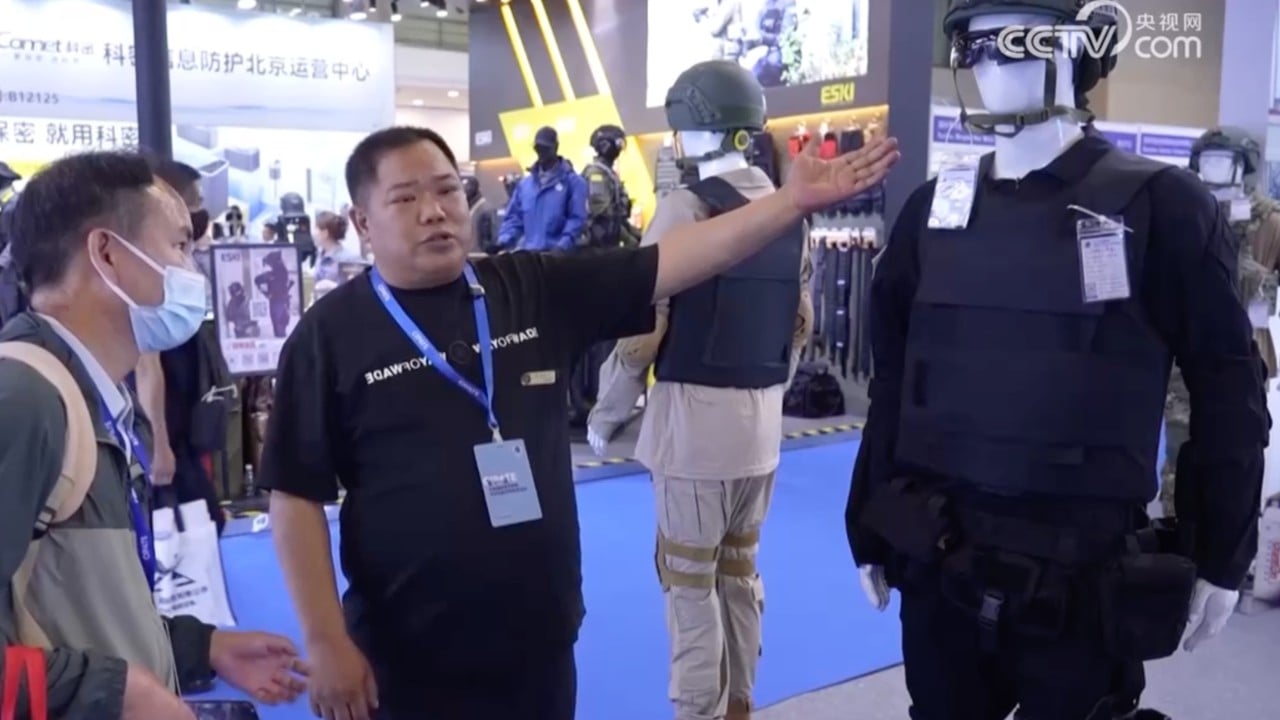
Chinese AI-enabled equipment can help police assess the physical health, mental state, and even risk level of suspects, according to demonstrations at a law enforcement equipment exhibition in Beijing last week.
Chinese firms presenting their latest biometric devices at the international police and anti-terrorism technology expo said they could reduce manpower requirements for a police force and improve efficiency amid a shortage of frontline officers.
The three-day exhibit which ended on...

 Accedi