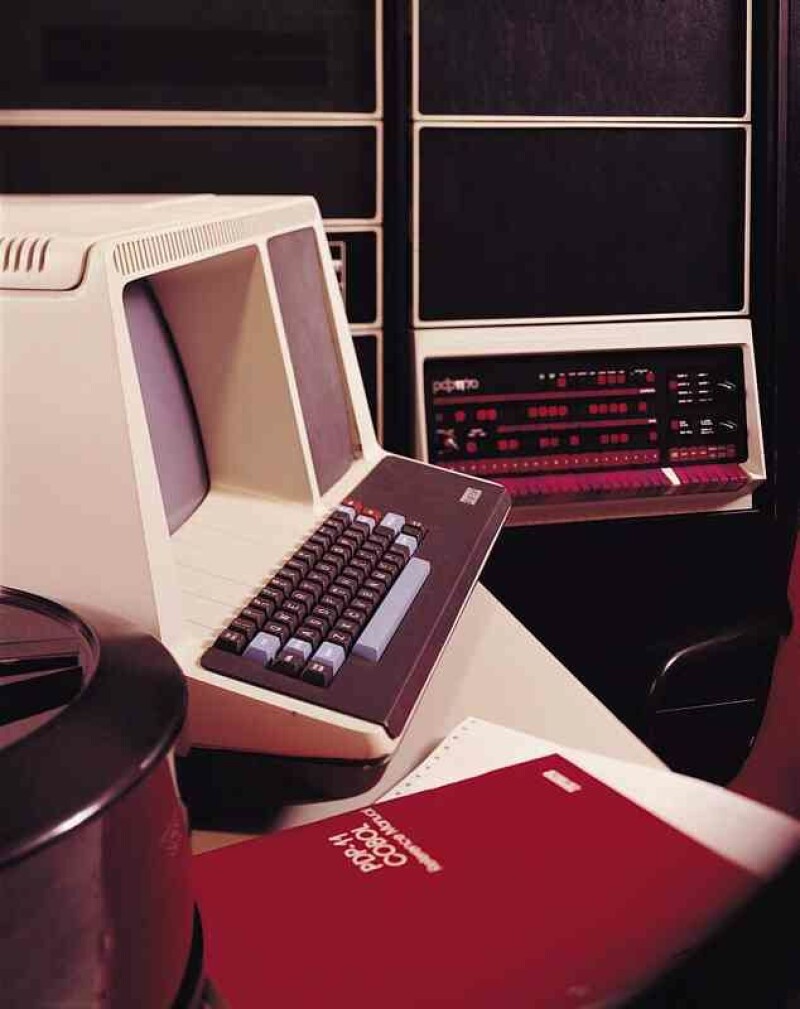
It’s been more than a quarter century since the Y2K bug threatened to disrupt the not-so-modern world, and while the patching efforts of global IT heroes prevented a millennial mess, the problem persists as a Dutch dev just found a new instance of the numeric nightmare. While working on an emulator for the venerable Programmed Data Processor (PDP) series of “minicomputer” systems manufactured between the 1950s and 1990s, Folkert van Heusden spotted an unpatched Y2K bug in the Network Time Protocol daemon in BSD 2.11. To be fair, it’s not like van Heusden stumbled onto a potentially devastating issue that’s simply waiting to cause chaos: Not only was the bug specific to the PDP-11/70, a system that entered service in 1975, but it also requires a Precision Standard Time, Inc.(PSTI) receiver manufactured by defunct hardware maker Traconex used to pick up time signals broadcast by short wave radio stations managed by the US National Institute of Standards and Technology. Even at that point, the bug won't instantly break network time, as a would-be attacker must take several steps to configure the ancient mahicnes in a way that causes the error. Van Heusden’s writeup explains how to trigger the flaw. “I'm writing a PDP emulator,” van Heusden told The Register in an email. “I'm also very much interested in time keeping on computers. That combined, I dove into the NTP-implementation on the PDP. When adding emulation for the PSTI-device, I suddenly noticed 19126 for the year.” Unsurprisingly, when the PSTI receiver actually produces the correct output, the system throws an error that the time offset between the PDP emulator and the emulated PSTI device is a bit “excessive.” Only by 17,000 years, give or take a couple centuries. Luckily, van Heusden has coded a fix that’ll bring the times back in sync, eliminating what may be one of the few remaining Y2K bugs still floating around in the wild - after all, when’s the last time you heard of a forgotten (or, in this case, overlooked due to technological obsolescence) Y2K bug being patched? If you want to tinker with a 50-year old emulated system running a 35-year old operating system, the good news is that the PDP and its 16-bit CPU ran at 5MHz and needed just 4 MB main memory - a spec that van Heusden’s PDP-11/70 emulator can easily run on modest hardware like a Raspberry Pi Pico, and it’s available on GitHub. Just be sure you patch that Y2K bug if you plan to tinker with time keeping. ® Correction: A previous version of this article referred to the developer as Danish rather than Dutch.
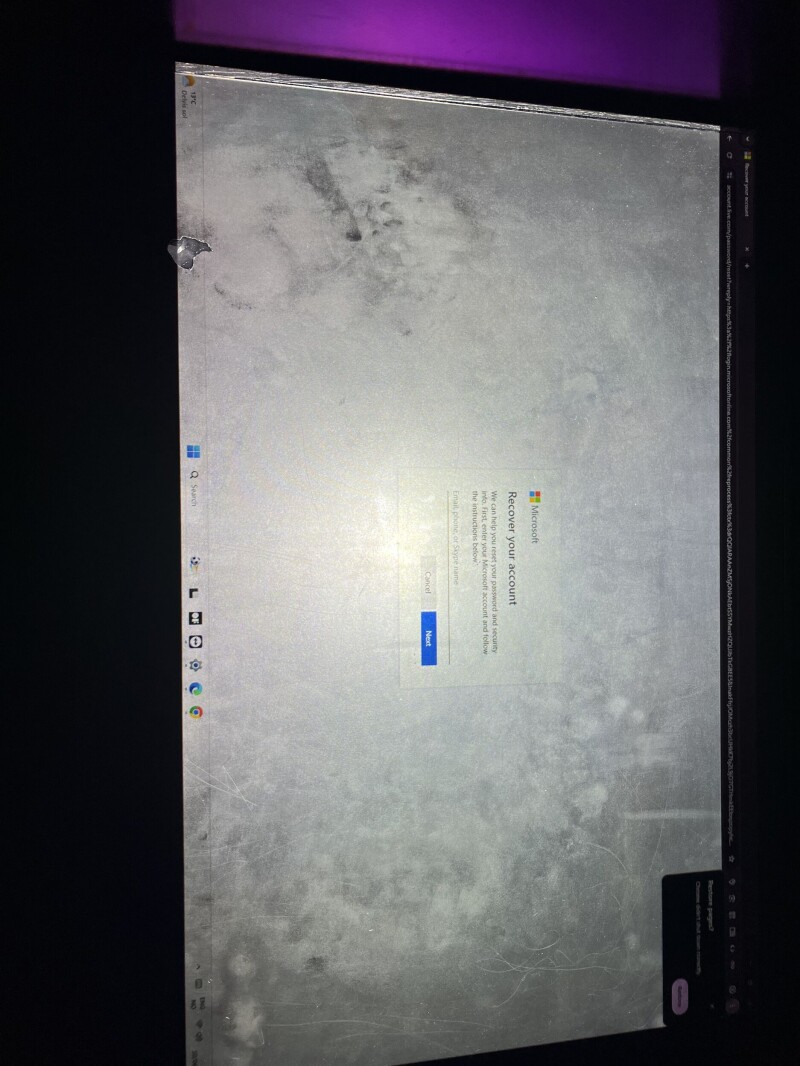
BORK!BORK!BORK! "The Scream" by Edvard Munch is an iconic painting, so it somewhat appropriate that a display in a museum dedicated to the artist shows an error likely to elicit the same response from many a Windows user: a Microsoft account recovery screen. Spotted by Paul, a Register reader at the Munch Museum in Oslo, the screen shows what appears to be Google Chrome attempting to display a page that requires a Microsoft account to access. For whatever reason – perhaps a password has been forgotten – an account recovery screen is visible rather than information more suited to the museum. It's enough to elicit a horrified shriek from a user seeking authenticated content. Not unlike the artist's work more than a century earlier. According to the museum, the motif is "a universal symbol of anxiety," not unlike the trepidation that accompanies modern authentication. The painting likely originated from an evening stroll Munch took, during which he had a strong reaction to a sunset. He attempted to come to terms with it in words and images, which is where the iconic "Scream" motif comes from. Munch produced several versions of the image, and the museum keeps three in rotation to minimize deterioration. One is always on display, while the others are kept in the dark. Despite its age, "The Scream" is as striking to modern audiences as it was in Munch's day. Perhaps more so, as humans deal with new technology and react to the latest news about the benefits and/or threats of AI, depending on whom you ask. In that sense, flashing up an account recovery prompt is perhaps the most appropriate modern interpretation of "The Scream." An expression of horror, anxiety, or despair is one that is all too easy to associate with a user struggling with authentication technology. Or, in the case of whoever is administering this display, whatever Microsoft service is lurking in the background and needs an account recovered. ®
WHO, ME? Welcome to another instalment of Who, Me? It’s The Reg’s reader-contributed column in which you admit to mistakes and reveal your escapes! This week, meet a reader we’ll Regomize as “Rohan” who told us that a few years back he worked on the IT side of a warehouse. “Management purchased software that required a large-screen tablet, but when they saw those cost over $1,000, they balked at the price,” Rohan writes. The tech team’s resident pimply-faced youth (PFY) was therefore given the job of finding a cheaper alternative. Rohan didn’t pay much attention because he was about to go on a holiday. While he was away, the PFY ordered a generic 14-inch Android for just $150. “It was ordered quicker than you can say ‘I’d advise against that’,” Rohan wrote. He returned from holiday and found a package on his desk, plus an email from the PFY expressing his pride in saving the company so much money. Rohan noticed the unmistakable livery of a Chinese e-tailer on the package, and after opening it found a nine-inch tablet inside. He therefore opened a dispute with the sellers, who asked to see a picture of the machine. “I duly sent one showing a tape measure rolled out to nine inches,” Rohan wrote. The vendor responded with an explanation of their proprietary tablet-sizing methodology, which Rohan applied. Using their method, the tablet was an eleven-incher, so Rohan revived the dispute. The vendor’s response was to send an image of the box the tablet came in, plus evidence that the box it arrived in had a 14-inch diagonal measurement. Rohan now escalated the matter to the e-tail platform, an act that saw the seller offer a partial refund. But the e-tail platform was having none of that and advised Rohan to return the undersized tablet – and promised a full refund including postage! The seller then responded with an offer of a partial refund if Rohan would just keep the tablet and drop the dispute. That deal meant Rohan’s company would end up owning a tablet it couldn’t use, for just $60. “The moral of the story is to school your PFYs on the folly of believing things that are too good to be true,” Rohan advised. Have you been too optimistic when shopping for work kit online? Don’t short-change your fellow readers, click here to send Who Me an email so we can share your story! ®

 Accedi