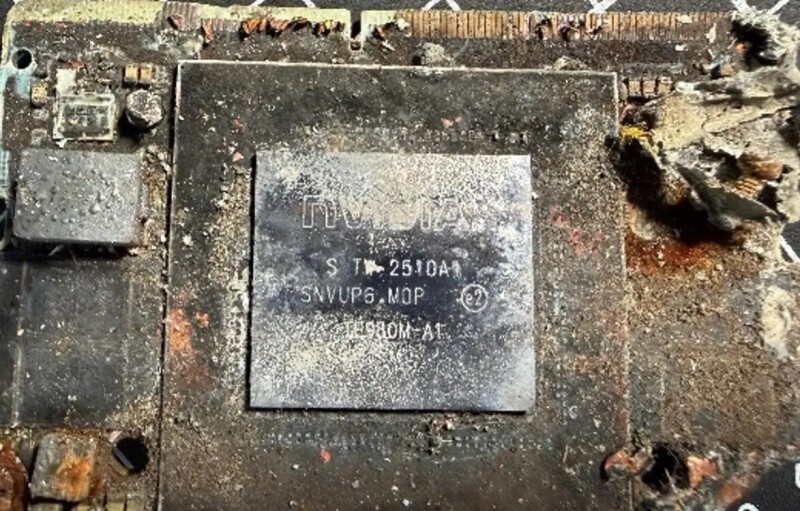
Sanctions and Nvidia’s exit from Russia in 2022 haven’t stopped its Jetson Orin hardware from turning up in Russian weaponry, according to Ukrainian military intelligence. The Defense Ministry’s Intelligence Directorate (GUR) reported this week that it spotted an Nvidia Jetson Orin module in the remains of a Russian S-71 Monochrome cruise missile. The S-71M is an air-launched weapon with autonomous capabilities that can reportedly search for and engage targets using optical sensors and onboard computing. “The use of this component may indicate the use of artificial intelligence technologies in the missile,” GUR said. That assumption makes sense, as information on the S-71M suggests that it can operate with user oversight or entirely autonomously. Photos included with the GUR announcement show a heavily scorched Nvidia chip with the identifier TE980M-A1 stamped onto its surface, indicating that the chip is a Jetson Orin NX 16GB unit that Nvidia released in early 2023. It’s a capable chip, but not exactly datacenter-class hardware - Orin systems are designed precisely for use cases like autonomous systems. Nvidia used to have offices in Russia and do business there, but it closed up shop in Ukraine’s bellicose neighbor in 2022 following Moscow’s decision to go to war with Kyiv. That was prior to the introduction of the TE980M-A1, meaning it must have reached Russian hands through another channel after Nvidia stopped direct sales to the country in early 2022. In other words, whatever sanctions the US has enacted or business decisions Nvidia has made, its hardware is still turning up in Russian weaponry used to target Ukrainians. The one good thing about the entire affair, according to GUR, is the fact that the recovered hardware proves Russian tech manufacturing still isn’t up to snuff. According to Nvidia, Orin modules are consumer grade and are sold to all sorts of different people for all sorts of purposes, with military applications not being among their intended design. The chips aren’t supposed to be available in Russia, either, a spokesperson told The Register, adding that there are plenty of ways for Russia to get ahold of the chips that are out of its control. “Pre-owned Jetsons are available through many reseller channels,” Nvidia told us. “Although we cannot track products after they are sold, if we determine that any customer is violating U.S. export controls, we will take appropriate action." US export controls have restricted exports of advanced chips to Russia and China. Chipmakers have responded to China-specific restrictions by producing hardware designed to comply with US export rules, while third parties have allegedly used smuggling to get restricted higher-end components into China. It’s not clear how the Nvidia component ended up in Russian hands. GUR’s latest disclosures also document Chinese-made electronics in Russian weapons. However the salvaged chip made its way to Russia, GUR said its evidence shows that current export control regimes aren’t working. “The discovery of Nvidia Jetson in a new Russian missile once again demonstrates the need for increased sanctions pressure and coordination of the efforts of the civilized world,” the intelligence agency said. ®
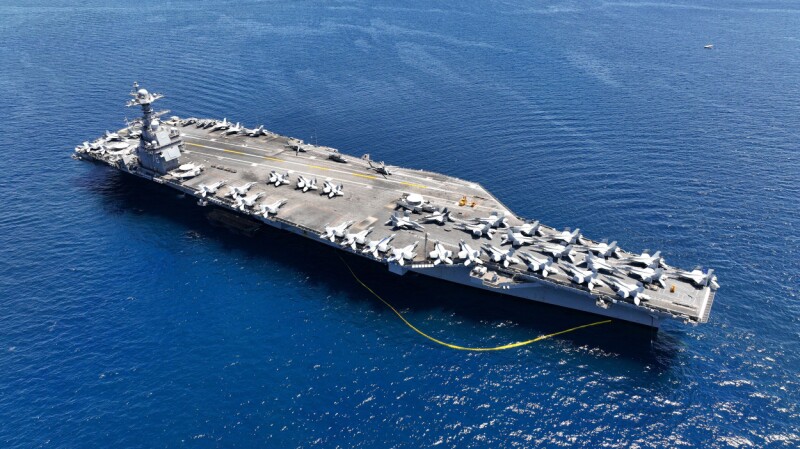
President Trump has ordered the US Navy to draw up plans to replace electromagnetic aircraft catapults and weapons elevators with old-fashioned steam and hydraulic systems. America’s commander-in-chief issued a presidential memorandum directing the secretary of defense, in consultation with the secretary of the Navy, to come up with a plan to replace the Electromagnetic Aircraft Launch System (EMALS) on the future USS Doris Miller (CVN-81) with the older steam-powered system. The same note stipulated the replacement of the electromagnetic Advanced Weapons Elevators with the hydraulic versions used in older carriers. These directives were part of a broader memorandum aimed at shaking up shipbuilding for the US Navy, which is often seen as glacial and moribund. EMALS was introduced on the USS Gerald R Ford (CVN-78), which was the first of an improved design of US aircraft carriers. It basically uses a linear induction motor to accelerate an aircraft along the flight deck, in place of the old-fashioned system that employs a steam piston. The premise of EMALS is that it doesn’t require a head of steam, and as it is electromagnetic, it should be easy to adjust the power to match the size and weight of aircraft being launched. However, the technology has had a few teething problems, as reported by The Register previously, and these have even led to the Gerald R Ford being unable to launch aircraft at all. The Advanced Weapons Elevators, which also use linear motors, have likewise proven problematic. Earlier this year, it was reported that there was a study underway to review the Ford-class carrier design and determine whether it should be altered for the next two in the class. “We are looking at 82 and 83 to review the costs, the designs, the systems, to make sure that they make sense, and they have all the systems and requirements that we want going forward,” then-secretary of the Navy John Phelan is quoted as saying. One of the concerns was said to be with the sortie generation rate of the Gerald R Ford – the number of takeoffs possible - which was promised to be higher with EMALS. We asked the White House if this directive would apply to all subsequent US carriers, but a spokesperson simply referred us to the announcement, which mentions only CVN-81. The rest of the president’s memorandum takes aim at naval shipbuilding in America. One directive is to establish a fifth naval shipyard to increase submarine and aircraft carrier repair capacity. Trump is also sanctioning foreign involvement in building up to three ship classes of US Navy vessels. His memorandum directs the secretary of defense to come up with “a new competitive acquisition approach” for surface combatants to perform anti‑submarine warfare, surface warfare, and convoy escort duties, plus Consolidated Cargo Replenishment at Sea (CONSOL) tankers and Roll-On, Roll-Off vessels – the latter typically used for transporting tanks and other military vehicles. The president proposes using a similar approach to the memorandum of understanding (MoU) between the US and Finland with regard to acquiring icebreaker ships last year. This will allow foreign suppliers to take part in US Navy procurement, provided they agree to build a new shipyard in America or assume ownership or a majority stake in an existing one, and construct all ships after the first two in US shipyards. Tellingly, the memorandum states that the US Navy “shall not impose iterative design changes upon the original mature parent designs within the above programs,” and that no changes from the original designs shall be made without the approval of the secretary of defense. Last year, the Trump administration canned the Constellation-class frigate program, which had been based on an Italian design to reduce technical risk, after so many changes were made that the US design had just 15 percent commonality with the original and the program was years behind schedule. ®
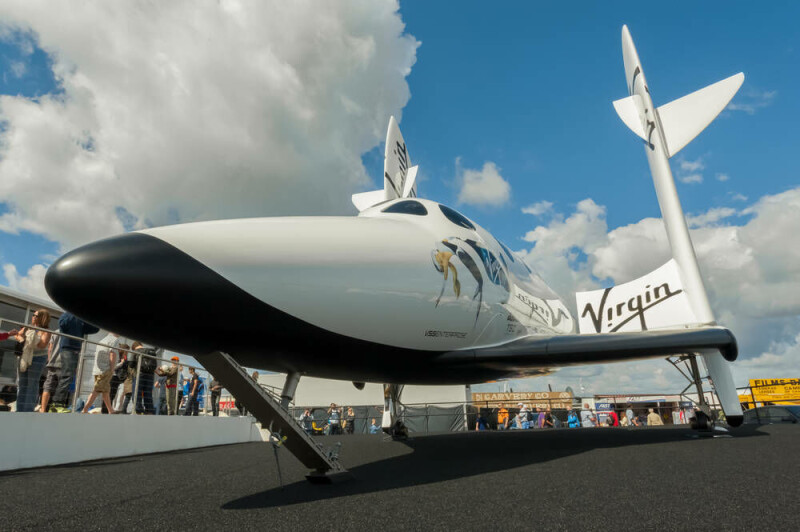
Virgin Galactic has delayed its return to commercial spaceflight until February 2027, and plans to raise ticket prices later this year. The delay was disclosed alongside the company's financial results, which showed a net loss of $56 million for the second quarter of 2026, down from $67 million a year earlier. Revenue for the quarter was $0.1 million, compared to $0.4 million in 2025. According to CEO Michael Colglazier, demand exceeded the number of seats offered in the first $750,000 batch, prompting the company to prepare another at a higher price. Those customers will, however, have to wait a little longer. Colglazier said: "Our first ship is now expected to enter commercial service in February 2027 rather than the fourth quarter of 2026." He blamed the delay on the extra time needed to "complete avionics and systems installations." During an earnings call, Colglazier said: "No single issue is driving the schedule push. Rather, we have experienced modest time duration extensions across hundreds of relatively small but important installation tasks involved in the first build of our new spaceship." In response to an analyst question, Colglazier elaborated: "The number of those kind of 'Oh, we did not expect this to not fit just perfectly,' coming in is higher than we had allotted for. That just has started to accumulate on us. It really picked up at the tail end of July. For a bit, we thought we could manage that end, but the team just needed more time to do it the correct way." Integrated vehicle ground testing is expected to begin later in August, followed by flight testing in October. A second spaceship is due to join the fleet in March 2027, and the company expects to stop burning cash and "deliver positive quarterly cash flow within 2027." When Virgin Galactic reopened suborbital ticket sales in April, it charged $750,000 for a seat, up from the $600,000 price it cited in 2023. That was a substantial jump from the $100,000 envisaged more than two decades ago, when Sir Richard Branson announced plans for a scaled-up version of Burt Rutan's SpaceShipOne. At the time, the company said commercial flights would resume by the end of 2026. Virgin Galactic's last commercial flight took place in 2024, after which the company paused operations to focus on its next generation of spacecraft. Virgin Galactic is not alone in pausing its space-tourism service. Earlier this year, rival Blue Origin announced that New Shepard flights would pause for "no less than two years" while it worked on its crewed lunar program. ® Updated 8/18 at 10:19 GMT: A previous version of this story said that the program was "grounded," but the more appropriate term is "paused."

 Accedi