Accedi
Richiami di prodotti alimentari da parte degli operatori - G.A. Prodotti Toscani srl - SALAMINO P.S. (PURO SUINO)
Motivo della segnalazione: Rischio microbiologico
Data di ricezione: 07/03/2025
Data di ricezione: 07/03/2025


Legge 177/2024 – Nuovo codice della stradaApplicazione del nuovo procedimento sanzionatorio ex art.7, comma 15, CdSInformazioni per gli utentiCon riferimento al nuovo art.7, comma 15 del CdS, la Circolare del Ministero dell’Interno – Dipartimento di pubblica Sicurezza del 20/12/2024, precisa che:- in caso di mancato pagamento della tariffa, la sanzione da applicare sarà sempre quella di cui al comma 14 primo periodo (da euro 42 a euro 173);- in caso di pagamento ...
E si cari amici di Meteonuvola, dopo un gennaio piuttosto mite e un inizio febbraio relativamente tranquillo, l’inverno 2018 sta per riprendersi la scena con una forte irruzione di aria Siberiana.

Veramente impressionante la discesa della vasta colata gelida in arrivo, le temperature inizieranno a calare drasticamente da domenica 25 con possibilità di nevicate sui versanti esposti al vento da est, come l’Emilia, le Marche, l’Abbruzzo e la fascia occidentale Piemontese. Nevicate che in alcuni casi potrebbero assumere carattere di vere e proprie bufere.
Termometro in picchiata quindi su tutta Italia, ma sarà il nord a sentire maggiormente gli effetti, infatti ci aspettiamo temperature massime sulla Pianura Padana inferiori allo zero gradi, le famose giornate di ghiaccio, fenomeno invernale sempre più raro ed ancora più difficile da ottenere nell’ultima decade di febbraio.
Nei prossimi giorni utenti del centro nord copritevi bene, evitate spostamenti se non necessari e svuotate le tubature esterne.
A presto!
Giuseppe Di Stasi e Giancosimo Damiano Gallitelli si mettono in proprio nel 2010 offrendo servizi Internet a Bernalda. Oggi possono contare su un team di sette persone e oltre 800 clienti Ex sistemista informatico, Giuseppe Distasi si mette in proprio. Trova un socio, Giancosimo Damiano Gallitelli, specializzato nel lavoro commerciale, ed insieme nel 2010 fondano […]
L'articolo AreaWI sperimenta nuovi servizi di connettività in provincia di Matera proviene da Assoprovider.

Per il 9 febbraio c’è una chiama imprescindibile.
Non solo le Olimpiadi di cui abbiamo scritto un anno fa, ciò che accade nelle terre interne, lungo i rilievi di tutta la penisola, non può lasciare indifferenti.
Mentre la terra brucia per via della crisi climatica in cui siamo immersi, annusatone il sangue, i predoni dell’estrattivismo che fa rima con accanimento apparecchiano un banchetto di corvi sulla pretesa carogna di intere comunità, decisi a spremere dal turismo tutto quel che possono.
Disboscano foreste giunte al limite di sopportazione e colpite da bostrico, Vaia e dissesti assortiti, percorrono la strada della cementificazione esasperata per nuove strutture, infrastrutture e palazzetti dal gusto distopico. Attraggono mosche sullo zucchero di non-altrove utili a mettere in scena experience fotocopia, fatte degli stessi panorami fitti di vetro e cemento, degli stessi sapori, odori, colori e ritmi; le rinchiudono a sciare in cattedrali post-atomiche, a passeggio per i “corsi” di ex villaggi di pastori e stalle, ingozzandosi degli stessi cibi di lusso.
Venghino siori venghino, il ceto medio si indebiti per una settimana bianca all-inclusive, terme-spa-motoslitta e pesce di mare. Per un giro a Cortina a respirare la stessa aria di Milano e replicarne le stesse pose fatte di vasche dello shopping e apericena.
Sono gli ultimi colpi di maglio di un capitalismo – col capitale degli altri però (cioè soldi nostri) – che mette la sua rovina in scena, che non immagina altro che portare allo sfinimento un modello fatto in questo caso di altri piloni e di cannoni via via più performanti (si legga: idrovori).
Beautiful che incontra il sogno di soldi facili e il fatalismo della corsa all’oro nel Klondike, l’eterno presente capitalista la cui mentalità viene diffusa a pioggia da soap opere eterne, con Ridge in decadenza che giunto all’ottantesima stagione – i primi impianti coincidono grossomodo con l’Italia repubblicana – è costretto a recitare aggrappato al deambulatore e col catetere infilato.
Un modello che attrezza pacchetti divertimento per qualsiasi gusto purché non siano rispettosi nemmeno quando sono causa dell’agonia di luoghi in cui non spingono a calarsi incuriositi, ma a colonizzare; all’occorrenza si può sempre far sbriluccicare specchietti conditi dalla retorica del “recupero” della montagna abbandonata, dal recover washing si potrebbe dire.
Champagne e motori; sfarzo sguaiato e arroganza, il requiem della nostra decadenza fatta di topi festanti mentre la nave affonda, quando non andrebbero spazzati via soltanto questi abbagli di uno sviluppo che non c’è se non nei conti in banca di chi lo sfrutta, andrebbero rimosse anche tutta un’infrastrutturazione nociva, le narrazioni sull’aria sana, i miti romantici dell’alpe e del quanto si stia bene in montagna.
Tutto ciò non è emendabile, non è perfettibile, non c’è compensazione o posti-lavoro-in-cambio che tenga. È da abbattere in toto, fino a festeggiarne il cadavere. Solo allora sarà possibile provare a immaginare qualcosa che possa avere senso.
Il quadro che abbiamo tracciato è piuttosto apocalittico, e tutt’attorno ai monti non è meglio. L’intero pianeta umano sta subendo scosse telluriche forti, capaci di disarticolare e annichilire il pensiero dei più positivi.
È frustrante trovarsi immersi in questo clima, sa dell’amara perdita di ogni speranza e voglia di rimettersi in gioco.
Del resto i primi a rendersi conto che la pacchia del turismo invernale è finita sono proprio i costruttori di impianti di risalita, che infatti cercano grottescamente di rifilare le loro cabinovie alle città, spacciandole per mezzi di trasporto urbani sostenibili ed eco-friendly.

È successo a Kotor in Montenegro, sta succedendo a Trieste, prossimamente succederà a Genova. A Trieste la mobilitazione spontanea di cittadini e comitati di quartiere è per ora riuscita a fermare un progetto ad alto impatto ambientale, che prevede la distruzione di un bosco protetto per permettere la costruzione di una cabinovia al servizio delle navi da crociera e del loro indotto. Diciamo “per ora” perché dopo due anni di mobilitazioni e di azioni legali è finalmente saltato il finanziamento PNRR; ma l’ineffabile ministro Salvini ha promesso un finanziamento ad hoc, con fondi ministeriali, perché lo Stato e la ditta appaltatrice, la Leitner, non possono permettersi di essere messi in scacco da un’accozzaglia di pezzenti.
Proprio per questo è ancora più importante esserci a ogni latitudine, tener duro e non abbandonarsi al fato.
Siamo in ottima compagnia, la rete che sta stringendo le maglie è larga e importante, dobbiamo darle continuità e forza ben oltre alle Olimpiadi, perché ne va anche delle nostre vite, della differenza che corre tra arrancarvici e viverle.
Abbiamo deciso di aderire all’appello La montagna non si arrende e di mettere a nudo le difficoltà che attraversano noi e l’intero paesaggio.
Ci sono iniziative di tutti i tipi, sono ben accette anche piccole testimonianze pressoché individuali, contribuiamo a propagare l’onda, partecipate, inventatevi qualcosa e stringete rapporti.
Dal canto nostro, noi non ci concentreremo su una manifestazione singola ma contamineremo e ci faremo contaminare, spalmandoci e stando nella galassia di iniziative che si vanno a creare.
Restituiremo le esperienze dei nostri corpi. A dopo il 9, ancora e ancora.
L'articolo Al 9 febbraio: la montagna non si arrende, e nemmeno noi sembra essere il primo su Alpinismo Molotov.
M0468/25 NOTAMN
Q) LIMM/QPDCH/I/NBO/A/000/999/4341N01024E005
A) LIRP
B) 2501311145 C) PERM
E) STANDARD INSTRUMENT DEPARTURE.
DISTANCE OF SIGNIFICANT POINTS REPORTED ON FLW SID CHG:
- BEROK 8A/C D29PIS/D27PIN
- GINAR 9A/C D19PIS/D17.5PIN
- AKUTO 5A/C D20PIS/D20.3PIN
- SPEZI 8A/C D35PIS/D36.6PIN
- VANXI 5A/C D18PIS/D19.4PIN
REF FLIP C/N AD LIRP 1-4
CREATED: 31 Jan 2025 11:45:00
SOURCE: LIICYNYX
M0467/25 NOTAMN
Q) LIMM/QPDCH/I/NBO/A/000/999/4341N01024E005
A) LIRP
B) 2501311143 C) PERM
E) INITIAL CLIMB PROCEDURES CHG:
- RWY 04R/04L AFTER TAKE-OFF PROCEED RUNWAY HEADING THEN AT 3 NM
PIS DME OR OVERHEAD PIN TACAN, TO BE CROSSED AT 900 FT OR ABOVE,
TURN LEFT TO JOIN AND FOLLOW ASSIGNED SID AS REPORTED BELOW:
A) ON TR 323DEG IF CLEARED VIA SID BEROK 8A
B) ON TR 219DEG IF CLEARED VIA SPEZI 8A OR VANXI 5A
C) BOUND TO PIS VOR IF CLEARED SID GINAR 9A OR SID AKUTO 5A
TURN AND CLIMB PARAMETERS UNCHAGED.
- RWY 22R/22L AFTER TAKE-OFF, AS SOON AS PRATICABLE, JOIN RDL 213
PIS VOR THEN:
A)AT 4 NM PIS DME OR 7 NM PIN TACAN TURN RIGHT:
-ON TR 329DEG IF DIRECTED VIA SID SPEZI 8C OR VANXI 5C
-BOUND TO PIS VOR IF CLEARED VIA SID GINAR 9C OR AKUTO 5C
B)AT 4 NM PIS DME OR 7 NM PIN TACAN TURN LEFT BOUND TO PIS VOR IF
CLEARED VIA BEROK 8C.
TURN AND CLIMB PARAMETERS UNCHANGED.
REF FLIP C/N AD LIRP 1-4.1 AND 1-4.2
CREATED: 31 Jan 2025 11:43:00
SOURCE: LIICYNYX
B0540/25 NOTAMN
Q) LIMM/QPDCH/I /NBO/A /000/999/4341N01024E005
A) LIRP B) 2501311135 C) PERM
E) STANDARD INSTRUMENT DEPARTURE.
DISTANCE OF SIGNIFICANT POINTS REPORTED ON FLW SID CHG:
- BEROK 8A/C D29PIS/D27PIN
- GINAR 9A/C D19PIS/D17.5PIN
- AKUTO 5A/C D20PIS/D20.3PIN
- SPEZI 8A/C D35PIS/D36.6PIN
- VANXI 5A/C D18PIS/D19.4PIN
REF AIP AD 2 LIRP 6-13
CREATED: 31 Jan 2025 11:35:00
SOURCE: EUECYIYN
B0539/25 NOTAMN
Q) LIMM/QPDCH/I /NBO/A /000/999/4341N01024E005
A) LIRP B) 2501311123 C) PERM
E) INITIAL CLIMB PROCEDURES CHG:
- RWY 04R/04L AFTER TAKE-OFF PROCEED RUNWAY HEADING THEN AT 3 NM PIS
DME OR OVERHEAD PIN TACAN, TO BE CROSSED AT 900 FT OR ABOVE, TURN
LEFT TO JOIN AND FOLLOW ASSIGNED SID AS REPORTED BELOW:
A) ON TR 323DEG IF CLEARED VIA SID BEROK 8A
B) ON TR 219DEG IF CLEARED VIA SPEZI 8A OR VANXI 5A
C) BOUND TO PIS VOR IF CLEARED SID GINAR 9A OR SID AKUTO 5A
TURN AND CLIMB PARAMETERS UNCHAGED.
- RWY 22R/22L AFTER TAKE-OFF, AS SOON AS PRATICABLE, JOIN RDL 213
PIS VOR THEN:
A)AT 4 NM PIS DME OR 7 NM PIN TACAN TURN RIGHT:
-ON TR 329DEG IF DIRECTED VIA SID SPEZI 8C OR VANXI 5C
-BOUND TO PIS VOR IF CLEARED VIA SID GINAR 9C OR AKUTO 5C
B)AT 4 NM PIS DME OR 7 NM PIN TACAN TURN LEFT BOUND TO PIS VOR IF
CLEARED VIA BEROK 8C.
TURN AND CLIMB PARAMETERS UNCHAGED.
REF AIP AD 2 LIRP 6-15/16
CREATED: 31 Jan 2025 11:23:00
SOURCE: EUECYIYN
E0313/25 NOTAMR E0240/25
Q) LIMM/QNNXX/IV/NBO/AE/000/999/4343N01026E025
A) LIRP B) 2501301540 C) 2502241300 EST
E) PISA TACAN 'PIN' CH 20X REMOTE STATUS INDICATOR NOT AVBL.
RMK 1: PILOTS ARE REQUESTED TO REPORT TO ATS UNITS 'PISA APP' OR
'PISA TWR' IF TACAN SIGNAL IS NOT RECEIVED
RMK 2: AZIMUTH PART NOT AVBL
REF AIP AD 2 LIRP 1-19
CREATED: 30 Jan 2025 15:40:00
SOURCE: EUECYIYN
B0517/25 NOTAMN
Q) LIMM/QPDAU/I /NBO/A /000/999/4341N01024E005
A) LIRP B) 2502060700 C) 2502282300
D) THU-FRI 0700-2300
E) STANDARD INSTRUMENT DEPARTURE (SID) BEROK 8C SUSPENDED
DUE TO FIRING ACT ANNOUNCED BY NOTAM W0215/24
RMK: ABOVE MENTIONED RESTRICTIONS SHALL BE APPLIED
ON TACTICAL BASIS BY PISA APP
REF AIP AD 2 LIRP 6-13
CREATED: 30 Jan 2025 13:43:00
SOURCE: EUECYIYN
B0516/25 NOTAMN
Q) LIMM/QPDAU/I /NBO/A /000/999/4341N01024E005
A) LIRP B) 2502030700 C) 2502262300
D) MON-WED 0700-2300
E) STANDARD INSTRUMENT DEPARTURE (SID) 'BEROK 8C' SUSPENDED
DUE TO FIRING ACT ANNOUNCED BY NOTAM W0205/24.
RMK: ABOVE MENTIONED RESTRICTION SHALL BE APPLIED
ON TACTICAL BASIS BY PISA APP.
REF AIP AD 2 LIRP 6-13
CREATED: 30 Jan 2025 13:22:00
SOURCE: EUECYIYN
B0489/25 NOTAMR B7471/24
Q) LIMM/QFAXX/IV/BO /A /000/999/4341N01024E005
A) LIRP B) 2501290935 C) 2504281100 EST
E) SUP S28/24 IN FORCE FROM 05 SEP 2024 TO 22 OCT 2025
'PISA/S.GIUSTO (LIRP) AD: EXPANSION WORKS OF AIRPORT TERMINAL'
STATUS OF WORKING PHASES:
- PHASE 1: COMPLETED
- PHASE 2: ACTIVE
CREATED: 29 Jan 2025 09:36:00
SOURCE: EUECYIYN
Settima visione libera del ciclo di proiezioni a cura di Unit hacklab.
Lunedì 20 maggio 2019
Stare into the lights my pretties, Jordan Brown, 2017
ENG sub ITA

Cinemacello Macao, viale Molise 68, Milano.
Inizio proiezioni ore 20:30, inizio film ore 21:00.
Viviamo in un mondo di schermi …E0239/25 NOTAMR E0935/24 Q) LIMM/QNDXX/IV/BO /AE/000/999/4341N01023E025 A) LIRP B) 2501200802 C) 2502241500 EST E) PISA DVOR/DME 'PIS' FREQ 112.10MHZ CH 58X AVBL AS FLW: - VOR OPR - DME NOT AVBL DUE TO FAILURE REF AIP AD 2 LIRP 1-19 CREATED: 20 Jan 2025 08:02:00 SOURCE: EUECYIYN
B0262/25 NOTAMN
Q) LIMM/QOBCE/IV/M  /A /000/999/4341N01024E005
A) LIRP B) 2501161415 C) 2504161100
E) NEW OBSTACLE ERECTED MOBILE ATC TOWER WITHIN
RWY 04L/22R STRIP PSN COORD (WGS-84) 434123.29N 102344.52E
ELEV AGL 8.0M/26.2FT ELEV AMSL 9.0M/29.5FT
RMK: 1. RWY 04L/22R AVBL AS MAIN TAXI ROUTE ONLY
2. ICAO SGL PROVIDED
REF AIP AD 2 LIRP 3-5 (AOC TYPE B RP NR 4/4
CREATED: 16 Jan 2025 14:16:00
SOURCE: EUECYIYN
M0138/25 NOTAMN
Q) LIMM/QMNLC/IV/NBO/A/000/999/4341N01024E005
A) LIRP
B) 2501150700 C) 2504150659
E) APRON 'RAMP 1' CLSD DUE TO WIP
REF FLIP CENTRAL AND NORTHEN ITALY AD LIRP 1-1
CREATED: 13 Jan 2025 10:25:00
SOURCE: LIICYNYX

Siamo entrati nel 30° anno di presenza di Italian Linux Society, una comunità crescente che non si è mai fermata! Questo è il bollettino del trascorso 2024, con info dai primi 9 mesi di nuovo direttivo, condividendo risultati e prossime sfide.
Continua la lettura… (ulteriori 8 minuti di lettura)
M0123/25 NOTAMN
Q) LIMM/QFATT/IV/BO/A/000/999/4341N01024E005
A) LIRP
B) 2501230000 C) 2502052359
E) TRIGGER NOTAM-PERM MILAIP AIRAC AMDT 1/25
EFFECTIVE DATE 23 JAN 2025
PISA AD
TABLE 2.24 'CHART RELATED TO PISA AERODROME' UPDATED
CREATED: 12 Jan 2025 13:10:00
SOURCE: LIICYNYX
B0138/25 NOTAMN
Q) LIMM/QFATT/IV/BO /A /000/999/4341N01024E005
A) LIRP B) 2502200000 C) 2503052359
E) TRIGGER NOTAM-AIRAC SUP S05/25 IN FORCE FM 20 FEB 06 AUG 2025
PISA/SAN GIUSTO (LIRP): TAXIWAY AA RENAMING IN TAXIWAY Z
SUP IS POSTED AND AVBL ON WEBSITE WWW.ENAV.IT
CREATED: 09 Jan 2025 14:01:00
SOURCE: EUECYIYN
M6171/24 NOTAMN
Q) LIMM/QPHCH/IV/BO/A/000/999/4341N01024E005
A) LIRP
B) 2412140709 C) PERM
E) HI-TACAN Z RWY 04R/L
IAF HOLDING PATTERN INBOUND AND OUTBOUND TRACKS CHG:
018DEG/198DEG
REF FLIP CN AD LIRP 1-16
CREATED: 14 Dec 2024 07:10:00
SOURCE: LIICYNYX
V0416/24 NOTAMN
Q) LIMM/QPIAU/I/BO/A/000/999/4341N01023E005 A) LIRP B) 2412260001 C) 2507220001
E) [US DOD PROCEDURAL NOTAM] INSTRUMENT APPROACH PROCEDURE NOT
 AUTHORIZED HI-TACAN RWY 04R
CREATED: 19 Dec 2024 07:33:00
SOURCE: EDKS
V0415/24 NOTAMN
Q) LIMM/QPIAU/I/BO/A/000/999/4341N01023E005 A) LIRP B) 2412260001 C) 2507220001
E) [US DOD PROCEDURAL NOTAM] IFR TAKE-OFF MINIMUMS AND (OBSTACLE)
 DEPARTURE PROCEDURES NOT AUTHORIZED
CREATED: 19 Dec 2024 07:31:00
SOURCE: EDKS
B8584/24 NOTAMN
Q) LIMM/QNTAS/IV/BO /A /000/999/4341N01024E005
A) LIRP B) 2412190923 C) 2502042359
E) ELBA VORTAC 'ELB' FREQ 114.70MHZ CH 94X UNSERVICEABLE.
REF AIP AD 2 LIRP 1-19
CREATED: 19 Dec 2024 09:23:00
SOURCE: EUECYIYN
B8431/24 NOTAMN
Q) LIMM/QPATT/I /BO /A /000/999/4341N01024E005
A) LIRP B) 2501230000 C) 2502052359
E) TRIGGER NOTAM-PERM AIP AIRAC AMDT 1/25 EFFECTIVE DATE 23 JAN 2025
PISA/S.GIUSTO AD
REVIEW OF SID AND STAR
AIRAC IS POSTED AND AVBL ON WEBSITE WWW.ENAV.IT
CREATED: 12 Dec 2024 15:25:00
SOURCE: EUECYIYN
B8166/24 NOTAMN
Q) LIMM/QPAXX/IV/NBO/A /000/999/4341N01024E005
A) LIRP B) 2412040605 C) 2502281732
D) MON-FRI SR MINUS30-SS PLUS30 EXC DEC 25 26 JAN 01 06
E) STANDARD INSTRUMENT ARRIVAL.
FLW STANDARD INSTRUMENT ARRIVAL VOR RWY 04 MEL RAISED TO FL 150:
- MAREL 1N
- PRT 1N
DUE TO MIL PJE ANNOUNCED BY NOTAM W4434/24
RMK: ABOVE MENTIONED RESTRICTIONS SHALL BE APPLIED ON TACTICAL
BASIS BY PISA APP
REF AIP AD 2 LIRP 4-13
CREATED: 03 Dec 2024 08:12:00
SOURCE: EUECYIYN
B8151/24 NOTAMN
Q) LIMM/QPDAU/I /NBO/A /000/999/4341N01024E005
A) LIRP B) 2412030001 C) 2502282359
D) MON-FRI SR MINUS30-SS PLUS30 EXC DEC 25 26 JAN 01 06
E) STANDARD INSTRUMENT DEPARTURE.
SID AKUTO 5A/5C, GINAR 9A/9C SUSPENDED
DUE TO MIL PJE ANNOUNCED BY NOTAM W4434/24
RMK: ABOVE MENTIONED RESTRICTIONS SHALL BE APPLIED ON TACTICAL
BASIS BY PISA APP
REF AIP AD 2 LIRP 6-13
CREATED: 02 Dec 2024 13:50:00
SOURCE: EUECYIYN
B7628/24 NOTAMR B5274/24
Q) LIMM/QFAXX/IV/BO /A /000/999/4341N01024E005
A) LIRP B) 2411081157 C) 2502061000
E) GENERAL AVIATION PPR FORM AVBL BY FLW LINK:
HTTPS://BIT.LY/LIRP-PPR (UPPER CASE)
REF AIP AD2 LIRP 1-26
CREATED: 08 Nov 2024 11:58:00
SOURCE: EUECYIYN
B7283/24 NOTAMN
Q) LIMM/QPUCH/I /BO /A /000/999/4341N01024E005
A) LIRP B) 2410310000 C) 2501262359 EST
E) MISSED APPROACH VANXI HOLDING PATTERN CHG:
HOLD BETWEEN D18 AND D14 PIS DME (D19.4 AND D15.4 PIN TACAN), IAS
MAX 190KT, LEFT TURN.
REF AIP AD 2 LIRP 5-3
CREATED: 25 Oct 2024 12:06:00
SOURCE: EUECYIYN
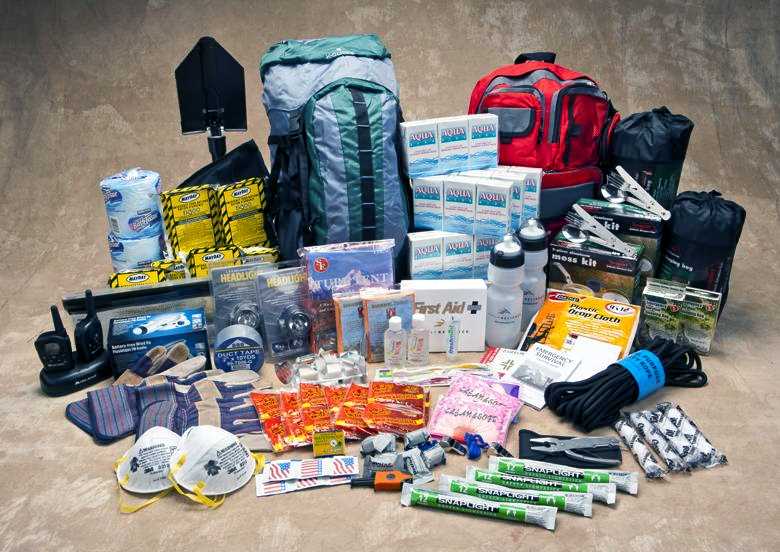
Noto in Italia come zaino di salvataggio, il BOB (Bug-out-bag) o 72h kit è uno zaino, un sacco o un qualsiasi altro contenitore portatile (es. scatola alluminio) che al suo interno tiene stipato un equipaggiamento di emergenza che consente un’autonomia di circa 3 giorni (ovvero 72 ore), dal momento in cui si scatena il disastro.
Il ‘kit di sopravvivenza classico‘, è spesso concepito per affrontare lunghi periodi di sopravvivenza in territori ostili e selvaggi, invece la Bug-out-bag nasce con lo scopo di affrontare situazioni di emergenza di breve durata, in conseguenza a disastri urbani o calamità naturali.
Il kit di sopravvivenza urbano ci servirà per garantire i punti base della sopravvivenza (fuoco, cibo, acqua, segnalazione, riparo) fino all’arrivo dei soccorsi.
Lo zaino di salvataggio viene consigliato, principalmente a chi risiede in zone ad alto rischio calamità naturali (es. vicino ad un vulcano, un grosso fiume, in alta montagna). Comunque può acquistarlo chiunque, in quest’ultimo periodo (forse per i vari accadimenti e per i vari programmi televisivi dedicati al survivalismo) è nata una vera e propria caccia (e anche moda) al kit di sopravvivenza urbano, tantochè è sorto un grande business e sempre più negozianti propongono il loro kit, basta fare una ricerca su google.
Lo zaino deve essere leggero, semplice, efficace, compatto, e deve contenere il numero di oggetti necessari in base al numero delle persone che lo utilizzeranno (es. una famiglia).
Lo zaino deve essere controllato periodicamente e deve sempre trovarsi a portata di mano, infatti non possiamo prevedere il momento nel quale ne avremo bisogno.
In quali situazioni usare la Bug-out-bag:
IL CONTENUTO DEL KIT DA 72 ORE

Cosa deve contenere la bug-out bag?
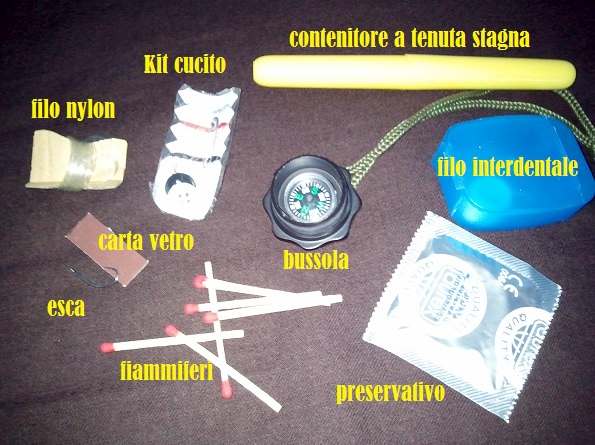
In foto (alcuni oggetti di un kit)
ATTENZIONE: Lo zaino deve essere compatto e leggero con una capienza di 20 litri fino a un massimo di 30 lt. Uno zaino da trekking è ben consigliato.
L'articolo IL KIT PER LA SOPRAVVIVENZA URBANA sembra essere il primo su SOPRAVVIVERE.NET.
I migliori manuali di sopravvivenza: conoscenza e preparazione per affrontare le base della sopravvivenza
Per chi ama la natura e desidera essere in grado di affrontare qualsiasi situazione, i manuali di sopravvivenza sono strumenti indispensabili. La conoscenza, infatti, è tanto importante quanto il materiale base, poiché fornisce le competenze necessarie per gestire imprevisti e difficoltà. Che si tratti di un’escursione in montagna, di un’avventura nella foresta, di una traversata in mare aperto o di un’esplorazione in pianura, sapere cosa fare nei momenti critici può fare la differenza tra sicurezza e pericolo.
Ogni habitat ha le sue sfide e le sue risorse, e comprenderne le dinamiche è fondamentale. Tuttavia, esistono anche abilità universali che possono essere apprese attraverso i manuali di sopravvivenza. Tra queste, troviamo tecniche pratiche come la costruzione di rifugi, dalla struttura più semplice a quella più solida e avanzata, o le strategie per riconoscere cibi sicuri e commestibili, evitando quelli potenzialmente dannosi per il nostro organismo.
Un’altra competenza cruciale è il primo soccorso, essenziale per la sicurezza personale in caso di ferite o emergenze mediche. Inoltre, molti manuali offrono istruzioni dettagliate su come creare corde, annodare nodi robusti e lavorare in modo efficace, nonché nozioni utili per orientarsi con o senza strumenti tecnologici, sfruttando la posizione del sole, delle stelle o elementi naturali.
Manuali per ogni esigenza: una guida ai migliori titoli sul mercato
In Italia, il mercato offre una vasta selezione di manuali di sopravvivenza, adatti sia ai principianti sia agli esperti. Tra i titoli più apprezzati troviamo il celebre Collins Gem, un classico intramontabile, e i manuali di derivazione militare, ricchi di strategie e tecniche testate sul campo. Per chi cerca una prospettiva più moderna, libri come Mental Survival di Alessandro Nannini approfondiscono l’importanza della preparazione mentale, offrendo spunti su come affrontare lo stress e mantenere la lucidità in situazioni estreme.
Non mancano volumi specifici dedicati a temi particolari, come il primo soccorso in emergenza, l’orientamento e la raccolta di erbe e frutti selvatici commestibili. Questi testi non solo aiutano a sviluppare competenze pratiche ma promuovono anche una maggiore consapevolezza dell’ambiente naturale e delle sue risorse.
Le nostre raccomandazioni aggiornate per il 2025
Per aiutarti nella scelta, abbiamo aggiornato la nostra lista dei migliori manuali di sopravvivenza nel 2025, includendo le edizioni più recenti e complete. Ogni titolo è stato selezionato per la qualità delle informazioni, la chiarezza espositiva e il valore pratico. Puoi esplorare le schede dettagliate di ciascun libro, con recensioni dei lettori e approfondimenti, semplicemente cliccando su copertine e titoli.
Prepararsi a ogni eventualità non significa solo accumulare strumenti o accessori, ma anche investire nel sapere. Un buon manuale di sopravvivenza può trasformarsi in un compagno di viaggio indispensabile, in grado di insegnare non solo come sopravvivere, ma anche come apprezzare e rispettare la natura che ci circonda.
1 – GUIDA COMPLETA AL SURVIVAL
Autore: Roberto Lorenzani • Editore: Hoepli • Pagine: 504

Come sopravvivere in ogni ambiente e situazione è un manuale completo scritto da Roberto Lorenzani, uno dei massimi esperti italiani di sopravvivenza. Con le sue 504 pagine ricche di dettagli, questo libro si propone come una guida definitiva per affrontare con successo le sfide della natura, ovunque ci si trovi.
Il testo esplora in modo esaustivo tecniche e strategie indispensabili per adattarsi a qualsiasi ambiente, dai deserti alle foreste, dalle montagne ai mari aperti. Tra gli argomenti principali troviamo:
Con tante illustrazioni, schemi e spiegazioni passo-passo, il libro è pensato sia per appassionati di avventura che per professionisti che desiderano approfondire le proprie competenze. Con uno stile chiaro e pratico, Lorenzani riesce a rendere accessibili anche le tecniche più complesse, offrendo una risorsa indispensabile per chiunque voglia essere pronto ad affrontare l’ignoto.
2 – IL VOLO FANTASMA
Autori: Bear Grylls • Editore: Mondadori • Pagine: 418

Bear Grylls, celebre avventuriero e volto noto della sopravvivenza estrema, si cimenta con il suo primo romanzo, regalando ai lettori un’esperienza carica di adrenalina e colpi di scena. Questo libro non è solo un’avventura mozzafiato, ma un viaggio in cui l’autore intreccia la sua profonda conoscenza del mondo selvaggio con una trama avvincente e personaggi memorabili.
Tra pericoli naturali, prove di sopravvivenza e un mistero da risolvere, il protagonista si troverà a confrontarsi non solo con le sfide dell’ambiente ostile, ma anche con i propri limiti interiori. Un romanzo perfetto per chi ama l’avventura, il rischio e le storie che tengono con il fiato sospeso fino all’ultima pagina.
Bear Grylls porta nelle pagine la sua esperienza unica, trasmettendo non solo emozione, ma anche un messaggio di resilienza, forza e spirito di adattamento. Con uno stile incalzante e una narrazione vivida, questo romanzo è un must per gli appassionati di avventura e azione.
3 – SURVIVING – ISTRUZIONI DI SOPRAVVIVENZA INDIVIDUALE E DI GRUPPO – 2nd Edizione
Autori: E. Maolucci, A. Salza • Editore: Hoepli • Pagine: 356

Un manuale pratico e completo per chiunque voglia approfondire le tecniche di sopravvivenza, sia a livello individuale che di gruppo. Scritto dagli esperti E. Maolucci e A. Salza, Surviving esplora le strategie fondamentali per affrontare situazioni estreme, con un focus sull’adattamento a diversi ambienti naturali e sull’importanza della collaborazione per superare le avversità.
Il libro è strutturato per offrire istruzioni chiare e dettagliate, integrando teoria e pratica. Tra gli argomenti principali trattati:
Ricco di illustrazioni, esempi pratici e suggerimenti utili, questo manuale rappresenta una risorsa preziosa sia per principianti che per esperti, ideale per chiunque voglia essere preparato a fronteggiare l’ignoto con competenza e lucidità. Un’opera di riferimento per chi ama l’avventura, ma anche per chi desidera essere pronto a ogni eventualità.
4 – MILITARY SURVIVAL – LE TECNICHE DI SOPRAVVIVENZA DELLE FORZE SPECIALI
Autore: Chris McNab • Editore: L’Airone • Pagine: 320

Military Survival è un manuale completo e approfondito che raccoglie le tecniche di sopravvivenza utilizzate dalle forze speciali di tutto il mondo. Scritto dall’esperto Chris McNab, il libro offre un viaggio dettagliato nelle strategie e nelle competenze sviluppate per resistere e adattarsi alle condizioni più ostili, affrontando scenari estremi con efficacia e determinazione.
Il manuale copre una vasta gamma di argomenti essenziali:
Arricchito da illustrazioni dettagliate e spiegazioni passo-passo, questo volume si rivolge sia agli appassionati di avventura e outdoor sia a chi desidera approfondire l’approccio militare alla sopravvivenza. Con 320 pagine di contenuti pratici, Military Survival è un punto di riferimento per chi cerca un manuale di qualità, scritto con la precisione e l’esperienza di un esperto del settore.
5 – MANUALE DI SOPRAVVIVENZA – COME CAVARSELA IN OGNI SITUAZIONE, CLIMA E AMBIENTE
Autore: Collins Gem • Editore: Antonio Vallardi • Pagine: 384

Il Manuale di sopravvivenza della celebre serie Collins Gem è un classico intramontabile, pensato per chiunque desideri acquisire le conoscenze fondamentali per affrontare situazioni critiche in qualsiasi ambiente e condizione climatica. Con le sue 384 pagine compatte, il libro offre una guida pratica, completa e facile da consultare, ideale sia per principianti che per esperti di outdoor.
Tra i temi principali trattati:
Grazie al suo linguaggio chiaro e al formato tascabile, questo manuale rappresenta un compagno ideale per chi si avventura nella natura o desidera essere pronto ad affrontare l’imprevisto. Pratico da consultare e da portare con sé, è una risorsa che unisce utilità e immediatezza, rendendolo un must per ogni appassionato di sopravvivenza.
L'articolo Migliori Manuali di sopravvivenza 2025 – TOP 5 sembra essere il primo su SOPRAVVIVERE.NET.
Nella prima parte di questa disamina abbiamo affrontato due differenti approcci: quello che pretende che il potere garantisca la fruizione in sicurezza dell’adrenalina facile e quello colpevolizzante verso l’escursionista per scaricare su di lui le responsabilità di politica e marketing, cioè di chi l’ha invogliato a andare in montagna promettendo adrenalina facile e sicura.
In questo secondo pezzo vorremmo dar conto della visione Molotov, che è radicalmente opposta a entrambi agli approcci precedenti, perché li considera facce della stessa medaglia: l’estrattivismo turistico che va contestato in maniera radicale. La voce molotova promuove la conoscenza e il rispetto del territorio, la consapevolezza dei propri limiti e la responsabilità nell’assunzione del rischio. Per farlo, a seguito di una prima analisi, utilizzeremo un esempio assurto alle cronache quest’estate.
Le vere lacune, quello che manca in toto nel dibattito, sono conoscenza e consapevolezza di quel che si sta andando a fare. È più che evidente. E infatti si commentano drammi senza capacità di analizzarli, additando.
Se ipotizzassimo una libertà di scelta consapevole e informata non sarebbe necessario garantire qualcuno, ma semplicemente assumere responsabilità senza pretesa di voler distribuire colpe. Come in ogni cosa della vita se ci si infila nei casini ci si arrangia, se non si è sicuri si evita.
Detto in pratica, secondo noi la responsabilizzazione avrebbe senso se servisse a smontare l’idea che tanto, dovesse andar male qualcosa, qualcuno dall’alto dei cieli aiuterà se non si è capaci, se non si è ragionevolmente al sicuro.
Semplicemente deve essere reso chiaro come dato ambientale che non ci si può fidare al 100% di nessun cavo, che non ci si può fidare di nessun sentiero, mappa, tacca, cartello, app, di niente e nessuno.
Ci si può fidare di quello che si sa valutare, si impara a farlo non fidandosi, e non si è comunque del tutto immuni dal rischio. Riassumendo va sviluppata competenza a saggiare il territorio, a calarcisi dentro e non a starci sopra: la mappa non è il territorio.
 La consapevolezza di una scelta, in questo caso estrema: Hansjörg Auer in solitaria e slegato sulla Via attraverso il pesce alla Punta Rocca in Marmolada.
C’è caso e caso: c’è chi assume la propria responsabilità conscio di quel che affronta e c’è chi non ha il senso dello stare in montagna tenendo conto degli altri.
Tornare ‘slegati’ da un sentiero impervio e selvaggio, anche attrezzato, oppure scegliere di salire ‘slegati’ un itinerario alpinistico, osare quindi, è una cosa. E fa parte del gioco, pericoloso certo ma consapevole. Altra cosa è mettersi in mostra in una situazione turistica, non sapere cosa si rischia e si fa rischiare a chi è intorno.
Per un sacco di ragioni. La prima che ci viene in mente è che se il terreno è isolato o poco frequentato si rischierà in proprio. I pericoli oggettivi sono comunque dietro l’angolo, ma non più che in ogni cosa della vita.
Conoscere bene una zona e i propri limiti aiuta a saper valutare con sufficiente precisione e a ‘mettersi in sicurezza’. La stessa persona, con la stessa esperienza, saprà cambiare approccio di salita o discesa in relazione a un contesto diverso, da parco divertimenti. Ecco perché se si è su un tratto attrezzato zeppo di gente non è buona prassi passare slegati. Perché si fa rischiare, oltre a rischiare in proprio. L‘appiattimento di sfumatura che porta con sé l’iper-frequentazione non dà ragione di queste dinamiche spicce, figuriamoci di altre, ben più delicate.
Prendiamo un esempio di cronaca e una ferrata che risponde al criterio dello snaturamento storico in ottica turistica: la Bepi Zac alle cime di Costabella.
Una ferrata storica importante, in una regione a vocazione turistico-alpina talmente forte che va tenuta in piedi a qualsiasi costo. Ricordiamo qui che i grimaldelli che tengono in vita con accanimento questo come altri percorsi, sono l’inserimento delle infrastrutture della grande guerra tra i beni culturali protetti dal codice Urbani e la “sicurezza”.
 L’invasività dei lavori di consolidamento e “messa in sicurezza” della Ferrata Bepi Zac alle creste di Costabella.
Il fatto è il seguente:
alcune famigliole portano i bambini slegati sulla ferrata Bepi Zac che percorre sfasciumi in quota e sale fino attorno ai 2700mslm. Le foto sono state scattate nel secondo tratto, in zona Costabella.
Di pericoli oggettivi ce ne sono, caduta massi ad esempio, ma non è nemmeno questo il punto, è proprio che ci sono passaggi esposti (come nella quasi totalità dei casi quando c’è un cavo) e portarsi un pargolo in braccio perché incapace a percorrerla (e forse spaventato) non pare il caso, tout court.
A cadere su un terreno del genere ci si può far male-male; se si cade con un bimbo in braccio ci si è comportati idioti.
Premesso questo, e che portare figli piccoli senza attrezzatura è promuovere l’incultura e non la cultura della fruizione della montagna, il dibattito a cui normalmente si assiste in questi casi è fuorviante, e suona più o meno sempre allo stesso modo: «criminali», oppure «se i tizi fossero dei super esperti della zona che avessero valutato quello che stavano facendo e non dei turisti sprovveduti?»
Per quanto ci riguarda restano vittime del marketing. Possono essere tra i più esperti dell’Universo, sono però in un ambiente altamente frequentato, in cui il pericolo oggettivo è in primis l’affollamento (le scariche di sassi che ne possono derivare, attese lunghe e estenuanti fissi a un cavo, cadute altrui…).
Altrettanto oggettivo è il fatto che un figlio piccolo non può essere esperto, che il genitore sta decidendo per lui (al punto che in alcuni scatti il genitore se lo carica in collo).
Se ti cade un etto di sasso sul braccio che fai?
È la visione indotta del marketing, in cui l’escursionista-consumatore viene preso in trappola, è la modalità di vendita della fruizione a proiettare l’immagine per cui basta spendere, comprare l’attrezzatura cara, per essere sicuri e al sicuro.
Aggiungiamo poi che se il terreno di gioco è quello alpinistico, in cui il potere d’acquisto applicato alla retorica e al terreno acrobatico, al linguaggio spesse volte ricalcato da quello bellico – militarista –, essere indotti nell’abbaglio del superuomo che fa tutto da solo è un passo brevissimo.
Comportamenti del genere su terreni a zero possibilità di sperimentazione, che obbligano a seguire un tracciato più pedissequamente che una via alpinistica o un sentiero, sono stupidi e non del tutto consapevoli.
È una protesi del gioco che l’imprenditoria e la politica stanno costruendo sulla pelle delle valli e delle cime.
In conclusione non caschiamo nel gioco: sono le scelte di indirizzo a generare i mostri cui la politica che le ha prodotte non vuole rispondere in maniera proficua.
La responsabilità è politica, la colpa è del modello economico che ha intenzione di sfruttare ancor di più la montagna in ogni modo, oltre qualunque limite di ragionevolezza.
In altre parole: se si precludono i corridoi faunistici agli orsi che si è ‘preteso’ di importare sul territorio anche per aumentare l’afflusso turistico, salvo poi lamentarsi del loro sovrannumero e proporre come unica soluzione l’abbattimento, si sta giocando con la pelle degli animali non umani.
Se si rendono instagrammabili i sentieri, con panchine giganti e ammiccamenti acchiappa click, perché si vuol far crescere il turismo in maniera esponenziale e incontrollata ma poi li si chiude quando qualcuno si fa male, si sta giocando con la pelle degli animali umani.
Se si trova normale spendere valanghe di soldi per alimentare i comprensori sciistici (o per realizzare skidome al chiuso in assenza di neve), per alimentare la speculazione edilizia, per realizzare Olimpiadi che lasceranno scheletri e macerie; se si pretende eliminare il rischio nelle attività ludiche criminalizzando per decreto o divieto ma si dà per assodata l’alta probabilità di farsi male in quell’obbligo alienante che è il mondo del lavoro si sta giocando con la pelle della società.
Così facendo le amministrazioni e governi dimostrano di prendere scelte politiche di indirizzo che non manifestano rispetto alcuno verso i luoghi, verso le differenti specie animali che abitano quei luoghi, nessun rispetto anche verso le persone che abitano la montagna o che vengono da fuori, invogliate ad andare a ‘fare il ponte tibetano’ con la stessa spensieratezza con cui andrebbero nell’ennesimo inutile nuovissimo iper mega centro commerciale.
In questi precisi ambiti queste scelte vanno censurate e attaccate.
Servono cultura e capacità interpretative, sensibilizzazione, non overdose di emozioni indotte, normate da chi al primo guaio provocato si lava le mani e risponde con l’unico strumento che padroneggia: la repressione.
L'articolo Moschettoni e doppi legami: le ferrate tra marketing e repressione (seconda puntata) sembra essere il primo su Alpinismo Molotov.
Negli ultimi anni, la stampa 3D si è affermata come una tecnologia versatile e accessibile, trovando applicazioni anche in ambiti come il prepping e il survival. Grazie alla capacità di creare oggetti personalizzati su richiesta, questa tecnologia è diventata un alleato prezioso per chi cerca di essere autosufficiente e pronto ad affrontare situazioni di emergenza o isolamento.
Vantaggi della Stampa 3D per Prepper e Survivalisti
La stampante 3D offre una combinazione di autonomia, creatività e flessibilità che la rende ideale per la preparazione a scenari di emergenza. Alcuni dei principali vantaggi includono:
Applicazioni Pratiche della Stampa 3D nel Prepping e Survival
Sostenibilità e Riutilizzo
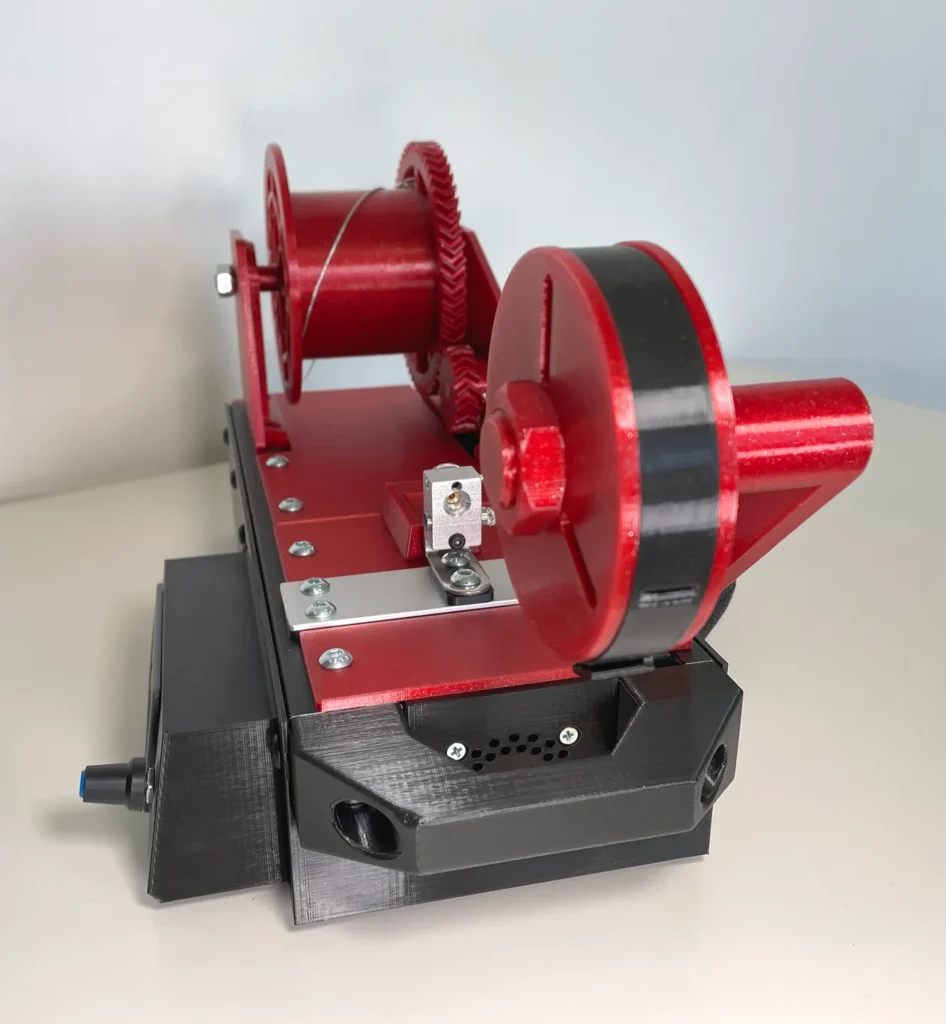
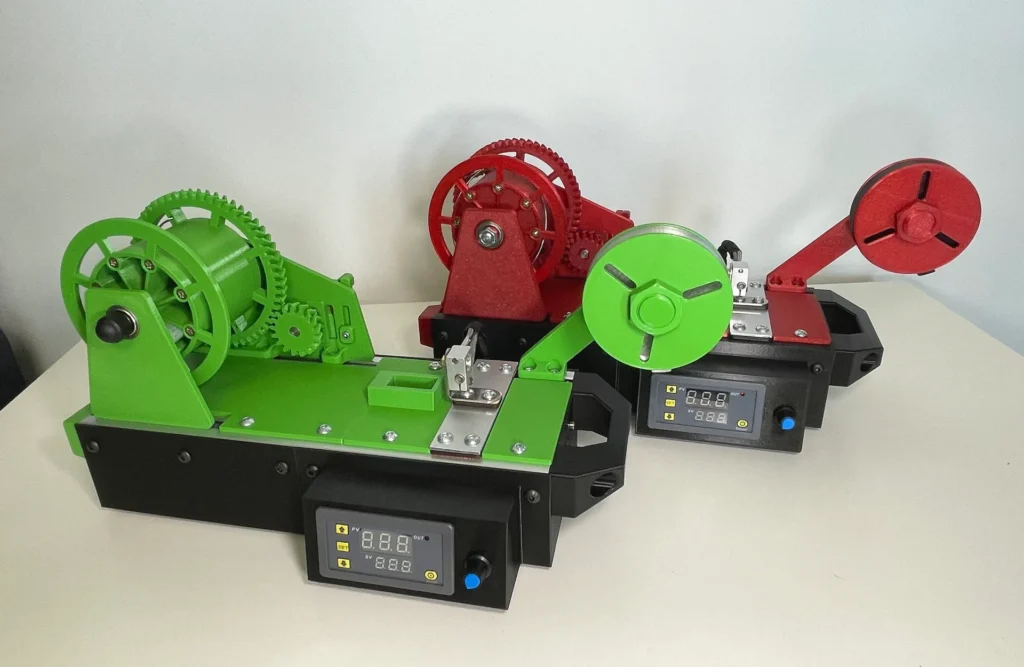
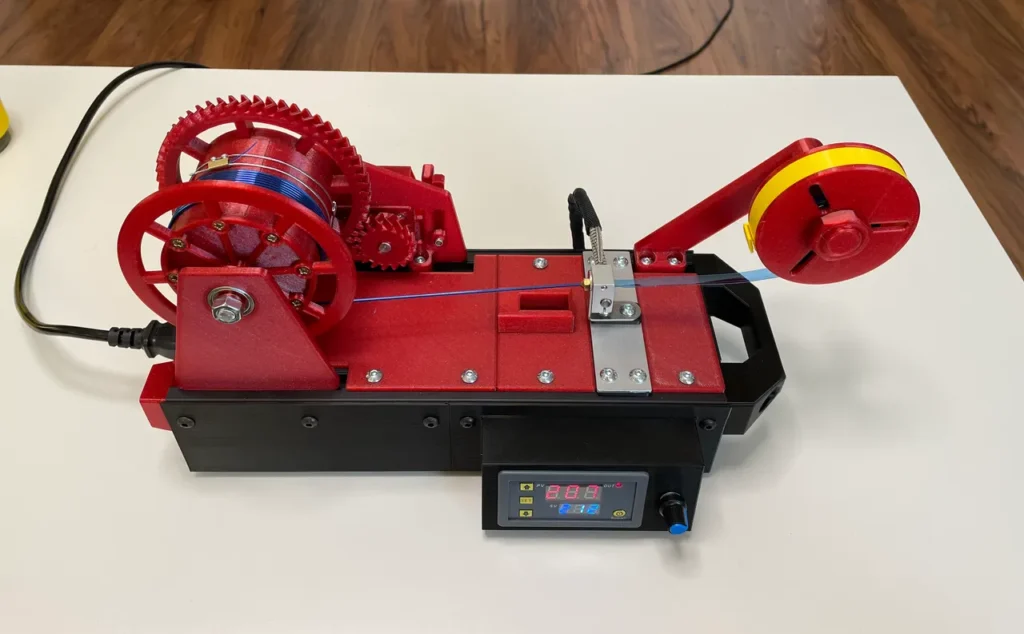
Uno degli aspetti più innovativi della stampa 3D è la possibilità di utilizzare materiali riciclati per creare nuovi oggetti. Ad esempio, vecchi contenitori di plastica possono essere trasformati in filamenti per stampanti, riducendo i rifiuti e assicurando un uso ottimale delle risorse.
Ciò è possibile procurandosi una particolare tipo di tramoggia-trituratore ed estrusore che trasforma questi scarti in filamento.
Un esempio sono le Filament Machine che trafilano le bottiglie di plastica in PET.

Prospettive Future: Oltre l’Emergenza
In un futuro orientato all’autosufficienza, la stampante 3D potrebbe diventare uno strumento cardine per costruire rifugi, produrre energia (ad esempio, supporti per pannelli solari o mini turbine) e creare sistemi agricoli come vasi o sistemi di irrigazione automatizzati.
Quale stampante acquistare?
La scelta di una stampante 3D dipende dall’uso che se ne intende fare e dal budget disponibile.
Ovviamente è sottinteso che vale il detto “chi più spende, meno spende”, nell’ottica di acquistare un prodotto valido che duri nel tempo.
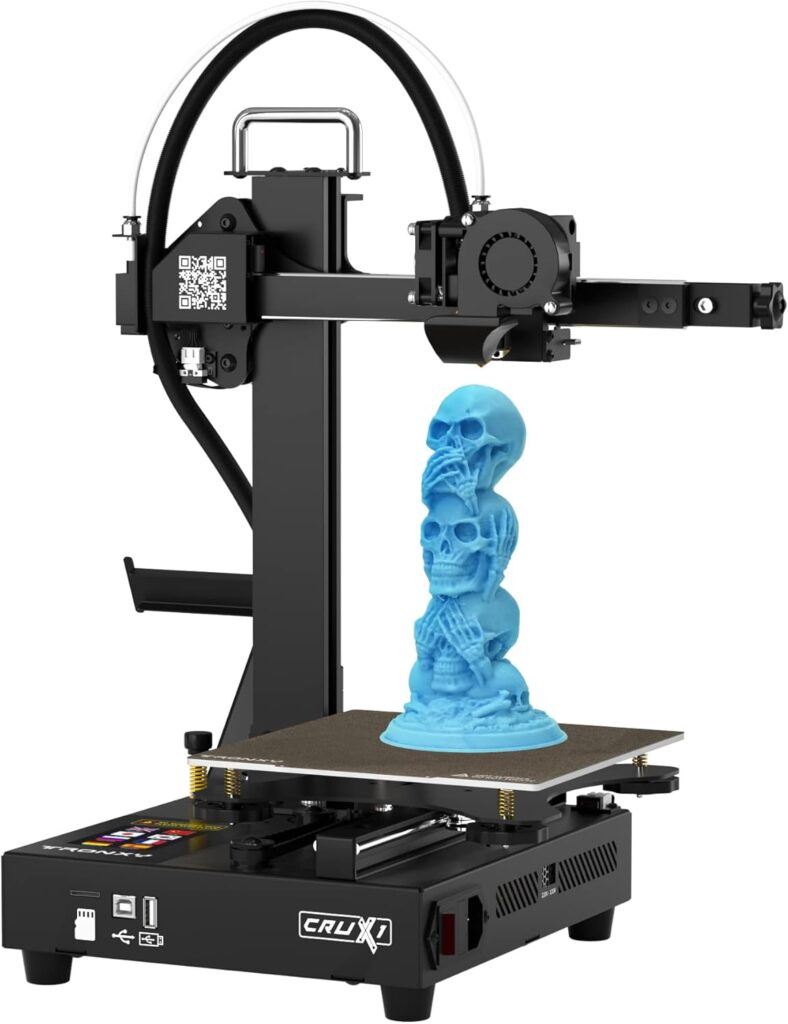
Ecco una guida per a scegliere il tipo di stampante più adatto per prepping, survival e applicazioni simili:
Stampanti FDM (Fused Deposition Modeling)
Le stampanti FDM sono le più comuni e accessibili. Usano filamenti di plastica come PLA, ABS, o PETG.



Stampanti SLA (Stereolithography)
Queste stampanti usano resina liquida solidificata da un laser per creare oggetti ad alta precisione.


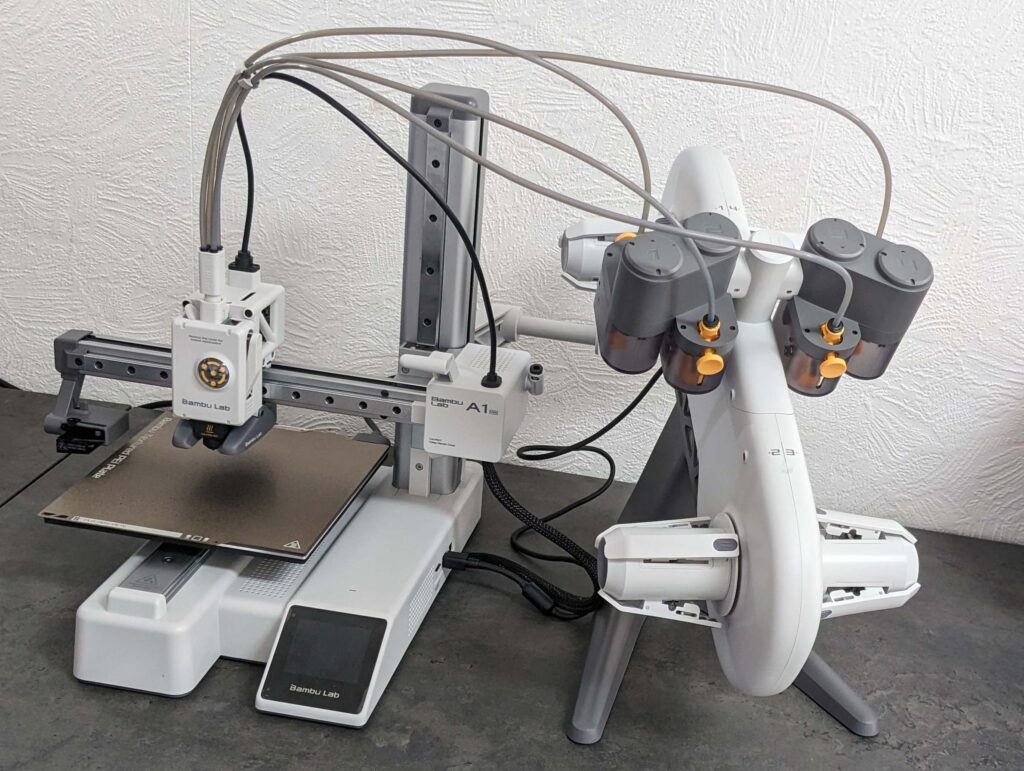
Stampanti Multi-Materiale o Ibride
Se si ha bisogno di stampare oggetti con materiali diversi (es. plastica + gomma), considera una stampante multi-materiale.



Stampanti Portatili o Compatte
Se si ha bisogno di una stampante 3D da usare in situazioni di emergenza o in mobilità (es. camper, campeggio), questi modelli portatili sono un decente compromesso, con tutti i pro e i contro annessi.

Budget e Considerazioni
Quanto sopra elencato è una panoramica di prodotti di punta dei marchi citati; ovviamente ci sono altri prodotti più economici anche se il consiglio cardine è di non scendere sotto i 200€ di spesa (alla data attuale), per in incorrere in un prodotto di scarsa qualità.
Accessori utili per il prepping
Quali materiali usare?
I filamenti per stampa 3D sono materiali termoplastici utilizzati principalmente nelle stampanti FDM (Fused Deposition Modeling). La scelta del filamento dipende dall’uso finale dell’oggetto, dalle condizioni ambientali e dalle capacità della tua stampante. Ecco una panoramica sui principali tipi di filamenti, con i loro vantaggi, svantaggi e utilizzi:

Consigli per la Conservazione
Come Scegliere il Filamento Giusto
Se hai un progetto specifico, fammi sapere e ti consiglierò il filamento migliore! 
Dove trovare progetti già pronti?
La domanda che sorge spontanea dopo tutte queste informazioni è: dove è possibile trovare eventuali progetti per cominciare a stampare?
Fortunatamente in rete sono presenti molti siti dove è possibile scaricare sia gratuitamente sia a pagamento moltissimi progetti già pronti.
Ecco una carrellata di link ben forniti:
makerworld.com/en
www.thingiverse.com
www.printable.com
www.cults3d.com
www.yeggi.com
https://www.makeronline.com/
Conclusioni
La stampa 3D rappresenta una rivoluzione per il prepping e il survival, offrendo soluzioni pratiche per prepararsi a qualsiasi imprevisto. Che si tratti di creare strumenti di sopravvivenza, pezzi di ricambio o sistemi per organizzare le scorte, questa tecnologia può fare la differenza tra dipendenza e autonomia in un mondo incerto. Investire in una stampante 3D e imparare a utilizzarla è un passo fondamentale per chi desidera essere davvero pronto a tutto.
Descrivere tutto ciò che si può fare con una Stampante 3D in un articolo è praticamente impossibile ma in rete fortunatamente ci sono valide community dove poter fare domande e trovare aiuto per diverse problematiche.
L'articolo La Stampante 3D nel Prepping e Survival: Una Risorsa Essenziale per l’Autosufficienza proviene da Associazione Italiana Preppers.
INTRO
– inquadramento-
La storia dell’alpinismo, in genere, è una storia coloniale ed elitaria: il ricco, il nobile (“il” perché questa storia porta con sé anche un approccio maschilista) arriva ai monti inizialmente per ragioni cartografiche ed esplorative, in seguito per ragioni di conquista e blasone.
In questa narrazione l’abitante, ‘il montanaro’, è un esserino grezzo e impaurito, che non sa godere delle bellezze della montagna, che non fa passeggiate o arrampicate per “vivere le cime” – con tutto il fascino di verticalità, desolazione e pericolosità – ma che tutt’al più “serve” perché conosce i luoghi circostanti a quelli che abita e può indicarli, e perché da bravo spallone può farsi portatore di strumenti e vettovaglie*.
Il monte come luogo piacevole e d’incanto, salubre, unito alla massificazione turistica cominciata tra gli anni ’60 e ‘70, porta allo sviluppo di un nuovo terreno di gioco, anche se non particolarmente originale, basti pensare alle similitudini con l’impiego di corde fisse. Se prima la ferrata era turistica e poi fu utilizzata per scopi militari, ora finte élite di eroici bardati assaltano il percorso ‘di massa’, un combinato da logica turistica: colonizzazione dello spazio e appiattimento dell’immaginario.
Addentrarsi in questo ambiente è provare a sviscerare un tema tecnico e ispido, sul quale scegliamo di non intervenire, però qualche considerazione e riflessione generale crediamo vada fatta.
 La successione di cenge attrezzate per mettere in sicurezza l’itinerario. Bocchette centrali di Brenta.
Ci sono varie tipologie di ferrata: talune, storiche, nascono con l’idea di mettere in sicurezza percorsi già frequentati, altre, specie quelle dolomitiche o di bassa quota non sono realizzate per portare in un dato luogo ma esplicitamente per cercare la difficoltà.
Fino ad una certa fase, forse, lo sviluppo di alcune ferrate assurde ha avuto a che fare con echi di arrampicata in artificiale, con diversi mezzi ma la medesima propensione a non porsi problema di manomissione del contesto.
 Un esempio di itinerario con logiche di artificiale, scale come staffe: ferrata Castiglioni alla Cima d’Agola.
Possiamo distinguere grossomodo tre tipi di ferrate e conseguenti tipi di fruizione.
 A sinistra la ferrata du Diable in tutta la sua insensatezza.
A destra la ferrata Arosio al Corno di Grevo, già via alpinistica di cresta. Per anni è stata accompagnata da polemiche, più volte ne sono stati sabotati i fittoni e un tempo erano visibili scritte come «no ferrata» e «CAI Cedegolo incivile».
Che ad esempio nei tardi anni ’30, in Dolomiti di Brenta, si sia pensato di attrezzare un percorso sfruttando le sequenze di cenge lì esistenti e ne siano così nate le Bocchette Centrali, può essere una cosa ragionevole.
Il problema tuttavia, più che l’attrezzatura dei percorsi in sé, è la fruizione che se ne fa, la turistificazione intensiva dovuta al boom e al conseguente aumento del potere d’acquisto del ceto medio.
Da qui nascono i ‘ferrata adventure park’ o percorsi come quello delle Aquile in Paganella e Intersport nel Donnerkogel. Tra questi ultimi e gli itinerari classici, storici, dovrebbe esserci una gran differenza.
 Sopra la ferrata delle Aquile in Paganella.
Sotto la ferrata Intersport al Donnerkogel.
Ci pare che negli ultimi anni le modalità di fruizione abbiano appiattito le sfumature costruttive in virtù di un’unica fruizione possibile.
 Così già da tempo (immagine del 2016): botta-risposta su un noto blog dedicato al tema.
Si vendono – si compra-vendono – ferrate. L’espansione tremenda della frequentazione alpina e del movimento dell’arrampicata sportiva, se da un lato testimoniano di una moda, dall’altro concorrono alla creazione e all’ingigantimento del problema. Notiamo che il modo di stare sulla ferrata, la terminologia di che ne racconta le difficoltà, gli entusiastici report fotografici che ne seguono, descrivono atteggiamenti assimilabili al tipo 3.
Ci si concentra sull’adrenalina e si riflette poco – o per nulla – di sicurezza o rispetto dell’ambiente col quale si interagisce. Non si dice mai ad esempio, ed è disonesto, che una caduta su ferrata è potenzialmente molto più pericolosa di una in arrampicata. Senza tutto un sistema di dissipazione in ordine, senza competenze specifiche (spesso risolte con ‘compra l’attrezzatura’), si possono generare fattori di caduta nettamente più alti che scalando, con sollecitazioni che, per come sono progettati, moschettoni e corde non possono reggere. E se resistessero, non lo farebbe il corpo umano. La strada che si sta percorrendo – stiamo ragionando per ipotesi – è quella del «vorrei ma non posso, però c‘è la ferrata». È così che questi percorsi si sono guadagnati e si stanno guadagnando una larga ‘fetta di mercato’.
Come per gli orsi e i lupi, come per il Natisone, buona parte delle criticità che stanno alla base del discorso sono la turistificazione e lo sfruttamento, il rilassamento delle sinapsi preposte all’accortezza, in favore della deresponsabilizzazione collettiva: ci si diverte, si provano ‘brividi’, si racconta l’atto acrobatico con la go-pro. Nel frattempo si intasa, si erode, si sovra-alimenta la bulimia del profitto, e così ferrate che potevano tranquillamente rientrare nella categoria 1, quella di opera militare manutenuta come il Sentiero dei Fiori in Adamello, grazie al battage pubblicitario schizzano dritte nella 3: adrenalina.
Passerelle si materializzano al ritmo dei ponti tibetani, lavori degni di grandi opere, appalti con imprese e eccesso di infrastruttura. Nomi evocativi, da marketing, come nel caso dell’Epic trail.
L’epica dell’Odissea, de Il mucchio selvaggio, messe a disposizione per pochi spicci a chi passa le settimane sfruttato sul luogo di lavoro, con giubilo dei geometri che progettano siffatti percorsi.
 Tram a Milano pubblicizzano il sentiero dei fiori.
Se questa è la logica, ci sentiamo di affermare che, indipendentemente da quel che si pensi della loro bontà, una volta che una ferrata esiste chi va in montagna tende a pensare che sia in ordine. Che sia sufficiente fissare il moschettone a un cavo che terrà, i cui chiodi non salteranno via come bottoni, e seguirlo camminando. Su questo aspetto risulta impossibile colpevolizzare l’escursionista, e infatti si gioca alla deresponsabilizzazione, al ‘ludico gestito dalla legge’. Soprattutto se gli escursionisti vengono attratti e invogliati a percorrere quella ferrata dagli opuscoli delle Pro Loco.
In alcune zone – Dolomiti su tutte – si esaspera il ruolo di parco giochi dei sentieri attrezzati, pensati esplicitamente per cercare la difficoltà e frequentati da individui accessoriati. In altre la dimensione tecnica conta molto meno, i percorsi sono stati conservati come retaggi militari o sono nati soprattutto per poter dire «li abbiamo anche qui», anche se non sono nemmeno lontanamente paragonabili ai primi e salvo poche eccezioni hanno molto meno senso.
Se si costruiscono parchi giochi si promuove una certa idea per cui si paga il biglietto – leggi “compra l’attrezzatura giusta e cool per agganciarti alle pareti e il più è fatto” – ed è ragionevole che il consumatore pretenda che lo spettacolo fili liscio: che la messa in scena sia sicura e l’attrezzatura che userà sarà in buono stato, funzionante e certificata.
Nei cantieri sono di solito posti cartelli in cui si elencano i vari strumenti di protezione e si invita i lavoratori a usarli. Della pericolosità del lavoro in sé niente, non si sa, non si dice.
Aspetti diversi, certo, il cui trait d’union è che si può – si deve visto che si fa poco o nulla per evitarlo – morire di lavoro. Attraverso il marketing si raccontano domatori di montagne su ferrata salvo poi drammatizzare i sentieri per tenere alla larga rogne legali come capitato, ad esempio a San Felice in Circeo.
 Ordinanza di chiusura sentieri del comune di San Felice in Circeo. Stando al sito del parco del Circeo, nel momento in cui scriviamo il sentiero 750 risulta ancora interdetto (clicca qui per leggere l’ordinanza completa).
Manovre per le quali non è difficile immaginare la funzione di anticamera per stabilire parcelle di soccorso, nella cornice di un attacco al tempo libero, alla preservazione della ‘carne-lavoro’.
Il tema delle garanzie e dei diritti – compreso quello alla sicurezza – vengono insomma innestati su aspetti della vita in cui non entrerebbero – o non dovrebbero entrare – per nulla, come gli ambienti naturali.
La frequentazione di ambienti ‘selvaggi’ con tale mentalità, avviene dando per scontato che ‘qualcuno’ si occupi di ‘far funzionare’ tutto, che sia un preciso diritto del fruitore, che se qualcosa non funziona ci deve per forza essere qualcuno che ne ha colpa.
In questo contesto a poco vale, è anzi fuorviante, l’idea lanciata dal CAI sulle pagine de Lo Scarpone di predisporre un non meglio descritto codice di ‘autoresponsabilità sui sentieri’. Proposta che suona stonata quanto la colpevolizzazione dell’atteggiamento individuale di fronte a altri due macro-temi: la crisi climatica e la gestione pandemica appena trascorsa.
A una lettura di superficie del dispositivo che dovrebbe responsabilizzare si potrebbe rispondere con qualcosa come: «Alla buon’ora. Bene.»
Tuttavia rileggendo l’articolo de Lo Scarpone le certezze vanno sgretolandosi.
Anzitutto si scrive solo di sentieri e escursionisti, e non si fa cenno a tutte quelle situazioni e manovre dove responsabilità ‘altre, dall’alto e collettive’ potrebbero esserci: come è attrezzata una via alpinistica, da quanto? Quanto sono manutenute una ferrata o una falesia (ecc.)? Ce lo chiediamo perché in fin dei conti una via di roccia, misto o ghiaccio – e a maggior ragione una ferrata – non sono altro che sentieri tecnicamente più difficili.
In secondo luogo leggiamo: «i volontari che si occupano della manutenzione della rete sentieristica non possono essere responsabili di chi s’incammina lungo i sentieri con troppa leggerezza».
Questa frase suona un po’ come uno scarico di responsabilità post tragedia in Marmolada.
O post alluvione: non si muove un dito per piani di assesto idrogeologico, per uno studio approfondito e conseguente messa in sicurezza del territorio, in generale si continua ovunque nell’opera di cementificazione.
Si irride il rischio, si perseguono disboscamenti e depauperamenti dei territori, si realizzano grandi opere. Ma se succede qualcosa, se questo qualcosa si ripete con sempre maggior frequenza, tocca che si renda d’obbligo l’assicurazione, che l’individuo paghi.
Vecchio gioco applicato all’alpe: quando mai non si è sovraccaricato il singolo di comportamenti non corretti per la morale corrente?
Criminalizzare l’individuo è una mossa del cavallo tipica, utile a tutelare l’amministrazione pubblica di turno e il profitto dell’indotto.
Molti sentieri sono manutenuti dai comuni, enti, o associazioni da questi riconosciute. Con l’iper-turistificazione in atto nelle terre alte ci si auto-sgrava da quel che si produce: intasamento e scarsa conoscenza.
In rete e sui blog si leggono sempre più richieste del tenore: «la (tal ferrata) è percorribile d’inverno?», «è aperta anche se ha fatto molta neve? Fa freddo: se c’è ghiaccio ci si può andare?», come se un percorso fosse equiparabile o assimilabile a un impianto di risalita. Col relativo gestore a attivarne e regolarne la corrente, il flusso.
L’idea di indagare Comuni e centri meteo a seguito della tragedia in Marmolada era pessima, le ipotesi di reato sono state archiviate, pare però che il CAI voglia espungere dal discorso quell’ipotesi per sovraccaricare il singolo di un altrettanto presunto e assurdo comportamento scorretto.
Teniamo inoltre presente che a decidere non sarà uno specialista di monti, ma un giudice che non potrà applicare attenuanti, che anzi sarà messo in condizione di aggravare la posizione individuale sulla scorta di una valutazione di tipo morale.
Una proposta che non impedirà comunque chiusure arbitrarie di percorsi in nome del securitarismo, della ‘sterilizzazione del pericolo’. Un’idea che rafforzerà la caccia alle streghe, i discorsi allucinati sulle responsabilità del capo-gita o cordata, individuato come ‘il più capace’ e dunque responsabile in toto della salute di interi gruppi amicali e/o parentali. Il meccanismo piuttosto ricorrente, insomma, per cui si nasconde sotto al tappeto la responsabilità collettiva e si individua un capro espiatorio. E dal momento in cui tutto è acquistabile, non è difficile immaginare qualcosa di simile a vecchie proposte come il patentino di montagna o l’obbligo assicurativo per le calamità naturali o per sciare in pista. «Per sgravarsi dalla responsabilità su sentiero va pagata la guida», che è un po’ quello che già succede con l’obbligo di Artva, pala e sonda: «non conta dove vai o cosa fai, ma cosa possiedi. Compra l’attrezzatura, anche quella inutile o che non sai usare, e godrai di un trattamento ‘riservato’».
Il fatto che nell’articolo si dica che molti dei lavori di manutenzione sono fatti da volontari fa puzzare la situazione, perché se dall’altra parte c’è il dito puntato sulla responsabilità individuale si corre il rischio di allontanarli, in fin dei conti sono individui pure loro.
Fin qui ci siamo concentrati su due diversi approcci: quello dell’escursionista che pretende che il potere gli garantisca la fruizione in totale sicurezza dal momento che ha speso e acquistato materiale – confondendolo con l’esperienza – e quello del potere che dopo aver creato quest’illusione scarica in toto le responsabilità sull’individuo. Non sono due modi separati, stanno assieme e descrivono una sorta di double bind, di «grazie alla nostra ferrata puoi salire in sicurezza ma se il cavo si rompe e cadi è colpa tua».
Per non restare intrappolati in questa costrizione bisogna allora ribaltare la prospettiva. Lo faremo nella prossima puntata, dando conto della nostra idea di come frequentare la montagna, rispettandola e rispettandosi.
*Segnaliamo per attinenza, fra i libri di storia dell’alpinismo, Montagne della mente. Storia di una passione di Robert Macfarlane (Einaudi tascabili, 2020).
L'articolo Moschettoni e doppi legami: le ferrate tra marketing e repressione sembra essere il primo su Alpinismo Molotov.
 Clicca sull’immagine per ascoltare la sua “Ironica la vita”.
Due giorni fa è mancato Giuliano Contardo, musicista amato e stimato nonché fratello del nostro compagno Daniele.
Quando manca un fratello, un compagno di vita, ci si stringe attorno alla casa comune.
Ci uniamo al passo e al cordoglio della famiglia, si parte e si torna insieme.
L'articolo Giuliano, ciao sembra essere il primo su Alpinismo Molotov.
Di fronte alla prospettiva di dover vivere per chissà quanti anni
a ridosso di un cantiere militarizzato,
si pensa all’alternativa di vendere.
E andarsene piuttosto che vedere la tua casa
occupata (che ho detto mioddio perdono,abitata da chi ti ci ha cacciato.
sono gli squòtter che occupano!)
Ricorda niente?
Esatto,
Territori Occupati.
 Il chilometro “elastico”. Da questa notte per raggiungere la stazione di Susa da San Giuliano è necessario circumnavigare l’area sgomberata, col risultato di trovarsi a percorrere un itinerario lungo più di 12 km (in linea d’aria sono 2,4 km!).
Arrivano nella notte le notizie dalla Valsusa, pronte per mandar di traverso il caffè appena svegli. La polizia ha sgomberato San Giuliano, storico presidio NoTav dove alcuni militanti avevano allestito mobilhomes e tende per poter pernottare.
Nulla di nuovo e nessuna meraviglia.
Il terreno è quello acquisito tempo addietro da oltre un migliaio di persone, ognuno una piccola parte, per rendere complicato l’esproprio annunciato. All’interno dell’area soggetta a esproprio si trovano anche alcune case abitate e al momento non ci è chiaro se verranno espropriati anche questi immobili o se il cantiere vi crescerà intorno. Fra un commento e l’altro all’interno del nostro gruppo iniziamo a chiederci se e come sia possibile che “lo Stato” possa agire dentro un terreno privato attraverso le “forze dell’ordine”, senza che queste siano chiamate a intervenire dai proprietari. Domande un po‘ naïf se vogliamo ma nel momento in cui si spaccano i maroni da decenni prima con terroni, rom & sinti e poi con gli “extracomunitari” (forse si riferivano agli americani che comprano case in Sicilia) accusati di prendere con la forza le case “agli ‘taliani”, che si faccia spallucce nel momento in cui la polizia in assetto di guerra sgombera il “sacro terreno privato” lo troviamo un segnale quantomeno strano. Perfino La Stampa, mai tenera col movimento, fa notare che i terreni verranno sì espropriati mercoledì prossimo 9 ottobre 2024, ma che il clima del presidio era pacifico e che la situazione sarebbe precipitata in caso di azioni delle “forze dell’ordine”.
Un cambio di paradigma significativo: il presidio NoTav è stato sgomberato in via preventiva tra la notte di domenica 6 ottobre 2024 e questa mattina, mentre era radicato su un terreno ancora oggi di proprietà privata.
La cosa che lascia perplessi è un’“opinione pubblica” così attenta alla roba, alla proprietà, alla “casa occupata”, che fa spallucce al potere poliziesco, il quale fa quel che fa.
Preoccupa che gli abitanti e le autorità di Susa (il Sindaco, cascato dalle nuvole, è al mare), ancorché puntualmente informati da tempo dagli esperti del movimento, non sembrano pensare che siano fatti loro, nemmeno di fronte a esistenze che verranno rese schifosamente difficili per anni dall‘ennesimo cantiere inutile.
Vite già complicate dallo sgombero necessario per far spazio alla rotaia, dicono, mentre da stamattina si devono percorrere dodici chilometri e mezzo per colmare lo spazio di quei 2-3 che separano San Giuliano dalla stazione di Susa.
Abbiamo ragione di pensare che anche a causa della gestione militarizzata dell’emergenza covid degli ultimi anni, del suo linguaggio narrativo, ci sia stata una rimilitarizzazione dell’immaginario.
Un atto di forza evidente, davanti al quale sembra che la maggior parte dell’opinione pubblica si sia abituata.
Nonostante decenni di guerre preventive finite malissimo, l’opinione pubblica fatica – anzi, si ostina – a non capire che il paradigma è Gaza, che sarà Gaza per tutti. E *non possiamo* capirlo a fondo perché è troppo enorme, non saremo mai pronti a capirlo.
Si subisce il rapporto di forza in modo acritico, passivo, rassegnato, al limite fideistico.
Facciamo un po’ ridere, oggi, a scrivere di gas lacrimogeni CS vietati dalla convenzione di Ginevra e usati dai reparti di polizia italiani, quando il paradigma di riferimento che ci siamo dati è Gaza, quando gli orchi hanno fame e chiedono di fare più figli, quando è ormai palese che contro uno stato che si comporta illegalmente, la legalità può soltanto perdere.
L'articolo Valsusa, Territori Occupati sembra essere il primo su Alpinismo Molotov.
 Clicca sulla mappa per consultarla (è a circa metà articolo)
Siamo in piena crisi energetica e le politiche europee galoppano in retromarcia.
Su sollecitazione europea l’Italia si appresta a sostenere la ricerca di giacimenti di metalli rari.
Rileviamo inoltre che mentre per le fonti rinnovabili è stata data delega alle regioni, sarà il governo stesso a gestire la questione di quelle fossili.
Dopo le concessioni per trivellare in mare, mentre non si fa nulla per contrastare la crisi climatica, si passa al capitolo estrattivismo, un ritorno al futuro a tinte distopiche.
Metalli rari indispensabili allo “sviluppo”, che servono, stando al nuovo mantra energivoro, alla “transizione ecologica”.
L’arco alpino, la Sardegna e tutta la costa tirrenica sono le zone maggiormente minacciate, ma è l’intera penisola a essere in grave pericolo.
In Valsusa e nel Pinerolese ci sono parecchie miniere “storiche”, la cosa mostruosa è che una buona parte dei siti segnalati in mappa (appoggiare il mouse per leggere i nomi) sono in quota anche in posti impervi e per ora lontani da strade.
Facciamo alcuni esempi di siti censiti:
– in bassa valle “Cruino” (che dovrebbe essere Cruvin, ndr) praticamente un alpeggio nel vallone del Prebec, a circa 1700 metri;
– in Val Pellice “Castelluzzo” (Castlus), un appicco selvaggio tra l’altro luogo della resistenza valdese, a circa 1400 metri di quota;
– in Friuli è segnata la val Aupa. Si tratta si una valle selvaggia pochissimo abitata, percorsa da una strada in cui se due macchine si incrociano una deve fare un km di retromarcia. Un posto bellissimo;
– in Val Germanasca “Vallon Cros” (anche Valloncrò), altro alpeggio. Dovrebbe essere il vallone che porta al colle del Beth, a quota 2700, zona di miniere dal sec. XVIII. Oltretutto la rete escursionistica della zona è basata in gran parte sulle splendide mulattiere costruite proprio per le miniere o per scopi militari. Due reti sono praticamente indistinguibili e insistono sullo stesso territorio.
Negli ultimi trent’anni le mulattiere sono parecchio deteriorate, ma fino agli anni ‘80 erano ben conservate e godibilissime. L’idea di strade e camion a 2700 metri è agghiacciante. Un vero massacro. E le valli in questione sono ormai quasi spopolate, per cui anche resistere allo scempio sarà difficilissimo.
Per fortuna per ora in elenco mancano la grande quantità di miniere ancora più a monte. L’intera Val Germanasca è un paradiso e ne è piena, l’idea che venga consegnata alle compagnie minerarie è terrorizzante.
Utilizzare la lotta al fossile per rendere politicamente corretto l’estrattivismo è come usare la lotta all’antisemitismo per rendere politicamente corretto il genocidio dei palestinesi.
Invitiamo chiunque a osservare la mappa al link e a mobilitarsi per difendere il proprio territorio.
L'articolo Metalli rari: una minaccia per le nostre montagne sembra essere il primo su Alpinismo Molotov.

Ieri ci siamo imbattuti in questa buona notizia che volentieri segnaliamo.
Molto brevemente, Regione Piemonte e Città Metropolitana di Torino volevano realizzare, di concerto con ACSEL, uno stoccaggio di rifiuti contenenti amianto a Camposordo di Mattie, luogo di una preesistente discarica. Erano già partite le valutazioni di impatto ambientale, sintomo della volontà di un’approvazione repentina.
Il 31 maggio Luna Nuova ha fatto percolare la notizia prima che potessero farlo i liquami contaminati, vanificando in tal modo l’effetto sorpresa.
Una mobilitazione dal basso contro l’avvelenamento del territorio ha spinto sui comuni interessati dal progetto e soci della stessa ACSEL, portando al gioioso epilogo di ieri: dopo 3 ore e mezza di assemblea i sindaci all’unanimità hanno rispedito il progetto al mittente.
L’abbiamo scritto più volte, ne siamo convinti e lo ribadiamo: la mobilitazione non è fatta di sole sconfitte.
Appuntiamolo a memoria: ogni tanto si vince, oggi una volta in più.
L'articolo Mattie: la discarica perc*lata sembra essere il primo su Alpinismo Molotov.
 Clicca sull’immagine per maggiori info e dettagli
Dopo aver legato gli scarponi per osservare Montecampione e raccontarne la cementificazione, dopo aver esplorato i progetti di turismo dissennato della Valle Camonica e non solo, Alpinismo Molotov continua a frequentare il territorio.
A tessere complicità, a costruire narrazioni.
Domenica 23 giugno ci muoveremo a fianco del CSA Sisma, a Wu Ming 4 e al Bosco di Mambrica A.P.S..
Tra i boschi del maceratese, felici di riallacciare in carne e ossa i nodi con vecchi compagni di cordata.
Ritrovo alle 9.00 a Torre Beregna, per immergerci in una camminata adatta a tutti – 5 chilometri per 300 metri di dislivello – che ci condurrà al rifugio di Manfrica, dove alle 11.30 Wu Ming 4 presenterà il suo nuovo lavoro: La vera storia della banda Hood. Racconto indispensabile di questi tempi, fatto di una banda di fuorilegge che sa muoversi tra le pieghe del potere, di ritorno alle origini delle cose, dei versi che le hanno accompagnate.
Un libro denso di storie che, per citare un altro compagno di scorribande «sono vere quando si sente che dentro c’è la vita».
L'articolo In marcia con la Banda Hood nella foresta di Mambrica sembra essere il primo su Alpinismo Molotov.
In passato ci siamo occupati di sicurezza in montagna a proposito del crollo del ghiacciaio della Marmolada. All’epoca abbiamo fatto delle riflessioni che a nostro avviso hanno una valenza più generale, e possono essere applicate ad altre situazioni in cui ci si approccia ad ambienti naturali o semi-naturali. Torniamo ora sull’argomento in seguito a un episodio che ha riempito le cronache, verificatosi alcuni giorni fa a Premariacco, nel Friuli orientale, sul greto del Natisone. In breve: tre giovani (due ragazze e un ragazzo) sono stati sorpresi dalla piena del fiume mentre si trovavano su un ghiaione normalmente frequentato come spiaggia e, presi dal panico, sono rimasti bloccati per una decina di minuti mentre il livello dell’acqua e la forza della corrente aumentavano rapidamente, fino ad essere sommersi e poi trascinati nella forra a valle.


Ad oggi sono stati recuperati i corpi delle due ragazze, e sono ancora in corso le ricerche del corpo del ragazzo. Il modo in cui i media stanno parlando dell’episodio è molto simile a quello in cui era stato affrontato l’episodio della Marmolada: da un lato c’è la colpevolizzazione dei giovani, con punte di crudeltà insostenibili, una miscela micidiale di carogneria da paese e di cinismo da social. Dall’altro la ricerca di un capro espiatorio istituzionale (la protezione civile, i vigili del fuoco, il sindaco, il 118, il 112…), insomma la via giudiziaria alla risoluzione dei problemi. Qualcuno ovviamente propone interventi securitari, come il divieto di avvicinamento al fiume a prescindere; qualcun altro invece si frega le mani prefigurando appalti per la “messa in sicurezza” del luogo. La cosa che quasi nessuno dice, invece, è che la leggerezza con cui i tre ragazzi si sono mossi è conseguenza della non conoscenza del territorio, che a sua volta è conseguenza dell’interruzione della trasmissione orale di tale conoscenza. C’è stato un tempo, che nel Friuli orientale è finito intorno alla metà degli anni ottanta, in cui i paesi situati vicino ai fiumi vivevano di e sul fiume. Nel fiume si pescava e si raccoglieva la legna dopo le piene, i contadini in estate di sera facevano il bagno per lavarsi via il sudore e la polvere, i ragazzini passavano l’estate a tuffarsi e nuotare. Tutti sapevano quali erano i punti pericolosi, e soprattutto *quando* erano pericolosi. Si sapevano leggere i segni di una piena in arrivo, si teneva d’occhio il livello e il colore dell’acqua. Cose che non si sapevano per scienza infusa, ma perché da piccoli te le insegnavano i grandi. La gente affogava anche allora, sia chiaro, ma c’era una consapevolezza del rischio che ora manca. I bei tempi non ci sono mai stati, lo diciamo sempre. Il punto è che non ci sono nemmeno adesso, non ci sono *soprattutto* adesso. Per un paio di decenni le rive dei fiumi sono diventate non-luoghi, o luoghi da cuore di tenebra. E dopo 20 anni di oblio si è cominciato a parlare di “riscoperta” e di “valorizzazione” (che, ricordiamolo, significa “messa a valore”), è arrivato il tempo dei luoghi pittoreschi, poi diventati “instagrammabili”, decontestualizzati dall’ambiente naturale e antropico circostante; il tempo in cui si può progettare una “Premariacco beach” su un ghiaione che si trova tra lo sbocco di una forra e l’ingresso della forra successiva, un luogo tranquillo e sicuro per gran parte dell’anno, sì, ma pericolosissimo in occasione di piogge abbondanti nelle montagne retrostanti.

Come per la montagna, si è persa la consapevolezza che il letto di un fiume è un ambiente naturale che presenta dei rischi, che non possono essere eliminati o tenuti sotto controllo, ma possono essere conosciuti e valutati di volta in volta. In generale, si dimentica una cosa che dovrebbe essere ovvia: nessuna autorità può garantirci l’incolumità di fronte a un fenomeno naturale, per il semplice fatto che autorità e fenomeni naturali sono concetti che appartengono a piani discorsivi e di realtà distinti. Questa amnesia, se ci si pensa, è alla base anche dell’antropizzazione scriteriata delle aree prossime ai fiumi, con le conseguenze su vasta scala che stiamo sperimentando sempre più spesso.
L'articolo Riflessioni sulla morte di tre ragazzi nel fiume Natisone sembra essere il primo su Alpinismo Molotov.

Livorno, 22 dicembre 2022 – Sarà operativo da domani, sabato 22 gennaio, il nuovo servizio di car-sharing con auto totalmente elettriche fornito dal Comune di Livorno tramite la società Playcar di Cagliari nell’ambito del Progetto Modì (Mobilità Dolce e Integrata nell'Area vasta livornese), cofinanziato dal Ministero dell’Ambiente e con l’Amministrazione Provinciale ente coordinatore.Un servizio utile, ...

Al via a Livorno il nuovo servizio di pagamento della sosta sulle “Strisce blu” con lo smartphone attraverso l’app “Telepass Pay”, senza più spreco di tempo e denaro. È ora attivo anche nella città di Livorno il servizio di pagamento delle soste nelle aree gestite con parchimetro tramite l’app Telepass Pay:l’innovativo sistema consente di pagare la sosta sulle strisce blu con il proprio smartphone, anche senza avere il Telepass ...
Numeri utili città di Livorno:Soccorso sanitario 118V.V.F. 115Carabinieri 112Polizia di stato 113Guardia di Finanza 117Corpo Forestale dello Stato 1515Guardia Costiera 1530Soccorso Stradale ACI 0586 803116Prefettura di Livorno 0586 235111Comune di ...

Orari di farmacie di turno nella città di Livorno.

Zona del mercato, i residenti della Ztl “C” possono transitare e parcheggiare anche in “D” e viceversa.Livorno, l'ordinanza entra in vigore da lunedì 14 marzo fino al 12 marzo 2017.LIVORNO. Sarà consentito, a partire da lunedì 14 marzo fino al 12 marzo 2017, ai residenti della Ztl “C”, muniti di contrassegno, di transitare e sostare anche nella Ztl “D” e viceversa.Si rinnova pertanto l’ordinanza che prevede, ...

L'area del parcheggio sottostante il ponte di SS Trinità deve ritenersi riservata esclusivamente ai veicoli dei residenti/dimoranti muniti di contrassegno zona "A" come da Determinazione N° 8265 del 04/11/2019.

A partire dal mese di novembre ed entro il 28 febbraio 2025 sarà possibile effettuare il rinnovo dei permessi a pagamento ZTL/ZSC per i mezzi dei professionisti (medici, rappresentanti, giornalisti, enti, cooperative ecc) e per le seconde e terze auto dei residenti. Nessun rinnovo è invece richiesto per i contrassegni gratuiti relativi alla prima auto dei cittadini residenti, che sono validi a tempo ...
COMUNICATO STAMPA Roma, 20 novembre 2024. Assoprovider, l’associazione dei provider italiani piccoli e medi, esprime la propria solidarietà ed il proprio sostegno alla Commissaria dell'Autorità per le garanzie nelle comunicazioni, Elisa Giomi, commissaria Agcom, che ha denunciato attraverso il suo profilo LinkedIn, che a seguito del post su Piracy Shield – la piattaforma donata da […]
L'articolo Piracy Shield, Assoprovider esprime solidarietà alla Commissaria Agcom Elisa Giomi proviene da Assoprovider.
Un’occasione di confronto sui temi caldi delle TLC, appuntamento 21 novembre ore 15:30 Dopo il seguito delle prime due edizioni, torna la Maratona delle TCL, un’iniziativa ideata da Assoprovider che punta a mettere a confronto gli operatori delle TLC. L’evento, aperto a tutti, si terrà il 21 novembre e sarà visibile sulle piattaforme Linkedin e […]
L'articolo Al via la Terza Maratona delle TLC (l’agenda e dove seguirla) proviene da Assoprovider.

Perito elettronico, molla tutto per aprire una sua azienda, Radio Data Net, a Vodo Cadore, in provincia di Belluno. Oggi può contare su più di 100 clienti Gli operatori di prossimità soddisfano, innanzitutto, un bisogno di mercato e diventano decisivi per la vita anche delle aziende che nascono in territori digital divisi. Lo sa bene, […]
L'articolo Radio Data Net, la storia di Gianluca, operatore di prossimità ventiseienne proviene da Assoprovider.
Roma, 22 novembre L'Associazione Assoprovider ha presentato un esposto alla Procura regionale della Corte dei Conti di Roma riguardante il sistema Piracy Shield, adottato dall'Autorità per le garanzie nelle comunicazioni (Agcom). L'esposto chiede di accertare la sussistenza di un eventuale danno erariale e la congruità dell'azione dell'Agcom nella gestione delle risorse economiche relative al Piracy […]
L'articolo Piracy Shield: Assoprovider presenta un esposto alla Corte dei Conti per possibile danno erariale proviene da Assoprovider.

Molte persone ci stanno chiedendo come si è concluso il diploma radioamatoriale dedicato a GNU/Linux che si è tenuto dal 9 al 22 settembre 2024...
Continua la lettura… (ulteriori 3 minuti di lettura)
Nell'ottobre del 2024, a 19 anni esatti dalla storica vittoria che liberalizzò l'uso del Wi-Fi in Italia, Assoprovider si trova nuovamente in prima linea per difendere il futuro del settore delle telecomunicazioni. Con l'approvazione del decreto Omnibus, ora legge dello Stato, affrontiamo una delle sfide più critiche della nostra storia. 2005-2024: Dal trionfo alla nuova […]
L'articolo Assoprovider, 19 anni dalla liberalizzazione del Wi-Fi, una nuova battaglia cruciale per il settore delle telecomunicazioni proviene da Assoprovider.

Intervista a Ufficio Zero Linux OS con il nostro patrocinio
Continua la lettura… (ulteriori 3 minuti di lettura)


Il rischio di carcerazione per gli Internet Service Provider (ISP) rappresenta una minaccia senza precedenti per il settore delle telecomunicazioni in Italia Assoprovider, l'associazione rappresentativa dei piccoli e medi fornitori di servizi Internet in Italia, lancia un forte allarme riguardo agli emendamenti recentemente approvati dalle Commissioni Bilancio e Finanze del Senato nell'ambito del DL Omnibus […]
L'articolo TLC, Assoprovider: Allarme per il rischio carcere agli ISP nel DL Omnibus sulla pirateria proviene da Assoprovider.
La NIS2 è la direttiva sulla sicurezza informatica dell’Unione Europea. I Paesi membri hanno tempo fino al 17 ottobre 2024 per recepirla. Ma cosa cambia? Acronimo di Network and Information Security 2, la NIS2 è la direttiva emanata dall’Unione Europea, allo scopo di rafforzare la sicurezza informatica e la resilienza delle infrastrutture critiche in tutti […]
L'articolo NIS2, cos’è e come impatta sugli operatori di prossimità proviene da Assoprovider.
The Linux Kernel Organization is a California Public Benefit Corporation established in 2002 to distribute the Linux kernel and other Open Source software to the public without charge. We are recognized by the IRS as a 501(c)3 private operating foundation.
The Linux Kernel Organization is managed by The Linux Foundation, which provides full technical, financial and staffing support for running and maintaining the kernel.org infrastructure.
Due to U.S. Exports Regulations, all cryptographic software on this site is subject to the following legal notice:
This site includes publicly available encryption source code which, together with object code resulting from the compiling of publicly available source code, may be exported from the United States under License Exception "TSU" pursuant to 15 C.F.R. Section 740.13(e).
This legal notice applies to cryptographic software only. Please see the Bureau of Industry and Security for more information about current U.S. regulations.
Our servers are located in Corvallis, Oregon, USA; Palo Alto and San Francisco, California, USA; Portland, Oregon, USA; and Montréal, Québec, Canada.
Use in violation of any applicable laws is prohibited.
Linux is a Registered Trademark of Linus Torvalds. All trademarks are property of their respective owners.
Linux is a clone of the operating system Unix, written from scratch by Linus Torvalds with assistance from a loosely-knit team of hackers across the Net. It aims towards POSIX and Single UNIX Specification compliance.
It has all the features you would expect in a modern fully-fledged Unix, including true multitasking, virtual memory, shared libraries, demand loading, shared copy-on-write executables, proper memory management, and multistack networking including IPv4 and IPv6.
Although originally developed first for 32-bit x86-based PCs (386 or higher), today Linux also runs on a multitude of other processor architectures, in both 32- and 64-bit variants.
If you're new to Linux, you don't want to download the kernel, which is just a component in a working Linux system. Instead, you want what is called a distribution of Linux, which is a complete Linux system. There are numerous distributions available for download on the Internet as well as for purchase from various vendors; some are general-purpose, and some are optimized for specific uses. We currently have mirrors of several distributions available at https://mirrors.kernel.org/.
Note, however, that most distributions are very large (several gigabytes), so unless you have a fast Internet link you may want to save yourself some hassle and purchase a CD-ROM with a distribution; such CD-ROMs are available from a number of vendors.
The Linux kernel is discussed on the linux-kernel mailing list at vger.kernel.org. Please read the FAQ before subscribing.
Although there is no official archive site, unofficial archives of the list can be found at:
If you have questions, comments or concerns about the F.A.Q. please contact us at helpdesk@kernel.org.
Linux kernel is released under the terms of GNU GPL version 2 and is therefore Free Software as defined by the Free Software Foundation.
For more information, please consult the documentation:
Before many devices are able to communicate with the OS, they must first be initialized with the "firmware" provided by the device manufacturer. This firmware is not part of Linux and isn't "executed" by the kernel -- it is merely uploaded to the device during the driver initialization stage.
While some firmware images are built from free software, a large subset of it is only available for redistribution in binary-only form. To avoid any licensing confusion, firmware blobs were moved from the main Linux tree into a separate repository called linux-firmware.
It is possible to use Linux without any non-free firmware binaries, but usually at the cost of rendering a lot of hardware inoperable. Furthermore, many devices that do not require a firmware blob during driver initialization simply already come with non-free firmware preinstalled on them. If your goal is to run a 100% free-as-in-freedom setup, you will often need to go a lot further than just avoiding loadable binary-only firmware blobs.
Linux is a registered trademark of Linus Torvalds and its use is governed by the Linux Trademark Institute. Please consult the following page for further information:
The Tux penguin logo was created by Larry Ewing using Gimp software. It is free to use, including commercially, as long as you give Larry Ewing proper credit ("if someone asks"). For any other permissions, please reach out to Mr. Larry Ewing directly.
As kernels move from the "mainline" into the "stable" category, two things can happen:
If the kernel version you are using is marked "EOL," you should consider upgrading to the next major version as there will be no more bugfixes provided for the kernel version you are using.
Please check the Releases page for more info.
Long-term support ("LTS") kernels announced on the Releases page will be marked as "stable" on the front page if there are no other current stable kernel releases. This is done to avoid breaking automated parsers monitoring kernel.org with an expectation that there will always be a kernel release marked as "stable."
Linus Torvalds PGP-signs git repository tags for all new mainline kernel releases, however a separate set of PGP signatures needs to be generated by the stable release team in order to create downloadable tarballs. Due to timezone differences between Linus and the members of the stable team, there is usually a delay of several hours between when the new mainline release is tagged and when PGP-signed tarballs become available. The front page is updated once that process is completed.
Yes, and you can find it at https://www.kernel.org/feeds/kdist.xml.
We also publish a .json file with the latest release information, which you can pull from here: https://www.kernel.org/releases.json.
Kernel versions that have a dash in them are packaged by distributions and are often extensively modified. Please contact the relevant distribution to obtain the exact kernel source.
See the Releases page for more info on distribution kernels.
If you are running a kernel that came with your Linux distribution, then the right place to start is by reporting the problem through your distribution support channels. Here are a few popular choices:
If you are sure that the problem is with the upstream kernel, please refer to the following document that describes how to report bugs and regressions to the developers:
A good place to start is the Kernel Newbies website.
Kernel.org accounts are usually reserved for subsystem maintainers or high-profile developers. It is absolutely not necessary to have an account on kernel.org to contribute to the development of the Linux kernel, unless you submit pull requests directly to Linus Torvalds.
If you are listed in the MAINTAINERS file or have reasons to believe you should have an account on kernel.org because of the amount of your contributions, please refer to the accounts page for the procedure to follow.
Email is the only reliable way of contacting Kernel.org administrators.
Please do not send general Linux questions or bug reports to these addresses. We do not have the resources to reply to them.
Please try the following sites for general Linux help:
Linux Foundation also offers training opportunities if you are interested in learning more about Linux, want to become a more proficient Linux systems administrator, or want to know more about how Linux can help your company succeed.
Please send any mail correspondence to the Linux Foundation:
The Linux Foundation1 Letterman DriveBuilding D, Suite D4700San Francisco, CA 94129Phone/Fax: +1 415 723 9709
We are pleased to announce the availability of a new mailing list service running under the new lists.linux.dev domain. The goal of this deployment is to offer a subscription service that:
If you would like to host a Linux development mailing list on this platform, please see further details on the subspace.kernel.org site.
Linux development started in 1991 and has been ongoing for the past 30 years at an ever-increasing pace. Many popular code collaboration platforms have risen throughout these three decades -- and while some of them are still around, many others have shut down and disappeared without offering any way to preserve the history of the projects they used to host.
Development via mailed-in patches remains the only widely used mechanism for code collaboration that does not rely on centralized infrastructure maintained by any single entity. The Linux developer community sees transparency, independence and decentralization as core guiding principles behind Linux development, so it has deliberately chosen to continue using email for all its past and ongoing collaboration efforts.
The infrastructure behind lists.linux.dev supports multiple domains, so all mailing lists hosted on vger.kernel.org will be carefully migrated to the same platform while preserving current addresses, subscribers, and list ids. The only thing that will noticeably change is the procedure to subscribe and unsubscribe from individual lists. As majordomo is no longer maintained, we will instead switch to using separate subscribe/unsusbscribe addresses per each list.
There are no firm ETAs for this migration, but if you are currently subscribed to any mailing list hosted on vger.kernel.org, you will receive a message when the migration date is approaching.
If you are a developer located around Beijing, or if your connection to Beijing is faster and more reliable than to locations outside of China, then you may benefit from the new git.kernel.org mirror kindly provided by Code Aurora Forum at https://kernel.source.codeaurora.cn/. This is a full mirror that is updated just as frequently as other git.kernel.org nodes (in fact, it is managed by the same team as the rest of kernel.org infrastructure, since CAF is part of Linux Foundation IT projects).
To start using the Beijing mirror, simply clone from that location or add a separate remote to your existing checkouts, e.g.:
git remote add beijing git://kernel.source.codeaurora.cn/pub/scm/.../linux.git
git fetch beijing master
You may also use http:// and https:// protocols if that makes it easier behind corporate firewalls.
The Linux kernel community operates a Code of Conduct based on the Contributor Covenant Code of Conduct with a Linux Kernel Contributor Covenant Code of Conduct Interpretation.
The Linux kernel Code of Conduct Committee is currently made up of the following people:
- Kristen Accardi <kristen.c.accardi@intel.com>
- Shuah Khan <skhan@linuxfoundation.org>
- Greg Kroah-Hartman <gregkh@linuxfoundation.org>
- Joanna Lee <jlee@linuxfoundation.org>
Committee members can be reached all at once by writing to <conduct@kernel.org>.
We would like to thank the Linux kernel community members who have supported the adoption of the Code of Conduct and who continue to uphold the professional standards of our community. If you have any questions about these reports, please write to <conduct@kernel.org>.
Archival copy: https://lore.kernel.org/all/2025043021-reprogram-gloss-acb5@gregkh/
Updates to the Code of Conduct documents:
- The Code of Conduct documentation has been updated to clearly outline the enforcement when Unacceptable Behavior Code of Conduct Violations take place, and outline the Technical Advisory Board's role in approving remedial actions recommended by the Code of Conduct Committee.
In the period of April 1, 2024 through March 31, 2025, the Code of Conduct Committee received the following reports:
Reports received: 17
Development process related reports:
- Education and coaching on maintainers' right to accept or reject patches. Clarifying the expectations that developers can't demand their patches to be reviewed and/or accepted by the community. These reports were about a developer demanding their patch to be accepted even after repeated attempts by maintainers advising the developers to understand the development process.
Code of Conduct scope and enforcement related reports:
- Education and coaching on the role and scope of the Code of Conduct. Several reports from people outside the kernel community reporting past incidents before the Code of Conduct was adopted. Reports resolved clarifying the scope and validity of reports about past incidents before adopting the Code of Conduct.
Insensitive comments reports:
- Education and coaching on the role and scope of the Code of Conduct. Reports about Office of Foreign Assets Control (OFAC) related actions and offhand comments in technical discussions that do not rise to the level of violations.
Unacceptable behavior or comments in email: 6
4 reports resolved instituting remedial measures on two individuals restricting their participation in development process.
Reference: https://lore.kernel.org/all/6740fc3aabec0_5eb129497@dwillia2-xfh.jf.intel.com.notmuch/
Reference: https://lore.kernel.org/all/67cf7499597e9_1198729450@dwillia2-xfh.jf.intel.com.notmuch/
Others - Resolved with the individuals making amends for their behaviors.
We would like to thank the Linux kernel community members who have supported the adoption of the Code of Conduct and who continue to uphold the professional standards of our community. If you have questions about this report, please write to <conduct@kernel.org>.
Archival copy: https://lore.kernel.org/r/355aee5f-13ce-4e20-9ce8-e5bcddd14bc2@linuxfoundation.org
In the period of October 1, 2023 through March 31, 2024, the Code of Conduct Committee received the following reports:
The result of the investigation:
The reports were about the offhand comments made while rejecting the code which are not violations of the Code of Conduct
Unacceptable behavior or comments on a private invitee only chat channel: 1
We would like to thank the Linux kernel community members who have supported the adoption of the Code of Conduct and who continue to uphold the professional standards of our community. If you have questions about this report, please write to <conduct@kernel.org>.
Archival copy: https://lore.kernel.org/r/3351be6b-854e-479d-832c-83cb8829c010@linuxfoundation.org
In the period of April 1, 2023 through September 30, 2023, the Code of Conduct Committee received the following reports:
The result of the investigation:
The reports were about the discussion during the patch review and decisions made in rejecting code and these actions are not viewed as violations of the Code of Conduct.
Please see the excerpt from the Responsibilities section in the Linux Kernel Contributor Covenant Code of Conduct Interpretation document:
setting expertise expectations, making decisions and rejecting unsuitable
contributions are not viewed as a violation of the Code of Conduct.
Archival copy: https://lore.kernel.org/r/557ef895-ad2d-eff9-7cb8-70dbcf41adea@linuxfoundation.org
In the period of October 1, 2022 through March 31, 2023, the Code of Conduct Committee received the following reports:
- Unacceptable behavior or comments in email: 6
The result of the investigation:
- Education and coaching clarifying the Code of Conduct conduct related to normal review and patch acceptance process: 1
- Clarification on the Code of Conduct conduct related to maintainer rights and responsibility to reject code: 5
The reports were about the decisions made in rejecting code and these actions are not viewed as violations of the Code of Conduct.
Please see the excerpt from the Responsibilities section in the Linux Kernel Contributor Covenant Code of Conduct Interpretation document:
setting expertise expectations, making decisions and rejecting unsuitable
contributions are not viewed as a violation of the Code of Conduct.
Archival copy: https://lore.kernel.org/r/57a492fb-928b-9e0a-5f0e-dc95ef599309@linuxfoundation.org
In the period of April 1, 2022 through September 30, 2022, the Code of Conduct Committee received the following reports:
- Unacceptable behavior or comments in email: 1
The result of the investigation:
- Resolved with a public apology from the violator with a commitment from them to abide by the Code of Conduct in the future.
Archival copy: https://lore.kernel.org/r/4401af50-083d-0239-6b7f-3454c8d69fec@linuxfoundation.org
In the period of October 1, 2021 through March 31, 2022, the Code of Conduct Committee received the following reports:
- Unacceptable behavior or comments in email: 2
The result of the investigation:
- Education and coaching clarifying the Code of Conduct conduct related to normal review process: 2
Archival copy: https://lore.kernel.org/r/e81f0726-5f8f-f10f-d926-a9126941d38e@linuxfoundation.org
In the period of May 1, 2021 through September 30, 2021, the Code of Conduct Committee received the following reports:
- Unacceptable behavior or comments in email: 1
The result of the investigation:
- Education and coaching clarifying the Code of Conduct conduct related to normal review process: 1
Archival copy: https://lore.kernel.org/r/448b06e4-41fc-26df-a862-c3ba2f70b6b3@linuxfoundation.org
In the period of November 1, 2020 through April 30, 2021 the Code of Conduct Committee received the following reports:
- Unacceptable behavior or comments in email (3rd party): 4
The result of the investigation:
- Education and coaching: 1
- Public response to call attention to the behavior and request correction with consequence of ban if behavior persists: 1
- Public response to attention to the behavior and request correction: 1
- Clarification on the Code of Conduct conduct related to maintainer rights and responsibility to reject code: 1
Archival copy: https://lore.kernel.org/lkml/20201105083002.GA3429143@kroah.com/
In the period of January 1, 2020 through October 31, 2020 the Committee received the following reports:
- Unacceptable behavior or comments in email: 1
- Unacceptable comments in github repo by non-community members: 1
- Unacceptable comments toward a company: 1
The result of the investigation:
- Education and coaching: 1
- Locking of github repo for any comments: 1
- Clarification that the Code of Conduct covers conduct related to individual developers only: 1
Archival copy: https://lore.kernel.org/lkml/20200103105614.GC1047442@kroah.com/
In the period of December 1, 2019 through December 30, 2019 the Committee received the following report:
- Insulting behavior in email: 1
The result of the investigation:
- Education and coaching: 1
Archival copy: https://lore.kernel.org/lkml/20191218090054.GA5120@kroah.com/
In the period of August 1, 2019 through November 31, 2019, the Committee received no reports.
Archival copy: https://lore.kernel.org/lkml/20190810120700.GA7360@kroah.com/
In the period of September 15, 2018 through July 31, 2019, the Committee received the following reports:
- Inappropriate language in the kernel source: 1
- Insulting behavior in email: 3
The result of the investigations:
- Education and coaching: 4
We are trialing out a new feature that can send you a notification when the patches you send to the LKML are applied to linux-next or to the mainline git trees. If you are interested in trying it out, here are the details:
The last two points are important, because if there are changes between the content of the patch as it was first sent to the mailing list, and how it looks like by the time it is applied to linux-next or mainline, the bot will not be able to recognize it as the same patch. Similarly, for series of multiple patches, the bot must be able to successfully match all patches in the series in order for the notification to go out.
If you are using git-format-patch, it is best to add the special header instead of using the Cc notification address, so as to avoid any unnecessary email traffic:
--add-header="X-Patchwork-Bot: notify"
You should receive one notification email per each patch series, so if you send a series of 20 patches, you will get a single email in the form of a reply to the cover letter, or to the first patch in the series. The notification will be sent directly to you, ignoring any other addresses in the Cc field.
The bot uses our LKML patchwork instance to perform matching and tracking, and the source code for the bot is also available if you would like to suggest improvements.
You may access the archives of many Linux development mailing lists on lore.kernel.org. Most of them include a full archive of messages going back several decades.
If you would like to suggest another kernel development mailing list to be included in this list, please follow the instructions on the following wiki page:
The software managing the archive is called Public Inbox and offers the following features:
We collected many list archives going as far back as 1998, and they are now all available to anyone via a simple git clone. We would like to extend our thanks to everyone who helped in this effort by donating their personal archives.
Git clone URLs are provided at the bottom of each page. Note, that due mailing list volume, list archives are sharded into multiple repositories, each roughly 1GB in size. In addition to cloning from lore.kernel.org, you may also access these repositories on erol.kernel.org.
You can continuously mirror the entire mailing list archive collection by using the grokmirror tool. The following repos.conf file should get you all you need:
[lore.kernel.org]
site = https://lore.kernel.org
manifest = https://lore.kernel.org/manifest.js.gz
toplevel = /path/to/your/local/folder
mymanifest = /path/to/your/local/folder/manifest.js.gz
pull_threads = 4
Please note, that you will require at least 20+ GB of local storage. The mirroring process only replicates the git repositories themselves -- if you want to use public-inbox with them, you will need to run "public-inbox-init" and "public-inbox-index" to create the database files required for public-inbox operation.
If you need to reference a mailing list discussion inside code comments or in a git commit message, please use the "permalink" URL provided by public-inbox. It is available in the headers of each displayed message or thread discussion. Alternatively, you can use a generic message-id redirector in the form:
That should display the message regardless in which mailing list archive it's stored.
We'd like to announce several small changes to the way Linux tarballs are produced.
Starting with the 4.18 final release, all mainline tarball PGP signatures will be made by Greg Kroah-Hartman instead of Linus Torvalds. The main goal behind this change is to simplify the verification process and make all kernel tarball releases available for download on kernel.org be signed by the same developer.
Linus Torvalds will continue to PGP-sign all tags in the mainline git repository. They can be verified using the git verify-tag command.
We stopped creating .bz2 copies of tarball releases 5 years ago, and the time has come to stop producing .gz duplicate copies of all our content as well, as XZ tools and libraries are now available on all major platforms. Starting September 1st, 2018, all tarball releases available via /pub download locations will only be available in XZ-compressed format.
If you absolutely must have .gz compressed tarballs, you may obtain them from git.kernel.org by following snapshot download links in the appropriate repository view.
For legacy purposes, we will continue to provide pre-generated changelogs and patches (both to the previous mainline and incremental patches to previous stable). However, from now on they will be generated by automated processes and will no longer carry detached PGP signatures. If you require cryptographically verified patches, please generate them directly from the stable git repository after verifying the PGP signatures on the tags using git verify-tag.
If you are in charge of CI infrastructure that needs to perform frequent full clones of kernel trees from git.kernel.org, we strongly recommend that you use the git bundles we provide instead of performing a full clone directly from git repositories.
It is better for you, because downloading the bundle from CDN is probably going to be much faster for you than cloning from our frontends due to the CDN being more local. You can even copy the bundle to a fileserver on your local infrastructure and save a lot of repeated external traffic.
It is better for us, because if you first clone from the bundle, you only need to fetch a handful of newer objects directly from git.kernel.org frontends. This not only uses an order of magnitude less bandwidth, but also results in a much smaller memory footprint on our systems -- git daemon needs a lot of RAM when serving full clones of linux repositories.
Here is a simple script that will help you automate the process of first downloading the git bundle and then fetching the newer objects:
Thank you for helping us keep our systems fast and accessible to all.
The Linux Foundation IT team has been working to improve the code integrity of git repositories hosted at kernel.org by promoting the use of PGP-signed git tags and commits. Doing so allows anyone to easily verify that git repositories have not been altered or tampered with no matter from which worldwide mirror they may have been cloned. If the digital signature on your cloned repository matches the PGP key belonging to Linus Torvalds or any other maintainer, then you can be assured that what you have on your computer is the exact replica of the kernel code without any omissions or additions.
To help promote the use of PGP signatures in Linux kernel development, we now offer a detailed guide within the kernel documentation tree:

Further, we are happy to announce a new special program sponsored by The Linux Foundation in partnership with Nitrokey -- the developer and manufacturer of smartcard-compatible digital tokens capable of storing private keys and performing PGP operations on-chip. Under this program, any developer who is listed as a maintainer in the MAINTAINERS file, or who has a kernel.org account can qualify for a free digital token to help improve the security of their PGP keys. The cost of the device, including any taxes, shipping and handling will be covered by The Linux Foundation.
To participate in this program, please access the special store front on the Nitrokey website:
To qualify for the program, you need to have an account at kernel.org or have your email address listed in the MAINTAINERS file (following the "M:" heading). If you do not currently qualify but think you should, the easiest course of action is to get yourself added to the MAINTAINERS file or to apply for an account at kernel.org.
The program is limited to Nitrokey Start devices. There are several reasons why we picked this particular device among several available options.
First of all, many Linux kernel developers have a strong preference not just for open-source software, but for open hardware as well. Nitrokey is one of the few companies selling GnuPG-compatible smartcard devices that provide both, since Nitrokey Start is based on Gnuk cryptographic token firmware developed by Free Software Initiative of Japan. It is also one of the few commercially available devices that offer native support for ECC keys, which are both faster computationally than large RSA keys and generate smaller digital signatures. With our push to use more code signing of git objects themselves, both the open nature of the device and its support for fast modern cryptography were key points in our evaluation.
Additionally, Nitrokey devices (both Start and Pro models) are already used by open-source developers for cryptographic purposes and they are known to work well with Linux workstations.
With usual GnuPG operations, the private keys are stored in the home directory where they can be stolen by malware or exposed via other means, such as poorly secured backups. Furthermore, each time a GnuPG operation is performed, the keys are loaded into system memory and can be stolen from there using sufficiently advanced techniques (the likes of Meltdown and Spectre).
A digital smartcard token like Nitrokey Start contains a cryptographic chip that is capable of storing private keys and performing crypto operations directly on the token itself. Because the key contents never leave the device, the operating system of the computer into which the token is plugged in is not able to retrieve the private keys themselves, therefore significantly limiting the ways in which the keys can be leaked or stolen.
If you qualify for the program, but encounter any difficulties purchasing the device, please contact Nitrokey at shop@nitrokey.com.
For any questions about the program itself or with any other comments, please reach out to info@linuxfoundation.org.
All kernel releases are cryptographically signed using OpenPGP-compliant signatures. Everyone is strongly encouraged to verify the integrity of downloaded kernel releases by verifying the corresponding signatures.
Every kernel release comes with a cryptographic signature from the person making the release. This cryptographic signature allows anyone to verify whether the files have been modified or otherwise tampered with after the developer created and signed them. The signing and verification process uses public-key cryptography and it is next to impossible to forge a PGP signature without first gaining access to the developer's private key. If this does happen, the developers will revoke the compromised key and will re-sign all their previously signed releases with the new key.
To learn more about the way PGP works, please consult Wikipedia.
PGP keys used by members of kernel.org are cross-signed by other members of the Linux kernel development community (and, frequently, by many other people). If you wanted to verify the validity of any key belonging to a member of kernel.org, you could review the list of signatures on their public key and then make a decision whether you trust that key or not. See the Wikipedia article on the subject of the Web of Trust.
If the task of maintaining your own web of trust is too daunting to you, you can opt to shortcut this process by using the "Trust on First Use" (TOFU) approach and rely on the kernel.org Web Key Directory (WKD).
To import keys belonging to many kernel developers, you can use the following command:
$ gpg2 --locate-keys [username]@kernel.org
For example, to import keys belonging to Linus Torvalds and Greg Kroah-Hartman, you would use:
$ gpg2 --locate-keys torvalds@kernel.org gregkh@kernel.org
This command will verify the TLS certificate presented by kernel.org before importing these keys into your keyring.
All software released via kernel.org has detached PGP signatures you can use to verify the integrity of your downloads.
To illustrate the verification process, let's use Linux 4.6.6 release as a walk-through example. First, use "curl" to download the release and the corresponding signature:
$ curl -OL https://www.kernel.org/pub/linux/kernel/v4.x/linux-4.6.6.tar.xz
$ curl -OL https://www.kernel.org/pub/linux/kernel/v4.x/linux-4.6.6.tar.sign
You will notice that the signature is made against the uncompressed version of the archive. This is done so there is only one signature required for .gz and .xz compressed versions of the release. Start by uncompressing the archive, using unxz in our case:
$ unxz linux-4.6.6.tar.xz
Now verify the .tar archive against the signature:
$ gpg2 --verify linux-4.6.6.tar.sign
You can combine these steps into a one-liner:
$ xz -cd linux-4.6.6.tar.xz | gpg2 --verify linux-4.6.6.tar.sign -
It's possible that you get a "No public key error":
gpg: Signature made Wed 10 Aug 2016 06:55:15 AM EDT using RSA key ID 38DBBDC86092693E
gpg: Can't check signature: No public key
Please use the "gpg2 --locate-keys" command listed above to download the key for Greg Kroah-Hartman and Linus Torvalds and then try again:
$ gpg2 --locate-keys torvalds@kernel.org gregkh@kernel.org
$ gpg2 --verify linux-4.6.6.tar.sign
gpg: Signature made Wed 10 Aug 2016 06:55:15 AM EDT
gpg:                using RSA key 38DBBDC86092693E
gpg: Good signature from "Greg Kroah-Hartman <gregkh@kernel.org>" [unknown]
gpg: WARNING: This key is not certified with a trusted signature!
gpg:          There is no indication that the signature belongs to the owner.
Primary key fingerprint: 647F 2865 4894 E3BD 4571  99BE 38DB BDC8 6092 693E
To make the "WARNING" message go away you can indicate that you choose to trust that key using TOFU:
$ gpg2 --tofu-policy good 38DBBDC86092693E
$ gpg2 --trust-model tofu --verify linux-4.6.6.tar.sign
gpg: Signature made Wed 10 Aug 2016 06:55:15 AM EDT
gpg:                using RSA key 38DBBDC86092693E
gpg: Good signature from "Greg Kroah-Hartman <gregkh@kernel.org>" [full]
gpg: gregkh@kernel.org: Verified 1 signature in the past 53 seconds.  Encrypted
     0 messages.
Note that you may have to pass "--trust-model tofu" the first time you run the verify command, but it should not be necessary after that.
If you need to perform this task in an automated environment or simply prefer a more convenient tool, you can use the following helper script to properly download and verify Linux kernel tarballs:
Please review the script before adopting it for your needs.
Here are key fingerprints for Linus Torvalds, Greg Kroah-Hartman, Sasha Levin, and Ben Hutchings, who are most likely to be releasing kernels:
| Developer | Fingerprint |
|---|---|
| Linus Torvalds | ABAF 11C6 5A29 70B1 30AB E3C4 79BE 3E43 0041 1886 |
| Greg Kroah-Hartman | 647F 2865 4894 E3BD 4571 99BE 38DB BDC8 6092 693E |
| Sasha Levin | E27E 5D8A 3403 A2EF 6687 3BBC DEA6 6FF7 9777 2CDC |
| Ben Hutchings | AC2B 29BD 34A6 AFDD B3F6 8F35 E7BF C8EC 9586 1109 |
Please verify the TLS certificate for this site in your browser before trusting the above information.
If at any time you see "BAD signature" output from "gpg2 --verify", please first check the following first:
If you repeatedly get the same "BAD signature" output, please email helpdesk@kernel.org, so we can investigate the problem.
We have a dedicated off-the-network system that connects directly to our central attached storage and calculates checksums for all uploaded software releases. The generated sha256sums.asc file is then signed with a PGP key generated for this purpose and that doesn't exist outside of that system.
These checksums are NOT intended to replace developer signatures. It is merely a way for someone to quickly verify whether contents on one of the many kernel.org mirrors match the contents on the master mirror. While you may use them to quickly verify whether what you have downloaded matches what we have on our central storage system, you should continue to use developer signatures for best assurance.
Prior to September, 2011 all kernel releases were signed automatically by the same PGP key:
pub   1024D/517D0F0E 2000-10-10 [revoked: 2011-12-11]
      Key fingerprint = C75D C40A 11D7 AF88 9981  ED5B C86B A06A 517D 0F0E
uid                  Linux Kernel Archives Verification Key <ftpadmin@kernel.org>
Due to the kernel.org systems compromise, this key has been retired and revoked. It will no longer be used to sign future releases and you should NOT use this key to verify the integrity of any archives. It is almost certain that this key has fallen into malicious hands.
All kernel releases that were previously signed with this key were cross-checked and signed with another key, created specifically for this purpose:
pub   3072R/C4790F9D 2013-08-08
      Key fingerprint = BFA7 DD3E 0D42 1C9D B6AB  6527 0D3B 3537 C479 0F9D
uid   Linux Kernel Archives Verification Key
      (One-off resigning of old releases) <ftpadmin@kernel.org>
The private key used for this purpose has been destroyed and cannot be used to sign any releases produced after 2011.
As you may be aware, starting with 4.12-rc1 Linus will no longer provide signed tarballs and patches for pre-release ("-rc") kernels. Reasons for this are multiple, but largely this is because people who are most interested in pre-release tags -- kernel developers -- do not rely on patches and tarballs to do their work.
Here is how you can generate the tarball from a pre-release tag using the "git archive" command (we'll use 4.12-rc1 in these examples):
git clone git://git.kernel.org/pub/scm/linux/kernel/git/torvalds/linux.git
cd linux
git verify-tag v4.12-rc1
git archive --format=tar.gz --prefix=linux-4.12-rc1/ \
  -o linux-4.12-rc1.tar.gz v4.12-rc1
The upside of this method is that during the "git verify-tag" step you will check the PGP signature on the tag to make sure that what you cloned is exactly the same tree as on Linus Torvalds's computer.
The downside of this method is that you will need to download about 1 GiB of data -- the entire git history of the Linux kernel -- just to get the latest tag. Notably, when -rc2 is tagged, all you'll need to do is run a quick "git pull" to get the latest objects and it will be dramatically less data to download, so cloning the whole tree may be worth it to you in the long run if you plan to do this again in the future.
If you do not want to download the whole git repository and just want to get the latest tarball, you can download the version automatically generated by cgit at the following (or similar URL):
wget https://git.kernel.org/torvalds/t/linux-4.12-rc1.tar.gz
Please note that you will not be able to cryptographically verify the integrity of this archive, but the download will be about 10 times less in size than the full git tree.
If you would like to get just the patch to the previous mainline release, you can get it from cgit as well:
wget -O patch-4.12-rc1 https://git.kernel.org/torvalds/p/v4.12-rc1/v4.11
Unfortunately, cgit does not currently offer an easy way to get gzip-compressed patches, but if you would like to reduce the amount of data you download, you can use http-level gzip compression:
wget -O patch-4.12-rc1.gz --header="accept-encoding: gzip" \
  https://git.kernel.org/torvalds/p/v4.12-rc1/v4.11
The links to these patches are available on the front page of https://www.kernel.org/.
We intentionally did not provide these automatically generated tarballs and patches in locations previously used by Linus (/pub/linux/kernel/v4.x/testing), even if this meant potentially breaking automated scripts relying on contents published there. Anything placed in the /pub tree is signed and curated directly by developers and all patches and software archives published there invariably come with a PGP signature provided directly by the developer of that software (or one of the developers).
Patches and tarballs automatically generated by git.kernel.org are NOT a replacement for this stringent process, but merely a convenience service that comes with very different trust implications. By providing these at different URLs we wanted all users of these services to make a conscious decision on whether they want to trust these automatically generated tarballs and patches, or whether they want to change their process to continue to use PGP-verifiable tags directly from the git tree.
The XZ tarballs for the following kernel releases did not initially pass signature verification due to benign changes to the tarball structure done by the pixz compression tool:
These changes would have resulted in GPG returning "Bad Signature" if you tried to verify their integrity. Once we identified the problem, we generated new XZ tarballs without tar header modifications and now they should all pass PGP signature verification.
We preserved the original .xz tarballs as -badsig files in the archives in case you wanted to verify that there was nothing malicious in them, merely tar header changes. You can find them in the same v4.x directory:
Our apologies for this problem and thanks to Brad Spengler and everyone else who alerted us about this issue.

We are extremely happy to announce that Packet has graciously donated the new hardware systems providing read-only public access to the kernel.org git repositories and the public website (git.kernel.org and www.kernel.org, respectively). We have avoided using cloud providers in the past due to security implications of sharing hypervisor memory with external parties, but Packet's hardware-based single-tenant approach satisfies our security requirements while taking over the burden of setting up and managing the physical hardware in multiple worldwide datacenters.
As of March 11, 2017, the four new public frontends are located in the following geographical locations:
We have changed our DNS configuration to support GeoDNS, so your requests should be routed to the frontend nearest to you.
Each Packet-hosted system is significantly more powerful than our previous generation frontends and have triple the amount of available RAM, so they should be a lot more responsive even when a lot of people are cloning linux.git simultaneously.
Our special thanks to the following organizations who have graciously donated hosting for the previous incarnation of kernel.org frontends:
If you notice any problems with the new systems, please email helpdesk@kernel.org.
Those of you who have been around for a while may remember a time when you used to be able to mount kernel.org directly as a partition on your system using NFS (or even SMB/CIFS). The Wayback Machine shows that this was still advertised some time in January 1998, but was removed by the time the December 1998 copy was made.
Let's face it -- while kinda neat and convenient, offering a public NFS/CIFS server was a Pretty Bad Idea, not only because both these protocols are pretty terrible over high latency connections, but also because of important security implications.
Well, 19 years later we're thinking it's time to terminate another service that has important protocol and security implications -- our FTP servers. Our decision is driven by the following considerations:
All kernel.org FTP services will be shut down by the end of this year. In hopes to minimise the potential disruption, we will be doing it in two stages:
If you have any concerns, please feel free to contact ftpadmin@kernel.org (ah, the irony).

If your browser alerted you that the site certificates have changed, that would be because we replaced our StartCOM, Ltd certificates with those offered by our DNS registrar, Gandi. We are very thankful to Gandi for this opportunity.
A common question is why we aren't using the certificates offered by the Let's Encrypt project, and the answer is that there are several technical hurdles (on our end) that currently make it complicated. Once we resolve them, we will most likely switch to using certificates issued by our fellow Linux Foundation project.
If you find yourself on an unreliable Internet connection and need to perform a fresh clone of Linux.git, you may find it tricky to do so if your connection resets before you are able to complete the clone. There is currently no way to resume a git clone using git, but there is a neat trick you can use instead of cloning directly -- using git bundle files.
Here is how you would do it.
Start with "wget -c", which tells wget to continue interrupted downloads. If your connection resets, just rerun the same command while in the same directory, and it will pick up where it left off:
wget -c https://git.kernel.org/pub/scm/linux/kernel/git/torvalds/linux.git/clone.bundle
Next, clone from the bundle:
git clone clone.bundle linux
Now, point the origin to the live git repository and get the latest changes:
cd linux
git remote remove origin
git remote add origin https://git.kernel.org/pub/scm/linux/kernel/git/torvalds/linux.git
git pull origin master
Once this is done, you can delete the "clone.bundle" file, unless you think you will need to perform a fresh clone again in the future.
The "clone.bundle" files are generated weekly on Sunday, so they should contain most objects you need, even during kernel merge windows when there are lots of changes committed daily.

We are happy to announce that Fastly has offered their worldwide CDN network to provide fast download services for Linux kernel releases, which should improve download speeds for those of you located outside North America. We have modified the front page to offer CDN-powered download links, but all the existing URLs should continue to work.
If you would like to avoid using Fastly, you can simply change the URL to have "www.kernel.org" instead of "cdn.kernel.org". As always, please use PGP Signature Verification for all downloaded files regardless of where you got them.
Linus named the upcoming 4.0 release of the kernel "Hurr Durr I'ma Sheep" (see his git commit), so we are celebrating this April Fool's day with a minor prank. If you've been redirected to imasheep.hurrdurr.org, do not panic. It's all part of the joke.
We've also restored all FTP and Rsync access to the mirrors.kernel.org servers, as we seem to have resolved our SSD and dm_cache problems. If you're still using FTP, however, please consider switching to HTTP. FTP is a protocol designed for a different era -- these days everyone should be avoiding it for multiple reasons.
We've had to temporarily limit FTP access to mirrors.kernel.org due to high IO load.
We have recently upgraded our hardware in order to increase capacity -- 16TB was no longer nearly sufficient enough to host all the distro mirrors and archives. We chose larger but slower disks and offset the loss of performance by heavily utilizing SSD IO caching using dm-cache.
While it was performing very well, we have unfortunately run across an FS data corruption bug somewhere along this stack:
megaraid_sas + dm_cache + libvirt/virtio + xfs
We've temporarily removed dm-cache from the picture and switched to Varnish on top of SSD for http object caching. Unfortunately, as Varnish does not support FTP, we had to restrict FTP protocol to a limited number of concurrent sessions in order to reduce disk IO. If you are affected by this, simply switch to HTTP protocol that does not have such restrictions.
This is a temporary measure until we identify the dm-cache problem that was causing data corruption, at which point we will restore unrestricted FTP access.
Since we rely on the OpenSSL library for serving most of our websites, we, together with most of the rest of the open-source world, were vulnerable to the HeartBleed vulnerability. We have switched to the patched version of OpenSSL within hours of it becoming available, plus have performed the following steps to mitigate any sensitive information leaked via malicious SSL heartbeat requests:
As kernel.org developers do not rely on SSL to access git repositories, there is no need to replace any SSH or PGP keys used for developer authentication.
If you have any questions or concerns, please email us at webmaster@kernel.org for more information.
We started listing xz-compressed versions of kernel archives in all our announcements back in March 2013, and the time has come to complete the switch. Effective immediately, we will no longer be providing bzip2-compressed versions for new releases of the Linux kernel and other software. Any previously released .tar.bz2 archives will continue to be available without change, and we will also continue to provide gzip-compressed versions of all new releases for the foreseeable future.
So, from now on, all releases will be offered as both .tar.gz and .tar.xz, but not as .tar.bz2. We apologize if this interferes with any automated tools.
Happy new year to all kernel.org users and visitors. The Linux Foundation and Linux Kernel Archives teams extend their warmest wishes to you all, and we hope that 2014 proves to be just as awesome (or awesomer) for the Linux kernel.
We have added another official frontend for serving the kernel content, courtesy of Vexxhost, Inc. There is now a total of three frontends, one in Palo Alto, California, one in Portland, Oregon, and one in Montreal, Quebec. This should allow for better geographic dispersion of official mirrors, as well as better fault tolerance.
We are happy to announce that kernel.googlesource.com is now relying on grokmirror manifest data to efficiently mirror git.kernel.org, which means that if accessing git.kernel.org is too high latency for you due to your geographical location (EMEA, APAC), kernel.googlesource.com should provide you with a fast local mirror that is at most 5 minutes behind official sources.
We extend our thanks to Google for making this available to all kernel hackers and enthusiasts worldwide.
With the latest round of upgrades, we are now serving TLS 1.2 with PFS across all kernel.org sites, offering higher protection against eavesdropping.
If you would like to mirror all or a subset of kernel.org git repositories, please use a tool we wrote for this purpose, called grokmirror. Grokmirror is git-aware and will create a complete mirror of kernel.org repositories and keep them automatically updated with no further involvement on your part.
Grokmirror works by keeping track of repositories being updated by downloading and comparing the master manifest file. This file is only downloaded if it's newer on the server, and only the repositories that have changed will be updated via "git remote update".
You can read more about grokmirror by reading the README file.
If grokmirror is not yet packaged for your distribution, you can obtain it from a git repository:
git clone git://git.kernel.org/pub/scm/utils/grokmirror/grokmirror.git
In additon to git, you will need to install the following python dependencies on your mirror server:
It is recommended that you create a dedicated "mirror" user that will own all the content and run all the cron jobs. It is generally discouraged to run this as user "root".
The default repos.conf already comes pre-configured for kernel.org. We reproduce the minimal configuration here:
[kernel.org]
site = git://git.kernel.org
manifest = http://git.kernel.org/manifest.js.gz
default_owner = Grokmirror User
#
# Where are we going to put the mirror on our disk?
toplevel = /var/lib/git/mirror
#
# Where do we store our own manifest? Usually in the toplevel.
mymanifest = /var/lib/git/mirror/manifest.js.gz
#
# Where do we put the logs?
log = /var/log/mirror/kernelorg.log
#
# Log level can be "info" or "debug"
loglevel = info
#
# To prevent multiple grok-pull instances from running at the same
# time, we first obtain an exclusive lock.
lock = /var/lock/mirror/kernelorg.lock
#
# Use shell-globbing to list the repositories you would like to mirror.
# If you want to mirror everything, just say "*". Separate multiple entries
# with newline plus tab. Examples:
#
# mirror everything:
#include = *
#
# mirror just the main kernel sources:
#include = /pub/scm/linux/kernel/git/torvalds/linux.git
#          /pub/scm/linux/kernel/git/stable/linux-stable.git
#          /pub/scm/linux/kernel/git/next/linux-next.git
#
# mirror just git:
#include = /pub/scm/git/*
include = *
#
# This is processed after the include. If you want to exclude some specific
# entries from an all-inclusive globbing above. E.g., to exclude all
# linux-2.4 git sources:
#exclude = */linux-2.4*
exclude =
Install this configuration file anywhere that makes sense in your environment. You'll need to make sure that the following directories (or whatever you changed them to) are writable by the "mirror" user:
- /var/lib/git/mirror
- /var/log/mirror
- /var/lock/mirror
Now all you need to do is to add a cronjob that will check the kernel.org mirror for updates. The following entry in /etc/cron.d/grokmirror.cron will check the mirror every 5 minutes:
# Run grok-pull every 5 minutes as "mirror" user
*/5 * * * * mirror /usr/bin/grok-pull -p -c /etc/grokmirror/repos.conf
(You will need to adjust the paths to the grok-pull command and to repos.conf accordingly to reflect your environment.)
The initial run will take many hours to complete, as it will need to download about 50 GB of data.
If you are only interested in carrying a subset of git repositories instead of all of them, you are welcome to tweak the include and exclude parameters.
Special thanks to Benoît Monin for donating a MIT-licensed CSS theme to the kernel.org project to replace the one we hastily put together. Though the Pelican authors have since obtained a free-license commitment from the copyright owners of the CSS files shipping with Pelican, we wanted to have something that looked a bit less like the default theme anyway.
If anyone else wants to participate, full sources of the kernel.org website are available from the git repository.
We've implemented two oft-requested features today:
If you have any other feature suggestions, please send them to webmaster@kernel.org.
Due to a failure in one of the rsync scripts during the maintenance window, the mirrors of /pub hierarchy on www.kernel.org got erased. We are resyncing them now from the master storage, but in the meantime you will probably get an occasional "Forbidden". The entirety of the archive should be rsync'ed in a few hours.
We apologize profusely for the problem and will fix the script to make sure this doesn't happen again.
Contents of git.kernel.org are unaffected.
You are probably wondering what happened to the site's look. Unfortunately, we've been alerted that the default theme shipped by Pelican (which we largely adapted) has an unclear license. Until this is cleared up, we've put together a quick-and-dirty cleanroom CSS reimplementation that preserves the functional aspects of the site, but sacrifices a lot of the bells and whistles.
If you are a CSS designer and would like to donate your own cleanroom style, please let us know at webmaster@kernel.org.
Our apologies, and we promise to keep a keener eye on licensing details of various templates distributed with open-source products.
Welcome to the reworked kernel.org website. We have switched to using Pelican in order to statically render our site content, which simplifies mirroring and distribution. You can view the sources used to build this website in its own git repository.
Additionally, we have switched from using gitweb-caching to using cgit for browsing git repositories. There are rewrite rules in place to forward old gitweb URLs to the pages serviced by cgit, so there shouldn't be any broken links, hopefully. If you notice that something that used to work with gitweb no longer works for you with cgit, please drop us a note at webmaster@kernel.org.
Except where otherwise stated, content on this site is copyright (C) 1997-2014 by The Linux Kernel Organization, Inc. and is made available to you under the Creative Commons Attribution ShareAlike 4.0 International License.
Distributed software is copyrighted by their respective contributors and are distributed under their own individual licenses.
This site is provided as a public service by The Linux Kernel Organization Inc., a California 501(c)3 nonprofit corporation. Our servers are located in San Francisco, CA, USA; Palo Alto, CA, USA; Corvallis, OR, USA; Portland, OR, USA and Montréal, Québec, Canada. Use in violation of any applicable laws is strictly prohibited.
Neither the Linux Kernel Organization nor any of its sponsors make any guarantees, explicit or implicit, about the contents of this site. Use at your own risk.
Linux is a Registered Trademark of Linus Torvalds. All trademarks are property of their respective owners.
This weekend the system that monitors the NTP servers in the NTP Pool got a major overhaul!
NTP servers are now monitored from a number of monitors across the world, usually closer to the server than the single monitor was before.
One of the most frustrating things about operating an NTP server in the NTP Pool was how random network issues far away from the server would impact the score. Sometimes cause an email to be sent to the operator about potential problems.
This year the NTP Pool Project has been serving time to the world for 20 years!
Trillions and trillions of DNS requests have been served to billions of clients, with the NTP requests handled by thousands of NTP servers across the world day and night.
Development on the project ebbs and flows, but maintenance and upgrades on the production infrastructure is consistent – and constant.
Our community is active; and the NTP server operators even more so with almost 2,000 operators managing the 3,000 IPv4 NTP IPs and 1,600 IPv6 IPs active in the system.
The main website (www.ntppool.org / www.pool.ntp.org) doesn’t set any browser cookies. Some access logs are generated strictly for diagnostics purposes. No long term storage or analytics on user behavior is attempted.
The manage website (manage.ntppool.org) sets a cookie on login to track authentication. The site also keeps a record of the account information you provide and NTP server IPs that are registered. We try hard to not keep any information that’s not essential for operating the system.
 Packet is awesome.
When we started planning our recent unplanned server move, we investigated options for having not one, but two sites, for the “hub” systems for the NTP Pool. With 4000 NTP servers and hundreds of millions of clients using the system, it really should be a given!
Evaluating our options on a ridiculously short timeframe, Packet stood out as an interesting choice, though we were a little apprehensive at first if their setup would be too unusual compared to more familiar options.
After a quick chat with some of the friendly staff at Packet, we were off to the races to see if we could get everything migrated in less than a week of nights and weekends. If we could, we’d be able to move the physical servers the following Sunday without downtime to any critical services, and get us closer to having proper redundancy.
Working with the Packet system has been fascinating and extremely productive. Despite having done this sort of work for several decades, it was a surprise how mixing familiar capabilities, APIs and abstractions opened new ways for quickly building and managing powerful, reliable and scalable infrastructure.
The beta site has been updated with new features for managing the accounts. Until now each server had to be associated with just one user login. In the new system servers are associated with an account that can have multiple user logins.
If you can, please try it out and post bug reports or suggestions in the development forum or via email.
The NTP Pool consists of (as of this writing) more than 4000 NTP servers provided by the community, about 40 DNS servers and a good handful of “hub servers” running the website, databases, monitoring (for NTP, DNS, etc) and a bunch of other software to keep the system going.
This spring we learned that the facility the systems were in was being decommissioned and we needed to find other arrangements, quickly. A few weeks later we had some options lined up and a long list of work to make it a smooth migration.
As you might have seen in the news or from the US CERT, there’s an internal counter in the GPS messages that will “rollover” this week.
Poorly implemented GPS receivers might lose track of time because of this.
Many servers in the NTP Pool are using GPS signals to set the time, either directly or indirectly from another server that listens for GPS signals.
The expected impact on users of the NTP Pool is very little or none at all. The NTP Pool monitoring system will detect any systems that are wildly off and have them removed from DNS responses within typically 10-20 minutes.
Daniel Ziegenberg wrote a tutorial for Digital Ocean on configuring NTP for the NTP Pool on Ubuntu.
Oliver Nadler has another tutorial covering non-Ubuntu, too.
There’s a new forum for discussion related to the NTP Pool at community.ntppool.org. Please come join us. There are a couple interesting threads about the recent leap second and lots of empty space for your questions or suggestions. :-)
Since last Tuesday some countries have seen an excessive number of queries to the NTP Pool.
After much detective work on nanog (conclusion) and the #NTP IRC channel it was determined to be a buggy Snapchat app update.
A network switch failed causing an outage for the management system and the NTP Pool website. The DNS and NTP services should only be minorly affected, even if the outage lasts a little while.
I’ll update status website with updates.
The IETF has published a new version of NTP Best Current Practices documenting learned best practices on how to run NTP servers and clients.
If you know a little about the NTP protocol reading it will be a quick way to learn more about how it works “in the wild” (including on your own systems).
Thanks to the kind folks at statuspage.io we now have a system status page. It’s also available at an alternate domain.
Most of the data is updated manually, so it won’t be any better than the busy humans can manage, but it’ll be a better system for giving system updates than posting here (or on the dicussion mailing list).
The new login system that was tested on the beta site has been enabled on the production site.
The login system is now using Auth0 to add more login options than yet another username and password. If you have a Github, Google, Microsoft or other supported account you can use that to login.
If you are one of the many existing users, you have to create a “new account” (sign up again) with the email address you previously used to login to your account. No passwords have been transferred over.
As you might have seen a few days ago several potentially critical security vulnerabilities in all versions of ntpd were announced.
Most OS’es have released back-ported fixes. Depending on your specific ntp and network configuration you might not be exposed, but the easiest way to make sure your systems aren’t vulnerable is to apply the software updates and make sure ntpd has restarted on the fixed version.
Alternatively you can read the announcement page linked above carefully and make configuration changes to mitigate the issues.
If you have built ntpd from source, the easiest fix is to update to 4.2.8. If you have trouble building that version, there’s a “4.2.8p1-beta1” version available now from support.ntp.org as well with some fixes.
If you aren’t already subscribed then you might be interested in subscribing to the NTP Pool discussion mailing list. For general discussion of NTP there’s the comp.protocols.time.ntp newsgroup.
If you are using the standard ntpd daemon to serve time to the public internet, it’s important that you make sure it is configured to not reply to “monlist” queries. Many routers and other equipment are included in this.
The configuration recommendations include the appropriate “restrict” lines to disallow any management queries to ntpd. Most Linux distributions will have an updated version by now that just disables the “monlist” queries, that will also solve the primary problem.
The NTP Support wiki has more information.
If you operate a network you can use the Open NTP Project to see if you have vulnerable devices on your network.
This week we had a period of weird behavior for the monitoring system for (mostly) German IPv6 servers.
After much back and forth on the mailing list and numerous debugging sessions we got this information from a network engineer at Hurricane Electric:
The NTP Pool “backend systems” are moving racks at Phyber. To minimize the risk of things going wrong we’re doing it the old-fashioned simple way of turning everything off, moving it and turning it on again. It will mean about an hour where servers are not monitored and we can’t add new ones or access the www.pool.ntp.org site.
In the new rack there’ll be more power available so when the move is done we’ll have more capacity.
Over the last couple of months we had a couple of the “central servers” fail. It hasn’t caused any service outage for the NTP clients, but some of you might have noticed that the manage NTP Pool site has been sluggish at times.
A few months ago I bought a few new servers and sent them down to our friends at Phyber Communications who wired them up in their hosting facility. Over the last weeks I’ve added puppet declarations to configure them and since earlier this evening they’re in production for the web sites and a few other services.
Over the last month the NTP Pool has gotten the biggest upgrade it has had in years. The changes has given us much more scalability and performance.
As you might know, the NTP Pool system is essentially a monitoring system and a smart DNS server. Server operators register their server in the system, the monitoring system checks and evaluates the submitted servers and the DNS server gives end-users a (hopefully) local selection of servers, weighted by preferences given by the server operator and other factors.
Last month there was a big change to the DNS server.
For years the geodns server has had a misconfiguration so users in Great Britain by default (accessing the non-country-code domain) would get a European server rather than a more local one.
The zone in the NTP Pool system has always been called ‘uk’, but the GeoIP library returns ‘gb’ for the relevant users. Oops! The system didn’t have a ‘gb’ zone configured, but knew it was in Europe so would fall back to that.
To safely upgrade some of the DNS configuration infrastructure updates to the DNS data will be suspended for 20-45 minutes. Some parts of the website might also return errors while everything is being updated.
For end-users of the pool there should be no interruption.
Update Maintenance was completed in 20 minutes. The changes were in part to get ready to deploy a new Go based DNS server to replace the current DNS server.
Meinberg have since long generously been supporting the NTP Pool and other open source projects. The monitoring system uses a Meinberg NTP server for “reference time” when checking the more than 3000 servers in the pool. I can’t recommend their equipment or expertise enough.
This month they are giving away in a raffle seven DCF77 computer clocks and three GPS time receivers to current and soon-to-be participants in the NTP Pool.
The form and rules are short and simple, but the deadline is July 29th, so don’t delay!
The client base for the NTP Pool continues to grow, so we also need to increase the number of servers. Being a “public utility” of sorts (you likely use it for some computer or device in your house, office or both even if you don’t know it), we need help from, well, the public. At least the particular kind of public who is running a server or two with static IP addresses and know how to configure a new daemon on it.
Today I am experimenting with hosting www.pool.ntp.org through Fastly. If you don’t know about them, they make an excellent CDN based on Varnish serving billions of requests a day.
The downside is that it is IPv4 only (currently), but then all the “static assets” (CSS files, images, etc) were already served by them, so using the site with only IPv6 was not a good experience.
Fastly is also hosting Perldoc.perl.org and have been doing so for a while.
Some months ago our friends at Phyber setup a few more servers for the NTP Pool project. Over the last months I’ve been moving services to them to make the NTP Pool infrastructure run faster and with more redundancy.
The old RRD based graphs (deprecated a few months ago) are still being used a bit, but really don’t play well with having multiple servers. Over the last week I changed the site to generate the offset and score graphs via the same D3.js based system and PhantomJS.
Today I updated the graphs from being generated by rrdtool to be generated with Javascript and SVG using the wonderful d3.js library. You can see an example of the new graphs or if you have a server in the pool you can use the new graphs.
There are a lot of things I wanted to do that using RRD made hard. Splitting the central parts of the system across more servers than the 2-3 it’s running on now. Supporting multiple monitoring nodes. More interactive graphs. Showing historical data. Etcetera.
As announced some days ago on the pool-dev mailing list, yesterday I moved the “manage your server” section to a separate site. This helps keep the main site fast and made it easier to make all connections to that site encrypted.
Today the NTP Pool site got some changes to run better and faster. In the process there was 10 minutes of downtime late Tuesday (pacific time) and through much of the day Wednesday some pages might have loaded in a language that wasn’t your usual preference.
World IPv6 Day is over, but we’ll continue to serve AAAA (IPv6) records for 2.pool.ntp.org (and 2.europe, 2.fedora, 2.debian, etc).
So far no problems have been reported, even the servers going through IPv6 tunnels seem to work fine.
We already have almost 200 IPv6 servers in the pool; though that’s less than 10% of all the pool servers and they’re mostly in a handful of countries versus the wide deployment we have for IPv4.
While the system is rebuilding some internal statistics, monitoring of some of the IPv4 servers in the pool have been suspended. They’ll be reactivated in about 6 hours. All servers with IDs below 8500 are being monitored again after a break of a couple of hours.
In addition all IPv6 servers are being monitored now and are slowly increasing their scores [for inclusion in the “2.” pool](http://news.ntppool.org/2011/06 /experimentally-enabling-ipv6.html)!
If you are following the pool mailing lists you’ll have seen that the last days have carried a flurry of activity as new code for IPv6 support (and distributed monitoring) has been tested on the “beta pool” site.
June 8th is World IPv6 Day where many sites small and big will enable the IPv6 protocol for the day to help test everyones IPv6 readiness.
Here at the NTP pool we are today enabling monitoring of IPv6 servers; and over the next 12 hours we will start in a limited fashion to serve AAAA (IPv6) DNS records to clients asking for them. Right now the pool site is enjoying a brief break while the new code and database updates are being deployed.
One of the database replicas had some corruption; so I took down the primary database briefly to run some consistency checks there, too. This is taking down the NTP Pool website and delaying some of the monitoring.
Everything will be back shortly.
Today the NTP Pool site was upgraded to run on Plack and Starman instead of Apache.
Please let me know if you encounter any trouble!
This was a bit of work to get done and with this done I’ll get back to adding new features to the system. First up: Integrating some of the contributed translations and finishing the changes to support distributed monitoring and IPv6 support that Martin von Löwis started a while back.
“pool.ntp.org” is serviced by a number of DNS servers. One of them, a.ntpns.org, is actually several servers in an anycast cloud.
Until today it was just served by two nodes, one in Los Angeles and another in Luxembourg (both provided by Solfo). Today a third node in Northern California is joining in, hosted by Sonic.net!
If you are able to provide a server (most virtual servers work, too) on a network with BGP routers to join the anycast cloud, please email ask@develooper.com.
Earlier today the website and monitoring system had several 10-15 minute outages while the databases got moved around; backups reconfigured etc.
Our friends at sonic.net have for years provided some servers that are used for backups and auxiliary functions to the main servers hosted by Phyber.
Recently Sonic.net also started hosting one of the excellent GPS Time Servers donated by Meinberg and when the system eventually starts doing distributed monitoring their servers will likely be the first “second monitoring system”.
The pool servers are having a 45 minute outage to be moved to a new datacenter.
The primary server in the pool system had a brief outage today after running out of memory. All is better now. Because of the distributed nature of the service itself, serving of time to ntp users around the world wasn’t materially affected.
Adrian von Bidder has generously hosted and maintained the mailing lists since he started the project 7 years ago and it’s time for the lists to move. In the next few days the lists will move from fortytwo.ch to lists.ntp.org.
The ’timekeepers’, ‘i18n’ and ‘dev’ lists will be moved over; but the announcements list will be discontinued since de-facto the news.ntppool.org site is where the announcements are. You can subscribe either with the Atom feed or via Feedburner’s email feature at the mailing list page.
Since Saturday morning the NTP Pool server have had trouble routing to some servers in the pool system (about 5%). This was too few to trigger the “help help, something’s wrong!” alerts; so thanks to those of you who sent in tickets!
I opened a support with our provider and hopefully the issue will be resolved shortly.
The monitoring server is on the same network as www.pool.ntp.org (in AS 7012) if you have trouble and want to check traceroutes or BGP information from your end.
If you are IPv6 connected, the www.pool.ntp.org site will now be delivered to you via IPv6.
I did tests on a hundred thousand visitors to the site and nobody who could connect with IPv4 had trouble talking to a site with both “AAAA” and “A” records. The test only included users with javascript however, so it could still miss appliances, older boxes etc. More tests are needed to make the pool.ntp.org service “ipv6 enabled”.
In our ongoing process of getting the NTP Pool IPv6 compatible we took a first (small!) step getting the website partially available via IPv6. For now it’s via an IPv6-only hostname: www6.ntppool.org.
So far the anecdotal reports are that it’s working fine for people with IPv6. The next tests will be to see how connectivity is affected for everyone else if a host has both AAAA (IPv6) and A (IPv4) records in DNS.
The pool keeps growing (although we still need more servers).
Recently we’ve added zones and servers in Costa Rica, Venezuela, Serbia, Croatia, El Salvador and New Caledonia.
But we need more servers all over the world. In smaller developing countries internet use is picking up and local servers will help. In bigger countries usage is also growing faster than the number of servers; so extra help is needed. We’re getting close to 2000 active servers - but for millions and millions of users we need more.
Sometimes I’m asked if the NTP Pool really needs more servers. The answer is yes, always!
While the number of servers has grown nicely over the years, so has the number of users so we need
The only (tricky) requirement is that you have a static IP address and expect the server (and IP) to be around for a long time. ntpd doesn’t deal well with changing IP addresses (yet), so this is important.
As mentioned a few months ago, NTP operates exclusively with UTC time. If your system is (typically) one hour off after syncing with the NTP Pool then it’s because your operating system needs to be configured with the correct timezone and daylight saving time setting. If you live in a place that recently changed rules for daylight saving time you need to make sure you have the latest system updates installed.
The goal of the NTP Pool is to provide accurate time to everybody. Though internally it’s really about serving DNS requests. Quite a lot of them, and ideally fast.
Through history we’ve ended up with using the ‘pool.ntp.org’ domain for client access which for performance isn’t really optimal, but it’s what we have. Through a bit of administrative division it ends up that just to find out who to ask for the IP of ‘1.fedora.pool.ntp.org’ you have to send a whole lot of DNS requests out.
Due to the distributed nature of the pool system we don’t know exactly; but based on some sample measurements we estimate that the overall pool system on average handles somewhere between 40 and 120 thousand NTP requests per second.
If we assume it’s 50,000 a second, that makes a bit over 4300 million requests a day!
In a year that’s about 1500 trillion (american) / billion (other countries) requests a day. (1576800000000, if I’m counting the zeroes right).
In many places around the world March is the month of changing clocks as daylight saving time comes and goes.
Usually a number of users write to tell me that the NTP Pool is an hour off during this time and in the fall when clocks change the other way. Happily it isn’t so; because NTP is based on the almost stable Coordinated Universal Time (aka UTC).
If you use NTP and your clock is an hour off, you either need to update your operating system with the latest patches for the time zone information or you need to check that your time zone is configured correctly and “adjust automatically for daylight saving time” is enabled if that option is provided.
Happy New Year everyone! Please take a moment to remind your fellow sysadmins about registering their servers in the pool if they have servers meeting the requirements (~100% uptime and a static and stable IP address).
As mentioned earlier the pool system now has partial support for IPv6 servers.
It’s currently limited to just getting the servers registered though! They are not monitored and the pool DNS system does not give out AAAA records.
This morning I pushed the latest version of the NTP Pool Server code to www.pool.ntp.org. The news are:
Runs on the code from the git repository
Translations are back! The end-user portions of the site is now available in English, Dutch and French.
Partial IPv6 support (thanks to Martin von Löwis). More about this in the next post.
Apache 2 / mod_perl 2 support - this makes it much quicker to setup a development sandbox.
We hit another milestone in the last few days with 1000 active servers in Europe!
Now of course we need to get more servers added so we don’t slump below that number again - right now the number is 999. Who will take us back over 1000? :-)
Growth in North America have practically stalled on the other hand; we could use more servers there too (and as always in Asia, South America and Africa, too).
I’ve been adding support to the NTP Pool site for translations again.
Before I took over the site it was translated in a bunch of languages, but as the site got dynamic features and more pages we lost that. Now it’s back!
If you are interested in helping then send me a mail at ask@develooper.com. Experience with gettext (“.po”) files or Locale::Maketext lexicons and with version control (Subversion specifically) will be helpful, but if you are willing to learn then it isn’t required.
Early this morning (PST) we had a few hours of “sub-optimal” performance on the monitoring server. A hundred servers or so were marked “bad” and got unnecessary warning mails because of it. users of the pool should not have been impacted. Work is in progress to permanently improve on this.
We were [upgrading the servers](http://log.perl.org/2007/12/upgrades- mostly.html) that the pool web site is running on yesterday and had an outage for a few hours. It should all be back to normal now.
The upgrade was (mostly) about getting all our servers up from RHEL 3 to version 5 (before we had mostly RHEL3 boxes and a few with 4 and 5 …). Now when they are all the same it’s easier for us to manage the configuration across all the boxes and soon we’ll have some more high availability things setup for the pool system. Long term the goal is to get more of the infrastructure completely distributed, but the website (for showing stats etc) will likely still be in just one place.
A relatively frequent question I get is “when will the pool support IP v6”.
It’s on the “road map”, but not too high up on the list. Months ago I wrote up
the current plans on the NTP Pool wiki (now a dead site…).
With assistance from Guillaume Filion the fifth pool.ntp.org name server is now running the new DNS software, too. It’s located in Germany. We have a few more servers offered by volunteers ready to be setup and we’ll work on that over the next week or so and then we’ll experiment with how best to use them to get the best possible performance for the pool users.
The difference is that now pool operators shouldn’t see “spikes” in traffic, unless a big ISP caches the DNS entry and gives it out to many many many clients. If that happens we’ll experiment with adjusting the TTL of the served records (The “TTL” is the time-to-live, the time the data should be cached by the end-user nameserver).
We deployed the new DNS system to 4 out of the 5 pool.ntp.org nameservers. We have several new systems that volunteers have offered ready to be setup, but no time to configure and test them yet. Hopefully it will be done within a week or so…
We’ve noticed an issue with the new system that it seems too eager to send traffic to the high bandwidth systems rather than the low-bandwidth ones. I am looking into it, although not with too much urgency as none of the high-bandwidth server operators have gotten more traffic than they can handle.
On hearing how many people had sent in applications for the equipment giveaway our friends at Meinberg offered us some more equipment!
For diversity from the GPS units the extra 3 systems will be DCF77 cards (PCI or PCI-Express).
Since DCF77 only works in Europe we’re planning to give them out there and then pick hosts in the rest of the world for the GPS units.
Also - in particular one of the locations having offered to host the LANTIME server is ideal as a future home for the pool system in general, so the LANTIME (also donated by Meinberg) that I’m currently using will also be sent out (location to be determined).
I’ve setup a weblog for posting news about the NTP Pool project. This will be much nicer and hopefully make it easier to get slightly more frequent updates. The old process had me updating the list of news by editing HTML on the site (or rather, edit in my development copy, commit to subversion and then run the deployment to the site).
I’ve “imported” all the old news into the weblog and soon I will update the main site so it pulls the recent news automatically.
Three awesome news items today:
1: We're announcing the great Meinberg GPS time equipment giveaway. Over the next
months we're (thanks to Meinberg)
giving away thousands of dollars worth of high quality time-keeping devices.
2:
We got a brand new design and layout on the pool site! Many more updates are coming.
3:
The pool is the default ntp service in several of the big Linux
distributions (Fedora, Debian, RHEL, CentOS and many more). For
this reason we really really need more servers to help with the
traffic. Hopefully the equipment giveaway will help on this.
Please mention it in your weblog or wherever else appropriate.
On a related sidenote we've started alpha-testing a new
system for distributing traffic to the servers more evenly and
with much less "spikes" in the traffic.
We are getting close to one thousand active servers in the pool system! The pool system has gotten a major software upgrade, most notably safely letting the server operators do more without having to involve me. Please email ask@develooper.com if you see anything odd.
Coming up on the todo list is revamping the monitoring system. With the help of a donated time server generously donated by Meinberg I am working on a better and distributed monitoring system.
The system has been changed a little so we now have separate counts for "all servers" (almost 700 servers!) and servers in the global pool (+600 servers!). The global is by far the busiest, as most users don't pick a country or continent zone.
I've also done some more measuring and estimating of the client population and my best guess is that somewhere between 2 and 6 million client systems are using the pool.
The new information for vendors page is up! Please let me know if your operating system/appliance/software vendor is using the NTP Pool but isn’t using a vendor zone.
Welcome Slashdot readers. The Slashdot story was that we had reached 500 active servers, but since the story was posted another 50 or so servers joined us! This is great, thank you everyone. The only way we can keep the load on each server reasonable is by adding more servers quickly. If you can, please join. More than 500 servers in the pool might sound like a lot, but our best guestimates puts the number of clients at either hundreds of thousands or millions of computers.
You can now add your NTP servers (and only your own, please) via the new web interface. Please email me if it doesn't work as expected.
You can now browse the available zones. Also, I split up the front page into a few smaller pages. I've fallen a little behind on adding servers. I'll catch up soon and get the self-service web interface done.
I've added a page for server admins to login and see their servers as they are listed in the pool system. I'm using Bitcard for the authentication, so don't be alarmed when you get redirected over there. In the not too far future I'll add functionality so new servers can be registered via the manage page too.
If you see this message you are fetching this page from the new server. I added a page to keep track of the dns servers.
No news for almost a year… It’s time to say good bye. I’ll hand over the project to Ask Bjørn Hansen effective tomorrow morning.
Details are, of course, in the list archives.
Server count hits 220.
Please do not use OpenNTP as a server for the pool.ntp.org project [2004-12-15: Versions later than 3.6.1 do now properly report the stratum, though].
The monitoring system has been changed: it now uses simple ntp queries instead of ’ntpd’ monitoring servers.
{0,1,2}.pool.ntp.org subzones have been reintroduced.
time.fortytwo.ch will be retired in the long run.
Read more in the [full announcement](https://marc.info/?l=timekeepers- announce&m=119487987909709&w=2).