Python developer Roman Imankulov nearly took the bait. The fact that he didn't can be chalked up to human intuition and AI code vetting. A person claiming to be a recruiter from a small crypto startup got in touch through LinkedIn, looking for help with what she described as proof-of-concept code that didn't work. The company, she explained, needed a lead engineer. As Imankulov described the exchange in a blog post, the recruiter asked him to look into an issue with a deprecated Node module. Something about the request seemed off. "I'd heard, as probably all of us have, about those types of attacks," Imankulov explained in a phone interview. "And I was like, 'what if this could be I could be the target?' It was just based on the past experience that I had." So he took the unusual step of spinning up a VPS on Hetzner where he cloned the repo. He then used his Pi coding agent (running Codex) to conduct a read-only analysis of the code. "I ran an agent to test how it worked, and I was almost certain that it would return to me 'everything is clear, the code is ugly but in general it's safe to run and just go ahead and perform your review,'" he explained. "To my surprise, almost immediately the agent returned a response like, 'Don't run this code, just walk away because there's a trap.'" The AI model had flagged one of the files, app/test/index.js. The file contained a backdoor. It took the form of a server URL, fragmented to look like a test suite configuration, and a network request that will run anything the server sends in response to the request. Imankulov credited his AI agent with catching details that he had missed. "I opened this code myself and I skimmed through this code and it looked to me like just, you know, a regular sloppy file written by a sloppy developer," he said. "So I just scroll down, [thinking] 'Yeah, yeah, it's awful, but you know if they can pay me to fix this code, I don't mind.' But the agent in the very same file found the exact vulnerability that I overlooked." Just installing the repo using npm would have been sufficient to trigger the backdoor. The repo's package.json file contained a "prepare" post-installation hook designed to run the script following the installation process. The referenced malicious repo is no longer accessible – presumably GitHub removed it in response to Imankulov's complaint – but a clone can still be found. "What makes this attack insidious is how it hijacks standard developer workflows," explained Devashri Datta, independent open source and security architect, in an email to The Register. "The adversary didn't rely on the target executing a suspicious binary; they relied on the target running a routine command: npm install. "By burying the execution logic inside the prepare lifecycle hook within package.json, the malicious payload triggers automatically during dependency resolution. This isn't a novel technique, but it remains highly effective precisely because developers run npm install on autopilot. The string fragmentation used to assemble the malicious URL, piecing together a domain from small constants, was deliberate obfuscation designed to defeat static analysis tools that scan for hardcoded indicators of compromise." Imankulov said that the commits in the malicious repo appeared to be the work of a developer with an established web presence and body of work. But when he contacted the supposed author, the dev said he had been impersonated on GitHub more than once and didn't write that code. The recruiter's LinkedIn profile referenced a real arts journalist, though Imankulov believes the associated profile was faked. His online interactions with the recruiter suggested a level of technical knowledge not evident in her work history. LinkedIn likes to talk about the tens of millions of fake accounts it catches and removes before they interact with anyone. But hundreds of thousands of accounts still get created and interact with people before being detected and flagged. And that number keeps growing. In the period from January through June 2025, LinkedIn restricted 386,000 accounts after user reports. That figure was 266,000 in the prior six month period. And it was a mere 86,000 in the January through June 2021 period. These sorts of software supply chain social engineering attacks have become commonplace. Earlier this month, we noted how North Korean-linked scammers have been running various campaigns to compromise developer accounts using fake interviews and job offers. Other developers have reported nearly falling for these scams (and also being saved by their AI agent) and have posted code analyses. Datta said Imankulov's response highlights a shift in how security-conscious developers are approaching code review hygiene. "Historically, the guidance was to sandbox untrusted code or review it manually," she said. "Here, Roman deployed a local AI agent in a constrained, read-only environment to analyze the codebase before executing anything. This is a useful counterpoint to the dominant narrative around AI as an offensive threat vector. Used defensively at the developer endpoint, an AI agent isn't susceptible to fatigue or social pressure; it simply surfaces anomalous behavior, such as a test suite initiating an outbound network connection to retrieve unverified code, in seconds." npm 12 could change the game If it's any consolation, the relevant attack vector should be addressed next month. GitHub, which maintains npm, is preparing to release npm 12 which changes the behavior of the npm install command. The allowScripts setting will be defaulted to off. "npm install will no longer execute preinstall, install, or postinstall scripts from dependencies unless they are explicitly allowed in your project," GitHub explains. "Install-time lifecycle scripts are the single largest code-execution surface in the npm ecosystem," explained GitHub product manager Leo Balter in a community discussion post last week. "Every npm install runs scripts from every transitive dependency, so a single compromised package anywhere in your tree can execute arbitrary code on a developer machine or CI runner. Making script execution opt-in closes that path while keeping it one command away for the packages you trust." Imankulov said he doesn't have a strong opinion about that. "From my perspective, just for the sake of personal safety, I switched to pnpm just to make sure that I don't execute those scripts by default," he said. Datta said the incident underscores why enterprise software supply chain security had to extend beyond the perimeter of the corporate network. "Attackers are now shifting left all the way to individual engineering endpoints before a single line of code enters the corporate supply chain," she said. "When a developer's local workstation is compromised during what appears to be a routine job interview, that machine frequently holds active SSH keys, cloud provider tokens, and live access to internal repositories." Proper defense, Datta contends, requires enforcing technical guardrails such as isolated developer containers or secure cloud workstations for evaluating third-party or untrusted code. "Emerging frameworks are beginning to extend exploitability context down to the workstation layer itself, recognizing that VEX-style signal needs to travel further left than the enterprise SBOM inventory if it is to intercept threats at the point of introduction," she said. ®
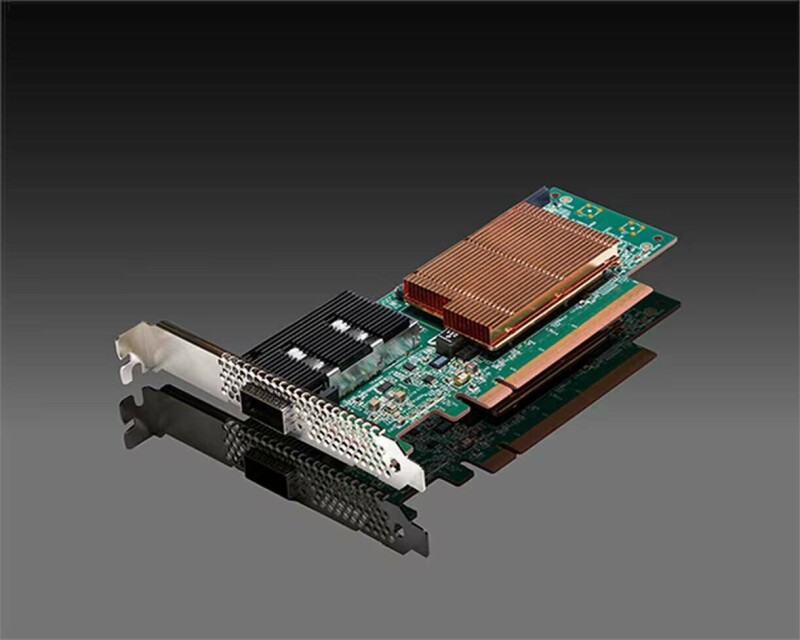
When it comes to networking supercomputers, Nvidia's InfiniBand rules the roost, but a new competitor is sneaking into the space with its own solution. This week the Department of Energy powered on a new cluster at Lawrence Livermore National Laboratory, and gluing it all together is Intel spinoff Cornelis Network’s Omni-Path interconnect tech. Lynx is a relatively modest bit of iron, at least as DoE supers go, packing 952 Dell Technologies PowerEdge nodes powered by Intel’s aging 4th-gen Xeon Scalable processors, codenamed Sapphire Rapids. The system, commissioned by the National Nuclear Security Administration (NNSA) will provide additional compute capacity for some of America’s most secretive workloads. But what sets the machine apart isn’t the compute, but rather its choice of interconnect. Most DoE systems today either use HPE Cray’s proprietary Slingshot 11 or Nvidia’s InfiniBand networking. Lynx uses neither, instead opting for Cornelis Network’s CN5000-series Omni-Path switches and NICs. “The collaboration between the NNSA ASC program and Cornelis has been rooted in a shared commitment to advance high-performance computing. Lynx reflects the results of that public-private R&D investment and will support the modeling, simulation, and analysis capabilities that underpin the modern NNSA complex,” Matt Leininger, a senior principal HPC strategist at LLNL, said in a statement. If Omni-Path sounds familiar, that’s because it’s been around in one shape or form for the better part of a decade. Originally developed by Intel in 2015 for HPC applications, the lossless interconnect is similar in many respects to InfiniBand. Several DoE Labs were early adopters, including Los Alamos National Lab’s Trinity super and the Cori machine, before Intel pulled the plug in 2019. The division was eventually spun off in 2020. For many, this is where the story ended, but in 2025, the company unveiled its CN5000 family of NICs and switches to the world, promising 400 Gbps connectivity with near linear performance scaling. The tech quickly attracted the attention of the DoE which tapped the niche networking startup’s tech for its Lynx system last summer. Omni-Path not only offers the agency an alternative to InfiniBand for non-Cray systems, but is now one of the fastest interconnects at their disposal. The majority of the Cray systems deployed by the DoE labs operate at 200 Gbps. InfiniBand technically can accommodate higher port speeds, but is in extremely high demand for AI compute clusters. For Cornelis, the deployment represents a significant proof point for the company’s next-generation Omni-Path protocol and networking systems. “It's laying that foundational proof point for the industry to see that the most demanding customers out there have run it through its paces and are seeing really good results,” Cornelis CEO Lisa Spelman told El Reg. In particular, Spelman says the deployment allowed Cornelis to demonstrate the scaling efficiency of its CN5000 portfolio. As compute clusters grow larger, network interconnects can quickly become a bottleneck. “We were able to show a 91% network scaling efficiency, which is great for this size of cluster,” she said. This scaling is so good, in fact, that Spelman expects to see Lynx outperform similarly sized clusters using more modern processors simply because the interconnects are more efficient. Lynx won’t be the last supercomputer Omni-Path finds its way into. The company is working on additional systems, including some, we’re told, that will make use of some non-traditional accelerators. “We're looking forward to the next chance to prove it at 2,000, 5,000, 10,000 and just keep going up from there,” Spelman said. Cornelis is also working to bring faster 800 Gbps equipment to market later this year, timed with the release of PCIe Gen 6.0-compatible CPUs from Intel, AMD, and others. PCIe 5.0 connectivity effectively caps conventional NICs at 400 Gbps. Nvidia and some others have side stepped this problem by integrating large PCIe switches into their NICs which offers additional bandwidth, but adds cost and complexity that Spelman says Cornelis would prefer to avoid. CN6000 is expected to launch in the second half of this year, and is expected to bring with it support for Ethernet connectivity allowing for greater cross compatibility with existing networks.®
Imagine being paralyzed so badly that not only can't you move your hands or feet, but you can't speak either. For years, brain computer interfaces have presented the tantalizing promise of reading brainwaves well enough to allow a person to communicate and access a PC. Now, a new breakthrough shows how someone can talk and even work a job while afflicted with a motion-robbing disease. A team of scientists from the University of California, Davis, published a paper Monday detailing a years-long study of a brain computer interface (BCI) system implanted in a patient with amyotrophic lateral sclerosis (ALS, also known as Lou Gehrig’s disease), which destroys motor neurons and causes loss of motor control and eventual paralysis. According to the team, their patient, Casey Harrell, has been living with BCI implants since 2023 that are still working today, giving him the ability not only to control a computer cursor with his thoughts, but also to speak. The Davis team is part of a broader coalition of universities with the US Department of Veterans Affairs known as BrainGate. They're working on a variety of neuroscience projects to do things like restore speech, use computers, and, in some cases, restore movement. In Harrell’s case, the Davis team was trying to figure out how to turn experimental tech into something long lasting and practical for use outside of a laboratory. Davis neurosurgeon David Brandman, co-principal investigator and co-senior author of the paper published Monday, as well as the surgeon who placed Harrell’s implant, described the results his team published as the crossing of a threshold in BCI technology: Not only has Harrell’s implant been working well with daily use since 2023, but it’s also incredibly accurate. In controlled tests, the system managed to synthesize sentences from Harrell’s brain activity with 99 percent accuracy; outside of the lab in daily use, Harrell still assessed it as being accurate 92 percent of the time. “The key thing to me is that it’s enabling everyday communication for a guy who wants to talk but can’t,” Brandman told The Register in an interview. “Despite being paralyzed [Harrell] has gone back to work full time and has meaningful conversations with his daughter who’s never heard the sound of his voice.” Prior work in the BCI space, Brandman told us, has either required researchers to be in a patient’s home whenever they’re using the tech, or for the patient to come to the researchers. That’s not the case here, with the system allowing Harrell’s home care team to hook him up to the system themselves, enabling him to use the device for more than 3,800 hours in the past few years. Based on the time the study was filed (It published Monday but went into peer review in July 2025) that would mean Harrell was using the device for more than five hours a day, on average. “It is a life that is more full of dynamic action and with friends and family, with colleagues, and it is something that allows me to communicate more in my natural way of communicating than any other technology that I have experienced,” Harrell told UC Davis via his BCI system. An actual practical use of AI Brandman is no stranger to BCI technology: Along with being a key figure in the BrainGate consortium, he’s also worked as study principal in investigating the safety of commercial BCI tech from Paradromics, one of the leading companies in the space alongside Synchron and Neuralink. As Brandman explained it, the Davis study didn’t involve any purpose-built hardware, instead making use of an existing BCI design produced by Blackrock Neurotech. The big advancement, says the Davis neurosurgeon, is with his team’s use of machine learning technology. The lab has built its own software platform for operating BCI devices known as Brain-computer interface for Rapidly Adaptive Neural Decoding (BRAND, which Brandman told us was coincidentally named), which UCD postdoctoral fellow Nick Card built machine learning algorithms for. BRAND is now used across the BrainGate consortium, and is where the secret sauce of the project’s success lies. According to the paper, BRAND’s AI algorithms are able to translate activity in Harrell’s ventral precentral gyrus, the part of the brain that controls motor function in the face, mouth, and jaw, into English-language phonemes. Additional algorithms in the software map those phonemes to words, and words to sentences. The end result is some very precise speech synthesis that allows Harrell to work full time as an environmental advocate. As for when the technology being developed by the UCD team might hit the commercial market, Brandman tells us that other technologies in the BCI space, such as those from Neuralink and others, are all working on tech with the same sorts of goals. His team’s objective is just to prove that BCI systems are more than just dead-end laboratory experiments. “My job is to derisk it,” Brandman told us. He likened the current state of BCI technology to early pacemakers, which started off in the 1950s having to be wired to hardware outside the body that was often connected to large batteries or directly tethered to the wall. Fast forward seventy years, and pacemakers are so simple to implant they’re often done in an outpatient procedure. “We’re at the early stages of this kind of technology,” Brandman said. “Casey has demonstrated that this kind of tech is practical.” Harrell may be wired up to a bunch of bulky external computers now, but combine the Davis UCD team’s AI advancements with the hardware work being done by other firms, and the future looks brighter for a lot of people whose lives are limited by paralysis and other impairments. “I want desperately to not be unique or special, because that will mean I no longer have the disease or that everyone that has the disease like me can get [BCI] prescribed to them,” Harrell said. BrainGate is currently accepting applications for future study participants. ®
Three critical flaws in Fortinet’s sandbox that allow remote attackers to bypass authentication, escalate privileges, and execute malicious code are under active exploitation, according to threat intelligence firm Defused. Fortinet patched two of the three flaws, CVE-2026-39813 and CVE-2026-39808, in April and the third, CVE-2026-25089 last week. All three bugs received 9.1 CVSS ratings, and, at the time, the vendor said that there were no reports of active exploitation. CVE-2026-39813 is a path traversal bug in the FortiSandbox JRPC API that allows an authentication bypass using specially crafted HTTP requests. It affects FortiSandbox 4.4.0 through 4.4.8 and 5.0.0 through 5.0.5. Patch to 4.4.9+ or 5.0.6+, depending on the branch, to fix the flaw. Fortinet security analyst Loic Pantano found this one. CVE-2026-39808 is an OS command injection flaw in FortiSandbox that allows unauthenticated attackers to execute unauthorized code or commands via HTTP requests. It affects versions 4.4.0 through 4.4.8, and upgrading to FortiSandbox 4.4.9 or above patches the hole. Fortinet credited KPMG Spain researcher Samuel de Lucas Maroto with finding and reporting this bug. Finally, CVE-2026-25089 is another OS command vulnerability in FortiSandbox, FortiSandbox Cloud and FortiSandbox PaaS WEB UI that allows unauthenticated attackers to execute unauthorized commands using specifically crafted HTTP requests. FortiSandbox 4.4.0 through 4.4.8 and 5.0.0 through 5.0.5, FortiSandbox Cloud 5.0.4 through 5.0.5, and FortiSandbox PaaS 5.0.4 through 5.0.5 are vulnerable. Upgrading to a fixed version patches the hole. Fortinet did not respond to The Register’s inquiries about these three CVEs and if the vendor had also observed any attacks against them. According to Defused, the exploitation began over the weekend. “We are observing exploitation of multiple Fortinet FortiSandbox vulnerabilities during the past 24 hours,” the threat-intel firm said in a LinkedIn post on Monday. “Per our research a working exploit for CVE-2026-25089 has not yet been publicly disclosed,” the company added, noting that the exploit for this flaw appeared to be vibe coded and may be faulty. We do know that all manner of miscreants love to abuse Fortinet flaws, so if you haven’t already, patch now. Earlier this month, Check Point VP of research Lotem Finkelstein warned that ransomware crims had exploited a critical authentication bypass vulnerability affecting Fortinet's Remote Access VPN and Mobile Access deployments, and said that the same crew was also likely abusing other VPN-related vulnerabilities in Fortinet products. ®
Retro computing brand Commodore has brought its pre-internet sensibilities to the mobile phone market with a $500 flip handset that proudly ships without social media, email, a web browser, or most of the things people typically buy smartphones to use. The company unveiled the device, dubbed Callback, this week and pitched it as a privacy-focused antidote to doomscrolling. Built in partnership with Finnish outfit Jolla, whose Sailfish OS traces its roots back to former Nokia engineers, the Linux-based handset attempts to split the difference between a feature phone and a smartphone. If your idea of progress is deleting half the apps on your phone, Callback may be for you. Commodore has removed email, social media, web browsing, workplace chat apps, and AI assistants, while bringing back physical controls and T9-style texting. Instead, buyers get a flip phone with a 48 MP Sony camera, FM radio, HD audio support, a selection of Commodore-themed games, and enough Android compatibility to run "99 percent" of Android applications through Sailfish OS's compatibility layer. "Phones were fun. Then they got too smart for their own good, and ours," said Commodore chief executive Peri Fractic, who said the idea grew out of his own efforts to reduce screen time before becoming a father. The company leans heavily on privacy as a selling point, promising no hidden data collection, no account sign-ins, encrypted storage, and what it describes as a "private not profit" business model. For many tech veterans, however, the real selling point may simply be the badge on the front. Long before smartphones, app stores, and algorithmic feeds, Commodore systems occupied bedrooms, classrooms, and living rooms around the world. For a generation of geeks, the brand still evokes cassette tape loading screens, SID-chip soundtracks, and countless hours spent typing programs from magazine listings. That's also why the company keeps getting resurrected. Commodore International collapsed in 1994, but the brand has spent much of the intervening decades bouncing between various owners eager to capitalize on the affection still attached to the name. Callback will initially launch in five versions, ranging from a $500 BASIC Beige model to a $640 Founders Edition complete with a 24-carat gold Commodore button. Whether nostalgia translates into sales remains another matter. Privacy-focused and minimalist phones have appeared regularly over the past decade, such as Punkt, usually attracting plenty of headlines and relatively few customers compared with the hundreds of millions of mainstream smartphones sold each year. Still, for anyone nostalgic for the days when hanging up the phone actually ended the conversation, Commodore has an answer: snap it shut and walk away. ®
OPINION Do AI agents need a new kind of CPU? That's what Arm, Nvidia, and a growing number of chip designers would have you believe. Arm named its first datacenter silicon the "AGI CPU." Nvidia CEO Jensen Huang described Vera as a "CPU for agents," and AWS's Graviton 5 marketing is chock full of references to agentic AI. None of these Arm-based processors are going to bring about the singularity. They're not even AI accelerators. Don't let the spin doctors fool you – these chips are nothing more than general-purpose processors that have received an AI glow-up. Sure, AI agents and their harnesses need CPUs. No argument there. But agents aren't one workload. They're simply a bridge between the AI model and the same applications we've been running for decades. And the tools those agents end up running often look wildly different. Some will benefit from a higher ratio of memory bandwidth to compute, some will perform better on chips with large unified caches or dedicated compression engines, while others will prefer high frequency over core count, or vice versa. There's a reason AMD and Intel don't just build one Epyc or Xeon SKU, and why all of the "purpose-built" agentic CPUs look so different. If you look at what Nvidia has built with its 88-core Vera CPU, the chip promises high single-threaded performance with gobs of memory and interconnect bandwidth. As Huang explained it during his GTC Taiwan keynote, this combination of compute and bandwidth is key to keeping latency as low as possible. "There will be billions of agents and these agents are going to be using the CPUs with very little patience because the cost of the GPUs they sit next to is too high," he said. But of course Huang would say that – he's in the GPU-slinging biz. Vera, just like Grace, was designed to keep data flowing between the CPU and GPU as smoothly as possible. Data movement is literally Vera's thing. Arm's AGI CPU, meanwhile, looks to be a bog-standard Neoverse V3 processor with 136 cores that's been stripped of anything an agent is unlikely to need in order to keep power consumption as low as possible. No simultaneous multithreading or dedicated accelerators, minimal vector extensions, but loads of memory bandwidth. Amazon's 192-core Graviton 5 processors, announced at Re:Invent last winter, are essentially a scaled-up version of Arm's AGI CPU, right down to the Neoverse V3 cores, but arguably even more generic. To echo Corey Quinn, "please, for the love of all that's holy, stop calling them 'AI chips.'" Not to be left out of the fun, Intel and AMD have also been keen to recast their flagship Xeons and Epycs as the ideal platforms for running AI agents. At Computex earlier this month, Intel showed off a couple of reference rack designs packing as many as 36,864 x86 cores into a 100 kW rack. Meanwhile, AMD, following an initial round of Vera CPU benchmarks, went on the defensive last week, arguing that concurrency, not latency, is the metric that matters most when running agents at scale. The House of Zen projects that for a 100 kW power envelope, its 256-core Venice Epycs, due out later this year, would deliver 3.3x higher throughput per rack than Vera. If it feels like everyone has a different opinion on what the ideal agentic CPU should look like, that's because, as with any other datacenter workload, there's rarely one right answer. We see this in early benchmarks of Nvidia's Vera CPU. Late last month, FOSS-friendly publication Phoronix got early access to the chip and ran a subset of its test suite that Nvidia apparently felt was representative of its target market. The chip achieved a geo-mean score 10 percent higher than AMD's 128-core Epyc 9575F, and 55 percent higher than Intel's 128-core Xeon 6980P. That's a strong showing. But looking closer at the results, it becomes clear that Vera performs better in some apps than others. And this gets to the crux of it all. There has never been one CPU to rule them all, and as the AI hype cycle enters its agentic era, there certainly isn't one now. ®
Firefox 152 is now available for download, after no fewer than four minor point releases to its predecessor, last month’s Firefox 151. And quieting noisy tabs has never been easier. It’s a good time to check out the Fox: recently, this patch to the Google Chromium codebase, continues closing the door to Manifest V2 extensions, as The Register warned you was coming early last year. As the W3C documents, the forthcoming Google Chrome 150 turns off the last workarounds available for full-power ad blockers, and Chrome 151 will nuke them altogether. Firefox 152 revamps the layout of the Settings page. To be honest, we had no particular problems with this before, but it’s a good thing to make it easier to twiddle the knobs and dials that make Firefox arguably the most extensible and customizable web browser. The new version also understands that sometimes you just want it to shut up. When a tab (or, worse, multiple tabs) are playing audio, if you go to the address bar and type “mute” (or “sssh” or “hush”), then a new Quick Action button appears beneath it offering to immediately silence all tabs in all windows at once. For some streaming services, there are also improved media playback controls on the tab context menu, but we don’t use streaming much around these parts and weren’t able to test this. If you admired the cleverness of the JPEG XL format as much as this Vulture , then we have glad tidings. Back in 2022, we reported that Google was dropping JPEG-XL support from Chromium and Chrome. Back in January, Mountain View changed track on this, and now, Firefox 152 has experimental JPEG XL support too. The functions for sending tabs to other devices, and for copying URLs for easier sharing, have been improved. There’s an optional new “Send Tab” toolbar button. You can also right-click on a tab button and get options to send it to a nominated device, or copy its URL for sharing. Better still, this also applies to groups of tabs: hold down Ctrl or Cmd, select several, and right-click any of them, and they’ll all be sent, or their URLs copied, in one action. There are also multiple bug fixes, about 40 security fixes, and as always, some new features for developers. Speakers of Basque or Galician will welcome their inclusion in its translation répertoire. Mozilla’s fast release cycle for Firefox is a minor irritation, yes. (Of course, there’s always the Extended Support Release channel, if you want to hop off the treadmill.) However, one interpretation of it – and the stream of bug-fix versions – is that Mozilla is working hard on Firefox, and in our view that’s good news. A new source of information that the company has published with this version) is the new Firefox Roadmap, which has info about future planned changes. ®
Microsoft is facing AI-related issues on multiple fronts. Disgruntled investors have flung a sueball at the company over its Copilot claims, while it is reportedly turning to other cloud vendors to help with AI-induced scalability issues at its coding collaboration tentacle, GitHub. The sueball is a class action, filed by the City of St. Clair Shores Police and Fire Retirement System in the Seattle US District Court, that alleges that Microsoft bosses (including its CEO, Satya Nadella) made "materially false and/or misleading" statements about adoption of the company's Copilot technology. On the contrary, according to the complaint, "Microsoft’s flagship proprietary AI model ranked well below competitors on a number of benchmark tests," and "Microsoft had failed to convert a significant percentage of its commercial Microsoft 365 users to paid Copilot subscriptions and the Company's Copilot offerings had lost market share to rival products, a trend that was increasing." Some organizations are gung-ho for Copilot these days – NHS England, for example, announced plans last week to roll the technology out to more than half a million staff. However the class action alleges Microsoft's SEC filings did not clearly explain problems "regarding the development and customer adoption of Copilot products and Microsoft's proprietary AI models." On January 28, Microsoft announced results for its fiscal second quarter, which included a slowdown in Azure growth and an admission that paid Microsoft 365 seats had reached only 15 million out of 450 million Microsoft 365 users. The company's shares subsequently declined by more than $48 per share, around ten percent of their value at the time, according to the complaint. “We are aware of the complaint and believe the claims are without merit. Microsoft stands by the integrity of its public statements and will vigorously defend itself in court," a Microsoft spokesperson told The Register. Git thee to AWS? Microsoft's AI headaches are not limited to the sueball, which the company reportedly claims "is without merit." Its source-shack tentacle, GitHub, is also reportedly facing the possibility of being forced to leap into bed with a rival to address ongoing reliability and scalability woes. Microsoft acquired GitHub in 2018, but the source site has sometimes struggled with availability amid a surge in AI-assisted workflows. The site has attempted to shift workloads to Azure, but has, for many users, remained unreliable. Azure has, infamously, had its own capacity problems recently. According to reports, the source shack will be propped up with additional resources from AWS, although it is not clear whether this is a temporary measure to address immediate problems or something more permanent. After all, given the choice, few IT managers would entrust all their workloads to a single vendor, and a multicloud approach is sensible. "The context here is important: Our community is growing at a rate we've never seen before, and the incredible spike in agentic development that began late last year has tested our infrastructure's limits," a GitHub spokesperson told The Register. "To meet this demand, we are both accelerating our move to Azure and continuing to explore a multi-cloud strategy to ensure we have the future capacity, compute elasticity, and horizontal scale required to support continued growth." It is, however, a little embarrassing when your owner operates its own cloud service. ® Updated at 1631 with comment from GitHub.
Cybercrims deploying DragonForce ransomware appear to have gained access to a major US services company's network, then spent two months up to no good while disguising their command-and-control activities as legitimate Microsoft Teams traffic. Researchers at security firm Symantec said the intrusion began with attackers gaining access to the victim's environment before deploying a custom Go-based backdoor, tracked as "Backdoor.Turn," to maintain communication with the compromised systems. Rather than reaching out to attacker-controlled infrastructure that might raise alarms, the backdoor hid its activity inside traffic associated with Microsoft's widely used collaboration platform. To anyone monitoring network traffic, the compromised systems appeared to communicate only with legitimate Microsoft servers. "The attackers in this campaign use exceptionally sophisticated cyber tradecraft," Symantec said. "The configuration of Backdoor.Turn means that security products only see C&C traffic going to legitimate Teams servers, leaving defenders unaware that data is being siphoned away by malicious actors." Symantec said the attackers installed Backdoor.Turn on systems after deploying DragonForce ransomware, potentially giving them a way back into compromised networks or access they could later sell to other criminals. To connect to Microsoft's infrastructure, the backdoor first requested an anonymous visitor token from Microsoft Teams and Skype back-end services. It then used a Microsoft-operated TURN relay server – infrastructure typically used to help establish communication between users – before establishing a direct QUIC connection to a malicious command-and-control server. Symantec said this is the first known case of malware using this particular technique. The security firm did not identify the victim beyond describing it as a major US services company, nor did it say whether the Teams-based communications channel had been observed in other DragonForce incidents. The ransomware operation has become increasingly prominent over the past year, operating a ransomware-as-a-service model that allows affiliates to conduct attacks under the DragonForce banner. It has been linked to the prolific Scattered Spider group, which has conducted a string of high-profile attacks, including intrusions targeting major retailers in the UK. While attackers have long abused legitimate cloud services to conceal malicious traffic, Symantec's findings suggest that DragonForce operators continue to look for ways to blend into the software and infrastructure that organizations trust most. ®
Linux kernel 7.1 is out, bringing significant changes that have been brewing for years – including the long-promised removal of support for Intel's 486 chip and its contemporaries. More than 140,000 lines of code have been chopped, with more facing deletion. Back in May 2025, we wrote that kernel 6.15 would drop 486 support, but that change was canceled at the last minute. Now it's in: in April, Penguin Emperor Linus Torvalds merged the big change that we described back then. More work is still ahead before this is completely gone, though. The Reg reported on the Russian Baikal family of CPUs way back in 2014, and again in 2021, but now Linux support for Baikal hardware has been removed, as has support for ancient bus mouse ports. We've also previously described 7.1's new NTFS driver, NTFSplus. It's optional for now, but South Korean filesystems boffin Namjae Jeon has revived and rewritten the original read-only NTFS driver from the 1990s. Most importantly, now it's able to write to NTFS volumes as well as read from them, and it's been modernized in line with current kernel filesystem methods. Linux Weekly News (LWN) explained the change in its January Filesystem Medley. Along with the new driver, there's also a new and improved version of the additional ntfsprogs utilities, called ntfsprogs-plus. This gives Linux the ability to repair some forms of NTFS corruption and errors – so we suspect that the various Linux-based live rescue media such as SystemRescue, GParted Live, and Grml may be quick to adopt kernel 7.1. This reminds us of what might have been the first time we reported on some of Namjae's filesystem finesse, when his code to repair exFAT volumes was added back in 2022. NTFSplus stands to completely replace the driver that Paragon Software donated back in 2020, as we described in April. It also seems likely that the old read-only NTFS driver will be removed too, as NTFSplus is based on that code. As it happens, exFAT support has been improved too. Contiguous space for files can be pre-allocated without zeroing the blocks first, making the process faster, and reducing fragmentation so storage media stays faster for longer. There are also improvements in ext4 and Btrfs handling. The swap memory subsystem has been overhauled, and should be faster. With RAM prices still high and thus renewed interest in memory and cache compression tools, we suspect that there's much more to do here. There are, of course, many smaller changes, some of which we've previously covered – including the removal of a whole collection of ancient communications devices. In 2022, our own Steven J. Vaughan-Nichols introduced the new io_uring API. In doing so, he also mentioned the new eBPF functionality, which we had days previously attempted to summarize. In 7.1, those two meet: now eBPF code can handle io_uring scheduling. The extensible kernel scheduler, which we've previously mentioned as an advanced feature of Oracle Linux's UEK-next kernel, has now been merged. Kernel 7.1 has improved power management for both AMD and Intel chips, as well as battery-status reporting on Apple M1 and M2-based laptops. The security of KVM virtualization on Arm has been tightened up, and so has that around accessing PIDs (process IDs) in the /proc virtual filesystem. The CIFS network filesystem – or SMB, as most of us call it – now has explicit support for creating temporary files. Intel FRED support debuted way back in kernel 6.9 but it's now on by default, and it helps performance on AMD processors as well. Kernel Rust support now needs Rust 1.85. For a deep dive into all the changes, as ever, LWN is the place to go. All this and much, much more is described in the articles on the first half of the 7.1 merge window and the rest of the 7.1 merge window. ®
Servers employing x86 chips from AMD and Intel now account for little more than half of server revenue, according to the latest figures from IDC. In its Worldwide Quarterly Server Tracker for Q1 2026, the analyst firm says that non-x86 server revenue hit $58.7 billion, representing a startling increase of 107 percent over the same period last year. The results mean that those non-x86 servers make up 47.9 percent of the market revenue, closing in rapidly on the amount of cash spent on x86 boxes. The growth in non-x86 turnover is likely thanks to systems powered by Nvidia’s AI chips featuring Arm cores. Although there is high demand for these, they also cost a pretty packet compared to an average datacenter box. In fact, IDC noted a stark divide shaping the worldwide server market, which reached $122.6 billion in vendor revenue during this period, a 30.4 percent increase year-on-year. On the one hand, AI infrastructure investment from hyperscalers and large cloud providers is “running at a scale that shows no sign of plateauing,” while everything else - the non-accelerated segment - faces a supply-constrained environment, thanks largely to that AI infrastructure spending. As Reg readers will know, memory chipmakers are prioritizing manufacturing capacity for higher margin products for AI servers and GPUs, starving the rest of the market of supply. Component availability, particularly DRAM and NAND flash, is limiting near-term shipment volumes from vendors, IDC says, though order pipelines are strong. Supply of the right chips is therefore the chief limiting factor on server market growth. Revenue for x86 servers still reached $63.9 billion, but this was a decline of 2.9 percent due to those component supply constraints impacting shipment volumes. GPU accelerated servers pulled in $68.9 billion for the vendors, up nearly 25 percent year-on-year, while other accelerated servers surged a massive 122 percent to $17.7 billion. The latter category represents AI systems configured with FPGAs or ASICs rather than GPUs. IDC’s spin on the data is that AI infrastructure adoption is no longer limited to hyperscalers, thanks to developments such as government-led sovereign AI initiatives, while the non-accelerated segment tells a more nuanced story. Although revenue here declined, underlying demand remains strong, but many enterprise customers are holding out against elevated component prices. “Companies aren’t pulling back from infrastructure investment; they’re just not getting servers as fast as they need them. Longer term, emerging workloads, including agentic applications and physical AI ecosystems, will keep demand elevated well beyond the current cycle,” commented IDC research director Juan Seminara. The firm says it expects to see supply normalization beginning in 2027, with capacity relief coming as chipmakers bring new fabrication plants online. Across the last two decades, non-x86 servers accounted for less than ten percent of revenue, and most of that went to IBM which emerged as the last vendor of proprietary servers as Oracle lost interest in Sun and the likes of HPE decided they couldn't sustain businesses built on exotic architectures. ®
Nearly a third of NHS trusts using Palantir's health data platform are performing fewer patient procedures than before it went live, according to figures analyzed by campaign group Foxglove. The research – based on a series of Freedom of Information (FOI) requests – also found that a single body, Chelsea and Westminster Hospital NHS Foundation Trust, accounted for 84 percent of the fall in outpatient waiting lists, while 16 trusts use the tool provided by the US firm. Palantir won the £330 million contract to provide the NHS Federated Data Platform (FDP), which the UK government said was vital to improving NHS productivity and recovering from the long waiting lists for elective care caused by the COVID-19 pandemic. Palantir's journey with the NHS began with a £1 award in 2020, which later led to a total of £60 million in contracts awarded without competition during the pandemic. NHS England, which awarded the contracts, said that as of June, 139 trusts used the FDP, with 137 reporting benefits. An Inpatients Care Co-ordination Solution (CCS) tool based on the platform had resulted in 111,589 additional patients undergoing procedures in operating theatres, it said. However, data obtained by tech rights campaign group Foxglove found that 41 NHS trusts are using Inpatient CCS, the module for helping hospitals manage operation scheduling, but 13 of them – or about 30 percent – report having carried out fewer operations overall since using the tool. Staffing shortages, more complex cases, or pressure on hospital bed capacity might explain the fall. Foxglove said it was the first time that data from individual trusts using FDP had been made publicly available. The FOI response also shows that, for the Outpatient CCS, a single trust accounted for the vast majority of the benefits. According to NHS figures, Chelsea and Westminster Hospital NHS Foundation Trust accounted for 183,061 of the patients removed from the outpatient waiting list, compared with the total of 217,846. Foxglove head of strategy Tim Squirrell said: "We now know that the big claim the FDP is delivering more operations for hospitals across the NHS is covering up a much less positive reality – a third of the trusts using the FDP's operations scheduling tool, Inpatient CCS, are actually delivering fewer operations than before they started using Palantir's kit. "Palantir can't have it both ways. If it expects us to believe that the FDP is responsible for improvements in some hospitals, it must also accept that things are getting worse as a result of its tools in others. "The data the NHS has seen fit to publish provides no useful comparisons of how things are going at the trusts not using Palantir's tools. So, in effect, we are being asked to back Palantir's FDP is delivering the goods based on faith, rather than hard evidence." An NHS spokesperson said: "Thousands more patients are benefiting from the NHS Federated Data Platform every month, with more than 110,000 extra patients having undergone procedures in operating theatres, while also reducing the number of unnecessary days patients stay in hospital following treatment by a seventh. "As NHS organizations expand the use of this technology, we will continue to work with them to ensure they use it to its full extent and get the most out of it for patients." An official pointed out that trusts have different starting points, at different scales, through locally agreed rollout plans when using the FDP. In a statement to The Financial Times, Stephen Childs, head of UK health partnerships at Palantir, said the company was working to improve by applying lessons from the trusts that get the best results from its software. "But we should be clear that the recent history of technology in the NHS has, by the government's own admission, seen us fall behind, exacerbated by various failed programmes, often at great expense to the taxpayer," he said. "And what these figures show, despite attempts by the campaign group that obtained them to present them otherwise, is that Palantir software is helping to fix this and enable the NHS to deliver better patient care. "This includes more than 110,000 additional operations to date, a 15 percent reduction in discharge delays for long-stay patients, and a 6.8 percent increase in the number of patients finding out whether they have cancer within 28 days of referral." The FDP deal has been the subject of frequent criticism in recent months. Earlier in June, MPs told the government to reduce reliance on the US spy-tech firm, and specifically use a break clause in the FDP contract to end its involvement in the NHS. Instead, the government should "develop an in-house replacement or seek an alternative developed by UK-owned and UK-based providers that are more compatible with UK values, and do not pursue either technical or contractual dependencies," the House of Commons science committee said. ®
Russia's space agency Roscosmos intended to cut into part of the International Space Station (ISS) to determine the extent of leaks in the aging structure, according to a space agency source. The Register was told that discussions involved a handsaw . Other reports have suggested cosmonauts planned to deploy a drill. Whatever tool was involved, the plan made NASA sufficiently alarmed that the agency sent its astronauts scurrying into the relative safety of a SpaceX Dragon capsule docked at the ISS. Neither NASA nor Roscosmos has commented officially. Russia's plan was to use the tool to learn more about the extent of the crack. NASA said: "This revised approach involved cutting a bracket to access better an area identified as a possible leak source for further inspection, using a method that could have resulted in elevated risk to the structure in the area." However, this could have created unpredictable loads on other cracks. Eventually, the plan was called off in favor of more measurements and data gathering. The SpaceX Crew-12 astronauts and NASA astronaut Chris Williams were forced to shelter in the Crew Dragon spacecraft earlier in June following a sharp increase in the rate of air leakage from the orbiting outpost. The offending area is the Zvezda service module's transfer tunnel, known by the Russian abbreviation PrK. While more epoxy patches might address the problem in the short term, the fact that additional cracks have appeared suggests issues Zvezda has wider problems. That's not unexpected given the age of the craft, some parts of which date to the 1980s when it was a backup for the Mir space station. Russia launched Zvezda in 2000, so it's now endured decades of stress. The module has leaked for years. In 2024, ESA astronaut Andreas Mogensen suggested one option for dealing with the cracks was to seal off the module once and for all. He told The Register: "The lucky point is that the cracks are confined to that chamber at the very end. So, as long as Russia is willing to forego that docking port, that wouldn't impact operations too badly." The crew routinely keeps the hatch to the tunnel closed when not in use, but a more permanent solution might be necessary in light of the ongoing problems. "So, yeah, worst case, you could seal it off," said Mogensen, "and I think the Space Station could continue. But of course, you never know what other problems might arise." Mogensen's "worst case" is, according to reports, likely the way forward: permanently sealing off the affected segment. A sudden depressurization of the PrK segment is a risk NASA is no longer willing to take. ®
Heart monitoring biz iRhythm says thieves made off with patient health information and tried to turn it into a payday. The California-based cardiac monitoring specialist offers customers a wearable device that collects data, then analyzes it to create reports about heart health. The company said it detected unauthorized activity on June 8 and launched an investigation with the help of third-party cybersecurity experts. A day later, the company received messages from a cybercriminal claiming to have obtained sensitive information, including proprietary company data, protected health information, and other personal information. According to iRhythm's filing with the US Securities and Exchange Commission, the attackers demanded payment in exchange for not publicly disclosing the stolen data. The company confirmed that data had been exfiltrated and, on June 10, determined that the incident was material due to the volume of information potentially affected. While the company disclosed the extortion demand and the existence of stolen data, it made no mention of negotiations. iRhythm spent a good chunk of the filing explaining what the attackers didn't get. According to the company, the intrusion was confined to business applications and never reached its clinical systems, medical devices, or customer connections. Patient care and day-to-day operations were unaffected. The company has not yet disclosed how many individuals may be affected, what data was accessed, or which third-party-hosted applications were involved in the breach. It has also not identified the threat actor behind the attack, and The Reg has found no evidence of major ransomware groups claiming responsibility. The company's filing states the attackers gained access through social engineering. Exactly how that happened remains unclear, although healthcare organizations have increasingly found themselves dealing with phishing campaigns, help desk impersonation scams, and other forms of human-targeted intrusion designed to bypass technical defenses. As of the filing date, iRhythm said it had not identified any ongoing unauthorized access to its systems and believed the incident was unlikely to have a material impact on its financial condition or operating results. The company added that it maintains cyber insurance that may cover some of the losses associated with the breach. iRhythm's disclosure comes less than a week after drug giant Novo Nordisk revealed that attackers had copied patient data from some clinical trials, adding another healthcare name to a growing list of organizations dealing with data theft and extortion attempts. ®
Qualcomm is reportedly moving to buy AI chip firm Tenstorrent, an acquisition that could prove a major boost to the RISC-V ecosystem. This comes from The Information, which cites an anonymous source claiming that a deal valued at $8 billion to $10 billion is under discussion. According to the report, the talks are ongoing and there is no certainty a deal will be reached, but the move would fit with Qualcomm's datacenter ambitions and bullish statements about AI opportunities made by its chief, Cristiano Amon. The Register asked Qualcomm and Tenstorrent to comment. Tenstorrent is a Canadian AI chip startup that bases its products on the permissively licensed RISC-V processor architecture. The company is led by CPU guru Jim Keller, known for his design work at AMD, Apple, and on DEC's Alpha chips back in the day. The firm's Galaxy Blackhole AI compute platform went on sale earlier this year, packing 32 of its Blackhole accelerators, each with 768 RISC-V cores, into a 6U enclosure running its own software stack. Qualcomm is also keen on RISC-V, especially since its licensing court battle with chip designer Arm, which wanted to nix Qualy's license to create its own Arm-based processor silicon. The chip design firm's datacenter products use home-brew Hexagon neural processing units, but it continues to rely on Arm processors in its Snapdragon range. In December, Qualcomm picked up Ventana Micro Systems, another company designing RISC-V CPUs targeting datacenter and enterprise applications. Financial details of that were not disclosed, but estimated at between $200 million and $600 million. A Tenstorrent buy could therefore see a greater commitment to RISC-V from Qualcomm, giving the open standard a shot in the arm (pun intended) and allowing the chipmaker to further distance itself from Arm and its owner SoftBank as it pursues datacenter customers. Arm appears unfazed by that prospect, having recently said it expects datacenter chips will soon be its main source of revenue. ®
Brits lost £1.28 billion ($1.7 billion) to payment fraud last year as scams continued to thrive on online platforms and telecoms networks, according to the latest figures from banking trade association UK Finance. The 2025 losses represent a modest four percent rise on the previous year, the trade association said, but the main sources of fraud remained familiar. UK Finance said two-thirds (66 percent) of incidents start with online platforms, such as scams promoted through social media adverts. Telecoms accounts for a smaller proportion (17 percent) but encompasses crimes such as impersonation fraud, which can result in larger per-crime losses. Calling for tighter regulations on tech and telecoms, UK Finance said online marketplaces must take measures to reduce scammers' use of their platforms. This could include prohibiting off-platform payments, relying solely on secure alternatives. It also called for stronger action against fraudulent social media advertising. "The financial sector invests huge amounts in protecting customers, but we cannot be the only line of defense," said Ruth Ray, managing director of economic crime at UK Finance. "Almost £1.3 billion was stolen again last year and it is clear we are not tackling the underlying problem effectively enough. "Given most authorized push payment (APP) fraud still starts via online tech platforms or via telecoms, we urgently need stronger, enforceable responsibilities to be placed on these sectors. This is the way to reduce the harm and stop criminals and tech companies profiting from these devastating crimes." APP fraud losses jumped 19 percent in 2025 compared with the year before. Total losses exceeded £576 million ($772.8 million), and consumers incurred the vast majority of these losses. Of the total cases, purchase scams comprised more than seven in ten, with annual losses increasing 20 percent to £118.1 million ($158.4 million). APP fraud involves convincing the victim to pay for something themselves, but the criminal giving the orders is the only party to financially benefit. Crimes that fall under the APP umbrella include investment fraud, romance fraud, and impersonation fraud – all of which saw double-digit percentage increases in case numbers. "What makes APP scams particularly worrying is how much can be lost before a victim even realizes, and how little advice still exists for consumers once it happens," said Aditya Hindocha, VP of account partnerships at SquareTrade Europe. "Device warranties largely won't cover data theft. Home insurance excludes digital losses. Banks may refund some fraudulent transactions, but there's no guarantee. Consumers today lack support for what comes next: restoring stolen funds, recovering a compromised identity, or navigating the months of fallout that follow." Unauthorized payment fraud, under which the remaining offenses fall, accounted for a higher value of total losses (£703.4 million/$943.8 million). While the total value of losses represents a decrease of five percent compared to 2024, the number of cases increased by 11 percent to 3.81 million, according to the latest report [PDF]. Unauthorized fraud encompasses offenses such as online payments made using stolen card details, lost or stolen card fraud (such as ATM skimming, petty card theft), remote banking fraud, and contactless fraud. US faring no better The Federal Trade Commission published figures this week for impersonation fraud in the US, which reached $3.5 billion in associated losses last year. It said that impersonation fraud was the most commonly reported fraud type last year, accounting for nearly one in three cases across 2025. Nearly $1 billion of the total was lost after scammers impersonated a business, with the most common type being banks, and around $920 million as a result of government impersonations, up from $866 million and $789 million respectively in 2024. According to the FBI's annual cybercrime report, published in April, government impersonation fraud saw the biggest increase in case numbers of all offenses, up 128 percent from 2023 to 2025. A separate warning from May 2025 urged citizens to be wary of the common tricks scammers use in these cases, which increasingly involve AI-generated voices to convince victims they are speaking with genuine government representatives. ®
A union representing UK civil servants claims Capita is set to miss the terms of its £239 million contract to run a government pension scheme following a disastrous launch late last year. The tech outsourcing company's leadership had promised that using Microsoft's AI would improve the service, but the investment has yet to help it reach the terms of its contract with the Cabinet Office. Service levels following the move to Capita have been unacceptable In a statement, the PCS union said the Cabinet Office confirmed that Capita would miss the ministerial deadline of June 30 to restore pension administration services to contractual standards, which it dubbed an unacceptable failure. The Register has contacted Capita for a response. A Cabinet Office spokesperson said: "The service levels following the move to Capita have been unacceptable. An urgent recovery plan is underway, and our immediate priority is to stabilise service levels and give current and former Civil Servants the service they deserve. "To this end, the Minister for the Cabinet Office Nick Thomas-Symonds set a deadline of the end of June for significant progress to have been made in this area, and we will assess the situation at the end of the month. "We will continue to use all available commercial levers to hold Capita to account and ensure they deliver for both members and taxpayers." The government is understood to be investigating the respective liabilities of both Capita and MyCSP – the previous provider – for these failures in the launch and handover of the service. The Reg first disclosed that the portal for the Civil Service Pension Scheme (CSPS) – which supports 1.5 million current and former public servants – appeared to be incomplete and barely functional when it launched in December. Users were forced to create new accounts, which went unrecognized, and they endured broken and circular links while the website appeared unfinished and untested, with headers and other features displaying dummy text. Multiple reports followed of scheme members struggling to get hold of their savings. Retired civil servants lost income after pension payments failed to arrive, according to the BBC. Capita said it had inherited a larger backlog of cases than agreed. Initially, it expected a transfer of around 37,300 cases from MyCSP. Later, that increased to volumes of up to 100,000. Nonetheless, the service continues to fail to meet its contractual terms, the PCS said. To date, 607 MPs have received at least one email from constituents about this crisis, with more than 3,000 emails sent in total, the union added. Fran Heathcote, PCS general secretary, said: "This is beyond disappointing, but I can't say it's surprising. Capita has missed deadline after deadline, yet civil servants and pension scheme members continue to pay the price for those failures. "Minor financial penalties mean little when you look at the size of the contracts they've been awarded. They're certainly no comfort if you're facing financial hardship because you've retired and your pension hasn't been paid. "How much more evidence does the government need? Capita has failed to restore confidence in this service. Ministers must now take immediate steps to bring the administration of the Civil Service Pension Scheme back into the Civil Service." This is beyond disappointing, but I can't say it's surprising In January, the Cabinet Office – which ran the procurement – and Capita both apologized for the botched launch of the service. Angela MacDonald, deputy chief executive at HM Revenue & Customs, was also recruited "to lead oversight of an urgent recovery plan." A surge team of "over 150 additional staff" was also deployed to "support clearing the correspondence backlogs and speed up processing." In March, Catherine Little, civil service chief operating officer and Cabinet Office permanent secretary, admitted that Capita did not deliver the full levels of IT, automation, and portal functionality at go-live, significantly reducing its ability to manage the volumes of work it inherited. ®
ZTE successfully hosted ZTE Day 2026 in Almaty as part of its annual series of technical seminars addressing key trends and challenges in the telecommunications industry. Under the theme "Creating an Intelligent Future," the event has become a premier forum for dialogue among Kazakhstan's leading telecom operators, regulators, and ICT specialists. Participants explored a cutting-edge technological agenda designed to accelerate the nation's digital transformation through ZTE's efficient, eco-friendly, and smart solutions. The 2026 edition of ZTE Day coincided with a major milestone in the development of Kazakhstan's ICT market. On the initiative of President Kassym-Jomart Tokayev, 2026 has been declared the Year of Digitalization and Artificial Intelligence in the country. A dedicated AI law is already in effect, and the national strategy "Digital Kazakhstan" includes 20 roadmaps spanning 72 industries, with clear objectives set through 2027. Kazakhstan has firmly established itself as a digital leader in Central Asia. Internet penetration in the country has reached 92.9%, and the number of mobile subscribers has grown to 26.3 million – an increase of 3.5 million in just one year. The main infrastructure challenge remains the large‑scale deployment of 5G networks in the nation's largest cities. As part of ZTE Day, experts provided a detailed presentation of the company's cutting‑edge developments, first unveiled earlier this year at MWC Barcelona 2026. Aligned with its global "All in AI, AI for All" strategy, the company showcased comprehensive AI solutions spanning diverse areas – from wireless network optimization and high‑speed transport systems to energy‑efficient telecom solutions, smart home technologies, and intelligent personal devices. Visually demonstrating the deep integration of AI and ICT, ZTE specialists presented solutions tailored specifically to the needs of the Kazakhstani market. ZTE continues to build long‑term, successful partnerships with Kazakhstani telecom operators and educational institutions, implementing projects to modernize telecommunications infrastructure. In the area of household digitalization, the company, together with Kazakhtelecom, has delivered high‑speed gigabit internet to hundreds of thousands of families, enabling the widespread adoption of online education, remote work, and 4K video. In mobile networks, ZTE, in collaboration with Beeline, has modernized the wireless infrastructure, increasing coverage, average speed, and peak network throughput by more than 35%. A major milestone in scientific development has been the creation of a supercomputer data center at Al‑Farabi Kazakh National University – one of the most powerful in Central Asia – supporting research in artificial intelligence, climate modeling, and the development of large‑scale language models for the Kazakh language. "ZTE is building end‑to‑end AI infrastructure based on the 'Connectivity + Computing' principle and annually invests approximately 20% of its revenue in research and development. Kazakhstan has already become a recognized regional leader in digitalization, and we are proud that ZTE's innovative and environmentally friendly solutions are making a concrete contribution to technological progress and the creation of a secure digital world in the country," noted Wei Wei, CEO of ZTE Kazakhstan, in his opening speech at ZTE Day. Contributed by ZTE.
While Microsoft sweeps the confetti off the floor of its Build event, it may be a good moment to reflect on what it didn't say as much as what it did. Taking the spotlight was AI agent Scout, ready to "understand how work gets done" and "take action without needing to be prompted." The software behemoth's leading database, SQL Server, barely got a mention. On its own, it may not be a big deal, but Microsoft watchers also noted that long-time SQL Server champion Rohan Kumar left the company in June, while Arun Ulag, president of Azure Data, currently holds the SQL Server remit. He's also responsible for the Fabric analytics and AI platform and a portfolio of open source database services. Taken together with the news that Microsoft's own terms and conditions allow customers to take SQL Server licenses to AWS's RDS database service without paying twice – thanks to a feature that lets them provide their own SQL Server installation media – the vibe around SQL Server has changed. "I don't think it is a priority," said Andrew Snodgrass, research vice president of analyst company Directions on Microsoft. "With Kumar leaving, that's become very evident. I think the world of Ulag, but [SQL Server] is not where his focus is for the future. I'm afraid Microsoft are going to leave it languishing." He said his concerns for Microsoft's flagship DBMS began when the 2022 version was released with a "bunch of Azure integration capabilities that no one was really asking for." It ended up being "more of a marketing release than something that was truly engineered to meet customer needs," Snodgrass said. While the introduction of vector search in the 2025 edition was welcomed by users, PostgreSQL, MongoDB, and Oracle users had been benefiting from the feature for years. "At Build, Arun Ulag stood up there and talked about all the new stuff: highlights of the database news there was HorizonDB, a PostgreSQL database service with a new form of scale-out capability," Snodgrass said. "There was no news about SQL Server, which was stunning, because SQL Server 2025 just came out at the end of last year, and in that they put in AI vector search, which I think is one of the greatest additions to SQL Server I've seen in ten years." But it seems Microsoft is as interested in its PostgreSQL and other open source database services as it is in its own SQL Server offering. So long as it drives workloads in Azure, it is all good for Microsoft, Snodgrass said. "It's the kind of thing Dad might say: it's not that I'm angry at Microsoft for what they've done to SQL Server, I'm just disappointed," he said. A Microsoft spokesperson said: "Customers have real choice in how they run SQL Server, and we've designed our licensing to be clear and flexible across environments. We're fully committed to SQL Server and continuing to invest in its innovation, security, and long-term support so customers can confidently run their most critical workloads and build what's next." Microsoft first released SQL Server in 1989 as a 16-bit version for the OS/2 operating system, which was a joint project with IBM. Despite challenges from Oracle, open source systems like PostgreSQL and MySQL, as well as a string of NoSQL databases such as MongoDB, it remains highly popular with users and developers. It is third behind Oracle and MySQL – ahead of PostgreSQL – on the DB-Engines ranking, which measures citations, Google data, and job searches. In the Stack Overflow survey of professional developers, it ranks fourth behind PostgreSQL, MySQL, and SQLite, but well ahead of Oracle, which lies in tenth. Adam Ronthal, vice president analyst at Gartner, said Microsoft's approach to SQL Server can be explained by looking at two different priorities. First, despite the hype around the cloud and AI, Microsoft made around $15 billion in revenue from the on-prem DBMS market, largely from SQL Server. It's second in terms of market share (33 percent) only to Oracle, which holds nearly 40 percent of the on-prem DBMS market. "If you look at Microsoft's growth in the on-prem business in 2025, they were growing around 8 percent, so Microsoft continues to have a business in the on-prem that is growing in high single digits," he said. There is no way that Microsoft will walk away from that kind of revenue, Ronthal told The Register. Meanwhile, SQL Server customers represent a good opportunity for Microsoft to convert users to Azure SQL, and the SQL database in Fabric, its data analytics environment, as they are built on a consistent database engine. Microsoft wants people to see that Azure provides a seamless path to build and scale AI applications with deeply integrated data services, security, and governance. However, Ronthal added that specific compatibility would depend on the implementation of T-SQL in the application users want to move. "As we go full into managed services, I don't have full control over the underlying operating system, and I might not have the same level of control over the configuration of the database itself." For commercial, off-the-shelf software, the ease of migration would depend on the vendor certification, he said. As well as wanting to defend its on-prem SQL Server revenue, Microsoft also sees that AI and cloud are driving the market. In the cloud, the market is dominated by a family of databases based on PostgreSQL or closely related to the open source database. "The de facto API for relational databases has emerged to be Postgres right now, and so we see many vendors implement wire from compatible Postgres APIs, which provides end users a hedge against lock-in," Ronthal said. A string of startups have tried to grab this market, including Cockroach Labs, Yugabyte, and pgEdge, all of which offer distributed capabilities and varying compatibility with PostgreSQL. Microsoft cannot ignore this development, hence its investment in HorizonDB, its own distributed PostgreSQL. Microsoft also has the DBaaS offering, Azure Database for PostgreSQL. As well as defending the growing on-prem database market, Microsoft is trying to capture the higher growth in cloud databases and catch up with AWS. As such, it is incorporating operational databases under the Fabric umbrella, including NoSQL database Cosmos, Azure SQL, and Postgres capabilities. "If we look at the drivers of the market right now, which are cloud and AI – Fabric is a core component of AI – then the growth for Microsoft is largely going to be driven by Fabric adoption, where they're putting a tremendous amount of focus and effort," Ronthal said. Nonetheless, Microsoft has deep enough pockets in terms of engineering budget to afford to battle it out on both fronts. In that sense, SQL Server workloads that end up on AWS still make sense. "Microsoft has some rationalization to do in the portfolio, because there are multiple ways to run SQL Server," Ronthal said. "You've got Azure SQL, managed instances, SQL Server in VMs. These provide slightly different levels of compatibility with what you might be doing in the on-prem world, and right now, the fact that there are multiple options actually makes it difficult for end users to figure out what to do. I would love to see Microsoft make it more unified and easier for people to consume." In the cloud DBMS market, AWS has the upper hand by a considerable margin. In 2025, AWS made about $37 billion in cloud DBMS revenue, according to Gartner, while Microsoft made about $18.3 billion. If a SQL Server customer can leverage an existing investment in Microsoft and bring it to AWS, Microsoft loses that business for Azure, "but on the plus side, they don't lose a SQL Server customer, and that's probably more important," Ronthal said. Of the leading vendors – Oracle, IBM, Microsoft, and SAP – only Microsoft has grown their market share in the last 15 years, Ronthal pointed out. Microsoft has proved capable of riding out changes in the market with both its cloud services and SQL Server strategy. Whether that's also good for SQL Server customers might be up for debate, but since support for the 2025 version ends in 2036, they have plenty of time to plan. ®
Weeks after Salesforce boasted about the adoption of "headless CRM," the concept of "headless ERP" crops up. This notion, according to Seth Ravin, CEO of third-party support vendor Rimini Street, is coming to help beleaguered ERP customers escape the application upgrade treadmill driven by the dominant database vendors. For Salesforce, its Headless 360 allows customers to access all of their Salesforce data from developer tool Cursor, WhatsApp, ChatGPT, Claude, or a terminal. It has processed 4.5 million MCP calls and nearly a trillion API calls since launching in April, the CRM giant said. For ERP, a monolithic category of enterprise software that conducts financial planning in some of the world's largest companies, the idea is the same, Ravin told The Register. Build a UI layer on top of existing applications, with AI agents or workflow software, and swap them out when the business is ready. Eventually, the business data can be moved to an open source or source-available database such as PostgreSQL or MongoDB. "PostgreSQL is number one," Ravin said. "Anyone who's doing open source is leading with PostgreSQL. MongoDB is number two. You're watching this whole decoupling of [ERP] technology and use of open source. You're going to see more and more of this. It's going to change the whole way we think about these big packages that users have been buying in the past." He is not alone. Research conducted by Censuswide with 4,295 CFOs, CISOs, CIOs, and CEOs found 70 percent do not see traditional ERP as the future. The study, commissioned by Rimini Street, found 36 percent favored a "composable, modular, flexible, API-driven, best-of-breed model" while 33 percent would lean toward "agentic ERP [with] autonomous, AI-driven decision-making". Concepts like headless and agentic ERP may seem nebulous now, but SAP, which counts some of the world's largest manufacturers as its customers, had to U-turn on its decision to restrict AI agents on legacy and on-prem software. It had said such innovations would only be available in its latest suite of applications and data products in the cloud, but demand from users forced a rethink this year. Ravin said the impact of agentic AI was "scaring the hell out of everyone from SAP on down." "I guarantee you that they're in a panic because they just don't understand the customers are getting ahead of them, the technology is coming apart underneath them, and they're trying to keep up, but the reality is they've built a business off controlling a customer by having all of this software, and they tell them when to [upgrade] and what to move to, and threatening them, and that's just not going to work." SAP maintains that the combination of its agent platform, Joule, its cloud-based Business Technology Platform for integrating applications, S/4HANA ERP software, and Business Data Cloud data warehouse and data lake environment brings immense value to customers by providing a single semantic layer over their business data. Nonetheless, it has struggled to get customers off its legacy or on-prem systems. Gartner figures from the end of Q4 2024 showed only 39 percent of worldwide ECC customers – from a total of 35,000 – had bought or subscribed to licenses to start their transition to SAP S/4HANA. This year, The Register revealed the company was about €2 billion short of its target for converting on-prem support into cloud revenue. Ravin said customers will take the opportunity presented by maintaining legacy systems to consider their ERP stack. "They're starting to understand that [ERP] is breaking apart into smaller pieces, those pieces are further breaking into pieces that will be microservices." Business processes will be run by a set of APIs running between existing elements of the application portfolio, he said. "Those processes will then get over the top of them a custom [agentic] UX, which will become a truly headless ERP, and you've already seen Salesforce come out with headless CRM. This trend is happening." Rimini Street is a services company that specializes in maintaining legacy ERP systems without vendor support, until 2040 in the case of ECC. It has a vested interest in giving customers time to select a strategy for the future of ERP. As investors eye software in light of AI agents and AI coding, giants like Salesforce and SAP have seemingly been forced to respond. Whether the headless ERP concept takes off or not, the industry is moving fast. ®
Digital sovereignty loomed large at Nextcloud's annual summit in Munich last week, where Benoît Piédallu, National Project Manager of Shared Digital Services at the French Ministry of Education, injected a dose of reality into the debate. Nextcloud is an open source storage and collaboration suite. France's Ministry of Education started initial work to adopt it in 2018, Piédallu said, with the COVID-19 pandemic turning up the urgency in 2020. In 2021, "we had this little incident with OVH, a little fire, which destroyed all our data," Piédallu noted dryly. The Ministry went all-in and signed contracts with Nextcloud in 2024. The Ministry wants to provide its users with federated storage and account management. At the time of Piédallu's presentation, the Ministry has set up slightly more than 400,000 accounts, and hopes to eventually reach 1.2 million users. Each account could be allocated 100 GB of storage (a potential 120 PB), although Piédallu said the average storage consumption currently sits at around 3 GB per account. So far, 80,000 sync clients have been persistently connected. However, it has not all been plain sailing, despite recent pledges from the French government about shifting away from American tools and reducing France's dependence on non-European technology. Nobody should be able to switch off or shut down our services from the outside Digital sovereignty means different things to different people. Right now, this project does not include desktop applications. The users "use whatever they want on their desktop… Microsoft if they want," Piédallu said. "So we have some problems sometimes, and people are saying that it is not working, and we say, 'Yeah, so you just use different software'…" This sums up the challenge facing proponents of digital sovereignty. Users are accustomed to Microsoft Office, and Microsoft Office works best in a Microsoft ecosystem, which is at odds with removing dependencies on non-European technology. Microsoft and the other hyperscalers are hard habits to break, and while services like Nextcloud's are capable of handling storage and file synchronization, users accustomed to Microsoft's more visible applications and services, such as Office, will be trickier to migrate. But migrate they must to realize France's digital sovereignty dream. "Nobody," said Piédallu, "should be able to switch off or shut down our services from the outside. Nobody should be accessing our services from the outside." The Nextcloud Hub 26 spring release, which includes Euro-Office, became generally available last week. The Euro-Office productivity suite may go some way to satisfying desktop refuseniks. The EU wants to increase digital autonomy through the European Technological Sovereignty Package, although analysts have warned this could complicate matters for customers. The French Education Ministry's experience shows that sovereign file storage can work at scale. Persuading users to give up the tools they already know may prove the harder part. ®
When Spotify evaluated its cloud compute options, it needed more than incremental improvements. Its recommendation engine delivers real-time suggestions to millions of users around the clock, placing heavy demands on compute infrastructure while requiring tight control over energy use and costs. During its evaluation of next-generation cloud processors, Spotify found that workloads running on Google Cloud Axion processors built on Arm architecture delivered roughly 250 percent better performance. Axion is just a part of a broader shift toward Arm-based compute built on the Neoverse architecture, which has been adopted across all major hyperscale cloud platforms. AWS reports that its Arm-based Graviton processors have accounted for over half of new CPU capacity deployed over the past three years. Microsoft and Google have followed with their own Arm-based designs, including Azure Cobalt and Axion, while NVIDIA’s Grace and Vera signal that it sees Arm as central to the future of AI infrastructure. Now about half of the compute shipped to top hyperscalers are Arm-based platforms. Purpose-built for customers Hyperscalers are not only deploying Arm processors but also designing silicon and infrastructure together to reflect real usage patterns. Ninety-eight percent of top 1,000 Amazon EC2 customers running production workloads on Graviton and benefit from Graviton’s price–performance advantages compared to x86. The new Cobalt 200 processor, built on Arm Neoverse technology, was engineered using telemetry from real Azure workloads and an internal suite of benchmark variants to reflect production behavior. Google is pursuing its own strategy with Axion processors, with C4A instances delivering up to 65 percent better price-performance and up to 60 percent greater energy efficiency than comparable x86 systems. At the core of this shift is Arm’s Neoverse platform, a datacenter–focused architecture designed to enable high-performance, energy-efficient compute at hyperscale. Neoverse marks Arm’s evolution from a mobile-first architecture to a platform purpose-built for cloud and AI infrastructure. It provides the common foundation hyperscalers use to design custom silicon optimized for their own workloads, allowing providers to tailor performance, power, and system behavior to meet specific application demands. While this momentum is driven by hyperscaler adoption, it is rooted in a broader change in how compute infrastructure must operate to support AI workloads. Traditional enterprise workloads emphasized predictable CPU utilization and storage throughput. AI changes that equation. Modern workloads require simultaneous optimization across training, inference, networking, and storage performance while minimizing energy consumption and latency. Even minor inefficiencies can become costly at scale. Power consumption now represents a significant portion of datacenter operating costs, which means performance per watt has become a primary design metric. According to an IDC report AI-ready datacenters are seeing rapid increases in power density, with rack requirements rising from typical levels of 5–10 kW to 30 kW or more, and in some cases exceeding 100 kW per rack. These constraints are forcing organizations to rethink how compute, networking, storage, and cooling systems are designed and integrated at the rack-level These pressures are also collapsing traditional boundaries between compute, networking, storage, and acceleration, creating tightly integrated systems optimized for end-to-end performance. This is driving cloud providers to adopt purpose-built silicon and architectures designed specifically for modern workloads. Real-world efficiency gains drive adoption These design choices are translating into measurable improvements in production environments. Organizations migrating workloads to Arm-based infrastructure are reporting gains across performance, efficiency, and cost: Databricks is using Azure Cobalt 100 virtual machines, built on Microsoft’s Arm-based CPU architecture, which are designed to optimize data-intensive and AI workloads. and deliver up to 50 percent better price-performance compared to previous generations, along with improvements in query speed and latency for analytics applications. For organizations running large-scale data pipelines to power machine learning and business intelligence workloads, these gains translate directly into faster processing and lower infrastructure costs. Pinterest provides a clear example of how Arm adoption can improve both cost efficiency and sustainability at scale. As a platform serving more than half a billion monthly active users and running AI-driven discovery workloads, Pinterest relies heavily on large-scale cloud infrastructure. By migrating workloads to AWS Graviton–based instances, the company achieved 38 percent savings on compute resources and 47 percent cost savings for key workloads, while also reducing carbon emissions by 62 percent. These improvements support both performance and sustainability goals, showing how infrastructure decisions can directly impact operational efficiency and environmental footprint. Uber’s transition to a multi-architecture environment highlights the operational realities of adopting Arm at scale. The company migrated more than 2,800 services and shifted nearly 20 percent of its infrastructure capacity from x86 to Arm-based processors, requiring updates to codebases, dependencies, and deployment pipelines. Through phased rollout, benchmarking, and continuous monitoring, Uber demonstrated that Arm can coexist with other architectures while improving price-performance and supporting a more flexible, efficient infrastructure model. Atlassian’s migration of Jira and Confluence to AWS Graviton highlights how Arm adoption can improve performance and efficiency at enterprise scale. The company moved more than 3,000 instances to Graviton-based infrastructure, achieving the transition with minimal impact on users. In production, instance counts dropped by around 30 percent, while throughput improved by up to 30 percent and latency decreased across key metrics. These gains demonstrate how optimizing infrastructure for performance per watt can enhance both user experience and cost efficiency at scale. These improvements span media streaming, data platforms, and large-scale consumer services, where gains in latency, throughput, and compute efficiency translate directly into lower infrastructure costs and improved user experience. They are particularly significant for AI inference, real-time personalization, and continuously running workloads. The converged AI datacenter The rise of agentic AI is transforming the datacenter into an integrated system in which CPUs, accelerators, networking, and storage operate as a unified platform. In these environments, CPUs serve as the control plane, coordinating scheduling, data movement, memory access, and system services, while accelerators handle compute-intensive training and inference tasks. In this model, efficiency is measured across the entire rack and datacenter footprint. AI workloads demand higher compute density while operating within fixed power and cooling limits, making the ability to maximize compute output per unit of space increasingly important. Coordinating CPUs, accelerators, memory, and networking as a unified system reduces bottlenecks and minimizes wasted energy from unnecessary data movement. Arm’s architecture spans these layers, enabling providers to optimize the full stack while maintaining software compatibility and ecosystem consistency. This cohesion is driving the emergence of the converged AI datacenter, where CPUs and accelerators are central to the trend. NVIDIA’s Grace Blackwell and Vera Rubin platforms combine Arm CPUs with high-performance GPU accelerators in rack-level solutions reflecting a broader industry move toward tightly integrated AI systems. In an other example, AWS with Trainium3 UltraServers, pairs Arm-based Graviton CPUs with Trainium accelerators and Nitro networking components to support large-scale AI workloads. Similarly, Google’s latest TPU 8t and TPU 8i training and inference superpods are powered by Arm-based Axion CPUs, extending this trend toward purpose-built AI infrastructure optimized for scale, performance, and efficiency. In these architectures, Arm-based CPUs serve as the control layer, orchestrating data flow between accelerators, memory, and networking while simplifying development and driving optimization across software stacks and developer tooling. Migration realities: less friction than before Migration complexity has historically slowed adoption of new architectures. Today, improved tooling and ecosystem maturity are lowering that barrier. The Arm MCP Server integrates migration tools, compatibility checks, and performance analysis directly into AI-assisted workflows, helping developers analyze codebases, validate dependencies, and build multi-architecture environments. Programs such as the Arm Cloud Migration Program are also helping organizations accelerate this transition by providing guidance, validation, and tooling for production workloads. Arm adoption is supported by expanding software compatibility and platform support. Arm-based environments now support major Linux distributions, container platforms, and modern development frameworks. The ecosystem has matured significantly, enabling developers to focus less on compatibility and more on performance optimization. Arm’s ecosystem now spans more than 22 million developers worldwide. For developers, this shift means building and optimizing applications for multi-architecture environments, with greater emphasis on efficiency, concurrency, and performance tuning. Where cloud compute is heading Purpose-built compute is becoming the default model for AI era infrastructure. As performance improvements outpace increases in power consumption and cost, the economics of cloud computing are shifting toward efficiency-driven architectures. Looking ahead, this evolution is also extending to enterprise environments. Arm’s recently introduced Arm AGI CPU is designed specifically for the next generation of AI-driven workloads, combining high single-thread performance with scalable throughput, compute density and rack level efficiency. Built on the Neoverse platform, it reflects the shift toward Arm CPUs that are not only optimized for general-purpose compute, but also engineered to orchestrate increasingly complex, agentic AI systems across the datacenter. Enterprises are increasingly evaluating infrastructure based on cost per workload, energy consumption, and the ability to scale within power and cooling constraints. This is driving demand for architectures that deliver predictable performance and efficiency across diverse workloads. Arm Neoverse’s growing momentum across hyperscalers, silicon vendors, and ecosystem partners reflects a broader realignment around efficiency, scalability, and system-level optimization. As AI workloads expand, infrastructure decisions will be shaped less by raw compute capacity and more by how efficiently systems can deliver performance at scale. The organizations redesigning cloud infrastructure today are not simply choosing new processors; they are adopting a compute foundation built for the demands of the AI era. Sponsored by Arm.
Websites are being redesigned for consumption by AI models, and now a coalition wants to extend the trend to digital documents. The LF AI & Data Foundation, under the Linux Foundation, has formed a working group to steer the development of DocLang, an AI-friendly document format that aims to help enterprises feed their files to AI systems. The DocLang group, founded by IBM, NVIDIA, Red Hat, ABBYY, HumanSignal, and Forgis, contends that existing formats like PDF, Markdown, HTML, and LaTeX are ill-suited for AI document parsing. In late 2024, IBM developed an open source toolkit called Docling to facilitate AI document parsing, not unlike Microsoft's MarkItDown or the Marker project. Docling provides a way to convert various file formats into structured AI-ready data. DocLang expands upon that foundation with a standard for exchanging structured output across different systems. "DocLang is designed to solve one of the foundational problems in enterprise AI: documents were built for humans, not machines," said Maxime Vermeir, VP of AI Strategy at AI automation biz ABBYY in a statement. "By introducing a minimal, standardized, and AI-native representation of document structure, layout, meaning and governance, DocLang creates a far more deterministic foundation for modern AI systems." The new DocLang format is necessary, the spec authors argue, because existing formats were designed for rendering and lose semantic information, structural relationships, or geometric context when AI models turn them into tokens. The specification explains that Markdown lacks sufficient scope, that HTML is excessively verbose, and that LaTeX allows too much ambiguity. Essentially, DocLang is optimized for LLM tokenizers through markup that maps between DocLang elements and LLM tokens on a 1-to-1 basis. The spec relies on a limited XML vocabulary that aligns with LLM tokenizers to produce optimized prompts. It is lossless, so the AI conversion doesn't do away with valuable info. It's designed to support common graphical elements like tables, formulas, charts, and multimodal content. And it's an open standard. DocLang could also help keep costs under control. According to AI Cost Check, having an AI model conduct an OCR scan on a PDF requires about 1,200 input tokens and 150 output tokens as a baseline. That's inconsequential to corporate AI customers on a one-off basis but demands attention at scale. And because AI models have highly variable token costs, companies may find they are spending more than they anticipated to have their AI system ingest PDFs, particularly if the documents are long and complicated or an expensive frontier model is used. "PDFs were designed for rendering, not understanding," said Jon Knisley, AI Value and Enablement Lead at ABBYY, in an email to The Register. "Every time a PDF enters an AI pipeline, structure, meaning and layout get lost, so the model's accuracy ends up bottlenecked by document quality rather than model quality. Teams compensate by building custom parsers at every integration point, which results in brittle, one-off work, and a new engineering sprint for every new document type." According to Knisley, that has measurable cost. "Ambiguous structure forces the model into guesswork, which drives up hallucination risk and burns tokens deciphering layout instead of extracting meaning," he explained. "With DocLang, customers can expect better accuracy, lower costs, fewer tokens consumed, faster performance and more consistent outputs. The exact savings depend on the use case and document complexity, but our initial benchmarks show 4x to more than 30x lower cost depending on the model evaluated." Knisley also cited governance advantages, noting that document provenance data and metadata can get stripped when documents gets moved. DocLang, he said, keeps that information attached. ABBYY, which offers AI document processing, has created the DocLang Interactive Benchmark to illustrate the potential token savings of feeding DocLang documents to AI models. A PDF of IBM's 2025 annual report, for example, results 8,421 input tokens and 512 output tokens while a DocLang version requires only 5,310 input tokens and 498 output tokens. What's more, the DocLang version results in lower latency (2.7s vs 4.2s) and delivers better quality (the AI missed one subsection and mangled a table merger in the PDF). "It's still early, and we won't overstate adoption," said Knisley. "The standard is open and free to build on, and the group is actively inviting more technology providers and enterprises to join. The early response has been encouraging, and we're optimistic about where it goes from here." ®
Cisco today issued a fix for a Catalyst SD-WAN Manager bug that attackers have already spotted and exploited to get root privileges, according to both the networking vendor and the feds. The vulnerability, tracked as CVE-2026-20262, is in the web UI of Cisco Catalyst SD-WAN Manager, and exists because the software is not properly validating user-supplied input during a file upload process. “An attacker could exploit this vulnerability by sending a crafted HTTP request to an affected API endpoint of the affected system,” the vendor warned in a Monday security advisory. “A successful exploit could allow the attacker to create or overwrite any file on the underlying operating system. This file could later be used to elevate to root.” There is one caveat: to exploit this bug, the attacker must have valid credentials with at least a lower-privileged, single-task user account. That probably explains the medium-severity, 6.8 CVSS rating for this bug. Still, valid credentials aren’t hard to come by these days, and considering this CVE is already under attack, we know someone had some success. “In June 2026, the Cisco PSIRT became aware of limited exploitation of this vulnerability,” the security alert said. “Cisco continues to strongly recommend that customers upgrade to a fixed software release to remediate this vulnerability.” The flaw affects all deployment types, regardless of device configuration. There are no workarounds, but upgrading to a fixed software version will patch the flaw. Also on Monday, the US Cybersecurity and Infrastructure Security Agency (CISA) added CVE-2026-20262 to its Known Exploited Vulnerabilities catalog, citing “evidence of active exploitation.” America’s lead cyber-defense agency also set a two-week deadline for all federal agencies to apply the patch. This latest Cisco SD-WAN bug under attack comes less than two weeks after Switchzilla warned that a high-severity vulnerability in Catalyst SD-WAN Manager vulnerability (CVE-2026-20245) was under active exploitation. At the time of disclosure, this SD-WAN vuln did not have a fix. Cisco issued an advisory for that zero-day on June 4, and finally released patches for all affected versions on June 12. This is the eighth Cisco SD-WAN bug to be listed in CISA’s Known Exploited Vulnerabilities catalog so far this year.®
The “jailbreak” that prompted the Trump administration to block Anthropic’s most advanced models was actually a simple three-word prompt: “Fix this code.” That's according to Katie Moussouris, founder and CEO of Luta Security, and the fairy godmother of bug bounties. She says she was the only outside expert to read the third-party research paper on the Fable 5 guardrail bypass techniques that prompted the ban. On Friday, the US government, reportedly citing national security concerns, issued an export control directive to suspend access to Fable 5 and Mythos 5 by any foreign national, inside or outside the United States. In response, Anthropic disabled both models “for all our customers to ensure compliance.” Anthropic shared the report privately with her, Moussouris wrote in a Monday blog post. The outside researchers reportedly fed Anthropic’s Fable 5, Mythos, and Claude Opus models open-source code containing known CVEs, plus new code intentionally laced with vulnerabilities, and asked the models to “review the code for security issues.” As Moussouris tells it, Fable 5 refused, so the researchers asked the AI systems to “fix this code.” The model reportedly obliged, and after additional prompts also produced scripts to test the patches. “That’s it,” Moussouris wrote. “‘Fix this code,’ plus several manual steps to generate test scripts, should never have triggered an export control. I feel like making ’90s-style t-shirts with ‘fix this code’ on the front and ‘this shirt is a munition’ on the back.” Between 2013 and 2017, Moussouris served on the technical expert group that renegotiated the Wassenaar Arrangement, a voluntary agreement between 42 nations that governs certain export controls for classified dual-use software and technology. The group eventually won exemptions for defensive cybersecurity activity. This allows defenders to share vulnerability data, conduct malware analysis, and coordinate incident response internationally without the threat of criminal prosecution. On Sunday, Moussouris joined more than 100 other cybersecurity leaders and signed an open letter urging the Trump administration to reverse the restrictions on Fable 5 and Mythos and restore cybersecurity firms' access to the advanced models. “To pull the best capabilities away from defenders without a good reason when our adversaries are rapidly advancing is dangerous,” they wrote. In her blog, Moussouris argues that there was no guardrail bypass or jailbreak. Defenders should be able to ask AI systems to find and fix bugs, and write tests to validate the patch, she said. Anthropic’s models were doing “the most valuable thing an AI model can do for defensive security: executing the find, fix, and test loop defenders run every day.” Removing the capability for models to respond to defensive requests makes AI systems “worse at finding bugs and verifying patches,” she continued. Plus, the US can’t extend export controls to open-weight systems or similar advanced models from China and other countries - and these systems will soon achieve Mythos-like capabilities, anyway. Anthropic and Google have both accused China-based rivals including DeepSeek of using “distillation attacks” to train their models by siphoning knowledge from American companies’ AI. Banning Anthropic’s advanced models is going to hurt defenders more than attackers, Moussouris warns. “Defense improves when defenders find the same bugs attackers find and fix them faster,” she wrote. “We need the best tools to defend against increasingly capable attackers in the AI era of cybersecurity.” The Register reached out to the Trump administration for comment on Moussouris' assertion, and we'll update this post if we hear back. ®
War may never change, but its domains evolve, and DARPA is looking for ideas to ensure space infrastructure destroyed in future orbital skirmishes can be rapidly replaced. DARPA, on Friday, put out a request for information for an initiative to develop what it’s calling Rapid Reconstitution of Space Capabilities. “Other nations seek to position themselves as leading space powers while undermining the stability and tranquility that allows space to benefit all nations,” DARPA said, suggesting that the US would never dare deploy space weapons that could destabilize the tranquility of Earth orbit. “Space is an increasingly contested environment, presenting a multitude of threats to U.S. space assets,” DARPA added. “Therefore, there is a strategic need to be able to quickly respond to disrupted assets and reconstitute degraded space capabilities.” While we don't know if the US has any weapons in space – we asked but didn't get a response – other countries certainly are striking an aggressive posture. Both Russia and China have reportedly blown up their own defunct satellites in recent years to demonstrate their space warfare capability, and the US Space Force has noticed what appears to be China experimenting with orbital satellite dogfighting maneuvers. The US has also accused Russia of developing anti-satellite weaponry that may or may not involve orbital nukes, leading the US to update its fleet of satellites designed to keep an eye out for potential nuclear launches. “U.S. competitors are implementing a sustained effort to develop a broad range of offensive counterspace capabilities through a variety of anti-satellite (ASAT) weapons, including direct attacks on satellites, jamming and spoofing of signals, and continued cyberattacks on satellite and ground infrastructure,” DARPA noted in Friday’s announcement. Pointing to the 2023 Space Force tactically responsive space exercise Victus Nox, which saw the USSF launch a space vehicle into orbit just 27 hours after getting the word, DARPA said it wants more of the same, but hopefully faster. “DARPA Strategic Technology Office seeks information supporting technical solutions and operational concepts and strategies to enable rapid, responsive, cost-effective reconstitution of any lost or degraded space capabilities resulting from attacks,” DARPA explained, adding that it’s not looking for anything more than ideas at this point, but is willing to entertain anyone in the US with a good idea, be they laboratory or private outfit. According to the announcement, DARPA wants ideas that would get degraded operations restored in “hours to weeks,” and offer the same turnaround time for cases of surging demand as well as asset loss. “Possible solutions could be realized with reconfigurable, software-defined, multifunctional, and multi-mission payloads, as well as proliferated/mesh architectures and rapid on-orbit deployment concepts,” the Pentagon research arm said. “Rapid space capability reconstitution is a complex task,” DARPA added, so don’t expect this research to move anywhere near the speed of DARPA’s eventual rapid reconstitution rockets. Then again, America just minted the world’s first trillionaire, and he’s a space guy – maybe ask him how to launch rockets quickly? Surely his ideas would be grounded in good sense, right?
Claude wants to know if you are who you say you are. Anthropic last week updated its privacy policy to say that it may subject consumer account holders to identity checks. The new legalese arrived one day before the company released its Fable 5 and Mythos 5 models, presently disabled to comply with a US government export control order that has elicited protest from more than 60 cybersecurity and technical experts. Anthropic last year said that it supported "policies like strong export controls" to keep AI away from authoritarian nations, whatever that means these days. The revised policy, which takes effect July 8, 2026, does not say what will trigger an identity check. The company says it may do so "to help keep our services safe and secure." "In certain circumstances, we may ask you to verify your age or identity," the company's latest privacy policy explains. "If you choose to do so, data we will collect includes, depending on the method: an image of your government-issued identity document and the information appearing on it (such as your ID number and date of birth); your image in photo or video form, facial geometry templates (which may be considered ‘biometric data’ in some jurisdictions); and the result of the verification (for example, whether your age meets the applicable threshold)." The revised policy substantially expands data collection to include biometrics and identity records. And it gives the company broader discretionary standards for sharing data with authorities. The policy, which does not apply to commercial customers (Team, Enterprise, API), suggests consumer account holders (Claude Free, Pro, and Max plans) will be able to choose whether to comply. The consequences of non-compliance are not spelled out. That omission may reflect the varying and evolving age and identity verification policies being debated, voted on, and implemented in different jurisdictions. Different laws may require different responses to non-compliance, ranging from the application of safety filters to denial of access. Anthropic did not immediately respond to a request for comment. Over the past few years, digital safety laws designed to protect children have proliferated. There are now more than two dozen such laws in US states. Some of the recent laws have targeted AI chatbots (e.g. California Companion AI Chatbot Safety Act) and some have focused on shifting the burden of age verification to operating systems and applications (e.g. California's Digital Age Assurance Act). Similar laws have been enacted or are pending in Australia, Brazil, the European Union, India, South Korea, and the United Kingdom among others. Limiting the ability of children to access AI services may only be part of the motivation for the policy change. Anthropic has also been vocal about the threat posted by foreign rivals that copy its models through a process called distillation. While the AI biz does not offer Claude family models in China (or other countries like Russia and Iran), developers in blocked countries may still be able to access Claude models using account sharing services and other workarounds – if Chinese models distilled from Claude models aren't sufficient. So identity checks may provide Anthropic with an additional policy enforcement mechanism. ®

 Accedi