Vista elenco

NASA’s SpaceX CRS-34 Dragon Returns Packed with Space Station Science

Scientists await a big splash in the Pacific Ocean as one of the most research-packed Dragon spacecraft to date returns, completing the 34th SpaceX commercial resupply mission to the International Space Station for NASA. Biological and materials samples, along with tested hardware, are heading back to research teams on Earth for further analysis, advancing NASA’s work to prepare humans for exploration beyond low Earth orbit and to deliver benefits back home.

Tiny cells, huge health insights
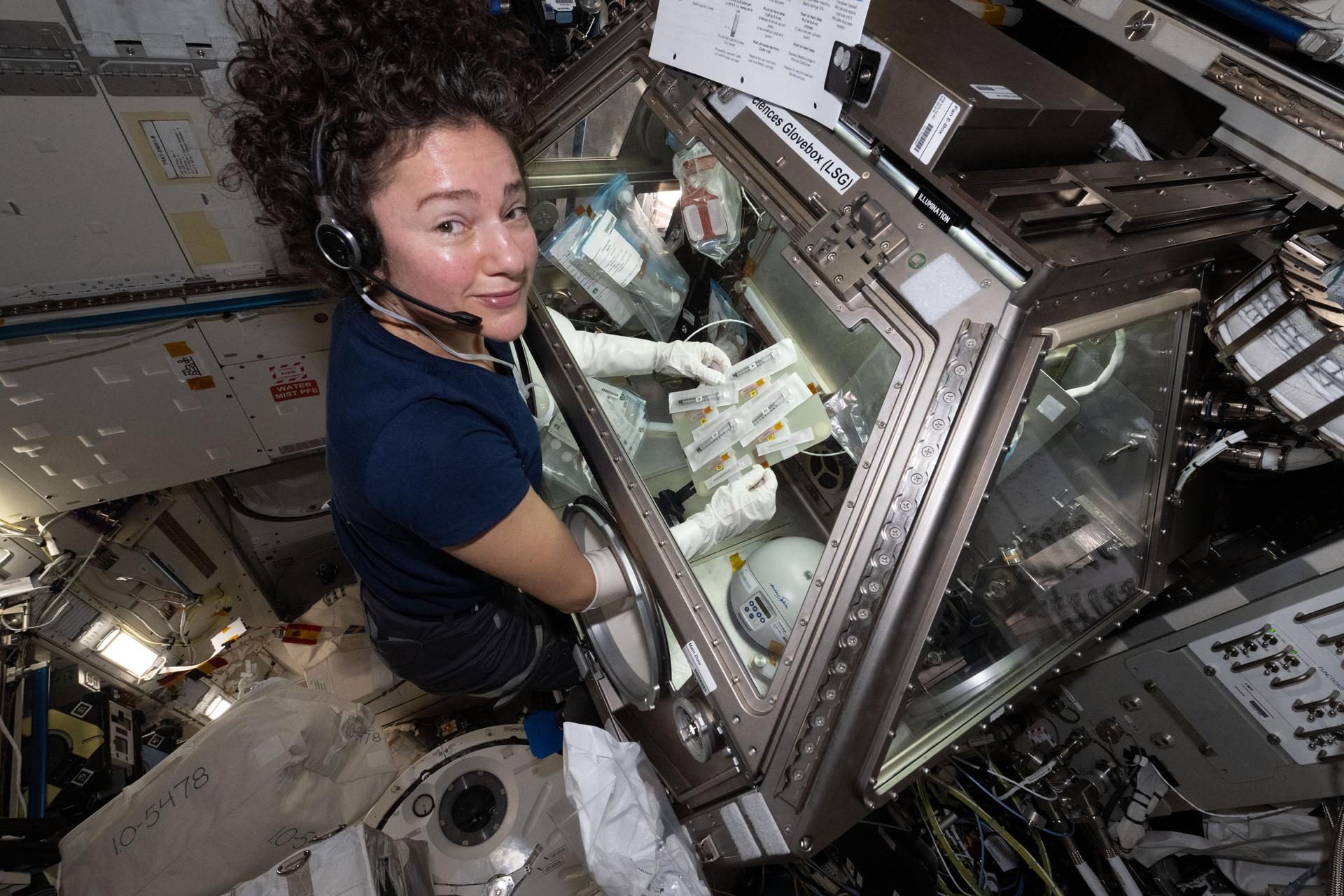
Jessica Meir wears a navy-blue T-shirt and a headset. She looks at the camera while her arms are inserted into the Life Sciences Glovebox. She holds a rectangular plate with multiple sealed syringes and tubes. There are many bags within the glovebox with lab supplies. Metallic surfaces and electronics surround the area outside the glovebox.
NASA astronaut Jessica Meir prepares samples in the Life Sciences Glovebox to study how weightlessness affects crew blood clotting and immune function for the Megakaryocyte Flying-One investigation.
NASA

Some samples returning are for NASA’s Hematopoietic Stem Cell Expansion in Space: Pathfinder Investigation (InSPA-StemCellEX-H2), which seeks to use the microgravity environment to scale up the production of stems cells. On Earth, lab-produced blood stem cells lose their ability to form different cell types, like red and white blood cells that are critical to treating patients with certain blood diseases and cancers. In microgravity, researchers believe this ability will be better preserved while also growing these stem cells in greater numbers. The returning samples will undergo further analysis to determine if space-based efforts produce larger quantities of enhanced stem cells suitable for clinical use.

The team behind NASA’s Streptococcus pneumoniae (Spn) Infection of Cardiac Tissue (MVP Cell-09) experiment is awaiting the return of stem cell-derived heart tissues that were intentionally infected with a pneumonia-causing bacterium as part of ongoing microgravity research. Pneumonia increases the risk of heart disease, which is not fully understood. Because bacteria tend to become more active and virulent in microgravity, this experiment could amplify their effects, making it possible to detect cellular responses that cannot be observed on Earth.

NASA’s Megakaryocyte Flying-One (MeF1) samples are returning to Earth to help understand how large cells found in bone marrow, known as megakaryocytes, and the platelets they produce adapt to spaceflight. Megakaryocytes and platelets play important roles in the formation of blood clots and immune responses. The returning samples, including those taken from astronauts, could show us how the human immune system reacts aboard the space station and help prepare for future exploration missions.

Driving design enhancements
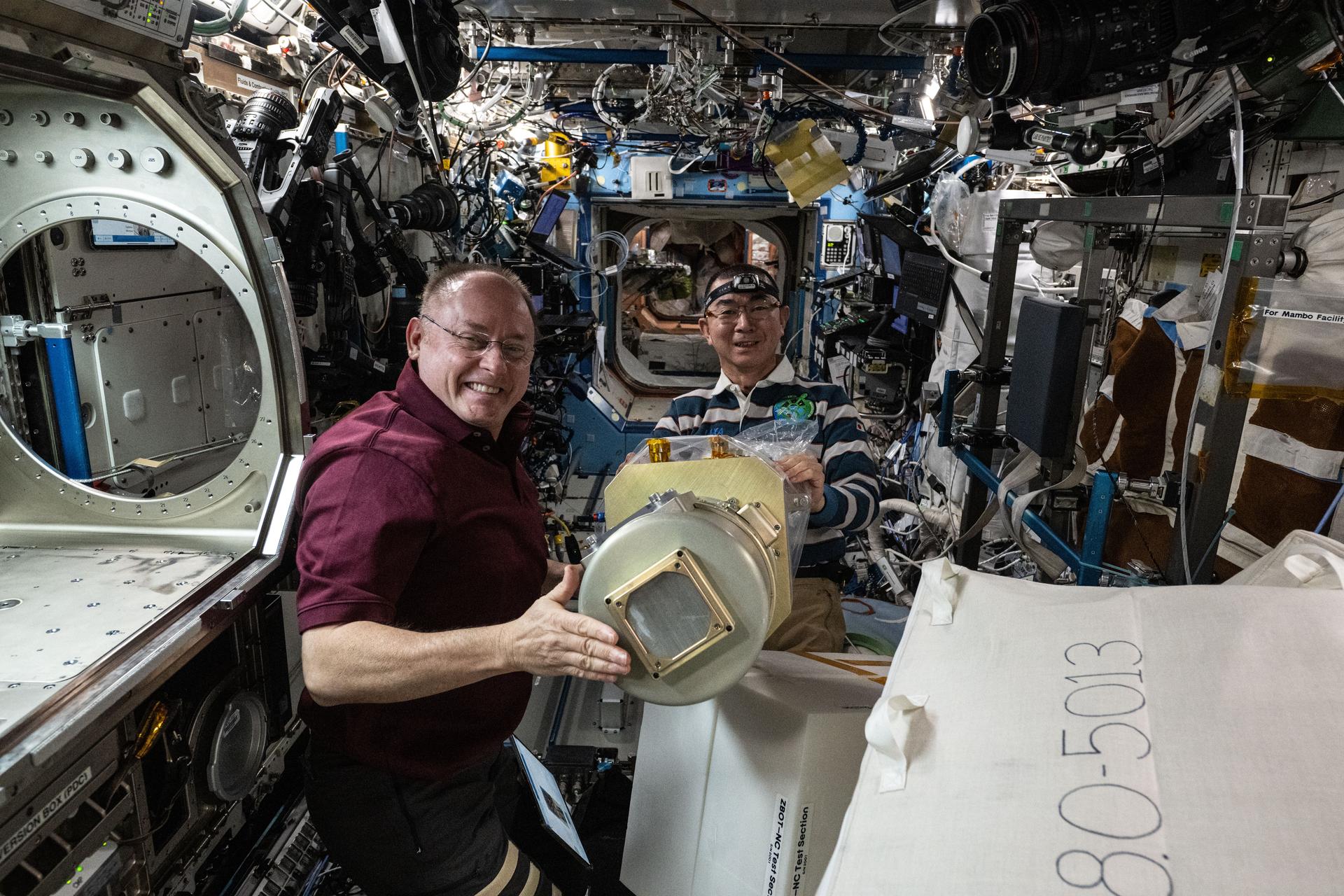
Fincke wears a maroon shirt and smiles as he holds a metallic cylindrical tank with a square outcrop on its flat end. Yui, wearing a striped white and blue shirt, stands next to Fincke and removes a bag from the tank. The surrounding walls of the space station have many cables and electronics embedded into the walls.
NASA astronaut Mike Fincke and JAXA (Japan Aerospace Exploration Agency) astronaut Kimiya Yui work on hardware for the Zero Boil-Off Tank investigation.
NASA

Many spacecraft use cryogenic fuels for propulsion, but temperature swings in space can cause these extremely cold fuels to slowly evaporate and escape their tank, reducing fuel efficiency and complicating mission planning. NASA’s Zero Boil-Off Tank Noncondensables (ZBOT-NC) investigation aboard station studies how gases that do not condense into liquids at cold temperatures affect pressure control and fluid behaviors in propellant tanks. Hardware returning aboard Dragon, including drives containing fluid-physics data, could help validate models and contribute to the design of more efficient cryogenic fuel storage systems for long-duration missions.

Semiconductor research samples as part of NASA’s In-Space Production of Semimetal-Semiconductor Composite Bulk Crystals in Microgravity (SUBSA-InSPA-SSCug) investigation are returning to Earth for further analysis. This study manufactured semimetal-semiconductor composite alloy crystals in space, which have applications in many electronics, including sensors and lasers. Researchers believe microgravity could enable the production of significantly greater and higher-quality crystals, supporting the development of next-generation semiconductor technologies.

Innovative medical research mix

A microscopic image with a black background and enhanced with fluorescence to distinguish a red porous material. This nanomaterial is embedded with many stem cells, represented as tiny, blue, oval-shaped dots.
Stem cells grown along a DNA-inspired nanomaterial on space station as part of DNA Nano Therapeutics-Mission 2, a percussor to DNA Nano Therapeutics-3.
University of Connecticut

NASA’s DNA Nano Therapeutics-3 research team will receive tiny, space-assembled DNA-inspired materials that are combined with medicines to create active cancer treatments. Producing these treatments in microgravity can improve how well they perform in the body. This research could improve patient outcomes by helping therapies reach tumors more effectively, stay in the body longer, and improve medicine release.

Tissue models of the brain, heart, liver, and kidney that were tested with novel RNA-based medicines as part of NASA’s InSPA-Sachi Nanoligomer investigation are also returning. Microgravity can accelerate aging and disease processes, giving researchers a unique environment to better observe how well these new drugs work on different organs ahead of clinical trials.
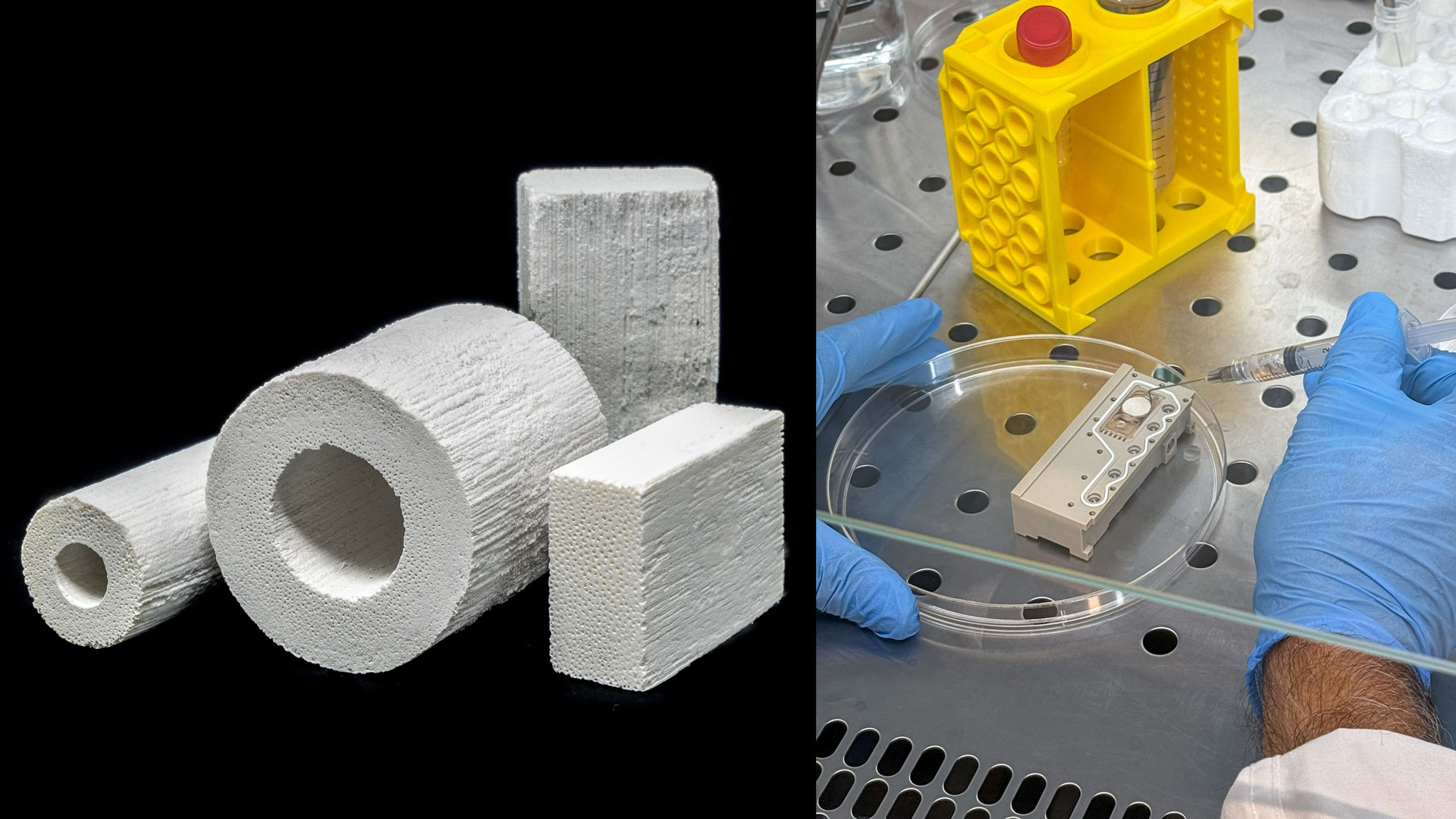
A composite made up of two images. The left image shows four white structures – two cylinders of different diameters and two blocks of different lengths. The right image shows a grey metallic surface with a rectangular device resting on a round petri dish. A pair of hands wearing blue latex gloves are within the frame; the left hand holds the petri dish and the right hand injects a substance into the rectangular device.
The left image shows various wood-derived products of different shapes, and the right image shows a sample of this same material in a laboratory setting on Earth. These products may have applications in the medical field by providing scaffolding for patients with fragile bones.
GreenBone Ortho

Samples from ESA’s (European Space Agency) Green Bone investigation are returning to Earth to help understand how bone cells grow and develop on a new scaffold made from wood. Designed to mimic real bone, this scaffold was tested in microgravity to understand its ability to heal defects and fractures. Because living in microgravity simulates conditions like osteoporosis, a skeletal disorder which affects millions of people worldwide, the results could help treat patients with these fragile bone conditions. 

NASA’s 3D Bone Marrow Analog research team will analyze the returning 3D-printed tissues that mimic parts of the bone marrow. Spaceflight can cause aging-like changes, including bone and muscle loss. To investigate potential countermeasures, these tissue models were exposed to small vibrations aboard the space station to simulate exercise. After the samples return to Earth, researchers will measure bone-like mineral formations and observe cellular and genetic changes. Findings from this investigation could help develop new strategies to maintain astronaut bone and muscle health during future long-duration missions.

In the United States, more than 900,000 knee cartilage injuries occur annually, with many requiring surgery. NASA’s InSPA-Auxilium Bioprinter-Cell Printing is investigating how to treat these injuries and is returning 3D-printed cartilage tissue samples from space station. This investigation uses the orbiting laboratory’s unique microgravity environment to bioprint cartilage tissues with more evenly distributed cells compared to those printed on Earth. The results could help produce higher-quality cartilage prints to treat joint injuries.

NASA’s SpaceX CRS-34 Dragon Returns Packed with Space Station Science

15 Giugno 2026 ore 19:30

Scientists await a big splash in the Pacific Ocean as one of the most research-packed Dragon spacecraft to date returns, completing the 34th SpaceX commercial resupply mission to the International Space Station for NASA. Biological and materials samples, along with tested hardware, are heading back to research teams on Earth for further analysis, advancing NASA’s work to prepare humans for exploration beyond low Earth orbit and to deliver benefits back home.

Tiny cells, huge health insights

Jessica Meir wears a navy-blue T-shirt and a headset. She looks at the camera while her arms are inserted into the Life Sciences Glovebox. She holds a rectangular plate with multiple sealed syringes and tubes. There are many bags within the glovebox with lab supplies. Metallic surfaces and electronics surround the area outside the glovebox.
NASA astronaut Jessica Meir prepares samples in the Life Sciences Glovebox to study how weightlessness affects crew blood clotting and immune function for the Megakaryocyte Flying-One investigation.
NASA

Some samples returning are for NASA’s Hematopoietic Stem Cell Expansion in Space: Pathfinder Investigation (InSPA-StemCellEX-H2), which seeks to use the microgravity environment to scale up the production of stems cells. On Earth, lab-produced blood stem cells lose their ability to form different cell types, like red and white blood cells that are critical to treating patients with certain blood diseases and cancers. In microgravity, researchers believe this ability will be better preserved while also growing these stem cells in greater numbers. The returning samples will undergo further analysis to determine if space-based efforts produce larger quantities of enhanced stem cells suitable for clinical use.

The team behind NASA’s Streptococcus pneumoniae (Spn) Infection of Cardiac Tissue (MVP Cell-09) experiment is awaiting the return of stem cell-derived heart tissues that were intentionally infected with a pneumonia-causing bacterium as part of ongoing microgravity research. Pneumonia increases the risk of heart disease, which is not fully understood. Because bacteria tend to become more active and virulent in microgravity, this experiment could amplify their effects, making it possible to detect cellular responses that cannot be observed on Earth.

NASA’s Megakaryocyte Flying-One (MeF1) samples are returning to Earth to help understand how large cells found in bone marrow, known as megakaryocytes, and the platelets they produce adapt to spaceflight. Megakaryocytes and platelets play important roles in the formation of blood clots and immune responses. The returning samples, including those taken from astronauts, could show us how the human immune system reacts aboard the space station and help prepare for future exploration missions.

Driving design enhancements

Fincke wears a maroon shirt and smiles as he holds a metallic cylindrical tank with a square outcrop on its flat end. Yui, wearing a striped white and blue shirt, stands next to Fincke and removes a bag from the tank. The surrounding walls of the space station have many cables and electronics embedded into the walls.
NASA astronaut Mike Fincke and JAXA (Japan Aerospace Exploration Agency) astronaut Kimiya Yui work on hardware for the Zero Boil-Off Tank investigation.
NASA

Many spacecraft use cryogenic fuels for propulsion, but temperature swings in space can cause these extremely cold fuels to slowly evaporate and escape their tank, reducing fuel efficiency and complicating mission planning. NASA’s Zero Boil-Off Tank Noncondensables (ZBOT-NC) investigation aboard station studies how gases that do not condense into liquids at cold temperatures affect pressure control and fluid behaviors in propellant tanks. Hardware returning aboard Dragon, including drives containing fluid-physics data, could help validate models and contribute to the design of more efficient cryogenic fuel storage systems for long-duration missions.

Semiconductor research samples as part of NASA’s In-Space Production of Semimetal-Semiconductor Composite Bulk Crystals in Microgravity (SUBSA-InSPA-SSCug) investigation are returning to Earth for further analysis. This study manufactured semimetal-semiconductor composite alloy crystals in space, which have applications in many electronics, including sensors and lasers. Researchers believe microgravity could enable the production of significantly greater and higher-quality crystals, supporting the development of next-generation semiconductor technologies.

Innovative medical research mix

A microscopic image with a black background and enhanced with fluorescence to distinguish a red porous material. This nanomaterial is embedded with many stem cells, represented as tiny, blue, oval-shaped dots.
Stem cells grown along a DNA-inspired nanomaterial on space station as part of DNA Nano Therapeutics-Mission 2, a percussor to DNA Nano Therapeutics-3.
University of Connecticut

NASA’s DNA Nano Therapeutics-3 research team will receive tiny, space-assembled DNA-inspired materials that are combined with medicines to create active cancer treatments. Producing these treatments in microgravity can improve how well they perform in the body. This research could improve patient outcomes by helping therapies reach tumors more effectively, stay in the body longer, and improve medicine release.

Tissue models of the brain, heart, liver, and kidney that were tested with novel RNA-based medicines as part of NASA’s InSPA-Sachi Nanoligomer investigation are also returning. Microgravity can accelerate aging and disease processes, giving researchers a unique environment to better observe how well these new drugs work on different organs ahead of clinical trials.

A composite made up of two images. The left image shows four white structures – two cylinders of different diameters and two blocks of different lengths. The right image shows a grey metallic surface with a rectangular device resting on a round petri dish. A pair of hands wearing blue latex gloves are within the frame; the left hand holds the petri dish and the right hand injects a substance into the rectangular device.
The left image shows various wood-derived products of different shapes, and the right image shows a sample of this same material in a laboratory setting on Earth. These products may have applications in the medical field by providing scaffolding for patients with fragile bones.
GreenBone Ortho

Samples from ESA’s (European Space Agency) Green Bone investigation are returning to Earth to help understand how bone cells grow and develop on a new scaffold made from wood. Designed to mimic real bone, this scaffold was tested in microgravity to understand its ability to heal defects and fractures. Because living in microgravity simulates conditions like osteoporosis, a skeletal disorder which affects millions of people worldwide, the results could help treat patients with these fragile bone conditions. 

NASA’s 3D Bone Marrow Analog research team will analyze the returning 3D-printed tissues that mimic parts of the bone marrow. Spaceflight can cause aging-like changes, including bone and muscle loss. To investigate potential countermeasures, these tissue models were exposed to small vibrations aboard the space station to simulate exercise. After the samples return to Earth, researchers will measure bone-like mineral formations and observe cellular and genetic changes. Findings from this investigation could help develop new strategies to maintain astronaut bone and muscle health during future long-duration missions.

In the United States, more than 900,000 knee cartilage injuries occur annually, with many requiring surgery. NASA’s InSPA-Auxilium Bioprinter-Cell Printing is investigating how to treat these injuries and is returning 3D-printed cartilage tissue samples from space station. This investigation uses the orbiting laboratory’s unique microgravity environment to bioprint cartilage tissues with more evenly distributed cells compared to those printed on Earth. The results could help produce higher-quality cartilage prints to treat joint injuries.
PRC-linked spies hid inside medical and military networks for more than a year, snooping through Gmail and stealing data

15 Giugno 2026 ore 16:00
Chinese government spies remained hidden in the networks of multiple North American medical and military research organizations for more than a year, deploying custom malware and snooping through Gmail inboxes and stealing sensitive data. This PRC-nexus espionage crew, which Google tracks as UNC6508, used some particularly noteworthy search terms as they were scanning for data to steal. They included such esoteric topics as drone technology and a viral disease that spreads from mosquitoes to humans. “It’s one of the most interesting grocery shopping lists of things to collect that I’ve seen from a state-sponsored actor,” Luke McNamara, deputy chief analyst at Google Threat Intelligence Group, told The Register. “We have defense-related activity, which was a significant bulk of the different terms, or emails related to defense platform systems or companies,” McNamara said. “Some of those were looking for any emails that were coming in or going out that used @ and then a big defense name. Others were specific email addresses of individuals at more niche defense companies.” While most of the terms related to defense and technology, the intruders also searched for some medical research facilities – and the very specific pathogen, “Chikungunya,” a viral disease transmitted to humans from mosquitoes that was responsible for an outbreak in China's Guangdong province in July 2025. Google won’t say how many organizations were compromised in this campaign. A Monday report said the operation targeted several national, state, and private medical entities. “These organizations comprise world-renowned clinical providers, premier academic centers, North American military health institutions, professional advocacy groups, and health regulatory bodies,” according to the report. “Their research areas span a broad spectrum of modern medicine, from molecular discovery and clinical drug trials to state-level public health policy and military readiness.” McNamara told us that the tech company’s incident responders notified all the victims they identified, “and we suspect there's probably even more.” Incident responders first detected this campaign in early 2025, but told us it dates back to at least 2023. And all of these attacks began with the digital intruders somehow exploiting externally facing REDCap (Research Electronic Data Capture) servers. These servers are primarily used by universities, hospitals, and research institutions to build and manage online databases and surveys, and to store sensitive clinical research data. The earliest known intrusion happened in September 2023, when UNC6508 compromised a REDCap server belonging to a North American medical research institution. McNamara told us that all of the intrusions followed this same pattern. Seeing (Infinite)Red After three months, the snoops silently deployed custom malware named InfiniteRed to capture legitimate REDCap login credentials. The malware includes three modular components. The first allows it to maintain persistent remote access by injecting its code into new REDCap versions after intercepting the upgrade process. Then it injects a credential harvester into the authentication system file to compromise user accounts. Finally, it functions as a backdoor with custom hooks that executes on every REDCap page load. Google’s threat intelligence team identified “multiple” US and Canada-based organizations infected with InfiniteRed, and offered assistance with removing the malware. After remaining undetected for more than a year, UNC6508 used the stolen credentials to access admin accounts and the victims’ internal network. Finally, the attackers added sneaky domain content compliance rules for data theft. All 'Patroit' themed emails sent to BebitaBarefoot774 Content compliance rules are legitimate features in many cloud-based enterprise productivity suites - like Google Workspace - to exfiltrate specific email communications. Administrators can create these rules to manage messages that contain predefined sets of words or phrases, and these rules apply to all of the users in an organizational unit. UNC6508 created a compliance rule named "Patroit" (yes, they misspelled “Patriot”) to match keywords and email address patterns in sent or received emails. These messages were then silently BCC-forwarded to an attacker-controlled Gmail address, BebitaBarefoot774[@]gmail[.]com, delivering a steady stream of geo-strategic policy, military strategy, advanced technology, and medical research emails to the PRC-linked crew. The search terms also included professional email addresses and phone numbers for members of organizations in these spaces. GTIG disabled the Gmail account to prevent further data exfiltration. “One of the questions that we've had internally around this is: We're seeing this show up primarily at medical research institutions,” McNamara said. “Why are they searching for things like unmanned drones and unmanned vehicles? Why would you expect to find that there?” One theory, he said, is that this particular threat group was tasked with collecting data across different categories of national-security-related terms and information. “Maybe they were copy-and-pasting this across multiple victims, including ones outside of this medical research space?” Plus, some of the targeted institutions were likely working on research with a military or government agency connection. “So there was a potential that they could be in correspondence with someone where one of these terms showed up, and the actors were casting a very wide net,” McNamara said.®

Neil Shubin on Trusted Science in a ‘Deeply Partisan Age’

12 Giugno 2026 ore 18:04
An eminent fossil hunter takes the reins at the National Academy of Sciences in a turbulent moment for American researchers.

© Christopher Michel/Contour RA by Getty Images

Neil Shubin, a decorated paleontologist, will lead the academy for five years.

The Secrets of a Soccer-Turf Master

14 Giugno 2026 ore 20:51
John Sorochan, a turf scientist at the University of Tennessee, has led the yearslong, multimillion-dollar effort to develop perfect playing fields for the 2026 World Cup.

Soccer Meets Space Science

11 Giugno 2026 ore 18:55
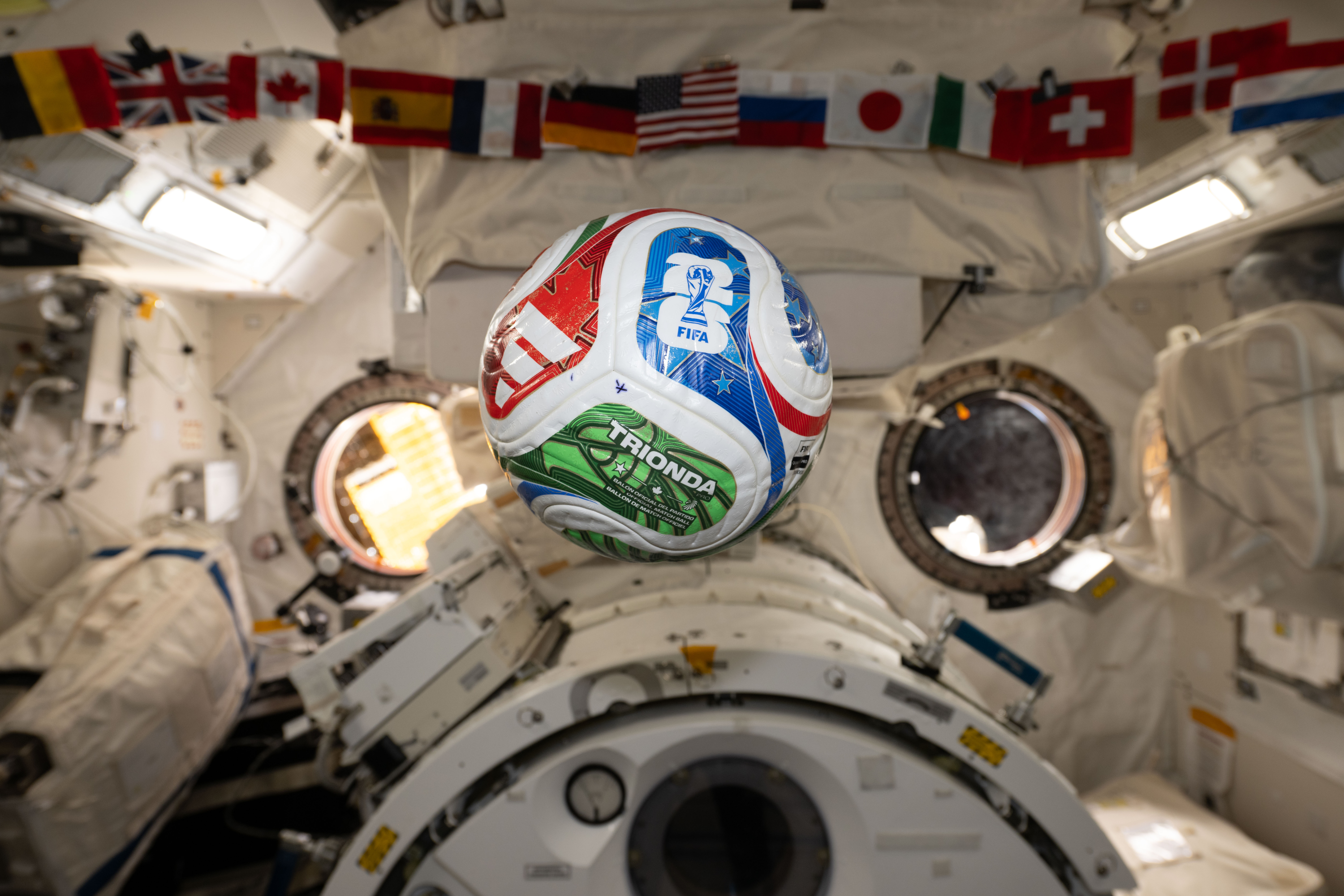
A white, red, blue, and green soccer ball floats inside the International Space Center. The FIFA logo is visible in the blue part of the ball facing the camera. The area in the background is mostly white, with a banner of country flags at the top of the photo.
NASA

A soccer ball floats in microgravity in this March 2, 2026, picture from the International Space Station. The space station crew tested soccer balls to study how internal mass affects motion and stability in microgravity. The findings have improved understanding of how embedded technologies, including match-ball sensors, can influence performance during play.

Through research aboard the International Space Station and technology developed for exploration, NASA continues to demonstrate how discoveries made for space can benefit people on Earth—including athletes and fans participating in the world’s most popular sport.

Image credit: NASA

Soccer Meets Space Science

11 Giugno 2026 ore 18:55
A white, red, blue, and green soccer ball floats inside the International Space Center. The FIFA logo is visible in the blue part of the ball facing the camera. The area in the background is mostly white, with a banner of country flags at the top of the photo.
NASA

A soccer ball floats in microgravity in this March 2, 2026, picture from the International Space Station. The space station crew tested soccer balls to study how internal mass affects motion and stability in microgravity. The findings have improved understanding of how embedded technologies, including match-ball sensors, can influence performance during play.

Through research aboard the International Space Station and technology developed for exploration, NASA continues to demonstrate how discoveries made for space can benefit people on Earth—including athletes and fans participating in the world’s most popular sport.

Image credit: NASA

Growing Stem Cells in Space to Improve Cancer and Disease Treatments

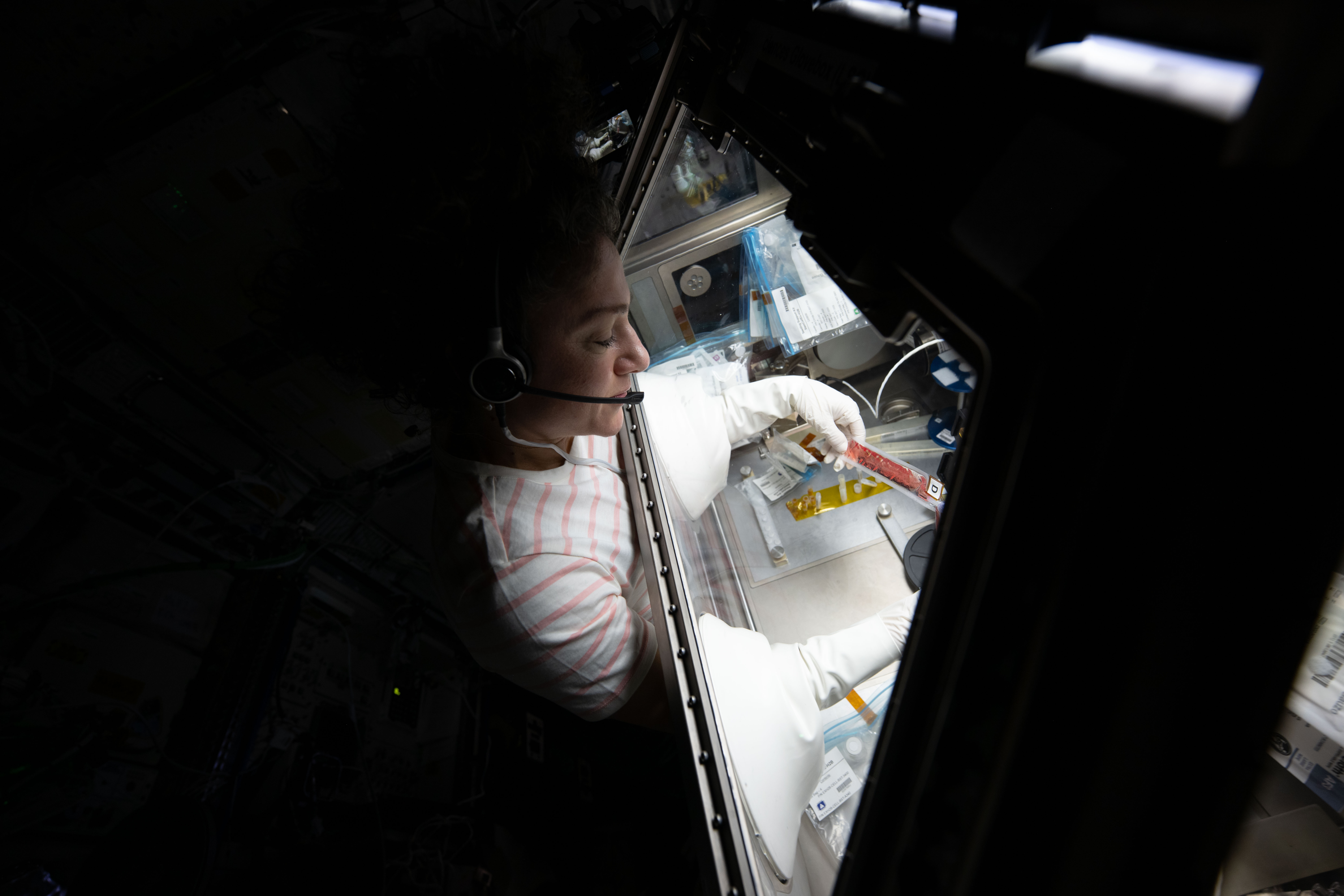
Jessica Meir wears a headset while handling samples inside of the Life Sciences Glovebox. The image is framed by darkness on the left and right, with the light from the glovebox illuminating Jessica's face and the work area inside the box. Her hands are inserted into the clear box through gloves, and she holds a thin, plastic rectangle with red interior.
NASA astronaut Jessica Meir works on InSPA-StemCellEX-H2 inside the Life Sciences Glovebox. Microgravity samples will be frozen and returned to Earth for further analysis of stem cell expansion in space.
NASA

Expedition 74 astronauts aboard the International Space Station are continuing research efforts to manufacture large quantities of stem cells for therapies on Earth. Previous studies have focused on fine-tuning hardware that allows scientists to produce greater quantities of high-quality stem cells. Now, the InSPA-StemCellEX-H2 investigation is aiming to demonstrate large scale production of blood stem cells for pharmaceutical and clinical use.

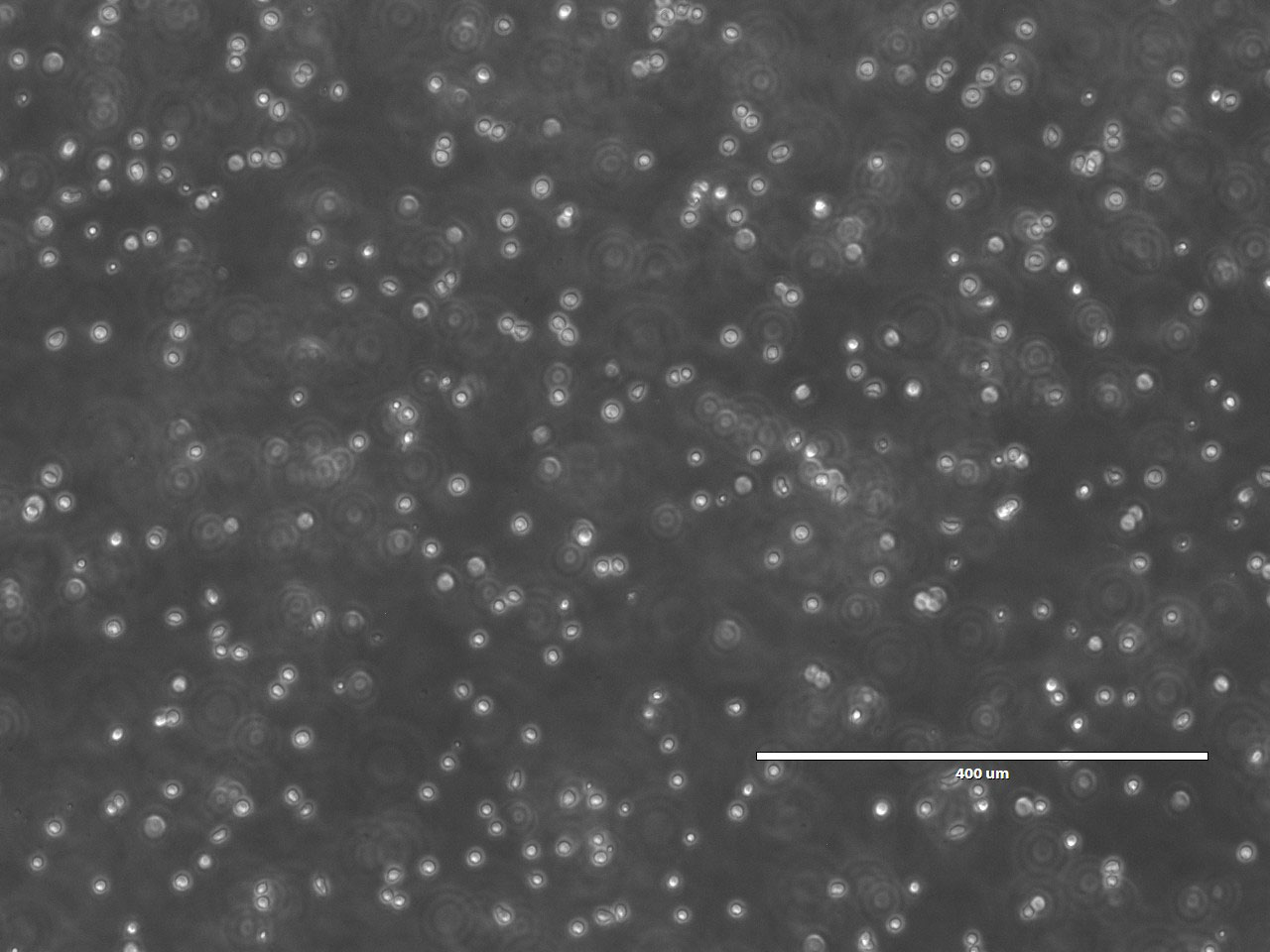
Dozens of small, white cells cover a dark grey background. There are clusters of cells that are touching, and some are spread apart. Some of the cells have brighter areas in the middle, and some appear dull as if they are further away.
Preflight microscopic image of hematopoietic stem cells for the InSPA-StemCellEX-H2 investigation. This investigation aims to produce stem cells in greater numbers with BioServe’s newly developed microgravity bioreactor.
Mayo Clinic

The research uses stem cells derived from the human body to produce large quantities of cells for patient use through a process called “expansion”. Although stem cells can be expanded in labs on Earth, they have limitations. For example, Earth-produced cells lose their ability to form the different cells in our blood system, like red and white blood cells or platelets, which are critical for leukemia patients that receive stem cells to build up their blood system after chemotherapy.

Dr. Tobias Niederwieser, assistant research professor at BioServe Space Technologies within the University of Colorado Boulder says, “The microgravity environment in space is much more suitable for keeping the stem cells in their high-quality state during expansion.” Scientists predict that growing cells in space may lead to higher expansion potential and a lower risk of rejection when used in patients on Earth. This research could create long-term cell supplies for patients suffering from fatal blood disorders, various blood cancers, or severe immune diseases, and enable more reliable and accessible therapies. “The end result is really to benefit patients in hospitals here on Earth,” Dr. Niederwieser says.

Space station research allows scientists and commercial companies around the world to test new technologies and innovative medical solutions that have the potential to greatly benefit life on Earth.

HackerOne taglia drasticamente le ricompense dei bug bounty

21 Maggio 2026 ore 15:43

L’epoca d’oro dei bug bounty potrebbe stare entrando in una nuova fase molto più complessa. HackerOne, una delle piattaforme più importanti al mondo per la segnalazione responsabile di vulnerabilità, ha drasticamente ridotto le ricompense economiche del proprio programma Internet Bug Bounty (IBB), provocando forti reazioni nella comunità dei ricercatori di sicurezza. Secondo quanto riportato da […]

L'articolo HackerOne taglia drasticamente le ricompense dei bug bounty proviene da Securityinfo.it.

Legacy Out of Contract

15 Maggio 2026 ore 13:39
Last time, we looked at legacy address space in terms of contract coverage, ROA coverage, and proportion of announced prefixes. Now it’s time to take a closer look at those blocks still to be brought under contract and get a clearer picture of what kind of behaviour we see coming from them.

Is it time for an OSPO in your organization?

2 Settembre 2022 ore 16:11

Is your organization consuming open source software, or is it starting to contribute to open source projects? If so, perhaps it’s time for you to start an OSPO: an open source program office.

At the LF, we’re dedicating resources to improving your understanding of all things open source, such as our Guide to Enterprise Open Source and the Evolution of the Open Source Program Office, published the last year. 

In a new Linux Foundation Research report, A Deep Dive into Open Source Program Offices, published in partnership with the TODO Group, authored by Dr. Ibrahim Haddad, Ph.D, showcases the many forms of OSPOs, their maturity models, responsibilities, and challenges they face in open source enterprise adoption, and also their staffing requirements are discussed in detail. 

“The past two decades have accelerated open source software adoption and increased involvement in contributing to existing projects and creating new projects. Software is where a lot of value lies and the vast majority of software developed is open source software providing access to billions of dollars worth of external R&D. If your organization relies on open source software for products or services and does not have a formalized OSPO yet ​​to manage all aspects of working with open source, please consider this report a call to establish your OPSO and drive for leadership in the open source areas that are critical to your products and services.”Ibrahim Haddad, Ph.D., General Manager, LF AI & Data Foundation

Here are some of the report’s important lessons:

An OSPO can help you manage and track your company’s use of open source software and assist you when interacting with other stakeholders. It can also serve as a clearinghouse for information about open source software and its usage throughout your organization.

Your OSPO is the central nervous system for an organization’s open source strategy and provides governance, oversight, and support for all things related to open source.

OSPOs create and maintain an inventory of your open source software (OSS) assets and track and manage any associated risks. The OSPO also guides how to best use open source software within the organization and can help coordinate external contributions to open source projects.

To be effective, the OSPO needs to have a deep understanding of the business and the technical aspects of open source software. It also needs to work with all levels of the organization, from executives to engineers.

An OSPO is designed to:

  • Be the center of competency for an organization’s open source operations and structure,
  • Place a strategy and set of policies on top of an organization’s open source efforts.

This can include creating policies for code use, distribution, selection, auditing, and other areas; training developers; ensuring legal compliance, and promoting and building community engagement to benefit the organization strategically.

An organization’s OSPO can take many different forms, but typically it is a centralized team that reports to the company’s executive level. The size of the team will depend on the size and needs of the organization, and how it is adopted also will undergo different stages of maturity.

When starting, an OSPO might just be a single individual or a very small team. As the organization’s use of open source software grows, the OSPO can expand to include more people with different specialties. For example, there might be separate teams for compliance, legal, and community engagement.

This won’t be the last we have to say about the OSPO in 2022. There are further insights in development, including a qualitative study on the OSPO’s business value across different sectors, and the TODO group’s publication of the 2022 OSPO Survey results will take place during OSPOCon in just a few weeks. 

There is no board template to build an OSPO. Its creation and growth can vary depending on the organization’s size, culture, industry, or even its milestones.

That’s why I keep seeing more and more open source leaders finding critical value in building connections with other professionals in the industry. OSPOCon is an excellent networking and learning space where those working (or willing to work) in open source program offices that rely on open source technologies come together to learn and share best practices, experiences, and tools to overcome challenges they face.” Ana Jiménez, OSPO Program Manager at TODO Group

Join us there and be sure to read the report today to gain key insights into forming and running an OSPO in your organization. 

The post Is it time for an OSPO in your organization? appeared first on Linux Foundation.

❌