❌

Vista elenco

NASA Science, Cargo Launch on 35th SpaceX Resupply Mission to Station
13 Ottobre 2026 ore 13:12
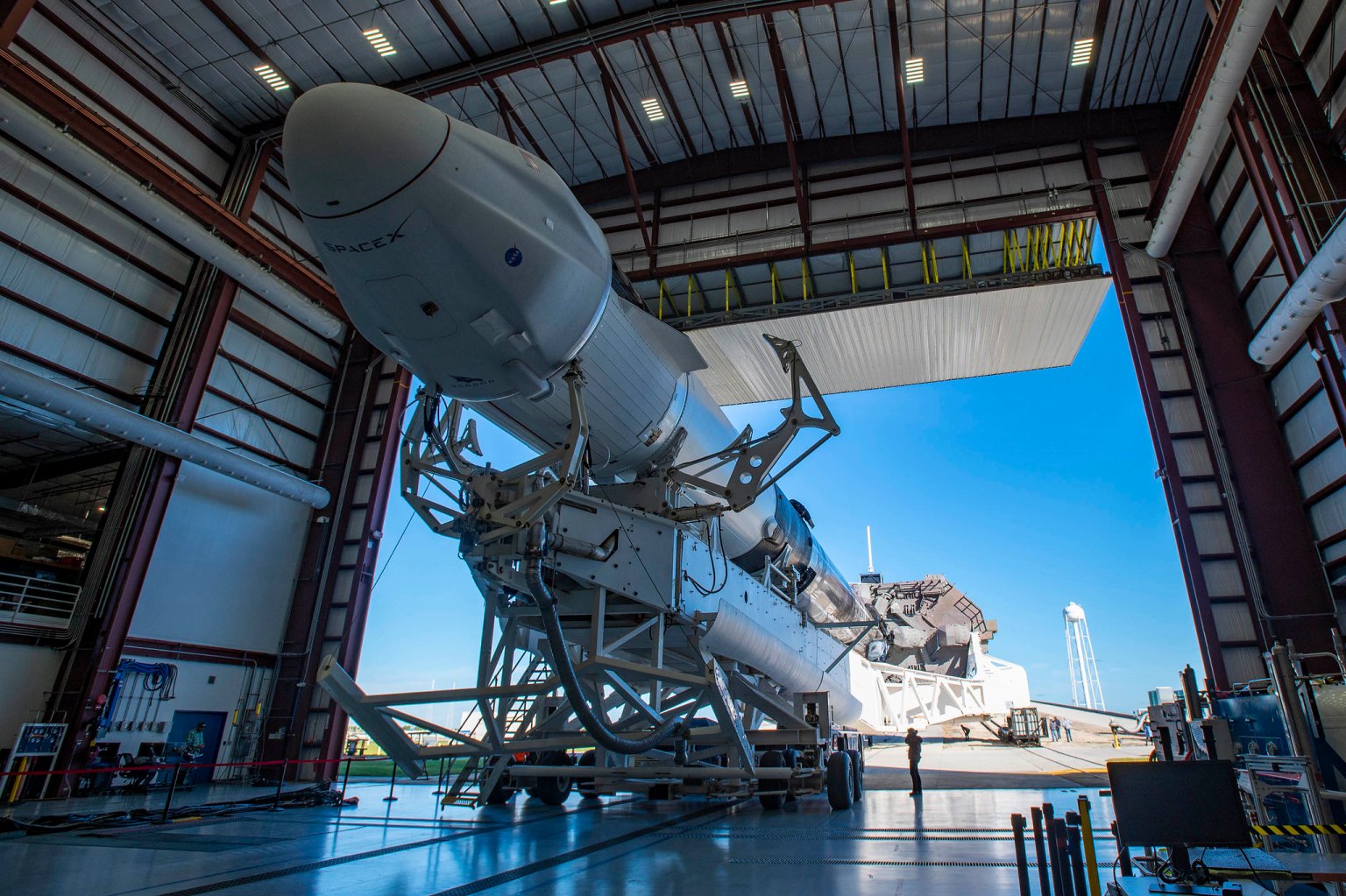
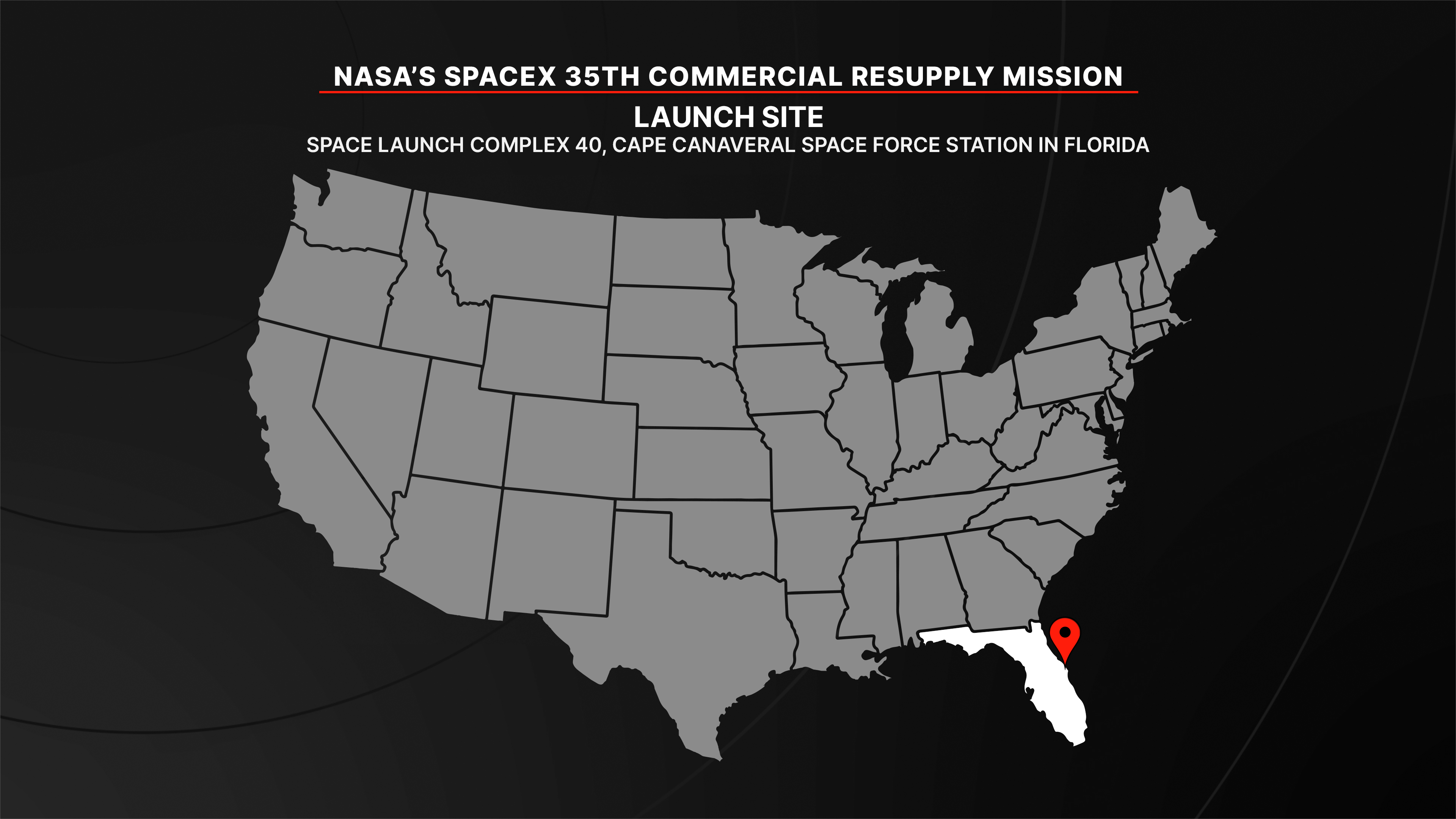
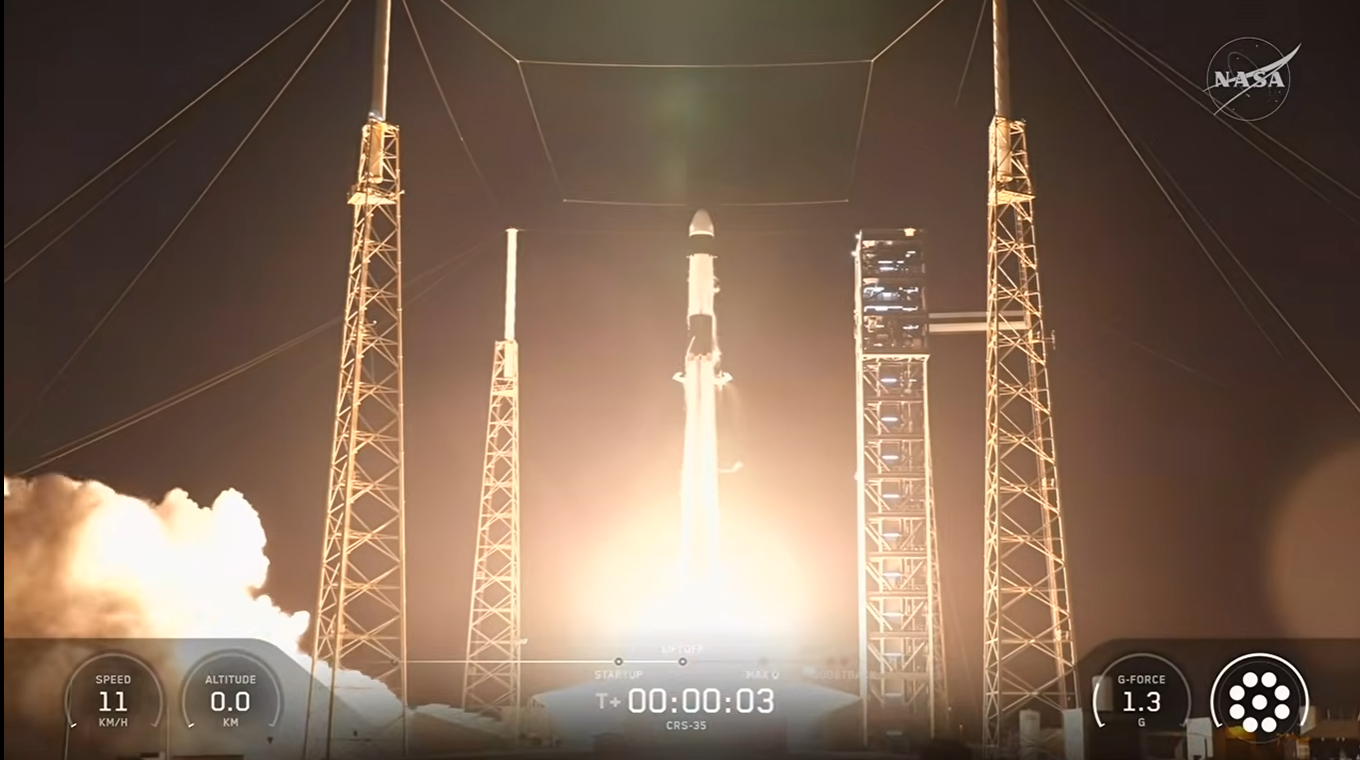
A SpaceX Falcon 9 rocket and Dragon spacecraft launched on Tuesday, Oct. 13, 2026, from Space Launch Complex 40 at Cape Canaveral Space Force Station in Florida as part of the company’s 35th Commercial Resupply Services mission to the International Space Station for NASA.
Credit: NASA

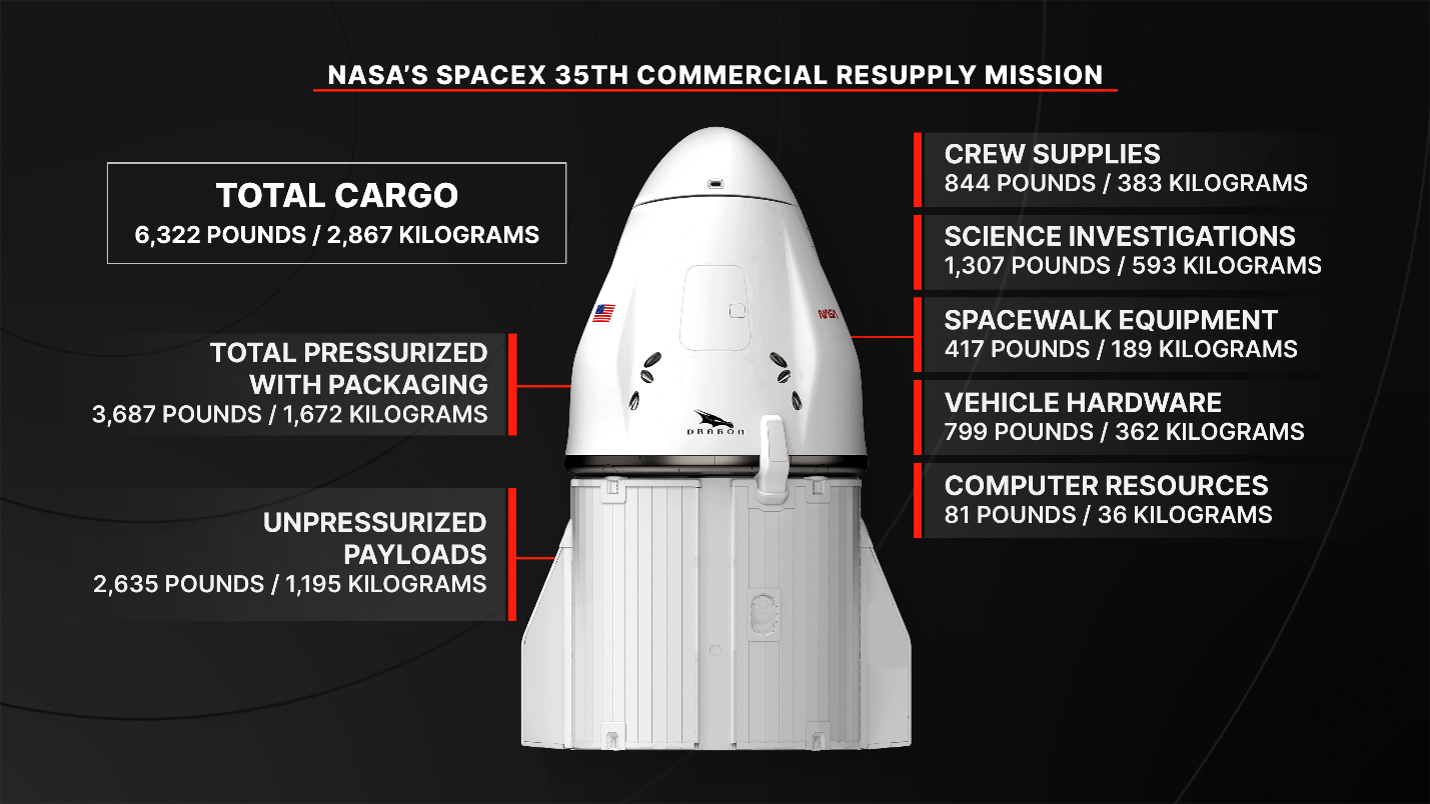
NASA’s SpaceX 35th commercial resupply mission lifted off at 6:33 a.m. EDT Tuesday aboard a Falcon 9 rocket from Space Launch Complex 40 at Cape Canaveral Space Force Station in Florida, carrying more than 6,300 pounds of supplies and hardware, bound for the International Space Station. Following its successful launch, the SpaceX Dragon spacecraft will carry new scientific experiments, cargo, and the final pair of International Space Station Roll-Out Solar Arrays to the orbiting laboratory.

Dragon is scheduled to autonomously dock at 11 a.m., Thursday, Oct. 15, to the space-facing port of the space station’s Harmony module. NASA will stream rendezvous and docking coverage beginning at 9:15 a.m., through a variety of platforms. Learn where to watch online:

https://www.nasa.gov/live

The final pair of solar arrays will complete the space station’s power system augmentation, boosting available electricity for research, operations, and the station’s safe, controlled deorbit. Astronauts will install the arrays during a series of spacewalks planned for later this fall.

Dragon also is delivering several new experiments, including hardware to manufacture artificial retinas in microgravity that could help restore vision for patients on Earth and 3D heart tissue models to advance large-scale drug testing on future space missions. Dragon also will carry materials to study how a new type of glass is formed in microgravity, and brain organoids that could uncover potential treatment targets for neurodegenerative diseases like Alzheimer’s, Parkinson’s, and multiple sclerosis.

These are just a sample of the hundreds of investigations conducted aboard the orbiting laboratory in the areas of biology and biotechnology, physical sciences, and Earth and space science. Research and technology investigations taking place aboard the space station benefit people on Earth and lay the groundwork for other agency deep space missions. As part of NASA’s Artemis program, the agency will send astronauts to the Moon to prepare for future human exploration of Mars, inspiring the world through discovery in a new Golden Age of innovation and exploration.

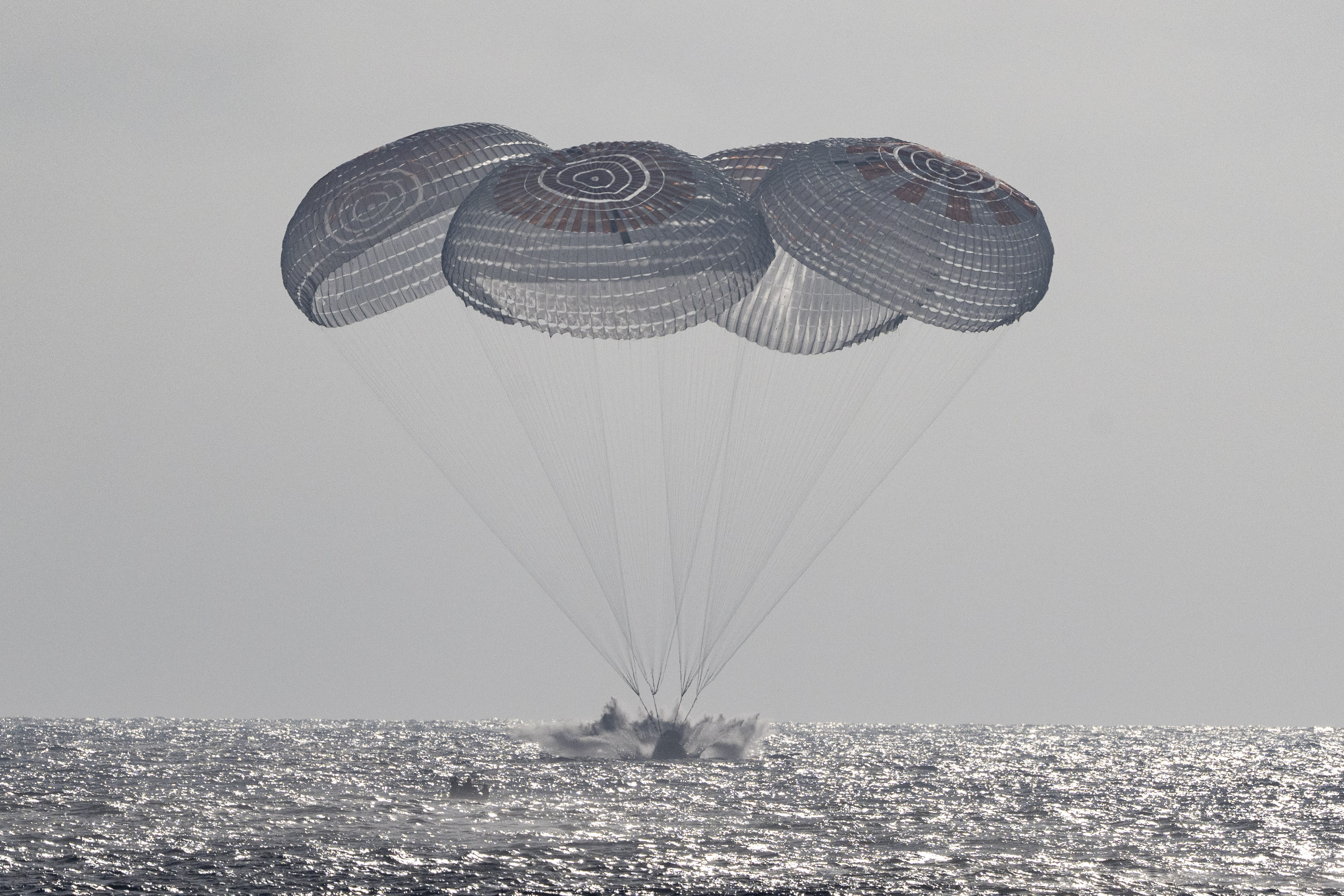
The Dragon spacecraft is scheduled to remain at the space station until mid-November when it will depart and return to Earth with time-critical research and cargo, splashing down off the coast of California.

Learn more about the International Space Station, its research, and crew, at:

https://www.nasa.gov/station

-end-

Joshua Finch / Jimi Russell
Headquarters, Washington
202-358-1100
joshua.a.finch@nasa.gov / james.j.russell@nasa.gov

Steven Siceloff
Kennedy Space Center, Fla.
321-876-2468
steven.p.siceloff@nasa.gov

Sandra Jones / Joseph Zakrzewski
Johnson Space Center, Houston
281-483-5111
sandra.p.jones@nasa.gov / joseph.a.zakrzewski@nasa.gov
NASA Science, Cargo Launch on 35th SpaceX Resupply Mission to Station

13 Ottobre 2026 ore 13:12
A SpaceX Falcon 9 rocket and Dragon spacecraft launched on Tuesday, Oct. 13, 2026, from Space Launch Complex 40 at Cape Canaveral Space Force Station in Florida as part of the company’s 35th Commercial Resupply Services mission to the International Space Station for NASA.
Credit: NASA

NASA’s SpaceX 35th commercial resupply mission lifted off at 6:33 a.m. EDT Tuesday aboard a Falcon 9 rocket from Space Launch Complex 40 at Cape Canaveral Space Force Station in Florida, carrying more than 6,300 pounds of supplies and hardware, bound for the International Space Station. Following its successful launch, the SpaceX Dragon spacecraft will carry new scientific experiments, cargo, and the final pair of International Space Station Roll-Out Solar Arrays to the orbiting laboratory.

Dragon is scheduled to autonomously dock at 11 a.m., Thursday, Oct. 15, to the space-facing port of the space station’s Harmony module. NASA will stream rendezvous and docking coverage beginning at 9:15 a.m., through a variety of platforms. Learn where to watch online:

https://www.nasa.gov/live

The final pair of solar arrays will complete the space station’s power system augmentation, boosting available electricity for research, operations, and the station’s safe, controlled deorbit. Astronauts will install the arrays during a series of spacewalks planned for later this fall.

Dragon also is delivering several new experiments, including hardware to manufacture artificial retinas in microgravity that could help restore vision for patients on Earth and 3D heart tissue models to advance large-scale drug testing on future space missions. Dragon also will carry materials to study how a new type of glass is formed in microgravity, and brain organoids that could uncover potential treatment targets for neurodegenerative diseases like Alzheimer’s, Parkinson’s, and multiple sclerosis.

These are just a sample of the hundreds of investigations conducted aboard the orbiting laboratory in the areas of biology and biotechnology, physical sciences, and Earth and space science. Research and technology investigations taking place aboard the space station benefit people on Earth and lay the groundwork for other agency deep space missions. As part of NASA’s Artemis program, the agency will send astronauts to the Moon to prepare for future human exploration of Mars, inspiring the world through discovery in a new Golden Age of innovation and exploration.

The Dragon spacecraft is scheduled to remain at the space station until mid-November when it will depart and return to Earth with time-critical research and cargo, splashing down off the coast of California.

Learn more about the International Space Station, its research, and crew, at:

https://www.nasa.gov/station

-end-

Joshua Finch / Jimi Russell
Headquarters, Washington
202-358-1100
joshua.a.finch@nasa.gov / james.j.russell@nasa.gov

Steven Siceloff
Kennedy Space Center, Fla.
321-876-2468
steven.p.siceloff@nasa.gov

Sandra Jones / Joseph Zakrzewski
Johnson Space Center, Houston
281-483-5111
sandra.p.jones@nasa.gov / joseph.a.zakrzewski@nasa.gov
NASA’s SpaceX CRS-35 Mission to Launch Health Research

12 Ottobre 2026 ore 19:45

NASA experiments focused on human and plant health and drug-resistant organisms will travel to the International Space Station aboard SpaceX’s 35th Commercial Resupply Services mission for the agency from Cape Canaveral Space Force Station in Florida, advancing research that benefits life on Earth and future exploration.

This research supports astronaut health during long-duration missions through four investigations from the agency’s Biological and Physical Sciences division, including 3D models of the human brain, a crop disease study, a faster way to assess astronaut health, and an analysis of antibiotic-resistant bacteria aboard the space station.

Tiny brain models, big questions

A new precision health investigation helps address a key question: What happens to the human brain in space?

The experiment sends small, lab-grown models of the human brain to the orbiting laboratory for five weeks. Researchers compare tissue models that traveled to space with identical ones kept on Earth to determine how a short spaceflight affects the human brain at the cellular level.

The effort could deepen our understanding of how the human brain responds to stress and help lay the groundwork for methods that counter risks to brain health that astronauts may face on future missions to the Moon and beyond.

Disease-resistant crops for space

A space crops investigation tests whether crop diseases develop faster and more severely in microgravity.

The experiment compares molecular and structural changes between Earth-grown and space station-grown plants infected with a disease-causing fungus. The findings could guide plant breeding on Earth to produce disease-resistant crops and help minimize yield losses in future space agriculture systems.

Space crops provide nutrition, increase dietary variety, and offer psychological benefits for astronauts during extended missions. They also absorb carbon dioxide, produce oxygen, and recycle water, which will become increasingly important as human missions extend farther from Earth.

Analysis helps astronauts thrive

The spacecraft also carries the first test of a compact microplate reader that arrived aboard the space station earlier this year.

The Commercially Enabled Rapid Space Science initiative experiment tests the device’s ability to detect and measure certain biomarkers such as antibodies, antigens, and proteins.

Use of the plate reader would allow scientists to analyze samples aboard the space station and obtain data quickly, rather than wait for the samples to return to Earth for analysis.

Ultimately, the research aims to support the timely detection of infections and other health issues in astronauts while expanding science capabilities in remote exploration locations where resupply will be more difficult.

Tracking antibiotic-resistant bacteria

A precision health investigation returns for its fourth and final planned stay aboard the space station to study how antibiotic-resistant bacteria survive and evolve in microgravity.

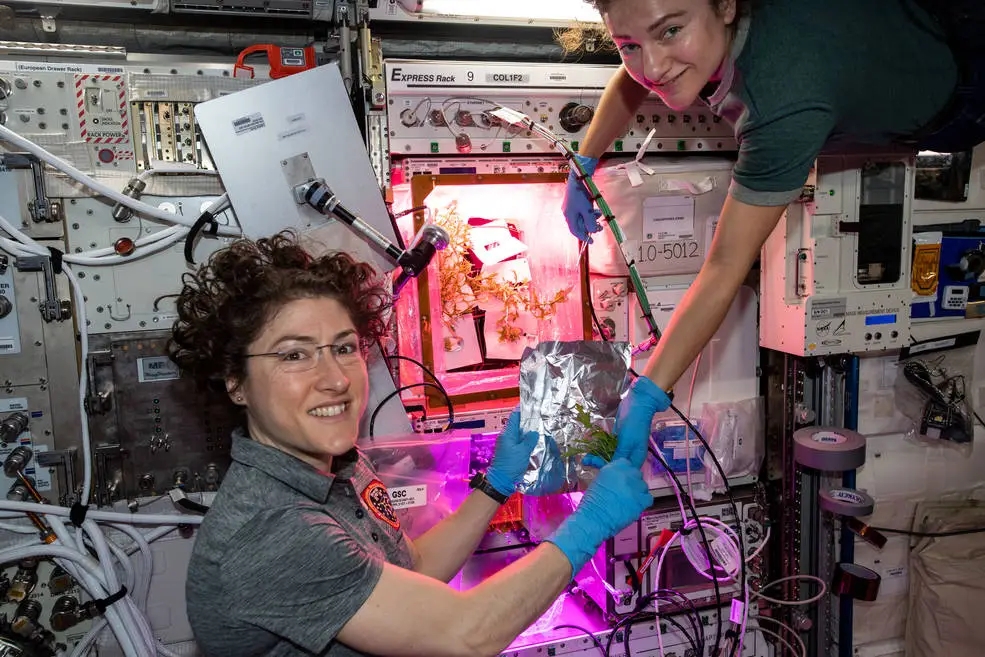
As part of the investigation, astronauts repeatedly sample surfaces throughout the space station to monitor for drug-resistant organisms.

The work could help develop ways to protect astronauts against bacterial infections during long-duration missions. On Earth, the findings could provide insight into how superbugs develop from the overuse of antibiotics.

To learn more about NASA’s biological and physical research in space, visit: https://science.nasa.gov/biological-physical/

Biological & Physical Sciences Division

  • NASA’s Biological and Physical Sciences Division pioneers scientific discovery and enables exploration by using space environments to conduct investigations not possible on Earth. Studying biological and physical phenomena under extreme conditions allows researchers to advance the fundamental scientific knowledge required to go farther and stay longer in space, while also benefitting life on Earth.

NASA’s SpaceX CRS-35 Mission to Launch Health Research

12 Ottobre 2026 ore 19:45

NASA experiments focused on human and plant health and drug-resistant organisms will travel to the International Space Station aboard SpaceX’s 35th Commercial Resupply Services mission for the agency from Cape Canaveral Space Force Station in Florida, advancing research that benefits life on Earth and future exploration.

This research supports astronaut health during long-duration missions through four investigations from the agency’s Biological and Physical Sciences division, including 3D models of the human brain, a crop disease study, a faster way to assess astronaut health, and an analysis of antibiotic-resistant bacteria aboard the space station.

Tiny brain models, big questions

A new precision health investigation helps address a key question: What happens to the human brain in space?

The experiment sends small, lab-grown models of the human brain to the orbiting laboratory for five weeks. Researchers compare tissue models that traveled to space with identical ones kept on Earth to determine how a short spaceflight affects the human brain at the cellular level.

The effort could deepen our understanding of how the human brain responds to stress and help lay the groundwork for methods that counter risks to brain health that astronauts may face on future missions to the Moon and beyond.

Disease-resistant crops for space

A space crops investigation tests whether crop diseases develop faster and more severely in microgravity.

The experiment compares molecular and structural changes between Earth-grown and space station-grown plants infected with a disease-causing fungus. The findings could guide plant breeding on Earth to produce disease-resistant crops and help minimize yield losses in future space agriculture systems.

Space crops provide nutrition, increase dietary variety, and offer psychological benefits for astronauts during extended missions. They also absorb carbon dioxide, produce oxygen, and recycle water, which will become increasingly important as human missions extend farther from Earth.

Analysis helps astronauts thrive

The spacecraft also carries the first test of a compact microplate reader that arrived aboard the space station earlier this year.

The Commercially Enabled Rapid Space Science initiative experiment tests the device’s ability to detect and measure certain biomarkers such as antibodies, antigens, and proteins.

Use of the plate reader would allow scientists to analyze samples aboard the space station and obtain data quickly, rather than wait for the samples to return to Earth for analysis.

Ultimately, the research aims to support the timely detection of infections and other health issues in astronauts while expanding science capabilities in remote exploration locations where resupply will be more difficult.

Tracking antibiotic-resistant bacteria

A precision health investigation returns for its fourth and final planned stay aboard the space station to study how antibiotic-resistant bacteria survive and evolve in microgravity.

As part of the investigation, astronauts repeatedly sample surfaces throughout the space station to monitor for drug-resistant organisms.

The work could help develop ways to protect astronauts against bacterial infections during long-duration missions. On Earth, the findings could provide insight into how superbugs develop from the overuse of antibiotics.

To learn more about NASA’s biological and physical research in space, visit: https://science.nasa.gov/biological-physical/

Biological & Physical Sciences Division

  • NASA’s Biological and Physical Sciences Division pioneers scientific discovery and enables exploration by using space environments to conduct investigations not possible on Earth. Studying biological and physical phenomena under extreme conditions allows researchers to advance the fundamental scientific knowledge required to go farther and stay longer in space, while also benefitting life on Earth.

NASA Demonstrates Next-Generation Heat Shield Technologies

9 Ottobre 2026 ore 18:59

4 min read

Preparations for Next Moonwalk Simulations Underway (and Underwater)

008Q8328.NEF
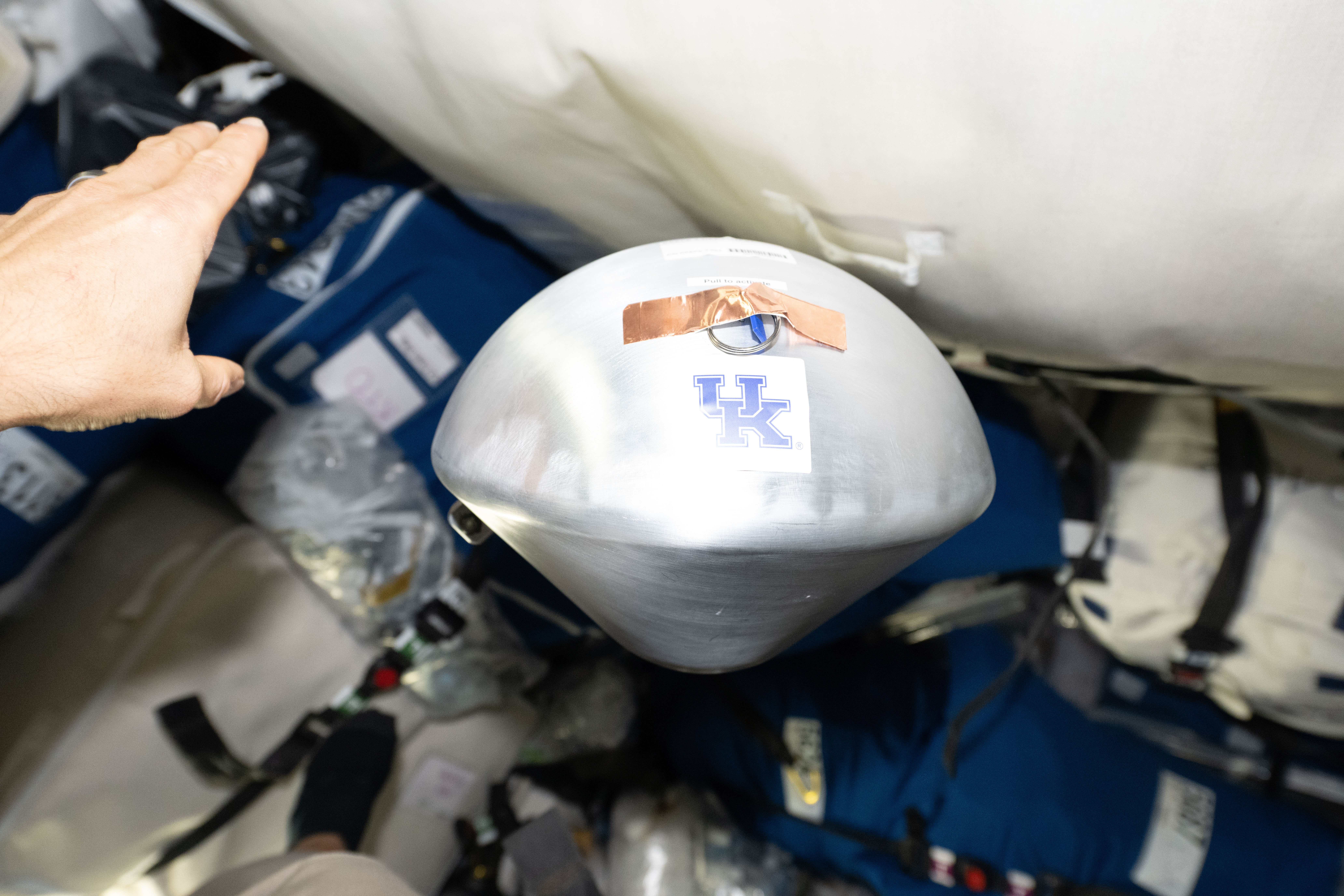
A KREPE-3 capsule floats inside the Northrup Grumman Cygnus XL 24 cargo spacecraft on October 7. Inside the capsule is a 3-D printed heat shield designed by researchers at NASA’s Johnson Space Center in Houston.
NASA

NASA is testing heat shields that can keep astronauts safe as they return from missions to the Moon and Mars in an unusual way: by taking out the trash.

When Northrop Grumman 24th cargo resupply mission for NASA undocked from the International Space Station, it carried a fleet of 12 small, experimental capsules designed to test the next generation of thermal protection materials that could serve as the foundation for future heat shields.

The experiment, called the Kentucky Reentry Probe Experiment (KREPE-3), is the third in a series of low-cost, high-impact missions that use the final moments of the cargo spacecraft’s lifespan to gather valuable data.

The experiment is a collaboration among the University of Kentucky, the state of Kentucky, NASA’s Established Program to Stimulate Competitive Research (EPSCoR), several NASA centers, and other federal and commercial partners.

“KREPE-3 is a great example of the goals of NASA’s EPSCoR program,” said David Berger, EPSCoR program manager at NASA’s Headquarters in Washington. “We are supporting the next generation of scientists and engineers as they develop unique projects that benefit their education and NASA’s mission goals.”

Trash to treasure

Before the mission’s Cygnus XL spacecraft departed the station, astronauts packed it with waste and activated the 12 small capsules carried inside. Designed by University of Kentucky students, the capsules include sensors that will measure temperature, pressure, motion, magnetic field, and light during re-entry. 

As the vehicle harmlessly breaks apart in Earth’s atmosphere on its planned route, the capsules will eject and begin collecting data on how each set of experimental heat shield materials performs. Satellite signals will transfer live data to researchers, offering insights into how larger heat shields could protect future cargo or crew.

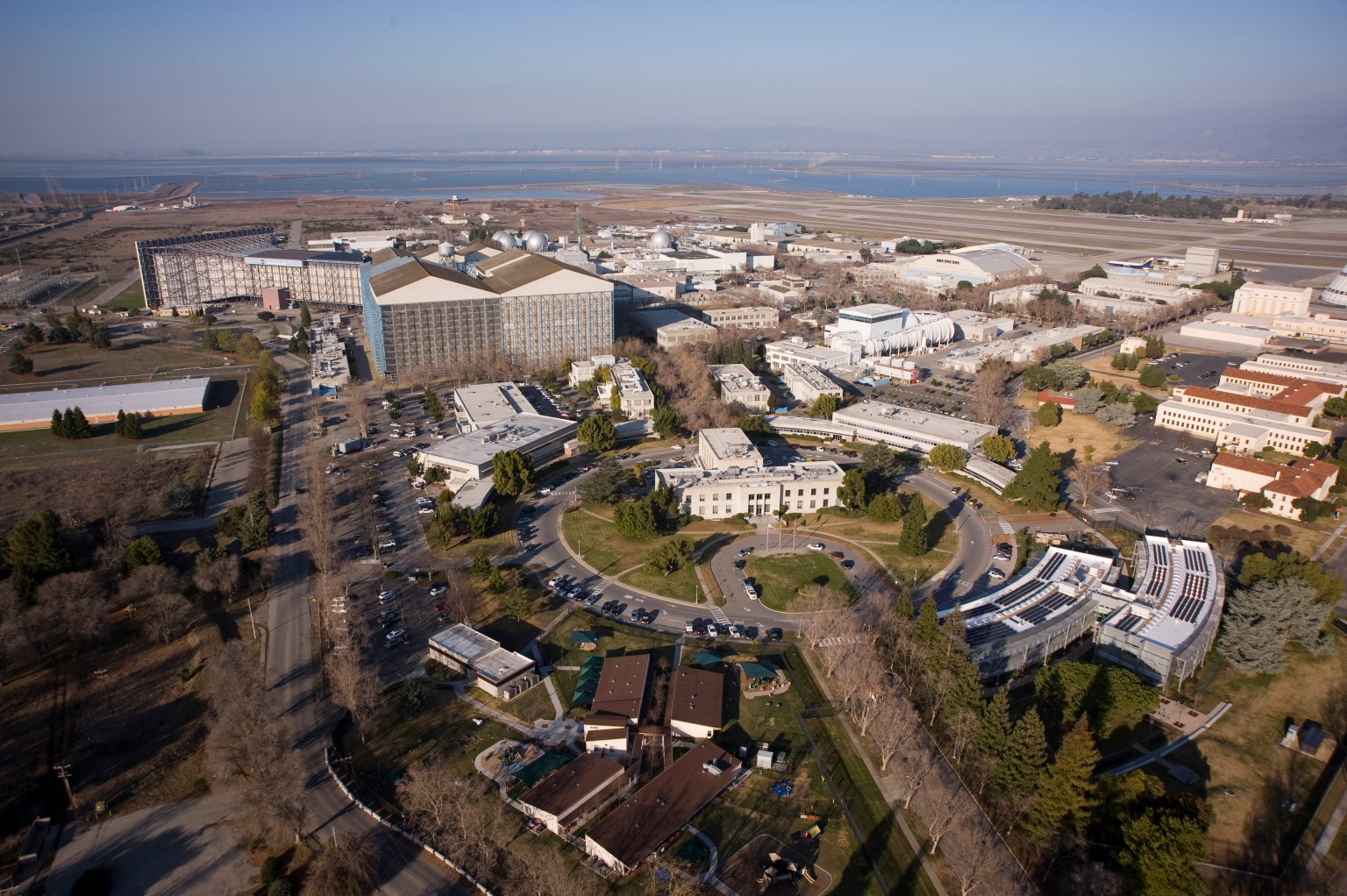
“It’s a smart way to get flight data on materials that are still in development,” said Keith Peterson, a materials engineer at NASA’s Ames Research Center in California’s Silicon Valley. “We’re essentially hitching a ride on a vehicle that’s already coming back to Earth.”

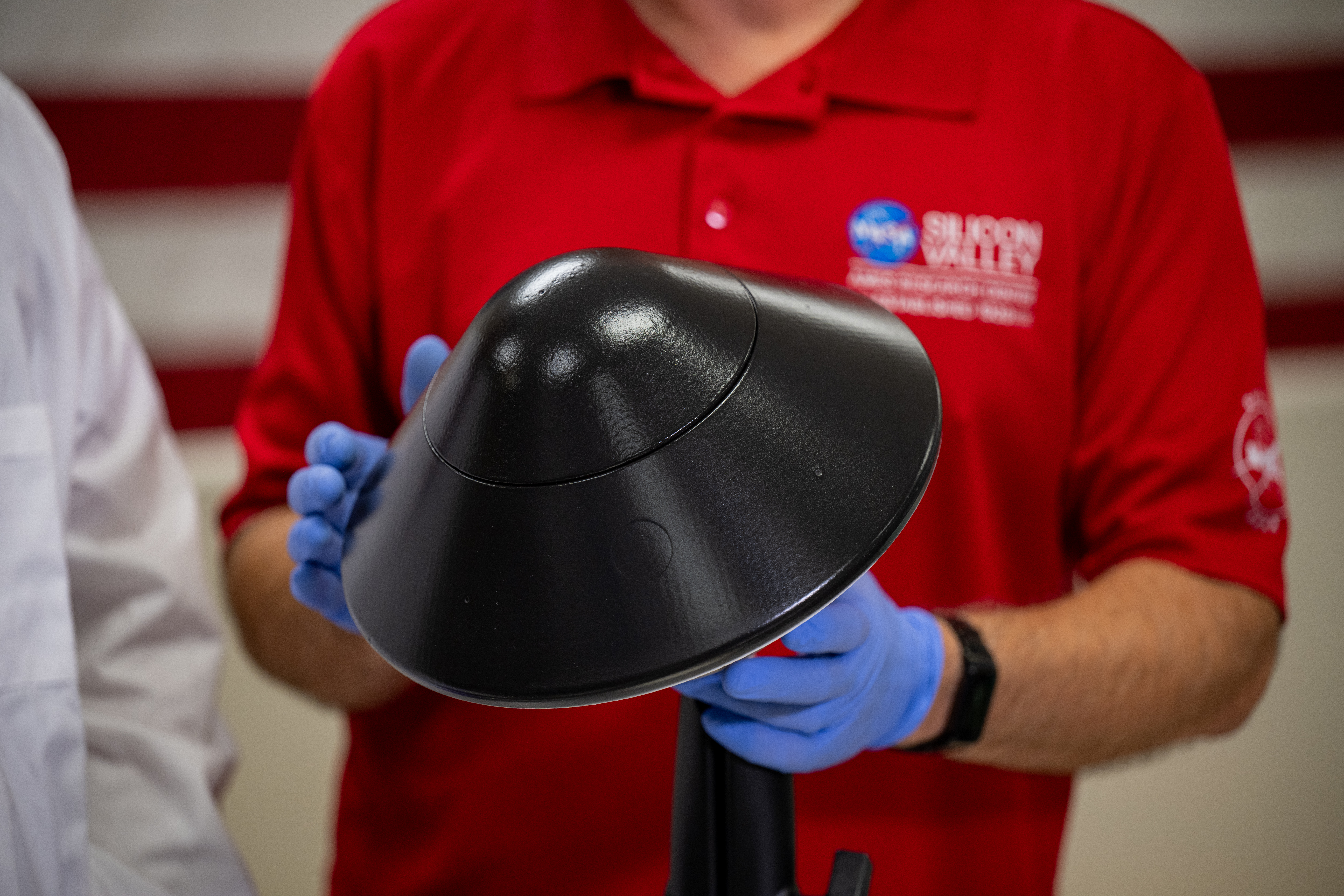
Close up of an Ames-produced thermal protection system (TPS) (heat shield) for the Kentucky Re-Entry Probe Experiment (KREPE) in the Sensors & TPS Advanced Research Laboratories (STAR Labs) N242.
NASA/Brandon Torres-Navarrete

Heating up innovation

The capsules will carry a variety of thermal protective components, including proven technology such as the ceramic tile material used on the space shuttle. Others will test new options, such as a 3D-printed heat shield from the Additive Manufacturing of Thermal Protective Systems project developed at NASA Johnson and Oak Ridge National Laboratory.

Researchers at NASA Ames are contributing several materials to KREPE-3, including two capsules that will fly a next-generation family of protective coverings known as Materials Engineered for Re-entry using Innovative Needling Operations (MERINO). Made from layers of carbon and phenolic fibers stitched together like felt, the materials are more flexible, faster to produce, and less expensive than traditional protective substances – making them promising candidates for Mars missions. Thanks to Mars’ thinner atmosphere, missions to land on the Red Planet involve lower heat loads and allow for lighter protection.

A third capsule will combine those protective coverings with other elements. The Kentucky Instrumented Conical Hypersonic Experiment will utilize a dual-cone shape. It combines a tungsten tip attached to a cone layered with carbon and hear-resistant plastic fibers, and an aft cone wrapped in MERINO. This unique design will validate computer models against real-world data.

Another capsule is shaped like the protective aeroshell that will protect NASA’s upcoming mission, Dragonfly, as it arrives at Saturn’s moon, Titan, and will test the dynamic stability of the design. It is covered in Phenolic Impregnated Carbon Ablator, a material developed at NASA Ames that has applications for commercial vehicles and flew on NASA’s Stardust, Mars Science Laboratory, and Mars 2020 missions.

One capsule will test a deployable heat shield called Adaptable Deployable Entry and Placement Technology, which is shaped like an umbrella to increase surface area and slow descent. At full scale, Adaptable Deployable Entry design could be folded, making it ideal for deploying payloads that are larger than the rockets that launch them into flight.

While some capsules are testing new materials to carry missions to Mars, others are testing new shapes and designs that will further research and understanding of computer modeling and sensor design — technologies that could open doors to another generation of re-entry design innovation.

Additional capsules developed by domestic and international partners will test a variety of known and new materials, including a heat flux sensor developed at the University of Stuttgart in Germany, that will help researchers measure how heat moves across a surface during re-entry.

“We’re pushing the boundaries of what heat shields can do,” said Peterson. “And we’re testing them in a way that’s fast, affordable, and incredibly effective.”

NASA Demonstrates Next-Generation Heat Shield Technologies

9 Ottobre 2026 ore 18:59

4 min read

Preparations for Next Moonwalk Simulations Underway (and Underwater)

008Q8328.NEF
A KREPE-3 capsule floats inside the Northrup Grumman Cygnus XL 24 cargo spacecraft on October 7. Inside the capsule is a 3-D printed heat shield designed by researchers at NASA’s Johnson Space Center in Houston.
NASA

NASA is testing heat shields that can keep astronauts safe as they return from missions to the Moon and Mars in an unusual way: by taking out the trash.

When Northrop Grumman 24th cargo resupply mission for NASA undocked from the International Space Station, it carried a fleet of 12 small, experimental capsules designed to test the next generation of thermal protection materials that could serve as the foundation for future heat shields.

The experiment, called the Kentucky Reentry Probe Experiment (KREPE-3), is the third in a series of low-cost, high-impact missions that use the final moments of the cargo spacecraft’s lifespan to gather valuable data.

The experiment is a collaboration among the University of Kentucky, the state of Kentucky, NASA’s Established Program to Stimulate Competitive Research (EPSCoR), several NASA centers, and other federal and commercial partners.

“KREPE-3 is a great example of the goals of NASA’s EPSCoR program,” said David Berger, EPSCoR program manager at NASA’s Headquarters in Washington. “We are supporting the next generation of scientists and engineers as they develop unique projects that benefit their education and NASA’s mission goals.”

Trash to treasure

Before the mission’s Cygnus XL spacecraft departed the station, astronauts packed it with waste and activated the 12 small capsules carried inside. Designed by University of Kentucky students, the capsules include sensors that will measure temperature, pressure, motion, magnetic field, and light during re-entry. 

As the vehicle harmlessly breaks apart in Earth’s atmosphere on its planned route, the capsules will eject and begin collecting data on how each set of experimental heat shield materials performs. Satellite signals will transfer live data to researchers, offering insights into how larger heat shields could protect future cargo or crew.

“It’s a smart way to get flight data on materials that are still in development,” said Keith Peterson, a materials engineer at NASA’s Ames Research Center in California’s Silicon Valley. “We’re essentially hitching a ride on a vehicle that’s already coming back to Earth.”

Close up of an Ames-produced thermal protection system (TPS) (heat shield) for the Kentucky Re-Entry Probe Experiment (KREPE) in the Sensors & TPS Advanced Research Laboratories (STAR Labs) N242.
NASA/Brandon Torres-Navarrete

Heating up innovation

The capsules will carry a variety of thermal protective components, including proven technology such as the ceramic tile material used on the space shuttle. Others will test new options, such as a 3D-printed heat shield from the Additive Manufacturing of Thermal Protective Systems project developed at NASA Johnson and Oak Ridge National Laboratory.

Researchers at NASA Ames are contributing several materials to KREPE-3, including two capsules that will fly a next-generation family of protective coverings known as Materials Engineered for Re-entry using Innovative Needling Operations (MERINO). Made from layers of carbon and phenolic fibers stitched together like felt, the materials are more flexible, faster to produce, and less expensive than traditional protective substances – making them promising candidates for Mars missions. Thanks to Mars’ thinner atmosphere, missions to land on the Red Planet involve lower heat loads and allow for lighter protection.

A third capsule will combine those protective coverings with other elements. The Kentucky Instrumented Conical Hypersonic Experiment will utilize a dual-cone shape. It combines a tungsten tip attached to a cone layered with carbon and hear-resistant plastic fibers, and an aft cone wrapped in MERINO. This unique design will validate computer models against real-world data.

Another capsule is shaped like the protective aeroshell that will protect NASA’s upcoming mission, Dragonfly, as it arrives at Saturn’s moon, Titan, and will test the dynamic stability of the design. It is covered in Phenolic Impregnated Carbon Ablator, a material developed at NASA Ames that has applications for commercial vehicles and flew on NASA’s Stardust, Mars Science Laboratory, and Mars 2020 missions.

One capsule will test a deployable heat shield called Adaptable Deployable Entry and Placement Technology, which is shaped like an umbrella to increase surface area and slow descent. At full scale, Adaptable Deployable Entry design could be folded, making it ideal for deploying payloads that are larger than the rockets that launch them into flight.

While some capsules are testing new materials to carry missions to Mars, others are testing new shapes and designs that will further research and understanding of computer modeling and sensor design — technologies that could open doors to another generation of re-entry design innovation.

Additional capsules developed by domestic and international partners will test a variety of known and new materials, including a heat flux sensor developed at the University of Stuttgart in Germany, that will help researchers measure how heat moves across a surface during re-entry.

“We’re pushing the boundaries of what heat shields can do,” said Peterson. “And we’re testing them in a way that’s fast, affordable, and incredibly effective.”

NASA’s SpaceX Crew‑12 Splashes Down, Sets Briefing to Discuss Mission

8 Ottobre 2026 ore 19:02
The SpaceX Crew Dragon Freedom spacecraft is seen as it lands with NASA astronauts Jessica Meir, Jack Hathaway, ESA (European Space Agency) astronaut Sophie Adenot, and Roscosmos cosmonaut Andrey Fedyaev aboard in the Pacific Ocean off the coast of Los Angeles on Oct. 8, 2026.
Credit: NASA/Keegan Barber

After more than seven months aboard the International Space Station, NASA’s SpaceX Crew-12 mission safely splashed down Thursday in the Pacific Ocean off the coast of Los Angeles. The crew members will discuss their science mission during a news conference at 3:30 p.m. EDT, Thursday, Oct. 15, at the agency’s Johnson Space Center in Houston.

“Jessica, Jack, Sophie, and Andrey spent 237 days living and working in orbit, traveled more than 100 million miles, advanced important science, and returned safely home because of the extraordinary expertise and competence of thousands across NASA, SpaceX, and our international partners,” said NASA Administrator Jared Isaacman. “Building the capability, experience, and confidence to do this repeatedly is exactly what will allow us to go farther, and I am grateful to Crew-12 and their families for their service to humanity’s greatest adventure.”

NASA astronauts Jessica Meir and Jack Hathaway, ESA (European Space Agency) astronaut Sophie Adenot, and Roscosmos cosmonaut Andrey Fedyaev returned to Earth at 8:34 a.m. PDT. Teams aboard SpaceX recovery vessels retrieved the spacecraft and its crew shortly after. Following standard postflight medical screenings, the crew will fly to shore before returning to NASA’s Johnson Space Center in Houston.

“NASA’s activities supporting the International Space Station — transporting crew, conducting impactful research, and maintaining critical national assets — enable the science, engineering, and risk‑reduction needed for future missions across the solar system,” said Dana Weigel, manager of NASA’s Low Earth Orbit Program at the agency’s Johnson Space Center. “We’re grateful for the dedication across the human spaceflight team that makes this possible, and we’re thrilled to welcome Jessica, Jack, Sophie, and Andrey home.”

During their 237-day mission, the four crew members traveled more than 100 million miles and completed more than 3,792 orbits around Earth. The mission was the second for Meir and Fedyaev and the first for Hathaway and Adenot. Crew-12 lifted off at 5:15 a.m. EST on Feb. 13 and docked to the orbiting laboratory a day later.

Crew‑12 logged hundreds of hours of scientific research to support human exploration beyond low Earth orbit and advance benefits for people on Earth. The crew members’ work included testing stem cell production for cell‑based therapies, demonstrating on‑demand IV fluid generation for future missions, and studying how the bacteria that causes pneumonia can lead to long‑term heart damage. The crew also conducted nutrition-focused research and examined how physical characteristics may affect blood flow during spaceflight to help keep astronauts safe and healthy on future missions. Research conducted aboard the space station advances knowledge and demonstrates new technologies that enable us to prepare for human exploration of the Moon and Mars.

Meir completed four spacewalks, bringing her career total to seven. That places her third all-time in total spacewalks among women at NASA, behind former agency astronauts Peggy Whitson and Suni Williams. Adenot completed three spacewalks, becoming the first French woman to venture outside the orbital outpost.

United States-based media interested in attending the crew news conference in person with Meir, Hathaway, and Fedyaev, must contact the NASA Johnson newsroom no later than 5 p.m. EDT, Tuesday, Oct. 13, at jsc-newsroom@mail.nasa.gov. Media joining by phone must request dial-in details by 9:30 a.m., Oct. 15. To ask a question, media must join no later than 15 minutes before the start of the news conference. The agency’s media credentialing policy is available online. Adenot will return to Europe and not be available during the news conference.

NASA’s Low Earth Orbit Program provides reliable access to space, maximizing the use of the International Space Station for research and development by partnering with private U.S. companies, including SpaceX, to transport astronauts to and from the space station.

Learn more about NASA’s SpaceX Crew-12 at:

https://www.nasa.gov/commercialcrew

-end-

Joshua Finch / Jimi Russell
Headquarters, Washington
202-358-1100
joshua.a.finch@nasa.gov / james.j.russell@nasa.gov

Sandra Jones / Joseph Zakrzewski
Johnson Space Center, Houston
281-483-5111
sandra.p.jones@nasa.gov / joseph.a.zakrzewski@nasa.gov
Steven Siceloff
Kennedy Space Center, Florida
321-867-2468
steven.p.siceloff@nasa.gov

NASA’s SpaceX Crew‑12 Splashes Down, Sets Briefing to Discuss Mission

8 Ottobre 2026 ore 19:02
The SpaceX Crew Dragon Freedom spacecraft is seen as it lands with NASA astronauts Jessica Meir, Jack Hathaway, ESA (European Space Agency) astronaut Sophie Adenot, and Roscosmos cosmonaut Andrey Fedyaev aboard in the Pacific Ocean off the coast of Los Angeles on Oct. 8, 2026.
Credit: NASA/Keegan Barber

After more than seven months aboard the International Space Station, NASA’s SpaceX Crew-12 mission safely splashed down Thursday in the Pacific Ocean off the coast of Los Angeles. The crew members will discuss their science mission during a news conference at 3:30 p.m. EDT, Thursday, Oct. 15, at the agency’s Johnson Space Center in Houston.

“Jessica, Jack, Sophie, and Andrey spent 237 days living and working in orbit, traveled more than 100 million miles, advanced important science, and returned safely home because of the extraordinary expertise and competence of thousands across NASA, SpaceX, and our international partners,” said NASA Administrator Jared Isaacman. “Building the capability, experience, and confidence to do this repeatedly is exactly what will allow us to go farther, and I am grateful to Crew-12 and their families for their service to humanity’s greatest adventure.”

NASA astronauts Jessica Meir and Jack Hathaway, ESA (European Space Agency) astronaut Sophie Adenot, and Roscosmos cosmonaut Andrey Fedyaev returned to Earth at 8:34 a.m. PDT. Teams aboard SpaceX recovery vessels retrieved the spacecraft and its crew shortly after. Following standard postflight medical screenings, the crew will fly to shore before returning to NASA’s Johnson Space Center in Houston.

“NASA’s activities supporting the International Space Station — transporting crew, conducting impactful research, and maintaining critical national assets — enable the science, engineering, and risk‑reduction needed for future missions across the solar system,” said Dana Weigel, manager of NASA’s Low Earth Orbit Program at the agency’s Johnson Space Center. “We’re grateful for the dedication across the human spaceflight team that makes this possible, and we’re thrilled to welcome Jessica, Jack, Sophie, and Andrey home.”

During their 237-day mission, the four crew members traveled more than 100 million miles and completed more than 3,792 orbits around Earth. The mission was the second for Meir and Fedyaev and the first for Hathaway and Adenot. Crew-12 lifted off at 5:15 a.m. EST on Feb. 13 and docked to the orbiting laboratory a day later.

Crew‑12 logged hundreds of hours of scientific research to support human exploration beyond low Earth orbit and advance benefits for people on Earth. The crew members’ work included testing stem cell production for cell‑based therapies, demonstrating on‑demand IV fluid generation for future missions, and studying how the bacteria that causes pneumonia can lead to long‑term heart damage. The crew also conducted nutrition-focused research and examined how physical characteristics may affect blood flow during spaceflight to help keep astronauts safe and healthy on future missions. Research conducted aboard the space station advances knowledge and demonstrates new technologies that enable us to prepare for human exploration of the Moon and Mars.

Meir completed four spacewalks, bringing her career total to seven. That places her third all-time in total spacewalks among women at NASA, behind former agency astronauts Peggy Whitson and Suni Williams. Adenot completed three spacewalks, becoming the first French woman to venture outside the orbital outpost.

United States-based media interested in attending the crew news conference in person with Meir, Hathaway, and Fedyaev, must contact the NASA Johnson newsroom no later than 5 p.m. EDT, Tuesday, Oct. 13, at jsc-newsroom@mail.nasa.gov. Media joining by phone must request dial-in details by 9:30 a.m., Oct. 15. To ask a question, media must join no later than 15 minutes before the start of the news conference. The agency’s media credentialing policy is available online. Adenot will return to Europe and not be available during the news conference.

NASA’s Low Earth Orbit Program provides reliable access to space, maximizing the use of the International Space Station for research and development by partnering with private U.S. companies, including SpaceX, to transport astronauts to and from the space station.

Learn more about NASA’s SpaceX Crew-12 at:

https://www.nasa.gov/commercialcrew

-end-

Joshua Finch / Jimi Russell
Headquarters, Washington
202-358-1100
joshua.a.finch@nasa.gov / james.j.russell@nasa.gov

Sandra Jones / Joseph Zakrzewski
Johnson Space Center, Houston
281-483-5111
sandra.p.jones@nasa.gov / joseph.a.zakrzewski@nasa.gov

Steven Siceloff
Kennedy Space Center, Florida
321-867-2468
steven.p.siceloff@nasa.gov

NASA Sets Coverage for SpaceX 35th Station Resupply Launch, Arrival

7 Ottobre 2026 ore 23:16
D4_2067548_20260616T162925_R_2026-06-16 16-29-28.NEF
A SpaceX Dragon cargo spacecraft departs from the International Space Station on June 16 after undocking from the Harmony module’s forward port. Dragon, packed with completed science experiments and cargo for retrieval and analysis on Earth, parachuted to a splashdown off the coast of southern California the following day.
Credit: NASA

Editor’s Note: This advisory was updated on Oct. 15, 2026, to reflect the revised spacecraft docking timeline. 

NASA and SpaceX are targeting 6:33 a.m. EDT, Tuesday, Oct. 13, for the next launch to deliver science investigations, supplies, and equipment, including the final set of International Space Station Roll-Out Solar Arrays, to the space station. This is the 35th SpaceX commercial resupply services mission to the orbital complex for NASA.

NASA also will host a media teleconference on Thursday, Oct. 8 that will preview the cargo resupply flight, as well as provide a post-splashdown update for the agency’s SpaceX Crew-12 mission, which will have returned to Earth from the space station Thursday morning.

Loaded with more than 6,300 pounds of supplies, a SpaceX Dragon spacecraft on a Falcon 9 rocket will lift off from Space Launch Complex 40 at Cape Canaveral Space Force Station in Florida. Dragon will dock autonomously around 10:30 a.m. on Thursday, Oct. 15, to the space-facing port of the station’s Harmony module.

NASA’s live launch and docking coverage will stream through a variety of platforms. Learn where to watch online:

https://www.nasa.gov/live

In addition to the solar arrays, the Dragon spacecraft will deliver hardware to manufacture artificial retinas in microgravity to help restore vision on Earth and 3D heart tissues models to advance large‑scale drug testing on future missions. The spacecraft will carry materials to study how a new type of glass forms in microgravity and brain organoids that could reveal treatment targets for neurodegenerative diseases, such as Alzheimer’s, Parkinson’s, and multiple sclerosis.

The Dragon spacecraft is scheduled to remain at the space station until mid-November when it will depart the orbiting laboratory and return to Earth with time-critical research and cargo, splashing down off the coast of California.

NASA’s mission coverage is as follows (all times Eastern and subject to change based on real-time operations):

Thursday, Oct. 8

1:15 p.m.: International Space Station briefing for Crew-12 return, and SpaceX’s 35th Commercial Resupply Services launch with the following participants:

  • Bill Spetch, deputy manager of Commercial, Low Earth Orbit Program
  • Dr. Liz Warren, deputy chief scientist, NASA’s International Space Station Office
  • Lee Echerd, senior mission manager, Customer Operations and Integration, SpaceX
  • Andreas Mogensen, leader, Human Exploration Group, ESA (European Space Agency)

To participate in the teleconference, media must contact the NASA Johnson Space Center newsroom for call details by 12 p.m., Oct. 8, at: jsccommu@mail.nasa.gov or 281-483-5111. To ask questions, media must dial in no later than 10 minutes before the start of the call. The agency’s media credentialing policy is available online.

Tuesday, Oct. 13

6:15 a.m.: Launch coverage begins

6:33 a.m.: Launch

Thursday, Oct. 15

9 a.m.: Arrival coverage begins

10:30 a.m.: Docking

NASA website launch coverage

Launch day coverage of the mission will be available on the NASA website. Coverage will include live streaming and blog updates beginning no earlier than 6 a.m. on Oct. 13, as the countdown milestones occur. On-demand streaming video on NASA+ and photos of the launch will be available shortly after liftoff. For questions about countdown coverage, contact the NASA Kennedy Space Center newsroom at 321-867-2468. Follow countdown coverage on our International Space Station blog for updates.

Attend launch virtually

Members of the public can register to attend this launch virtually. NASA’s virtual guest program for this mission also includes curated launch resources, notifications about related opportunities or changes, and a stamp for the NASA virtual guest passport following launch.

Watch, engage on social media

Let people know you’re watching the mission on X, Facebook, and Instagram by following and tagging these accounts:

X: @NASA, @NASAKennedy, @NASASpaceOps, @Space_Station, @ISS National Lab

Facebook: NASA, NASAKennedy, ISS, ISS National Lab

Instagram: @NASA, @NASAKennedy, @ISS, @ISSNationalLab

Learn more about this commercial resupply services mission at:

https://www.nasa.gov/mission/nasas-spacex-crs-35/

-end-

Josh Finch / Jimi Russell
Headquarters, Washington
202-358-1100
joshua.a.finch@nasa.gov / james.j.russell@nasa.gov

Steven Siceloff
Kennedy Space Center, Fla.
321-876-2468
steven.p.siceloff@nasa.gov

Sandra Jones / Joseph Zakrzewski
Johnson Space Center, Houston
281-483-5111
sandra.p.jones@nasa.gov / joseph.a.zakrzewskI@nasa.gov

NASA Sets Coverage for SpaceX 35th Station Resupply Launch, Arrival

7 Ottobre 2026 ore 23:16
D4_2067548_20260616T162925_R_2026-06-16 16-29-28.NEF
A SpaceX Dragon cargo spacecraft departs from the International Space Station on June 16 after undocking from the Harmony module’s forward port. Dragon, packed with completed science experiments and cargo for retrieval and analysis on Earth, parachuted to a splashdown off the coast of southern California the following day.
Credit: NASA

Editor’s Note: This advisory was updated on Oct. 15, 2026, to reflect the revised spacecraft docking timeline. 

NASA and SpaceX are targeting 6:33 a.m. EDT, Tuesday, Oct. 13, for the next launch to deliver science investigations, supplies, and equipment, including the final set of International Space Station Roll-Out Solar Arrays, to the space station. This is the 35th SpaceX commercial resupply services mission to the orbital complex for NASA.

NASA also will host a media teleconference on Thursday, Oct. 8 that will preview the cargo resupply flight, as well as provide a post-splashdown update for the agency’s SpaceX Crew-12 mission, which will have returned to Earth from the space station Thursday morning.

Loaded with more than 6,300 pounds of supplies, a SpaceX Dragon spacecraft on a Falcon 9 rocket will lift off from Space Launch Complex 40 at Cape Canaveral Space Force Station in Florida. Dragon will dock autonomously around 10:30 a.m. on Thursday, Oct. 15, to the space-facing port of the station’s Harmony module.

NASA’s live launch and docking coverage will stream through a variety of platforms. Learn where to watch online:

https://www.nasa.gov/live

In addition to the solar arrays, the Dragon spacecraft will deliver hardware to manufacture artificial retinas in microgravity to help restore vision on Earth and 3D heart tissues models to advance large‑scale drug testing on future missions. The spacecraft will carry materials to study how a new type of glass forms in microgravity and brain organoids that could reveal treatment targets for neurodegenerative diseases, such as Alzheimer’s, Parkinson’s, and multiple sclerosis.

The Dragon spacecraft is scheduled to remain at the space station until mid-November when it will depart the orbiting laboratory and return to Earth with time-critical research and cargo, splashing down off the coast of California.

NASA’s mission coverage is as follows (all times Eastern and subject to change based on real-time operations):

Thursday, Oct. 8

1:15 p.m.: International Space Station briefing for Crew-12 return, and SpaceX’s 35th Commercial Resupply Services launch with the following participants:

  • Bill Spetch, deputy manager of Commercial, Low Earth Orbit Program
  • Dr. Liz Warren, deputy chief scientist, NASA’s International Space Station Office
  • Lee Echerd, senior mission manager, Customer Operations and Integration, SpaceX
  • Andreas Mogensen, leader, Human Exploration Group, ESA (European Space Agency)

To participate in the teleconference, media must contact the NASA Johnson Space Center newsroom for call details by 12 p.m., Oct. 8, at: jsccommu@mail.nasa.gov or 281-483-5111. To ask questions, media must dial in no later than 10 minutes before the start of the call. The agency’s media credentialing policy is available online.

Tuesday, Oct. 13

6:15 a.m.: Launch coverage begins

6:33 a.m.: Launch

Thursday, Oct. 15

9 a.m.: Arrival coverage begins

10:30 a.m.: Docking

NASA website launch coverage

Launch day coverage of the mission will be available on the NASA website. Coverage will include live streaming and blog updates beginning no earlier than 6 a.m. on Oct. 13, as the countdown milestones occur. On-demand streaming video on NASA+ and photos of the launch will be available shortly after liftoff. For questions about countdown coverage, contact the NASA Kennedy Space Center newsroom at 321-867-2468. Follow countdown coverage on our International Space Station blog for updates.

Attend launch virtually

Members of the public can register to attend this launch virtually. NASA’s virtual guest program for this mission also includes curated launch resources, notifications about related opportunities or changes, and a stamp for the NASA virtual guest passport following launch.

Watch, engage on social media

Let people know you’re watching the mission on X, Facebook, and Instagram by following and tagging these accounts:

X: @NASA, @NASAKennedy, @NASASpaceOps, @Space_Station, @ISS National Lab

Facebook: NASA, NASAKennedy, ISS, ISS National Lab

Instagram: @NASA, @NASAKennedy, @ISS, @ISSNationalLab

Learn more about this commercial resupply services mission at:

https://www.nasa.gov/mission/nasas-spacex-crs-35/

-end-

Josh Finch / Jimi Russell
Headquarters, Washington
202-358-1100
joshua.a.finch@nasa.gov / james.j.russell@nasa.gov

Steven Siceloff
Kennedy Space Center, Fla.
321-876-2468
steven.p.siceloff@nasa.gov

Sandra Jones / Joseph Zakrzewski
Johnson Space Center, Houston
281-483-5111
sandra.p.jones@nasa.gov / joseph.a.zakrzewskI@nasa.gov

NASA’s SpaceX 35th Commercial Resupply Mission Overview

7 Ottobre 2026 ore 22:17
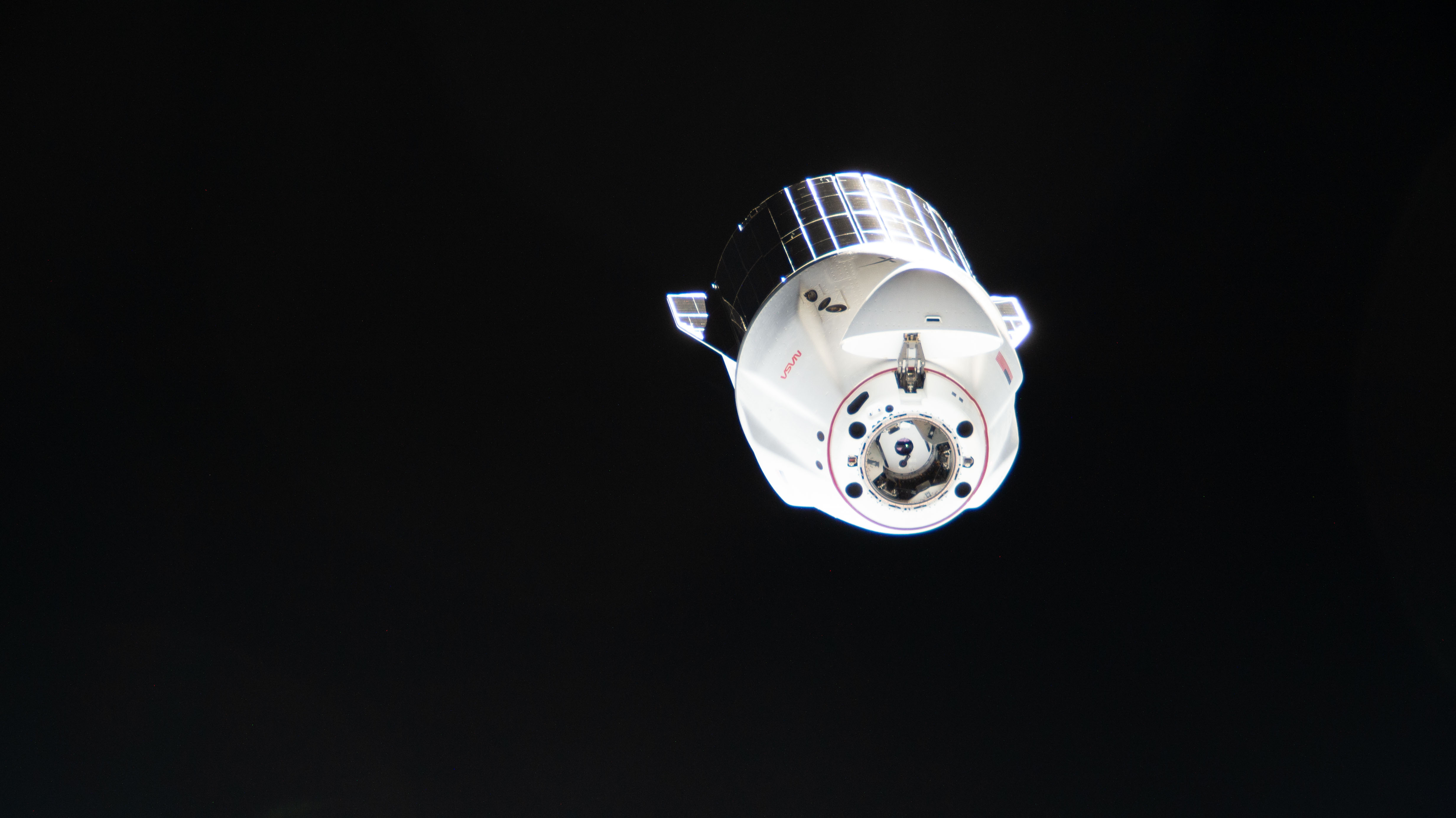
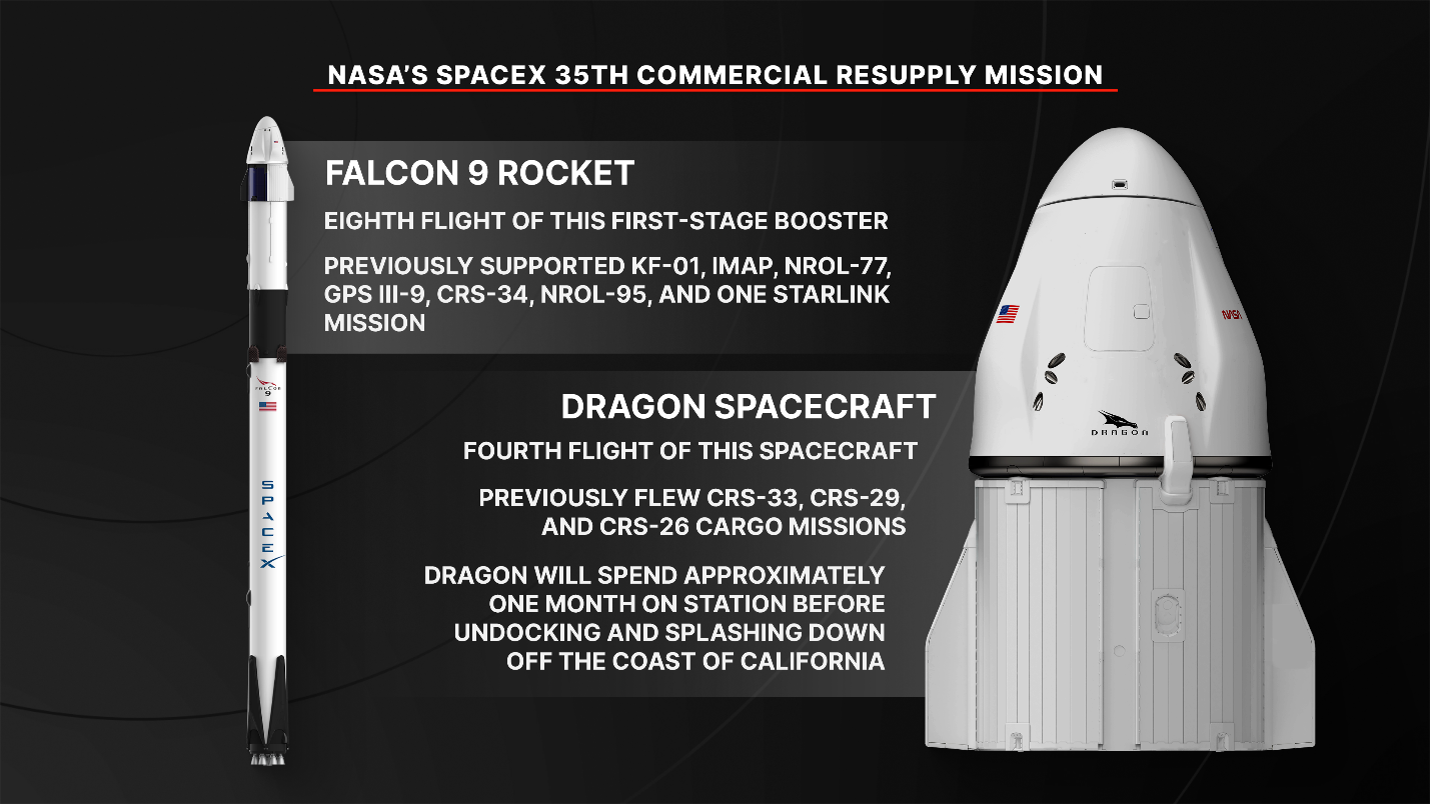
NASA’s SpaceX 35th commercial resupply mission will launch on the company’s Dragon spacecraft on the SpaceX Falcon 9 rocket to deliver research and supplies to the International Space Station.
NASA

NASA and SpaceX are targeting no earlier than Tuesday, Oct. 13 to launch scientific investigations, supplies, and equipment to the International Space Station. 

Loaded with more than 6,300 pounds of supplies, the SpaceX Dragon spacecraft will lift off aboard the company’s Falcon 9 rocket from Space Launch Complex 40 at Cape Canaveral Space Force Station in Florida. Following its arrival to the orbital complex, Dragon will autonomously dock to the space-facing port of the space station’s Harmony module. 

NASA will stream launch and docking coverage through a variety of platforms. Learn where to watch online:

https://www.nasa.gov/live

NASA’s SpaceX 35th commercial resupply mission will launch from Launch Complex 40 at Cape Canaveral Space Force Station in Florida.
NASA

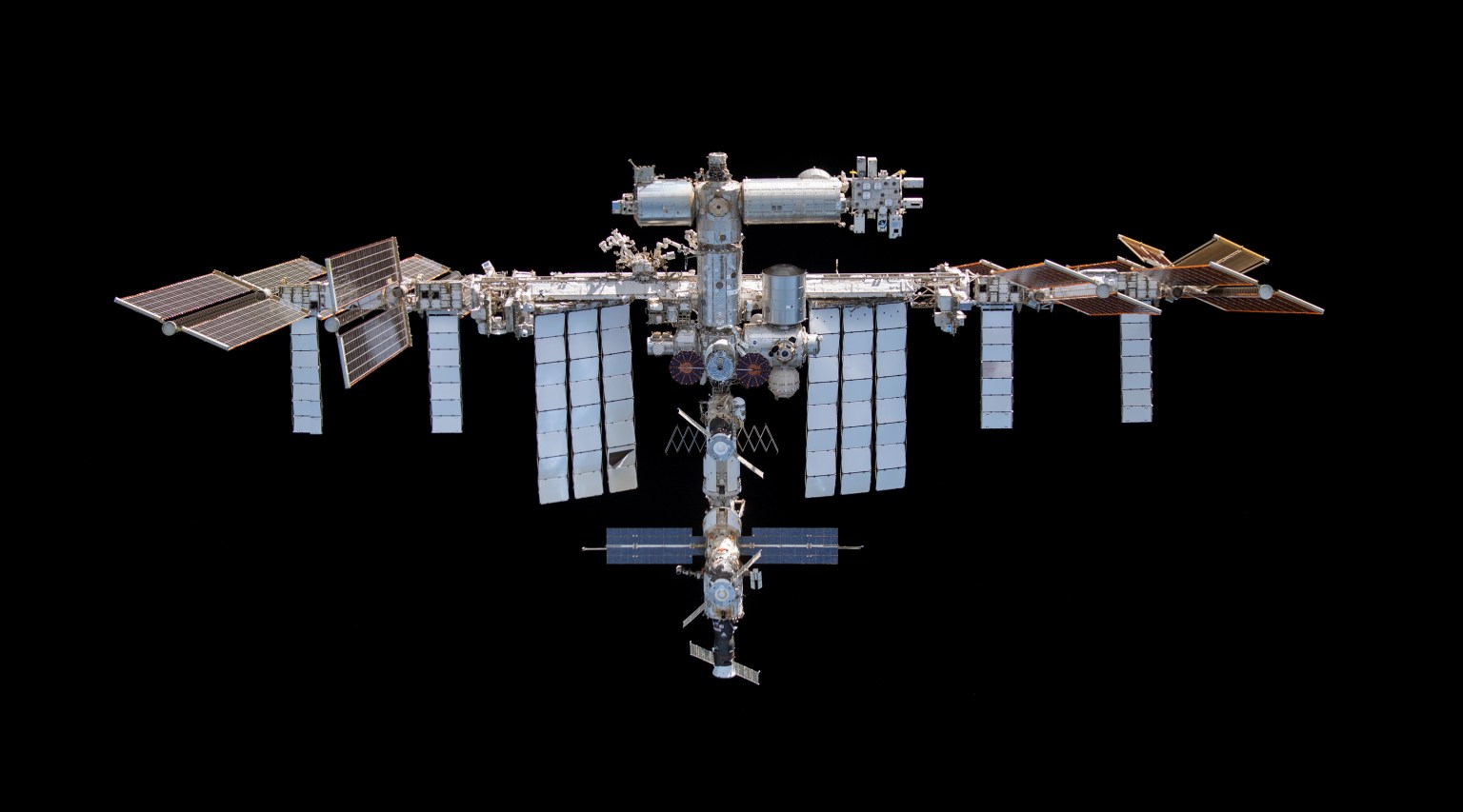
For more than 25 years, the International Space Station has supported research by scientists from more than 110 countries, enabling more than 4,000 experiments in microgravity. Research conducted aboard the station helps advance long-duration missions to the Moon as part of the Artemis program and to Mars, while also providing multiple benefits to humanity.

Science Highlights

In addition to cargo for the crew aboard the space station, Dragon will deliver several new science experiments, including:

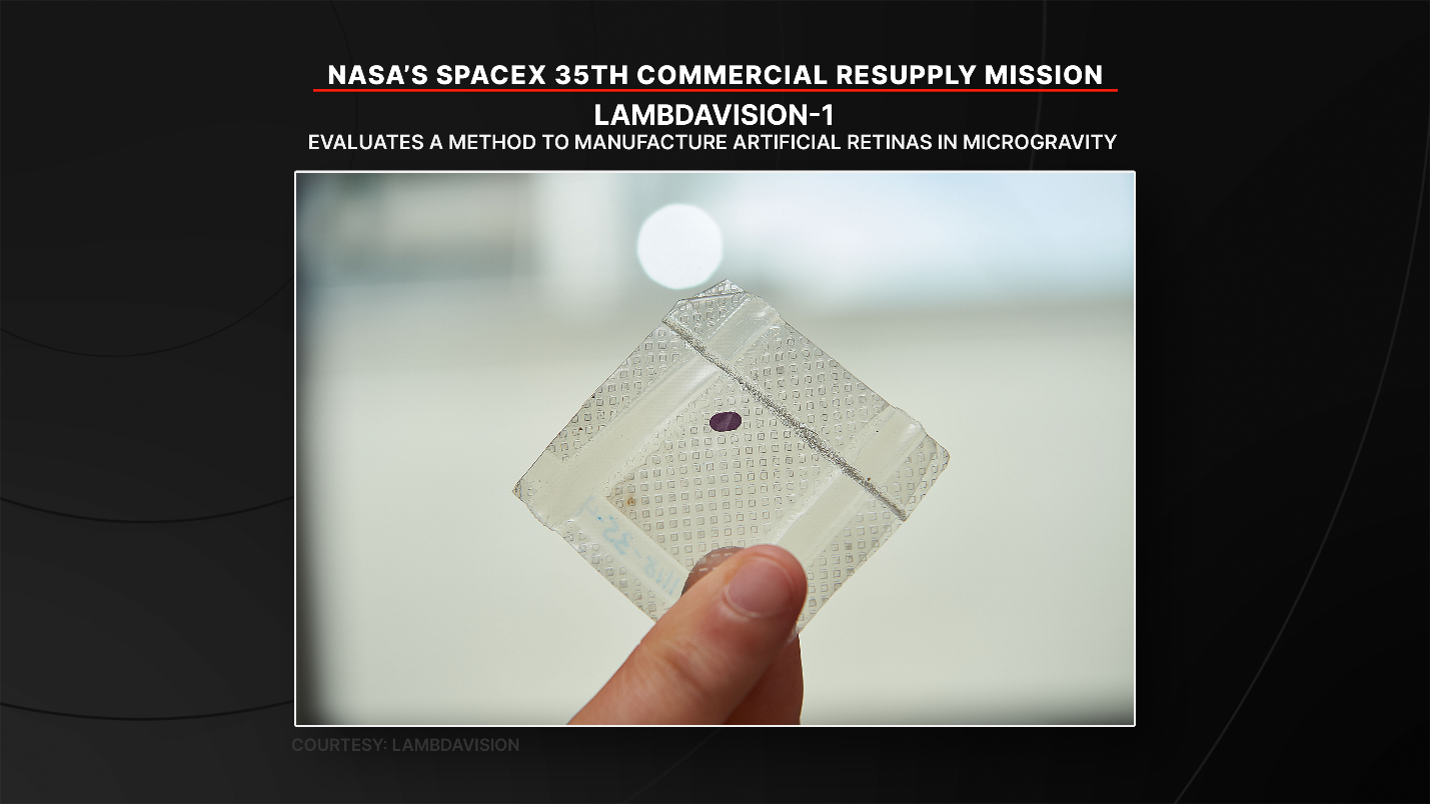
Lambda-Vision-1 studies artificial retinas in microgravity and could help patients with incurable retinal diseases on Earth.
NASA

With LambdaVision-1, NASA is testing how to manufacture artificial eye retinas in microgravity, building them one thin layer at a time. Reduced settling in microgravity may create more uniform, stable layers, potentially improving implants’ performance. These artificial retinas could help restore vision for patients with currently incurable retinal diseases on Earth.

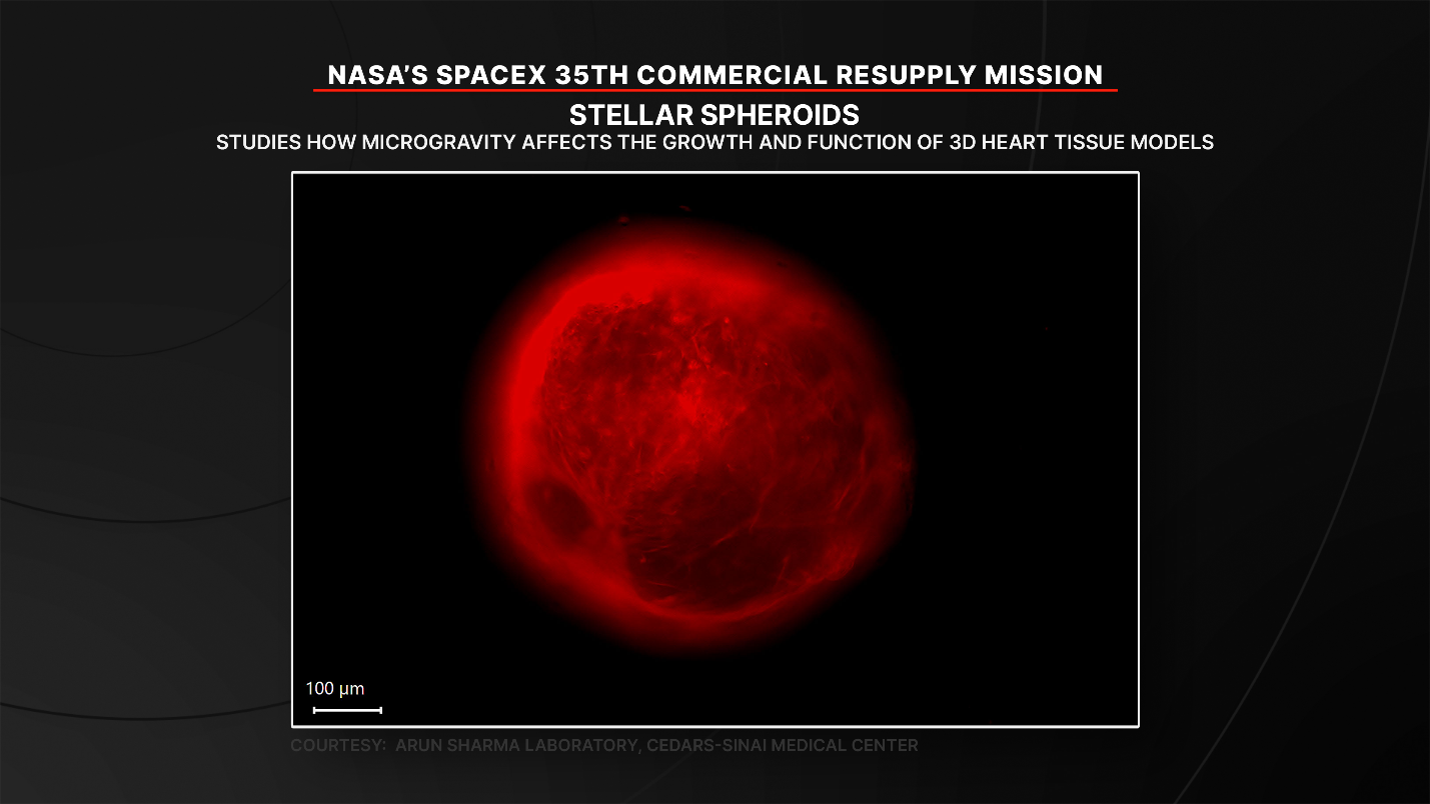
Stellar Spheroids examines growth and function of 3D heart tissues models in microgravity. Credit: NASA
NASA

NASA will use the Stellar Spheroids experiment to study how microgravity affects the growth and function of 3D human heart tissue models. Researchers will assess whether microgravity improves the formation of advanced vascular networks. Results could help researchers develop more realistic heart tissue models for disease research and support larger‑scale drug testing on future space missions.

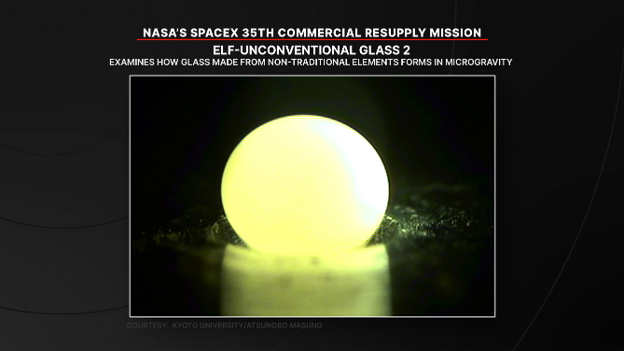
ELF-Unconventional Glass 2 studies how glass forms in microgravity when made from non-traditional elements.
NASA

Using non-traditional elements, ELF-Unconventional Glass 2 studies how glass forms in microgravity. Researchers will observe molten behavior in space, then return solid samples to Earth for detailed analysis. These unconventional glasses could offer higher strength, improved optical capabilities, and greater durability for spacecraft, habitats, and other exploration technologies.

MINDS seeks to reveal new targets to treat diseases like Alzheimer’s, Parkinson’s, and multiple sclerosis.
NASA

The MINDS experiment studies brain organoids to better understand inflammation linked to neurodegenerative diseases. The investigation uses “organoid villages,” which combine cells from multiple people to better represent patient diversity. Results could help identify new treatment targets for diseases like Alzheimer’s, Parkinson’s, and multiple sclerosis.

Arrival and Return

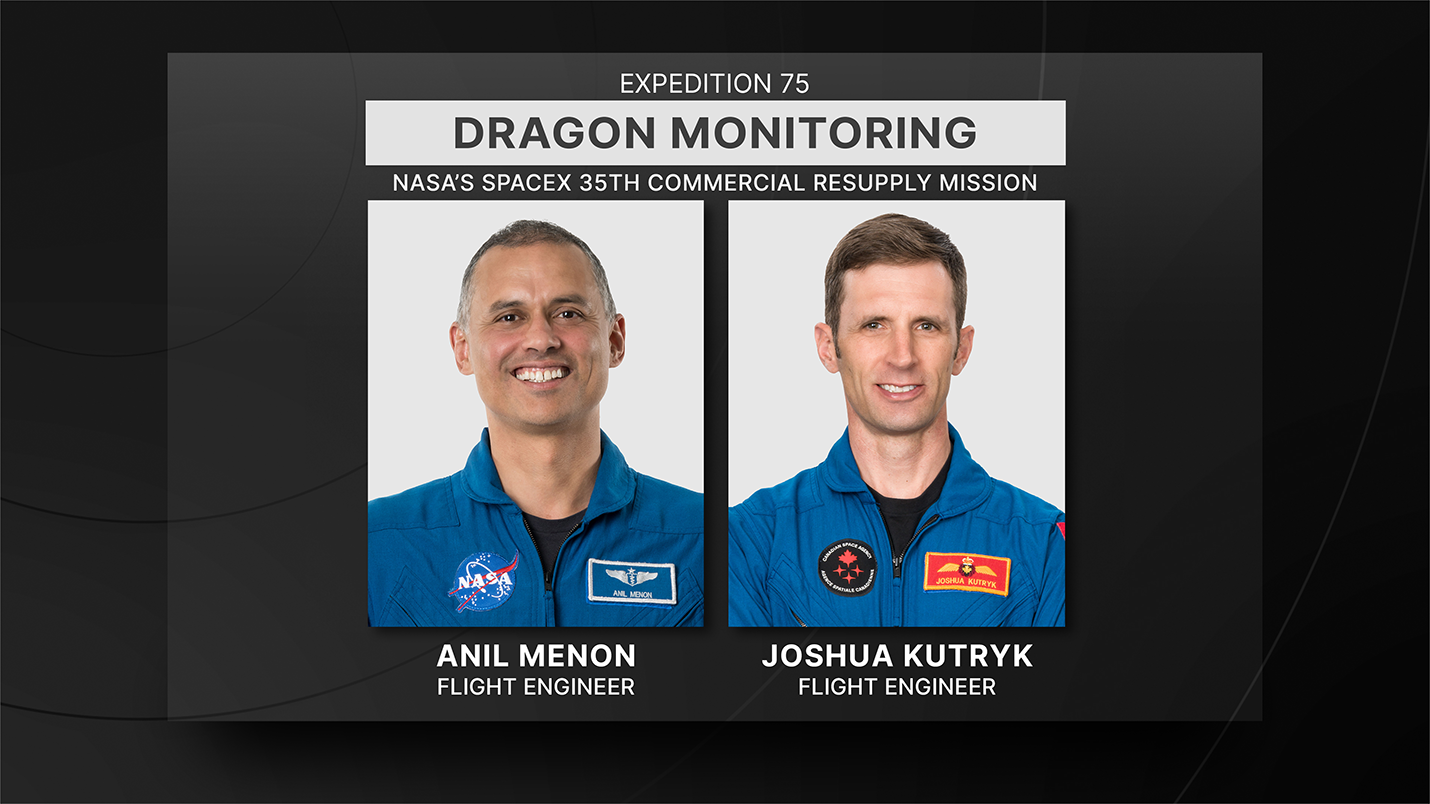
NASA astronaut Anil Menon and CSA (Canadian Space Agency) astronaut Joshua Kutryk will monitor the arrival of the SpaceX Dragon cargo spacecraft from the International Space Station.

NASA astronaut Anil Menon and CSA (Canadian Space Agency) astronaut Joshua Kutryk will monitor the Dragon spacecraft’s arrival. It will remain docked to the orbiting laboratory for about a month before splashing down in the Pacific Ocean, returning critical science and hardware to teams on Earth. 

Cargo Highlights

NASA’s SpaceX 35th commercial resupply mission will launch on the company’s Dragon spacecraft on the SpaceX Falcon 9 rocket to deliver research and supplies to the International Space Station
NASA

Launch 

International Space Station Roll-Out Solar Arrays (IROSA) – The final pair of IROSAs that will be installed on the space station, completing the augmentation of its power system to support critical operations, including its safe and controlled deorbit.

Collapsible Continency Urinal and supporting hardware – A demonstration and test unit supporting NASA’s Artemis III mission.  

Canadarm2 joint flight support equipment – A large foam clamshell will fly empty to return the failed robotic arm joint that was replaced during a June 30 spacewalk. After its return to Earth, teams will analyze the joint on the ground.

Additional equipment launching includes a toilet dose pump, a toilet pretreat quality sensor, and a robot micro-conical tool used for space station maintenance and utilization tasks with external replacement units and payloads.

Return

When Dragon returns in mid‑November, it will bring back the failed joint on the Canadarm2 for analysis and refurbishment, a spacesuit for ground refurbishment, a fluid- and pressure-control pump assembly from the urine processor, and a filtration unit for the water processor assembly. 

NASA to Cover Northrop Grumman CRS-24 Spacecraft Departure

6 Ottobre 2026 ore 20:31
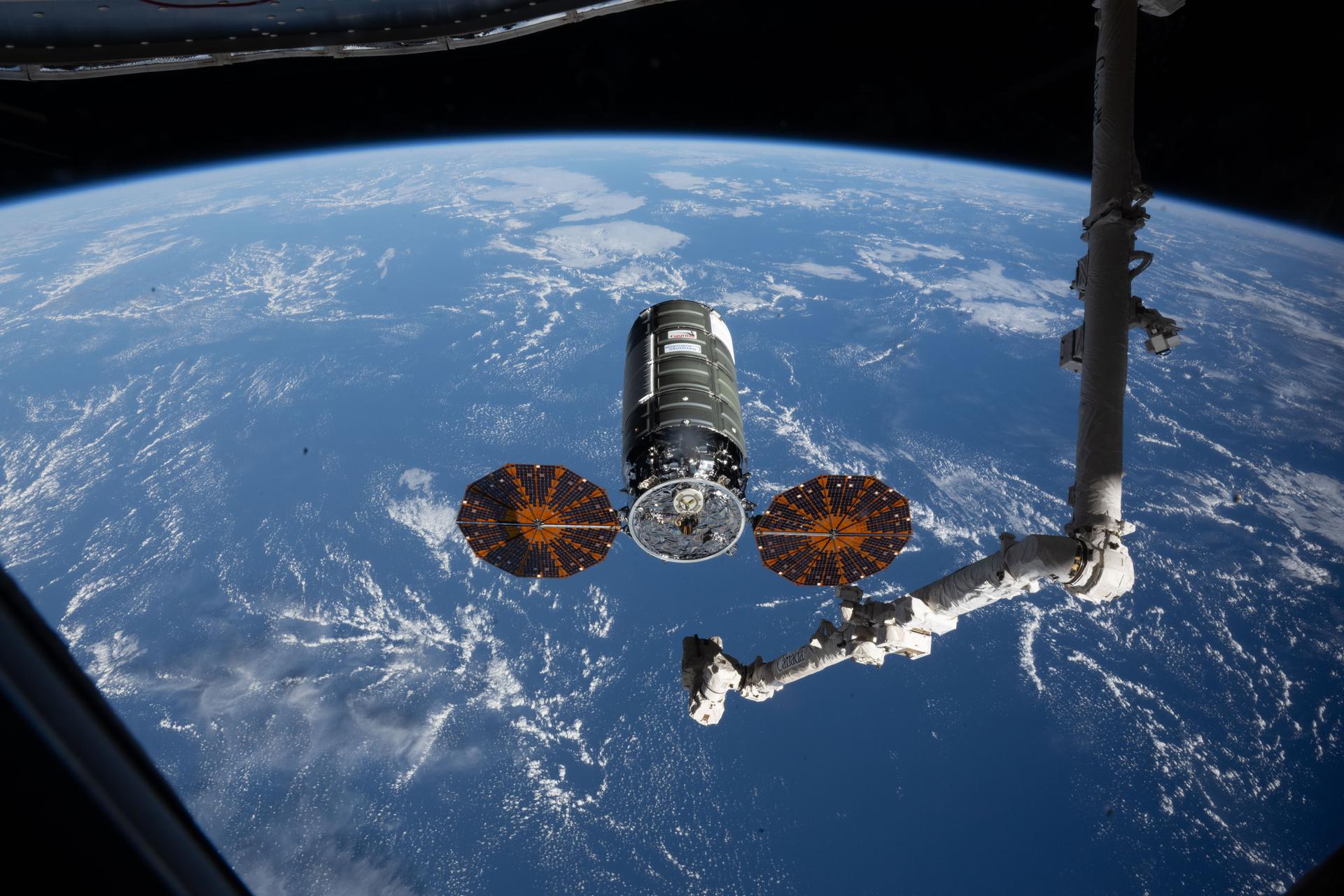
iss074e0458241 (April 13, 2026) --- Northrop Grumman's Cygnus XL cargo spacecraft rests at its capture point, 12 meters from the International Space Station, as the Canadarm2 robotic arm prepares to grapple the resupply ship. Cygnus XL delivered more than 11,000 pounds of new science experiments, lab hardware, and crew supplies for the Expedition 74 crew.
Northrop Grumman’s Cygnus XL cargo spacecraft rests at its capture point on April 13, 2026, 12 meters from the International Space Station, as the Canadarm2 robotic arm prepares to grapple the resupply ship.
Credit: NASA/Jessica Meir

Editor’s Note: This advisory was updated Oct. 8, 2026, to reflect revised timing for the Cygnus XL spacecraft’s deorbit and information about its departure.

After delivering more than 11,000 pounds of supplies, science experiments, and other cargo to the International Space Station for NASA, Northrop Grumman’s Cygnus XL spacecraft is scheduled to depart Friday, Oct. 9, as part of the company’s Commercial Resupply Services-24 mission, or Northrop Grumman CRS-24.

Watch NASA’s live coverage of departure beginning at 12:30 p.m. EDT through a variety of platforms. Learn where to watch online:

https://www.nasa.gov/live

Flight controllers on the ground will send commands for the space station’s Canadarm2 robotic arm to detach the Cygnus XL spacecraft from the Unity module’s Earth-facing port and maneuver it into position for release at 12:45 p.m. NASA astronaut Luke Delaney will monitor the operation from aboard the orbital complex.

Loaded with thousands of pounds of disposal items and other unneeded cargo, Cygnus XL will deorbit Monday, Oct. 12, for a destructive re-entry into Earth’s atmosphere, where it will safely burn up. NASA will not provide coverage of the spacecraft’s deorbit.

The resupply spacecraft launched on April 11 on a SpaceX Falcon 9 rocket from Space Launch Complex 40 at Cape Canaveral Space Force Station in Florida.

Learn more about this NASA commercial resupply mission at:

https://www.nasa.gov/mission/nasas-northrop-grumman-crs-24/

-end-

Josh Finch / Jimi Russell
Headquarters, Washington
202-358-1100
joshua.a.finch@nasa.gov / james.j.russell@nasa.gov

Sandra Jones
Johnson Space Center, Houston
281-483-5111
sandra.p.jones@nasa.gov

❌