Vista elenco

NASA’s X-59 Prepares for First Supersonic Flight  

29 Maggio 2026 ore 00:29

6 min read

Preparations for Next Moonwalk Simulations Underway (and Underwater)
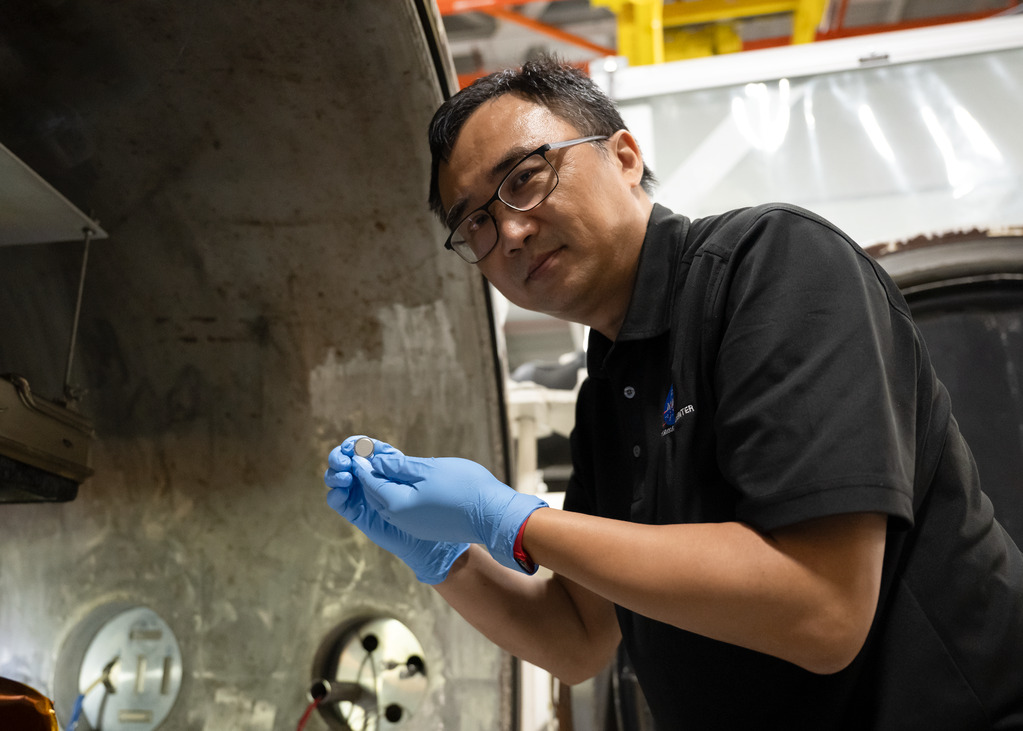
NASA’s X-59 quiet supersonic research aircraft flies over Rogers Dry Lake near NASA’s Armstrong Flight Research Center in Edwards, California, on Tuesday, May 12, 2026. NASA continues expanding the aircraft’s flight envelope through a series of lower-altitude and slower-speed flights ahead of upcoming flight tests at speeds faster than the speed of sound.
NASA/Jim Ross

NASA’s X-59 quiet supersonic research aircraft is preparing for some of its most significant flights yet. The X-plane is about to begin a new block of test flights that will include its first time flying faster than the speed of sound and other mission-critical objectives.

“What comes next is the first time this one-of-a-kind aircraft will fly supersonic,” said Cathy Bahm, project manager for NASA’s Low Boom Flight Demonstrator. “We are starting toward the mission conditions test point that X-59 was designed for.”

After months of flights, the X-59 team reviewed their progress in late May and now look toward the aircraft’s next series of flight tests, including higher altitudes and faster speeds. This will give engineers a look at how the X-59 handles under required operational conditions for NASA’s Quesst mission to eventually gather data on quiet supersonic flight.

The team expects the X-59 to fly supersonic – over 630 mph – for the first time at approximately 43,000 feet altitude during a series of test flights in early June, a major milestone for the aircraft. After that, it will conduct a “mission conditions” flight, where it will hit Mach 1.4 (925 mph) at approximately 55,000 feet. That speed and altitude are important because they’re NASA’s performance targets for the X-59 to eventually fly over U.S. communities to demonstrate quiet supersonic flight and collect feedback data about the aircraft’s quiet sonic “thump” from the public.

While the X-59 is designed to fly at supersonic speeds without producing a loud sonic boom, these early flights are not yet intended to demonstrate its quiet supersonic capabilities. The X-59 will be accompanied by a traditional supersonic chase plane, so any quiet thump it produces in the current phase of testing will be obscured by louder, traditional sonic booms from the chase. In supersonic flights this summer, the chase aircraft will also be outfitted with a specialized shock-sensing probe to take initial measurements of the X-59’s shock waves.

Completed flights 

The X-59’s first block of flights successfully met several test goals, generating data for its team to analyze. After making its first flight in October 2025, it entered a scheduled period of maintenance before returning to the skies in March 2026. It has since completed 14 additional flights, marking milestones including:

  • Its first gear swing, or the retraction of its landing gear to show off its sleek design for the first time.
  • Reaching altitudes up to 43,000 feet and near supersonic speeds at Mach 0.95, approximately 627 mph. 
  • Marking its first dual-flight day and then making those increasingly routine as the X-59 team increased flight cadence.
  • After a period of moving higher and faster, transitioning into lower and slower test flight conditions so engineers could gather information on the X-59’s behavior across a range of flight conditions. 

Data collected during the X-59’s first block of test flights helped teams better assess critical systems, including fuel, hydraulics, environmental controls, and the eXternal Vision System, which is the aircraft’s unique series of cameras that feed into a monitor that allows the pilot to see forward instead of using a traditional windshield. Teams monitored how the aircraft behaved during takeoff, landing, and throughout flight. Strain gauges installed throughout the X-59 collected detailed information on the forces it experienced, and how its structure responded to them.  

NASA’s X-59 quiet supersonic research aircraft flying above mountain ridges in California during a test flight on May 12, 2026. The aircraft is viewed from above, showing its elongated nose, swept wings, and white fuselage against layered mountains and valleys below.
NASA’s X-59 quiet supersonic research aircraft flies above mountains near NASA’s Armstrong Flight Research Center in Edwards, California, on Tuesday, May 12, 2026. NASA continues expanding the aircraft’s flight envelope to evaluate how it performs across a range of flight conditions ahead of upcoming flight tests at speeds faster than the speed of sound in support of the agency’s Quesst mission.
NASA/Jim Ross

Next steps 

During the X-59’s upcoming flights, pilots will run through test points while engineers watch the aircraft’s performance — but now in supersonic flight conditions. 

“Flying at supersonic speeds is a major milestone for the X-59 team,” Bahm said. “Every step of envelope expansion brings us closer to demonstrating the quiet supersonic capability that is at the heart of the Quesst mission. Completing the first mission-conditions flight is especially meaningful – it’s the moment where we begin validating the aircraft in the environment it was designed for.”

In addition to reaching mission condition during this block of flight tests, the X-59 will also achieve its maximum speed of Mach 1.6 (1,218 mph) and altitude of 60,000 feet.

But just because the aircraft can go that fast doesn’t mean it always will fly supersonic. Testing will continue, including a mix of subsonic and lower-altitude flights so the team can continue monitoring it in varied conditions.

“These flights not only deepen our confidence in the X-59’s performance – they mark our progression toward the future phases of the mission that will ultimately help shape the future of supersonic travel,” Bahm said.

All flights so far and in the upcoming test block are part of Phase 1 of the X-59’s Quesst mission, focused on proving the performance and airworthiness of the aircraft. Some of those flights will include early deployment of equipment, including a probe mounted to one of NASA’s F-15 research aircraft that can measure the X-59’s unique shock wave signature.

Data gathered during those early probing flights will allow engineers to prepare for a new stage of work set to begin later this year: Quesst Phase 2, when teams will begin to measure the aircraft’s supersonic flight signature to verify that it’s producing a quiet supersonic thump, as designed.

“Aviation pioneer Otto Lilienthal said, ‘To design a flying machine is nothing. To build one is something. But to fly is everything.’ The 15 X-59 flights we’ve accomplished since March have been everything to this team and the mission,” Bahm said. “Every flight has pushed the boundaries of what’s possible, steadily expanding the envelope and strengthening our confidence in the aircraft.”

But, she said, rather than focusing on past progress, the team is already looking ahead.

“As we look ahead to the upcoming flights, we’re poised to open the envelope even further – moving boldly toward the mission test point this aircraft was built to achieve,” Bahm said. “Flying supersonic and reaching these milestones isn’t just progress; it’s the realization of years of perseverance, innovation, and teamwork. Each step brings us closer to Phase 2, and to the future of commercial supersonic flight.” 

💾

NASA’s X-59 quiet supersonic research aircraft is gearing up for some of its most significant flights yet as teams continue expanding the aircraft’s flight e...

NASA Announces Winners in University Aeronautics Competition

20 Maggio 2026 ore 22:48
The members of team WINGMAN stand in the center of the photo holding their first place certificate for NASA's Gateways to Blue Skies Competition.
Team WINGMAN from South Dakota State University, comprised of (from left to right) Todd Letcher (advisor), Matthew Wieberdink, Owen Diede, Christian Lee, and Anders Olsen, took home first place at the 2026 Gateways to Blue Skies Forum held at NASA’s Langley Research Center in Hampton, Virginia. Steven Holz, NASA sponsor and GBS Chair and judge, presented the award.
Credit: NASA/Mark Knopp

A South Dakota State University team took first place at NASA’s fifth annual Gateways to Blue Skies Competition, which challenged student teams to address a critical element of U.S. aviation: aircraft maintenance.

This year’s competition, RepAir: Advancing Aircraft Maintenance, asked teams of postsecondary students to develop innovative systems and practices that could advance commercial aircraft maintenance and repair operations by 2035. The competition, sponsored by NASA’s University Innovation project within the agency’s Aeronautics Research Mission Directorate, supported the agency’s objectives of fostering innovative research and strengthening the future aviation workforce.

“This year’s finalists proposed novel ideas to equip companies and their workers with innovative technologies to help keep our nation’s planes airworthy. This is especially critical in a time where flight safety is more commonly in the spotlight and where workforce shortages lead to challenges and opportunities in aviation,” said Steven Holz, associate project manager for NASA’s University Innovation Project and judging panel chair for Gateways to Blue Skies. “Our panel of industry and subject matter experts were excited about the possibilities these concepts could bring, as well as shared insights needed for these teams to push forward for real-world implementation.”

The winning project, WINGMAN, proposed augmented reality safety glasses equipped with voice-controlled manuals, automatic documentation, and photo recognition that could assist aircraft mechanics during routine daily servicing and minor repairs. The glasses would function as the mechanic’s “wingman,” enabling hands-free access to the information and reporting mechanisms required for line inspections.

The WINGMAN team presented their research along with seven finalists at the 2026 Gateways to Blue Skies Forum held May 18 and 19 at NASA’s Langley Research Center in Hampton, Virginia. The forum was judged by subject matter experts from NASA, the Federal Aviation Administration, and industry, including representatives from Southwest Airlines and American Airlines. Students at the forum had the opportunity to network with NASA and industry experts, tour the center, and gain insight into potential careers. The event was livestreamed, and the presentations were recorded.

The winning team members will have the opportunity to intern at one of NASA’s four aeronautics research centers during the 2026-27 academic year, including NASA Langley, NASA’s Glenn Research Center in Cleveland, NASA’s Ames Research Center in California’s Silicon Valley, and NASA’s Armstrong Flight Research Center in Edwards, California. 

“It was super exciting to participate in Gateways to Blue Skies, especially with the really interesting concepts this year,” said Owen Diede, WINGMAN team lead. “We couldn’t have done it without the feedback and support from our faculty advisor, Dr. Todd Letcher, as well as our design review committee, Dr. Ruyi Lian and Dr. Cody Christensen. This was a fantastic opportunity to learn and grow, and we are incredibly thankful for the experience.”

Other recognitions included:

  • Best Infographic: University of California, Irvine
    Air Shield: Aircraft Structural Health Intelligence for Evaluation and Lifecycle Detection
  • Future Game-Changer: University of Georgia
    Quasar: Quantum Sensing Aerial Reporting
  • Safety Spotlight: South Dakota State University
    SPIDER (Surveying Platform and Inspection Device for Enclosed Regions)

The commercial aviation industry is a crucial component of the U.S. economy, yet it faces significant challenges due to a shortage of qualified maintenance workers and increasing demands to keep aircraft running for longer. NASA is dedicated to working with commercial, academic, and government partners to advance the capabilities and performance of U.S. aviation.

The Gateways to Blue Skies Challenge is part of the Transformative Aeronautics Concepts Program in NASA’s Aeronautics Research Mission Directorate. The NASA Tournament Lab, part of the Prizes, Challenges, and Crowdsourcing Program in the Space Technology Mission Directorate, manages the challenge through the National Institute of Aerospace on behalf of NASA.

For more information about NASA’s Aeronautics Research Mission Directorate, visit:

https://www.nasa.gov/aeronautics

NASA, Boeing Advance Truss-Braced Wing Research in Test

29 Aprile 2026 ore 17:10

3 min read

Preparations for Next Moonwalk Simulations Underway (and Underwater)

A scale model of a subsonic aircraft is tested inside a wind tunnel.
A scale model of Boeing’s Subsonic Ultra Green Aircraft Research concept undergoes testing in a 5-meter wind tunnel operated by the company QinetiQ in December 2025.
QinetiQ

NASA and Boeing have completed wind tunnel testing to study an innovative advanced aircraft design intended to improve aerodynamic efficiency.

A truss-braced wing configuration, involving a long, thin wing with aerodynamically shaped structural supports, has the potential to reduce fuel and operational costs for future airliners, which is why NASA has collaborated with Boeing to advance the design.

But this kind of wing would be much more than a simple tweak to existing designs – for an aircraft the size of a passenger jet, it would be a revolutionary redesign, requiring extensive study from NASA and Boeing.

The most recent round of testing used a complex wind tunnel model to collect data on how air flows around a truss-braced wing model and the forces that would be exerted on such a wing in flight.

The test used a semispan model – essentially half an aircraft mounted on a wind tunnel floor. The model has features built in to simulate the mechanisms that increase the amount of lift a wing produces. By adjusting the model’s slats, flaps, and other moving control surfaces, the team can configure it to the low speed, high-lift settings of takeoff and landing conditions.

The model is part of a collaboration to test what’s known as Boeing’s Subsonic Ultra Green Aircraft Research (SUGAR) concept.

In December, teams completed testing of the model wind tunnel operated by the company QinetiQ in Farnborough, England. This large wind tunnel uses pressurized conditions to predict airplane behavior in takeoff and landing conditions.

The large size of the tunnel gives the model fidelity to better predict the behavior of a plane in flight. This capability allowed the team to confidently assess aerodynamic performance.

NASA and Boeing research teams analyzed data in real time to ensure the model performed as expected. Researchers are still reviewing the full results, but the test has already added valuable information to a growing body of research aimed at reducing fuel use in future aircraft designs.

The testing was just the latest stop for this research. NASA and Boeing have tested the concept at multiple NASA facilities to collect data as they work to build a comprehensive understanding of this advanced airframe concept.

This collaboration serves as an example of how NASA serves as an incubator for breakthrough technology with profound commercial applications. The transonic truss-braced wing concept originated from NASA aeronautics-supported research and NASA and Boeing engineers have worked together, test-by-test, to move this wing design from an idea to a practical reality.

The work began in NASA’s Advanced Air Vehicles Program and continues as part of the Subsonic Flight Demonstrator project under the Integrated Aviation Systems Program in the agency’s Aeronautics Research Mission Directorate.

❌