Vista elenco

Ricevuto oggi — 20 Gennaio 2026 NASA Breaking News

NASA Astronaut Suni Williams Retires

20 Gennaio 2026 ore 22:57
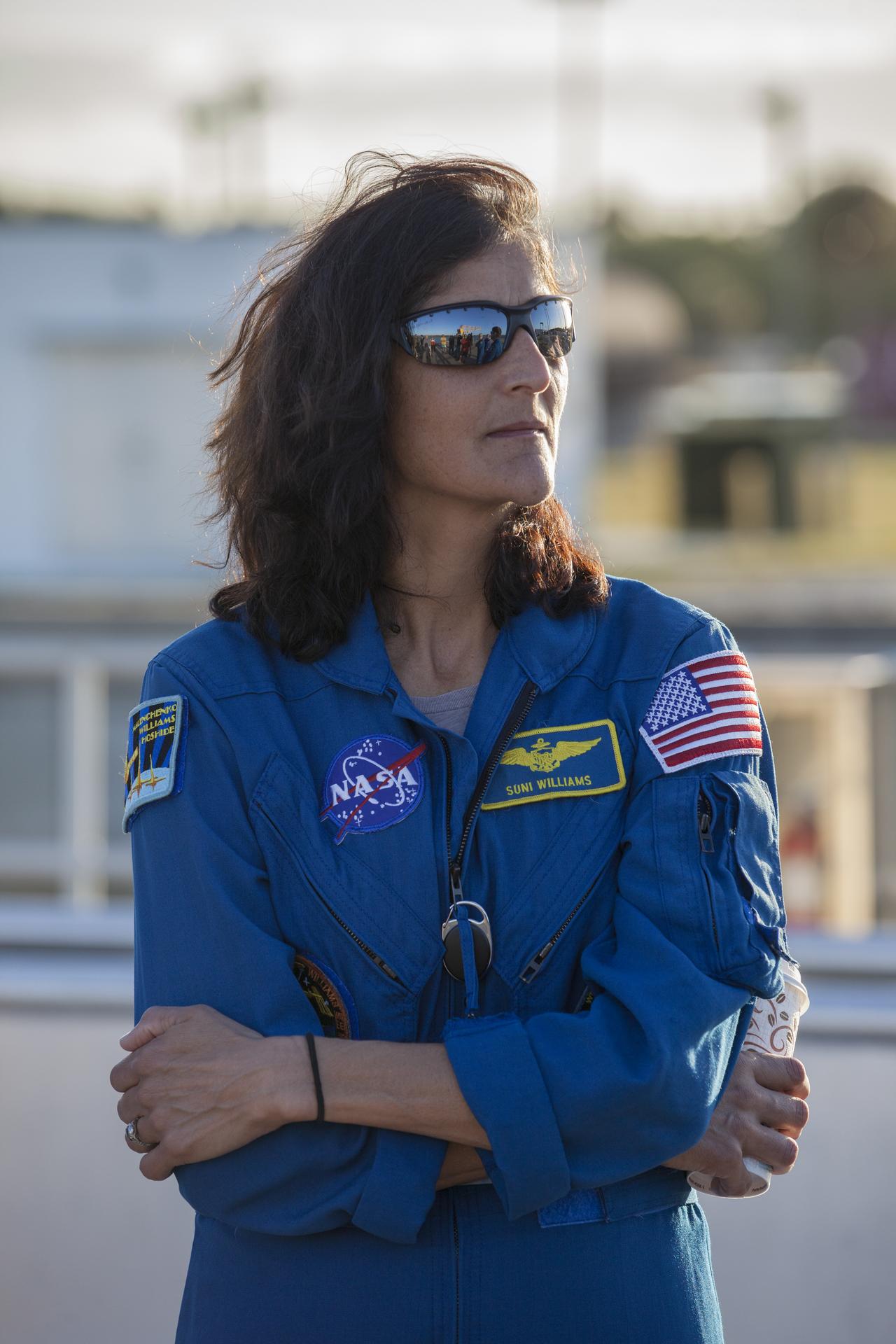
NASA astronaut Suni Williams at Cape Canaveral Air Force Station's Naval Ordnance Test Unit basin in Florida on March 28, 2018.
NASA astronaut Suni Williams at Cape Canaveral Air Force Station’s Naval Ordnance Test Unit basin in Florida on March 28, 2018.
Credit: NASA/Kim Shiflett

After 27 years of service, NASA astronaut Suni Williams retired from the agency, effective Dec. 27, 2025. Williams completed three missions aboard the International Space Station, setting numerous human spaceflight records throughout her career.

“Suni Williams has been a trailblazer in human spaceflight, shaping the future of exploration through her leadership aboard the space station and paving the way for commercial missions to low Earth orbit,” said NASA Administrator Jared Isaacman. “Her work advancing science and technology has laid the foundation for Artemis missions to the Moon and advancing toward Mars, and her extraordinary achievements will continue to inspire generations to dream big and push the boundaries of what’s possible. Congratulations on your well-deserved retirement, and thank you for your service to NASA and our nation.”

Williams logged 608 days in space — second on the list of cumulative time in space by a NASA astronaut. She ranks sixth on the list of longest single spaceflight by an American, tied with NASA astronaut Butch Wilmore, both logging 286 days during NASA’s Boeing Starliner and SpaceX Crew-9 missions. Williams also completed nine spacewalks, totaling 62 hours and 6 minutes, ranking as the most spacewalk time by a woman and fourth-most on the all-time cumulative spacewalk duration list. She also was the first person to run a marathon in space.

“Over the course of Suni’s impressive career trajectory, she has been a pioneering leader,” said Vanessa Wyche, director of NASA’s Johnson Space Center in Houston. “From her indelible contributions and achievements to the space station, to her groundbreaking test flight role during the Boeing Starliner mission, her exceptional dedication to the mission will inspire the future generations of explorers.”

Williams launched for the first time aboard space shuttle Discovery with STS-116 in December 2006 and returned aboard space shuttle Atlantis with the STS-117 crew. She served as a flight engineer for Expeditions 14/15 and completed a then-record-breaking four spacewalks during the mission.

In 2012, Williams launched from the Baikonur Cosmodrome in Kazakhstan for a 127-day mission as a member of Expedition 32/33. She also served as space station commander for Expedition 33. Williams performed three spacewalks during the mission to repair a leak on a station radiator and replace a component that gets power from the station’s solar arrays to its systems.

Most recently, Williams and Wilmore launched aboard the Starliner spacecraft in June 2024 as part of NASA’s Boeing Crew Flight Test mission. She and Wilmore went on to join Expedition 71/72, and Williams again took command of the space station for Expedition 72. She completed two spacewalks on the mission and returned to Earth in March 2025, as part of the agency’s SpaceX Crew-9 mission.

“Suni is incredibly sharp, and an all-around great friend and colleague,” said Scott Tingle, chief of the Astronaut Office at NASA Johnson. “She’s inspired so many people, including myself and other astronauts in the corps. We’re all going to miss her greatly and wish her nothing but the best.”

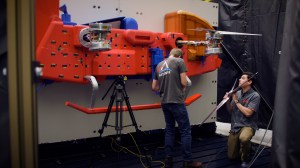
Beyond her spaceflight experience, Williams held numerous roles throughout her NASA career. In 2002, she served as a NEEMO (NASA Extreme Environments Mission Operations) crew member, spending nine days living and working in an underwater habitat. After her first flight, she served as deputy chief of NASA’s Astronaut Office. She later was the director of Operations in Star City, Russia, following her second mission to the space station. Most recently, she helped establish a helicopter training platform to prepare astronauts for future Moon landings.

The Needham, Massachusetts, native holds a bachelor’s degree in physical science from the United States Naval Academy and a master’s degree in engineering management from Florida Institute of Technology in Melbourne, Florida. A retired U.S. Navy captain, Williams is an accomplished helicopter and fixed-wing pilot, having logged more than 4,000 flight hours in 40 different aircraft.

“Anyone who knows me knows that space is my absolute favorite place to be,” said Williams. “It’s been an incredible honor to have served in the Astronaut Office and have had the opportunity to fly in space three times. I had an amazing 27-year career at NASA, and that is mainly because of all the wonderful love and support I’ve received from my colleagues. The International Space Station, the people, the engineering, and the science are truly awe-inspiring and have made the next steps of exploration to the Moon and Mars possible. I hope the foundation we set has made these bold steps a little easier. I am super excited for NASA and its partner agencies as we take these next steps, and I can’t wait to watch the agency make history.”

Learn more about how NASA explores the unknown and innovates for the benefit of humanity at:

https://www.nasa.gov/

-end-

Bethany Stevens / Jimi Russell
Headquarters, Washington 
202-358-1100 
bethany.c.stevens@nasa.gov / james.j.russell@nasa.gov

Share

Details

Last Updated
Jan 20, 2026

New NASA Artemis Payloads To Study Moon’s Terrain, Radiation, History

20 Gennaio 2026 ore 22:21
NASA insignia.
NASA

NASA announced Tuesday the selection of three new science investigations that will strengthen humanity’s understanding and exploration of the Moon. As part of the agency’s CLPS (Commercial Lunar Payload Services) initiative and Artemis campaign, American companies will deliver these research payloads to the lunar surface no earlier than 2028.

“With CLPS, NASA has been taking a new approach to lunar science, relying on U.S. industry innovation to travel to the surface of the Moon and enable scientific discovery,” said Joel Kearns, deputy associate administrator for exploration, Science Mission Directorate, NASA Headquarters in Washington. “These selections continue this pipeline of lunar exploration, through research that will not only expand our knowledge about the Moon’s history and environment, but also inform future human safety and navigation on the Moon and beyond.”

The selected scientific payloads are:

  • Emission Imager for Lunar Infrared Analysis in 3D (EMILIA-3D). The EMILIA-3D payload will create three-dimensional thermal models of the lunar terrain, using a thermal imager to measure the temperature of the landscape coupled with a stereo pair of visible-light cameras. These models will help the U.S. better image and navigate the Moon’s surface through improved understanding of the properties of the dusty lunar soil, called regolith, and what temperature measurements convey about the lunar surface. The principal investigator is Andrew Ryan at the University of Arizona.
  • Lunar Instrumentation for Subsurface Thermal Exploration with Rapidity (LISTER). The LISTER instrument will measure the heat flow of the Moon’s interior by drilling beneath the lunar surface, pausing at intervals to measure temperature changes and the ability of the subsurface material to conduct heat. A previous version of LISTER flew on the Blue Ghost Mission 1 CLPS delivery to the Moon’s near side, where it took eight temperature and thermal conductivity measurements and drilled down to about three feet beneath the lunar surface. This new LISTER investigation will study the heat flow generated by the Moon itself, giving us a better understanding of its thermal history. The principal investigator is Seiichi Nagihara at Texas Tech University.
  • Site-agnostic Energetic Lunar Ion and Neutron Environment (SELINE). The SELINE payload will provide new insight into the Moon’s radiation environment by studying, for the first time at the lunar surface, the radiation from both primary galactic cosmic rays and their secondary particles and how this radiation interacts with the lunar regolith. Data from SELINE will improve our understanding of the planetary processes at work on the Moon, as well as inform space weather preparation and safety for long-term human exploration of the lunar surface. The principal investigator is Drew Turner at Johns Hopkins University.

These science experiments, selected through NASA’s Payloads and Research Investigations on the Surface of the Moon call for proposals, do not require a specific landing site on the lunar surface to gather their data, and NASA will assign them to specific CLPS delivery task orders at a later time.

NASA uses CLPS to send scientific instruments and technology demonstrations to advance capabilities for science, exploration, or commercial development of the Moon and beyond. By supporting a steady cadence of lunar deliveries, the agency will continue to enable a growing lunar economy while leveraging the entrepreneurial innovation of the commercial space industry.

To learn more about CLPS and Artemis, visit:

https://www.nasa.gov/clps

-end-

Alise Fisher
Headquarters, Washington
202-358-2546
alise.m.fisher@nasa.gov

NIH Supplements, Facts First Challenge

20 Gennaio 2026 ore 21:29
A graphic developed by HeroX for the NIH Supplements, Facts First Challenge. The image shows a cartoon medicine bottle in the center with tech and medical icons branching out, including a telephone, pills, a microphone, a stethoscope.
Image credit: HeroX

NASA’s Center of Excellence for Collaborative Innovation (CoECI) assists in the use of crowdsourcing across the federal government. CoECI’s NASA Tournament Lab offers the contract capability to run external crowdsourced challenges on behalf of NASA and other agencies.

The Office of Dietary Supplements (ODS) at the National Institutes of Health (NIH) announces the “Supplements, Facts First: A Digital Adventure for Every Age” challenge. This competition aims to catalyze innovative multimedia strategies to transform static dietary supplement fact sheets into engaging digital experiences. It addresses a critical gap between authoritative supplement information and meaningful public engagement by incentivizing teams to develop prototypes that target the following modalities: 

  • Behavior Change and Health Information Apps
  • Social Media Content
  • AI-Enabled Tools
  • Serialized Video & Broadcast Content
  • Other Technology

Award: $869,000 in total prizes

Open Date: January 20, 2026

Close Date: April 6, 2026

For more information, visit: https://www.herox.com/SupplementsFactsFirst/

NASA Chase Aircraft Ensures X-59’s Safety in Flight 

20 Gennaio 2026 ore 20:11

5 min read

Preparations for Next Moonwalk Simulations Underway (and Underwater)

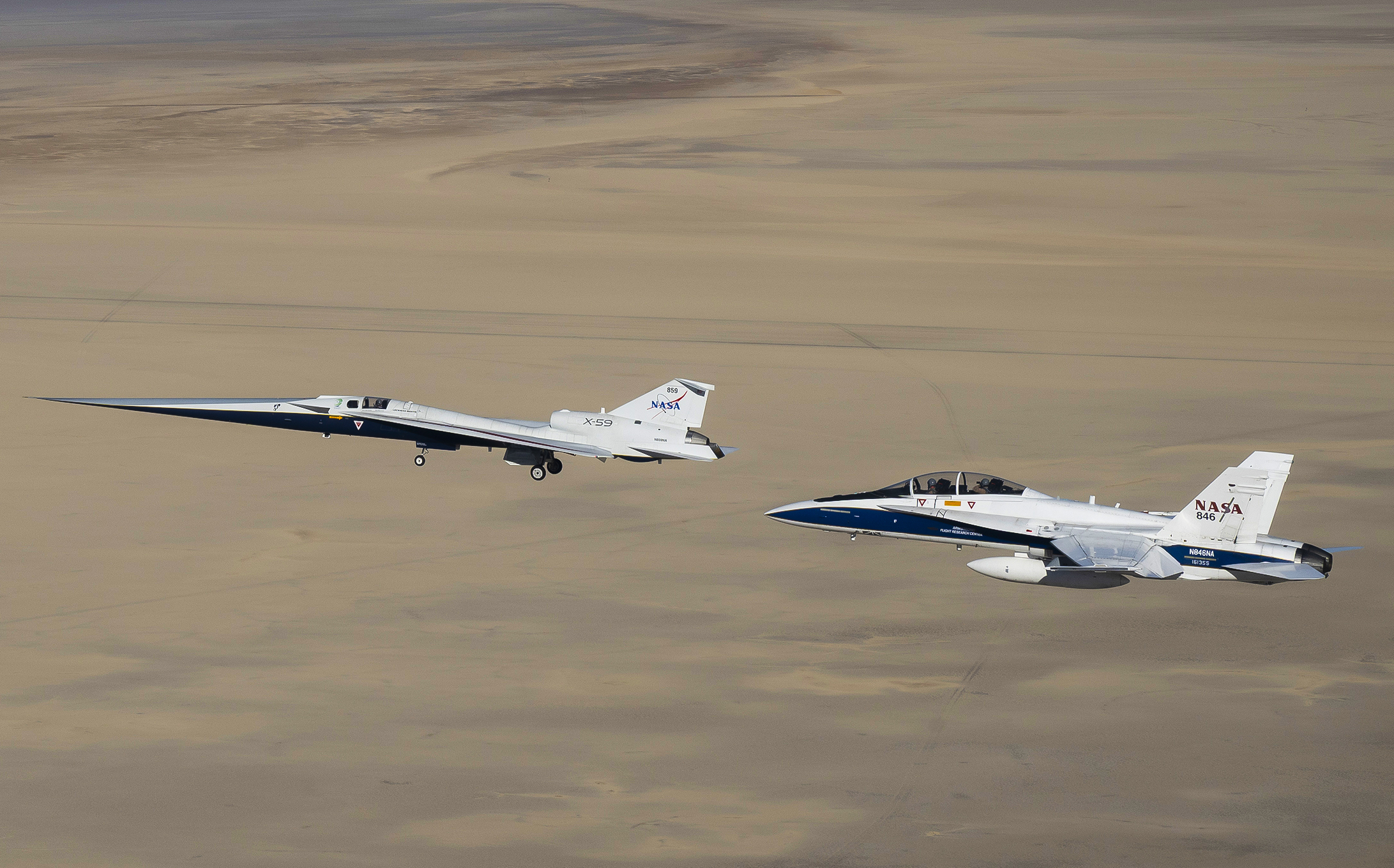
NASA’s X-59 flies above the Mojave Desert with a NASA F-15 chase aircraft nearby.
NASA’s X-59 quiet supersonic research aircraft flies above Palmdale and Edwards, California, during its first flight Oct. 28, 2025, accompanied by a NASA F/A-18 research aircraft serving as chase.
NASA/Jim Ross

As NASA’s X-59 quiet supersonic research aircraft continues a series of flight tests over the California high desert in 2026, its pilot will be flying with a buddy closely looking out for his safety. 

That colleague will be another test pilot in a separate chase aircraft. His job as chase pilot: keep a careful watch on things as he tracks the X-59 through the sky, providing an extra set of eyes to help ensure the flight tests are as safe as possible. 

Having a chase pilot watch to make sure operations are going smoothly is an essential task when an experimental aircraft is exercising its capabilities for the first time. The chase pilot also takes on tasks like monitoring local weather and supplementing communications between the X-59 and air traffic control. 

“All this helps reduce the test pilot’s workload so he can concentrate on the actual test mission,” said Jim “Clue” Less, a NASA research pilot since 2010 and 21-year veteran U.S. Air Force flyer. 

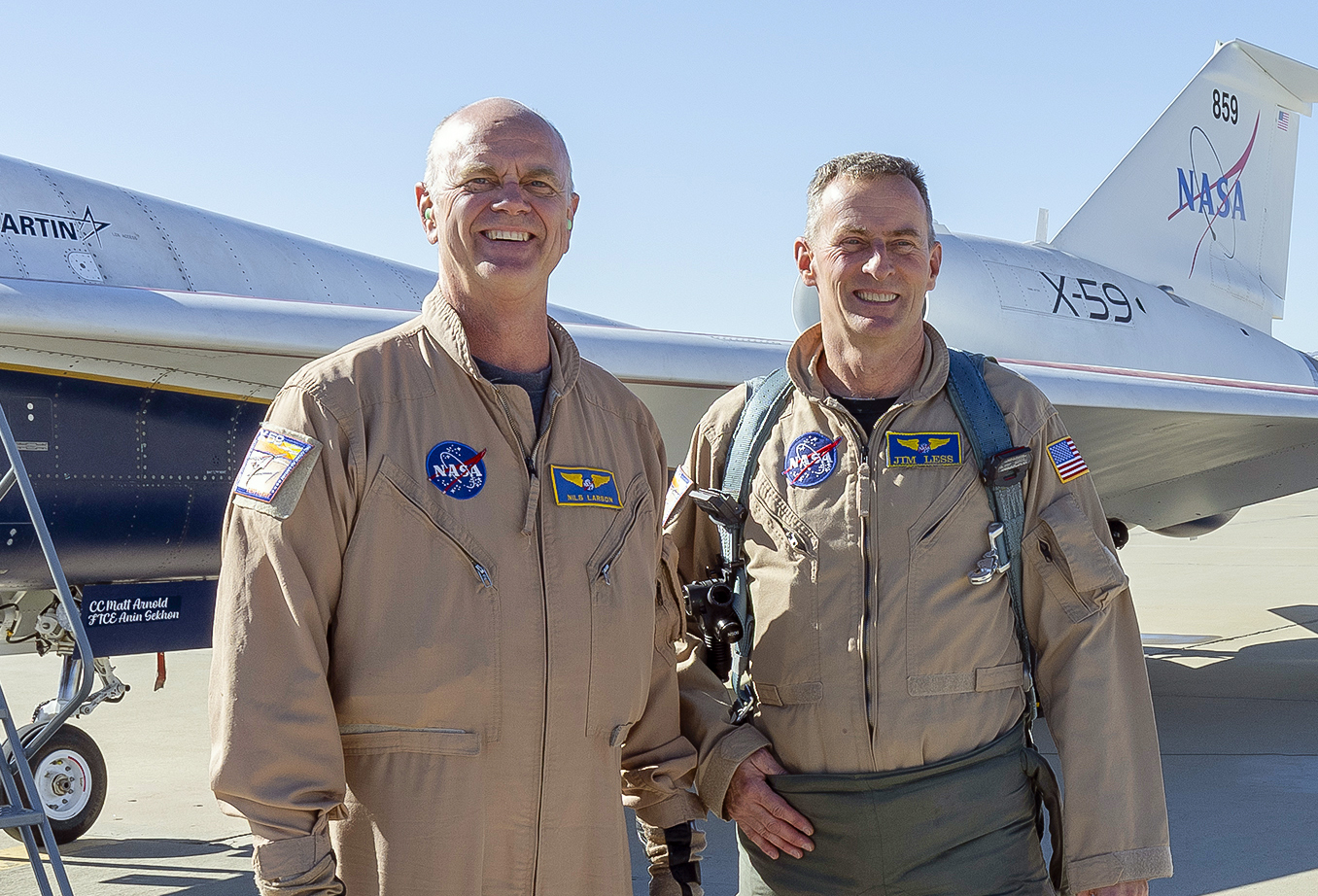
Less served as chase pilot in a NASA F/A-18 research jet when NASA test pilot Nils Larson made the X-59’s first flight on Oct. 28. Going forward, Less and Larson will take turns flying as X-59 test pilot or chase pilot. 

Two NASA pilots wearing flight gear pose in front of the X-59 experimental aircraft.
NASA pilots Jim “Clue” Less (left) and Nils Larson celebrate the X-59’s first flight on Oct. 28, 2025. Less flew an F-18 chase aircraft while Larson flew the X-59.
NASA/Genaro Vavuris

Staying Close

So how close does a chase aircraft fly to the X-59? 

“We fly as close as we need to,” Less said. “But no closer than we need to.” 

The distance depends on where the chase aircraft needs to be to best ensure the success of the test flight. Chase pilots, however, never get so close as to jeopardize safety. 

We fly as close as we need to, but no closer than we need to.

Jim "clue" LESS

Jim "clue" LESS

NASA Test Pilot

For example, during the X-59’s first flight the chase aircraft moved to within a wingspan of the experimental aircraft. At that proximity, the airspeed and altitude indicators inside both aircraft could be compared, allowing the X-59 team to calibrate their instruments. 

Generally, the chase aircraft will remain about 500 and 1,000 feet away—or about 5-10 times the length of the X-59 itself—as the two aircraft cruise together. 

“Of course, the chase pilot can move in closer if I need to look over something on the aircraft,” Less said. “We would come in as close as needed, but for the most part the goal is to stay out of the way.” 

Airborne Photo Op

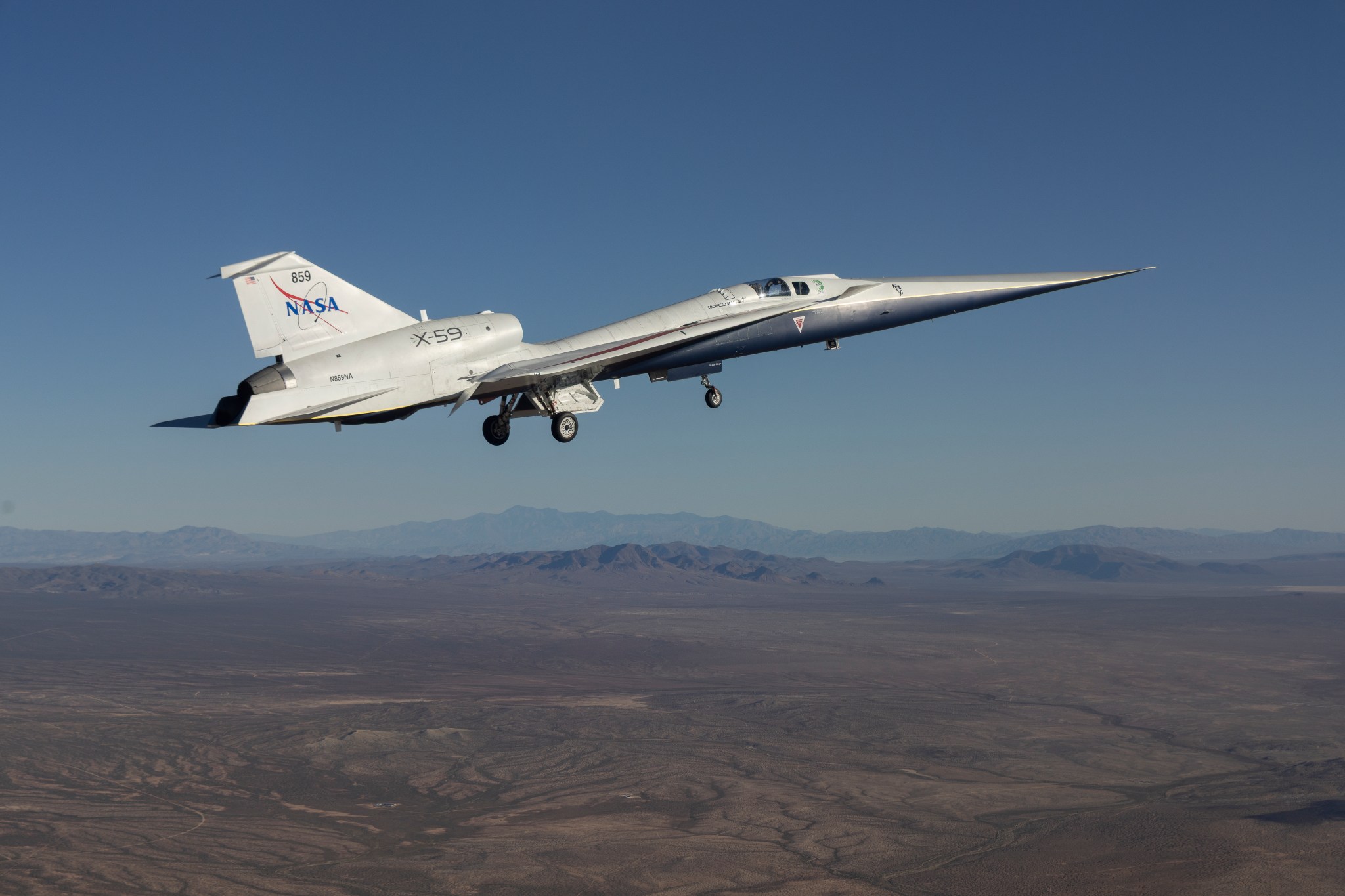
The X-59 quiet supersonic research aircraft flies above California. The plane has a distinctive shape with a long, sharply pointed nose. The nose is silver, while the rest of the body looks white. The words "NASA" and "X-59" are on the body of the aircraft. In the background, we can see brown earth below the plane as well as hazy mountains in the distance.
In a view captured from a NASA F/A-18 chase aircraft, the X-59 quiet supersonic research aircraft lifts off for its first flight Oct. 28, 2025, from U.S. Air Force Plant 42 in Palmdale, California.
NASA/Lori Losey

The up-close-and-personal vantage point of the chase aircraft also affords the opportunity to capture photos and video of the test aircraft.  

For the initial X-59 flight, a NASA photographer—fully trained and certified to fly in a high-performance jet—sat in the chase aircraft’s rear seat to record images and transmit high-definition video down to the ground. 

“We really have the best views,” Less said. “The top focus of the test team always is a safe flight and landing. But if we get some great shots in the process, it’s an added bonus.” 

Chase aircraft can also carry sensors that gather data during the flight that would be impossible to obtain from the ground. In a future phase of X-59 flights, the chase aircraft will carry a probe to measure the X-59’s supersonic shock waves and help validate that the airplane is producing a quieter sonic “thump,” rather than a loud sonic boom to people on the ground. 

The instrumentation was successfully tested using a pair of NASA F-15 research jets earlier this year. 

As part of NASA’s Quesst mission, the data could help open the way for commercial faster-than-sound air travel over land. 

Choice of Chase Aircraft

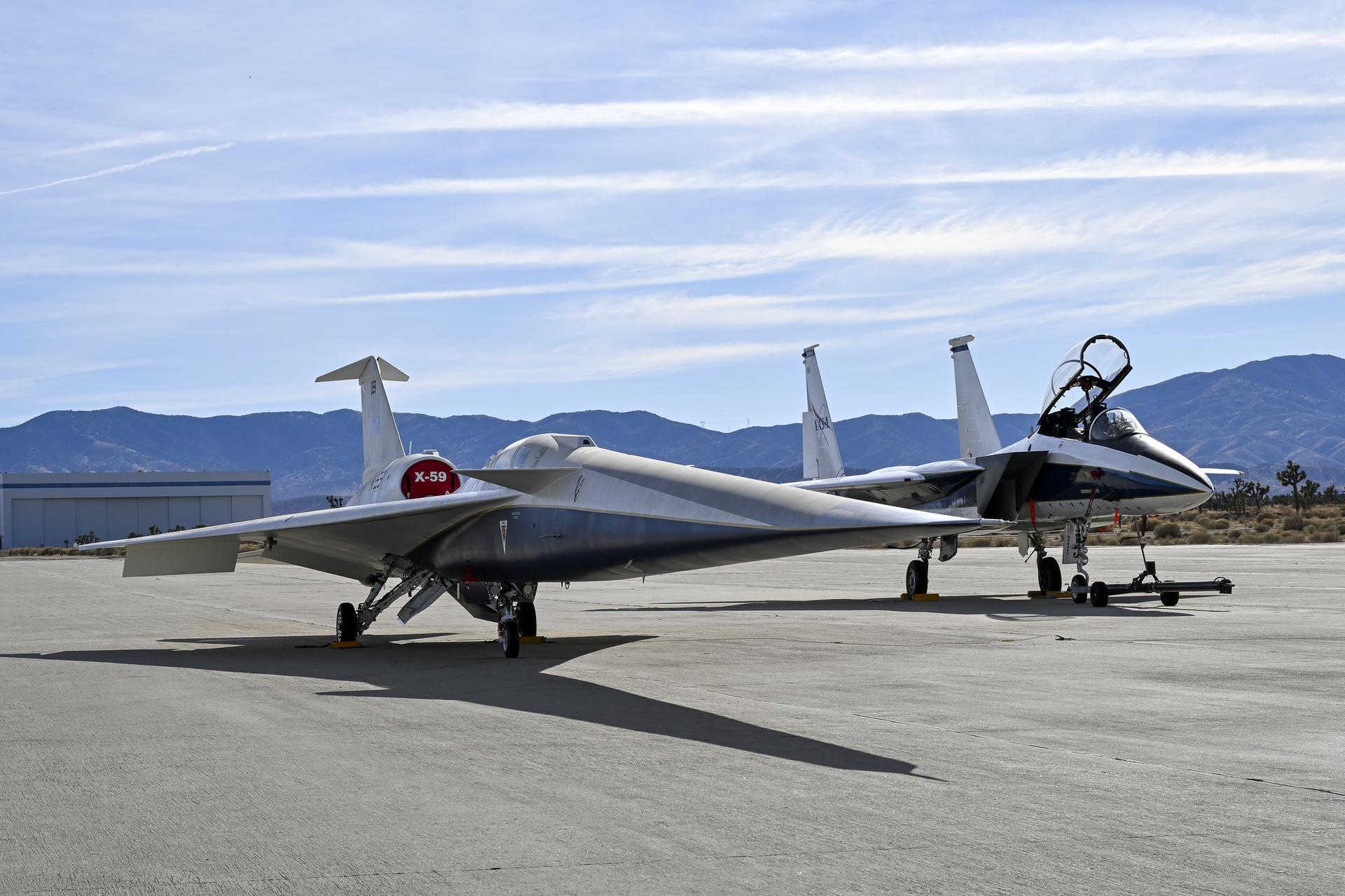
A NASA F-15 aircraft sits 20 feet off the left side of the X-59 aircraft, with a white hangar and hills in the background, during electromagnetic interference testing.
NASA/Carla Thomas

Chase aircraft have served as a staple of civilian and military flight tests for decades, with NASA and its predecessor—the National Advisory Committee for Aeronautics—employing aircraft of all types for the job. 

Today, at NASA’s Armstrong Flight Research Center in Edwards, California, two different types of research aircraft are available to serve as chase for X-59 flights: NASA-operated F/A-18 Hornets and F-15 Eagles

While both types are qualified as chase aircraft for the X-59, each has characteristics that make them appropriate for certain tasks. 

The F/A-18 is a little more agile flying at lower speeds. One of NASA’s F/A-18s has a two-seat cockpit, and the optical quality and field of view of its canopy makes it the preferred aircraft for Armstrong’s in-flight photographers. 

At the same time, the F-15 is more capable of keeping pace with the X-59 during supersonic test flights and carries the instrumentation that will measure the X-59’s shock waves. 

“The choice for which chase aircraft we will use for any given X-59 test flight could go either way depending on other mission needs and if any scheduled maintenance requires the airplane to be grounded for a while,” Less said. 

About the Author

Jim Banke

Jim Banke

Managing Editor/Senior Writer

Jim Banke is a veteran aviation and aerospace communicator with more than 40 years of experience as a writer, producer, consultant, and project manager based at Cape Canaveral, Florida. He is part of NASA Aeronautics' Strategic Communications Team and is Managing Editor for the Aeronautics topic on the NASA website.

Facebook logo
Instagram logo
Linkedin logo
Keep Exploring

Discover More Topics From NASA

💾

After years of design, development, and testing, NASA’s X-59 quiet supersonic research aircraft took to the skies for the first time on Oct. 28, 2025, markin...

NASA’s SLS Rocket: Secondary Payloads

20 Gennaio 2026 ore 19:56
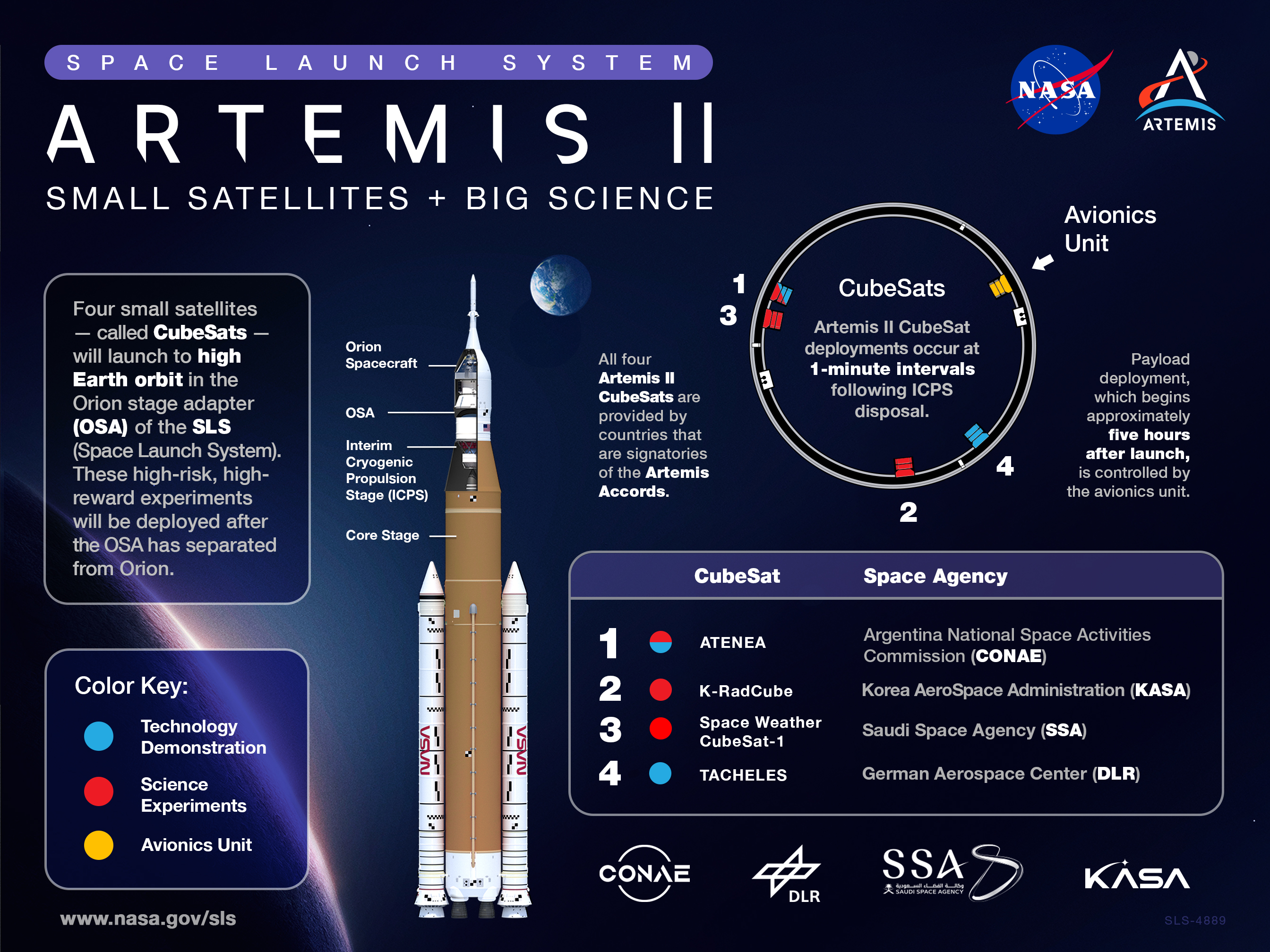
When NASA’s SLS (Space Launch System) rocket launches the agency’s Artemis II mission to the Moon, four CubeSats, or small satellites, will be hitching a ride inside the rocket’s Orion stage adapter (OSA). All four Artemis II CubeSats are provided by countries that are signatories of the Artemis Accords. Payload deployment, which begins approximately five hours after launch, is controlled by the avionics unit.

When NASA’s SLS (Space Launch System) rocket launches the agency’s Artemis II mission to the Moon, four CubeSats, or small satellites, will be hitching a ride inside the rocket’s Orion stage adapter (OSA). All four Artemis II CubeSats are provided by countries that are signatories of the Artemis Accords. Payload deployment, which begins approximately five hours after launch, is controlled by the avionics unit.

Image Credit: NASA/Kevin O’Brien

NASA Unlocks Golden Age of Innovation, Exploration in Trump’s First Year

20 Gennaio 2026 ore 18:56
This image shows NASA’s SLS (Space Launch System) and Orion spacecraft rolling out of the Vehicle Assembly Building at NASA’s Kennedy Space Center in Florida
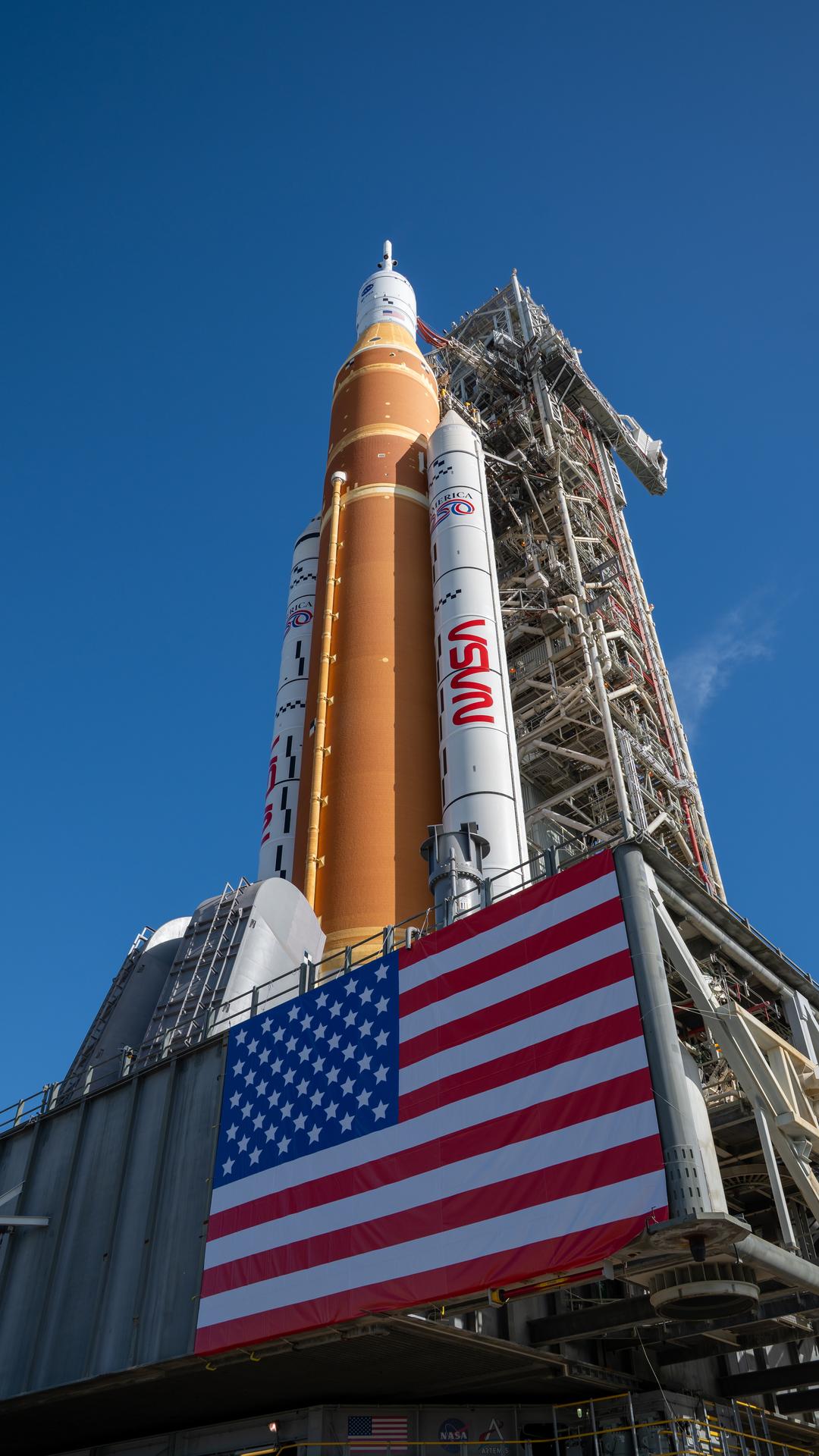
NASA’s SLS (Space Launch System) and Orion spacecraft rolled out of the Vehicle Assembly Building at the agency’s Kennedy Space Center in Florida on Saturday, Jan. 17, 2026 in preparation for the Artemis II mission.
Credit: NASA/Brandon Hancock

One year into President Donald J. Trump’s second term, NASA is delivering measurable progress across human spaceflight, science, aeronautics, and cutting-edge technology. These advances mark the beginning of a new Golden Age of American space leadership driven by clear national direction and historic investment through the Working Families Tax Cut Act.

Since his inauguration as the 47th President of the United States, NASA has sharpened its mission rooted in President Trump’s national space policy, reinforcing American superiority in space and accelerating progress across exploration, discovery, and innovation. With a renewed focus on human spaceflight, scientific excellence, and national capability, the agency is moving with clarity and momentum.

President Trump’s enduring commitment to space exploration has shaped every aspect of this progress. During his first term, the United States stood up the U.S. Space Force, commenced the Artemis campaign, established the Artemis Accords, which now have 60 signatories and are still growing, and returned American astronauts to human spaceflight from U.S. soil following the space shuttle era.

Now, with a clear National Space Policy and Working Family Tax Cut Act, NASA has the direction, resources, and authority to advance a bold vision for the future.

In the first year of the President’s second term, NASA has flown two human spaceflight missions, launched 15 science missions, and successfully test-flown a new X-plane, while accelerating work across lunar exploration, Earth science, planetary defense, next-generation aeronautics, and technologies to prepare for future missions to Mars.

Soon, NASA will launch the Artemis II mission, sending humans around the Moon for the first time in over 50 years, and setting the stage for America’s return to the lunar surface, but this time, to stay. These milestones reflect a workforce empowered to move faster, think bigger, and deliver results for the American people.

“In the first year of this administration, NASA has moved with clarity, purpose, and momentum, advancing President Trump’s bold vision for American leadership in space,” said NASA Administrator Jared Isaacman. “From strengthening our focus on human spaceflight and preparing for the first deep space exploration by NASA astronauts in more than half a century, to accelerating innovation across science, technology, and national capability, the President has provided the clearest executive direction for NASA since the Kennedy era. President Trump’s National Space Policy sharpened our mission, aligned our priorities, and empowered our workforce to move faster and think bigger. Because of that leadership, NASA is confidently delivering on a future of American space superiority for generations to come.”

NASA is positioned to build on this momentum. Under President Trump’s leadership, American astronauts will return to the surface of the Moon by 2028 and establish a sustained human presence with a lunar base. The agency will continue launching missions of science and discovery, including bringing the Nancy Grace Roman Space Telescope into operation before the end of the year. In line with the President’s vision, NASA is advancing nuclear power and propulsion technologies to enable deep space missions and transform what is possible for exploration.

With a focused mission, empowered workforce, and strong partnership with industry and international allies, NASA is entering the second year of President Trump’s second term positioned to change the world, extending American leadership in space and unlocking discoveries that will benefit humanity for decades to come.

For more information about NASA’s missions and programs, visit:

https://www.nasa.gov

-end-

Bethany Stevens / George Alderman
Headquarters, Washington
771-216-2606 / 202-374-6002
bethany.c.stevens@nasa.gov / george.a.alderman@nasa.gov

Share

Details

Last Updated
Jan 20, 2026
Editor
Jennifer M. Dooren

Hubble Nets Menagerie of Young Stellar Objects

20 Gennaio 2026 ore 16:52
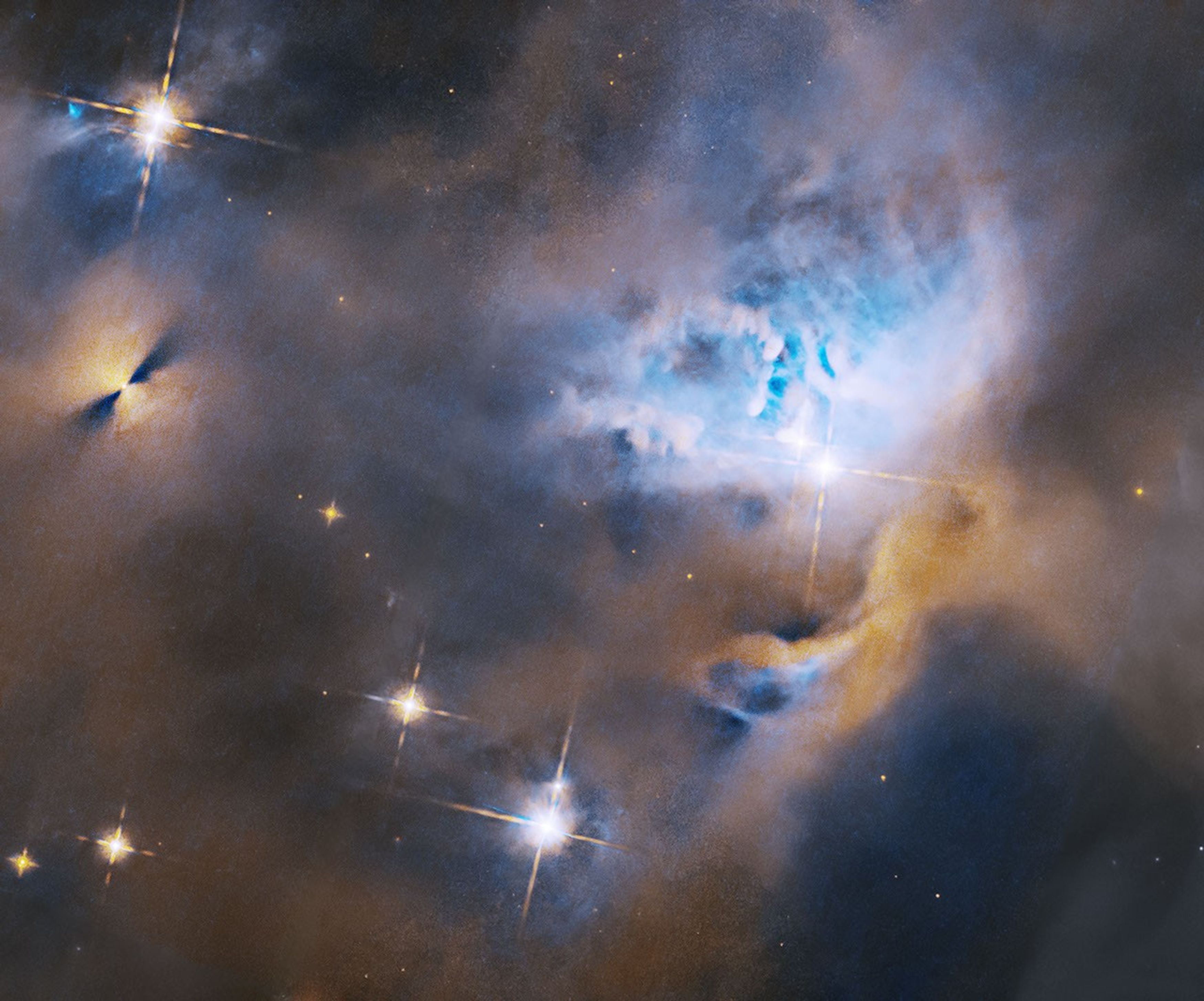
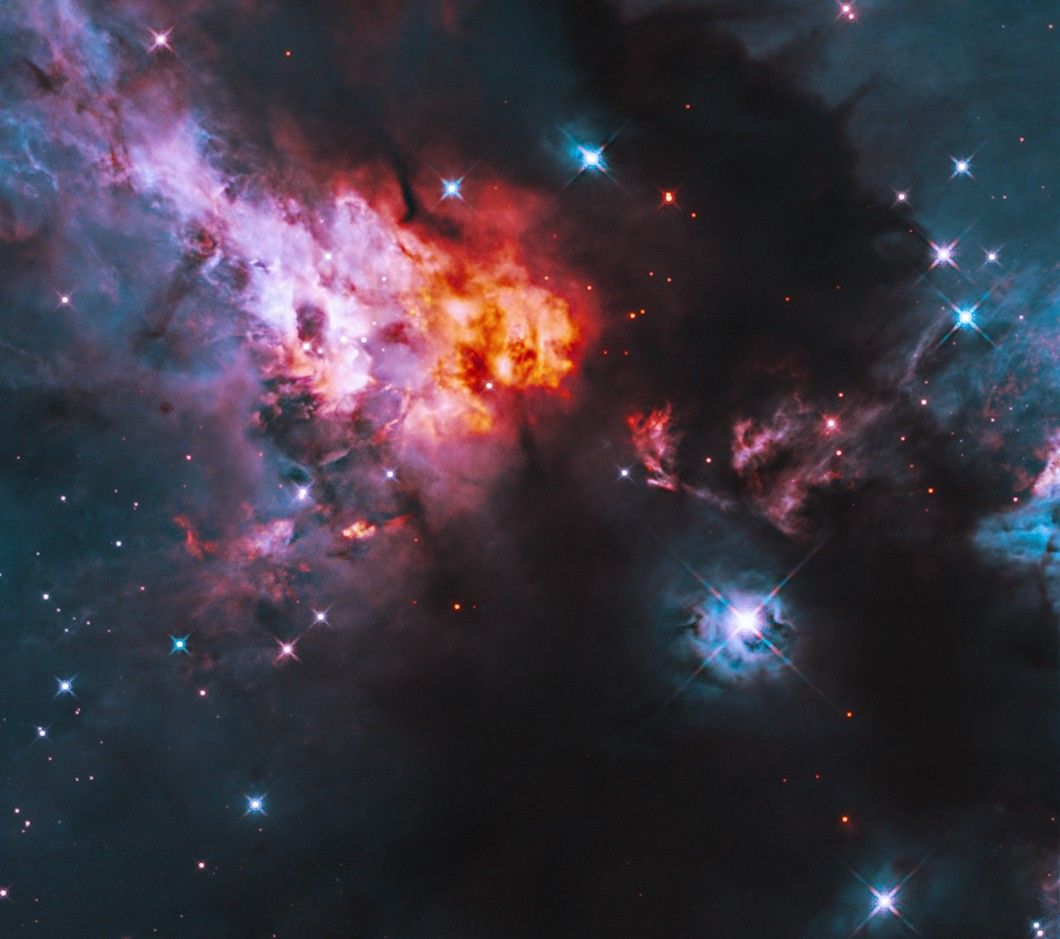
Within a ghostly blue and orange cloud of gas and dust, several stars shine brightly. To the upper left is a protoplanetary disk, appearing as a bright point flanked on either side by fan-shaped shadows. To the center right, stars are nestled in a cavity in the gas and dust.
A bright reflection nebula shares the stage with a protostar and planet-forming disk in this Hubble image.
NASA, ESA, K. Stapelfeldt (Jet Propulsion Laboratory) and D. Watson (University of Rochester); Processing: Gladys Kober (NASA/Catholic University of America)

A disparate collection of young stellar objects bejewels a cosmic panorama in the star-forming region NGC 1333 in this new image from NASA’s Hubble Space Telescope. To the left, an actively forming star called a protostar casts its glow on the surrounding gas and dust, creating a reflection nebula. Two dark stripes on opposite sides of the bright point (upper left) are its protoplanetary disk, a region where planets could form, and the disk’s shadow, cast across the large envelope of material around the star. Material accumulates onto the protostar through this rotating disk of gas and dust, a product of the collapsing cloud of gas and dust that gave birth to the star. Where the shadow stops and the disk begins is presently unknown.

To the center right, an outflow cavity reveals a fan-shaped reflection nebula. The two stars at its base, HBC 340 (lower) and HBC 341 (upper), unleash stellar winds, or material flowing from the surface of the star, that clear out the cavity from the surrounding molecular cloud over time. A reflection nebula like this one is illuminated by light from nearby stars that is scattered by the surrounding gas and dust.

This reflection nebula fluctuates in brightness over time, which researchers attribute to variations in brightness of HBC 340 and HBC 341. HBC 340 is the primary source of the fluctuation as the brighter and more variable star.

HBC 340 and HBC 341 are Orion variable stars, a class of forming stars that change in brightness irregularly and unpredictably, possibly due to stellar flares and ejections of matter from their surfaces. Orion variable stars, so named because they are associated with diffuse nebulae like the Orion Nebula, eventually evolve into non-variable stars.

In this image, the four beaming stars near the bottom of the image and one in the top right corner are also Orion variable stars. The rest of the cloudscape is studded with other young stellar objects.

NGC 1333 lies about 950 light-years away in the Perseus molecular cloud, and was imaged by Hubble to learn more about young stellar objects, such as properties of circumstellar disks and outflows in the gas and dust created by these stars.

Intricacies of Helix Nebula Revealed With NASA’s Webb

20 Gennaio 2026 ore 16:00
 
4 Min Read

Intricacies of Helix Nebula Revealed With NASA’s Webb

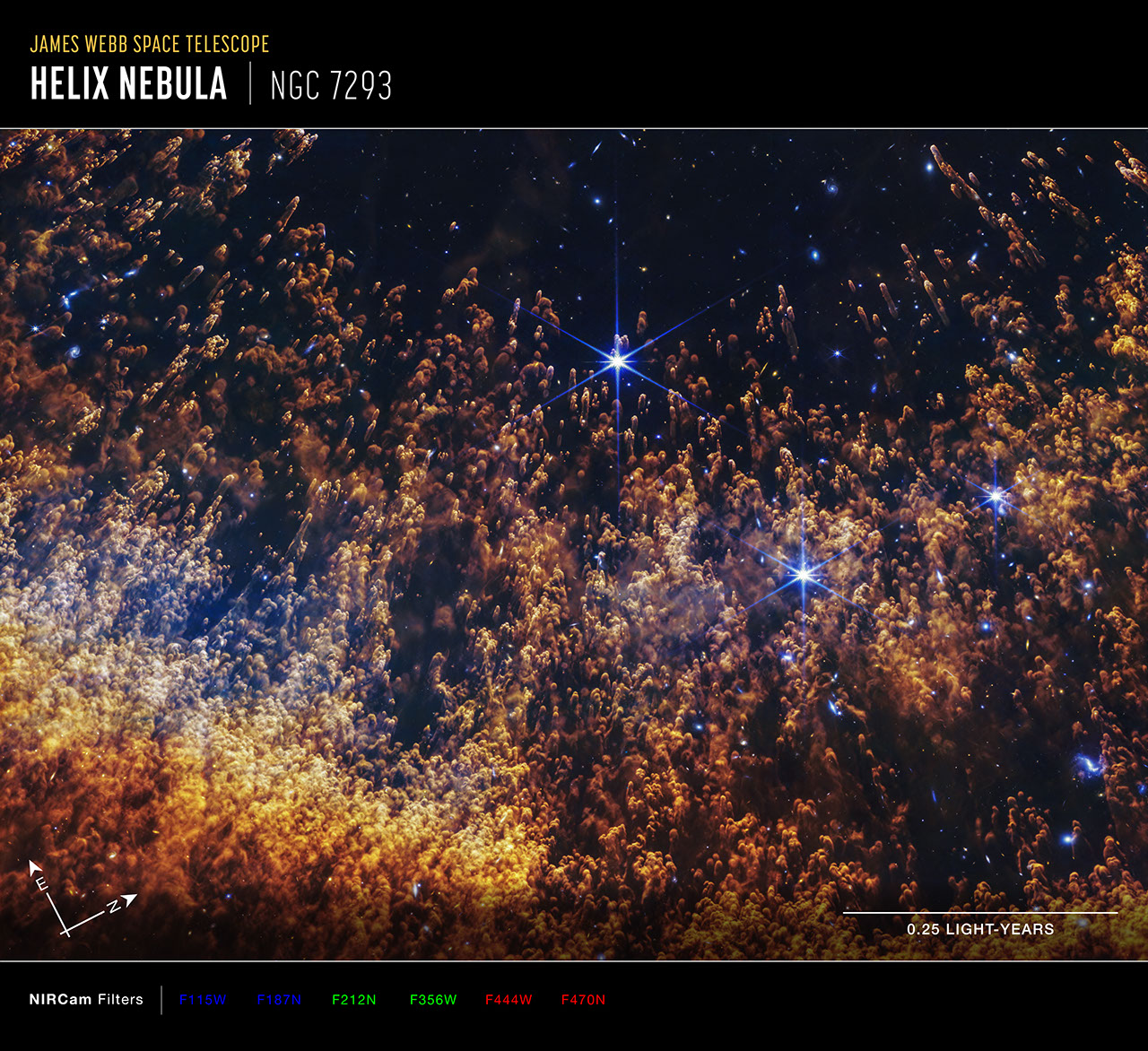
A closeup of a small section of the Helix Nebula, an expanding shell of gas and dust. Thousands of orange and gold comet-like pillars stream upward from the bottom, like thin liquid blown up a sheet of glass. These pillars are around the circumference of the arced shell, which forms a partial orange semi-circle at the bottom. The pillars are more numerous and denser at the bottom, and darker red. They fade to orange and then yellow in the arc. In the top two-thirds, they are thinner and more golden, and it’s easier to see the black background of space. Several bright blue stars, some with diffraction spikes, are scattered throughout. A few larger stars are on the right side.
This new image of a portion of the Helix Nebula from NASA’s James Webb Space Telescope highlights comet-like knots, fierce stellar winds, and layers of gas shed off by a dying star interacting with its surrounding environment.
Credits:
Image: NASA, ESA, CSA, STScI; Image Processing: Alyssa Pagan (STScI)

NASA’s James Webb Space Telescope has zoomed into the Helix Nebula to give an up-close view of the possible eventual fate of our own Sun and planetary system. In Webb’s high-resolution look, the structure of the gas being shed off by a dying star comes into full focus. The image reveals how stars recycle their material back into the cosmos, seeding future generations of stars and planets, as NASA explores the secrets of the universe and our place in it.

Image: Helix Nebula (NIRCam)

A closeup of a small section of the Helix Nebula, an expanding shell of gas and dust. Thousands of orange and gold comet-like pillars stream upward from the bottom, like thin liquid blown up a sheet of glass. These pillars are around the circumference of the arced shell, which forms a partial orange semi-circle at the bottom. The pillars are more numerous and denser at the bottom, and darker red. They fade to orange and then yellow in the arc. In the top two-thirds, they are thinner and more golden, and itu2019s easier to see the black background of space. Several bright blue stars, some with diffraction spikes, are scattered throughout. A few larger stars are on the right side.
This new image of a portion of the Helix Nebula from NASA’s James Webb Space Telescope highlights comet-like knots, fierce stellar winds, and layers of gas shed off by a dying star interacting with its surrounding environment.
Image: NASA, ESA, CSA, STScI; Image Processing: Alyssa Pagan (STScI)

In the image from Webb’s NIRCam (Near-Infrared Camera), pillars that look like comets with extended tails trace the circumference of the inner region of an expanding shell of gas. Here, blistering winds of fast-moving hot gas from the dying star are crashing into slower moving colder shells of dust and gas that were shed earlier in its life, sculpting the nebula’s remarkable structure.

The iconic Helix Nebula has been imaged by many ground- and space-based observatories over the nearly two centuries since it was discovered. Webb’s near-infrared view of the target brings these knots to the forefront compared to the ethereal image from NASA’s Hubble Space Telescope, while its increased resolution sharpens focus from NASA’s retired Spitzer Space Telescope’s snapshot. Additionally, the new near-infrared look shows the stark transition between the hottest gas to the coolest gas as the shell expands out from the central white dwarf.

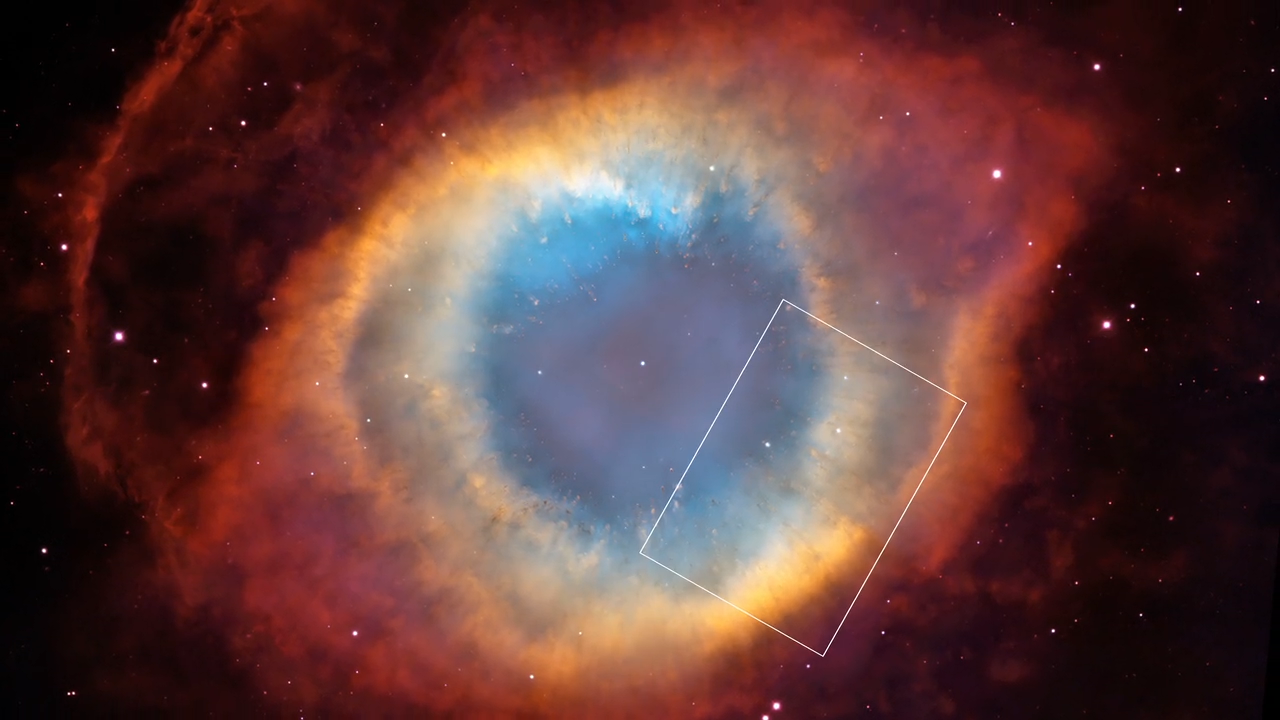
Image: Helix Nebula Context (VISTA and Webb)

Two panels showing different views of a planetary nebula. The left panel, labeled VISTA, shows colorful light from a glowing cloud shaped like an American football at 45-degree angle. It looks resembles an eye. The outer edges of the nebula are red and clumpy, and traveling in towards the center, they become yellow and golden. The center of the nebula is black and speckled with tiny stars. At three o’clock along the shell of gas, there is a rectangular box around part of the shell. Lines extend from the box to the right, where the image shows thousands of orange and gold comet-like pillars stream leftward from the right, like thin liquid blown up a sheet of glass. These pillars are around the circumference of the arced shell, which forms a partial orange semi-circle at the right. The pillars are more numerous and denser at the right, and darker red.
This image of the Helix Nebula from the ground-based Visible and Infrared Telescope for Astronomy (left) shows the full view of the planetary nebula, with a box highlighting Webb’s field of view (right).
Image: ESO, VISTA, NASA, ESA, CSA, STScI, J. Emerson (ESO); Acknowledgment: CASU

A blazing white dwarf, the leftover core of the dying star, lies right at the heart of the nebula, out of the frame of the Webb image. Its intense radiation lights up the surrounding gas, creating a rainbow of features: hot ionized gas closest to the white dwarf, cooler molecular hydrogen farther out, and protective pockets where more complex molecules can begin to form within dust clouds. This interaction is vital, as it’s the raw material from which new planets may one day form in other star systems.

In Webb’s image of the Helix Nebula, color represents the temperature and chemistry. A touch of a blue hue marks the hottest gas in this field, energized by intense ultraviolet light from the white dwarf. Farther out, the gas cools into the yellow regions where hydrogen atoms join into molecules. At the outer edges, the reddish tones trace the coolest material, where gas begins to thin and dust can take shape. Together, the colors show the star’s final breath transforming into the raw ingredients for new worlds, adding to the wealth of knowledge gained from Webb about the origin of planets

Spitzer’s studies of the Helix Nebula hinted at the formation of more complex molecules, but Webb’s resolution shows how they form in shielded zones of the scene. In the Webb image, look for dark pockets of space amid the glowing orange and red. 

Video: Observatory Comparison (Hubble/Spitzer/Webb)

This video compares images of the Helix Nebula from three NASA observatories: Hubble’s image in visible light, Spitzer’s infrared view, and Webb’s high-resolution near-infrared look.
Video: NASA, ESA, CSA, STScI, Alyssa Pagan (STScI); Acknowledgment: NASA/JPL-Caltech, ESO, VISTA, CASU, Joseph Hora (CfA), J. Emerson (ESO)

The Helix Nebula is located 650 light-years away from Earth in the constellation Aquarius. It remains a favorite among stargazers and professional astronomers alike due to its relative proximity to Earth, and its similar appearance to the “Eye of Sauron.”

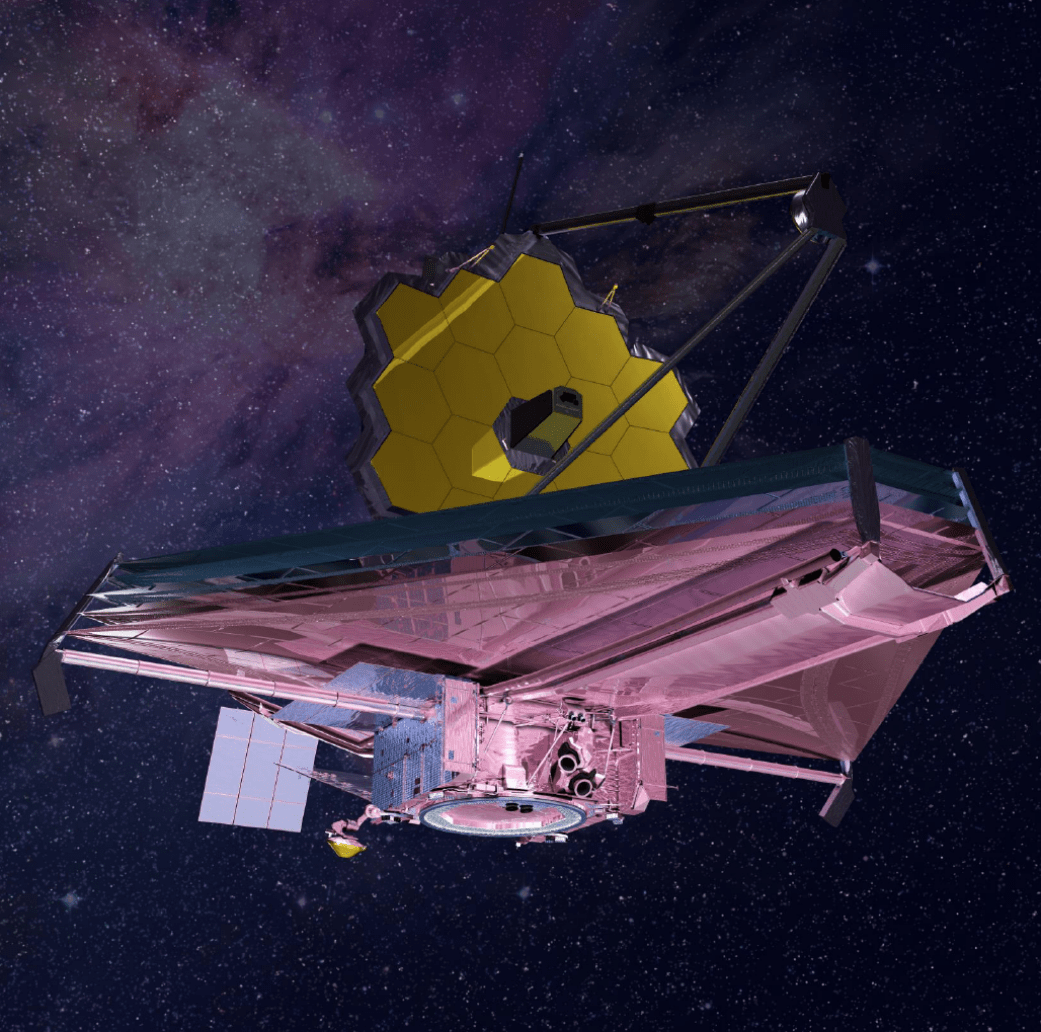
The James Webb Space Telescope is the world’s premier space science observatory. Webb is solving mysteries in our solar system, looking beyond to distant worlds around other stars, and probing the mysterious structures and origins of our universe and our place in it. Webb is an international program led by NASA with its partners, ESA (European Space Agency) and CSA (Canadian Space Agency).

To learn more about Webb, visit:

https://nasa.gov/webb

Downloads & Related Information

The following sections contain links to download this article’s images and videos in all available resolutions followed by related information links, media contacts, and if available, research paper and Spanish translation links.

Related Images & Videos

A closeup of a small section of the Helix Nebula, an expanding shell of gas and dust. Thousands of orange and gold comet-like pillars stream upward from the bottom, like thin liquid blown up a sheet of glass. These pillars are around the circumference of the arced shell, which forms a partial orange semi-circle at the bottom. The pillars are more numerous and denser at the bottom, and darker red. They fade to orange and then yellow in the arc. In the top two-thirds, they are thinner and more golden, and itu2019s easier to see the black background of space. Several bright blue stars, some with diffraction spikes, are scattered throughout. A few larger stars are on the right side.

Helix Nebula (NIRCam)

This new image of a portion of the Helix Nebula from NASA’s James Webb Space Telescope highlights comet-like knots, fierce stellar winds, and layers of gas shed off by a dying star interacting with its surrounding environment.

Two panels showing different views of a planetary nebula. The left panel, labeled VISTA, shows colorful light from a glowing cloud shaped like an American football at 45-degree angle. It looks resembles an eye. The outer edges of the nebula are red and clumpy, and traveling in towards the center, they become yellow and golden. The center of the nebula is black and speckled with tiny stars. At three ou2019clock along the shell of gas, there is a rectangular box around part of the shell. Lines extend from the box to the right, where the image shows thousands of orange and gold comet-like pillars stream leftward from the right, like thin liquid blown up a sheet of glass. These pillars are around the circumference of the arced shell, which forms a partial orange semi-circle at the right. The pillars are more numerous and denser at the right, and darker red.

Helix Nebula Context (VISTA and Webb)

This image of the Helix Nebula from the ground-based Visible and Infrared Telescope for Astronomy (left) shows the full view of the planetary nebula, with a box highlighting Webb’s field of view (right).

Image titled u201cJames Webb Space Telescope, Helix Nebula, NGC 7293u201d with compass arrows, scale bar, and color key. Image shows thousands of orange and gold comet-like pillars stream upward from the bottom, like thin liquid blown up a sheet of glass. These pillars are around the circumference of the arced shell, which forms a partial orange semi-circle at the bottom. Several bright blue stars are scattered throughout. At the bottom left are compass arrows indicating the orientation of the image on the sky. The north arrow points in the 2 ou2019clock direction. The east arrow points toward 11 ou2019clock. At the lower right is a scale bar labeled .25 light-years. The length of the scale bar is about one-fifth the total width of the image. Below the image is a color key showing which NIRCam filters were used to create the image and which visible-light color is assigned to each filter. From left to right, NIRCam filters are: F115W and F187N are blue, F212N and F356W are green, F444W and F470N are red.

Helix Nebula (NIRCam Compass Image)

This image of the Helix Nebula, captured by the NIRCam (Near-Infrared Camera) instrument on Webb, includes compass arrows, scale bar, and color key for reference.

Almost resembling an eye, a circular region of glowing blue gas is ringed in yellow gas, surrounded by a football-shaped red region. The nebula shines against black space dotted with stars. There is a rectangular box outlined in white at about 4 o'clock.

Observatory Comparison (Hubble/Spitzer/Webb)

This video compares images of the Helix Nebula from three NASA observatories: Hubble’s image in visible light, Spitzer’s infrared view, and Webb’s high-resolution near-infrared look.

Related Links

Read more: NASA’s Webb Traces Details of Complex Planetary Nebula

Explore more: ViewSpace Star Death: Helix Nebula

Explore more: ViewSpace Celestial Tour: Planetary Nebulae—Sculptures in the Sky

Explore more: Stellar Evolution Flipbook Activity Guide

More Webb News

More Webb Images

Webb Science Themes

Webb Mission Page


Share

Details

Last Updated
Jan 20, 2026

Contact
Media

Laura Betz
NASA’s Goddard Space Flight Center
Greenbelt, Maryland
laura.e.betz@nasa.gov

Hannah Braun
Space Telescope Science Institute
Baltimore, Maryland

Christine Pulliam
Space Telescope Science Institute
Baltimore, Maryland

How Long, Not Long 

19 Gennaio 2026 ore 06:01
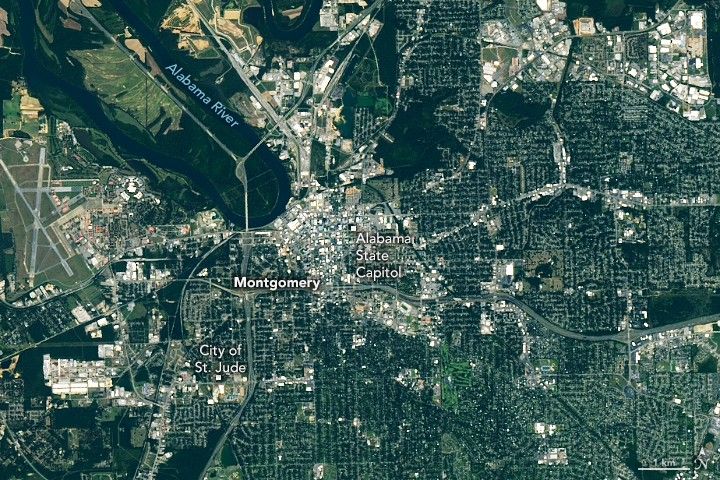
Montgomery is the focus of a satellite image that shows the city along a bend in the Alabama River. Labels mark the location of City of St. Jude on the southwestern outskirts of the city and the Alabama state capitol in the heart of the city. The most densely parts of the city appear gray while the city's outskirts are greener and have more tree cover.
September 16, 2025

On March 24, 1965, a march from the campus of City of St. Jude to the Alabama state capitol building in Montgomery marked the culmination of a campaign that transformed voting rights in the United States.

The historic event included more than 25,000 civil rights activists—including more than 3,000 people who had walked from Selma—who gathered and camped at the Catholic social service complex during the final leg of the third and final Selma-to-Montgomery march. On that last night of the multi-day protest, marchers camped on a rain-soaked field at St. Jude and drank in the music of some of the day’s biggest stars, including Harry Belafonte, Joan Baez, Sam Cooke, Billy Eckstine, Tony Bennett, Leonard Bernstein, Odetta Holmes, Nina Simone, Sammy Davis Jr., and Peter, Paul and Mary.

Early the next morning, Dr. Martin Luther King Jr. led the procession of marchers on a five-mile route to the state capitol. Decades later, on September 16, 2025, the OLI (Operational Land Imager) on Landsat 8 captured this image of Montgomery, showing the ground the marchers covered. As documented in a series of aerial photographs, marchers departed from St. Jude in a long line, headed north toward downtown, turned east onto Dexter Avenue, passed the Baptist church where King was once a pastor, and concluded on the steps of the state capitol building (below).

An aerial photograph shows crowds of people assembling in front the Alabama state capitol on March 25, 1965.
March 25, 1965

From there, King gave his “How Long, Not Long” speech (also called Our God is Marching On), which many historians consider among his most consequential. On that warm, sunny day, he called out to the crowd assembled before him:

I know you are asking today, How long will it take?

Somebody’s asking, How long will prejudice blind the visions of men, darken their understanding, and drive bright-eyed wisdom from her sacred throne?

Somebody’s asking, When will wounded justice, lying prostrate on the streets of Selma and Birmingham and communities all over the South, be lifted from this dust of shame to reign supreme among the children of men?‘”

Then came his answer:

I come to say to you this afternoon, however difficult the moment, however frustrating the hour, it will not be long, because truth crushed to earth will rise again.‘”

Then, a bit later, he delivered a line that would become one of his most famous and enduring:

How long? Not long, because the arc of the moral universe is long, but it bends toward justice.

The Selma to Montgomery march proved to be a turning point in the Civil Rights Movement, helping galvanize public support for the passage of the Voting Rights Act of 1965 later that year, a law that prohibited racial discrimination in voting.

NASA Earth Observatory image by Lauren Dauphin, using Landsat data from the U.S. Geological Survey. Photograph by the Department of Defense via the Digital Public Library of America. Story by Adam Voiland.

References & Resources

Downloads

Montgomery is the focus of a satellite image that shows the city along a bend in the Alabama River. Labels mark the location of City of St. Jude on the southwestern outskirts of the city and the Alabama state capitol in the heart of the city. The most densely parts of the city appear gray while the city's outskirts are greener and have more tree cover.

September 16, 2025

JPEG (6.10 MB)

You may also be interested in:

Stay up-to-date with the latest content from NASA as we explore the universe and discover more about our home planet.

The First Labor Day Parade

3 min read

New York City’s Manhattan Island was the site of the nation’s first Labor Day parade on September 5, 1882.

Article

Dark Skies Over the Great Basin

5 min read

Far from large urban areas, Great Basin National Park offers unencumbered views of the night sky and opportunities to study…

Article

Cranberry Country, Wisconsin

3 min read

The tart berry and state fruit brings a red pop to holiday feasts—and to satellite images of Midwestern marshlands.

Article

2025 NESC Technical Update

20 Gennaio 2026 ore 15:12

Annual Report of NESC Technical Activities

On behalf of the NASA Engineering and Safety Center (NESC), I am pleased to provide you with the 2025 NESC Technical Update. This annual report summarizes the technical work, engineering advancements, and knowledge capture efforts we made in FY25. With support provided by members of our NASA community from across the centers, we focused our efforts on performing value-added independent testing, analysis, and assessments of NASA’s high-risk projects to ensure safety and mission success.

We appreciate the opportunity to share our progress and highlight our FY25 accomplishments. This report and all other NESC knowledge products are available at nasa.gov/nesc. As always, we value your feedback and engagement. Thank you for your continuing support of the NESC.

Timmy R. Wilson

Director, NASA Engineering and Safety Center

Jaclyn Kagey Shapes Humanity’s Return to the Moon 

20 Gennaio 2026 ore 12:00
4 Min Read

Jaclyn Kagey Shapes Humanity’s Return to the Moon 

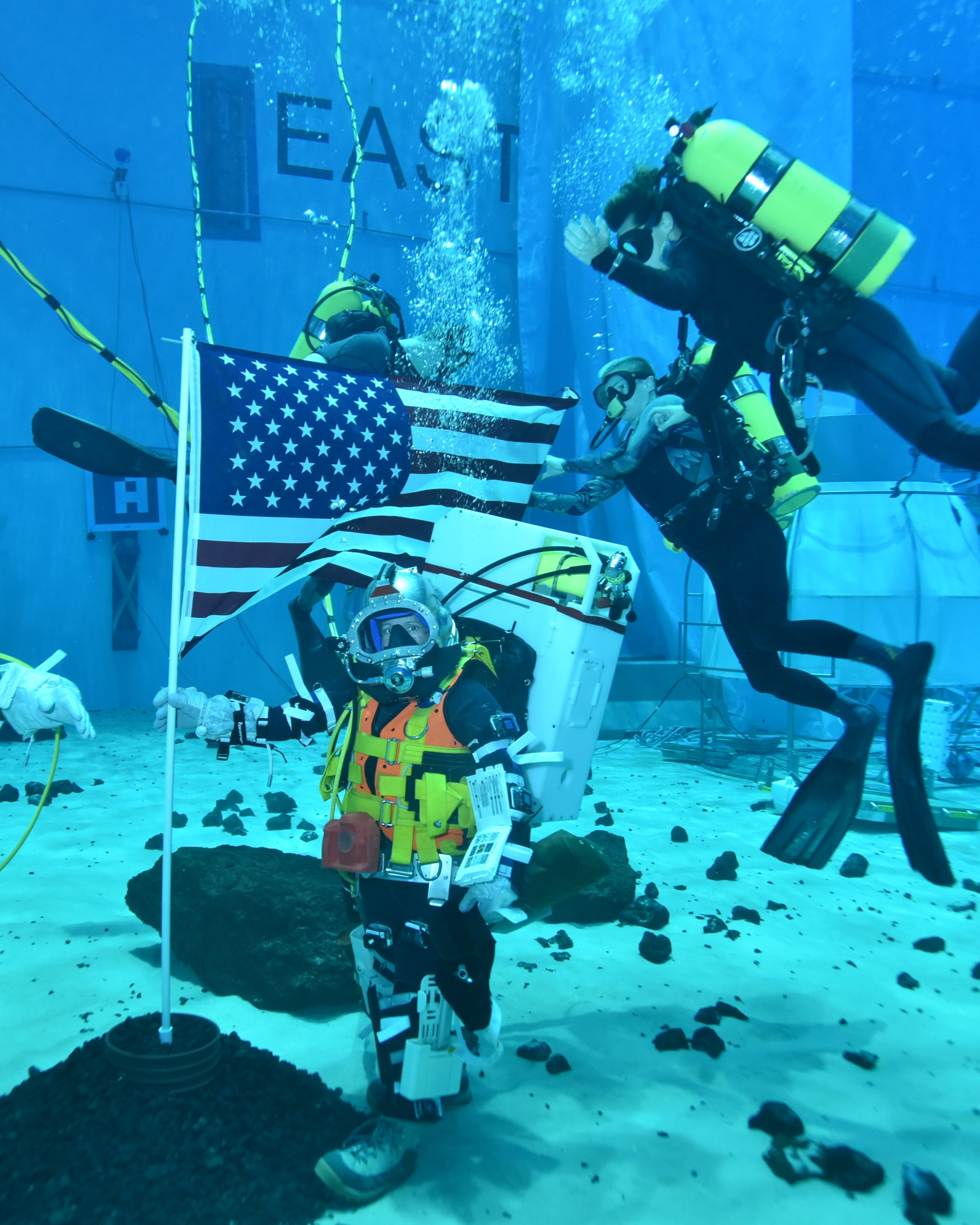
Two people practice underwater operations in a Moon like environment. The person on the left is holding an U.S. flag.
Jaclyn Kagey trains in NASA’s Neutral Buoyancy Laboratory, where astronauts and flight controllers rehearse spacewalk procedures in a simulated microgravity environment.
Credits: NASA

For Jaclyn Kagey, helping astronauts put boots on the Moon is part of her daily work. 

As the Artemis III extravehicular activity lead in NASA’s Flight Operations Directorate, Kagey plays a central role in preparing astronauts for humanity’s return to the lunar surface.  

She helps define how astronauts will work on the Moon, from planning detailed spacewalk timelines to guiding real-time operations. Crews will conduct these activities after stepping outside NASA’s human landing system, a commercial lander designed to safely transport astronauts from lunar orbit to the surface and back during Artemis missions. 

A woman poses in a black suit in front of the U.S. flag (left) and the NASA flag.
Official portrait of Jaclyn Kagey.
NASA/Robert Markowitz

As NASA prepares to return humans to the lunar surface for the first time in more than 50 years, Kagey’s work is helping shape how Artemis missions will unfold. Astronauts will explore the Moon’s south polar region, an area never visited by humans, and the Artemis III mission will serve as the proving ground for future lunar exploration.  

Kagey’s career at NASA spans more than 25 years and includes work across some of the agency’s most complex human spaceflight programs. While studying at Embry-Riddle Aeronautical University, she watched space shuttle launches that solidified her goal of working in human spaceflight. That goal became reality through United Space Alliance, where she and her husband began their careers as contractors. 

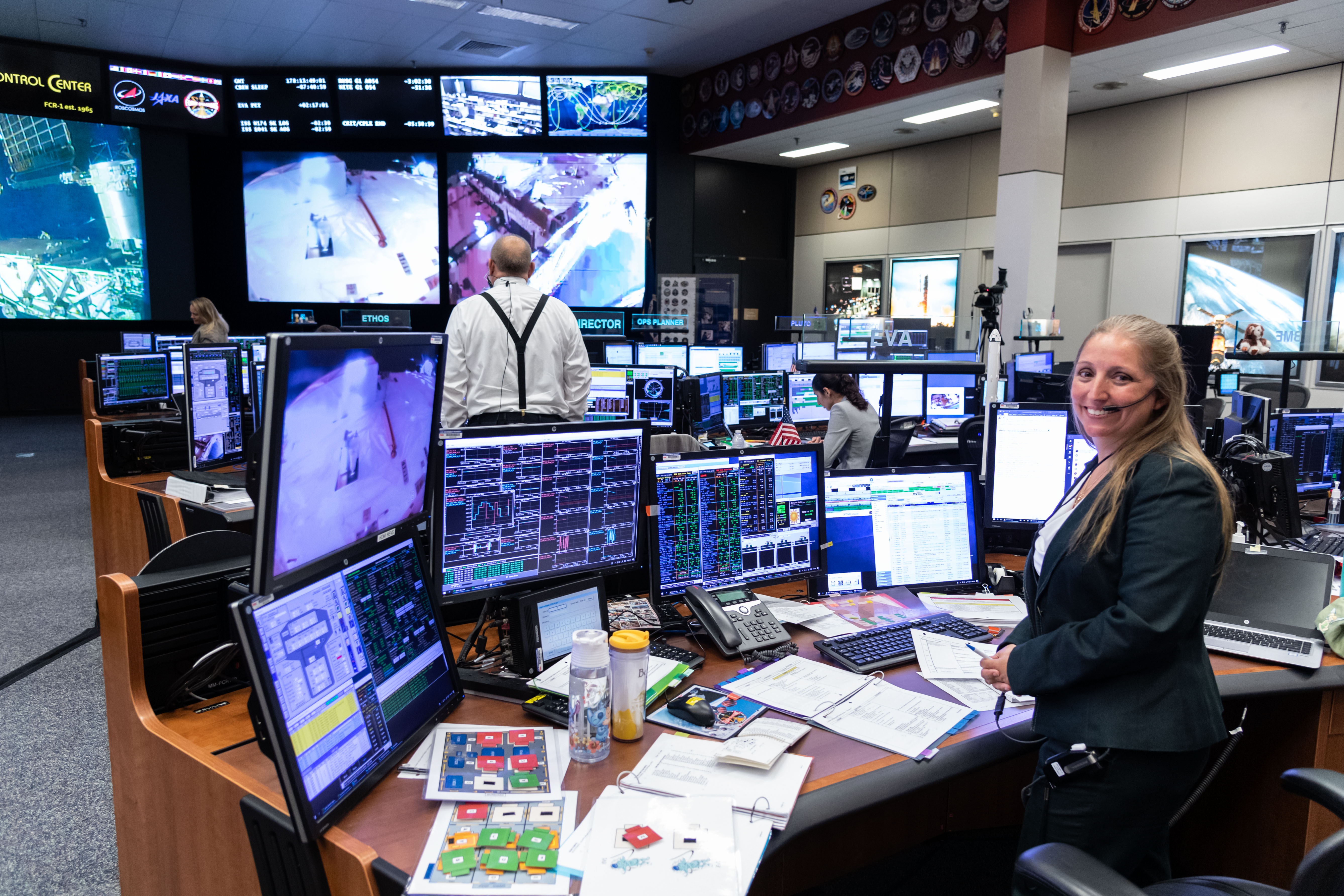
A woman smiles and poses at a desk in front of several monitors at mission control.
Jaclyn Kagey works in the Mission Control Center during a spacewalk simulation at NASA’s Johnson Space Center in Houston.
NASA/Robert Markowitz

One of Kagey’s career-defining moments came during a high-pressure operation aboard the International Space Station. 

“I’ve planned and executed seven spacewalks, but one that stands out was U.S. EVA 21,” she said. “We had a critical ammonia leak on the station, and from the time the issue was identified, we had just 36 hours to plan, prepare the spacesuits, and execute the repair.” 

The team successfully completed the spacewalk and restored the system. “The agility, dedication, and teamwork shown during that operation were remarkable,” Kagey said. “It demonstrated what this team can accomplish under pressure.” 

Two people practice underwater operations in a Moon like environment. The person on the left is holding an U.S. flag.
Jaclyn Kagey trains in NASA’s Neutral Buoyancy Laboratory, where astronauts and flight controllers rehearse spacewalk procedures in a simulated microgravity environment.
NASA

Throughout her career, Kagey has learned that adaptability is essential in human spaceflight. 

“You have to be flexible,” she said. “Things rarely go exactly as planned, and your job is to respond in a way that keeps the crew safe and the mission moving forward.” 

She has also learned the importance of balance. “There are times when the mission requires everything you have,” she said. “And there are times when you have to step back. Learning when to do each is critical.” 

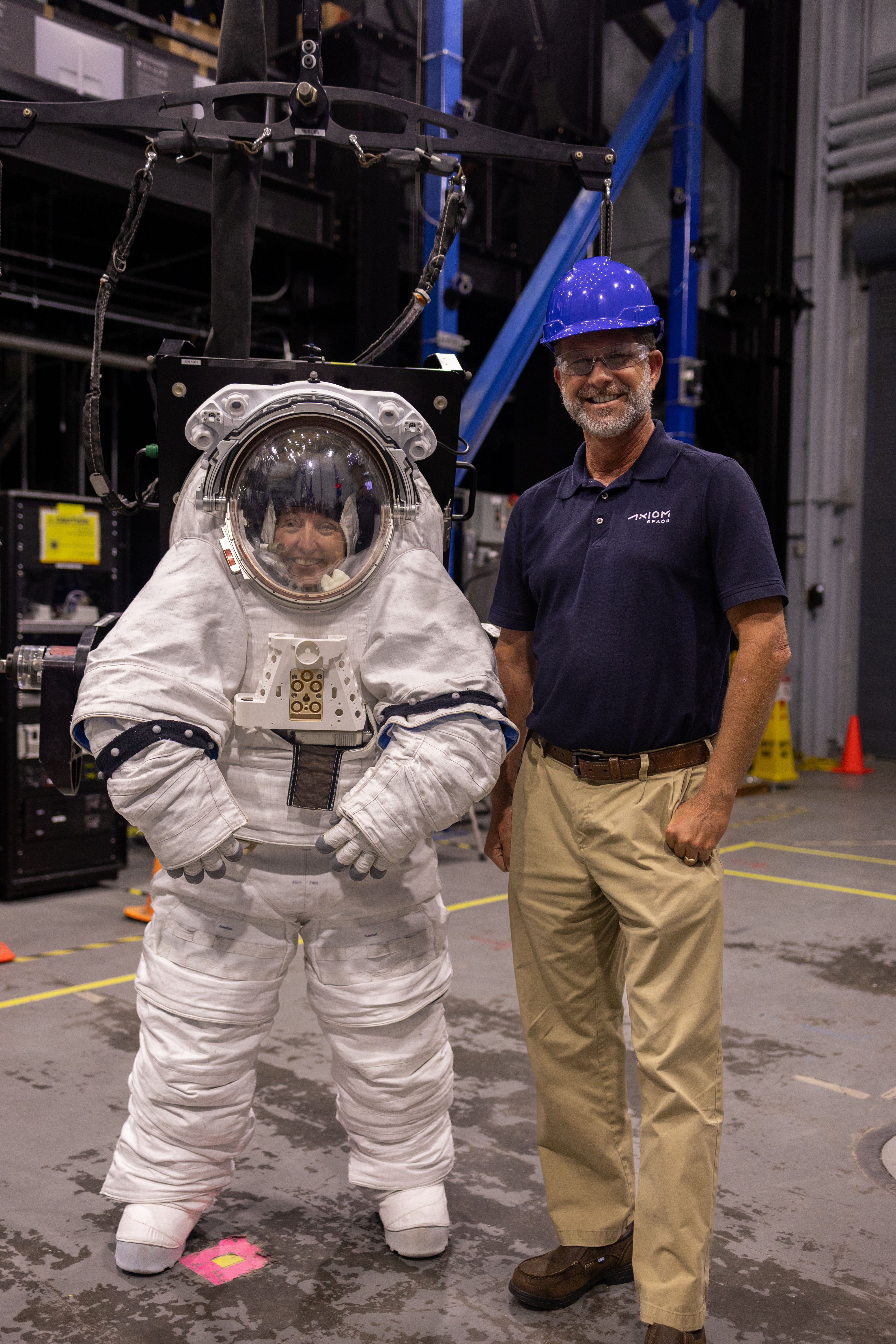
A woman, left, wearing a spacesuit poses next to a man at a facility.
Jaclyn Kagey suited up in Axiom Space’s Extravehicular Mobility Unit (AxEMU) spacesuit during a test on the Active Response Gravity Offload System (ARGOS) at Johnson’s Space Vehicle Mockup Facility.
Axiom Space

Kagey’s influence also extends to the future of spacesuit development. Standing on the shorter end of the height spectrum, she once could not complete a full test in the legacy Extravehicular Mobility Unit despite passing the fit check. Although Kagey could don the suit, its proportions were too large for her and made it difficult to move as needed for the test. That experience drove her to advocate for designs that better support a wider range of body types.  

That effort came full circle when she recently completed her first test in Axiom Space’s lunar spacesuit, called the Axiom Extravehicular Mobility Unit (AxEMU), on the Active Response Gravity Offload System at Johnson Space Center. 

“It’s exciting to literally fit into the future of spacewalks!” Kagey said. 

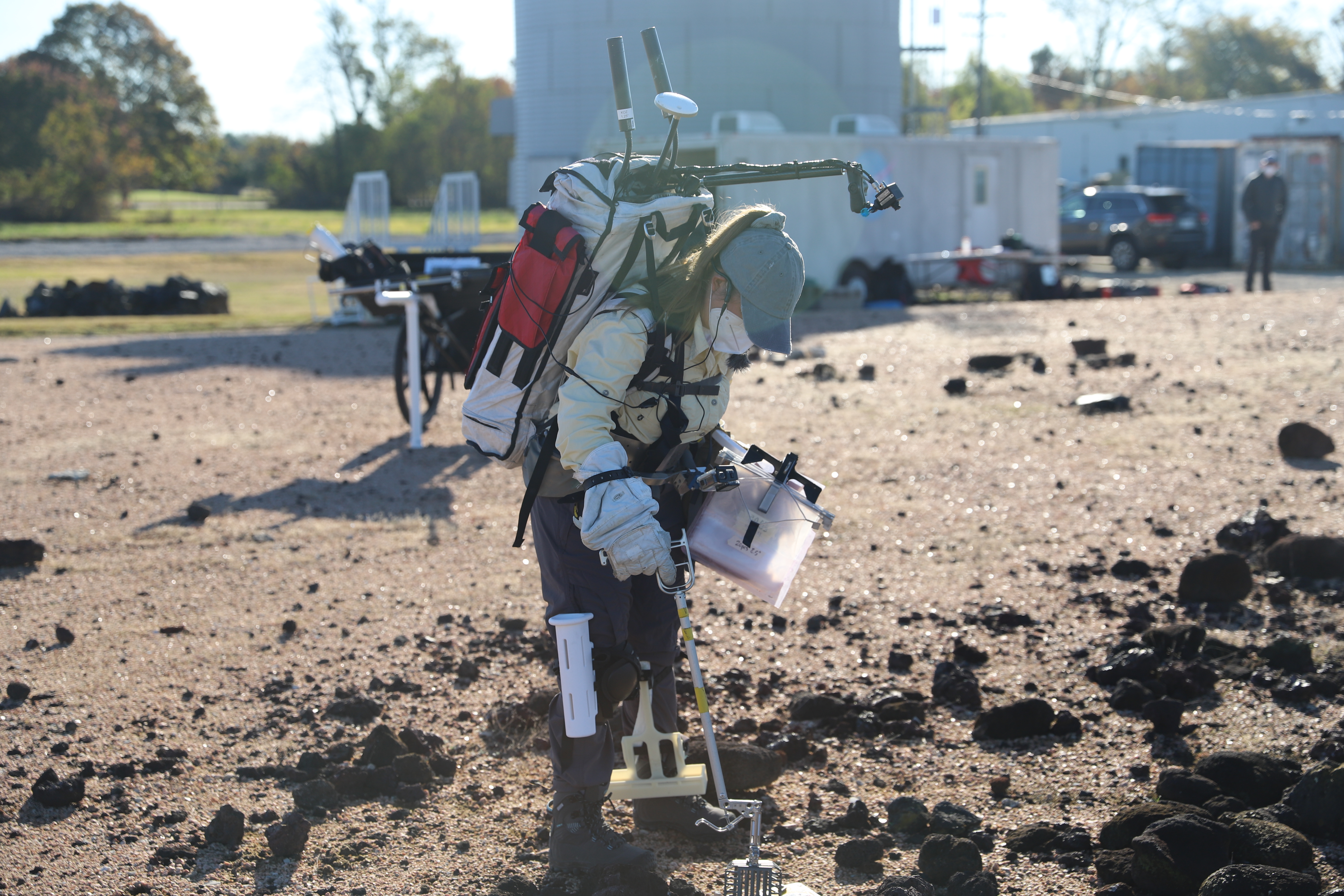
A woman wears a lunar backpack while practicing picking up rocks with a lunar tool at a rock yard.
Jaclyn Kagey conducts lunar surface operations training in the Rock Yard at Johnson Space Center, where teams test tools and procedures for future Artemis missions.
NASA

As momentum builds around Artemis, Kagey remains focused on the responsibility that comes with advancing human space exploration.  

“My mission is to shape this historic endeavor by working closely with scientists and industry partners to define lunar surface activities,” Kagey said. “We are setting the standard for humanity’s return to the Moon.” 

About the Author

Sumer Loggins

Sumer Loggins

Share

Details

Last Updated
Jan 08, 2026
Keep Exploring

Discover More Topics From NASA

Ricevuto prima di ieri NASA Breaking News

Hubble Snaps Stellar Baby Pictures

17 Gennaio 2026 ore 16:00

3 min read

Hubble Snaps Stellar Baby Pictures

Shining blue stars are sprinkled throughout glowing clouds of orange, pink and bluish gas, alongside dark clouds of dust. A particularly bright star shines against the inky dark dust of the lower right quadrant.
The Cepheus A region is home to a number of infant stars, including a protostar that is responsible for much of the region’s illumination.
NASA, ESA, and R. Fedriani (Instituto de Astrofisica de Andalucia); Processing: Gladys Kober (NASA/Catholic University of America)
A small, bluish cloud edged in red gas is in the center of a field thick with multicolored stars.
Star-forming region G033.91+0.11 is home to a protostar hidden within a reflection nebula.
NASA, ESA, and R. Fedriani (Instituto de Astrofisica de Andalucia); Processing: Gladys Kober (NASA/Catholic University of America)
Within a field of glittering multicolored stars, bluish clouds of gas edged in glowing red cluster at the top of the image and in a bubble-shaped clump to the mid-right. A single shining star throws diffraction spikes across the upper left of the image.
A protostar is swathed in the gas of an emission nebula within star-forming region GAL-305.20+00.21.
NASA, ESA, and R. Fedriani (Instituto de Astrofisica de Andalucia); Processing: Gladys Kober (NASA/Catholic University of America)
A bright, glowing cloud of orange gas is situated in the center of dark dust clouds and a field of stars.
A protostar’s jets of high-speed particles are responsible for the bright region of excited, glowing hydrogen in this Hubble image.
NASA, ESA, and R. Fedriani (Instituto de Astrofisica de Andalucia); Processing: Gladys Kober (NASA/Catholic University of America)

Newly developing stars shrouded in thick dust get their first baby pictures in these images from NASA’s Hubble Space Telescope. Hubble took these infant star snapshots in an effort to learn how massive stars form.

Protostars are shrouded in thick dust that blocks light, but Hubble can detect the near-infrared emission that shines through holes formed by the protostar’s jets of gas and dust. The radiating energy can provide information about these “outflow cavities,” like their structure, radiation fields, and dust content. Researchers look for connections between the properties of these young stars – like outflows, environment, mass, brightness – and their evolutionary stage to test massive star formation theories.

These images were taken as part of the SOFIA Massive (SOMA) Star Formation Survey, which investigates how stars form, especially massive stars with more than eight times the mass of our Sun.

Shining blue stars are sprinkled throughout glowing clouds of orange, pink and bluish gas, alongside dark clouds of dust. A particularly bright star shines against the inky dark dust of the lower right quadrant.
The Cepheus A region is home to a number of infant stars, including a protostar that is responsible for much of the region’s illumination.
NASA, ESA, and R. Fedriani (Instituto de Astrofisica de Andalucia); Processing: Gladys Kober (NASA/Catholic University of America)

The high-mass star-forming region Cepheus A hosts a collection of baby stars, including one large and luminous protostar, which accounts for about half of the region’s brightness. While much of the region is shrouded in opaque dust, light from hidden stars breaks through outflow cavities to illuminate and energize areas of gas and dust, creating pink and white nebulae. The pink area is an HII region, where the intense ultraviolet radiation of the nearby stars has converted the surrounding clouds of gas into glowing, ionized hydrogen.
Cepheus A lies about 2,400 light-years away in the constellation Cepheus.

A small, bluish cloud edged in red gas is in the center of a field thick with multicolored stars.
Star-forming region G033.91+0.11 is home to a protostar hidden within a reflection nebula.
NASA, ESA, and R. Fedriani (Instituto de Astrofisica de Andalucia); Processing: Gladys Kober (NASA/Catholic University of America)

Glittering much closer to home, this Hubble image depicts the star-forming region G033.91+0.11 in our Milky Way galaxy. The light patch in the center of the image is a reflection nebula, in which light from a hidden protostar bounces off gas and dust.

Within a field of glittering multicolored stars, bluish clouds of gas edged in glowing red cluster at the top of the image and in a bubble-shaped clump to the mid-right. A single shining star throws diffraction spikes across the upper left of the image.
A protostar is swathed in the gas of an emission nebula within star-forming region GAL-305.20+00.21.
NASA, ESA, and R. Fedriani (Instituto de Astrofisica de Andalucia); Processing: Gladys Kober (NASA/Catholic University of America)

This Hubble image showcases the star-forming region GAL-305.20+00.21. The bright spot in the center-right of the image is an emission nebula, glowing gas that is ionized by a protostar buried within the larger complex of gas and dust clouds.

A bright, glowing cloud of orange gas is situated in the center of dark dust clouds and a field of stars.
A protostar’s jets of high-speed particles are responsible for the bright region of excited, glowing hydrogen in this Hubble image.
NASA, ESA, and R. Fedriani (Instituto de Astrofisica de Andalucia); Processing: Gladys Kober (NASA/Catholic University of America)

Shrouded in gas and dust, the massive protostar IRAS 20126+4104 lies within a high-mass star-forming region about 5,300 light-years away in the constellation Cygnus. This actively forming star is a B-type protostar, characterized by its high luminosity, bluish-white color, and very high temperature. The bright region of ionized hydrogen at the center of the image is energized by jets emerging from the poles of the protostar, which ground-based observatories previously observed.

New images added every day between January 12-17, 2026! Follow @NASAHubble on social media for the latest Hubble images and news and see Hubble’s Stellar Construction Zones for more images of young stellar objects.

Facebook logo
Instagram logo

Explore More

Media Contact:

Claire Andreoli
NASA’s Goddard Space Flight CenterGreenbelt, MD
claire.andreoli@nasa.gov

NASA’s SpaceX Crew-11 to Discuss Space Station Science Mission

17 Gennaio 2026 ore 00:18
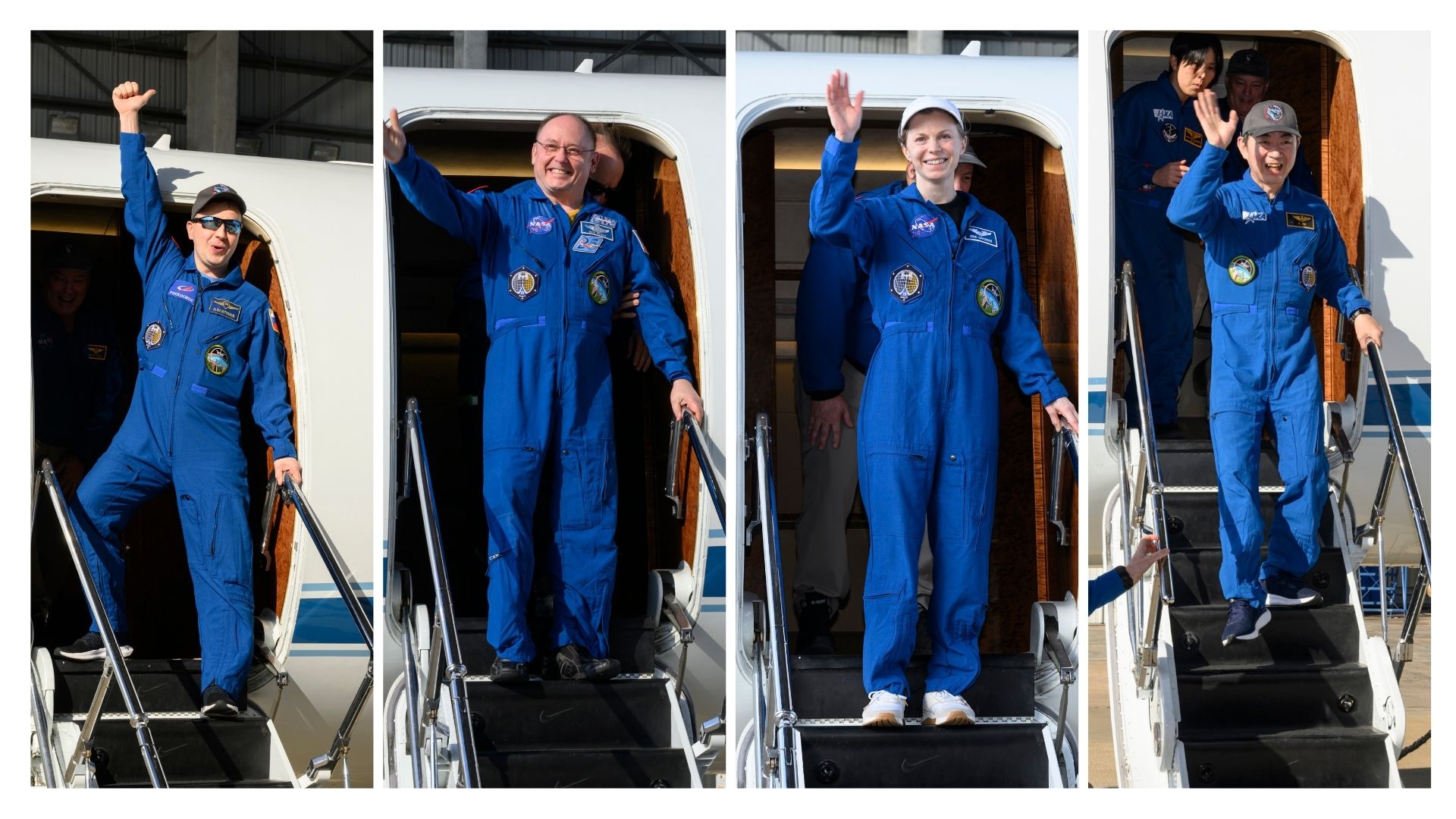
NASA’s SpaceX Crew-11 crew returns to Ellington Field’s Guppy Hangar in Houston on Jan. 16, 2026, from left to right is Roscosmos cosmonaut Oleg Platonov, NASA astronauts Mike Fincke, and Zena Cardman, and JAXA (Japan Aerospace Exploration Agency) astronaut Kimya Yui.
NASA

After 167 days in space, the crew members of NASA’s SpaceX Crew-11 mission will hold a news conference at 2:15 p.m. EST, Wednesday, Jan. 21, at the agency’s Johnson Space Center in Houston to discuss their science expedition aboard the International Space Station.

NASA astronauts Zena Cardman and Mike Fincke, JAXA (Japan Aerospace Exploration Agency) astronaut Kimiya Yui, and Roscosmos cosmonaut Oleg Platonov will answer questions about their mission. The crew members returned to Earth on Jan. 15, splashing down off the coast of San Diego, and arrived in Houston on Friday, where they will undergo standard postflight reconditioning and evaluations.

NASA will provide live coverage on the agency’s YouTube channel. Learn how to watch NASA content through a variety of additional online platforms, including social media.

Media are invited to attend in person or virtually. For in-person attendance, contact the NASA Johnson newsroom no later than 5 p.m. CST, Tuesday, Jan. 20, at jsccommu@mail.nasa.gov or 281-483-5111. Media participating by phone must dial into the news conference no later than 10 minutes prior to the start of the event to ask questions. Questions also may be submitted on social media using #AskNASA. A copy of NASA’s media accreditation policy is available on the agency’s website.

The crew spent more than five months in space, including 165 days aboard the orbiting laboratory, traveling nearly 71 million miles, and completing more than 2,670 orbits around Earth. While living and working aboard the station, the crew completed hundreds of science experiments and technology demonstrations.

Get the latest NASA space station news, images, and features on Instagram, Facebook, and X.

NASA’s Commercial Crew Program has delivered on its goal of safe, reliable, and cost-effective transportation to and from the International Space Station from the United States through a partnership with American private industry. This partnership is opening access to low Earth orbit and the space station to more people, more science, and more commercial opportunities. For more than 25 years, people have continuously lived and worked aboard the space station, advancing scientific knowledge and demonstrating new technologies that enable us to prepare for human exploration of the Moon as we prepare for Mars.

Learn more about NASA’s Commercial Crew Program at:

https://www.nasa.gov/commercialcrew

-end-

Joshua Finch / Jimi Russell
Headquarters, Washington
202-358-1100
joshua.a.finch@nasa.gov / james.j.russell@nasa.gov  
Anna Schneider / Shaneequa Vereen
Johnson Space Center, Houston
281-483-5111
anna.c.schneider@nasa.gov / shaneequa.y.vereen@nasa.gov

NASA Receives 15th Consecutive ‘Clean’ Financial Audit Opinion

16 Gennaio 2026 ore 23:10
Credit: NASA

For the 15th consecutive year, NASA received an unmodified, or “clean,” opinion from an external auditor on its fiscal year 2025 financial statements.

The rating is the best possible audit opinion, certifying that NASA’s financial statements conform with Generally Accepted Accounting Principles for federal agencies and accurately present the agency’s financial position.

“NASA has delivered a complete and reliable report of our fiscal operations, critical to our success for the Golden Age of exploration and innovation,” said NASA Administrator Jared Isaacman. “NASA’s mission drives innovation in space exploration, scientific discovery, and aeronautics, pushing the boundaries of what’s possible. Our fiscal year 2025 budget fuels economic growth, drives the growing space economy, and keeps America first amidst increasing global competition.”

The 2025 Agency Financial Report provides key financial and performance information and demonstrates the agency’s commitment to transparency in the use of American taxpayers’ dollars. In addition, the 2025 report presents progress during the past year, and spotlights the array of NASA missions, objectives, and workforce advanced with these financial resources.

“This achievement reflects our team’s diligent stewardship of NASA’s resources, including our commitment to responsibly managing taxpayers’ dollars entrusted to the agency,” said Sidney Schmidt, NASA’s acting chief financial officer. “Their unwavering dedication to sound financial management and robust internal controls ensures we uphold public trust. Congratulations and thank you to everyone involved for your commendable efforts and hard work.”

In fiscal year 2025, NASA marked significant progress toward the Artemis II test flight. Targeted to launch no earlier than Friday, Feb. 6, the Artemis II mission will send four astronauts around the Moon and back to test the systems and hardware which will return humanity to the lunar surface. NASA and its partners landed two robotic science missions on the Moon, welcomed seven new signatory countries to the Artemis Accords, and advanced medical and technological experiments for long-duration space missions like hand-held X-ray equipment and navigation capabilities.

NASA also led a variety of science discoveries, including launching a joint satellite mission with India to regularly monitor Earth’s land and ice-covered surfaces, as well as identifying and tracking the third interstellar object in our solar system; achieved 25 continuous years of human presence aboard the International Space Station; and, for the first time, flew a test flight of the agency’s X-59 supersonic plane that will help revolutionize air travel.

For more information on NASA’s budget, visit:

https://www.nasa.gov/budgets-plans-and-reports

-end-

Bethany Stevens / Elizabeth Shaw
Headquarters, Washington
202-358-1600
bethany.c.stevens@nasa.gov / elizabeth.a.shaw@nasa.gov


Share

Details

Last Updated
Jan 16, 2026
Editor
Jennifer M. Dooren

What You Need to Know About NASA’s Artemis II Moon Mission

16 Gennaio 2026 ore 22:25
astronauts

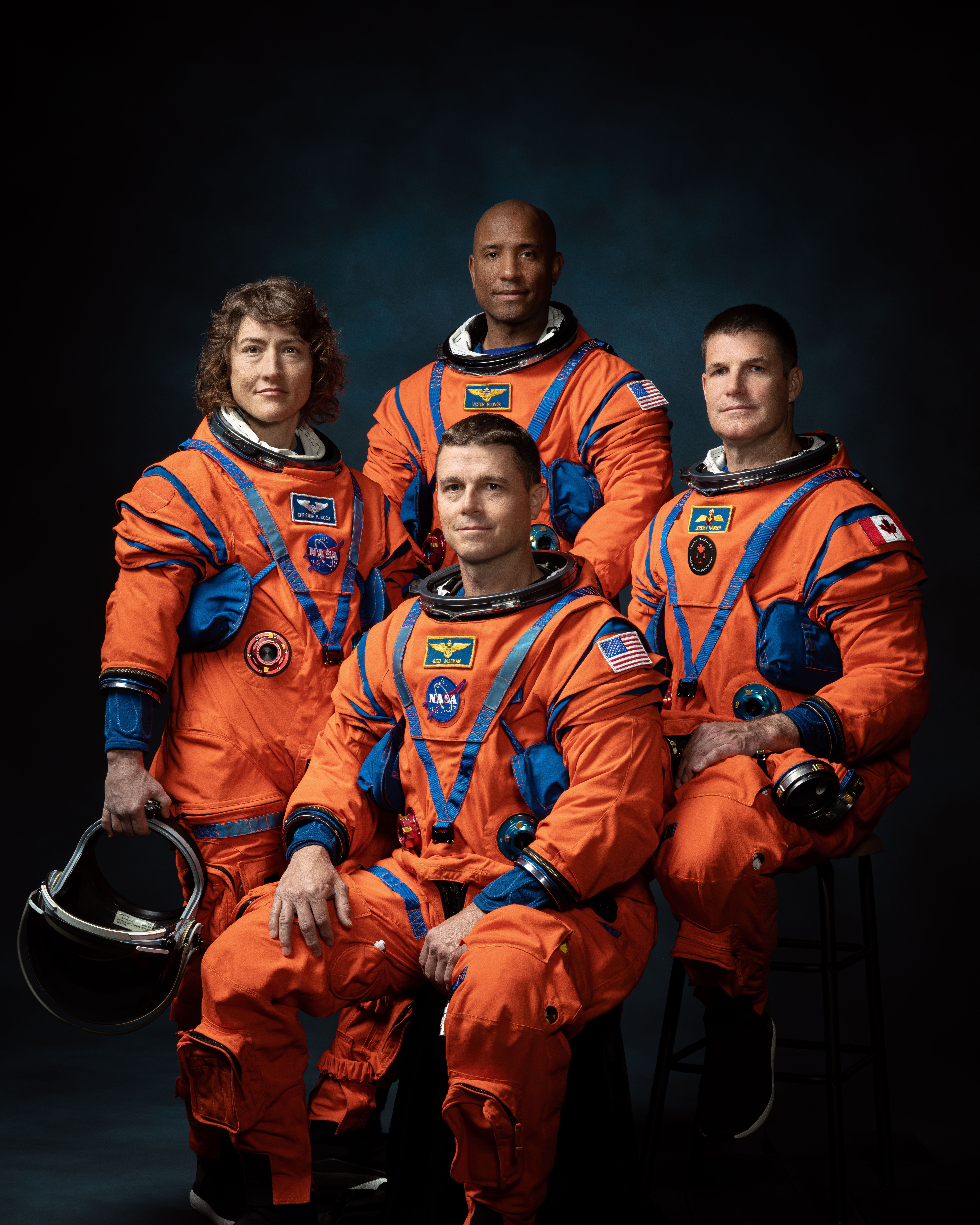
NASA is weeks away from sending astronauts farther than any crew has traveled before, with the agency’s second mission in its Artemis campaign. The Artemis II Press Kit now is available with information on the mission, astronauts, and other resources for media.

“Artemis II will be a momentous step forward for human spaceflight. This historic mission will send humans farther from Earth than ever before and deliver the insights needed for us to return to the Moon — all with America at the helm,” said NASA Administrator Jared Isaacman. “Artemis II represents progress toward establishing a lasting lunar presence and sending Americans to Mars. I could not be more impressed by our NASA team and the Artemis II crew, and wish them well. Boldly forward.”

Under the Artemis campaign, NASA is returning humans to the Moon for economic benefits, scientific discovery, and to prepare for crewed missions to Mars.

To learn more about Artemis, visit:

https://www.nasa.gov/artemis

-end-

Lauren Low / Rachel Kraft
Headquarters, Washington
202-358-1600
lauren.e.low@nasa.gov / rachel.h.kraft@nasa.gov  


Share

Details

Last Updated
Jan 17, 2026
Editor
Jennifer M. Dooren

NASA Develops Blockchain Technology to Enhance Air Travel Safety and Security 

16 Gennaio 2026 ore 21:11

3 min read

Preparations for Next Moonwalk Simulations Underway (and Underwater)

By Supreet Kaur

In an era where data security is critical to aviation safety, NASA is exploring bold new solutions. 

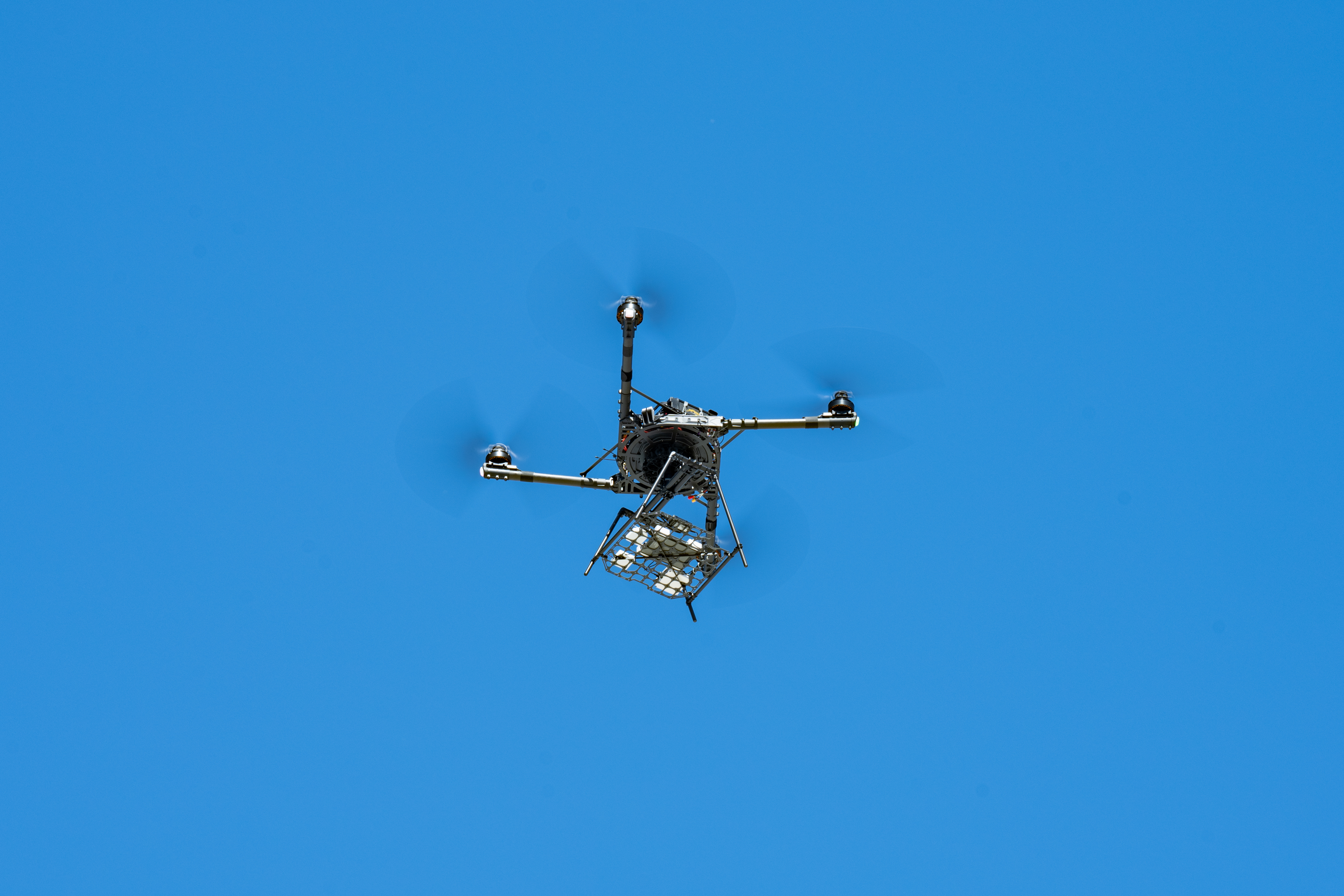
An Alta-X drone carries a custom built simulated Unmanned Aircraft Systems environment payload for the new blockchain system tests.   
Credit: NASA/Brandon Torres Navarette 

Through a drone flight test at NASA’s Ames Research Center in California’s Silicon Valley, researchers tested a blockchain-based system for protecting flight data. The system aims to keep air traffic management safe from disruption and protect data transferred between aircraft and ground stations from being intercepted or manipulated. 

For aviation and airspace operations to remain safe, users need to be able to trust that data is reliable and transparent. While current systems have been able to protect flight data systems, cyberthreats continue to evolve, requiring new approaches. NASA researchers found the blockchain-based system can safely transmit and store information in real time. 

Blockchain operates like a decentralized database — it does not rely on a single computer or centralized system. Instead, it shares information across a vast network, recording and verifying every change to a dataset. The system ensures the data stays safe, accurate, and trustworthy.  

Previous cybersecurity research focused on implementing a layered security architecture — using multiple physical and digital security measures to control system access. For this test, researchers took a different approach using blockchain to address potential threats.  

Using drones allowed the team to show that the blockchain framework could yield benefits across several priority areas in aviation development, including autonomous air traffic management, urban air mobility, and high-altitude aircraft.  

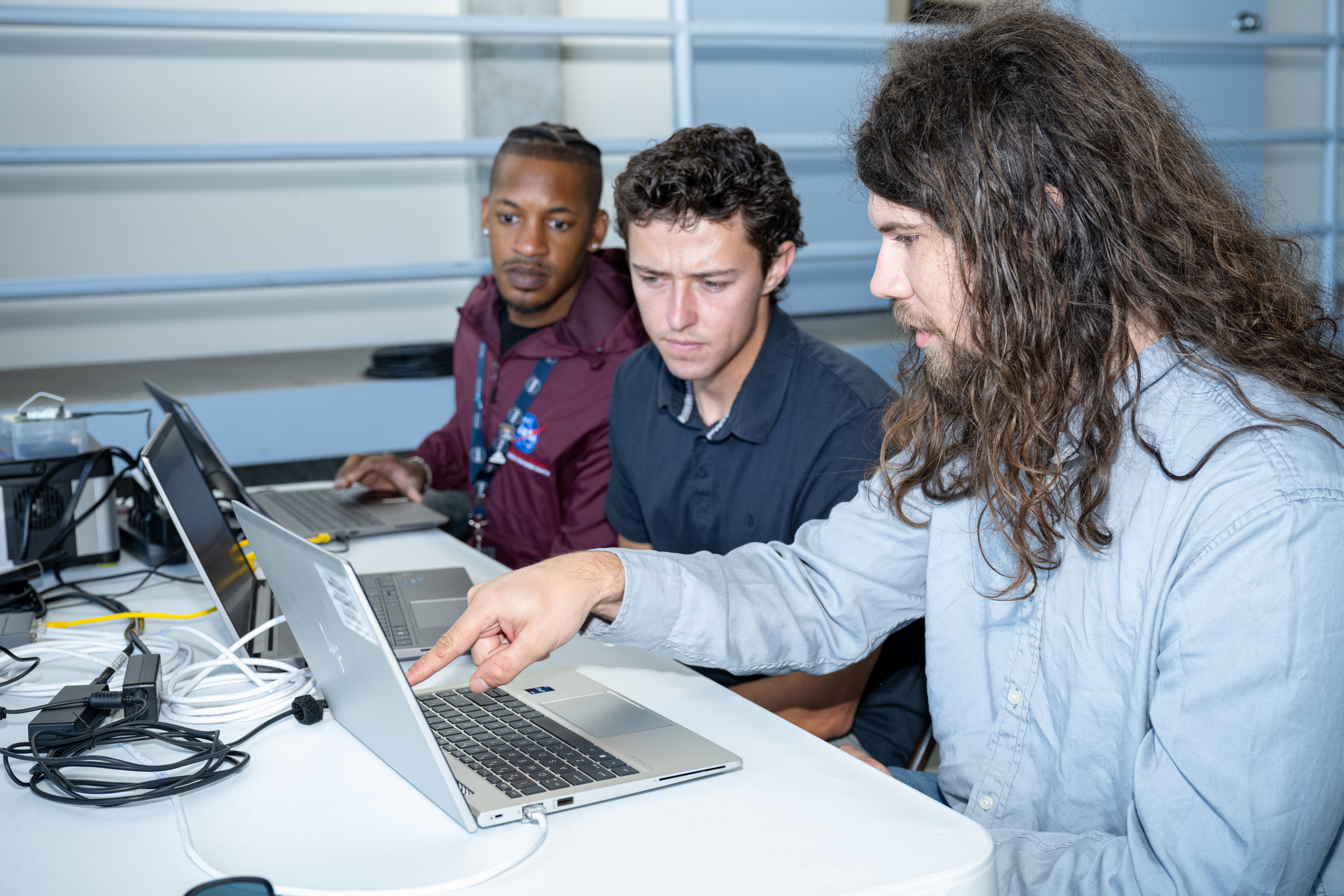
Three people sit at a table looking over laptop computers. The one nearest the camera is pointing at the laptop monitor.
Terrence D. Lewis (left), Kale Dunlap (center), and Aidan Jones monitor the flow of telemetry from both actual and simulated flights, ensuring the simulation and blockchain systems are processing and recording data accurately. 
Credit: NASA/Brandon Torres Navarette 

This NASA research explored how blockchain can secure digital transactions between multiple systems and operators. The team used an open-source blockchain framework that allows trusted users real-time sharing and storage of critical data like aircraft operator registration information, flight plans, and telemetry. This framework restricts access to this data to trusted parties and approved users only. 

To further examine system resilience, the team introduced a set of cybersecurity tests designed to assess, improve, and reinforce security during operations in airspace environments. During an August flight at Ames, the team demonstrated these capabilities using an Alta-X drone with a custom-built software and hardware package that included a computer, radio, GPS system, and battery.  

The test simulated an environment with a drone flying in real-world conditions, complete with a separate ground control station and the blockchain and security infrastructure. The underlying blockchain framework and cybersecurity protocols can be extended to support high-altitude operations at 60,000 feet and higher and Urban Air Mobility operations, paving the way for a more secure, scalable, and trusted ecosystem. 

NASA researchers will continue to look at the data gathered during the test and apply what they’ve learned to future work. The testing will ultimately benefit U.S. aviation stakeholders looking for new tools to improve operations. 

Through its Air Traffic Management and Safety project, NASA performed research to transform air traffic management systems to safely accommodate the growing demand of new air vehicles. The project falls under NASA’s Airspace Operations and Safety Program, a part the agency’s Aeronautics Research Mission Directorate that works to enable safe, efficient aviation transportation operations that benefit the flying public and industry.

Out of This World Discoveries: Space Station Research in 2025

16 Gennaio 2026 ore 16:00
5 Min Read

Out of This World Discoveries: Space Station Research in 2025

693K9731.NEF

As Earth completed its orbit around the Sun to close out 2025, the International Space Station circled our planet more than 5,800 times. Serving as humanity’s unique laboratory in space, the station has hosted thousands of experiments and technology demonstrations, advancing science in ways that cannot be replicated on Earth.

In 2025 alone, more than 750 experiments supported exploration missions, improved life on Earth, and opened commercial opportunities in low Earth orbit. The space station continues to drive innovation by enabling human exploration of the Moon and Mars, transforming medical research, deepening our understanding of the universe, and fostering a growing commercial economy.

Read through just a handful of 2025’s innovative research achievements from the orbiting laboratory.

25 Years of humans researching in orbit

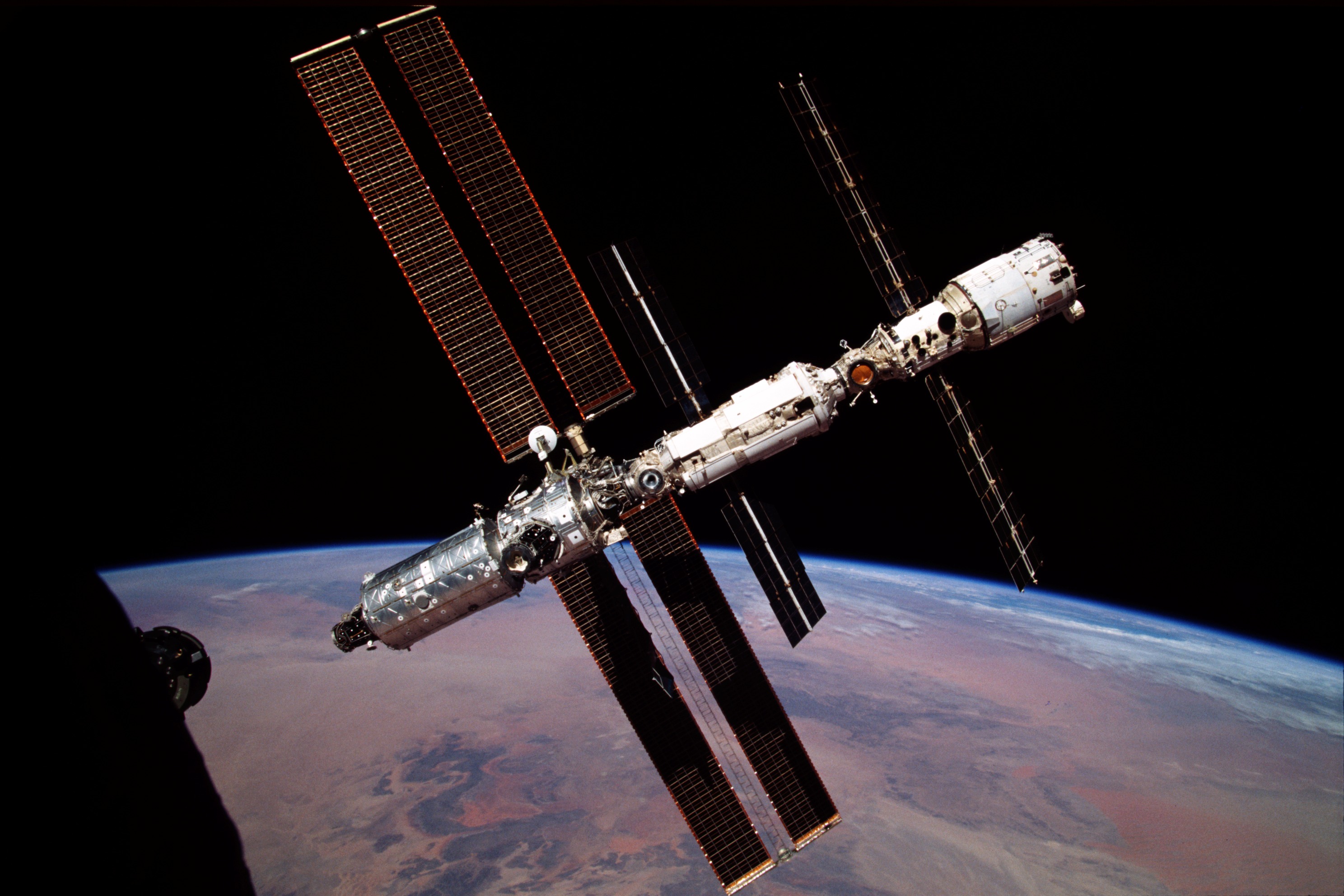
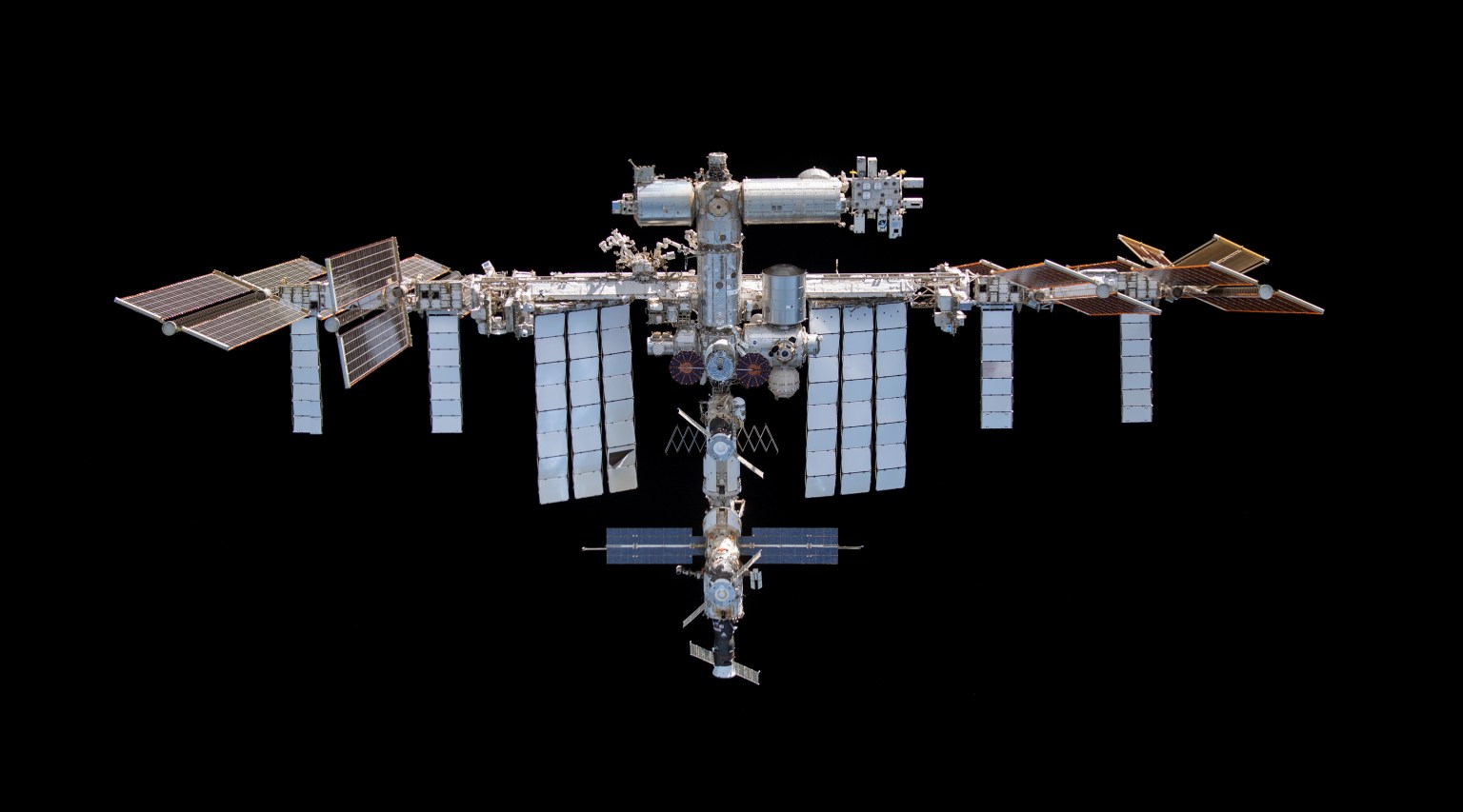
The International Space Station, backdropped against the darkness of space and Earth at its horizon, was photographed by the Expedition 1 crew in 2000, during a fly around aboard a Soyuz capsule.
The International Space Station photographed in 2000 by the Expedition 1 crew.
NASA

On Nov. 2, 2025, humanity reached a milestone of cosmic proportions: 25 years of continuous human presence aboard the International Space Station. Since the first crew arrived on Nov. 2, 2000, NASA and its partners from around the world have conducted more than 4,000 research investigations and technology demonstrations. More than 290 people from 26 countries have visited the space station, where continuous human presence enables research that surpasses the capabilities of satellites and autonomous platforms. The space station’s unique microgravity environment, paired with crew operations, continues to unlock discoveries and push the boundaries of humanity’s curiosity and innovation.

A breakthrough cancer treatment

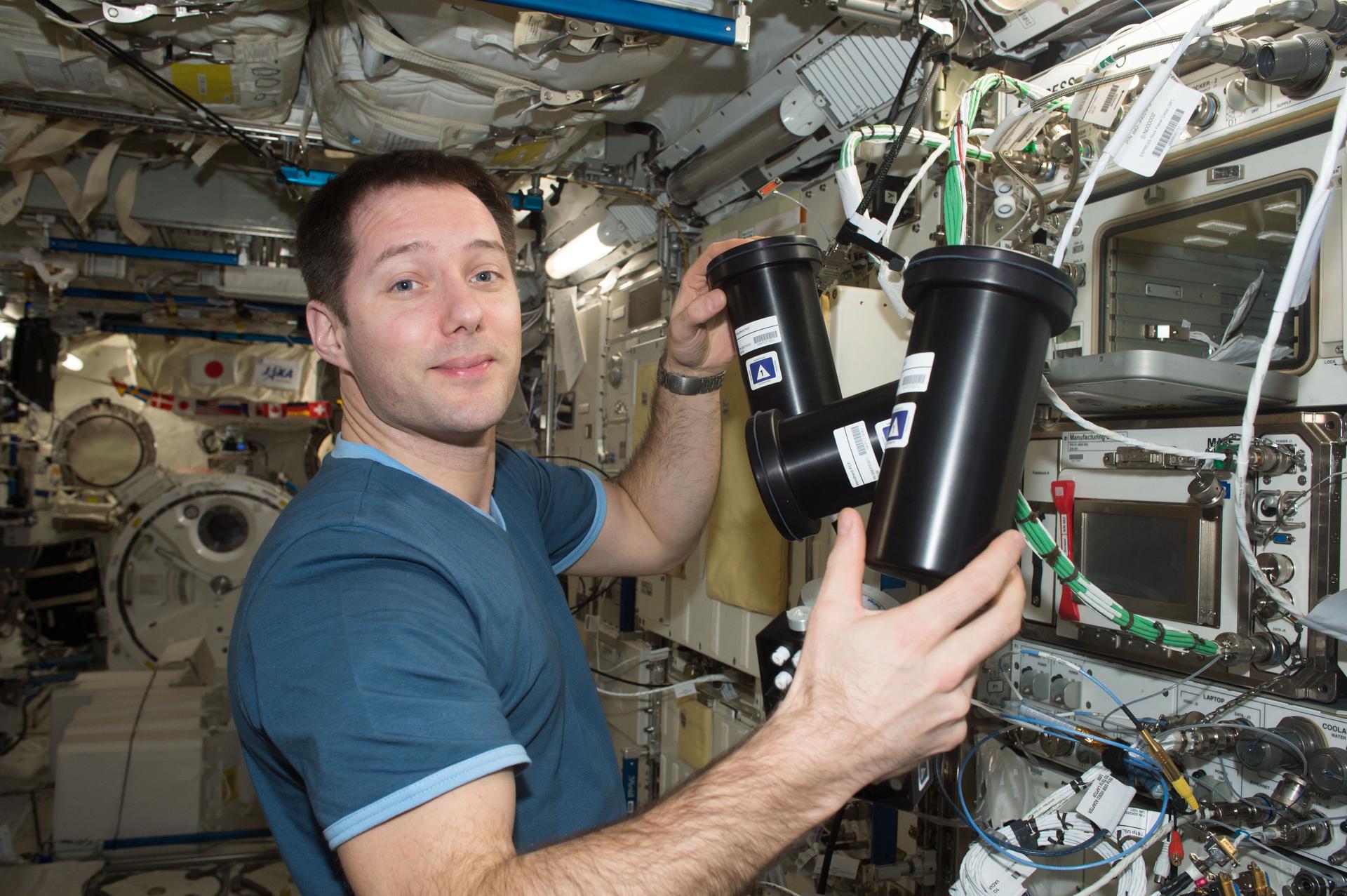
European Space Agency astronaut Thomas Pesquet works inside the International Space Station, holding two black cylindrical experiment containers as part of the Protein Crystal Growth-5 study. Behind him, computer displays are mounted to the station’s wall, along with many other instruments, cables, and silver knobs.
ESA (European Space Agency) astronaut Thomas Pesquet conducts research aboard the International Space Station supporting the advancement of cancer therapeutics.
NASA

Research aboard the International Space Station helped inform the development of a newly FDA-approved injectable medication used to treat several types of early-stage cancers. The research yielded early insights into the structure and size of particles needed to develop the medication through protein crystal growth experiments. This new delivery method promises to lower costs and significantly reduce treatment time for patients and healthcare providers, while maintaining drug efficiency. Microgravity research can produce higher-quality, medically relevant crystals than Earth-based labs, enabling these types of medical advances. These developments showcase how space station research can drive innovation, improve lives, and foster commercial opportunities.

Medical implants printed in orbit

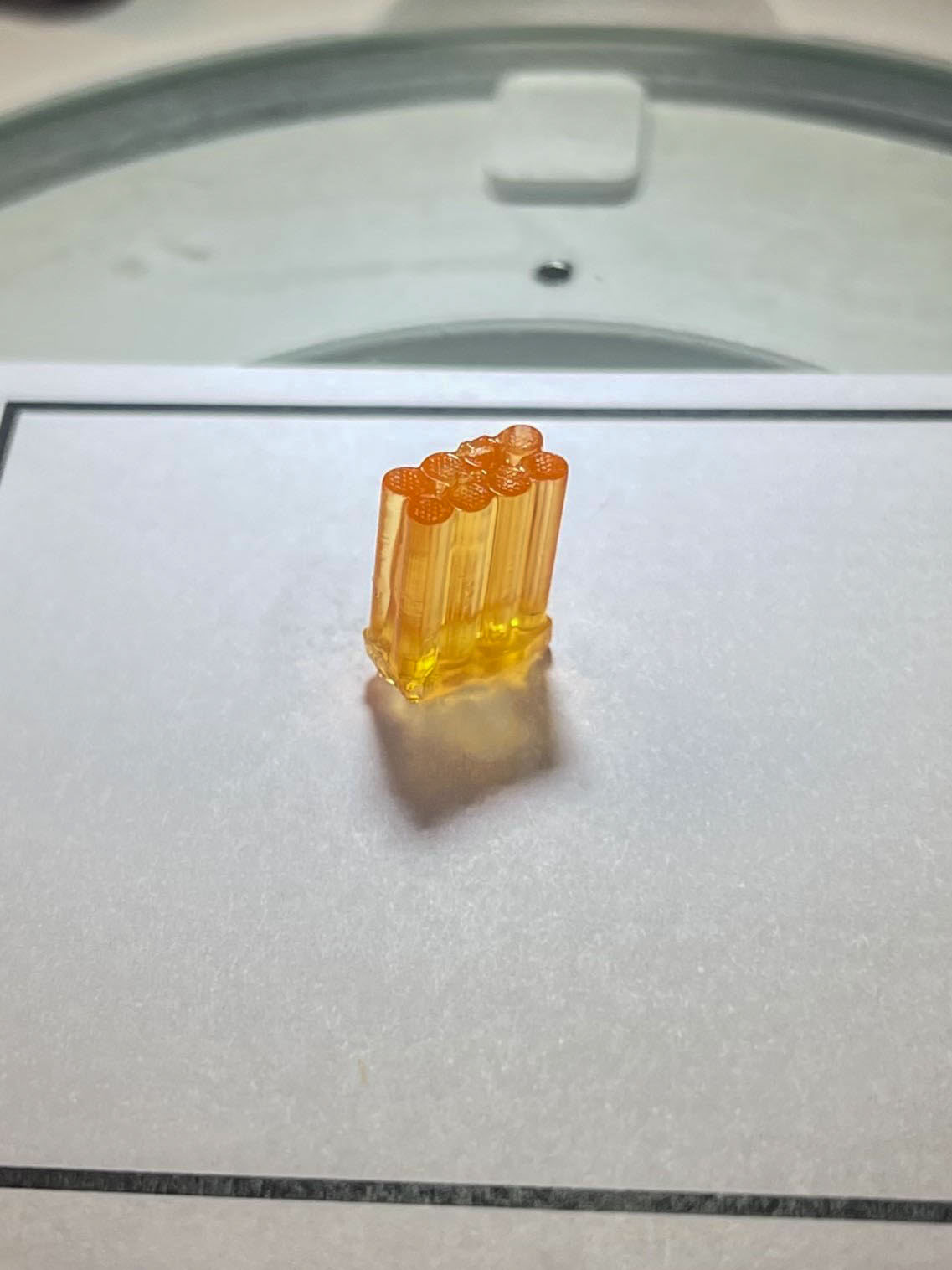
A rectangular, eight-pronged crystalline-yellow object is displayed on a metallic surface.
Eight medical devices for peripheral nerve repair were printed simultaneously aboard the International Space Station. Credit: Auxilium Biotechnologies.

Eight medical implants designed to support nerve regeneration were successfully 3D printed aboard the International Space Station for preclinical trials on Earth. When nerve damage occurs, these types of implants are designed to improve blood flow and enable targeted drug delivery. Printing in microgravity can prevent particle settling, resulting in more uniform and stable structures. In-space manufacturing is helping to advance medical treatments and other technologies while also enabling astronauts to print devices and tools on demand during future missions.

Learn more about InSPA-Auxilium Bioprinter.

A new understanding of our Sun

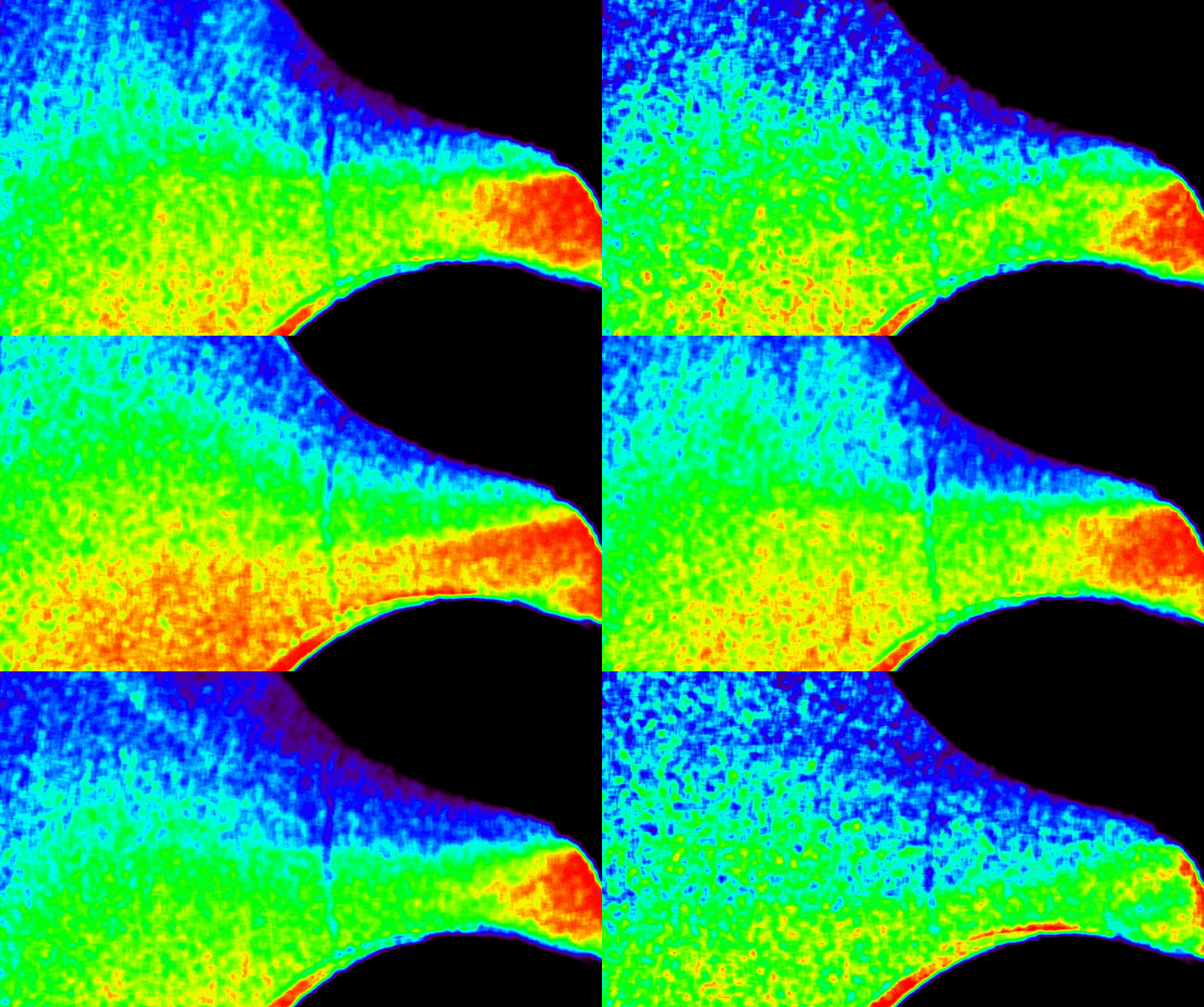
A color-coded heat map of the Sun's outer atmosphere showing a large, fan-like plume. Colors transitions from cool purple and blue on the left to greens in the middle to yellow and bright red on the right, indicating temperature changes over several days.
Using data from NASA’s CODEX (Coronal Diagnostic Experiment), this animated, color-coded heat map shows temperature changes of the Sun over the course of couple days, where red indicates hotter regions and purple indicates cooler ones.
NASA/KASI/INAF/CODEX
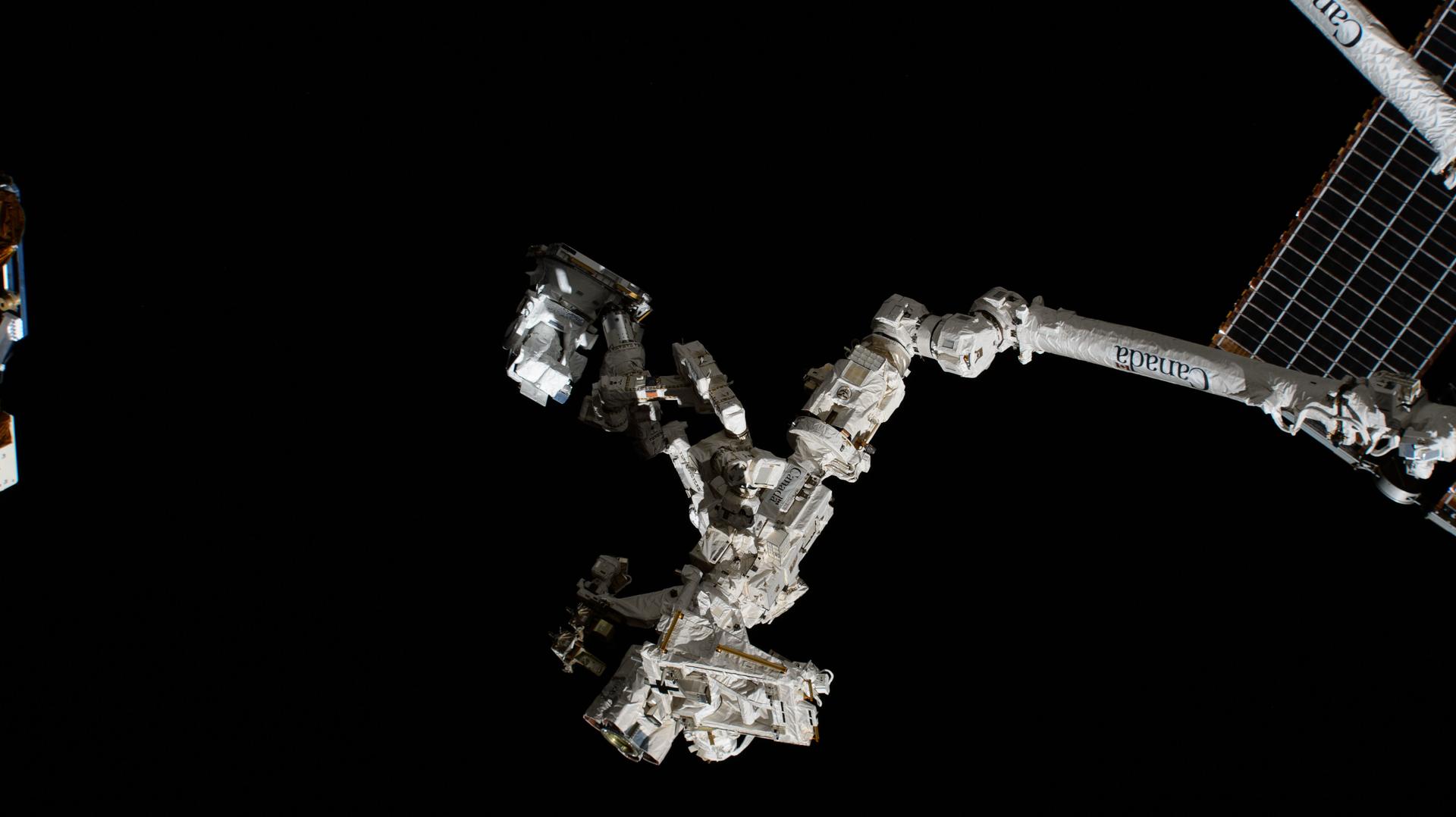
The robotic hand, better known as Dextre, attached to the white tube-like Canadarm2 robotic arm, carries the CODEX experiment after extracting the research hardware from the trunk of the SpaceX Dragon cargo spacecraft. The space station hardware’s white color contrasts against the black background of space.
Dextre, attached to the International Space Station’s Canadarm2 robotic arm, carries CODEX.
NASA

A solar coronagraph aboard the International Space Station captured its first unique images detailing the Sun’s outer atmosphere while measuring  solar wind temperature and speed. The instrument blocks the Sun’s bright light to reveal its faint outer atmosphere, or corona, where solar wind originates. Earlier experiments focused on the corona’s density, but this new device enables the study of what heats and accelerates the solar wind, offering a more complete picture of how energy moves through the Sun’s atmosphere. These observations help researchers understand how solar activity affects Earth and space-based technology, such as satellites, communications networks, and power systems.

Learn more about CODEX.

Hunting for microscopic space travelers

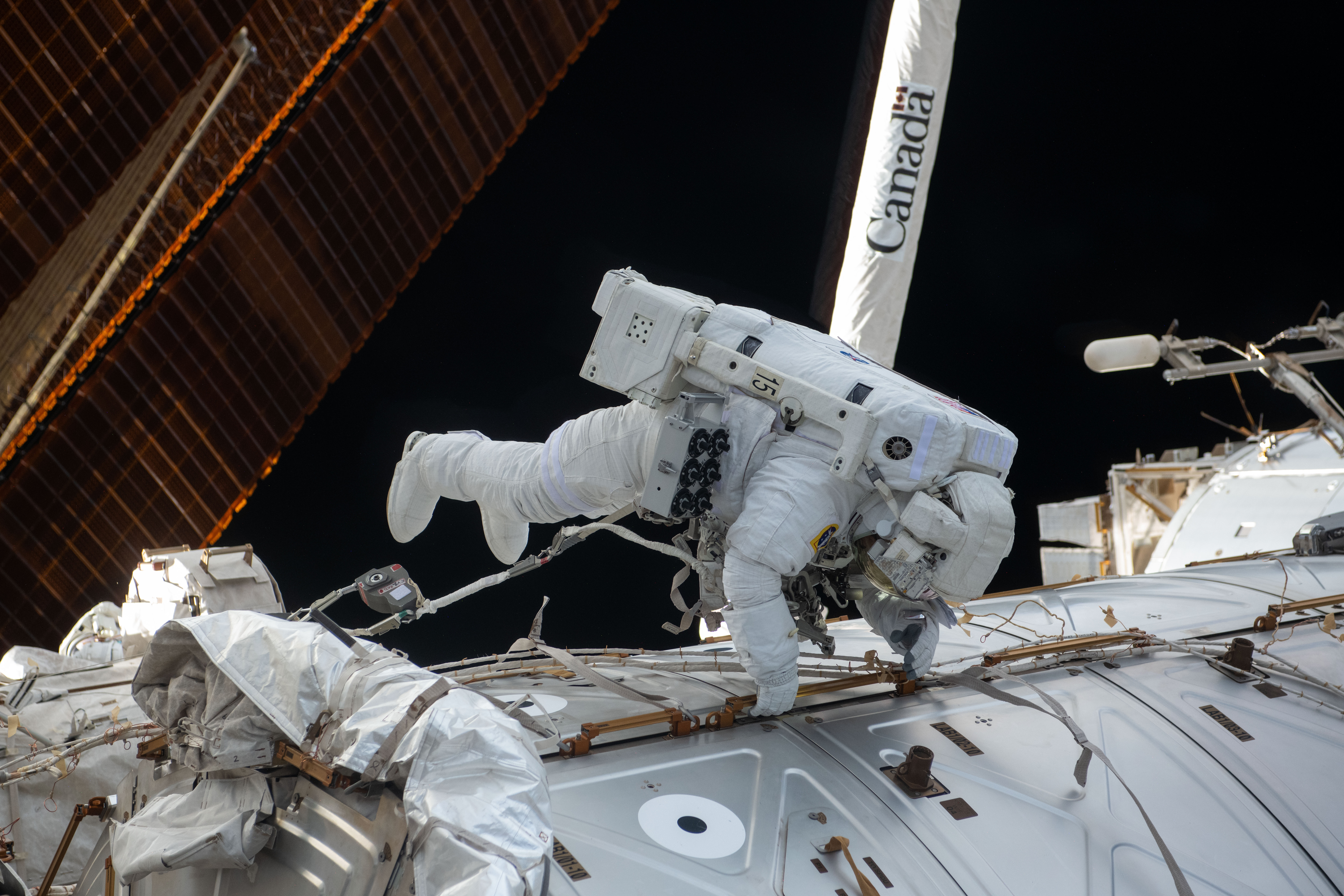
NASA astronaut Butch Wilmore wears a white spacesuit while performing a spacewalk outside the International Space Station. Wilmore is positioned horizontally against the station’s exterior. In the background, the black of space contrasts with the station’s copper-colored solar arrays and the white robotic Canadarm, which has "Canada" printed vertically in black letters.
NASA astronaut Butch Wilmore works outside the International Space Station on Jan. 30, 2025, during a five-hour and 26-minute spacewalk.
NASA

NASA astronaut Butch Wilmore collected microbiological samples during a spacewalk outside the International Space Station. Samples were taken near the life support system vents to see if the orbital complex releases microorganisms. This experiment helps researchers examine if and how these microorganisms survive and reproduce in the harsh space environment, as well as how they may behave at destinations such as the Moon and Mars. After returning to Earth, the samples underwent DNA extraction and sequencing. Another round of collections is planned for future spacewalks. The data could help determine whether changes are needed on crewed spacecraft and spacesuits to reduce biocontamination during missions to explore destinations where life may exist now or in the past.

Learn more about ISS External Microorganisms.

A fully docked space station

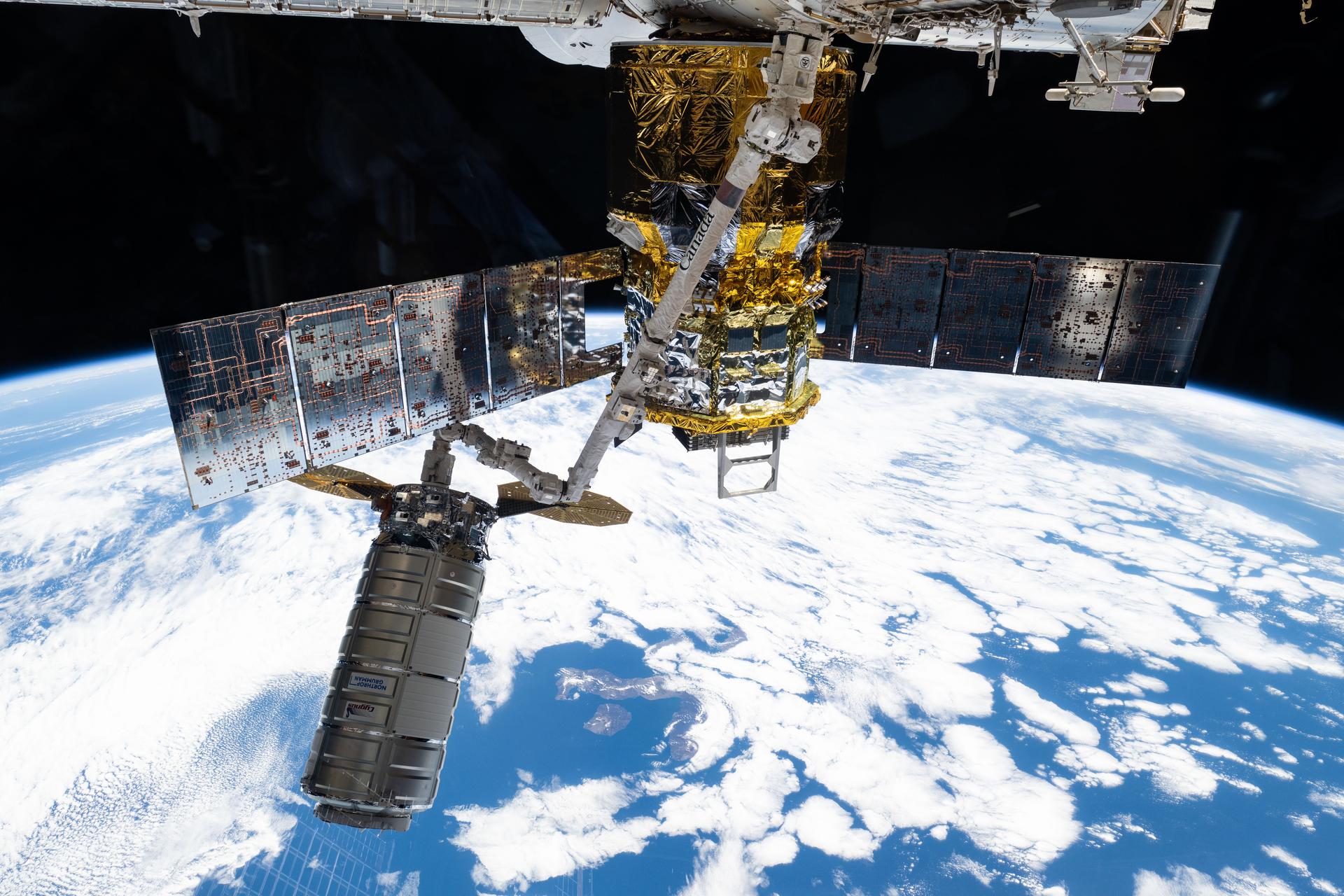
A shot from the International Space Station showing a long, white robotic arm maneuvering the cylindrical silver Cygnus XL cargo spacecraft. Earth’s blue oceans and white clouds are visible in the background. In the foreground, the HTVX-1 vehicle docked to the space station, covered in reflective gold foil with its silver solar panels visible.
Northrop Grumman’s Cygnus XL spacecraft is grappled by the International Space Station’s Canadarm2. In the background, JAXA’s (Japan Aerospace Exploration Agency) HTV-X1 cargo craft is docked to the orbital complex.
NASA
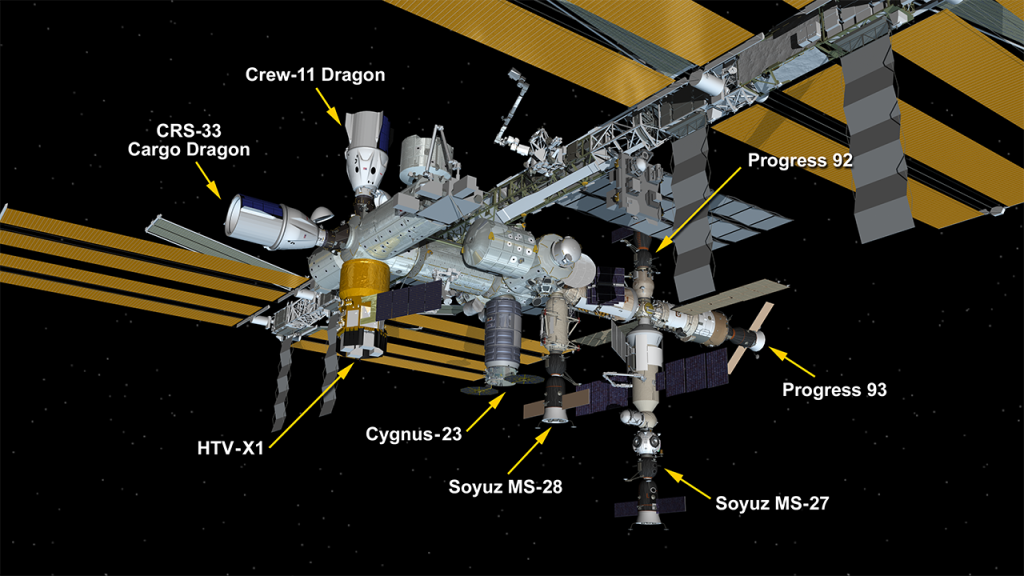
An artistic concept of the International Space Station, displaying its large gold solar arrays and eight different spacecraft attached to it, including the SpaceX Dragon cargo craft, the SpaceX Crew-11 Dragon spacecraft, JAXA’s HTV-X1 cargo craft, Northrop Grumman’s Cygnus XL cargo craft, the Soyuz MS-27 and MS-28 crew spacecraft, and the Progress 92 and 93 resupply ships.
The International Space Station visiting spacecraft configuration on Dec.1, 2025 showing eight spacecraft parked at the orbital complex.
NASA

For the first time in International Space Station history, all eight docking ports of the orbiting laboratory were occupied at once. Three crew spacecraft and five cargo resupply craft were attached to station, including JAXA’s new cargo vehicle HTV-X1 and Northrup Grumman’s new Cygnus XL. The eight spacecraft delivered astronauts, cargo, and scientific experiments from around the world to be conducted in the unique microgravity environment. This milestone highlights the space station’s evolution, inviting commercial partners and international collaboration to continue expanding the orbiting laboratory’s research capabilities.

Space station research meets the Moon’s surface

A split-screen image showing two different space missions. On the left, a silver box-shaped instrument with a grid of circular sensors, is attached to the International Space Station, with bright orange solar arrays in the background. On the right, an artist’s concept of a gold-foil-wrapped lunar lander with four thin legs stands on the grey, cratered Moon’s surface under a black, star-filled sky. The lander features a black stylized bird logo on its side.
NICER (Neutron Star Interior Composition Explorer) is shown mounted to the International Space Station in the image on the left, and LEXI (right) is shown attached to the top of Firefly Aerospace’s Blue Ghost in an artist’s concept.
NASA/Firefly Aerospace

Three experiments that landed on the Moon during Firefly Aerospace’s Blue Ghost Mission-1 were enabled by earlier research aboard the International Space Station. These studies help improve space weather monitoring, test computer recovery from radiation damage, and advance lunar navigation systems. The orbiting laboratory continues to lay the foundation for missions beyond low Earth orbit, driving exploration deeper into space. 

Learn more.  

The space station continues to deliver out-of-this-world achievements that cannot be replicated on Earth. Its research capabilities are a springboard for humanity’s future in innovation and testing the limits of what’s possible.

Here’s to 2026 — another year of defying physics and pushing the boundaries of science and exploration.

NASA’s Crawler Preps for Artemis II Rollout

16 Gennaio 2026 ore 15:37
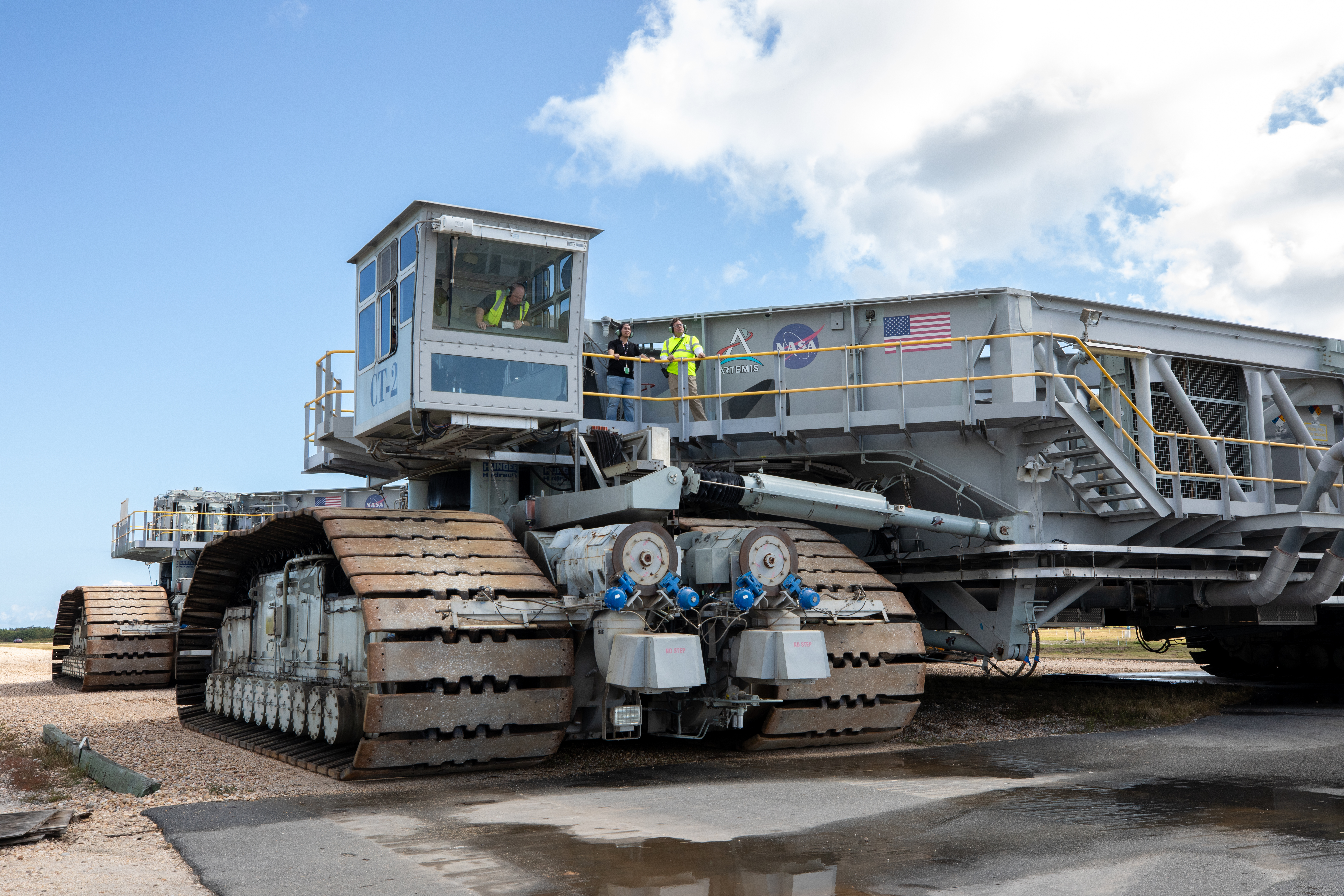
A crawler-transporter, including its massive treads take up the majority of the image. In fact, the entire crawler cannot be seen. There are a few people at the top of the crawler, which allows you to see just how massive the machine is.
NASA/Ben Smegelsky

NASA’s Crawler-transporter 2 moves toward the Vehicle Assembly Building at NASA’s Kennedy Space Center in Florida on Friday, Jan. 9, 2026. The crawler will transport NASA’s SLS (Space Launch System) rocket with the Orion spacecraft to Launch Complex 39B ahead of the Artemis II launch which will journey Commander Reid Wiseman, Pilot Victor Glover, and Mission Specialist Christina Koch from NASA, and Mission Specialist Jeremy Hansen from the CSA (Canadian Space Agency), around the Moon and back to Earth no later than April 2026.

The crawler-transporters have carried the load of taking rockets and spacecraft to the launch pad for more than 50 years at NASA’s Kennedy Space Center in Florida. Each the size of a baseball infield and powered by locomotive and large electrical power generator engines, the crawler-transporters stand ready to keep up the work for the next generation of launch vehicles to lift astronauts into space; Crawler-transporter 2 in particular is integral to the Artemis missions.

Image credit: NASA/Ben Smegelsky

Hubble Observes Ghostly Cloud Alive with Star Formation

16 Gennaio 2026 ore 13:49

2 min read

Hubble Observes Ghostly Cloud Alive with Star Formation

Misty, bluish-white gas nearly fills this image. A few scattered stars shine through the gas. To the bottom left and just near a bright star, a dark cloud of dust interrupts the glowing, nebulous landscape.
A seemingly serene landscape of gas and dust is hopping with star formation behind the scenes.
NASA, ESA, and K. Stapelfeldt (Jet Propulsion Laboratory); Processing: Gladys Kober (NASA/Catholic University of America)

While this eerie NASA Hubble Space Telescope image may look ghostly, it’s actually full of new life. Lupus 3 is a star-forming cloud about 500 light-years away in the constellation Scorpius. 

White wisps of gas swirl throughout the region, and in the lower-left corner resides a dark dust cloud. Bright T Tauri stars shine at the left, bottom right, and upper center, while other young stellar objects dot the image.

T Tauri stars are actively forming stars in a specific stage of formation. In this stage, the enveloping gas and dust dissipates from radiation and stellar winds, or outflows of particles from the emerging star. T Tauri stars are typically less than 10 million years old and vary in brightness both randomly and periodically due to the environment and nature of a forming star. The random variations may be due to instabilities in the accretion disk of dust and gas around the star, material from that disk falling onto the star and being consumed, and flares on the star’s surface. The more regular, periodic changes may be caused by giant sunspots rotating in and out of view. 

T Tauri stars are in the process of contracting under the force of gravity as they become main sequence stars which fuse hydrogen to helium in their cores. Studying these stars can help astronomers better understand the star formation process.

New images added every day between January 12-17, 2026! Follow @NASAHubble on social media for the latest Hubble images and news and see Hubble’s Stellar Construction Zones for more images of young stellar objects.

Facebook logo
Instagram logo

Explore More

Media Contact:

Claire Andreoli
NASA’s Goddard Space Flight CenterGreenbelt, MD
claire.andreoli@nasa.gov
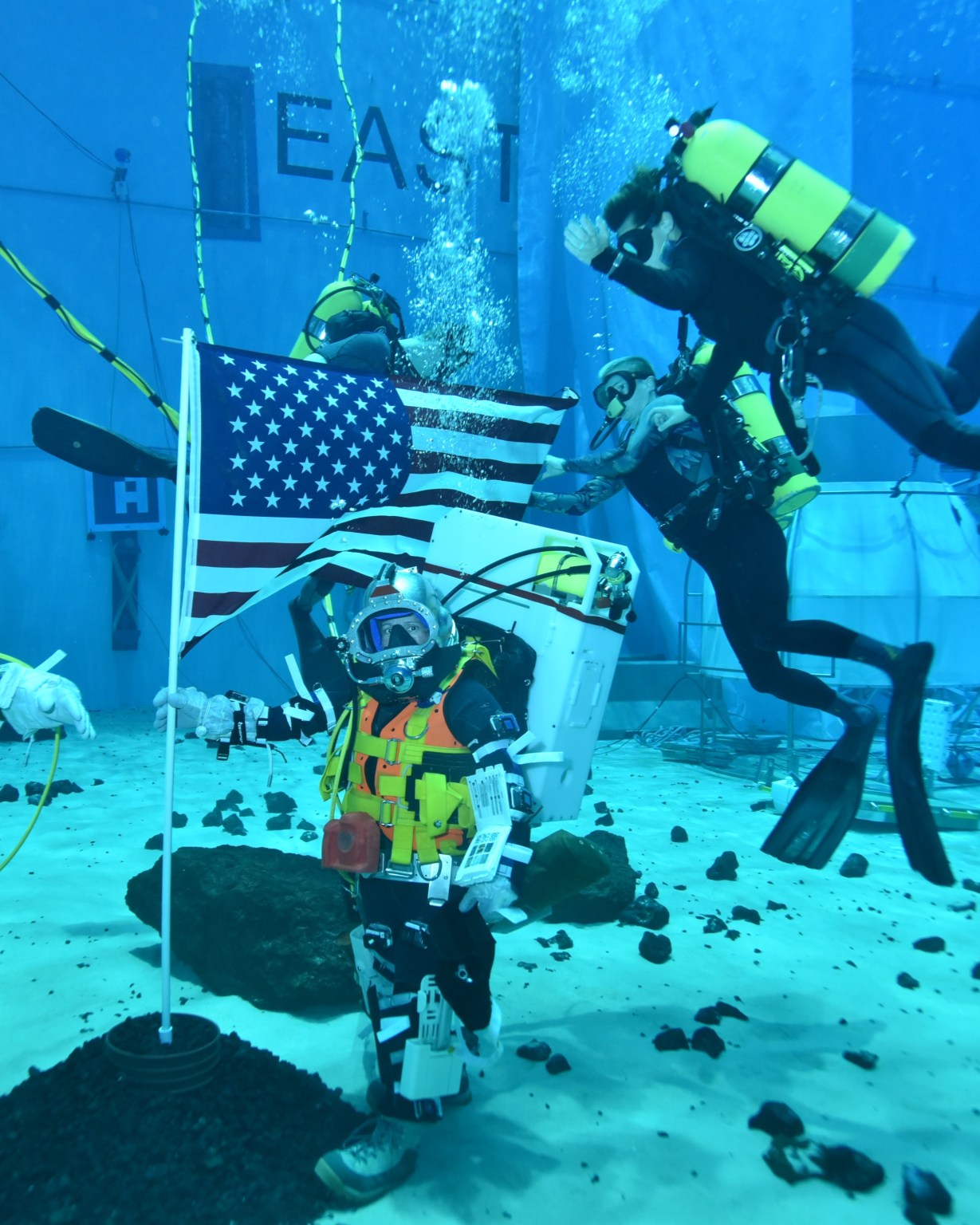
Blooming Seas Around the Chatham Islands

16 Gennaio 2026 ore 06:01
A phytoplankton bloom in the southern Pacific Ocean appears as an oval-shaped area of green and chalky blue water surrounding a group of small islands.
January 10, 2026

At about 800 kilometers (500 miles) east of New Zealand’s South Island, the sparsely populated Chatham Islands are rugged, remote, and often inconspicuous. In January 2026, however, a ring of bright green and blue swirls in the ocean put a natural spotlight on the far-flung specks of land.

A bloom of phytoplankton—tiny photosynthetic organisms that become visible to satellites when their numbers explode—encircled the Chatham Islands in austral summer. Surface currents and eddies carried the floating organisms into intricate wisps and swirls. The VIIRS (Visible Infrared Imaging Radiometer Suite) on the NOAA-20 satellite captured this image of the display on January 10, 2026.

The Chatham Islands sit on the Chatham Rise, an underwater plateau that extends eastward from the South Island of New Zealand. The top of the rise is relatively shallow and separates areas of deeper water to the north and south. These seafloor contours make blooms common along the Chatham Rise, where cold, nutrient-rich currents from the Antarctic and warm, nutrient-poor water from the subtropics converge. The well-mixed water, coupled with long daylight hours, can boost phytoplankton populations.

With phytoplankton at the base of the food web, the waters around the Chatham Islands support productive fisheries, with valuable species such as pāua, rock lobster, and blue cod. The region is also home to an array of marine mammals, including five seal species and 25 whale and dolphin species. Amid this abundance, however, the islands are a hotspot for whale and dolphin strandings, in which hundreds of animals are sometimes beached.

NASA Earth Observatory image by Lauren Dauphin, using VIIRS data from NASA EOSDIS LANCE, GIBS/Worldview, and the Joint Polar Satellite System (JPSS). Story by Lindsey Doermann.

References & Resources

Downloads

A phytoplankton bloom in the southern Pacific Ocean appears as an oval-shaped area of green and chalky blue water surrounding a group of small islands.

January 10, 2026

JPEG (743.36 KB)

You may also be interested in:

Stay up-to-date with the latest content from NASA as we explore the universe and discover more about our home planet.

Islands of Fire and Ice Veiled in Cloud
3 min read

Puffs of low-level clouds mingle with the volcanic terrain of Candlemas and Vindication islands in the remote South Atlantic.

Article
Bloom Time in the Barents Sea
2 min read

Arctic waters near Norway’s Bear Island teemed with tiny plant-like organisms that painted the seas turquoise-blue and green.

Article
A Sea Aswirl With Chlorophyll
4 min read

One of NASA’s newest Earth-observing sensors extends and improves the continuous measurement of light-harvesting pigments in ocean surface waters.

Article

NASA Adds Two F-15 Aircraft to Support Supersonic Flight Research

15 Gennaio 2026 ore 21:58

3 min read

Preparations for Next Moonwalk Simulations Underway (and Underwater)

Alt Text: A ground crew member wearing hearing protection raises both arms to guide an F-15 aircraft taxiing on the ramp at NASA Armstrong Flight Research Center.
Oregon Air National Guard ground crew guides one of the NASA’s newest F-15 aircraft onto the ramp at the agency’s Armstrong Flight Research Center in Edwards, California, on Monday, Dec. 22, 2025. The retired U.S. Air Force F-15s come from the Oregon Air National Guard’s 173rd Fighter Wing and will transition from military service to support NASA’s flight research fleet.
NASA/Christopher LC Clark
U.S. Air Force and NASA flight crew stand on the ramp at NASA’s Armstrong Flight Research Center, facing the runway, with a desert landscape and an aircraft visible in the distance.
Oregon Air National Guard and NASA flight crew look out across the desert while awaiting the arrival of the NASA’s newest F-15 aircraft from the Oregon Air National Guard’s 173rd Fighter Wing to NASA’s Armstrong Flight Research Center in Edwards, California, on Monday, Dec. 22, 2025
NASA/Christopher LC Clark
Two F-15 aircraft sit side by side on the ramp at NASA’s Armstrong Flight Research Center, displaying tail numbers 045 and 063 and tail markings that read “Oregon” above an eagle graphic. A NASA hangar with the agency’s logo is visible in the background
NASA’s newest F-15 aircraft arrive at the agency’s Armstrong Flight Research Center in Edwards, California, on Monday, Dec. 22, 2025. The two retired U.S. Air Force F-15s will support ongoing supersonic flight research for NASA’s Flight Demonstrations and Capabilities Project and the Quesst mission’s X-59 quiet supersonic research aircraft.
NASA/Christopher LC Clark
U.S. Air Force service members in uniform and NASA civilians stand in two rows in front of a gray F-15 with its canopy open and a ladder attached on the ramp at NASA Armstrong Flight Research Center, posing for a photo with a hangar and NASA logo visible in the background.
NASA staff and Oregon Air National Guard’s 173rd Fighter Wing crew pose for a group photo at NASA’s Armstrong Flight Research Center in Edwards, California, on Monday, Dec. 22, 2025. The group stands in front of one of two F-15 aircraft added to the agency’s flight research fleet.
NASA/Christopher LC Clark
Two U.S. Air Force pilots in flight suits and a NASA civilian walk away from the agency’s newest F-15 aircraft; two gray F-15s, a white truck, and the desert are visible in the background.
Oregon Air National Guard pilots deliver NASA’s newest F-15 aircraft from the Oregon Air National Guard’s 173rd Fighter Wing at Kingsley Field to NASA’s Armstrong Flight Research Center in Edwards, California, on Monday, Dec. 22, 2025. After completing their final flights with the Air Force, the two aircraft begin their new role supporting NASA’s flight research.
NASA/Christopher LC Clark

Two retired U.S. Air Force F-15 jets have joined the flight research fleet at NASA’s Armstrong Flight Research Center in Edwards, California, transitioning from military service to a new role enabling breakthrough advancements in aerospace.

The F-15s will support supersonic flight research for NASA’s Flight Demonstrations and Capabilities project, including testing for the Quesst mission’s X-59 quiet supersonic research aircraft. One of the aircraft will return to the air as an active NASA research aircraft. The second will be used for parts to support long-term fleet sustainment.

“These two aircraft will enable successful data collection and chase plane capabilities for the X-59 through the life of the Low Boom Flight Demonstrator project” said Troy Asher, director for flight operations at NASA Armstrong. “They will also enable us to resume operations with various external partners, including the Department of War and commercial aviation companies.”

The aircraft came from the Oregon Air National Guard’s 173rd Fighter Wing at Kingsley Field. After completing their final flights with the Air Force, the two aircraft arrived at NASA Armstrong Dec. 22, 2025. 

“NASA has been flying F-15s since some of the earliest models came out in the early 1970s,” Asher said. “Dozens of scientific experiments have been flown over the decades on NASA’s F-15s and have made a significant contribution to aeronautics and high-speed flight research.”

The F-15s allow NASA to operate in high-speed, high-altitude flight-testing environments. The aircraft can carry experimental hardware externally – under its wings or slung under the center – and can be modified to support flight research.

Now that these aircraft have joined NASA’s fleet, the team at Armstrong can modify their software, systems, and flight controls to suit mission needs. The F-15’s ground clearance allows researchers to install instruments and experiments that would not fit beneath many other aircraft.

NASA has already been operating two F-15s modified so their pilots can operate safely at up to 60,000 feet, the top of the flight envelop for the X-59, which will cruise at 55,000 feet. The new F-15 that will fly for NASA will receive the same modification, allowing for operations at altitudes most standard aircraft cannot reach. The combination of capability, capacity, and adaptability makes the F-15s uniquely suited for flight research at NASA Armstrong.

“The priority is for them to successfully support the X-59 through completion of that mission,” Asher said. “And over the longer term, these aircraft will help position NASA to continue supporting advanced aeronautics research and partnerships.”

❌