Vista elenco

NASA Challenge Tests Wheel Designs for Moon Base Mobility
17 Agosto 2026 ore 17:09
5 Min Read

NASA Challenge Tests Wheel Designs for Moon Base Mobility
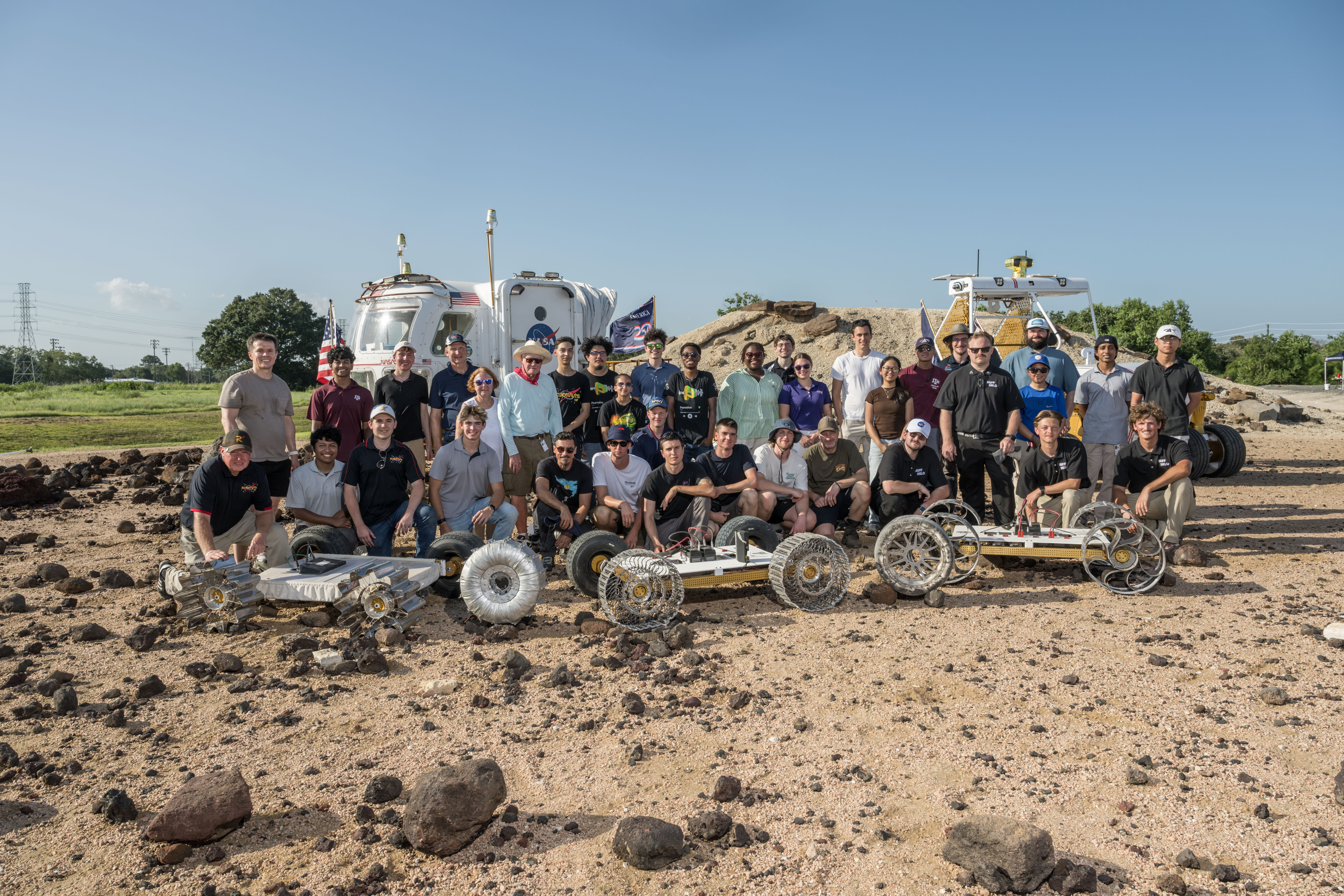
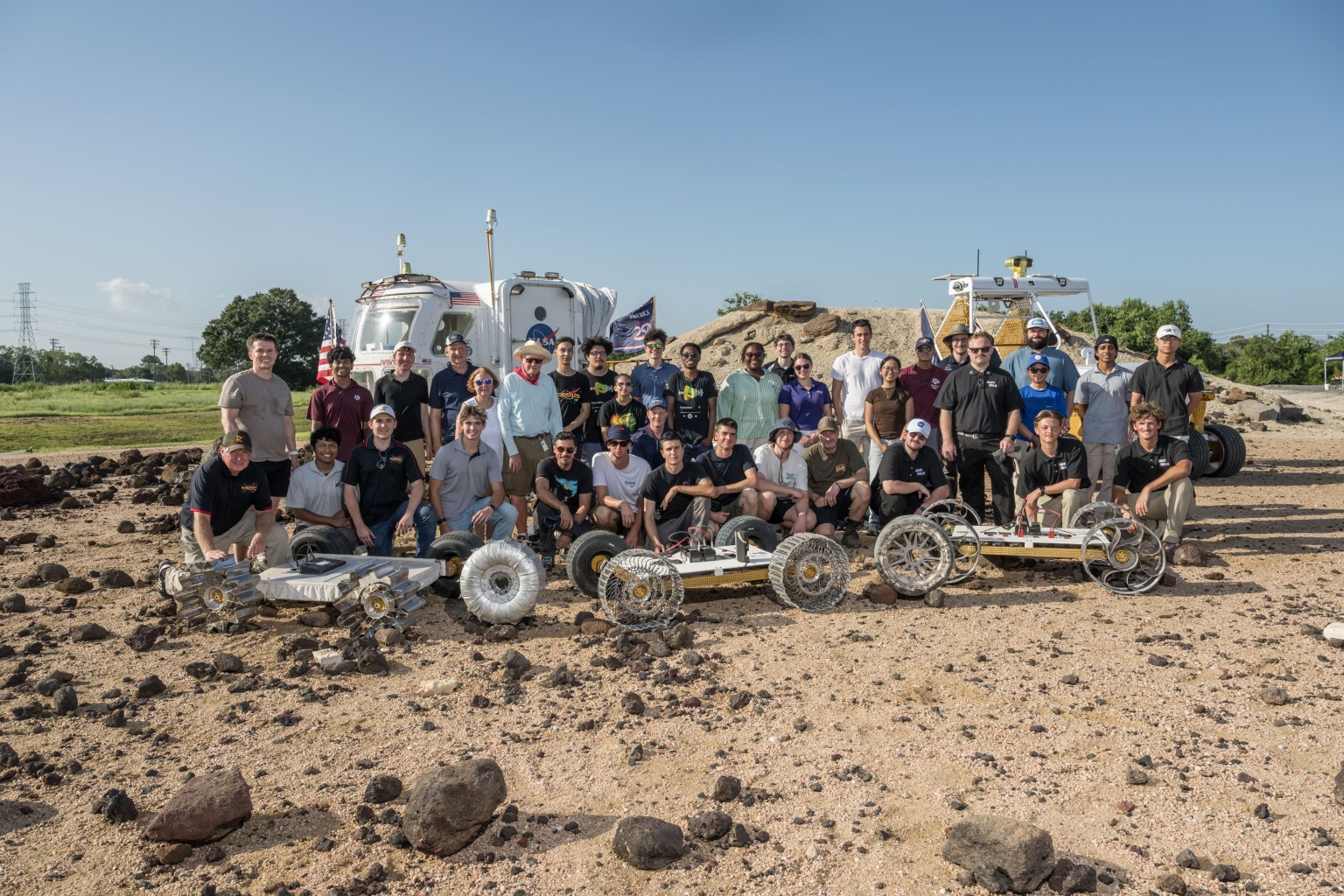
NASA engineers, NASA Robotics Academy students, and teams from the Rock and Roll with NASA Challenge pose with the wheel prototypes at NASA’s Johnson Space Center Rock Yard in Houston on July 31, 2026.
Credits: NASA/Luna Posadas Nava
NASA engineers, NASA Robotics Academy students, and teams from the Rock and Roll with NASA Challenge pose with the wheel prototypes at NASA’s Johnson Space Center Rock Yard in Houston on July 31, 2026.
NASA/Luna Posadas Nava

As NASA prepares to establish the Moon Base, advancing surface mobility will be key to helping crews and robotic systems travel farther across the lunar surface. 

To help advance that capability, the Rock and Roll with NASA Challenge invited public innovators to design and build next-generation lunar rover wheels. 

Five teams from 128 submissions and 49 countries advanced to the final phase of the competition, where they tested their prototypes on July 31 at NASA’s Johnson Space Center in Houston. 
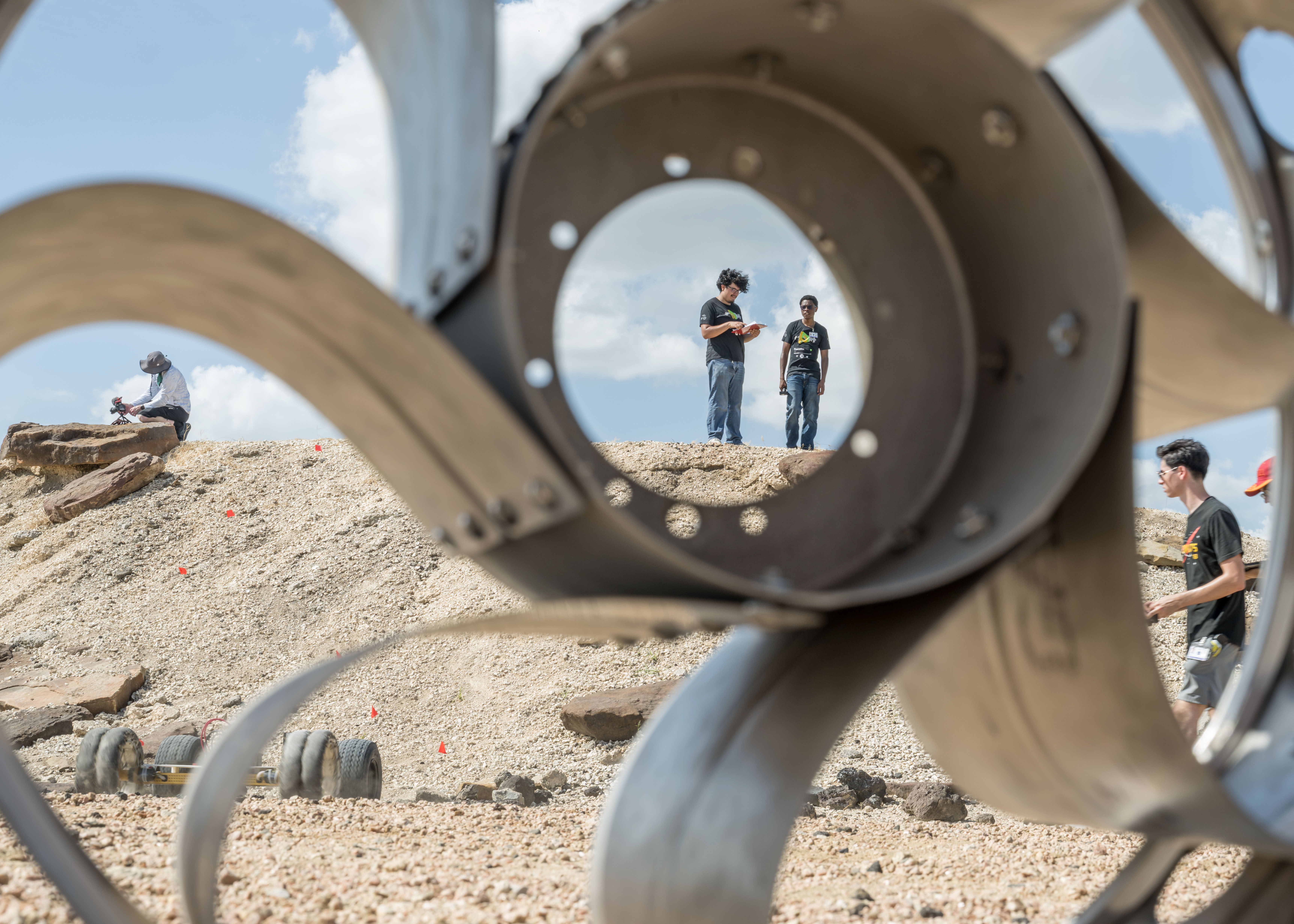
The Huff Helo lunar wheel prototype is tested at Johnson Space Center’s Rock Yard.
NASA/Luna Posadas Nava

The challenge sought lightweight, durable, and scalable wheels that could support longer-duration lunar surface operations. The designs also needed to be compliant enough to absorb impacts, maintain traction at higher speeds, and withstand the harsh lunar environment. 

“Every additional kilometer a rover can reliably travel will expand how far we can explore, what science we can achieve, and what infrastructure we can build,” said Ed Herrera, robotics engineer at Johnson and co-leader of the challenge project. 

NASA Johnson uses ground prototypes to test mobility technologies, while lunar terrain vehicles will be delivered to the lunar surface through the Commercial Lunar Payload Services initiative. For the challenge, the wheels were fitted to MicroChariot, a 45-kilogram test rover, and put through a series of courses at Johnson’s Rock Yard to evaluate their performance across different types of terrain. 
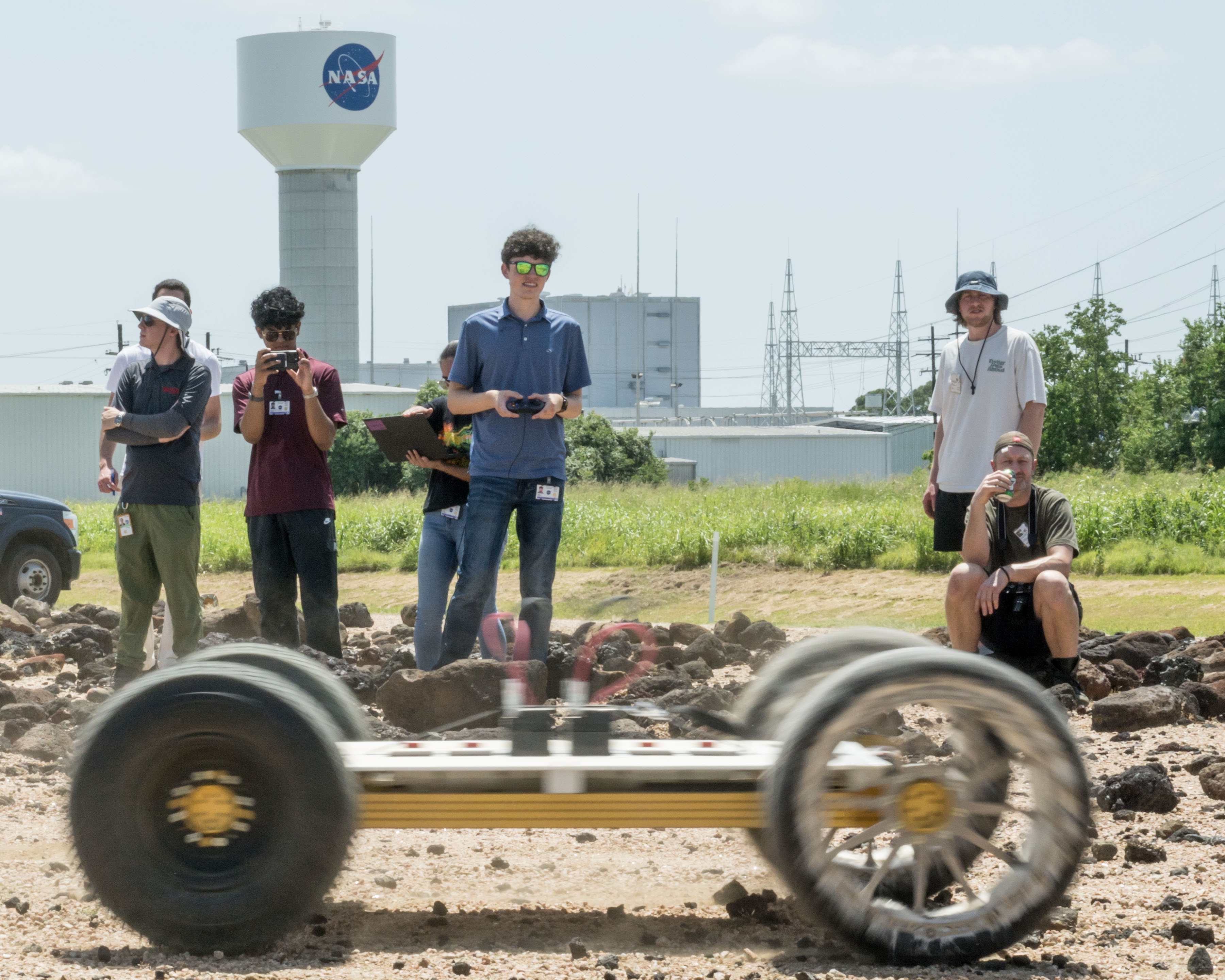
NASA Robotics Academy students navigate the lunar wheel prototype Scotch Pad Tyres fitted on the MicroChariot rover at Johnson’s Rock Yard.
NASA/Luna Posadas Nava

“Crowdsourcing gives us an opportunity to look beyond traditional approaches for lunar wheel design,” Herrera said. “The more wheel technologies we can develop and understand, the more options we have to meet the needs of different vehicles, terrains, and missions on the Moon and Mars.” 

Those ideas were reflected in five distinctly different designs. 

The HTR Variable Flex Lunar Wheel created by Hellenic Technology of Robotics SA uses an internal system designed to vary the wheel’s stiffness depending on terrain and vehicle needs. The team adapted technology it had been developing for terrestrial wheels for about a decade. 

The Hiper Wheel created by Hyperbola uses tensioned cables and a corigated structure that provides spring-like behavior, allowing the wheel to flex without relying on traditional radial spokes. 

The Huff Helo Flexible Titanium Wheel created by Huff Helo Inc. uses formed titanium sheet metal as both structure and spring. During testing, the team found that the strength of the design also made the wheel more rigid, causing it to bounce over some obstacles rather than conform to the terrain. 

The Payne Aviation Wheel created by Deborah and Craige Payne took inspiration from aviation and history. Its designer, an aircraft mechanic, combined a pneumatic approach with ideas from early automobile tire designs. 
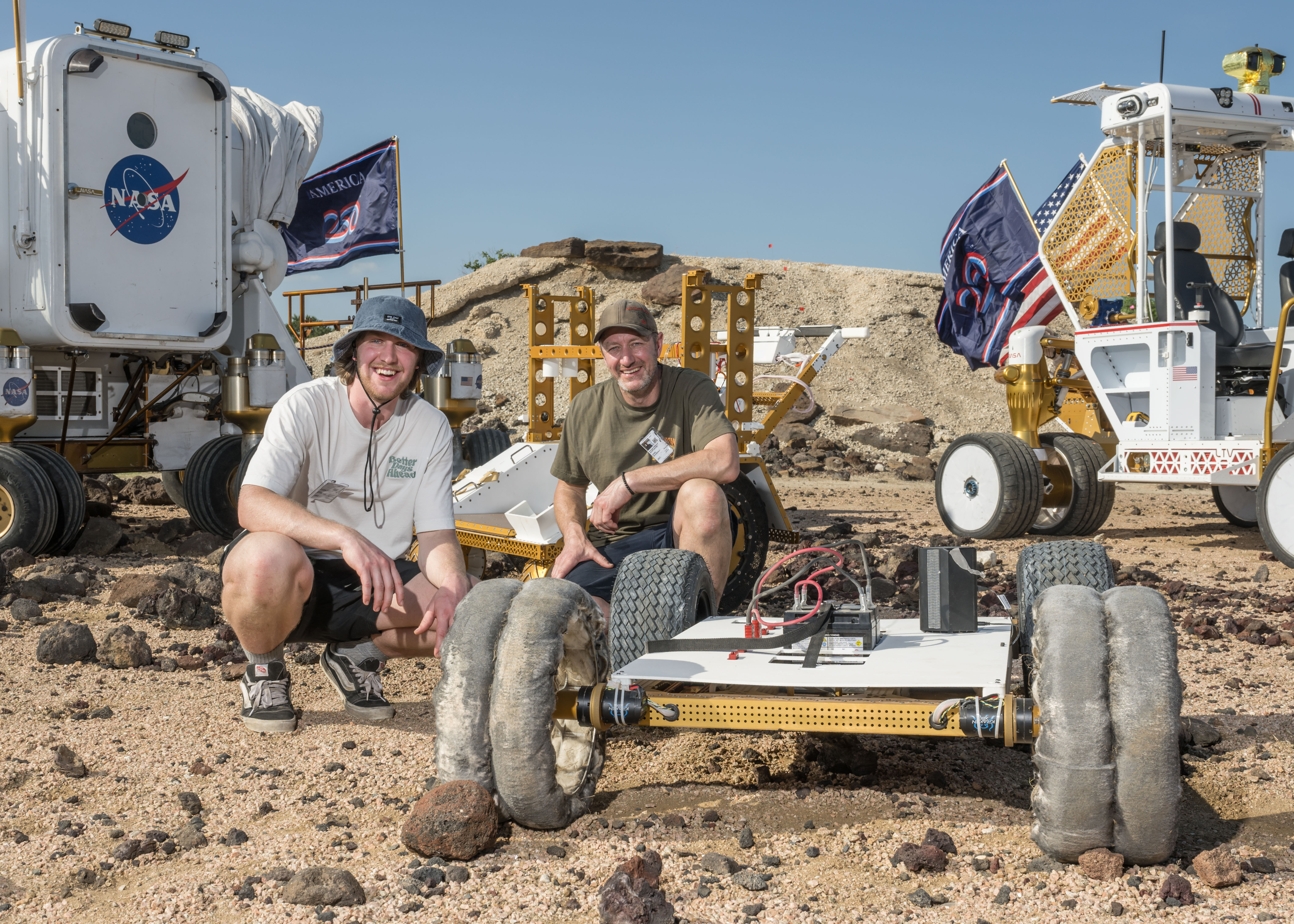
The winning Scotch Pad Tyres team poses with their prototype and MicroChariot at Johnson’s Rock Yard.
NASA/Luna Posadas Nava

The winning Scotch Pad Tyres concept came from an Australian mechanical engineer Daniel Bloomfield and his son Isaac Bloomfield. Their prototype uses a Nomex-based tire structure supported around an aluminum hub. The soft material allows the tire to deform around terrain, while internal support helps it maintain its shape. A treated outer surface of epoxy and corundum grit was integrated to improve traction. 

The Rock Yard testing also demonstrated why different terrains may require different approaches. Loose material can affect traction, while rocks and slopes place different demands on wheels such as vehicle stability. 
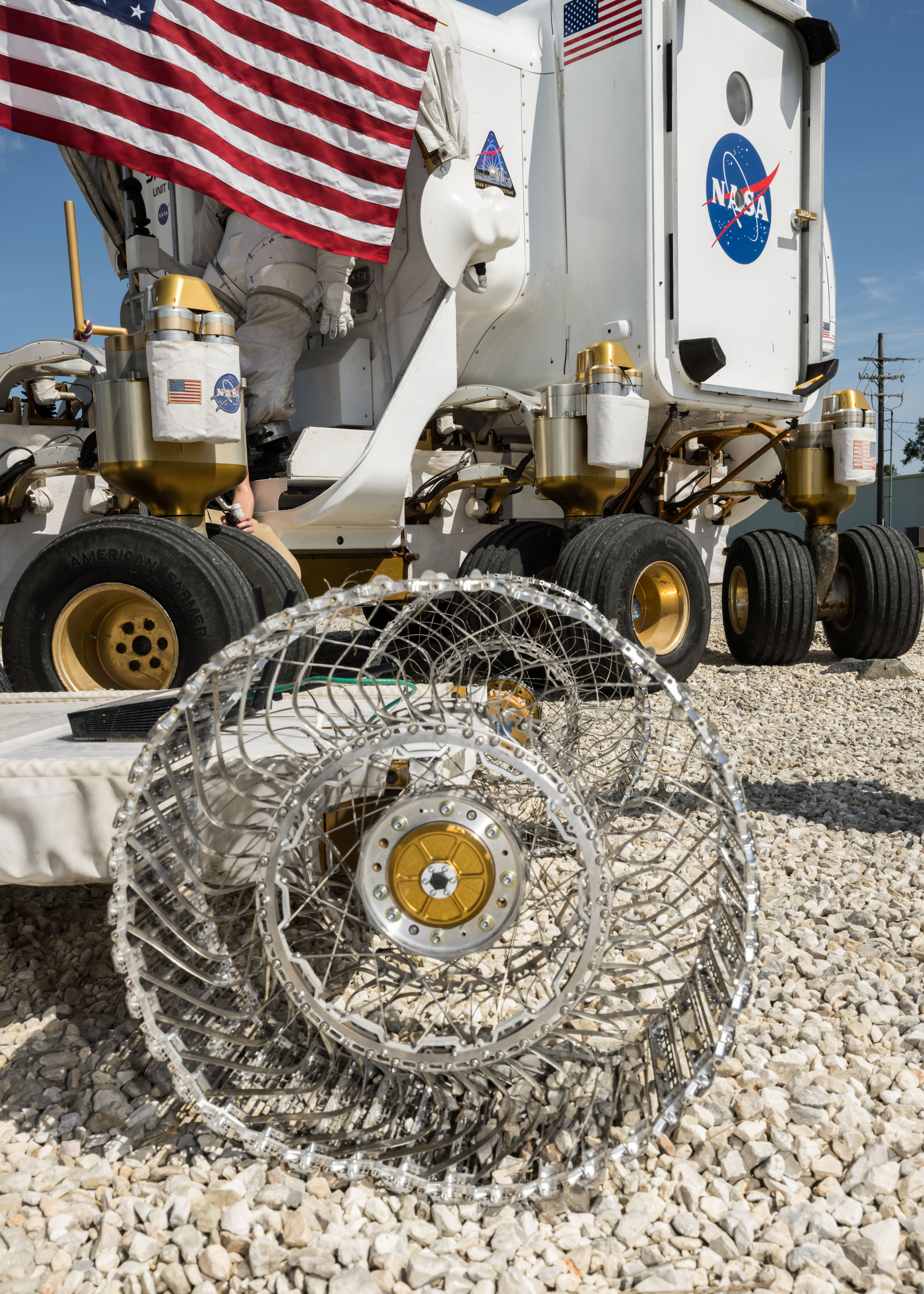
The HTR Variable Flex Lunar Wheel prototype sits alongside NASA’s Space Exploration Vehicle at Johnson’s Rock Yard.
NASA/Luna Posadas Nava

As lunar exploration expands, different vehicles will require different combinations of speed, load capacity, durability, and terrain performance. 

Seeking that variety was part of the challenge design. The design options gave engineers different technologies to consider and potentially advance. 

“This challenge brought in new ideas from outside traditional industries and helped us identify wheel technologies that may be suitable for longer-duration surface operations,” said Lucien Junkin, robotics engineer at Johnson and co-leader of the challenge project. 

The next phase could evaluate how the wheels respond to lunar-like dust, vacuum, and extreme temperatures in Johnson’s thermal vacuum chambers. Engineers could also assess the designs over longer distances and at different sizes and loads. 

“Mobility is key to everything we want to do on the Moon,” Junkin said. “The farther we want to explore, the more we need to advance the wheel technologies that can get us there.” 

The Common Robotics Project of the Robotic Systems Technology Branch within Johnson’s Engineering Directorate conducted the Rock and Roll with NASA Challenge. NASA’s Center of Excellence for Collaborative Innovation, part of the Prizes, Challenges, and Crowdsourcing Program within the Research and Technology Mission Directorate, managed the challenge contract. Students in NASA’s Robotics Academy helped prepare hardware and support the competition, while engineers from NASA’s Glenn Research Center in Cleveland supported reviews of concepts and proposals. HeroX administered the challenge on behalf of NASA.  

About the Author

Sumer Loggins

Sumer Loggins

Keep Exploring

Discover More Topics From NASA

NASA Competition Invites Students to Help Imagine a Future Enabled by Lunar Technologies 

14 Agosto 2026 ore 22:00

3 min read

Preparations for Next Moonwalk Simulations Underway (and Underwater)

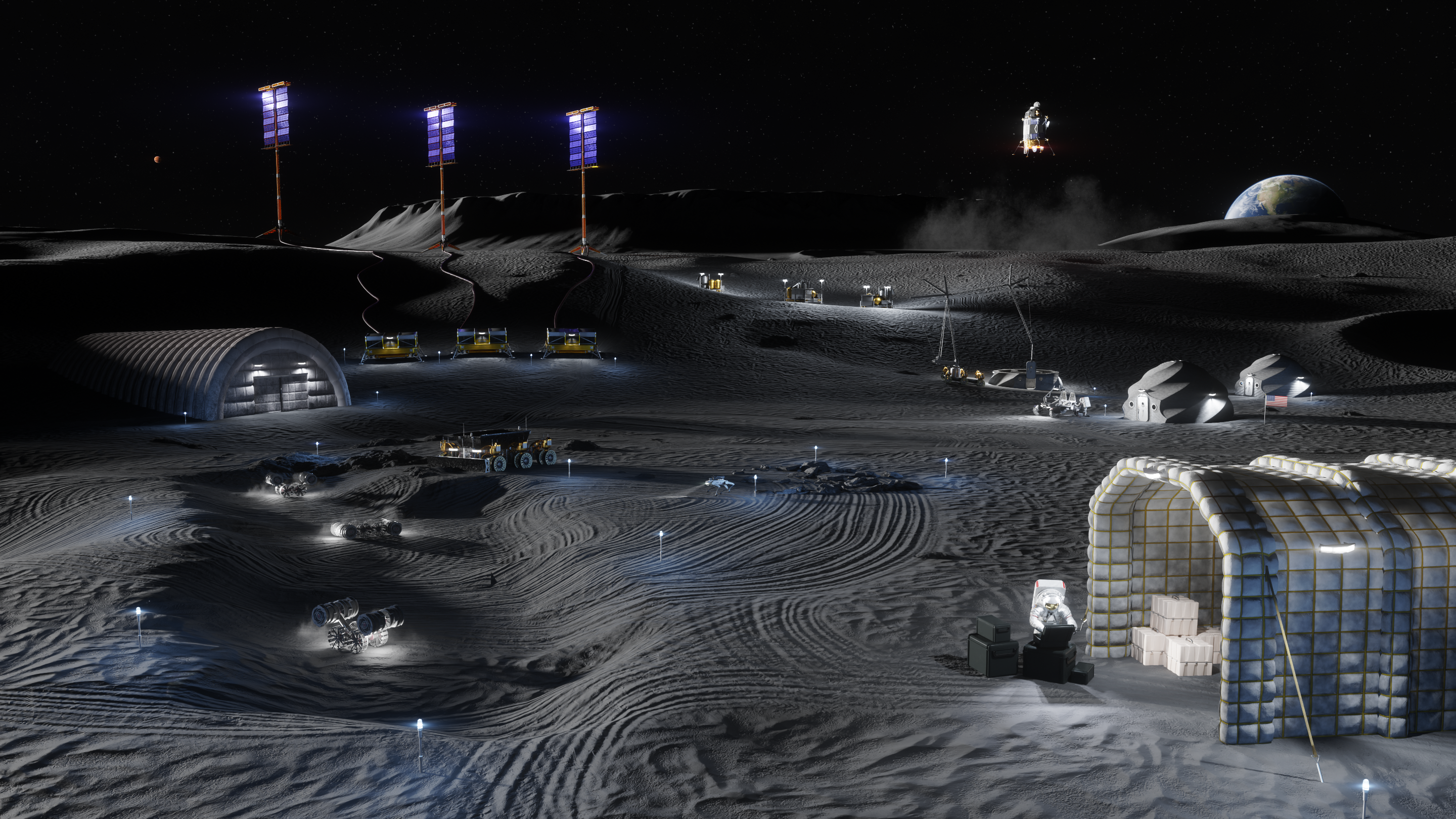
Artist concept of various technologies on a moon base.
Artist’s rendering depicting lunar surface operations at a future base in the lunar South Pole.
NASA

NASA is asking U.S.-based collegiate teams to submit bold, original concepts to the 2027 edition of a student challenge focused on aerospace innovation that could help the agency envision a future on the Moon shaped by new technology. 

The latest NASA Revolutionary Aerospace Systems Concepts – Academic Linkage (RASC-AL) competition invites student teams to explore new operations paradigms and advance the technologies needed to support sustained operations in the lunar South Pole region. 

“This competition showcases the technical excellence and creativity of the next generation of explorers and innovators,” said Chris Jones, chief technologist, Systems Analysis and Concepts Directorate, NASA’s Langley Research Center in Hampton, Virginia. “The concepts students develop through RASC-AL demonstrate exceptional talent and contribute to the body of work that advances NASA’s missions.”   

Since 2002, the annual RASC-AL competition has helped foster aerospace concepts, technology, and prototyping by making connections among universities, NASA, and industry. This year’s competition includes themes ranging from the development of concepts to support prospecting in the permanently shadowed regions of lunar craters to the advancement of critical and expandable infrastructure for future astronauts. 

“NASA’s RASC-AL competition connects top university researchers with the agency’s technology and engineering challenges,” said Gabe Merrill, acting cross-program integration lead for the Advanced Research and Technology Division in NASA’s Research and Technology Mission Directorate. “By asking student innovators to design concepts for what our future on the Moon might look like, this competition accelerates the technology we need to explore the Moon and provides a development opportunity for future aerospace innovators and leaders.” 

Teams interested in participating are required to submit a non-binding notice of intent by Tuesday, Oct. 13, and will be invited to a Q&A session with NASA experts on Oct. 27.  

Challenge proposals and accompanying video submissions are due Feb. 24, 2027. Proposals should demonstrate innovative solutions supported by original engineering and analysis in response to one of the four 2027 RASC-AL themes: 

  • Enabling extreme exploration 
  • Transit pathway construction 
  • Lunar resource exploration 
  • Smart and resilient lunar habitat 

The competition will select as many as 14 teams to advance to its final phase, which involves further developing their concepts, writing a technical paper, and creating a technical poster. Each finalist team will receive a $7,500 award to facilitate its full participation. Finalists will present their concepts to a panel of NASA and industry experts at the 2027 RASC-AL Forum in Cocoa Beach, Florida, June 7 to 10, 2027. 

The top two overall teams will receive an additional monetary award and an invitation to attend and present their concept at an aerospace conference later in 2027. 

Interested student teams are encouraged to visit the official RASC-AL competition website for detailed guidelines and eligibility requirements. 

The 2027 NASA RASC-AL Competition is administered by the National Institute of Aerospace on behalf of NASA’s Advanced Research and Technology Division within the Research and Technology Mission Directorate. NASA’s Center of Excellence for Collaborative Innovation, part of the Prizes, Challenges, and Crowdsourcing Program within the Research and Technology Mission Directorate, manages the challenge contract.

Eurovision Bans Countries in War Zones From Hosting

12 Agosto 2026 ore 22:17
The event’s organizers would not say whether that included Israel, but its participation has been a matter of contention during the war in Gaza.

© Tobias Schwarz/Agence France-Presse — Getty Images

The singer Noam Bettan representing Israel at this year’s Eurovision Song Contest in Vienna in May.
❌