❌

Vista elenco

NASA Names Stephen Cash Marshall Space Flight Center Director

16 Ottobre 2026 ore 22:14
Stephen Cash
Photo of Stephen Cash

NASA Administrator Jared Isaacman has named Stephen Cash director of the agency’s Marshall Space Flight Center in Huntsville, Alabama, effective Monday, Oct. 19. Cash, a veteran NASA engineer and aerospace executive, returns to lead the center where he began his career more than four decades ago.

“Marshall contributions to NASA’s missions are historic and it’s no question why it’s the Center of Excellence for propulsion,” said Isaacman. “Steve Cash is a Marshall legend, has spent his career around the hardware, the people and has been in the seat before making the decisions when human spaceflight is on the line. As Marshall continues its critical role in Artemis and takes on new challenges in advanced propulsion, nuclear power, and the systems that will carry us deeper into the solar system, Steve brings the experience, technical judgment, and mission focus needed to lead the center into that next chapter. I am also grateful to Rae Ann Meyer for the leadership she has provided to Marshall during this transition and for her continued service to NASA.” 

“Leading a NASA center requires a commitment to its people and to the technical capabilities entrusted to them,” said Amit Kshatriya, NASA associate administrator and chief engineer. “Steve understands that the jewel of Marshall is its workforce and that engineering excellence is sustained by giving talented people the opportunity to design, build, test, and learn through hands-on work. As Marshall continues strengthening the manufacturing, structural loads and dynamics, and propulsion capabilities that underpin NASA’s exploration enterprise, Steve’s leadership will help ensure the workforce has opportunities to develop and apply the expertise needed to deliver the agency’s most ambitious missions.”

 As center director, Cash will lead one of NASA’s largest field centers, overseeing a workforce of more than 5,000 civil service and contractor employees and a broad portfolio of propulsion, space systems, scientific research, and technology development activities.  Marshall plays a critical role in NASA’s Artemis program, including the development of NASA’s SLS (Space Launch System) rocket, management of the Human Landing System Program, as well as other capabilities supporting sustained exploration of the Moon and future missions to Mars. Further, Marshall plays a key role in the advancement of nuclear power and propulsion, an area of focus that is expected to grow as NASA works towards sending the first humans to Mars.  

“It is a profound honor to be back home at the Marshall Space Flight Center,” said Cash. “I am humbled to stand alongside the brilliant minds here as we continue to turn the impossible into everyday history.”

Cash began his NASA career at Marshall in 1982 and spent 34 years with the agency, holding senior engineering and management positions supporting some of the nation’s most significant human spaceflight programs.

During his NASA career, Cash served as manager of Marshall’s Space Shuttle Propulsion Office, overseeing critical propulsion systems supporting shuttle through its final missions. He later served as director of Marshall’s Safety and Mission Assurance Directorate from 2011 until his retirement in 2016, providing leadership in safety, reliability, and quality engineering to support mission success across the center.

Following his retirement from NASA, Cash continued his work in the aerospace industry, including serving as vice president for advanced space systems at Axient, supporting the development and execution of major spaceflight programs. In 2024, he was inducted into the Alabama Engineering Hall of Fame in recognition of his contributions to engineering and the nation’s space program.

Cash succeeds Rae Ann Meyer, who has served as Marshall’s acting center director since September 2025. Meyer, who previously served as Marshall’s deputy center director and associate director, has provided leadership and continuity across the center’s programs and operations during her tenure as acting director. Meyer will return to her role as Deputy Center Director.

Established in 1960, Marshall has played a central role in American space exploration for more than six decades, from developing the Saturn rockets that carried astronauts to the Moon during Apollo to advancing the propulsion systems, infrastructure, and technologies supporting the next era of human spaceflight.

For more information about NASA’s Marshall Space Flight Center, visit:

https://www.nasa.gov/marshall

-end-

George Alderman / Cheryl Warner
Headquarters, Washington
202-358-1600
george.a.alderman@nasa.gov / cheryl.m.warner@nasa.gov

Lance Davis
Marshall Space Flight Center, Huntsville, Ala.
256-544-0034
lance.d.davis@nasa.gov

Share

Details

Last Updated
Oct 16, 2026

Juice: la Terra oggi, Giove domani

16 Ottobre 2026 ore 19:15

Lo scorso 28 settembre la missione Juice dell’Esa ha superato un’altra importante tappa nel suo viaggio verso Giove: la sua penultima manovra di fionda gravitazionale, realizzata attraverso un flyby della Terra. Sorvolo che non è stato solo un passaggio essenziale sulla rotta della sonda verso Giove, ma anche un’opportunità per mettere alla prova le osservazioni e le operazioni che caratterizzeranno l’esplorazione del sistema gioviano da parte di Juice.

Fin dal suo lancio, avvenuto il 14 aprile 2023, Juice si sta dirigendo verso Giove e le sue lune ghiacciate, dove arriverà nel 2031. Arrivarci è però tutt’altro che semplice. «Per andare direttamente su Giove, occorre raggiungere una certa velocità», spiega Arnaud Boutonnet, mission analyst di Juice per l’Esa. «Ecco perché sono necessarie le manovre di assist gravitazionale».
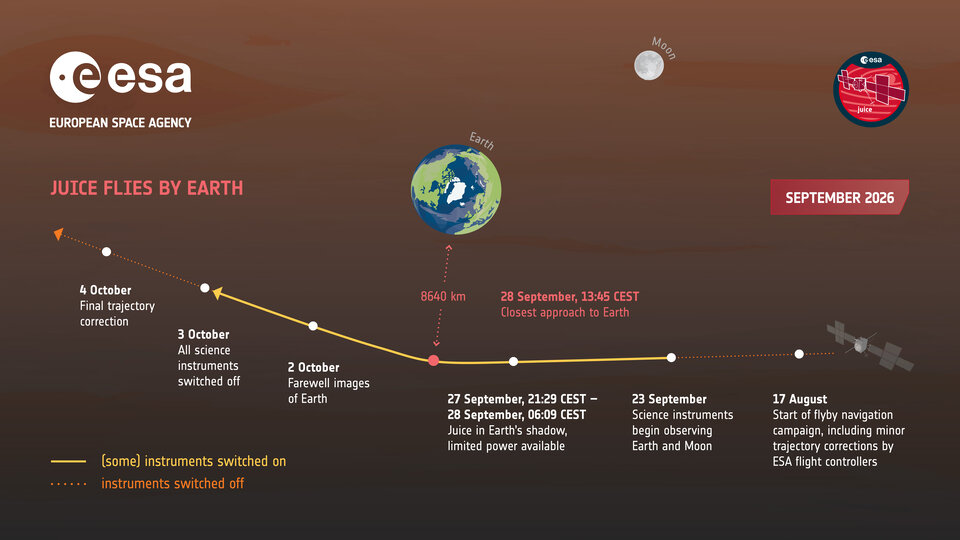
Percorso completo dello scorso flyby di Juice sulla Terra. Crediti: Esa

Queste manovre sfruttano la gravità di un pianeta per alterare la rotta e la velocità di un veicolo spaziale. Con la sua recente fionda gravitazionale offerta dalla Terra, Juice ha ora completato tre dei quattro flyby previsti. Dopo il sorvolo di Venere, Juice aveva una velocità sufficiente rispetto alla Terra, ma non procedeva ancora nella direzione giusta. Quest’ultimo flyby ha modificato la direzione della traiettoria della sonda di circa 20 gradi, orientandola verso Giove, in vista di un’ultima correzione che avverrà nel 2029, durante il suo ultimo sorvolo del nostro pianeta.

Ma la manovra dello scorso settembre non ha riguardato solo la navigazione. Ha anche offerto ai team della missione una preziosa opportunità per simulare le sfide operative e scientifiche che attendono Juice su Giove.

Prova generale nelle tenebre

Lo scorso 12 agosto, molti hanno assistito alla spettacolare eclissi solare totale che ha attraversato la Groenlandia, l’Islanda, la Spagna e parti del Portogallo. Per gli osservatori sulla Terra, la fase di totalità è durata poco più di due minuti. Anche le sonde spaziali affrontano le eclissi. Durante la sua manovra gravitazionale lunare-terrestre nel 2024, Juice ha sperimentato un’eclissi della durata di 32 minuti. Il suo recente flyby terrestre, tuttavia, ha battuto un nuovo record per la missione. Prima del massimo avvicinamento, infatti, Juice è scivolata nell’ombra della Terra, trascorrendo tre ore in completa oscurità (ombra totale o umbra) e sei ore in ombra parziale. Fatto ancora più importante, l’eclissi ha replicato in modo molto simile le condizioni che Juice incontrerà su Giove, offrendo al Flight Control Team una rara opportunità per testare le future strategie operative anni prima dell’arrivo.

«I flyby sono diventati abbastanza di routine per la missione, ma richiedono comunque un’enorme quantità di preparazione. Per questo ci siamo preparati per più di un anno», ricorda Angela Dietz, spacecraft operations manager di Juice.

L’eclissi ha trasformato questa preparazione in una prova generale per Giove.

Tre ore senza Sole: batterie alla prova del buio

Juice è alimentata da due grandi pannelli solari, che insieme formano una superficie di 85 metri quadrati. Si tratta di un’area pari a circa la metà di quella di un campo da pallavolo. Questi pannelli saranno essenziali su Giove, dove la luce solare ha un’intensità pari a solo il tre per cento di quella terrestre, e le eclissi possono durare fino a cinque ore.

«Questa è stata la nostra prima opportunità per testare in volo condizioni di eclissi prolungata», spiega Dietz.

Con mesi di anticipo, il Flight Control Team dell’Esoc (European Space Operations Centre) ha simulato scenari di eclissi e procedure di emergenza, mentre i team delle operazioni scientifiche dell’Esac (European Space and Astronomy Centre) hanno preparato gli strumenti per le attività di osservazione e calibrazione. La sera del 27 settembre, mentre Juice entrava nella penombra ,alle 21:30 ora italiana, gli operatori di volo dell’Esoc, man mano che la telemetria giungeva a terra attraverso l’antenna per lo spazio profondo di Cebreros Estrack dell’Esa, monitoravano il calo di potenza dei pannelli solari e il conseguente aumento dell’utilizzo delle batterie. Nel corso dell’eclissi, la carica delle batterie è scesa fino al 54 per cento. I pannelli solari hanno ripreso a generare energia alle 04:14 ora italiana. Con il limite operativo fissato al 35 per cento e il veicolo spaziale che si è comportato in modo nominale, il risultato ha superato le aspettative.

«I dati sull’energia che abbiamo ottenuto da questo flyby sono molto importanti, perché verranno utilizzati per le future simulazioni delle eclissi gioviane», spiega Paula Betriu, science operations engineer di Juice che lavora a Esac per Starion.

Ma l’eclissi è servita a molto di più che a verificare come mantenere in vita la sonda.

Scienza oltre la sopravvivenza

Su Giove, Juice dovrà continuare a fare scienza anche durante i lunghi periodi di oscurità.

«Inizialmente pensavamo che non avremmo avuto abbastanza energia per la strumentazione scientifica di bordo. Ma dopo aver approfondito la questione, ci siamo resi conto che potevamo mantenere attivi diversi strumenti e sfruttare appieno l’opportunità», dice Dietz.

I dieci strumenti scientifici hanno tutti contribuito alla campagna del flyby, seppur non tutti in funzione contemporaneamente durante l’eclissi.

«È stata una campagna impegnativa», dice Pilar Esquej, science operations engineer di Juice che lavora a Esac per Starion. «L’eclissi ha imposto vincoli rigorosi, quindi abbiamo dovuto stabilire le priorità delle osservazioni con estrema attenzione e trovare dei compromessi».

La Terra ripresa dalla fotocamera a guida italiana Janus

Durante la fase di assist gravitazionale, dal 27 settembre al 2 ottobre, la fotocamera scientifica ad alta risoluzione a bordo di Juice Janus, realizzata con il finanziamento dell’Agenzia spaziale italiana (Asi), ha acquisito 740 immagini, utilizzando i diversi filtri dello strumento e a varie risoluzioni spaziali. Durante il sorvolo della Terra, dal limbo notturno a quello diurno, Janus ne ha osservato con continuità la superficie. In particolare, è stata ottenuta una lunga sequenza diurna attraverso l’Oceano Indiano occidentale, il Madagascar e l’Africa centrale, osservati con molteplici filtri. Prima e dopo l’arco di massima vicinanza, la sonda è stata puntata verso la Luna, consentendo a Janus di ottenere immagini del nostro satellite in fase quasi piena. Il 2 ottobre, prima di concludere la sequenza operativa, Janus ha osservato la Terra un’ultima volta.
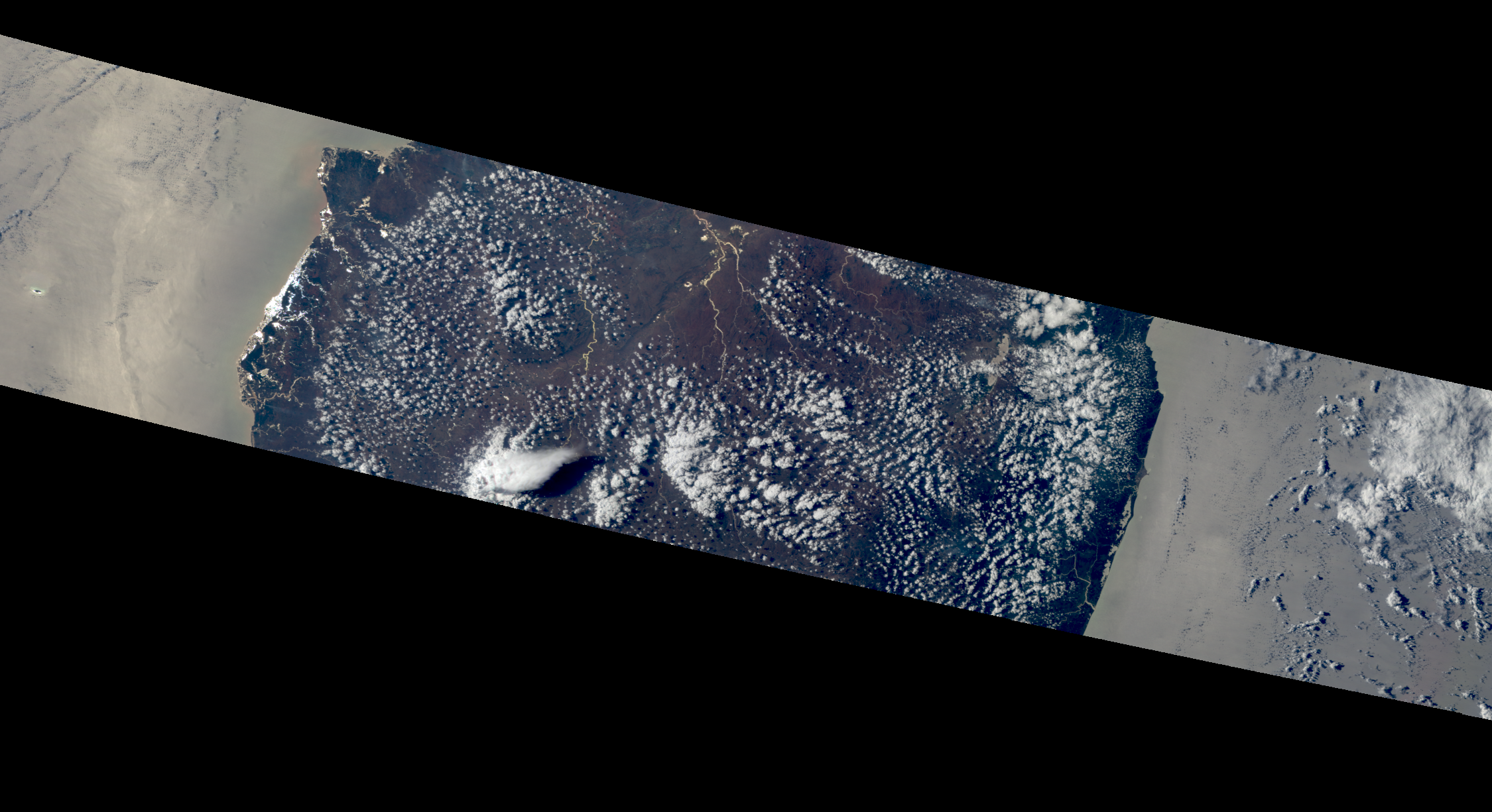
Dettaglio di una sezione della fascia di osservazione che mostra l’intera larghezza dell’isola del Madagascar, con cumuli di bel tempo sopra la terraferma e le valli fluviali nella parte occidentale. L’area marina luminosa e color ocra su entrambi i lati è dovuta al riflesso della luce solare sulla superficie dell’acqua. Crediti: Esa/ Juice / Team Janus. Elaborazione: L. Penasa

«Uno dei possibili casi di studio», spiegano il principal investigator dello strumento, Pasquale Palumbo, e i membri del team scientifico Alice Lucchetti, Luca Penasa e Cecilia Tubiana, tutti dell’Inaf, «riguarda la vegetazione. I filtri Janus nel visibile e nel vicino infrarosso consentono, infatti, di misurare il forte contrasto esistente tra l’assorbimento della clorofilla nel rosso e l’elevata riflettanza della vegetazione nel vicino infrarosso. L’analisi dei dati permetterà di produrre, in via sperimentale, mappe di indici di vegetazione e confrontare regioni molto diverse tra loro, come Mauritius, Madagascar e diverse aree dell’Africa orientale e meridionale».

«Sarà possibile poi confrontare questi prodotti», continuano i quattro ricercatori dell’Inaf, «con osservazioni iperspettrali della Terra ottenute da missioni dedicate all’osservazione terrestre. In particolare, dati Prisma potranno essere utilizzati come riferimento per verificare quanto le informazioni contenute nei più larghi filtri Janus riescano a riprodurre la risposta spettrale osservata da uno spettrometro iperspettrale. Sono inoltre previste osservazioni EnMap di alcune regioni attraversate dalla geometria dell’assist gravitazionale, in particolare in Madagascar e nell’area di confine tra Congo e Zambia. Alcune di queste regioni includono aree minerarie ben caratterizzate e potranno quindi costituire casi di studio per confrontare tecniche di analisi dati applicate ai dati EnMap, alle immagini multispettrali Janus e, dove disponibile, alle osservazioni Majis».

Un’occasione per mettere alla prova il software di guida autonoma

L’eclissi ha anche fornito l’occasione per testare un altro sistema chiave necessario su Giove: il software Eagle (Enhanced Autonomous Guidance through Limb Extraction), un sistema di guida autonoma migliorata basato sul riconoscimento del bordo apparente dei corpi celesti.

Eagle utilizza le due telecamere di navigazione della sonda per migliorare la precisione di puntamento durante i sorvoli ravvicinati delle lune, tracciando il bordo illuminato – il cosiddetto lembo – di un satellite naturale e aiutando così Juice a determinare la sua posizione con maggiore precisione e a mantenere le osservazioni esattamente sul bersaglio.
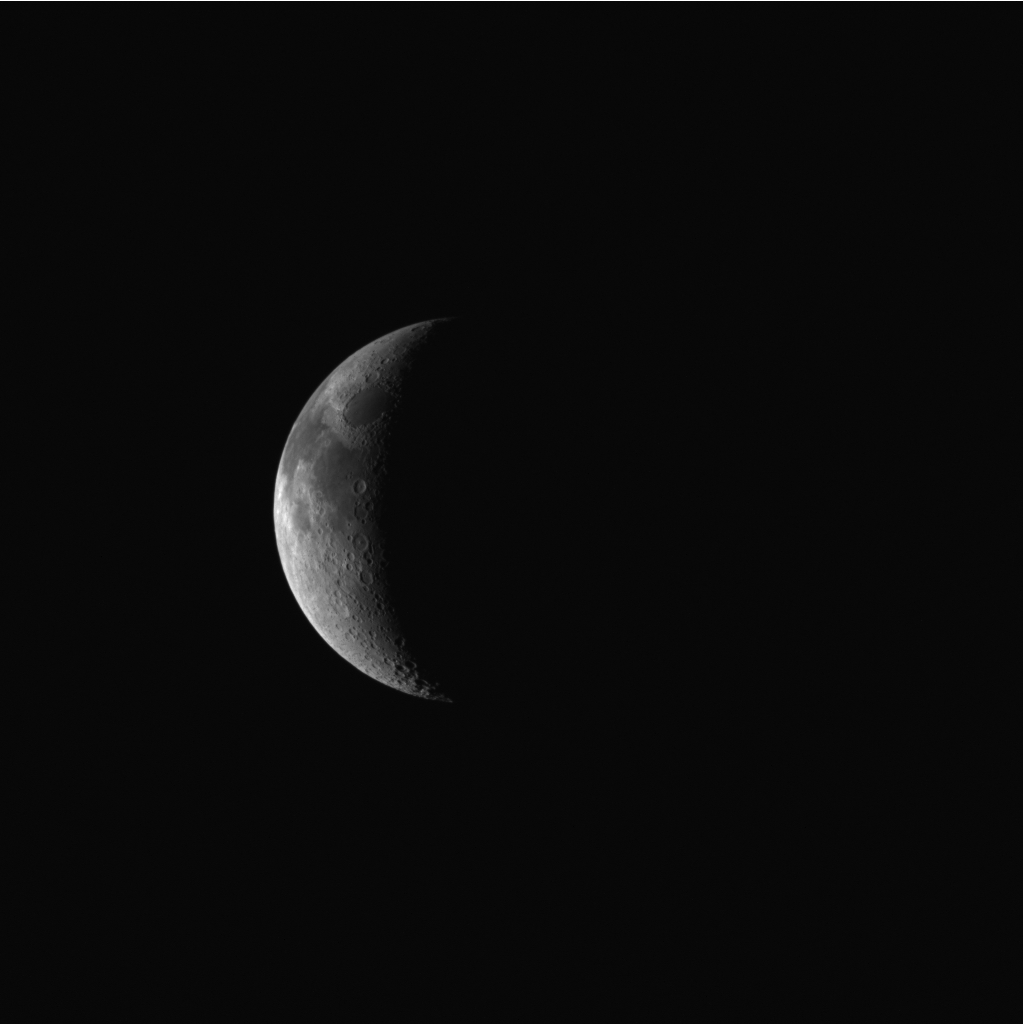
Immagine della Luna ripresa dalla NavCam della sonda Juice durante il sorvolo della Terra. Crediti: Esa/Juice/Jmc

Per il suo primo esercizio in volo, la geometria Terra-Luna è stata sfruttata per replicare quella di Giove e Io, preparando Eagle ai futuri flyby delle lune galileiane. I risultati saranno analizzati nei prossimi mesi.

Nonostante le difficoltà che ha posto, l’eclissi si è rivelata per alcuni aspetti anche vantaggiosa. Attualmente Juice si trova in un ambiente di crociera “caldo”, in cui le temperature limitano le osservazioni. Avere il Sole temporaneamente bloccato dalla Terra ha consentito alla sonda una maggiore libertà di puntamento, permettendo osservazioni altrimenti impossibili.

Nel loro insieme, queste attività hanno reso il flyby molto di più di una semplice correzione di traiettoria. Hanno dato a Juice un primo assaggio delle sfide che la attendono del sistema gioviano e la possibilità di fare una prova generale con anni di anticipo.

Fonti: press release Esa, press release Dlr

Artemis II Heat Shield After Splashdown

16 Ottobre 2026 ore 18:28
The Orion spacecraft's heat shield dominates this underwater photo. Due to the water, the heat shield appears to be teal-colored.
US Navy

Shortly after NASA’s Artemis II mission splashed down on April 10, 2026, U.S. Navy divers captured underwater imagery of the Orion spacecraft’s heat shield. In the months after, the agency measured whether the thermal protection system effectively safeguarded the crew and Orion systems as the spacecraft reentered Earth’s atmosphere. This rigorous analysis confirmed that the heat shield performed as expected.

Learn how Orion’s heat shield was examined.

Image credit: US Navy

NASA to Conduct Low-Altitude Flights Over Texas Farmland

15 Ottobre 2026 ore 18:42

A NASA Dynamic Aviation A200 aircraft will conduct low-flying research flights over farmland near Transit, Texas, from Thursday, Oct. 22, through Monday, Nov. 9. These flights will measure gaseous and particulate emissions from animal feeding operations.

A two engine aircraft sitting in front of a hangar.
A photo of the Dynamic Aviation A200 aircraft, which will conduct low-flying research flights over farmland near Transit, Texas, to measure emissions in October and November 2026.
Dynamic Aviation

Agricultural emissions represent an important and understudied part of Earth’s land and atmosphere systems. The FarmFlux mission will deploy more than a dozen sensors to measure ozone, methane, ammonia, particulates, and other pollutants rising from crop lands and livestock farms and their interaction with the Earth’s atmosphere. The mission is jointly led by NASA’s Goddard Space Flight Center in Greenbelt, Maryland; Colorado State University; and Boston University.

Additional low-altitude research flights with a NASA P-3 Orion aircraft are scheduled for the March to July 2027 growing season in the Midwest and California’s Central Valley with a focus on cropland.

For more information about the FarmFlux mission, visit:

https://science.nasa.gov/mission/evs-4/farm-flux/

By Sharon Teitelbaum

NASA’s Ames Research Center in California’s Silicon Valley

I Am Artemis: Allison Mjoen

16 Ottobre 2026 ore 16:24
3 Min Read

I Am Artemis: Allison Mjoen

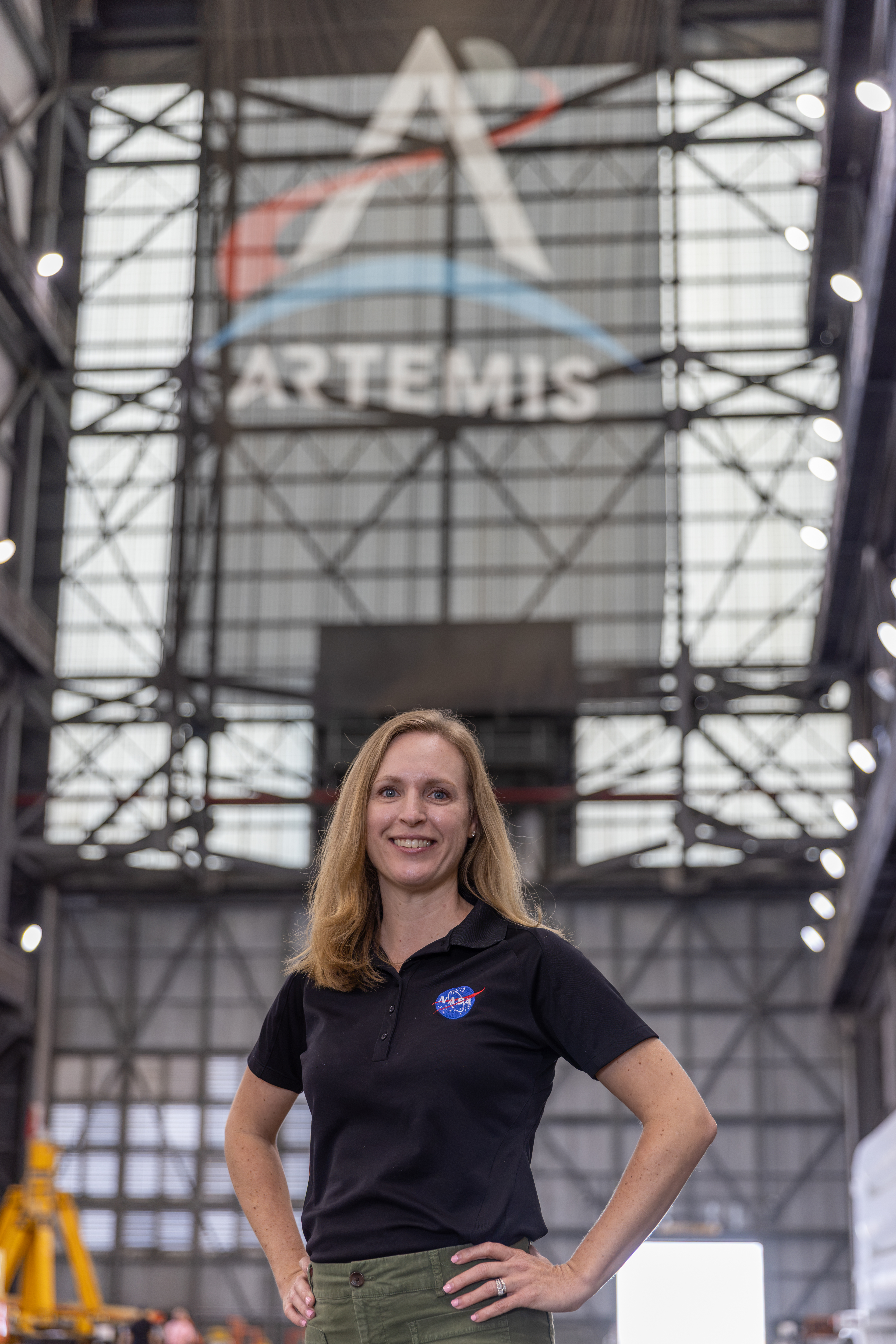
Portrait of Allison Mjoen inside the Vehicle Assembly Building

As the supercooled propellant flowed into the core stage, and NASA’s SLS (Space Launch System) rocket roared to life, Allison Mjoen and her family watched with awe and pride. Mjoen, NASA’s operations manager for the agency’s Exploration Ground Systems Program, helped shape the systems and ground operations that will one day send humans back to the Moon. Over her 20-year career at NASA’s Kennedy Space Center in Florida, she supported missions across the Space Shuttle Program, the International Space Station, and now she is applying that experience to Artemis.

April 1, 2026, was a bright, crystal-clear day along the Florida Space Coast. The sunlight seemed to sharpen every color along the horizon. As Mjoen and her children counted down and the crowd’s voices rose around them, the rumble of the SLS rocket intensified beneath their feet. For her children, it was the chance to see what their mom had helped make possible. For Mjoen, it was a moment she would never forget.

That moment also offered a pause for reflection on the work that led her there. As the spacecraft offline operations manager, Mjoen coordinates the work that happens long before launch day. By supporting the ground systems’ senior vehicle operations manager, Matt Czech, she develops integration plans and oversees ground operations for Artemis vehicle processing, focusing on booster and Orion spacecraft operations.

Allison Mjoen poses for a photo inside the Vehicle Assembly Building.
Allison Mjoen, NASA’s operations manager for the agency’s Exploration Ground Systems Program, helped shape the systems and ground operations that will one day send humans back to the Moon.
NASA/Amber Jean Notvest

Mjoen began her career as a flight crew systems engineer with United Space Alliance supporting the Space Shuttle Program. Her team handled mission-specific cabin configurations, including the food, spacesuits, cargo, and payloads astronauts needed aboard the shuttle.

After the Space Shuttle Program retired, she supported the International Space Station Program as a payload integration engineer. In this role, she connected experiment investigators with the organizations developing their hardware. She later worked in the Project Office on the Test and Operations Support Contract before joining NASA’s Operations Project Engineering Office, where she served as the Spacecraft Payloads Integration and Evolution Element lead for Artemis I.

“Early on, I thought every decision had to be perfect, but everything is an opportunity to learn, especially the tasks that seem unrelated at the time. It’s about staying curious, working hard, building relationships, and trusting that each step is preparing you for the next one.

Allison Mjoen

Allison Mjoen

Operations Manager, NASA's Exploration Ground Systems

That preparation took on new meaning when she first supported integrated firing room operations as a certified operations project engineer during Artemis I. Earning the certification was a milestone. Applying it during real time operations brought a new level of responsibility.

“Every decision and communication directly supported the integrated team’s ability to execute safely and properly implement the test procedure,” said Mjoen.

Working at the integration console underscored the importance of preparation, collaboration and trust — lessons she carries into her work coordinating across teams today.

“I get to collaborate everyday with incredibly talented and dedicated people who are all working toward the same goal. It’s especially rewarding to know that our collective efforts directly contribute to the success of the mission.”

Allison Mjoen

Allison Mjoen

Operations Manager, NASA's Exploration Ground Systems

For Mjoen, the shared experience is part of what makes Artemis so important. As the Artemis program continues, she looks forward to another moment families will be able to share as astronauts return to the lunar surface.

“That single moment captured the imagination of people around the world and showed what is possible when we come together for a bold goal,” she said of the first Apollo Moon landing. “Artemis is creating that kind of moment for a whole new generation, and this time to stay.”

About the Author

Matina Douzenis

Communication Strategist

Keep Exploring

Discover More Topics From NASA

I Am Artemis: Allison Mjoen

16 Ottobre 2026 ore 16:24
3 Min Read

I Am Artemis: Allison Mjoen

Portrait of Allison Mjoen inside the Vehicle Assembly Building

As the supercooled propellant flowed into the core stage, and NASA’s SLS (Space Launch System) rocket roared to life, Allison Mjoen and her family watched with awe and pride. Mjoen, NASA’s operations manager for the agency’s Exploration Ground Systems Program, helped shape the systems and ground operations that will one day send humans back to the Moon. Over her 20-year career at NASA’s Kennedy Space Center in Florida, she supported missions across the Space Shuttle Program, the International Space Station, and now she is applying that experience to Artemis.

April 1, 2026, was a bright, crystal-clear day along the Florida Space Coast. The sunlight seemed to sharpen every color along the horizon. As Mjoen and her children counted down and the crowd’s voices rose around them, the rumble of the SLS rocket intensified beneath their feet. For her children, it was the chance to see what their mom had helped make possible. For Mjoen, it was a moment she would never forget.

That moment also offered a pause for reflection on the work that led her there. As the spacecraft offline operations manager, Mjoen coordinates the work that happens long before launch day. By supporting the ground systems’ senior vehicle operations manager, Matt Czech, she develops integration plans and oversees ground operations for Artemis vehicle processing, focusing on booster and Orion spacecraft operations.

Allison Mjoen poses for a photo inside the Vehicle Assembly Building.
Allison Mjoen, NASA’s operations manager for the agency’s Exploration Ground Systems Program, helped shape the systems and ground operations that will one day send humans back to the Moon.
NASA/Amber Jean Notvest

Mjoen began her career as a flight crew systems engineer with United Space Alliance supporting the Space Shuttle Program. Her team handled mission-specific cabin configurations, including the food, spacesuits, cargo, and payloads astronauts needed aboard the shuttle.

After the Space Shuttle Program retired, she supported the International Space Station Program as a payload integration engineer. In this role, she connected experiment investigators with the organizations developing their hardware. She later worked in the Project Office on the Test and Operations Support Contract before joining NASA’s Operations Project Engineering Office, where she served as the Spacecraft Payloads Integration and Evolution Element lead for Artemis I.

“Early on, I thought every decision had to be perfect, but everything is an opportunity to learn, especially the tasks that seem unrelated at the time. It’s about staying curious, working hard, building relationships, and trusting that each step is preparing you for the next one.

Allison Mjoen

Allison Mjoen

Operations Manager, NASA's Exploration Ground Systems

That preparation took on new meaning when she first supported integrated firing room operations as a certified operations project engineer during Artemis I. Earning the certification was a milestone. Applying it during real time operations brought a new level of responsibility.

“Every decision and communication directly supported the integrated team’s ability to execute safely and properly implement the test procedure,” said Mjoen.

Working at the integration console underscored the importance of preparation, collaboration and trust — lessons she carries into her work coordinating across teams today.

“I get to collaborate everyday with incredibly talented and dedicated people who are all working toward the same goal. It’s especially rewarding to know that our collective efforts directly contribute to the success of the mission.”

Allison Mjoen

Allison Mjoen

Operations Manager, NASA's Exploration Ground Systems

For Mjoen, the shared experience is part of what makes Artemis so important. As the Artemis program continues, she looks forward to another moment families will be able to share as astronauts return to the lunar surface.

“That single moment captured the imagination of people around the world and showed what is possible when we come together for a bold goal,” she said of the first Apollo Moon landing. “Artemis is creating that kind of moment for a whole new generation, and this time to stay.”

About the Author

Matina Douzenis

Communication Strategist

Keep Exploring

Discover More Topics From NASA

I Am Artemis: Allison Mjoen

16 Ottobre 2026 ore 16:24
3 Min Read

I Am Artemis: Allison Mjoen

Portrait of Allison Mjoen inside the Vehicle Assembly Building

As the supercooled propellant flowed into the core stage, and NASA’s SLS (Space Launch System) rocket roared to life, Allison Mjoen and her family watched with awe and pride. Mjoen, NASA’s operations manager for the agency’s Exploration Ground Systems Program, helped shape the systems and ground operations that will one day send humans back to the Moon. Over her 20-year career at NASA’s Kennedy Space Center in Florida, she supported missions across the Space Shuttle Program, the International Space Station, and now she is applying that experience to Artemis.

April 1, 2026, was a bright, crystal-clear day along the Florida Space Coast. The sunlight seemed to sharpen every color along the horizon. As Mjoen and her children counted down and the crowd’s voices rose around them, the rumble of the SLS rocket intensified beneath their feet. For her children, it was the chance to see what their mom had helped make possible. For Mjoen, it was a moment she would never forget.

That moment also offered a pause for reflection on the work that led her there. As the spacecraft offline operations manager, Mjoen coordinates the work that happens long before launch day. By supporting the ground systems’ senior vehicle operations manager, Matt Czech, she develops integration plans and oversees ground operations for Artemis vehicle processing, focusing on booster and Orion spacecraft operations.

Allison Mjoen poses for a photo inside the Vehicle Assembly Building.
Allison Mjoen, NASA’s operations manager for the agency’s Exploration Ground Systems Program, helped shape the systems and ground operations that will one day send humans back to the Moon.
NASA/Amber Jean Notvest

Mjoen began her career as a flight crew systems engineer with United Space Alliance supporting the Space Shuttle Program. Her team handled mission-specific cabin configurations, including the food, spacesuits, cargo, and payloads astronauts needed aboard the shuttle.

After the Space Shuttle Program retired, she supported the International Space Station Program as a payload integration engineer. In this role, she connected experiment investigators with the organizations developing their hardware. She later worked in the Project Office on the Test and Operations Support Contract before joining NASA’s Operations Project Engineering Office, where she served as the Spacecraft Payloads Integration and Evolution Element lead for Artemis I.

“Early on, I thought every decision had to be perfect, but everything is an opportunity to learn, especially the tasks that seem unrelated at the time. It’s about staying curious, working hard, building relationships, and trusting that each step is preparing you for the next one.

Allison Mjoen

Allison Mjoen

Operations Manager, NASA's Exploration Ground Systems

That preparation took on new meaning when she first supported integrated firing room operations as a certified operations project engineer during Artemis I. Earning the certification was a milestone. Applying it during real time operations brought a new level of responsibility.

“Every decision and communication directly supported the integrated team’s ability to execute safely and properly implement the test procedure,” said Mjoen.

Working at the integration console underscored the importance of preparation, collaboration and trust — lessons she carries into her work coordinating across teams today.

“I get to collaborate everyday with incredibly talented and dedicated people who are all working toward the same goal. It’s especially rewarding to know that our collective efforts directly contribute to the success of the mission.”

Allison Mjoen

Allison Mjoen

Operations Manager, NASA's Exploration Ground Systems

For Mjoen, the shared experience is part of what makes Artemis so important. As the Artemis program continues, she looks forward to another moment families will be able to share as astronauts return to the lunar surface.

“That single moment captured the imagination of people around the world and showed what is possible when we come together for a bold goal,” she said of the first Apollo Moon landing. “Artemis is creating that kind of moment for a whole new generation, and this time to stay.”

About the Author

Matina Douzenis

Communication Strategist

Keep Exploring

Discover More Topics From NASA

NASA’s Hubble Spies Spiral’s Edge

16 Ottobre 2026 ore 14:42

2 min read

NASA’s Hubble Spies Spiral’s Edge

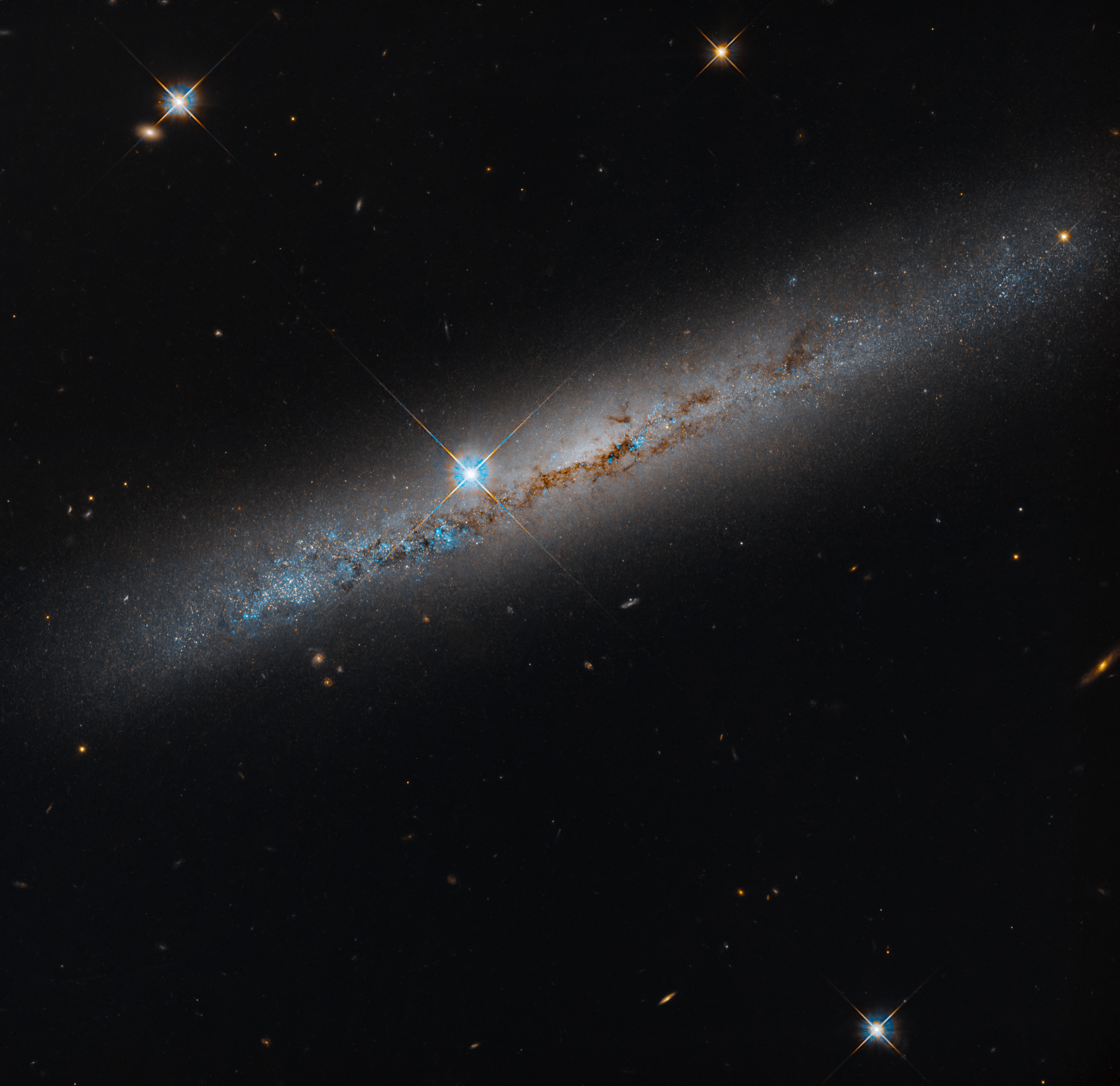
An edge-on spiral galaxy. Its rusty-brown dust lanes bisect the galaxy lengthwise. Bright-blue points dot the galaxy and seem to be more dense on its left side. A bright foreground star shines just to the left of the galaxy's center. The background is black and dotted with distant galaxies and a smattering of foreground stars, which are easily identified by their diffraction spikes.
This NASA Hubble Space Telescope image features the edge-on, intermediate spiral galaxy NGC 1827. Its rusty-brown dust lanes bisect the galaxy lengthwise. Look for distant galaxies that dot the black background, while a smattering of foreground stars are easily identified by their diffraction spikes.
NASA, ESA, Michael Jones (California Institute of Technology); Image Processing: Gladys Kober (NASA/Catholic University of America)

This NASA Hubble Space Telescope image features the edge-on, intermediate spiral galaxy NGC 1827, located roughly 37 million light-years away in the constellation Columba, the Dove. Hubble captured the image as part of a survey looking at 260 satellite galaxies around 22 Milky Way-like host galaxies within a radius of about 32 million light-years from Earth. Hubble has already observed 111 of these satellite galaxies. The remaining galaxies will take an additional 149 Hubble orbits, one orbit for each galaxy, to observe.

The image, taken with Hubble’s Advanced Camera for Surveys, reveals bright-blue regions along the galaxy’s disk dotted with dark dust lanes where new stars are likely forming. A bright foreground star appears just to the left of the galaxy’s bright central bulge but is located between us and the galaxy. Its four diffraction spikes are the result of light bending around the internal supports that hold Hubble’s secondary mirror.

Low-mass galaxies like the ones in this Hubble observing program provide a way to test the predictions of cosmological models on small scales, which struggle to match observations. The data Hubble gathers will help us better understand and characterize the properties of low-mass galaxies in Milky Way-like systems, allowing researchers to refine cosmological models.

Media Contact:

Claire Andreoli
NASA’s Goddard Space Flight Center, Greenbelt, MD
claire.andreoli@nasa.gov

La prima stella verde è una nana bianca

16 Ottobre 2026 ore 07:58

Brilla di verde chartreuse, completamente naturale proprio come il noto liquore francese, la nana bianca WD J1330+6435. A darle questo colore, però, non sono erbe, fiori, radici o spezie, ma un’atmosfera ricca di calcio, litio e sodio – elementi che la stella avrebbe rubato al proprio sistema planetario, opportunamente stimolati dai 4000 gradi della sua fotosfera. Secondo un nuovo studio dell’Università di Warwick, però, se ne potrebbero vedere di tutti i colori, di nane bianche. Rosa, viola, giallo, ma anche azzurro e verde. Colori che le comuni stelle non possono assumere e che, statisticamente, caratterizzerebbero una nana bianca su trenta. I risultati sono stati pubblicati ieri su RAS Techniques and Instruments.

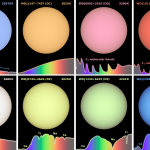
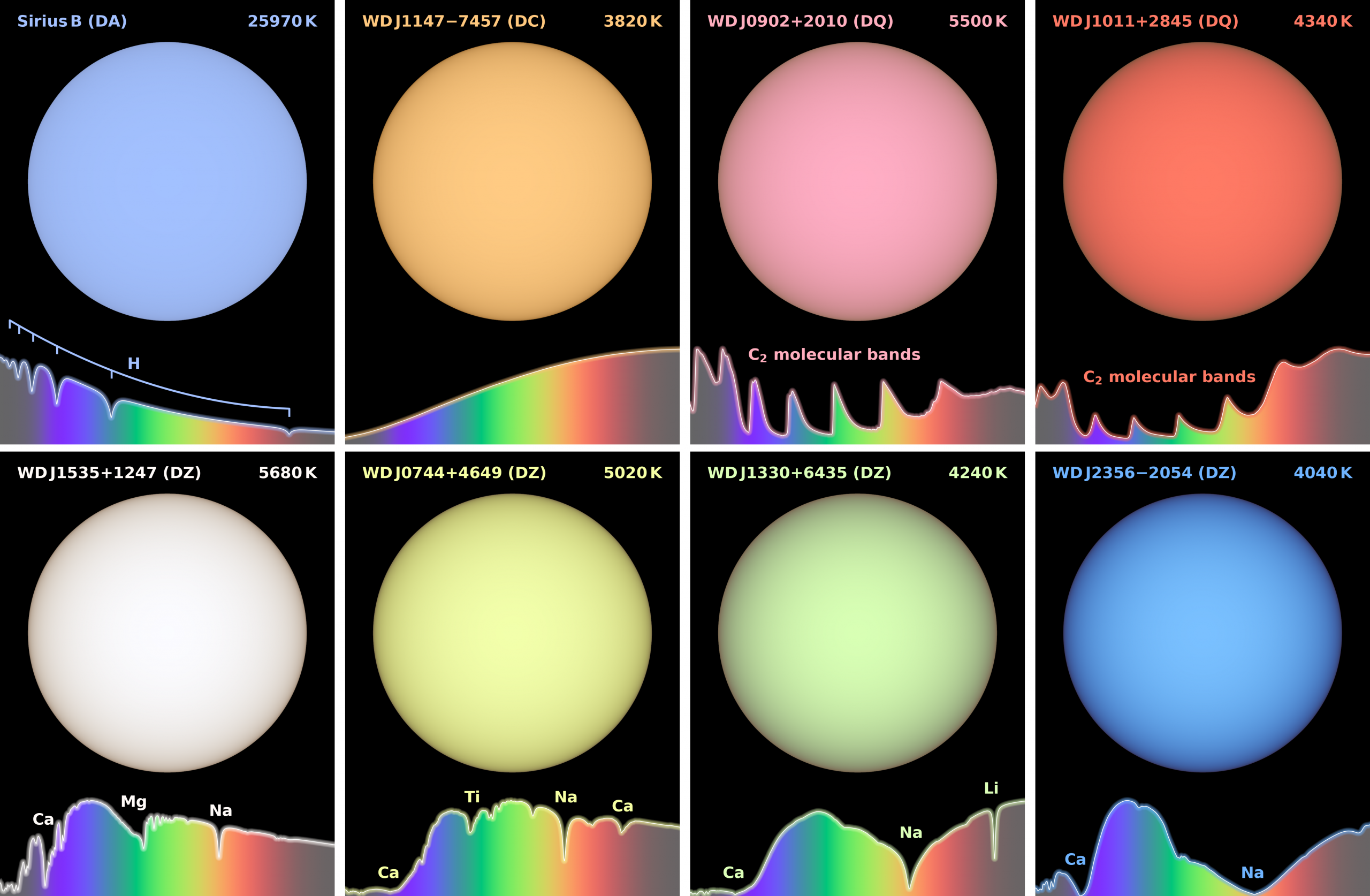
Immagini simulate con colori realistici di nane bianche. Pannelli in alto a sinistra: Sirio B è la nana bianca più vicina al Sistema Solare, con un’atmosfera calda a base di idrogeno che le conferisce un colore azzurro pallido. WD J1147-7449 è invece tra le nane bianche vicine più fredde, il che le conferisce uno spettro privo di caratteristiche distintive e un aspetto arancione. Pannelli in alto a destra: gli involucri convettivi di queste nane bianche fredde hanno trasportato il carbonio dai loro nuclei verso le loro dense atmosfere dominate dall’elio, formando molecole di carbonio biatomiche che danno origine a varie sfumature di rosa. Pannelli in basso: l’accrescimento di detriti rocciosi provenienti dai sistemi planetari delle nane bianche arricchisce le loro fredde atmosfere di elio con elementi quali calcio, magnesio e sodio. Le diverse quantità e composizioni del materiale accresciuto e le temperature delle nane bianche consentono una vasta gamma di colori, compreso il verde. In realtà tutte le stelle sarebbero molti milioni di volte più luminose di quanto sia possibile mostrare sullo schermo. Crediti: Mark Hollands/Università di Warwick

Le stelle “normali”, quelle che si trovano nella sequenza principale, appaiono ai nostri occhi di un colore che dipende unicamente dalla temperatura della loro fotosfera. Gli astronomi le hanno divise in sette tipi spettrali, con colori che vanno dal bianco-blu nelle più calde, al giallo nelle stelle come il Sole, fino al rosso nelle stelle più fredde. Si pensava che anche le nane bianche, densi resti lasciati dalle stelle simili al Sole al termine della loro vita, seguissero la stessa regola. Devono il loro nome al fatto che i primi esemplari individuati erano sorprendentemente caldi e brillavano di luce bianca o azzurro pallido. Ma, secondo gli autori del nuovo studio, se potessimo osservarle da vicino, alcune brillerebbero di colori come il verde, il rosa, il ciano, il giallo e il viola.

«La maggior parte delle stelle, comprese quasi tutte le nane bianche, si comporta come un “radiatore perfetto”, perciò il loro colore dipende quasi interamente dalla temperatura. Ma nessuno aveva davvero approfondito quali altre possibilità potessero esistere per le nane bianche», spiega Mark Hollands, ricercatore del programma Warwick Prize Fellow nel gruppo di astronomia e astrofisica dell’Università di Warwick, primo autore dello studio. «A quanto pare, queste stelle incredibilmente dense possono produrre colori che nessuno si aspettava, e alcuni mi hanno davvero sorpreso».

In verità, nessuna nana bianca è abbastanza vicina alla Terra da consentirci di osservarne direttamente il colore, come facciamo con le altre stelle. Se in una notte serena guardiamo Betelgeuse, la famosa supergigante rossa nella costellazione di Orione, non avremo dubbi sul fatto che appare rossa. Per capire di che colore vedremmo una nana bianca, invece, bisogna partire dal suo spettro di luce. Così facendo, i ricercatori hanno scoperto che i colori di questi corpi celesti si distribuiscono in gruppi distinti, e che a creare le stranezze cromatiche sarebbe la loro atmosfera. O meglio, la sua densità. Le atmosfere delle nane bianche più fredde possono infatti raggiungere una densità di circa un grammo per centimetro cubo, paragonabile a quella dell’acqua e milioni di volte superiore a quella della fotosfera del Sole, ad esempio. In queste condizioni, gli elementi chimici presenti – anche se soltanto in tracce –, come carbonio, calcio e sodio, interagiscono con il plasma denso di elio circostante e assorbono la luce in una gamma di colori più ampia rispetto a quanto accade a densità inferiori. Questo altera il colore della stella, allontanandolo dal bianco, dall’arancione e dall’azzurro tipici di un radiatore perfetto.

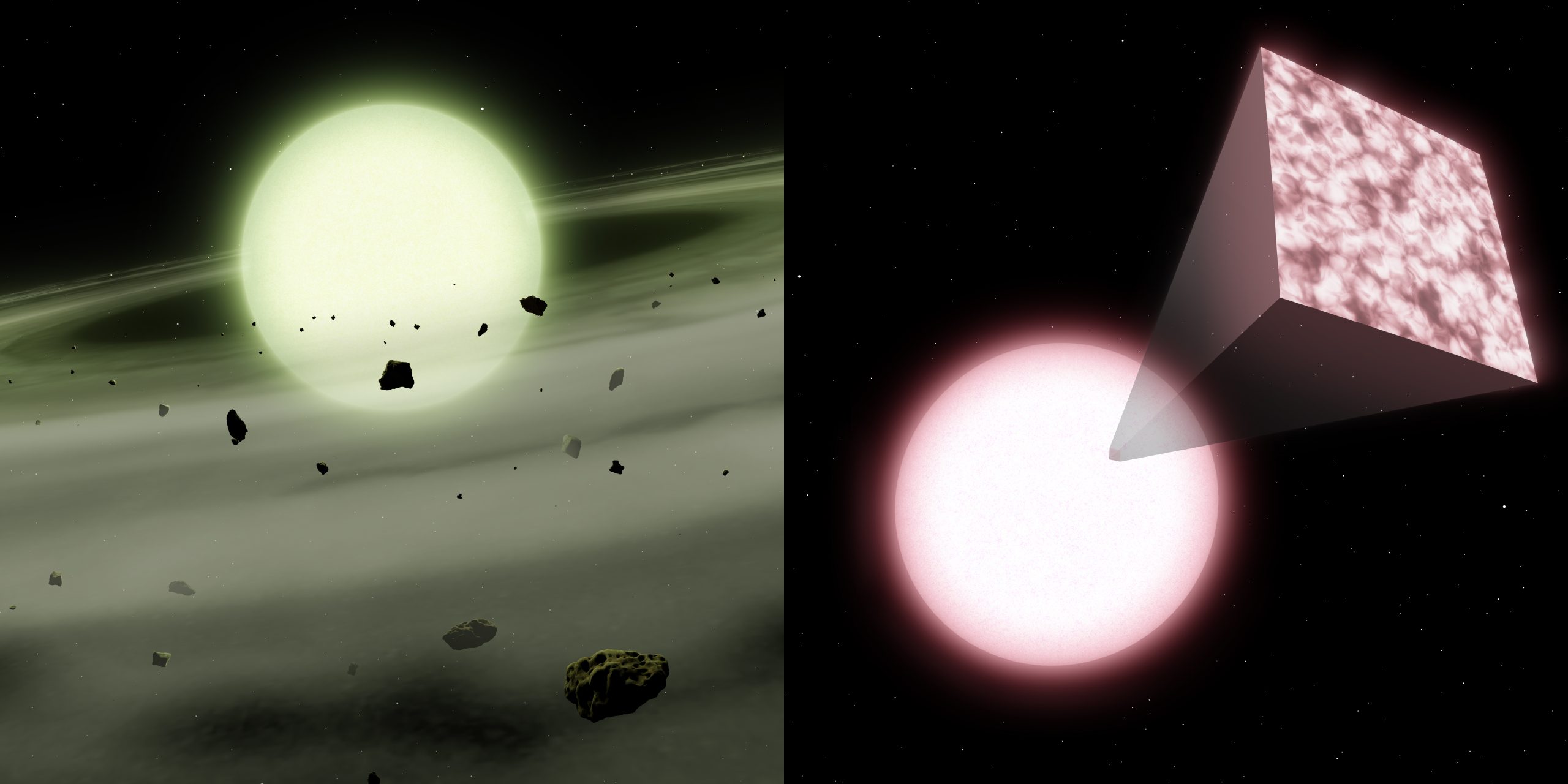
Stella verde: la fredda nana bianca WD J1330+6435 ha accumulato nella propria atmosfera materiale roccioso ricco di sodio proveniente dal proprio sistema planetario. L’immensa densità atmosferica fa sì che il sodio assorba la luce in un ampio intervallo di lunghezze d’onda gialle, arancioni e rosse, conferendo a WD J1330+6435 un aspetto spettrale di colore verde. Stella rosa: La nana bianca fredda WD J0902+2010 presenta una profonda zona di convezione all’interno del proprio involucro esterno dominato dall’elio. La zona di convezione ha raggiunto il nucleo della nana bianca, portando il carbonio interno in superficie e formando molecole di carbonio. Queste molecole di carbonio assorbono fortemente la luce in tutto lo spettro ottico, comprese le lunghezze d’onda blu, verdi e gialle, facendo sì che WD J0902+2010 appaia rosa all’occhio umano. Crediti: Mark A. Garlick/Università di Warwick

L’esempio più sorprendente è proprio WD J1330+6435, una nana bianca con una temperatura di circa 4000 gradi Celsius che ha accumulato materiale roccioso proveniente dal proprio sistema planetario. Questo processo ha arricchito la sua atmosfera di calcio, litio e sodio, conferendole, secondo i modelli elaborati dal gruppo, un aspetto verde chartreuse. A risultare determinante sarebbero, in particolare, le tracce di sodio, che assorbono la componente arancione dello spettro, lasciando passare quella verde-gialla. Per quanto ne sappiano i ricercatori, non è mai stata documentata in modo attendibile alcuna altra stella, viva o morta, che appaia verde. All’estremo opposto – non me ne vogliano i daltonici – si fa notare WD J1011+2845, la stella più rossa mai registrata. Si tratta di una nana bianca relativamente vicina, a soli  48 anni luce dalla Terra, che possiede una profonda zona convettiva che ha portato in superficie carbonio proveniente dal nucleo. Le molecole di carbonio così emerse sono in grado di concentrare tutta la luce stellare a lunghezze d’onda superiori a 600 nanometri, producendo un intenso bagliore rosa salmone, che non ha eguali tra le stelle ordinarie.

Terminiamo con un po’ di statistica, per non far passare l’idea che tutte le nane bianche là fuori siano, riprendendo il titolo dell’articolo scientifico, “any colour you like“. Analizzando un campione rappresentativo di 151 nane bianche locali vicine alla Terra (entro un raggio di circa 65 anni luce), i ricercatori ne hanno trovate solo cinque con una colorazione insolita: due gialle e tre rosa. Una frazione di circa una su trenta. Delle altre 146 stelle hanno misurato la temperatura di colore, trovando una mediana di circa 6800 K, una temperatura che l’occhio umano percepisce come luce bianca. E che corregge l’idea finora diffusa secondo cui le nane bianche siano generalmente di colore blu. Concludendo, nonostante gli autori ci tengano a sottolineare che il numero di nane bianche colorate nell’universo (considerata la numerosità di questi oggetti stellari) sia elevato, possiamo affermare, con una punta di sollievo, nomen omen.

Per saperne di più:


APOD: 2026 October 16 – Chasing the International Space Station

16 Ottobre 2026 ore 06:05

APOD

Astronomy Picture of the Day

Discover the cosmos! Each day a different image or photograph of our fascinating universe is featured, along with a brief explanation written by a professional astronomer.

Chasing the International Space Station

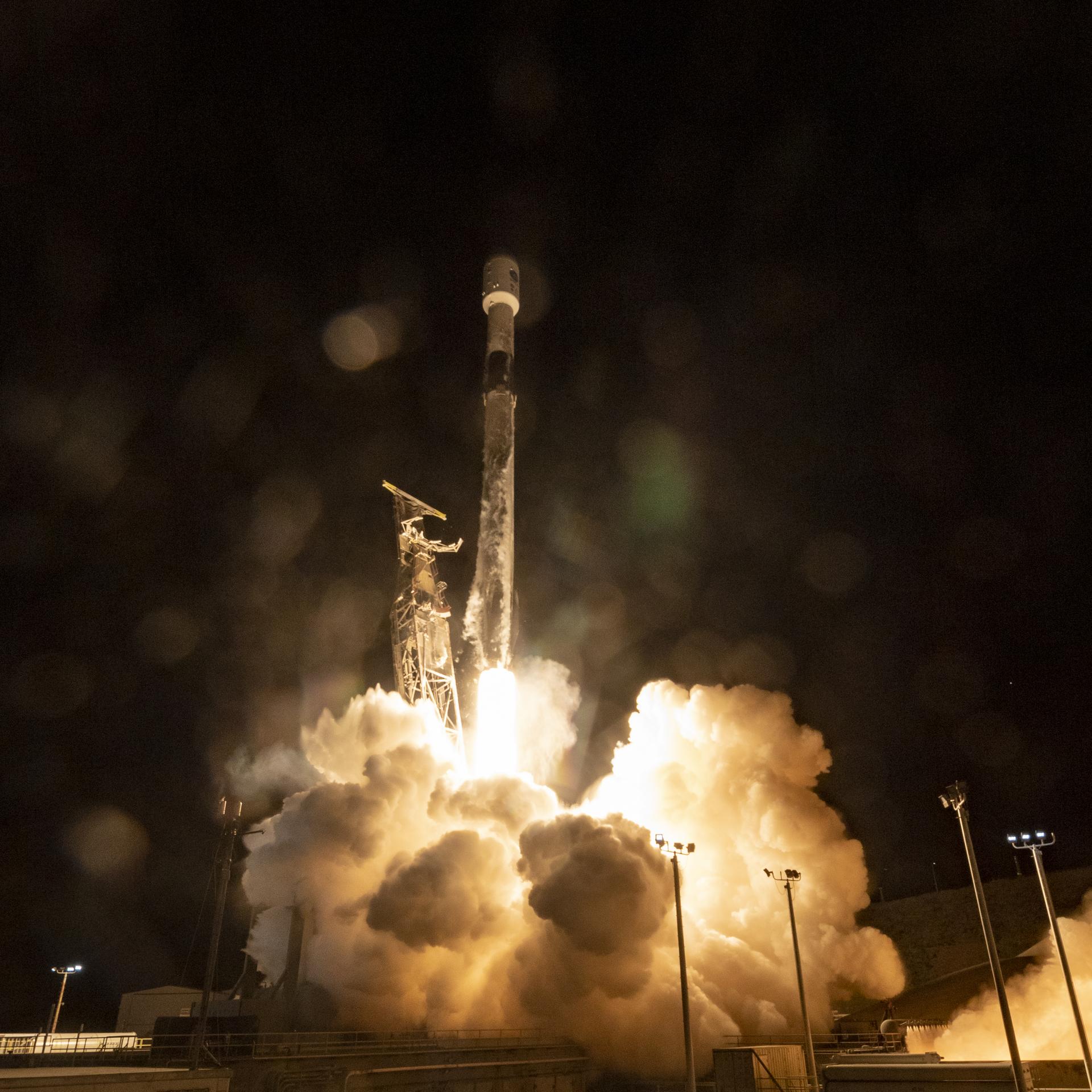
Explanation: Blasting into the predawn sky on Tuesday, October 13, a Falcon 9 rocket and Dragon spacecraft are headed for low Earth orbit in this stunning timelapse video captured from Indian Harbour Beach, Florida. Starting with a launch from Space Launch Complex 40 at Cape Canaveral Space Force Station, Falcon and Dragon are chasing the International Space Station on NASA’s 35th Commercial Resupply Services mission. On cue, the space station itself enters the frame from the top. Almost 8 seconds into the 30 second timelapse. the bright streak of the ISS appears heading “down” toward the horizon. The first and second stages of the Falcon 9 are separating as the spectacular exhaust plume jellyfish grows, already catching the light of the rising Sun. The visible sequence of first stage boost back, re-entry, and landing burns begins around 20 seconds into the video. With the second stage following the ISS toward the distant horizon, the jellyfish plume continues to drift in the predawn sky, even after the successful first stage landing at planet Earth’s Landing Zone 40.

Tomorrow’s picture: pixels in space

Date October 16, 2026
Video Credit: Eric Holland
Authors & editors: Jerry Bonnell, Cecilia Chirenti, Robert Nemiroff, Keighley Rockcliffe
A service of: ASD at NASA / GSFC,
NASA Science Activation & Michigan Tech. U.

Isaias Dims the Gulf Coast

16 Ottobre 2026 ore 06:00


August 2026 Composite
October 11, 2026

Nighttime lights along the Florida Panhandle coast in August 2026, brightest in Pensacola and Destin and along the road between them.
NASA Earth Observatory / Lauren Dauphin

Nighttime lights along the Florida Panhandle coast on October 11, 2026, after Hurricane Isaias, with fewer and dimmer lights in Pensacola and Destin and gaps along the road between them.
NASA Earth Observatory / Lauren Dauphin

Nighttime lights along the Florida Panhandle coast in August 2026, brightest in Pensacola and Destin and along the road between them.
NASA Earth Observatory / Lauren Dauphin
Nighttime lights along the Florida Panhandle coast on October 11, 2026, after Hurricane Isaias, with fewer and dimmer lights in Pensacola and Destin and gaps along the road between them.
NASA Earth Observatory / Lauren Dauphin

August 2026 Composite

October 11, 2026


Lights around Pensacola, Florida, and along the U.S. Route 98 corridor toward Destin appear sharply reduced on October 11, 2026 (right), compared with typical conditions in August 2026 (left), suggesting widespread power outages after Hurricane Isaias. Images are from NASA’s Black Marble HD product.

After a quiet start to the 2026 Atlantic hurricane season, Isaias became the season’s first hurricane on October 8 as it tracked toward the U.S. Gulf Coast. The storm brought heavy rain and flash flooding to parts of the Southeast, including Alabama and the Florida Panhandle, and winds that toppled trees and downed power lines, leaving many people in the dark.

Isaias made landfall near Destin, Florida, on the evening of October 9 as a Category 2 hurricane with maximum sustained winds of 105 miles (170 kilometers) per hour. Gusts topped 100 miles per hour along a corridor west of the storm’s center, according to the National Weather Service, with preliminary reports showing a 117-mile-per-hour gust in Oriole Beach and a 102-mile-per-hour gust at Pensacola City Hall.

These areas of high winds overlapped a broader area west of the storm’s eye where satellite images showed substantial decreases in nighttime lights. The image pair above shows nighttime lights before and after the storm. The left image is a composite of August 2026 data representing typical conditions, and the right image shows lights on October 11, after most of the storm’s clouds had cleared.

The data depicted in the images, provided by Ranjay Shrestha of NASA’s Black Marble science team, come from the Black Marble HD product. The product uses data from the VIIRS (Visible Infrared Imaging Radiometer Suite) on the NOAA-20 satellite, which has a day-night band that detects light emitted and reflected at night. The team processed the data to account for changes in the landscape, the atmosphere, and phase of the Moon, and to filter out stray light that does not come from electric lights. Dark gray, hash-marked areas show where clouds prevented VIIRS from collecting data. The nighttime lights are shown over a base map from the Landsat 9 satellite.

“Standard Black Marble nighttime lights imagery, available through NASA Worldview, provides a broad picture of the storm’s immediate impacts,” Shrestha said. “Black Marble HD takes this a step further by allowing us to visualize these changes at a much finer spatial scale.”

At these finer scales, the images reveal lights decreasing sharply around parts of Pensacola, Florida, and along the U.S. Route 98 corridor toward Destin, suggesting widespread power disruptions. Shrestha also pointed out pockets where lights persisted, including Pensacola International Airport, Pensacola Christian College, and parts of downtown Pensacola. “These patterns could reflect backup power systems, differences in electrical infrastructure, or areas that maintained electricity during the storm, although the imagery alone cannot confirm the underlying reasons,” he said.


October 11, 2026
October 12, 2026

Nighttime lights along the Florida Panhandle coast on October 11, 2026, after Hurricane Isaias, with fewer and dimmer lights in Pensacola and Destin and gaps along the road between them.
NASA Earth Observatory / Lauren Dauphin

The same area on October 12, 2026, with lights in Pensacola and Destin and along the road between them closer to pre-storm levels.
NASA Earth Observatory / Lauren Dauphin

Nighttime lights along the Florida Panhandle coast on October 11, 2026, after Hurricane Isaias, with fewer and dimmer lights in Pensacola and Destin and gaps along the road between them.
NASA Earth Observatory / Lauren Dauphin
The same area on October 12, 2026, with lights in Pensacola and Destin and along the road between them closer to pre-storm levels.
NASA Earth Observatory / Lauren Dauphin

October 11, 2026

October 12, 2026


Widespread outages darken the region around Pensacola, Florida, and along the U.S. Route 98 corridor toward Destin on October 11, 2026 (left). By October 12 (right), lights have returned to some affected areas. Images are from NASA’s Black Marble HD product.

Black Marble HD images also reveal the pace and spatial patterns of recovery. The image pair above compares the same October 11 view (left) with one from October 12 (right), when lights had begun to return to some affected areas. By October 14, lighting patterns looked similar to pre-storm conditions.
 
“Understanding where recovery is progressing and where disruptions persist can help emergency responders and decision makers identify areas that may require additional attention, prioritize resources, and assess the effectiveness of restoration efforts,” Shrestha said.
 
Black Marble data complement ground-based outage reports rather than replace them, offering a more comprehensive view of disasters’ impacts and recovery. “Ultimately, this is where the value of Black Marble lies: turning nighttime Earth observations into actionable insights that support informed decisions and help bridge the gap between Earth science and action,” Shrestha said.
 
The NASA Disasters Program, in coordination with FEMA and the USGS Coastal Storms Team, is supporting the Alabama Red Cross and the Alabama Emergency Management Agency’s response to Hurricane Isaias. The team will be posting maps and data products on its open-access mapping portal as new information becomes available.

NASA Earth Observatory images by Lauren Dauphin, using Black Marble HD data courtesy of Ranjay Shrestha/NASA’s Goddard Space Flight Center and Landsat data from the U.S. Geological Survey. Story by Kathryn Hansen.

Downloads

Nighttime lights along the Florida Panhandle coast in August 2026, brightest in Pensacola and Destin and along the road between them.

August 2026 Composite

JPEG (558.38 KB)

Nighttime lights along the Florida Panhandle coast on October 11, 2026, after Hurricane Isaias, with fewer and dimmer lights in Pensacola and Destin and gaps along the road between them.

October 11, 2026

JPEG (1.10 MB)

The same area on October 12, 2026, with lights in Pensacola and Destin and along the road between them closer to pre-storm levels.

October 12, 2026

JPEG (1.14 MB)

References & Resources

You may also be interested in:

Stay up-to-date with the latest content from NASA as we explore the universe and discover more about our home planet.

Tropical Storm Arthur

2 min read

The first named storm of the 2026 Atlantic hurricane season brought intense rainfall and the threat of flash flooding to…

Article

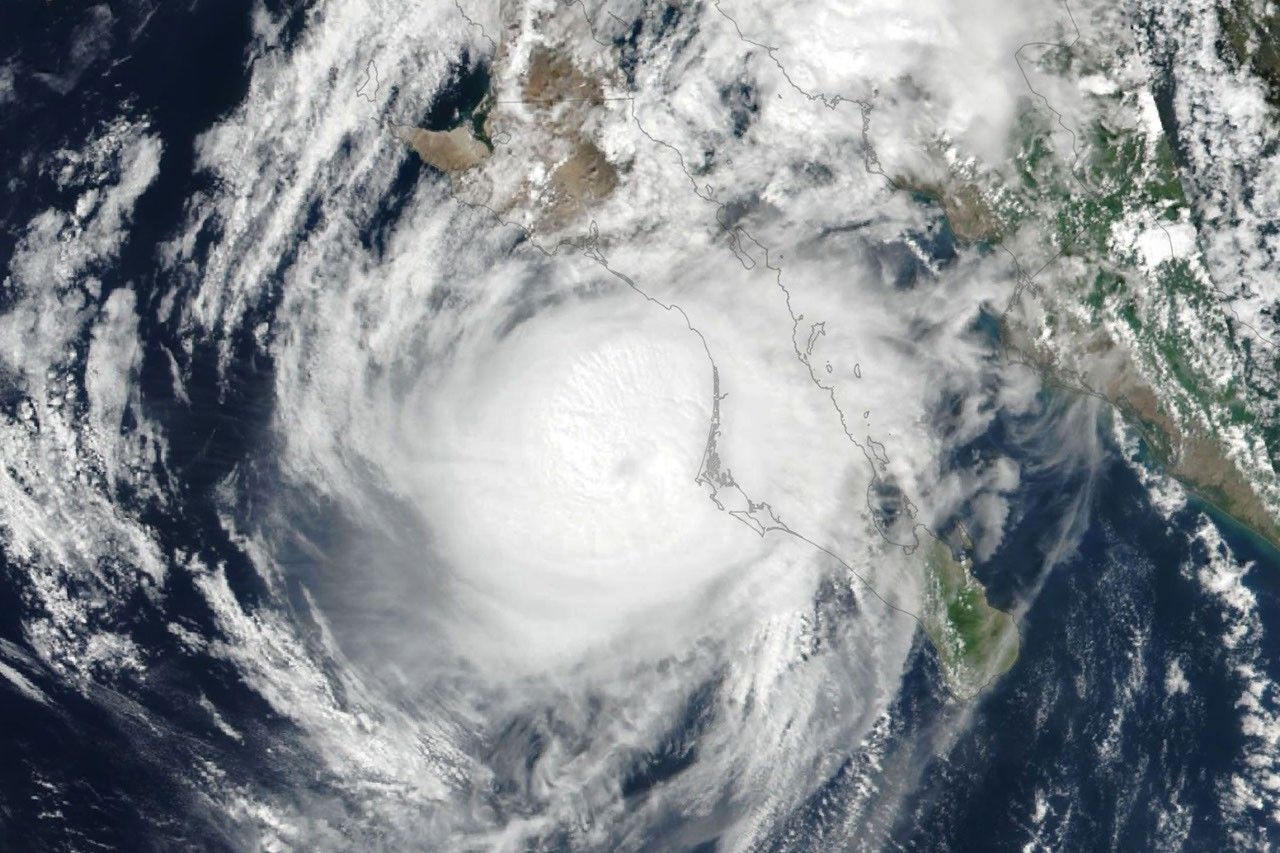
Hurricane Simon Lurks Off the Mexican Coast

3 min read

Though it remained offshore, the storm lashed coastal areas with high winds and flooding—and produced remarkable rippling patterns in the…

Article

Powerful Storms Continue to Prowl the Pacific

4 min read

Hurricanes Polo and Nolo sent destructive effects ashore amid an active season in the northeastern and central Pacific.

Article
❌