❌

Vista elenco

Mons: Viganò su Amoris Laetitia ed eresia: «la teologia non ha paradigmi da cambiare».

di: admin
17 Ottobre 2026 ore 08:39

Renovatio 21 pubblica un testo dell’arcivescovo Carlo Maria Viganò apparso su X, dove monsignore commentava un post del vaticanista Michael Haynes che mostrava una clip della conferenza su Amoris Laetitia dove era dichiarato che siamo un presenza di «una Chiesa che si muove verso la piena realizzazione della visione del Concilio Vaticano II e del Sinodo sulla sinodalità». È «una chiesa in cui tutti hanno voce» e dove si assiste a «un cambio di paradigma nella teologia» verso l’ascolto, aveva affermato nel video circolante su internet padre Stanislaus Chu Ilo.


«Un paradigma teologico che cambia»: lo ammettono loro stessi. Chi dichiara che la Chiesa «si muove verso la piena realizzazione del Vaticano II e del Sinodo sulla sinodalità» non fa che confessare ciò che noi denunciamo: una rottura, non uno sviluppo omogeneo.


La teologia non ha paradigmi da cambiare, perché ha il «Depositum Fidei» da custodire e trasmettere. Il Concilio Vaticano I lo ha definito in termini che nessuno può abrogare: dal senso dei dogmi non ci si deve mai allontanare «altioris intelligentiæ specie et nomine» [«sotto il pretesto e il nome di una più alta intelligenza», ndr], con il pretesto di una migliore comprensione.


«Una Chiesa in cui tutti hanno voce»? La Chiesa non è un parlamento, e Nostro Signore non ha indetto consultazioni: «Qui vos audit, me audit». L’ascolto che salva è quello della Parola di Dio («fides ex auditu» Rm 10,17), non l’ascolto del mondo, che ha ottenuto la nostra resa. Si ascolta Nostro Signore, e poi si obbedisce.


“Un paradigma teologico che cambia”: lo ammettono loro stessi. Chi dichiara che la Chiesa “si muove verso la piena realizzazione del Vaticano II e del Sinodo sulla sinodalità” non fa che confessare ciò che noi denunciamo: una rottura, non uno sviluppo omogeneo.

La teologia non ha paradigmi da cambiare, perché ha il “Depositum Fidei” da custodire e trasmettere. Il Concilio Vaticano I lo ha definito in termini che nessuno può abrogare: dal senso dei dogmi non ci si deve mai allontanare “altioris intelligentiæ specie et nomine”, con il pretesto di una migliore comprensione.

“Una Chiesa in cui tutti hanno voce”? La Chiesa non è un parlamento, e Nostro Signore non ha indetto consultazioni: “Qui vos audit, me audit”. L’ascolto che salva è quello della Parola di Dio (“fides ex auditu” Rm 10,17), non l’ascolto del mondo, che ha ottenuto la nostra resa. Si ascolta Nostro Signore, e poi si obbedisce.

E “Amoris lætitia”, la cui “recezione” si celebra con tanto fervore, ha introdotto nella disciplina dei Sacramenti ciò che la Scrittura (Mt 19; 1 Cor 11, 27) e il Concilio di Trento escludevano. Trento ha anatematizzato chi dice che la Chiesa erra quando insegna che il vincolo matrimoniale non si scioglie per l’adulterio, e che si possano contrarre altre nozze vivente il coniuge (Sess. XXIV, can. 7); e ha stabilito che chi è consapevole di peccato mortale non si accosti all’Eucaristia senza la previa Confessione sacramentale (Sess. XIII, can. 11).

I funzionari della chiesa conciliare e sinodale chiamano “paradigma” ciò che nella lingua della Chiesa si è sempre chiamato errore. E quando l’errore verte su una dottrina definita, la Chiesa Cattolica ha un nome ancora più grave: eresia.

https://t.co/L7vHUDfiRM

— Arcivescovo Carlo Maria Viganò (@CarloMVigano) October 15, 2026

Sostieni Renovatio 21

E «Amoris lætitia», la cui «recezione» si celebra con tanto fervore, ha introdotto nella disciplina dei Sacramenti ciò che la Scrittura (Mt 19; 1 Cor 11, 27) e il Concilio di Trento escludevano.


Trento ha anatematizzato chi dice che la Chiesa erra quando insegna che il vincolo matrimoniale non si scioglie per l’adulterio, e che si possano contrarre altre nozze vivente il coniuge (Sess. XXIV, can. 7); e ha stabilito che chi è consapevole di peccato mortale non si accosti all’Eucaristia senza la previa Confessione sacramentale (Sess. XIII, can. 11).


I funzionari della chiesa conciliare e sinodale chiamano «paradigma» ciò che nella lingua della Chiesa si è sempre chiamato errore. E quando l’errore verte su una dottrina definita, la Chiesa Cattolica ha un nome ancora più grave: eresia.


Iscriviti alla Newslettera di Renovatio 21

SOSTIENI RENOVATIO 21


Immagine: Il primo Concilio Vaticano II, tenutosi nella Basilica di San Pietro durante il pontificato di Pio IX nel 1869, Libro del 1873 su Papa Pio IX.

Immagine di pubblico dominio CC0 via Wikimedia


L'articolo Mons: Viganò su Amoris Laetitia ed eresia: «la teologia non ha paradigmi da cambiare». proviene da RENOVATIO 21.

I malori della 42ª settimana 2026

di: admin
17 Ottobre 2026 ore 08:22

La Rochelle, Francia: «Rugby, Hyron Andrews trovato morto in albergo: colto da malore mentre era nella doccia». Lo riporta il Corriere della Sera.


Cesuna, provincia di Vicenza: «colpito da un malore in bici. Muore direttore di banca». Lo riporta Il Giornale di Vicenza.


Livenza, città metropolitana di Venezia: «Colto da malore sul suo terreno mentre lavora, muore 66enne». Lo riporta Venezia Today.


Lodi: «Fermato dai carabinieri muore dopo un malore, la Procura indaga». Lo riporta l’agenzia ANSA.


Alpago, provincia di Belluno: «Tragedia nei boschi: fungaiolo colto da malore. Morto un 76enne. L’allarme lanciato da un escursionista». Lo riporta il Dolomiti.


Pagnona, provincia di Lecco: «Malore fatale nei boschi di Pagnona, muore un uomo di 71 anni». Lo riporta La Provincia Unica Tv.


Biasca, Confederazione Elvetica: «Ciclista colto da un malore a Biasca: l’intervento dei soccorritori». Lo riporta RSI Radiotelevisione Svizzera.


Roma: «Malore dopo il tamponamento. Uomo di 41 anni muore durante la compilazione del Cid». Lo riporta RomaToday.


Bergamo: «Muore colto da malore durante la lite: due indagati». Lo riporta L’Eco di Bergamo.


Caravaggio, provincia di Bergamo: «morto nell’incidente: il malore e la carambola con altre tre auto». Lo riporta il Corriere Bergamo.

Iscriviti alla Newslettera di Renovatio 21

Belluno: «imprenditore agricolo di Mel stroncato da malore nella stalla». Lo riporta il Corriere delle Alpi.


Oderzo, provincia di Treviso: «Malore improvviso al campetto di calcetto: 29enne muore davanti agli amici». Lo riporta TrevisoToday.


Cremona: «Stroncato da un malore a 61 anni, addio». Lo riporta La Provincia di Cremona.


Pasturo, provincia di Lecco: «malore fatale in zona Alpe Cova: mortovolontario della Protezione civile». Lo riporta La Provincia Unica Tv.


Masiano, provincia di Pistoia: «Morto nel vivaio, la causa forse un malore». Lo riporta Rainews.


Marsa Alam, Egitto: «malore fatale in Egitto. La moglie : “È morto davanti ai miei occhi”». Lo riporta Il Resto del Carlino.


Como: «Malore mentre passeggia tra i monti, 83enne soccorso in provincia». Lo riporta ComoZero.


Suzzara, provincia di Mantova: «Malore per strada: muore un uomo di 35 anni». Lo riporta la Gazzetta di Mantova.


Caserta: «infermiere colto da malore durante il turno». Lo riporta Infermieristicamente.


Orzinuovi, provincia di Brescia: «Malore improvviso, è morto». Lo riporta BresciaToday.

Sostieni Renovatio 21

Treviso: «Sedicenne stroncato da un malore improvviso, lunedì i funerali». Lo riporta TrevisoToday.


Monza: «Ha un malore nel parcheggio dell’Autogrill, muore 54enne». Lo riporta MonzaToday.


Genova: «Morta a 26 anni dopo malore in pronto soccorso, perizia esclude negligenze medici». Lo riporta l’agenzia ANSA.


Vicenza: «colta da malore, turista spagnola muore in ospedale». Lo riporta Il Giornale di Vicenza.


Castellamare di Stabia, città metropolitana di Napolo: «Dimessa dall’ospedale dopo un malore, donna incinta muore con la figlia». Lo riporta il Secolo d’Italia.


Trento: «Trovata morta nel letto: stroncata da un malore. Aveva 51 anni». Lo riporta Il T Quotidiano.


Catania: «Malore fatale sul versante sud dell’Etna: morto un turista canadese di 79 anni». Lo riporta CataniaToday.


Jesolo, città metropolitana di Venezia: «barista muore a 37 anni a causa di un malore». Lo riporta La Nuova Venezia.


Pordenone: «muore a 30 anni per un malore: da bambina un intero paese si era mobilitato per salvarle la vita». Lo riporta il Messagero Veneto.


Montesilvano, provincia di Pescara: «Malore in Svizzera, muore un giovane chef: Federico aveva solo 26 anni». Lo riporta Il Centro.


Salerno: «Malore in autostrada mentre guida, muore a 80 anni sull’A30». Lo riporta SalernoToday.


Orsago, provincia di Treviso: «Malore fatale, trovato senza vita a letto». Lo riporta Oggi Treviso.


Petronà, provincia di Catanzaro: «Malore dopo il lavoro, operaio muore davanti al nipote nel Catanzarese». Lo riporta Ciavula.

Iscriviti al canale Telegram

Telese Terme, provincia di Benevento: «morto operaio di 68 anni: si è accasciato al suolo mentre stava lavorando, forse un malore». Lo riporta Il Mattino.


Romanore, provincia di Mantoca: «Tragedia in Tunisia, colto da malore muore il 63enne». Lo riporta Mantovauno.


Foggia: «Si accascia a terra mentre passeggia sul lungomare: malore fatale a un 53enne». Lo riporta FoggiaToday.


Torreglia, provincia di Padova: «Malore in campo e lite sugli spalti. Calciatore 18enne si accascia, durante i soccorsi zuffa tra genitori e spettatori». Lo riporta Il Gazzettino.


Prato: «Il conducente ha un malore e il bus sbanda in piazza Mercatale e finisce nell’area pedonale: a bordo c’era una scolaresca». Lo riporta Notizie di Prato.


Ancona: «Accusa un malore all’interno della panetteria, 60enne in ospedale». Lo riporta Ancona Today.


Ancona: «Malore mentre prega in chiesa: donna portata in ospedale». Lo riporta Cronache Ancona.


Ancona: «malore al mercato di piazza D’Armi: uomo soccorso». Lo riporta CentroPagina.


Padova: «Malore in campo dopo il fallo, il giocatore chiede scusa: “Non mi aspettavo una conseguenza del genere, ho sbagliato”». Lo riporta Il Gazzettino.


Teolo, provincia di Padova: «Malore durante la passeggiata sui Colli, 41enne sviene: imbarellata e portata a piedi fino all’ambulanza». Lo riporta Il Gazzettino.


Colico, provincia di Lecco: «Malore sul lungolago, donna soccorsa in gravi condizioni». Lo riporta Lecco Notizie.


Morterone, provincia di Lecco: «Malore a Morterone, intervento dell’elisoccorso in località Medalunga». Lo riporta Lecco Notizie.


Varese: «Malore al volante sulla SS35, auto contro il guardrail: 56enne rianimato e portato al Niguarda». Lo riporta VareseNews.


Varese: «Non aggredisce gli infermieri ma danneggia l’ambulanza, poi finge un malore in Questura». Lo riporta La Prealpina.


Scandicci, città metropolitana di Firenze: «Un uomo colto da malore salvato da poliziotto». Lo riporta Firenze e dintorni.


Cedrate, provincia di Varese: «Bambino di 5 anni investito a Cedrate da un’auto guidata da un’80enne: è in codice rosso, malore per l’anziana». Lo riporta Virgilio.


Tolentino, provincia di Macerata: «malore al parco: diagnosi lampo e pacemaker transcutaneo d’urgenza applicato sul posto». Lo riporta il Corriere Adriatico.


Fermo: «Malore a Porto Sant’Elpidio: sfonda in auto il cancello di una casa e finisce in giardino». Lo riporta Il Resto del Carlino.


Tortolì, provincia dell’Ogliastra:«anziano accusa un malore in ambulatorio: arriva l’elicottero». Lo riporta L’Unione Sarda.

Aiuta Renovatio 21

San Pietro di Feletto, provincia di Treviso: «malore mentre lavora in un giardino privato: grave operario di 59 anni». Lo riporta la Tribuna di Treviso.


Lecco: «Colpita da malore mentre gioca a tennis: 55enne in gravi condizioni». Lo riporta LeccoToday.


Pisa: «Podista va in arresto cardiaco alla Pisa Half Marathon: salvato grazie al defibrillatore». Lo riporta PisaToday.


Genova: «Malore in commissariato, tre poliziotti gli salvano la vita con la rianimazione». Lo riporta Primocanale.


Trieste: «L’ambulanza interviene per un malore, i carabinieri le trovano addosso del Fentanyl». Lo riporta TriestePrima.


Montecatini Terme, provincia di Pistoia: «Accusa malore in A11, esce e poliziotti lo salvano da infarto». Lo riporta l’agenzia ANSA.


Albisola Superiore, provincia di Savona: «Malore improvviso, il sindaco ricoverato al Santa Corona». Lo riporta La Stampa.


Milano: «Colto da un malore mentre guida, si schianta in macchina sulla superstrada: gravissimo». Lo riporta Milano Today.


Pontecagnano, provincia di Salerno: «anziana colta da malore in Corso Europa: trasportata al Ruggi». Lo riporta SalernoToday.


Cesena: «Concita De Gregorio parla della cura, poi lo spettacolo si ferma 10 minuti per il malore in platea». Lo riporta Il Resto del Carlino.


Zurigo, Confederazione Elvetica: «Finge un malore e scappa: detenuto in fuga dalla polizia». Lo riporta Ticinonline.


Singapore: «Hamilton, malore dopo il GP: niente interviste». Lo riporta Sky Sport.


Modena: «Malore per il macchinista, a Sassuolo la simulazione di emergenza sui treni». Lo riporta ModenaToday.

Iscriviti alla Newslettera di Renovatio 21

SOSTIENI RENOVATIO 21


L'articolo I malori della 42ª settimana 2026 proviene da RENOVATIO 21.

Cybersecurity Awareness Month is here! Save up to 40% on training and certifications for a limited time.

5 Ottobre 2026 ore 23:14

Strengthen your cybersecurity expertise and build in-demand skills with limited-time savings on training and certifications. Invest in your future and stay ahead of evolving threats.

SAVE NOW

The post Cybersecurity Awareness Month is here! Save up to 40% on training and certifications for a limited time. appeared first on Linux.com.

Trapianto di organi, prima la persuasione e poi l’obbligo?

di: admin
16 Ottobre 2026 ore 07:42

Se donare gli organi è un gesto libero e volontario, perché lo Stato finanzia iniziative per ridurre il numero di coloro che si rifiutano di farlo? E soprattutto, fino a quando il rifiuto continuerà a essere considerato un diritto anziché un ostacolo da eliminare?


La domanda nasce da un decreto del ministero della Salute del 24 giugno 2026, pubblicato sulla Gazzetta Ufficiale del 28 agosto, che dispone uno stanziamento di dieci milioni di euro annui per il potenziamento del sistema trapiantologico italiano.


Tre milioni sono destinati a interventi per ridurre le liste d’attesa, diminuire le opposizioni alla donazione, incrementare le attività di reperimento degli organi, il cosiddetto procurement, e rafforzare i centri trapianto. Gli altri sette milioni finanziano tecnologie per la perfusione, la conservazione e il trasporto degli organi.

Sostieni Renovatio 21

Il documento ministeriale è esplicito: «Risulta fondamentale sostenere le azioni mirate ad una riduzione delle opposizioni alla donazione».


Il rifiuto di donare, espressione di una volontà individuale che dovrebbe essere insindacabile, diventa così un problema da affrontare attraverso finanziamenti pubblici e iniziative istituzionali. Non si tratta soltanto di informare i cittadini, ai quali viene abitualmente proposta una rappresentazione della cosiddetta donazione che lascia completamente nell’ombra gli aspetti più controversi, ma di perseguire un risultato preciso: ottenere un numero maggiore di consensi.


Del resto, secondo i dati del Centro Nazionale Trapianti, nel 2025 il 40,1 per cento dei cittadini che hanno espresso la propria volontà al momento del rilascio o del rinnovo della carta d’identità elettronica si è dichiarato contrario alla donazione, contro il 36,3 per cento dell’anno precedente.


Un risultato che evidentemente preoccupa la macchina trapiantologica, impegnata ad aumentare costantemente il numero degli organi disponibili.


In sostanza, si celebra la libertà di donare, ma si considera indesiderabile la libertà di rifiutare. E quando il rifiuto diventa un ostacolo all’efficienza del sistema, il passo successivo potrebbe essere quello di eliminarlo.


Non si tratta di una prospettiva così lontana dalla realtà: nel febbraio 2025, intervistata dal Corriere della Sera, la cardiologa Maria Frigerio, già direttrice della Cardiologia 2 dell’Ospedale Niguarda di Milano, aveva lamentato che, a causa delle opposizioni, su dieci trapianti potenzialmente realizzabili se ne effettuassero soltanto sette ed era arrivata a prospettare che la donazione «potrebbe diventare un obbligo».


Dietro la retorica della generosità affiora dunque la possibilità della coercizione: gli organi umani non vengono più concepiti come qualcosa che una persona può liberamente offrire, ma come una risorsa della quale la collettività potrebbe arrogarsi il diritto di disporre.


Del resto, la legislazione italiana aveva già compiuto un primo passo in questa direzione nel 1999, quando la legge n. 91 introdusse il principio del silenzio-assenso.


Il meccanismo, mai diventato operativo per la mancata realizzazione delle condizioni previste dalla legge, avrebbe consentito di considerare favorevole al prelievo, in determinate circostanze, chi non avesse espresso alcuna volontà. Pertanto, non più un consenso manifestato esplicitamente, ma attribuito al cittadino sulla base del suo silenzio. Un rovesciamento significativo, visto che non è il sistema sanitario a dover ottenere una dichiarazione favorevole, ma il cittadino a dover manifestare il proprio dissenso per impedire il prelievo dei suoi organi.


Ma la pressione esercitata sul consenso dei cittadini è soltanto un aspetto di un fenomeno più vasto: la continua ricerca di nuove possibilità di reperimento degli organi; una ricerca che ha ormai investito anche le procedure con cui viene gestito il fine vita.


È il caso della cosiddetta donazione a cuore fermo, o DCD controllata.


In questa procedura il prelievo viene programmato per un paziente ancora in vita, dopo che è stata assunta la decisione di sospendere i trattamenti che ne sostengono le funzioni vitali. La morte viene accertata secondo il criterio cardiocircolatorio e si procede quindi al recupero degli organi.


Il 7 ottobre scorso, agli Ospedali Riuniti Padova Sud di Schiavonia, è stato effettuato il primo prelievo di organi da donatore a cuore fermo controllato in un ospedale periferico del Veneto. Il paziente aveva 87 anni e una prognosi infausta. Secondo quanto comunicato dall’azienda sanitaria, il percorso si è svolto in accordo con i familiari e ha consentito il prelievo del fegato, grazie anche all’impiego di una macchina ECMO per la perfusione degli organi.


L’operazione è stata presentata come un successo organizzativo e tecnologico, ma nella ricostruzione pubblica dell’episodio non vengono chiarite le circostanze cliniche che hanno condotto alla sospensione dei trattamenti.


Ma è proprio la stretta connessione con la pratica eutanasica a rendere la DCD controllata una delle espressioni più problematiche della moderna medicina dei trapianti: la morte del paziente e il successivo prelievo vengono inseriti in un percorso programmato in cui, tra l’altro, la tempistica assume un’importanza fondamentale per preservare la funzionalità degli organi.

Iscriviti alla Newslettera di Renovatio 21

Il collegamento con il decreto ministeriale del giugno 2026 diventa ancora più significativo se si osserva che sei dei dieci milioni di euro stanziati sono destinati proprio alle apparecchiature per la perfusione degli organi, tecnologie impiegate anche nello sviluppo della donazione a cuore fermo. E il fenomeno è in rapida espansione: secondo i dati del 2025, riportati dalla Newsletter Transplant 2026 del Consiglio d’Europa, in Italia i donatori a cuore fermo sono stati 456, pari a un quarto di tutti i donatori deceduti. Appena dieci anni prima, nel 2015, i donatori erano stati soltanto 6. Le strutture abilitate a effettuare questo tipo di donazione sono inoltre passate, nell’ultimo anno, da 85 a 111.


Pertanto, da una parte si finanziano iniziative per ridurre le opposizioni, dall’altra si investe nell’espansione delle tecniche che consentono di aumentare il numero degli organi utilizzabili.


Il risultato è un sistema nel quale la disponibilità di organi umani assume un’importanza sempre maggiore, alimentando una complessa organizzazione sanitaria, tecnologica ed economica.


In questo contesto, la prospettiva dell’obbligatorietà evocata dalla cardiologa Frigerio lascia intravedere una possibile evoluzione: oggi si finanzia la riduzione delle opposizioni, domani si potrebbe intervenire sulla legge per rendere più difficile rifiutare, fino ad arrivare a considerare il prelievo degli organi un obbligo.


A quel punto cadrebbe definitivamente la maschera della donazione. Non ci sarebbe più alcun gesto di generosità, nessuna libera scelta, nessun dono: rimarrebbe soltanto un corpo umano sul quale lo Stato esercita il pieno possesso.


Sarebbe il compimento di una trasformazione antropologica profonda, il logico approdo di un sistema filosofico e culturale che ha già separato l’uomo dal suo corpo, riducendo quest’ultimo a un insieme di organi e tessuti da utilizzare secondo le necessità altrui.


Una medicina nata per servire l’uomo potrebbe così arrivare a pretendere che sia l’uomo a servire la medicina, fino a consegnarle ciò che gli rimane quando la sua vita volge al termine.


Alfredo De Matteo


Iscriviti alla Newslettera di Renovatio 21

SOSTIENI RENOVATIO 21


L'articolo Trapianto di organi, prima la persuasione e poi l’obbligo? proviene da RENOVATIO 21.

Proofpoint Inks $6.3 Billion All-Cash Deal to Acquire Varonis

16 Ottobre 2026 ore 09:12

The Thoma Bravo-owned Proofpoint will acquire Varonis in an all-cash transaction and Varonis will become a private company.

The post Proofpoint Inks $6.3 Billion All-Cash Deal to Acquire Varonis appeared first on SecurityWeek.

CISO Conversations: James Robinson – Many Jobs, One Journey to Netskope CISO

15 Ottobre 2026 ore 10:26

James Robinson never planned a cybersecurity career — seven companies and one deputy CISO role later, he leads security at Netskope.

The post CISO Conversations: James Robinson – Many Jobs, One Journey to Netskope CISO appeared first on SecurityWeek.

Cisco Warns of Exploited Secure Email Gateway Vulnerability

15 Ottobre 2026 ore 08:34

Unauthenticated, remote attackers could write arbitrary files to the operating system and execute commands with root privileges.

The post Cisco Warns of Exploited Secure Email Gateway Vulnerability appeared first on SecurityWeek.

Nearly Half of Organisations Report Unauthorised AI Agent Actions, Research Finds

14 Ottobre 2026 ore 16:21

Nearly half (49.8%) of organisations have confirmed or suspected that an AI agent took an unintended, unexpected or unauthorised action in the past year, according to new research from Salt Security.

The findings, published in the company’s State of Agentic AI and API Security 2H 2026 report, highlight growing concerns around the security of autonomous AI systems as enterprises increasingly integrate agents into everyday operations.

Based on a survey of more than 380 security and technology professionals, alongside Salt Labs production telemetry from hundreds of customer environments, the research suggests that AI adoption is outpacing organisations’ ability to monitor, govern and contain agent activity.

Among respondents who reported confirmed or suspected unintended agent actions, more than half experienced an unauthorised external API call or transaction, while over 40% reported an agent modifying or deleting data.

The research also found that AI agents are now firmly embedded in enterprise environments, with 86.4% of respondents reporting at least one operating within their organisation and 59.5% running more than ten. Furthermore, 76.8% reported agents capable of chaining actions across other agents, tools and APIs, creating complex sequences that may not have been anticipated by individual teams.

Despite this widespread adoption, visibility remains limited. Just 12.5% of organisations can consistently trace an agent’s complete journey, from its initial instruction through the tools and APIs it accesses to the final outcome. More than 60% would require hours or days of manual investigation to reconstruct an agent’s activity from the previous day.

The ability to respond to unexpected behaviour is similarly concerning. Only 17.5% of respondents said their organisation could automatically stop an AI agent behaving unexpectedly in production. For the majority, intervention remains a manual process, potentially requiring an application to be taken offline.

“The data shows a gap that is already producing real operational consequences,” said Roey Eliyahu, CEO of Salt Security. “Organisations are deploying agents and granting them access to enterprise data, APIs, and services before they can trace what those agents are doing or stop them automatically when something goes wrong.”

Shadow AI Infrastructure and AI-Generated Code Raise Further Concerns

The report also identified emerging risks associated with Model Context Protocol (MCP) infrastructure, which enables AI systems to interact with external tools and data sources.

Nearly a third (32.9%) of respondents reported discovering an unauthorised, shadow or misconfigured MCP server in the past year, while 54.3% had either confirmed or suspected encountering one.

Salt Labs’ own telemetry revealed that MCP-related infrastructure was detected in 21.6% of customer environments in August 2026, compared with 16.7% in January, representing a relative increase of approximately 30%.

Meanwhile, AI-generated code is introducing additional application security challenges. Some 83.5% of respondents estimated that AI-generated or AI-assisted code contributed to at least some of their application security findings.

However, just 6.8% reported resolving these issues directly within coding assistants at the point of generation, leaving vulnerabilities to be identified during subsequent code reviews, testing or after deployment.

Recent Manus Vulnerability Highlights Agentic AI Risks

The findings follow recent research from Salt Labs, which demonstrated how a single malicious email could be used to hijack the Manus agentic AI platform and potentially access a user’s connected email, cloud storage and code repository accounts.

The attack did not require a stolen password or the victim to click a malicious link. Although the platform’s guardrails detected the malicious activity, they were unable to prevent the code from executing.

The vulnerability was responsibly disclosed and has since been remediated.

According to Salt Security, the incident demonstrates how traditional detection mechanisms may struggle to keep pace with autonomous systems capable of executing multiple actions before human intervention is possible.

“The Manus research and this survey data are two views of the same problem,” said Yaniv Balmas, Head of Research at Salt Security.

“In the field, we showed how an agent can be weaponised through a single malicious email, how the guardrail detected the attack at exactly the right moment, and still could not stop the code from running. The survey quantifies how widespread that architecture is.”

The findings underline the need for organisations to strengthen visibility into agent activity, establish appropriate governance controls and develop automated containment capabilities as AI agents gain greater autonomy and access to critical enterprise systems.

The full State of Agentic AI and API Security 2H 2026 report includes sector-specific findings, recommendations for CISOs and further analysis of Salt Labs production telemetry.

The post Nearly Half of Organisations Report Unauthorised AI Agent Actions, Research Finds appeared first on IT Security Guru.

AI Agents Navigate Unfamiliar OT Systems and Move Equipment in Minutes, Booz Allen Finds

14 Ottobre 2026 ore 18:00

In Booz Allen’s isolated OT lab, AI models met every objective across eight scenarios and reached an industrial control network from a perimeter compromise in just over 16 minutes.

The post AI Agents Navigate Unfamiliar OT Systems and Move Equipment in Minutes, Booz Allen Finds appeared first on SecurityWeek.

Legacy refrigeration controllers exploited in OT attack on hundreds of French supermarkets

13 Ottobre 2026 ore 12:31

A coordinated attack on the operational technology (OT) behind supermarket refrigeration has hit hundreds of stores across France, in what security experts are calling one of the clearest examples yet of cyber sabotage with physical consequences.

Retailers confirmed the attack on Monday 12 October, with disruption reportedly beginning on Sunday night. Intermarché and its Netto brand said at least 300 shops were affected, Coopérative U more than 100 and Carrefour 80, with Monoprix, E.Leclerc and Auchan also reporting impacted stores. According to BFM TV, attackers remotely forced refrigeration units into continuous defrost cycles, driving temperatures up to 50°C. Paris prosecutors said the attack also caused fires.

“This incident is not surprising. A supermarket refrigerator is no longer just an electrical appliance. It is a computerized system connected to a network, enabling remote monitoring and control. While this connectivity allows refrigeration systems to be managed efficiently, it also exposes them to cyber security risks, particularly when operational equipment runs for years on outdated software, without regular security updates, and with management interfaces accessible from the internet,” said Oded Vanunu, Head of Vulnerability Research at Check Point.

Unpatched, internet-facing and end of life

The affected equipment has been traced to refrigeration management systems from Danish manufacturer Danfoss. A source close to Prime Minister Sébastien Lecornu said France’s National Cybersecurity Agency (ANSSI) had identified a vulnerability in Danfoss software, and the agency has been ordered to investigate.

Danfoss said most of the compromised units were “legacy” products that no longer receive software or security updates, singling out its AK-SM800 and AK-SC355 controllers, and noted that an affected version of the AK-SM800 was running outdated firmware. The company said it had long advised customers to upgrade or replace these models.

Known vulnerabilities in the control software date back to 2023, some rated critical, with patches available. In August, OT security firm Claroty published research describing flaws in Danfoss systems that could allow attackers to bypass authentication. Reports suggest attackers may have used the Shodan search engine to locate exposed devices, some of which are connected via 3G cards for remote monitoring.

“One of the significant aspects of this incident is that the attackers did not necessarily need sophisticated cyber capabilities. Refrigeration systems have legitimate operational functions, such as defrost cycles, and when an unauthorized party gains access to the system, those same functions can be exploited to disrupt operations. Unlike attacks aimed at stealing data or encrypting files, the impact here is on the physical operation of the equipment itself, with direct consequences such as food inventory losses and potential safety hazards.” Vanunu continued.

“In previous research conducted by Check Point on smart devices, including LG products, we demonstrated how a vulnerability in a centralised management platform could allow attackers to gain control of connected devices. However, in the current incident, it is still unclear exactly how the attackers gained access to the systems.”

OT in the crosshairs

No group has claimed responsibility, and there is no evidence of a ransom demand or data theft. The Paris prosecutor’s cybercrime unit has opened an investigation into what it described as a “large-scale” attack on connected refrigerators at several major food retailers, while ANSSI is coordinating with European counterparts. Sekoia analyst Felix Aime said stores in Spain, Portugal, Poland, Germany and Belgium were also affected.

“The refrigeration systems in supermarkets are operational technology. Building management controls, HVAC, cold chain infrastructure. These are the same category of systems that the security industry has been warning about as the next frontier for sabotage attacks, and they’ve now been weaponised against food retail infrastructure in one of Europe’s largest economies,” said Muhammad Yahya Patel, vCISO and cybersecurity advisor for EMEA at Huntress.

ANSSI had already listed sabotage of industrial control systems among the main threats facing France in its most recent threat report.

“Heating fridges to 50 degrees for six hours is not data theft; it is physical sabotage executed through software, and that is the lesson for every sector. Refrigeration controllers, building systems and point-of-sale equipment are now connected and remotely managed, often through a handful of suppliers, so one weak link scales to hundreds of stores overnight,” said Samuel Hassine, CEO and co-founder of Filigran.

“The problem extends beyond a single refrigeration system or an isolated security vulnerability. Operational equipment is often designed to remain in service for 15 years or more, while cyber threats and technologies evolve at a much faster pace. In addition, the same controllers and management systems are deployed across retail chains worldwide, meaning that a compromise affecting widely used technology could potentially impact a large number of locations,” added Check Point’s Vanunu.

Counting the cost

Intermarché chief executive Thierry Cotillard told BFM TV that losses could run to “tens of millions of euros nationwide in a single day”, while Coopérative U’s Dominique Schelcher said larger stores could each lose up to €180,000–200,000 in stock. France’s retail federation, the FCD, has called on Danfoss to provide “full transparency”.

“The immediate financial consequences are significant and visible. Failures at the stores means total write-off of perishable stock across every affected location simultaneously. The operational disruption compounds quickly. Staff cannot trade normally without functioning refrigeration. Products cannot be restocked until systems are restored and verified safe. The food retail sector across Europe should be treating this as a signal that they are being actively targeted,” Huntress’ Patel warned.

“The cyberattack on French supermarkets is a stark reminder that cyber threats extend far beyond stolen data and financial losses. Hackers reportedly manipulated refrigeration systems, raising temperatures to 50°C, causing fires and forcing retailers to dispose of large quantities of food. With hundreds of stores affected, the incident highlights how vulnerabilities in connected systems can have serious real-world consequences, disrupting operations, damaging equipment and potentially putting public safety at risk,” said Jamie Akhtar, CEO and Co-founder of CyberSmart.

Mitigation: find the exposure first

Experts agree that defenders’ first priority should be identifying which OT assets are reachable from the internet, and who holds remote access to them.

“To reduce these risks, the first step is to identify which controllers and management interfaces are directly exposed to the internet and eliminate any unnecessary exposure. It is also important to keep systems updated, replace default passwords, restrict remote access, and enable multi-factor authentication wherever supported. Separating operational control networks from other networks and monitoring unusual changes in system behaviour are also essential measures. These recommendations apply not only to refrigeration systems, but also to HVAC, building management systems, and other operational infrastructure.” said Vanunu.

“It also demonstrates how increasingly interconnected technology can create new opportunities for cybercriminals. For businesses, this reinforces the importance of securing all connected devices and systems, not just traditional IT infrastructure. Organisations should prioritise regular software and firmware updates, strong access controls, multi-factor authentication where supported and network segmentation to prevent attackers moving between systems. Regular security assessments and employee cybersecurity awareness training are also essential for identifying vulnerabilities before they can be exploited. Ultimately, businesses must recognise that cybersecurity is no longer just about protecting data, but also about safeguarding physical operations, customers and business continuity.” said CyberSmart’s Akhtar.

Filigran’s Hassine urged security leaders to put the issue in front of the board: “Boards should ask three questions this week. Which connected equipment could cause physical or financial damage if someone changed a setting, and who can reach it from outside. Which third parties hold remote access, and how that access is monitored and segmented. And has anyone tested that the response works, from detection to switching to manual operation. Resilience in retail now means knowing your exposure before an attacker maps it for you.”

The post Legacy refrigeration controllers exploited in OT attack on hundreds of French supermarkets appeared first on IT Security Guru.

Docker Commits to Bringing the Sandbox Kit Spec to the CNCF

24 Settembre 2026 ore 18:00
Docker Commits to Bringing the Sandbox Kit Spec to the CNCF

Docker and the CNCF will partner on an open spec to make agent permissions portable 

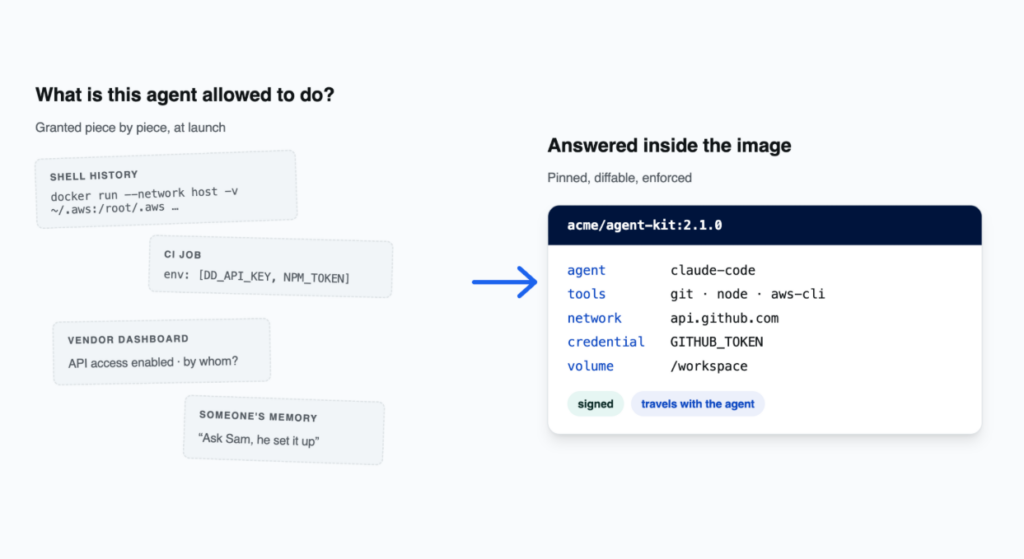
Docker Sandbox Kits let you package an AI agent together with exactly what it is allowed to do, so anyone can pull the same agent with the same limits, review changes to those limits, and enforce them. Now, Docker has published the Docker Sandbox Kit Spec, the open specification behind Kits, under Apache 2.0 and is committing to contributing the spec to the Cloud Native Computing Foundation for neutral governance.

A Kit is an ordinary OCI container image that carries three things: the agent, the tools it uses, and a typed list of everything it asks to reach, such as network hosts, credentials, and volumes. That list lives inside the image, so pinning the image pins the agent and its requests together. A Kit builds, pushes, pulls, signs, and scans like any container image, because it is one.

“Standards are what let an ecosystem move fast without fragmenting, and few companies understand that better than Docker. By delivering Sandbox Kits as standard OCI images, Docker is giving the industry an open, repeatable way to package an AI agent, its tools, and its guardrails as one artifact. OCI is the foundation the cloud native ecosystem is built on, so a standard for agents that builds on OCI reaches the whole ecosystem at once. The CNCF welcomes this, and we’re excited to work with Docker and the community on making it broadly adopted.”

Chris Aniszczyk, CTO of the CNCF

Why the OCI image is not enough on its own

An OCI image tells a runtime how to build and start a piece of software. It has no place to state which hosts that software may call, which credentials it may use, or which files it may keep between runs. Those decisions are made outside the image, at launch: in docker run flags, a Compose file, a CI job, an onboarding doc. For a web service, that was fine. The program was fixed, it needed a network and a port, and the flags rarely changed.

Agents are different. Claude Code and Codex decide at runtime what to do: install packages, call APIs, use credentials, change the environment they run in. So the access they need is granted piece by piece, by hand, usually to get a task unblocked. A few months in, nobody can answer a simple question: what is this agent allowed to do? The answer is spread across shell history, dashboards, and someone’s memory, and it cannot be handed to a teammate or compared with last week.

Every team answers that question on its own today, and every runtime vendor could ship its own format for the answer. That is the fragmentation OCI was created to prevent, and it is why Docker is now proposing one artifact, built on OCI, governed in the open by the CNCF community.

How a Sandbox Kit Spec fills the gap

The Sandbox Kit Spec does not fork or replace any OCI specification. It uses the annotation extension point OCI already defines to carry the agent’s requests in the image manifest. Nothing in a registry, scanner, or signing tool needs to change.

Kits began as a feature of Docker Sandboxes, Docker’s product for running agents inside isolated microVMs, where a Kit defined one sandbox: the agent, its tools, and what it could reach. The Sandbox Kit Spec turns that definition into a standard OCI image and opens the format so any runtime can implement it. Docker Sandboxes is the first runtime that enforces it. It should not be the only one, and under Linux Foundation governance it will not be.

Two things follow for anyone running agents. The answer travels with the agent: a teammate can pull it, a reviewer can diff it, and a conforming runtime can enforce it. And when a new version asks for more, the change shows up as added lines someone can refuse.

Kits from across the ecosystem

Kits for tools from AWS, Box, Datadog, Dynatrace, JFrog, NanoClaw, OpenClaw, Palo Alto Networks, and Snyk are available now, covering cloud, observability, security, artifact management platforms and more.

That is what a shared format makes possible. A database vendor can publish a Kit that connects any agent to its service with the scope it recommends. An agent maker can publish its own Kit, so the request list comes from the people who built the agent. A platform team can publish one for the company, and every engineer starts from the same place.

Containers made software portable. Kits make authority portable: the set of things you deliberately hand an agent travels with the agent, in the same image, and means the same thing wherever a conforming runtime opens it. Docker looks forward to formally submitting Kits to the CNCF and working with the community to ensure Kits further the goal of secure, reliable agentic AI and AI governance.

Build a Kit

If you make a tool that agents use, publish a Kit for it. If you run agents, start from one and share it with your team. The Docker Sandbox Kit Spec, its capability pages, and a worked tour of a real Kit are available at docker/sandbox-kit-spec. If there is a Kit you cannot express, or a rule a runtime cannot implement, open an issue.

The post Docker Commits to Bringing the Sandbox Kit Spec to the CNCF appeared first on Linux.com.

Linux Foundation Announces an Intent to Form the OpenWallet Foundation

13 Settembre 2022 ore 09:00

A Consortium of Companies and Non Profit Organizations Collaborating to Create an Open Source Software Stack to Advance a Plurality of Interoperable Wallets

DUBLIN—September 13, 2022—The Linux Foundation, a global nonprofit organization enabling innovation through open source, today announced the intention to form the OpenWallet Foundation (OWF), a new collaborative effort to develop open source software to support interoperability for a wide range of wallet use cases. The initiative already benefits from strong support including leading companies across technology, public sector, and industry vertical segments, and standardization organizations.

The mission of the OWF is to develop a secure, multi-purpose open source engine anyone can use to build interoperable wallets. The OWF aims to set best practices for digital wallet technology through collaboration on open source code for use as a starting point for anyone who strives to build interoperable, secure, and privacy-protecting wallets.

The OWF does not intend to publish a wallet itself, nor offer credentials or create any new standards. The community will focus on building an open source software engine that other organizations and companies can leverage to develop their own digital wallets.  The wallets will support a wide variety of use cases from identity to payments to digital keys and aim to achieve feature parity with the best available wallets.

Daniel Goldscheider, who started the initiative, said, “With the OpenWallet Foundation we push for a plurality of wallets based on a common core. I couldn’t be happier with the support this initiative has received already and the home it found at the Linux Foundation.”

Linux Foundation Executive Director Jim Zemllin said, “We are convinced that digital wallets will play a critical role for digital societies. Open software is the key to interoperability and security. We are delighted to host the OpenWallet Foundation and excited for its potential.”

OpenWallet Foundation will be featured in a keynote presentation at Open Source Summit Europe on 14 September 2022 at 9:00 AM IST (GMT +1) and a panel at 12:10 PM IST (GMT +1). In order to participate virtually and/or watch the sessions on demand, you can register here. 

Pramod Varma, Chief Architect Aadhaar & India Stack, said, “Verifiable credentials are becoming an essential digital empowerment tool for billions of people and small entities. India has been at the forefront of it and is going all out to convert all physical certificates into digitally verifiable credentials via the very successful Digilocker system. I am very excited about the OWF effort to create an interoperable and open source credential wallet engine to supercharge the credentialing infrastructure globally.”

“Universal digital wallet infrastructure will create the ability to carry tokenized identity, money, and objects from place to place in the digital world. Massive business model change is coming, and the winning digital business will be the one that earns trust to directly access the real data in our wallets to create much better digital experiences,” said David Treat, Global Metaverse Continuum Business Group & Blockchain lead, Accenture. “We are excited to be part of the launch and development of an open-source basis for digital wallet infrastructure to help ensure consistency, interoperability, and portability with privacy, security, and inclusiveness at the core by design.”

Drummond Reed, Director of Trust Services at Avast, a brand of NortonLifeLock, said, “We’re on a mission to protect digital freedom for everyone. Digital freedom starts with the services used by the individual and the ability to reclaim their personal information and reestablish trust in digital exchanges. Great end point services start with the core of digital identity wallet technology. We are proud to be a founding supporter of the OpenWallet Foundation because collaboration, interoperability, and open ecosystems are essential to the trusted digital future that we envision.”

“The mobile wallet industry has seen significant advances in the last decade, changing the way people manage and spend their money, and the tasks that these wallets can perform have rapidly expanded. Mobile wallets are turning into digital IDs and a place to store documents whereby the security requirements are further enhanced,” said Taka Kawasaki CoFounder of Authlete Inc. “We understand the importance of standards that ensure interoperability as a member of the OpenID Foundation and in the same way we are excited to work with the Linux Foundation to develop a robust implementation to ensure the highest levels in security.”

“Providing secure identity and validated credential services are key for enabling a high assurance health care service. The OpenWallet Foundation could contribute a key role in promoting the deployment of highly effective secure digital health care systems that benefits the industry,” said Robert Samuel, Executive Director of Technology Research & Innovation, CVS Health.

“Daon provides the digital identity verification/proofing and authentication technology that enables digital trust at scale and on a global basis”, said Conor White, President – Americas at Daon, “Our experience with VeriFLY demonstrated the future importance of digital wallets for consumers and we look forward to supporting the OpenWallet Foundation.”

“We are building and issuing wallets for decentralized identity applications for several years now. Momentum and interest for this area has grown tremendously, far beyond our own community. It is now more important than ever that a unified wallet core embracing open standards is created, with the ambition to become the global standard. The best industry players are pulling together under the OpenWallet Foundation. esatus AG is proud to be among them as experience, expertise, and technology contributor,” said Dr. Andre Kudra, CIO, esatus AG 

Kaliya Young, Founder & Principal, Identity Woman in Business, said, “As our lives become more and more digital, it is critical to have strong and interoperable digital wallets that can properly safeguard our digital properties, whether it is our identities, data, or money. We are very excited to see the emergence of the OpenWallet Foundation, particularly its mission to bring key stakeholders together to create a core wallet engine (instead of another wallet) that can empower the actual wallet providers to build better products at lower cost. We look forward to supporting this initiative by leveraging our community resources and knowledge/expertise to develop a truly collaborative movement.”

Masa Mashita, Senior Vice President, Strategic Innovations, JCB Co., Ltd. said, “Wallets for the identity management as well as the payment will be a key function for the future user interface. The concept of OpenWallet will be beneficial for the interoperability among multiple industries and jurisdictions.”

“Secure and open wallets will allow individuals the world over to store, combine and use their credentials in new ways – allowing them to seamlessly assert their identity, manage payments, access services, etc., and empower them with control of their data. This brings together many of our efforts in India around identity, payments, credentials, data empowerment, health, etc. in an open manner, and will empower billions of people around the world,” said Sanjay Jain, Chairman of the Technology Committee of MOSIP.

“The Open Identity Exchange (OIX) welcomes and supports the creation of the OpenWallet Foundation. The creation of open source components that will allow wallet providers to work to standards and trust framework policies in a consistent way is entirely complementary to our own work on open and interoperable Digital Identities. OIX’s Global Interoperability working group is already defining a ‘trust framework policy characteristics methodology,’ as part of our contribution to GAIN. This will allow any trust framework to systematically describe itself to an open wallet, so that a ‘smart wallet’ can seamlessly adapt to the rules of a new framework within which the user wants to assert credentials,” said Nick Mothershaw, Chief Identity Strategist, OIX.

“Okta’s vision is to enable anyone to safely use any technology”, says Randy Nasson, Director of Product Management at Okta. “Digital wallets are emerging as go-to applications for conducting financial transactions, providing identity and vital data, and storing medical information such as vaccination status. Wallets will expand to include other credentials, including professional and academic certifications, membership status, and more. Digital credentials, including their issuance, storage in wallets, and presentation, will impact the way humans authenticate and authorize themselves with digital systems in the coming decade. Okta is excited about the efforts of the OpenWallet Foundation and the Linux Foundation to provide standards-based, open wallet technology for developers and organizations around the world.”

“The OpenID Foundation welcomes the formation of the OpenWallet Foundation and its efforts to create an open-source implementation of open and interoperable technical standards, certification and best practices.” – Nat Sakimura, Chairman, OpenID Foundation.

 “We believe the future of online trust and privacy starts with a system for individuals to take control over their digital identity, and interoperability will create broad accessibility,” says Rakesh Thaker, Chief Development Officer at Ping Identity. “We intend to actively participate and contribute to creating common specifications for secure, robust credential wallets to empower people with control over when and with whom they share their personal data.”

Wallet technologies that are open and interoperable are a key factor in enabling citizens to protect their privacy in the digital world. At polypoly – an initiative backed by the first pan-European cooperative for data – we absolutely believe that privacy is a human right! We are already working on open source wallets and are excited to collaborate with others and to contribute to the OpenWallet Foundation,” said Lars Eilebrecht, CISO, polypoly.

“Digital credentials and the wallets that manage them form the trust foundation of a digital society. With the future set to be characterised by a plurality of wallets and underlying standards, broad interoperability is key to delivering seamless digital interactions for citizens. Procivis is proud to support the efforts of the OpenWallet Foundation to build a secure, interoperable, and open wallet engine which enables every individual to retain sovereignty over their digital identities,”  Daniel Gasteiger, Chief Executive Officer, Procivis AG.

“It is essential to cross the boundaries between humans, enterprises, and systems to create value in a fully connected world. There is an urgent need for a truly portable, interoperable identity & credentialing backbone for all digital-first processes in government, business, peer-to-peer, smart city systems, and the Metaverse. The OpenWallet Foundation will establish high-quality wallet components that can be assembled into SW solutions unlocking a new universe of next-level digitization, security, and compliance,” said Dr. Carsten Stöcker, CEO Spherity & Chairman of the Supervisory Board IDunion SCE.

“Transmute has long promoted open source standards as the foundation for building evolved solutions that challenge the status quo. Transmute believes any organization should be empowered to create a digital wallet that can securely manage identifiers, credentials, currencies, and payments while complying with regulatory requirements regarding trusted applications and devices. Transmute supports a future of technology that will reflect exactly what OpenWallet Foundation wants to achieve: one that breaks with convention to foster innovation in a secure, interoperable way, benefitting competitive companies, consumers, and developers alike,” said Orie Steele, Co-Founder and CTO of Transmute.

“The Trust Over IP (ToIP) Foundation is proud to support the momentum of an industry-wide open-source engine for digital wallets. We believe this can be a key building block in our mission to establish an open standard trust layer for the Internet. We look forward to our Design Principles and Reference Architecture benefitting this endeavor and collaborating closely with this new Linux Foundation project,” said Judith Fleenor, Director of Strategic Engagement, Trust Over IP Foundation.

For more information about the project and how to participate in this work, please visit: openwallet.foundation. 

About the Linux Foundation

Founded in 2000, the Linux Foundation and its projects are supported by more than 3,000 members. The Linux Foundation is the world’s leading home for collaboration on open source software, hardware, standards, and data. Linux Foundation projects are critical to the world’s infrastructure including Linux, Kubernetes, Node.js, ONAP, Hyperledger, RISC-V, PyTorch, and more. The Linux Foundation’s methodology focuses on leveraging best practices and addressing the needs of contributors, users, and solution providers to create sustainable models for open collaboration. For more information, please visit us at linuxfoundation.org.

###

The Linux Foundation has registered trademarks and uses trademarks. For a list of trademarks of The Linux Foundation, please see our trademark usage page:  https://www.linuxfoundation.org/trademark-usage. Linux is a registered trademark of Linus Torvalds.

Media Contact:

Dan Whiting
for the Linux Foundation
+1 202-531-9091
dwhiting@linuxfoundation.org

The post Linux Foundation Announces an Intent to Form the OpenWallet Foundation appeared first on Linux Foundation.

Meta Transitions PyTorch to the Linux Foundation, Further Accelerating AI/ML Open Source Collaboration

12 Settembre 2022 ore 15:25

PyTorch Foundation to foster an ecosystem of vendor-neutral projects alongside founding members AMD, AWS, Google Cloud, Meta, Microsoft Azure, and NVIDIA 

DUBLIN – September 12, 2022 –  The Linux Foundation, a global nonprofit organization enabling innovation through open source, today announced PyTorch is moving to the Linux Foundation from Meta where it will live under the newly-formed PyTorch Foundation. Since its release in 2016, over 2400 contributors and 18,0000 organizations have adopted the PyTorch machine learning framework for use in academic research and production environments. The Linux Foundation will work with project maintainers, its developer community, and initial founding members of PyTorch to support the ecosystem at its new home.

Projects like PyTorch—that have the potential to become a foundational platform for critical technology—benefit from a neutral home. As part of the Linux Foundation, PyTorch and its community will benefit from many programs and support infrastructure like training and certification programs, research, and local to global events. Working inside and alongside the Linux Foundation, PyTorch will have access to the LFX collaboration portal—enabling mentorships and helping the PyTorch community identify future leaders, find potential hires, and observe shared project dynamics. 

“Growth around AI/ML and Deep Learning has been nothing short of extraordinary—and the community embrace of PyTorch has led to it becoming one of the five-fastest growing open source software projects in the world,” said Jim Zemlin, executive director for the Linux Foundation. “Bringing PyTorch to the Linux Foundation where its global community will continue to thrive is a true honor. We are grateful to the team at Meta—where PyTorch was incubated and grown into a massive ecosystem—for trusting the Linux Foundation with this crucial effort.”

“Some AI news: we’re moving PyTorch, the open source AI framework led by Meta researchers, to become a project governed under the Linux Foundation. PyTorch has become one of the leading AI platforms with more than 150,000 projects on GitHub built on the framework. The new PyTorch Foundation board will include many of the AI leaders who’ve helped get the community where it is today, including Meta and our partners at AMD, Amazon, Google, Microsoft, and NVIDIA. I’m excited to keep building the PyTorch community and advancing AI research,” said Mark Zuckerberg, Founder & CEO, Meta.

The Linux Foundation has named Dr. Ibrahim Haddad, its Vice President of Strategic Programs, as the Executive Director of the PyTorch Foundation.  The PyTorch Foundation will support a strong member ecosystem with a diverse governing board including founding members: AMD, Amazon Web Services (AWS), Google Cloud, Meta, Microsoft Azure and NVIDIA. The project will promote continued advancement of the PyTorch ecosystem through its thriving maintainer and contributor communities. The PyTorch Foundation will ensure the transparency and governance required of such critical open source projects, while also continuing to support its unprecedented growth.

Member Quotes

AMD

“Open software is critical to advancing HPC, AI and ML research, and we’re ready to bring our experience with open software platforms and innovation to the PyTorch Foundation,” said Brad McCredie, corporate vice president, Data Center and Accelerated Processing, AMD. “AMD Instinct accelerators and ROCm software power important HPC and ML sites around the world, from exascale supercomputers at research labs to major cloud deployments showcasing the convergence of HPC and AI/ML. Together with other foundation members, we will support the acceleration of science and research that can make a dramatic impact on the world.”

Amazon Web Services

“AWS is committed to democratizing data science and machine learning, and PyTorch is a foundational open source tool that furthers that goal,” said Brian Granger, senior principal technologist at AWS. “The creation of the PyTorch Foundation is a significant step forward for the PyTorch community. Working alongside The Linux Foundation and other foundation members, we will continue to help build and grow PyTorch to deliver more value to our customers and the PyTorch community at large.”

Google Cloud

“At Google Cloud we’re committed to meeting our customers where they are in their digital transformation journey and that means ensuring they have the power of choice,” said Andrew Moore, vice president and general manager of Google Cloud AI and industry solutions. “We’re participating in the PyTorch Foundation to further demonstrate our commitment of choice in ML development. We look forward to working closely on its mission to drive adoption of AI tooling by building an ecosystem of open source projects with PyTorch along with our continued investment in JAX and Tensorflow.”

Microsoft Azure

“We’re honored to participate in the PyTorch Foundation and partner with industry leaders to make open source innovation with PyTorch accessible to everyone,” Eric Boyd, CVP, AI Platform, Microsoft, said. “Over the years, Microsoft has invested heavily to create an optimized environment for our customers to create, train and deploy their PyTorch workloads on Azure. Microsoft products and services run on trust, and we’re committed to continuing to deliver innovation that fosters a healthy open source ecosystem that developers love to use. We look forward to helping the global AI community evolve, expand and thrive by providing technical direction based on our latest AI technologies and research.”

NVIDIA

“PyTorch was developed from the beginning as an open source framework with first-class support on NVIDIA Accelerated Computing”, said Ian Buck, General Manager and Vice President of Accelerated Computing at NVIDIA. “NVIDIA is excited to be an originating member of the PyTorch Foundation to encourage community adoption and to ensure using PyTorch on the NVIDIA AI platform delivers excellent performance with the best experience possible.”

Additional Resources:

  • Visit pytorch.org to learn more about the project and the PyTorch Foundation
  • Read Jim Zemlin’s blog discussing the PyTorch transition
  • Read Meta AI’s blog about transitioning PyTorch to the Linux Foundation
  • Read this blog from Soumith Chintala, PyTorch Lead Maintainer and AI Researcher at Meta, about the future of the project
  • Join Soumith Chintala and Dr. Ibahim Haddad for a fireside chat on Thursday, September 15, at 3pm GMT / 11am ET / 8am PT
  • Learn more about PyTorch training opportunities from the Linux Foundation
  • Follow PyTorch on Facebook, LinkedIn, Spotify, Twitter, and YouTube

About the Linux Foundation

Founded in 2000, the Linux Foundation and its projects are supported by more than 3,000 members. The Linux Foundation is the world’s leading home for collaboration on open source software, hardware, standards, and data. Linux Foundation projects are critical to the world’s infrastructure including Linux, Kubernetes, Node.js, ONAP, Hyperledger, RISC-V, PyTorch, and more. The Linux Foundation’s methodology focuses on leveraging best practices and addressing the needs of contributors, users, and solution providers to create sustainable models for open collaboration. For more information, please visit us at linuxfoundation.org.

###

The Linux Foundation has registered trademarks and uses trademarks. For a list of trademarks of The Linux Foundation, please see our trademark usage page:  https://www.linuxfoundation.org/trademark-usage. Linux is a registered trademark of Linus Torvalds.

Media Contact

Dan Whiting

for the Linux Foundation

202-531-9091

dwhiting@linuxfoundation.org

The post Meta Transitions PyTorch to the Linux Foundation, Further Accelerating AI/ML Open Source Collaboration appeared first on Linux Foundation.

35 Podcasts Recommended by People You Can Trust

2 Settembre 2022 ore 17:00
recommended podcasts from people you trust

Because of my position as Executive Producer and host of The Untold Stories of Open Source, I frequently get asked, “What podcasts do you listen to when you’re not producing your own.” Interesting question. However, my personal preference, This American Life, is more about how they create their shows, how they use sound and music to supplement the narration, and just in general, how Ira Glass does what he does. Only podcast geeks would be interested in that, so I reached out to my friends in the tech industry to ask them what THEY listen to.

The most surprising thing I learned was people professing to not listen to podcasts. “I don’t listen to podcasts, but if I had to choose one…”, kept popping up. The second thing was people in the industry need a break and use podcasts to escape from the mayhem of their day. I like the way Jennifer says it best, “Since much of my role is getting developers on board with security actions, I gravitate toward more psychology based podcasts – Adam Grant’s is amazing (it’s called WorkLife).”

Now that I think of it, same here. This American Life. Revisionist History. Radio Lab. The Moth. You get the picture. Escaping from the mayhem of the day.

Without further digression, here are the podcasts recommended by the people I trust, no particular order. No favoritism.

The Haunted Hacker

The Haunted Hacker

Hosted by Mike Jones and Mike LeBlanc

Mike Jones and Mike LeBlanc built the H4unt3d Hacker podcast and group from a really grass roots point of view. The idea was spawned over a glass of bourbon on the top of a mountain. The group consists of members from around the globe and from various walks of life, religions, backgrounds and is all inclusive. They pride themselves in giving back and helping people understand the cybersecurity industry and navigate through the various challenges one faces when they decide cybersecurity is where they belong.

“I think he strikes a great balance between newbie/expert, current events and all purpose security and it has a nice vibe” – Alan Shimel, CEO, Founder, TechStrong Group

Risky Biz Security Podcast

Risky Biz Security Podcast

Hosted by Patrick Gray

Published weekly, the Risky Business podcast features news and in-depth commentary from security industry luminaries. Hosted by award-winning journalist Patrick Gray, Risky Business has become a must-listen digest for information security professionals. We are also known to publish blog posts from time to time.

“My single listen-every-week-when-it-comes out is not that revolutionary: the classic Risky Biz security podcast. As a defender, I learn from the offense perspective, and they also aren’t shy about touching on the policy side.” – Allan Friedman, Cybersecurity and Infrastructure Security Agency

Security Weekly Podcast

Application Security Weekly

Hosted by Mike Shema, Matt Alderman, and John Kinsella

If you’re looking to understand DevOps, application security, or cloud security, then Application Security Weekly is your show! Mike, Matt, and John decrypt application development  – exploring how to inject security into the organization’s Software Development Lifecycle (SDLC); learn the tools, techniques, and processes necessary to move at the speed of DevOps, and cover the latest application security news.

“Easily my favorite hosts and content. Professional production, big personality host, and deeply technical co-host. Combined with great topics and guests.” – Larry Maccherone, Dev[Sec]Ops Transformation Architect, Contrast Security

Azure DevOps Podcast

Hosted by Jeffrey Palermo

The Azure DevOps Podcast is a show for developers and devops professionals shipping software using Microsoft technologies. Each show brings you hard-hitting interviews with industry experts innovating better methods and sharing success stories. Listen in to learn how to increase quality, ship quickly, and operate well.

“I am pretty focused on Microsoft Azure these days so on my list is Azure DevOps” – Bob Aiello CM Best Practices Founder, CTO, and Principal Consultant

Chaos Community Broadcast

Chaos Community Broadcast

Hosted by Community of Chaos Engineering Practitioners

We are a community of chaos engineering practitioners. Chaos Engineering is the discipline of experimenting on a system in order to build confidence in the system’s capability to withstand turbulent conditions in production.

“This is so good, it’s hardly even fair to compare it to other podcasts!” – Casey Rosenthal, CEO, Co-founder, Verica

Daily Beans Podcast

The Daily Beans. News. With Swearing

Hosted by Allison Gill (A.G.)

The Daily Beans is a women-owned and operated progressive news podcast for your morning commute brought to you by the webby award-winning hosts of Mueller, She Wrote. Get your social justice and political news with just the right amount of snark.

“The Daily Beans covers political news without hype. The host is a lawyer and restricts her coverage to what can actually happen while other outlets are hyping every possibility under the sun including possibilities that get good ratings but will never happen. She mostly covers the former president’s criminal cases.” – Tom Limoncelli, Manager, Stack Overflow

Software Engineering Radio

Software Engineering Radio

Hosted by Community of Various Contributors

Software Engineering Radio is a podcast targeted at the professional software developer. The goal is to be a lasting educational resource, not a newscast. Now a weekly show, we talk to experts from throughout the software engineering world about the full range of topics that matter to professional developers. All SE Radio episodes feature original content; we don’t record conferences or talks given in other venues.

“The one that I love to keep tabs on is called Software Engineering Radio, published by the IEEE computer society. It is absolutely a haberdashery of new ideas, processes, lessons learned. It also ranges from very practical action oriented advice the whole way over to philosophical discussions that are necessary for us to drive innovation forward. Professionals from all different domains contribute. It’s not a platform for sales and marketing pitches!” – Tracy Bannon, Senior Principal/ Software Architect & DevOps Advisor, MITRE

Cybrary Podcast

Cybrary Podcast

Hosted by Various Contributors

Join thousands of other listeners to hear from the current leaders, experts, vendors, and instructors in the IT and Cybersecurity fields regarding DevSecOps, InfoSec, Ransomware attacks, the diversity and the retention of talent, and more. Gain the confidence, consistency, and courage to succees at work and in life.

“Relaxed chat, full of good info, and they got right to the point. Would recommend.” – Wendy Nather, Head of Advisory CISOs, CISCO

Open Source Underdogs Podcast

Open Source Underdogs

Hosted by Michael Schwartz

Open Source Underdogs is the podcast for entrepreneurs about open source software. In each episode, we chat with a founder or leader to explore how they are building thriving businesses around open source software. Our goal is to demystify how entrepreneurs can stay true to their open source objectives while also building sustainable, profitable businesses that fuel innovation and ensure longevity.

“Mike Schwartz’s podcast is my favourite. Really good insights from founders.” – Amanda Brock, CEO, OpenUK

Ten Percent Happier

Hosted by Dan Harris

Ten Percent Happier publishes a variety of podcasts that offer relatable wisdom designed to help you meet the challenges and opportunities in your daily life.

“I listen to Ten Percent Happier as my go-to podcast. It helps me with mindfulness practice, provides a perspective on real-life situations, and makes me a kinder person. That is one of the most important traits we all need these days.” – Arun Gupta, Vice President and General Manager for Open Ecosystem, Intel

Making Sense Podcast

Making Sense

Hosted by Sam Harris

Sam Harris is the author of five New York Times best sellers. His books include The End of Faith, Letter to a Christian Nation, The Moral Landscape, Free Will, Lying, Waking Up, and Islam and the Future of Tolerance (with Maajid Nawaz). The End of Faith won the 2005 PEN Award for Nonfiction. His writing and public lectures cover a wide range of topics—neuroscience, moral philosophy, religion, meditation practice, human violence, rationality—but generally focus on how a growing understanding of ourselves and the world is changing our sense of how we should live.

“Sam dives deep on topics rooted in our culture, business, and minds. The conversations are very approachable and rational. With some episodes reaching an hour or more, Sam gives topics enough space to cover the necessary angles.” – Derek Weeks, CMO, The Linux Foundation

Darknet Diaries

Darknet Diaries

Hosted by Jack Rhysider

Darknet Diaries produces audio stories specifically intended to capture, preserve, and explain the culture around hacking and cyber security in order to educate and entertain both technical and non-technical audiences.

This is a podcast about hackers, breaches, shadow government activity, hacktivism, cybercrime, and all the things that dwell on the hidden parts of the network.

“Darknet Diaries would be my recommendation. Provided insights into the world of hacking, data breaches and cyber crime. And Jack Rhysider is a good storyteller ” – Edwin Kwan, Head of Application Security and Advisory, Tyro Payments

Under the Skin

Under the Skin

Hosted by Russel Brand

Under the Skin asks: what’s beneath the surface – of the people we admire, of the ideas that define our times, of the history we are told. Speaking with guests from the world of academia, popular culture and the arts, they’ll teach us to see the ulterior truth behind or constructed reality. And have a laugh.

“He interviews influential people from all different backgrounds and covers everything from academia to tech to culture to spiritual issues” – Ashleigh Auld, Global Director Partner Marketing, Linnwood

Cyberwire Daily

Hosted by Dave Bittner

The daily cybersecurity news and analysis industry leaders depend on. Published each weekday, the program also included interviews with a wide spectrum of experts from industry, academia, and research organizations all over the world.

“I’d recommend the CyberWire daily podcast has got most relevant InfoSec news items and stories industry pros care about. XX” – Ax Sharma, Security Researcher, Tech Reporter, Sonatype

7 Minute Security Podcast

Hosted by Brian Johnson

7 Minute Security is a weekly audio podcast (once in a while with video!) released on Wednesdays and covering topics such Penetration testing, Blue teaming, and Building a career in security.

In 2013 I took on a new adventure to focus 100% on information security. There’s a ton to learn, so I wanted to write it all down in a blog format and share with others. However, I’m a family man too, and didn’t want this project to offset the work/family balance.

So I thought a podcast might fill in the gaps for stuff I can’t – or don’t have time to – write out in full form. I always loved the idea of a podcast, but the good ones are usually in a longer format, and I knew I didn’t have time for that either. I was inspired by the format of the 10 Minute Podcast and figured if it can work for comedy, maybe it can work for information security!

Thus, the 7 Minute Security blog and its child podcast was born.

“7 Minute Security Podcast – because Brian makes the best jingles!” – Björn Kimminich, Product Group Lead Architecture Governance, Kuehne + Nagel (AG & Co.) KG

Continuous Delivery

Continuous Delivery

Hosted by Dave Farley

Explores ideas that help to produce Better Software Faster: Continuous Delivery, DevOps, TDD and Software Engineering.

Hosted by Dave Farley – a software developer who has done pioneering work in DevOps, CD, CI, BDD, TDD and Software Engineering. Dave has challenged conventional thinking and led teams to build world class software.

Dave is co-author of the award wining book – “Continuous Delivery”, and a popular conference speaker on Software Engineering. He built one of the world’s fastest financial exchanges, is a pioneer of BDD, an author of the Reactive Manifesto, and winner of the Duke award for open source software – the LMAX Disruptor.

“Dave Farley’s videos are a treasure trove of knowledge that took me and others years to uncover when we were starting out. His focus on engineering and business outcomes rather than processes and frameworks is a breath of fresh air. If you only have time for one source of information, use his. – Bryan Finster, Value Stream Architect, Defense Unicorns

The Prof G Show

The Prof G Show

Hosted by Scott Galloway

A fast and fluid weekly thirty minute show where Scott tears into the taxonomy of the tech business with unfiltered, data-driven insights, bold predictions, and thoughtful advice.

“Very current very modern. Business and tech oriented. Talks about markets and economics and people and tech.” – Caroline Wong, Chief Strategy Officer, Cobalt

Open Source Security Podcast

Open Source Security Podcast

Hosted by Josh Bressers and Kurt Seifried

Open Source Security is a collaboration by Josh Bressers and Kurt Seifried. We publish the Open Source Security Podcast and the Open Source Security Blog.

We have a security tabletop game that Josh created some time ago. Rather than play a boring security tabletop exercise, what if had things like dice and fun? Take a look at the Dungeons and Data tabletop game

“It has been something I’ve been listening to a lot lately with all of the focus on Software Supply Chain Security and Open Source Security. The hosts have very deep software and security backgrounds but keep the show light-hearted and engaging as well. ” – Chris Hughes, CISO, Co-Founder Aquia Inc

Pivot Podcast

Pivot

Hosted by Kara Swisher and Professor Scott Galloway

Every Tuesday and Friday, tech journalist Kara Swisher and NYU Professor Scott Galloway offer sharp, unfiltered insights into the biggest stories in tech, business, and politics. They make bold predictions, pick winners and losers, and bicker and banter like no one else. After all, with great power comes great scrutiny. From New York Magazine and the Vox Media Podcast Network.

“As a rule, I don’t listen to tech podcasts much at all, since I write about tech almost all day. I check out podcasts about theater or culture — about as far away from my day job as I can get. However, I follow a ‘man-about-town’ guy named George Hahn on social media, who’s a lot of fun. Last year, he mentioned he’d be a guest host of the ‘Pivot’ podcast with Kara Swisher and Scott Galloway, so I checked out Pivot. It’s about tech but it’s also about culture, politics, business, you name it. So that’s become the podcast I dip into when I want to hear a bit about tech, but in a cocktail-party/talk show kind of way.” – Christine Kent, Communications Strategist, Christine Kent Communications

The Idealcast

The Idealcast

Hosted by Gene Kim

Conversations with experts about the important ideas changing how organizations compete and win. In The Idealcast, multiple award-winning CTO, researcher and bestselling author Gene Kim hosts technology and business leaders to explore the dangerous, shifting digital landscape. Listeners will hear insights and gain solutions to help their enterprises thrive in an evolving business world.

“I like this because it has a good balance of technical and culture/leadership content.” – Courtney Kissler, CTO, Zulily

Trustedsec Security Podcast

TrustedSec Security Podcast

Hosted by Dave Kennedy and Various Team Contributors

Our team records a regular podcast covering the latest security news and stories in an entertaining and informational discussion. Hear what our experts are thinking and talking about.

“I LOVE LOVE LOVE the TrustedSec Security Podcast. Dave Kennedy’s team puts on a very nice and often deeply technical conversation every two weeks. The talk about timely topics from today’s headlines as well as jumping into purple team hackery which is a real treat to listen in and learn from.” – CRob Robinson, Director of Security Communications Intel Product Assurance and Security, Intel

Profound Podcast

Profound Podcast

Hosted by John Willis

Ramblings about W. Edwards Deming in the digital transformation era. The general idea of the podcast is derived from Dr. Demming’s seminal work described in his New Economics book – System of Profound Knowledge ( SoPK ). We’ll try and get a mix of interviews from IT, Healthcare, and Manufacturing with the goal of aligning these ideas with Digital Transformation possibilities. Everything related to Dr. Deming’s ideas is on the table (e.g., Goldratt, C.I. Lewis, Ohno, Shingo, Lean, Agile, and DevOps).

“I don’t listen to podcasts much these days (found that consuming books via audible was more useful… but I guess it all depends on how emerging the topics are you are interested in). I only mention this as I am thin I recommendations. I’d go with John Willis’s Profound or Gene Kim’s Idealcast. Some overlap in (world class) guests but different interview approaches and perspectives.” – Damon Edwards, Sr. Director, Product PagerDuty

Security Now Podcast

Security Now

Hosted by Steve Gibson and Leo Laporte

Stay up-to-date and deepen your cybersecurity acumen with Security Now. On this long-running podcast, cybersecurity authority Steve Gibson and technology expert Leo Laporte bring their extensive and historical knowledge to explore digital security topics in depth. Each week, they take complex issues and break them down for clarity and big-picture understanding. And they do it all in an approachable, conversational style infused with their unique sense of humor. Listen and subscribe, and stay on top of the constantly changing world of Internet security. Security Now records every Tuesday afternoon and hits your podcatcher later that evening.

“The shows cover a wide range of security topics, from the basics of technologies such as DNSSec & Bitcoin, to in depth, tech analysis of the latest hacks hitting the news, The main host, Steve Gibson, is great at breaking down tech subjects over an audio . It’s running at over 800 episodes now, regular as clockwork every week, so you can rely on it. Funnily Steve Gibson has often reminded me of you – able to assess what’s going on with a subject, calmly find the important points, and describe them to the rest of us in way that’s engaging and relatable.medium – in a way you can follow and be interested in during your commute or flight.” – Gary Robinson, Chief Security Officer, Ulseka

The Jordan Harbinger Show Podcast

The Jordan Harbinger Show

Hosted by Jordan Harbinger

Today, The Jordan Harbinger Show has over 15 million downloads per month and features a wide array of guests like Kobe Bryant, Moby, Dennis Rodman, Tip “T.I.” Harris, Tony Hawk, Cesar Millan, Simon Sinek, Eric Schmidt, and Neil deGrasse Tyson, to name a few. Jordan continues to teach his skills, for free, at 6-Minute Networking. In addition to hosting The Jordan Harbinger Show, Jordan is a consultant for law enforcement, military, and security companies and is a member of the New York State Bar Association and the Northern California Chapter of the Society of Professional Journalists.

“Excellent podcasts where he interviews people from literally every walk of life, how they have become successful, why they have failed (if they have) as well as great personal development coaching ideas.” – Jeff DeVerter, CTO, Products and Services, RackSpace

WorkLife Podcast

WorkLife with Adam Grant

Hosted by Adam Grant

Adam hosts WorkLife, a chart-topping TED original podcast. His TED talks on languishing, original thinkers, and givers and takers have been viewed more than 30 million times. His speaking and consulting clients include Google, the NBA, Bridgewater, and the Gates Foundation. He writes on work and psychology for the New York Times, has served on the Defense Innovation Board at the Pentagon, has been honored as a Young Global Leader by the World Economic Forum, and has appeared on Billions.

“I don’t listen to many technical podcasts. I like Caroline Wongs and have listened to it a number of times (Humans of InfoSec) but since much of my role is getting developers on board with security actions, I gravitate toward more psychology based podcasts – Adam Grant’s is amazing (it’s called WorkLife).” – Jennifer Czaplewski, Senior Director, Cyber Security, Target

“You know lately I have been listening to WorkLife with Adam Grant. Not a tech podcast but a management one.” – Paula Thrasher, Senior Director Infrastructure, PagerDuty

SRE Podcast

SRE Prodcast

Hosted by Core Team Members:  Betsy Beyer, MP English, Salim Virji, Viv

The Google Prodcast Team has gone through quite a few iterations and hiatuses over the years, and many people have had a hand in its existence. For the longest time, a handful of SREs produced the Prodcast for the listening pleasure of the other engineers here at Google.

We wanted to make something that would be of interest to folks across organizations and technical implementations. In his last act as part of the Prodcast, JTR put us in touch with Jennifer Petoff, Director of SRE Education, in order to have the support of the SRE organization behind us.

“The SRE Prodcast is Google’s podcast about Site Reliability Engineering and production software. In Season 1, we discuss concepts from the SRE Book with experts at Google.” – Jennifer Petoff, Director, Program Management, Cloud Technical Education Google

Make Me Smart Podcast

Make Me Smart

Hosted by Kai Ryssdal And Kimberly Adams

Every weekday, Kai Ryssdal and Kimberly Adams break down the news in tech, the economy and culture. How do companies make money from disinformation? How can we tackle student debt? Why do 401(k)s exist? What will it take to keep working moms from leaving the workforce? Together, we dig into complex topics to help make today make sense

“I literally learn 3 new things about topics i never would have tried to learn about.” – Kadi Grigg, Enablement Specialist, Sonatype

EconTalk

EconTalk

Hosted by Russ Roberts

Conversations for the Curious is an award-winning weekly podcast hosted by Russ Roberts of Shalem College in Jerusalem and Stanford’s Hoover Institution. The eclectic guest list includes authors, doctors, psychologists, historians, philosophers, economists, and more. Learn how the health care system really works, the serenity that comes from humility, the challenge of interpreting data, how potato chips are made, what it’s like to run an upscale Manhattan restaurant, what caused the 2008 financial crisis, the nature of consciousness, and more.

“The only podcast I listen to is actually EconTalk, which has nothing to do with tech!” – Kelly Shortridge, Senior Principal, Product Technology, Fastly

Leading the Future of Work

Leading the Future of Work

Hosted by Jacob Morgan

The Future of Work With Jacob Morgan is a unique show that explores how the world of
work is changing, and what we need to do in order to thrive. Each week several episodes are
released which range from long-form interviews with the world’s top business leaders and
authors to shorter form episodes which provide a strategy or tip that listeners can apply to
become more successful.

The show is hosted by 4x best-selling author, speaker and futurist Jacob Morgan and the
goal is to give listeners the inspiration, the tools, and the resources they need to succeed
and grow at work and in life.

Episodes are not scripted which makes for fun, authentic, engaging, and educational
episodes filled with insights and practical advice.

“It is hard for me to keep up with podcasts. The one I listen to regularly is “Leading The Future of Work” by Jacob Morgan. I know it is not technical, but I think it is extremely important for technical people to understand what the business thinks and is concerned about.” – Keyaan Williams, Managing Director, CLASS-LLC

Hacking Humans Podcast

Hacking Humans

Hosted by Dave Bittner and Joe Carrigan

Deception, influence, and social engineering in the world of cyber crime.

Join Dave Bittner and Joe Carrigan each week as they look behind the social engineering scams, phishing schemes, and criminal exploits that are making headlines and taking a heavy toll on organizations around the world.

“In case we needed any reminders that humanity is a scary place.” – Matt Howard, SVP and CMO, Virtu

Cloud Security Podcast

Cloud SecurityPodcast

Hosted by Ashish Rajan, Shilpi Bhattacharjee, and Various Contributors

Cloud Security Podcast is a WEEKLY Video and Audio Podcast that brings in-depth cloud security knowledge to you from the best and brightest cloud security experts and leaders in the industry each week over our LIVE STREAMs.

We are the FIRST podcast that carved the niche for Cloud Security in late 2019. As of 2021, the large cloud service providers (Azure, Google Cloud, etc.) have all followed suit and started their own cloud security podcasts. While we recommend you listen to their podcasts as well, we’re the ONLY VENDOR NEUTRAL podcast in the space and will preserve our neutrality indefinitely.

“I really love Ashish’s cloud security podcast, listened to it for a while now. He gets really good people on it and it’s a nice laid back listen, too.” – Simon Maple, Field CTO, Snyk

DSO Overflow Podcast

DSO Overflow

Hosted by Glenn Wilson, Steve Giguere, Jessica Cregg

In depth conversations with influencers blurring the lines between Dev, Sec, and Ops!

We speak with professionals working in cyber security, software engineering and operations to talks about a number of DevSecOps topics. We discuss how organisations factor security into their product delivery cycles without compromising the value of doing DevOps and Agile.

“One of my favourite meetups in London ‘DevSecOps London Gathering’ has a podcast where they invite their speakers https://dsolg.com/#podcast” – Stefania Chaplin, Solutions Architect UK&I, GitLab

Pardon the Interruption

Pardon the Interruption

Hosted by Tony Kornheiser and Mike Wilbon

Longtime sportswriters Tony Kornheiser and Mike Wilbon debate and discuss the hottest topics, issues and events in the world of sports in a provocative and fast-paced format.

Similar in format to Gene Siskel and Roger Ebert‘s At the Movies,[2][3] PTI is known for its humorous and often loud tone, as well as the “rundown” graphic which lists the topics yet to be discussed on the right-hand side of the screen. The show’s popularity has led to the creation of similar shows on ESPN and similar segments on other series, and the rundown graphic has since been implemented on the morning editions of SportsCenter, among many imitators.[4] – Wikipedia

“I’m interested in sports, and Tony and Mike are well-informed, amusing, and opinionated. It also doesn’t hurt any that I’ve known them since they were at The Washington Post and I was freelancing there. What you see on television, or hear on their podcast, is exactly how they are in real life. This sincerity of personality is a big reason why they’ve become so successful.” – Steven Vaughan-Nichols, Technology and business journalist and analyst. Red Ventures

The post 35 Podcasts Recommended by People You Can Trust appeared first on Linux Foundation.

You want content? We’ve got your content right here!

2 Settembre 2022 ore 16:47
ONE Summit LF Networking November 15-16

ONE Summit Agenda is now live!

This post originally appeared on LF Networking’s blog. The author, Heather Kirksey, is VP Community & Ecosystem. ONE Summit is the Linux Foundation Networking event that focuses on the networking and automation ecosystem that is transforming public and private sector innovation across 5G network edge, and cloud native solutions. Our family of open source projects address every layer of infrastructure needs from the user edge to the cloud/core. Attend ONE Summit to get the scoop on hot topics for 2022!

Today LF Networking announced our schedule for ONE Summit, and I have to say that I’m extraordinarily excited. I’m excited because it means we’re growing closer to returning to meeting in-person, but more importantly I was blown away by the quality of our speaking submissions. Before I talk more about the schedule itself, I want to say that this quality is all down to you: You sent us a large number of thoughtful, interesting, and innovative ideas; You did the work that underpins the ideas; You did the work to write them up and submit them. The insight, lived experience, and future-looking thought processes humbled me with its breadth and depth. You reminded me why I love this ecosystem and the creativity within open source. We’ve all been through a tough couple of years, but we’re still here innovating, deploying, and doing work that improves the world. A huge shout out to everyone across every company, community, and project that made the job of choosing the final roster just so difficult.

Now onto the content itself. As you’ve probably heard, we’ve got 5 tracks: Industry 4.0, Security and Privacy, The New Networking Stack, Operationalizing Deployment, and Emerging Technologies and Business Models:

  • “Industry 4.0” looks at the confluence of edge and networking technologies that enable technology to uniquely improve our interactions with the physical world, whether that’s agriculture, manufacturing, robotics, or our homes. We’ve got a great line-up focused both on use cases and the technologies that enable them.
  • “Security and Privacy” are the most important issues with which we as global citizens and we as an ecosystem struggle. Far from being an afterthought, security is front and center as we look at zero-trust and vulnerability management, and which technologies and policies best serve enterprises and consumers.
  • Technology is always front and center for open source groups and our “New Networking Stack” track dives deep into the technologies and components we will all use as we build the infrastructure of the future. In this track we have a number of experts sharing their best practices, as well as ideas for forward-looking usages.
  • In our “Operationalizing Deployment” track, we learn from the lived experience of those taking ideas and turning them into workable reality. We ask questions like,  How do you bridge cultural divides? How do you introduce and truly leverage DevOps? How do you integrate compliance and reference architectures? How do you not only deploy but bring in Operations? How do you automate and how to you use tools to accomplish digital transformation in our ecosystem(s)?
  • Not just content focusing only on today’s challenges and success, we look ahead with “Emerging Technologies and Business Models.” Intent, Metaverse, MASE, Scaling today’s innovation to be tomorrow’s operations, new takes on APIs – these are the concepts that will shape us in the next 5-10 years; we  talk about how we start approaching and understanding them?

Every talk that made it into this program has unique and valuable insight, and I’m so proud to be part of the communities that proposed them. I’m also honored to have worked with one of the best Programming Committees in open source events ever. These folks took so much time and care to provide both quantitative and qualitative input that helped shape this agenda. Please be sure to thank them for their time because they worked hard to take the heart of this event to the next level. If you want to be in the room and in the hallway with these great speakers, there is only ONE place to be. Early bird registration ends soon, so don’t miss out and register now!

And please don’t forget to sponsor. Creating a space for all this content does cost money, and we can’t do it without our wonderful sponsors. If you’re still on the fence, please consider how amazing these sessions are and the attendee conservations they will spark. We may not be the biggest conference out there, but we are the most focused on decision makers and end users and the supply chains that enable them. You won’t find a more engaged and thoughtful audience anywhere else.

The post You want content? We’ve got your content right here! appeared first on Linux Foundation.

Is it time for an OSPO in your organization?

2 Settembre 2022 ore 16:11

Is your organization consuming open source software, or is it starting to contribute to open source projects? If so, perhaps it’s time for you to start an OSPO: an open source program office.

At the LF, we’re dedicating resources to improving your understanding of all things open source, such as our Guide to Enterprise Open Source and the Evolution of the Open Source Program Office, published the last year. 

In a new Linux Foundation Research report, A Deep Dive into Open Source Program Offices, published in partnership with the TODO Group, authored by Dr. Ibrahim Haddad, Ph.D, showcases the many forms of OSPOs, their maturity models, responsibilities, and challenges they face in open source enterprise adoption, and also their staffing requirements are discussed in detail. 

“The past two decades have accelerated open source software adoption and increased involvement in contributing to existing projects and creating new projects. Software is where a lot of value lies and the vast majority of software developed is open source software providing access to billions of dollars worth of external R&D. If your organization relies on open source software for products or services and does not have a formalized OSPO yet ​​to manage all aspects of working with open source, please consider this report a call to establish your OPSO and drive for leadership in the open source areas that are critical to your products and services.” – Ibrahim Haddad, Ph.D., General Manager, LF AI & Data Foundation

Here are some of the report’s important lessons:

An OSPO can help you manage and track your company’s use of open source software and assist you when interacting with other stakeholders. It can also serve as a clearinghouse for information about open source software and its usage throughout your organization.

Your OSPO is the central nervous system for an organization’s open source strategy and provides governance, oversight, and support for all things related to open source.

OSPOs create and maintain an inventory of your open source software (OSS) assets and track and manage any associated risks. The OSPO also guides how to best use open source software within the organization and can help coordinate external contributions to open source projects.

To be effective, the OSPO needs to have a deep understanding of the business and the technical aspects of open source software. It also needs to work with all levels of the organization, from executives to engineers.

An OSPO is designed to:

  • Be the center of competency for an organization’s open source operations and structure,
  • Place a strategy and set of policies on top of an organization’s open source efforts.

This can include creating policies for code use, distribution, selection, auditing, and other areas; training developers; ensuring legal compliance, and promoting and building community engagement to benefit the organization strategically.

An organization’s OSPO can take many different forms, but typically it is a centralized team that reports to the company’s executive level. The size of the team will depend on the size and needs of the organization, and how it is adopted also will undergo different stages of maturity.

When starting, an OSPO might just be a single individual or a very small team. As the organization’s use of open source software grows, the OSPO can expand to include more people with different specialties. For example, there might be separate teams for compliance, legal, and community engagement.

This won’t be the last we have to say about the OSPO in 2022. There are further insights in development, including a qualitative study on the OSPO’s business value across different sectors, and the TODO group’s publication of the 2022 OSPO Survey results will take place during OSPOCon in just a few weeks. 

“There is no board template to build an OSPO. Its creation and growth can vary depending on the organization’s size, culture, industry, or even its milestones.

That’s why I keep seeing more and more open source leaders finding critical value in building connections with other professionals in the industry. OSPOCon is an excellent networking and learning space where those working (or willing to work) in open source program offices that rely on open source technologies come together to learn and share best practices, experiences, and tools to overcome challenges they face.” Ana Jiménez, OSPO Program Manager at TODO Group

Join us there and be sure to read the report today to gain key insights into forming and running an OSPO in your organization. 

The post Is it time for an OSPO in your organization? appeared first on Linux Foundation.

Addressing Cybersecurity Challenges in Open Source Software: What you need to know

1 Settembre 2022 ore 19:16

by Ashwin Ramaswami

June 2022 saw the publication of Addressing Cybersecurity Challenges in Open Source Software, a joint research initiative launched by the Open Source Security Foundation in collaboration with Linux Foundation Research and Snyk. The research dives into security concerns in the open source ecosystem. If you haven’t read it, this article will give you the report’s who, what, and why, summarizing its key takeaways so that it can be relevant to you or your organization.

Who is the report for?

This report is for everyone whose work touches open source software. Whether you’re a user of open source, an OSS developer, or part of an OSS-related institution or foundation, you can benefit from a better understanding of the state of security in the ecosystem.

Open source consumers and users: It’s very likely that you rely on open source software as dependencies if you develop software. And if you do, one important consideration is the security of the software supply chain. Security incidents such as log4shell have shown how open source supply chain security touches nearly every industry. Even industries and organizations that have traditionally not focused on open source software now realize the importance of ensuring their OSS dependencies are secure. Understanding the state of OSS security can help you to manage your dependencies intelligently, choose them wisely, and keep them up to date.

Open source developers and maintainers: People and organizations that develop or maintain open source software need to ensure they use best practices and policies for security. For example, it can be valuable for large organizations to have open source security policies. Moreover, many OSS developers also use other open source software as dependencies, making understanding the OSS security landscape even more valuable. Developers have a unique role to play in leading the creation of high-quality code and the respective governance frameworks and best practices around it.

Institutions: Institutions such as open source foundations, funders, and policymaking groups can benefit from this report by understanding and implementing the key findings of the research and their respective roles in improving the current state of the OSS ecosystem. Funding and support can only go to the right areas if priorities are informed by the problems the community is facing now, which the research assists in identifying.

What are the major takeaways?

The data from this report was collected by conducting a worldwide survey of:

  • Individuals who contribute to, use, or administer OSS;
  • Maintainers, core contributors, and occasional contributors to OSS;
  • Developers of proprietary software who use OSS; and
  • Individuals with a strong focus on software supply chain security

The survey also included data collected from several major package ecosystems by using Snyk Open Source, a static code analysis (SCA) tool free to use for individuals and open source maintainers.

Here are the major takeaways and recommendations from the report:

  • Too many organizations are not prepared to address OSS security needs: At least 34% of organizations did not have an OSS security policy in place, suggesting these organizations may not be prepared to address OSS security needs.
  • Small organizations must prioritize developing an OSS security policy: Small organizations are significantly less likely to have an OSS security policy. Such organizations should prioritize developing this policy and having a CISO and OSPO (Open Source Program Office).
  • Using additional security tools is a leading way to improve OSS security: Security tooling is available for open source security across the software development lifecycle. Moreover, organizations with an OSS security policy have a higher frequency of security tool use than those without an OSS security policy.
  • Collaborate with vendors to create more intelligent security tools: Organizations consider that one of the most important ways to improve OSS security across the supply chain is adding greater intelligence to existing software security tools, making it easier to integrate OSS security into existing workflows and build systems.
  • Implementing best practices for secure software development is the other leading way to improve OSS security: Understanding best practices for secure software development, through courses such as the OpenSSF’s Secure Software Development Fundamentals Courses, has been identified repeatedly as a leading way to improve OSS supply chain security.
  • Use automation to reduce your attack surface: Infrastructure as Code (IaC) tools and scanners allow automating CI/CD activities to eliminate threat vectors around manual deployments.
  • Consumers of open source software should give back to the communities that support them: The use of open source software has often been a one-way street where users see significant benefits with minimal cost or investment. For larger open source projects to meet user expectations, organizations must give back and close the loop by financially supporting OSS projects they use.

Why is this important now?

Open source software is a boon: its collaborative and open nature has allowed society to benefit from various innovative, reliable, and free software tools. However, these benefits only last when users contribute back to open source software and when users and developers exercise due diligence around security. While the most successful open source projects have gotten such support, other projects have not – even as open source use has continued to be more ubiquitous.

Thus, it is more important than ever to be aware of the problems and issues everyone faces in the OSS ecosystem. Some organizations and open source maintainers have strong policies and procedures for handling these issues. But, as this report shows, other organizations are just facing these issues now.

Finally, we’ve seen the risks of not maintaining proper security practices around OSS dependencies. Failure to update open source dependencies has led to costs as high as $425 million. Given these risks, a little investment in strong security practices and awareness around open source – as outlined in the report’s recommendations – can go a long way.

We suggest you read the report – then see how you or your organization can take the next step to keep yourself secure!

The post Addressing Cybersecurity Challenges in Open Source Software: What you need to know appeared first on Linux Foundation.

❌