Vista elenco

NASA Competition Invites Students to Help Imagine a Future Enabled by Lunar Technologies 

14 Agosto 2026 ore 22:00

3 min read

Preparations for Next Moonwalk Simulations Underway (and Underwater)
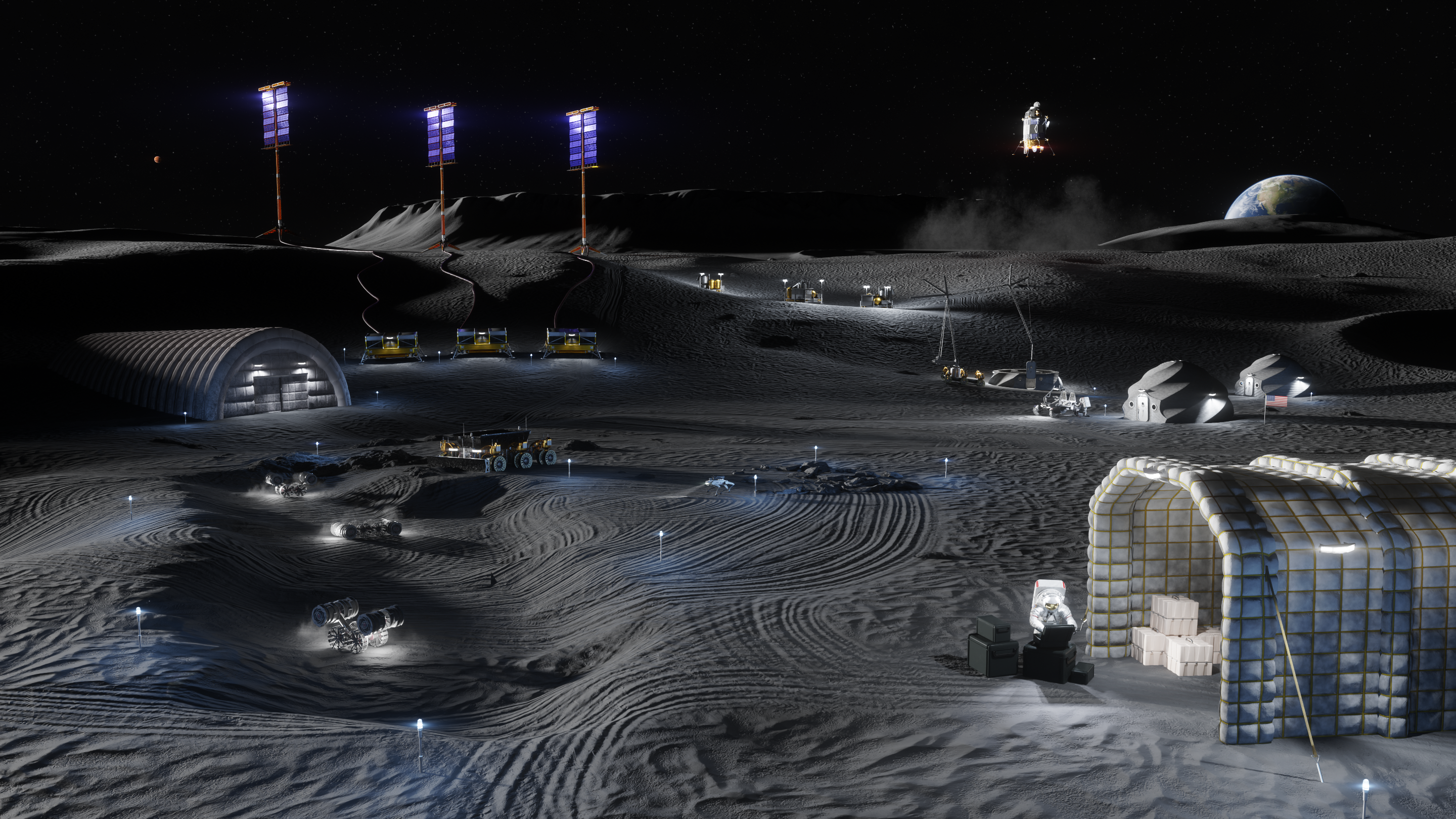
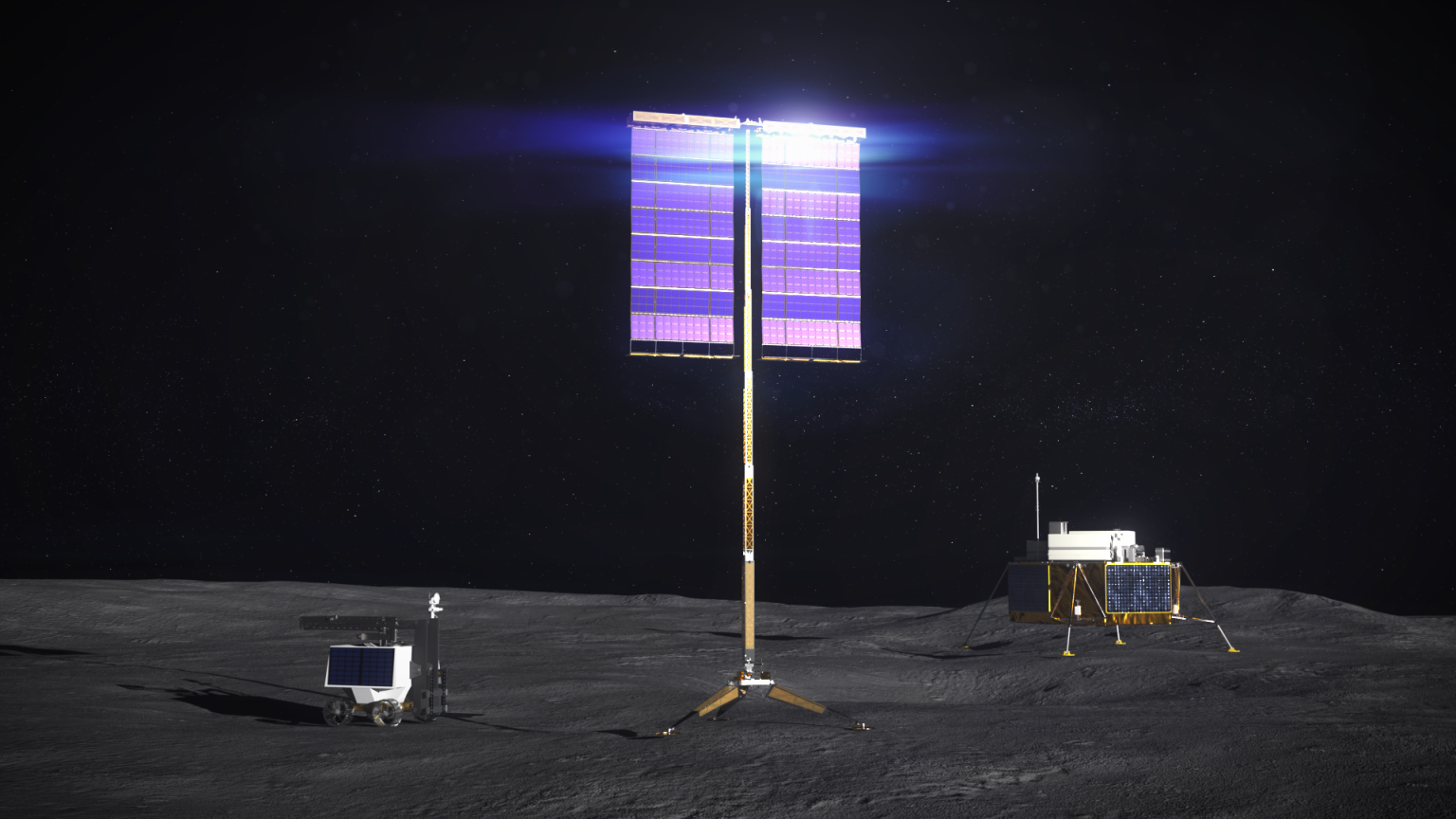
Artist concept of various technologies on a moon base.
Artist’s rendering depicting lunar surface operations at a future base in the lunar South Pole.
NASA

NASA is asking U.S.-based collegiate teams to submit bold, original concepts to the 2027 edition of a student challenge focused on aerospace innovation that could help the agency envision a future on the Moon shaped by new technology. 

The latest NASA Revolutionary Aerospace Systems Concepts – Academic Linkage (RASC-AL) competition invites student teams to explore new operations paradigms and advance the technologies needed to support sustained operations in the lunar South Pole region. 

“This competition showcases the technical excellence and creativity of the next generation of explorers and innovators,” said Chris Jones, chief technologist, Systems Analysis and Concepts Directorate, NASA’s Langley Research Center in Hampton, Virginia. “The concepts students develop through RASC-AL demonstrate exceptional talent and contribute to the body of work that advances NASA’s missions.”   

Since 2002, the annual RASC-AL competition has helped foster aerospace concepts, technology, and prototyping by making connections among universities, NASA, and industry. This year’s competition includes themes ranging from the development of concepts to support prospecting in the permanently shadowed regions of lunar craters to the advancement of critical and expandable infrastructure for future astronauts. 

“NASA’s RASC-AL competition connects top university researchers with the agency’s technology and engineering challenges,” said Gabe Merrill, acting cross-program integration lead for the Advanced Research and Technology Division in NASA’s Research and Technology Mission Directorate. “By asking student innovators to design concepts for what our future on the Moon might look like, this competition accelerates the technology we need to explore the Moon and provides a development opportunity for future aerospace innovators and leaders.” 

Teams interested in participating are required to submit a non-binding notice of intent by Tuesday, Oct. 13, and will be invited to a Q&A session with NASA experts on Oct. 27.  

Challenge proposals and accompanying video submissions are due Feb. 24, 2027. Proposals should demonstrate innovative solutions supported by original engineering and analysis in response to one of the four 2027 RASC-AL themes: 

  • Enabling extreme exploration 
  • Transit pathway construction 
  • Lunar resource exploration 
  • Smart and resilient lunar habitat 

The competition will select as many as 14 teams to advance to its final phase, which involves further developing their concepts, writing a technical paper, and creating a technical poster. Each finalist team will receive a $7,500 award to facilitate its full participation. Finalists will present their concepts to a panel of NASA and industry experts at the 2027 RASC-AL Forum in Cocoa Beach, Florida, June 7 to 10, 2027. 

The top two overall teams will receive an additional monetary award and an invitation to attend and present their concept at an aerospace conference later in 2027. 

Interested student teams are encouraged to visit the official RASC-AL competition website for detailed guidelines and eligibility requirements. 

The 2027 NASA RASC-AL Competition is administered by the National Institute of Aerospace on behalf of NASA’s Advanced Research and Technology Division within the Research and Technology Mission Directorate. NASA’s Center of Excellence for Collaborative Innovation, part of the Prizes, Challenges, and Crowdsourcing Program within the Research and Technology Mission Directorate, manages the challenge contract.

Fotoalbum da La Coruña

14 Agosto 2026 ore 21:52

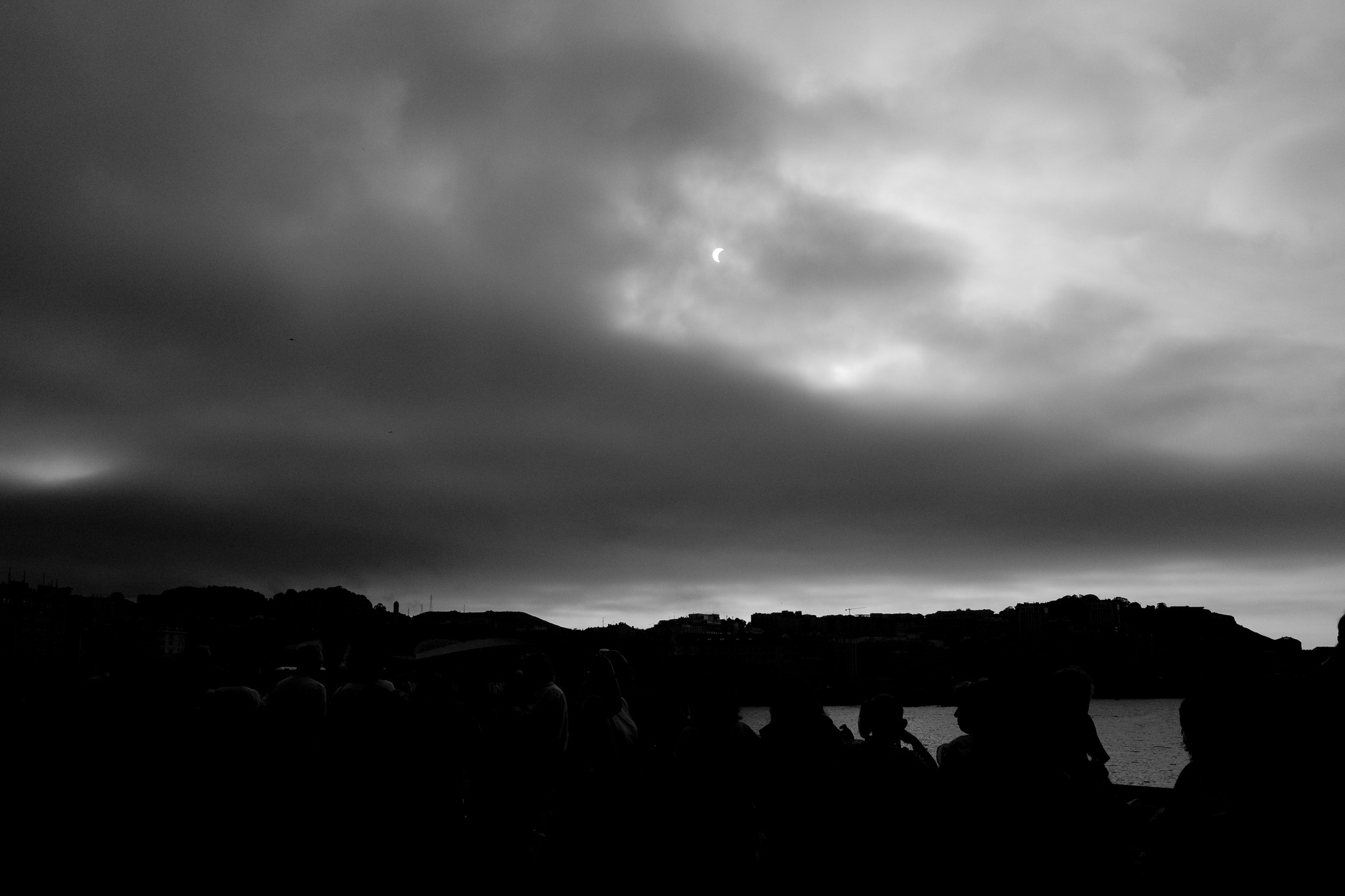
Nelle ultime due notti avrò dormito sei ore. Stamattina all’aeroporto di Madrid, prosciugata dall’insonnia, ho messo insieme questo album. Più che l’eclissi – che a La Coruña è stata flagellata dalle nubi –, più spesso qui troverete chi l’eclissi la guardava, e che ho avuto la ventura di incrociare sul lungomare della città e nei dintorni dell’Estadio Riazor. Buona visione!

© 2026, Federica Loiacono. Tutti i diritti riservati.


© 2026, Federica Loiacono. Tutti i diritti riservati.


© 2026, Federica Loiacono. Tutti i diritti riservati.


© 2026, Federica Loiacono. Tutti i diritti riservati.


© 2026, Federica Loiacono. Tutti i diritti riservati.


© 2026, Federica Loiacono. Tutti i diritti riservati.


© 2026, Federica Loiacono. Tutti i diritti riservati.


© 2026, Federica Loiacono. Tutti i diritti riservati.


© 2026, Federica Loiacono. Tutti i diritti riservati.


© 2026, Federica Loiacono. Tutti i diritti riservati.


© 2026, Federica Loiacono. Tutti i diritti riservati.


© 2026, Federica Loiacono. Tutti i diritti riservati.


© 2026, Federica Loiacono. Tutti i diritti riservati.


© 2026, Federica Loiacono. Tutti i diritti riservati.


© 2026, Federica Loiacono. Tutti i diritti riservati.


© 2026, Federica Loiacono. Tutti i diritti riservati.


© 2026, Federica Loiacono. Tutti i diritti riservati.


© 2026, Federica Loiacono. Tutti i diritti riservati.


© 2026, Federica Loiacono. Tutti i diritti riservati.


© 2026, Federica Loiacono. Tutti i diritti riservati.


© 2026, Federica Loiacono. Tutti i diritti riservati.


© 2026, Federica Loiacono. Tutti i diritti riservati.


The 80% Problem: Why AI resilience is more important than ever

14 Agosto 2026 ore 17:38

AI has been transformational for the workplace, saving time on repetitive tasks and freeing skilled staff to focus on higher-value work. It has become so embedded in organisations that ISACA’s research recently found that 82% of European companies expressly permit the use of AI at work.

However, there is a difference between using AI and governing AI use safely. Only 42% of organisations have a formal AI policy in place, and one in five (20%) don’t know who would be accountable if an AI system caused harm.

To further complicate things, it turns out that Microsoft Copilot now sits inside 80% of organisations using AI at work, well ahead of ChatGPT (56%), Gemini (37%), and Claude (21%). That means the majority of companies using AI are depending on just one vendor as an executive assistant, IT support, and sounding board.

In practice, this means that most of the business world is leaning on a single AI provider, with little planning for what happens if that provider is compromised or experiences an outage.

We use AI professionally and personally so much that, for many organisations, it is easy for compliance to become an afterthought. A tool people rely on daily doesn’t feel like a security risk – even when it is.

Leadership needs to challenge this by asking: what happens if this tool goes down, and what happens if it’s compromised? Some analysts expect over 200 high-signal disruption days across AI platforms this year and the negative impact that this will have on organisations’ productivity is considerable. Once staff begin to rely on AI-generated first drafts and summaries, reverting to manual work isn’t impossible, but it isn’t frictionless.

An over-reliance on AI – particularly on individual AI tools – can create a false sense of security, and the AI governance gap only gets worse when things go wrong. Three-fifths (59%) of companies do not know how quickly their organisation could halt an AI system in the event of a security incident, and only a fifth (21%) said they could do so within half an hour.

When a tool people rely on every day goes down, staff don’t stop working – they improvise. More than a quarter (26%) of organisations use no risk framework for AI at all, so when something does go wrong, there’s often no process to fall back on. That often means turning to whatever other AI tool is at hand, personal accounts, unapproved apps, and work-arounds that nobody has checked, at exactly the moment when careful handling of data matters most. This is why the fallback plan must exist before it’s needed, rather than being invented on the fly. The outage isn’t really the risk – how people cope during the aftermath is.

EU regulators have recognised and begun to address the AI governance gap, formally naming major cloud and AI providers, including Microsoft, as critical services to finance under the Digital Operational Resilience Act (DORA). Other sectors should expect similar action in line with NIS2 and the UK Cyber Security and Resilience Bill as the concentration risk argument spreads beyond finance.

What can businesses actually do about the AI governance gap? Firstly, they should review their AI use and record which important day-to-day work depends on a single AI tool. Where possible, they should try to diversify their provider use in order to mitigate the knock on effect of an outage.

This should be done as early as possible, as swapping AI providers isn’t like switching a light-touch SaaS tool. Foundation model capability sits with a small number of providers, so diversifying means retraining workflows and testing outputs.

Businesses should then look at their continuity plan and consider what the next steps are should their AI tools suffer an outage. Every organisation using AI should have a designated team that is responsible for managing an AI outage. But assigning ownership alone isn’t enough. Organisations also need a structured, maturity-based approach that embeds governance, accountability and resilience into day-to-day AI operations. Frameworks such as CMMI AIM provide a practical way to assess current capabilities, identify gaps and improve governance over time. That is not a decision that should be made mid-crisis, but before anything happens.

A backup option is also essential for operations that can’t afford to be put on hold until the AI is operational. Staff should be made aware of this contingency plan so that if their usual AI tool is unavailable, they don’t reach for something less secure out of habit.

This kind of business foresight is what will prevent your most useful tool becoming your biggest cybersecurity oversight.

None of this is to say that businesses should not use AI – rather that AI should be treated like any other critical part of the business, with a plan for when things don’t go smoothly. A designated owner and a tested fallback plan won’t stop the next outage, but it will decide whether it’s a minor disruption or a major one.


The post The 80% Problem: Why AI resilience is more important than ever appeared first on IT Security Guru.

BOLOGNA, LASCIA CANE SENZ’ACQUA E CIBO: DENUNCIATO

14 Agosto 2026 ore 16:34

Ululati e latrati di disperazione che rimbombavano nel vano scale di via Luigi Rasi, nel quartiere San Donato-San Vitale a Bologna. È stato questo grido d’aiuto, proveniente dal secondo piano di un condominio, ad allarmare i residenti e far scattare l’intervento degli agenti della Polizia locale, che hanno così salvato “Ares”, un giovane meticcio-husky prigioniero da oltre 72 ore, abbandonato a se stesso senza acqua e cibo. L’allarme è scattato ieri pomeriggio attorno alle 15.30. Raggiunto il pianerottolo, le pattuglie del reparto Navile e del Pronto Intervento hanno compreso la gravità della situazione e rintracciato subito il proprietario: un 26enne che si trovava fuori città. Ottenuto l’ingresso grazie al via libera del Pubblico ministero di turno e alle chiavi consegnate da una parente del giovane fatta arrivare nell’appartamento, gli agenti e i veterinari dell’Ausl hanno trovato l’animale visibilmente stremato, disidratato e in uno stato di profonda sofferenza psico-fisica. Liberato dalla sua prigione domestica, il quattrozampe (che ha lo stesso nome dell’unità cinofila del Corpo dei vigili urbani) è stato preso in custodia dagli operatori del canile di Castel Maggiore, dove è stato curato e rifocillato. Per il padrone ventiseienne, rintracciato dalle forze dell’ordine, è scattata l’immediata denuncia a piede libero per il reato di maltrattamento di animali. (foto di repertorio)

The post BOLOGNA, LASCIA CANE SENZ’ACQUA E CIBO: DENUNCIATO appeared first on nelcuore.org.

In Other News: Rapid7 Layoffs, Hacking a Boeing 737, Refrigeration System Vulnerabilities

14 Agosto 2026 ore 13:57

Noteworthy stories that might have slipped under the radar: government AI platform deal sparks outrage, North Korean IT worker breaches federal agency, DEF CON attendee blamed for Delta flight disruption.

The post In Other News: Rapid7 Layoffs, Hacking a Boeing 737, Refrigeration System Vulnerabilities appeared first on SecurityWeek.

Keeper Security Issues Cyber Guidance for Education IT Teams

14 Agosto 2026 ore 13:21

Keeper Security has urged schools, colleges and universities to strengthen their cyber defences ahead of the new academic year, warning that AI-powered phishing and a growing number of unmanaged machine identities are widening the education sector’s attack surface.

The identity security and privileged access management (PAM) provider said the annual rush to provision accounts, issue credentials and connect new devices creates a particularly attractive window for cybercriminals.

At the start of an academic year, IT teams can be responsible for onboarding thousands of students, faculty and staff while simultaneously enrolling devices and integrating third-party applications. Keeper warned that this combination can increase the likelihood of misconfigurations, stale credentials and excessive access going unnoticed.

Education institutions are already frequent targets for ransomware, credential theft and data breaches, in part because of the valuable information they hold, ranging from student and financial records to academic research.

Keeper said the threat is being compounded by relatively low levels of security awareness. Its research found that just 14% of schools mandate security awareness training, while almost one in five students and parents reported reusing passwords across personal and school accounts.

Artificial intelligence is adding another layer to the problem. AI-generated phishing messages can imitate communications from IT helpdesks, student funding departments and senior university figures with greater accuracy, potentially removing many of the spelling, grammar and formatting mistakes traditionally associated with phishing campaigns.

Deepfake technology also gives attackers the ability to impersonate trusted individuals through voice and video.

According to Keeper research, 52% of education leaders identify deepfake impersonation as a major concern, but only 26% are confident in their ability to recognise AI-enabled threats. The company also found that 41% of institutions reported being targeted by AI-generated phishing attempts or misinformation campaigns.

Beyond attacks targeting students and staff, Keeper highlighted what it describes as a less visible threat to education environments: non-human identities (NHIs).

These identities include service accounts used to synchronise student information and learning management systems, API keys connecting third-party EdTech applications, machine certificates authenticating connected equipment and cloud identities supporting automated workloads.

Increasingly, the category also includes AI agents and bots used for functions such as admissions, IT helpdesks and grading.

Keeper warned that credentials associated with these systems can be overlooked by conventional identity management practices. Service account passwords may remain unchanged for long periods, while API tokens belonging to applications that are no longer used can potentially remain active.

Cloud workloads can similarly accumulate permissions beyond those required for their function, while expired or incorrectly configured certificates can create additional security gaps.

Darren Guccione, CEO and co-founder of Keeper Security, said the education sector needed to broaden its approach to identity security.

“The conversation about education cybersecurity has historically focused on human accounts: students, teachers and administrators,” said Guccione. “But the real blind spot is the vast ecosystem of machine identities that power modern EdTech. Back-to-school is the right moment for education IT teams to take stock of every identity on their network, human and non-human alike.”

Keeper is recommending that education IT teams use the period before students return to review both human and machine access to their environments.

Among its recommendations is enforcing multi-factor authentication (MFA) across student, faculty and staff accounts, alongside deploying enterprise password management to reduce weak, reused and shared credentials.

Institutions should also audit privileged access and remove permissions associated with former employees, expired service accounts and applications that are no longer required, the company said.

For non-human identities, Keeper recommends creating an inventory covering service accounts, API keys, machine certificates, cloud identities and AI agents. Credential rotation policies should then be established, particularly for third-party EdTech integrations and AI systems introduced for the coming academic year.

The company also advised institutions to update phishing awareness programmes to account for increasingly convincing AI-generated communications.

Keeper said its zero-trust and zero-knowledge security platform can be used to discover, govern and rotate credentials belonging to both human and non-human identities. Its KeeperPAM platform additionally provides privileged access controls, session recording and audit capabilities.

As education environments become increasingly dependent on cloud services, connected equipment, third-party applications and AI, Keeper argues that knowing which identities have access (and whether they still require it) is becoming as important as protecting the students and staff behind traditional user accounts.

The post Keeper Security Issues Cyber Guidance for Education IT Teams appeared first on IT Security Guru.

La checklist per la sicurezza dei privilegi da endpoint a cloud

14 Agosto 2026 ore 10:16
La checklist per la sicurezza dei privilegi da endpoint a cloud

La gestione della sicurezza dei privilegi tra endpoint e cloud è cambiata radicalmente. Capire questa evoluzione è fondamentale per proteggere la propria azienda.

Per vent'anni ci siamo concentrati sulla gestione degli accessi privilegiati (PAM) a livello di endpoint, ma oggi lo scenario è del tutto diverso. Infatti le infrastrutture si sono spostate su AWS, Azure e Google Cloud. I dati più preziosi risiedono in applicazioni SaaS e un numero crescente di account di servizio e agenti AI detiene permessi costanti. Nessun vault tradizionale può controllare questa nuova realtà.

I cybercriminali lo sanno bene: non cercano più di "entrare con la forza", ma semplicemente si "autenticano" usando credenziali valide. In questo modo, ereditano ogni singolo privilegio che quell'identità ha accumulato nel tempo.

Questa checklist in cinque fasi ti aiuterà a scoprire dove si nascondono i privilegi inutilizzati nella tua infrastruttura e a eliminarli una volta per tutte, così da proteggere la tua azienda al meglio.

L'evoluzione della minaccia per la sicurezza dei privilegi da endpoint a cloud

Il modello di minaccia legato alla sicurezza dei privilegi tra endpoint e cloud non è scomparso, ma è stato affiancato da un rischio molto più vasto e insidioso. I privilegi si sono spostati e non risiedono più solo all'interno del perimetro aziendale. Infatti oggi sono sparsi ovunque.

Pensa alle autorizzazioni IaaS, ai ruoli di amministratore SaaS, agli account non umani e alle identità AI. Tutti questi elementi possiedono spesso un accesso permanente e non gestito. Non si tratta di un rischio astratto. Report di settore, come quello di IBM sul costo delle violazioni dei dati, mostrano che il costo medio di un data breach ha raggiunto cifre record.

Le aziende con più privilegi permanenti sono quelle che pagano il prezzo più alto.

La soluzione in 5 fasi: una nostra checklist pratica

Il problema di fondo è quasi sempre lo stesso: un'autorizzazione concessa per una necessità specifica che non viene più rivista, revocata o limitata nel tempo. L'accesso permanente non fallisce in modo evidente; semplicemente attende che un malintenzionato lo scopra.

Per colmare questa lacuna, è necessario un approccio strutturato. Le cinque fasi seguenti funzionano in sequenza per costruire una difesa solida e moderna.

Fase 1: consolidare la sicurezza dei privilegi da endpoint a cloud

Prima di guardare al cloud, è essenziale assicurarsi che le fondamenta siano solide. Le nuove sfide non rendono obsolete le vecchie. È quindi cruciale confermare che i controlli di base siano attivi e funzionanti. Questo significa aver implementato il vaulting delle credenziali, rimosso i diritti di amministratore locale e attivato la registrazione delle sessioni.

Se il punto di partenza è vulnerabile, qualsiasi strategia cloud sarà inefficace.

Fase 2: mappare la reale posizione dei privilegi

Non puoi proteggere ciò che non vedi. Questa fase si concentra sulla scoperta ed è qui che la maggior parte delle aziende individua le proprie lacune. Devi ottenere una visibilità completa su dove risiedono realmente i privilegi:

  • Autorizzazioni nelle piattaforme IaaS (AWS, Azure, GCP)
  • Ruoli di amministratore e permessi critici nelle applicazioni SaaS
  • Account di servizio, pipeline CI/CD e altre identità non umane
  • Agenti AI con accesso a dati e sistemi

Solo una mappatura completa ti darà la consapevolezza necessaria per agire in modo mirato.

Fase 3: eliminare l'accesso permanente (standing access)

La scoperta si trasforma in riduzione del rischio solo quando i privilegi inutilizzati iniziano a scomparire. Questo è il cuore della moderna sicurezza dei privilegi.

L'obiettivo è semplice: rimuovere ogni accesso che non sia strettamente necessario in un preciso momento. Si tratta di "dimensionare correttamente" i permessi (right-sizing), revocando le autorizzazioni dormienti che rappresentano una superficie di attacco.

Fase 4: rendere operativo l'accesso just-in-time (JIT)

Una volta eliminato il superfluo, è il momento di applicare al cloud la lezione imparata dagli endpoint. Invece di gestire meglio i privilegi permanenti, perché non eliminarli del tutto?

Il modello Just-in-Time (JIT) si basa proprio su questo: concedere l'accesso solo quando è necessario e per il tempo indispensabile. Questo approccio, noto come Zero Standing Privileges (ZSP), dipende da un workflow efficiente per non rallentare le operazioni.

Fase 5: dimostrare i risultati

Un programma di sicurezza è efficace solo se puoi misurarlo. Al termine del percorso, devi essere in grado di rispondere a tre semplici domande:

  1. Puoi vedere ogni richiesta di accesso privilegiato?
  2. Puoi dimostrare che ogni concessione è stata limitata nel tempo?
  3. Hai una traccia di audit completa e immutabile per ogni sessione?

Una risposta onesta a queste domande ti dirà a che punto sei veramente nel tuo percorso di messa in sicurezza.

Perché la tua azienda dovrebbe mettere in sicurezza i privilegi tra endpoint e cloud?

La maggior parte delle organizzazioni supera bene la Fase 1, ma si blocca nella Fase 2. La buona notizia è che, una volta ottenuta la visibilità, convertire gli accessi permanenti in un modello JIT è in gran parte un esercizio di automazione. I privilegi hanno lasciato l'endpoint per sempre; è ora che anche le discipline di sicurezza facciano lo stesso.

Che tu operi nel settore finanziario, sanitario o tecnologico, il principio non cambia. Garantire l'accesso temporaneo ai sistemi critici, revocandolo automaticamente, non è più un'opzione, ma una necessità strategica per proteggere il tuo business nell'era del cloud.

L'articolo La checklist per la sicurezza dei privilegi da endpoint a cloud proviene da sicurezza.net.

Il ghiaccio lunare si scova con i lunamoti

14 Agosto 2026 ore 07:58

Dopo un dibattito durato secoli sulla possibile presenza di acqua sulla Luna, nel 2020 i dati raccolti dalla missione Sofia della Nasa ne avevano confermato la presenza sotto forma di ghiaccio. Non si sa ancora, però, quanto ghiaccio ci sia, né dove sia localizzato. Un nuovo studio condotto dai geologi dell’Università del Maryland (Umd), del Lawrence Berkeley National Laboratory e dell’Università delle Hawaii presenta un metodo che potrebbe essere utilizzato per individuare e mappare il ghiaccio sotto la superficie lunare: attraverso le onde sismiche dei “lunamoti” (moonquakes, in inglese), il tipo di vibrazioni misurate durante i terremoti.

Una catena montuosa lunare ripresa nel 2023 dal Lunar Reconnaissance Orbiter della Nasa. In basso a sinistra è visibile il cratere Malapert, un potenziale sito di atterraggio per Artemis 4. Crediti: Nasa/Gsfc/Arizona State University

«È fondamentale individuare eventuali materiali presenti sulla Luna che un astronauta possa utilizzare mentre si trova lassù», spiega Nicholas Schmerr dell’Umd, coautore dello studio, pubblicato due settimane fa su Science Advances. «Poiché saranno limitati dalle poche risorse portate dalla Terra, qualsiasi cosa trovino sulla Luna li aiuterà sostanzialmente a vivere di ciò che offre il territorio, specialmente nel caso di missioni a lungo termine o avamposti». Il ghiaccio, in particolare, potrebbe rivelarsi essenziale per le missioni umane sulla Luna: se sciolto e purificato può diventare acqua potabile, mentre scisso produce ossigeno per respirare e idrogeno per il carburante dei razzi. Questo significa che individuare una fonte di ghiaccio lunare potrebbe ridurre drasticamente il carico che le future missioni dovranno trasportare dalla Terra: si rivelerebbe cruciale per il programma Artemis della Nasa, che punta alla regione polare sud della Luna per gli atterraggi con equipaggio nel 2028, dove ci sono crateri polari che potrebbero nascondere del ghiaccio d’acqua.

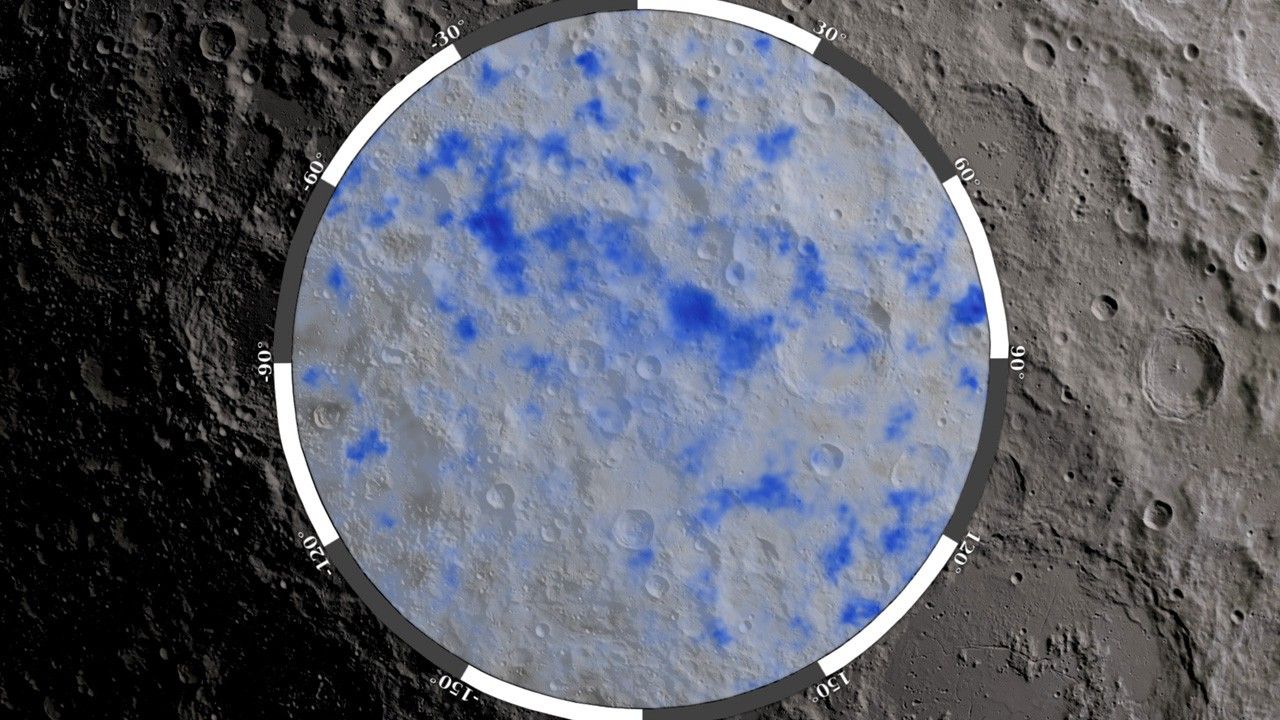
In blu sono indicate delle aree del polo sud lunare in cui potrebbero esserci depositi di ghiaccio d’acqua. La mappa si basa sui dati raccolti dal Lunar Reconnaissance Orbiter della Nasa. Crediti: Nasa

Il team ha sfruttato il fatto che, se attraversati da un’onda sismica, il suolo ghiacciato e quello secco si comportano in modo molto diverso tra loro: il ghiaccio irrigidisce il materiale in cui è mescolato, facendo sì che le vibrazioni viaggino da due a tre volte più velocemente rispetto a quanto farebbero attraverso il terreno asciutto. Le zone ricche di ghiaccio possono anche far rimbalzare l’energia sismica invece di lasciarla passare. Un sismometro posizionato sulla Luna, sottolinea Schmerr, potrebbe rilevare questi effetti. «Possiamo utilizzare le onde sismiche non solo per verificare la presenza di ghiaccio, ma anche per stimarne approssimativamente la quantità».

Per verificare la validità dell’idea, Harrison Lisabeth del Lawrence Berkeley National Laboratory, autore principale dello studio, ha congelato una roccia vulcanica proveniente dall’Arizona che, se frantumata, riproduce fedelmente la polvere lunare, e ha utilizzato i raggi X per studiare come il ghiaccio si insedi negli interstizi tra i granelli di terreno. Il coautore Matthew Siegler dell’Università delle Hawaii ha invece realizzato mappe dettagliate delle temperature della regione polare sud della Luna, identificando quali crateri sono rimasti sufficientemente freddi da preservare il ghiaccio per miliardi di anni. Schmerr, infine, ha simulato al computer piccoli terremoti lunari che si propagano attraverso il ghiaccio sotterraneo, interagendoci. In tutti e tre gli approcci il ghiaccio ha lasciato tracce evidenti e misurabili nei dati sismici.

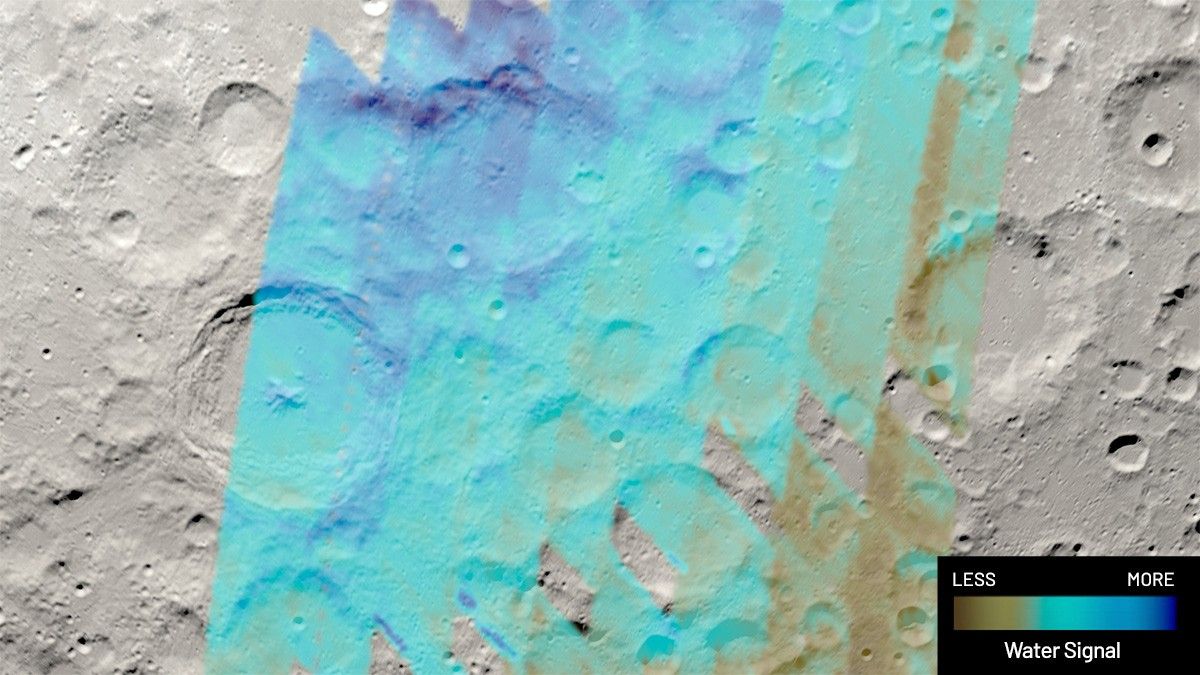
Mappa della distribuzione dell’acqua sulla Luna realizzata nel 2023 con i dati di Sofia. La mappa, che fornisce indicazioni su come l’acqua possa spostarsi lungo la superficie lunare, si estende fino al polo sud lunare, l’area che sarà oggetto di studio delle missioni Artemis della Nasa e del rover Viper, dedicato alla ricerca dell’acqua. Crediti: Nasa

Verificare la posizione e la quantità di ghiaccio non sarebbe importante solo per gli astronauti. «La Luna è stata testimone di alcune delle fasi più cruciali del Sistema solare primordiale, compreso il modo in cui l’acqua è stata trasportata», ricorda infatti Schmerr. «Lo studio del ghiaccio lì depositato potrebbe rivelare come l’acqua si sia diffusa e, in ultima analisi, come si siano formati gli oceani terrestri».

La missione cinese Chang’e-7, che atterrerà sulla Luna alla fine di quest’anno, trasporterà un sismometro, mentre nel 2028 gli astronauti della missione Artemis potrebbero installare la Lunar Environmental Monitoring Station, una stazione di monitoraggio dell’ambiente lunare. Non ci sarà quindi da attendere a lungo per verificare le previsioni dello studio.

Per saperne di più:


❌